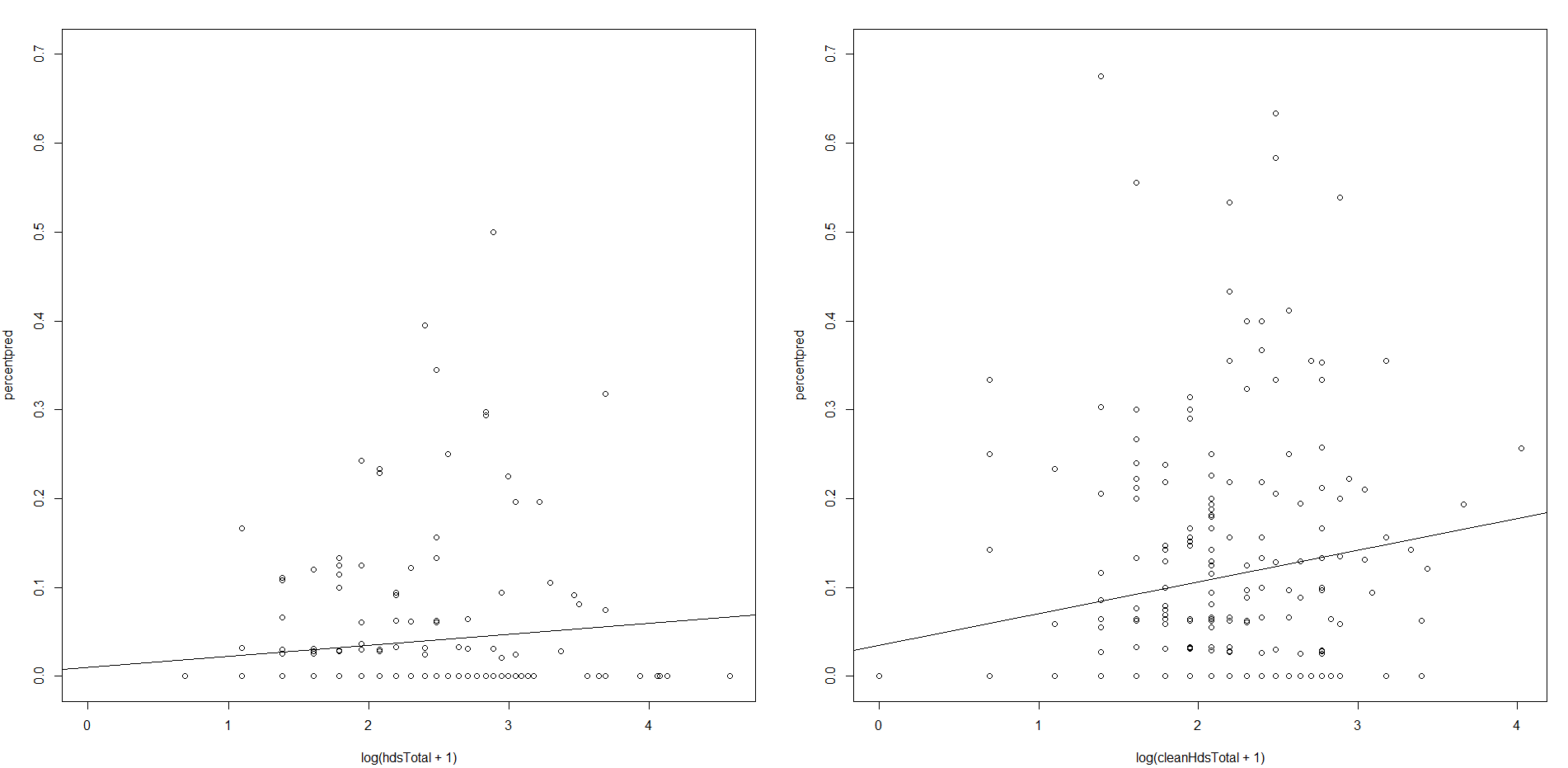
We have data! So far, we have seen some fascinating results from the 2022 data we worked on over the past 6-7 weeks and the 2021 data collected last year. The data shown above is still in its preliminary stages, and there is still some additional work to be done, but we can make out some things with what we got so far. First, 2022’s data is on the left, and 2021’s is on the right. Comparing the two, we did find that the predation rate, on average, was higher for the 2021 plants than those in 2022. We also created a linear regression line for both years to examine the correlation between headcount and predation rates. 2021’s data had a higher slope than 2022’s, meaning the data in 2021 had a more substantial representation of the predation rate increasing with a higher headcount than in 2022. Overall, these findings suggest that the plants in 2021 saw much more predation activity than those in 2022. With that in mind, it makes me wonder why predation rates are higher in 2021 than in 2022 and what the results would look like if we were to combine the data. This is only the beginning of our data collecting and interpretation, so I’m looking forward to learning more about the results we got and if we can reject the null hypothesis in the end. Note that the null hypothesis states no relationship between headcount and predation rate.
And hast thou pinned the pan trap bees? O frabjous day! Callooh! Callay!
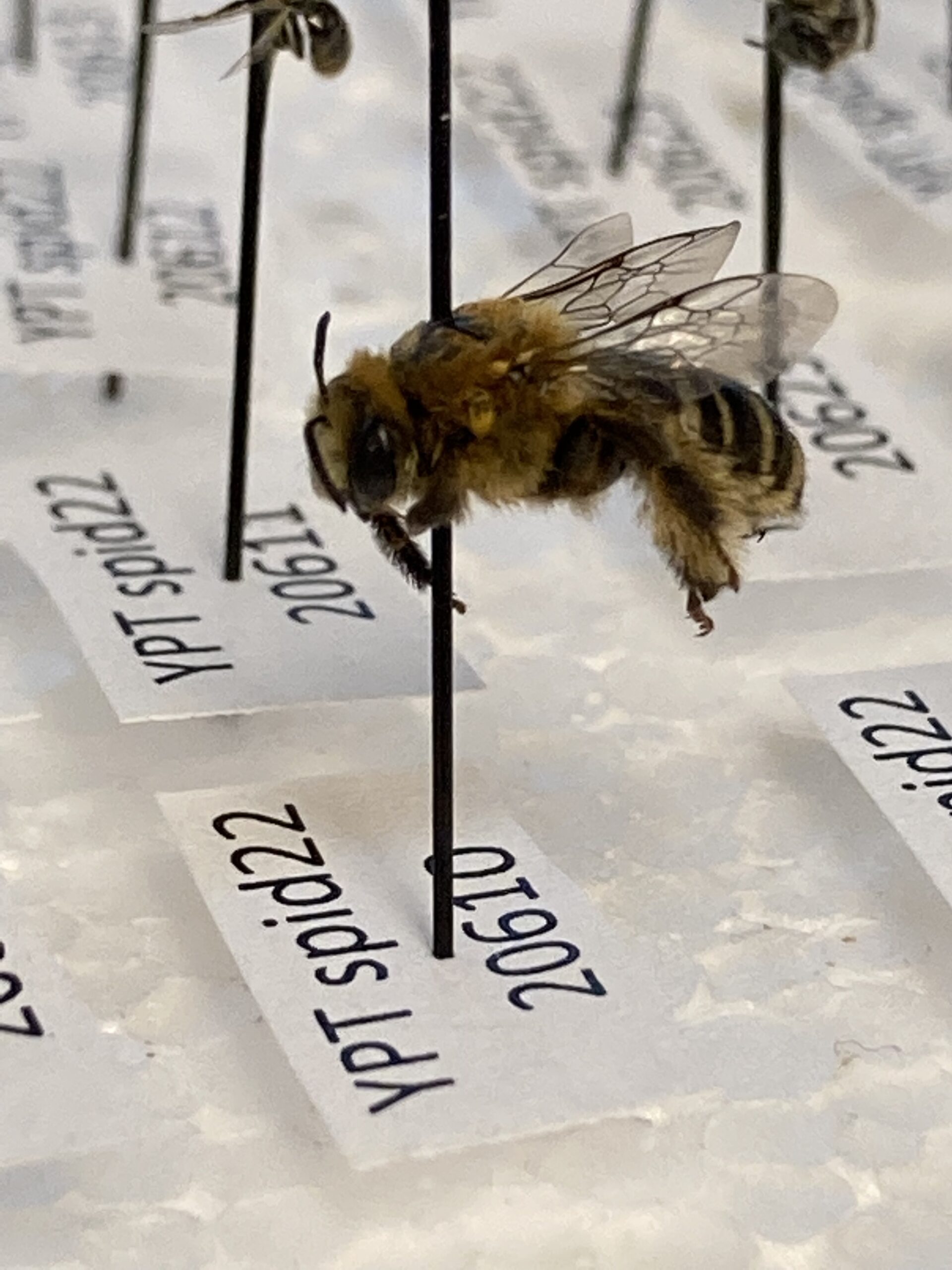
Today, Mike finished pinning all the bees that we collected in summer 2022 for the Pollinators on Roadsides (aka Yellow Pan Trap) project! We started out with seven coolers full of vials, and Mike has been diligently pinning pollinators since late September. In total, he pinned 789 insects! We are very grateful for his help.
The next step is to add informative labels to record collection date and location for each specimen. Then, we’ll send the bees to Zach Portman, the bee taxonomist at the University of Minnesota, for identification. Overall, we collected more bees than I expected based on the last three years. I’m very curious whether there are any differences in species diversity between years. Stay tuned!
year
# bees collected
# traps
# collection days
avg # bees/trap/day
2004
591
20
7
4.2
2017
552
40
7
2.0
2018
430
37
6
1.9
2019
372
38
6
1.6
2022
789
39
7
2.9
Funding for this project was provided by the Minnesota Environment and Natural Resources Trust Fund as recommended by the Legislative-Citizen Commission on Minnesota Resources (LCCMR). The Trust Fund is a permanent fund constitutionally established by the citizens of Minnesota to assist in the protection, conservation, preservation, and enhancement of the state’s air, water, land, fish, wildlife, and other natural resources.
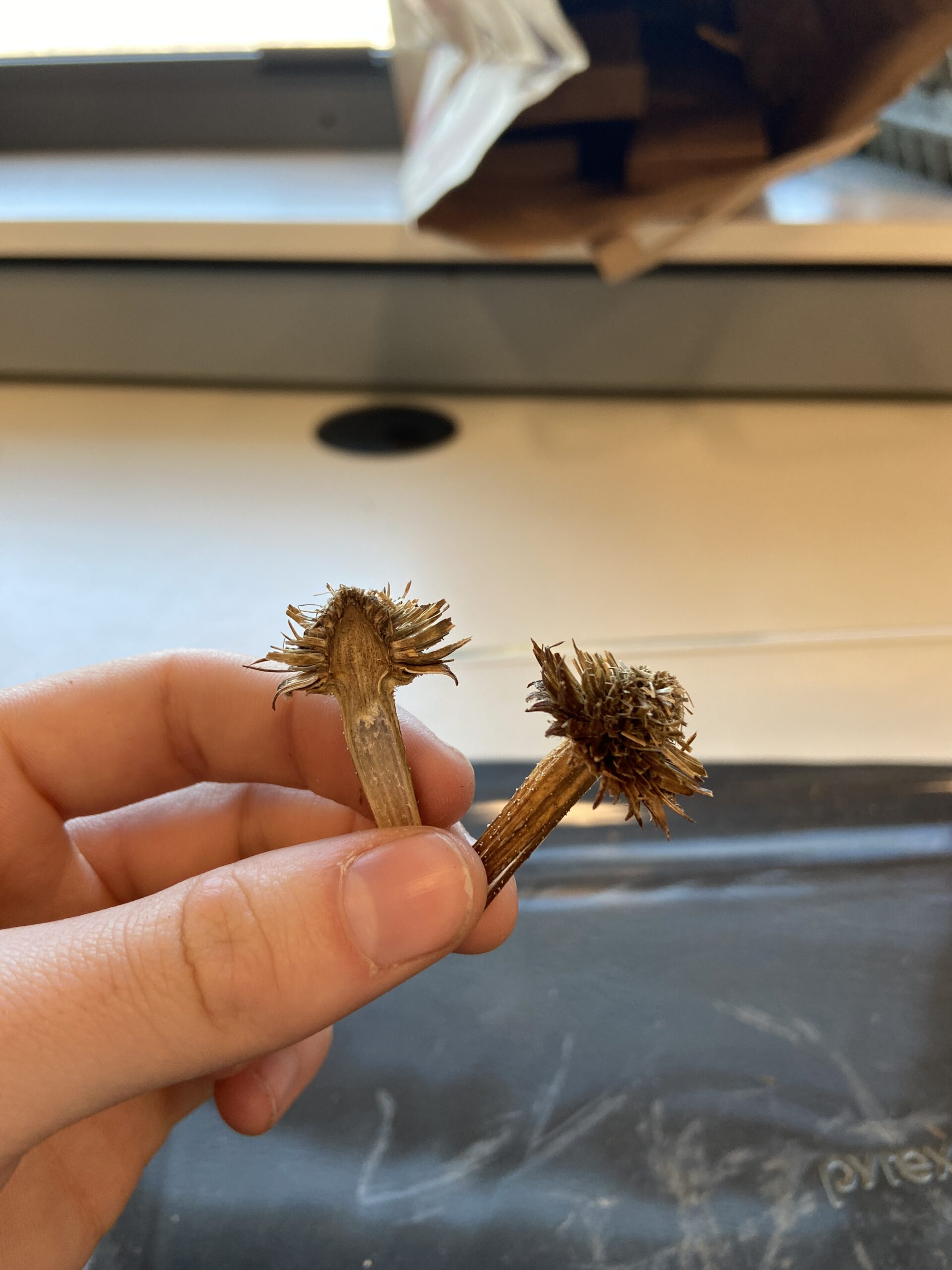
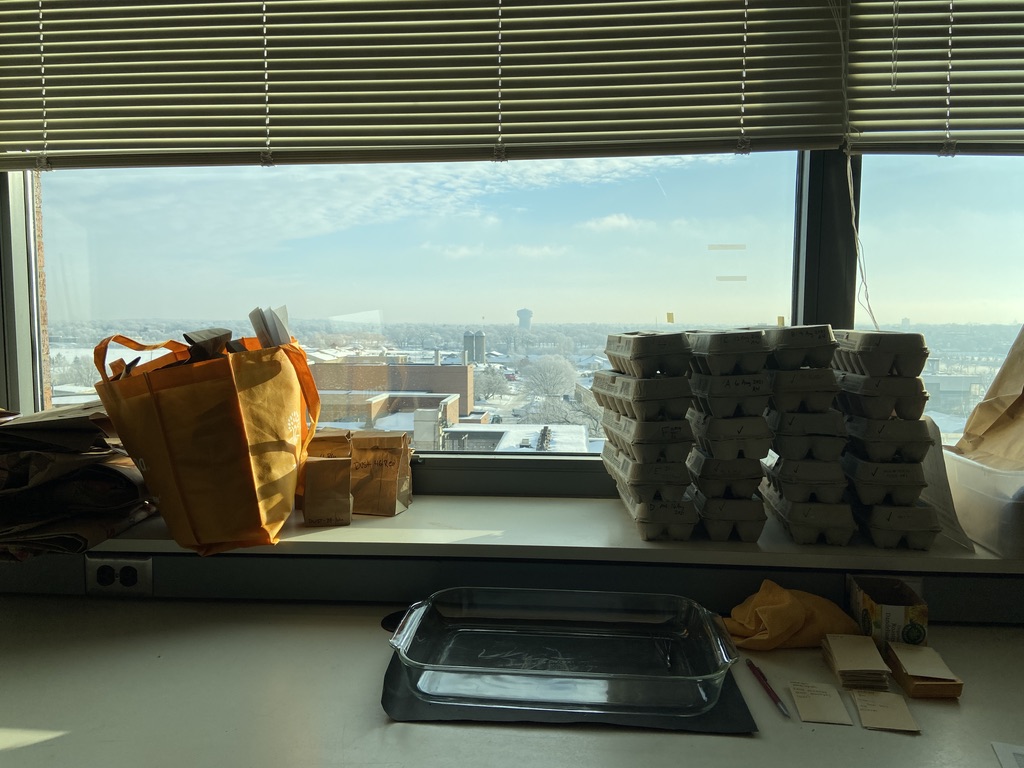
This semester at school (University of Minnesota Twin Cities), I have been continuing the Dust Project I was working on over the summer. From the work this summer, I had collected 64 heads of Echinacea angustifolia that were then brought down to the Twin Cities for me to continue working on. Just recently, I finished cleaning them (many lovely mornings were spent on the St. Paul Campus, I was lucky enough to have a window in front of the counter I was working at). While it felt a little weird to see the flowers after hiking through a blizzard, it was exciting to see a little bit of the results from this summer’s hard work. There was one head that decided to split down the middle, I found that intriguing. It made me wonder whether something was living in it at one point, or if something else caused it to divide! Currently the heads are being mailed down to CBG to get x-rayed, then I will start the process of counting the full achenes to see if the dust made a difference in its reproductive success.
We are so close! We are now a little over two-thirds of the way done with the third batch, and things are starting to get exciting. I want to thank those who helped with randomizing; we would not have gotten this far without your help. With that said, there are now less than 20 plants left to randomize, and we are just about ready to move on to the data entry and interpretation steps. We should have randomization wrapped up by next week, so we should hopefully have our results in by next week. After that, we will then analyze the final results and begin to construct a final poster. More details will be provided for the poster, but in the meantime, we are quite excited about the next steps once randomization is complete.
Things are movin’ and groovin’ in the lab at the Chicago Botanic Garden!
Now that we’ve wrapped up remnant Echinacea, it’s time to reenter common garden territory. Ah, sweet sweet common garden, where all plants exist neatly* on a grid unlike the unruly remnants.
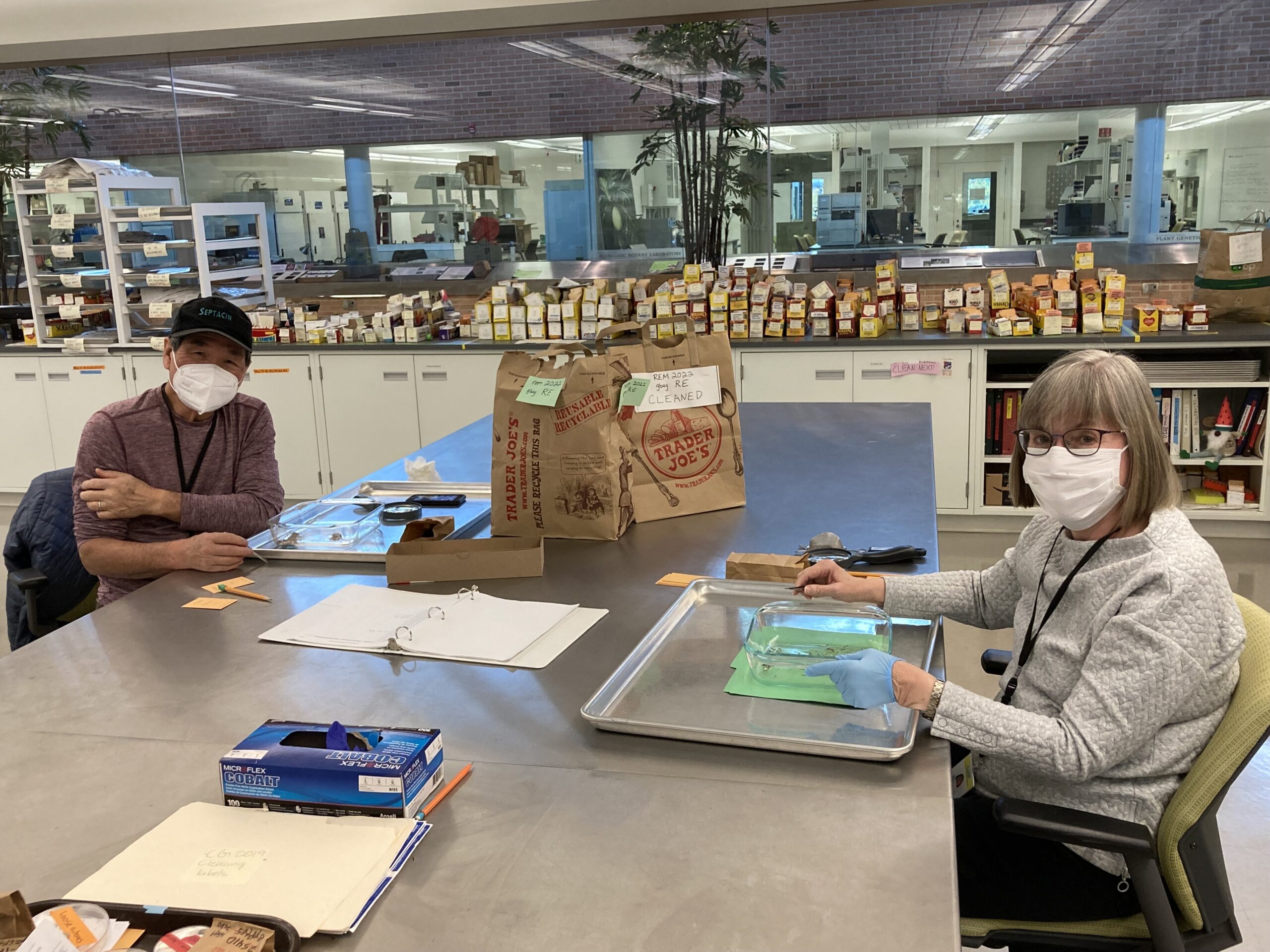
One of the main things we’ve been tackling is cleaning the 2022 common garden heads. There are 2,116 heads to be cleaned and we’ve already cleaned 561 (or ~27%) of them! Wow, amazing progress! The only remaining and 3 additional bags from 2020. Once those are done, we’re caught up from the backlog that COVID augmented. As for other steps in the ACE process…
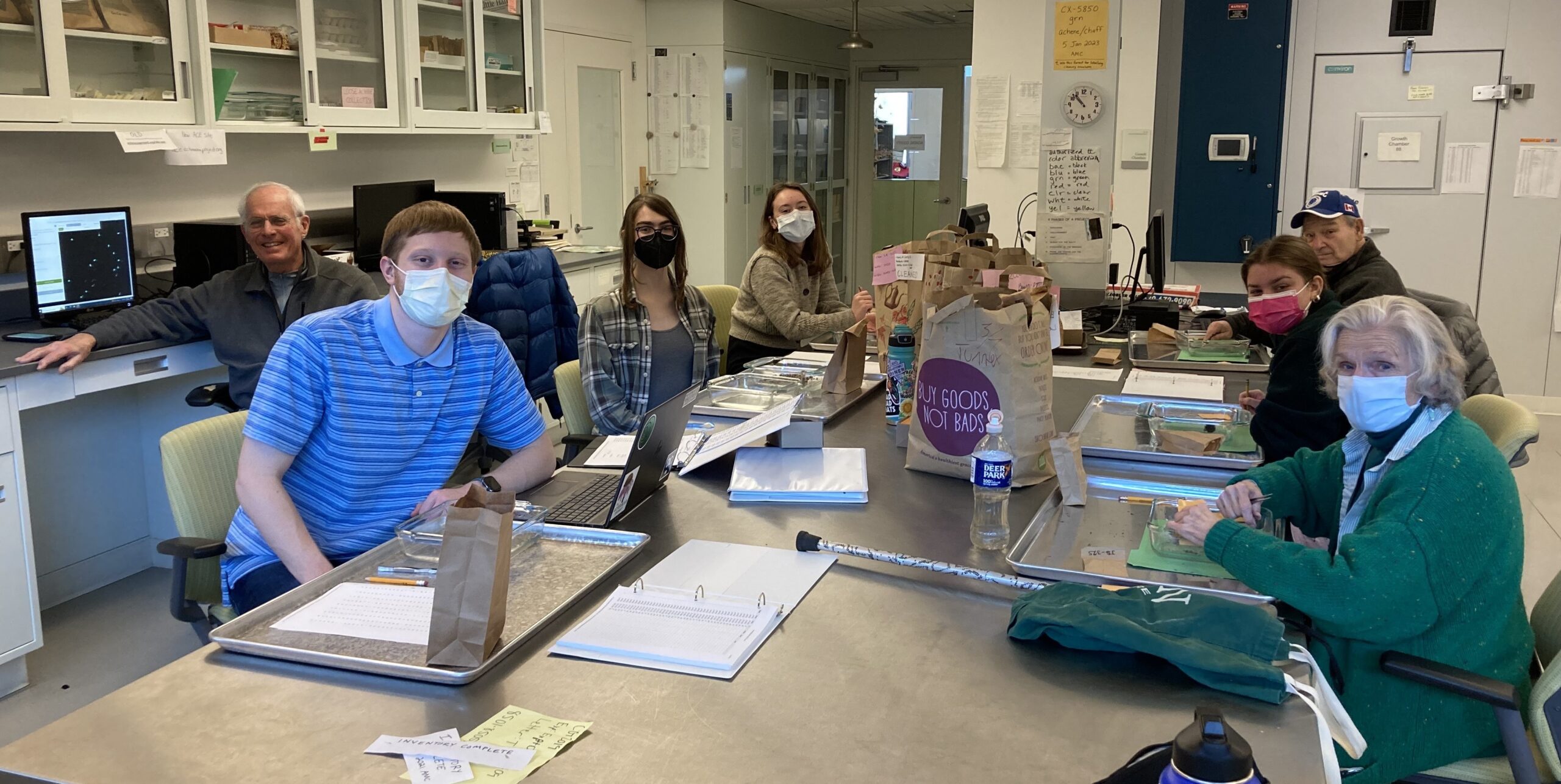
Volunteers and students cleaning way!
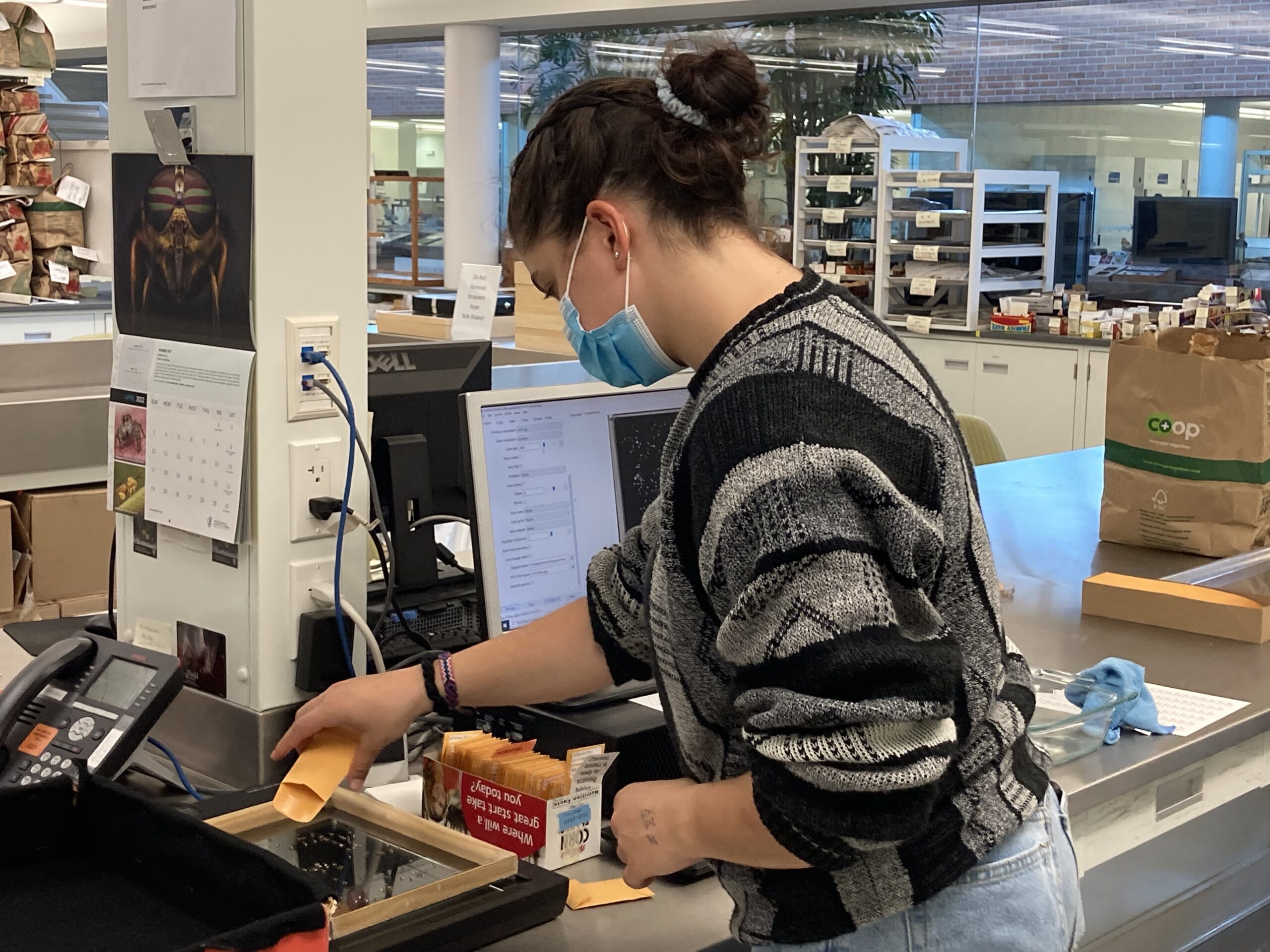
After cleaning comes rechecking, and we’ve had students working on rechecking Echinacea heads from experimental plot 1 in 2019 and 2020. Once these have been rechecked, we’ve got scan-master volunteer Marty prepare our achenes for uploading to the ACE website!
Our volunteers have also been catching us up on counting from 2017 through 2019 to get data ready for Wyatt’s masters thesis! I won’t spoil what she’s investigating, but just know it’s a burning question that I’m stoked about!
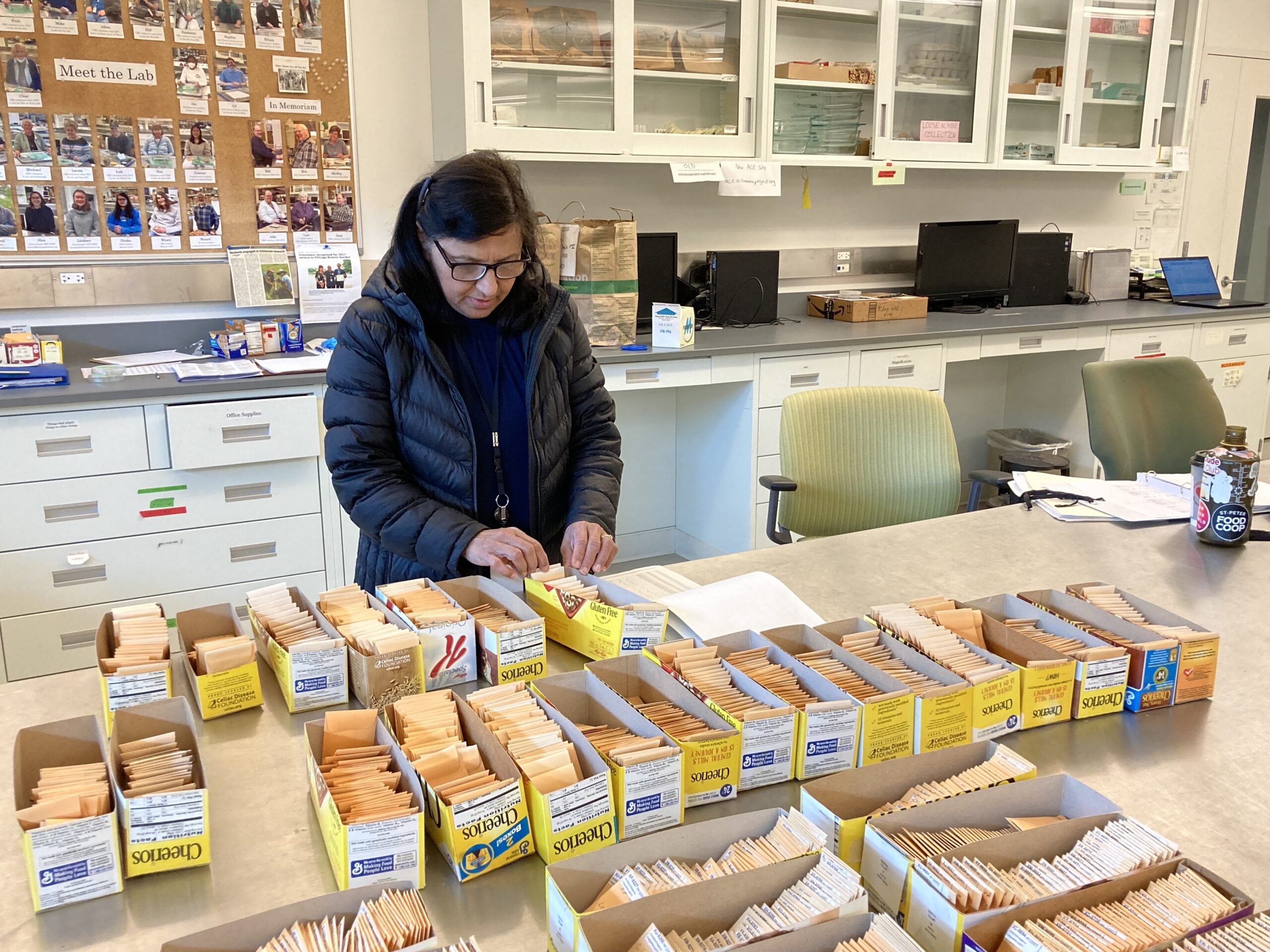
Alex and I have also been attempting to clean up the Cheerios boxes that line our lab window. These boxes contain achenes from the past 20 years and many different experiments, all at different stages of the ACE process. Volunteers have started assembling some of the achenes into x-ray sheets for the years 2017 and 2018.
We also had Priti help us inventory boxes from 2016. We took seeds out of these boxes for our seed addition experiment, but were unsure what achenes actually remained. These seeds did not germinate, so we will put them in storage. However, we have other seeds that are still viable, so we are hoping to freeze them and put them in the seed bank here at CBG!
Priti with all the boxes!
We’re hoping to keep moving forward this spring with all steps of the ACE process, and create an efficient system for taking data off the ACE counting and classifying website!
*it would be neatly if it weren’t for those meddling rogue plants!
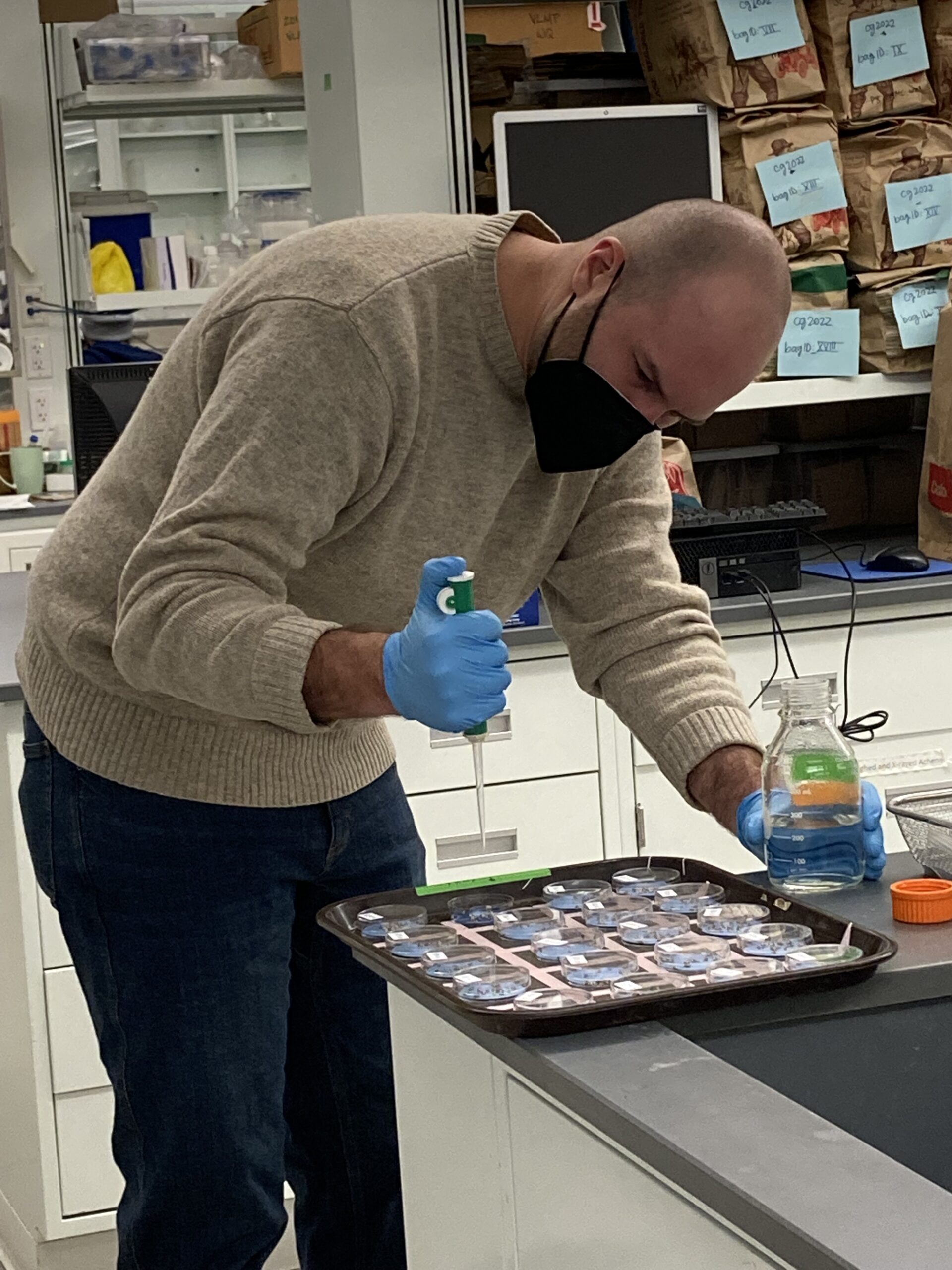
In fall 2022, we planted Echinacea within our study site for the seed addition experiment. In the lab, we are currently doing a germination experiment with the same batch of seeds to calculate the expected seed germination rates under ideal conditions. Following our standard germination protocol, we first treat the achenes with Florel solution and put them in a cold fridge with low light levels to mimic winter conditions. After 14 days, we transfer them to a warm, bright environment to germinate.
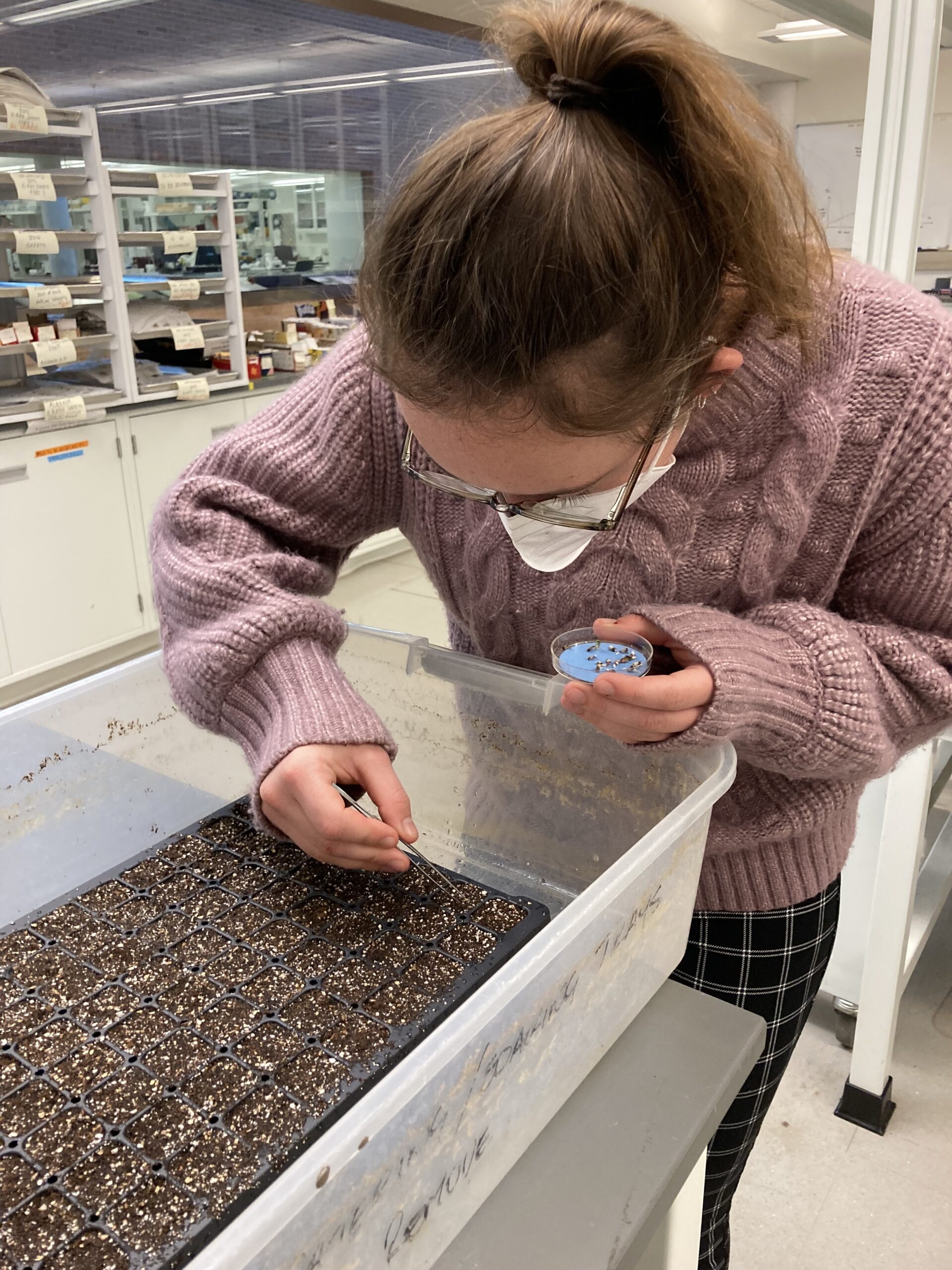
Jared applies FlorelGerminating EchinaceaLindsey plants Echinacea
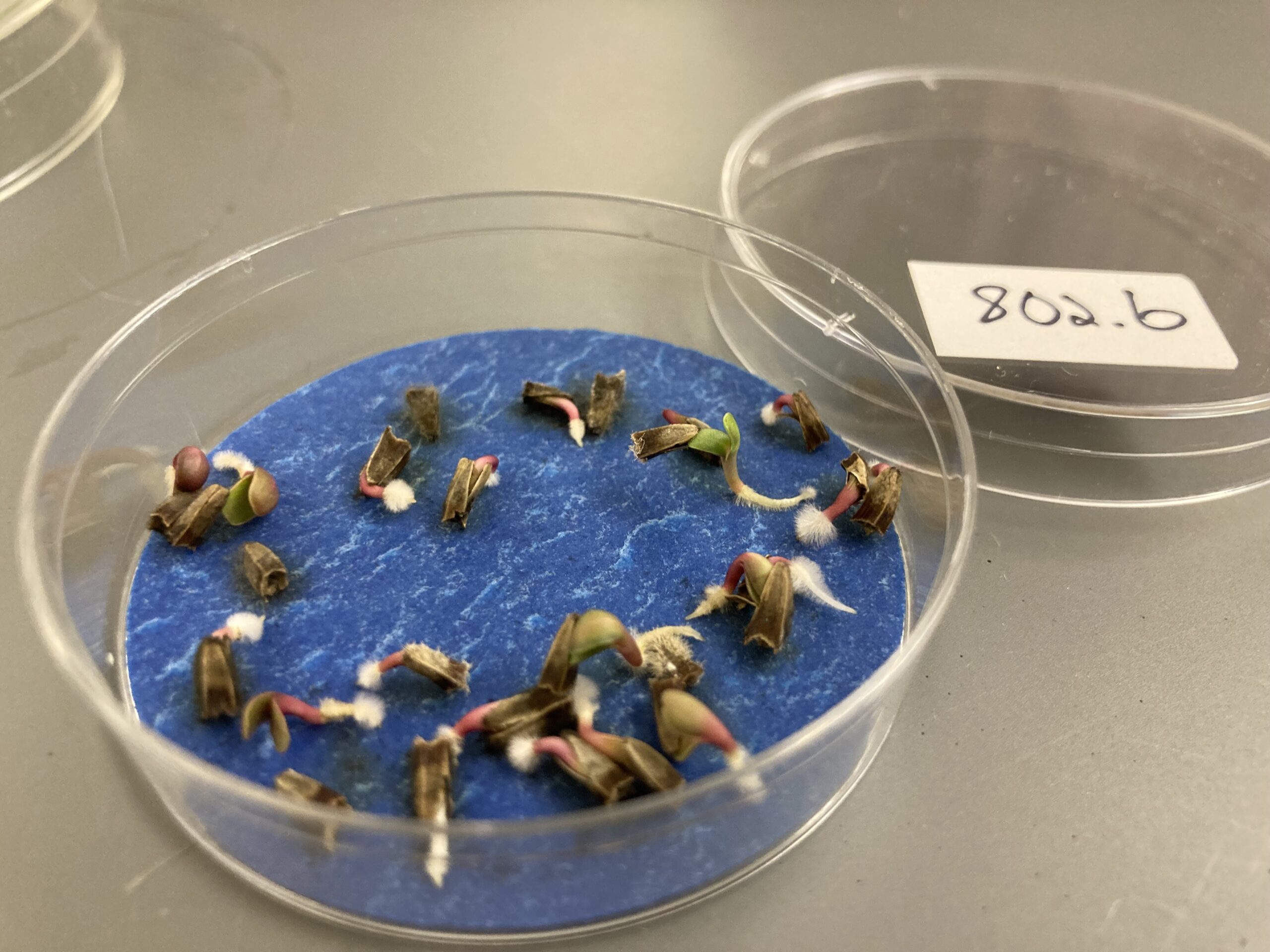
The seeds generally don’t start to germinate until they are in the warm environment. This year, however, I checked on the seeds a few days after they went into the fridge and discovered that they were already starting to sprout! The condenser on the fridge had broken, so it was no colder than room temperature. In spite of the unusual conditions, ~80% of the seeds germinated. This is very encouraging since it means that the seeds that we planted in the fall were viable.
After fixing the fridge, we are germinating a second batch of seeds following the standard protocol so we can replicate the experiment next spring. Lindsey planted the seeds that germinated, and we plan to grow them into plugs and transplant them this summer.
One of our main goals over the past two years has been to process all of the Echinacea harvested from remnants in 2020, 2021, and 2022 to investigate the effects of prescribed fire on flowering and fitness. We harvested 1,012 heads over these three years.
year
# of heads
rem2020
299
rem2021
383
rem2022
330
For each head, the end goal is to get an accurate count of the number of achenes and the seed set, a measure of pollination success. To collect these data, we sent the Echinacea through our high-throughput seed processing system, which we call the ACE process. (The true meaning of ACE is controversial: Always Cleaning Echinacea? Accurately Counting Echinacea? Achene Chaos Extraordinaire?) The ACE process has many steps: inventory, clean, recheck, scan, count, randomize, x-ray, classify, store.
In spring 2023, we finished processing all of the remnant Echinacea from 2020, 2021, and 2022! We send a huge thank you to all the students and volunteers who put in many hours on this project over the last few years. We couldn’t have done it without you!
Luk and Sue cleanWanying and Caitlin recheckLake Forest College students recheck and scanKat scansAllen countsPriti randomizesMarty, Char, Padmini, Caroline, and Allen agree: it’s a team effort!
Jared is currently adding the achene count and seed set data to the remnant data repository on the Echinacea Project website. All achenes are currently in the dehumidifier at the Chicago Botanic Garden. After two weeks of drying, they can be stored in the seed bank.
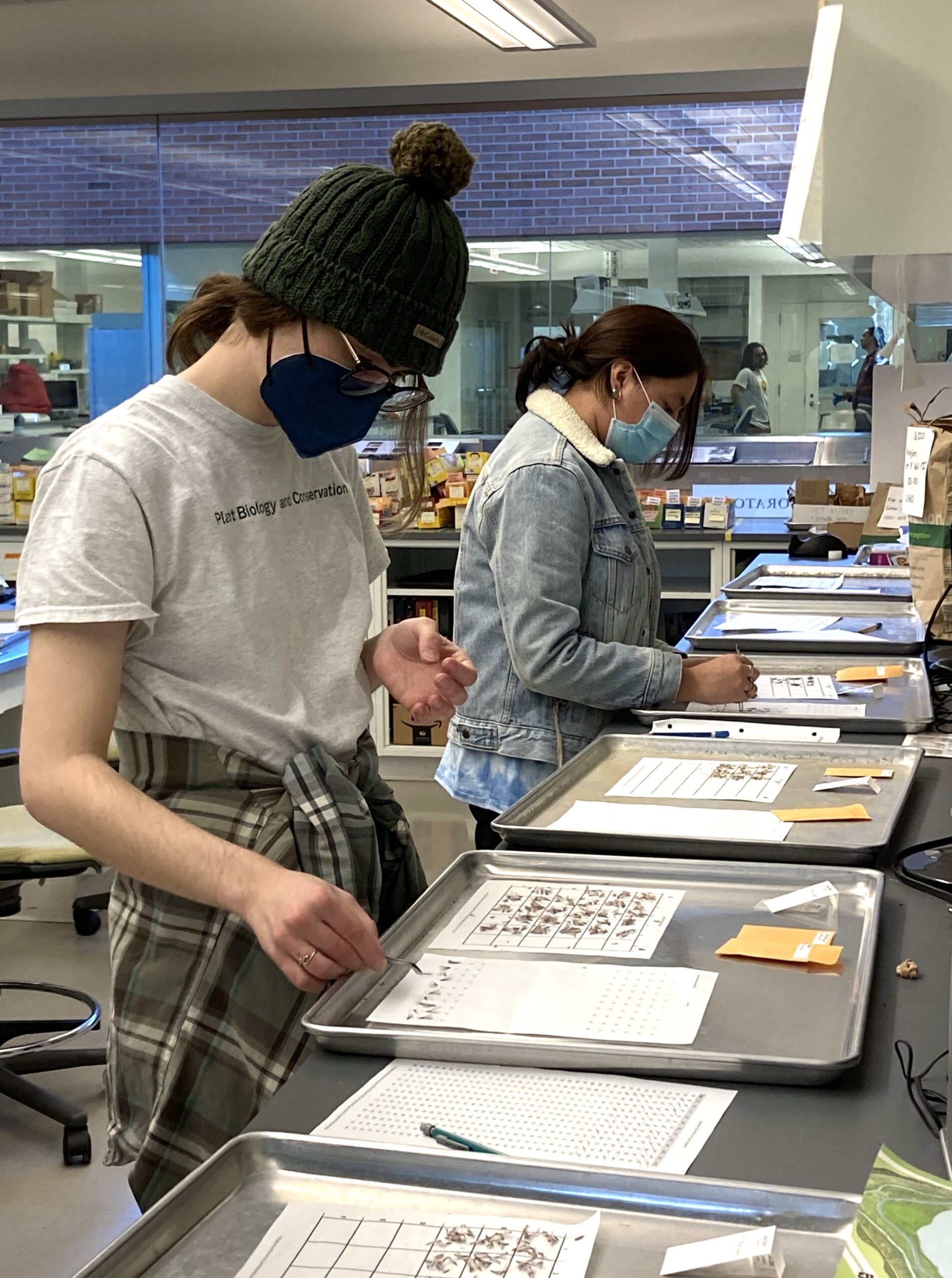
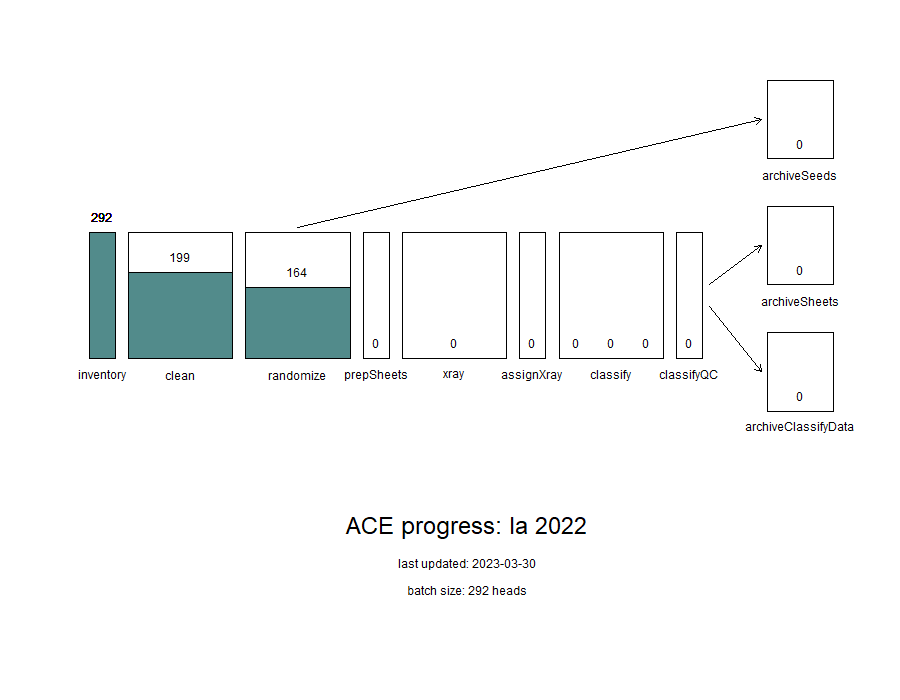
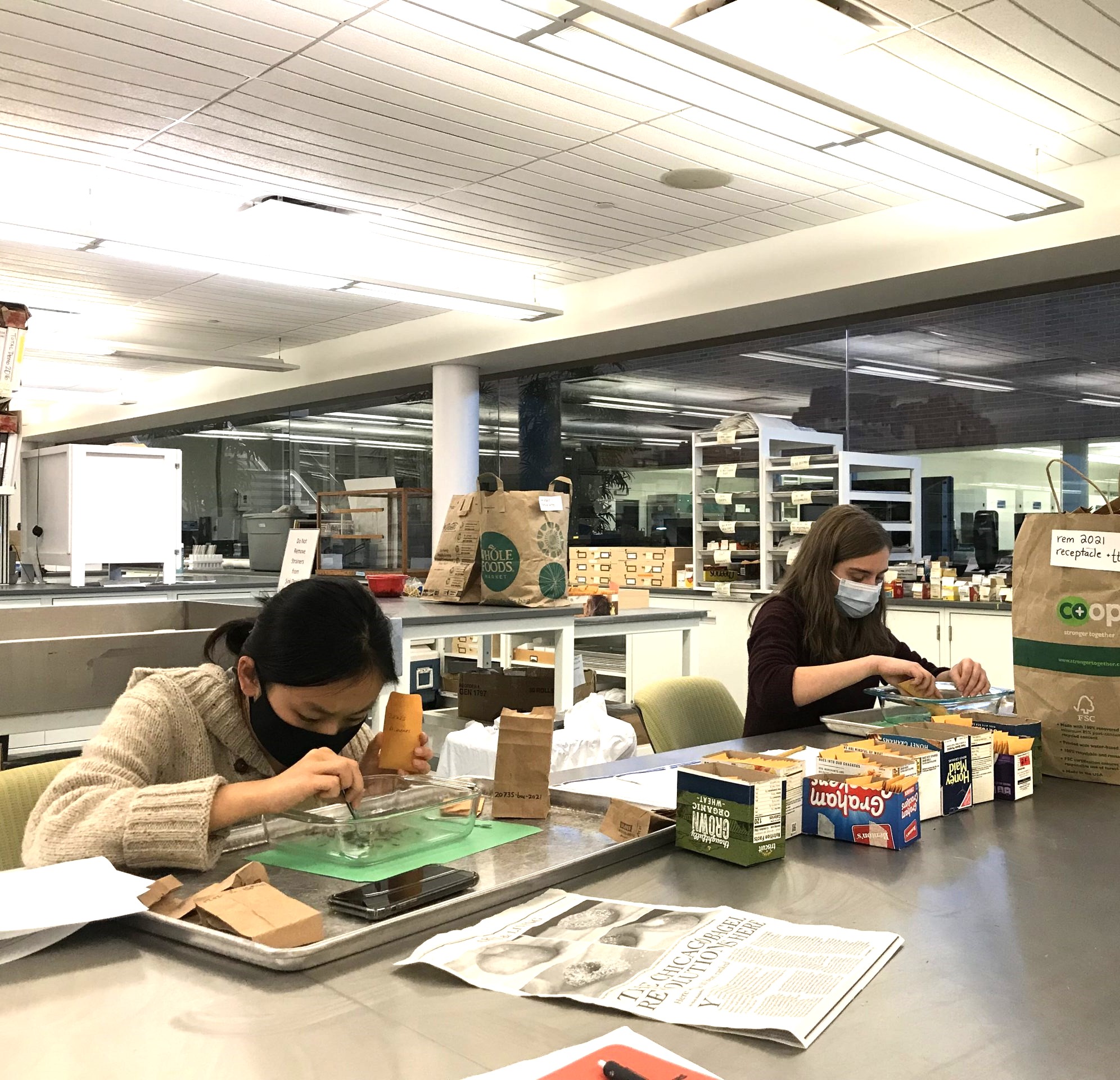
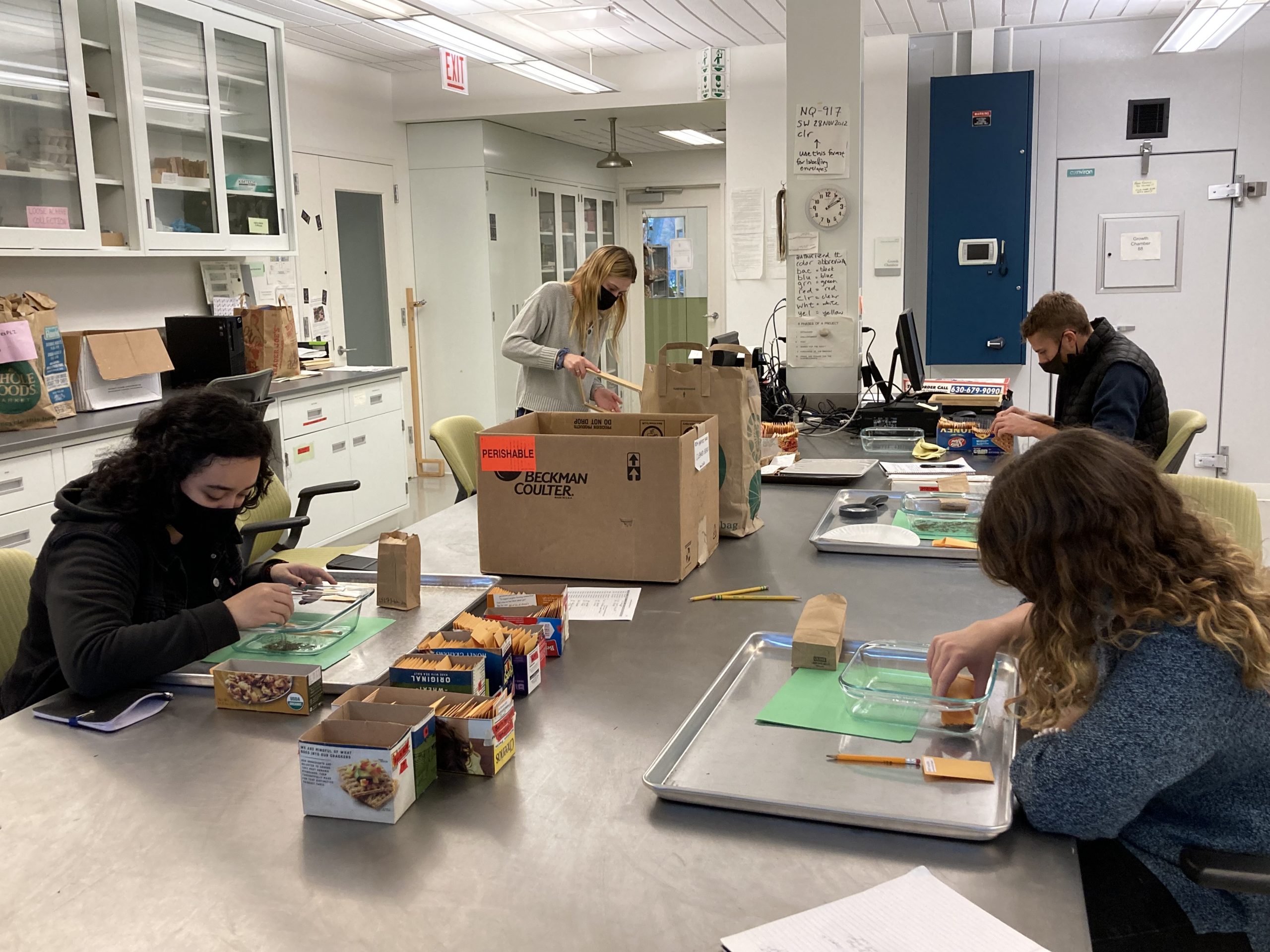
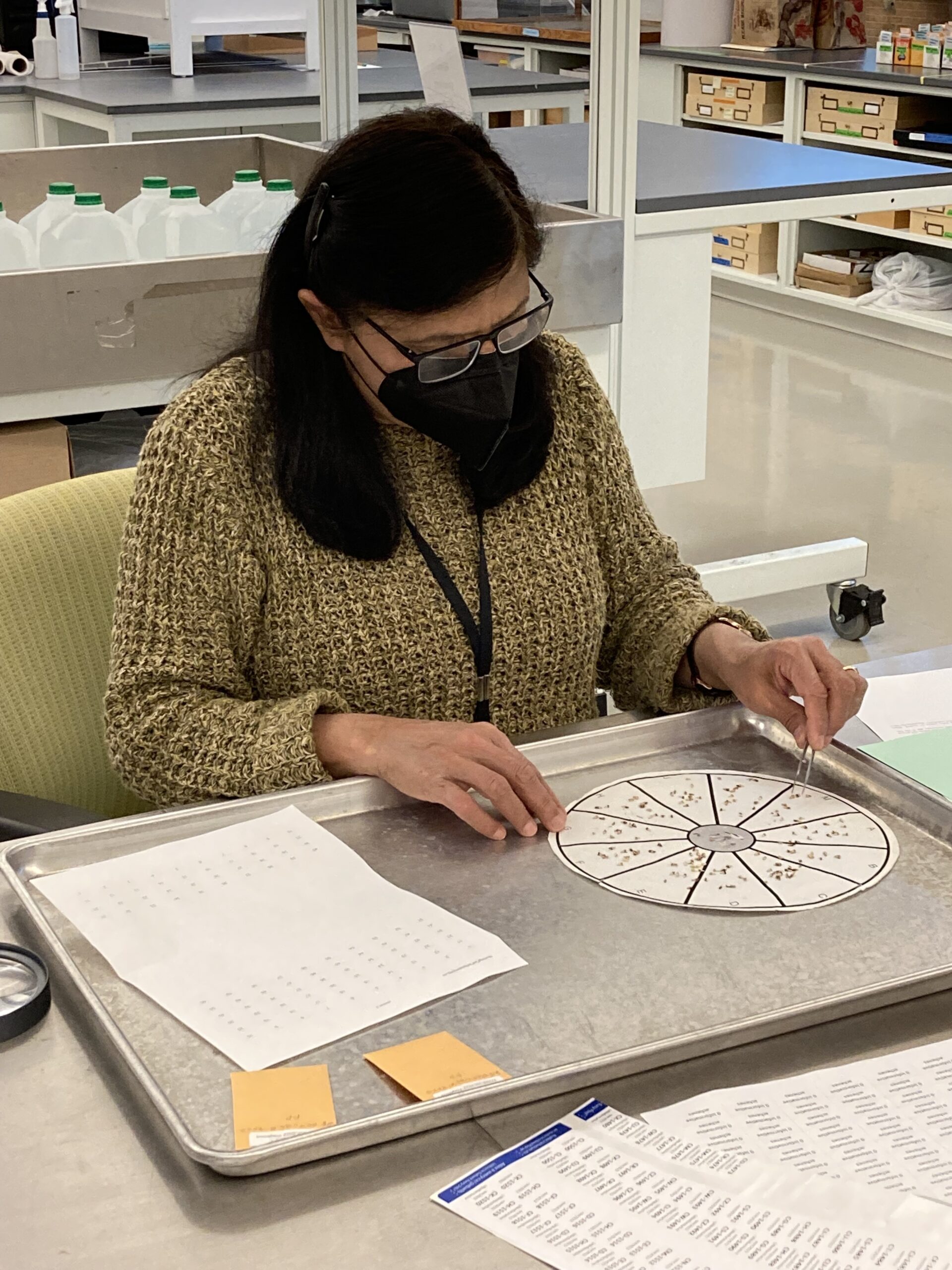
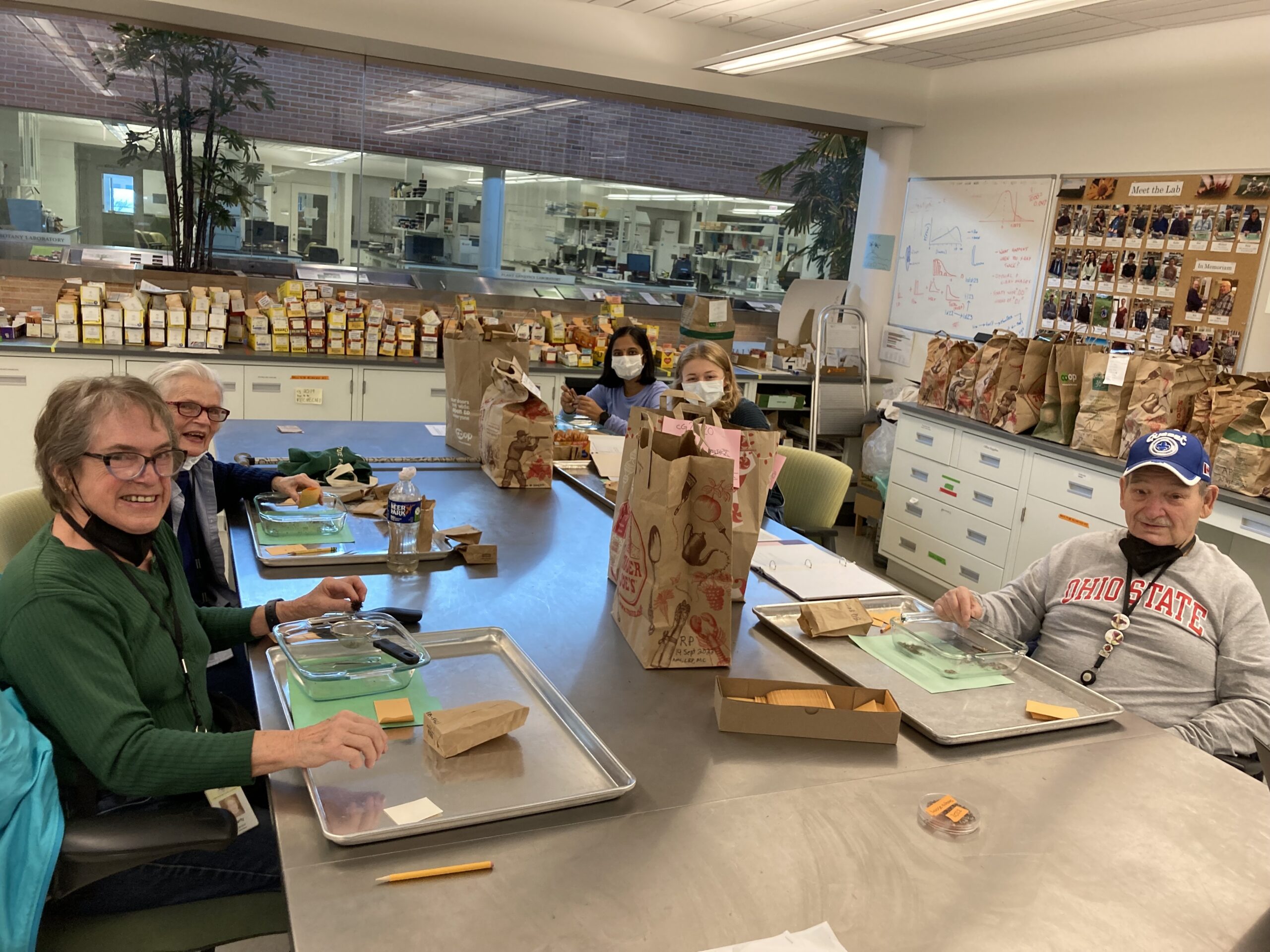
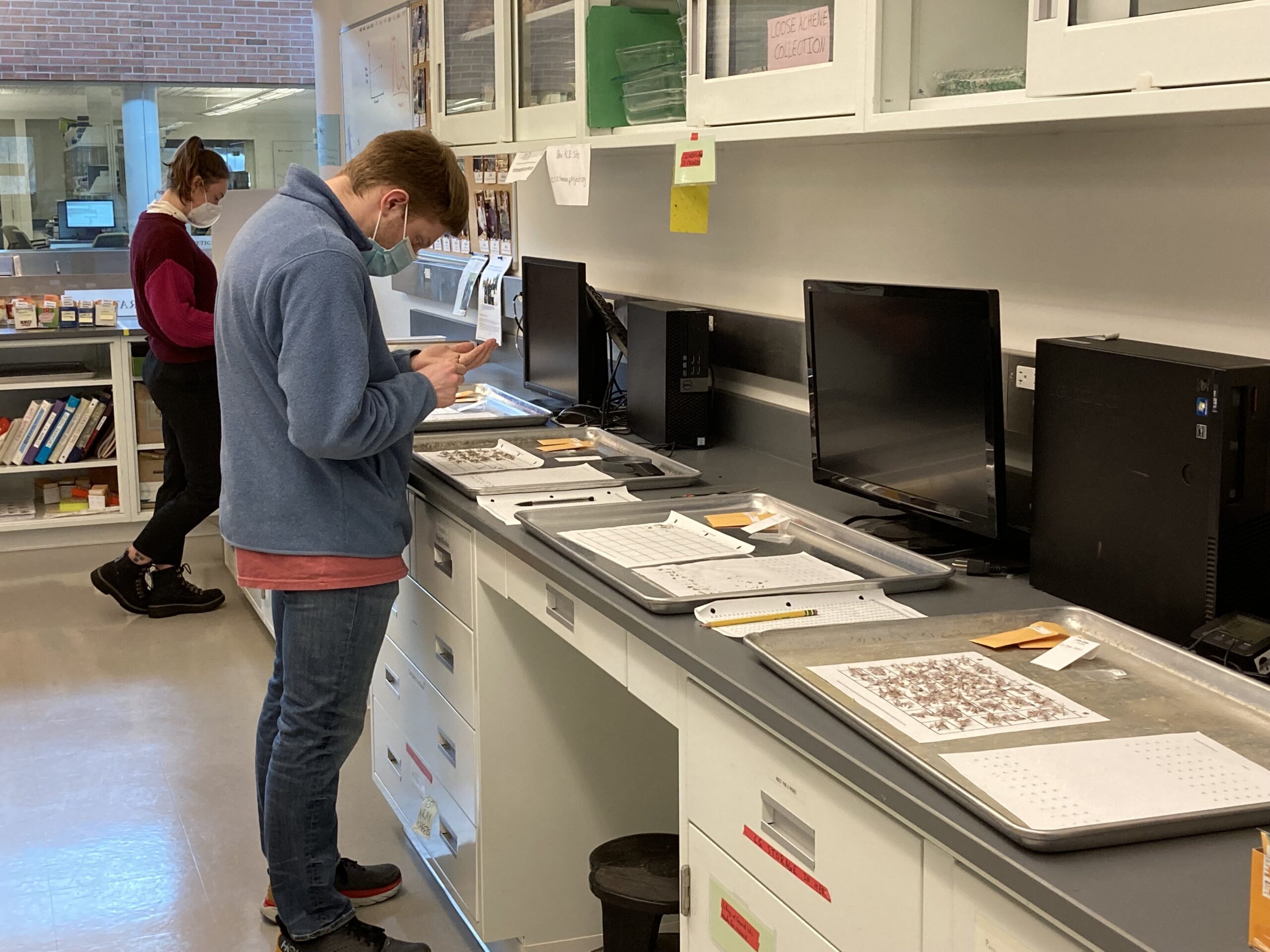
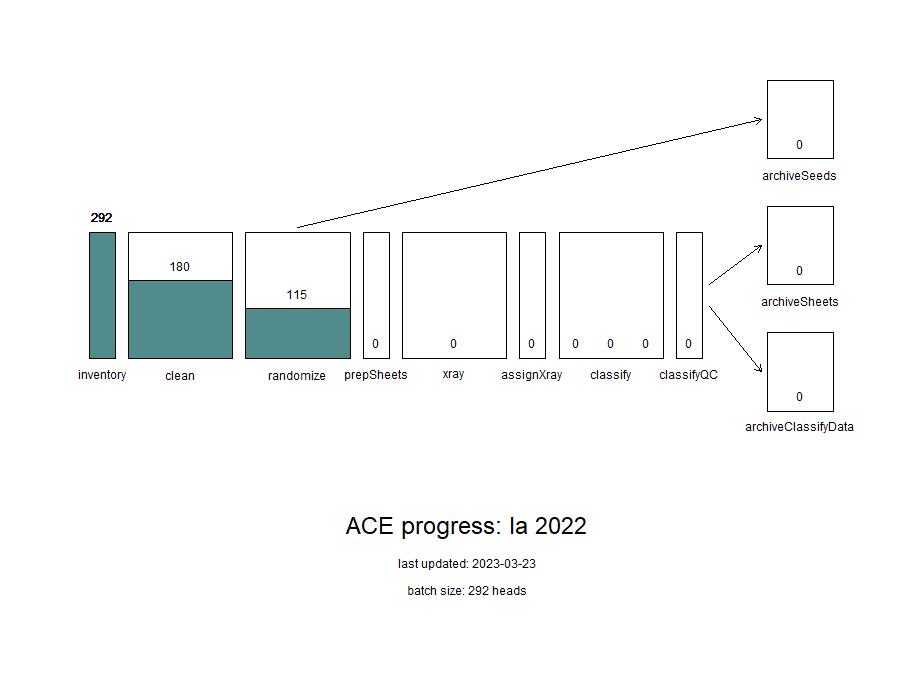
I know it has been a while since I last gave you all an update, but we have some good news to share! We managed to finish cleaning the third batch and are close to completing randomization for the second batch. I will say our progress has been pretty steady before the last update I shared with you, but we decided to out some ways to accelerate processes, such as randomization. We created an assembly line (shown in the image above). We tasked people to either set up the stations by pouring and spreading out the achenes onto the randomization grids or randomly select grids in which achenes will be inspected for predation. We found this setup to be much more efficient, and hopefully, by the end of next week, we may have three batches fully cleaned and randomized. However, our initial goal of completing five batches may be somewhat too ambitious, so instead, we decided to just focus on three batches so there may be time to collect and analyze the data. In the figure below, you will find our overall progress made on the project, and given that my focus would be on studying predation rates on Liatris plants, the stuff that comes after randomization does not necessarily apply to the findings I will need. With that said, those other sets of data will most likely be of use for other studies, and the Echinacea Project will most certainly take a look into those things. Overall, things are looking good for us with the project, and I cannot wait to see the results soon.
P.S., I did not have a chance to specifically address my project’s intentions in an ABT prompt, so here it is: “We know that Liatris plants get eaten more often than Echinacea plants, and predation rates tend to be higher in the absence of fires, but we do not know which types of which types of Liatris plants may be more likely to be eaten than others. Therefore, we are studying how the number heads of a Liatris plant affects the predation rate on the plant’s achenes.”
Pollinators are declining worldwide, a phenomenon that some people are calling the insect apocalypse. There are many factors driving these population declines, and loss of habitat has been identified as one major cause of insect demise. In our study area in western Minnesota, we have seen numerous prairie patches converted to agriculture over the years. However, we don’t know how the bee community has changed over time across the landscape. To investigate these questions, the Echinacea Project started the Pollinators on Roadsides project back in 2004, and we collected another year of data this past summer. In the fall, we brought 7 coolers of insects back to the lab at the Chicago Botanic Garden.
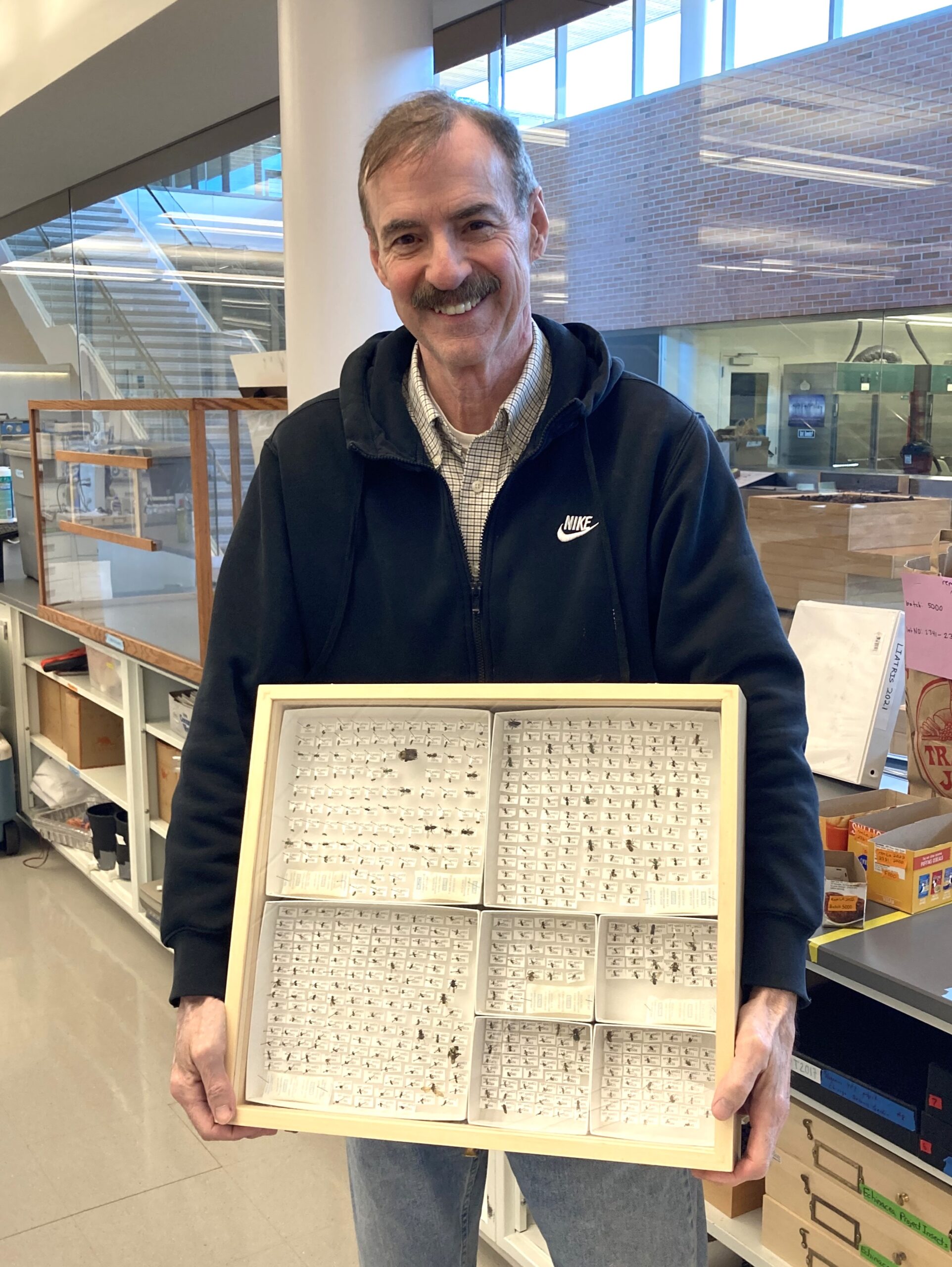
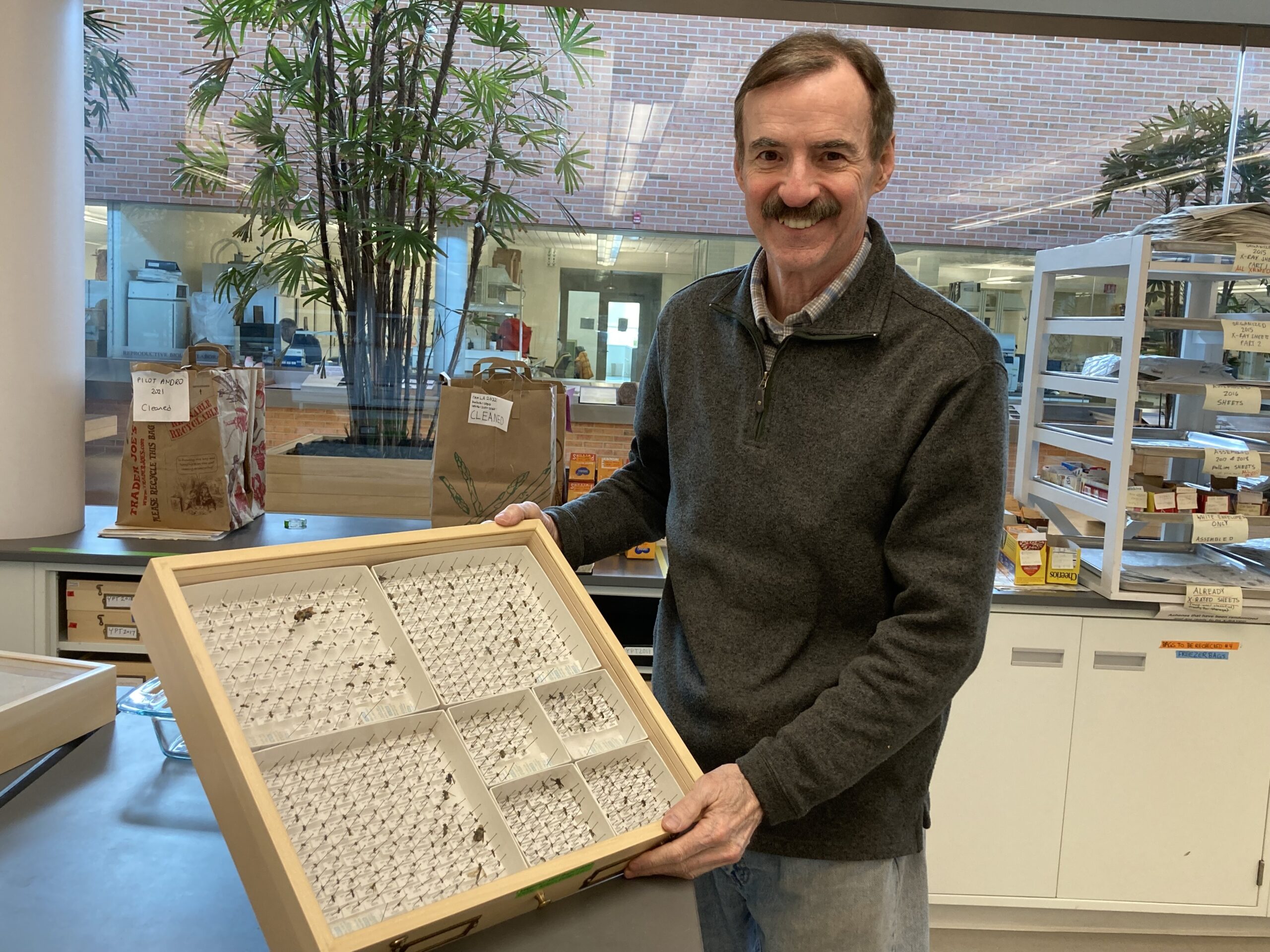
This winter and spring, volunteer Mike has been busy as a bee pinning all the specimens so we can send them to Zach Portman, a bee taxonomist at the University of Minnesota. This week, Mike started working on the last cooler of bees! So far, he’s pinned 680 insects collected in 2022.
The 610th bee from summer 2022Mike shows off the 2022 bee collection
Funding for this project was provided by the Minnesota Environment and Natural Resources Trust Fund as recommended by the Legislative-Citizen Commission on Minnesota Resources (LCCMR). The Trust Fund is a permanent fund constitutionally established by the citizens of Minnesota to assist in the protection, conservation, preservation, and enhancement of the state’s air, water, land, fish, wildlife, and other natural resources.
We made it to the third batch for the cleaning procedure! After completing the first batch for randomization last week, we needed to pick things up on cleaning, and we hit another promising milestone. Ultimately, we wanted the cleaning process to stay well ahead of the randomization process, and we did manage to get ahead of ourselves some on randomization last week. We made much more progress in that department than I had envisioned, and we caught up a little too much concerning cleaning progress. We focused on cleaning all this week, and now here is where things stand. There is still much more to go, but we are steadily getting there.