|
|
The Echinacea are blooming!

And all of the team members are busy working on their individual projects! Here’s what we did today:
-Maria woke up at the crack of dawn to observe the Dicanthelium at Hegg Lake and even try out some crosses!
-Shona was also at Hegg Lake this morning painting the heads of 9 different Echinacea for her pallida-angustifolia hybrid research.
-Lydia also painted Echinacea heads today. She spent the morning at the Around Landfill site working with Gretel to prepare for her compatibility crosses.
-Jill and Kelly tag-teamed this morning to combine Kelly’s work on phenology at Around Landfill, Northwest of Landfill, and North Northwest of Landfill with Jill’s ant survey plot preparation at Staffanson Prairie Preserve.
-Andrew perfected his bee-catching skills this morning in preparation for his pollinator observation research. He caught over two dozen bees right in Hjelm House yard!
-Katherine was also hard at work in C1 this morning. She’s making great progress on her aphid addition/exclusion experiment.
-Stuart plugged away at map making in Hjelm House this morning. He’s using data from a GPS device in order to make maps of the locations of experimental plants in the remnants. They’re incredibly useful when you’re trying to keep track of over 50 plants in the same remnant.
Work proceeded as usual this afternoon despite a brief thundershower. In addition to continued individual project work, Lydia and Shona trimmed the rest of the Ash in the Common Garden. Here’s to a productive Wednesday!
As a continuation of Katie Koch’s experiment in the summer of 2010, I am investigating the pollinator efficiency of bees that visit Echinacea.Project Proposal AK 2012.pdf
Here are the day’s events:
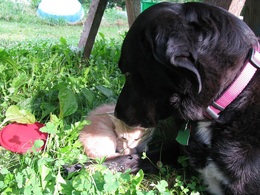
When we arrived at work this morning we came upon a poignant scene. The Wagenius’ family dog, Roxie, had was nurturing an abandoned kitten:
I’m happy to say the poor creature has found a home with Kelly and her parents. Thanks to her loving care (and Roxie’s), it is now purring and mewling with gusto.
Once the kitty situation was resolved, we moved on to more serious business. Shona, Maria, Kelly, and Lydia spent the morning working on their individual projects while the rest of us assessed flowering phenology in two experimental plots (C1 and C2).
A lot of work goes into maintaining an experimental plot. In order to keep C1 from being overgrown by woody plants, several of us spent the afternoon trimming ash trees and sumac. The rest of us made progress on our individual projects. Thanks to help from Kelly and Lydia, Jill and I succeeded in setting up ant traps for all but one of our field sites. I’ll post more about that later.
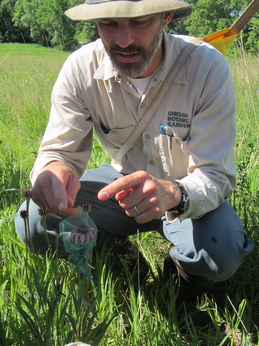
Last week was a busy and fun one for Team Echinacea 2012; no two days were the same. We wrapped up some of the first summer projects and started to transition into the second phase of the summer. We completed evaluating the recruitment plots, began to record their GPS locations, conducted demography and phenology observations in the common garden, and perhaps most notably, completed round one of seeding searches with the west (and recently burned) section of Staffanson prairie with help from Amy Dykstra, who came to visit on Friday. In addition to all the progress made on the long-term projects, we also spent multiple rainy mornings working on our individual research projects, the proposals for which have been recently, or will soon be posted here on the flog.  Stuart Instructs us on the proper field techniques for cross-pollination, pollinator exclusion, and painting flowers so we can keep track of what we’ve just done. Stuart Instructs us on the proper field techniques for cross-pollination, pollinator exclusion, and painting flowers so we can keep track of what we’ve just done.
After a short weekend, we started up working again this Monday with a morning dedicated to our independent projects, time which we all used to get out in the field and get our hands dirty. Ruth stopped by today and lent a hand and some very welcome advise, and joined the crew in the afternoon to do some weeding in the common garden. We clipped, pulled, and trimmed Buckthorn, Ash saplings, Birdsfoot Trefoil, Sweet Clover, and Sumac.
I don’t know if I’ve properly introduced myself on here.
My name is Katherine Muller and I’m a second year Master’s student at Northwestern. I hail from the lovely, temperate San Francisco Bay Area. I’m not sure whether it was my thirst for adventure or my contrarian nature that led me to the Midwest–first to Oberlin College in Ohio, then to Northwestern and Minnesota. In any case, I now have the privilege of complaining about the weather.
This is my second year with the Echinacea Project. Last year I began research on aphids and ants in Echinacea angustifolia. I have two projects that I plan to continue this summer:
My first project is an experiment examining the effects of aphid infestation on Echinacea. Last year, I selected 100 non-flowering Echinacea, excluded aphids from 50 plants and added aphids to the other 50. I am repeating the experiment on the same plants. I performed my first experimental treatments on Saturday and Sunday and should soon be able to analyze my results from last year.
The other project I plan to continue this year is a survey of aphids and ants in a large experimental common garden. Last year I selected a 20x20m section of the experimental plot and led a biweekly of ants and aphids. I started this because I was interested in seeing how aphids spread over space and time. This year I will examine the same area to see how aphid infestation changes from year to year. Thanks to everyone’s help, I collected my first dataset on June 15th. Considering the unusually warm winter, there should be some interesting developments this year.
My third project is to assess aphid and ant abundance among several Echinacea populations. My original plan was to survey aphids and ants on a representative sample of the entire population, including juvenile and non-flowering plants. As it so happens, Amy Dykstra and Daniel Rath conducted a similar survey in 2009 (you can read about it in the archives). For all their hard work, they found very few plants with aphids. Of the plants they surveyed–flowering plants had a much higher rate of aphid infestation than non-flowering plants–32% for flowering versus 5% for non-flowering plants. I decided to take a different approach and focus my sampling effort on flowering plants. Specifically, I will survey aphid and ant abundance on plants that flowered this year and last year. This will allow me to assess whether flowering in one year influences the likelihood of aphid infestation the following year.
That’s about it for now. I’ll be posting my progress on here as it happens. This summer I have the privilege of collaborating with Jill Gall, an REU student from College of the Atlantic. She’s been hard at work preparing her project assessing ant diversity in prairie remnants, which I’ll let her tell you about.
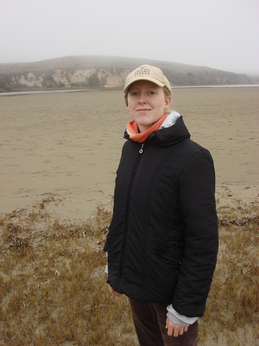
And because everyone else is doing it, here’s a picture:
I am slow to arrive at K-town this year because I am in transition of careers. I am moving from Great Plains Lutheran HS in Watertown, SD to Martin Luther College in New Ulm, MN where I will be a teaching professor in the biology department. I am excited to teach ecology in the fall with a summer background with team echinacea. I will still be only about 150 miles from K-town, just a different direction. I look forward to meeting the 2012 team and starting to help with projects. Our family moved the earthly possessions last week and we are settling in after making a wedding/reunion trip to Wisconsin.
Here is the first copy of my project proposal for studying hybridization between E. angustifolia and E. pallida. I’m sure you will see new drafts once I start to have a better idea of how it is all going to work out.
echinacea project proposal.pdf
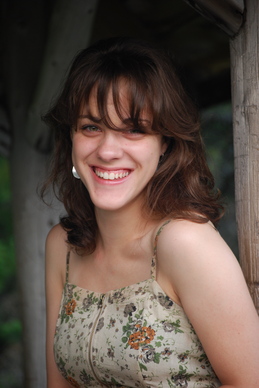
Hi! I’m Jill and I’m from Sewaren, New Jersey–exit 11 off the turnpike, in the heart of oil refineries and old factories. Sick of the polluted air and lack of wilderness, I fled home for Bar Harbor, Maine to attend College of the Atlantic (COA), a tiny liberal arts school tucked away on the coast of Mount Desert Island. There I study Human Ecology along with every other student– a one-major curriculum allowing every student to independently design his or her own course of study. Entering my senior year this fall, I’ve spent my time at COA studying the relationships between soils, plants, and arthropods on contaminated and other ecologically “harsh” sites–sites distinguished by xeric, nutrient-poor, nutrient-imbalanced soils laced with high levels of heavy metals. I’ll be completing my undergraduate thesis “Diversity and metal content of arthropods on adjacent serpentine and granite outcrops on Deer Isle, ME” this year, hopefully with a manuscript in the works.
Here with The Echinacea Project, I plan to study the ant communities on the prairie remnants and the prairie preserve to provide baseline data for further projects on the ants of the prairie. Like Shona, I’ll post my project proposal on here once it’s polished…
I’m looking forward to the rest of the summer packed with fulfilling fieldwork, great experiences, and wonderful people!

Last Thursday we planted seedlings from Nicholas Goldsmith’s cross pollination experiment in Josh’s Garden. Here are the data sheets with planting information.
scannedDataSheet_Hybrids_JoshsGarden.pdf
Hybrids_JoshsGarden.csv
Hybrids_JoshsGardenMetaData.doc
Dearest Echinacea Project,
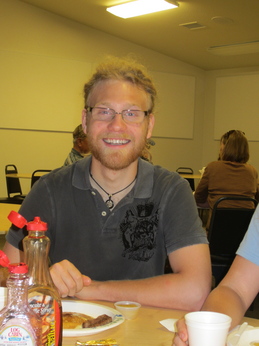
It has been great getting to you a bit these last 3 weeks, now allow me to formally introduce myself. I’m Andrew Kaul, a rising senior at St. Olaf College in Northfield MN. My academic interests are focused in terrestrial ecology, especially applications to conservation and restoration of endangered biomes. Outside of the classroom, you’d most likely find me listening to, or making music. I sing tenor and play a whole spectrum of percussion instruments, my favorite being bongo drums. My other hobbies include running, watching movies, board games, and of course spending time in nature. Since i was 9, the best week of my year has always been an annual camping trip with some of my extended family. I love trail bike-riding, hiking, and fishing. i’m really excited to be here in Kensington learning about habitat fragmentation and I can’t wait to post my project proposal. Be looking for that soon! Having a great time at the Runestone Days pancake breakfast: Kensington is such a fun little town!
|
|