Today was the fourth collecting trip to the Pope-Douglas County landfill. What a beautiful day for collecting! And what diversity! There were many new plants I had not seen, some that have yet to begin flowering. I lament not being able to stay longer and collect more. I’m sure I could add 50 more species. I’ll definitely be back next year and start earlier to get a full species list for the site. For those of you who have missed out on seeing some of the fascinating plants out there, pictures from today’s collecting trip, courtesy of Christine, will be forthcoming. As for the collections (including a nettle that still has my thumb stinging), I made 27 collections, including big bluestem, side-oats gramma, dahlia, onion, honeysuckle, sage, ragweed, goat’s beard, milkweed, sweet clover, golden alexander, and goldenrod. Who knew I’d ever make visiting a landfill a habit?
|
||||
|
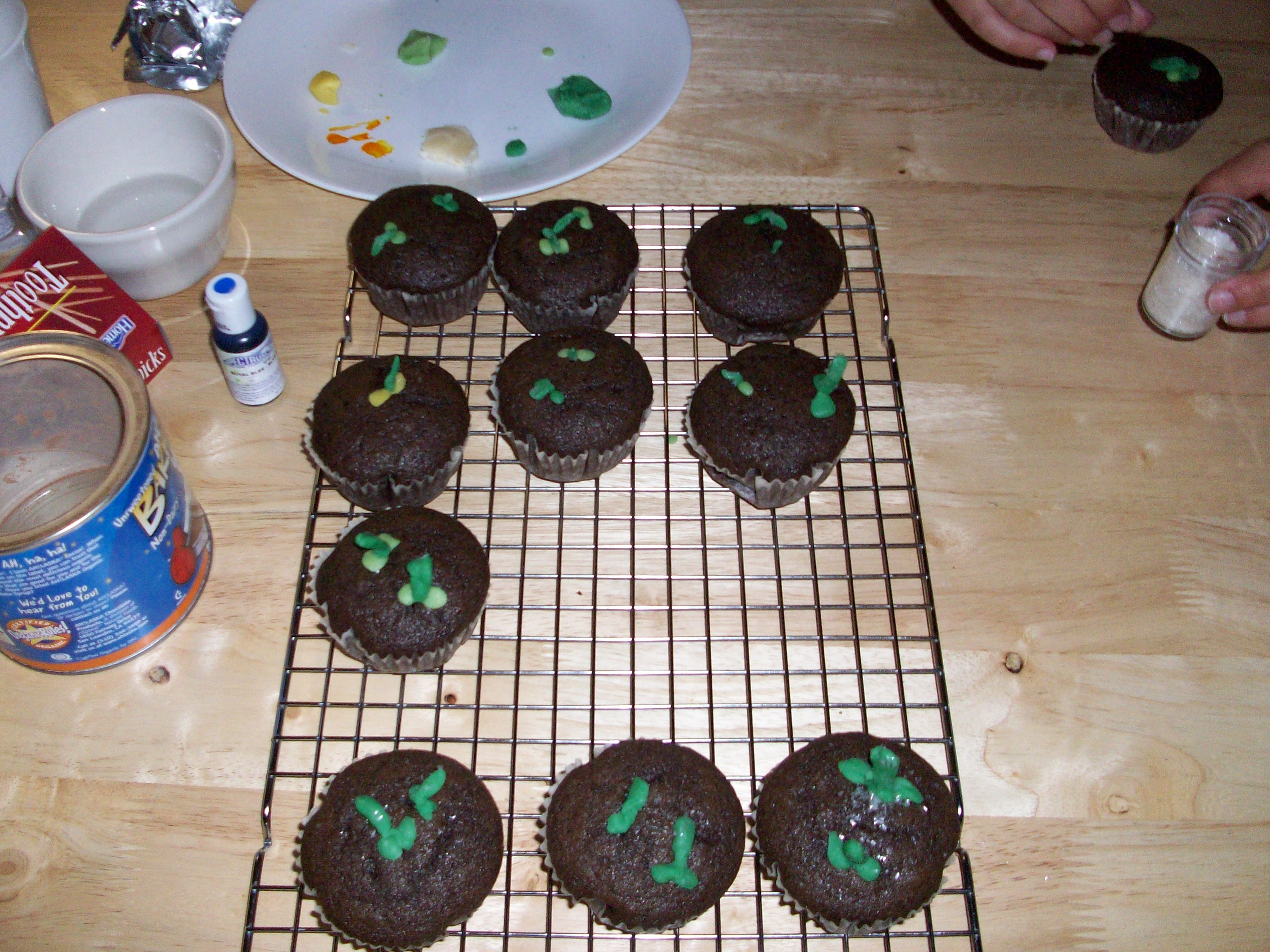
Hey team Echinacea, This summer, a very large portion of our lives has been devoted to that Purple Coneflower, Echinacea. This plant has infused itself into our conversations, dreams, birthday cards (my little sister has one coming with a bee and a purple flower,) and yes, baking. Can you guess what these are?
Seedling cupcakes with vegan chocolate earth, marzipan greens, and sprinkles for the pubescence. Megan’s idea. What about this?
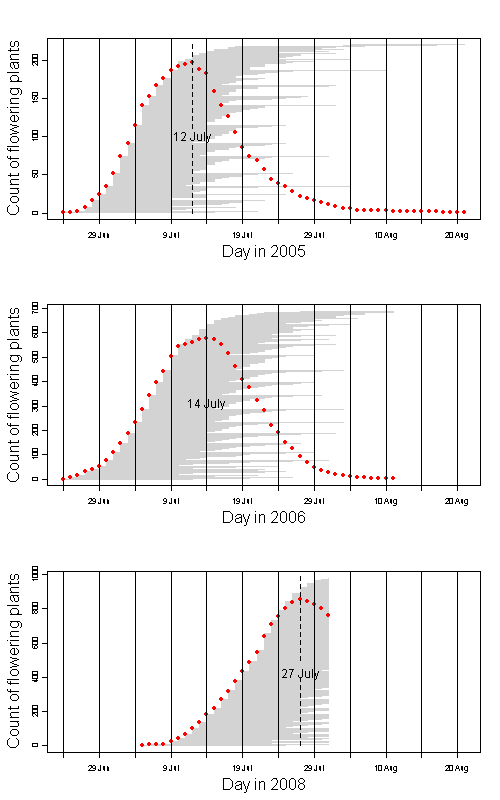
Why, that is an Echinacea leaf chocolate chip cookie, of course. Even if we cannot eat the Echinacea, at least it inspires us to bake delicious desserts :). Echinacea angustifolia is flowering late this year. Peak flowering this year was 27 July. Peak was 12 July and 14 July in 2005 and 2006 respectively. Here’s a rough graph that shows flowering phenology in these years. Red dots are the count of fl plants on each day. Horizontal gray lines indicate days that each plant shed pollen.
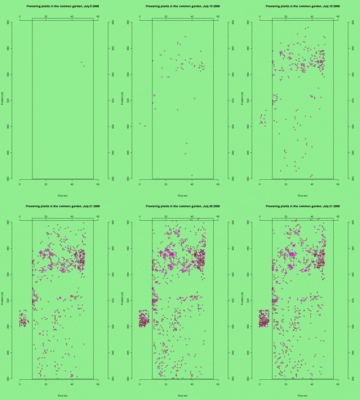
See the updated animation of flowering in the common garden experimental plot. This animated GIF file is a map of all plants that flowered in the CG on each day from July 5 to July 30th. Each dot represents a plants that’s flowering on the day (see upper right corner).
Here is a picture of the “inside-out cucumber” that Per brought into the Hjelm house today. But is it merely a strange vegetable or an apparition of the Virgin Mary? The vegetable says you must make a pilgrimage so that it can give you blessings. While perusing the BBC Mundo website to improve my Spanish, I ran across an article explaining the relation between tracking bees and tracking serial killers. And apparently, these British scientists are using tiny, tiny radio transmitters to track their bumblebees. An article just about the scientists from February was linked to on the page, and that article even has a video on how they attach the transmitters! Again, no ice packs, but no dominant hand and forefinger, either. Using forceps, it looks like they have the bee put in a special container that presses the bee against a mesh with foam, and then place the tag. Pretty cool, but I think a Melissodes is a little to jumpy for that, compared to a quiet bumblebee. Food for thought, though, I suppose. Thanks, BBC!
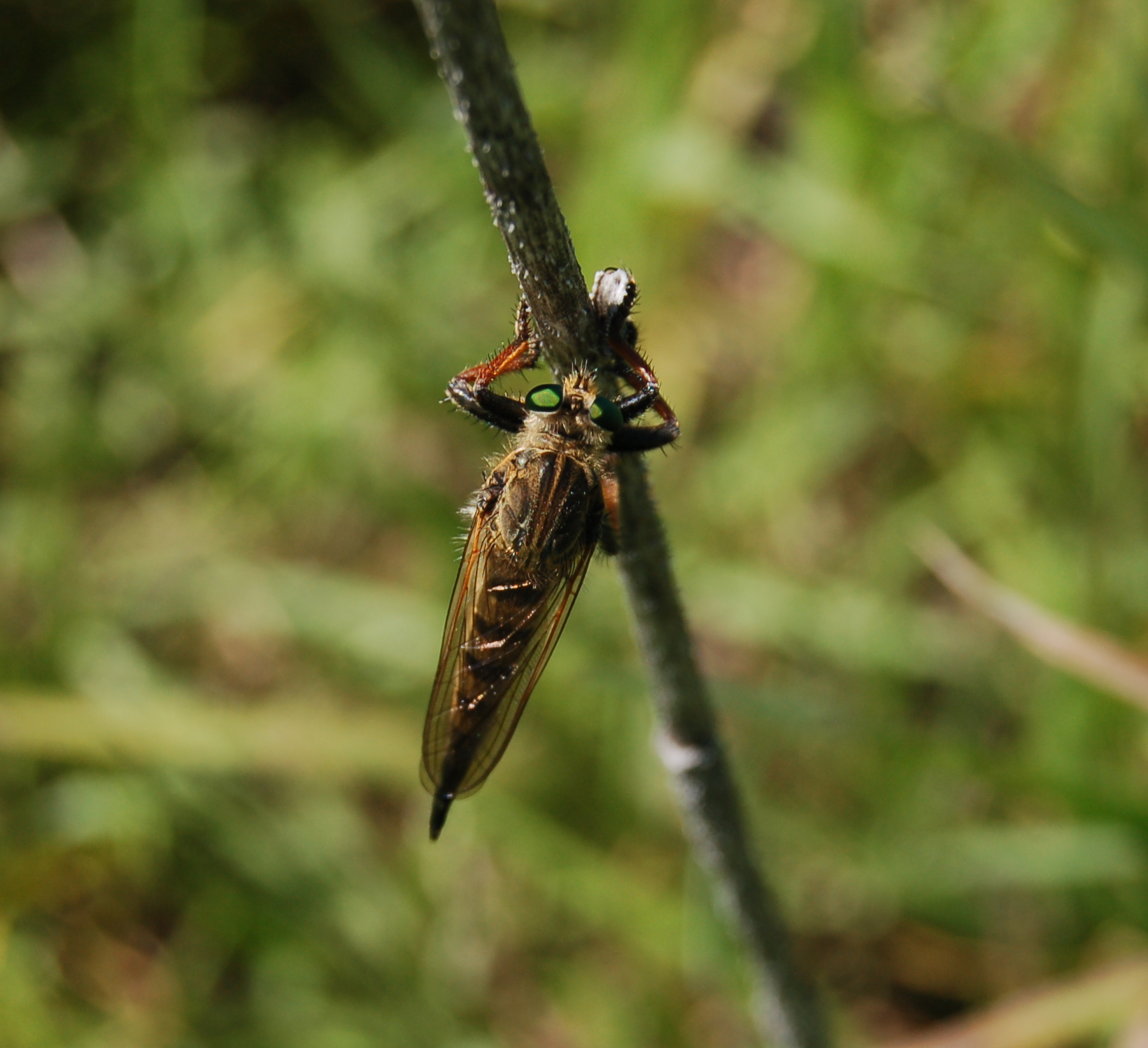
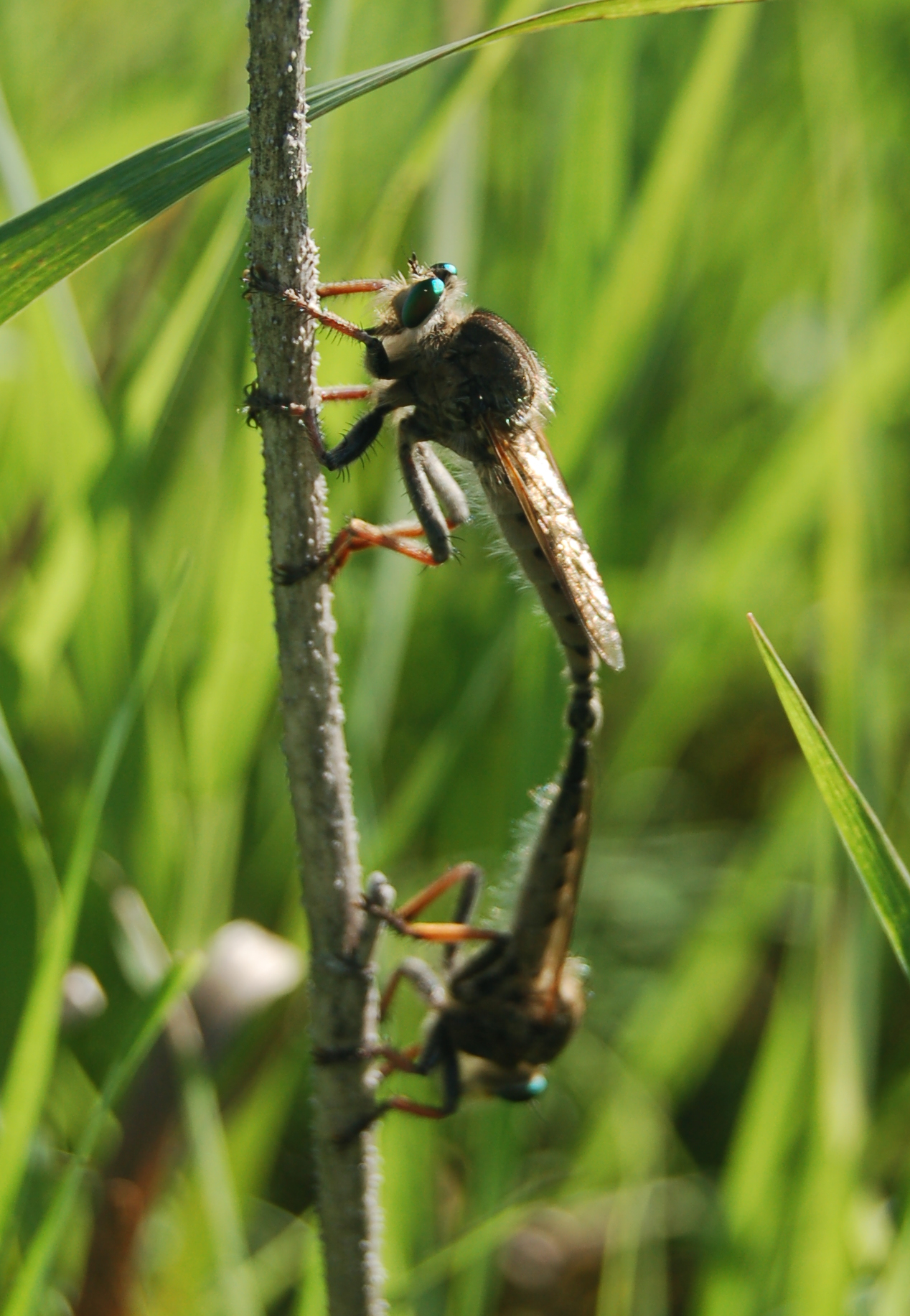
Robberflies can catch bees in midair. I’ve never seen it myself but I know that’s not all they can do….
OMG!
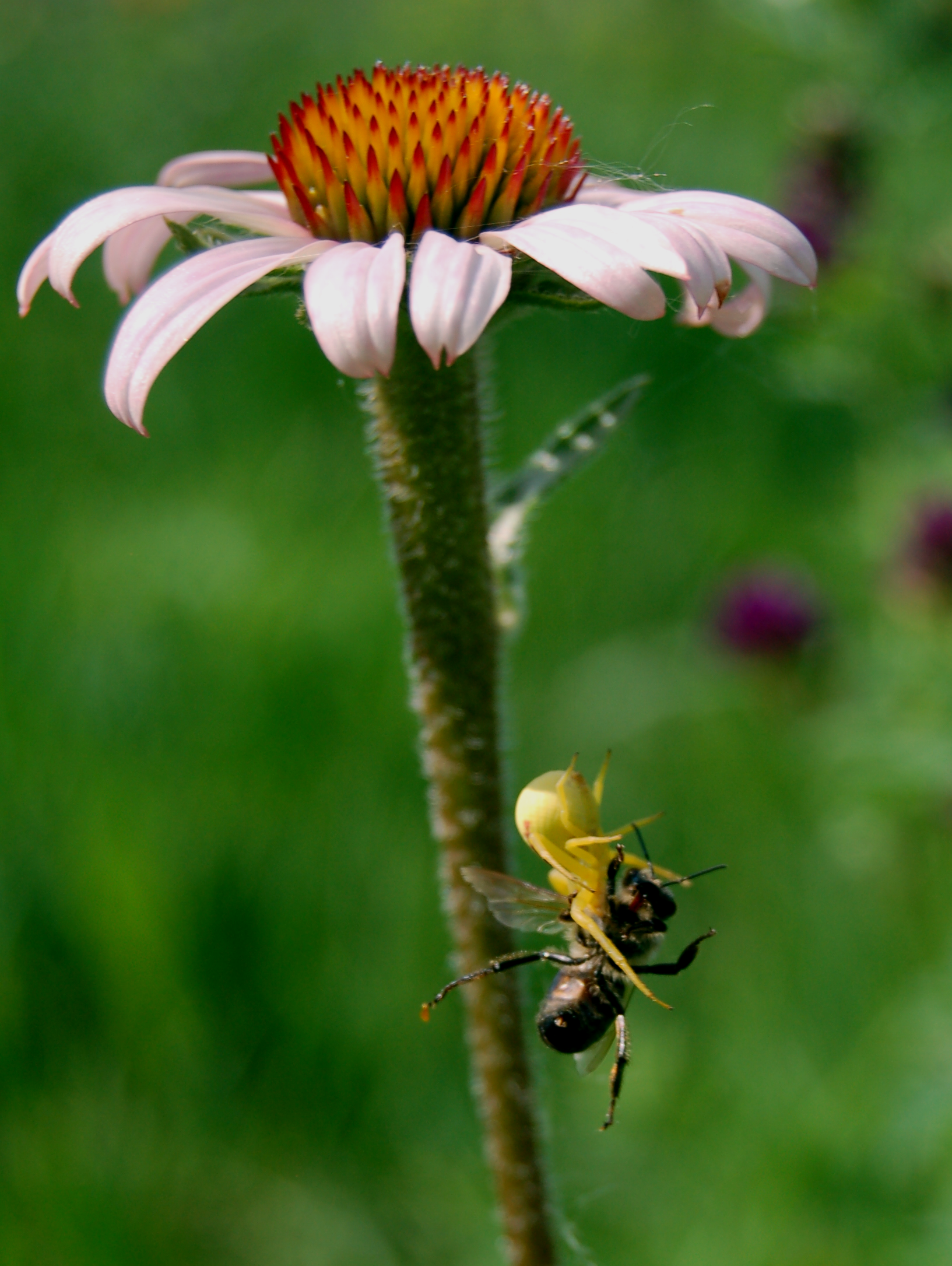
The spider could not be reached for comment.
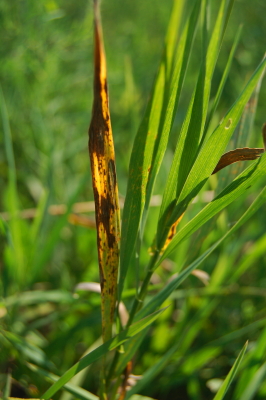
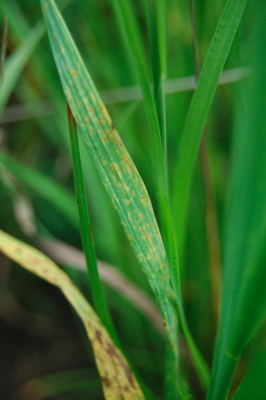
There’s something going on with the grasses in the common garden. I’m not sure whether it’s crown rust, but it might be. Hey everyone, We’ve been working at organizing and analyzing our data and just wanted to share some of the highlights with all of you and give some tips for next year’s bee squad. – 9 bee genera recorded We’ll post some nice flight maps once we have them put together (Denise is quickly becoming an R expert). And now some advice for next year… – For us, it worked well to set 15 minute observation/catching time blocks and to then check on all of the bees in the cooler after those 15 minutes. That way we weren’t trying to catch and track new bees while also trying to paint and track our already caught bees. The bees we saw this year were: That’s all for now. We hope you guys are having a great time and getting a lot of measuring done. Stuart, if you have a chance we’d love to get those photos you took on the 17th so we can try to match them up to specific flights. And Megan, thanks for the homemade candy bars! |
||||
|
© 2026 The Echinacea Project - All Rights Reserved - Log in Powered by WordPress & Atahualpa |
||||

 This legend shows plants with 3, 1, and 2 heads flowering (left to right).