|
|
Here’s a list of our objectives for the week. Our goal is to gain greater understanding of the ecology and evolution of plants and their associated insects in fragmented prairie habitat. This week will be a peak flowering week for Echinacea this year (1 – 2 weeks earlier that most years). We will spend most of our time observing things related to reproduction. Get down, Echinacea!
Flowering phenology–successfully mating depends on being at the right place at the right time. We can map _where_ all the action occurs later, because our plants don’t move much. Now, we have to figure out _when_ the action is happening and which plants are participating. Some plants are almost done flowering and others are just thinking about flowering.
Style persistence is a signal of which plants are not receiving compatible pollen. We can quantify SP at the same time we observe phenology. We will make phenology and SP observations in the common garden on Monday, Wednesday, & Friday and at Staffanson on Tuesday & Friday.
We will set up ~10 video cameras in the common garden each day. Each camera will be trained on a specific head to watch for pollinator visits. If we can figure out how, we will post a video online for your viewing pleasure.
The Bee Team will mark bees on Monday morning and probably Tuesday too. They will train all of us to make good observations and record high-quality data. We will do that all week. Here’s the link to _the_ online bee identification resource for Eastern North America. This is a great resource!
http://stri.discoverlife.org/mp/20q?search=apoidea#Identification
(It’s certainly good enough for our purposes in western Minnesota.)
The KAP team will take photos of our remnants, if the wind allows. They will be all ready to go when it does. We’ll be keeping track of local weather. Here are some key resources:
Kensington general forecast and 48-hour surface wind forecast (from NWS in Minneapolis).
Hoffman general forecast and 48-hour surface wind forecast (from NWS in Grand Forks).
Current conditions at nearby weather stations.
We will take head photos for symmetry measurements in the afternoons. Colin, now that you made one rig, could you easily & quickly make another one? If so, we could have two pairs of folks taking photos.
One afternoon we will take data on herbivory of ray florets in the common garden.
If weather on Thursday permits, we will take a field trip to visit the Western Prairie Fringed Orchid and help Gretel monitor her long-term experiment.
If it rains this week, we will weed sweet clover & thistle in the CG right after the rain stops–or during if there is no thunder. Bring gloves!
Finally, everyone will post a profile with a photo.
I am looking forward to the coming week! I’d better get some sleep so I can appreciate it.
We have finished two weeks of the summer field season and I feel like we haven’t settled into a routine because we have been doing something new and different each day. It’s exciting.
Here’s a recap of accomplishments this past week…
Last week we finished searching for plants in the recruitment experiment. One plant (of ~1000 still alive) is flowering this year; it’s the first plant in the experiment to flower! The plant germinated in spring 2001.
Our high tech endeavors are underway and we have computer infrastructure to support them. Josh has networked the computers, hard drives, and printer. After some anxiety-inducing modifications to the video camera power supplies, we started taking video of pollinators & other visitors of Echinacea heads. Andy previewed a video this morning and it looks great! We still need to get more reliable power sources, but video cameras sure beat sitting on a bucket.
Colin has developed a camera rig to take shots of Echinacea heads in the common garden. We will be able to quantify many aspects of radial symmetry in the heads with the resulting digital images.
We assessed herbivory of ray florets in the common garden. We also looked at damage to disc florets. Jameson began to classify types of damage, but there weren’t that many heads with damage to the disk florets.
The KAP team (Julie, Rachel, and Josh) has made progress. Wind conditions have kept the kites on the ground most days, but they are making ground markers and have prepared the camera and rig. I flew the Sutton FlowForm 16 today in 12-16 mph surface winds at the park in Hoffman. Wow, it can pull. Yesterday, Gretel & I flew the G-Kites Dopero in somewhat variable winds. It was nervewracking.
The Bee team (Amy, Ian, Jameson, & Gretel) has abandoned my (bad) idea of watching bees through binoculars in favor of their much better idea. They are marking Agapostemon virescens individuals with acrylic paint and watching them when they are on the heads. They marked two bees on Friday and saw one on Saturday. Cool. They also have a slick form for entering observations.
We all have been making systematic observations of flowering phenology and style persistence of all plants in the common garden and along a transect at Staffanson Prairie Preserve.
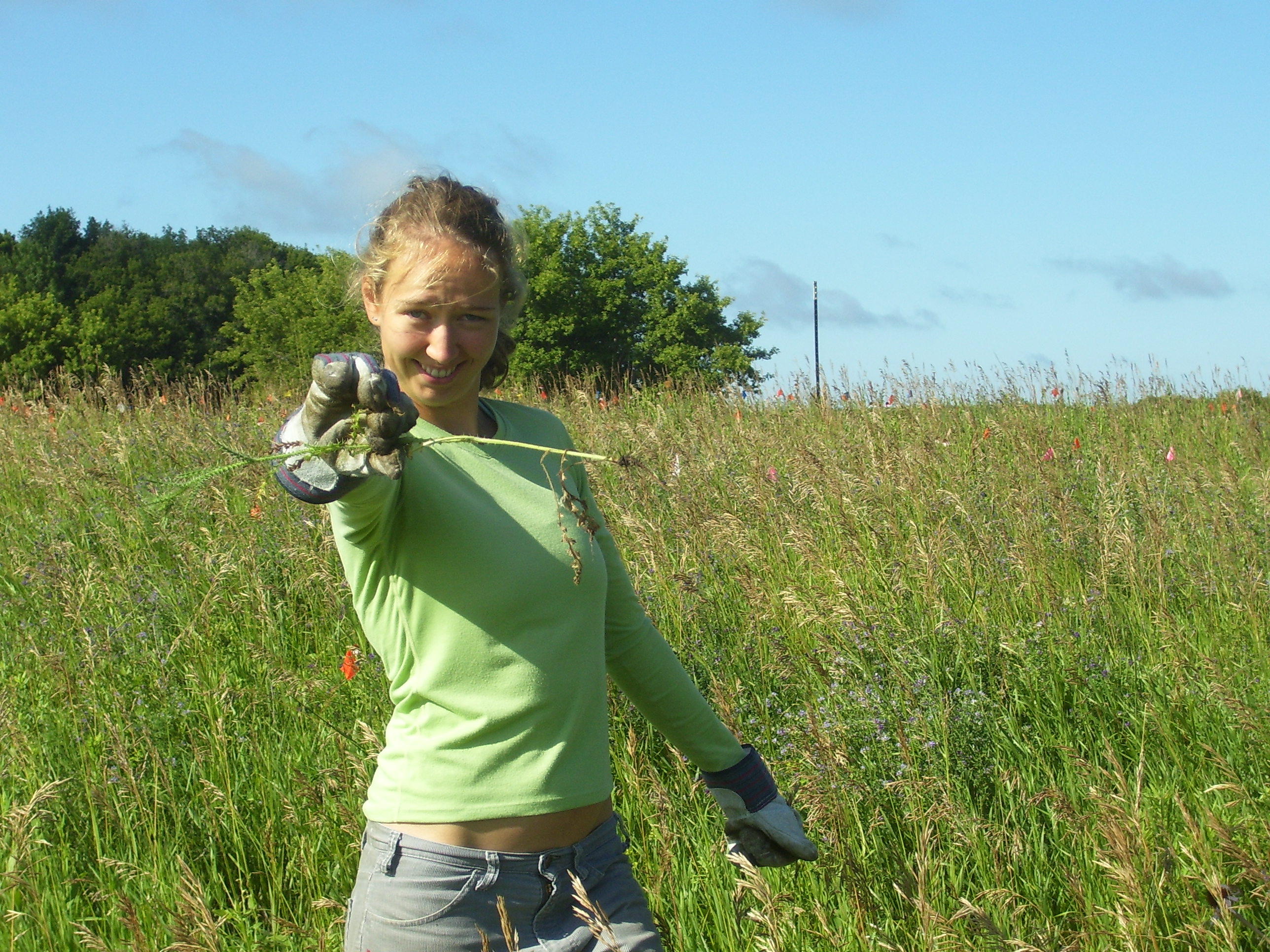
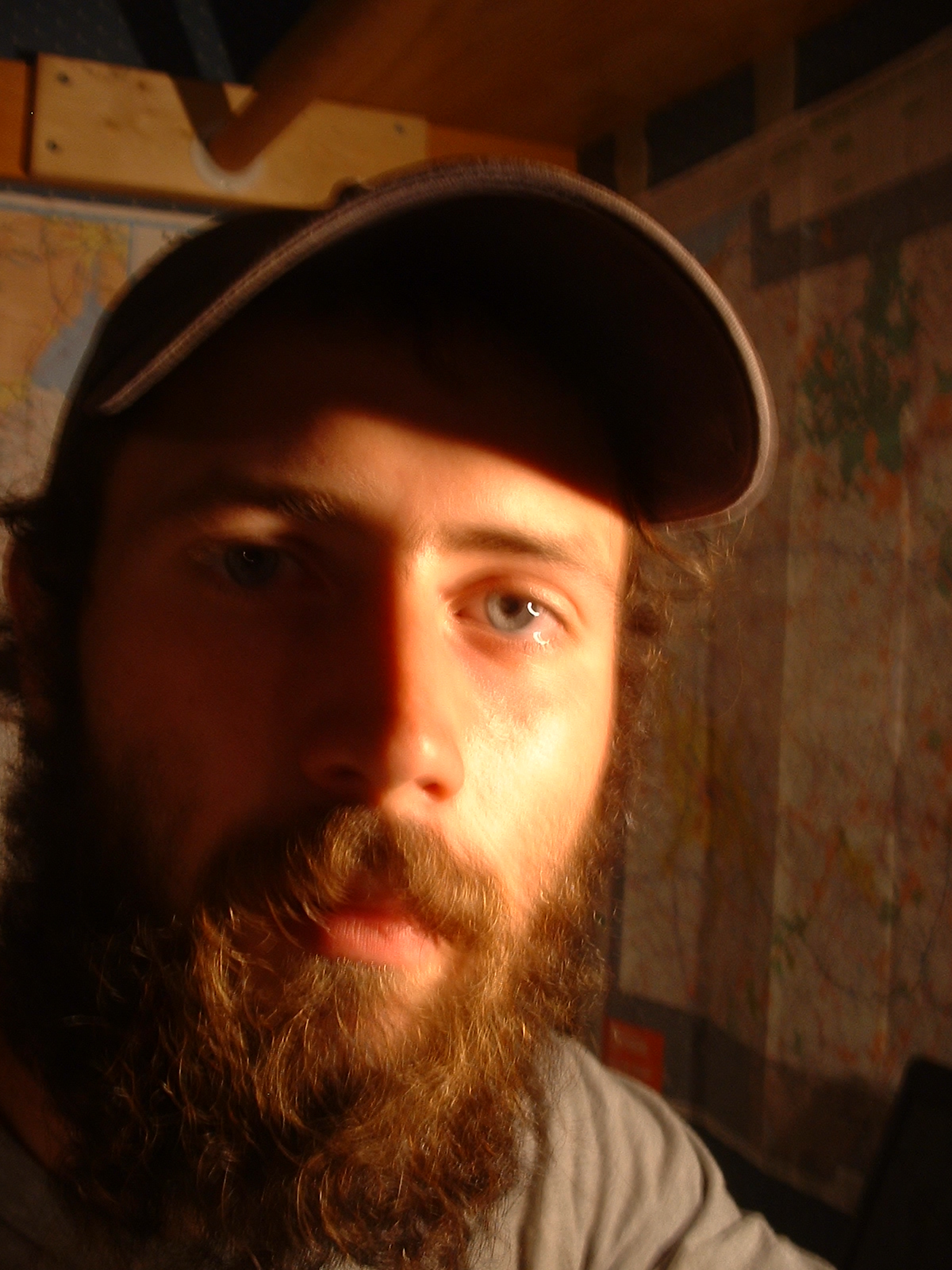
In case anyone was wondering about the ostensibly narcissistic streak in recent posts, I _asked_ everyone on the team to post a profile with a photo.
Good work team Echinacea! We are making great progress in our quest to gain greater understanding of the ecology and evolution of plants and insects in fragmented prairie habitat.
I’m Josh Drizin, a rising senior at Denison University. I’m majoring in Biology (minor in Chemistry). I’m interested in plants, and possibly more specifically in population ecology. I joined Team Echinacea because I wanted the experience in field work and the project sounded interesting. My tick count to date is 10. I rather enjoy photography and quite like listening to music (I need to get back into playing guitar, though).
Let me reintroduce myself. In rare forgetful moment, I left my self logged into the team computer at the farm house, and a prankster who shall not be named shared with the readers of this blog a couple of facts about my life. All of these facts, with the possible exception of the title of the entry are true. I’m a biology major at Carleton, and will be spending the fall semester studying rain forest ecology in Costa Rica. I like being outside in any and all capacities, love ornithology, and enjoy making and consuming delicious food.

I am Colin Venner, Biology major from Denison University. Orignially of Saline, Michigan (just outside of Ann Arbor), I am in the class of 2009 and I am a Taurus (though I don’t fit the profile for one). I enjoy several different styles of music and have been known to “cut a mean rug”. When I’m not counting anthers of flowering Echinacea heads you can find me enjoying life and smiling frequently.

Hi i’m Amy Alstad. I’m 5′ 113/4″. The saddest part of life is that i’m not 6′ tall. I’m from MN and i’m going to be a junior at Carleton college
My name is Julie Nicol. I graduated from Carleton College (Northfield, MN) with a degree in biology in 2007. I am from Seattle, WA and hope to move back at some point. In the meantime I’m here working on the Echinacea project. I really enjoy the area; it’s quite beautiful. In the fall I’ll be heading to Chicago to work for Stuart at the Chicago Botanic Garden until next spring. Eventually I will (most likely) go to grad school, but I intend to spend the next few years figuring out exactly what I want to study.
On a more personal note, I enjoy being outside (hiking, kayaking, diving, windsurfing, etc.), reading (one of my favorite books is The Master and Margarita), and music (I have wide-ranging tastes from joy division to dar williams). I am also interested in and concerned with social justice and environmental issues.
Well, here are some pics from our night of terror in the barn.

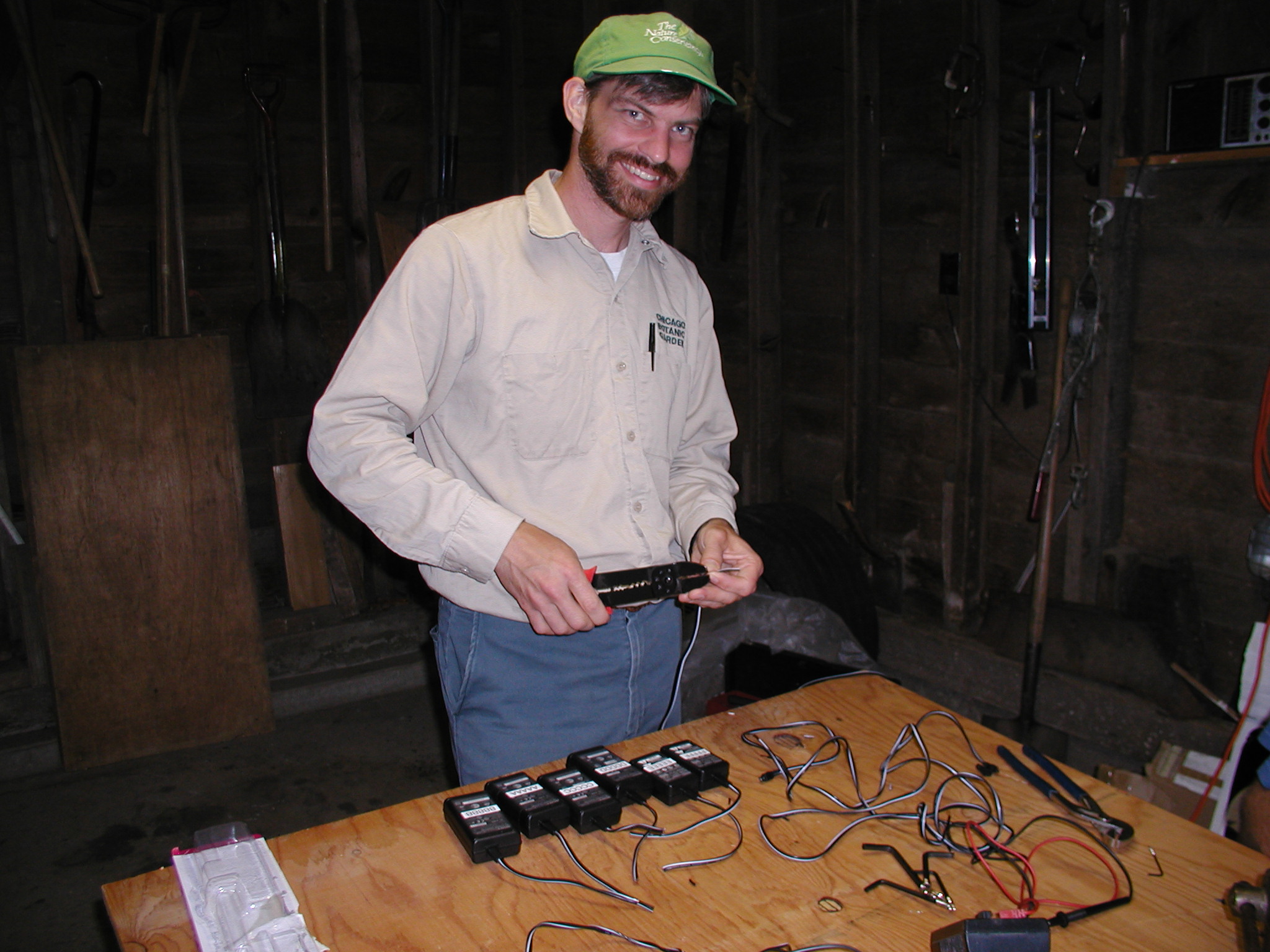
Stuart about to void the warranty on the camcorders
Josh trying to hack the transformer
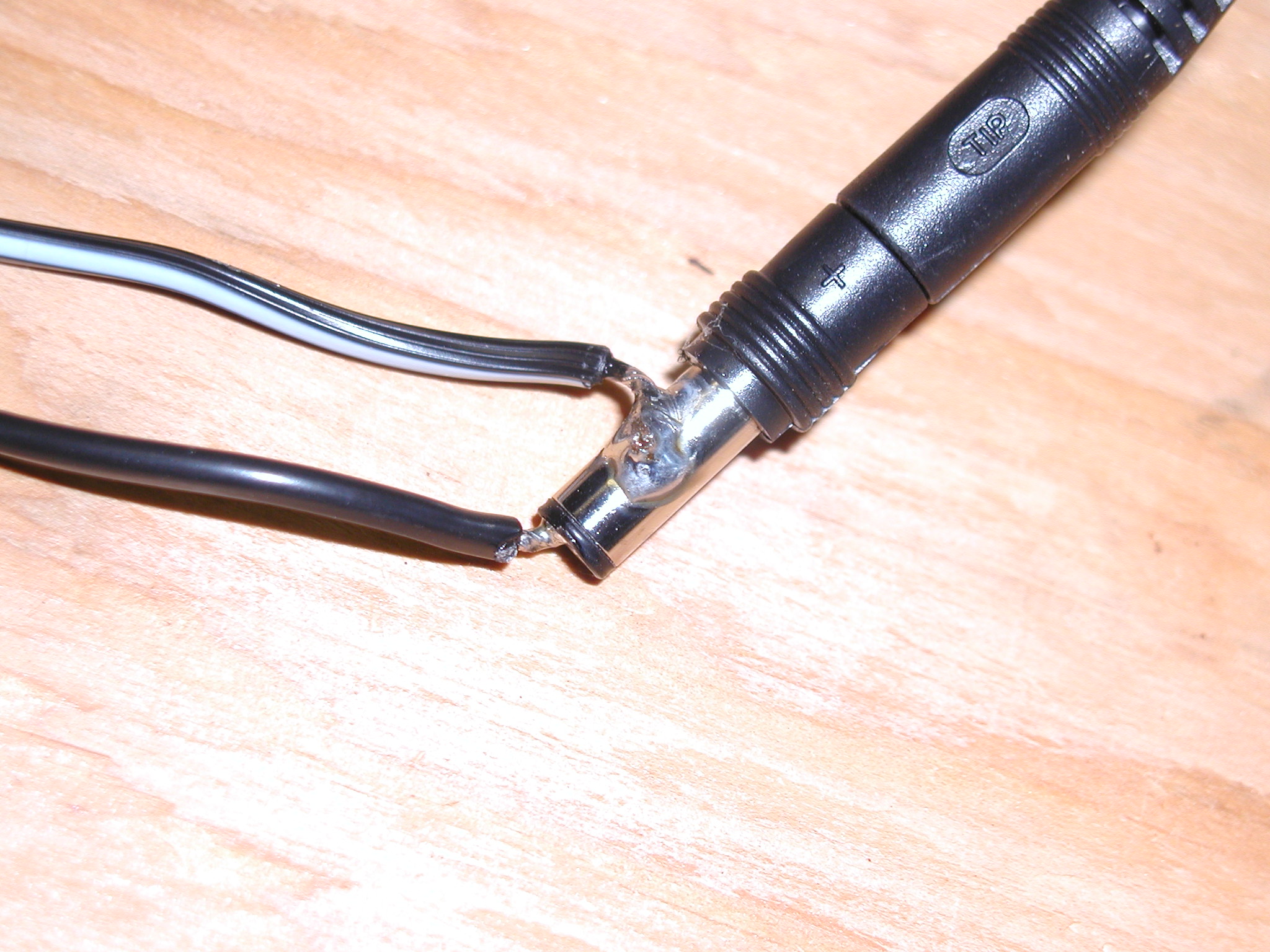
Closeup of soldering job
Well, I got to the farmhouse early to get ready for videorecording. Put the tripods in the big blue tubs for easy transport to the common garden, and then worked on getting random assignments of plants, which were kindly printed out by Stuart.
After assigning plants to different cameras, Colin and I walked briskly to the CG to set up everything. It took much longer than expected, partly because it was the first time and partly because I am really slow. I’m not sure why — I like to be careful and I have always been the slow one in the field, oh well.
One camera did not work after plugging in the doctored battery, so we pondered over it for quite a while. What was more alarming was that even the Sony-supplied battery stopped working in that particular recorder! I was worried at that point, so we tried another Sony battery and camcorder along with the doctored battery and the same horrible thing happened again — no recording and the original battery stopped working! So, we hightailed it back to the farmhouse to figure things out.
After trying different combos of batteries, doctored connectors, and such, we determined that one of the doctored batteries was to blame. Either it wasn’t charged enough, or maybe too much — I will have to check with the voltmeter to find out for sure. It was a relief to know that nothing was permanently damaged — I am nervous about this whole enterprise as it has been quite expensive! But, I am hoping that the data will be worth it.
Andy
|
|