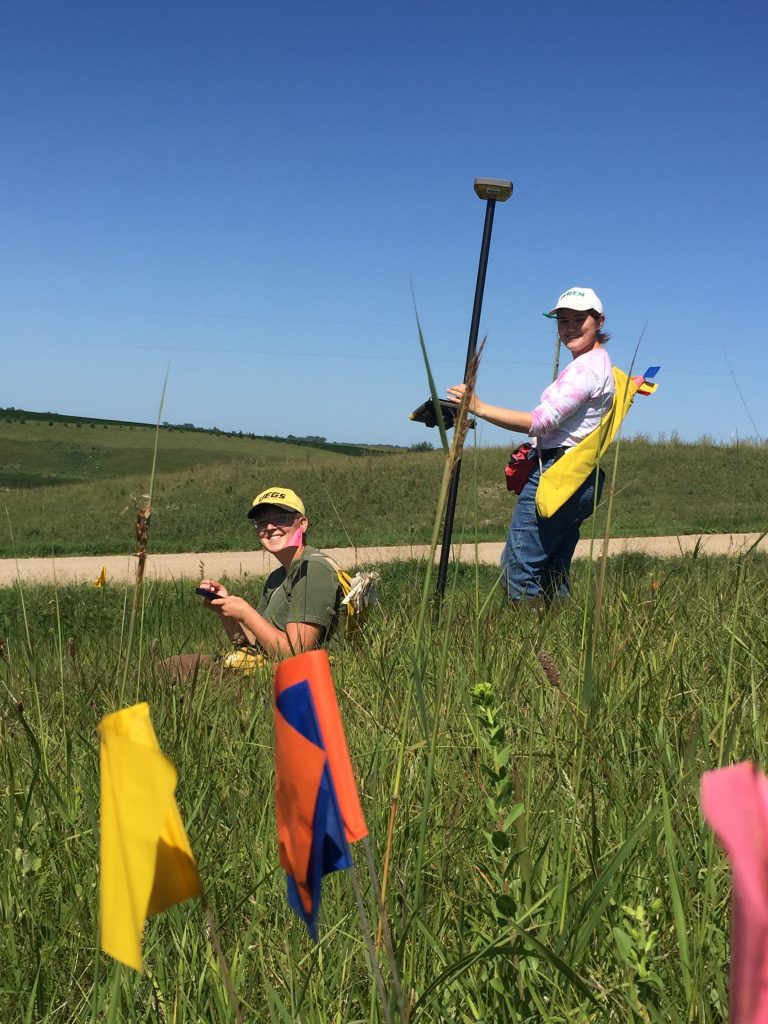
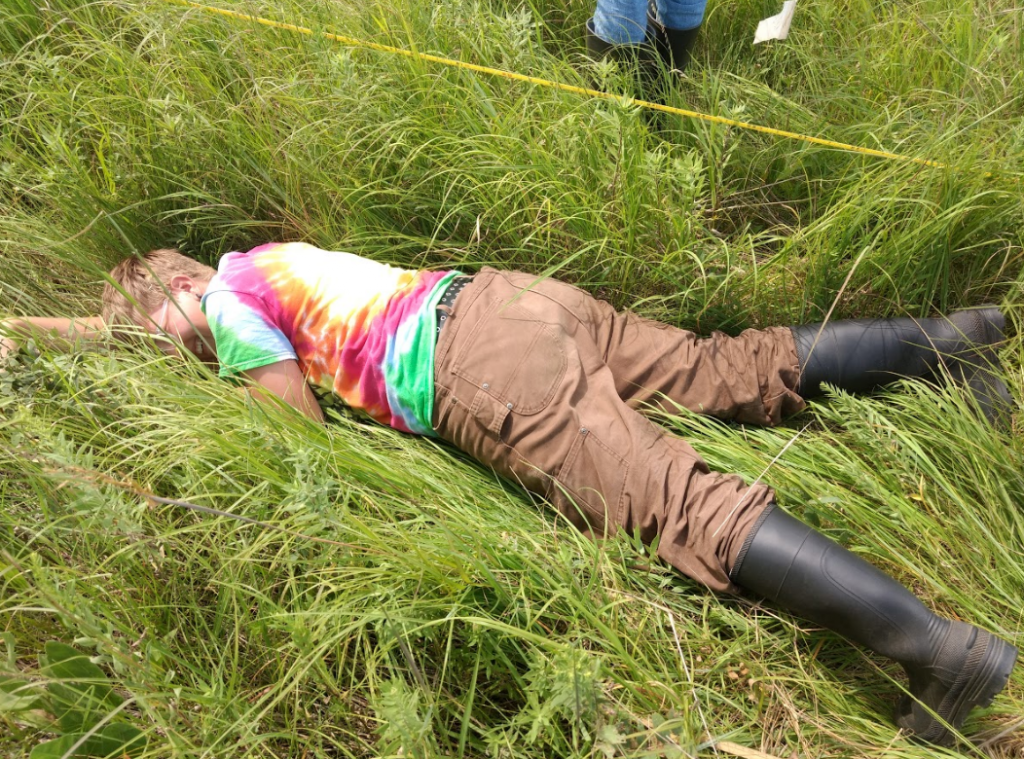
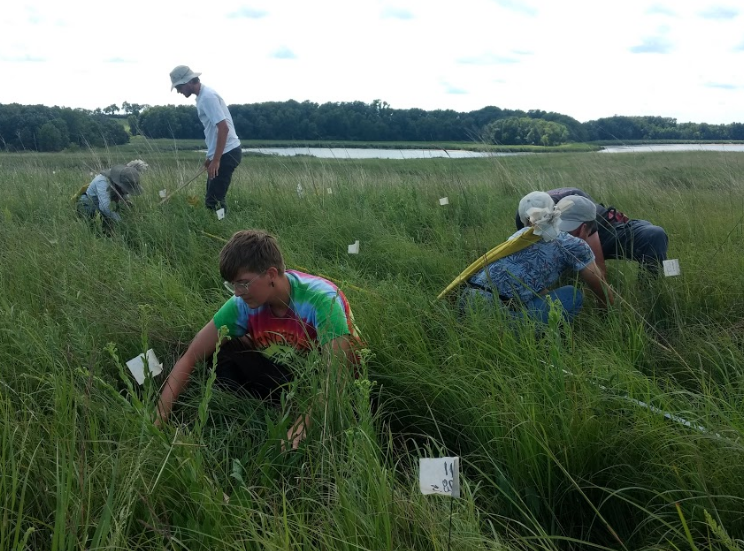
John’s post yesterday provided plenty of updates about Friday’s work on the Hjelm House front. Now it’s my turn to update on the second half of the Western Prairie Fringe Orchid Project, in which Gretel, Stuart, Riley, Drake, and I went out into the wet prairie to assess orchid fitness.
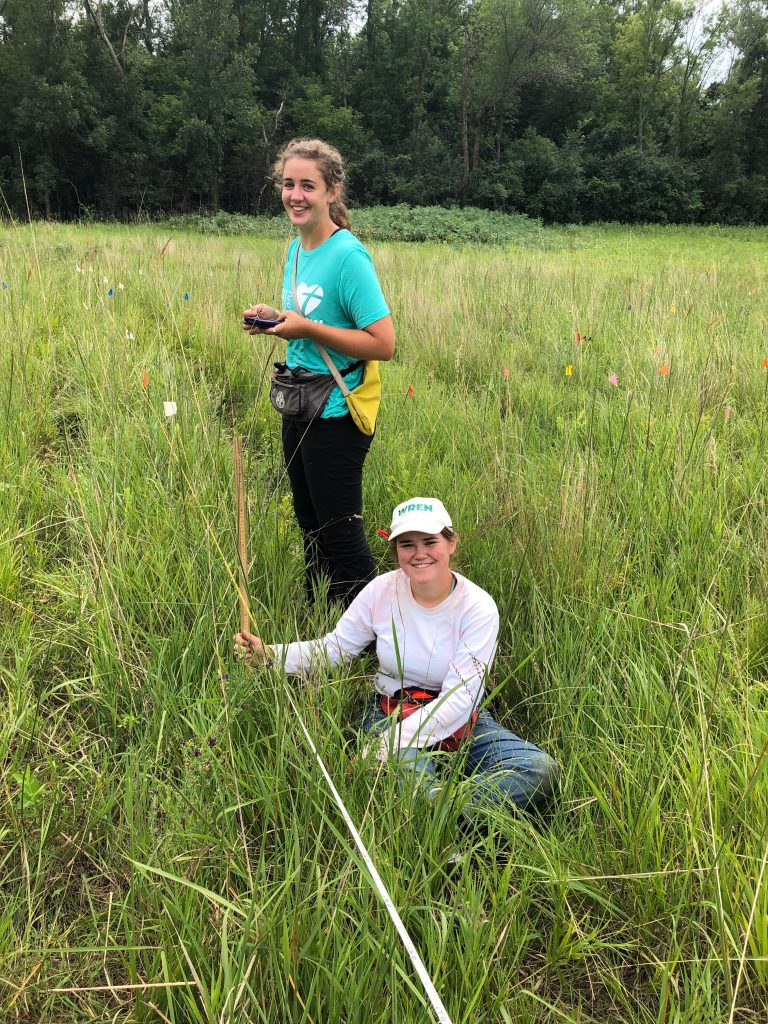
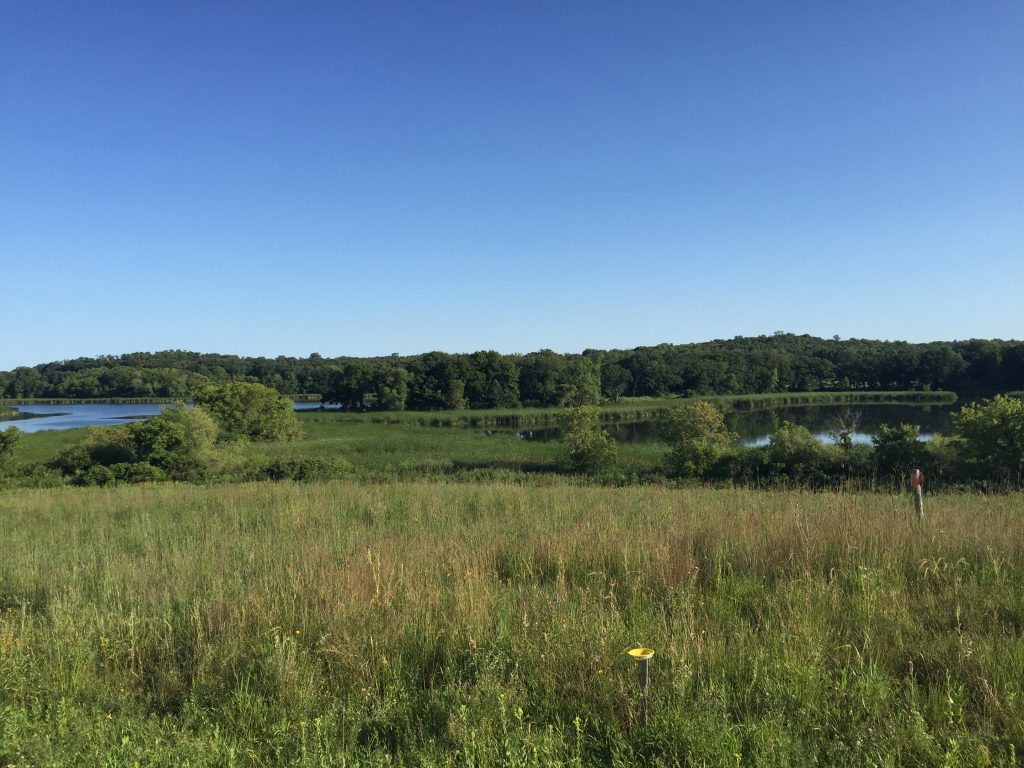
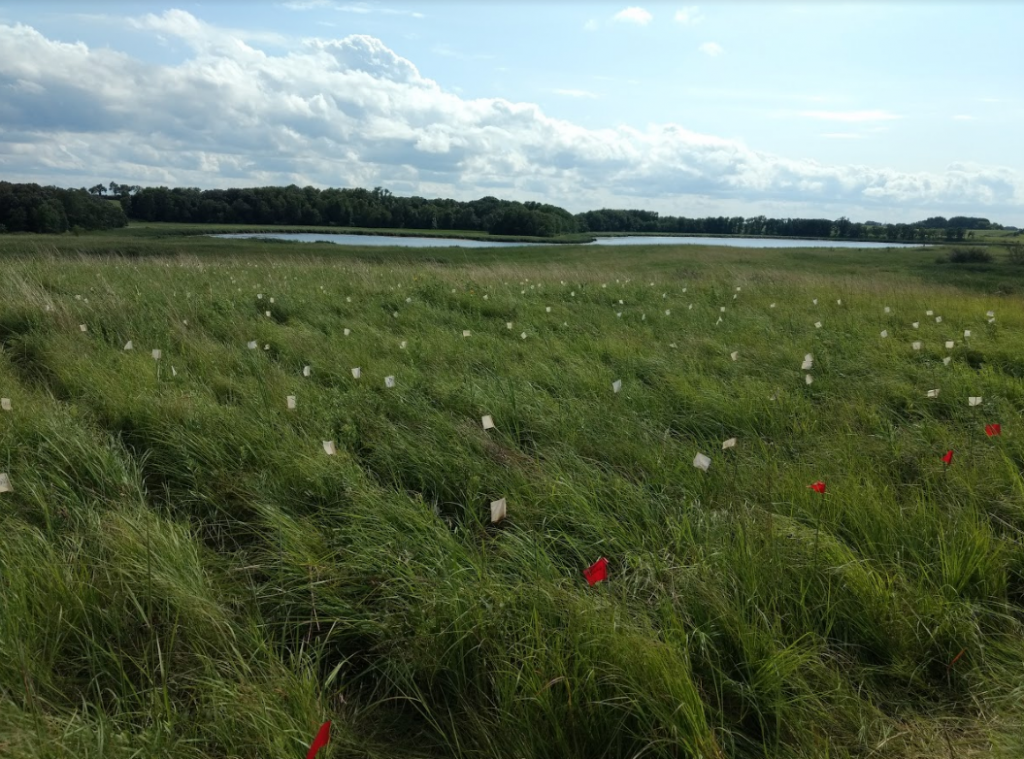
Out in the Nature Conservancy’s wet prairie reserves (which were much drier this time around), we revisited all of the nearly 1000 orchids we identified on the first trip earlier this summer. First, we counted and squeezed all the seed pods to estimate the plant’s seed set, and then we finished shooting GPS points each plant we found. We finished our field work in good time, finishing staking of the South plot in 3 hours, and the Northwest plot in less than 2.
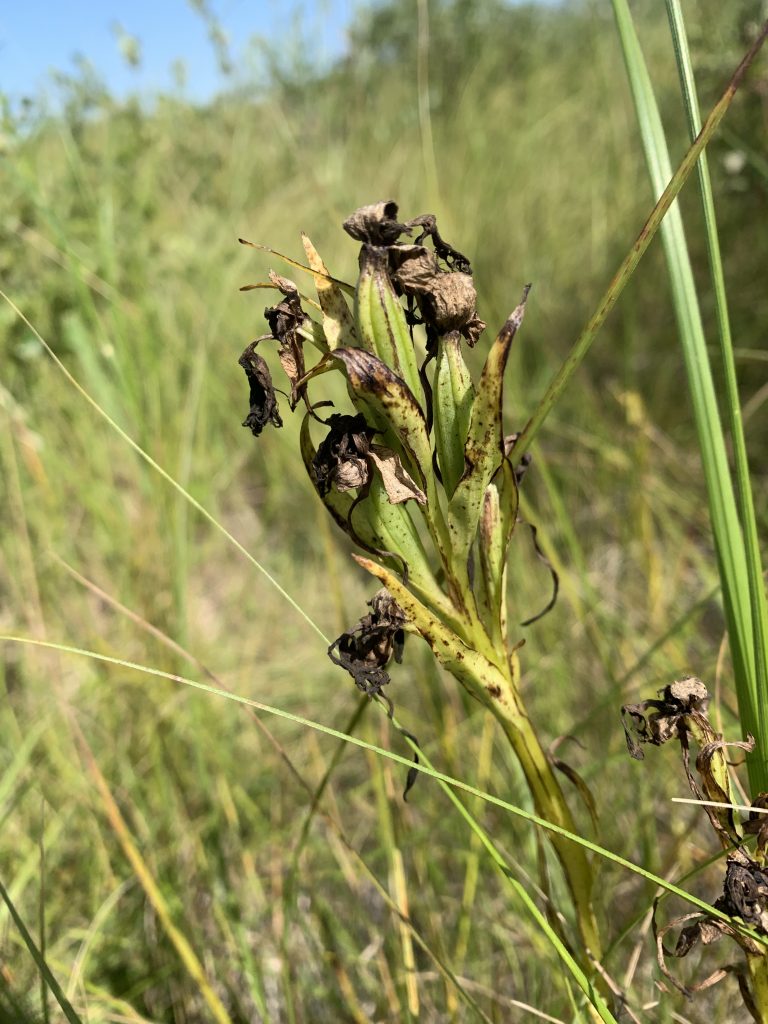
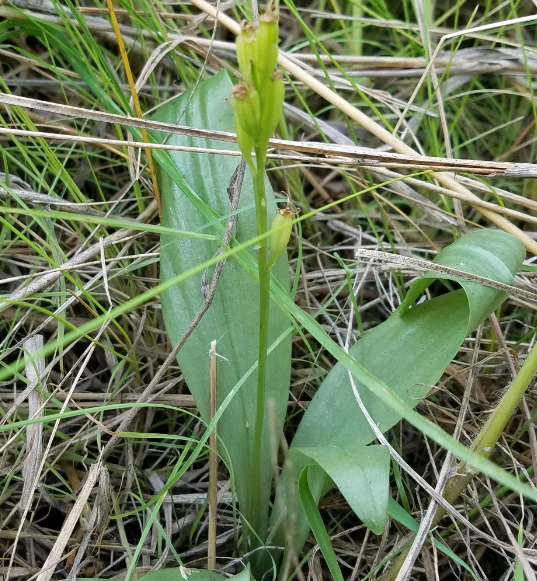
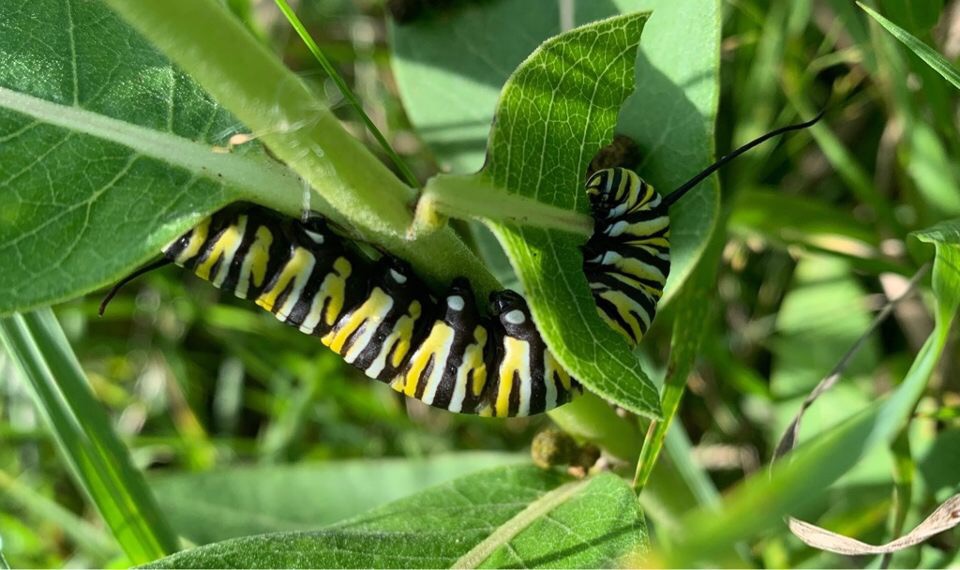
The swollen seed pods of an orchid stalk, with the desiccated flowers still attachedDrake had the chance to meet Pedicularis lanceolata (Pedicularis canadensis is more common around Douglas County)We also stumbled upon a chubby monarch butterfly chomping on some swamp milkweed
The Echin Team members divided and conquered today with some of the crew (Julie, Stuart, Gretel, Riley and Drake) migrating to northern MN to access the reproduction of the Prairie Orchid. A biannual trip the team makes with Gretel leading the way.
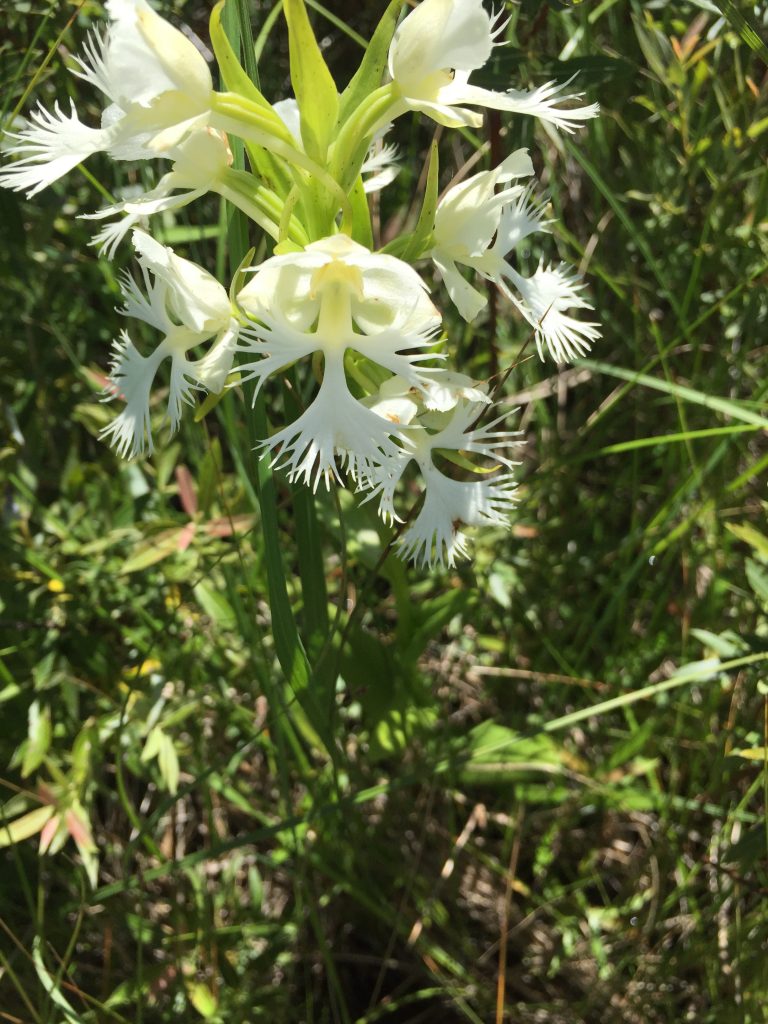
ThePrairie Orchid
The leftovers consisted of Erin, Shea and John working out of headquarters. Shea and I did phenology at P2, while Erin did phenology in the remnants and P1. The aphid addition/exclusion experiment then proceeded at P2. After lunch, we began measuring P2 and finished a whopping 3% of the total area.
Erin and Shea measuring P2 and fighting off pesky chiggers. Erin (Chipmunk Whisperer) charms a rodent to feed from her hand.
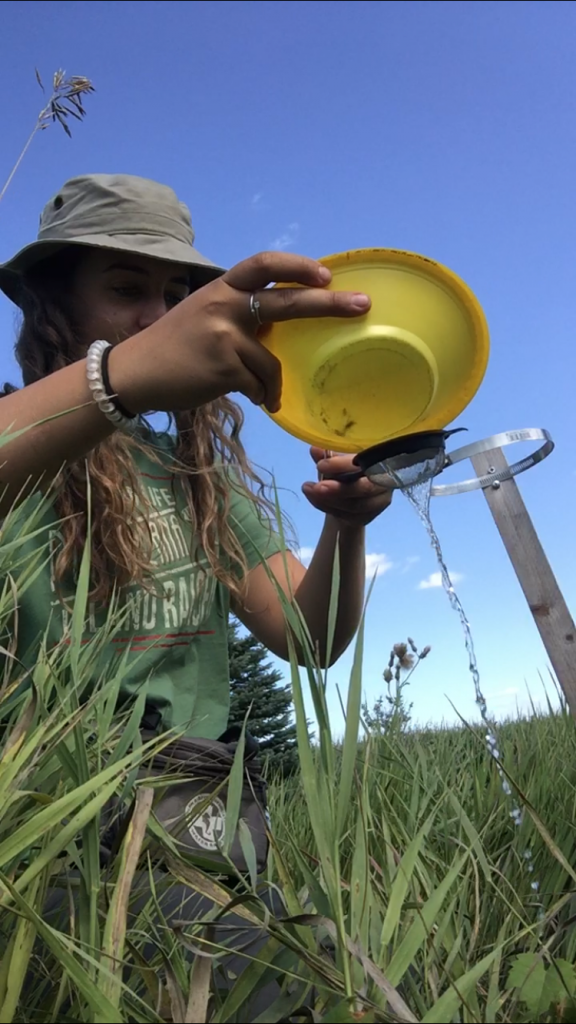
Yesterday, John and I got started bright and early to set out our yellow pan traps. John takes half the route and I have the other half, and we converge back at Hjelm, but it’s not until the afternoon that the fun stuff happens. When we got back to Hjelm around 9:30 we found the rest of the team had completed the great goat move in which they intricately move the goats to another area to chew down the buckthorn. I believe that job ended with a conversation about which goat Stuart would choose to roast on the large bonfire we plan on having soon. Let’s just say this, Style the Goat has another thing coming, and moving the goats is not Team Echinacea’s easiest task.
As the day commenced, it was time for some Demo and Surv at Around Landfill. There were many plants to make records for so one team took off with Checkov and another with Darwin, our two GPS units, to find our beloved Echinacea plants. We found a lot of flowering plants as we weaved in and out of barbed wire and avoided electric fences. Active searching was in full force as we scoped every likely and unlikely area for Echinacea to inhabit, hoping to find some newly flowering plants.
Over lunch, Drake and Jay updated us on their personal projects/experiments and I’m excited to learn more as they continue to develop. It’s been fun this summer seeing everyone take on their role as a teammate. We often help each other with our personal projects and are always open to asking and answering questions to bounce ideas off one another.
John and I left Surv a little early in the afternoon to collect our pan traps and bees. This was our 5th collection this summer and we have one more to go. There is still a fair amount of bees to be pinned but I have narrowed down my study field so I know which trap collections to prioritize for my personal project and the pinning that relates to that. The rest of the team is off to do more Orchid work tomorrow in Northern Minnesota so we wish them the best of luck and safe travels!
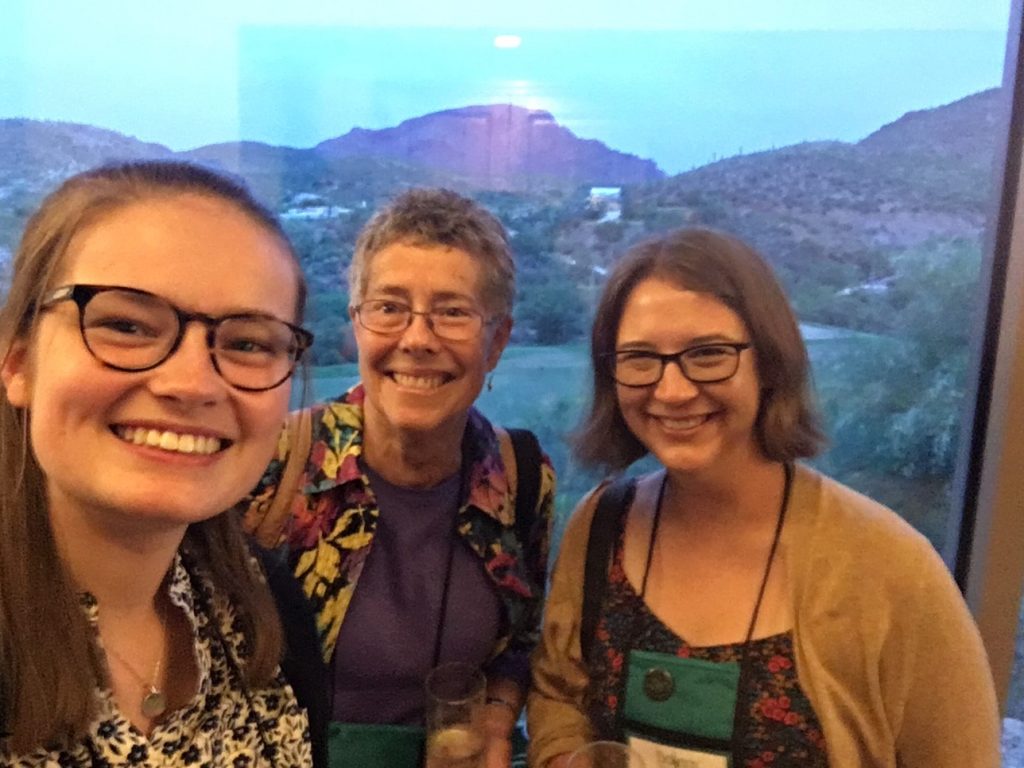
Last week Mia and I presented Echinacea research at the Botany Conference in Tucson AZ. The Botany conference was an inspiring and invigorating experience (see Scott’s post too!). Not only was the research top-notch but there were plenty of workshops and networking events. Mia went to a workshop on applying to graduate school and got to interact with many other undergraduate researchers. I got to interact with other faculty at PUI (primary undergraduate institutions) and learned so much from colleagues are similar institutions. Lyn Loveless, my predecessor from the College of Wooster, was also at the conference.
Three ‘generations’ of The College of Wooster plant ecology researchers (Mia, Lyn, & Jennifer)
The weather was HOT, like you can’t go outside after 8 am hot. However, we both got up early a few mornings for hikes through the Tucson mountain park. We may have also enjoyed the resorts lazy river post-talks a few afternoons.
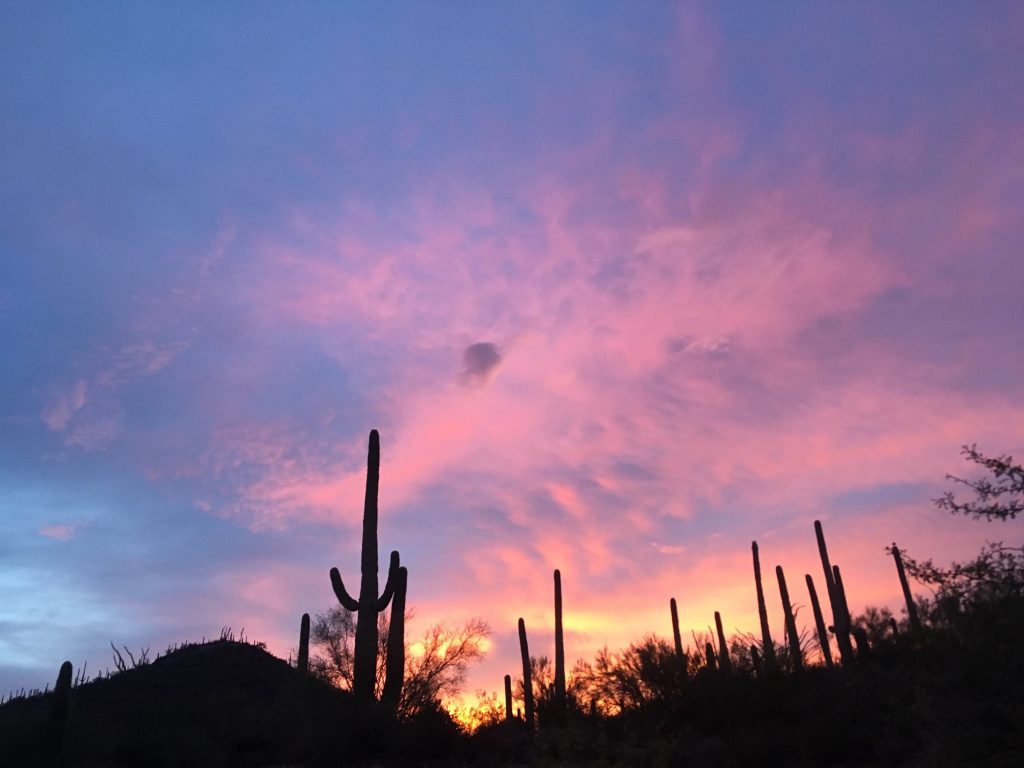
Our last sunset in Tucson
Mia presented a poster on work that Laura Leventhal (see Team Echinacea 2016) started and that she carried on. Her poster was a hybrid #betterposter and was very well received. I have to admit that I was skeptical about the #betterposter but after seeing them ‘in action’ during a poster session, they are much most engaging and do a nice job of conveying the main message of a project. Click here for Mia’s poster
I presented a talk on some of the pollinator efficiency work we have been doing with Echinacea since 2010! It was neat to put all this work together into one (short) presentation. Thank you to all the team members who contributed to these data! Click here for Jennifer’s presentation
Our morning began fairly quietly, with phenology in P2 and the remnants underway. We officially put the pulse-steady pollination experiment to bed for the field season, with no more styles left to pollinate. Chekov was resurrected and put to the test staking the corners of P9.
After lunch the entire team headed out to P9 to begin (and ultimately end!) measuring. We had a more exciting afternoon than any of us had anticipated; while measuring has its own thrills, no massive leaves or first-time flowering plants could compare with the thrill of accidentally sticking your foot in a Bombus griseocollis nest and hearing the resulting furious buzzing. I exclaimed “Uh—BEES!” and Jay and I scrambled back down the row we were working on. While I chose a two-legged locomotive strategy, I looked back and saw Jay army-crawling away from the threat. We both assumed Jay was a goner, and I continued my sprint southward.
Jay demonstrating the little-used “panicked flop” escape technique
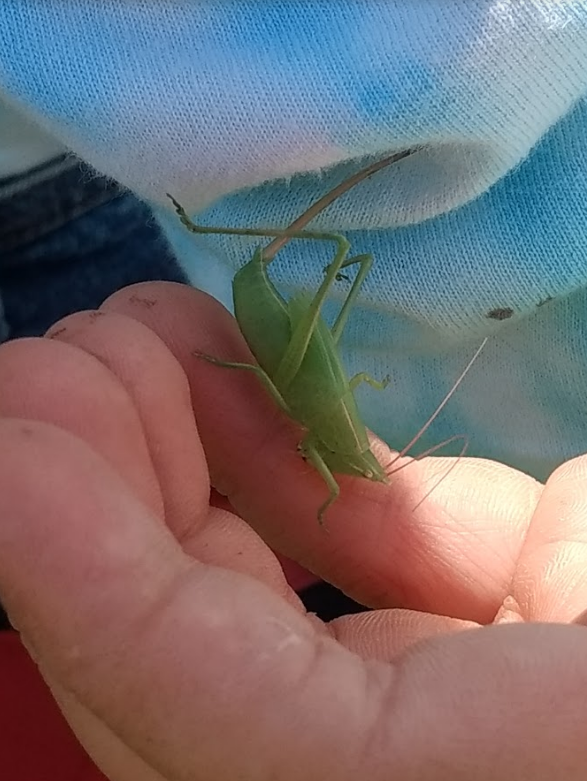
The griseocollis were all buzz and no sting, and we returned to the plant we abandoned. There I found a katydid and a grub of some kind duking it out. The katydid was happy to climb around my arm for a photo op, and even happier to fall back into the duff and skitter away.
Before making our great escape Jay had spotted a mysterious orchid-like plant, which we lead Stuart to after he and John found another in a nearby row. We all puzzled over the plant and took careful note of its position so we can return to it later. Stuart suggested that errant seeds, micorrhizae or both may have traveled from the Chicago Botanic Garden to the plot on our equiptment, resulting in the plants establishing in the plot. Hopefully as it blooms and we get more opinions on the identity we’ll be able to make better-informed guesses about where they came from!
Our mystery plant
We were able to finish measuring every plant in P9, and will revisit the sea of white flags for rechecks in the near future!
Laying the first few flags……and the sea we left behind!
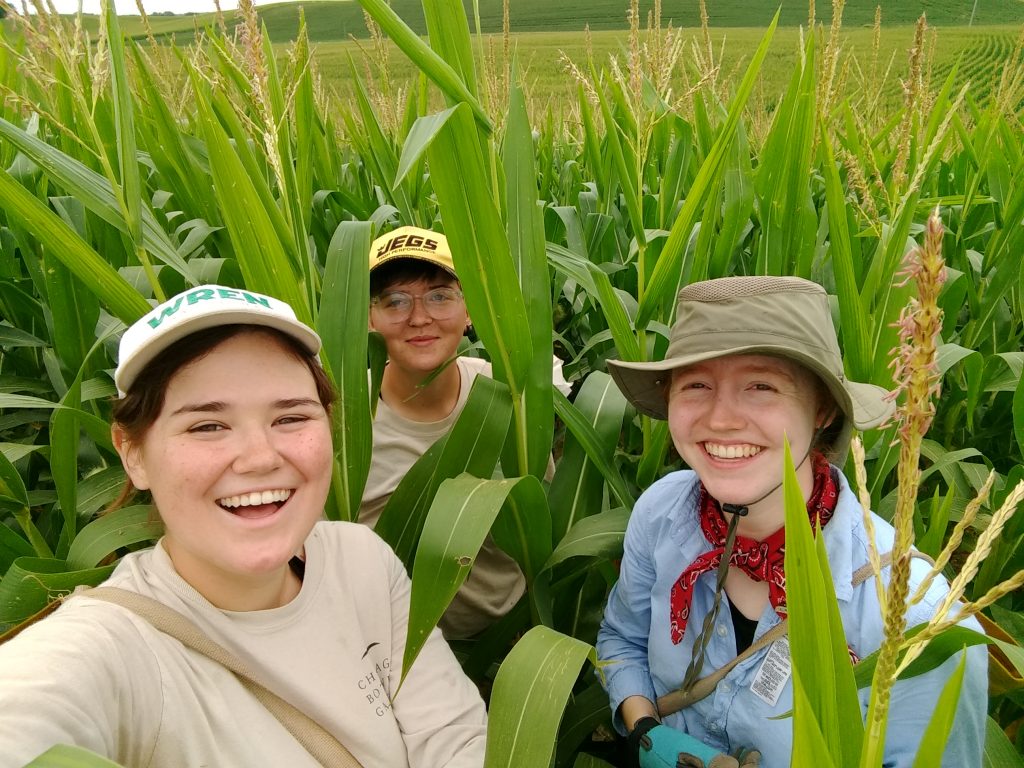
This morning the team split into two groups: one doing the normal morning routine of phenology and the pulse/steady experiments in P2, and the other doing demography in remnant site On 27. There were a little over 100 plants to visit, several of which were in the neighboring corn field! Then at lunch, the team got personal project updates from Erin and Julie. In the afternoon John and I worked in P8 on my personal project which involves the management of green ash within experimental plots. After Wednesday of this week I will likely be finished with treating ash!
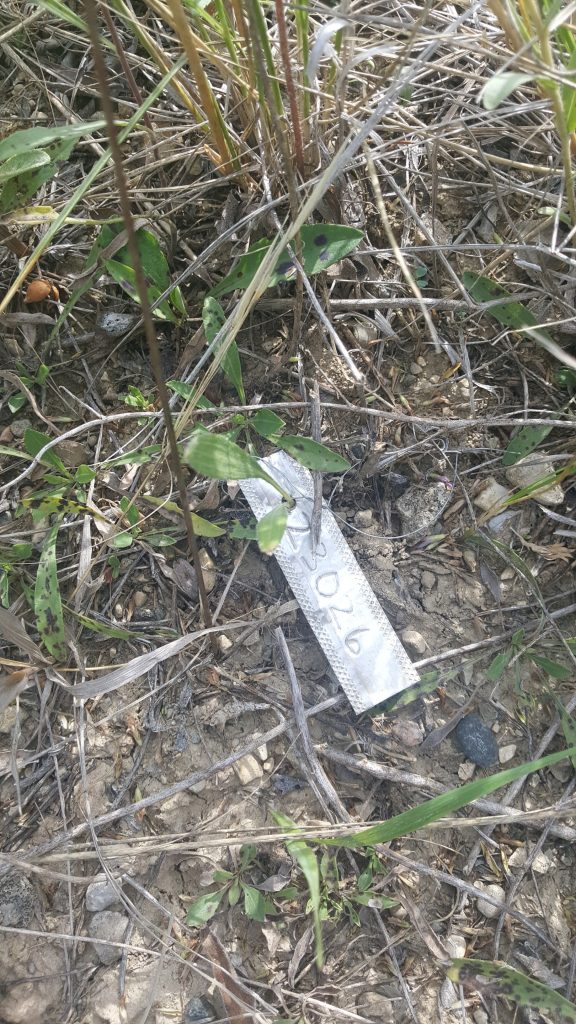
There was an echinacea plant growing through the hole of a tag that I found today during demography!
With about a month left for many of the participants on the Echinacea Team, the flowers keep on flowering, the weeds keep on growing and seed collecting ramps up for many of the prairie species. And for the animals on the Echinacea Team: Shea soon starts her senior year of HS; Riley, Drake and Erin make arrangements to move to Chicago; Julie and Jay begin their senior year of college; and John prepares for his 31st year of teaching. And Amy continues her research on bees with the University of Minnesota, spending much of her time on the praire in midwest Minnesota.
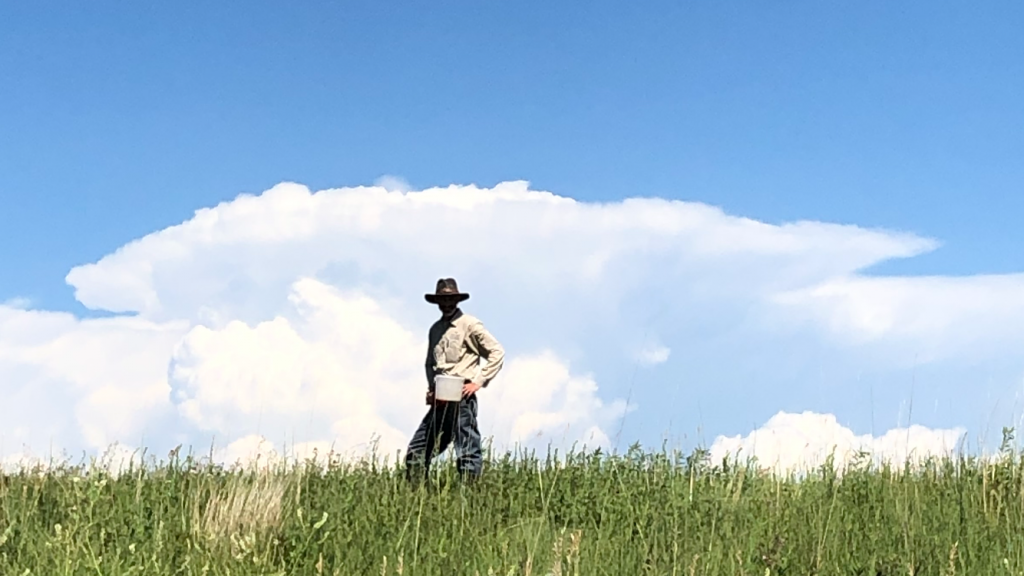
Stuart looks for seeds in Douglas County to be collected for Drake as the a cumulonimbus cloud begins to build behind him.Amy W (pictured left – Echin Team Member 2015-2019) wins her 4th consecutive Flekkefest 5K. Amy pictured here with Echin Team Member Alum Abby VK (2015 -2016) and the previous two time winner of Flekke 5K. The Echinacea Project Women have created a dynasty of 5K winners.
Happy Saturday, flognation! This weekend is Flekkefest, the highly-anticipated summer festival in Elbow Lake. For the past few years, members of Team Echinacea have attended the Flekkefest festivities. It is always a highlight of the season. While Julie, Drake, and Erin went to Hegg Lake to complete the remaining pulse-steady crosses, I headed to Elbow Lake for the Flekke5k. John organizes the 5k every year and the proceeds support the impressive WCA cross country team. Each year that I’ve done the race my pace has slowed down, but I managed to come away with another troll-phy! Whew. True to theme, John sported excellent troll hair. Later, the crew plans for fireworks and other Flekkefest fun. Catch ya on the flip side!
Julie spotted this hungry caterpillar in P2 during pulse-steady crossesHuge honor to receive a troll-phy from the head Troll himself, John Van Kempen
Long time no see! I am a grad student at the University of Colorado now, but thankfully I have still had plenty of time to work on some Echinacea work. Last week I got to present at Botany in beautiful Tucson, Arizona 🌵.
First I presented a poster about fire and Echinacea demography. This is something we started in Chicago and Stuart, Amy Dykstra and I have been working on since. We used demap, the seedling search dataset, and the seedling recruitment experiment dataset to estimate vital rates (survival, flowering, and recruitment) within several Echinacea populations. We then estimated how these vital rates varied with fire. To see how these changes in vital rates affected actual population dynamics, we then constructed matrix models to estimate the average growth rates of several remnant populations under various fire frequencies. Finally, to see which demographic pathway was primarily responsible for changes in population growth, we decomposed the changes in population growth rates under different fire regimes into contributions from each vital rate’s response to fire. We used Bayesian modeling to estimate the vital rates. Stuart, Amy D. and I are putting the finishing touches on a manuscript for this project, so keep your eyes open!
I got some good questions from people at the conference. One is: would seed addition help bolster growth rates? Very interesting question – I think it probably would in populations with high juvenile survival, given that under these circumstances higher recruitment has the largest contribution to population growth. Another person asked about climate change and whether I thought the Echinacea range was likely to move north with warmer temperatures. I can’t answer that question but we did use climate data in our models; climate was warmer and wetter in our observation period than they were in the 100 years prior, and these covariates were featured in some of our models. It would be fun to incorporate climate change into estimates of vital rates and population growth.
I also gave a three-minute lightning talk to briefly present an idea I have had since I was in Chicago in 2017. Amy, Jennifer, Gretel, and Stuart have done some prior work looking at synchrony, mating opportunity, and mating success in Echinacea. I have been curious about whether populations exhibit nested structure in their flowering schedules, i.e., whether or not individuals which flower less often flower in the same years as plants which flower most often. There are some interesting potential consequences of deviation from non-nested structure. Hopefully I have time to study this in Colorado.
Also of note: Jennifer gave an awesome talk synthesizing a lot of the pollinator work done in the Echinacea system the last several years. It was great to see so many facets of Echinacea pollination discussed together. One of the most interesting parts of this talk was Mia’s poster, looking at the diversity of male pollen donors on bees, and how they varied by pollinator species. I remember when Laura was collecting this data in 2016. She was so good at wiping! Very cool to see final results for this project!
Otherwise, there were some great talks and posters. A couple of good ones: Joseph Braasch from Katrina Dluglosch’s lab at the University of Arizona talking about community shift with climate change and Jessa Finch (from CBG) talking about how gene flow affects early life stages of milkweeds. Maybe the best talk I saw came from a student in Julie Etterson’s lab at UM Duluth talking about how seed collections for restorations is artificially selecting for traits. Very cool question!
I’m glad I was able to make it out to the conference. Huge thanks to my advisors Brett Melbourne and Kendi Davies for allowing me to work on this project for the last two years. Also thanks to the BioFrontiers Institute at CU Boulder for providing me funding while I worked on this project, the United Government of Grad Students at CU Boulder for funding my trip to the conference, and friends at CU Boulder and Colorado State who allowed me to drive down with them and crash in their hotel rooms in Tucson. Hope to see everybody at ESA in Louisville, KY later this month, where I will have a poster about some of the non-Echinacea work I am doing in Colorado.
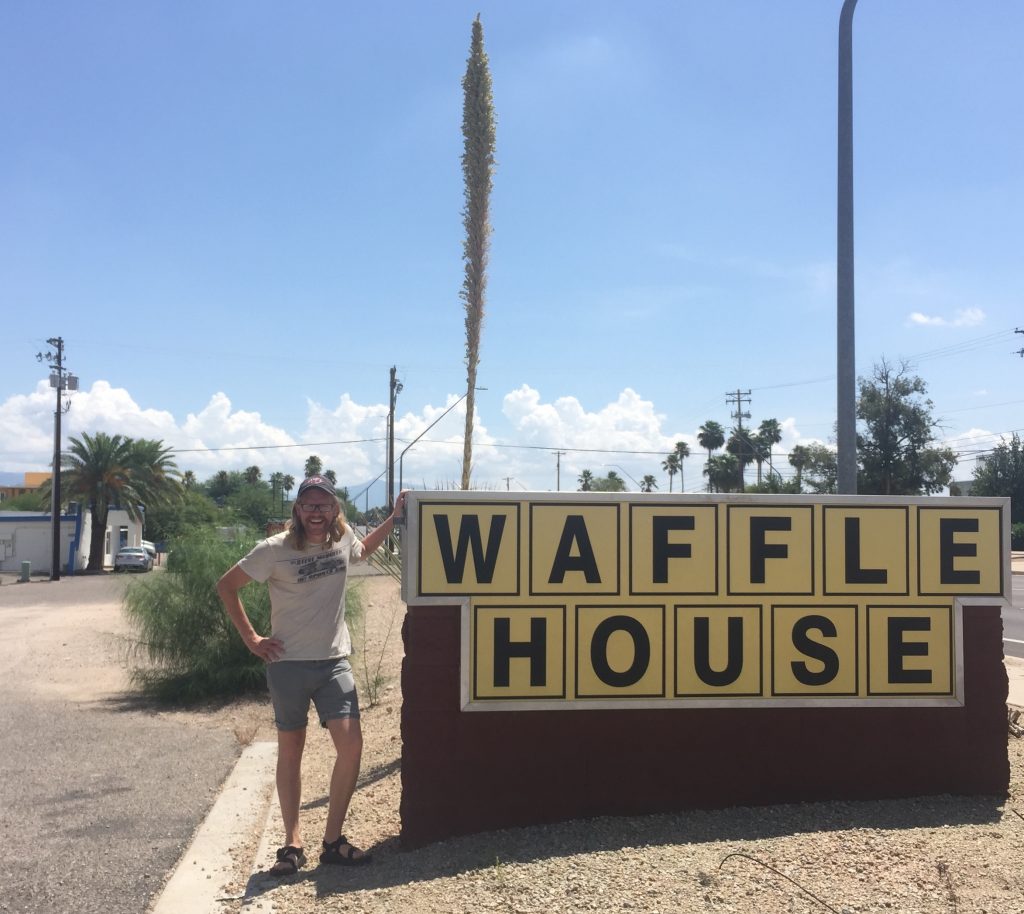
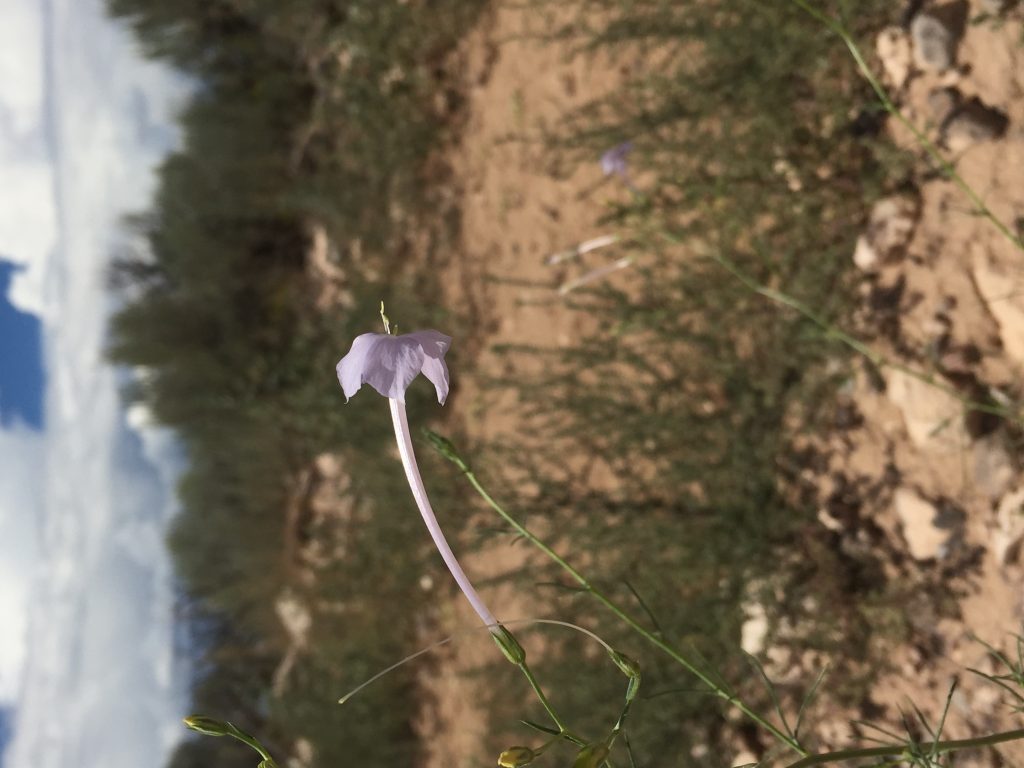
Dining in Tucson: Mexican food, no, waffles, yes!Ipomopsis longiflora I spotted on the drive back outside Taos, NM. The CO crew identified this plant with a key while I tried to find a gas station.
Today started off on a slightly less than auspicious footing, as the team’s morning plans of pollinating were largely rained out, as anthers don’t present transferable pollen until they dry. When the morning storms and damp stretched into the early afternoon, we began to realized that our hopes of performing the day’s pollen collection for our pulse/steady pollination experiment were likely to be dashed. Instead, we waited wistfully at the Hjelm House for the stormy weather to pass, working on indoor tasks like data frame cleaning or surv file arranging until the rain subsided enough for phenology data collection.
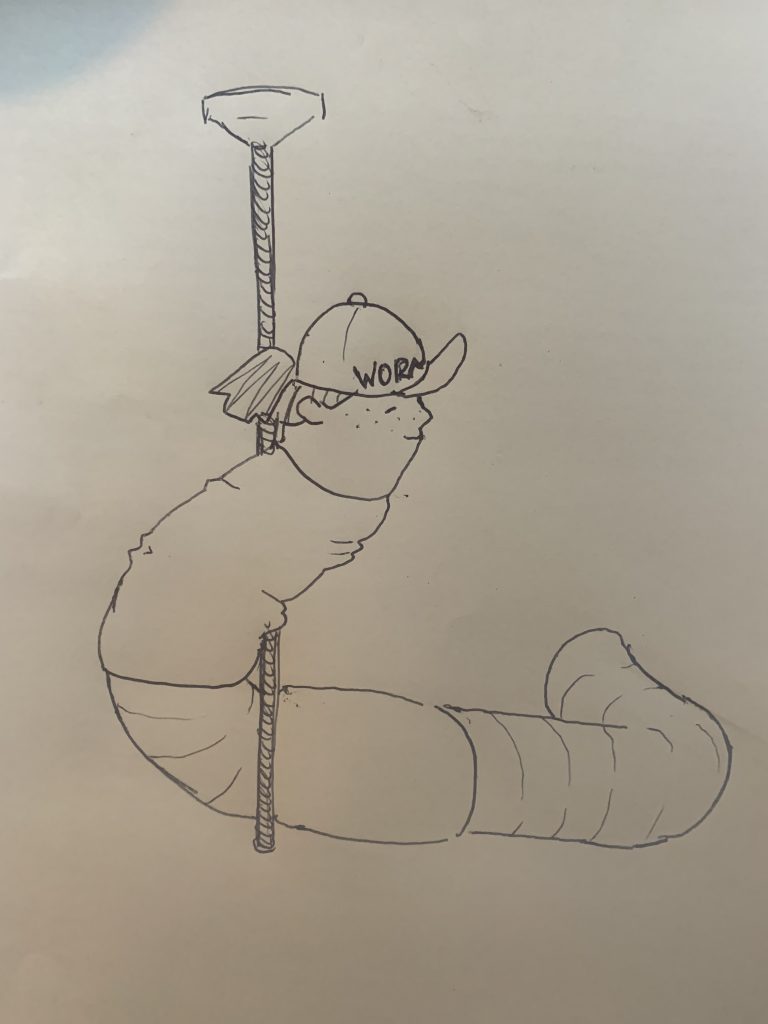
Over lunch, our discussion naturally turned to the age-old question of how a worm would wear a shirt, if shirts were made with worms in mind. Would they have small, empty sleeves, or would they disavow superfluous appendage coverings in their garments altogether? To aid us in our visualization, Erin handily mustered up her artistic skills and demonstrated exactly how a worm ought to properly attire itself with a tasteful tube top. To properly illustrate her point, she began composing perfect likenesses of the team members’ field outfits, like Jay’s signature flannels and JEGS hat, once adapted to the annelid form.
Lumbricus terrestris Jayicus in its conventional garbEven Darwin, our handy GPS point shooting unit, got in on the wormy fun!
Finally, the rain cleared! We scampered out to P2 to do phenology, and though our pollinating fears from the morning came true when pollen refused to present, the team kept up the momentum by remeasuring and rechecking some of P2’s most interesting and bizarre plants. We circled back to basal plants with leaves half a meter long, flowering plants with four heads on one stalk, and plants with more than 10 rosettes and 50 basal leaves (a rarity when most plants have only two or three rosettes with less than 10 leaves total). With half of P2’s 80 rows triple-checked, we shifted gears to remnant population demography, as Erin and Shea trained Jay and me in the system of PBORY flag ordering and surv file code naming. As we identified and recorded flowering plants, we started adapting the lyrics of AC/DC’s T.N.T. on the fly to fit our demography PBORY protocol (pronounced P-Bor-Ee). Our chorus went something like the following:
Cuz it’s PBORY Gotta stake it right PBORY Then flag the flowers in white PBORY Count rosettes and heads PBORY See how a population spreads!