Team Echinacea has a lot of ongoing projects. A lot! Some of them have been running for decades, and some are relatively new. Each project has a unique set of needs in terms of preparation, fieldwork, and post field management. We want to be efficient as each project progresses through the field season and we also want new team members to be able to pick up on the workflows.
PB&Js might be just the thing to answer all our FAQs…
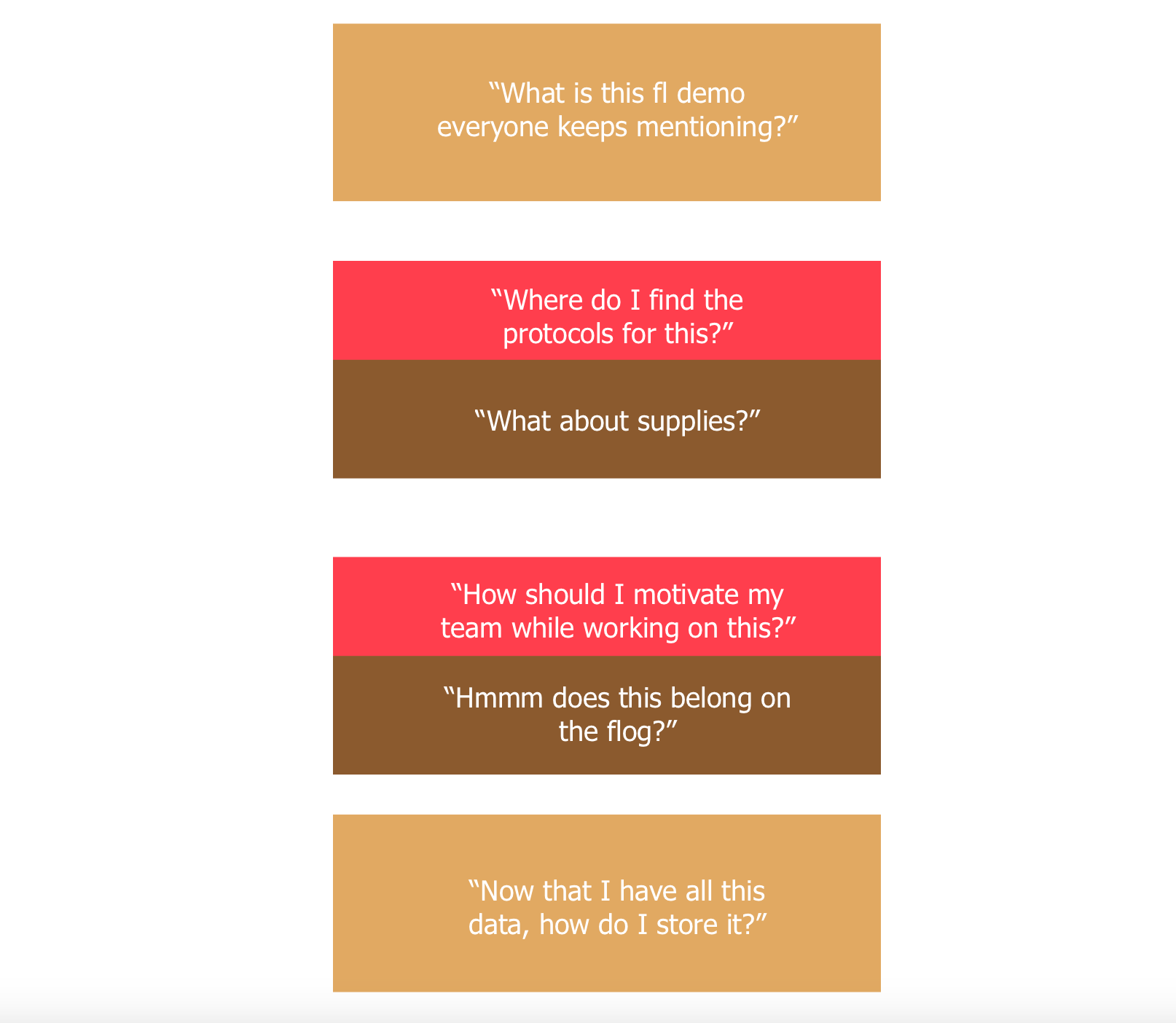
Here are some FAQs on an abstract ggplot PB&J.
This week, Stuart, Wyatt and I are experimenting with the PBJ format (project blueprint and journey). We hope to make easily digestible roadmaps for every project we have going on. These will keep our field season running smoothly (or not, if you like crunchy peanut butter… We have not discussed this yet). This also makes me wonder, what kind of jelly (or jam?!) is best for our PB&Js? I like Bonne Maman fig preserves. I will pitch that to Stuart and Wyatt.
You know, I can’t remember if I’ve posted any updates or info on my thesis to the flog before. So, I’ll do a more in depth update at some point in the near future explaining the background of the project, what work has gone on, etc. For now, I just want to make more of a celebratory post for making my first ever semi-complex function in R!
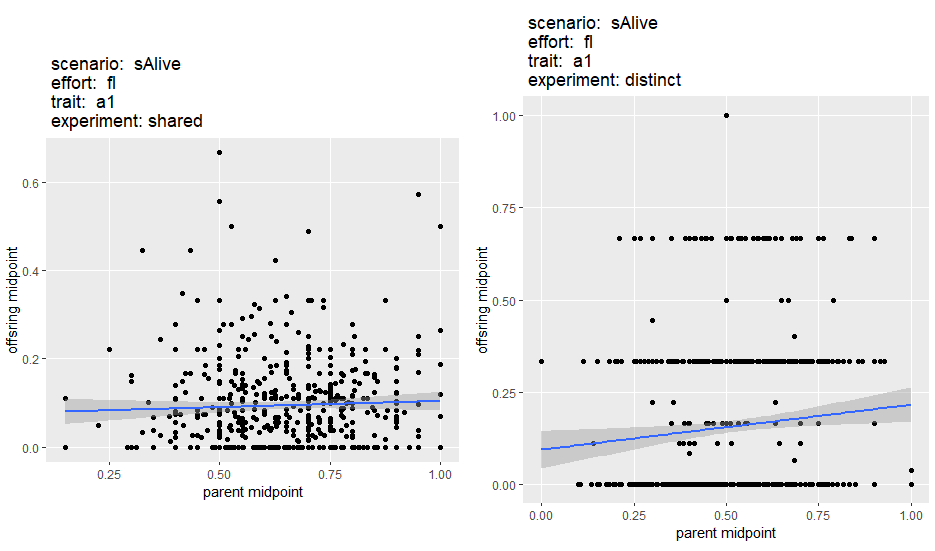
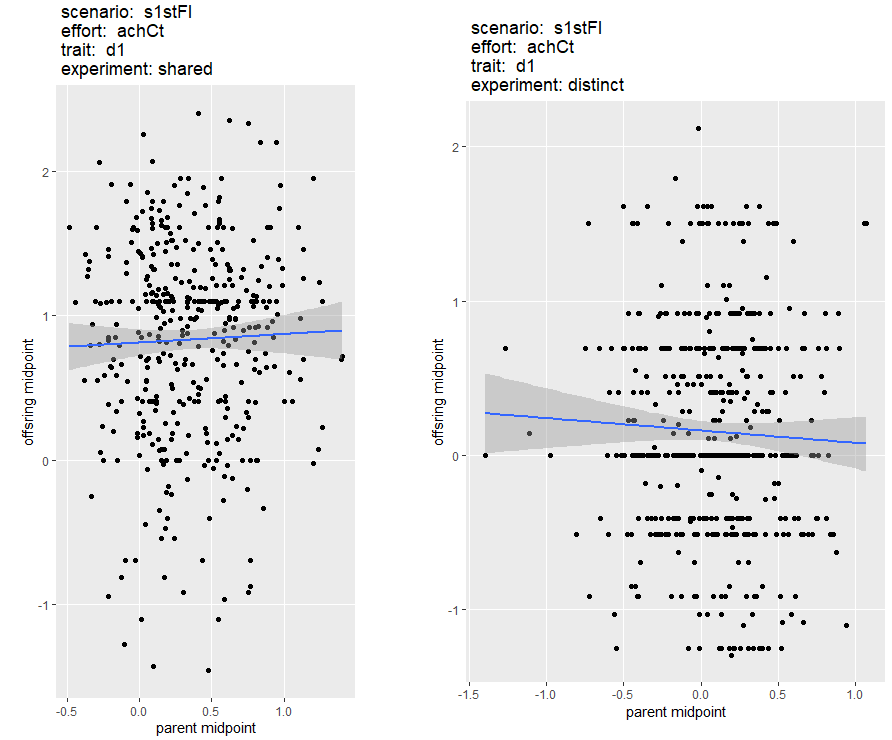
For the mathematical work of my thesis, I have multiple different datasets, measures of reproductive effort, and ways of quantifying a phenotype related to fire-stimulated flowering. Different combinations of these variables can significantly change what the end plots looks like. Again, a more in depth explanation is to come, for now, just function.
I developed a function where you can input these arguments as variables and it spits out several plots, the last of which is a parent-offspring regression for both my shared and distinct cohorts. (Did I mention there’s more context to come? This is in media res storytelling.) Check it out:
We know that prescribed fire is beneficial to native prairie plant species, but summer 2023 REU participant, Jak Davis, is also curious about how fires impact native pollinators. Their project this summer, investigated the effects of prescribed fire on pollinator fidelity/visitation to Echinacea. Jak collected bees in the field (Agopostemen virescens, Halictus and Augochlorella) and scraped pollen off their bodies. They counted and identified pollen grains under the microscope and calculated total proportion of Echinacea pollen grains.
Jak is continuing this work at part of their senior thesis! She has started data analysis and will have results to share soon!
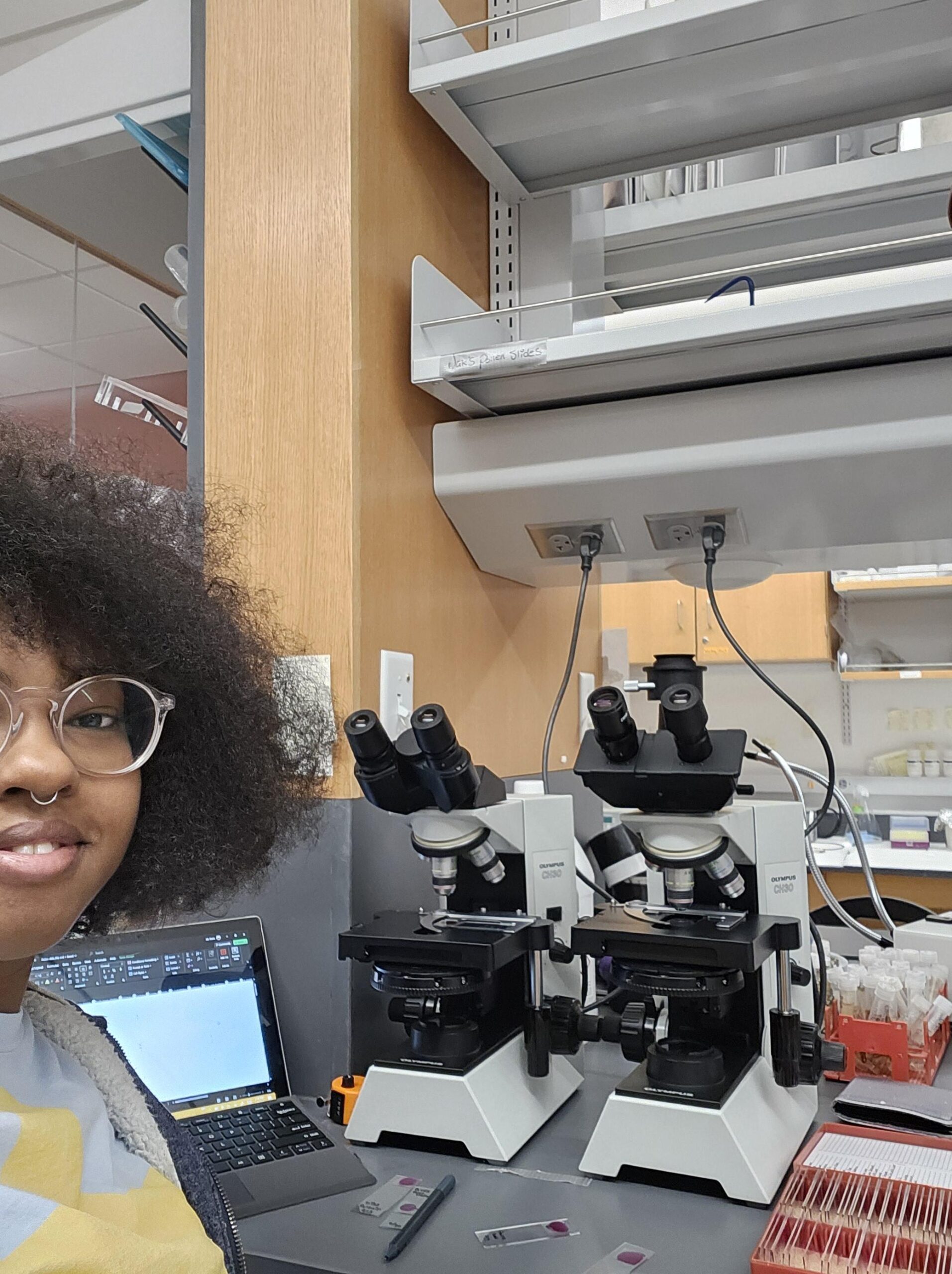
Jak has been hard at work in the lab at College of Wooster post-field season!
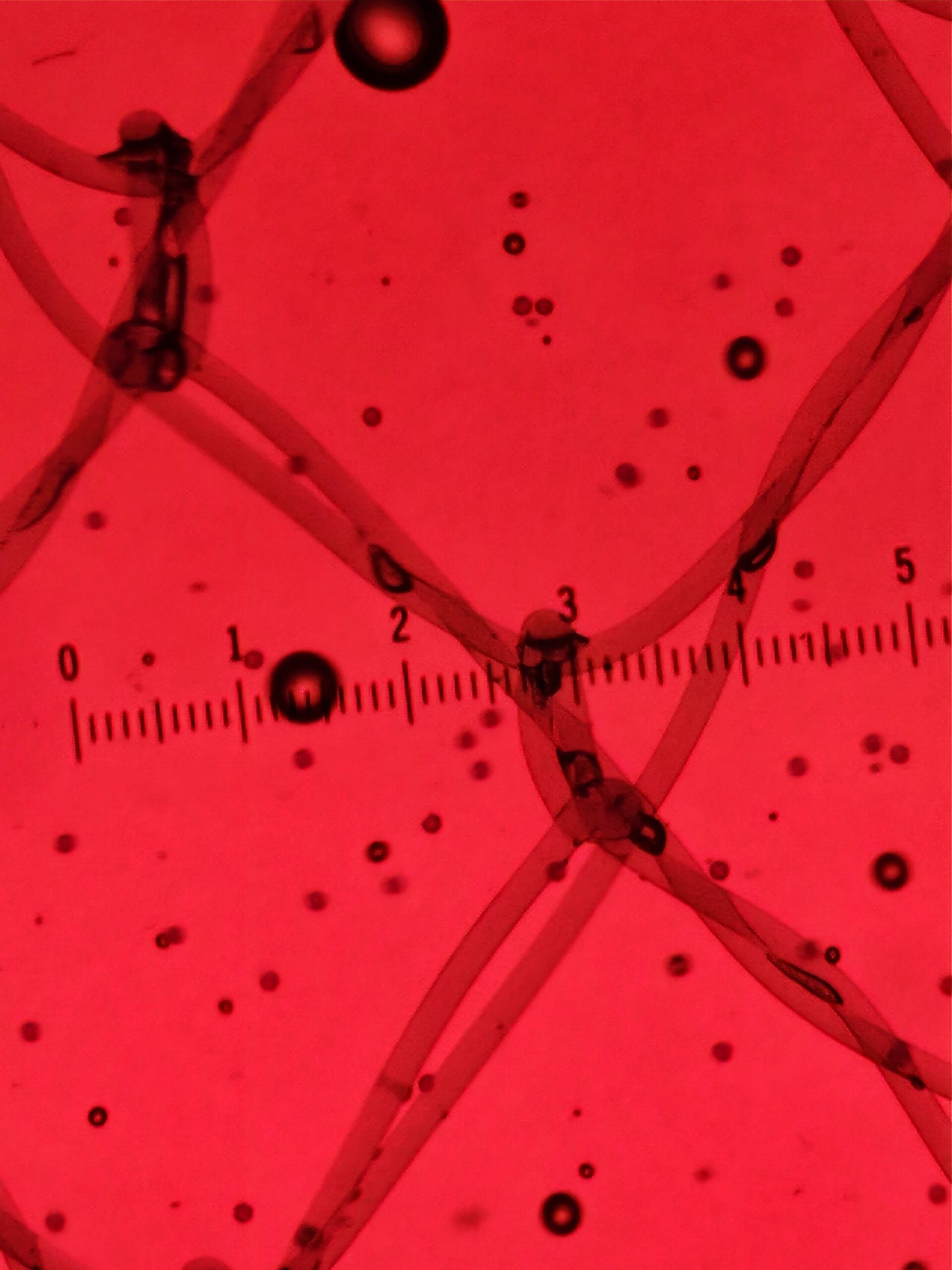
A closer look at pollen grains through the microscope! Jak is able to tell which grains are Echinacea- impressive!
Start year: 2023
Location: Remnant prairies in Solem township, MN and the lab at College of Wooster
Overlaps with: other projects in prairie remnants
Data collected: N/A
Samples or specimens collected: pollen scrapes from bees, floral specimens
It feels like forever ago that our summer team of plant demographers were taking demo and surv records on thousands of flowering and non-flowering Echinacea plants in the field! But for me, demo and surv work is still front and center, and it gets more exciting every day!
A few weeks ago, I cleaned up the 2023 data that Stuart and Jared kindly loaded into demap. Now, it is time to reconcile entries within years and between years. There is a lot going on in the demap repository where this happens, but luckily, former members of Team Echinacea wrote great protocols and annotated their scripts thoroughly.
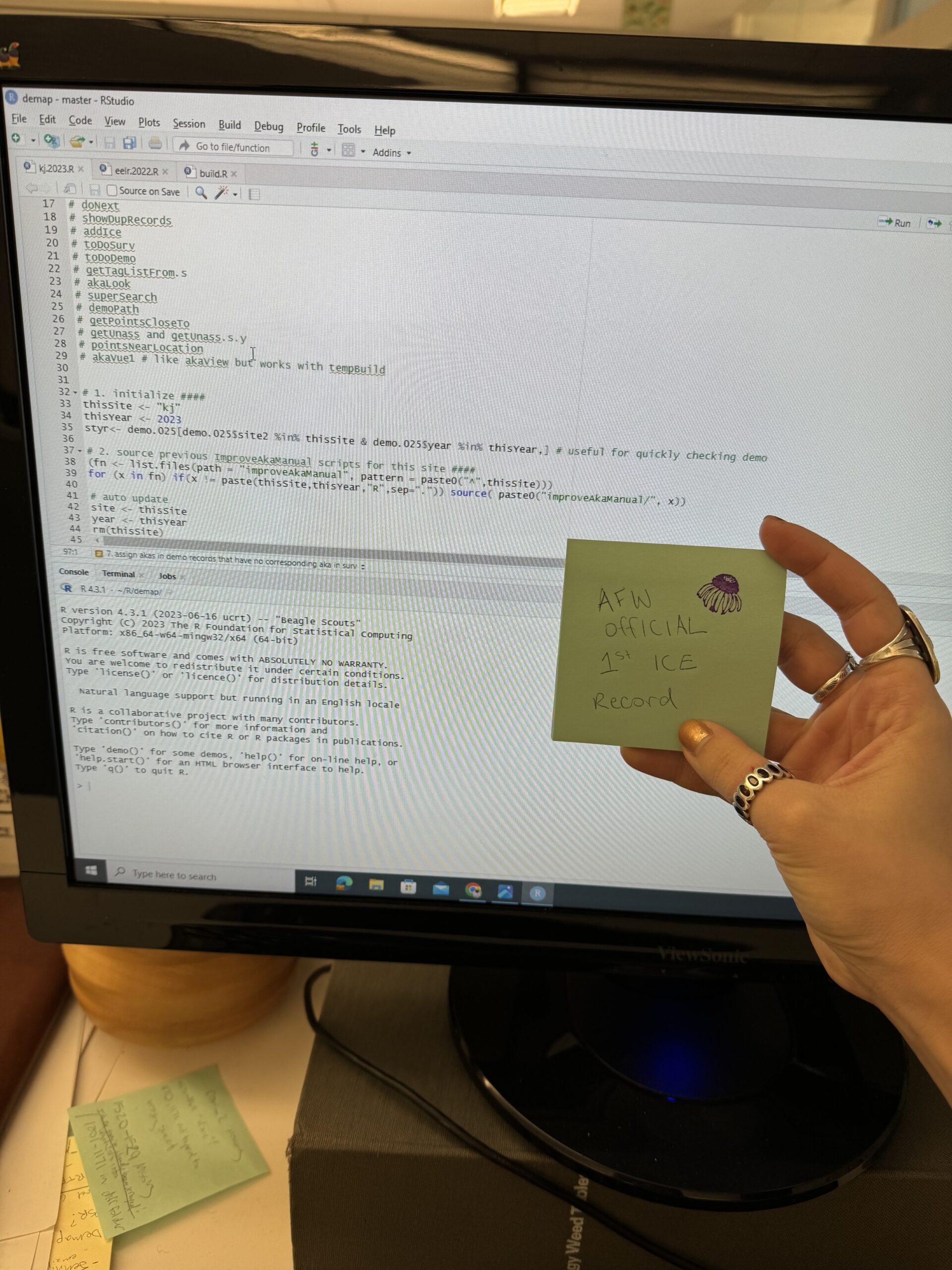
On Friday I wrote my first ever “ICE” record (informed census evaluation) for an entry at Kjs. There will be many more to come as I solve little mysteries from data collection. Hopefully soon we will have successfully incorporated 2023 demographic data into our long-term database. Stay tuned!
A very official certification of my first ICE record.
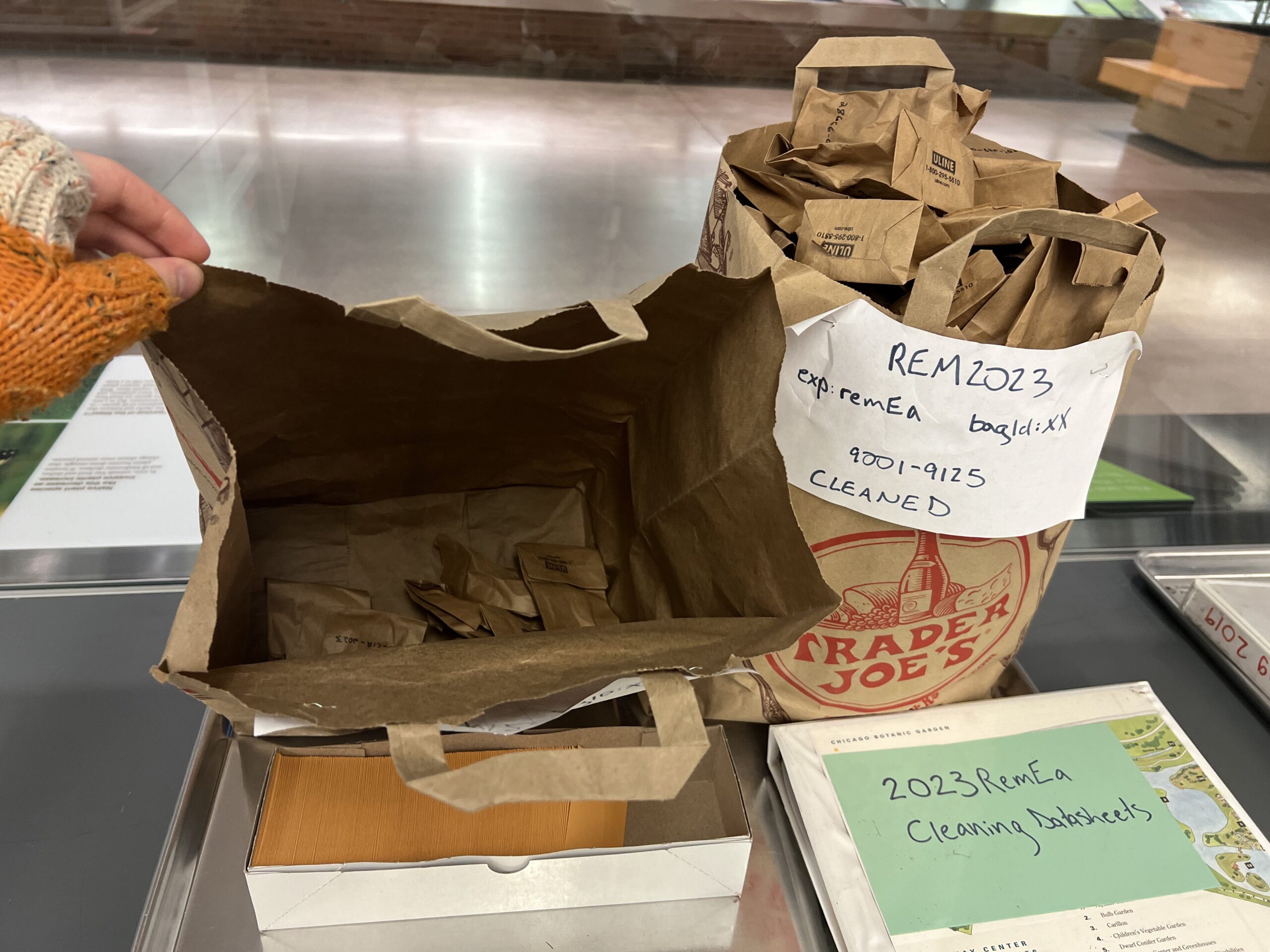
Most of the hundreds (or thousands!) of Echinacea heads we harvest every year are from our common garden experimental plots. But not all of them! We also harvest heads from local prairie remnants to learn about isolated natural Echinacea populations of different sizes. This year, we harvested 125 heads from the remnants, and they’ve begun their journey through our ACE process at CBG!
Next step next time?
The remnant heads are almost all through the first batch in our process, cleaning. By the end of the ACE process, we’ll be able to quantify multiple components of fitness, such as achene count and seed set, for each individual. But for now, one thing at a time!
The Leadplant Flower Moth (Schinia lucens), is a species of special concern in Minnesota. It used to be common and have an extensive range, but now populations are few and far between. Douglas and Grant counties (our study area) are not included on its current range map. Nonetheless, REU participant Liam Poitra thought that it was possible that this moth might persist in some of the remnants in our study area. Liam planned and conducted a systematic search for the leadplant flower moth for his REU project. If Liam found enough moths to estimate populations sizes or density, then he would investigate characteristics of their habitat for his REU project. If not, then he would transition to another project. He found one individual moth and took some great photos. Details of the search are in Liam’s report.
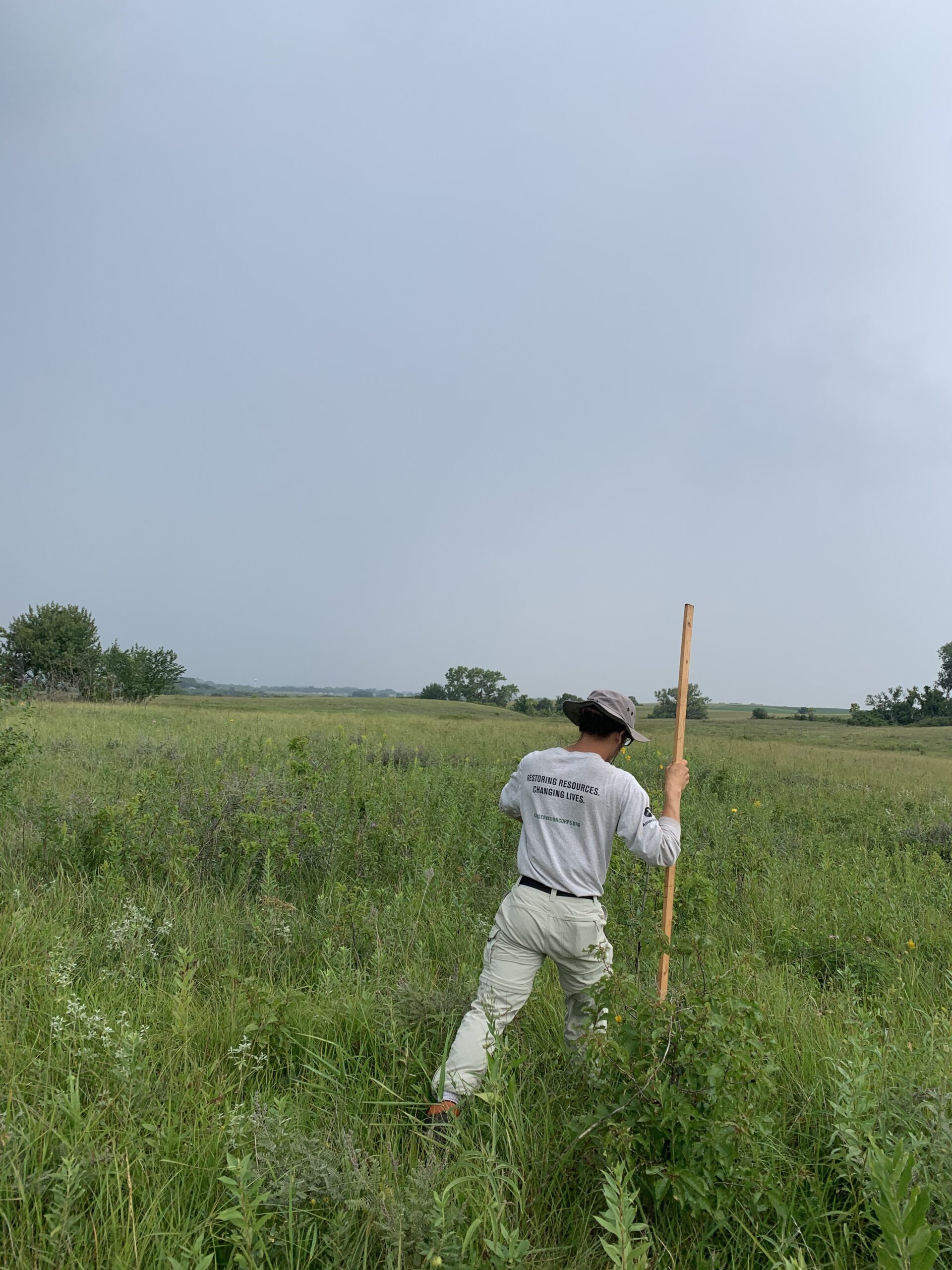
Liam marches through Staffanson Prairie Preserve. This site was included in his systematic search for the leadplant moth.
Start year: 2023
Location: prairie remnants in Solem & Land Townships
The Echinacea Project is assembling an enthusiastic team of undergraduates, recent graduates, graduate students, high schoolers and teachers to engage in prairie research during the summer of 2024! Are you an aspiring ecologist, conservation biologist, or evolutionary biologist? Spend time in western Minnesota’s prairies and gain research experience in plant population biology, evolution and quantitative genetics, pollination biology, and plant-insect interactions!
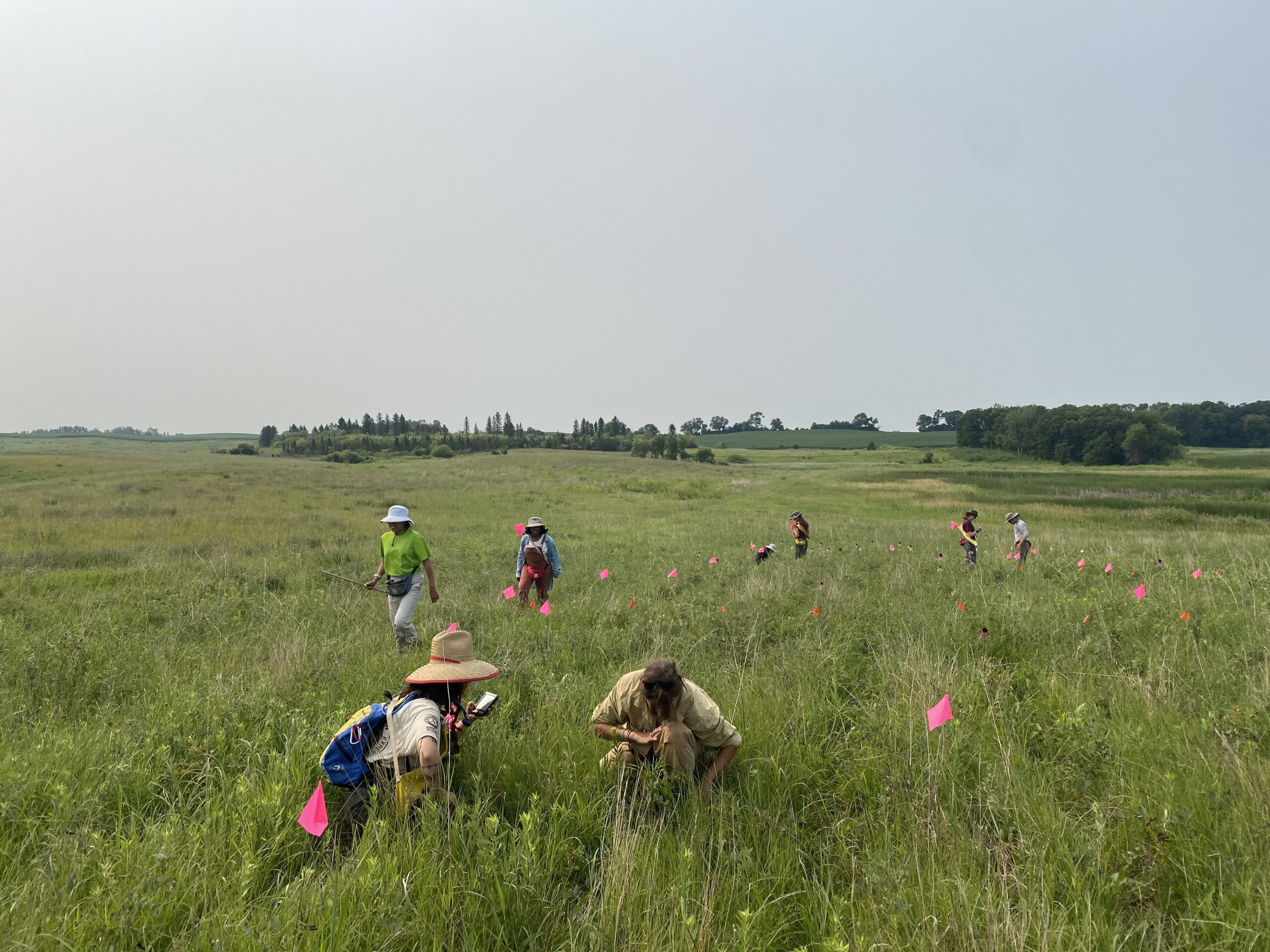
Members of Team Echinacea 2023 measure Echinacea plants in an experimental plot
We strive to create an inclusive, collaborative, stimulating, positive, fun, and productive environment for all regardless of race, ethnicity, gender, age, sexual orientation, and economic background. We welcome and encourage individuals from groups historically excluded from sciences and conservation. If you are interested in learning about and contributing to science and conservation, please join our team. We are committed to recruiting, training, and supporting individuals interested in science, education, and conservation from diverse backgrounds.
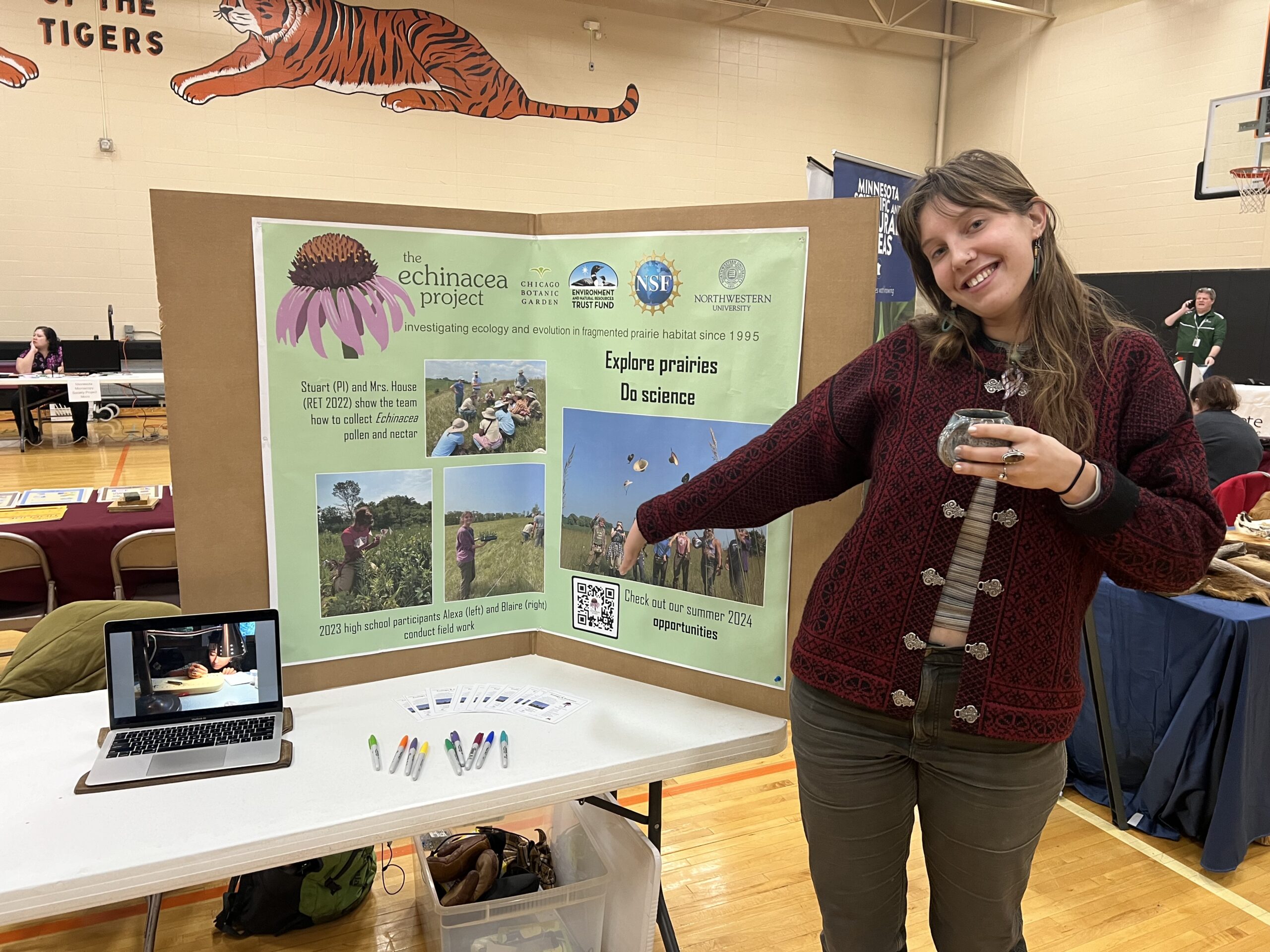
This week, Abby and I designed a poster, packed our bags, and headed to Minnesota to attend a science expo at Morris Area High School. The event was organized by Britney House (Team Echinacea RET 2022) and provided students of all grade levels an opportunity to explore different career paths and opportunities in science. There were folks with fancy robots and all the newest engineering tech in attendance, but we weren’t the only environmental sciencey group there; we were happy to see the MN DNR, USDA NRCS, and others in attendance.
Abby shows off our poster before the expo begins.
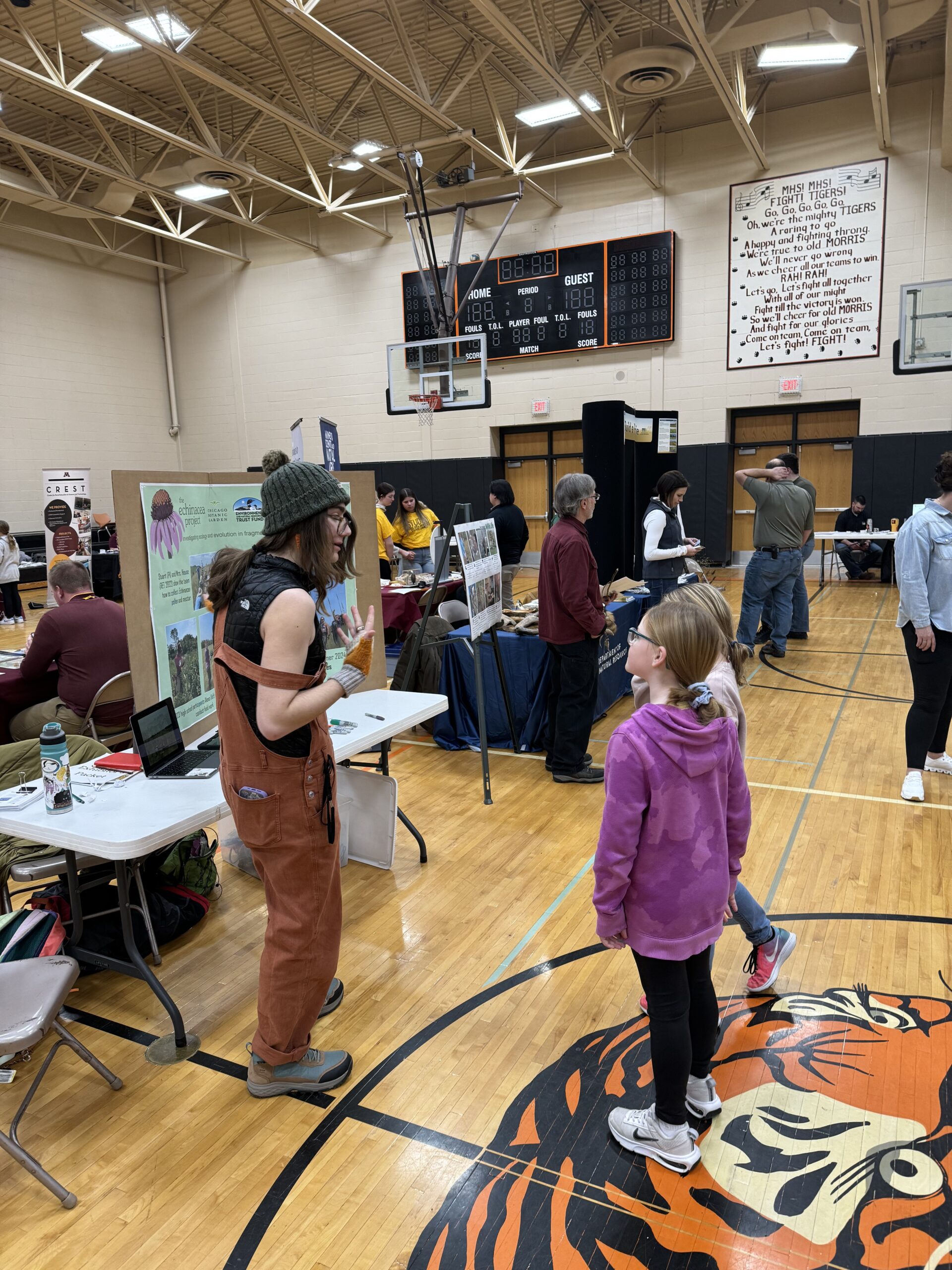
Our goals at the event were to inform people of our work in the area, get kids interested in conservation, and advertise our RET and RAHSS opportunities to local high school students and teachers. We got the opportunity to talk to lots of different people, from kids to community members to other exhibitors!
Wyatt sows seeds of conservation-mindedness in the youth. Future Echinacea Project members?
Many thanks to Britney and the rest of the crew at Morris for organizing such a great experience for students, the community, and orgs like us alike. After the event, we revisited some of our favorite spots around town before heading home the next morning. The jury has concluded that the prairie is just as pretty covered in a layer of snow, even if there’s not that much.
2023 RET participant, Victoria Romero, spent time over the summer designing a lesson plan for using the ABT format. She implemented this in her project-based learning class. Students presented their enzyme research in a “poster conference” style format. Each student had 3 minutes to describe their enzyme models using the ABT format. This project was implemented early in the year so there was hesitation, but Victoria may plan more ABT format presentations throughout the year.
Victoria also plans to implement ecology focused lessons later in the year. She is teaching an English for second language ecology course, so she may modify her lessons to fit that.
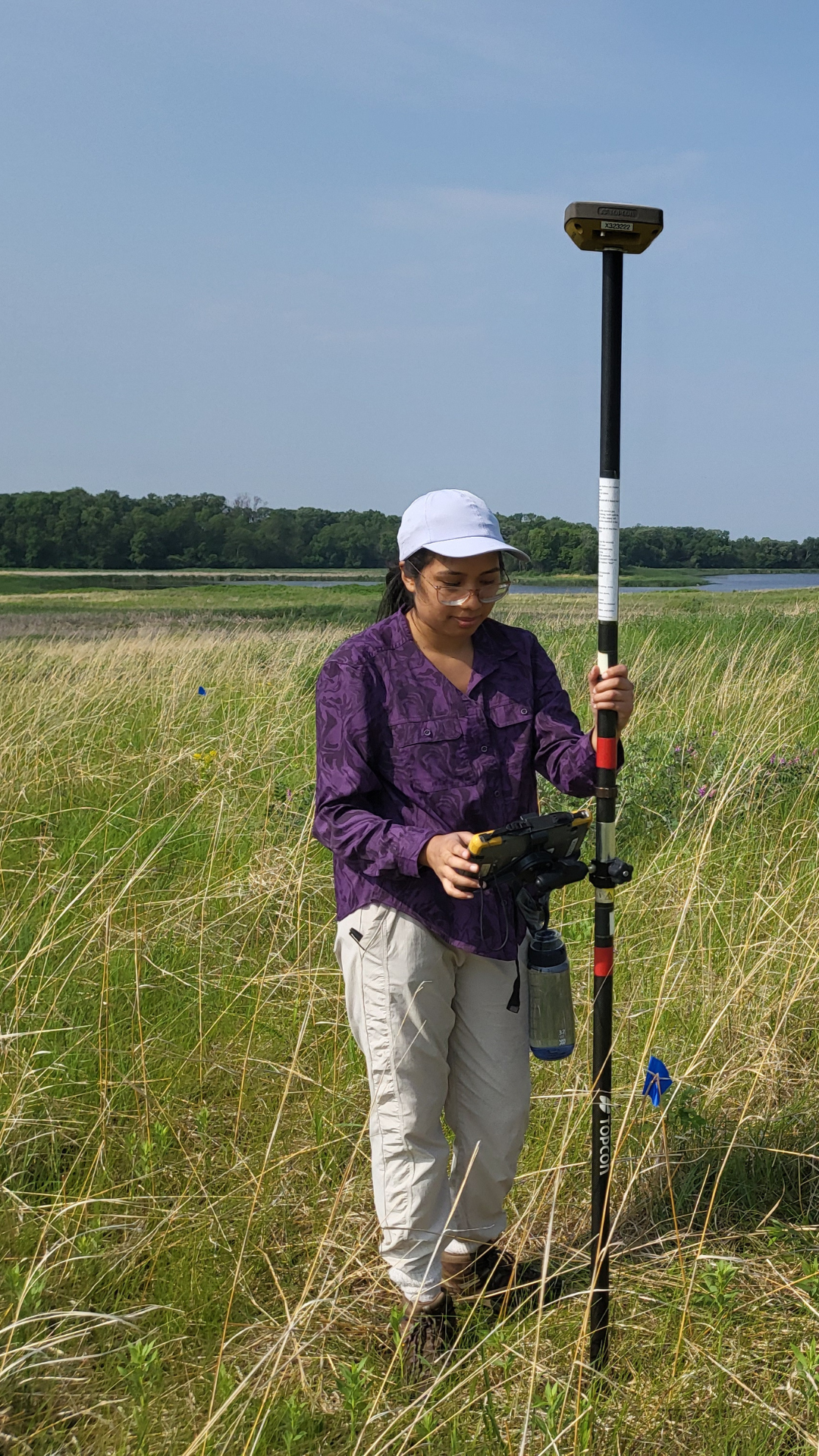
Victoria takes GPS points in the field! Team Echinacea had lots of time to think about and discuss ABTs for our work this summer.
Start year: 2023
Location: Western Minnesota and Gwinnet County Public Schools
Overlaps with: NA
Data collected: NA
Samples or specimens collected: NA
Products: Victoria’s website to introduce her students to the ABT format project can be found here: Enzyme Project Her presentation to the 2023 summer team is located in “Dropbox/teamEchinacea2023/victoriaRomero”
Hemiparasitic plants are associated with higher quality prairies, and many hypothesize that they are fundamental in generating this high-quality prairie potentially by impeding the growth of dominant grasses, allowing non-dominant forb species to establish. Additionally, if this is true, there are likely different effects associated with the abundance of hemiparasites. Therefore, we experimentally introduced Pedicularis canadensis to another restoration plot, experimental plot 10; however, this time we introduced P. canadensis at different densities around 8 different focal species. We measure the size and reproductive effort of these 8 focal species around each of our 66 hemiparasitic plant planting locations.
In 2023, we replanted 32 Pedicularis canadensis that hadn’t been seen since they were initially planted in experimental plot 10. Additionally, we took our annual measurements of our 8 focal species’ size and reproductive effort.
Pedicularis canadensis in experimental plot 10 at WCA high school. Drake planted this hemiparasite in different densities across the experimental plot.
Start year: 2019
Location: experimental plot 10
Overlaps with: parasitic plants addition experiment in p01
Data collected: size and reproductive effort of 8 focal species
Samples or specimens collected: NA
Products: This work is part of Drake’s Ph.D research. He will be wrapping up this year, so stay tuned!