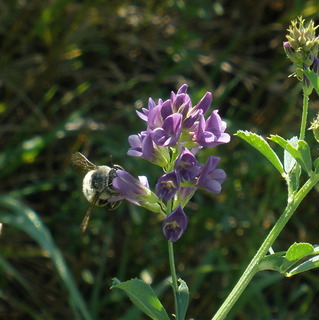
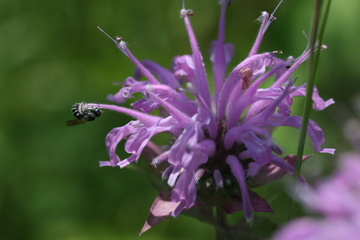
On Medicago sativa in CG–Melissodes?
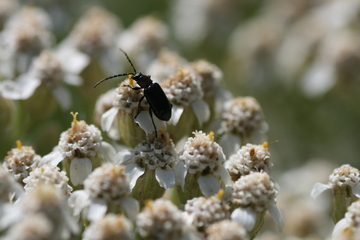
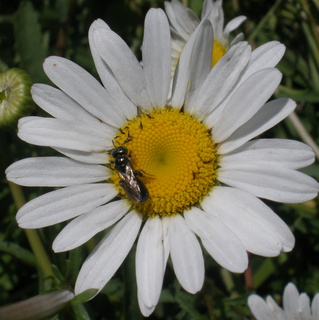
Beetle on Achillea millefolium
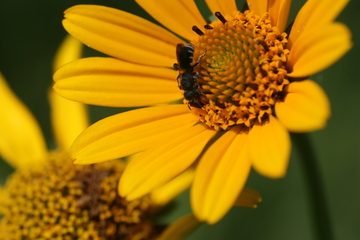
On Heliopsis helianthoides
On Monarda fistulosa
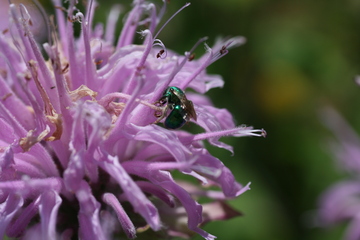
Some flowers aren’t as easy to land on as Echinacea…
On daisy
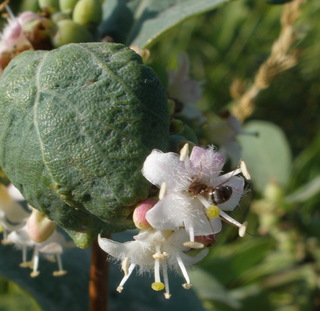
Ant on Symphoriocarpos albus
thanks Gretel for letting me use your camera!
|
||||
|
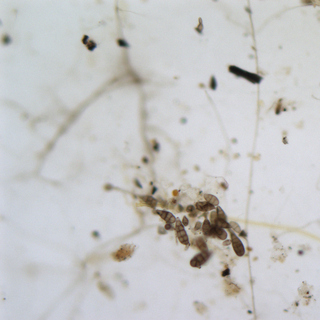
So, I’ve been working hard creating slides from all the styles everyone helped to collect (thanks!), and this is the protocol I’ve been using: II. SLIDE PROTOCOL: Of the approximately 380 slides I started with, I have 150 left to do, so I’m more than 1/2 way there. Once I’ve created all these slides, I’ll start taking photos and uploading pictures. Anyway, just felt like it was about time I updated. Gonna go make slides now… ^_^ Here is the data that’s been compiled for FNC, pollinator observations, within 10 m, and the isolation measure of flowering Echinacea focal plants. Some things I wanted to point out that may or may not make a difference: As of 8/3:The last 2 files are new. In order to make the graph that appears on my poster, we divided the unique Id’s into 4 groups: 1-alfalfa only in fl.neighborhood 2-ech only 3-both 4-neither. I took the average and standard error from each of those 4 groups to make the 4 bars on the graph. I want to do the same thing for Amorpha. So I attached the file that I’d use to make the same graph but with amorpha. You could use the third to last file which has infl ct for each unique ID for ecan, mesa, and amca to do the analysis but I figured I’d put the others up so you could know how I made the graph… FYI, after Amanda and I looked at all the vials yesterday, it turns out that over our 4 day stint we had 132 bees, 13 scsf, 33 flies, 4 butterflies, 15 beetles. Good work everyone! I attached a map of locations in the CG where we will plant Stipa seeds. Black dots are Echinacea locations, red circles are potential Stipa locations, and blue dots are locations we will plant this year. We will plant each Stipa seed relative to an Echinacea location, maybe 10 cm South or 20 cm North. Any thoughts? Greg and I have been collecting plants and pressing them. I am doing a plant collection with plants mainly from landfill for one of my classes next year at McGill in Plant Systematics. Greg is collecting specimens of anything that co-flowers with Echinacea and making slides with the pollen from each specimen to compare with the pollen found on the pollinators and styles from pollinator competition experiments. Greg, here is a site with information on collecting plants from the Missouri Botanic Gardens Here is a document from my class that also describes field collection techniques: I also made a drying box for the pressed plants, which is almost finished… This post is long overdue! I thought I would give a little update on what I’ve been up to here at the Chicago Botanic Garden. So to remind those who may have forgotten who I am and what my project is all about.. My name is Andrea. I attend McGill University where I study botany (with Allegra!) and over the past two years I’ve developed a very strong and deep DEEP love for life in the soil. Don’t get me wrong, I love studying plants, but at this phase of my life soil organisms (namely fungi) dominate. It started with an Introduction to Fungi course I took two years ago that involved a series of guided and independent mushroom forays and culminated in the production of a mycological portfolio. I then took a biology of fungi course that was much more thorough and only confirmed for me just how awesome fungi really are. Last summer I was lucky enough to have the chance to work as an REU intern with Louise Egerton-Warburton, soil scientist at the Garden. My research looked at how microbial communities respond to buckthorn invasion and subsequent restoration. I’m back this summer to continue research on that project and as well to start looking at the mycorrhizal communities associated with the Echinacea populations in the remnants of interest in Minnesota. The main goal of my experiment is to see if there is a relationship between plant genotype and mycorrhizal community. At the beginning of the summer Stuart helped me select nine families in the ’97 common garden and from each family around 9 individual plants were randomly chosen.To collect the mycorrhizal fungi I use mesh baggies that have two polycarbonate membranes secured at the bottom. One of these membranes I will stain and permanently fix onto slides for the purposes of determining hyphal length. This will give me an overall idea of mycorrhizal density and colonization. Hopefully I will have time to extract DNA from the other membrane to get a closer look at who’s really there. To install the bags, I basically wedge the bag carefully into the ground near the roots of select plants so that the membranes sit at least 4 cm below the surface. Over time, the mycorrhizal fungi growing near the roots will run across these membranes and have no trouble meandering through its pores. Little do they know that it’s a trap!! Around each plant I placed one bag and waited about three weeks. Recently, I retrieved those bags and I’ve spent the past few days making slides. I promised to post pictures so here are a couple exhibiting some spores and hyphae!
For some reason it won’t let me load more than one photo so I will try again later. More updates coming soon! -Andrea This week we are going to make big dents in CG measurements and our independent projects. We will measure the CG MWF morning and TTH afternoon. We’ll start T & Th morning with Phenology assessments and end off each morning with time to work on independent projects. Afternoons on MWF will be devoted to independent projects. Be ready 8:30 Monday morning–with sunscreen on & visors synced–for a pep talk (it’ll be about efficiency & the well-oiled machine)! day AM PM Monday measure CG ind. proj. Tuesday phenology & i.p. measure CG Wednesday measure CG ind. proj. Thursday phenology & i.p. measure CG Friday measure CG ind. proj. Saturday phenology & off off I was glad to participate in assessing floral phenology Wed morning and, with Amy, checking to resolve uncertainties remaining from this year’s monitoring of the first recruitment experiment (not to mention a very fun lunch with the team!). We sampled tissue from closely neighboring rosettes, where it isn’t clear whether they are the same or different plants, for eventual molecular analysis in Chicago by Jennifer and her team. Resolution of those plant identities should certainly help reduce the problem of counts of survivors *increasing* between censuses. But, in retrospect, I wondered whether the info we recorded was crystal-clear in terms of how this year’s counts should be adjusted, depending on the outcome of the IDing, particularly for the zones where many seedlings were recorded. When the remaining double-checking is done, it would be good to keep this in mind… Of the many, many other terrific things that I’m excited are being accomplished, I’ll just comment that I’m happy to see Megan’s post that she has sampled pollen and stored it in different conditions to check its long-term viability. Finding a way to keep pollen viable for a month to a year would pave the way for experiments I thought up while observing pollinators out at LF on July 7. I see that Megan noted the amount of pollen available for that sample wasn’t large, so it would be great if another set of samples could be taken, also so other plants are represented.
This two-part entry includes one observation about pollination that struck me odd. I had a floral head (A) at Loeffler’s corner and as Agopostamas texanus approached – it stopped – flew backwards and away – and visited others nearby (all Echinacea). Did the presence of ants on the head – around the anthers have anything to do with the “I’ll just come back later” actions of the bee? Has anyone else observed a head NOT get visited even though it was ripe with pollen because of the presence of ants? Gretel- KJ’s See you guys at 7:30ish at Hjelm House! |
||||
|
© 2026 The Echinacea Project - All Rights Reserved - Log in Powered by WordPress & Atahualpa |
||||