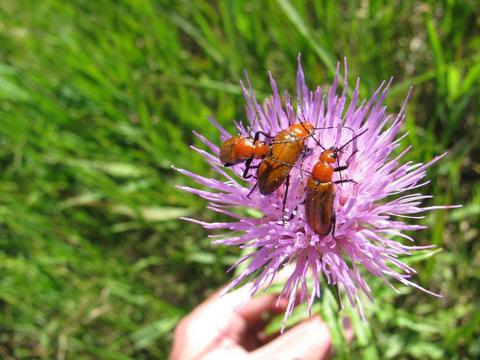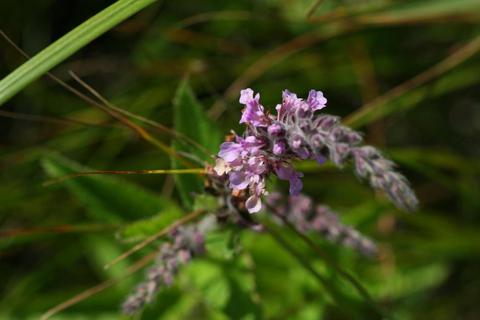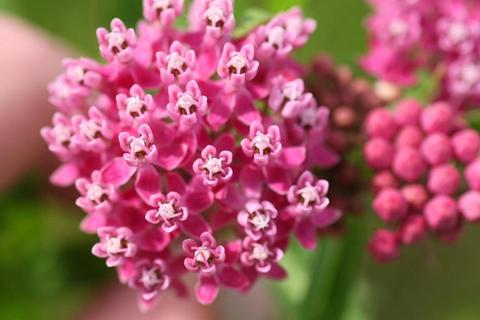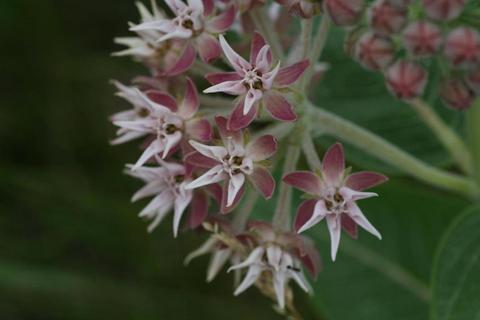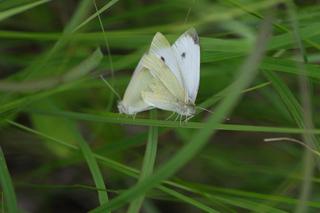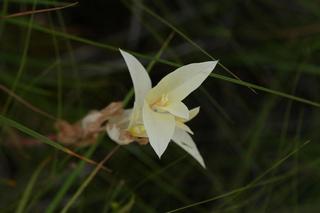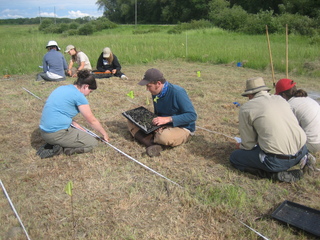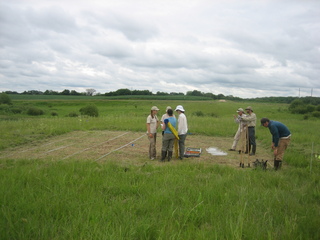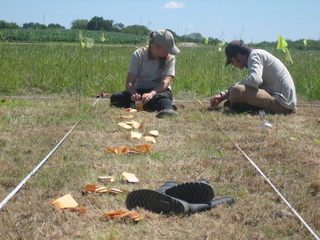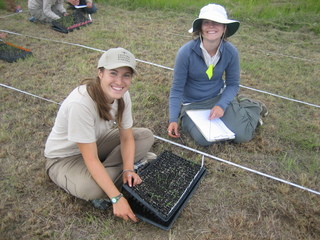
So far the phenology is going good, Heliopsis seems to be finishing up flowering, and I was able to pull some flags today! All the echinacea and coreopsis seem to be just at peak or a little past, while the carduss and flags are continuing to be mowed. I am starting to input my data and will probably have some preliminary graphs up next week!
|
||||
|
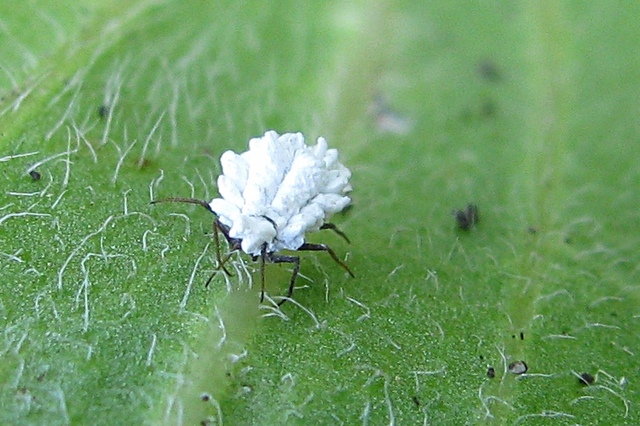
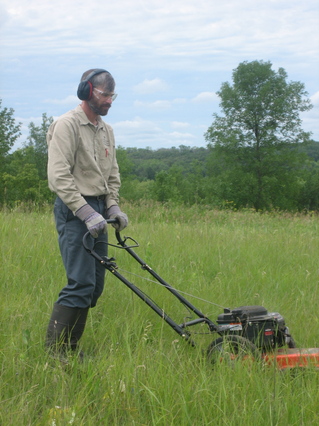
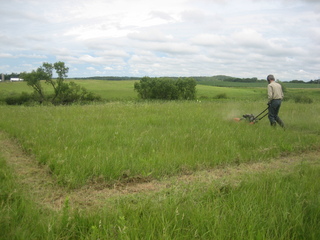
The string segments that came with the wheeled trimmer were 47 cm long. I used 32 cm sections for trimming rows in the CG. It’s been quite a while so there is lots of good news on the aphid front! First of all, aphid casualties have decreased substantially thanks to improved transfer methods. We have now been using a paint brush to gently disturb and brush the aphids into a petri dish (upon the suggestion of Dr. George E Heimpel). This is far less traumatizing for the aphids and survival has skyrocketed from 20% to around 50%!
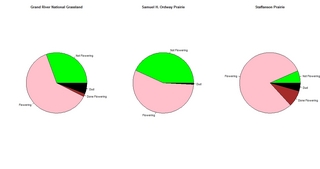
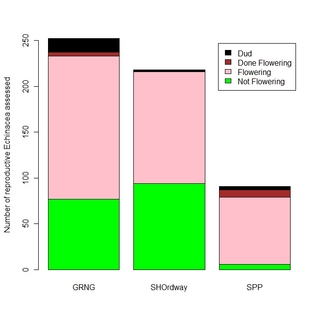
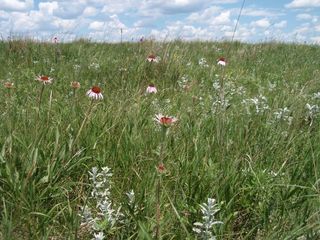
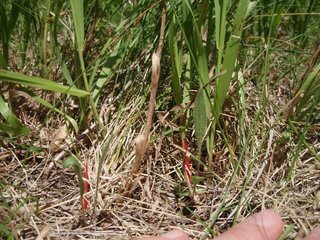
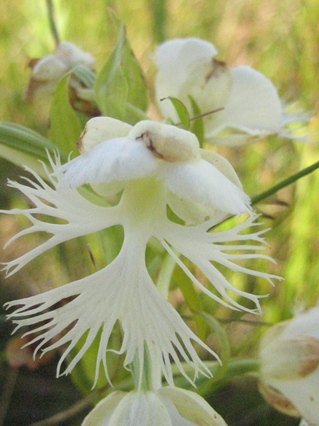
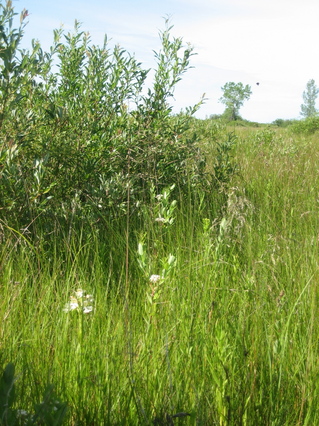
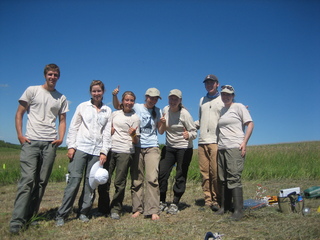
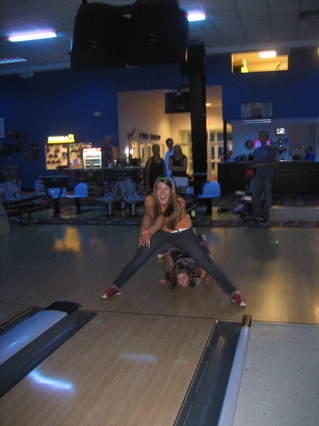
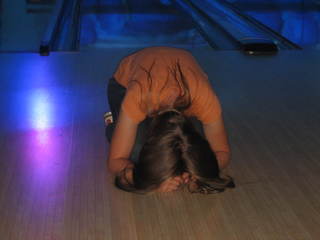
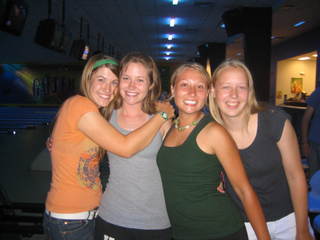
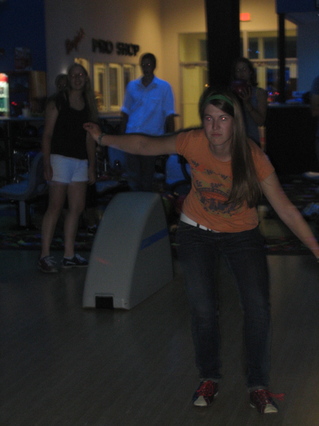
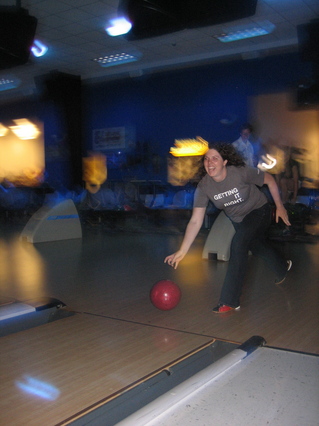
Last week I assessed Echinacea flowering phenology at Grand River National Grassland south of Lemmon, SD, Samuel H. Ordway Prairie west of Leola, SD and Staffanson Prairie near Kensington, MN. Here are a couple of figures I generated to compare phenology at the 3 sites. Next, to show more quantitative information, I used a stacked bar graph. These figures illustrate that the flowering phenology is most advanced at Staffanson and least advanced at S. H. Ordway Prairie. Nevertheless, I am encouraged that there are lots of flowering plants at all 3 sites, suggesting that a long-distance cross involving plants from these 3 locations would be possible. I am considering tackling that project next summer, to assess whether there would be lower seedling recruitment from between-population crosses compared to within-population crosses at these 3 sites. Here’s a picture of some flowering Echinacea at Perch Lake, which is near the S. H. Ordway prairie. Here is a picture of 2 of the 3 surviving plants in my experimental plot at Perch Lake Waterfowl Production Area, southwest of Leola, SD. The Perch Lake site is 1 of 3 experimental plots I (and my assistants) sowed in November 2008, to ask whether Echinacea from western South Dakota, central South Dakota and Minnesota exhibit local adaptation in seedling recruitment. More background and results from the 1st 2009 census are displayed in a poster that you can find in the September 2009 archives of the FLOG. Unfortunately, the Perch Lake site was sprayed with a combination of herbicides (Tordon and Telar) in August 2009. The treatment was lethal to ALL the Echinacea seedlings that emerged in 2009. Thus, the 3 surviving seedlings from this year are the only living Echinacea in this plot! Fortunately, I was able to census the plot shortly after it was sprayed, and I am confident that I found the survivors up to that point. I plan to present a talk about my local adaptation experiment at the North American Prairie conference in August. Today we will start measuring Echinacea in the Common Garden. Here is the link to the protocol: CGmeasureprotocol2010.htm Parent’s Visit and the 4th: Orchid Trip: It was really fun to visit to a very different type of prairie (wet vs. mesic), and spend a day doing something totally different. Unfortunately, this year the mosquitoes were especially bad, which kind of put a damper on the day. Fortunately, the team ended up have a lovely dinner at Cafe 116, and I think I can safely say that I had some of the best pulled pork in MN. Some pictures of the orchid trip: Planting My MS Project Sites: Bowling: Et Voila! We’re back up to date. ‘Till next time! Four plants are flowering in Andrea’s garden this year. Andrea Southgate planted this experiment (aka inb2) in 2006 as part of her Master’s research project. Andrea and Jennifer made a photo essay about their plantings that year. These are the first plants to flower in this experiment–about 4/1500 in their fifth growing season! I dumped the topcon’s gps data into a csv. this data hasn’t been cleaned and contains a couple errors that have yet to be fixed, but it should be enough to flesh out some R magic to help parse the output. The point number, lat, long, and {all the entered data for the points} are comma seperated, the least being one big glob of stuff. The first couple values are proper points but the wrong dictionary, so those will have to be done seperately. |
||||
|
© 2026 The Echinacea Project - All Rights Reserved - Log in Powered by WordPress & Atahualpa |
||||