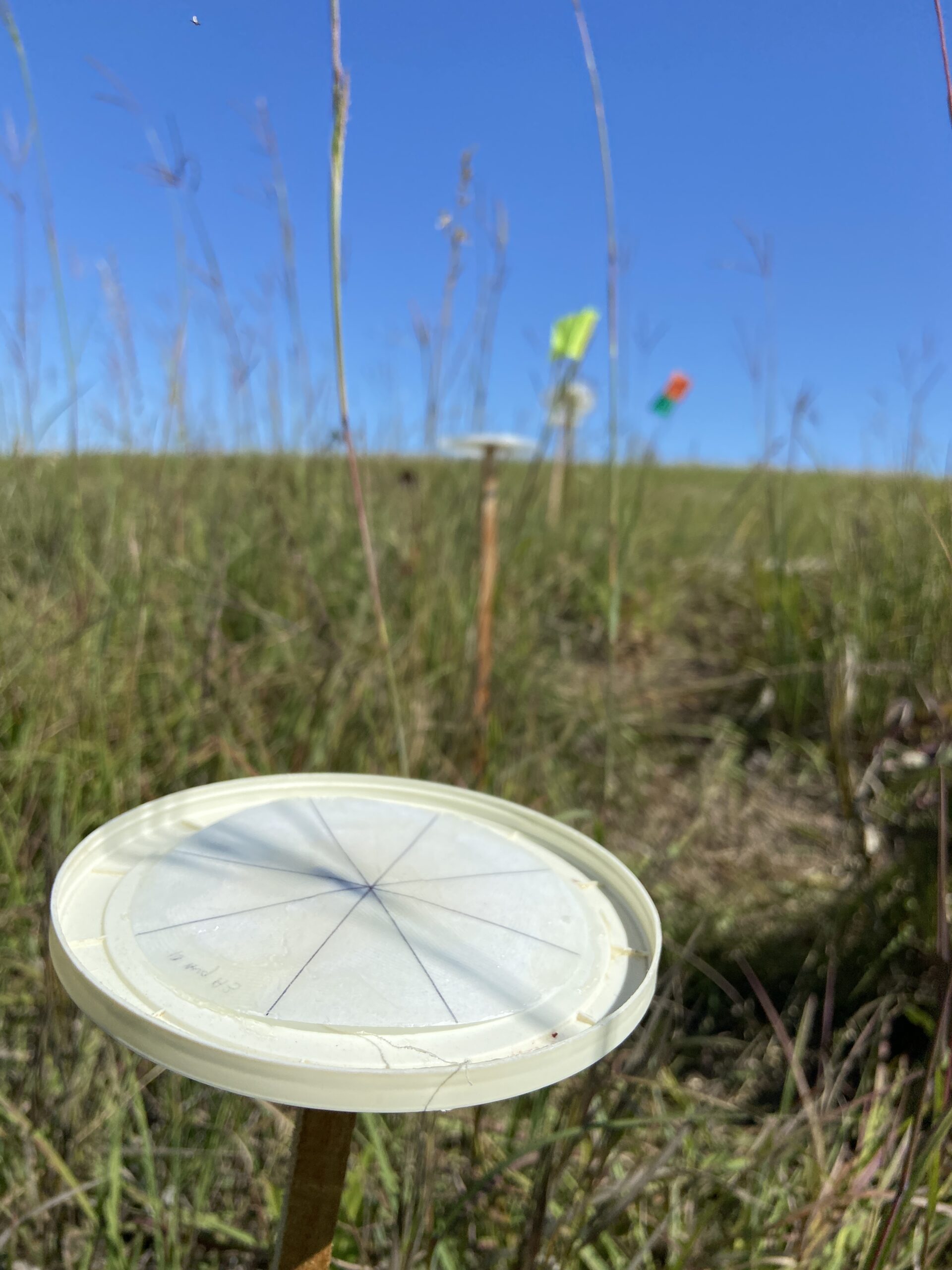
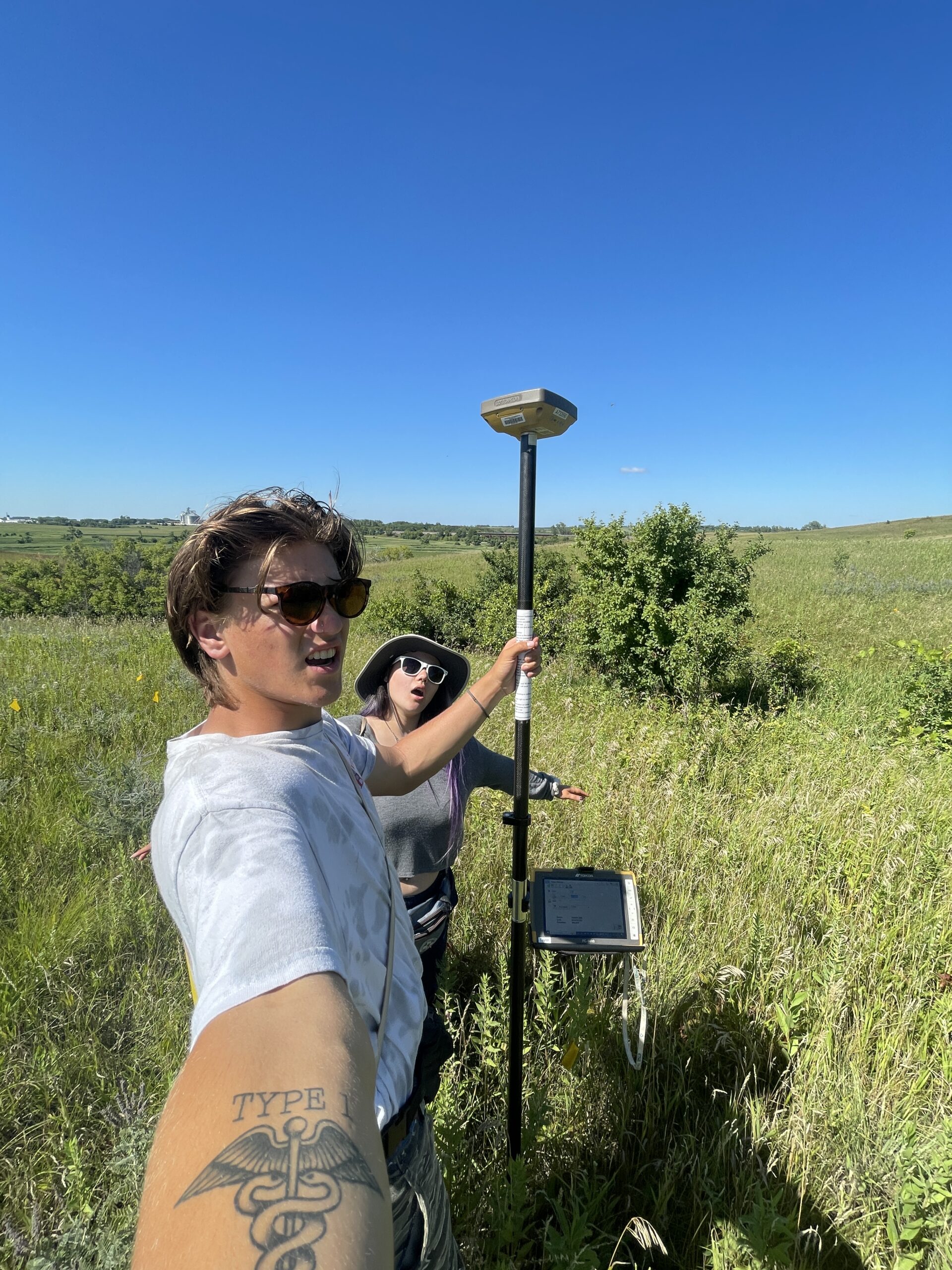
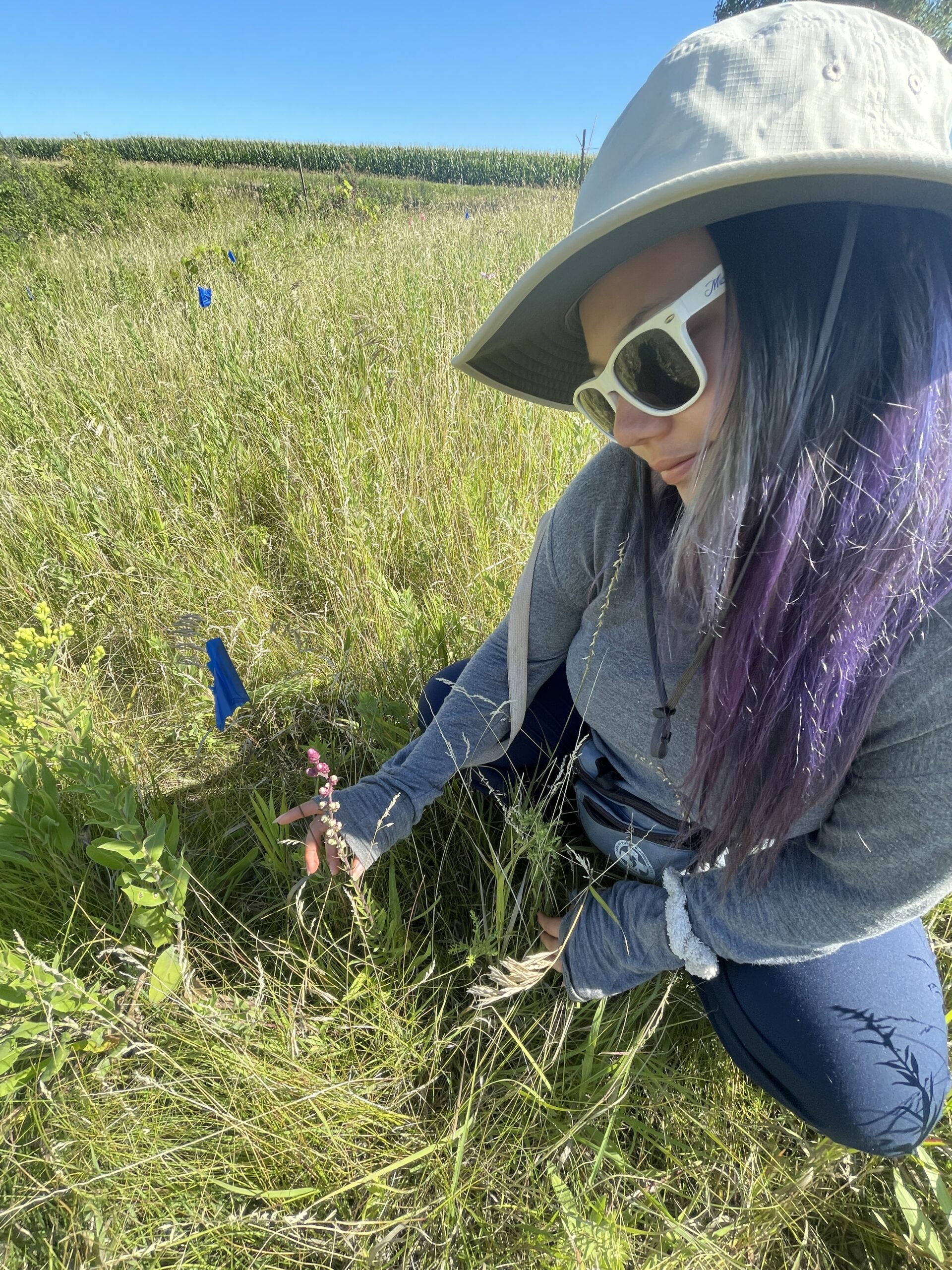
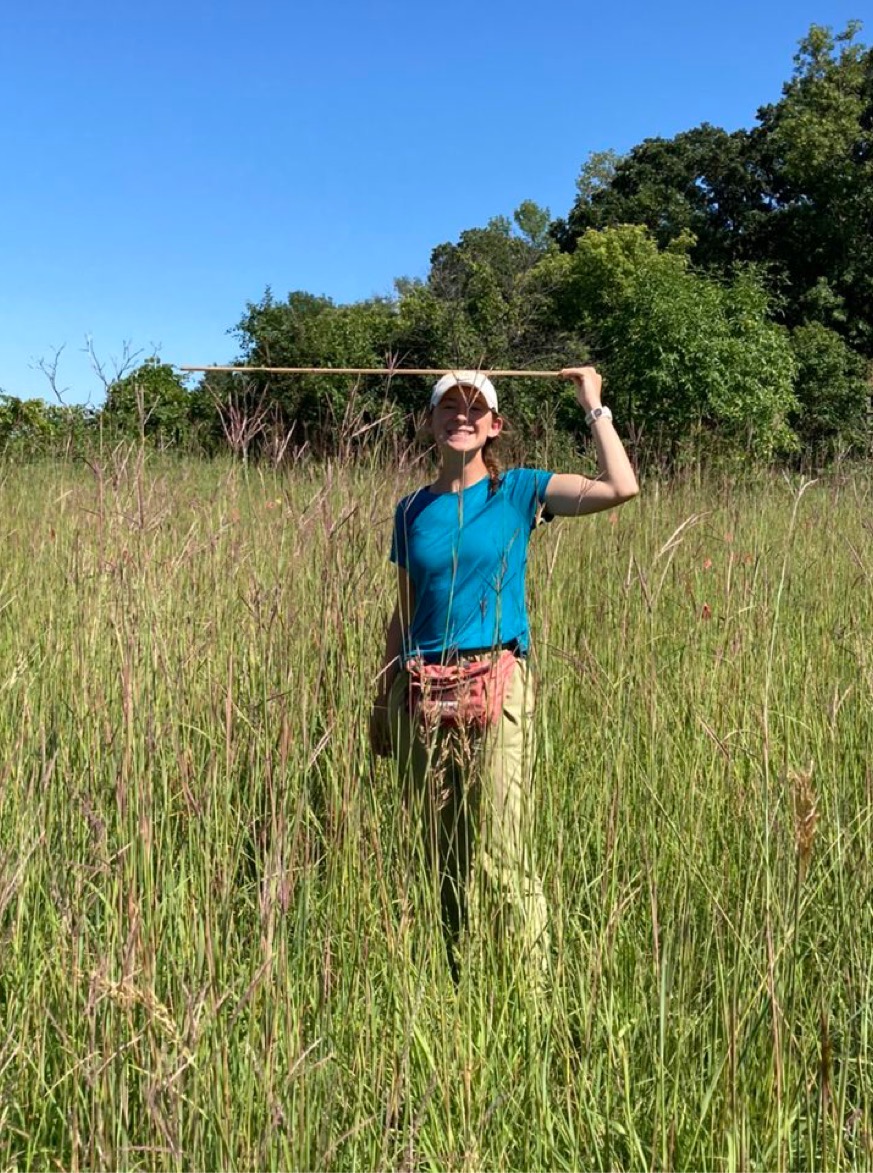
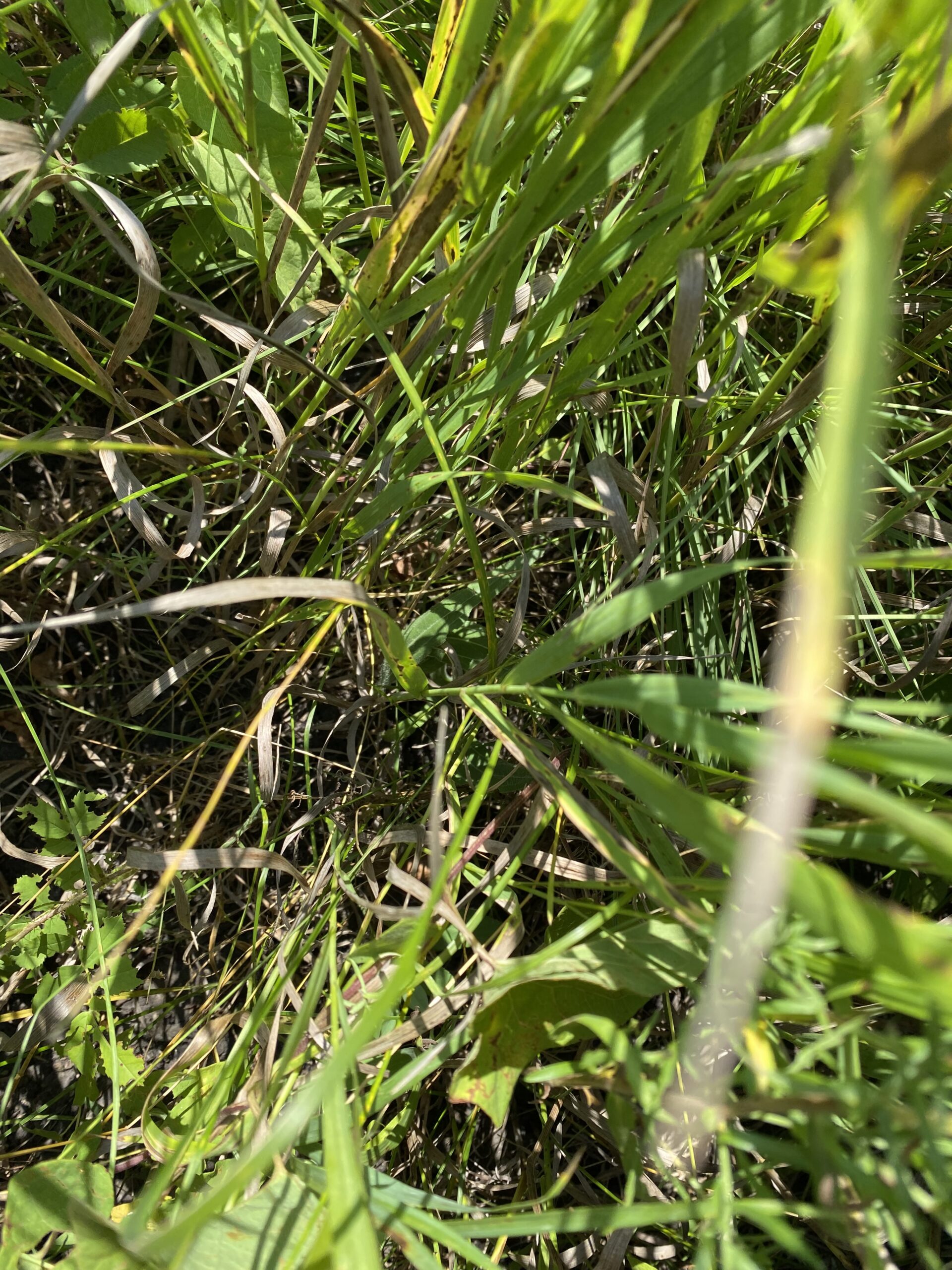
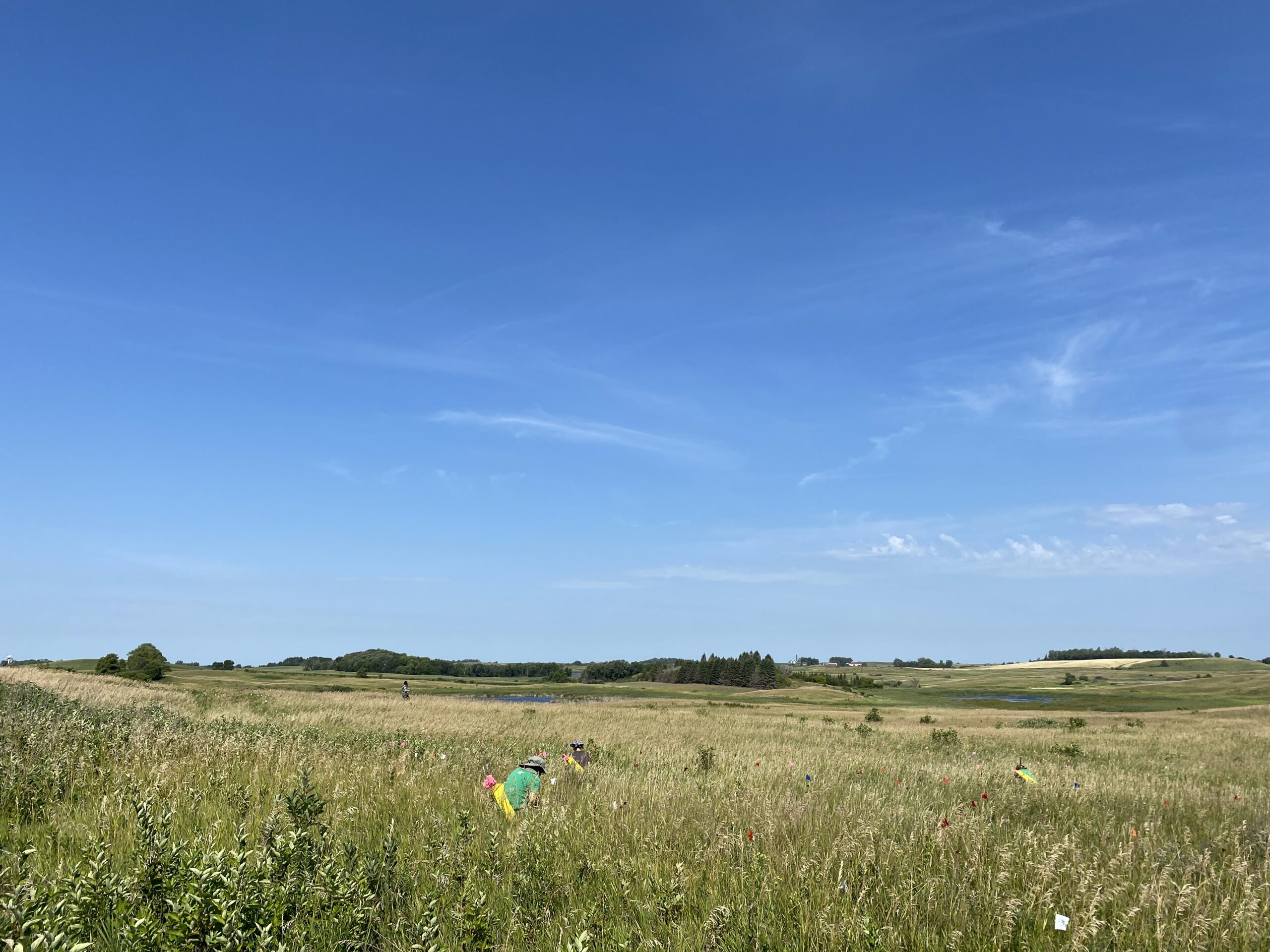
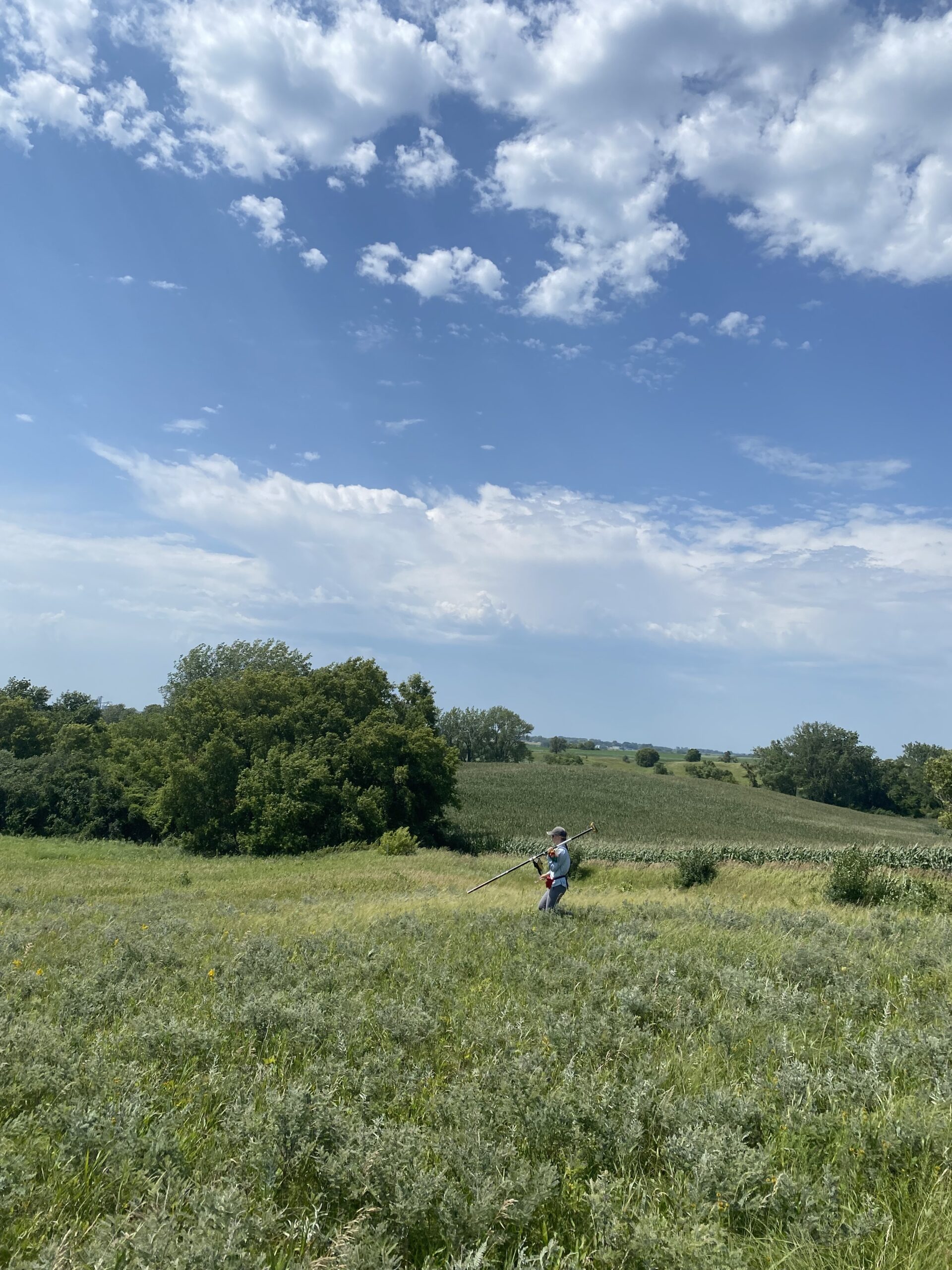
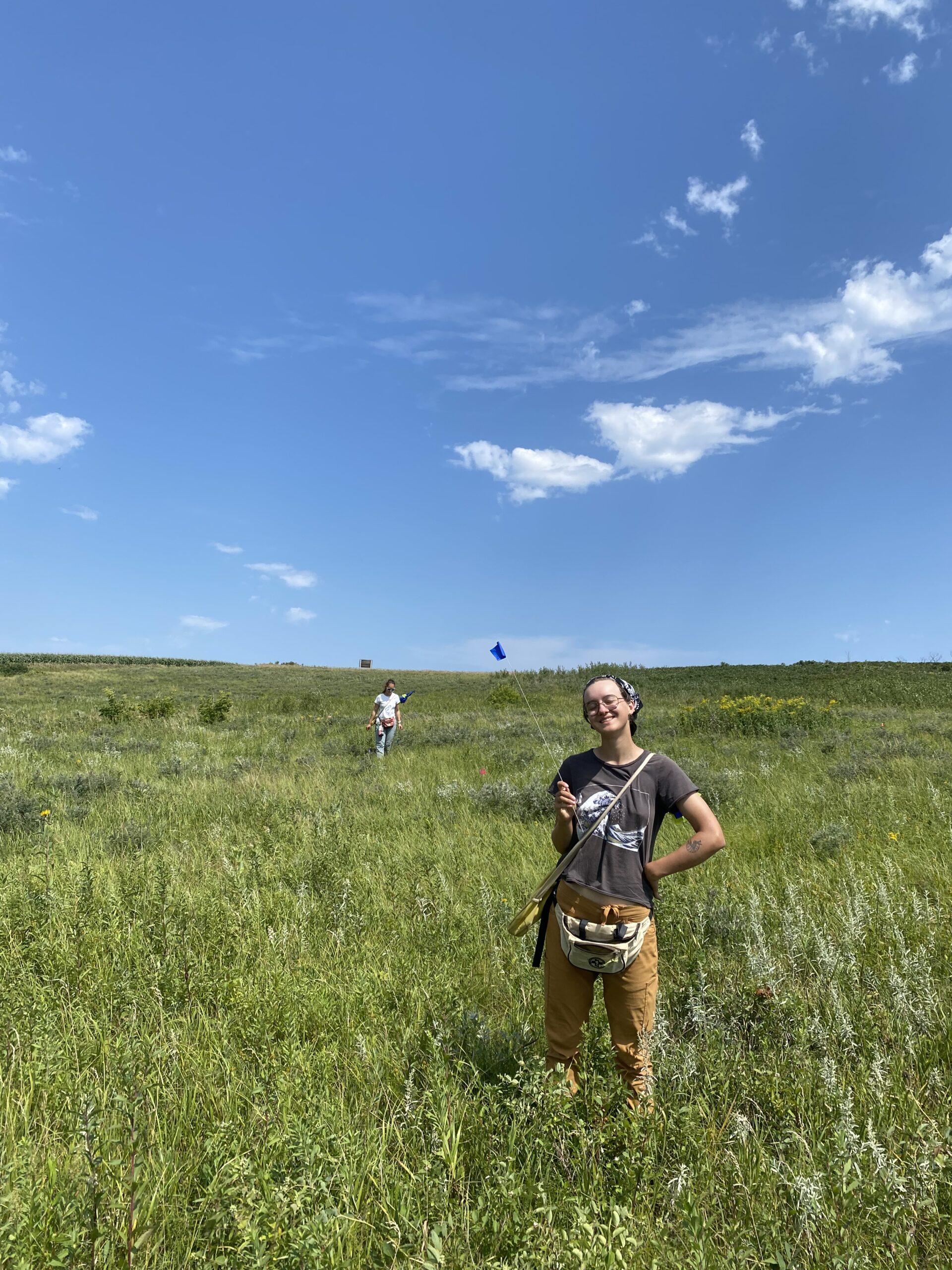
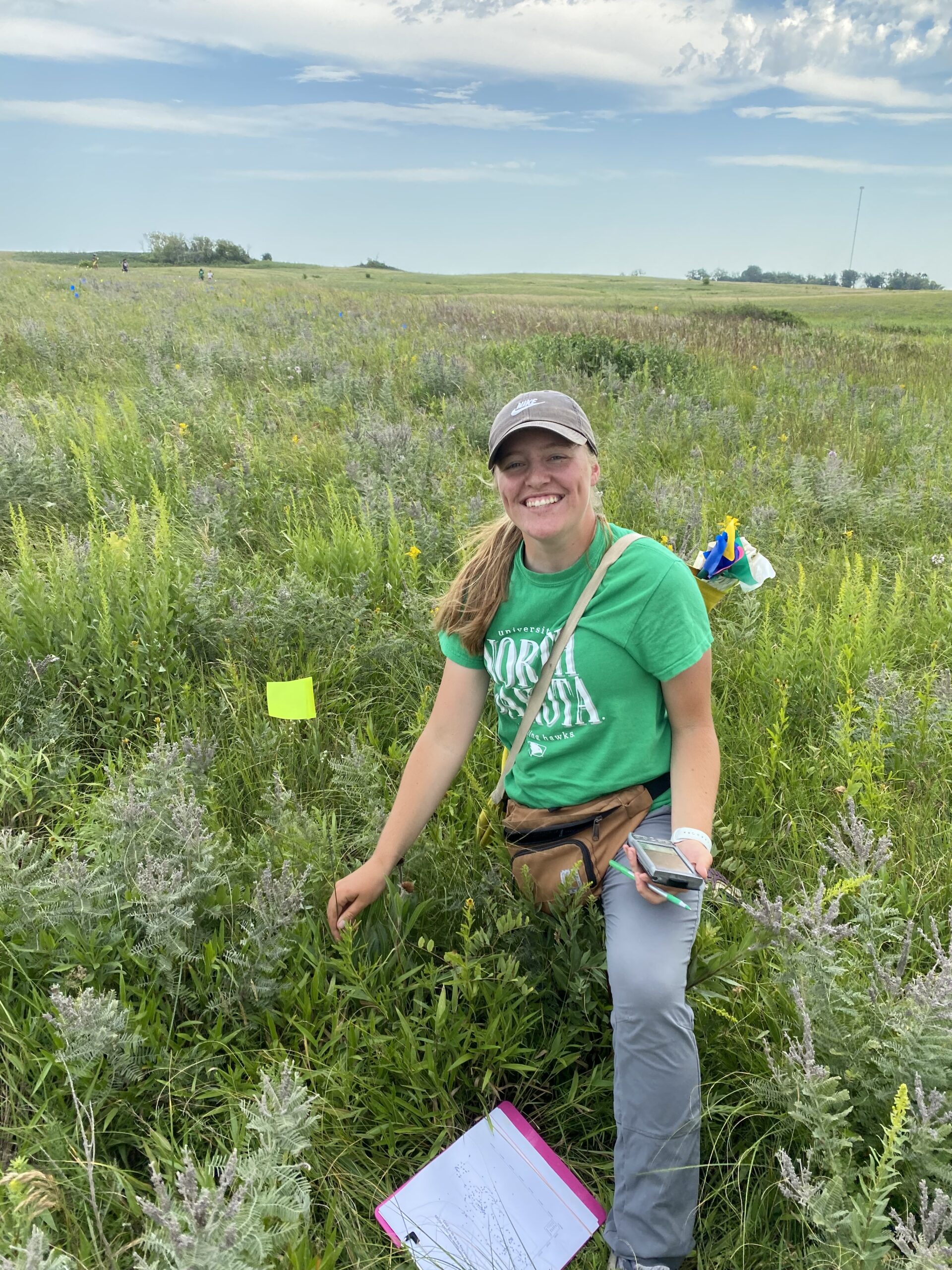
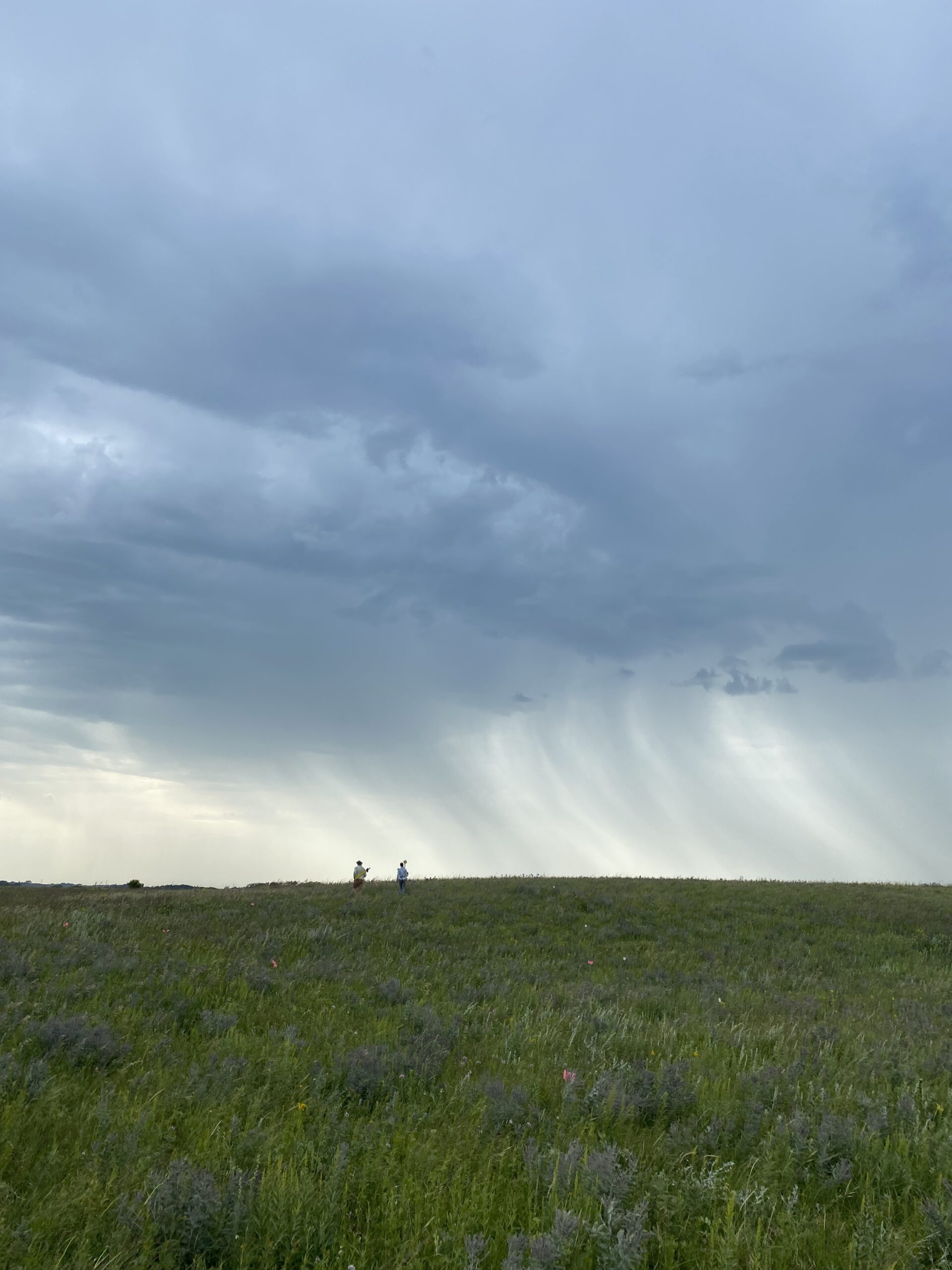
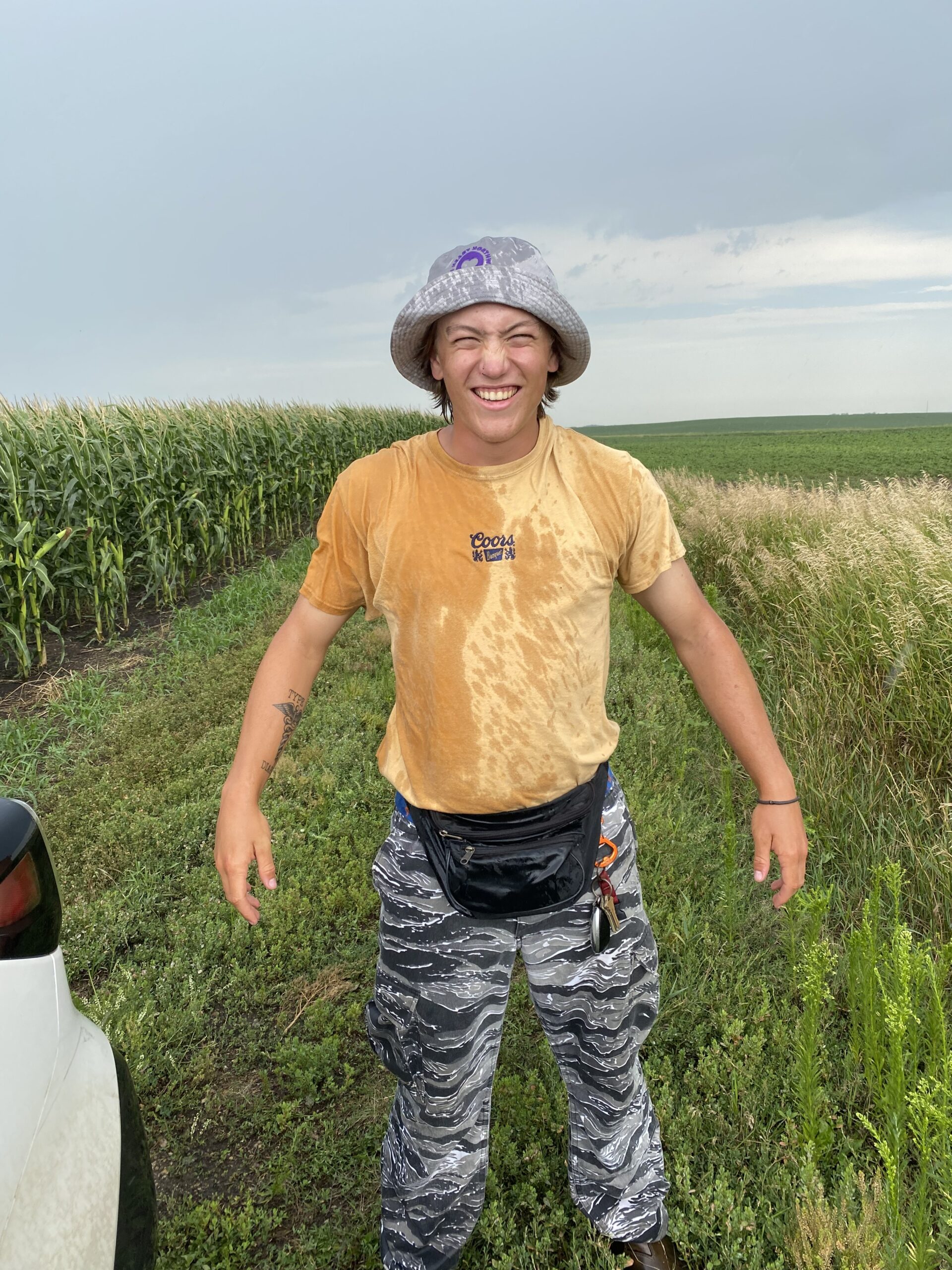
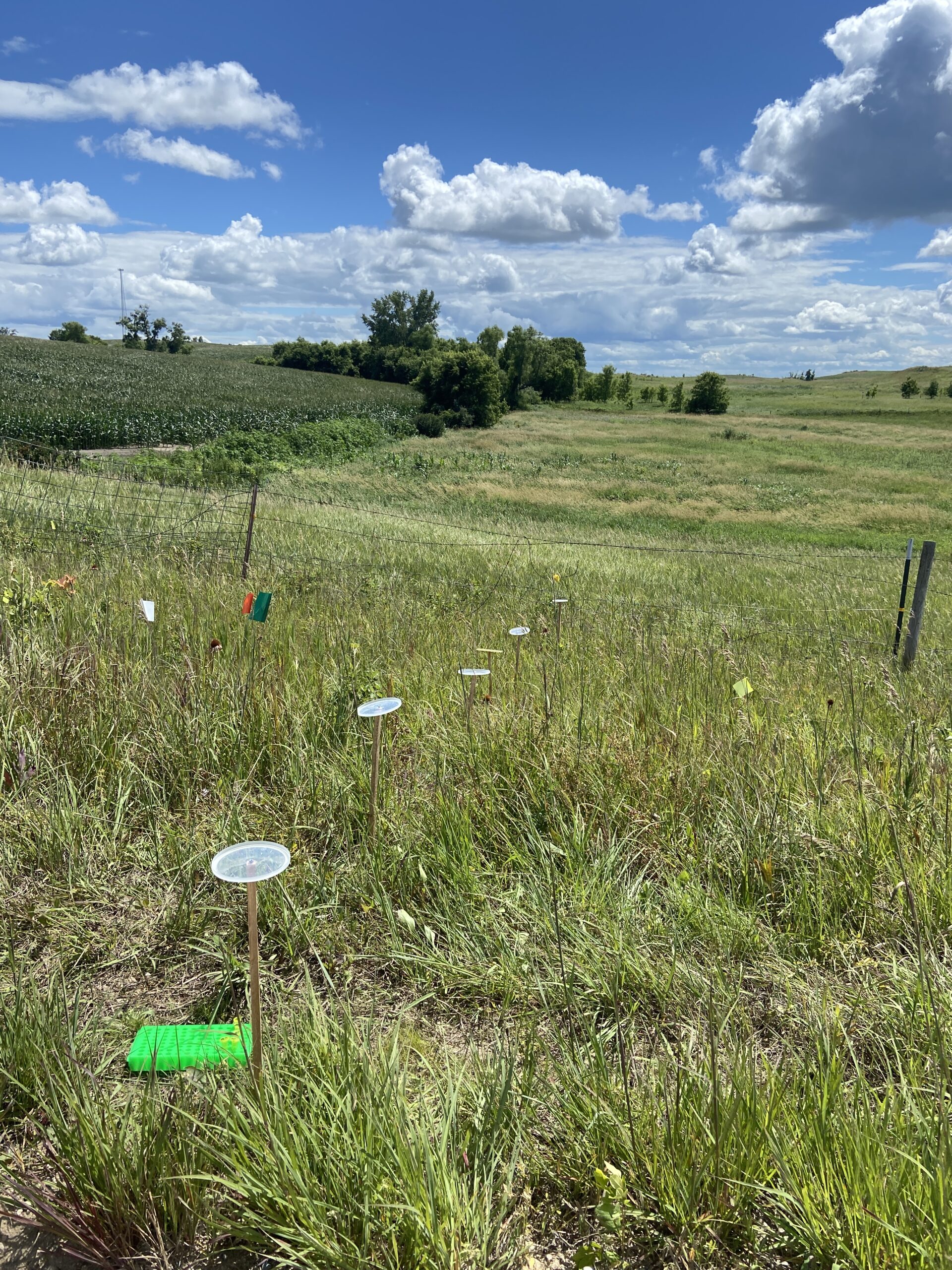
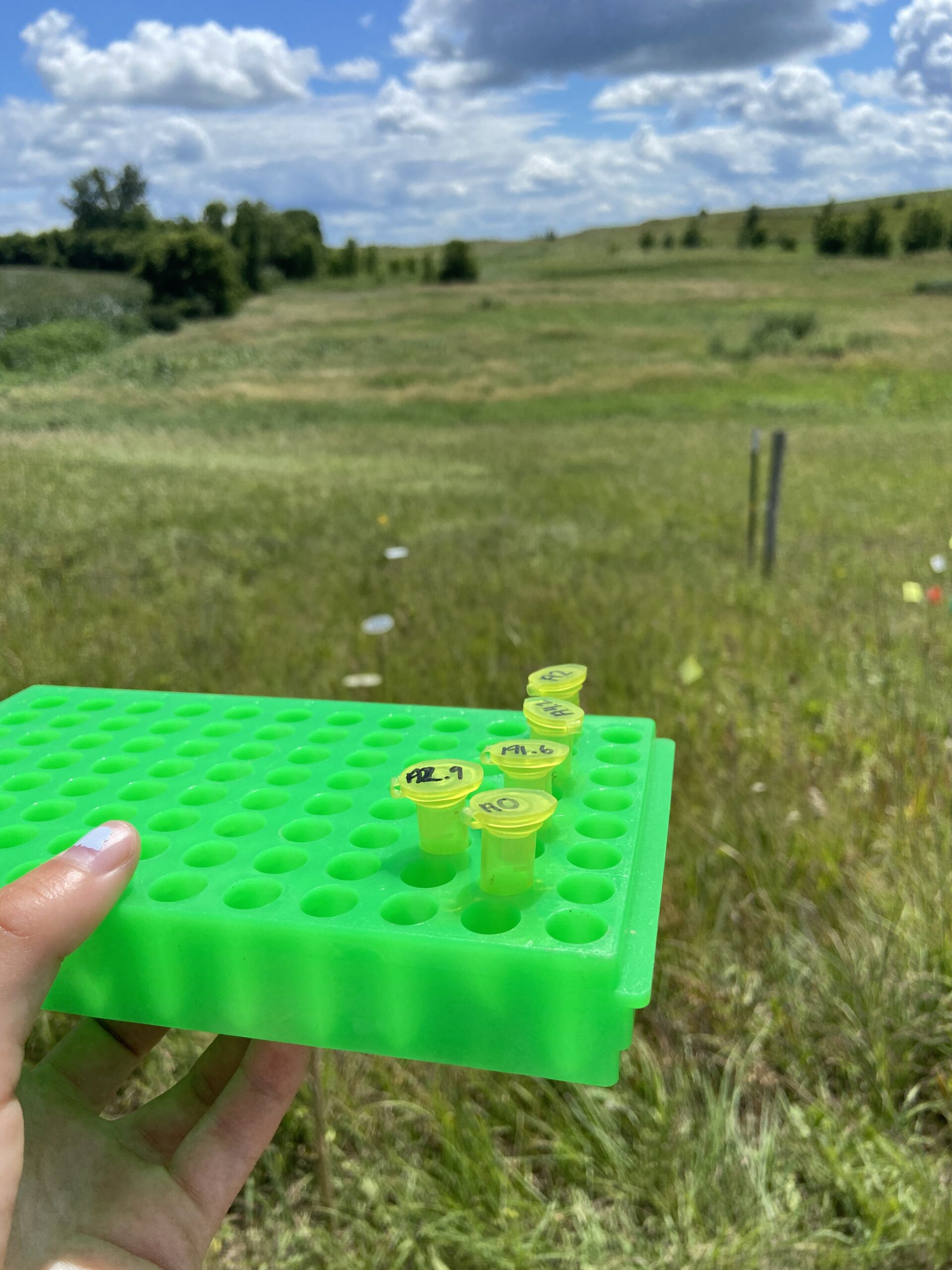
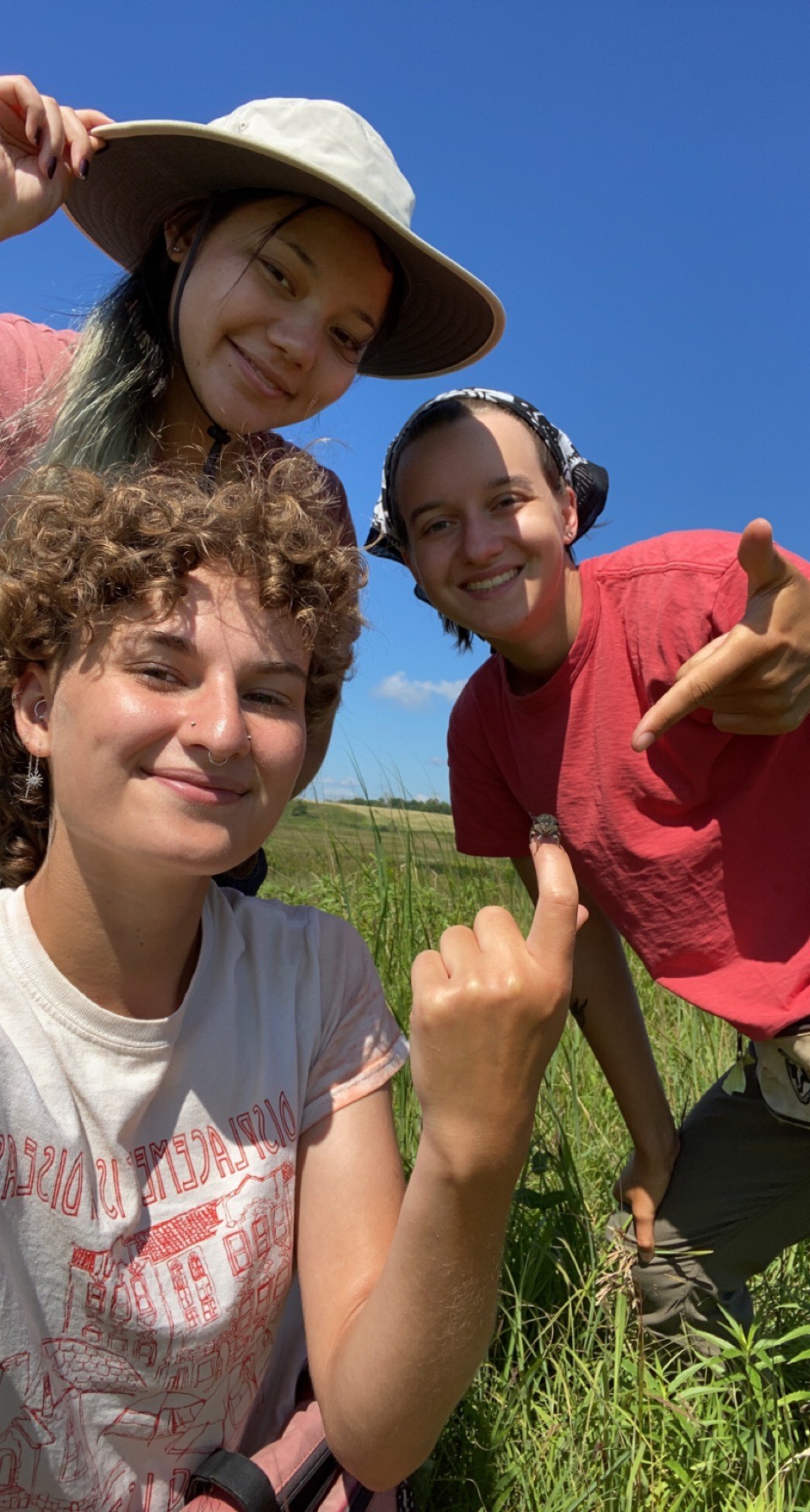
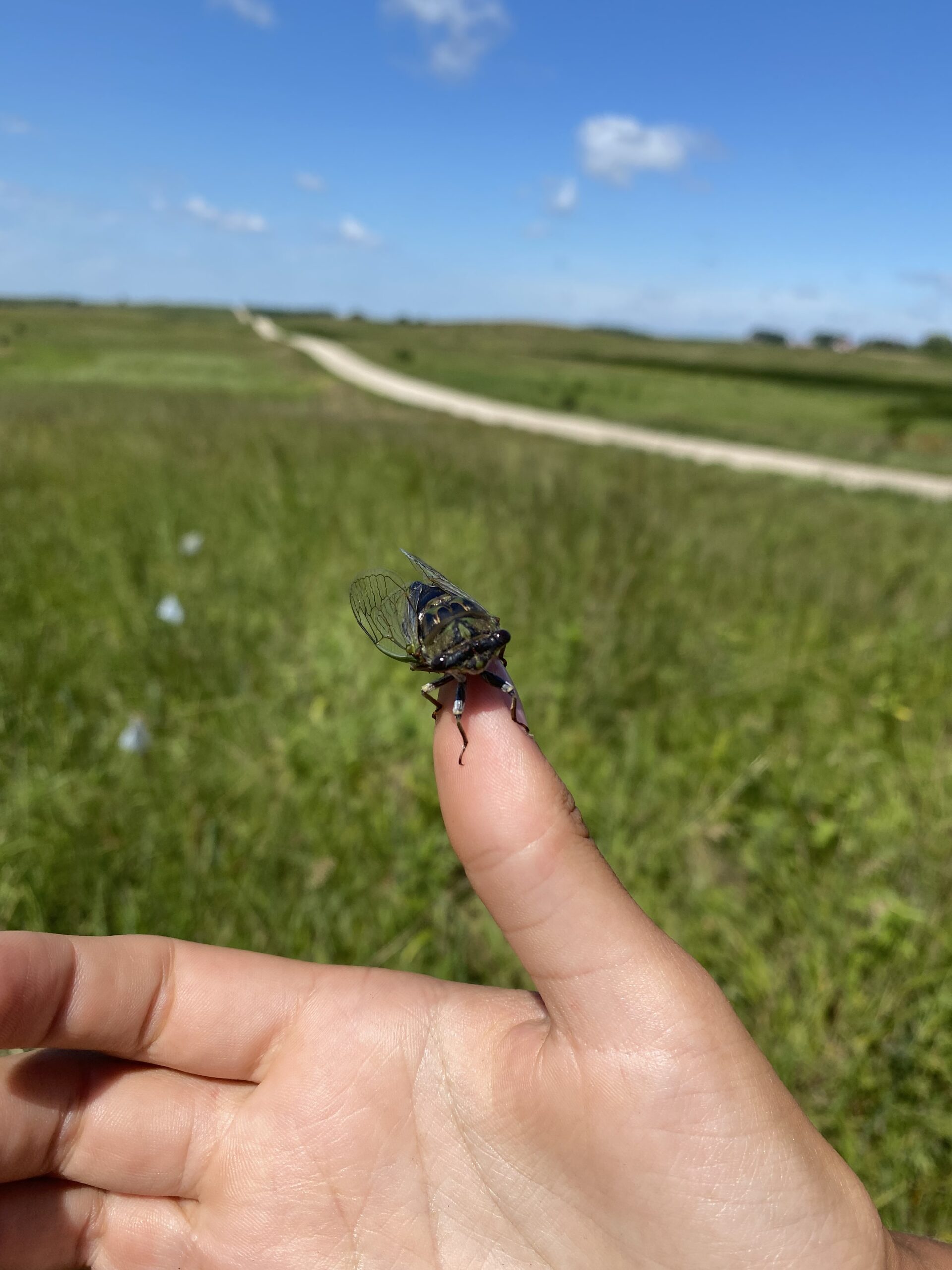
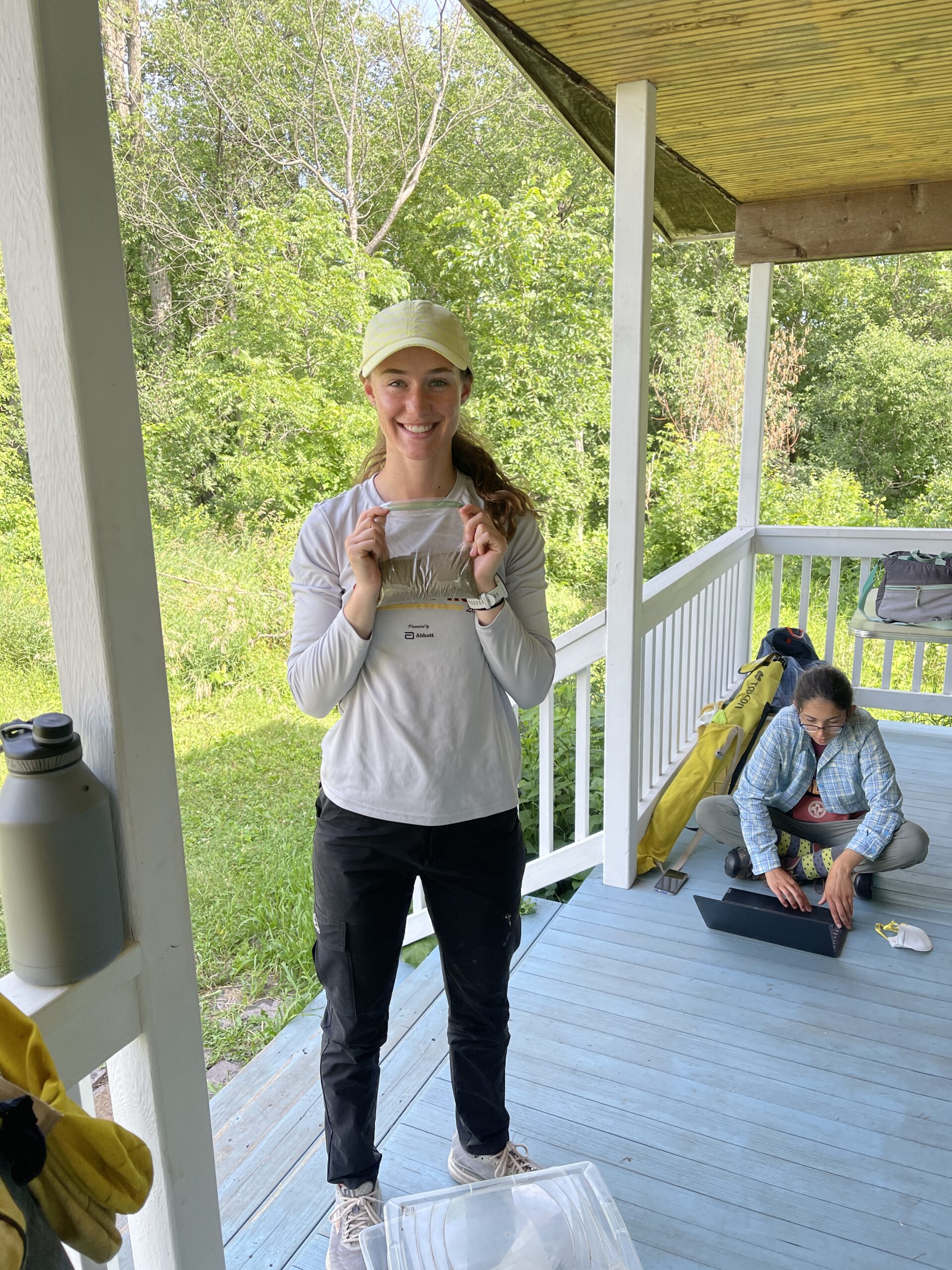
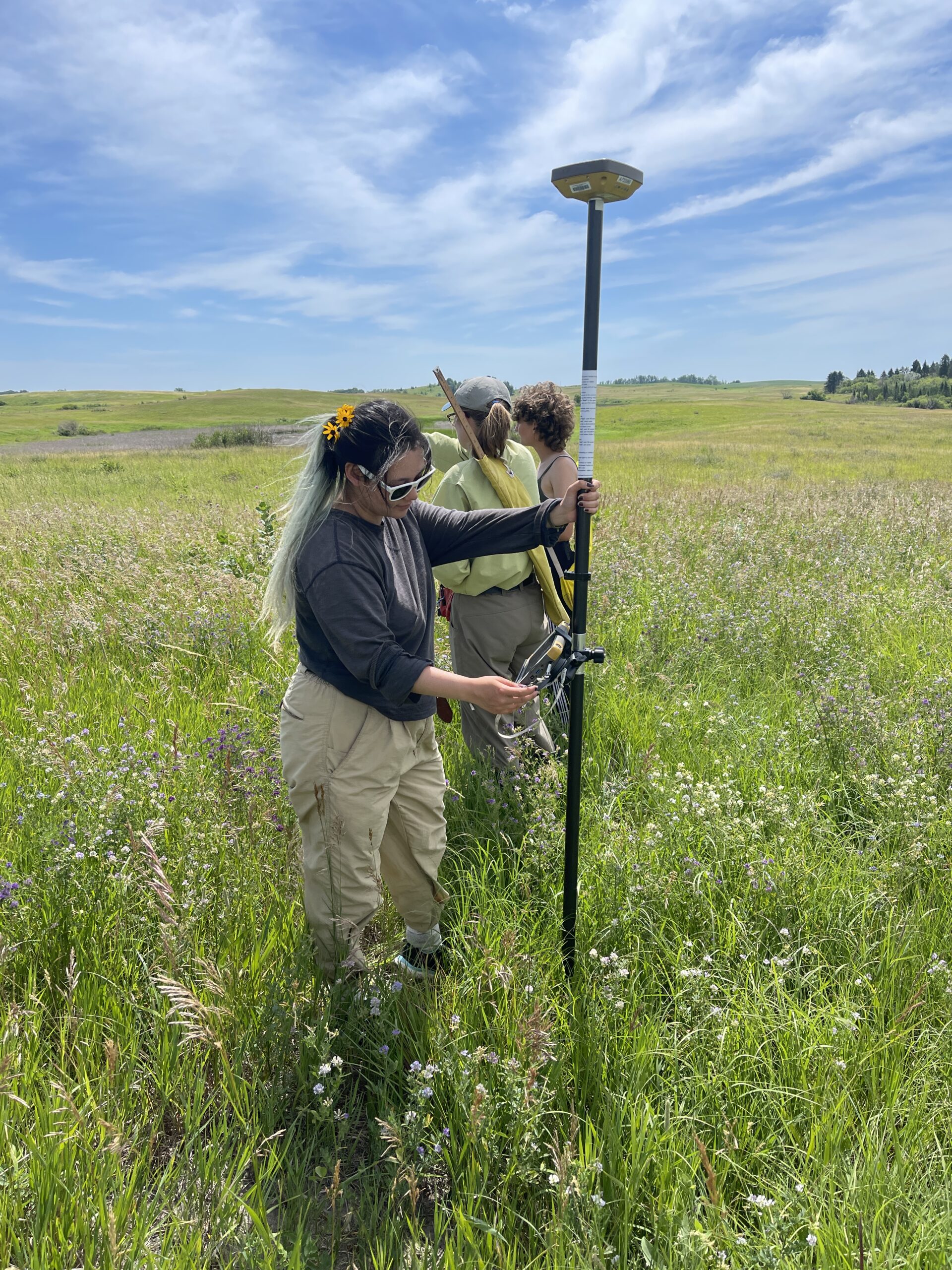
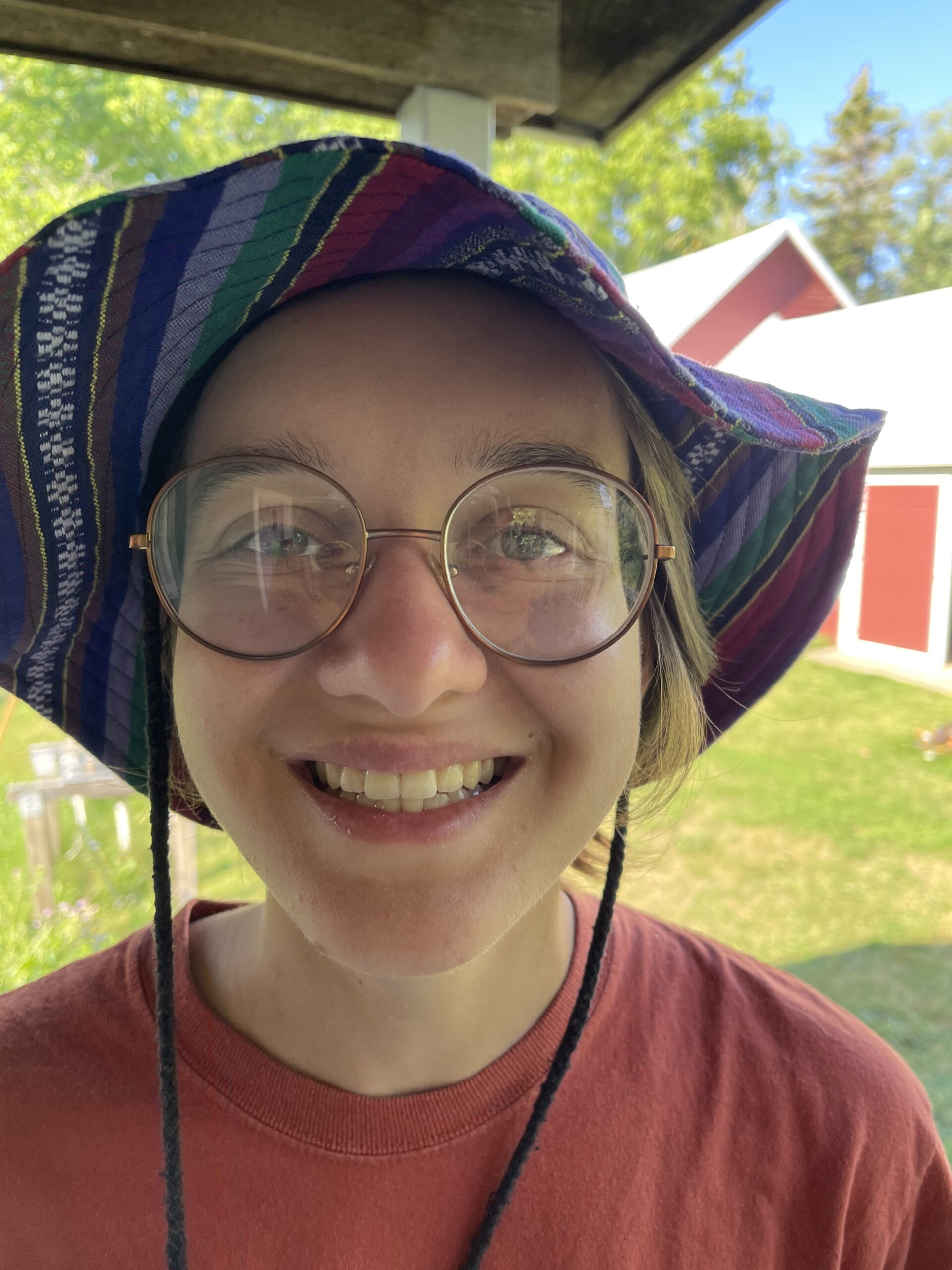
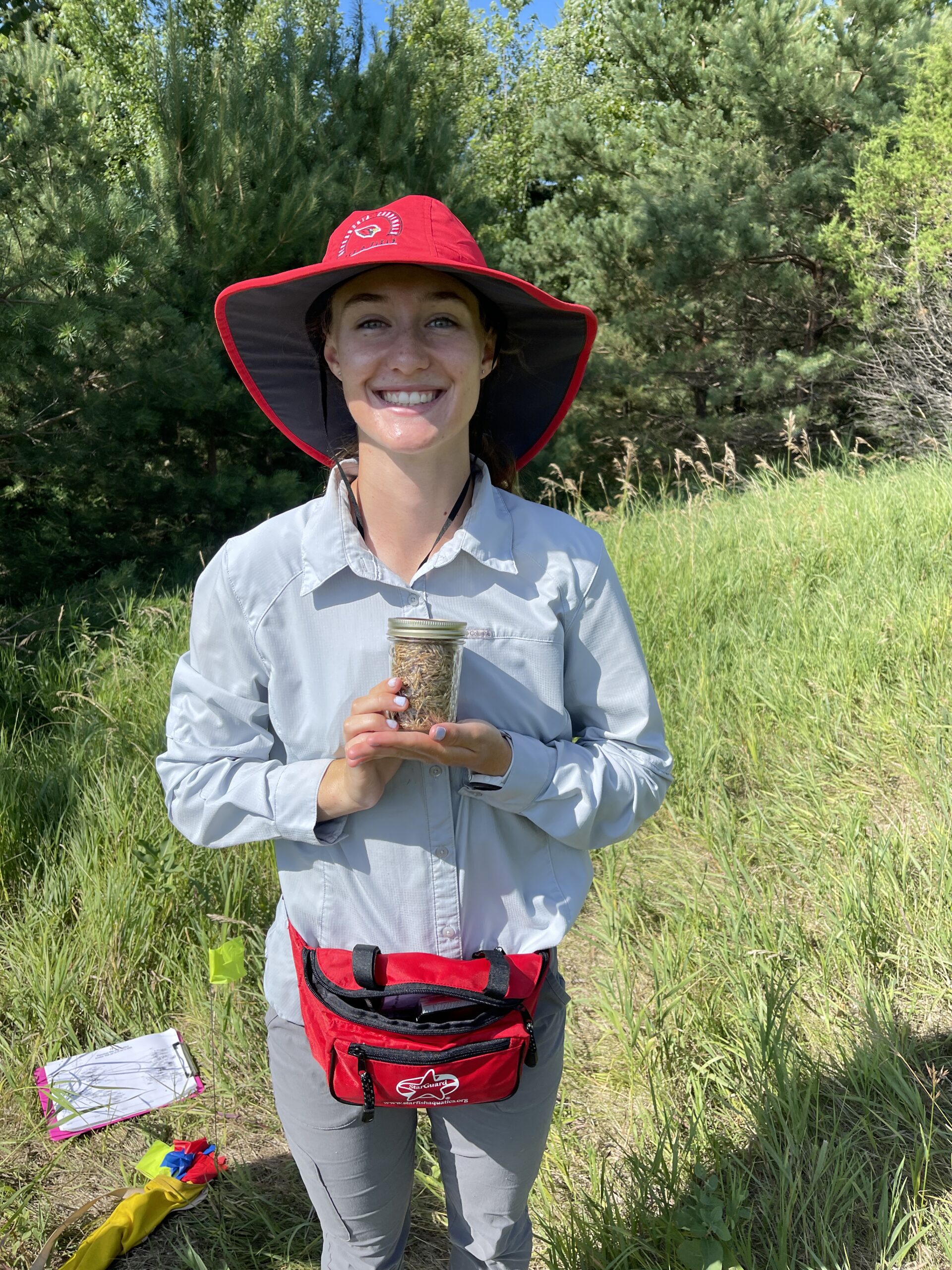
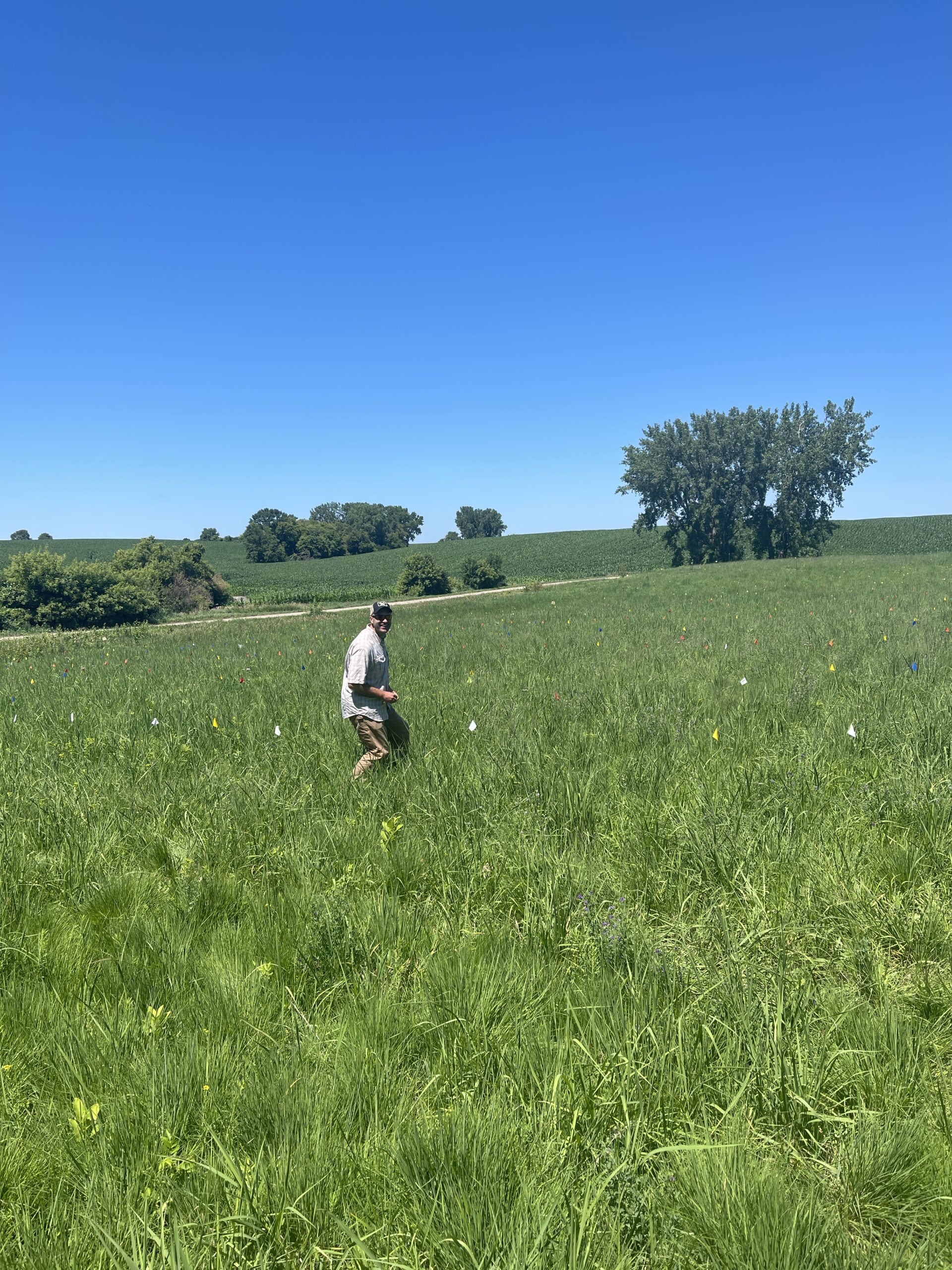
The team split up for an adventurous and successful Wednesday morning. Some went to go do total demo at landfill (finishing the last big site!), while others did demo at various other sites. I also was working on my dust traps throughout the day, part of my independent project where I am measuring the amount of dust traveling off of unpaved roads. If you are interested in learning more about my dust, go check out my project update! After I finished placing my dust traps, I finished up some demo and phen at a few prairie remnants and headed back for lunch.
The afternoon proved to be an eventful one! The entire team headed out to P2 to get trained in on harvesting. I don’t have photo evidence (sorry guys), but even Jared made it into the experimental plot, an event rarer than a double rainbow! While in the plot, Stuart taught the team the 4 ways to know if an Echinacea head is ready to harvest, then sent us on our way to start harvesting in the experimental plot. The task seemed to be easy enough at first, but proved difficult as we moved along. The culprit of our problems: the 13 lined ground squirrels who call P2 home. Many of the plants had their roots eaten, which we discovered when the peduncle (stem) of the Echinacea was no longer attached to the ground. If the plant was lucky enough to have its roots still intact, it may have had its head eaten off. Daytona and I tried to scare them away when we saw them eating our plants, but the safety of our plants was likely short-lived. The ground squirrels were feeling especially brave, one even jumped on my leg! The excitement of harvesting and the ground squirrels made for a quick afternoon, and soon enough we had to head back and finish up for the day. I collected my dust traps and everyone split up to enjoy their evening!
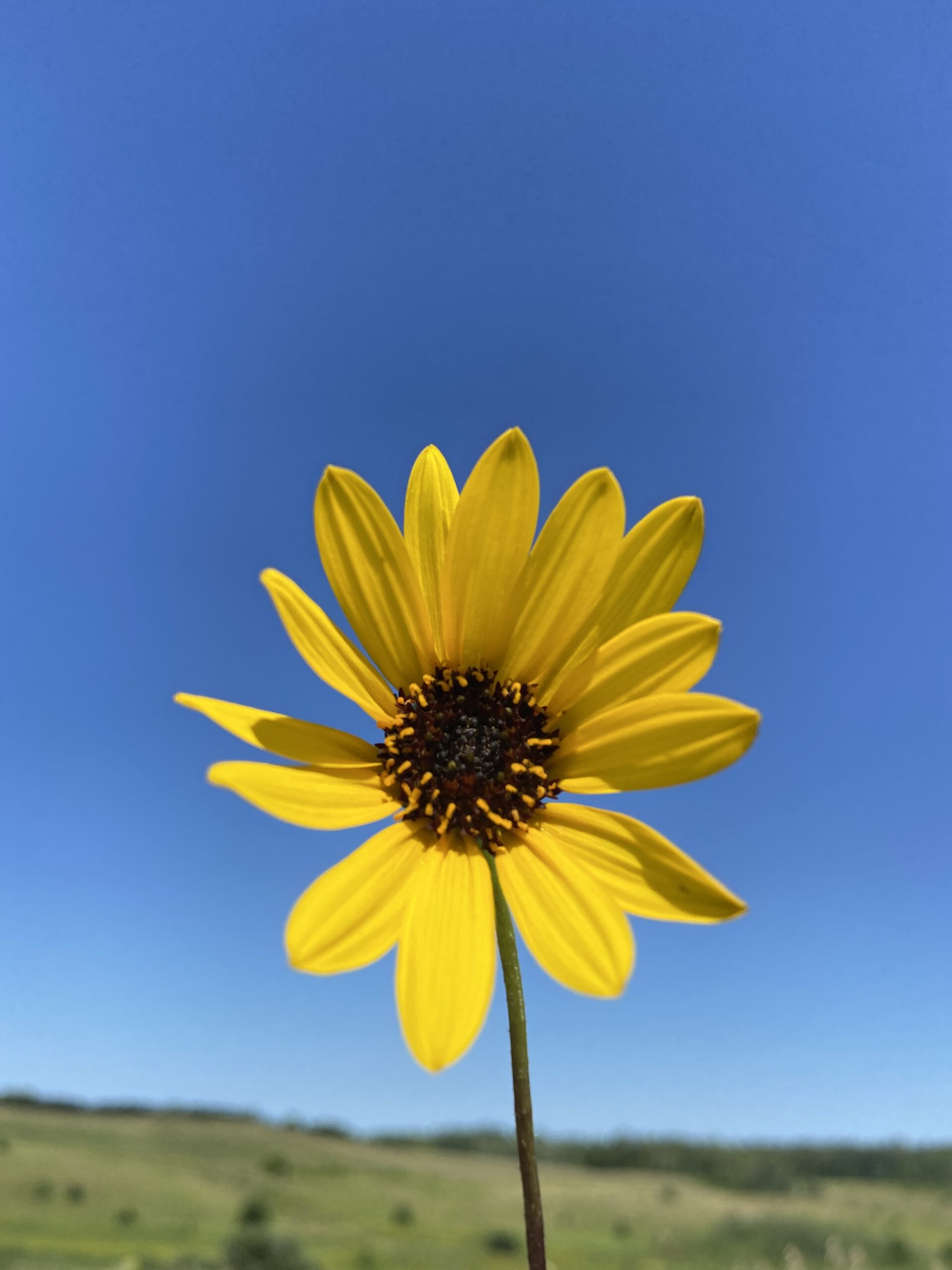
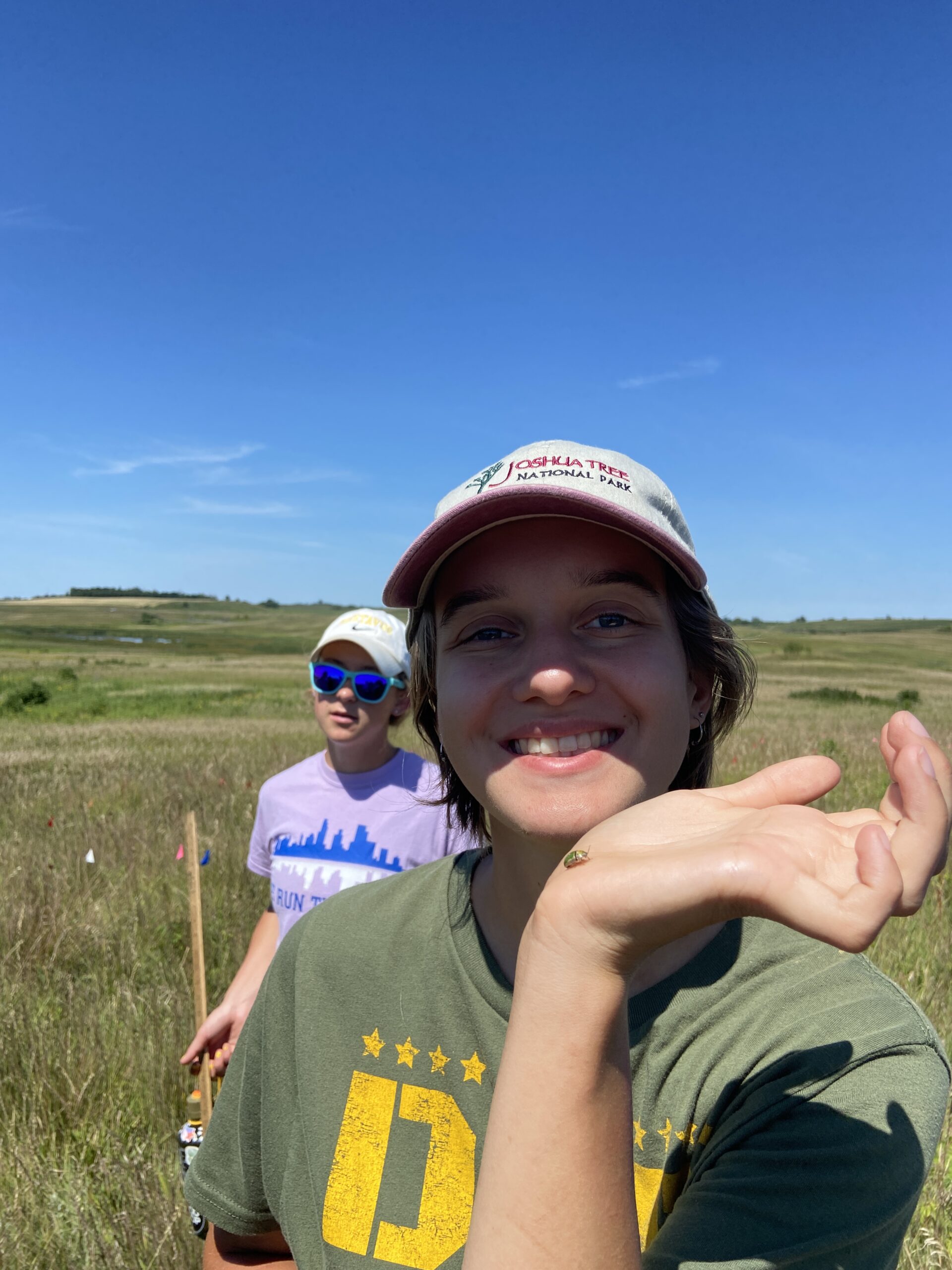
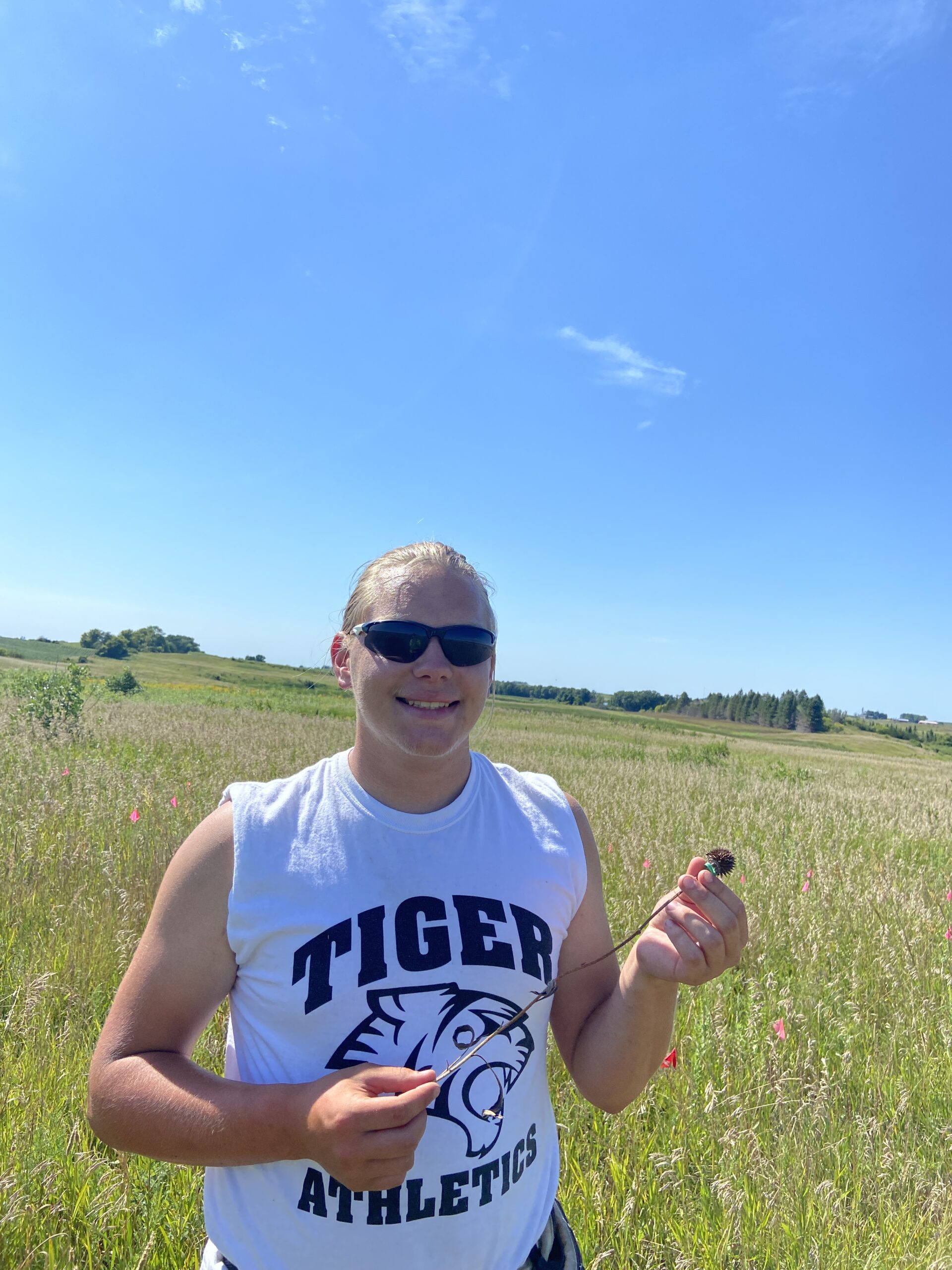
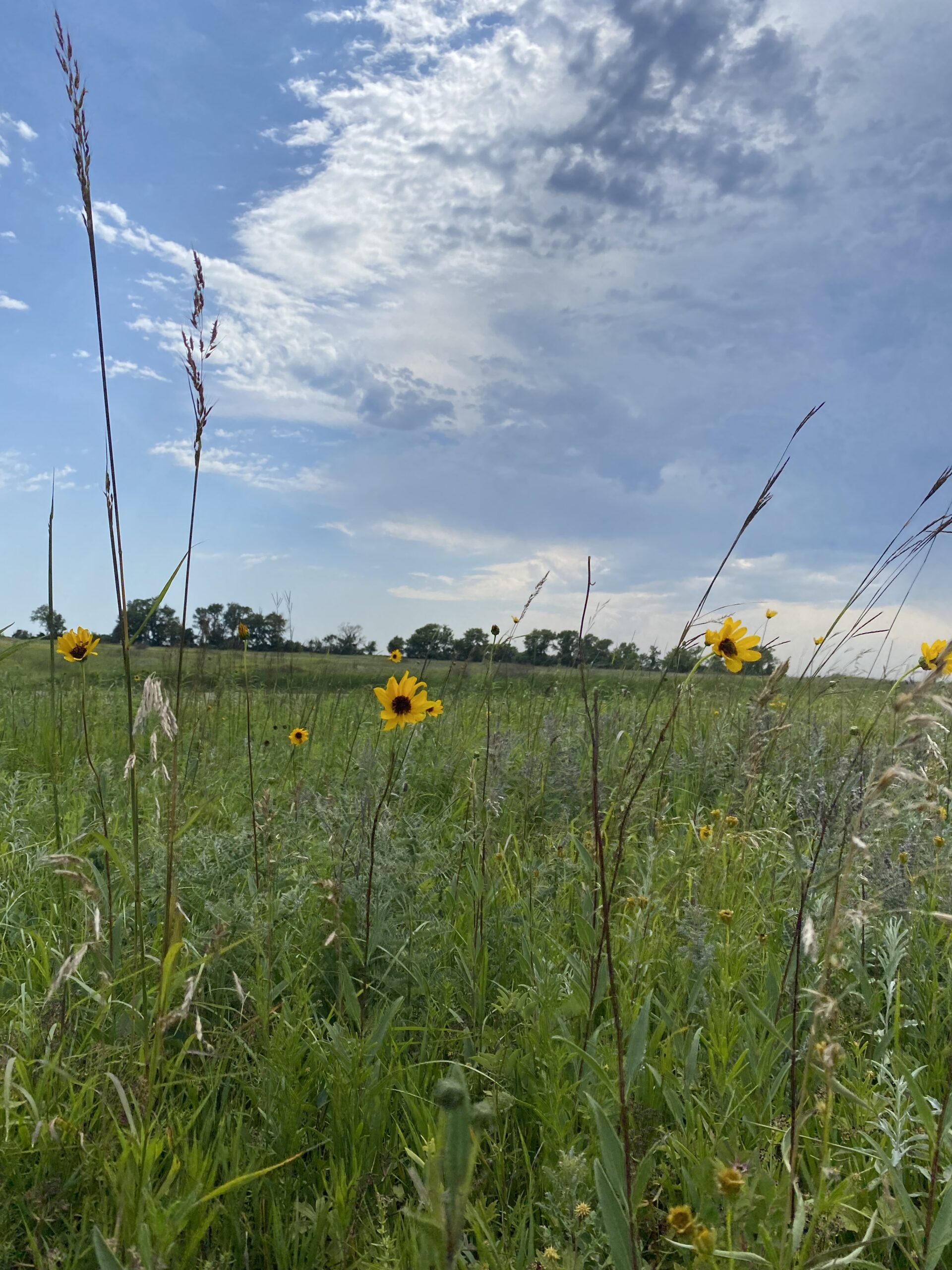
I found a spider eating a syrphid on my dust trapA cute little sunflower I found 🙂My dust trap is ready to go!Jo shows me her newest, shiniest bug (front). I’m not sure what Lindsey is doing (back)Daytona showing off the damage of the ground squirrels
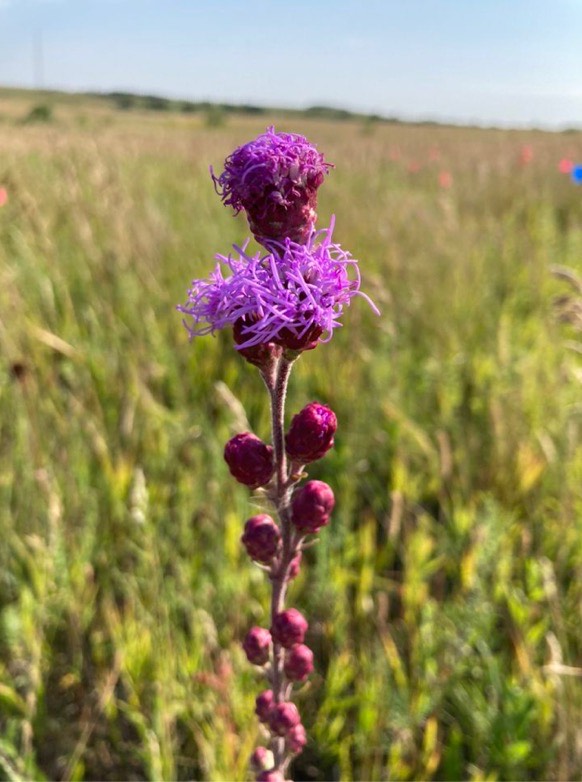
Hey flog-heads! Welcome back to one more week of the Echinacea project; off to an exciting start with milkweed, measuring, birds-of-prey, total demo, wet shoes, visitors, visors, liatris, and as always … phenology.
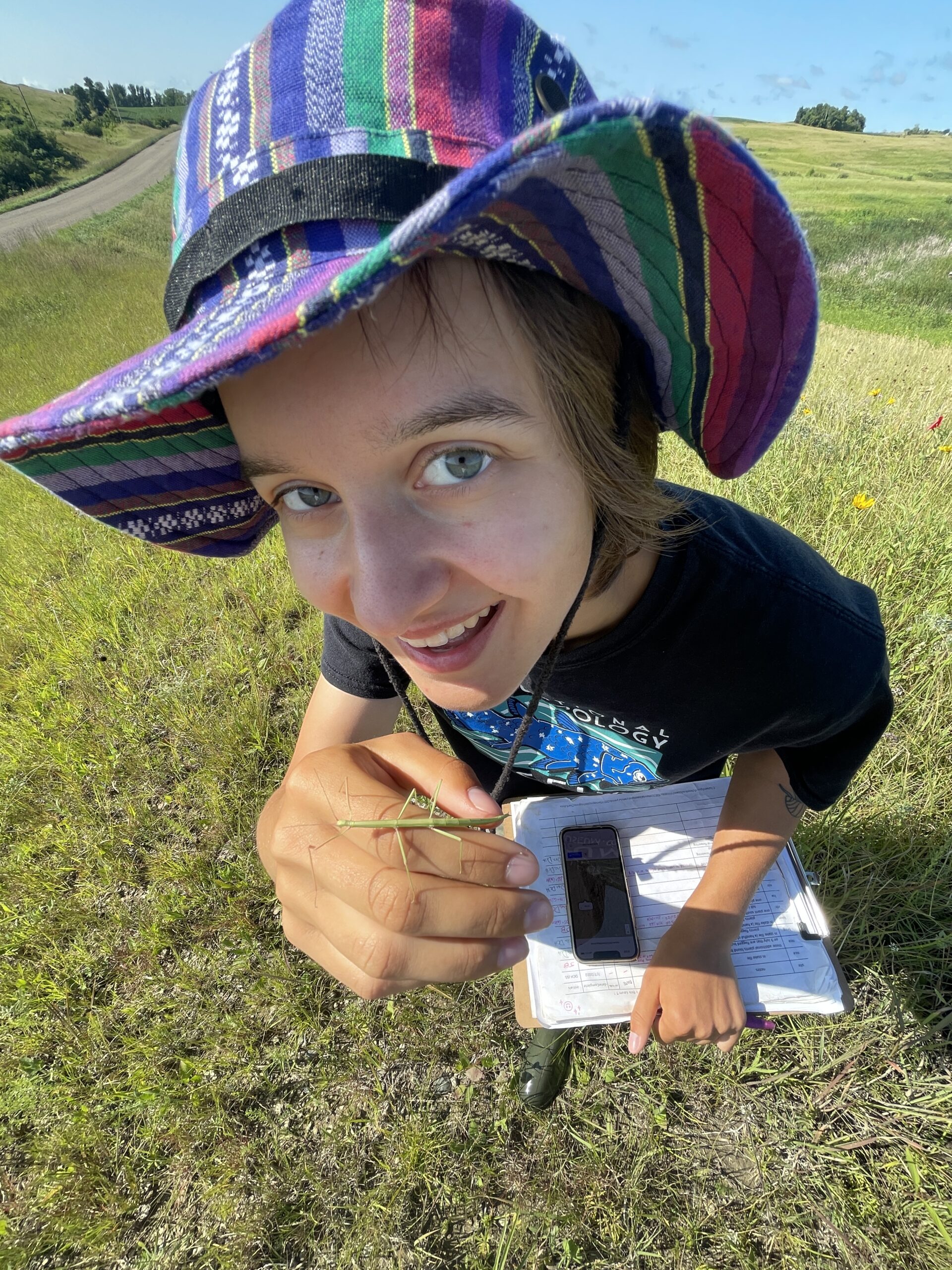
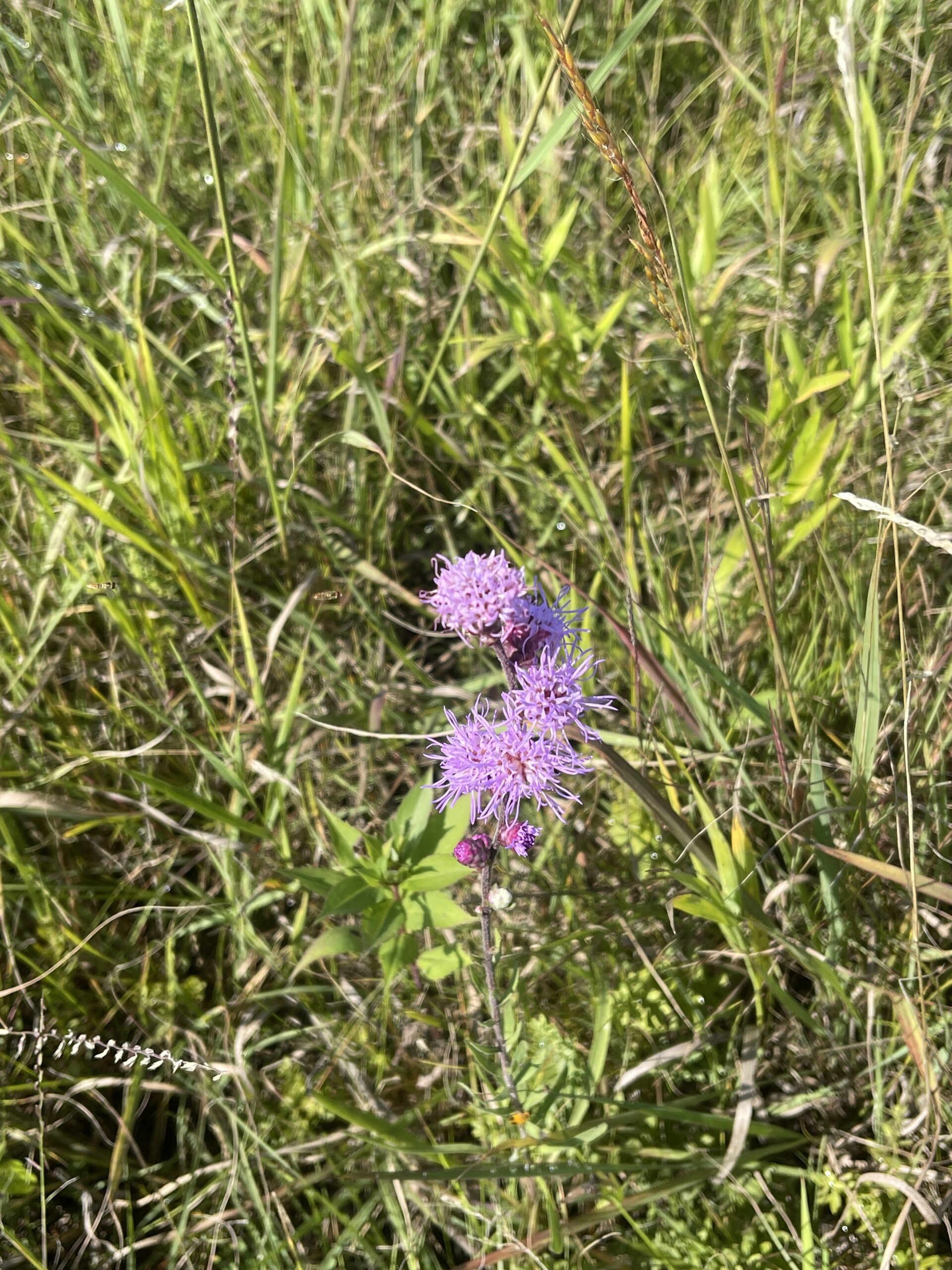
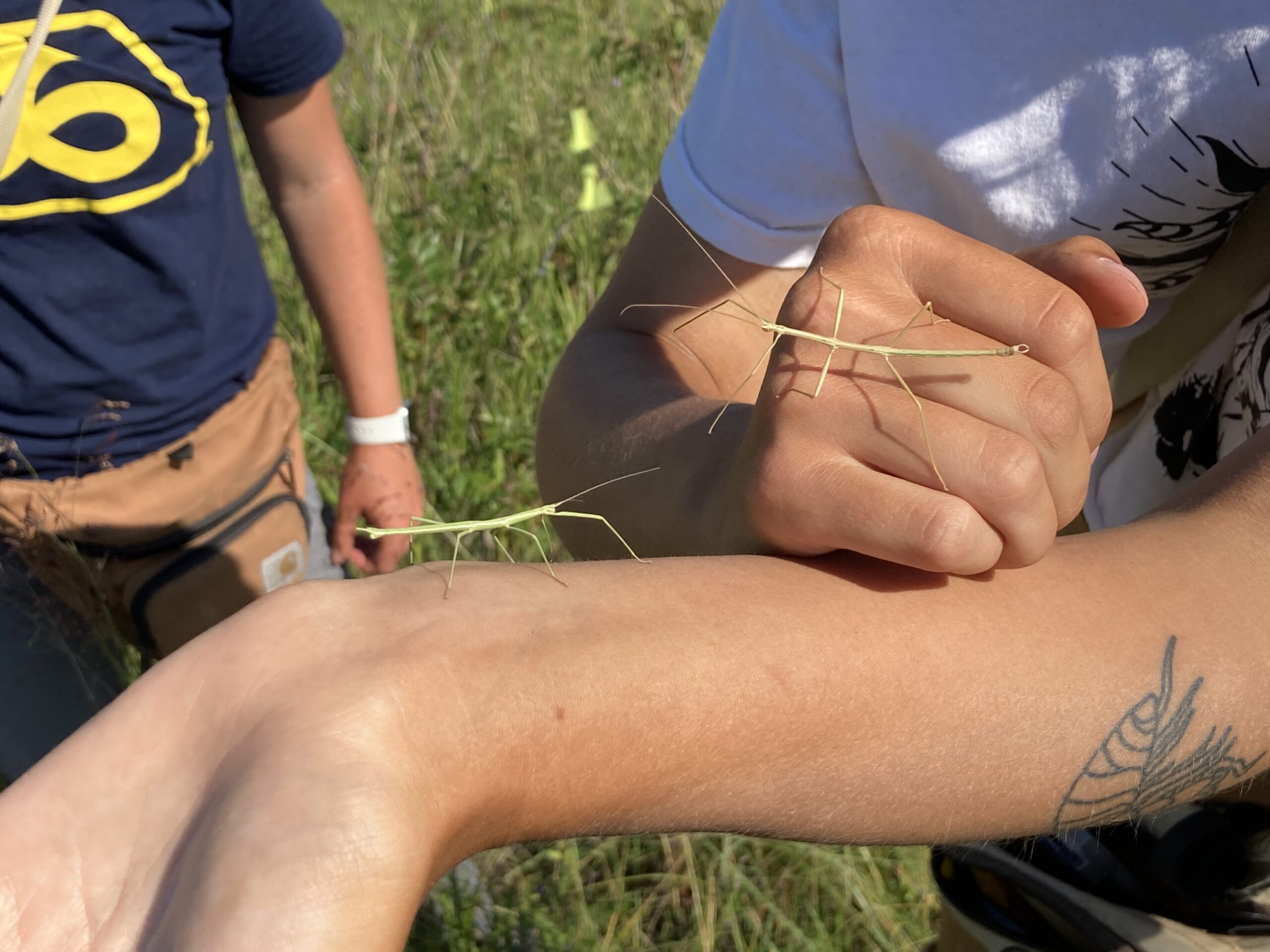
This morning the team divided, some to continue remnant phenology on few remaining flowering echinacea while others went to start total demo on on behemoth of a site, Loeffler’s corner. I am grateful that Jo and I had the task of scoring milkweed at Bang and Hegg lake. We trekked through the dewy grass, Jo’s rubber boots repelling the water that my shoes invited in, leaving me to walk in puddles for the majority of the morning. Jared warns that soon enough that I’ll be dreaming of the abundant purple heads of Liatris aspera as I will see so many, but for now I revel in the excitement of the few flowering plants I was able to find today at Hegg. Along with Green Milkweed, we encountered three osprey, all upset by our presence, as well as a stickbug, pictured below.
Get Stickbugged!My precious Jo fell in a hole lol
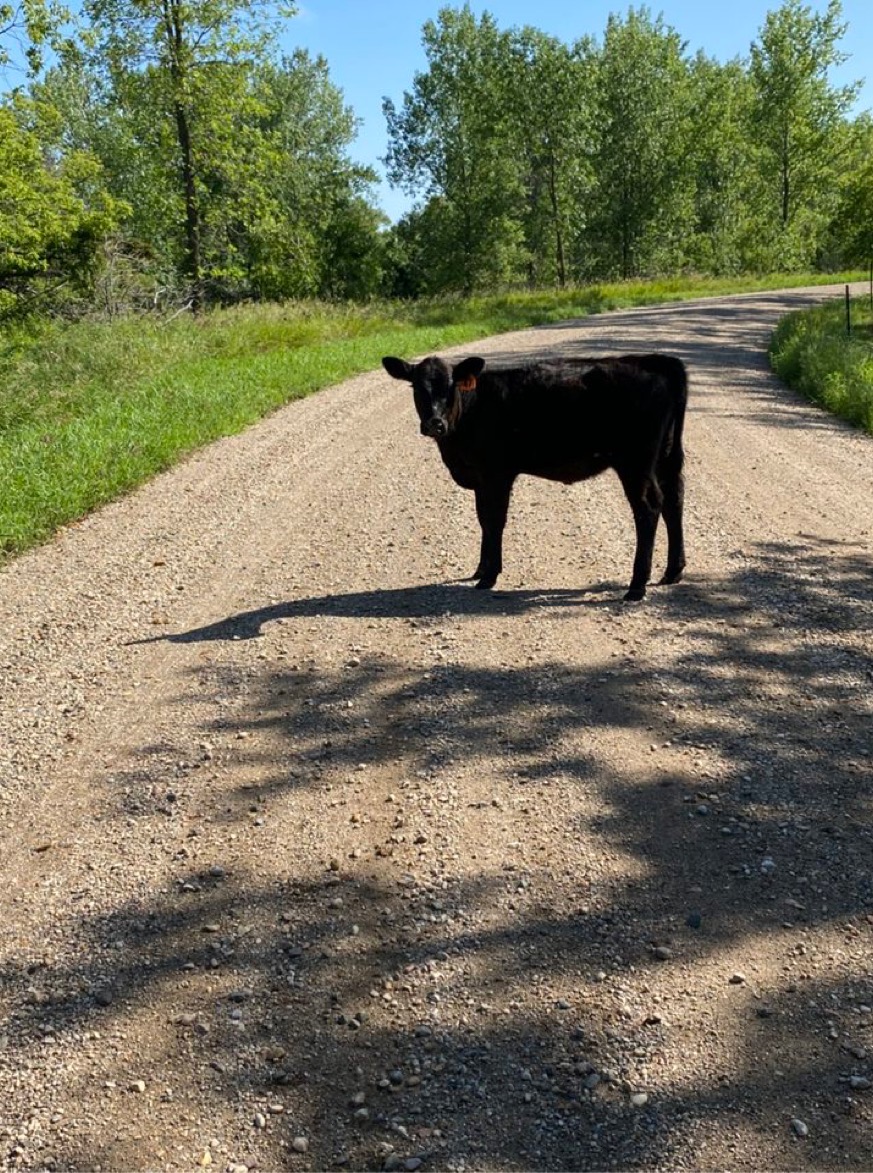
Geena found a calf in the street, which when she asked politely to moooove over, they obliged (sorry Jared, I stole your joke, but its for the fans. You get it.).
“Moooooooo” – probably what the cow said idk I wasn’t there.
At lunch, we welcomed Scott back to the Echinacea Project. An alum from 2016, Scott returned on his way back to Boulder, CO to make sure everything was still in working order. We were excited to hear his stories and gain some wisdom about the adventure into science, post-team Echinacea. Thank you Scott!
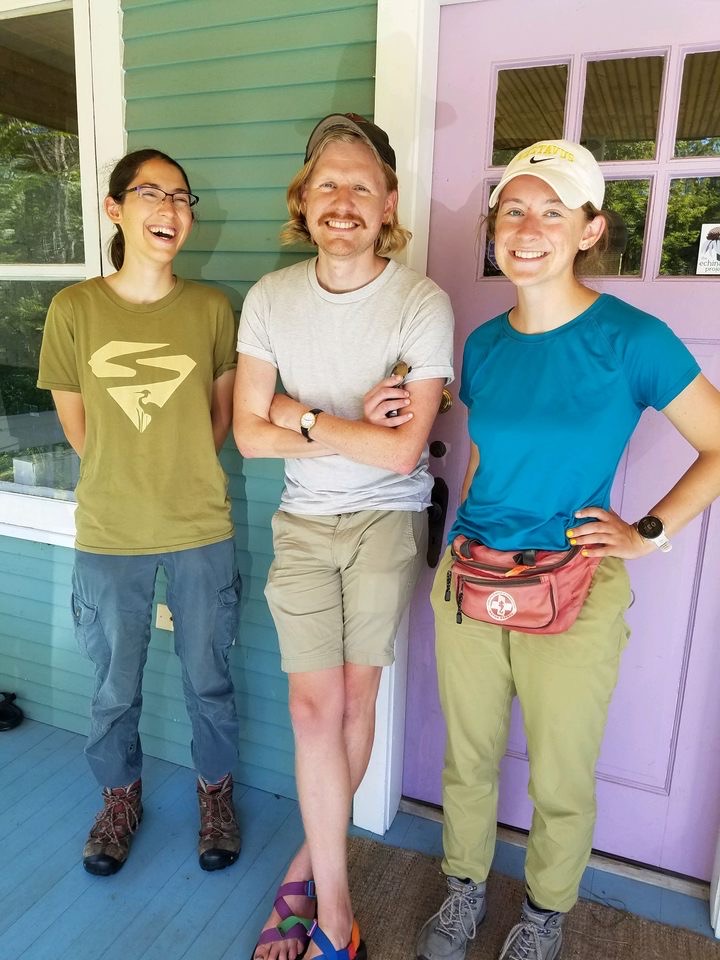
Alex! Scott! Lindsey! All smiles!
The afternoon brought with it measuring in P2 and P1 for the majority of the team, while Sophia and I ventured to Yellow Orchid Hill to begin mapping Liatris for my project. We found many more than previously expected, inspiring burgeoning hypotheses as to why. Soon, Yellow Orchid Hill West will be ablaze with purple. Maybe they’ll have to change the name.
Hard at work! Sophia and Liatris. They’re matching!Big blue stem living up to its name.
This morning the crew split up, heading out to work on various tasks: remnant phenology, p7&9 phenology, and p2 measuring. P2 was peaceful, and measuring is like a game of I-spy: can you spot the echinacea in this picture?
Echinacea hidden in the grass, likely around position 47the beautiful p2Flowering liatrus seen in P2!
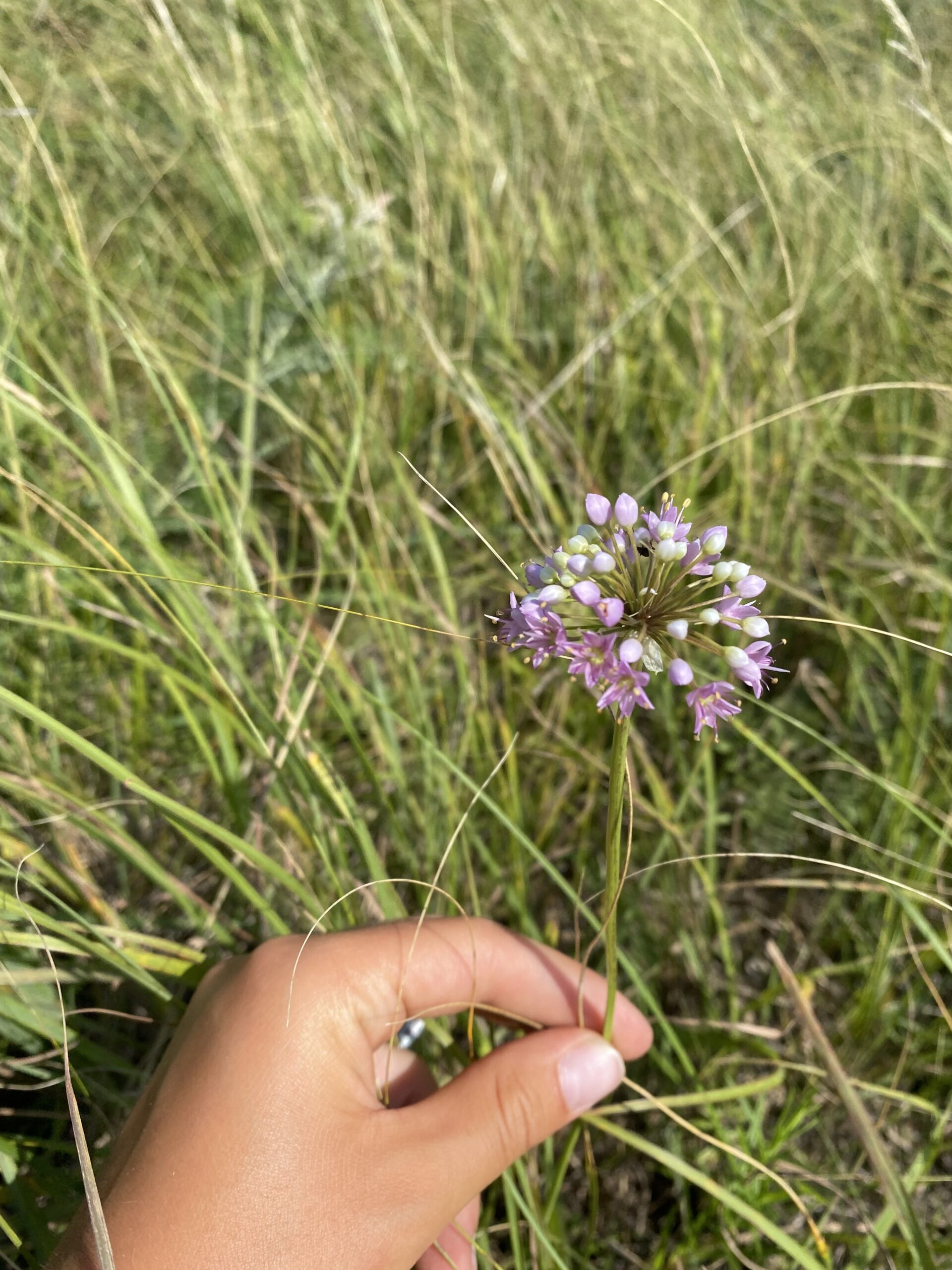
After lunch and a successful goat herding (they love a new pasture!), the team got to head to Staffanson, where we got to see how the rolling prairie has changed since we first visited in early June. One of my favorite plants to see was Allium stellatum, or the prairie onion! The team spread out across the prairie, searching for flowering echinacea and following speedy Emma as she staked to a subset of the plants for total demo. Staffanson was stunning, and even more fun was watching the afternoon storm roll in. Eventually, we had to head back for fear of getting soaked – but we didn’t made it, so we got a quick shower before heading home for the day.
Helianthus pauciflorus Allium!Emma on the moveEmma and her big stick !Jo !Kennedy !The rain moving inPost rain runMade it to the car!
Overall, Friday was a breeze, and filled with beautiful prairies and as usual, lots of echinacea. 🙂
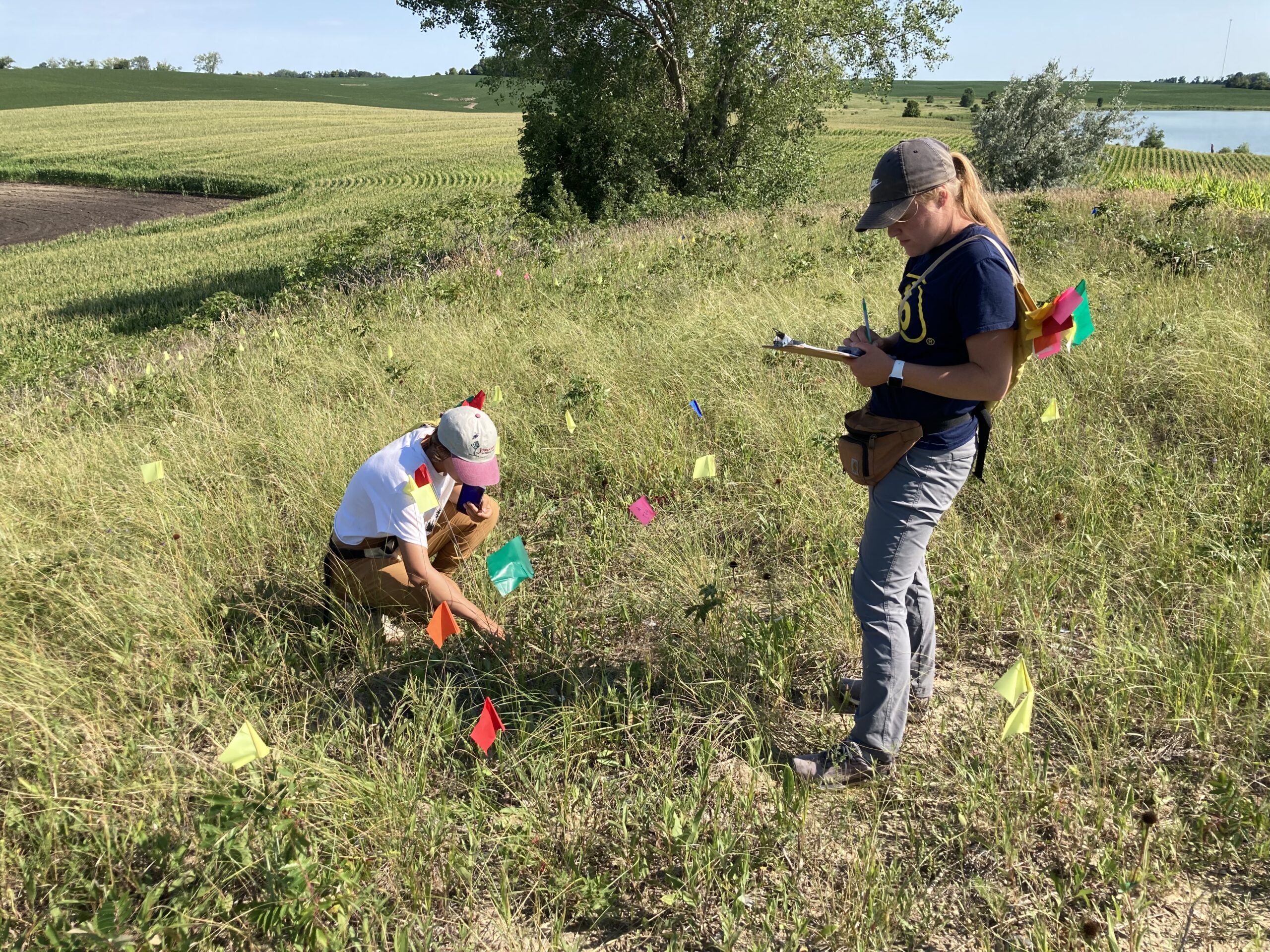
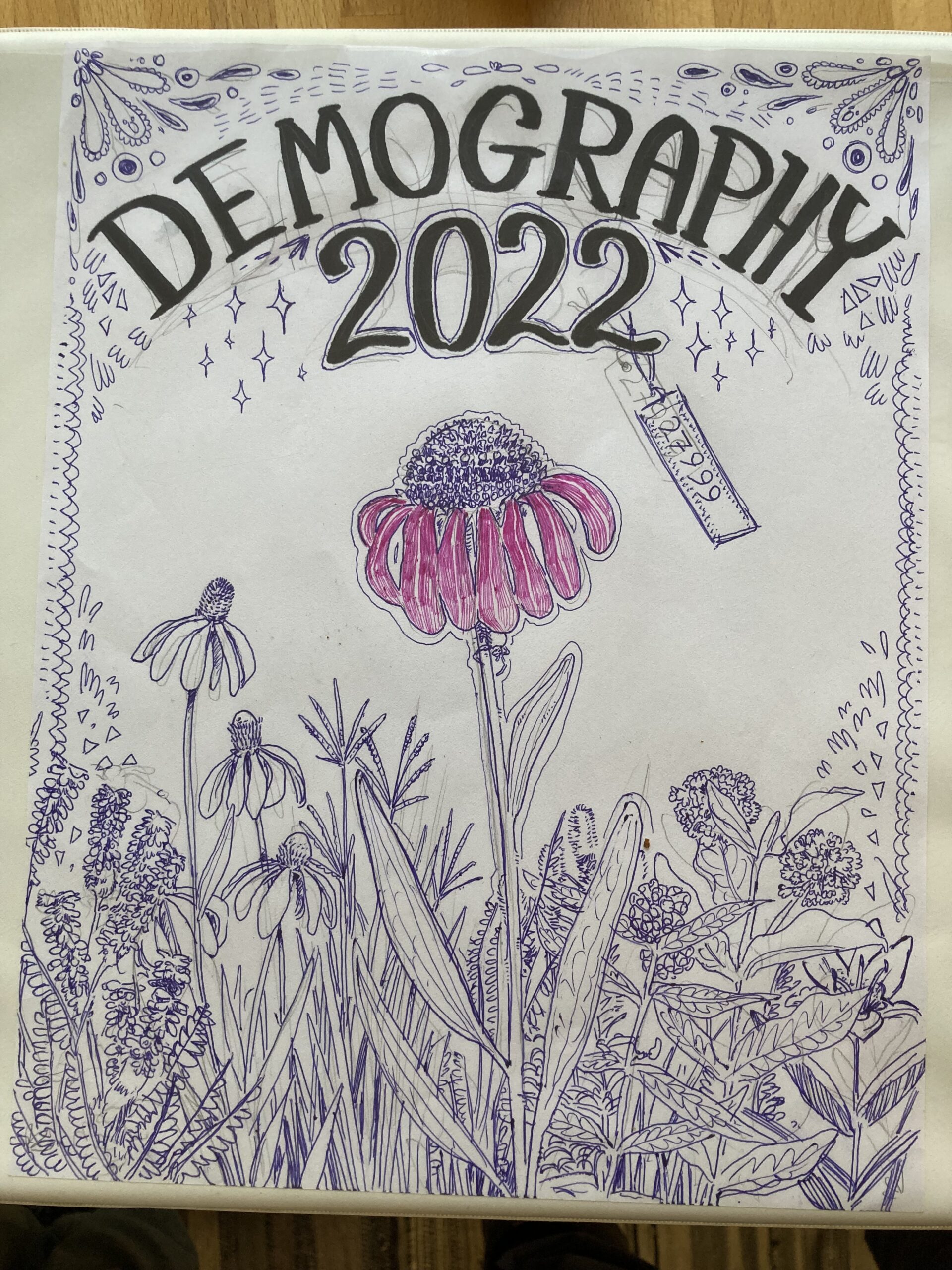
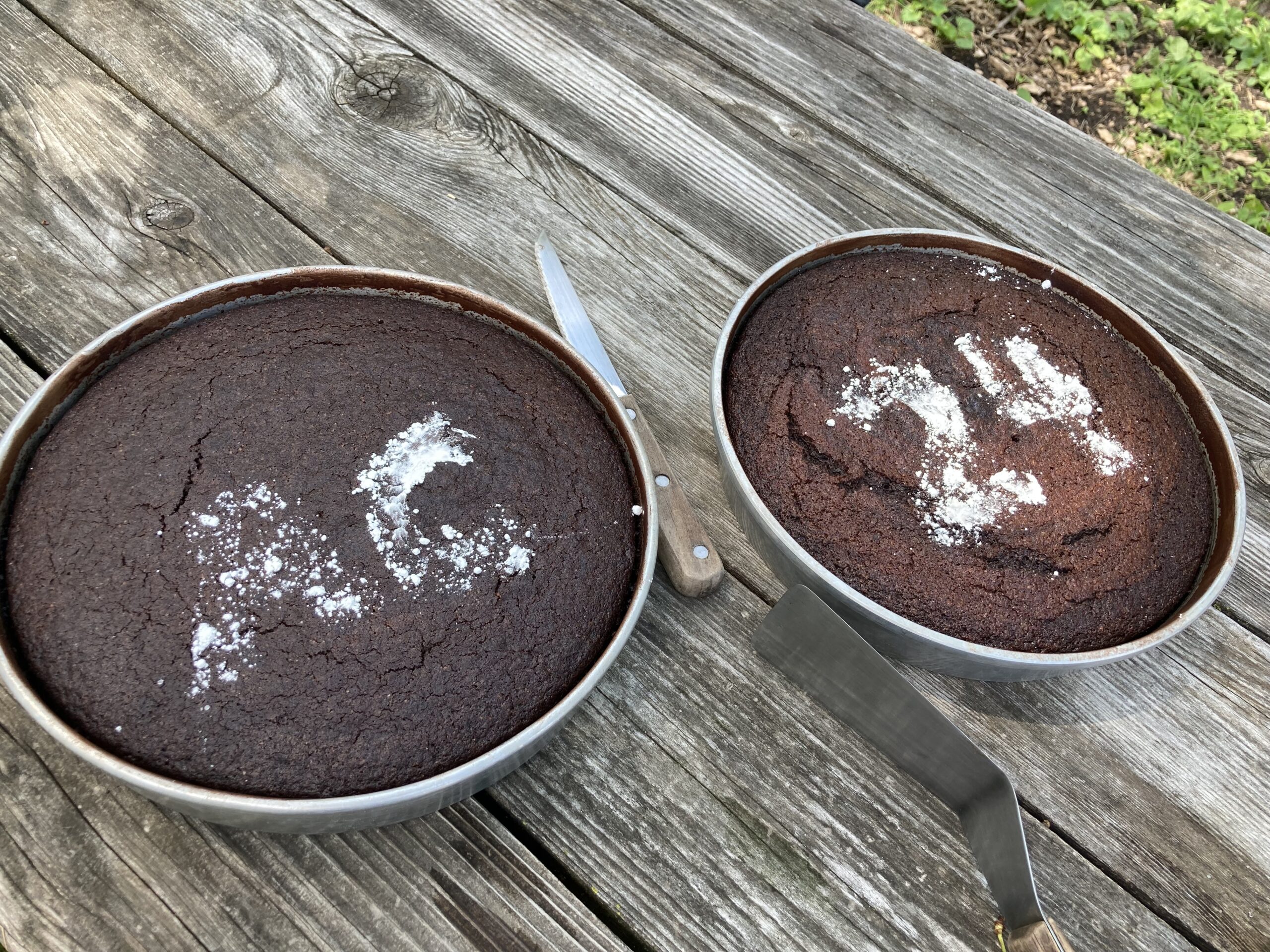
On Monday morning, the crew split into two groups. Half of the team did remnant phenology, which is going much faster now that most Echinacea are done flowering. The other half did total demo at prairie remnants nrrx and rrx, where we revisited a subset of the plants that flowered in previous years. Johanna made a fabulous illustration for the cover of total demo binder. Can you identify all the prairie species? It was also my birthday on Monday, so we celebrated by eating Stuart’s famous vegan chocolate cake at lunch.
The total demo pros hard at workI spy a lead plant…Cake!
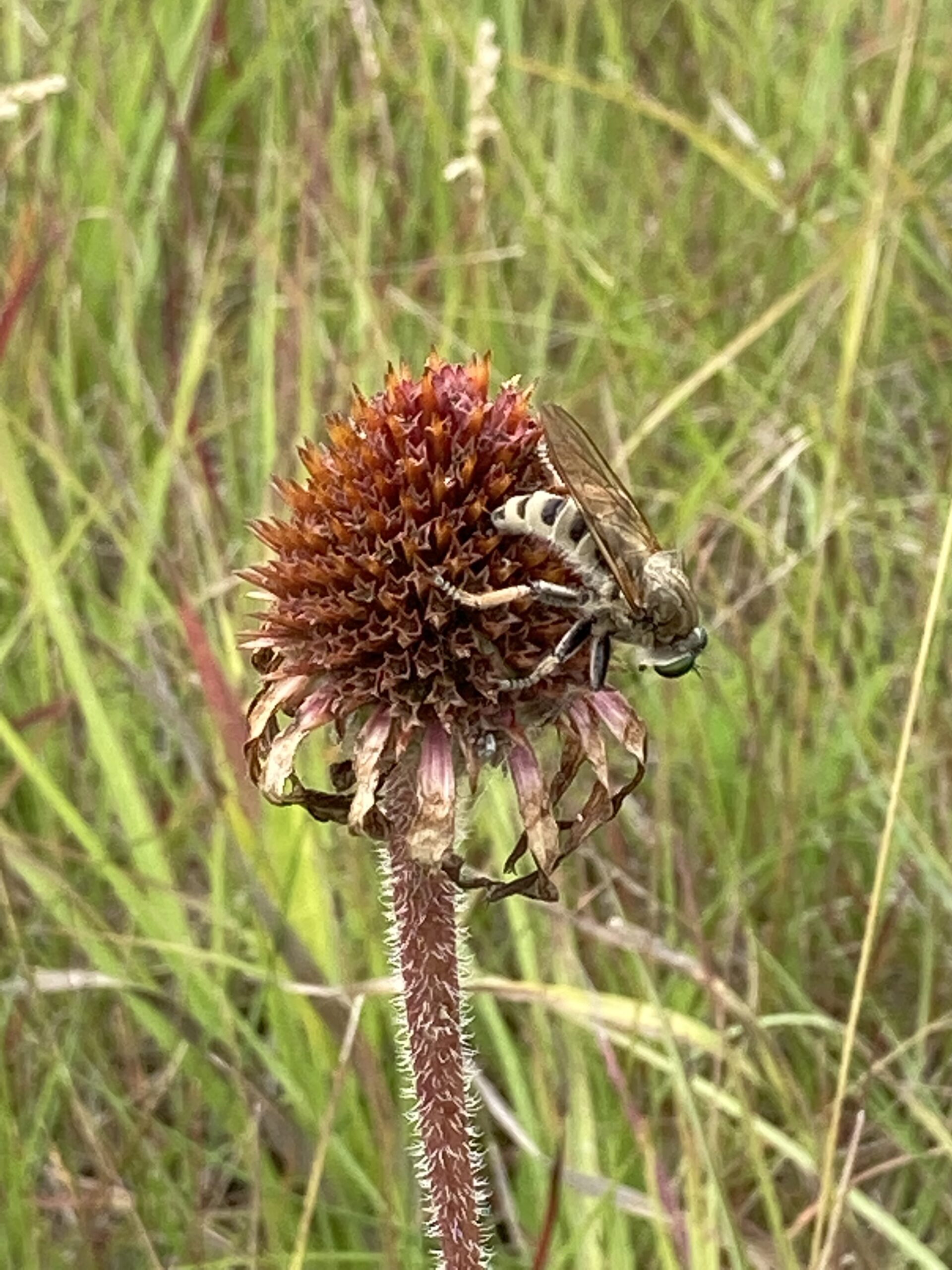
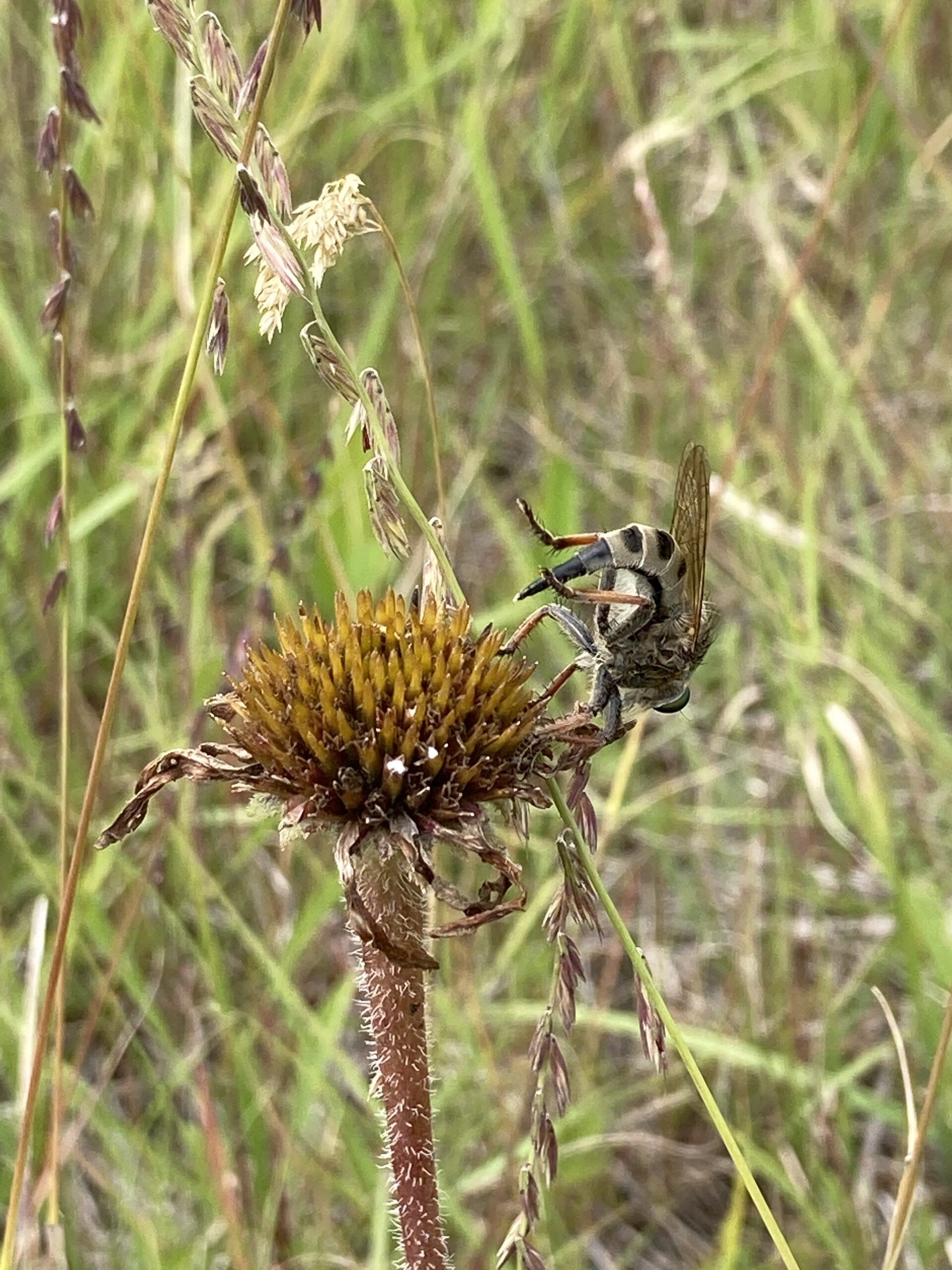
In the afternoon, I joined Kennedy and Johanna to finish total demo at rrx and start on27. At rrx, we spotted several robber flies laying their eggs on Echinacea heads. It was a busy day for insects, and Johanna also spotted two walking sticks climbing through the grass at on27. Overall, it was an excellent birthday!
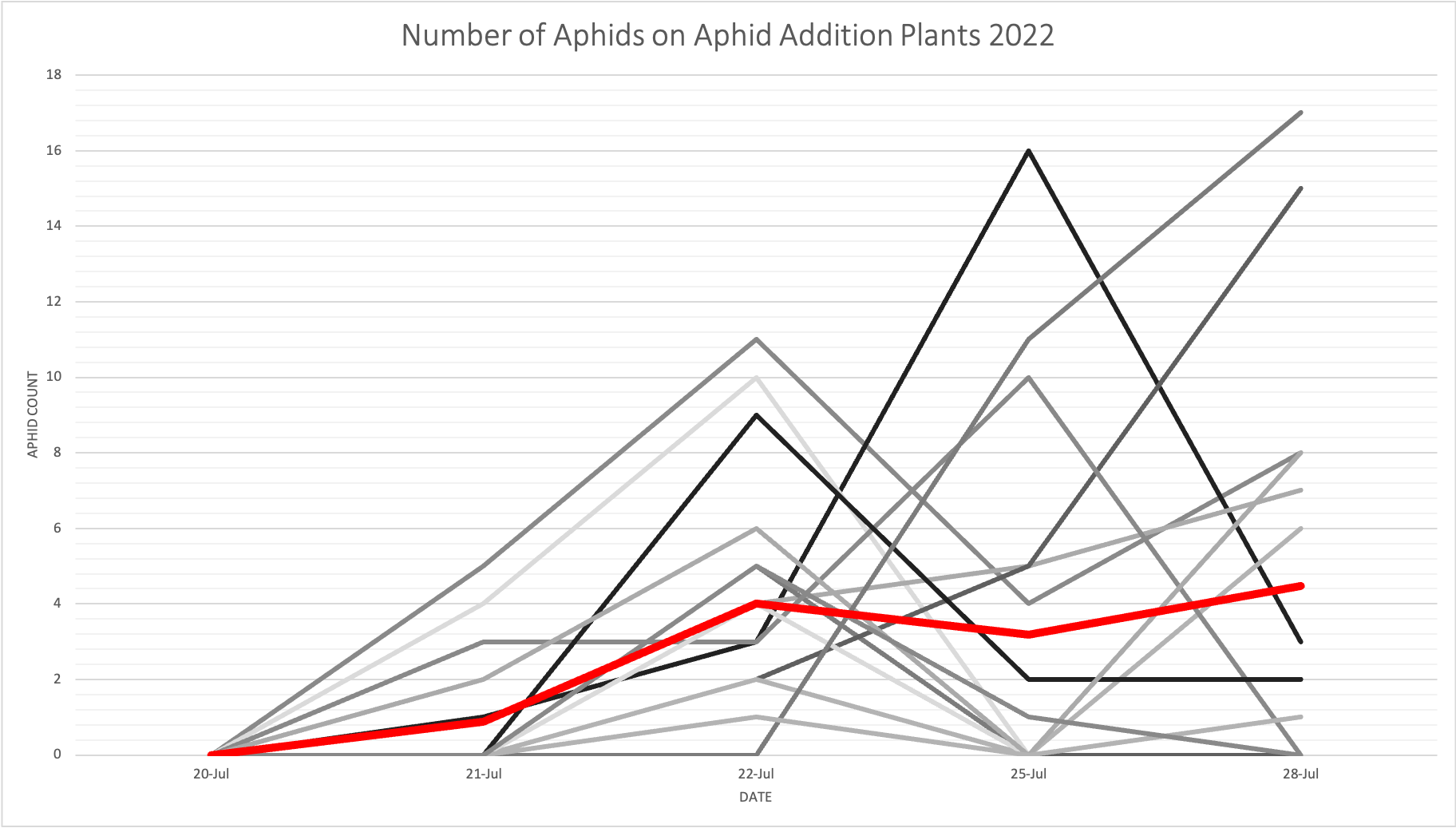
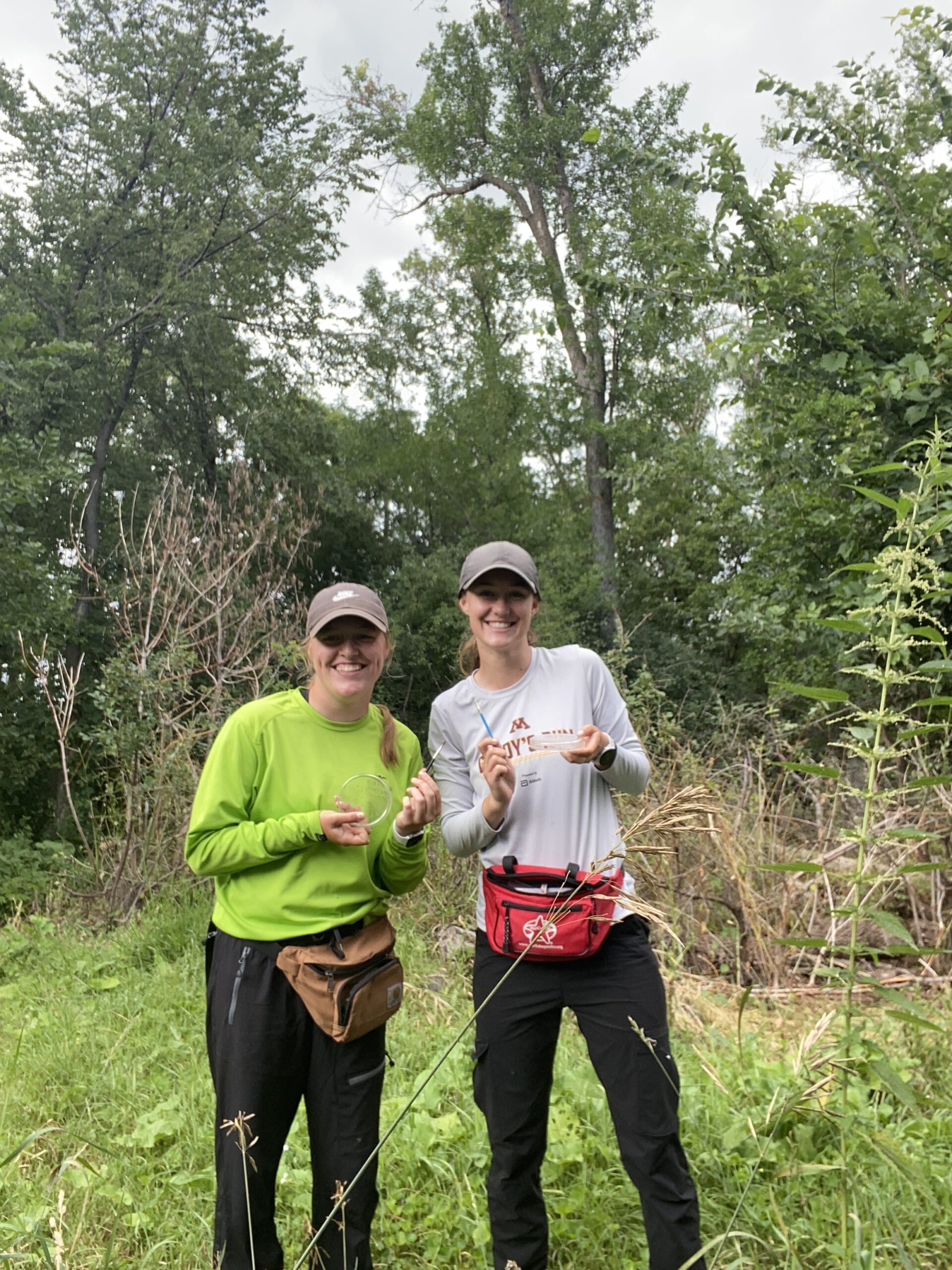
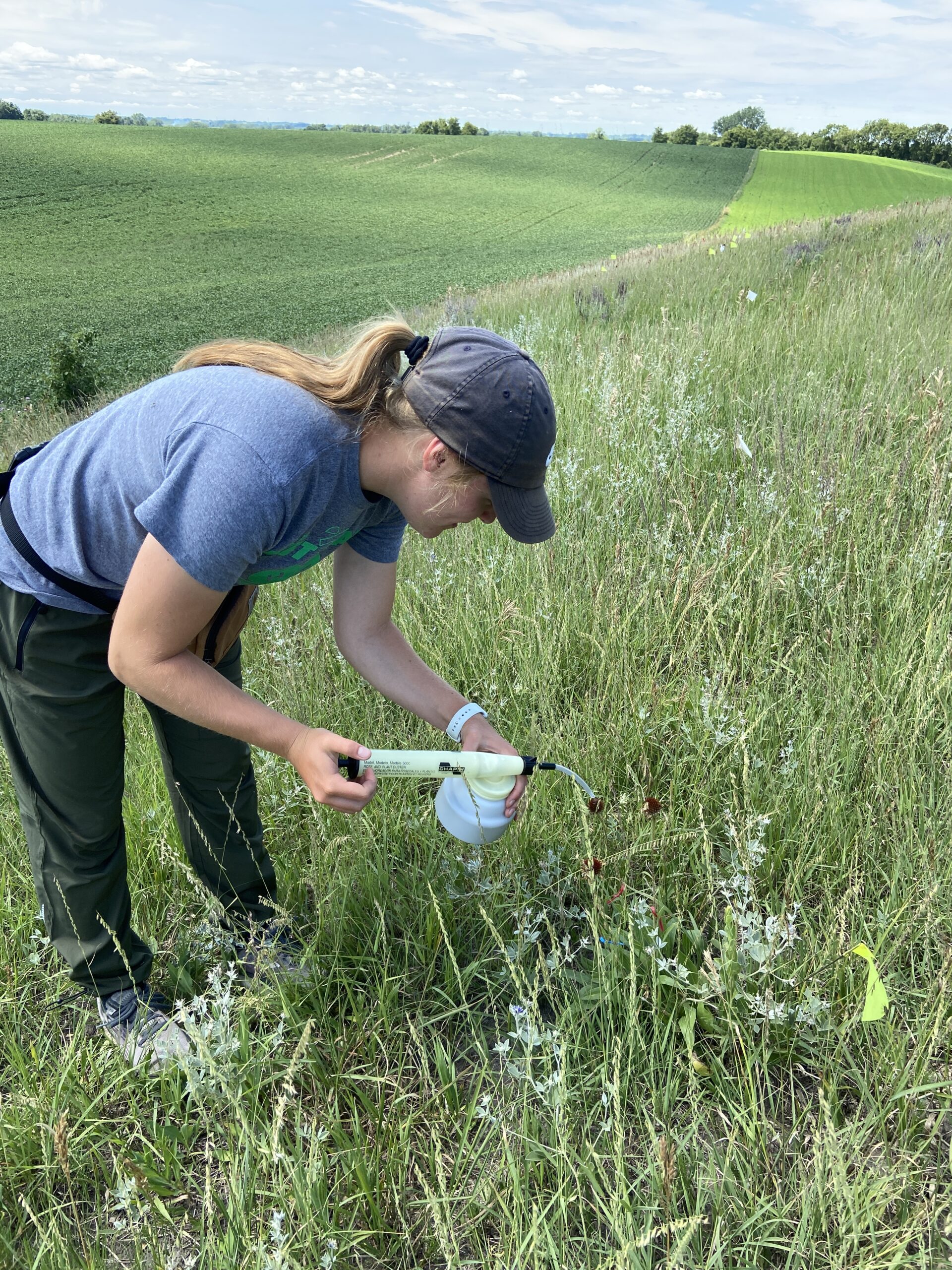
Since 2011, Team Echinacea has been studying how the presence (or absence) of the specialist herbivore Aphis echinaceae has an impact on Echinacea fitness. This summer, Kennedy and I (Emma) have been tasked with running the project. Originally, 100 heads were included in the study. This summer, only 41 plants are still present, with 17 addition plants and 24 exclusion plants. At the beginning of the summer, Kennedy and I searched to see if we could find any aphids, regardless of whether the plants were a part of the addition or exclusion treatment. We found exactly none, the same as last year. After consulting with Stuart about the conundrum, we decided to introduce a new population of Aphid echinaeceae into ExPt1, where the project is located. Multiple times a week, Kennedy and I went into prairie remnants, carefully gathered the aphids, then brought them back and placed them onto the living addition plants. Below is a graph of the aphid population growth on these 17 plants, with the red line being the average.
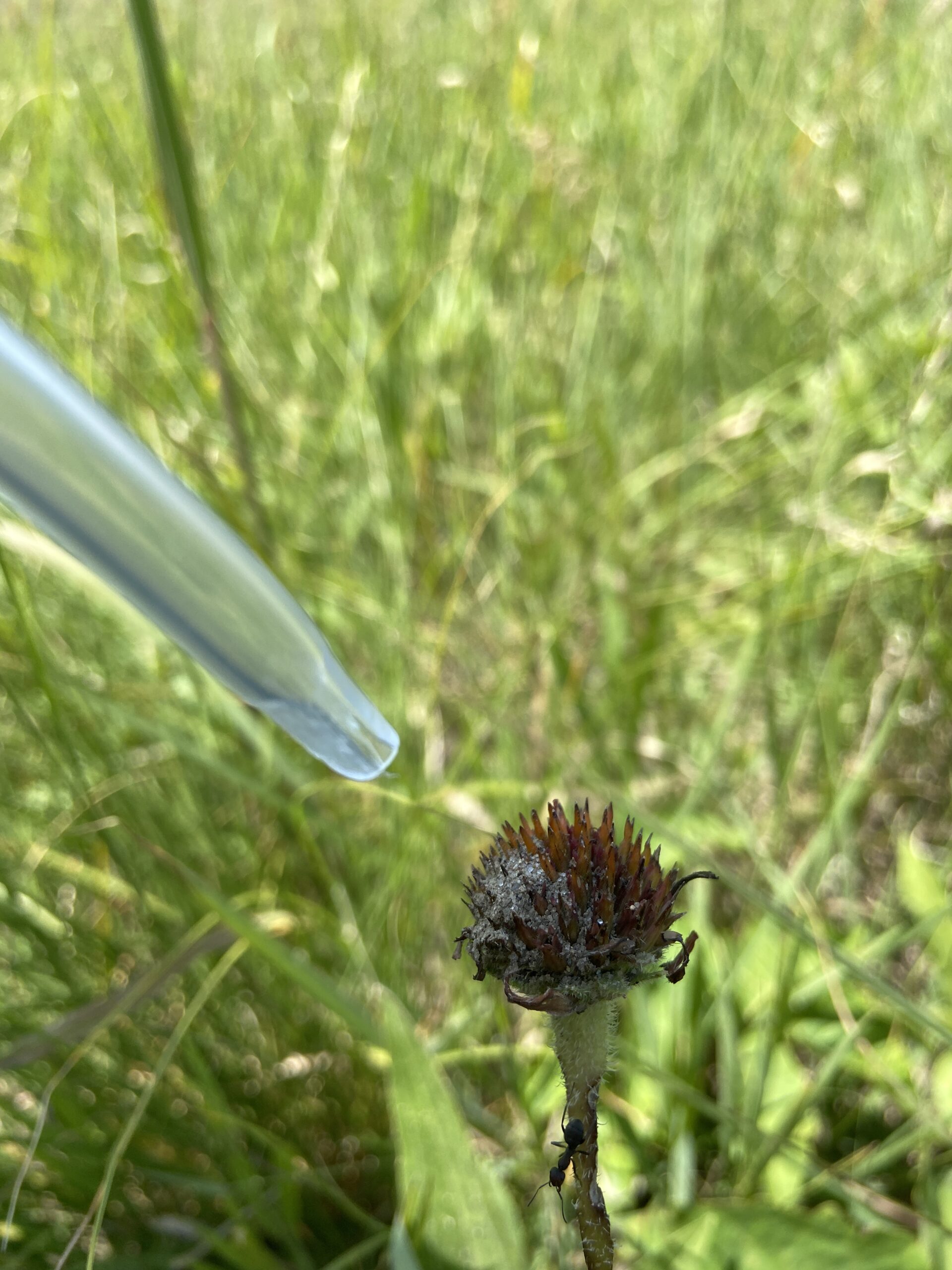
Most of the plants have now received between 70 and 80 Aphid echinaeceae since the 20th of July, with most plants having at least a few living each time we visit the plant. On one plant we even found an ant! Overall, it will still take some work to establish a new population, but we seem to be off to a good start.
Transporting Aphid echinaeceae in petri dishesKennedy and Emma with their petri dishes and paint brushes
Over the course of this summer, the dust project has continued! Team Dust is now on its second year of studying the effects of dust deposition on Echinacea angustifolia’s seed set, through both an experimental study (to determine if dust deposition affects seed set) and an observational study (to determine the amount of dust traveling off of unpaved roads). Now that we are over half way done with the field season, below is a brief update of what has been done so far this summer, and what is still yet to come.
Experimental Study
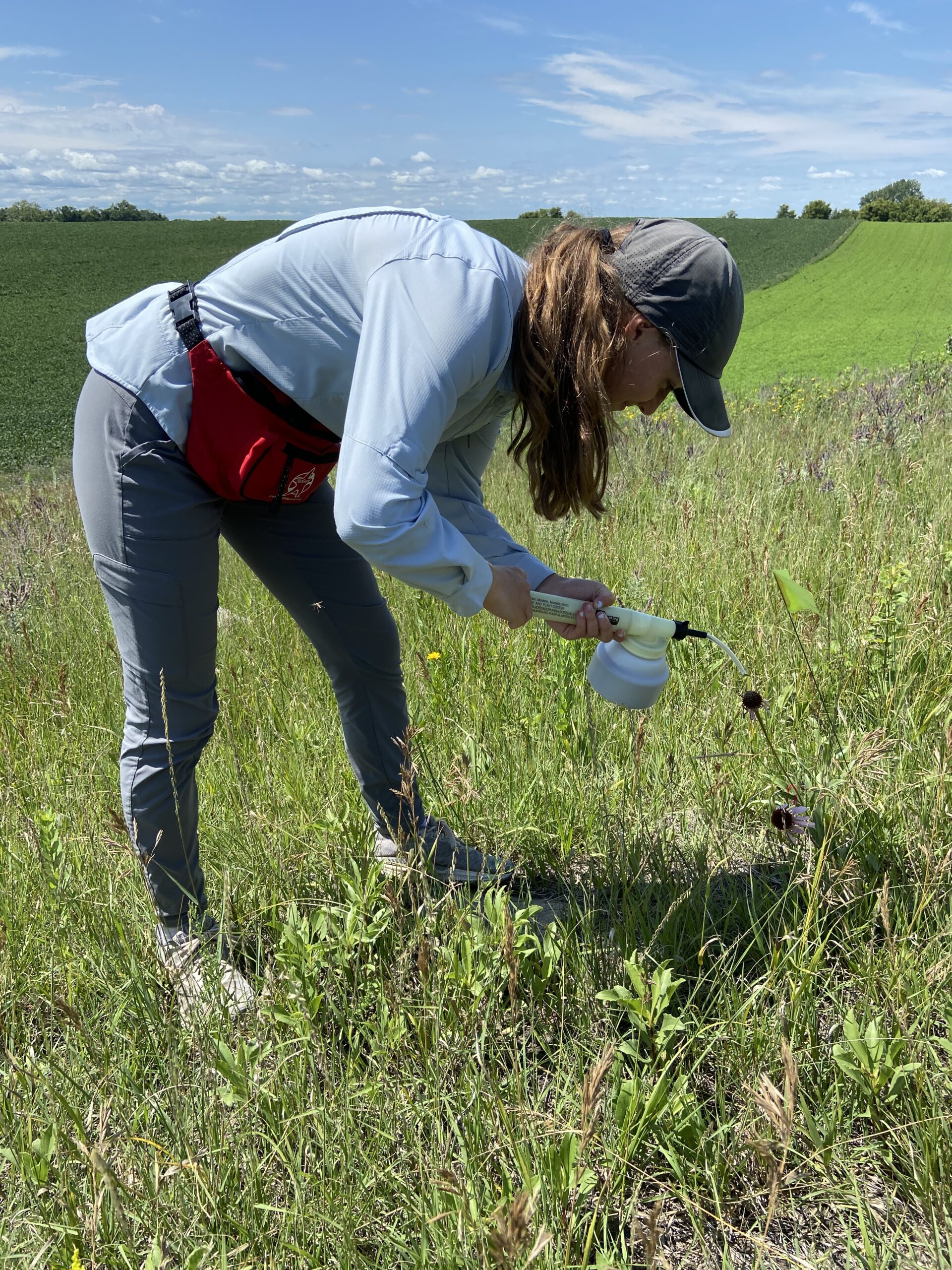
This summer we have 64 Echinacea heads included in the experimental study, located at the prairie remnant Nice Island. Of these 64 heads, half of them were randomly selected to receive dust treatments while the other half receive no dust. Twice a week I venture out to these heads to give the “dusty” heads their dust while the others receive none. All of these heads are located at a site where little to no dust comes in naturally. Once these heads are ready to be harvested, they will be run under an x-ray to determine their seed set. Currently we have the x-rays from last year’s heads, but not all of them have been analyzed so there is no data to report as of now.
Observational Study
The observational part of this project is about to begin! This past week, Kennedy and I assembled the dust traps (pictured below) that we are going to use to measure dust levels at varying distances from unpaved roads. We then placed these traps at two different remnants (pictured below). Over the course of the next two weeks, these dust traps will be loaded in order to collect data. The second part of the observational study, new to Team Dust as of 2022, is collecting styles from flowering Echinacea heads alongside unpaved roads. Kennedy and I managed to collect some styles on Thursday, which went well! Currently these styles are sitting in the freezer, but they will soon be analyzed under a microscope to look for dust covering them.
Overall, lots has already been done this summer, but there is still plenty left to do!
Kennedy applying a dust treatmentA dusty head!Emma applying a dust treatmentSome dust trapsThe styles sitting in their vialsMore dust trapsDust traps along a dusty road
This morning, the crew headed out to do phenology as usual, and we found that we were able to finish phen in record time. Because much of the flowers in the remnant plots are finishing up the flowering portion of their lifecycle, we were left wondering: what could we do in the extra time before lunch?
The answer: bug hunt.
(Actually, we headed to do phen in experimental plots 7 & 9 while the rest of the crew headed to do total demo.)
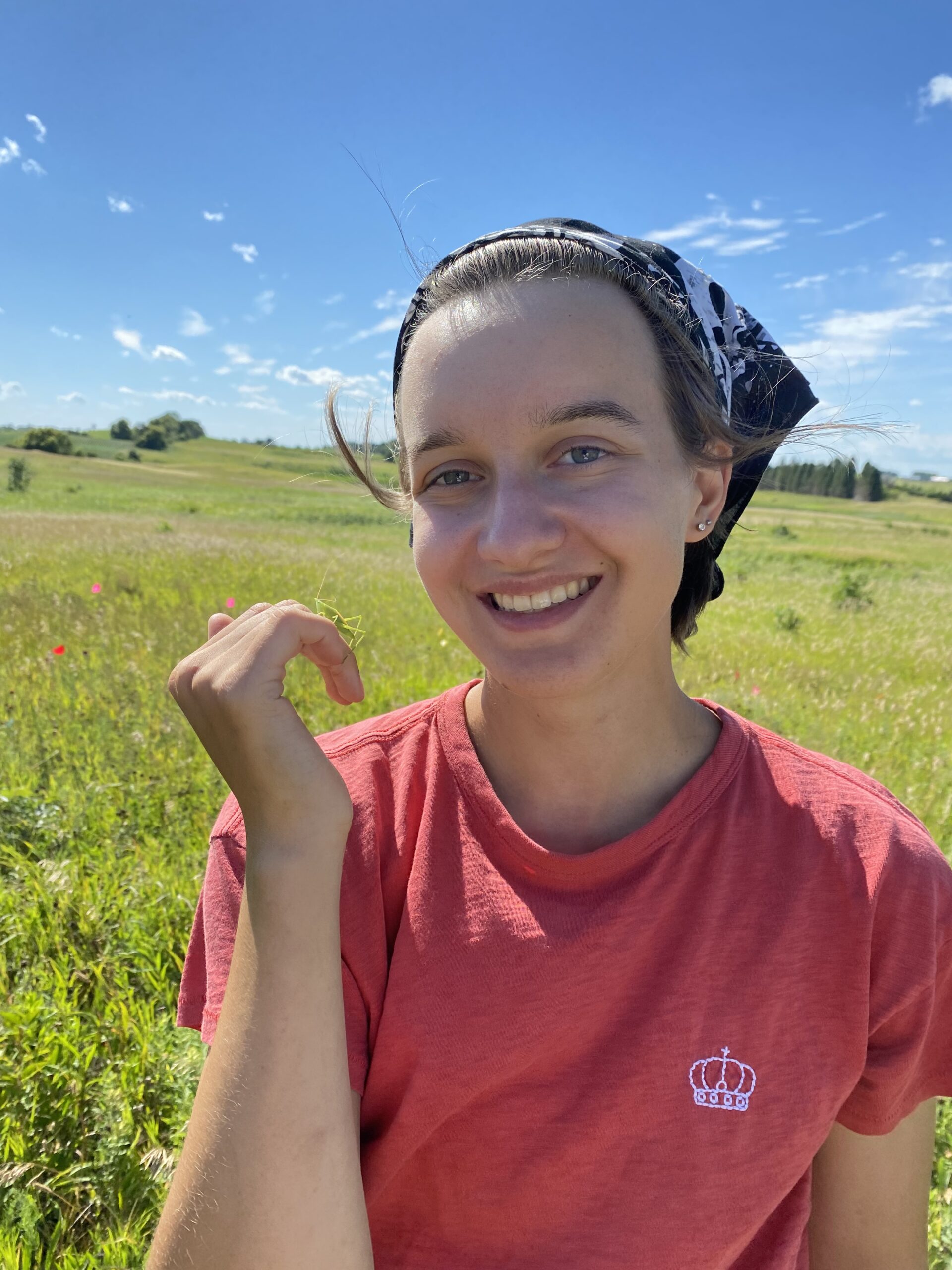
During the bug hunt, instead of us finding the bug, the bug found us. The recent cicada hatch has turned the tables for us, with cicadas often deciding that we are the best tree sized object to land on in the fields. Today a cicada landed on me, so naturally, a photoshoot ensued.
He makes a great addition to the phen crew!
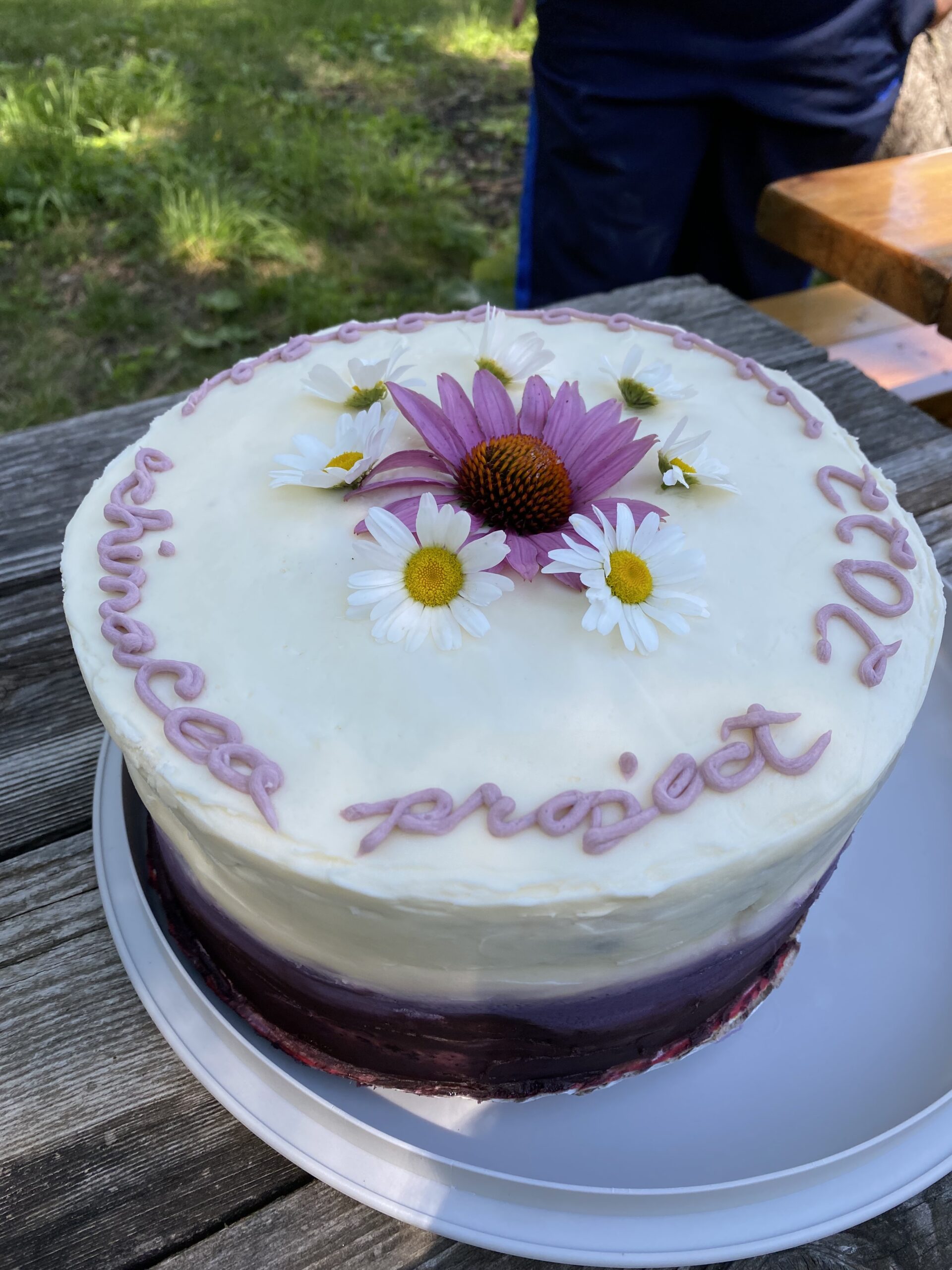
After the exciting insect of the morning, lunch brought an even better surprise: a Team Echinacea cake brought by Britney. The cake presented the crew with their second challenge of the day: Were the flowers also made of cake? (No, but don’t worry, it was Echinacea purpurea, not angustifolia.)
So pretty, and even tastier than it looks!
After lunch, we headed out to P2 to start our measuring journey. This meant we got to use the biggest measuring tape that G3 can fit. It also doubles as a very high fashion scarf (so camp!), demonstrated here by Daytona.
While measuring, we also discovered several gopher holes (discovered is synonymous with fell into, depending on who you are). These gopher holes had the capability of shrinking people, so we decided to shrink Joey.
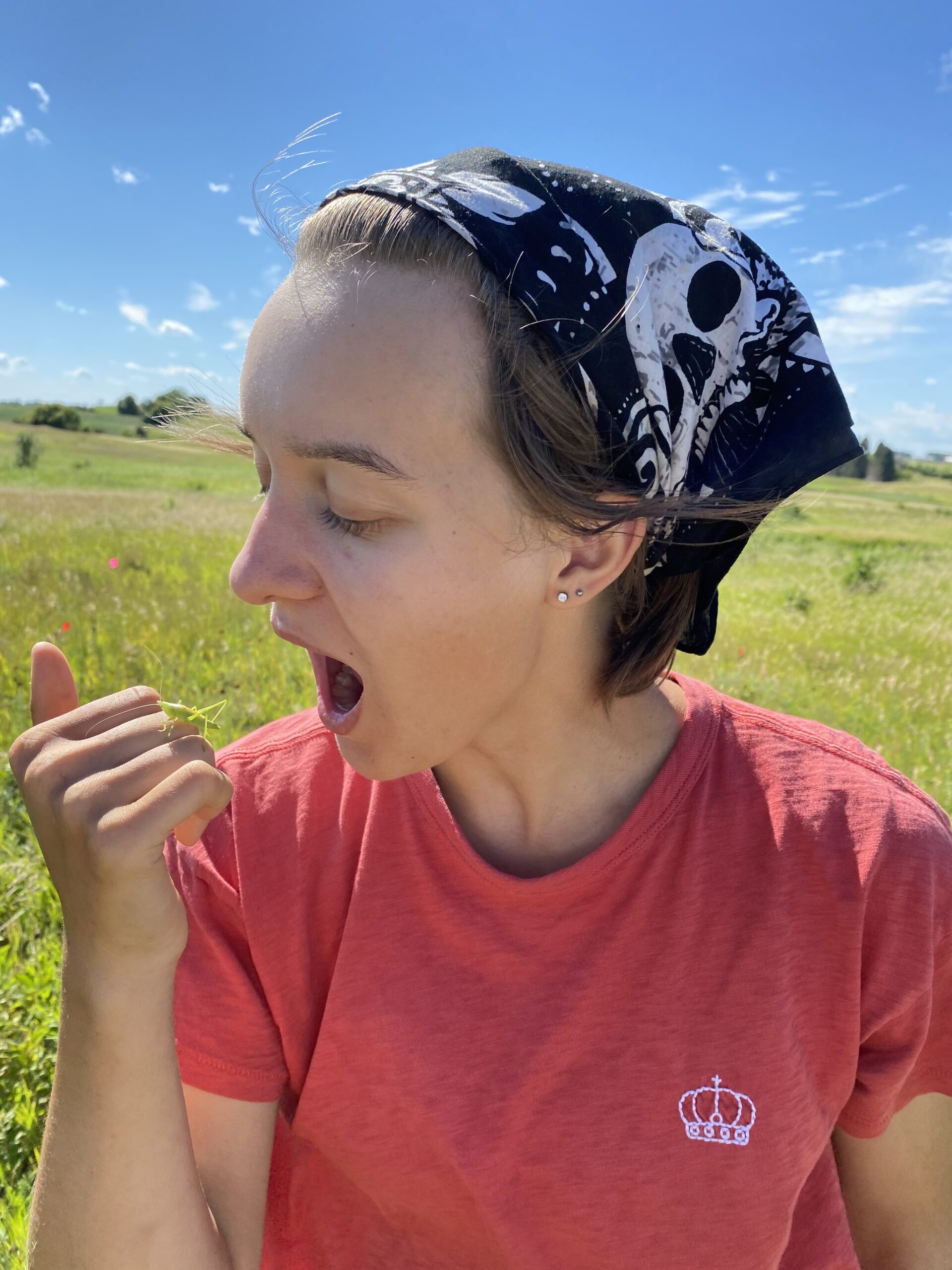
To end our afternoon of measuring, we had another insect photoshoot. This time, a katydid came to visit!
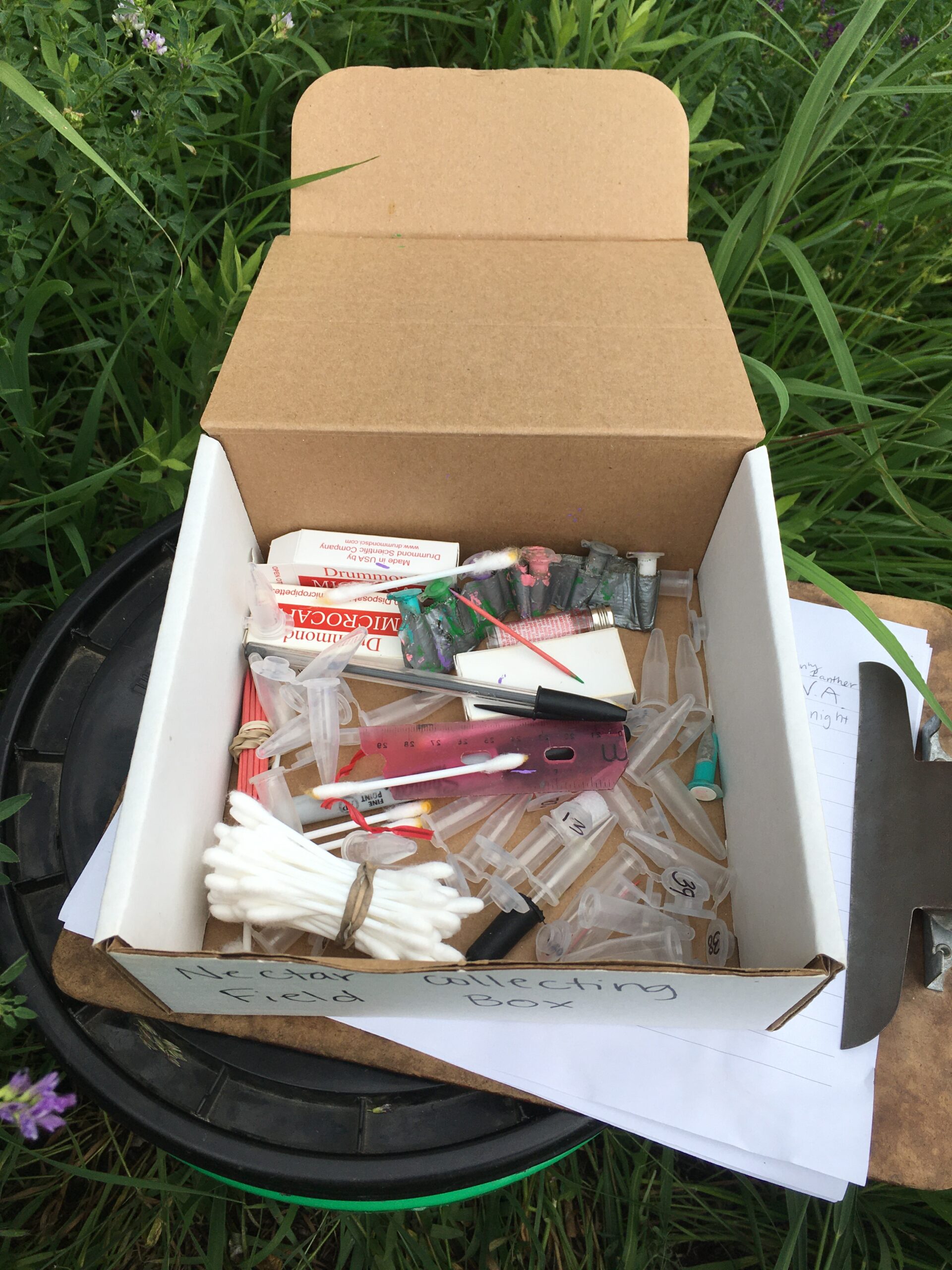
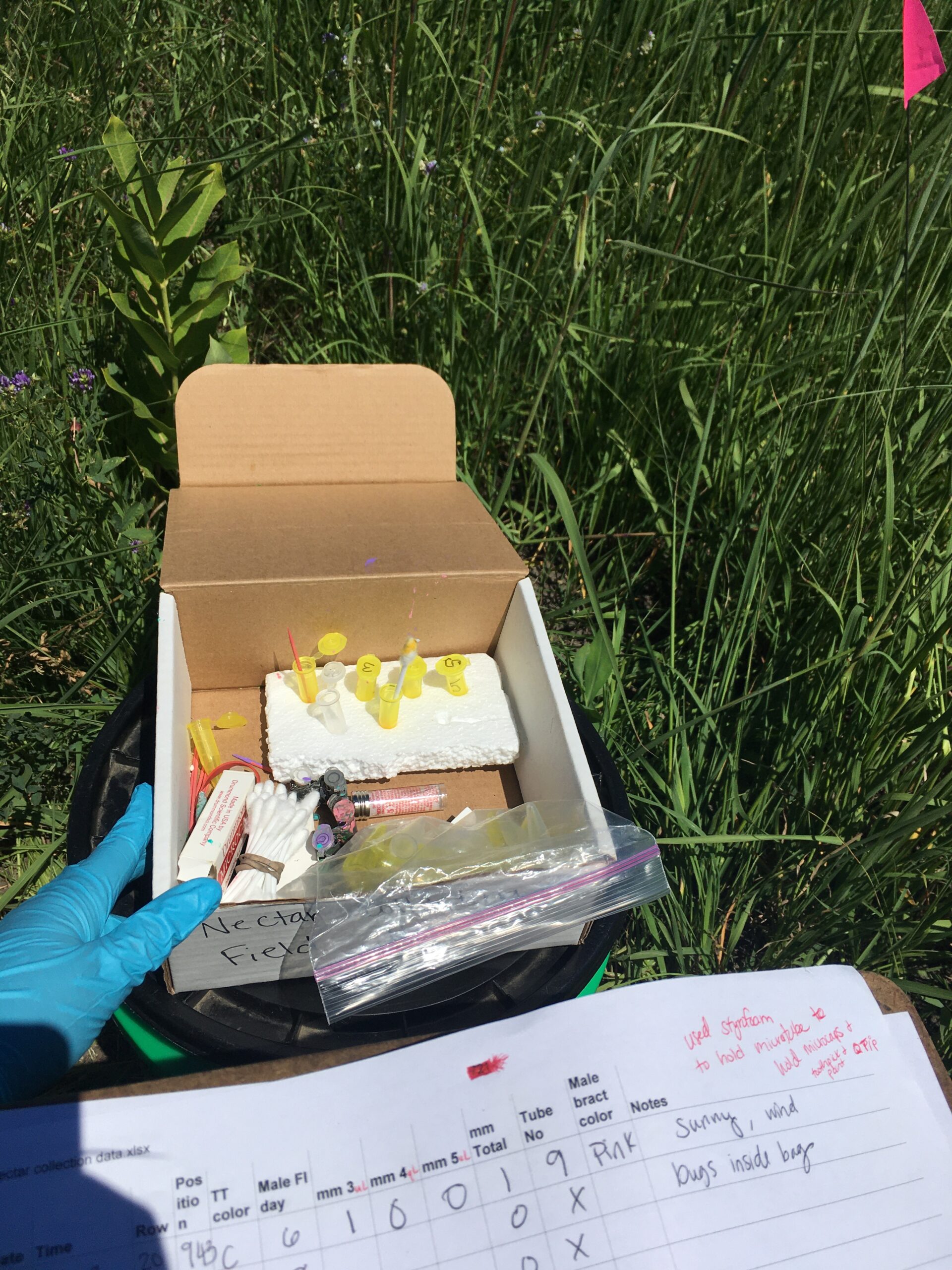
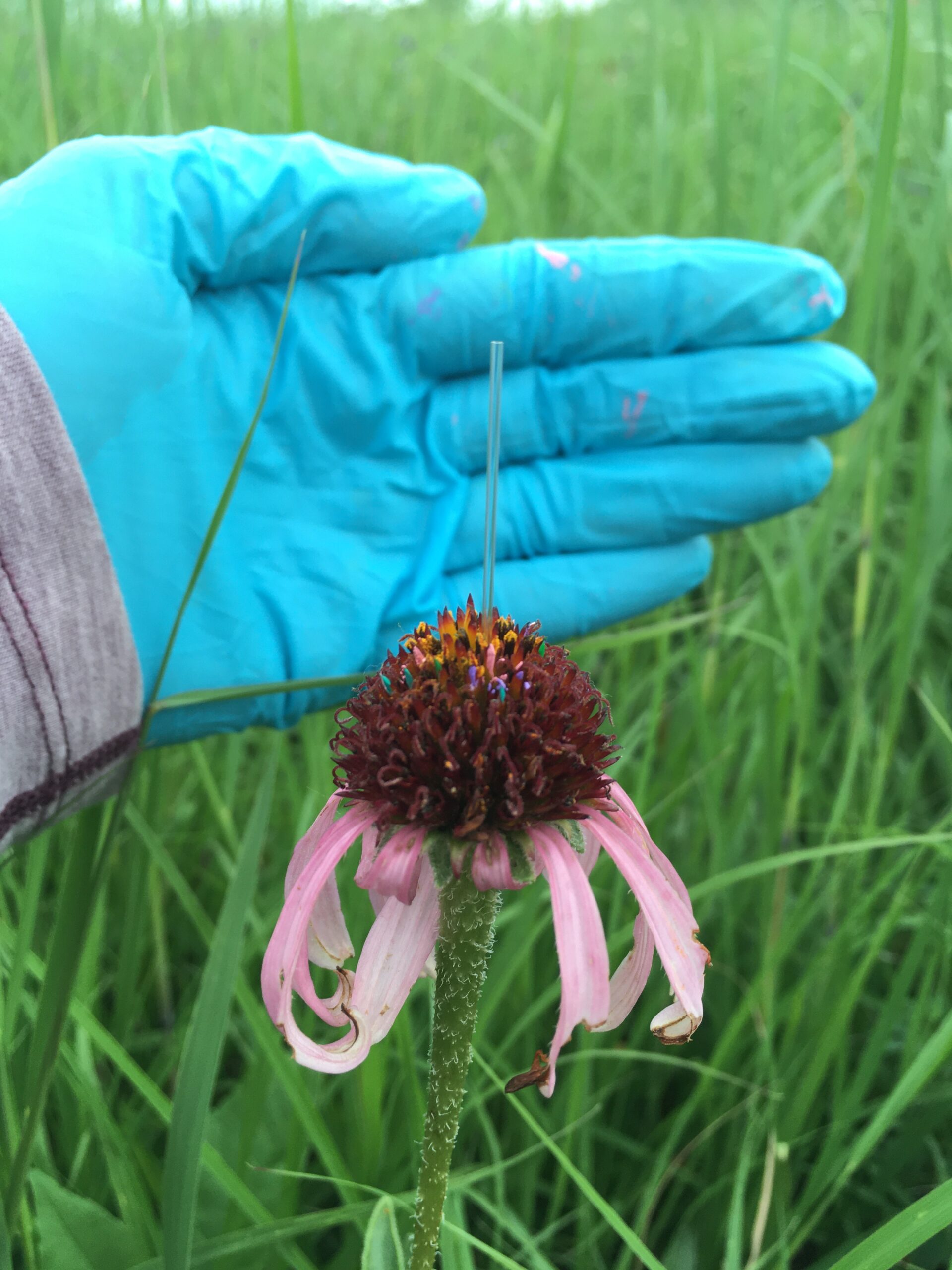
My individual project is working on collecting nectar from Echinacea angustifolia. I was tasked with figuring out what equipment is needed to collect nectar, what time of day is best to collect nectar, and what the procedure is to collect nectar. I have been working in P1 for this nectar collection data. Dr. Roy from St. Catherine University in St. Paul, Minnesota came to help me learn about nectar collection and where exactly to collect the nectar from on the plant head. Next summer, the team hopes to collect pollen and nectar to assess the quantity and quality of food resources pre and post-burn.
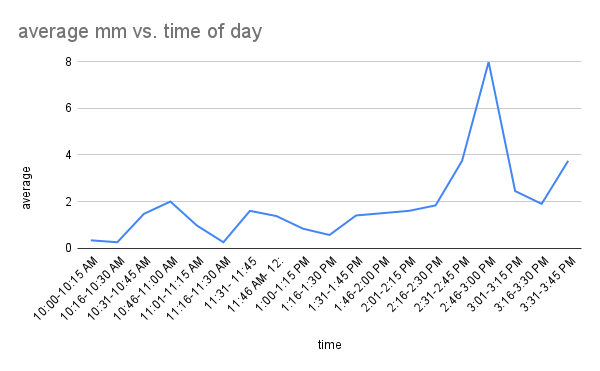
So far, I have learned how to extract the nectar and that around 2:30-3:00 PM has produced the most nectar. Cloudy days are NOT ideal for nectar collection. The one day I collected when it was cloudy I only got 1 mm of nectar the entire morning.
As of today, I have collected 142 mm of nectar. I used different microcaps with different inner and outer diameters, so the volume is not 142 (I need to do some more math to find the volume for each amount depending on their inner diameter, but at least you get an idea of the amount that has been collected).
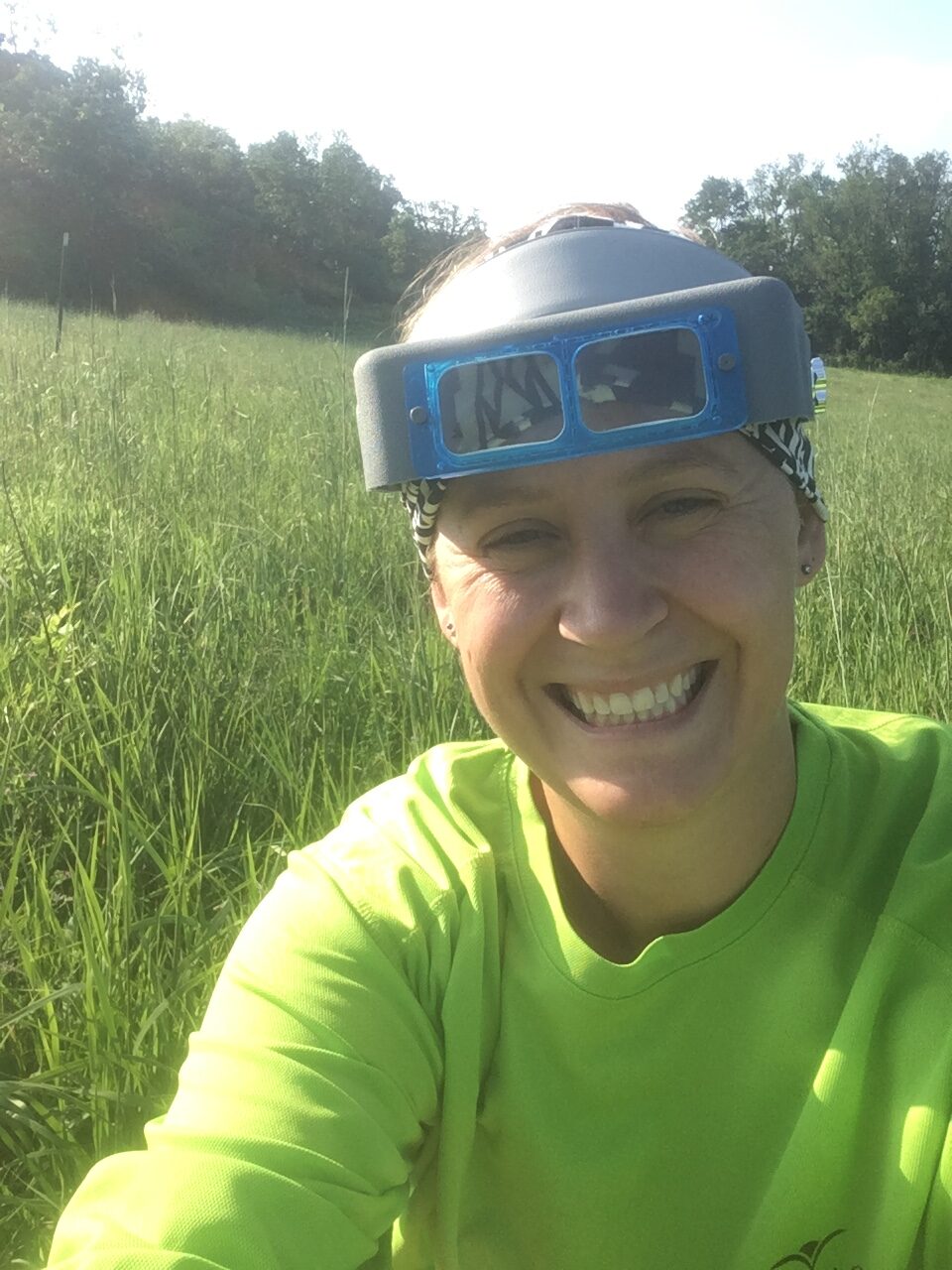
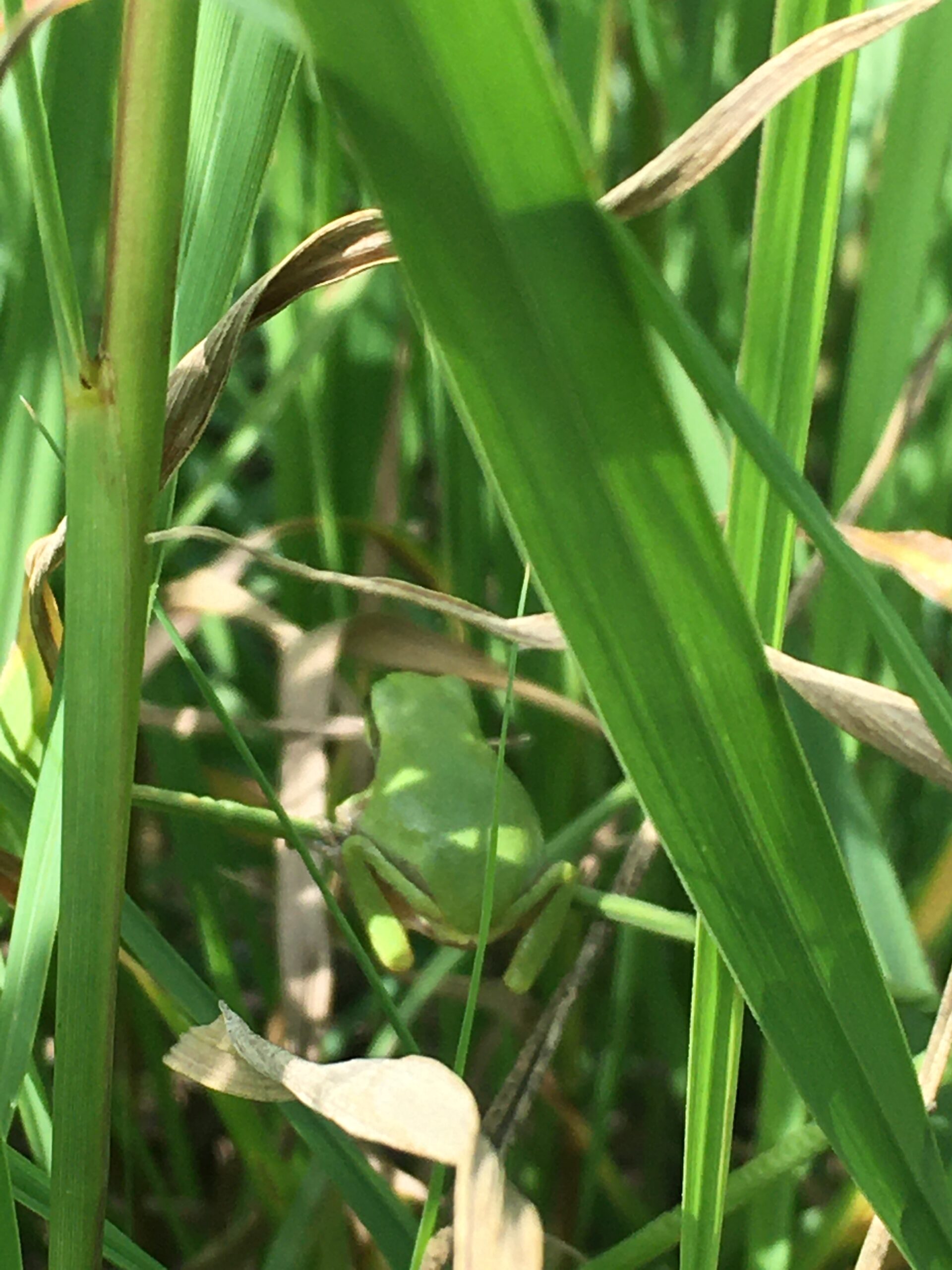
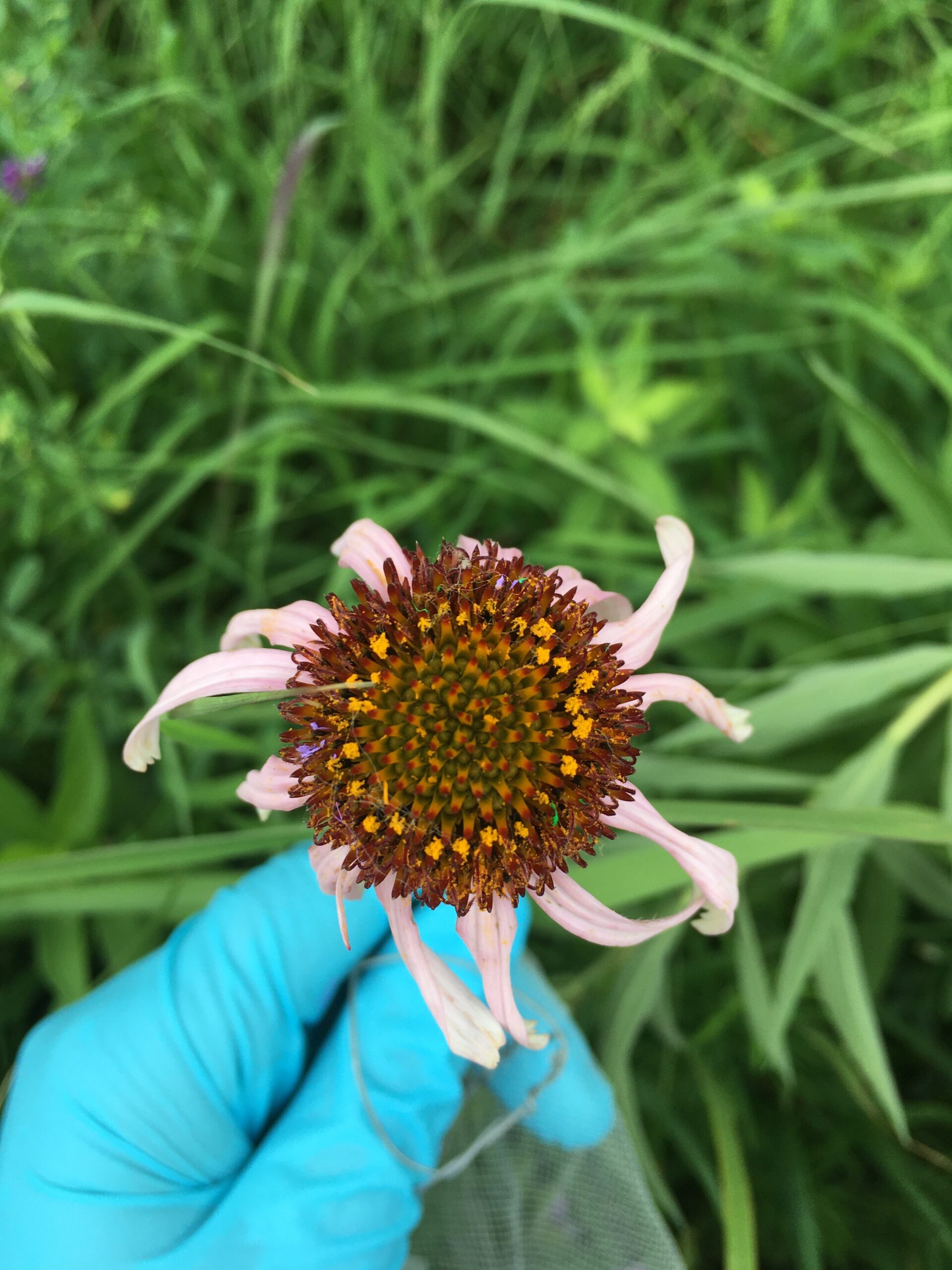
Me with the sweet magnifying glasses.A visitor in P1The must have equipment. Lots of pollen and painted bracts. I painted the bracts when I would come back to sample the same head so I would know which ones had already been sampled. First day, learning how to get it organized for easier collection. A more organized nectar collection field box.A microcap inserted into an anther.
They let me write for two days! Strap in. Thursday morning we began with a short walk through P8 to collect flowering phenology data. We found a total of 8 plants (and a whole lot of brome). We then continued the morning by re-rechecking P7 and P9. Mia found the first plant of the day and decided on the exclamation we would all have to say upon finding a new plant, “Bababooey!” Nate provided good vibes at lunch with by lighting incense at the picnic table, and the crew got to work shortly after with work on independent projects. Some met with the wise, invaluable members of the team to finalize projects (thank you Jared and Alex!) while others spent time in the field.
Emma and a bag of dirt!Mia Sophia looking busy
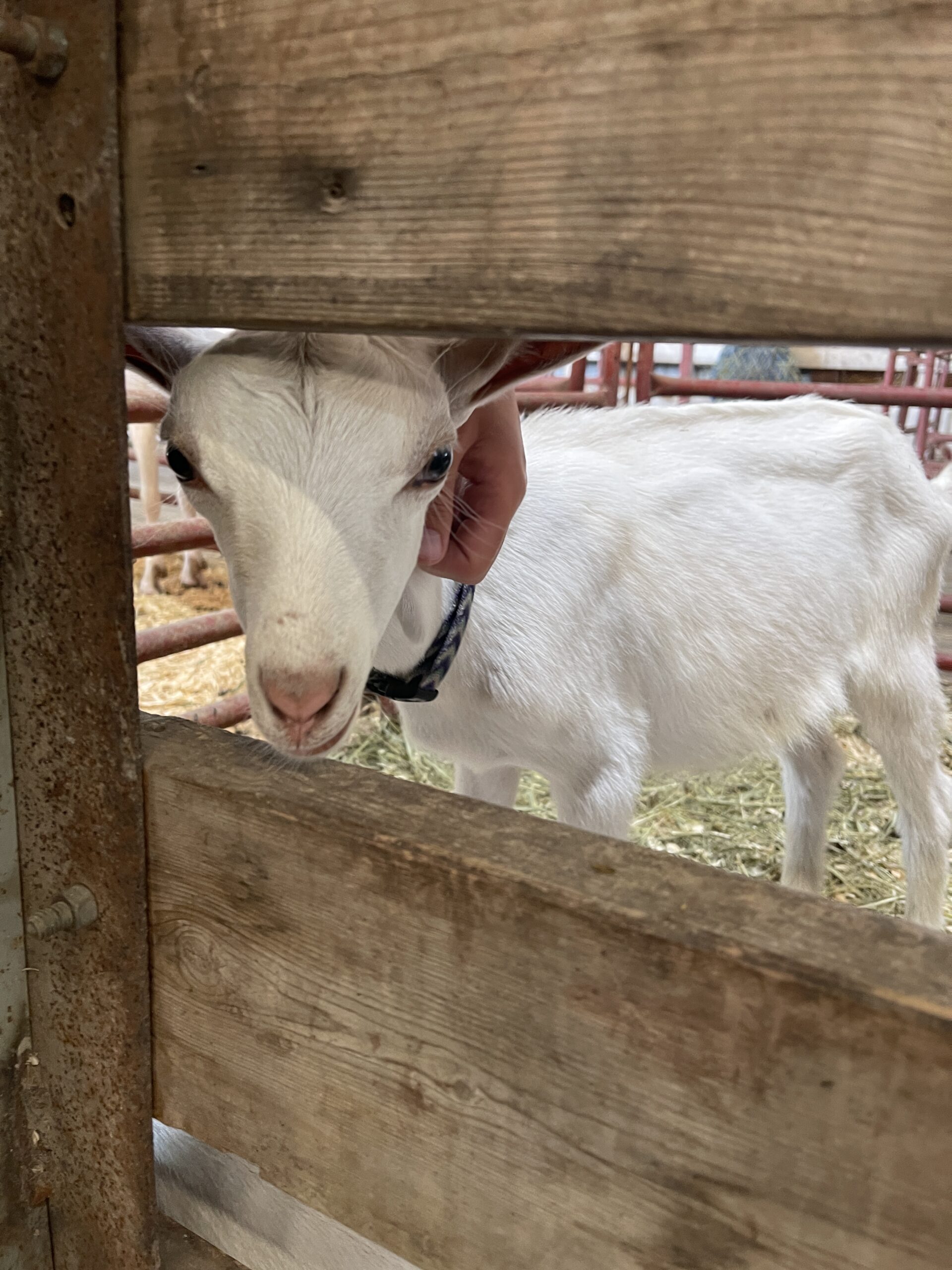
Andes crew spent time after work to visit Kennedy at the Grant County Fair. We had quite the time, getting the chance to see all types of farm animals while enjoying some barbecue and strawberry malts provided by Grant County 4-H. We met with Kennedy’s goats and her cow, Ollie.
Little guyKennedy and Ollie
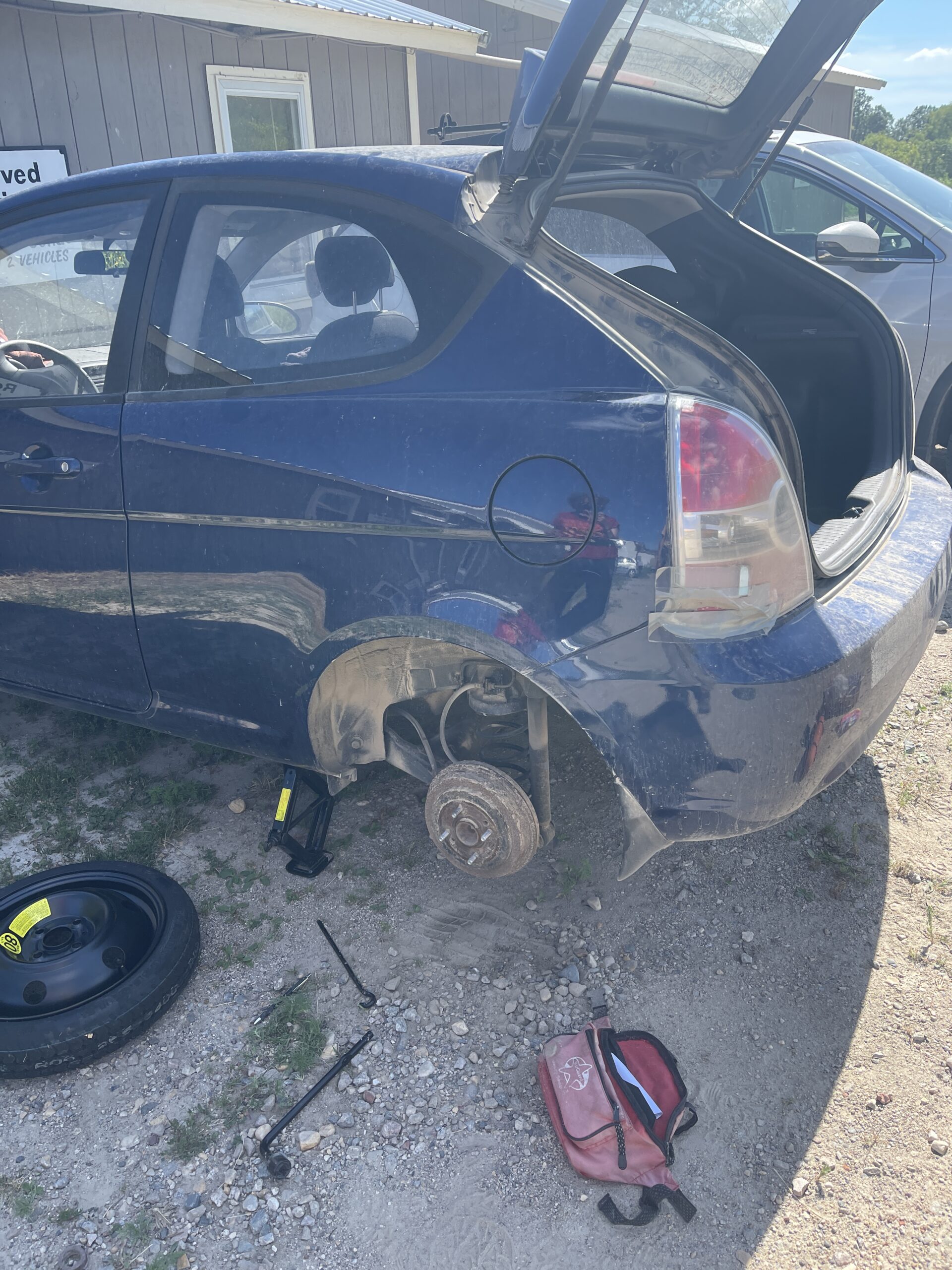
Friday morning feel of bittersweet alacrity flooded Team Echinacea. As we remain excited for fieldwork and the weekend, we also realized that it was our last day working with our favorite in-house Visor guru, Mia. As always, Friday morning consisted of Phenology. Ever quick and efficient during peak phen, everyone finished their sites in time for a lunch with special guests from the University of St. Katherine, Dr. Rahul Roy and Dr. Tami McDonald. Many members of the team participated in big-hat Friday, donning their oversized (or perfectly large) brims. As a gift to Mia, the team then measured P1, her favorite task (I don’t know why don’t ask me). Jared even put a toe in the plot to appease Mia! After work, the team enjoyed root-beer floats and Mia’s stories of her time, here, on the team. However, Geena and I had to change her tire so that’s all I have pictures of. Sorry! In all seriousness, Mia was and continues to be a valuable member of this team, and her brilliance will echo through the annals of team Echinacea history. She will be missed.
Sophia and her big hatJo and her big hatEmma and a jar of brome, as well as her big hat.Dr. Jared Beck, setting foot in P1.The team 🙂Geena’s car
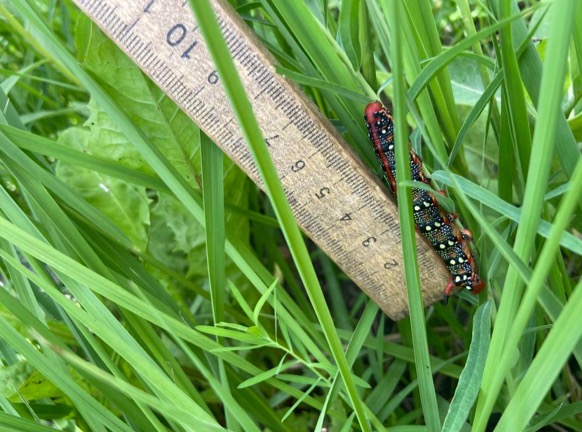
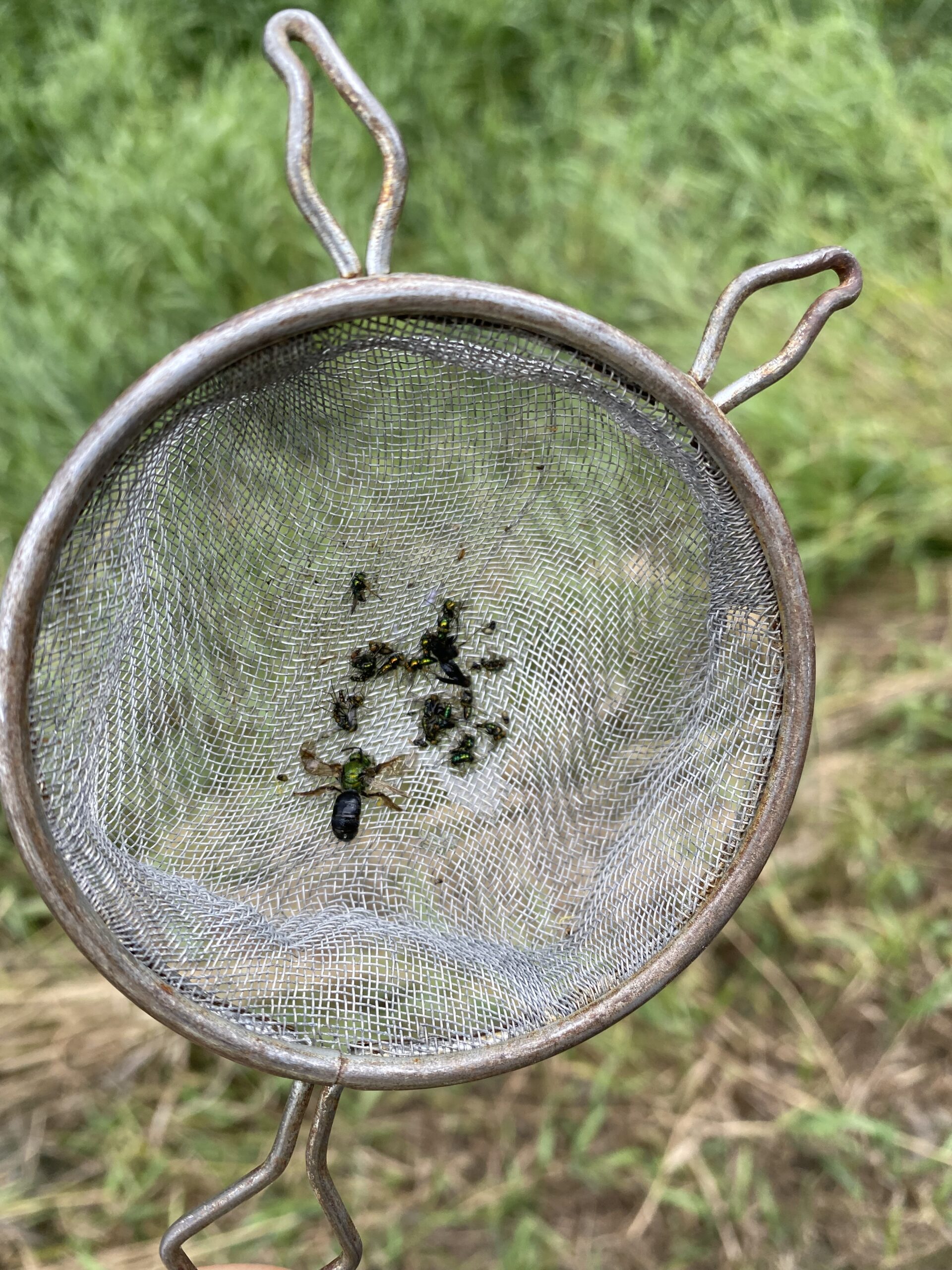
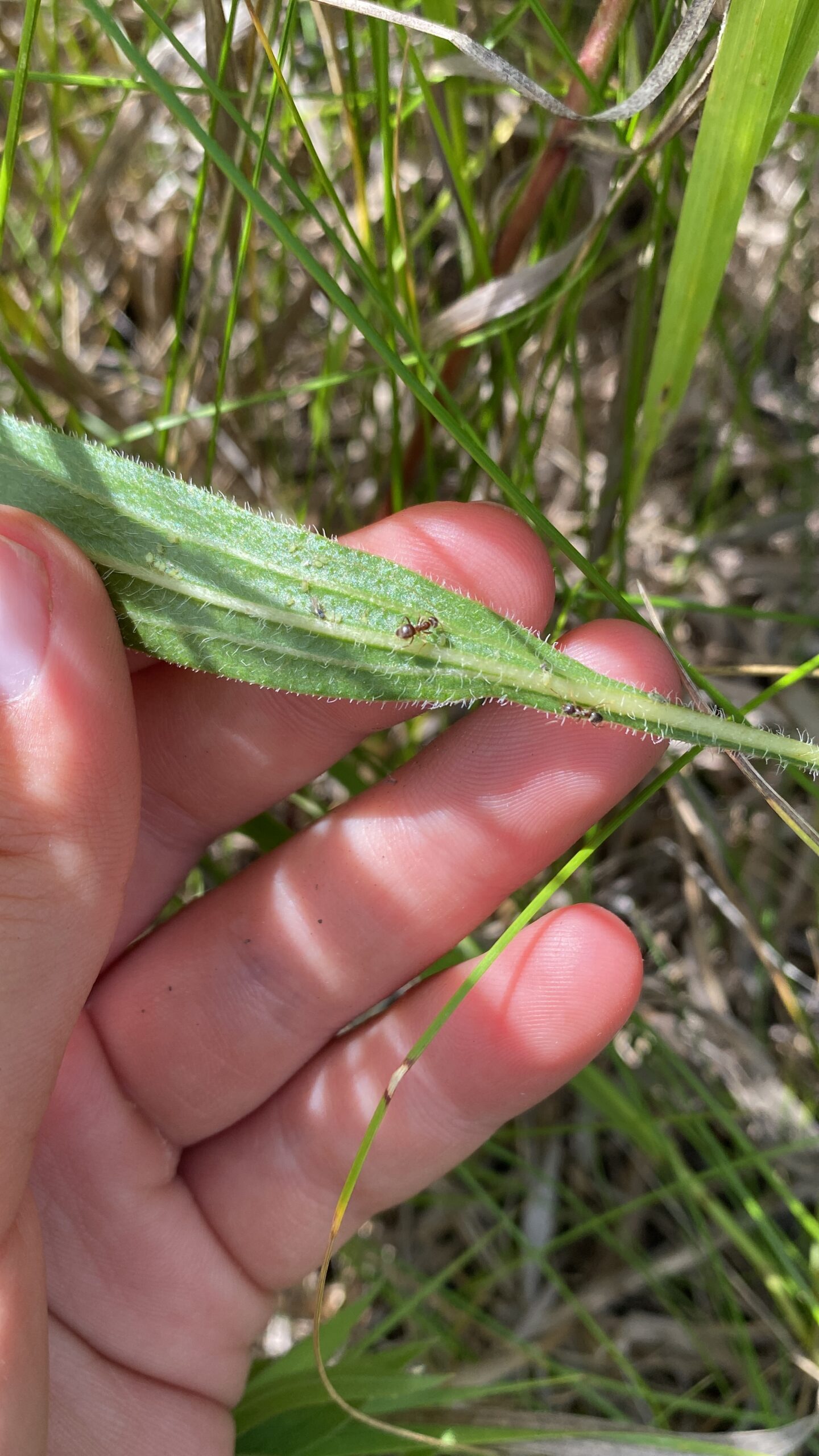
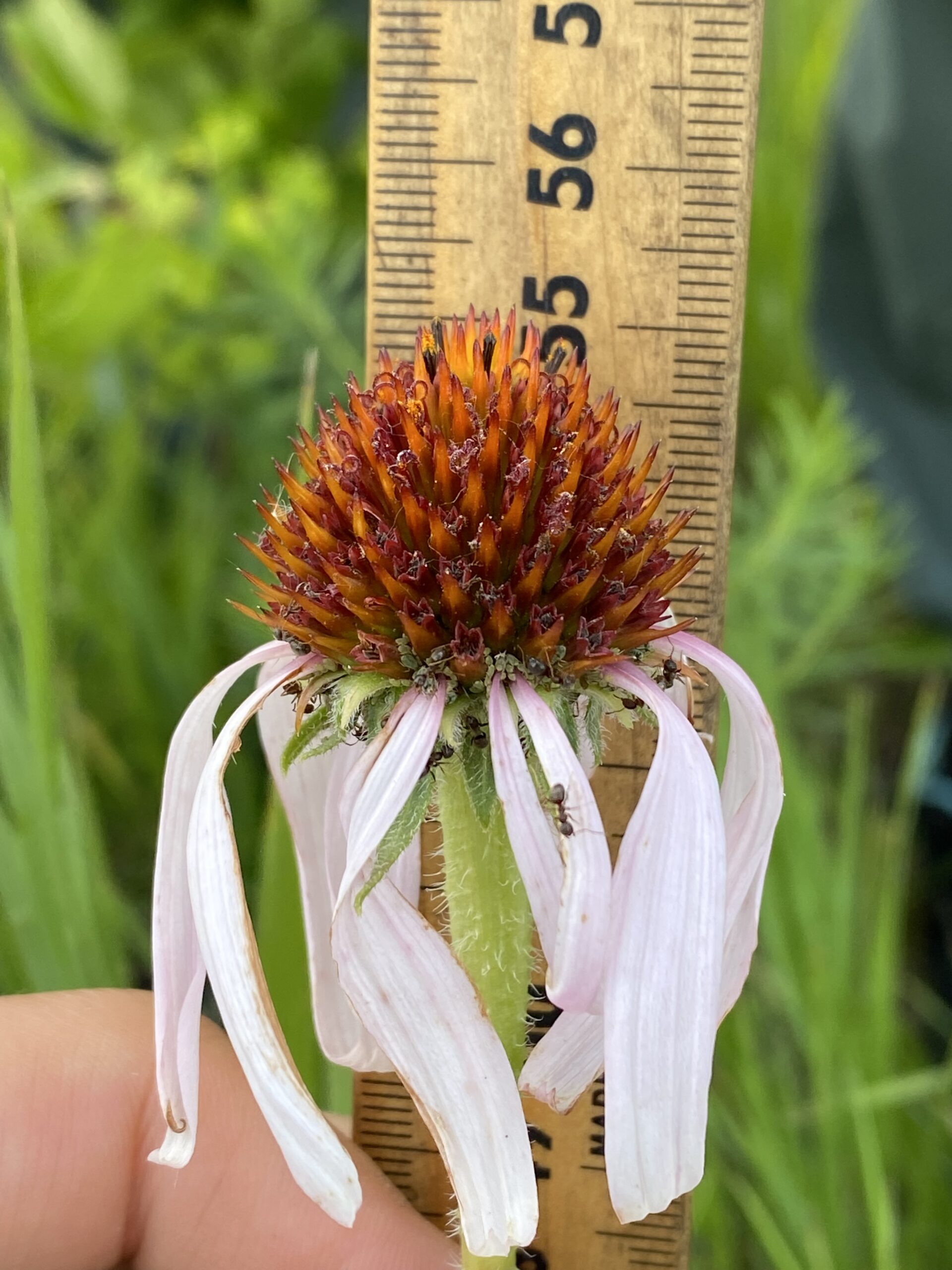
Today, most of Team Echinacea spent their morning and afternoon in the experimental plots P1 and p8, measuring phenology. Alex and I also went and placed the yellow pan traps out for the day – this is now the second day that we’ve put the traps out, and we got a lot of flies again, but some pollinators as well. Phenology in the plots included a lot of echinacea, but also included a lot of other organisms, like the ants and their aphid farms we observed on the echinacea! The brome grass is getting pretty tall in P8, but this didn’t stop us from finding the echinacea plants hidden beneath.
Spurge hawkmoth caterpillar found in P1!Pan trap specimens!An ant carefully tending to her aphid farm on an echinacea leaf in p8More ant farms, but this time on a flowering head!
After work, the crew headed to the Elk Lake House, where Mia, Alex and Lindsey made some great curry for everyone to enjoy. We also played several rounds of the game Empire, where we had to remember nicknames we made up on the spot, and if we could figure out what people’s created nicknames were, we could expand our empire!
Last, but not least, the echinacea project team is pleased to announce we are collaborating with Captain Crunch to bring you a new spin on Captain Crunch: All Brome (Created by our very own Johanna)!
Featuring the brome we see so much of in the plots