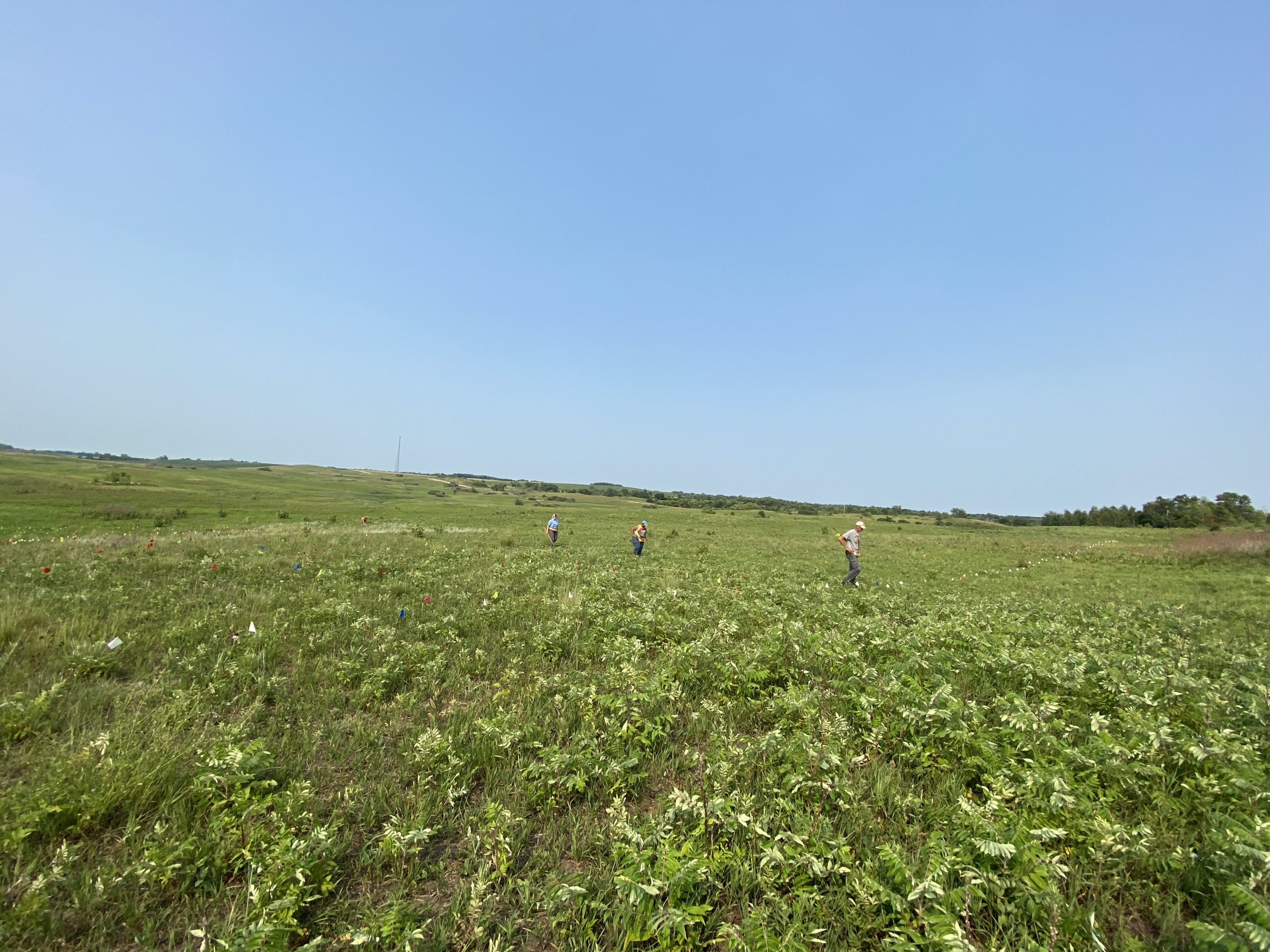
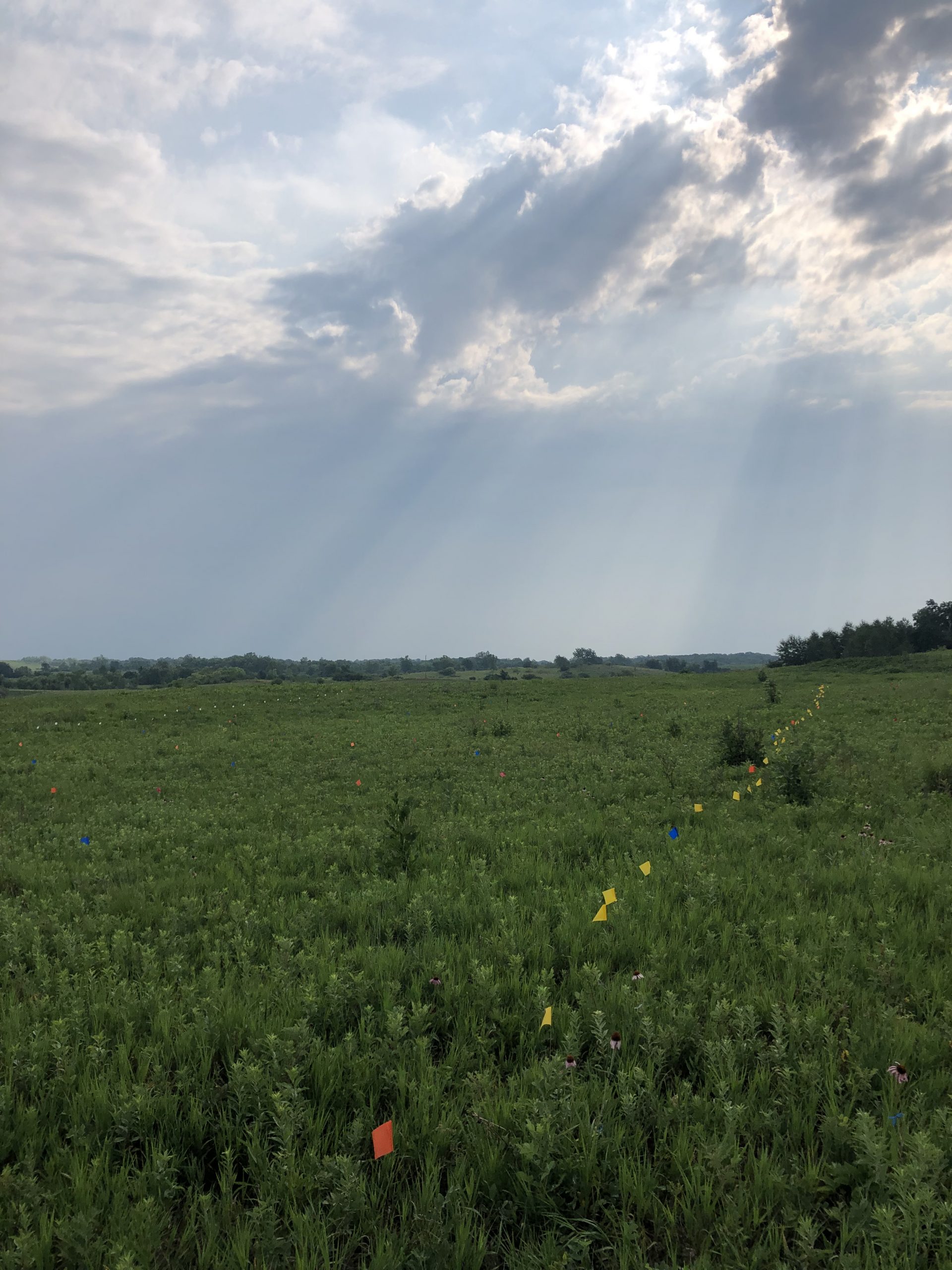
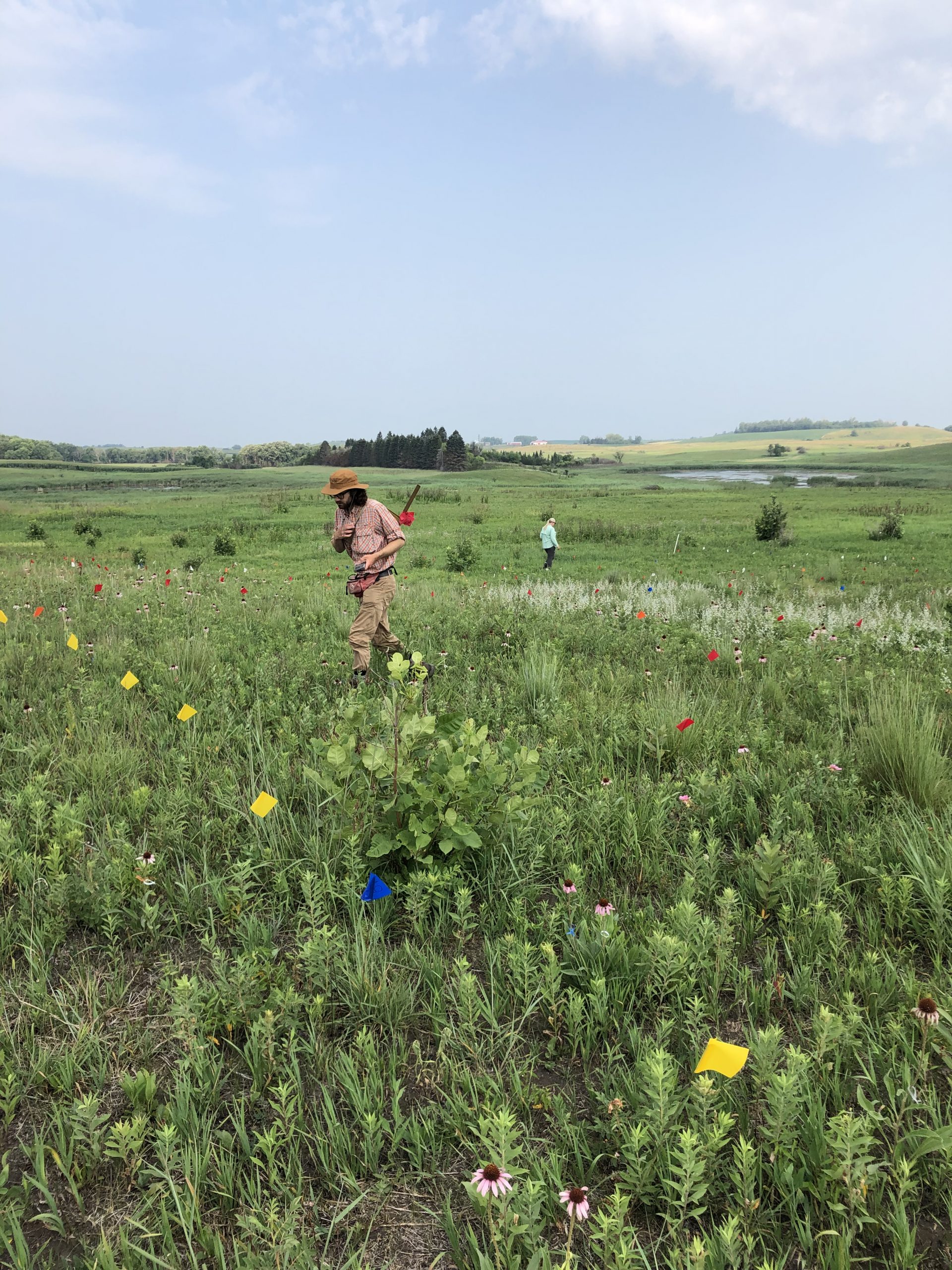
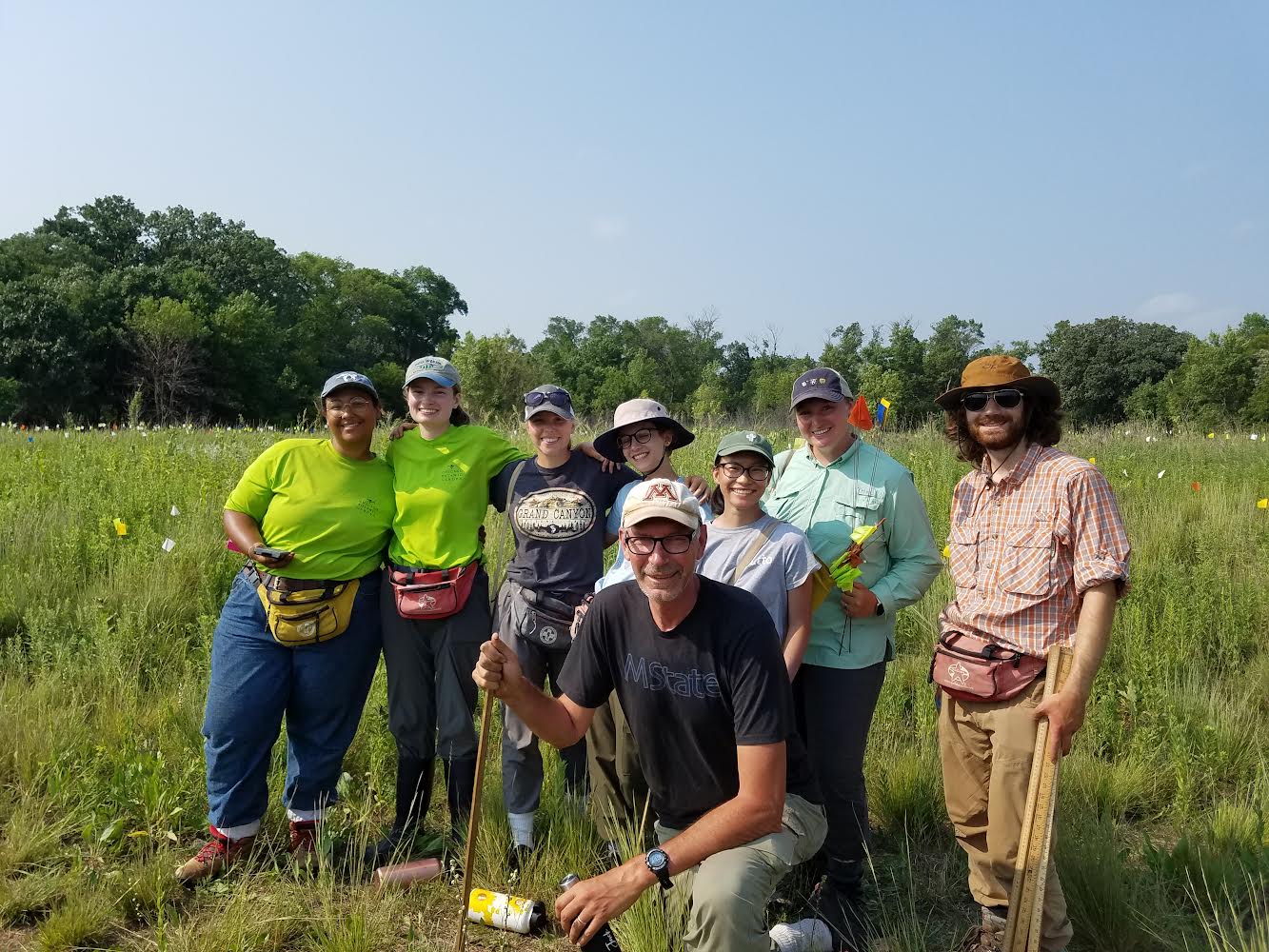
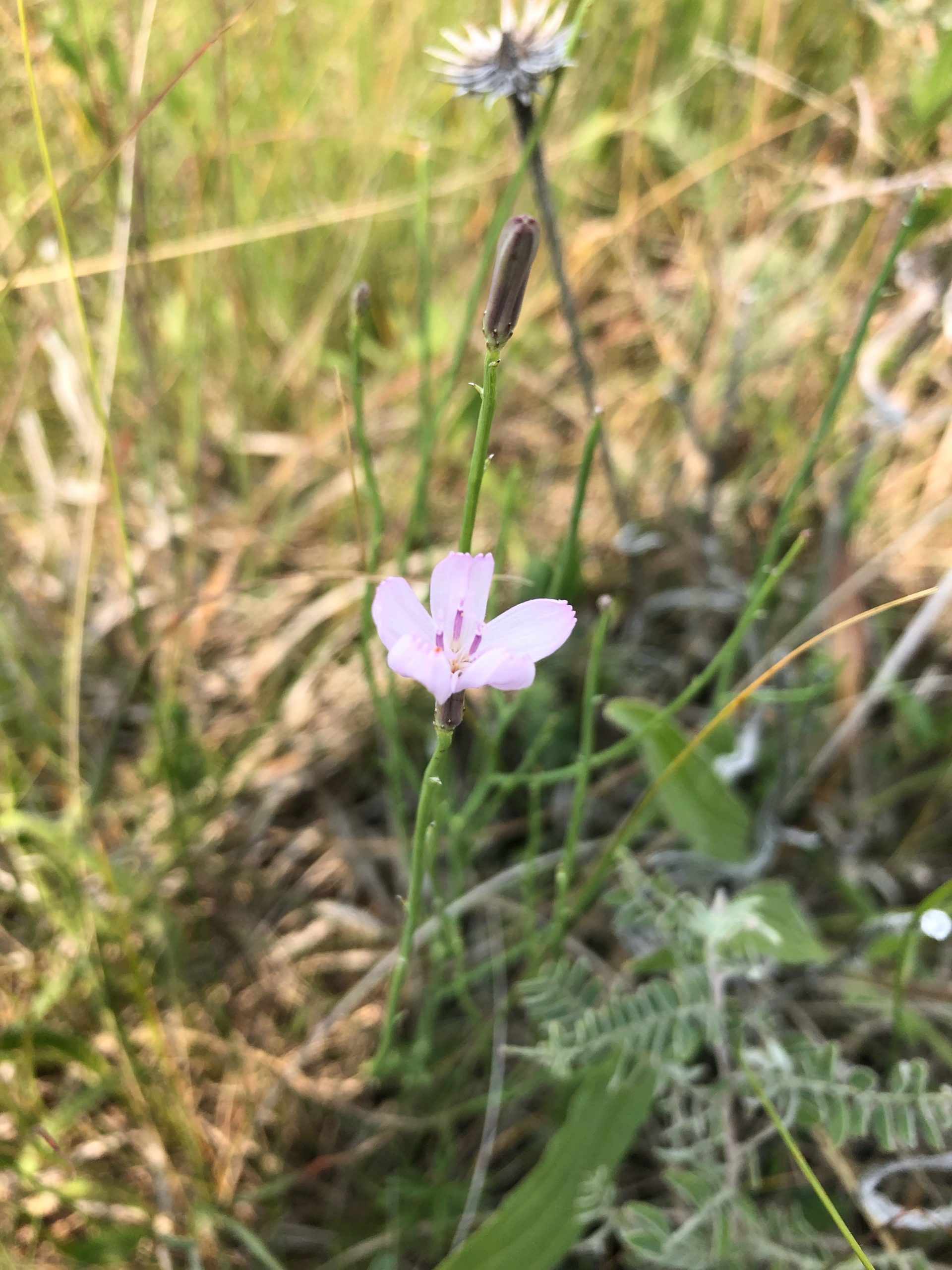
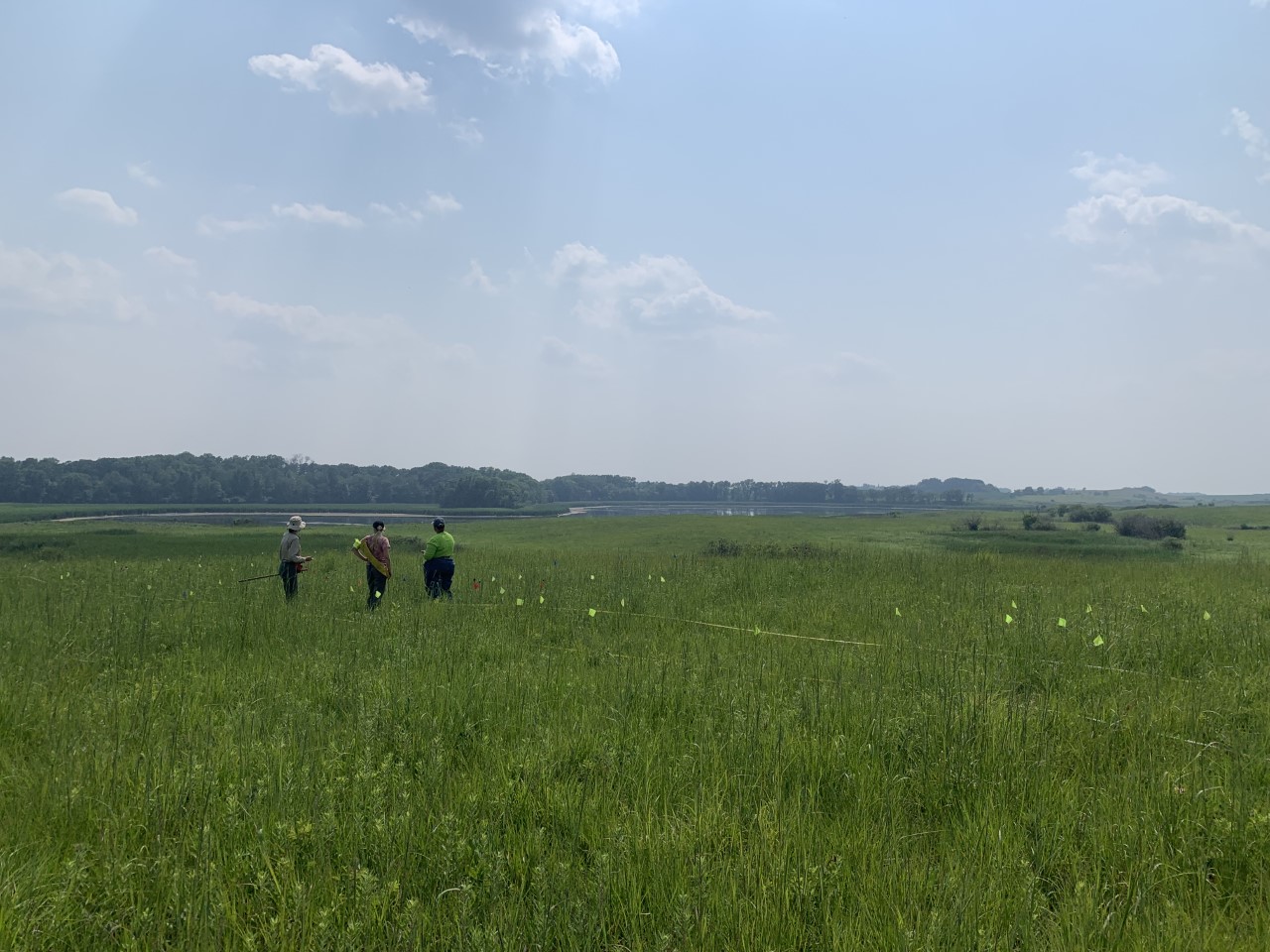
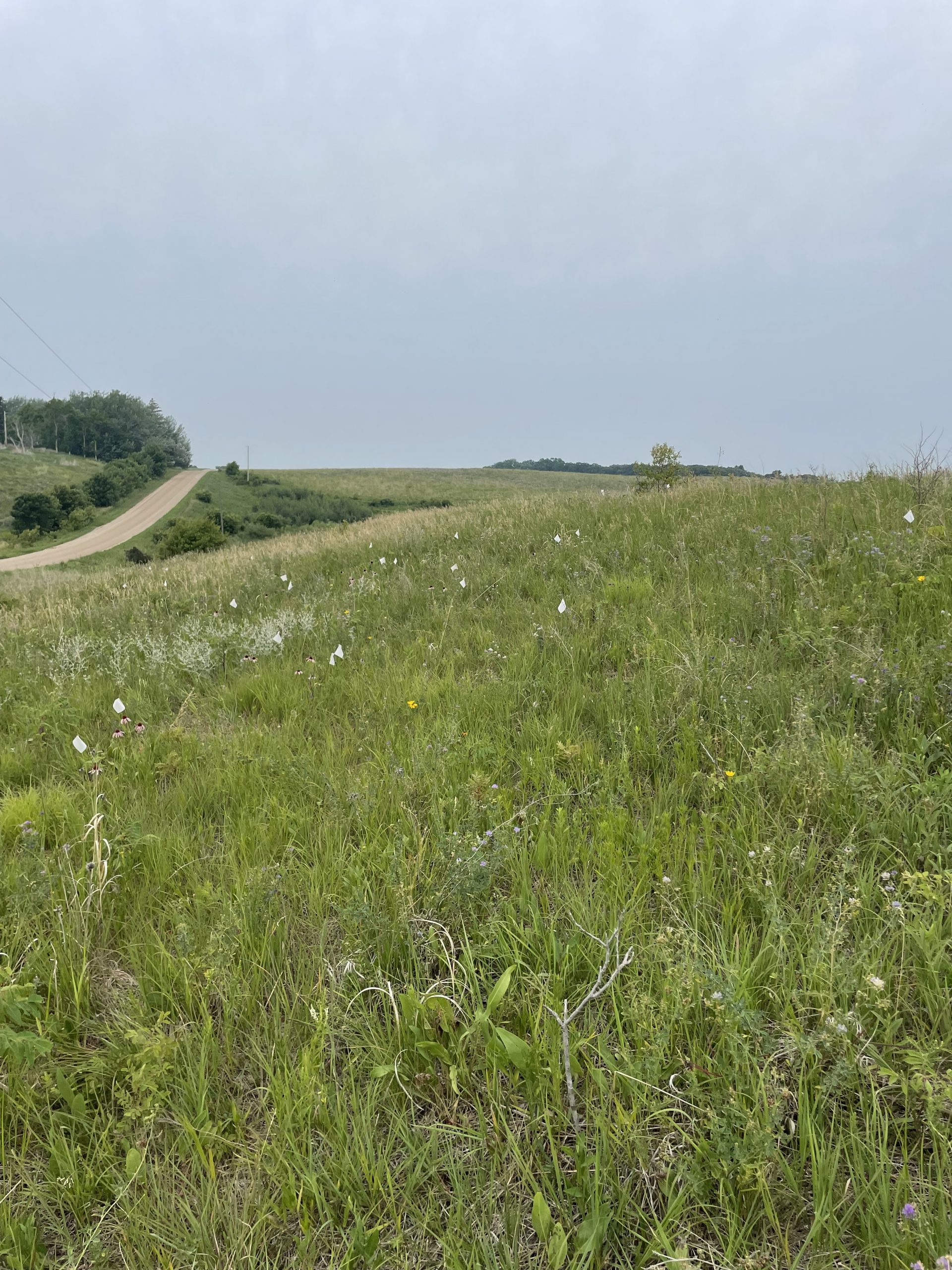
We are getting to the part of the season when the Echin are mostly done flowering and we are going through the plots searching for basal plants (measuring). The MWF Phenologing has gone from taking the entire morning to taking 1.5 hours. On Tuesday, we finished measuring P2 and began P1. P1 is about 10% finished and we look forward to keep making progress on that. We are also keeping an eye on plants to see when we can begin harvesting the heads preparing for their transfer to the Chicago Botanical Gardens. Unfortunately, we are also getting the part of the season when we are saying goodbye to our coworkers. Last week, Alex needed to back to Florida to begin her middle school teaching duties. This week we say goodbye to a couple of the College of Wooster coworkers, Maris and Miyauna.
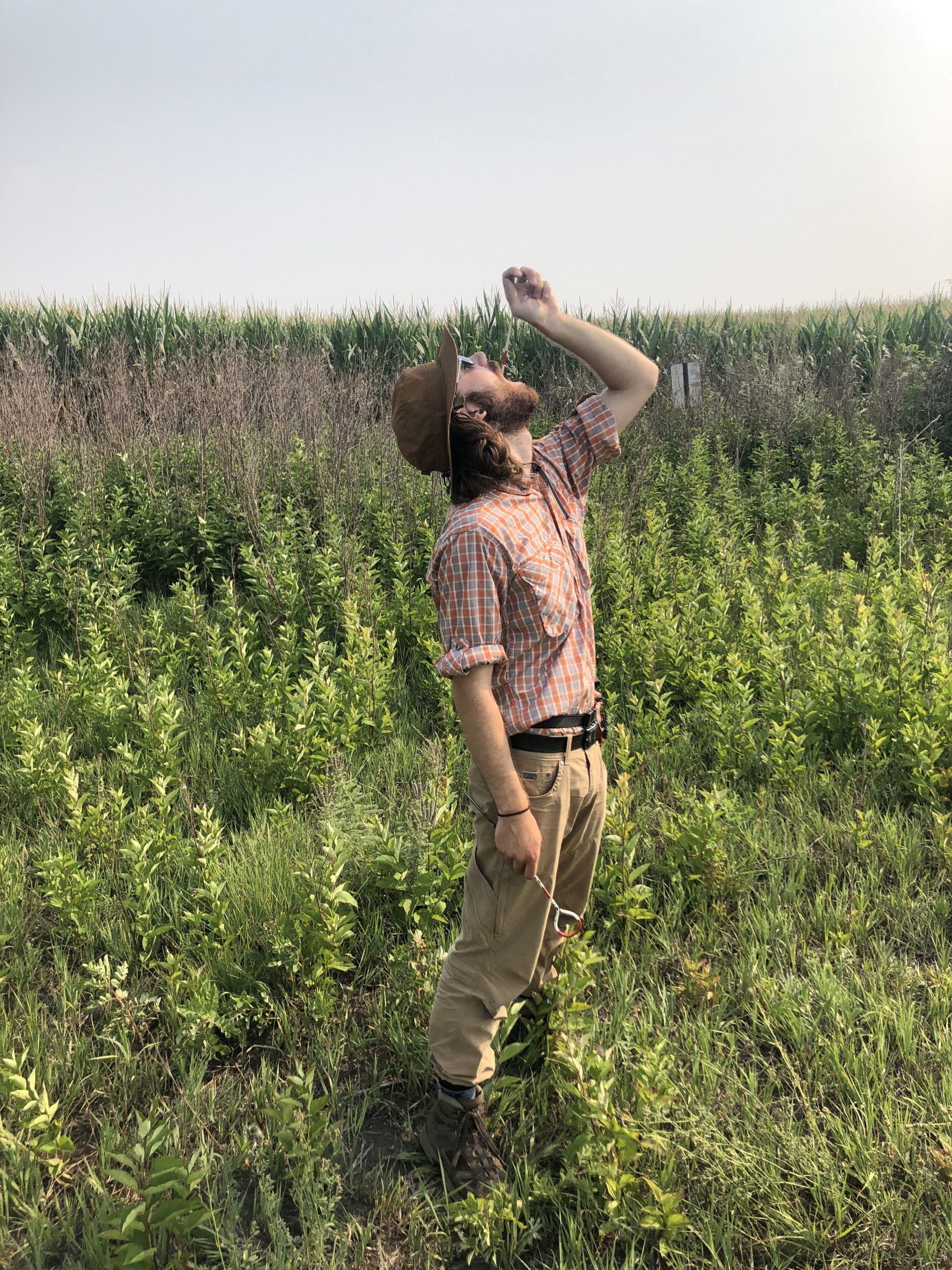
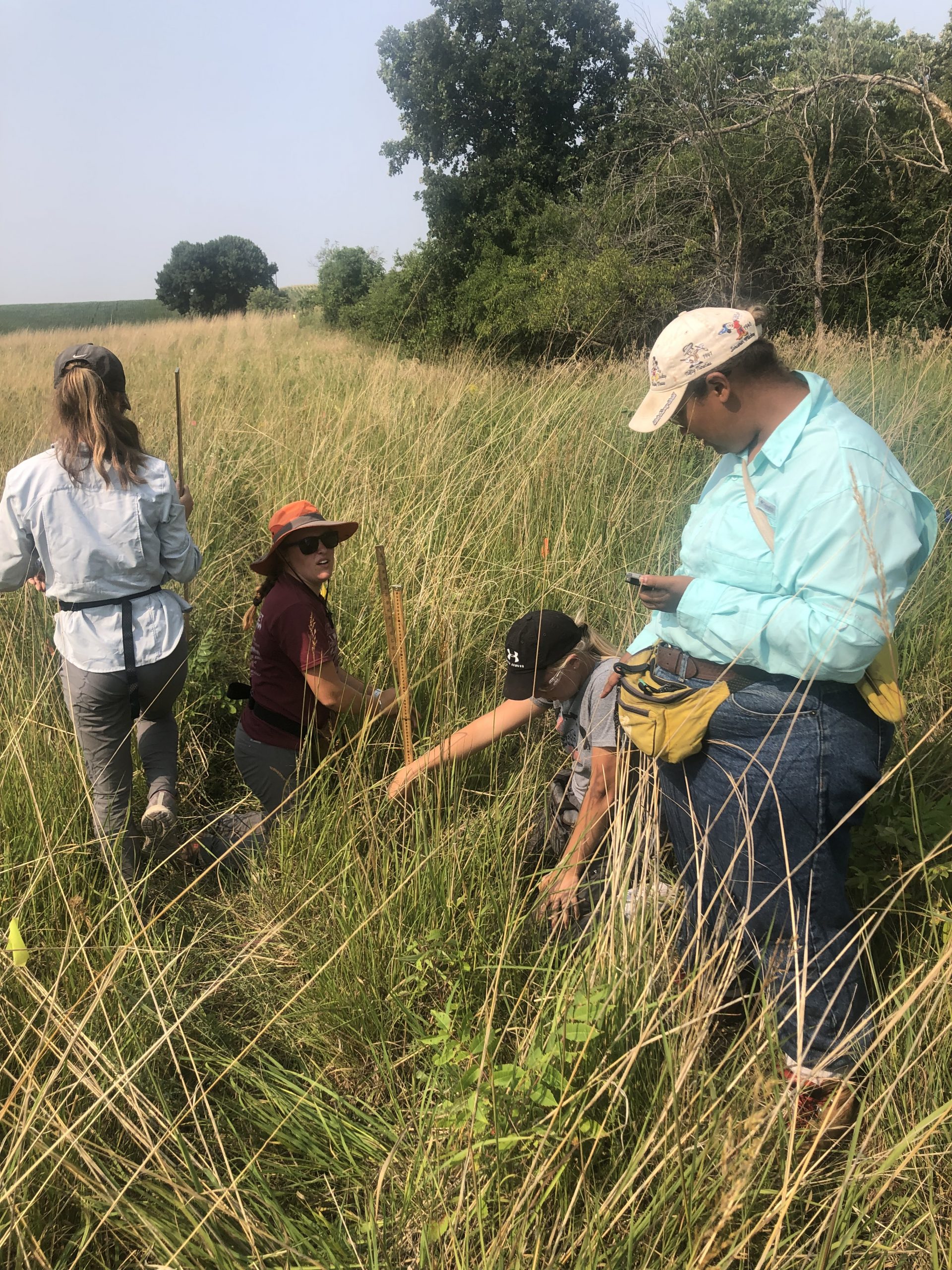
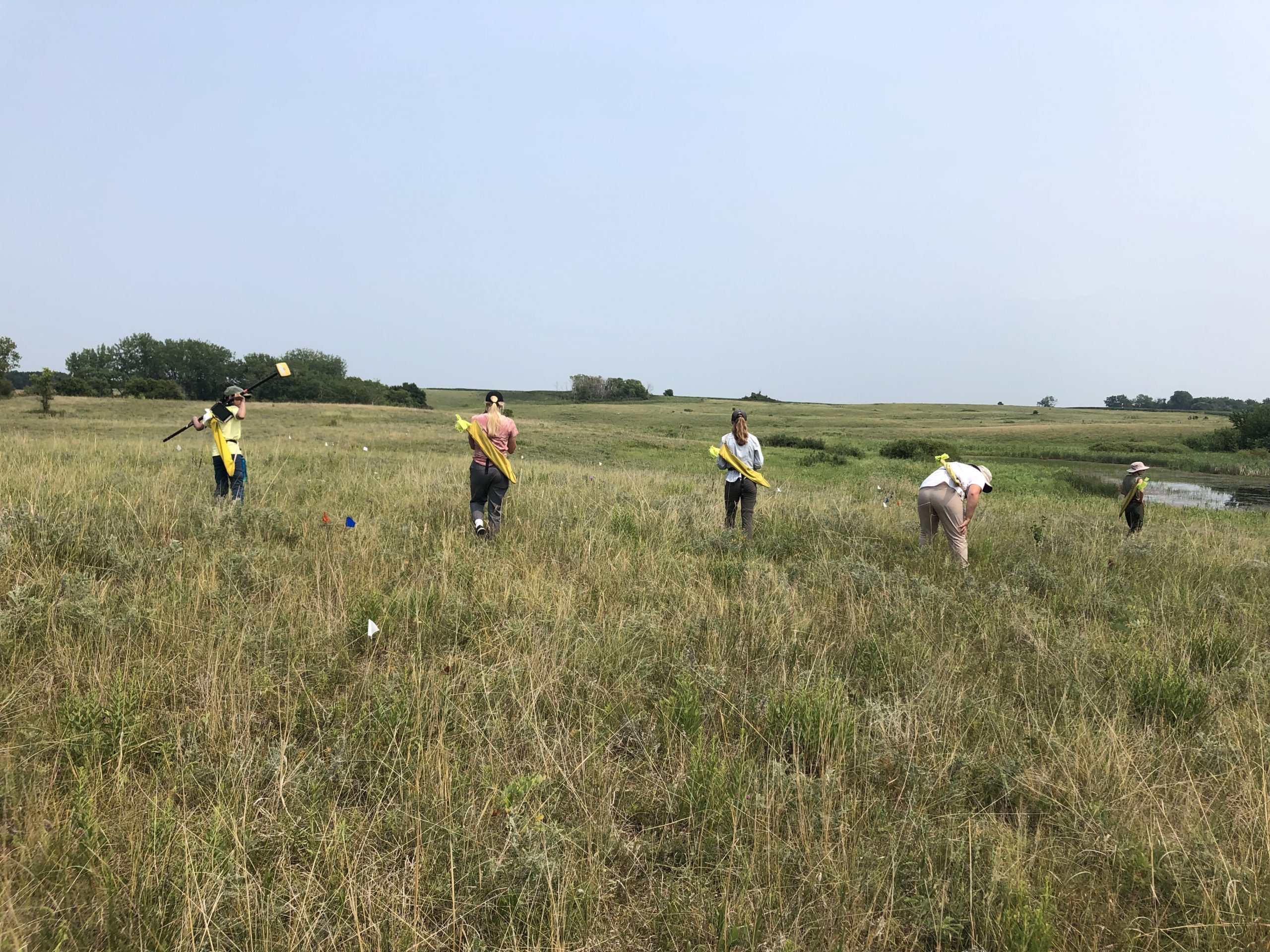
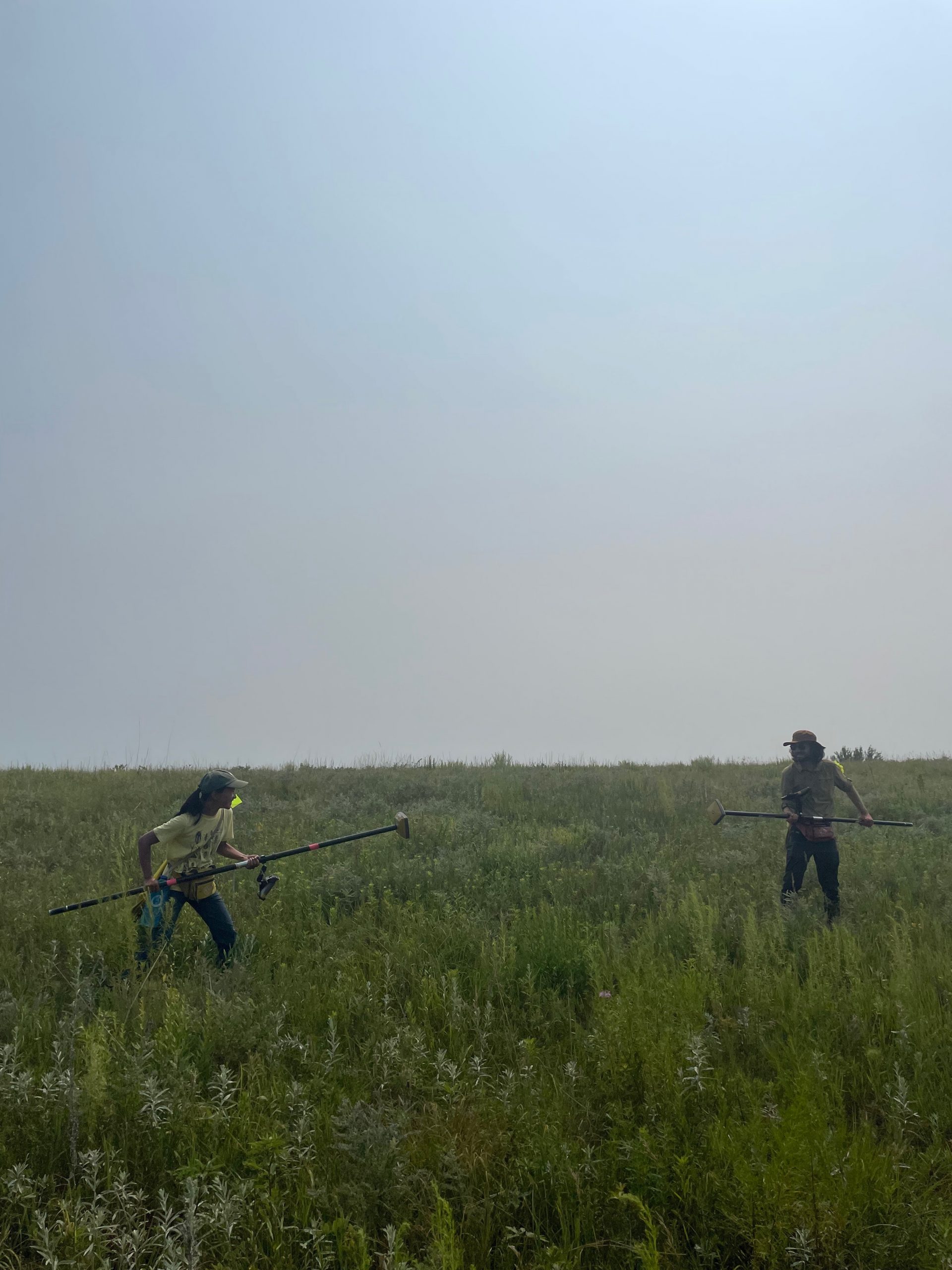
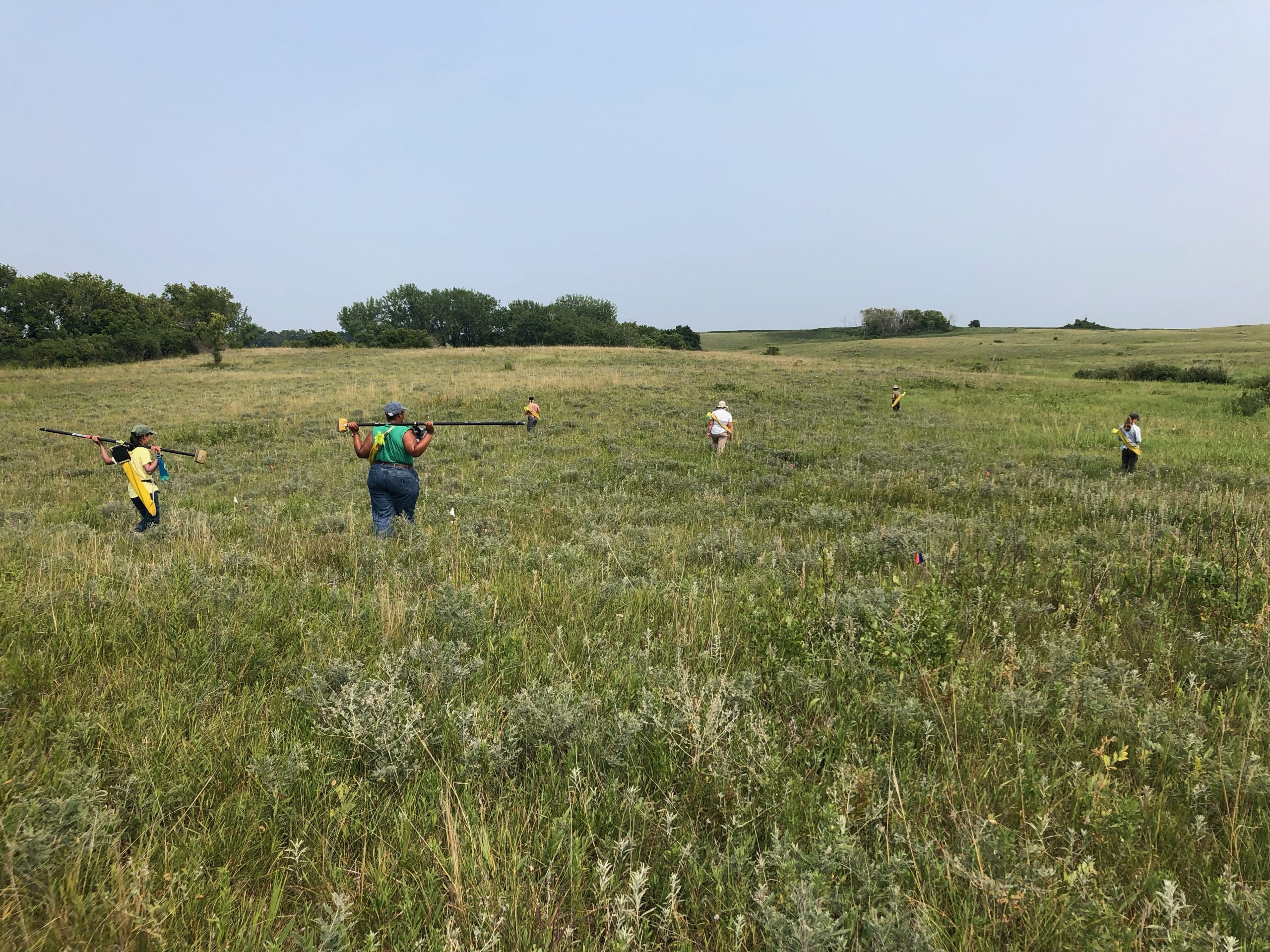
Wesley, doing his best imitation as a sword swallower at the end of the day in P2. Part of the team playing leapfrog as they finish a section of measuring in P1.
After last week’s sweltering hot temperatures and absolutely atrocious air quality, Team Echinacea is finally back in the field at full force (minus Alex, we miss you!)
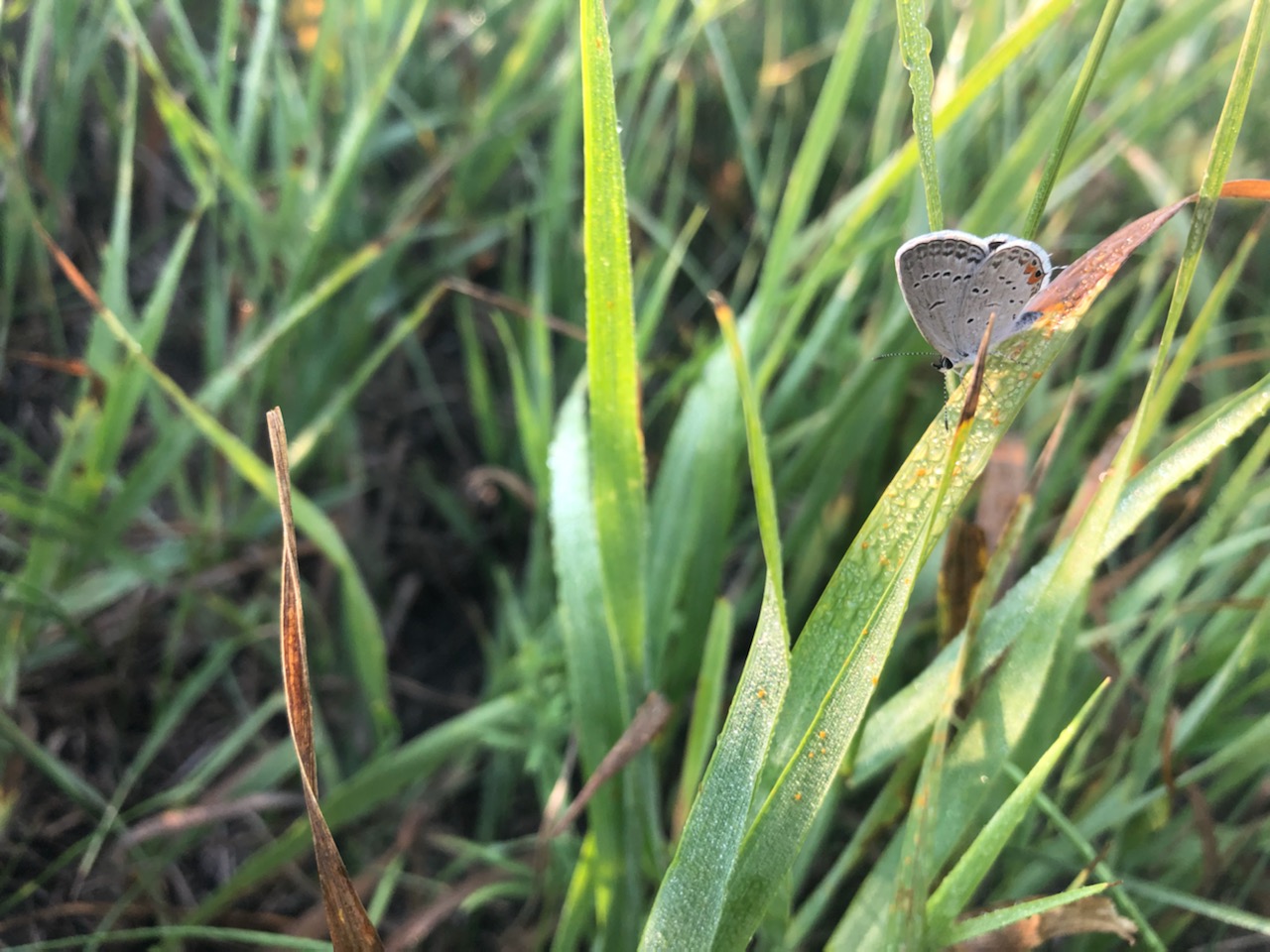
My morning consisted of a quick phenology trip to the few sites left on our Northwest loop. We needed to make the hike out to landfill for the six plants still flowering, but it meant I got to see a plenty of fun butterflies flitting about, and certainly plenty of monarchs. I seem to be seeing more and more of them recently.
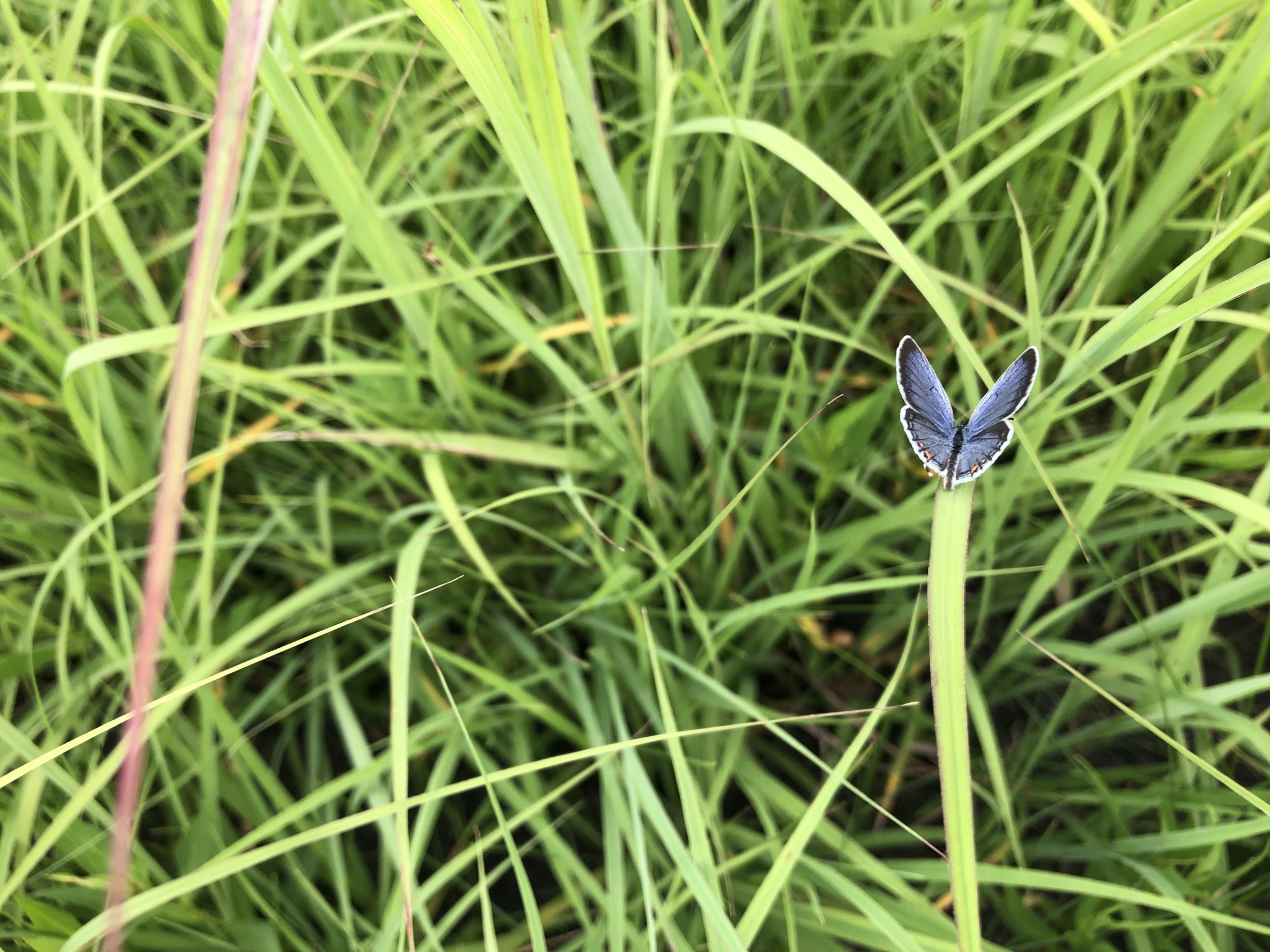
Butterfly at landfill, a tailed-blue, I believe.
After lunch we spent most of the afternoon measuring P2. With 40 rows left, we were hopeful that we’d be able to finish, and let me tell you, we came tantalizingly close. We had to pack up and head back around 4:30 to make sure we finished work on time, but it was truly and agonizing experience to leave just four and a half rows for the next day.
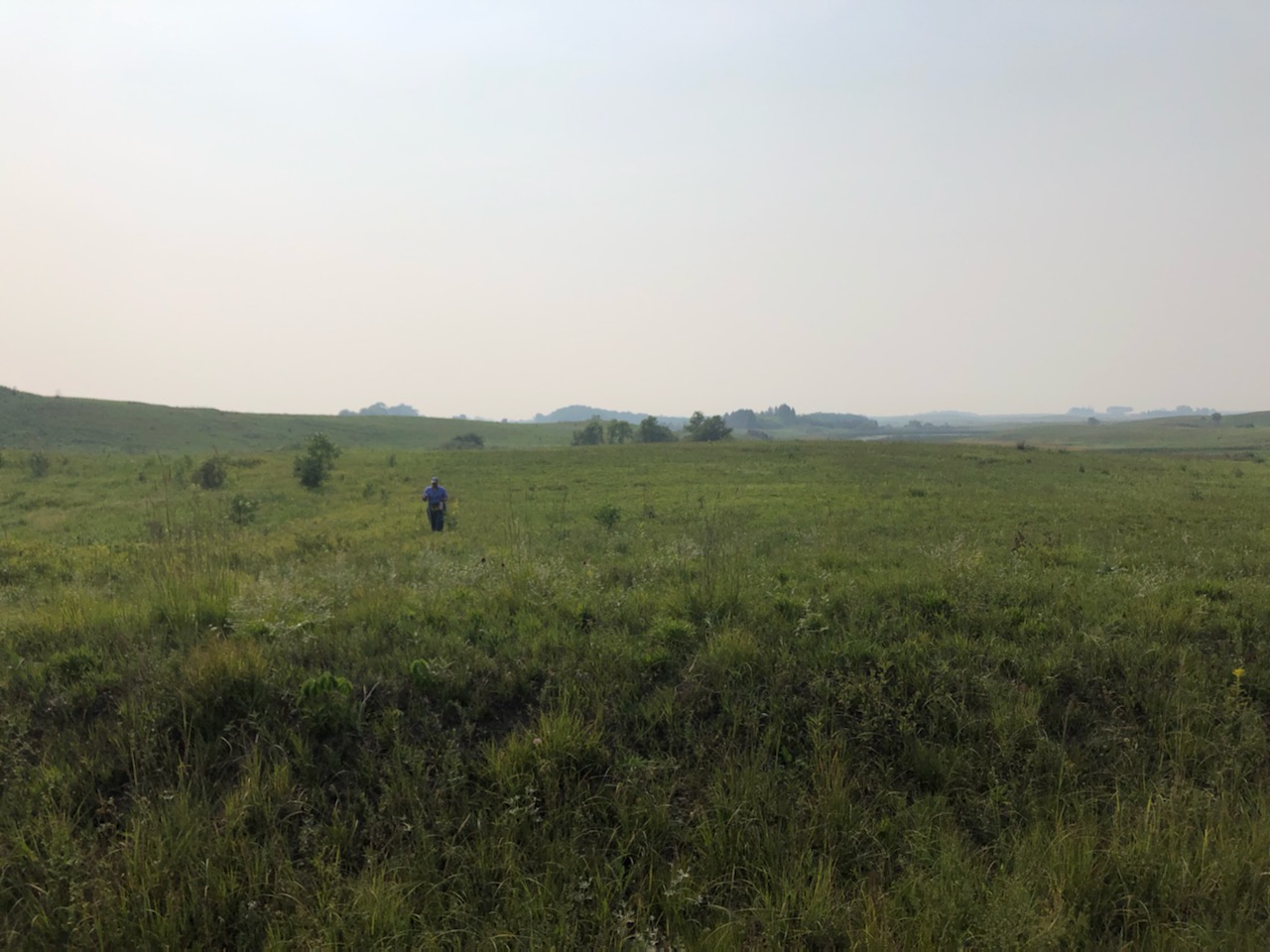
Miyauna walking back from P2. Look at how far that is! So far! And we have to go back! Inconsolably unbelievable. But hey, it sure is pretty.
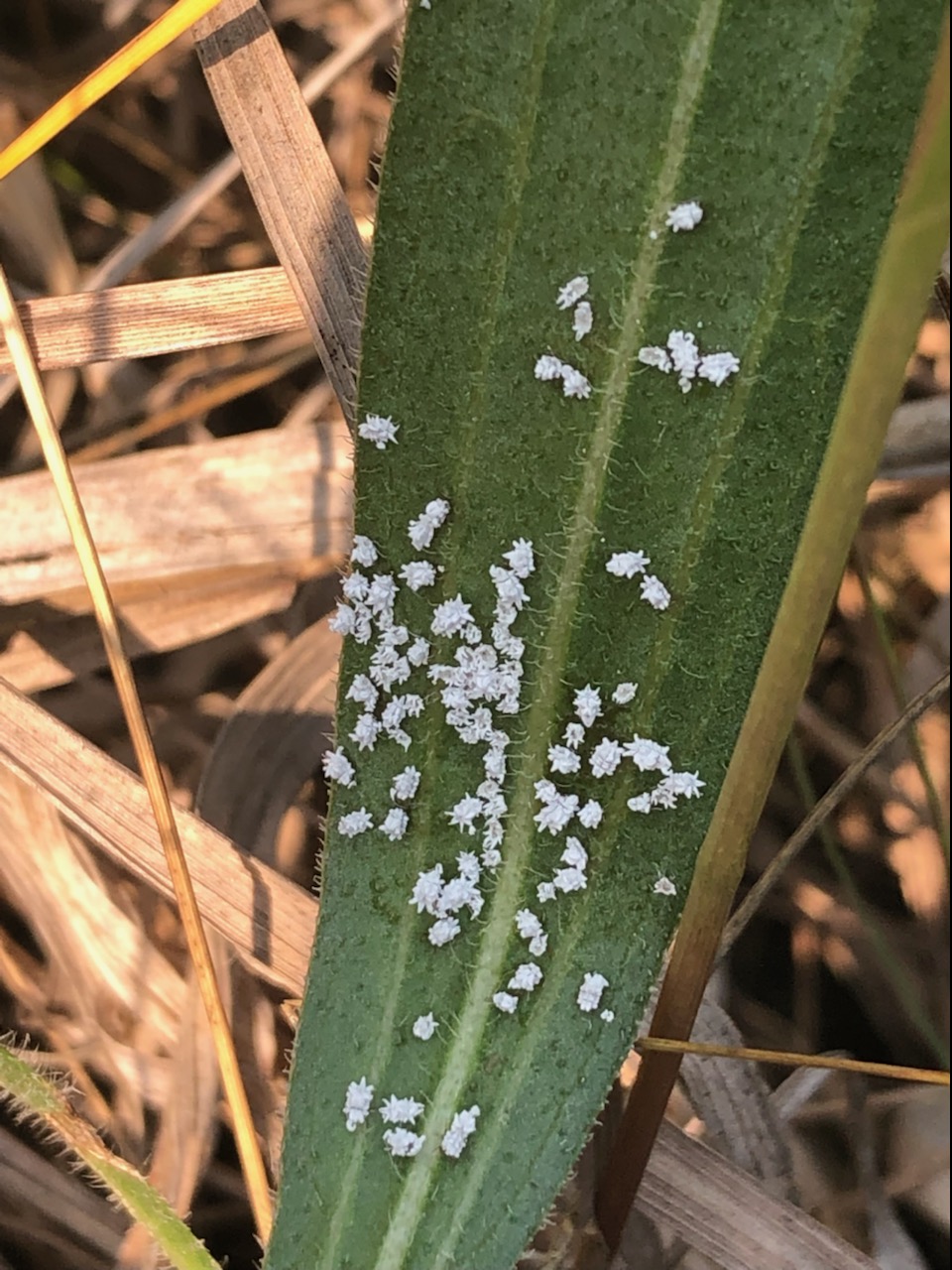
Bonus pic for Monday is whatever these little dudes are. What are they doing on this echinacea leaf? Can you name them? I sure can’t.
The Andes crew has excitedly participated in 2 Ruby’s Pantry food runs this summer. Ruby’s Pantry distributes overstock food throughout the northern Midwest, for a very low price. Occurring once a month, you show up and they give you lots of random food.
When I say “lots” and “random”, I truly mean it.
Here is a non-exhaustive list of what we have received across two times (post not sponsored by any listed companies):
a bouquet of roses
Ritz cracker knockoffs
Little Bites (Banana muffin)
A case of lemon FiberOne bars
Canned potatoes
Canned green chiles
Mashed potatoes
Frozen vegetable bean soup
New potatoes
American cheese
So much bread
Clorox wipes
Large bubble wands, etc.
The latest round of Ruby’s Pantry brought the biggest challenge we have ever faced: 20 pounds of frozen chicken.
It has been one week since we received the chicken, and we have now eaten about 6 pounds of it in various forms. The most recent way it has been prepared was chicken kofta, with chicken samosas in the works for tomorrow.
If you or anyone you know would like some frozen chicken, point them our way, please.
We’re optimistic we can finish the chicken before everyone leaves. Stay tuned for more chicken shenanigans!
Today we started the week off strong by pulling birdsfoot trefoil along Tower Road since it was wet from the rain last night. Reports differ based upon location, but Team Echinacea members were able to deduce that last night there was lightning, thunder, rain, and hail in west central Minnesota. Once we pulled everything we could find, the team split up for phenology. Wesley, Kennedy, Allie, and I were assigned the NorthWest loop, aka landfill and surrounding sites. Allie took the GPS to shoot newly found plants at the smaller sites while the rest of us went to landfill. My favorite part about this morning was that, unlike last Monday, the hill did not smell! Once we finished at landfill, Wesley, Kennedy, and I met up with Allie to finish the remaining sites. Notable stories include Wesley meeting some biting ants and all three of us looking amazing in our blaze orange vests. After phenology we had some extra time before lunch so I was in a group helping John sort flags in g3, the flag bin is looking better every day!
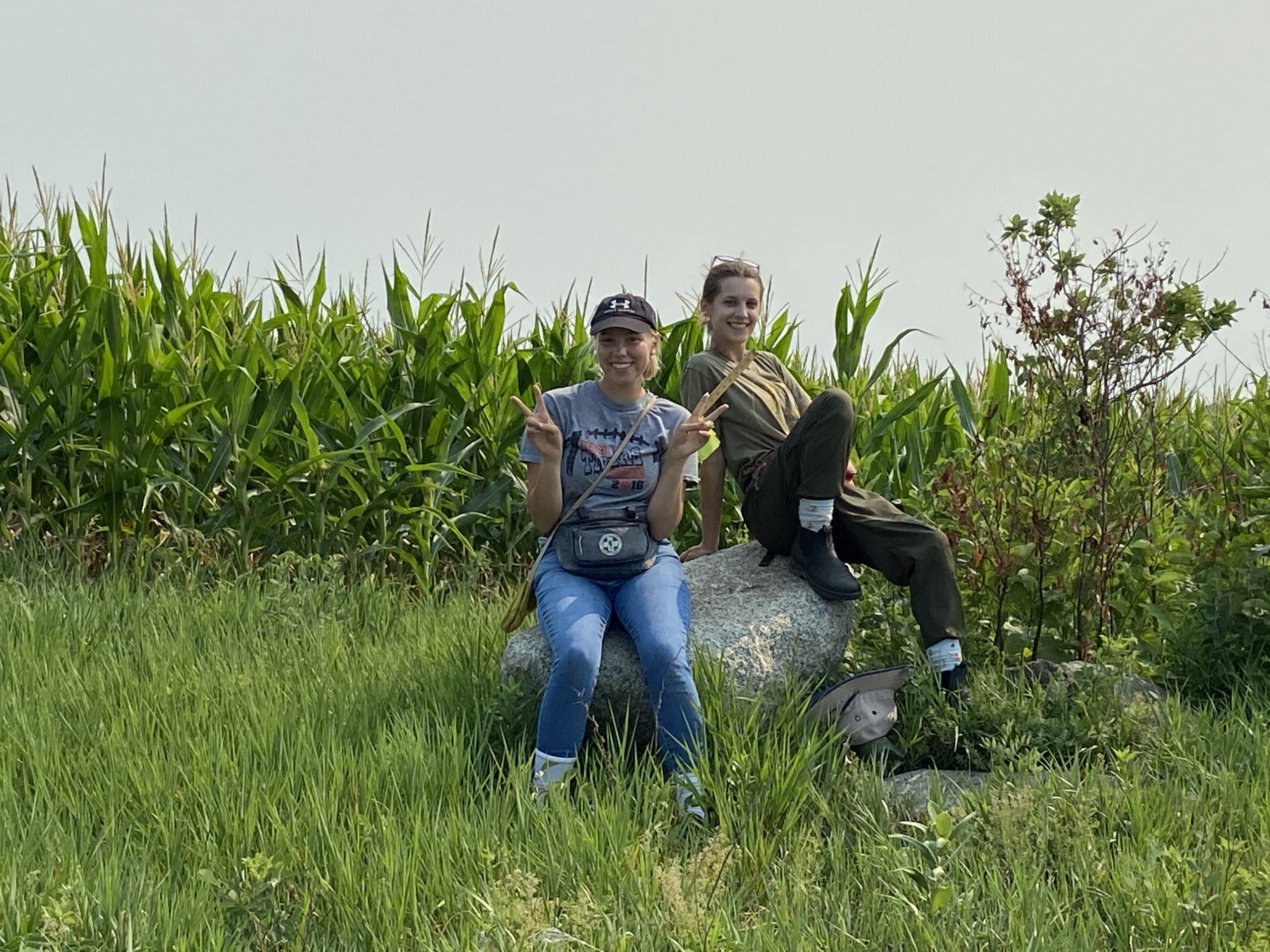
After a quick (yet delicious) lunch the crew headed out to measure P2. We grabbed our visors, flags, candy canes, and measuring sticks and tapes. Once we got to the field we ran the measuring tape down the field and got to work. Allie and I were partners and managed not to fall into any holes while working, but unfortunately I learned the lesson that if I yell at the visor when it doesn’t work, it will not listen to me. Once I talked to it nicely, it seemed to work fine. As we worked down the field, we would move the measuring tape with us. This involved everyone ducking while three or four people would lift it. It made life more interesting when none of us were allowed to stand up for ten seconds! While packing up supplies, Laura and Maris perched on their rock and managed to produce music from a piece of grass, allowing us to relax after a hot afternoon.
The members of our orchestra serenaded us with their musical grassMoving the measuring tape (without decapitating any plants or people)
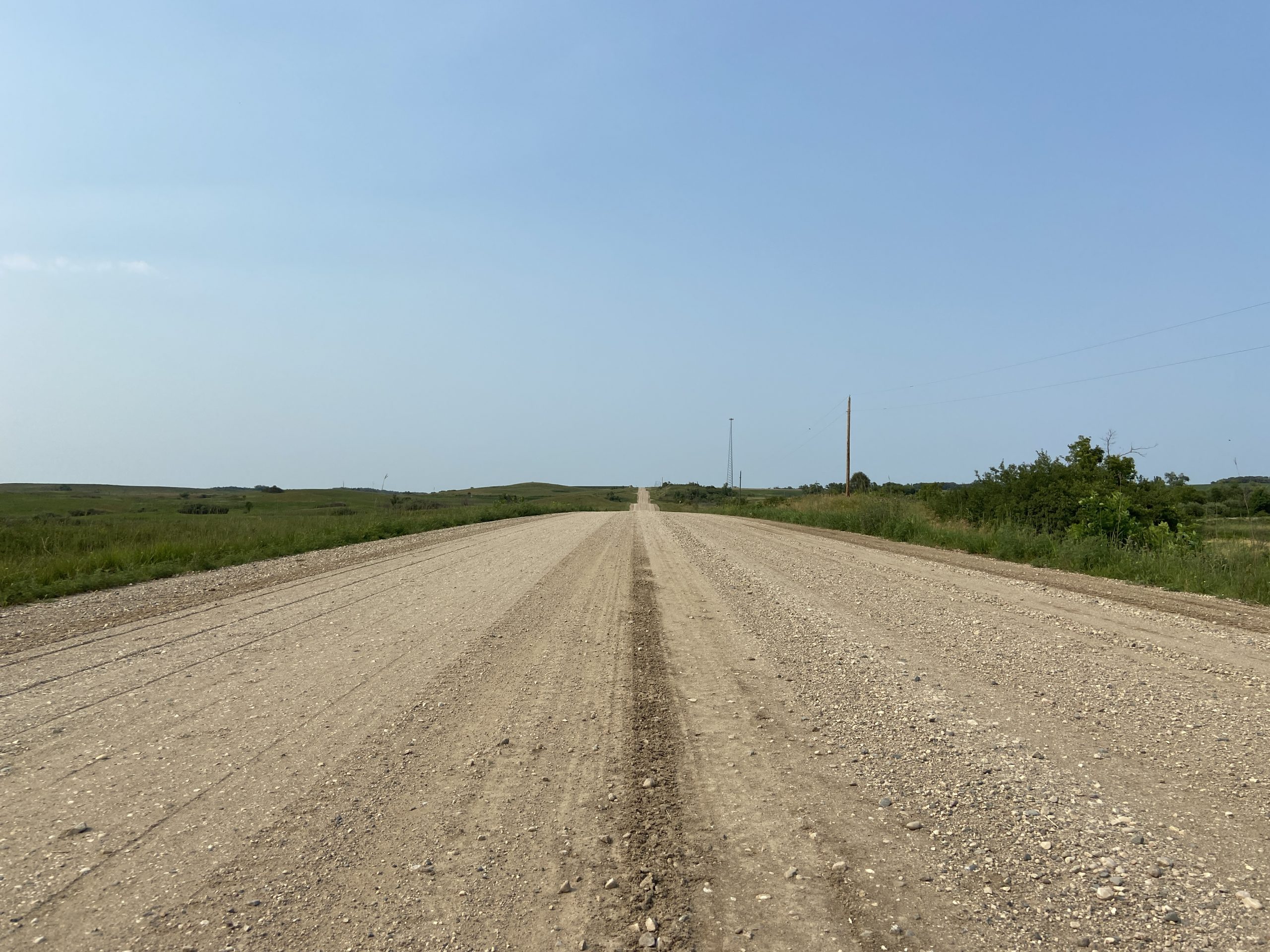
To add to the excitement of the day, today the P2 crew got to see the road grader drive by and make the road look nice for us. Please enjoy the above picture of the view of the road!
In order to minimize the amount of cars parking on the side of roads and driving, we filled two cars with people. This meant that one person would be riding in the middle of the backseat of Mia’s car. This also meant that Mia would get to look at this person’s face every time she looked in the rearview mirror. On the way out this person was Wesley, meaning it was not a rearview mirror, but instead, as Wesley liked to call it, a “Wesley-view mirror.” On the way back I ended up in the middle seat, and Mia made it clear as to whose face she liked to look at more (mine), and who had the best face in the backseat (me). The rest of the car ride consisted of talking about food and rocking out to Taylor Swift, as well as admiring the view of Minnesota’s fields. We finished out our day by doing our chores and waving goodbye to everyone!
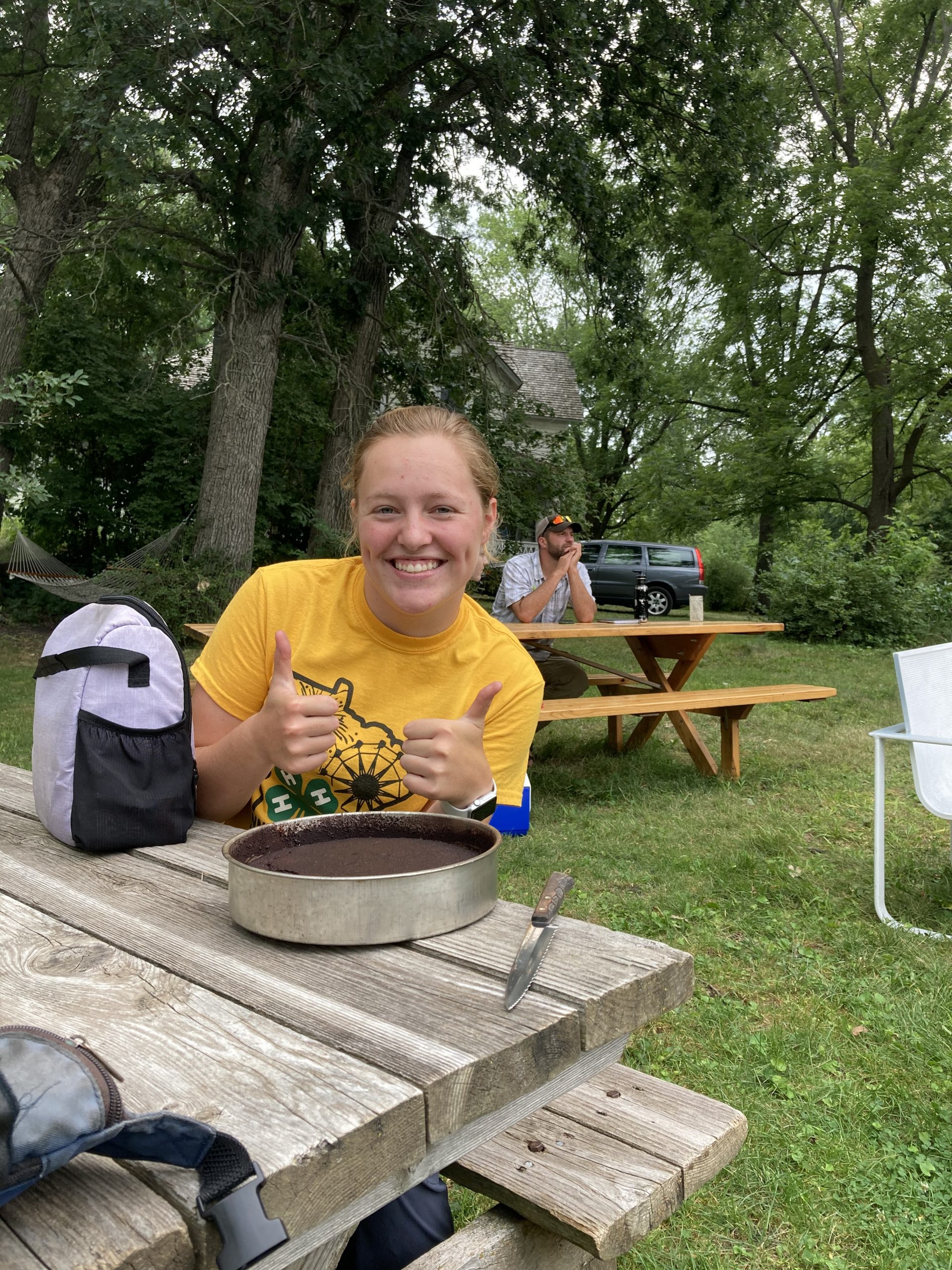
Today the crew started out the day like all MWF’s with phenology, phenology has droped down to only 822 flowering heads so the crew swiftly crushed all of the phenology routes. At lunch we celebrated Kennedy’s birthday that was on Wednesday, Happy birthday Kennedy!
After lunch the crew split up to do various tasks including rechecks in the hybrid plots, finishing measuring experimental plot 6, and completing a through search for aphids in experimental plot 1. The team has done an amazing job at expediently finishing measuring every plot I throw at them. Next week we will start measuring experimental plot 2 which should be fun! Since it burned they plants will be easy to see. Overall it was a good hot July day!
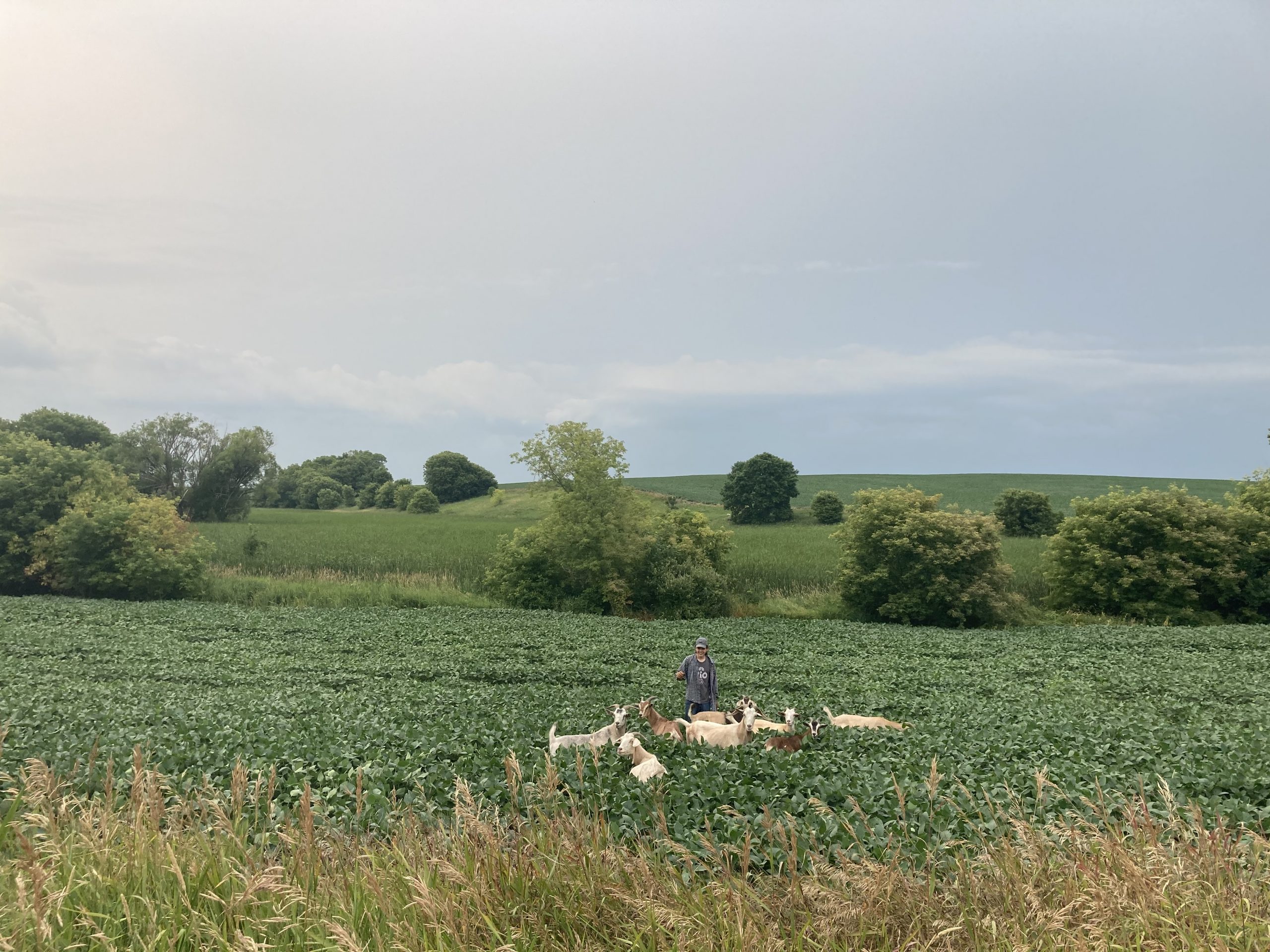
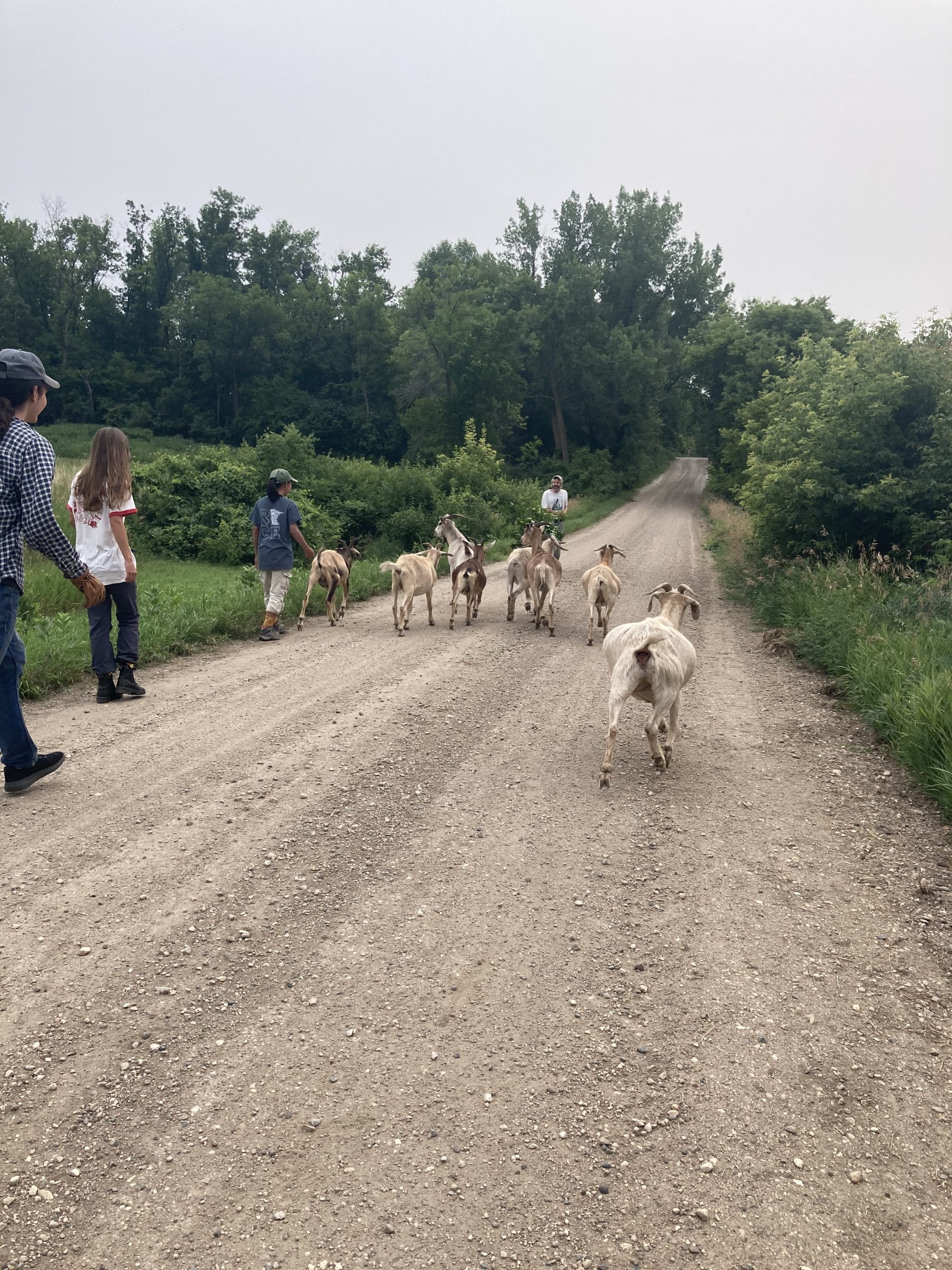
Now I want to rewind back to Monday, also another hot and humid July day. It was a little after 5 I was walking to my car. I look North on Tower Rd and I see a few goats. It took me a few seconds to realize that seeing goats on Tower Rd was not a usual occurrence, did I mention that it was a hot and humid July day. Once I registered the goats, I jumped into action and ran back and told the crew that the goats had escaped. Stuart and Miyauna were in a zoom meeting and could not join us in our chase. But Peter cut a large branch of buckthorn to use as a lure, and a heard of Team Echinacea went running down tower. As we got to the bottom of the hill we started to look around wondering where the goats were and we looked to the west of the road and we saw a 6 goats happily munching away at soy bean plants. Peter decided that we need to take both a carrot and a stick approach, so he ran in front of the goats and the rest of us ran behind the heard of goats chasing them. We ran the goats back up to the driveway and down towards the pastures. Along the way the goats ran behind Miyauna who was still on her zoom call with the National Geographic Society. Reports are that the goats were in full view of the call and stopped right in frame to pose for the camera. Once the goats were fully returned to the pen, we assessed what happened and it turned out that they had run out of water and thrown a prison break. So for future note when it is 90 degrees its important to make sure that the goats don’t run out water, and to always record zoom calls cause you never know when a heard of goats will go running by with a heard of Team Echinacea members.
Just as any normal day starts at team echinacea most of the team headed to p2 to do some more phenology!!!! As always we accomplished quite a bit! The crew worked fast and got it done just in time for lunch!
The Sun Rays!
Working Hard!
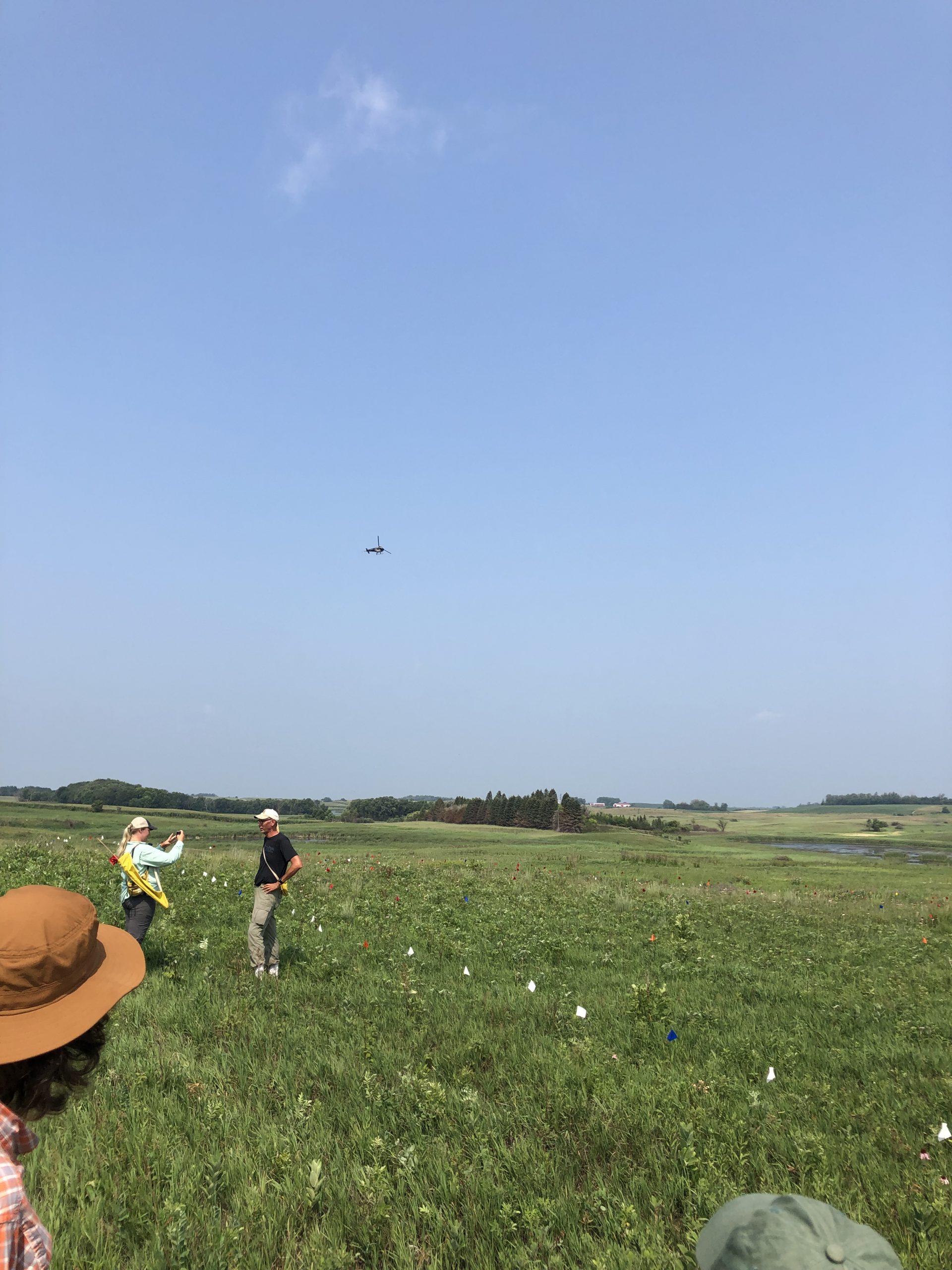
John being recorded and a helicopter in the sky.
We ate and chatted a little bit about everything as usual! After lunch we split up and headed to p8 and continued measuring the rest of the field. My group and I forgot to fill out one of the largest row we had in our visor and the rest of the team thought there was just one big long row to do, but luckily we surprised them saying we finished it all!!! Kinda cool I know!
Finished measuring p8!
After we headed back Stuart got root beer floats ready and we all cooled off after a long but another successful day of research!
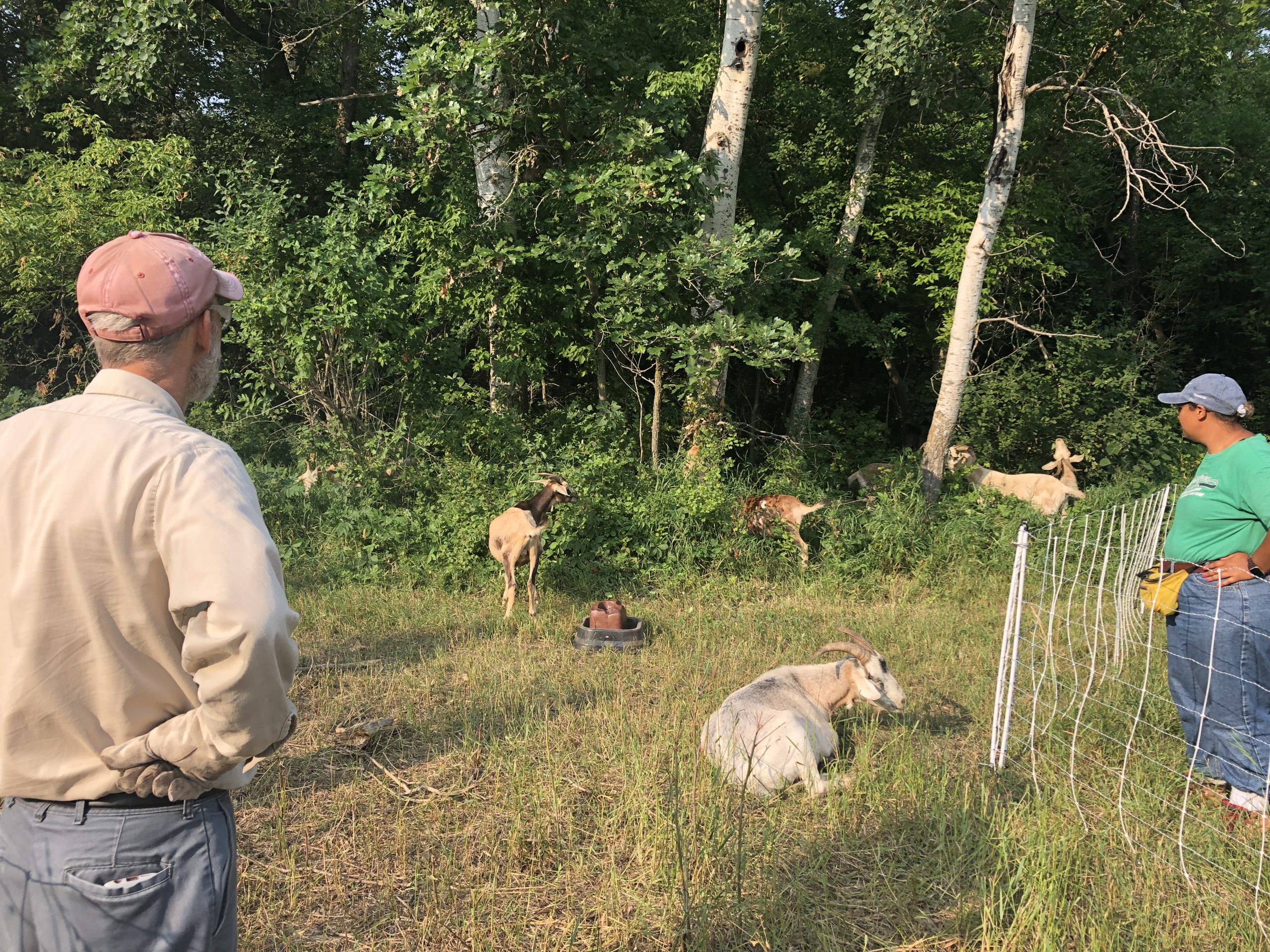
Stuart and Miyauna look at goats, as one does. In two weeks or less, most of the undergrowth here will be gone
Team Echinacea started off Tuesday right, moving Stuart’s goats to a new paddock. They’re now closer to the field house than they have been, and will hopefully clear most of the understory in this wooded area, allowing Stuart to better manage the area and seed more native plants.
A bunch of folks then went and did phenology in some of the experimental plots, which didn’t take too long, meaning we found a variety of other tasks to complete before lunch. For me, that meant trimming sumac in p1 and collecting some native sedge seeds for us to spread later.
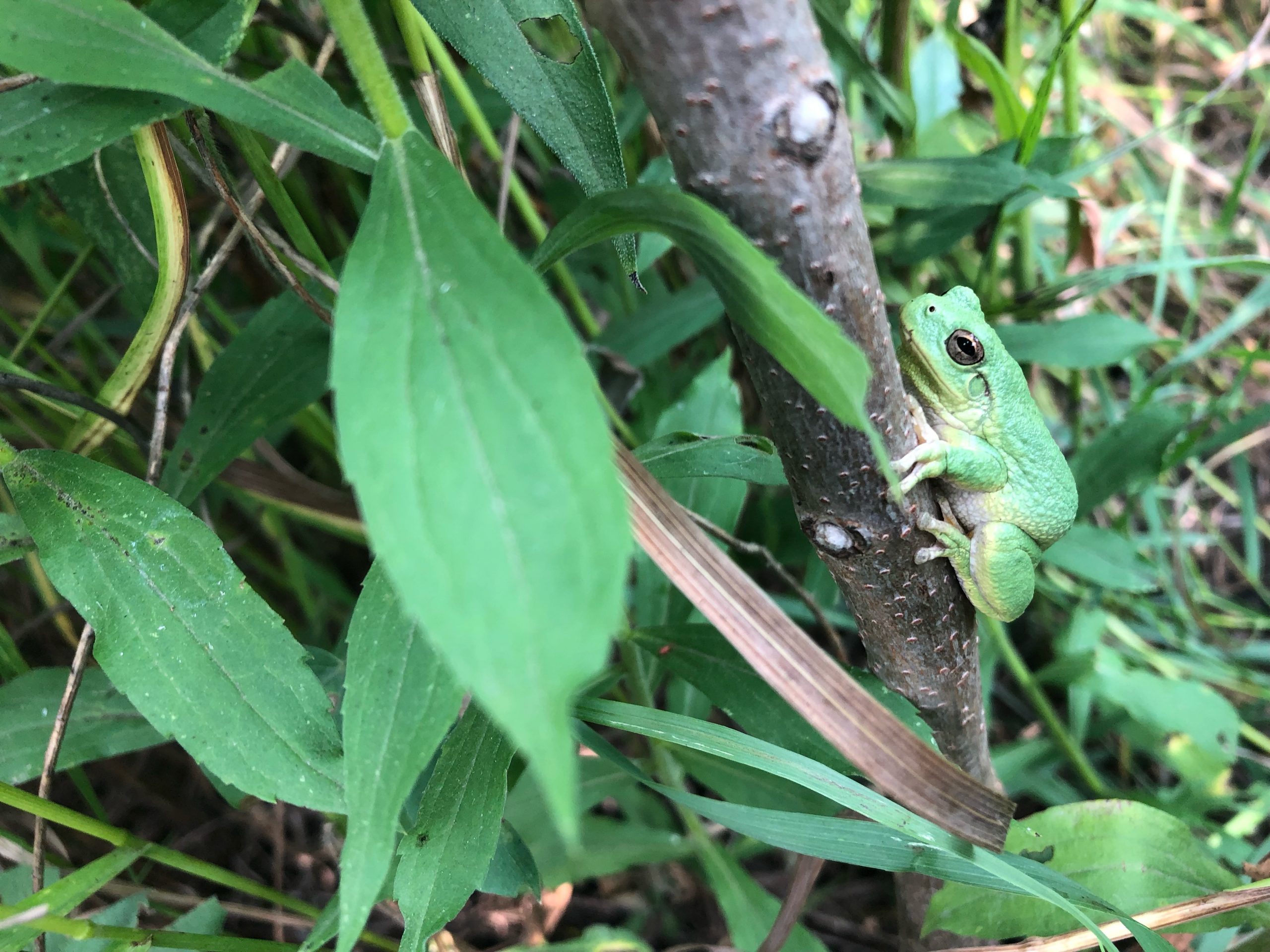
Frog in the sumac!
After lunch, a group of us headed to Staffanson Prairie Preserve to do flowering demography for the first time this year. We found around 60 flowering echinacea plants in our transect, but there could be thousands throughout the entire preserve. That was the highlight of my day, because Staffanson is so darn cool with so many different plants and animal life. We even got to see some regal fritillaries, a rarer butterfly that likes to call Staffanson home. They’re very quick though and none of them landed near me, so I unfortunately didn’t get a photograph this time around.
The team searches for echinacea at Staffanson Prairie Preserve
And some bonus photos:
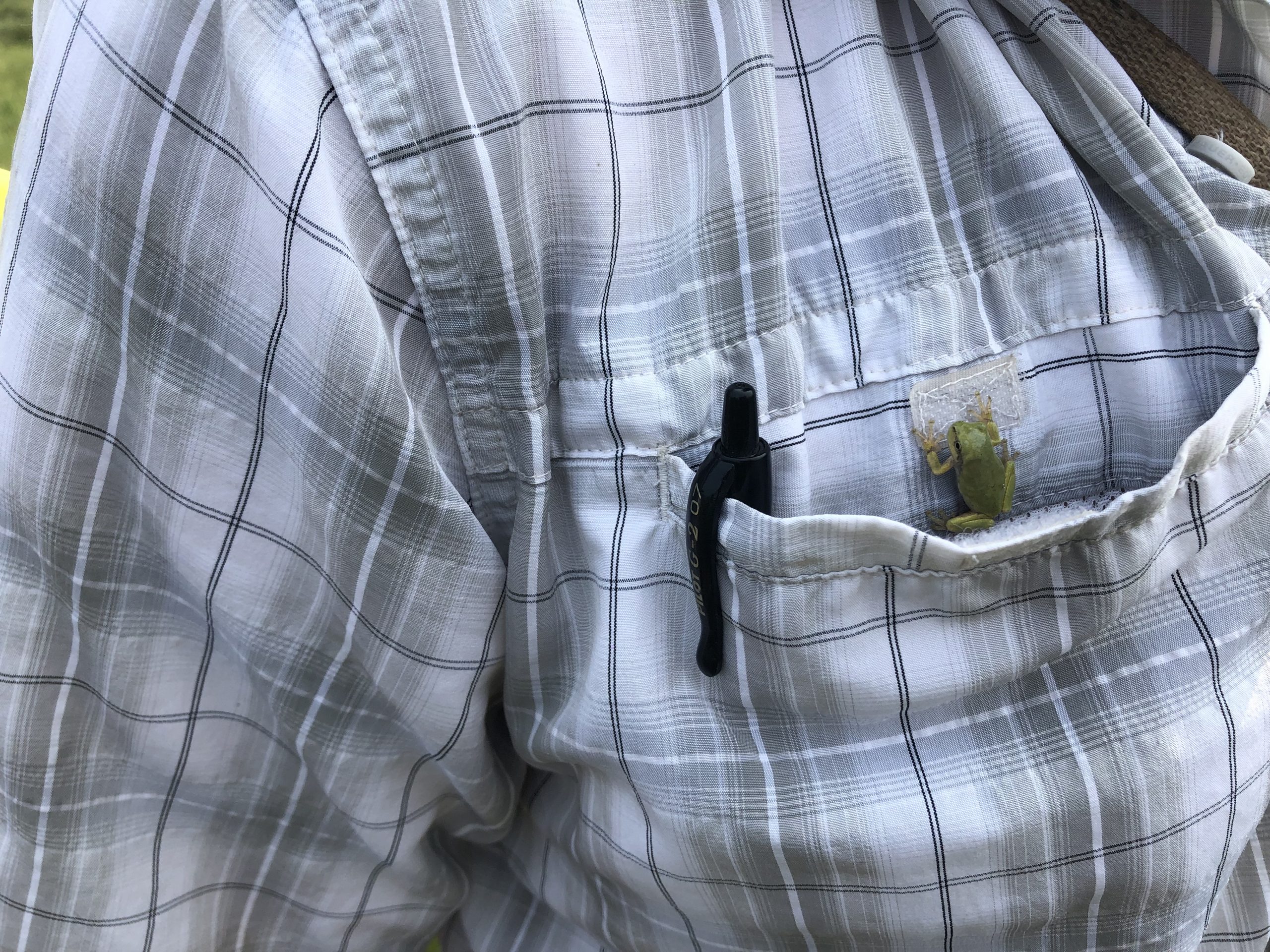
Flowering skeleton weedAllie and I settle our differencesPocket frog!Staffanson squadNot from today, but a tailed-blue butterfly at Hegg Lake. So pretty
Monday morning we started out by doing our phenology routes, I was in the northwest/landfill group with Wesley and Allie. Unfortunately, the wind was blowing in the wrong direction and it made for a stinky morning at landfill! The morning was the fastest morning of phenology yet, we were all back and finished well before lunch. The reason it was so fast was because so many plants were done flowering so we didn’t have to check them. Last Friday we did independent estimates of how many heads we thought were going to be excluded from our routes as of Monday morning. Alex won with an estimate of 521, only 2 off from the correct answer of 519 heads!
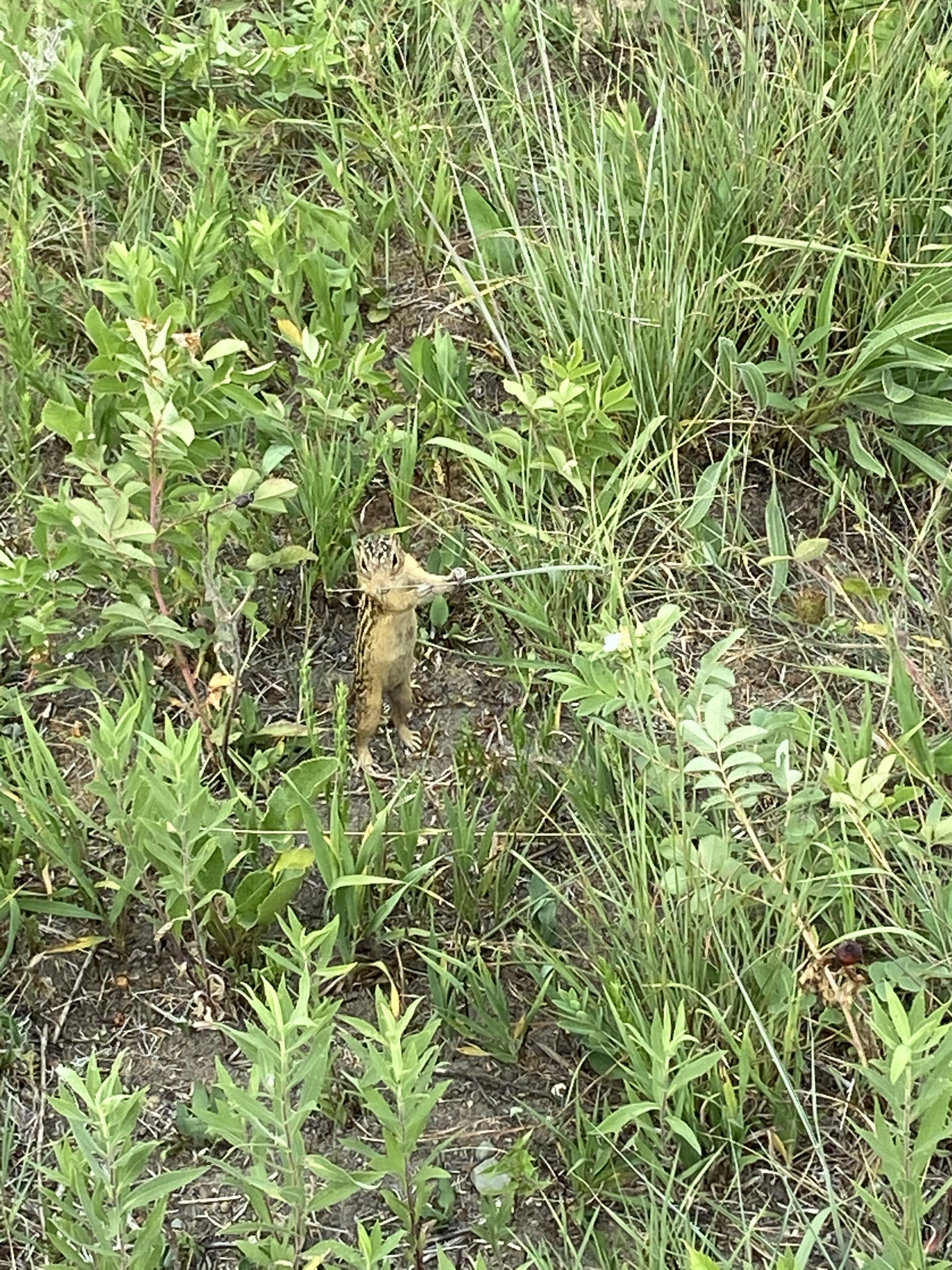
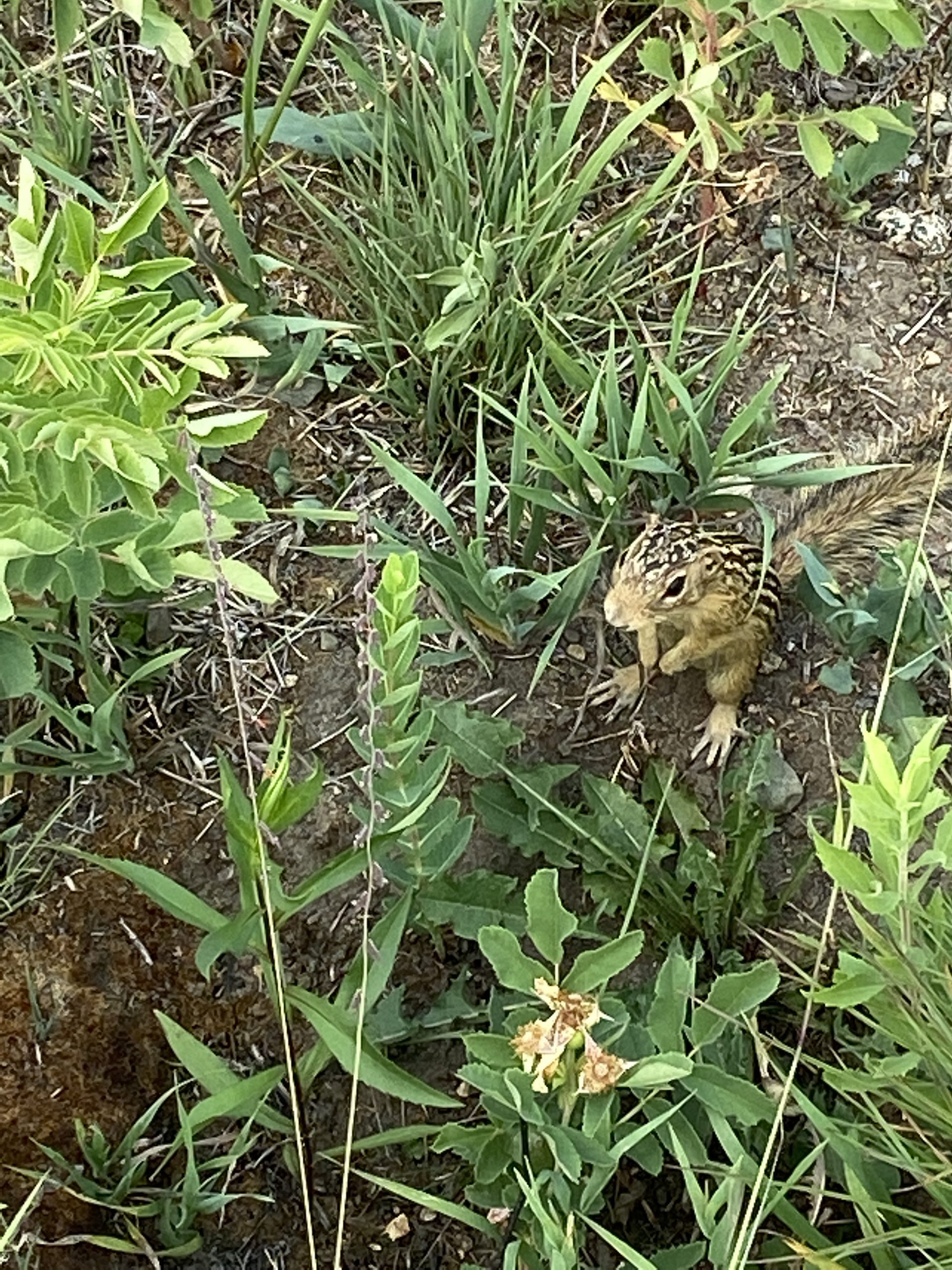
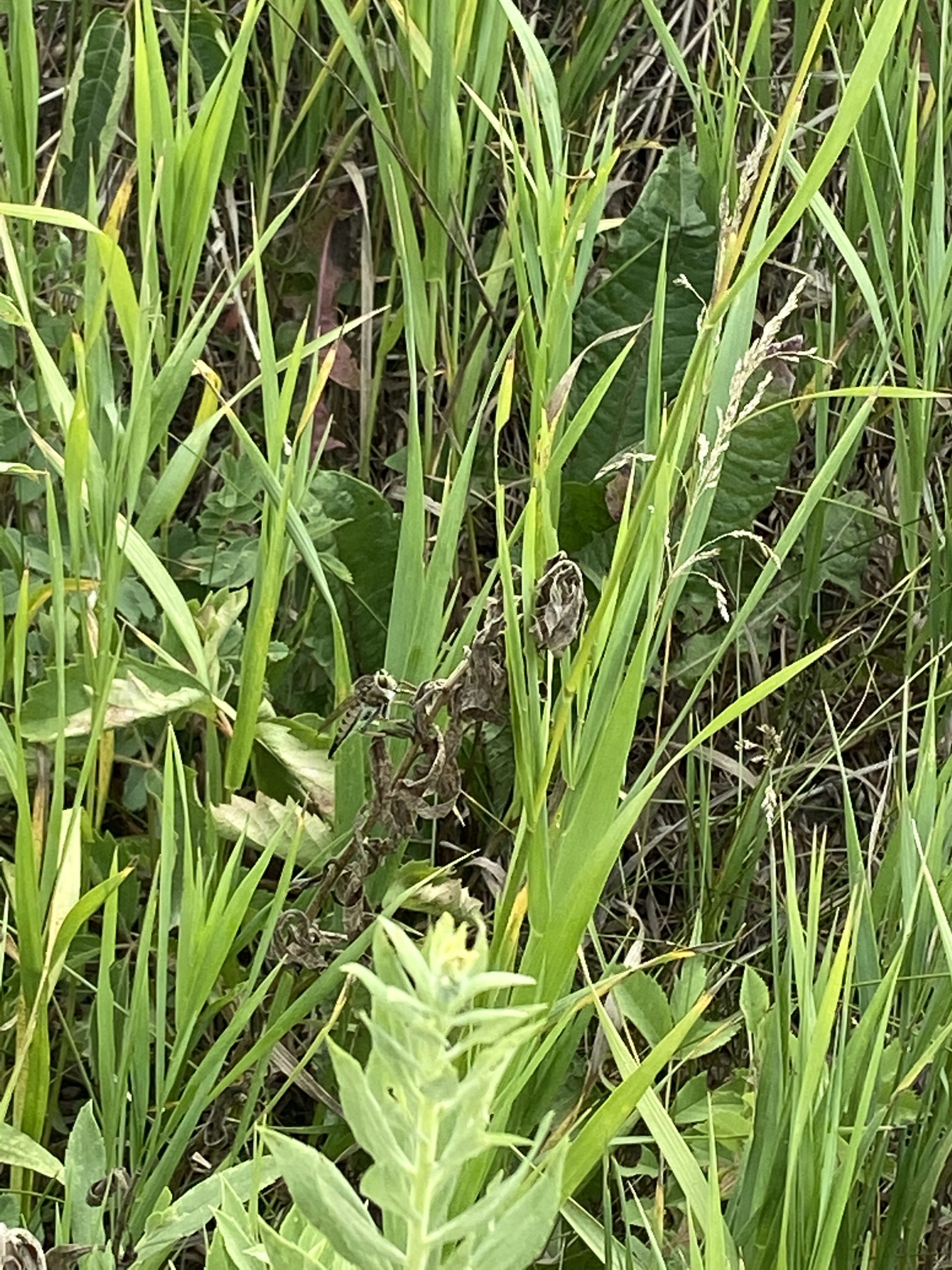
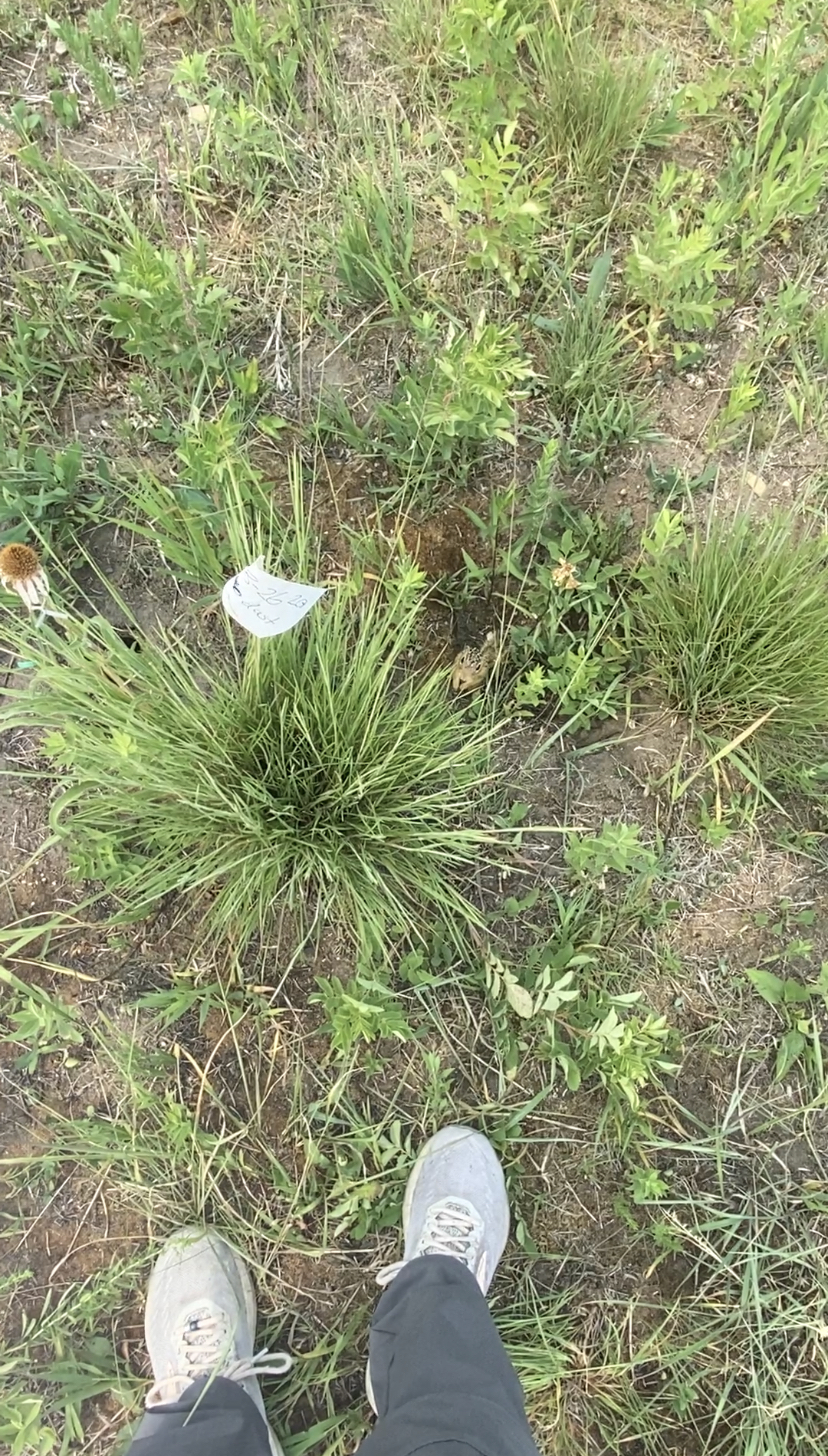
Our afternoon consisted of working on independent projects. For me, this meant heading out with Kennedy to P2 to asses style persistence and dust more echinacea for Team Dust. While we were there we saw lots of different critters, ranging from a robber fly (if you haven’t seen one, just know that you don’t want this fly to bite you) to a gopher. The gopher didn’t seem to notice that we were there, it came right up to us! As a future gopher, I was very excited to see my mascot in the field.
Since there was still more time in the afternoon, we went back to Hjelm to see what we could help with. I went out with Wesley to search for liatris in remnants for his independent project assessing liatris and butterflies in the remnants. Some sites didn’t seem to have any, but others were promising! At the end of the day Wesley and I helped Allie with the aphid project and we searched for aphids and looked at different echinacea plants in P1. While we were successful in finishing assessing all of plants, none of us found any aphids. Once we did our chores, we were able to head out for the day and get ready for Tuesday!
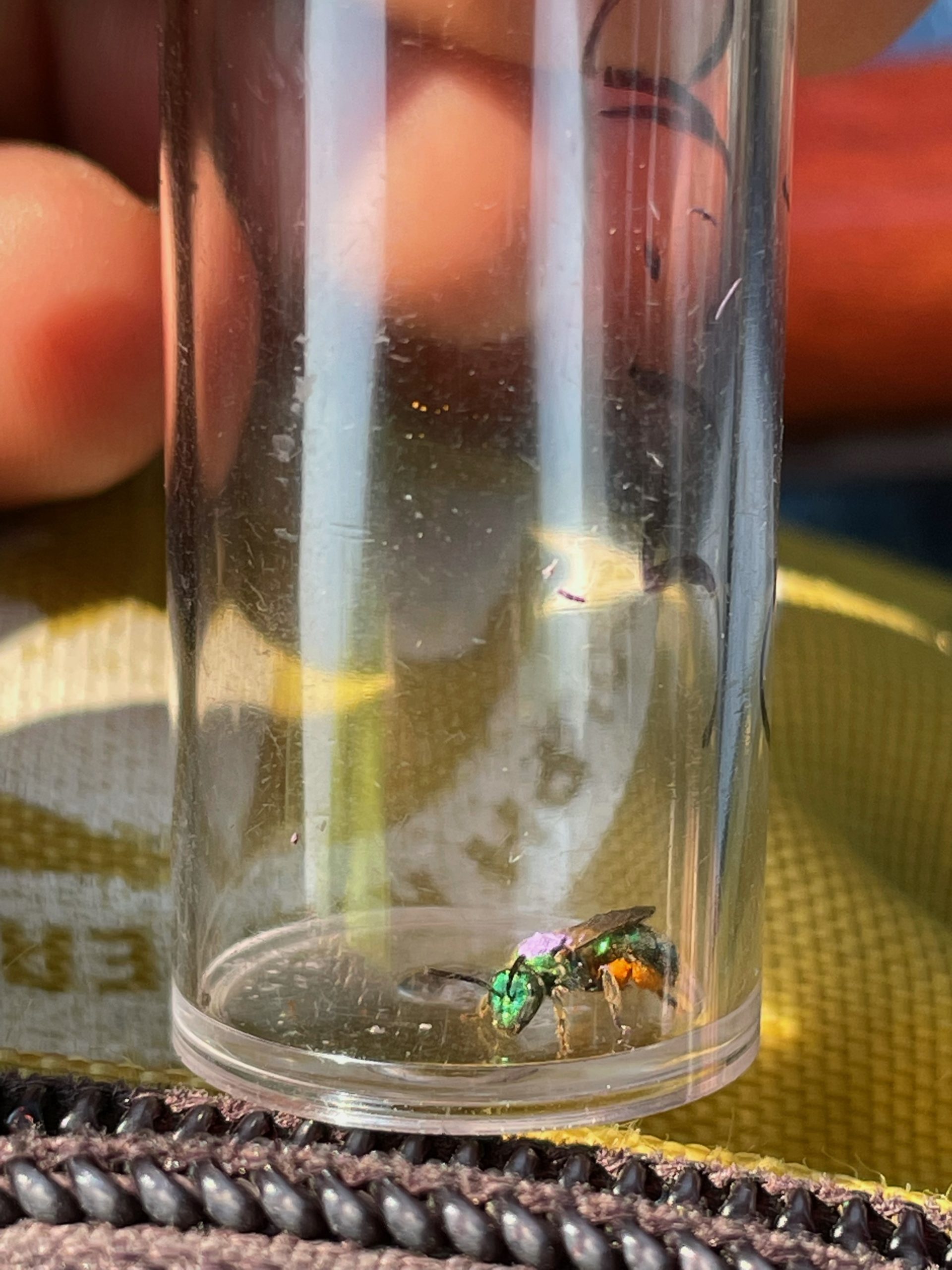
This morning, Miyauna and I set out to visit some of the remnants in search of bees. We started our search at Woodys, and all of our good bee thoughts must have paid off because we found many bees foraging on the purple prairie clover scattered throughout the remnant. Here we ran some tests for the bee abundance portion of the insect project, namely testing out the methods for Miyauna’s mark and recapture study. We caught three Augochlorella auratas and one Halictus, set them in the cooler, and waited patiently for them to fall asleep. When they were asleep we were able to mark their backs with dabs of paint, which ideally would serve as indicators of previous captures. We soon discovered that the paint we used wasn’t ideal for the job, as the first bee we painted had no problem peeling the paint off of her thorax upon waking. We’re hoping a quicker drying paint may solve this problem. Fingers crossed!
Augochlorella with her purple painted backpack (before she scraped it off)
We had some time to spare, so we checked out some other remnants to catch bees for my pollinator fidelity project. North railroad crossing and northwest landfill both yielded no bees, but we were able to catch one at golf course! As Echinacea progresses beyond peak flowering, bee sightings on heads are becoming increasingly rare.
During lunch we heard great presentations from both Amy, who discussed her plant isolation project, and Jared, who gave some summary statistics from the 361 hours the team has spent taking phenology data. Afterwords the team headed over to p7 and p9 to do some measuring of Echinacea angustifolia and Echinacea pallida hybrids. With such a great view of the lake, I didn’t even mind the heat!
We started out the morning doing phenology out in the remnants. For the first time this year, we got done in record time and finished before lunch!
Doing phenology at Aanenson with JVK and Miyauna
During lunch we had an update from Alex about her independent project and Lea practiced her talk for ESA. They were both fantastic!
After lunch the team scattered to work on different projects.
A group of us went out to Hegg Lake to do phenology in experimental plots 7 and 9 and to shoot survey points for the Echinacea pallida we decapitated.
Beetle spotted by Miyauna, eating turtle intestine 🙁
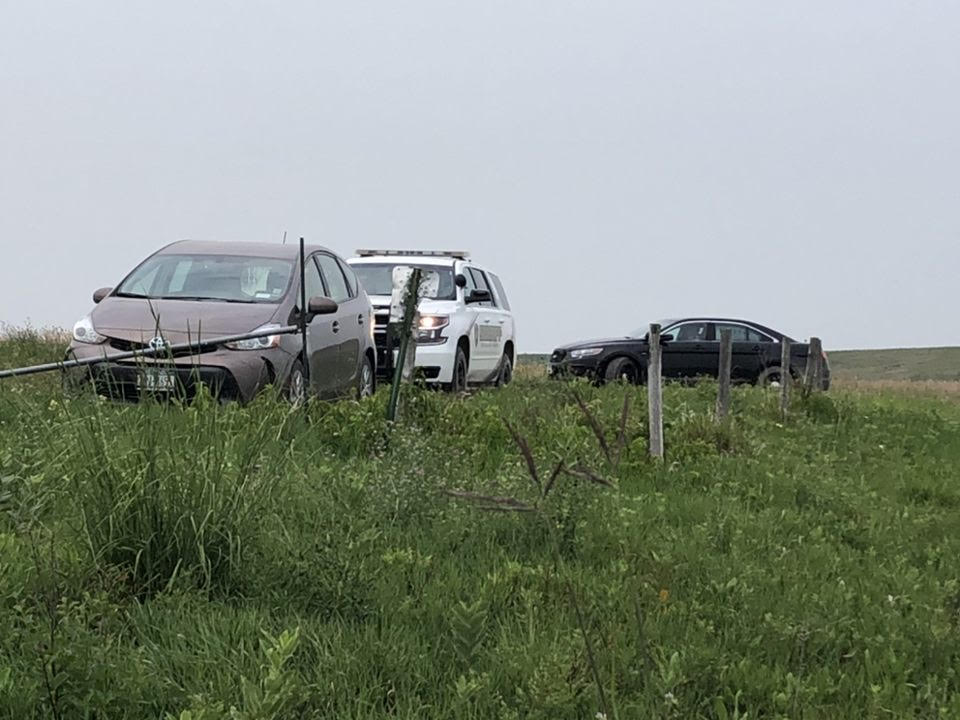
While there, we had a bit of a run-in with the police, perhaps about the Echinacea beheadings…
Hmmm…care to explain Allie?
The Elk Lake house hosted the team social for this week in the evening. We had taco bowls, featuring quick-pickled red onion and homemade hot sauce. Delicious!
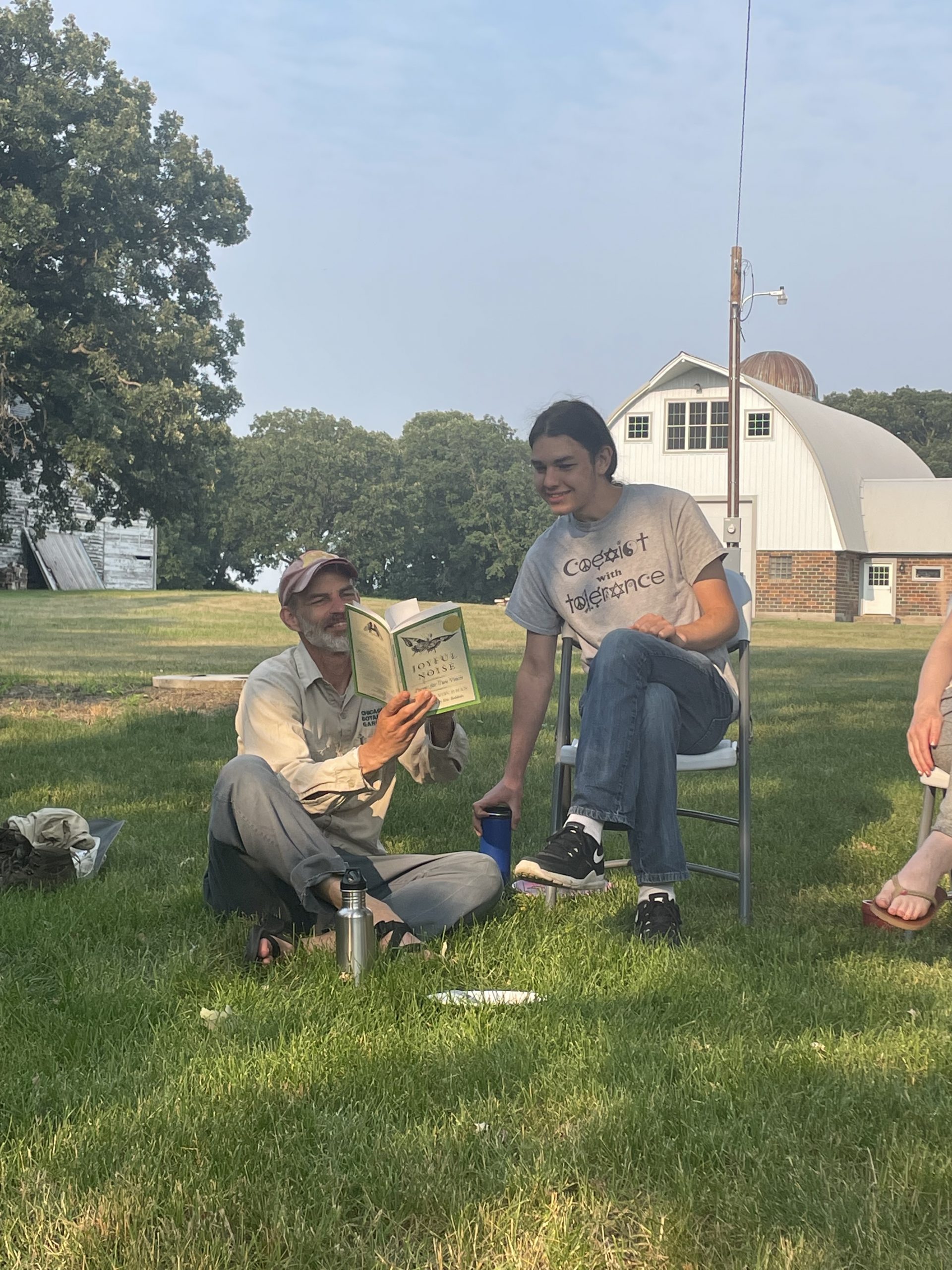
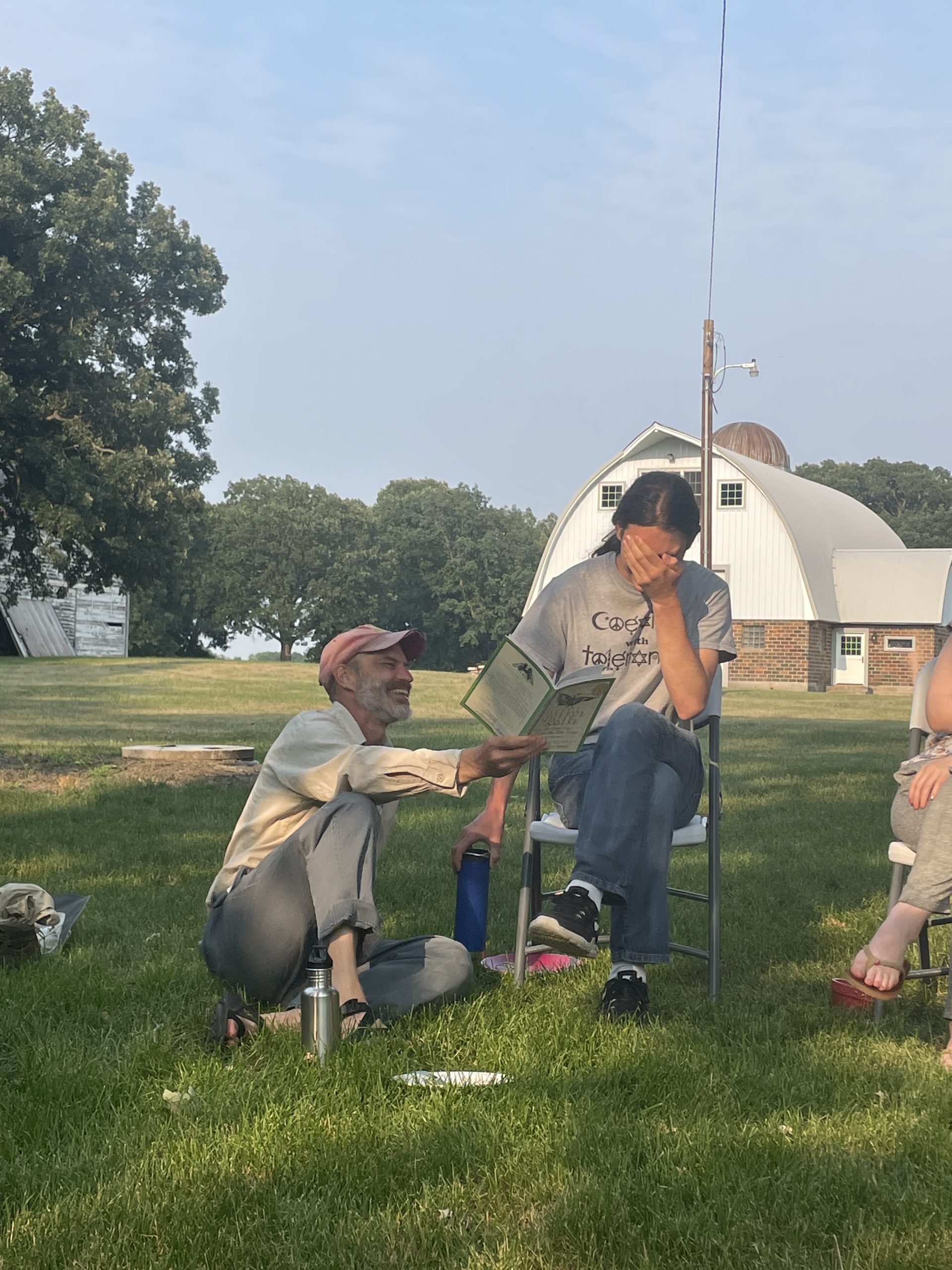
We also had live entertainment in the form of poetry. Amy brought a book called “Joyful Noise”, which features poems about different insects designed to be read by two people. Everyone paired up and read a poem. The poems were great and they squeezed in a lot of natural history – the best form of entertainment for ecologists.
Maris and Miyauna tackle the poem about whirligigs