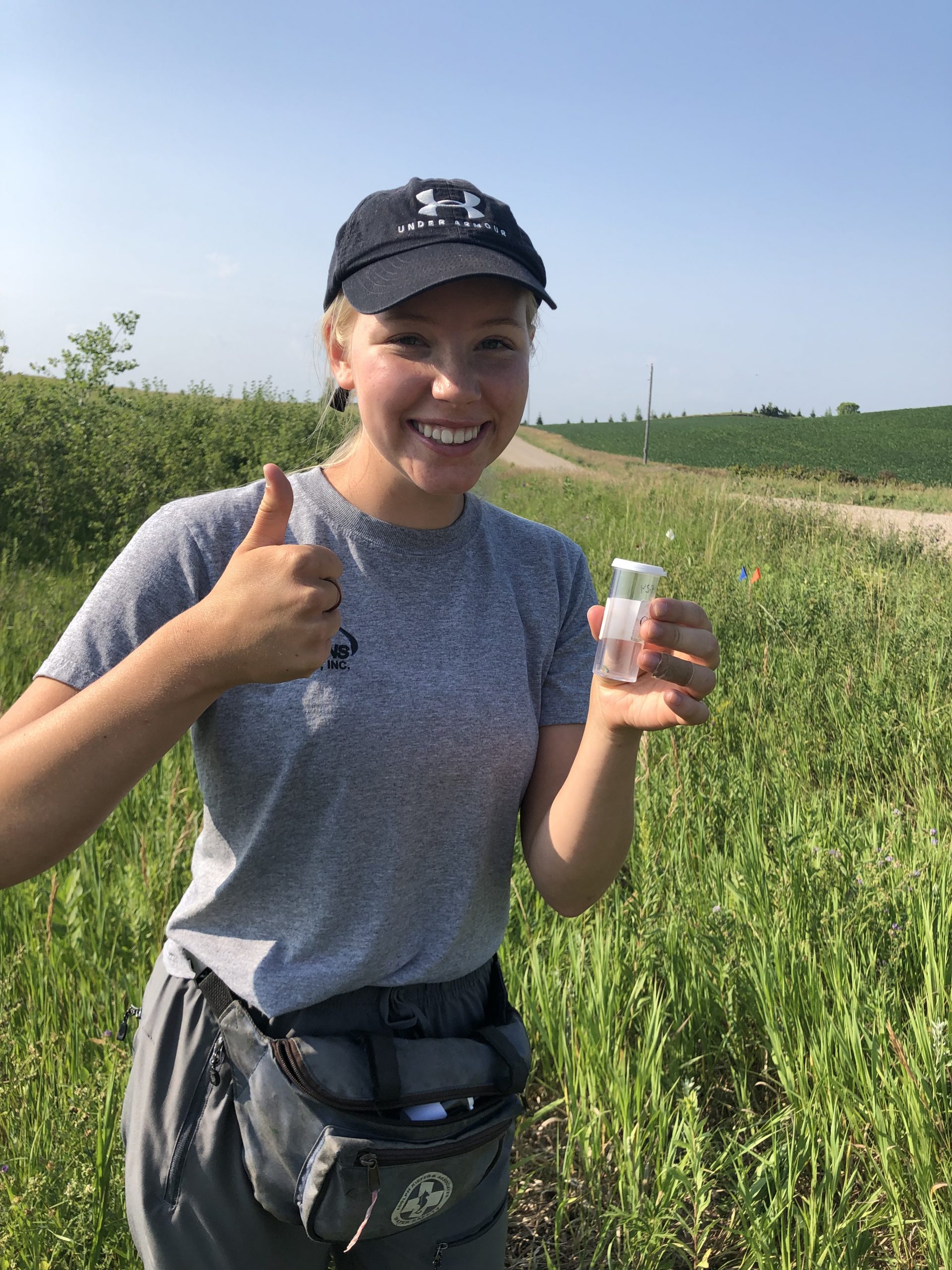
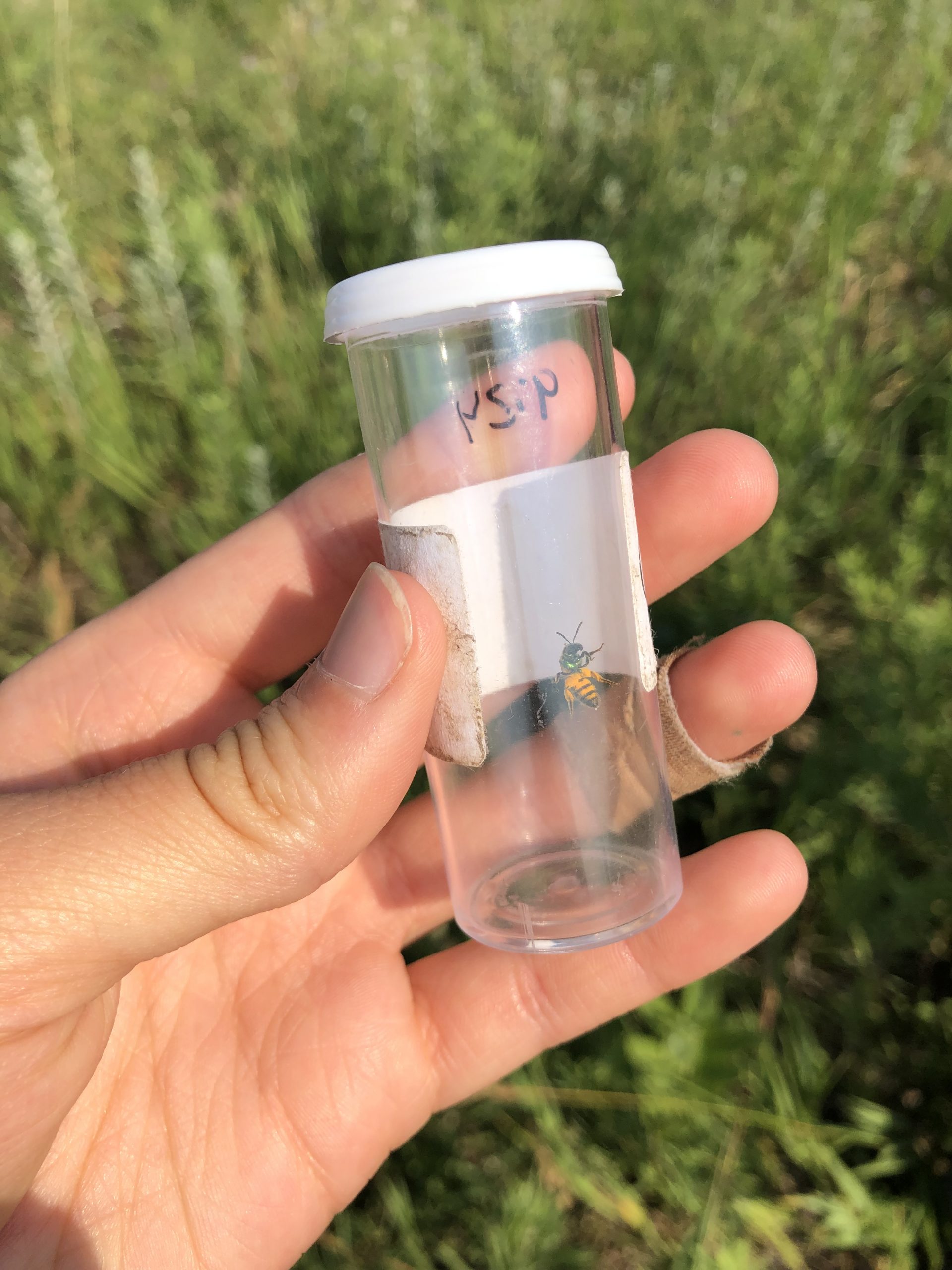
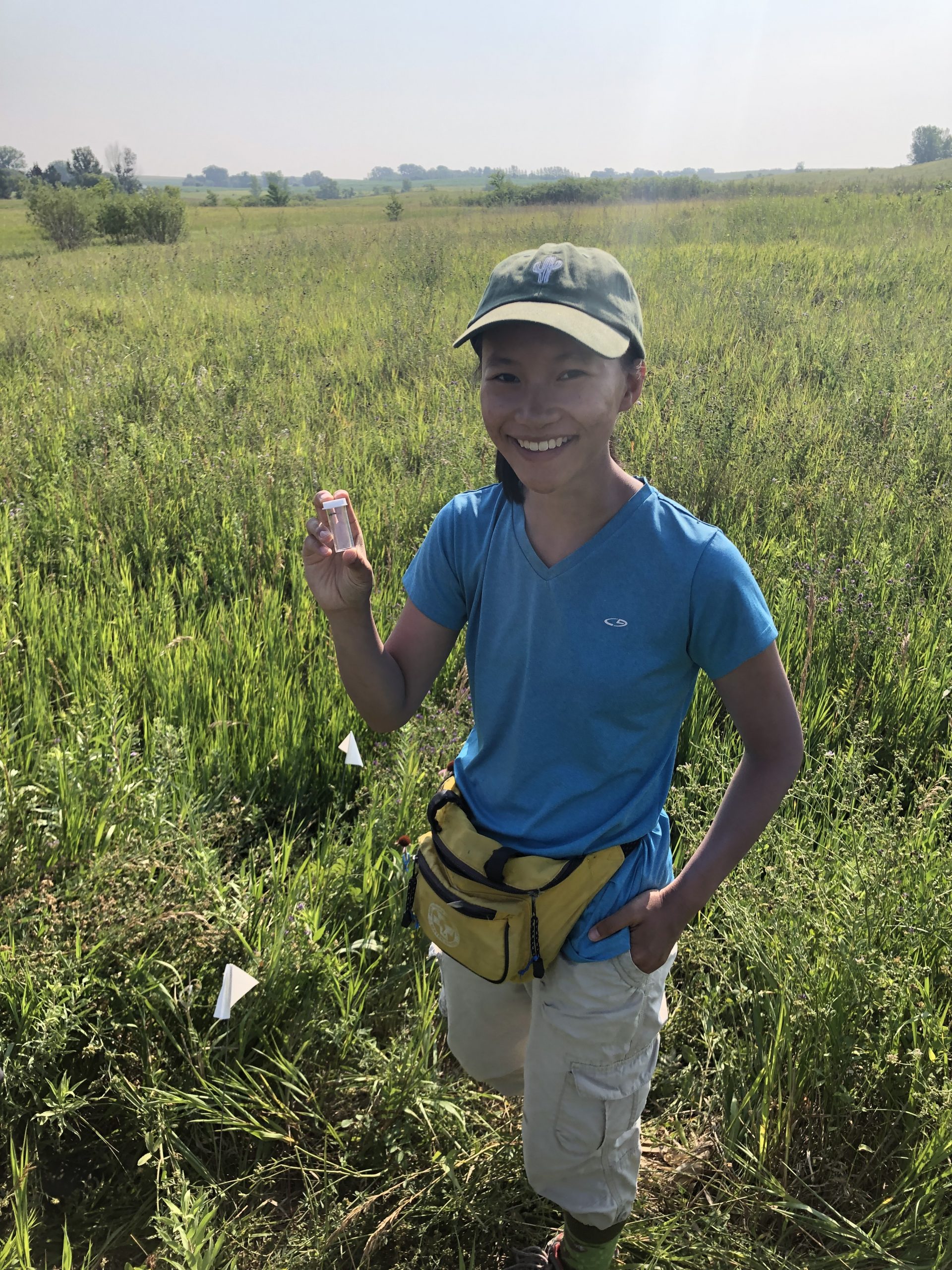
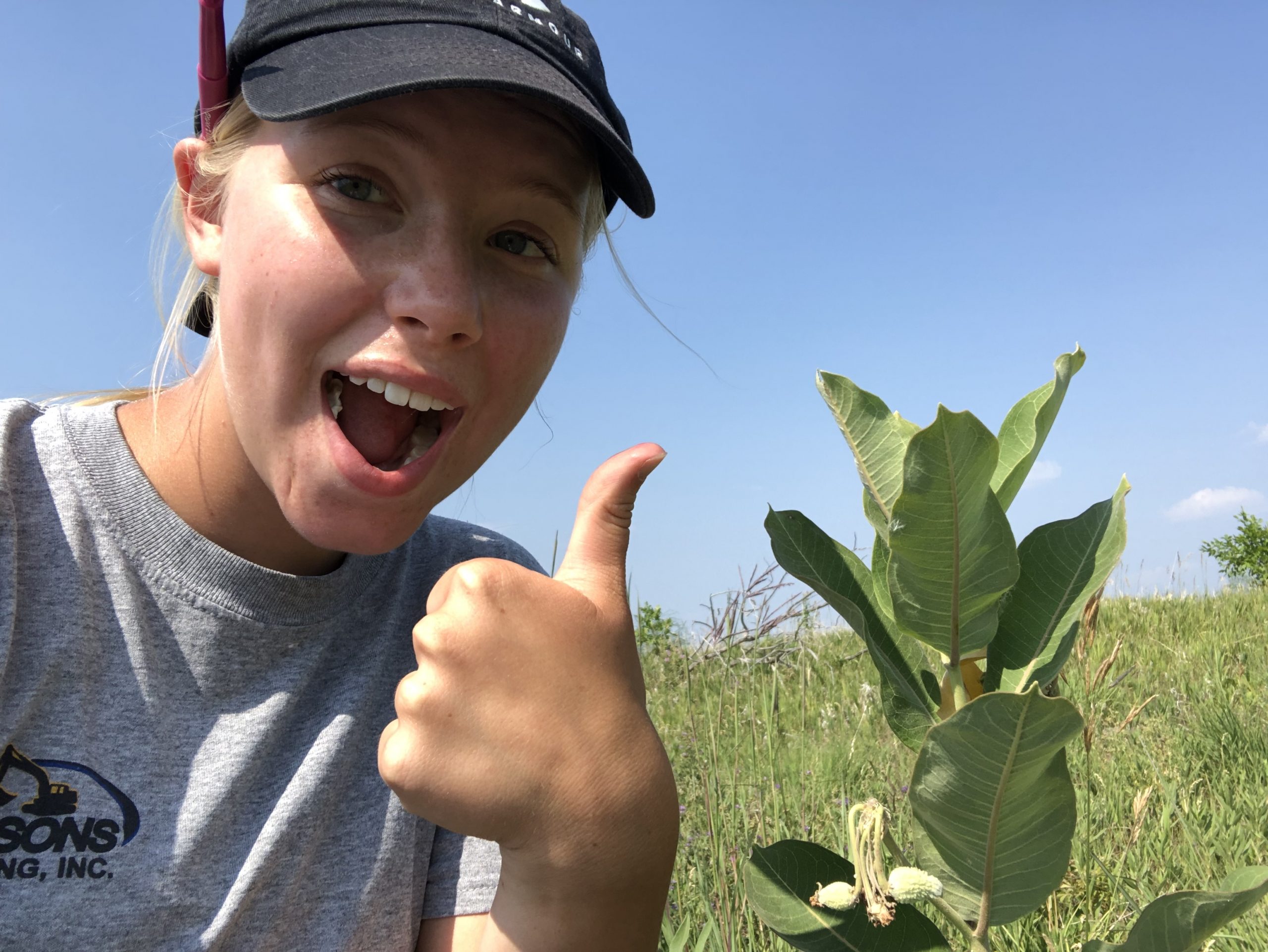
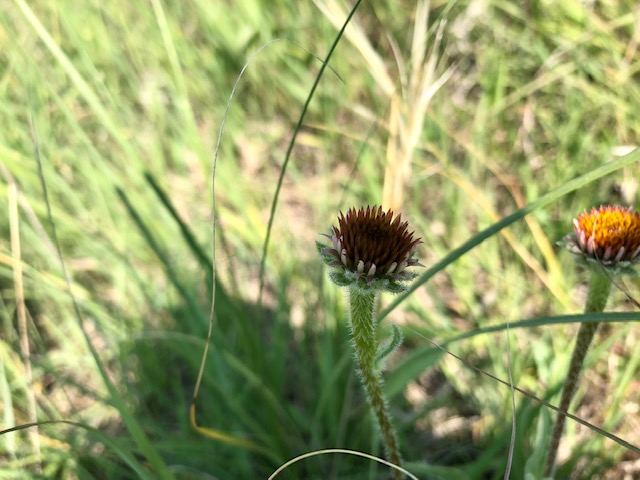
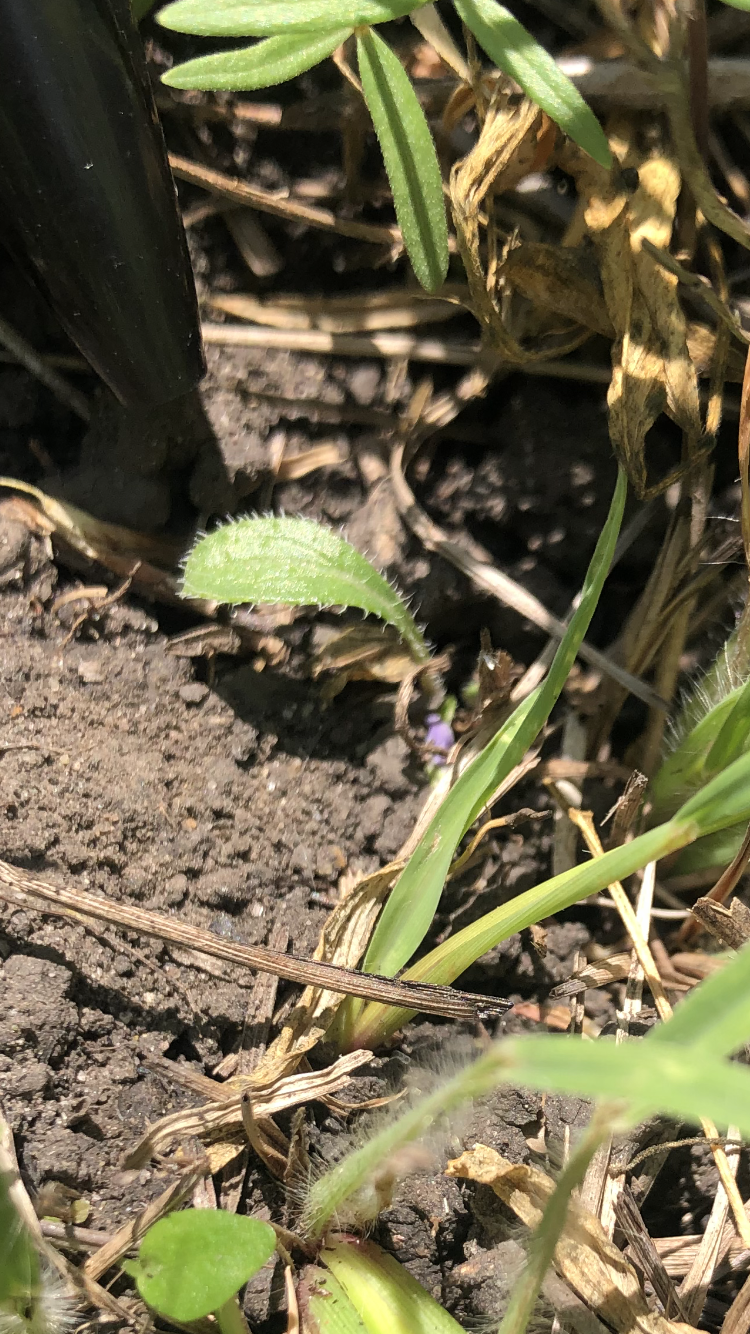
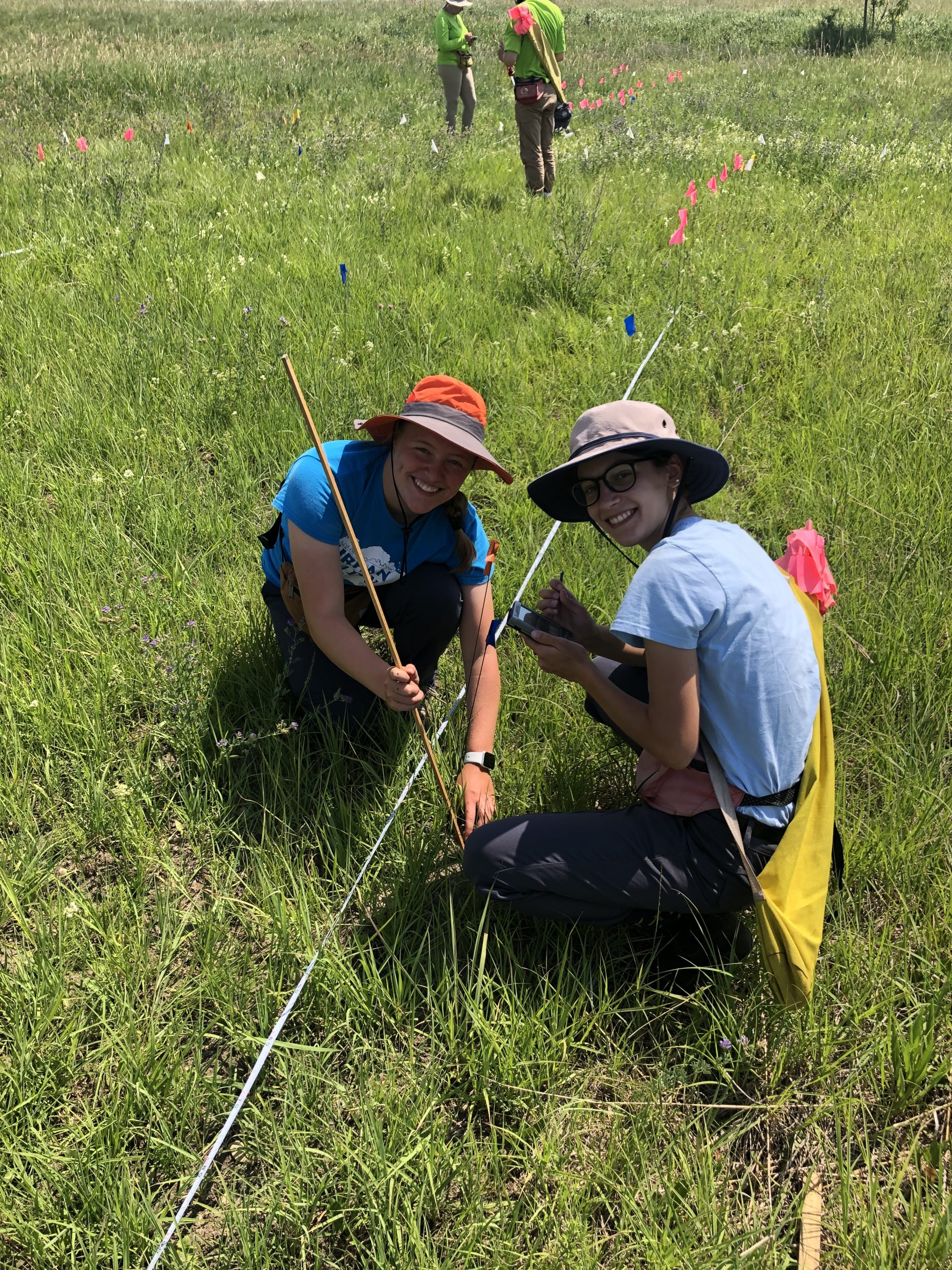
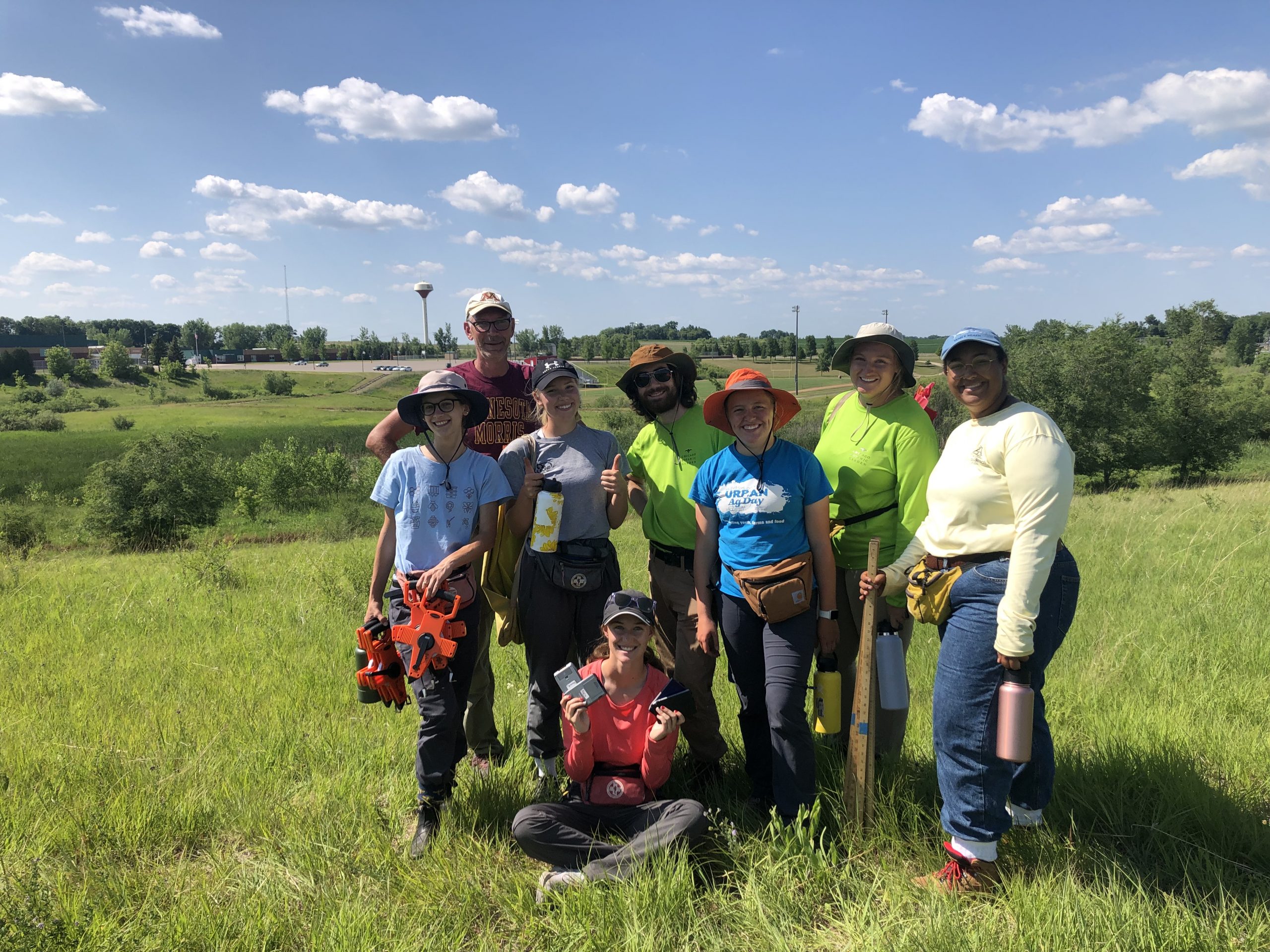
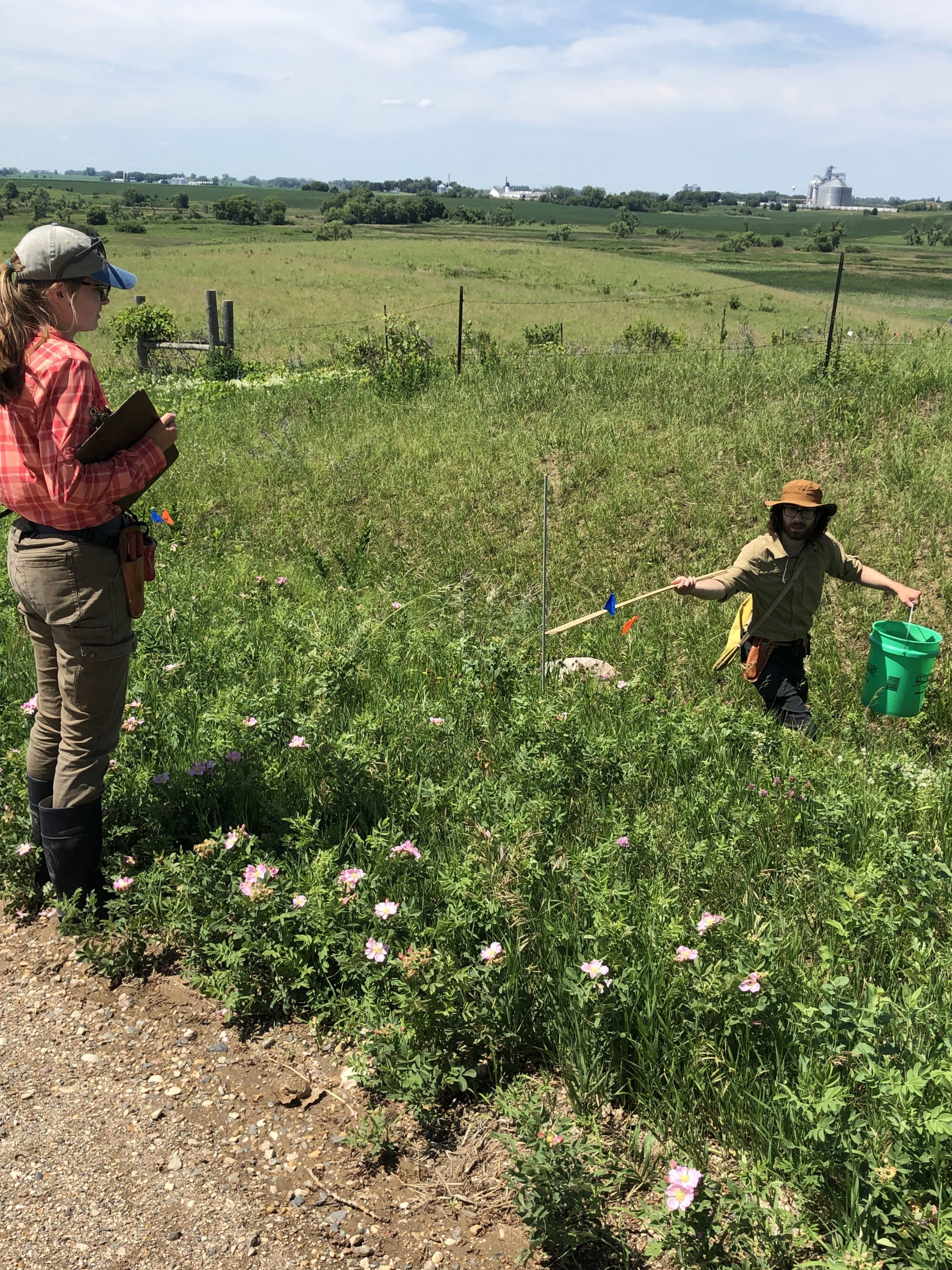
The day started off by everyone (except Stuart) meeting up at Stevens Approach instead of Hejlm. Everyone went to help Maris collect bees!!!!! Maris put us into groups and gave everyone a walkthrough of what to expect when we see a bee on a echinacea plant! She did a really great job at it!!! Everyone practiced with the bees already pollinating at Stevens Approach! I was grouped up with Maria and Allie! We headed to Golf Course, NNWLF, and NWLF, we found two bees at NNWLF and two bees at South of Golf Course!!! I named one bee “Lime” and Allie named one of the bees “Savanna”!!!
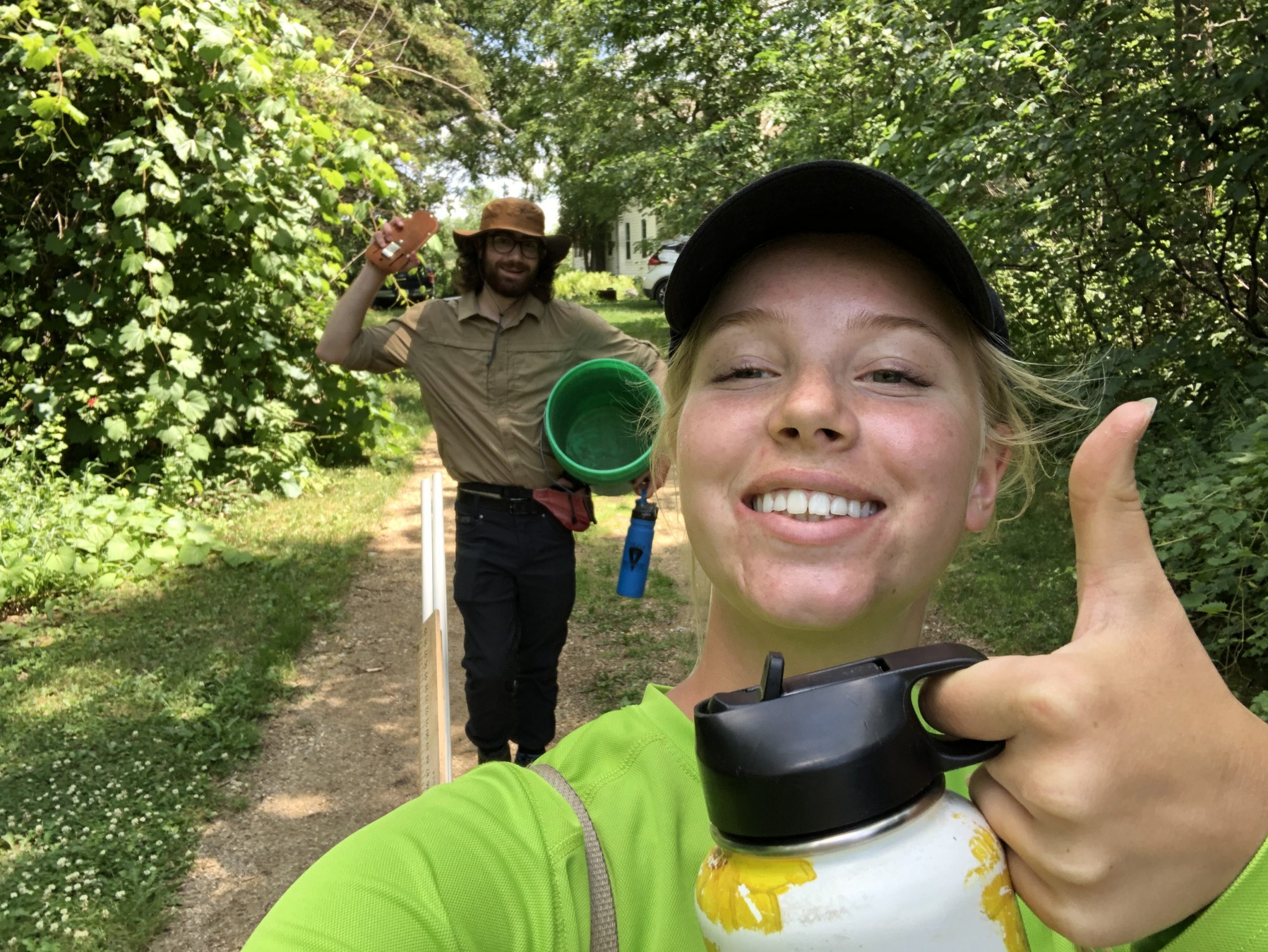
Laura and “Lime”LIME!!!!!!Allie and “Savanna”
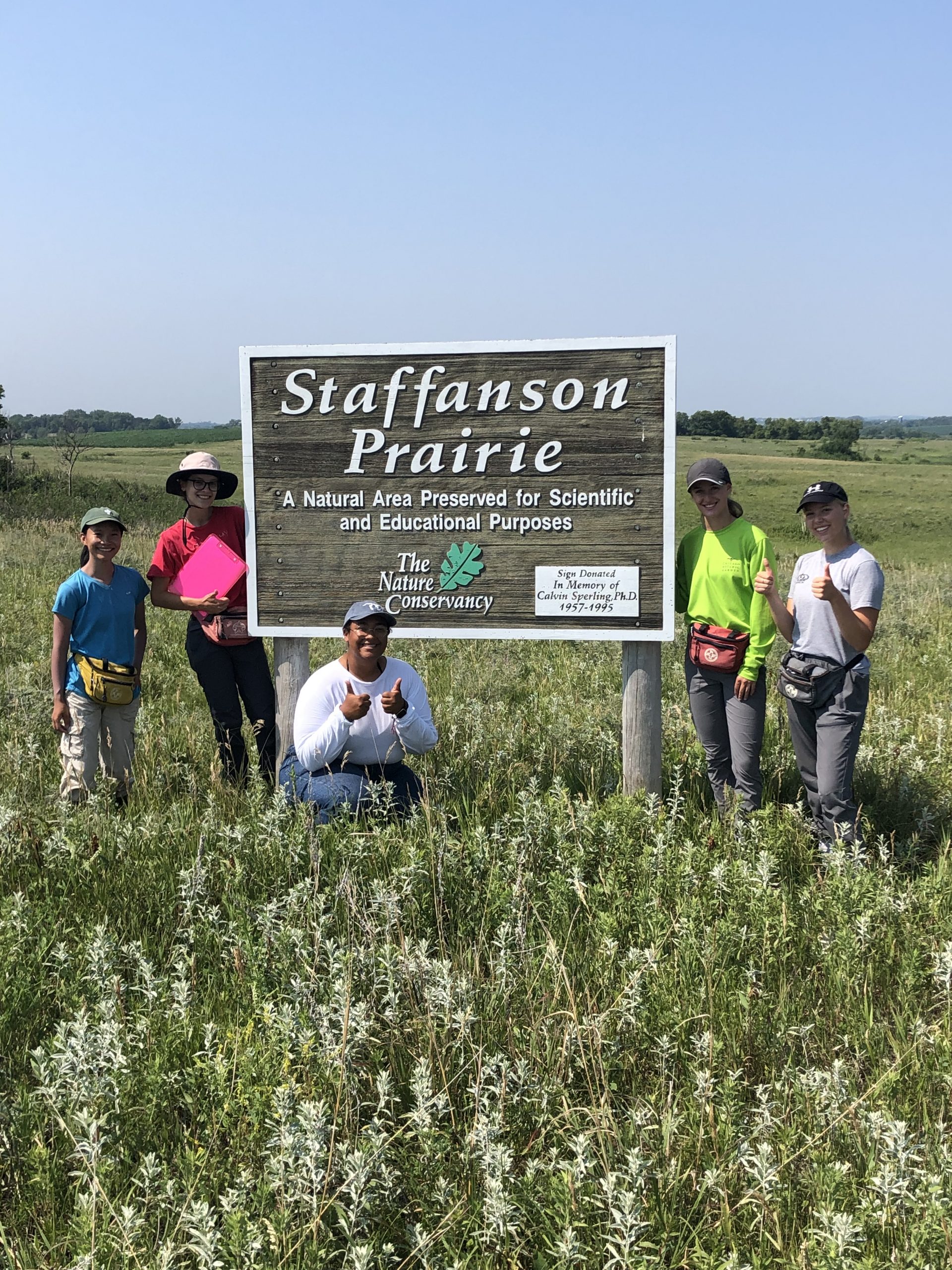
Much of the other crew found bees as well!!! After we looked at the remnants we headed to Staffenson to search for more bees! Sadly we didn’t find too much there.
By the end of the morning a total of 20 bees were found! Lunch came fast!!! After lunch presentations were given by Wesley, Maris, Mia, and Miyauna!! Stuart also talked to us about how his presentation went!! HE DID GREAT!!!! After lunch we all worked on our individual projects, I started working on Project Milkweed!!!! I finally got some maps today and started the journey!!! I started off by going to Stevens Approach to go to one of the blue and orange flags to check at the point if milkweed was present within a 1 meter radius and a 2 meter radius! There was a TONNNN in this remnants. After I finished all the points and counting how many were in each radius I headed over to South of Golf Course, Golf Course, East Elk Lake Road, KJ’s, NNWLF, and NWLF! I finished quite a bit but I got quite a lot done!!!
Today was a very busy day for phenology but I will not be discussing that today.
I spent this afternoon doing some light coding and durning dinner tonight Amy, Jared, and I held Alex hostage durning a conversation about best coding practices. This conversation transitioned into Jared and Amy helping me write my first function!
Below is the function that I have written, for readers at home feel free to copy and paste and play around
printName <- function(name, punctuation){ print(paste(“My name is”, name, punctuation)) }
this is a function that the 3 of us wrote together (Jared started but Amy finished it, I supervised/tried to help but didn’t know what was going on)
favoritePet = function(answer) { if(answer == “dog”) { message(“That is an acceptable choice, but have you considered salamanders?”)} if(answer == “cat”) message(“What are you thinking?!?!?!?”) if(answer == “salamander”) message(“You are a good person.”) else{ message(“Please try again…”)} }
It was a dark and stormy night. Well, really it was morning, but the dark and stormy part is true. Regardless, the inclement weather during Tuesday’s early hours wasn’t enough to keep Team Echinacea from taking a road trip to monitor orchid populations in Fertile, MN.
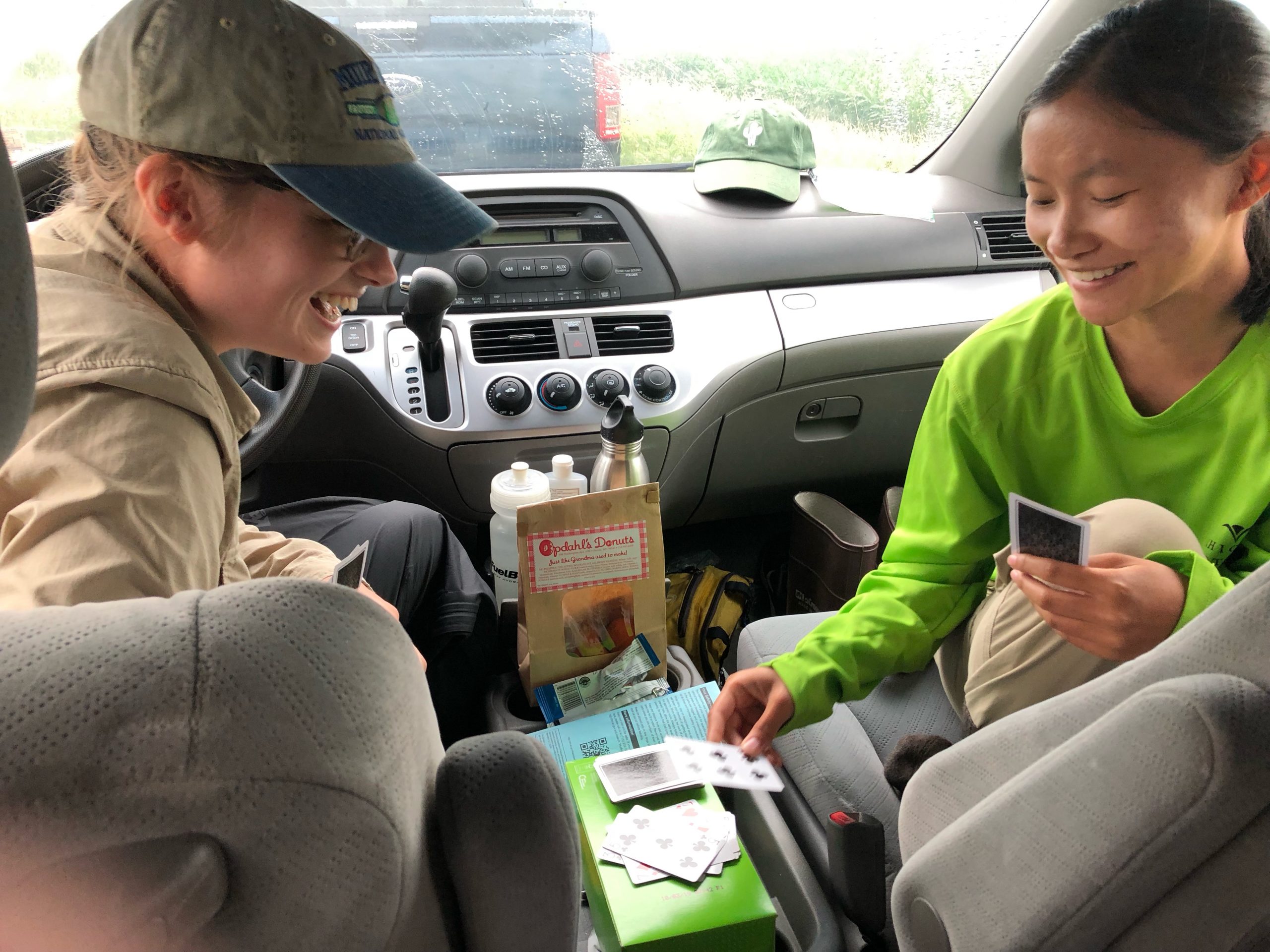
Eight of us, about half the team, left the field house around 7am and drove north for two and a half hours. We stopped only for the necessities, namely the bathroom and donuts. The rain forced us to wait in our vehicles when we arrived at our site, and we were finally able to get to work around 10:30.
Mia watches as Allie takes her turn in a round of cards as we wait for the rain to let up.
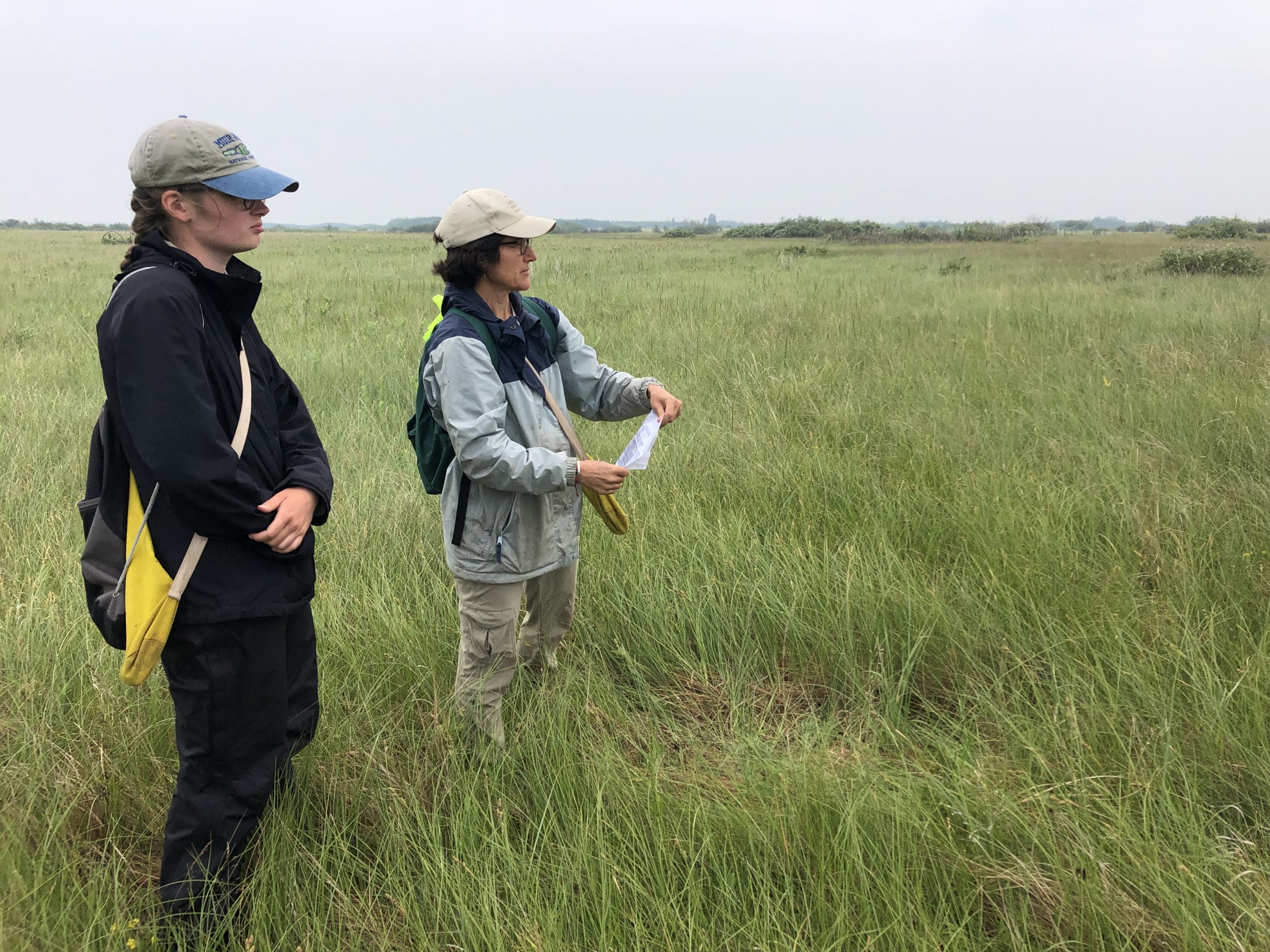
The first location we visited required a short hike to access. Though it’s acres upon acres in size, you’d never find it if you didn’t know where to look, which is why we were fortunate we were joined by Gretel Kiefer, who has worked with these orchids and the Nature Conservancy for over decades. A long-time member of Team Echinacea, Gretel is spending most of her summer at the Chicago Botanic Garden, but was able to join us this week for the trip.
Mia and Gretel use a map to determine our location on the plot.
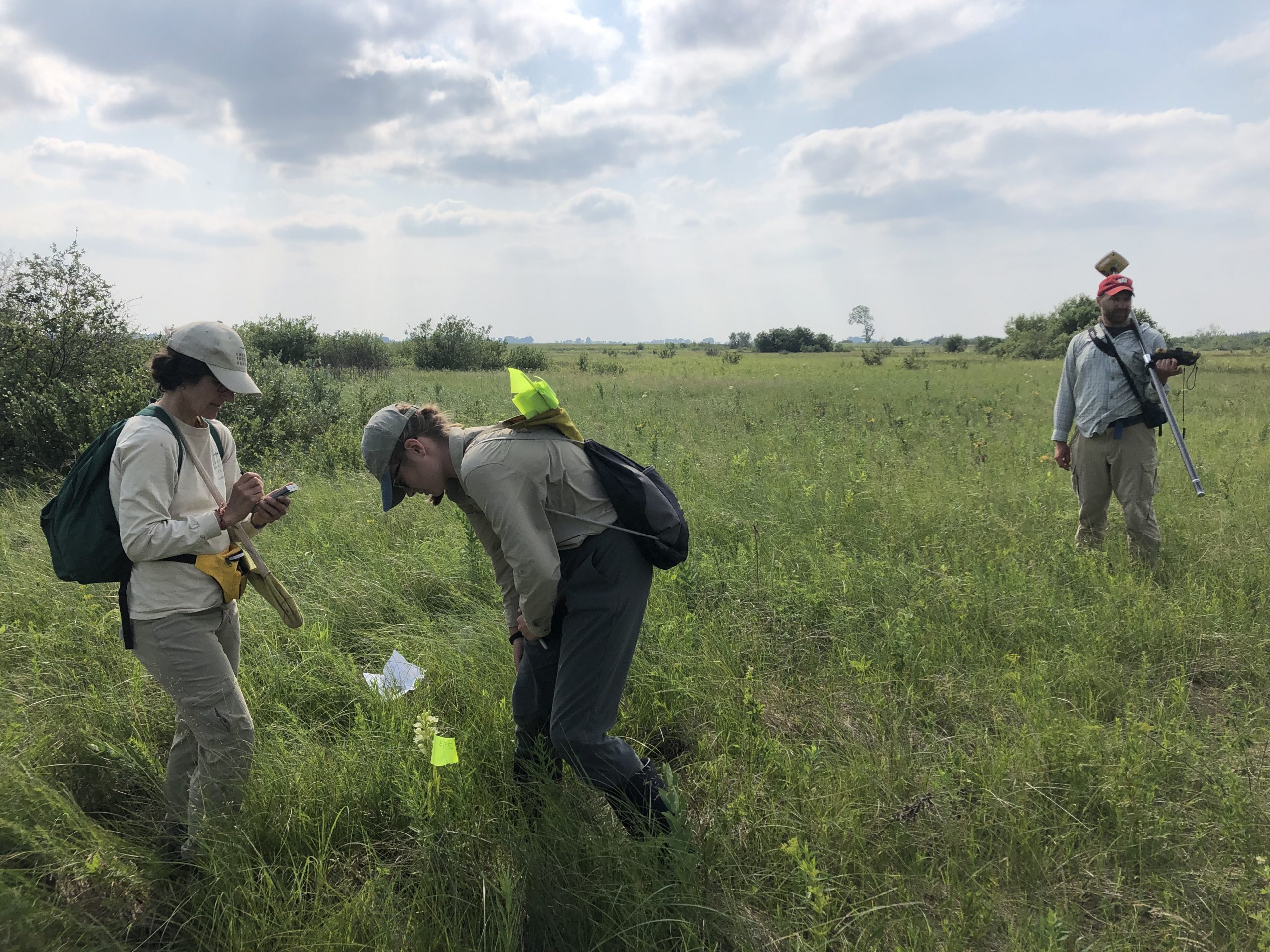
The work itself consisted of moving in groups of four searching 10m by 10m plots for orchid plants. Whenever we found one, we would gather some data on its flowers, give it a numbered flag and use a GPS to mark its exact location. The plots themselves were sometimes a bit difficult to keep track of because many of the markers were fallen over or missing; I can only imagine how difficult it may have beef if there was standing water. Fortunately for us—but perhaps not the plants—this year is a dry one.
Gretel enters data on her visor as Mia prepares a flag. Jared holds the GPS in the background.
After finishing up at the first location, we ate lunch before traveling to the second and final location for the day. Because it would have been a long walk carrying all of our equipment, to get there we all piled in to Stuart’s pickup truck and drove down what I would hesitate to call a road, though we did all make it in one piece.
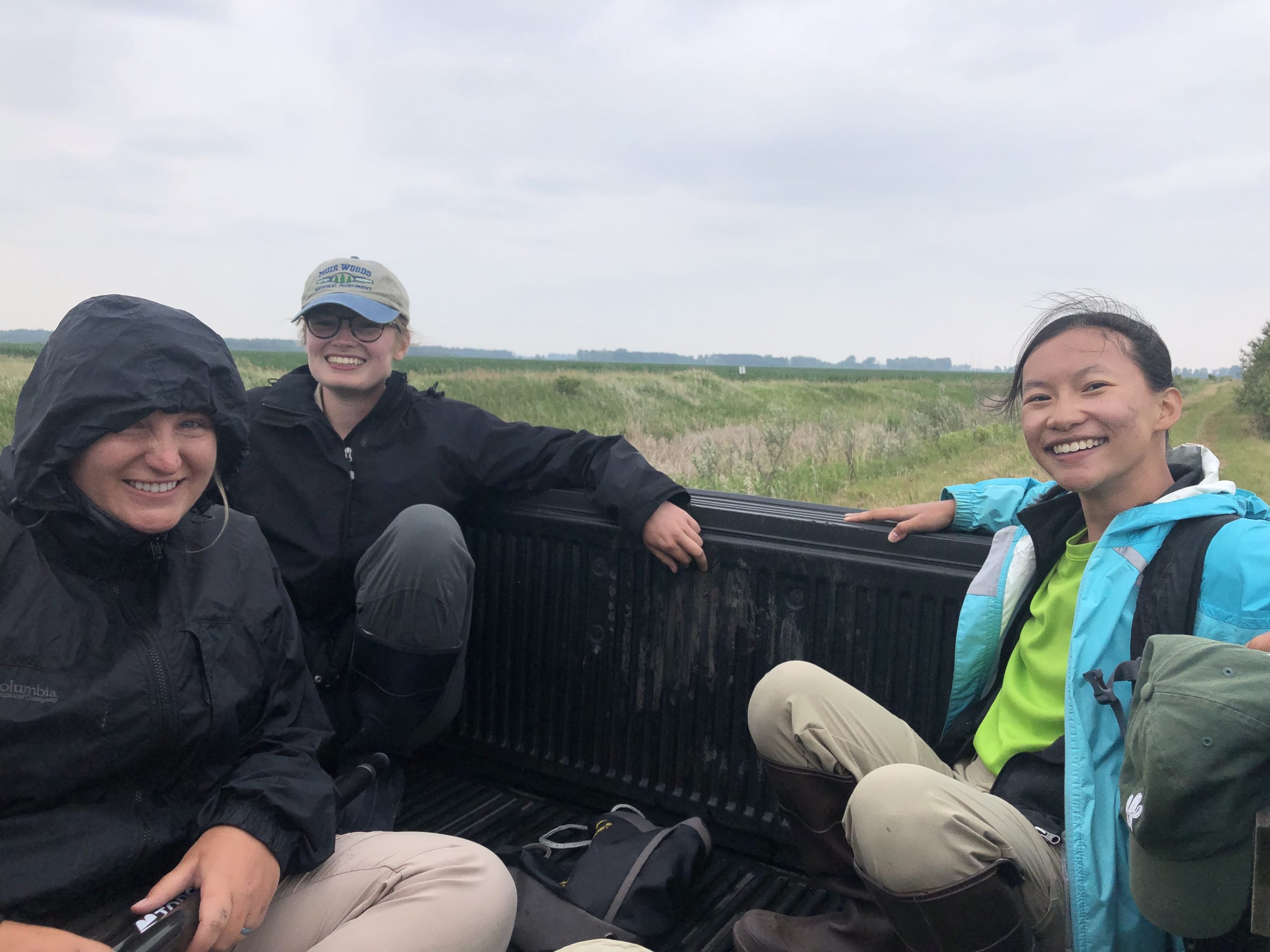
Alex, Mia and Allie in the truck bed, taunting death on the bumpy road.
Our task for the second location was the same as before, but took much longer due to its larger size. By the time we were finishing up, the sun had come up after hiding behind the clouds all day. We were fortunate that it had been cloudy for most of the day; not only does cloud cover provide some relief from the heat, but, somewhat counter-intuitively, direct sunlight also makes it more difficult to spot individual plants. Once we wrapped up our work around 7pm, we headed south, stopping at a pizza place in Ada on the way back for dinner.
Despite the rain in the early hours, the consensus was that the orchid trip was successful, and indisputably a blast.
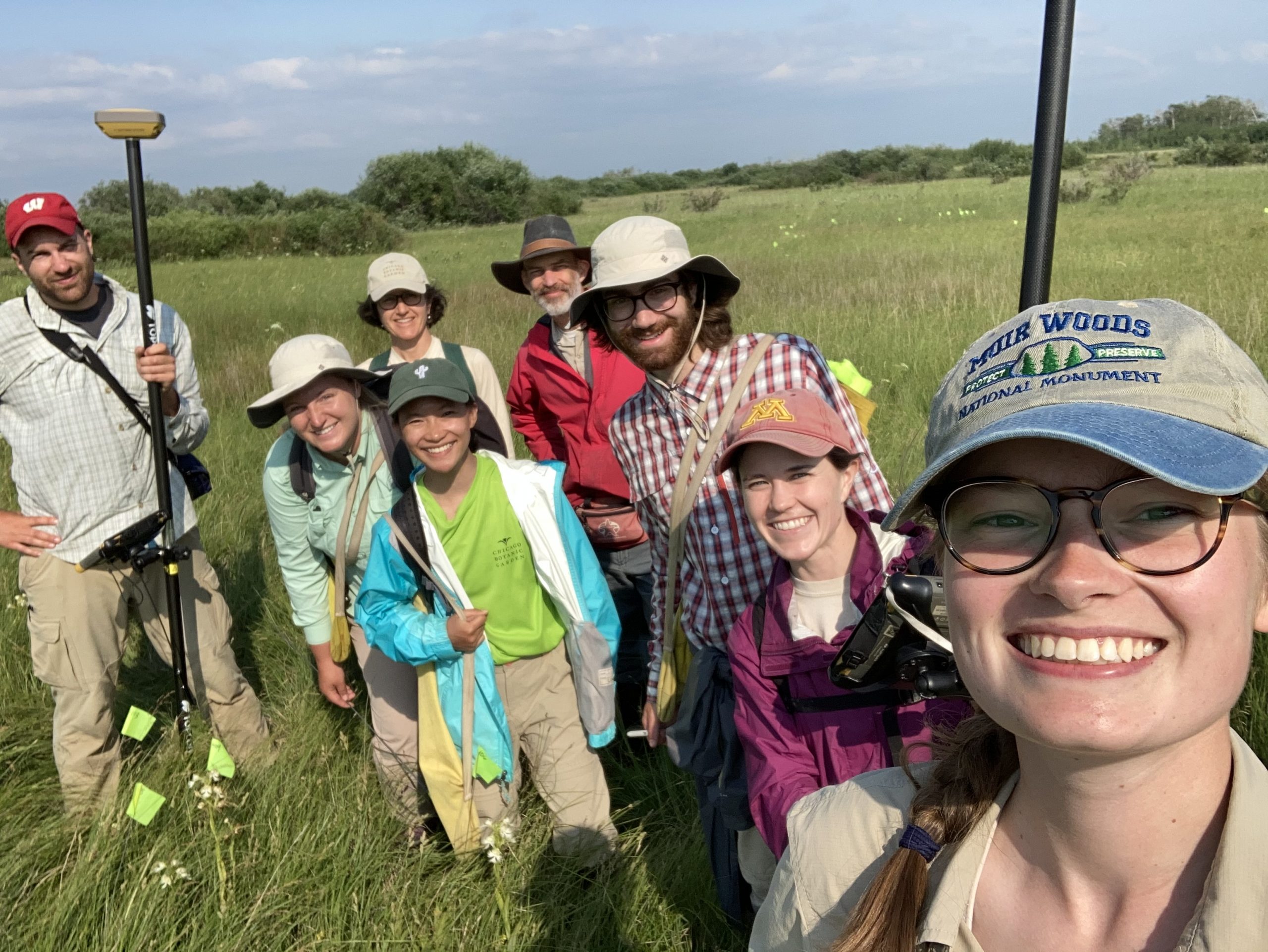
Celebratory team selfie after a successful day of orchid searching. (Photo credit Mia Stevens)
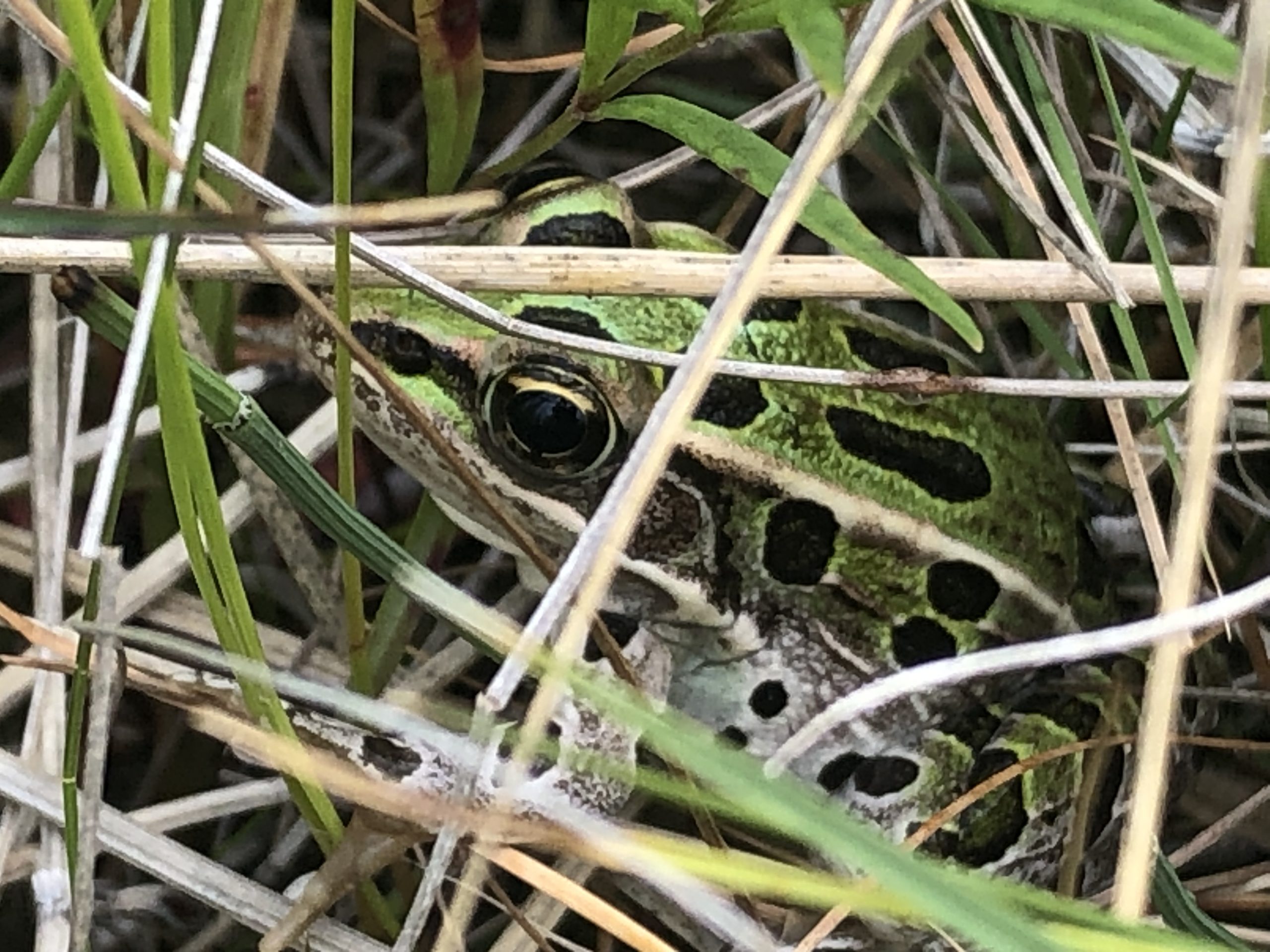
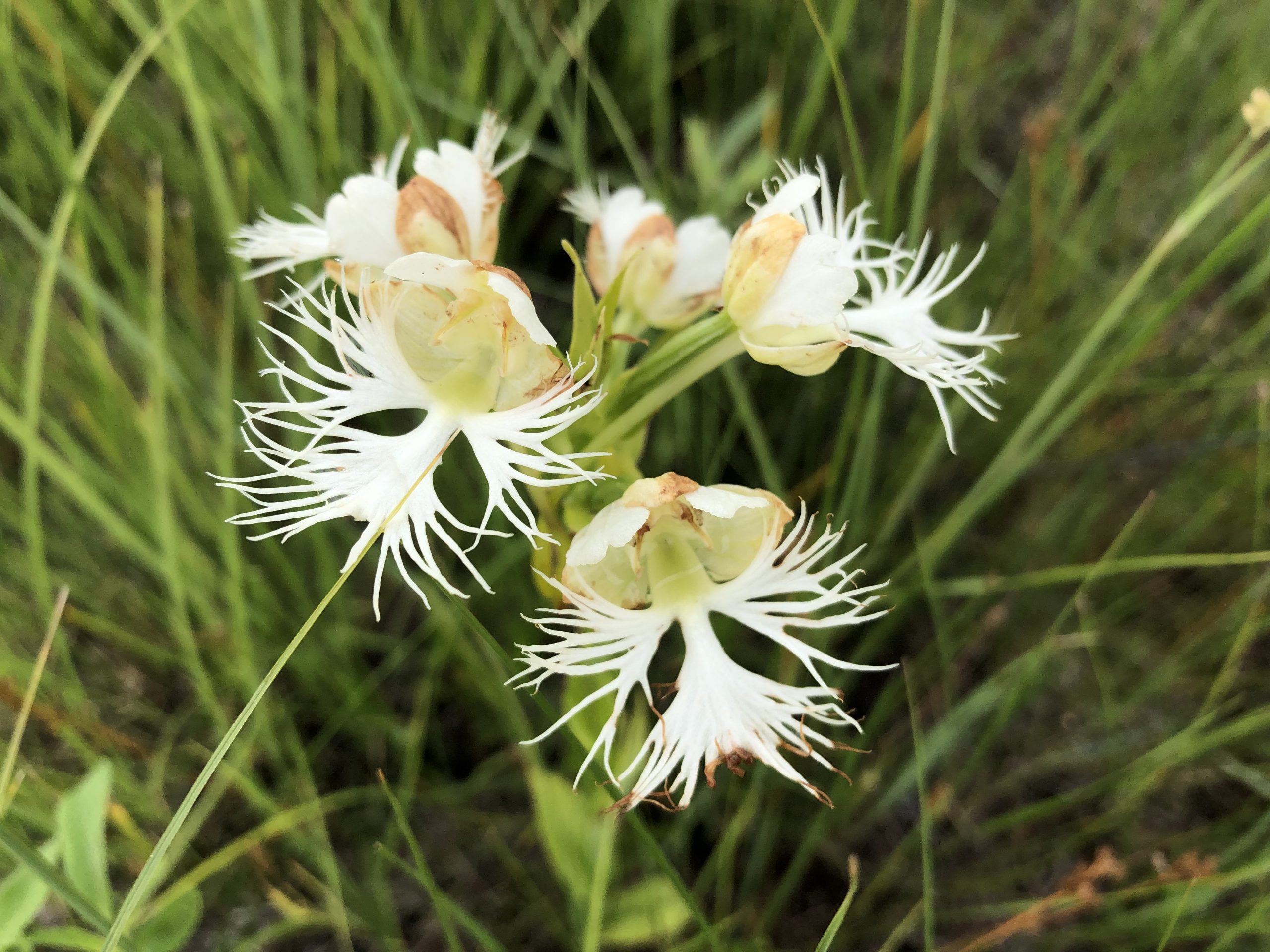
Some bonus photos:
Frog.The orchid in question: the western prairie fringed orchidA purple prairie clover with very visible pollenStuart forges his own path through the wet prairie.
By the dawn’s early light, I was once again out on the hunt for bees. As soon as I arrived at East of Town Hall I secured my first catch, which, after a morning of searching, turned out to be my last. I returned to Andes with the single bee in tow, wiped her of her pollen, and released her on the way to laundry day at the Elk Lake House.
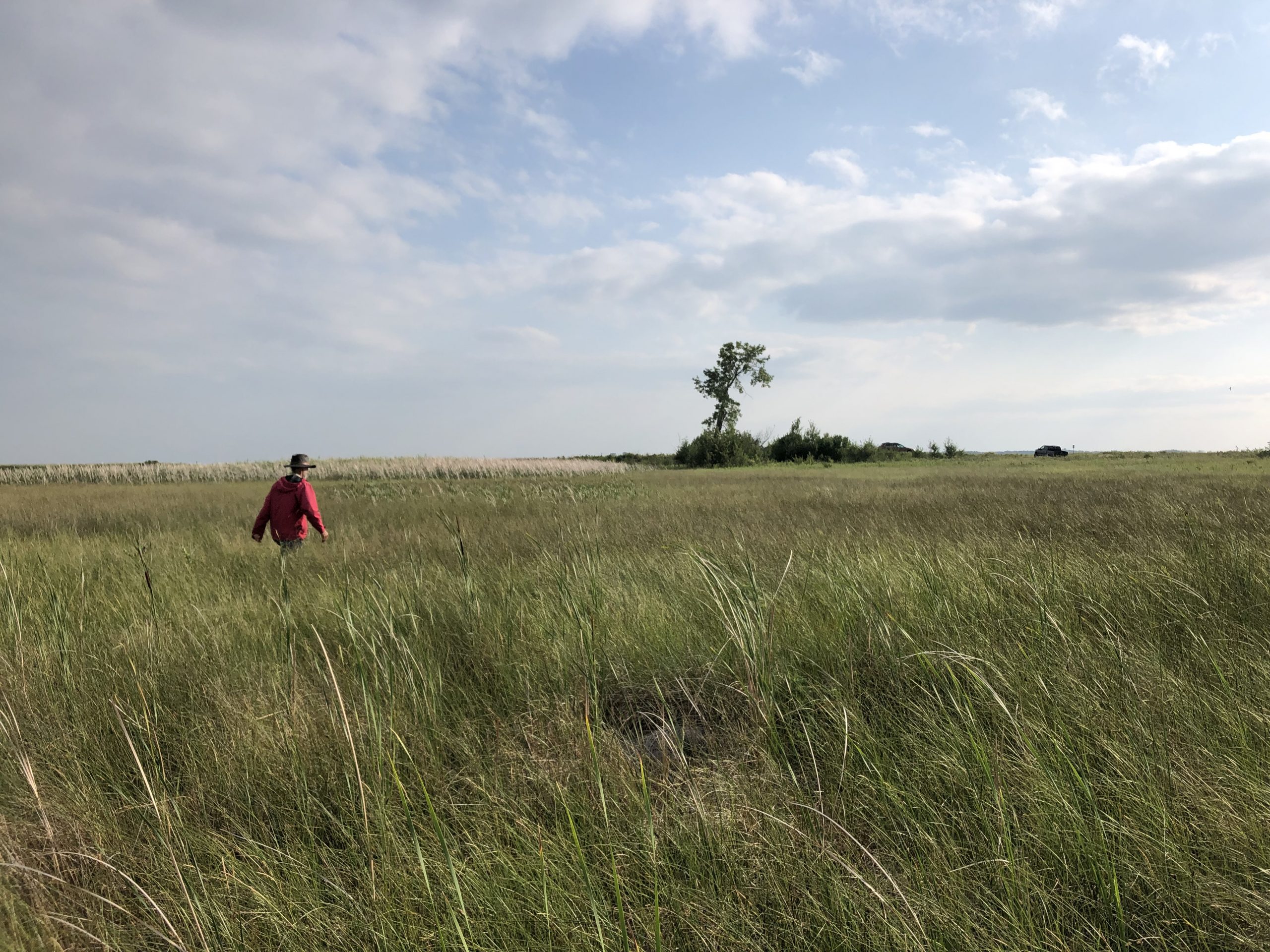
A windy morning on the prairie
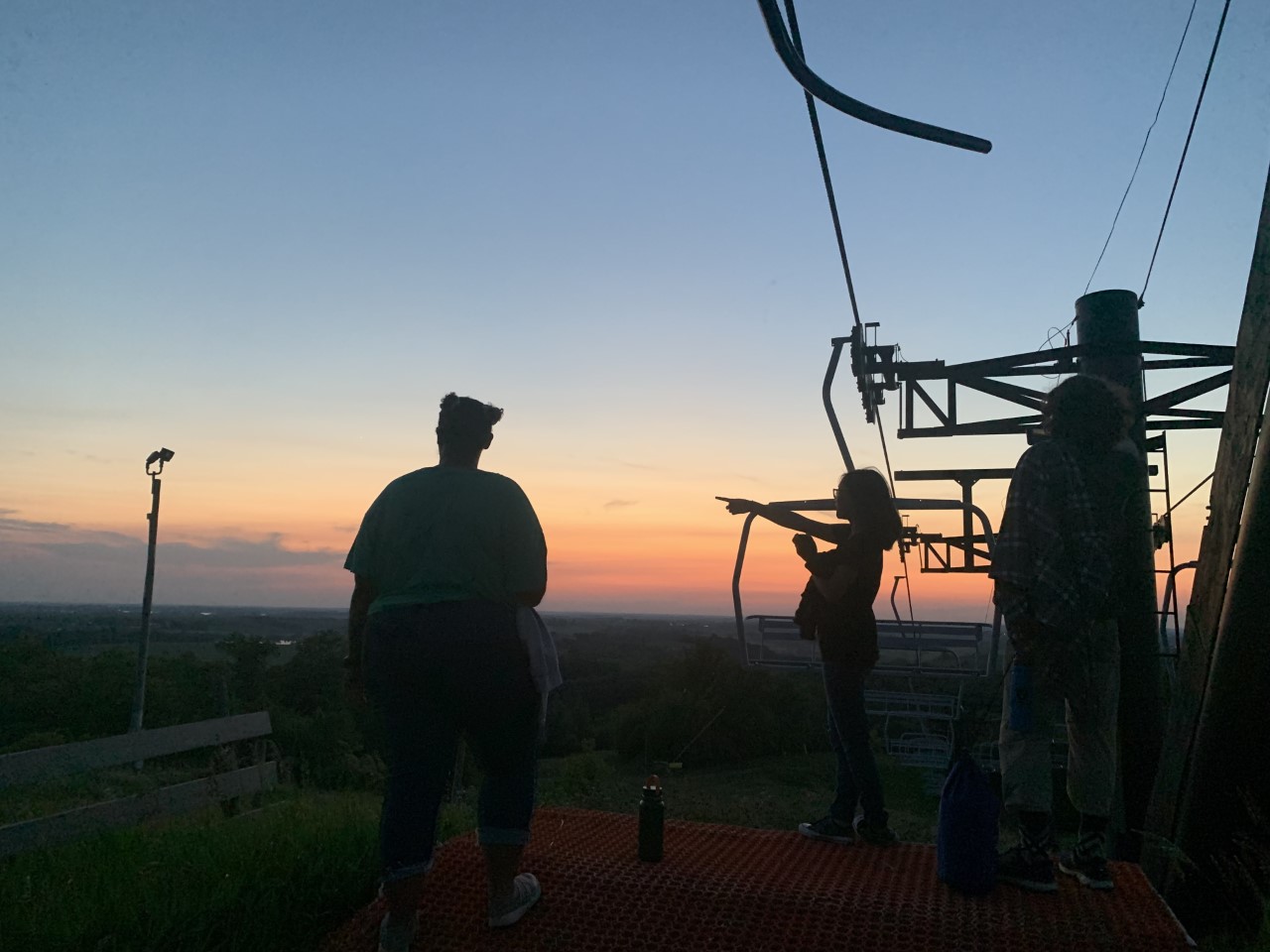
After laundry the Andes crew returned home for a pizza dinner and Pirates of the Caribbean. To partake in the 4th festivities, the four of us climbed up the ski slope and got a full view of the firework display. From our vantage point, we had an unobstructed 360 degree view of the fireworks in the surrounding towns, not to mention font row seats to the sunset– it was definitely worth the hike. Stay tuned tomorrow for a continuation of the celebration!
Happy Friday from Team Echinacea! We started off the day a bit early to beat the heat and get started on phenology in the remnants. Kennedy and I tackled the “Wiley loop” and found that the majority of our plants were flowering. Some were even on their last day of flowering or already done! It is so intersting to be able to watch these plants go from bud, to developing its rays, to a fully fledged pollen-producing flower. What a journey these plants undertake year after year, and we get to be a part of it!
After a lunch of t-shirt and team cheer brainstorming, I headed out with Amy to get some video footage for my scientific method video series that I will be developing during my time with Team Echinacea. I shot some fun B role of Amy collecting pollen, and got a special guest star from some cows! After wrapping up for the day, Mia and I were craving some nice and cool AC, so we headed to Copper Trail Brewing in Alexandria to get some computer work done.
Today was an awesome day, a great way to cap off a super productive week! Have a great weekend, echinacea-lovers!
The Echinacea Flowers are beginning to all begin flowering at a similar time so the phenology is getting intense. The next few weeks we will be doing phenology Mondays, Wednesdays and Fridays adding to the most extensive and accurate data base of Echinacea angustifolia in the world (while also cultivating grit). On Wednesday afternoon about half the crew was able to go to P10 (my favorite) located at West Central Area Schools (WCA) Environmental Learning Center to assess how many of the Echinaceas plants survived from our plantings in 2019. P10 is currently being used by WCA students for research projects and the Echinacea Project to determine how fire affects the prairie. A great opportunity for the students from school in collaboration with future Echinacea Project members.
Some of the Echin in P10 were very small, like 1 cm length leaves.
Kennedy (WCA 2022) and Maris (Wooster College 2022) search for Echin plants on one of the 12 plots located at WCA Schools.
And since I sort of promised a Limerick, here goes:
P1, P10, ologyPhen
Buckthorn, Sumac, Goats in the Pen.
P2,P3, Demography.
What, Wait, Where is P3?
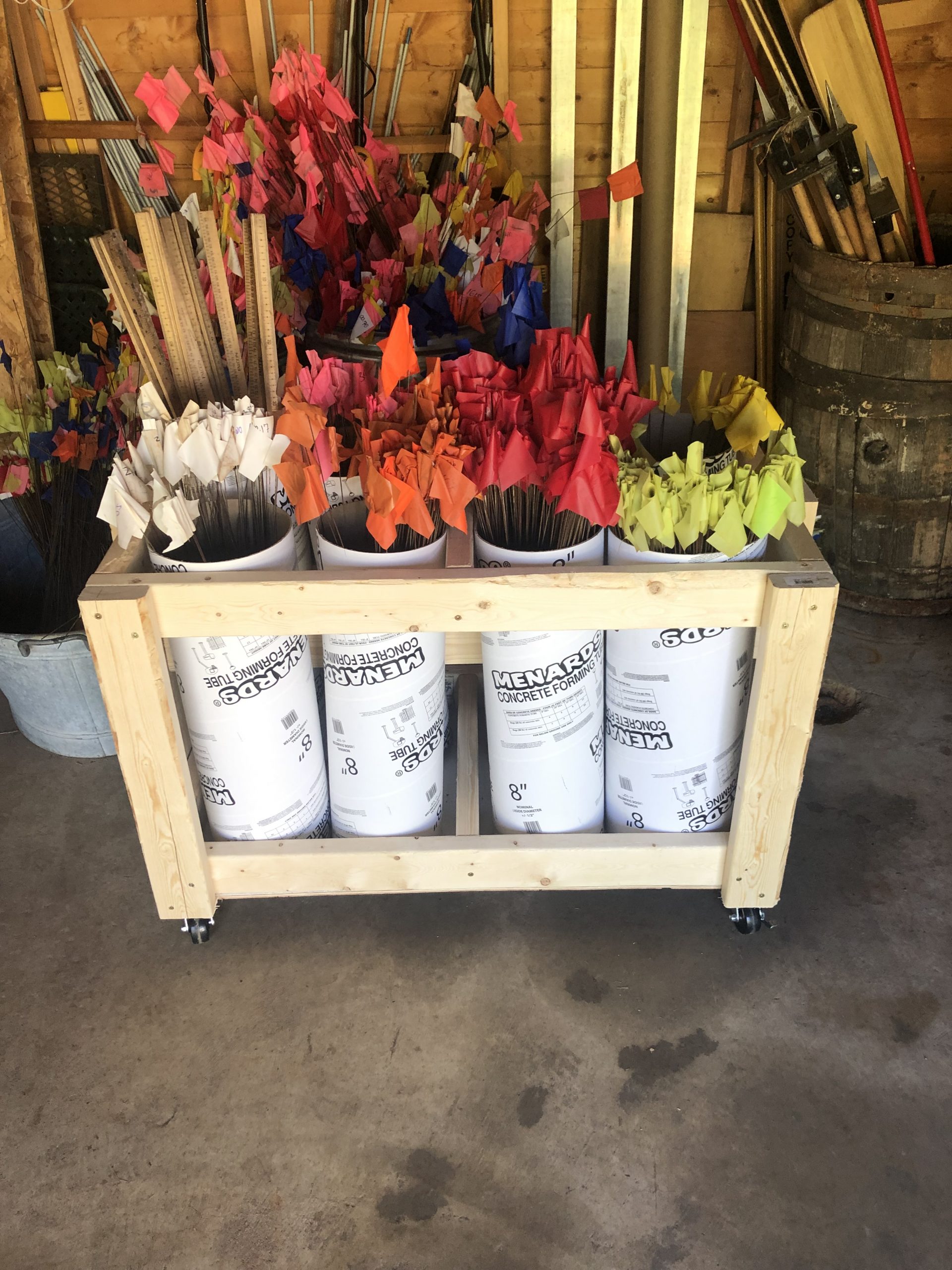
Field Flag Organizer two thouSen.
The Field Flag Organizer 2000F
The members of Team Echin working at P10 (minus Mia as she is taking the pict).
Today was quite a busy day! The team split up and took a crew over to P2 (that’s where I was) to start phenology on the flowering plants in the field.
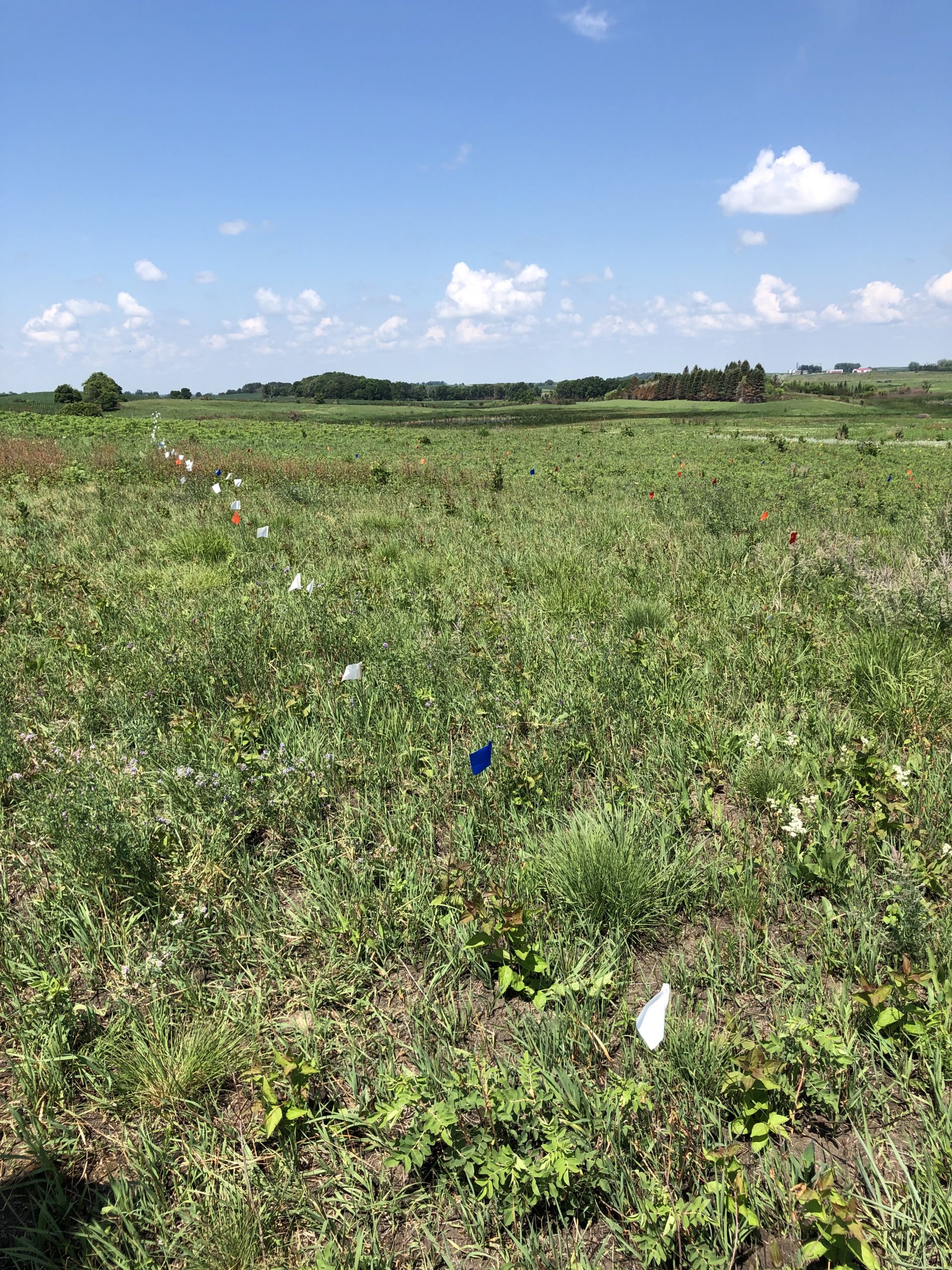
P2 Field Flagged
The plants phenology contained information such as where it was(row and position), a twist tie color to mark individual heads to help separate them when we study, and if the plant was flowering or not(if it was flowering the first, second, and mid day fields were filled). Most of the plants were flagged with a red flag and labeled. The afternoon came fast and lunch began. Stuart talked with us to make sure that everyone knew more safety and talked about who wants to present for projects.
Laura and WesleyS.T.I.P.A.S. Selfie
After lunch another group (super terrific incredible people association squad AKA S.T.I.P.A.S.) went out to do a stipa search in certain remnants. The squad went out for the rest of the afternoon and we went to, Hegg, Loefflers Corner, and Yellow Orchid Hill. We went to each random point that we needed and checked a meter around each point to see if any stipa was growing. If it was we would record, collect, and bag it up.
After a rowdy weekend of off-road races at Andes, I started off the week by gathering data for my independent project for the first time. In the morning I headed out with Jennifer to Loeffler’s Corner East and West to catch bees as they pollinated the flowering Echinacea heads. We noted any flowering plants of other species as well and collected samples of their pollen.
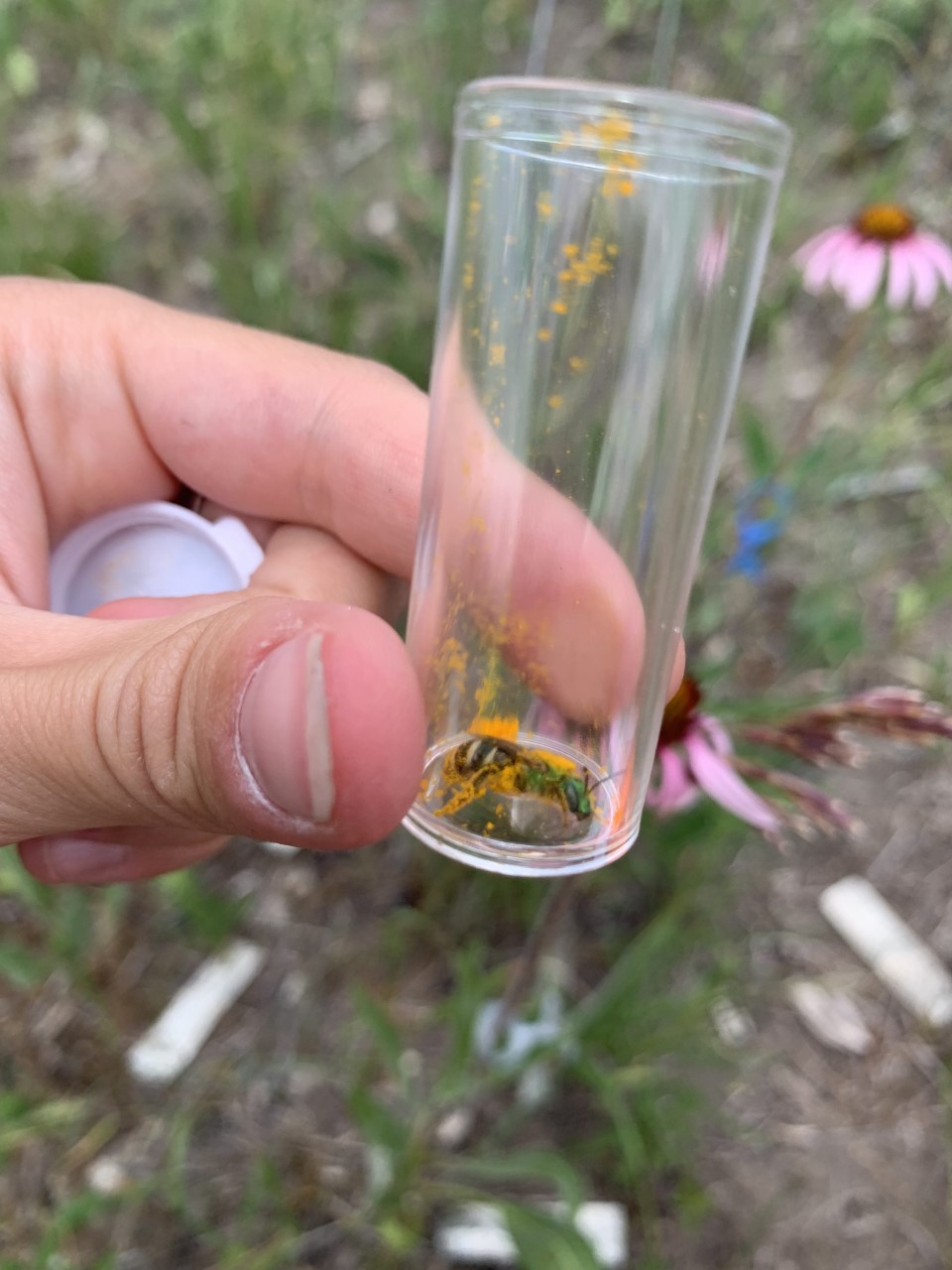
After catching four bees from each site and chilling them in the fridge, I got to work scraping the pollen off each bees’ legs and stomachs. Once I was satisfied with the scraping and had deposited the pollen in its respective receptacle, I toted the bees back to where I found them and released them. It was bittersweet to say goodbye, but they’re probably happier buzzing amongst the Echinacea than with me in the basement of Hjelm.
The pollen I scraped off was then mixed with a dab of fuchsin jelly melted onto a microscope slide. This made the the tiny pollen grains stand out more under the scope. After each pollen sample was accounted for I began to do the same with pollen collected from the flowers in the field, as this will one day comprise my pollen reference library. Can’t wait to go out and catch more tomorrow!
A tiny Halictus spp. friend. Get a load of all that pollen!
A slightly blurry Agapostemon virescens pre release
Today marked the beginning of our third week of the field season. The team began the day with phenology measurements in the remnants. Today we measured 509 flowering Echinacea heads! This is roughly 1/4 to 1/3 of the heads we are monitoring. We expect flowering will peak next week. Stay tuned for more information! During the afternoon, the team worked on independent projects and continued assessing Hesperostipa reproduction in remnants. Emma and Amy measured a plot at landfill east with over 100 culms… oofta!