|
|
Hi everyone!
It’s been a fun and productive week at the College of Wooster and we’re already starting to see the products of our hard work!
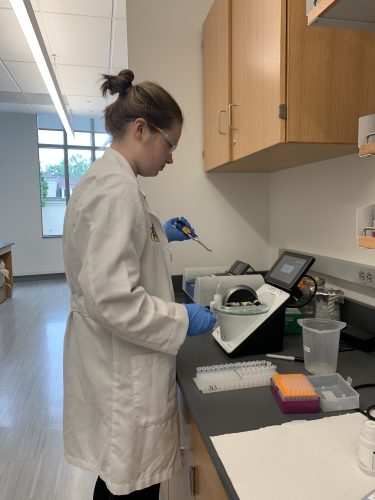
Avery, Mia, and Miyauna spent the day continuing DNA extractions, this time using fresh samples in an attempt to determine if there is a difference between extracting DNA from fresh or dried leaves.

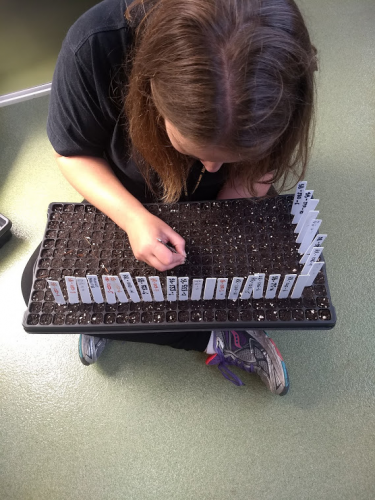
Jennifer, Avery, and I continued planting seeds and hoping they’ll grow big and tall!

At the end of the day, we had a pleasant surprise when we successfully extracted DNA from the fresh leaf samples with much more ease than the dried samples!


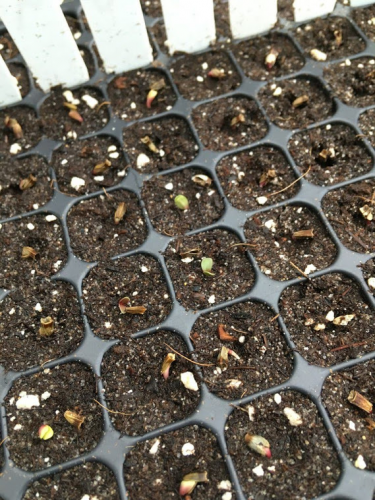
Not only did we find some amazing results with the DNA extraction, but our seeds are starting to sprout their first leaves! You go little guys!

After such an amazing week, I can’t wait to see what the next one holds!
Until next week,
Ren
Hello flog friends!
We are busy here in our Ohio lab working hard, getting stuff done, and having a great time doing it!
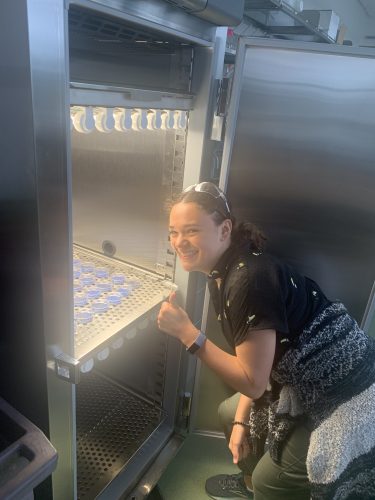
Bright and early in our morning, I accompanied Seed Master Ren to visit our little seeds after they’re first summer night in the growth chamber.
Avery, the President of PCR, and Mia, clumsy R ninja, continued running PCRs and getting all of that DNA information.
I even got to head down with Mia to the nanodrop (which was the coolest thing ever). The nanodrop definitely gave us some very interesting results.
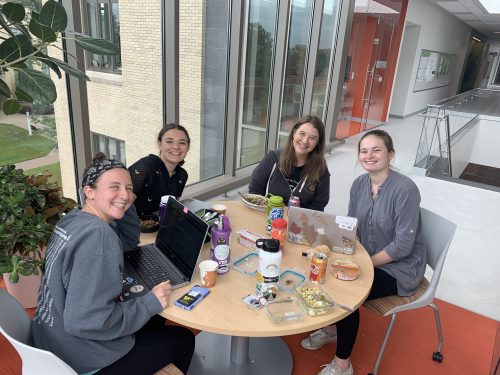
We then all came together with Jennifer/Dr.Ison for a very fun and informative lunch gathering.
Ren would then go to check on the seeds and plant the ones that were ready to go! Now that some are planted, we are preparing to baby them as much as possible to get them through the rough first couple of weeks.
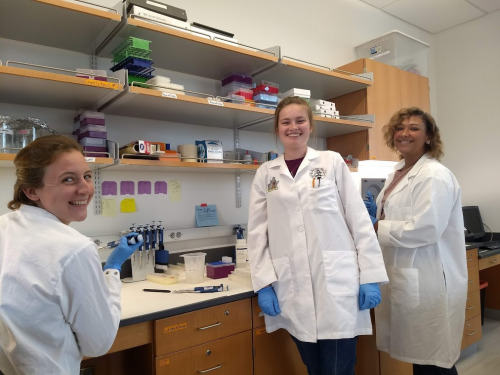
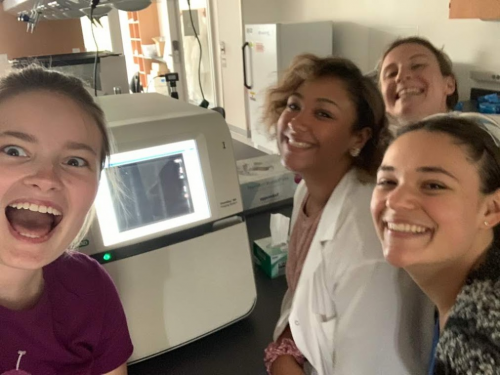
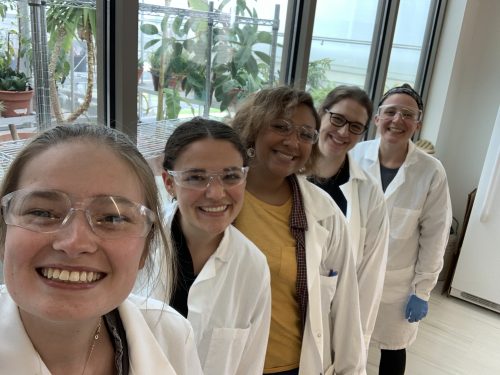
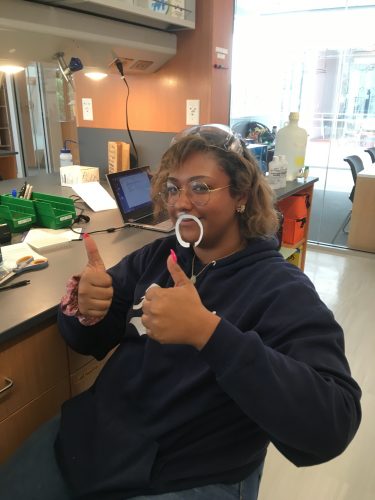
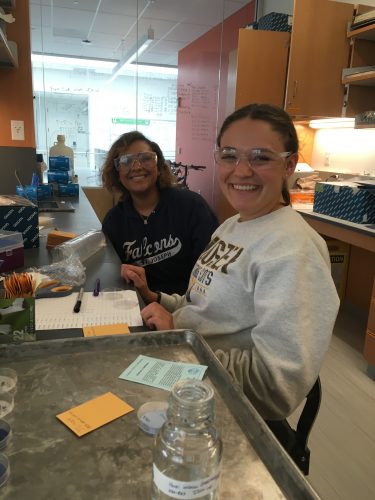
After all of this hard work, we even had some time for a lab coat selfie!
We shall see what amazing adventures the next day holds!
Have a great day flog!
Miyauna
Hello flog!
It’s been another busy day for Team Echinacea at the College of Wooster.
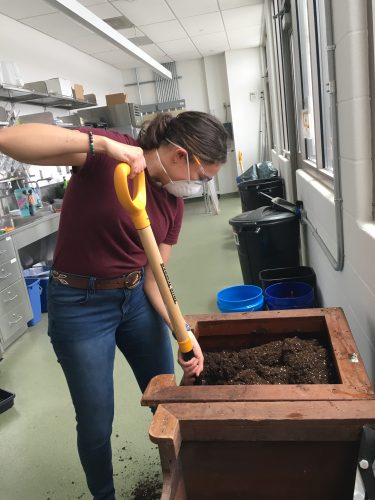
Seed Master Ren started the day off by making an excursion to the garden store to hunt down some soil that will be used to plant the seeds once they have germinated and formed a radical. Then, she showed off her muscles, mixing the soil with sand and some water. Additionally, the plant growth chamber for our first group of seeds was switched over into summer mode, so we will hopefully we will see some baby plants soon!
Seedmaster Ren wrangles some dirt Extraction extraordinaire Miyauna cranked out another grueling set of DNA extractions from some of the parental plants. Luckily though, this should be our last set of extractions at least for several weeks while we wait for our seeds to germinate and grow big enough so we can take a leaf sample.
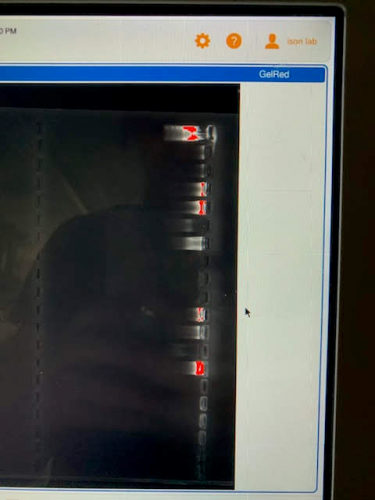
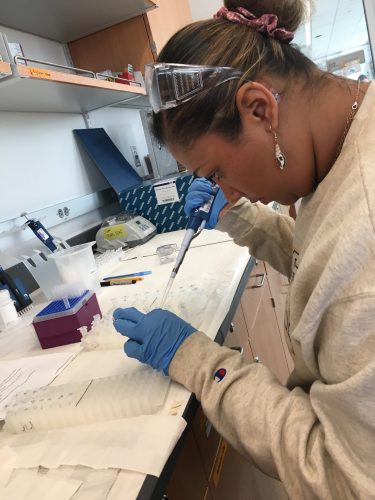
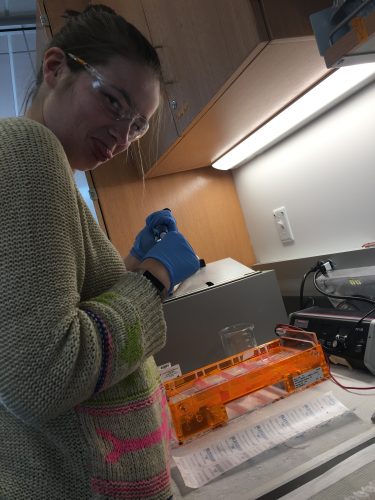
Miyauna, getting into the extraction zone. Our resident R expert/clumsy ninja Mia and I teamed up to begin PCR reactions with the DNA extracted on Tuesday and a batch that was extracted back in November. Each DNA sample needs to undergo 10 different PCR reactions (for the 10 different microsatellite markers being used), and after a bit of a slow start familiarizing ourselves with the methods, we ended up breezing through three PCR reactions. We also ran some gels and a nanodrop on the DNA samples to double check and make sure that DNA was successfully extracted for all of the samples.
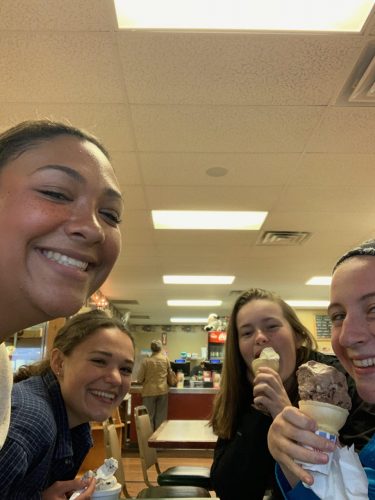
We love PCR and gel electrophoresis!!! After all this hard work, Team Echinacea Ohio called it a day in the lab. However, our team members still had one more important task – the noble quest for ice cream. Braving a torrential downpour, we set off for a local ice cream parlor/shop, where we enjoyed the sweet rewards of a hard day’s work.
Lab mates that eat ice cream together stay together So long for now!
Avery
Hello flog long time no see!
Team Echinacea East working out of America’s premier college for mentored undergraduate research (lol) had a busy day! This summer we will be performing paternity tests on the seeds made during the big events from last summer. Today we did a set of DNA extractions on leaf tissue that was grown in the spring. This is a very long process and was a fairly novel process for all involved but everyone did a great job! Especially our Extraction Extraordinaire: Miyauna who led us fearlessly through the treacherous and tedious process.
The Extraction Extraordinaire hard at work. While the samples were in the water bath Dr. Ison/Jennifer gave a very interesting presentation giving background on previous work done by members of team echinacea. For lunch we stole some extra boxed lunches from a high school camp going on in the building (they were very good). These stolen lunches gave us the fuel necessary to finish the days work.
Miyauna and Ren working on seed germination Seed Master Ren finished putting all of the seeds in cold stratification. We have the seeds in the cold so they think its winter, then we take them out of the cold.
 The seeds chillin’ mid “winter” When all this was going on I (R clumsy ninja) was working in R analyzing genotyping data from a different project.
Tomorrow we will start running PCRs on the DNA samples we extracted today, under guidance of Avery the President of PCR.
Until next time,
Mia
There’s a few general facts that we state when orienting people to the anatomy of an Echinacea. To list a few:
1.) An echinacea head is not a flower, but in fact a composite of many florets, each of which have the full anatomy of a miniature “flower”
2.) Each floret produces an achene, regardless of whether or not it is pollinated.
3.) Each achene may be empty, or may contain exactly one seed.
Now, the medically inclined or Latin-speaking flog readers may see where I’m going with this based off of the title. What if I told you that, as of today, we know that one of these three facts is no longer absolute?
For the first time ever, we have found an achene that contains two seeds.
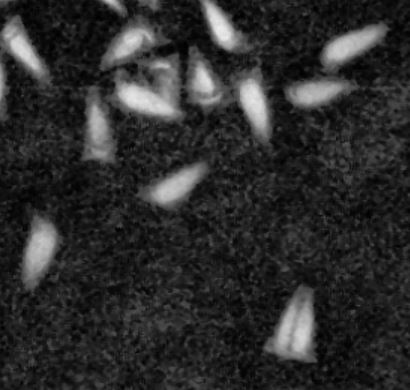
 Twins! Normally, we xray achenes to see whether or not the have seeds in them. In this xray, all achenes pictured have seeds in them except the one in the bottom right which has, well, two! This exciting new discovery will shake the world of plant science.
(Also, to put this in consumer terms, imagine breaking open a sunflower seed shell, and two seeds pop out!)
Hopefully we’ll have more earth-shattering discoveries to share soon! For future reference: this is letno DT-6858 from 2013
Michael
Hello Flog,
We’re wrapping up another week here at the Garden, but the excitement isn’t over yet! Tomorrow and Sunday at the Chicago Botanic Garden, members of Team Echinacea will be attending the Unearth Science festival. This festival is a great chance for everyone to see what all us scientists do at the Garden on a day-to-day basis.
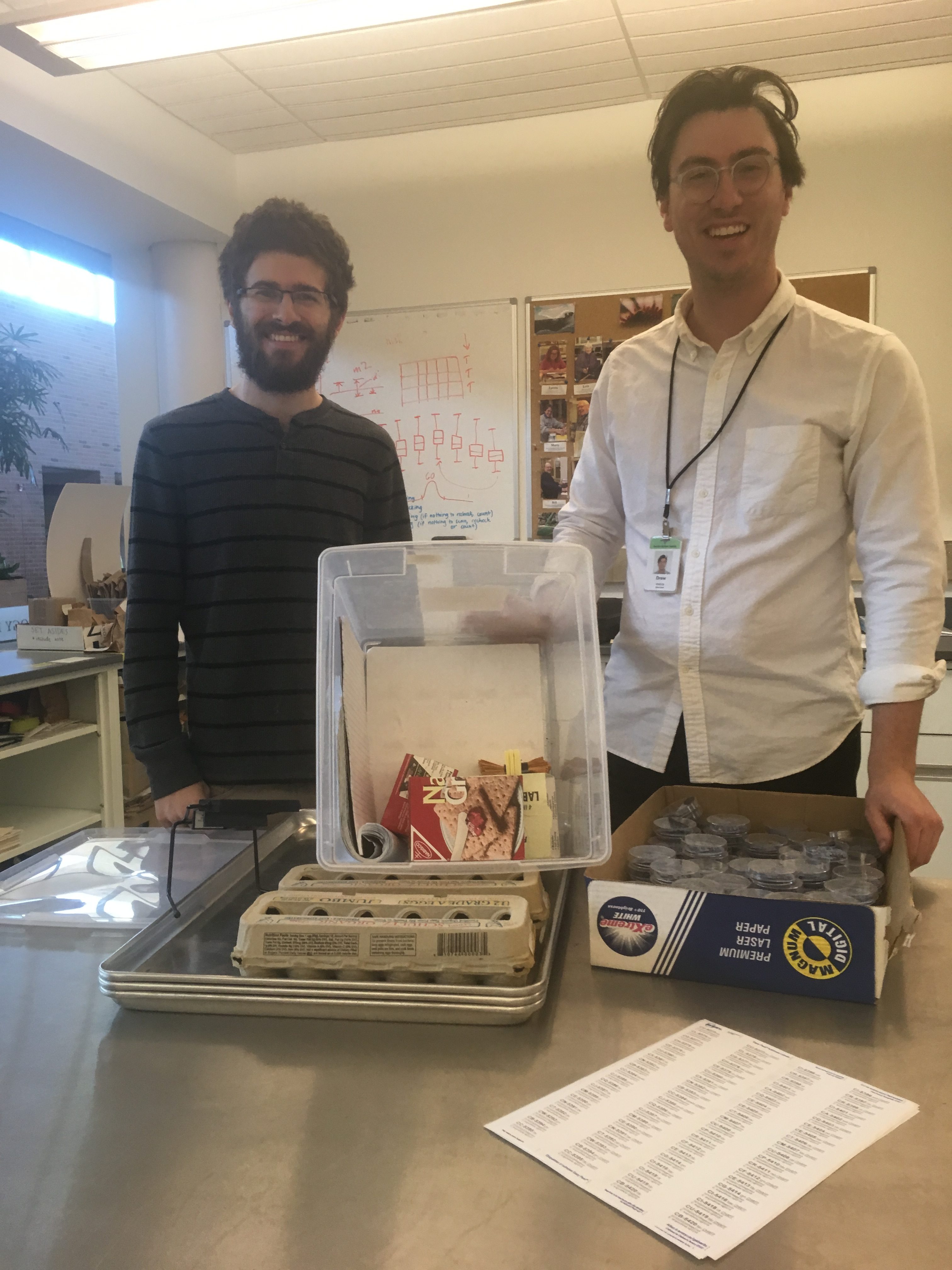
We’ve been coordinating with some of the organizers of this festival, and of course that means that there is going to be an echinacea themed table! We were more than happy to give Drew a bunch of the supplies and samples from our lab so everyone who comes can see what it’s like to process real echinacea plants. Basically, if you come to our table, you’re pretty much part of Team Echinacea! Read all about the festival – and how you can attend – at this link https://www.chicagobotanic.org/sciencefestival
Hope to see you there!
Michael
Michael and Drew with a bunch of Echinacea Lab supplies
Hi Flog!
One of the biggest task we do here at the echinacea project is what we call demap. Demap is our shorthand for “demography map” and is also certainly in no way a testament to our ongoing support of Bill Swerski’s Superfans and how they may pronounce “the map.”
In demap, our goal is to take all of the field records from remnant populations of echinacea that we spend many weeks collecting and make them look all nice and pretty. If you ever doubt just how long that this data takes to collect, do a search of our “daily updates” category and count the percent of days that include the word “demo” or “surv.”
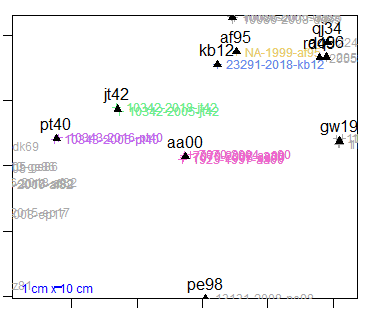
Where the true magic happens with demo, as with many things with the Echinacea Project, occurs in R. There, we are able to take all the location records and all the flowering data for every plant for every year, and create a big, beautiful map.
 A small, but still beautiful map. The big one is a little to crowded and confusing 😥 Why mention demap now in the middle of February? While we finished collecting the data back in October, just yesterday we finished making sure it was all accurate. It may have taken a while, but it’s always worth it for high quality data!
Have a great weekend!
Michael
We all know how the situation goes. You get home from a long day of work, take off your shoes, flop down on the couch, and think to yourself “There’s no way that there’s very much variation in echinacea flowering from year to year. ”
I know, we’ve all been there.
I’m here to tell you that, despite what you might think, there is HUGE variation in echinacea flowering from year to year. When these punctilious perennials decide that it’s time to flower, they really seem to go at it as a group.
And if you’re still sitting there thinking “Well a small amount of year to year change is to be expected” then let me hit you with some visual proof.
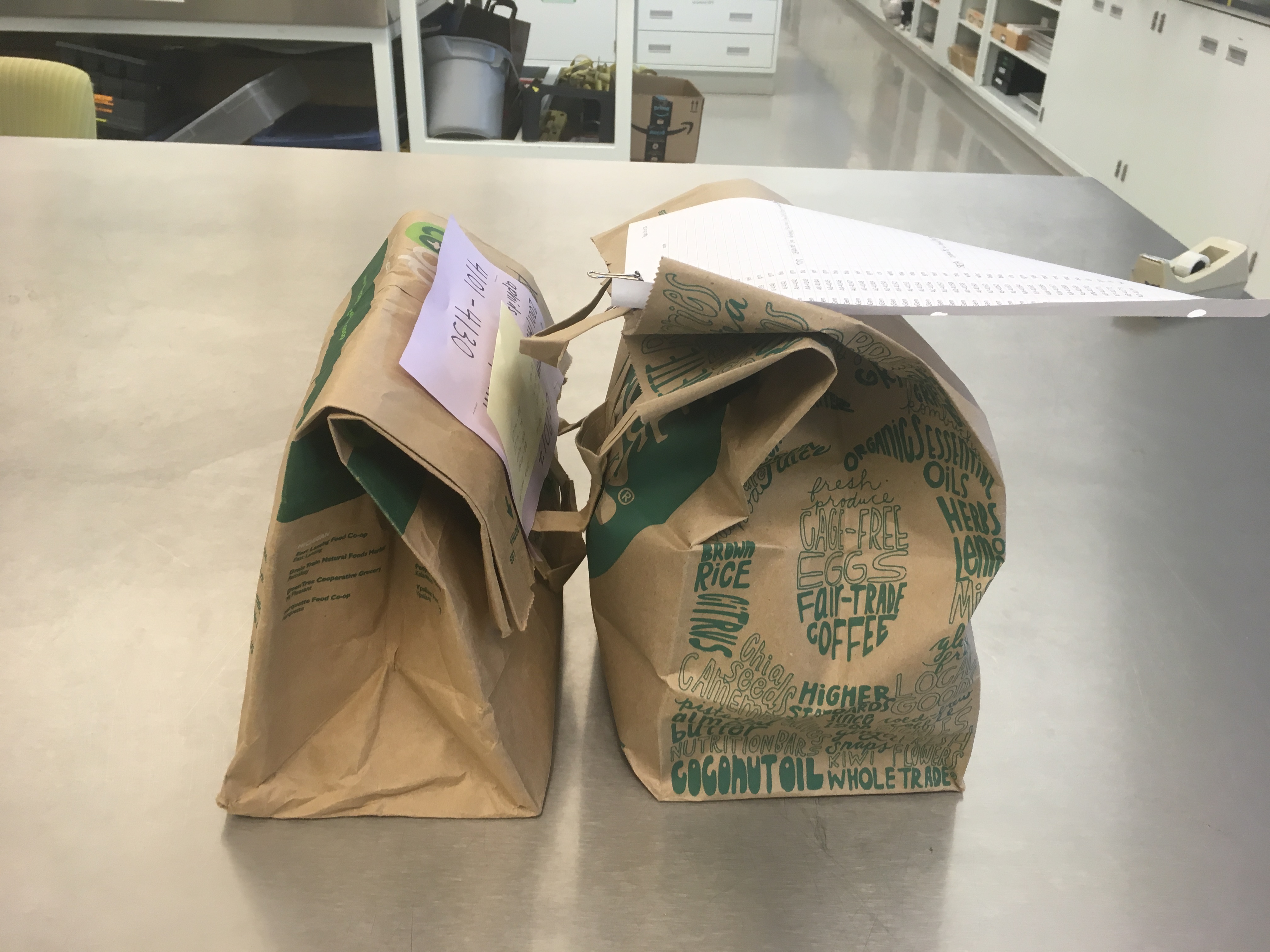
Here is a picture of ALL of the heads from Experimental Plot 1 in 2017. They fill up about 1 grocery bag total. Not a bad haul!
Our plot 1 heads from 2017 Now, let’s take a look at 2018. I spy just a few more bags than in 2017:
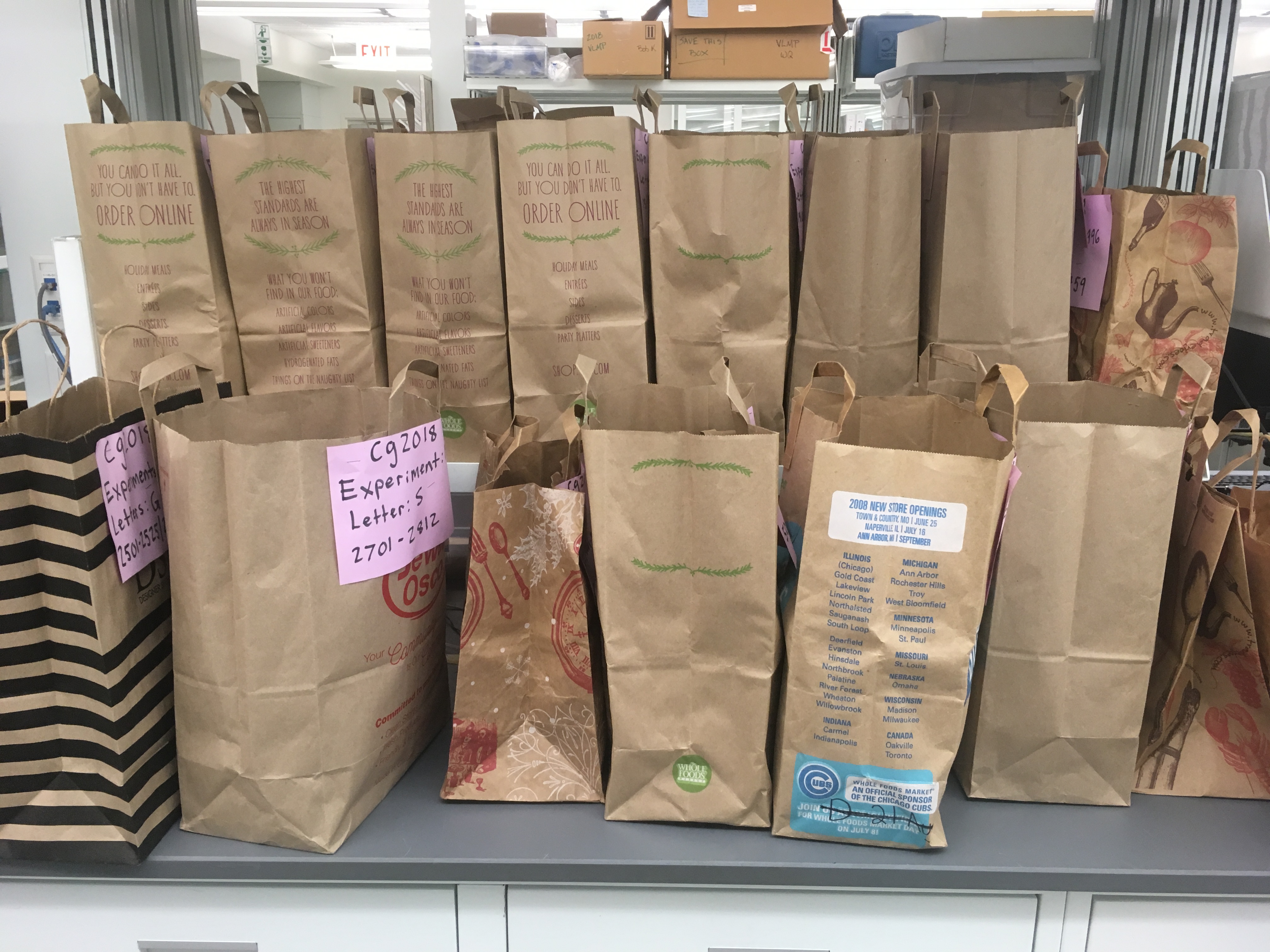
Our plot 1 heads from 2018 in many bags Now it’s time for the real question: why? What is it that makes echinacea flower in these large groups? They cant phone a friend and say “hey dude, you gonna flower this year?” They must respond to signals or communicate chemically or do any of a hundred other things to flower in groups like this. All I know is that we’ve got a lot of 2018 cleaning in our future.
Hello Flog!
I know you’ve all been sitting on the edge of your seats waiting for your most recent update on our push to xray our achenes. Wait no longer! I’m here to inform you that as this is being posted the last of the 2016 achenes are being assembled. 2016 is the most recent year for which we have every head cleaned and randomized, and marks the beginning of the end for our backlog. Very soon we will be seeing some 2016 seed sets. Exciting!
Implied above, this also means that 2015 is fully assembled. 2015 was the largest year of flowering ever for the project with over 3000 heads. Not to fear: they’re all cleaned, randomized, xrayed, and ready to be classified.
All of our assembled 2015 achenes Tune in next week for an update on the status of the polLim experiment xrays. expect good news!
Michael
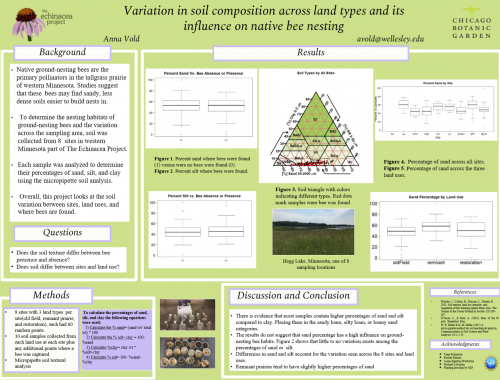
After processing soil samples for two weeks (341 to be exact!) I was able to analyze some of the results and, along with the trusty functions of R (and of course T-Swift music) graph my data. I have included my poster down below and a pdf link.
The results provide evidence that shows soil in western Minnesota contains large percentages of sand and silt, with little clay. Between each of the 8 locations, some variation was present in the amount of sand, but not with clay. The results also showed that sand and silt may have no influence on the nesting locations of native bees. When compared, the graphs of sand and silt percentages from where a bee was found and not found were quite similar. So the question remains- What are the factors that influence where bees build their nests?
Throughout my entire time working on Team Echinacea and this soil project, I have gained valuable knowledge and experience about data collection, project development, and different research methods. And not to mention the amazing lab group and individuals I have gotten to work/collaborate with! Since my college career is just beginning, the future has a lot in store for me- I can’t wait to see what happens in the next couple of years.
But one thing is for sure, I can officially cross “eat deep dish pizza in Chicago” off my bucket list!

AnnaVoldposter19.pdf
|
|