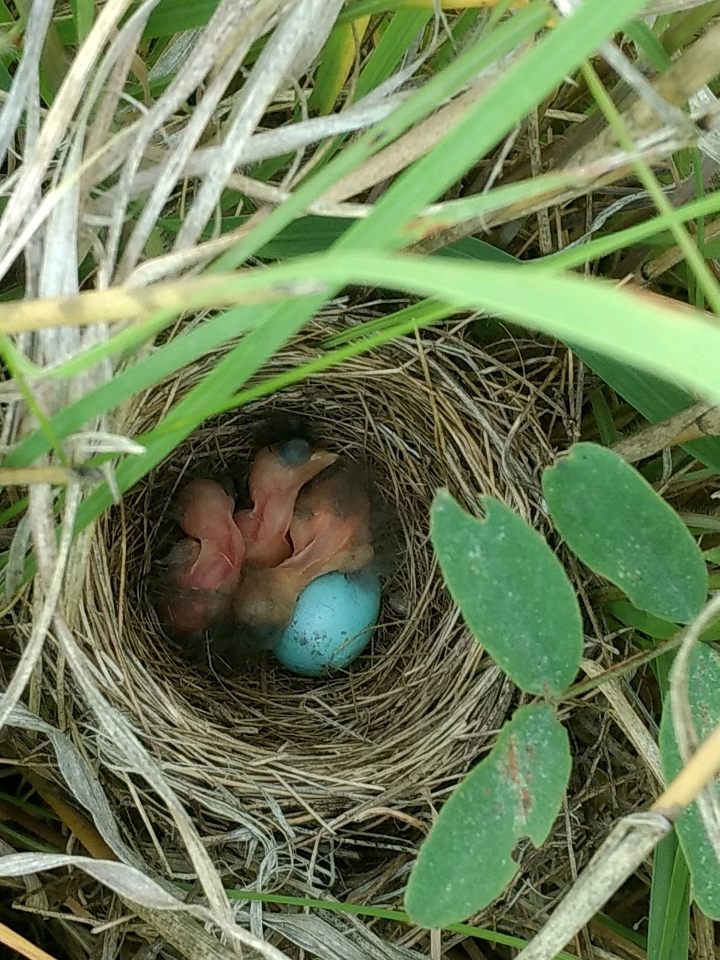
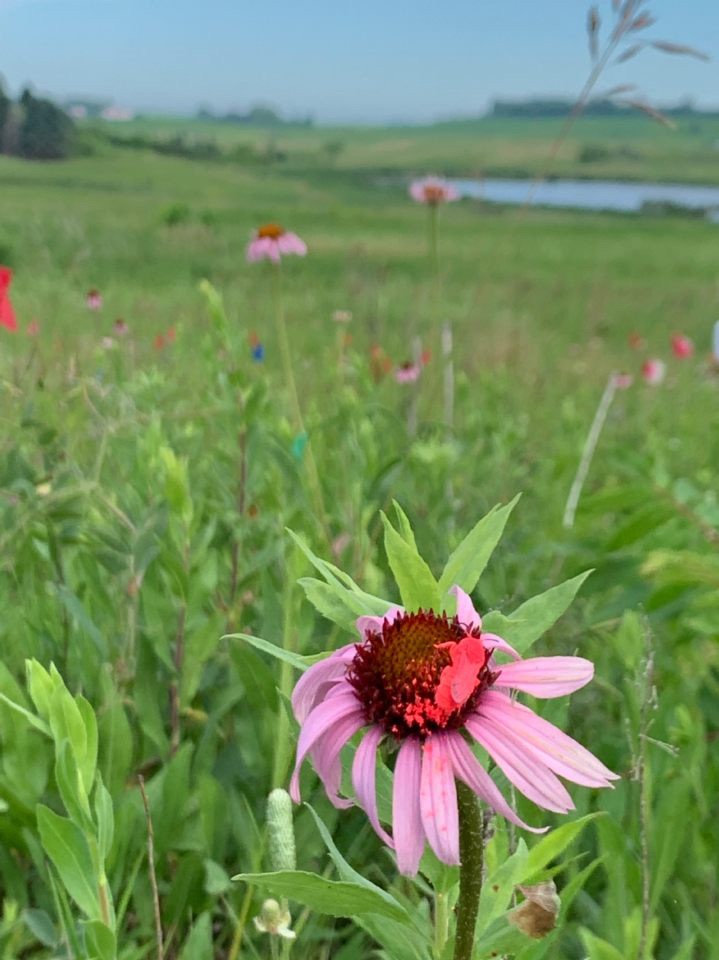
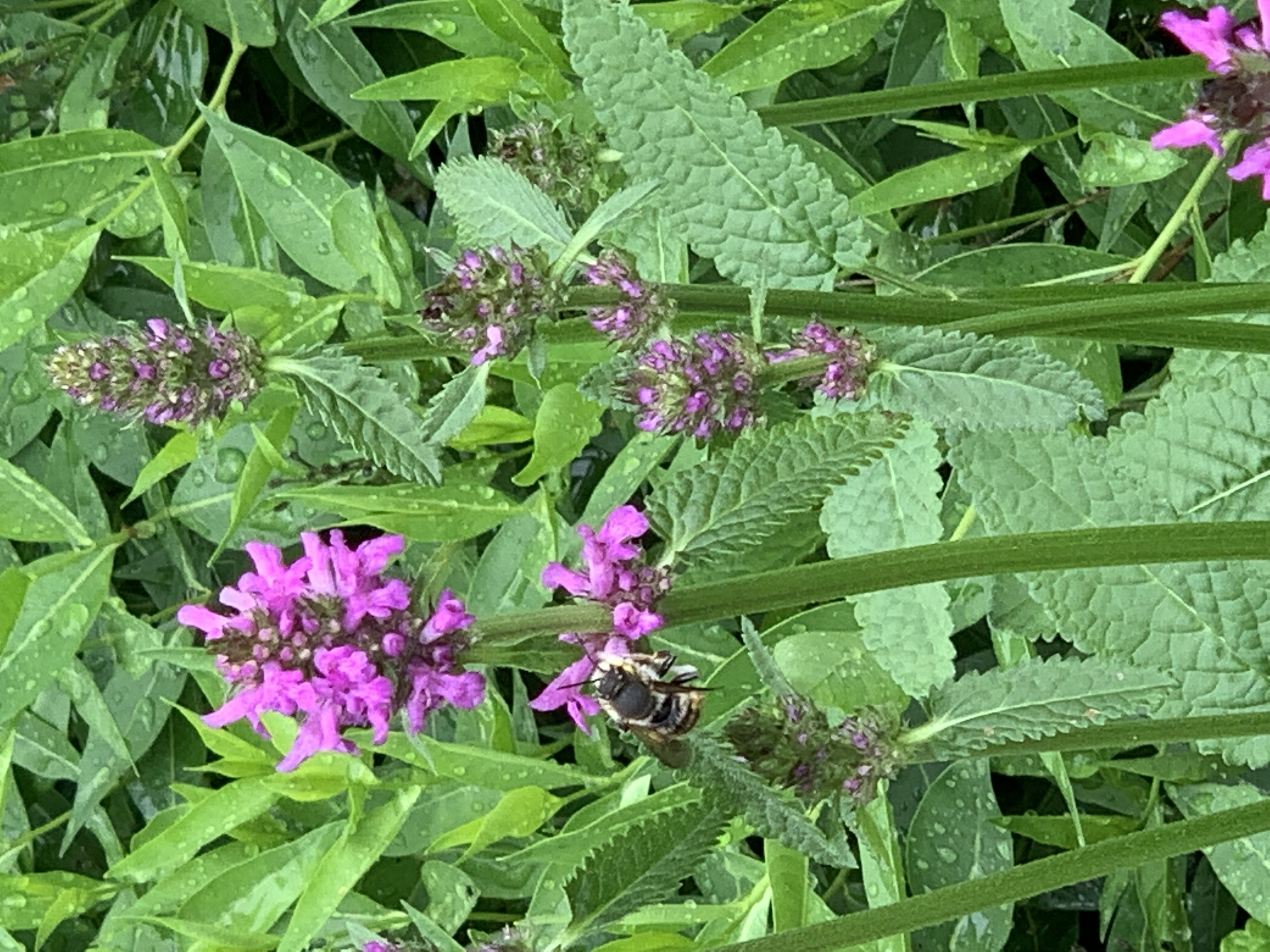
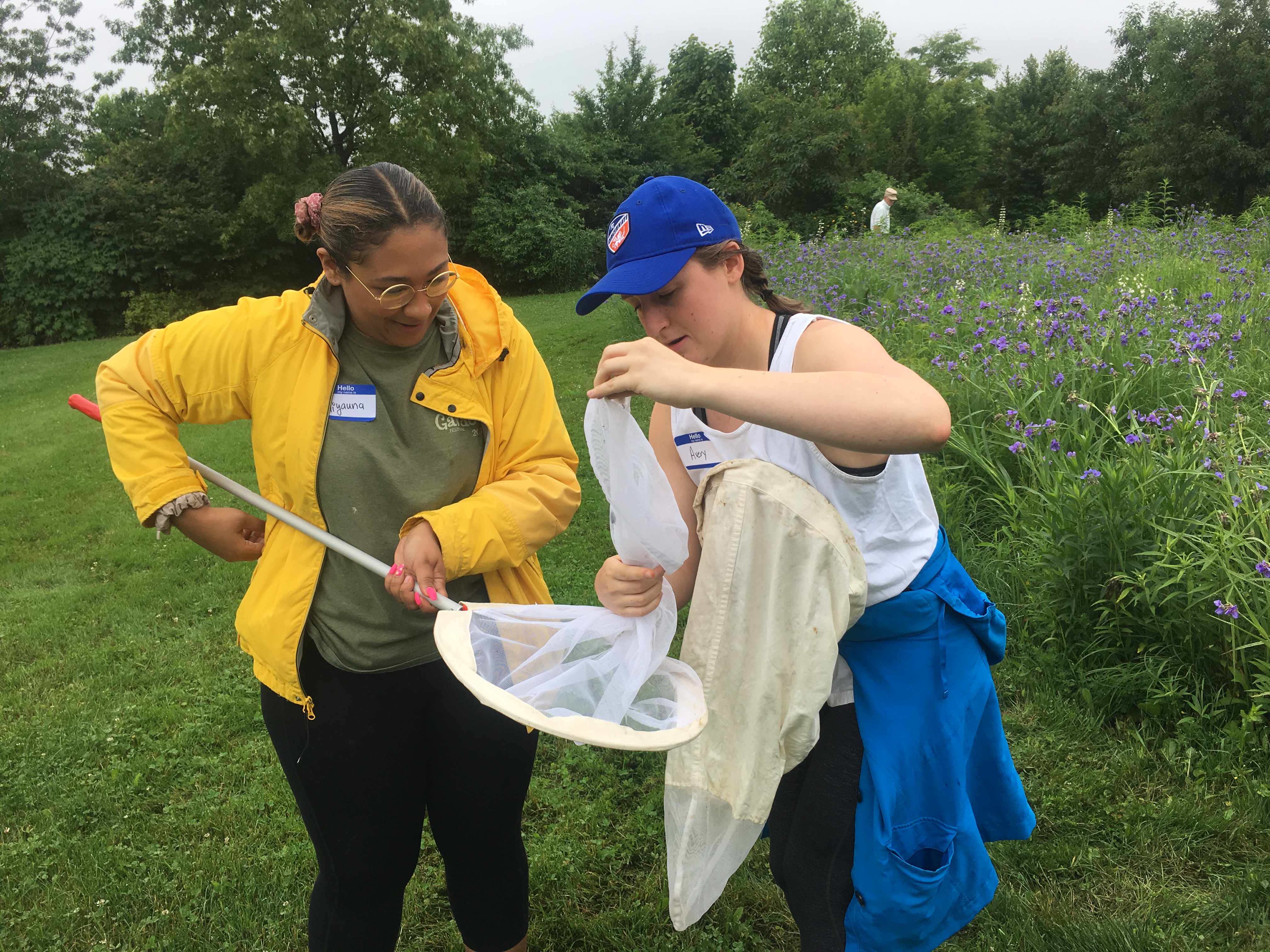
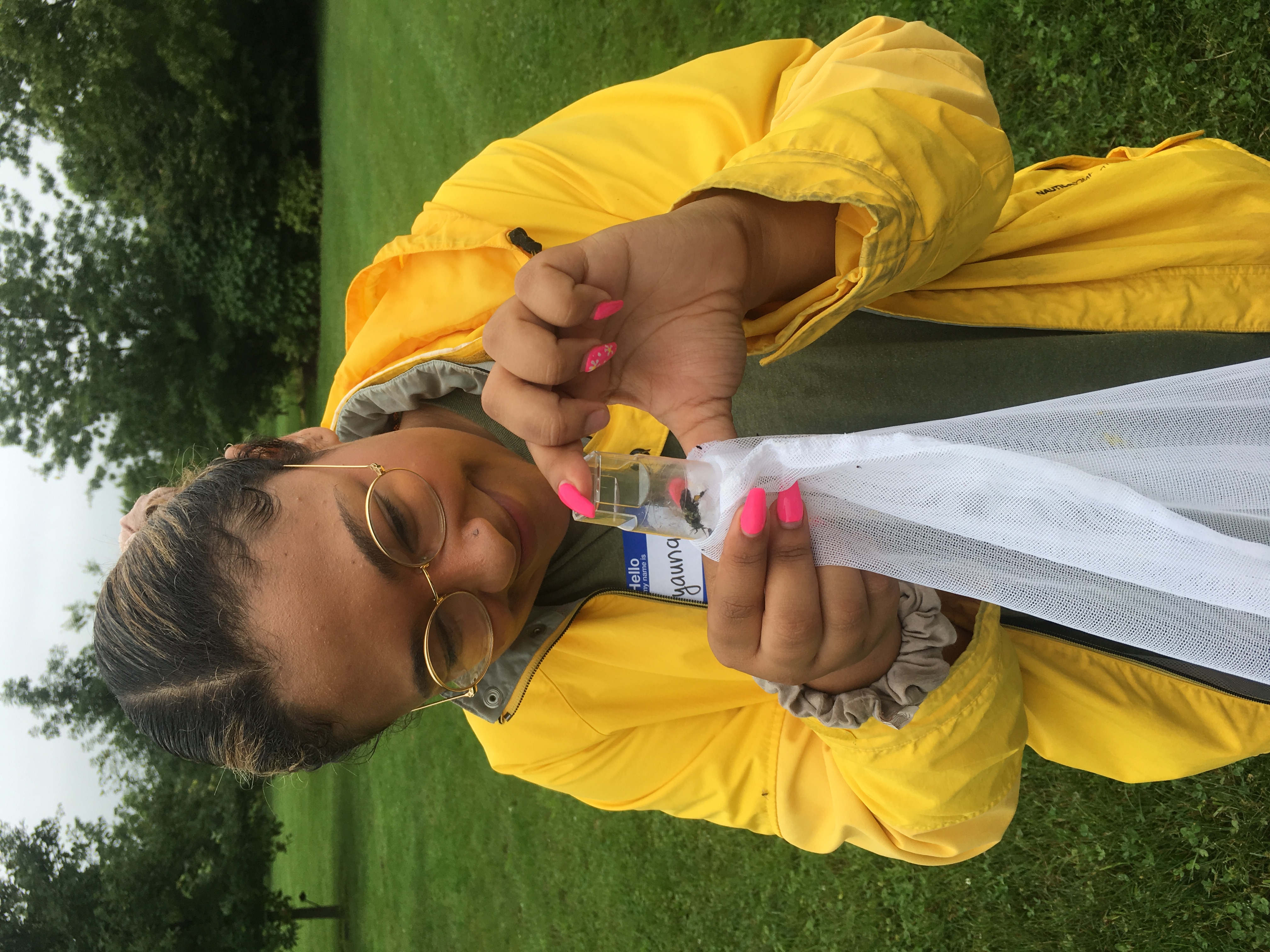
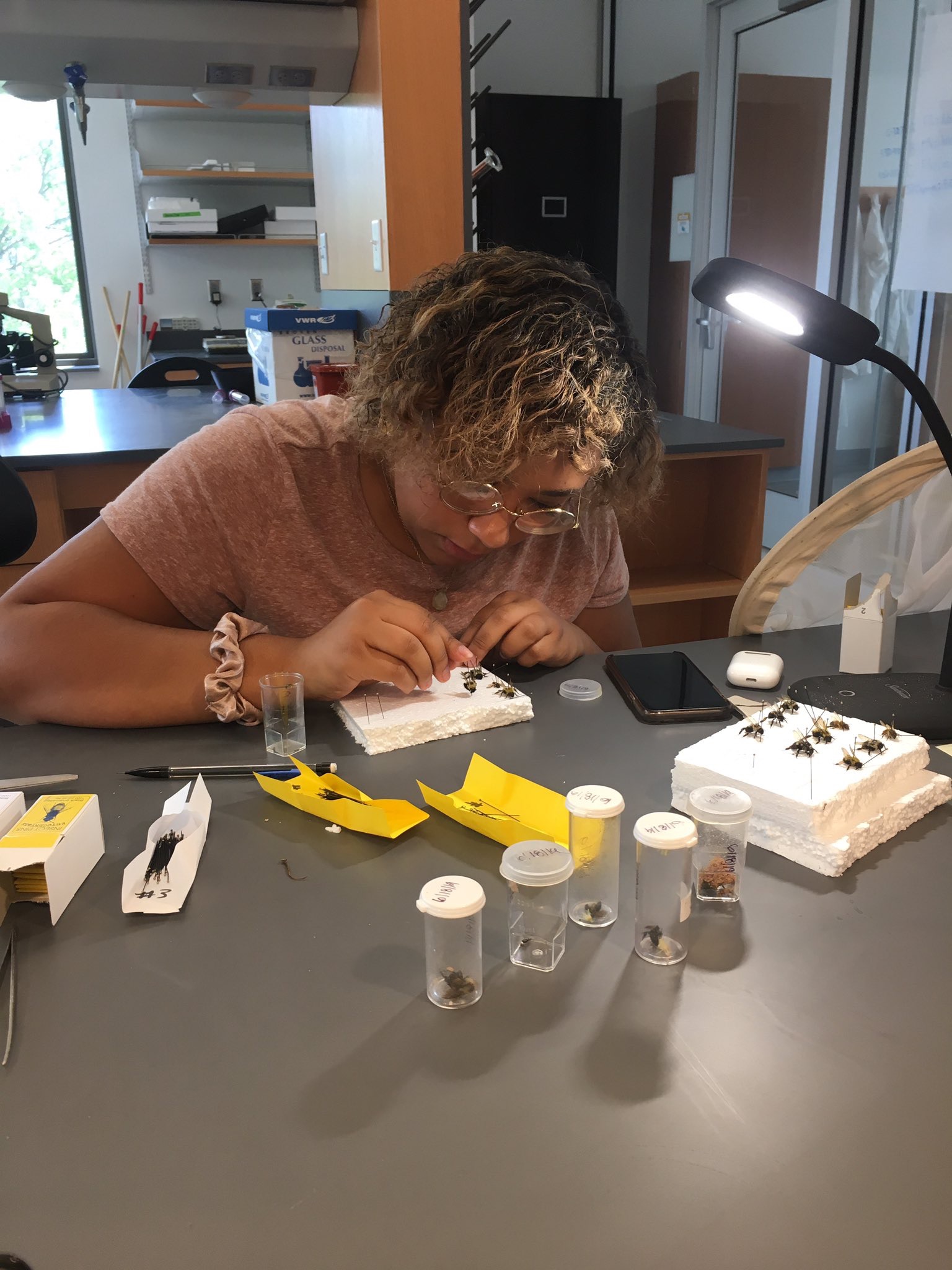
Today was Phenology Phriday! Much of the team recorded flowering progress in P1, P2, and P8 this morning, where Erin found an adorable nest of baby Field Sparrows!
Amy and I split off to check on the plants in the remnants. Near East Elk Lake Road, I also practiced collecting Heliopsis helianthoides pollen for my upcoming pollen interference experiment. Excited to start my crosses next week!
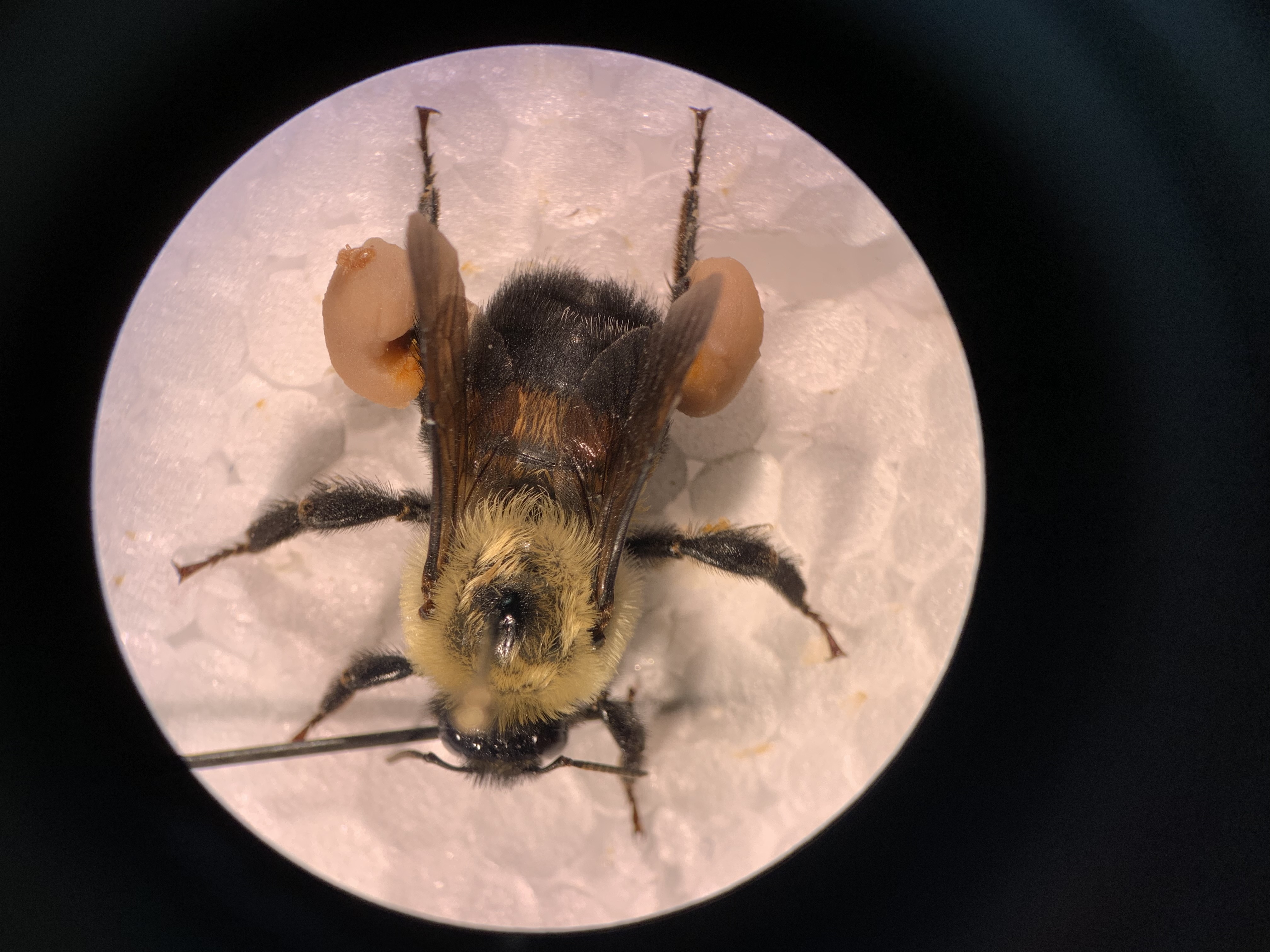
The other teammates were also making progress on their projects. Jay finalized details for data collection for the Ash Annihilation experiment. Drake continued collecting seeds from parasitic Comandra and a variety of host plants. Meanwhile, Jennifer and Miyauna tried dipping bees in fluorescent dye to follow their activity around the plots. I must say, their new costumes look lovely!
In the afternoon, Shea, Miyauna, and Jennifer pinned the bees they caught earlier this week, while much of the team returned to P8 for a full afternoon of leaf measuring. We’ve nearly canvased the whole plot of basal plants with fresh toothpicks, so thoroughly that we almost ran out of toothpicks! Overall, a productive day in the field.
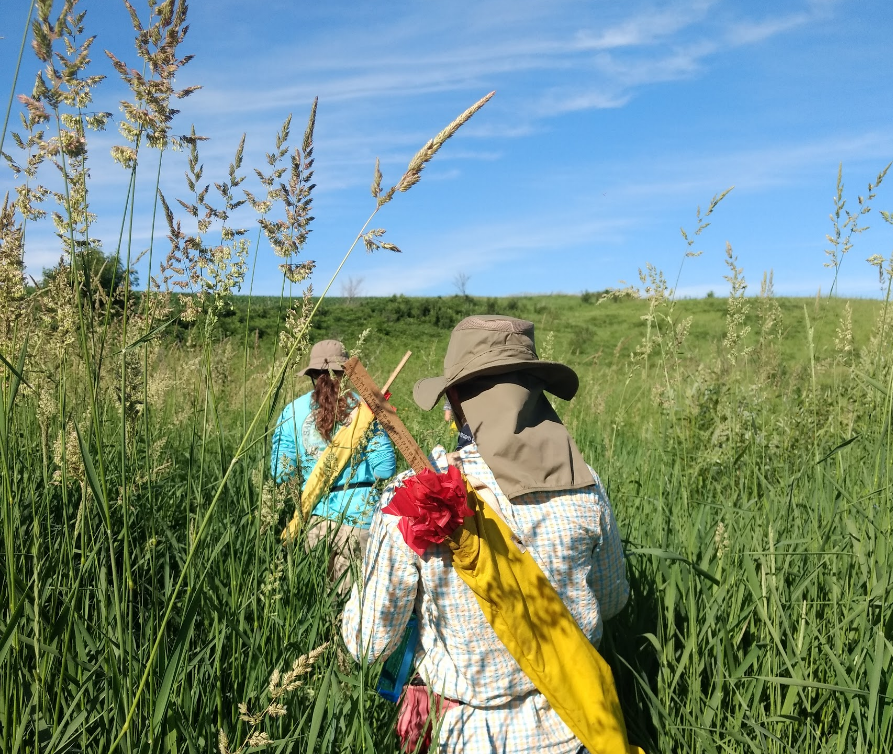
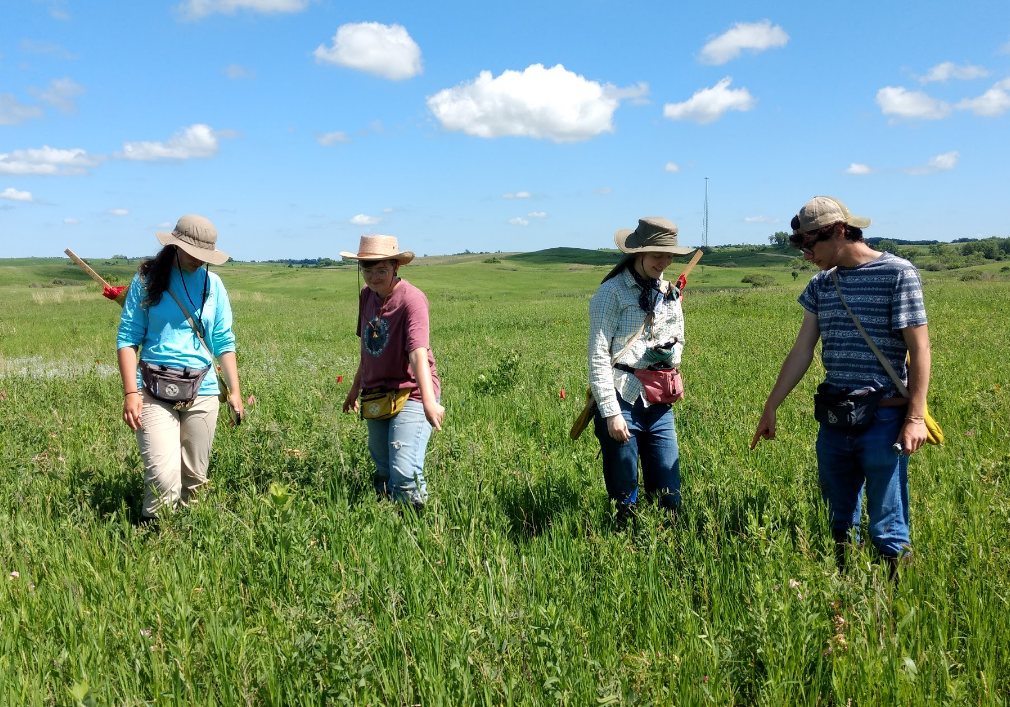
We started today by searching for flowering plants in Experimental Plot 2. The plants in the approach are really getting tall, and lagging on the walk in can mean losing the person in front of you!
Shea and Julie battle their way through the grass on the approach to P2
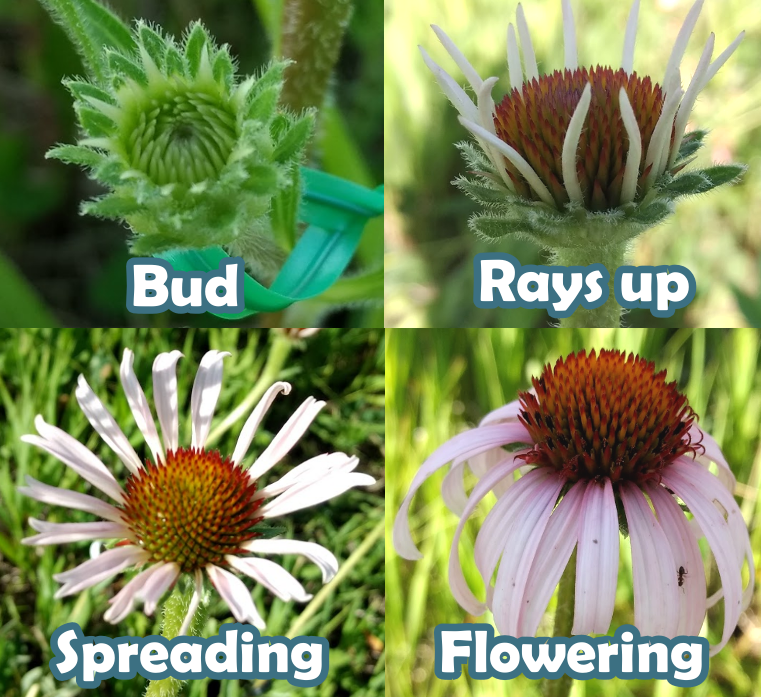
Today I received a crash course in phenology. As heads begin flowering they progress through a number of stages that we record. Being able to distinguish between them is important to understand whether flowering has begun, or if we need to check back soon to record the start. Here are the four stages we saw today!
We record”rays up” after they’ve grown at least one centimeter!
We all paired up to search the rows, which eventually resulted in Riley and I facing down our advancing teammates as we tried to thread the needle between the other pairs. We have to be careful about where we step in the plots so we avoid trampling plants.
Our view of Shea, Jay, Julie and Drake as we tried to search the middle row; we needed to stand where Jay and Julie are!
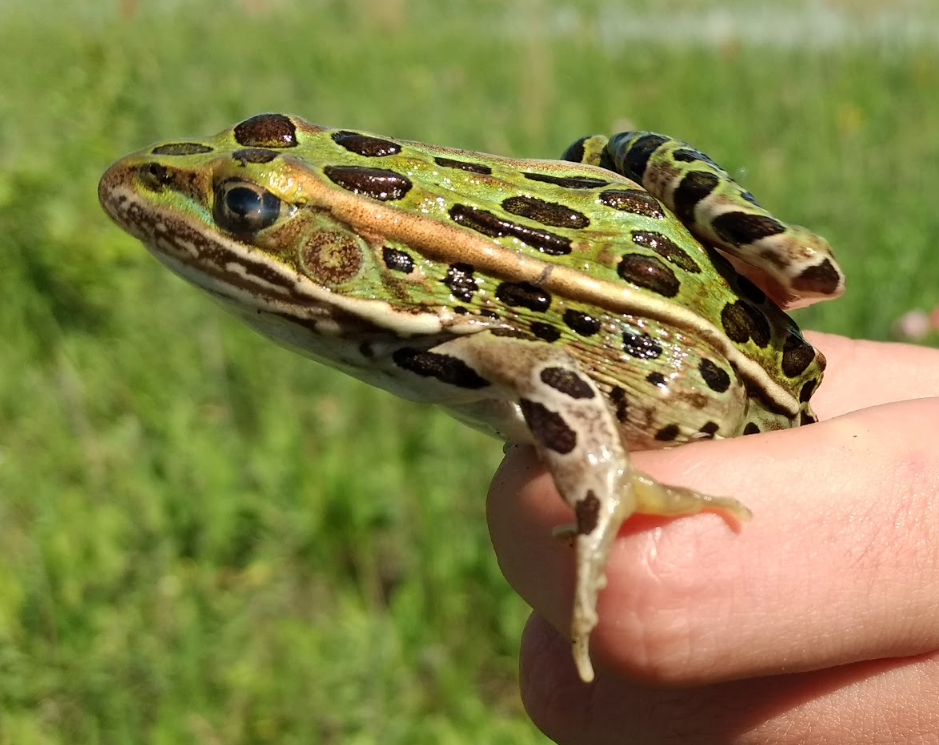
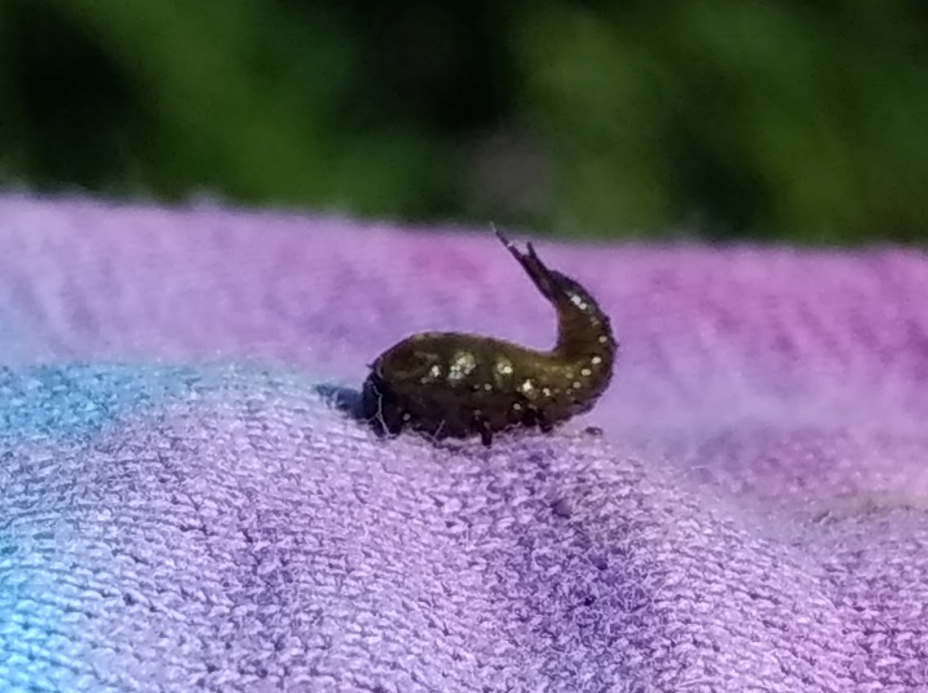
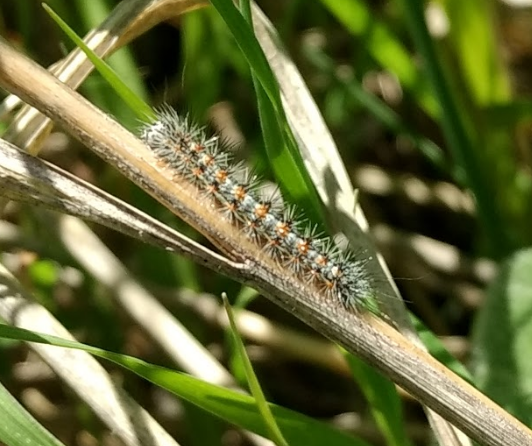
In addition to plenty of plants we saw a menagerie of creatures in P2. My caterpillar adventures continue, and I am continually impressed by how many frogs live in the prairie! Back home in the swamp frogs are never a surprise, but here big leaps from little guys in the middle of the plot still startle me.
Leopard frog making a great escape from Drake’s handA mystery slimy guyA mystery fuzzy boy
This afternoon we were visited by Tracie, Josh and Ruth, and over the phone Julie, Amy and I chatted with Lea about methods we could use this season. It was exciting to have new faces and voices around the Hjelm House! We spent the sunny afternoon sweating and rechecking flowering plant locations in P1, and weather providing we should be able to finish up P2 tomorrow.
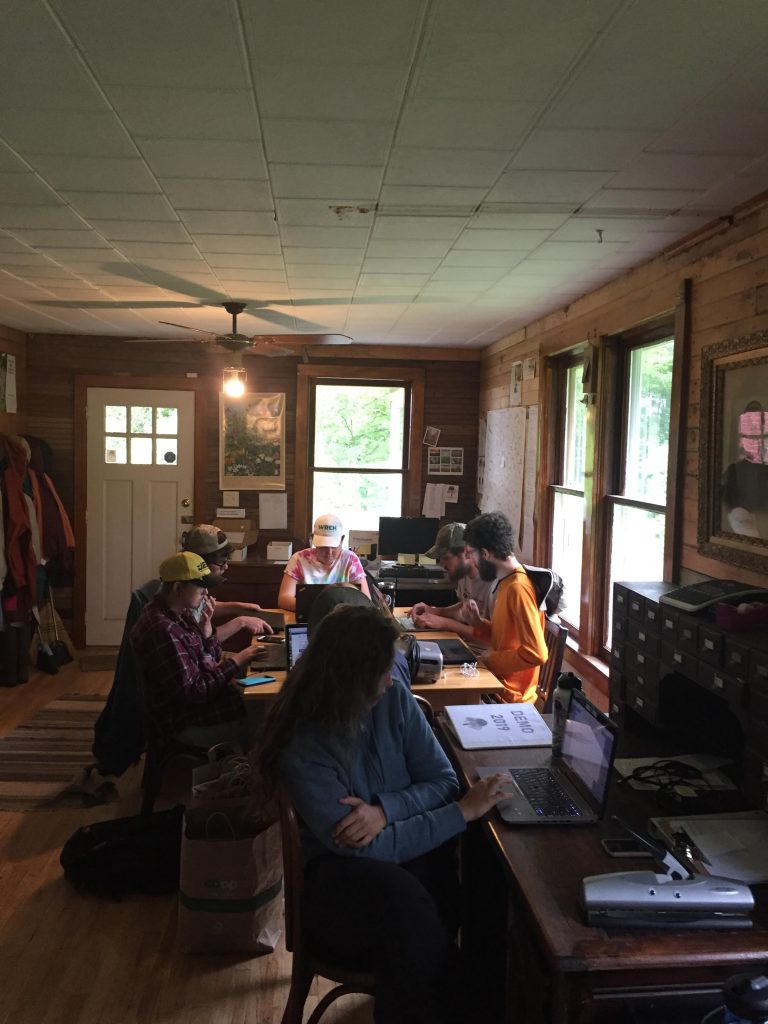
Today began with a 10 AM start time due to some forecasted rain and thunder. When the team arrived, everyone was catching up on either entering data, working on individual project proposals or getting some Visor forms ready for future data collecting events. After the rain subsided, a few groups went out to find some Porcupine grasses (stipa) in P1, while Shea and i prepared for YPT (Yellow pan trap) sites for collecting bees in the next few weeks.
Here the busy worker bees in the Hjelm Hive working inside while the storm passes.
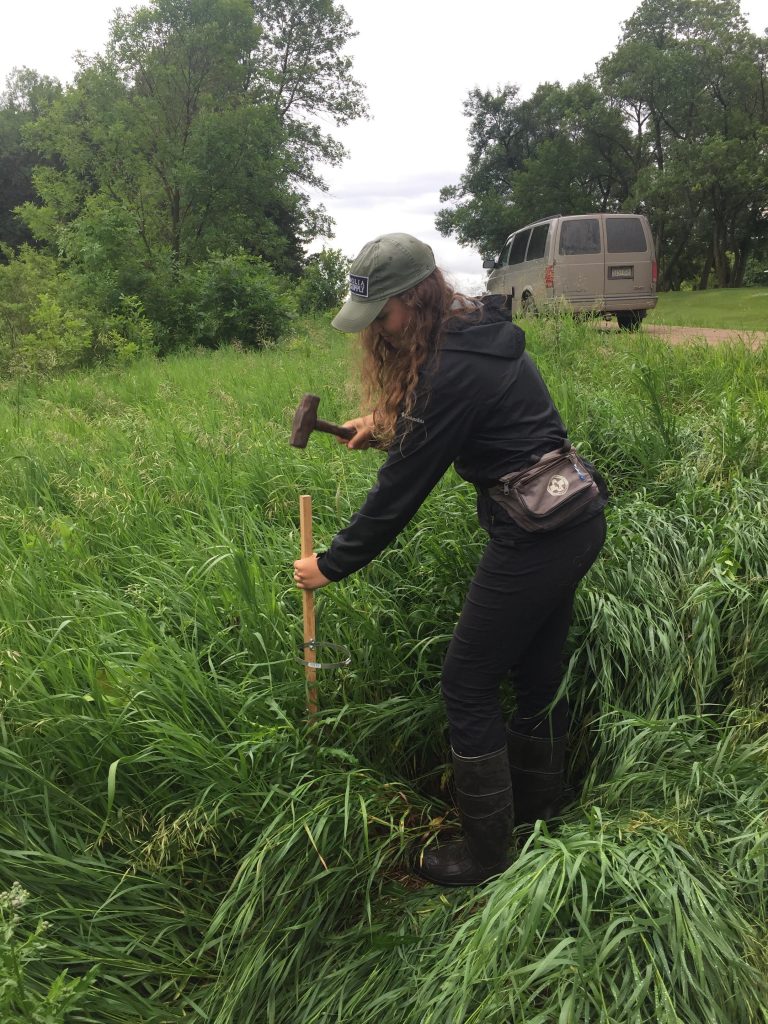
Shea and I placed 38 YPT”s in the designated locations to collect bees and record the land use nearby the sites. This is an ongoing study for determining local bees families and species and also part of Shea’s 2019 project.
Shea pictured here hammering in a YPT collection stake. Shea shows great promise as a future Hammerschlagen competitor. .
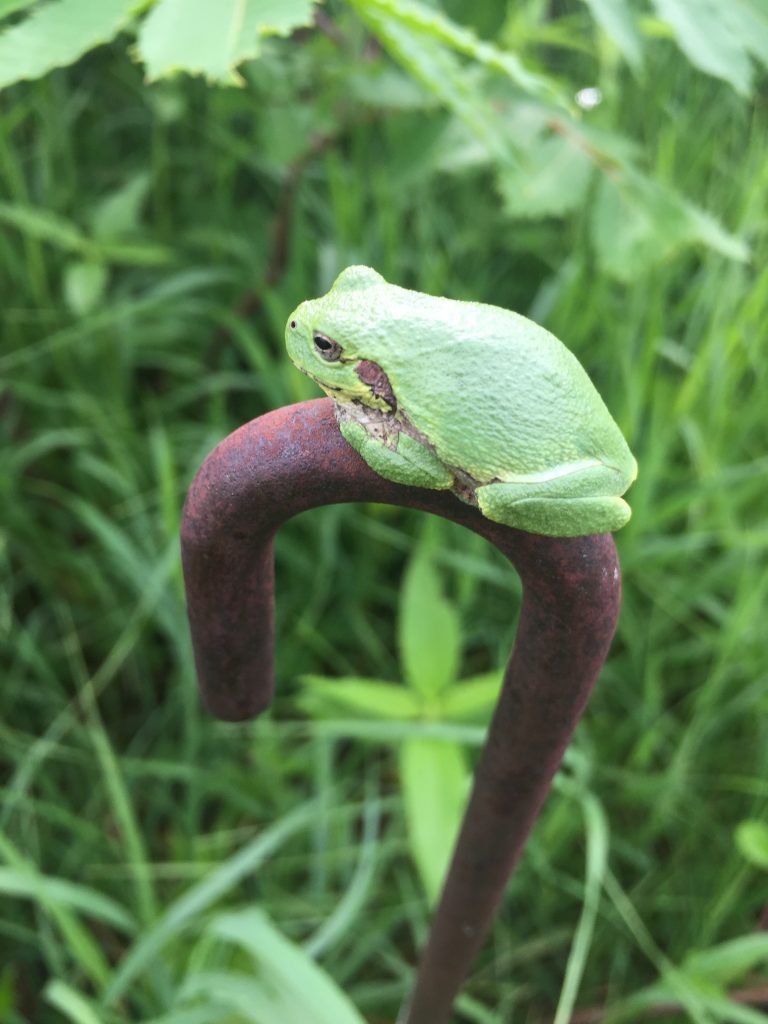
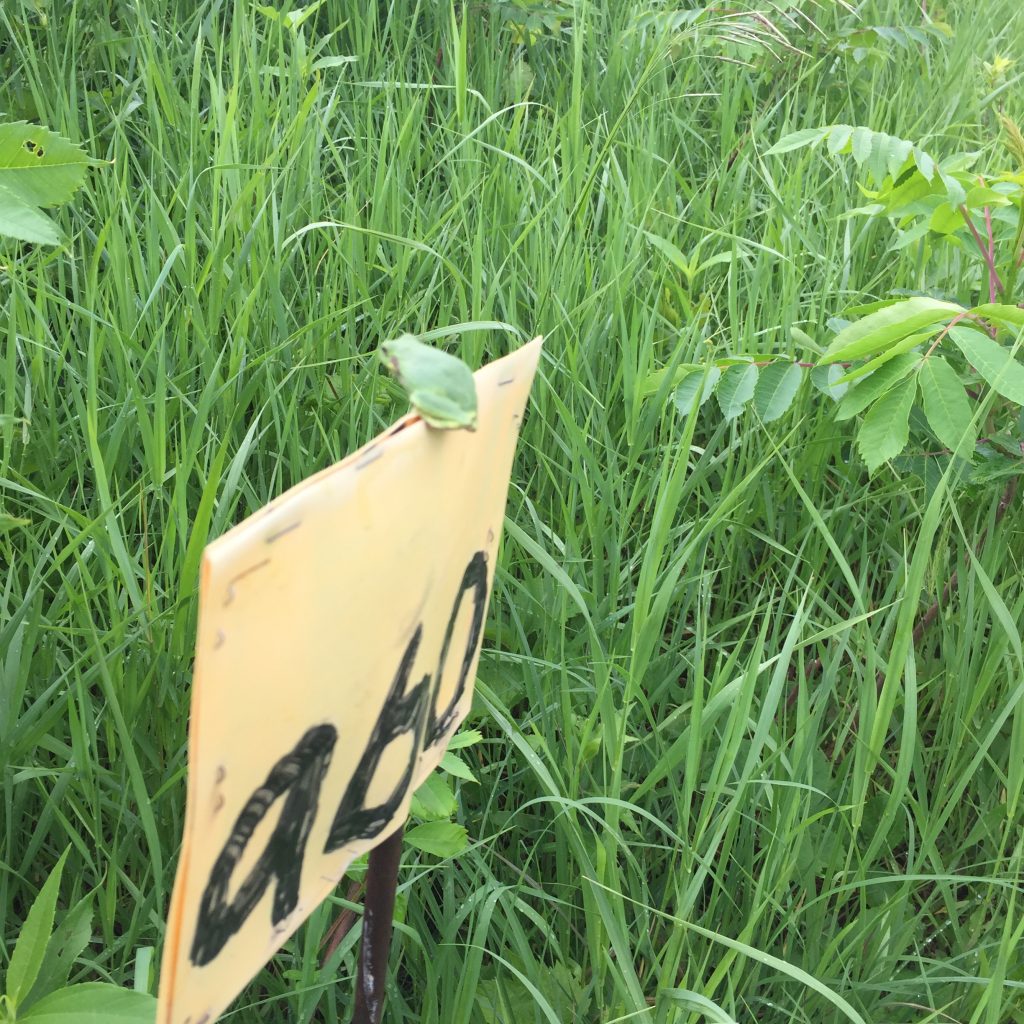
Last week while i was placing some distance labels along the west and east sides of P1, I spotted a frog on top of the very post that i was going to secure the plackard to. I took its picture at 9:19AM and gently moved it to a nearby sumac leaf and secured the sign to its stake. At 9:24AM when i was returning, the frog was back, this time on top of the sign. It didn’t even take the little amphibian five minutes to return to its perch.
There’s a few general facts that we state when orienting people to the anatomy of an Echinacea. To list a few:
1.) An echinacea head is not a flower, but in fact a composite of many florets, each of which have the full anatomy of a miniature “flower”
2.) Each floret produces an achene, regardless of whether or not it is pollinated.
3.) Each achene may be empty, or may contain exactly one seed.
Now, the medically inclined or Latin-speaking flog readers may see where I’m going with this based off of the title. What if I told you that, as of today, we know that one of these three facts is no longer absolute?
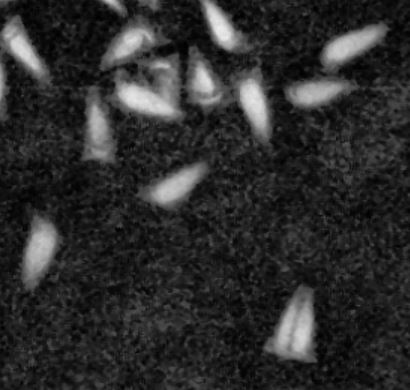
For the first time ever, we have found an achene that contains two seeds.
Twins!
Normally, we xray achenes to see whether or not the have seeds in them. In this xray, all achenes pictured have seeds in them except the one in the bottom right which has, well, two! This exciting new discovery will shake the world of plant science.
(Also, to put this in consumer terms, imagine breaking open a sunflower seed shell, and two seeds pop out!)
Hopefully we’ll have more earth-shattering discoveries to share soon! For future reference: this is letno DT-6858 from 2013
We’re wrapping up another week here at the Garden, but the excitement isn’t over yet! Tomorrow and Sunday at the Chicago Botanic Garden, members of Team Echinacea will be attending the Unearth Science festival. This festival is a great chance for everyone to see what all us scientists do at the Garden on a day-to-day basis.
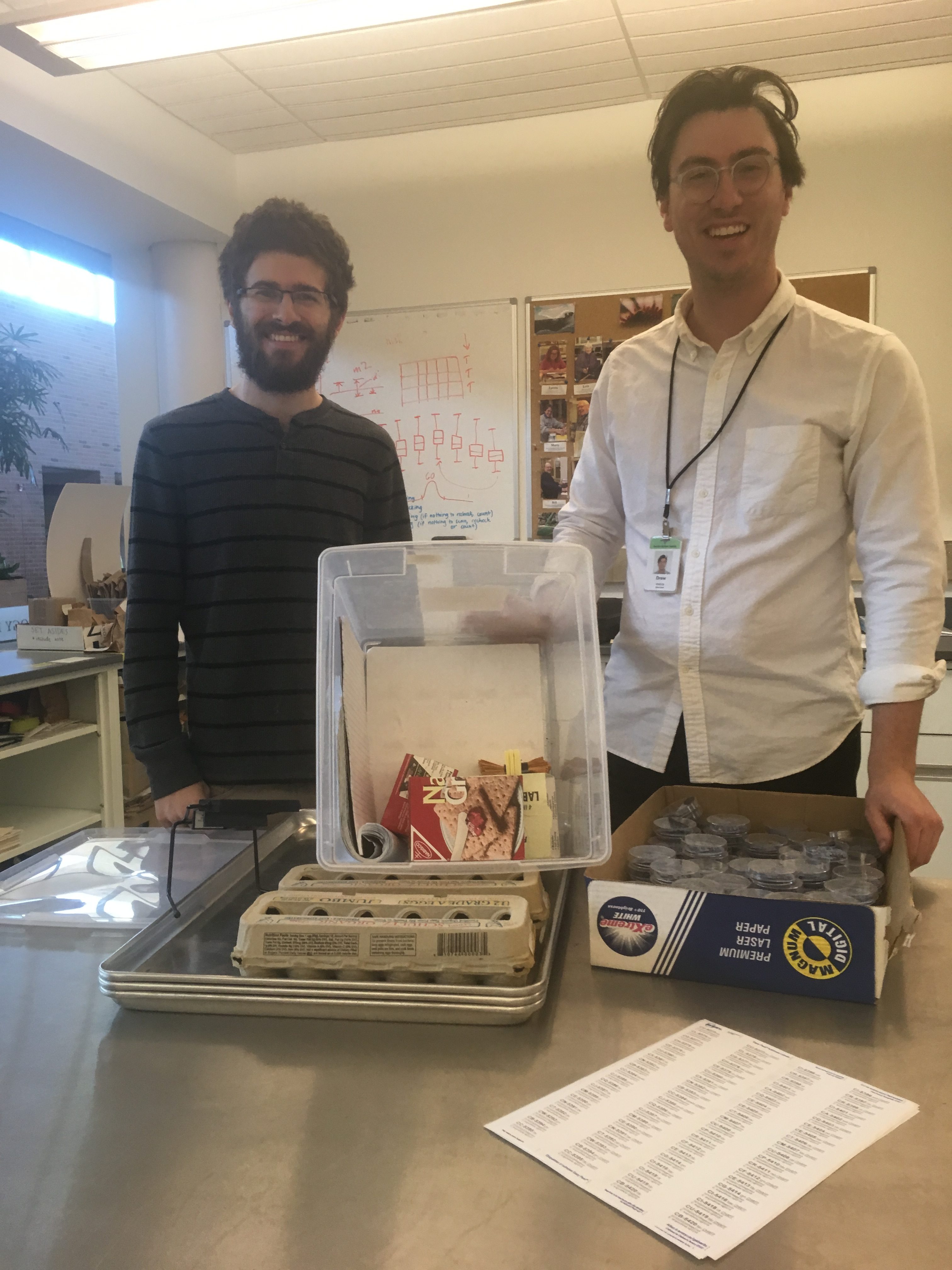
We’ve been coordinating with some of the organizers of this festival, and of course that means that there is going to be an echinacea themed table! We were more than happy to give Drew a bunch of the supplies and samples from our lab so everyone who comes can see what it’s like to process real echinacea plants. Basically, if you come to our table, you’re pretty much part of Team Echinacea! Read all about the festival – and how you can attend – at this link https://www.chicagobotanic.org/sciencefestival
Hope to see you there!
Michael
Michael and Drew with a bunch of Echinacea Lab supplies
One of the biggest task we do here at the echinacea project is what we call demap. Demap is our shorthand for “demography map” and is also certainly in no way a testament to our ongoing support of Bill Swerski’s Superfans and how they may pronounce “the map.”
In demap, our goal is to take all of the field records from remnant populations of echinacea that we spend many weeks collecting and make them look all nice and pretty. If you ever doubt just how long that this data takes to collect, do a search of our “daily updates” category and count the percent of days that include the word “demo” or “surv.”
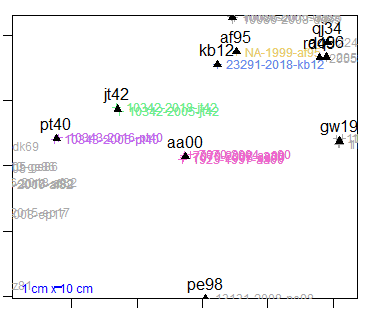
Where the true magic happens with demo, as with many things with the Echinacea Project, occurs in R. There, we are able to take all the location records and all the flowering data for every plant for every year, and create a big, beautiful map.
A small, but still beautiful map. The big one is a little to crowded and confusing 😥
Why mention demap now in the middle of February? While we finished collecting the data back in October, just yesterday we finished making sure it was all accurate. It may have taken a while, but it’s always worth it for high quality data!
We all know how the situation goes. You get home from a long day of work, take off your shoes, flop down on the couch, and think to yourself “There’s no way that there’s very much variation in echinacea flowering from year to year. ”
I know, we’ve all been there.
I’m here to tell you that, despite what you might think, there is HUGE variation in echinacea flowering from year to year. When these punctilious perennials decide that it’s time to flower, they really seem to go at it as a group.
And if you’re still sitting there thinking “Well a small amount of year to year change is to be expected” then let me hit you with some visual proof.
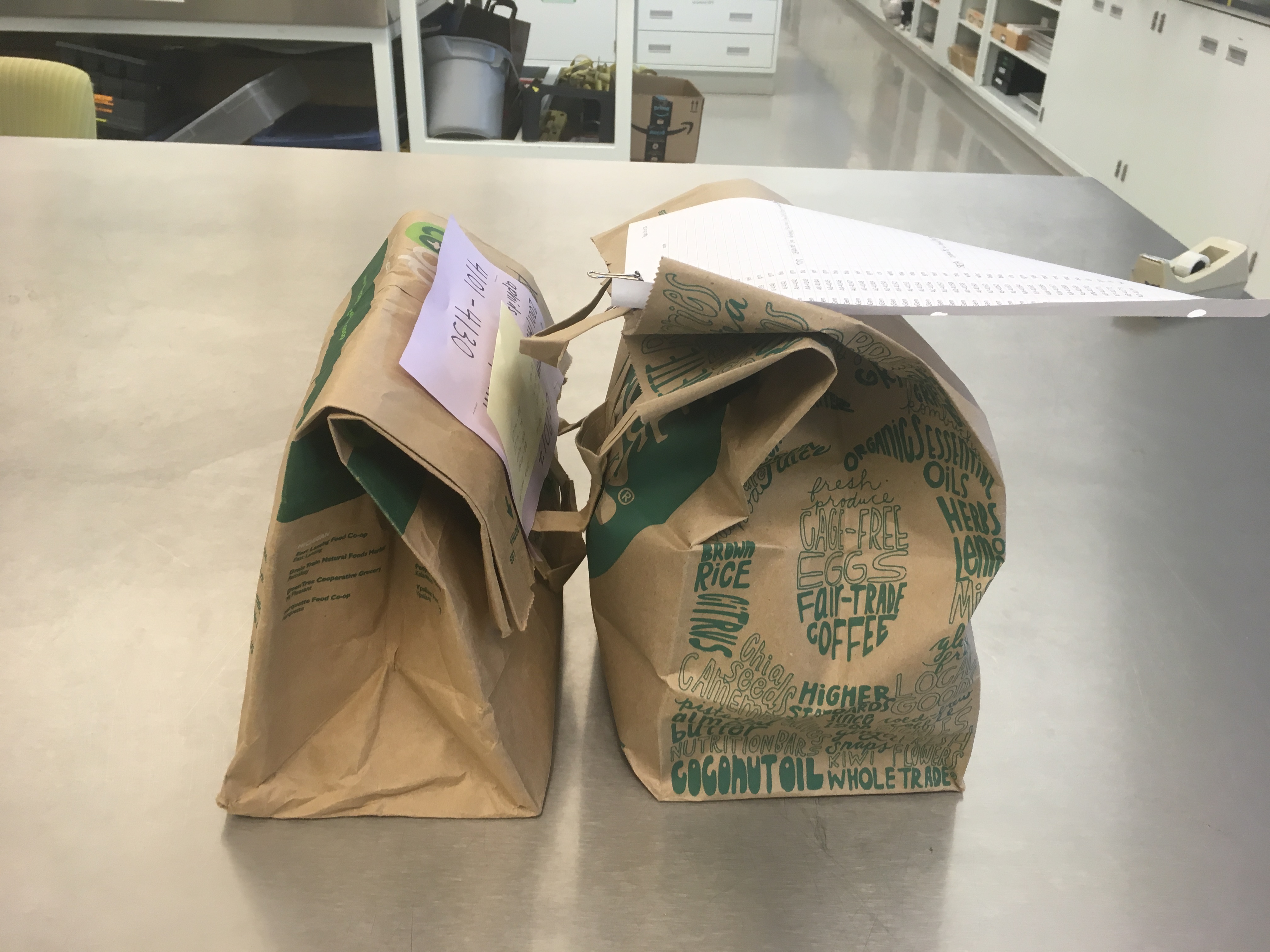
Here is a picture of ALL of the heads from Experimental Plot 1 in 2017. They fill up about 1 grocery bag total. Not a bad haul!
Our plot 1 heads from 2017
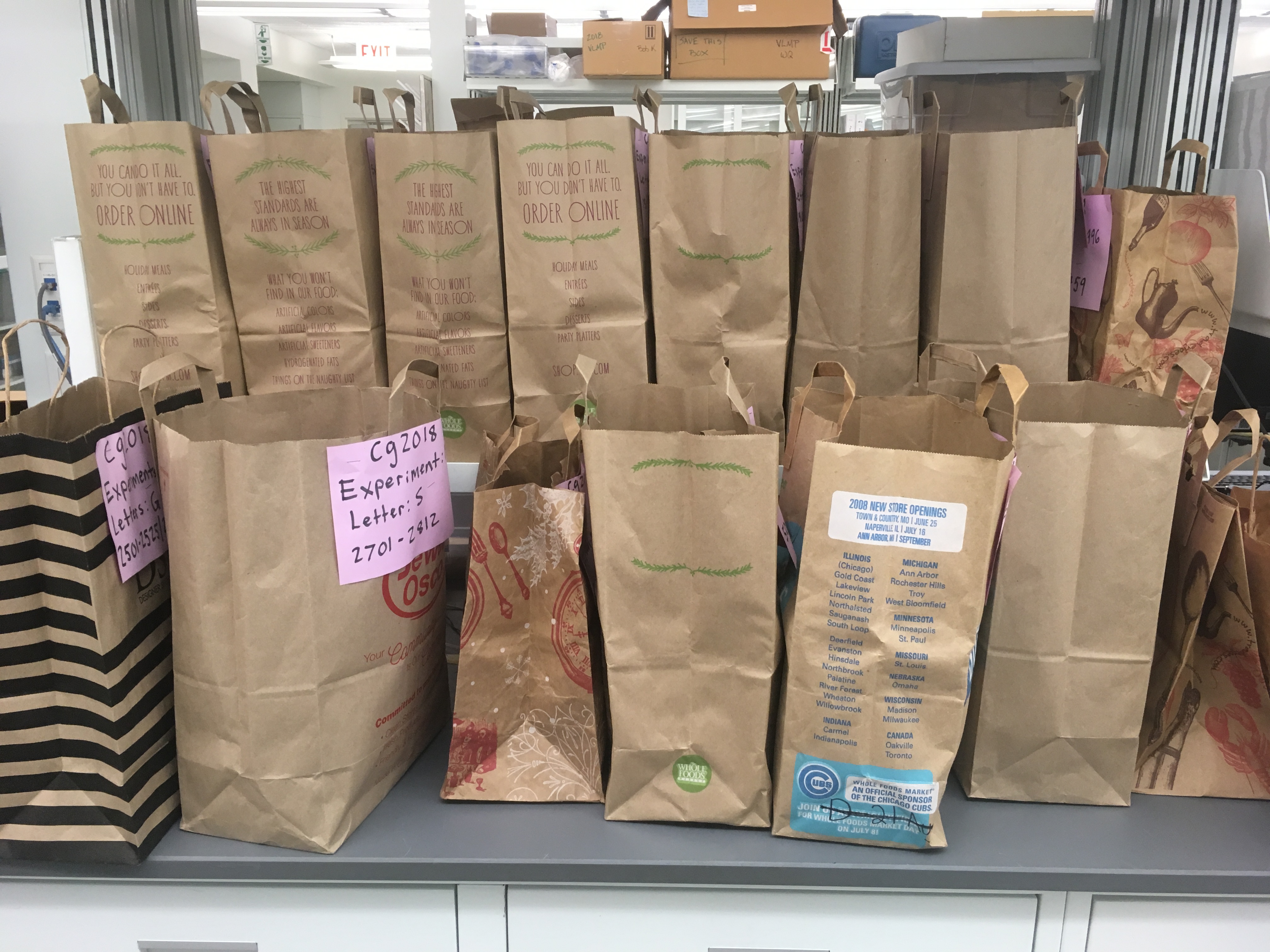
Now, let’s take a look at 2018. I spy just a few more bags than in 2017:
Our plot 1 heads from 2018 in many bags
Now it’s time for the real question: why? What is it that makes echinacea flower in these large groups? They cant phone a friend and say “hey dude, you gonna flower this year?” They must respond to signals or communicate chemically or do any of a hundred other things to flower in groups like this. All I know is that we’ve got a lot of 2018 cleaning in our future.
I know you’ve all been sitting on the edge of your seats waiting for your most recent update on our push to xray our achenes. Wait no longer! I’m here to inform you that as this is being posted the last of the 2016 achenes are being assembled. 2016 is the most recent year for which we have every head cleaned and randomized, and marks the beginning of the end for our backlog. Very soon we will be seeing some 2016 seed sets. Exciting!
Implied above, this also means that 2015 is fully assembled. 2015 was the largest year of flowering ever for the project with over 3000 heads. Not to fear: they’re all cleaned, randomized, xrayed, and ready to be classified.
All of our assembled 2015 achenes
Tune in next week for an update on the status of the polLim experiment xrays. expect good news!
This fall we had the wonderful opportunity to work with Cameo Chilcutt, a student of Northeastern Illinois University. Cameo spent the fall working in the lab and conducted her own growth chamber experiment with seeds from Selena’s summer REU project. Cameo was a great addition to the lab and asked some cool scientific questions about how water stress and maternal competitive environments affect germination in Lasthenia californica. Check out her final report posted below. We’ll miss having Cameo around but wish her luck in her future scientific endeavors!