|
|
We haven’t been blogging for quite a few days now because the internet has been down at Andes. Apparently the technician from Gardonville Cooperative Telephone Association couldn’t figure out what’s wrong, so he went home.
Here at research central, we’ve been luckier. No visits necessary from Runestone (but no time to blog either). When service is back up, we’ll have lots to write about, including:
1. Our trip to Pembina to monitor Gretel’s orchid management experiment. (We saw a prairie chicken and sandhill cranes, but no moose).
2. Failed attempts at kite aerial photography on Friday the 13th. (Plus details about what we learned in the process.)
3. Reports from the Bee team on their successful tracking endeavors.
4. A recap, or three, of BSA meeting.
5. Weeding & other adventures in the common garden.
I arrived in Chicago and am getting my presentation ready for the Botany meeting.
I heard that weeding went well today. Gretel said you all got a lot done. I know it’s hard work. Did the 30-40 mph winds help? I miss being there.
… are boring.
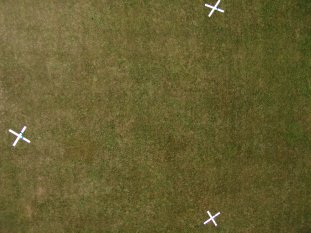
I took about 118 photos this afternoon and the > 100 straight-down shots are not interesting. Straight-down shot will provide good data when we have the ground markers and get enough shots in the right places. But for visual appeal & interest, the photos are boring.
Flying the kite was fun. It was cloudy with 10 – 15 mph winds from the N – NNW. It was a challenge to get the FF16 kite up–a 15 minute ordeal. But when it got up, it stayed. It was tiring to take it down and then it easily went right back up again. I took shots of the CG and then went to Staffanson.
Here’s one of the few shots with the camera tilted. I like it.

This is a view of part of the common garden from the West. The rows are 1 m apart and those things are tripods for the video cameras. The tripods weren’t in use today and have plastics bags over them. Flags are more visible than the Echinacea plants. But If you click on the thumbnail, you’ll be able to see some flowering plants in the larger image.

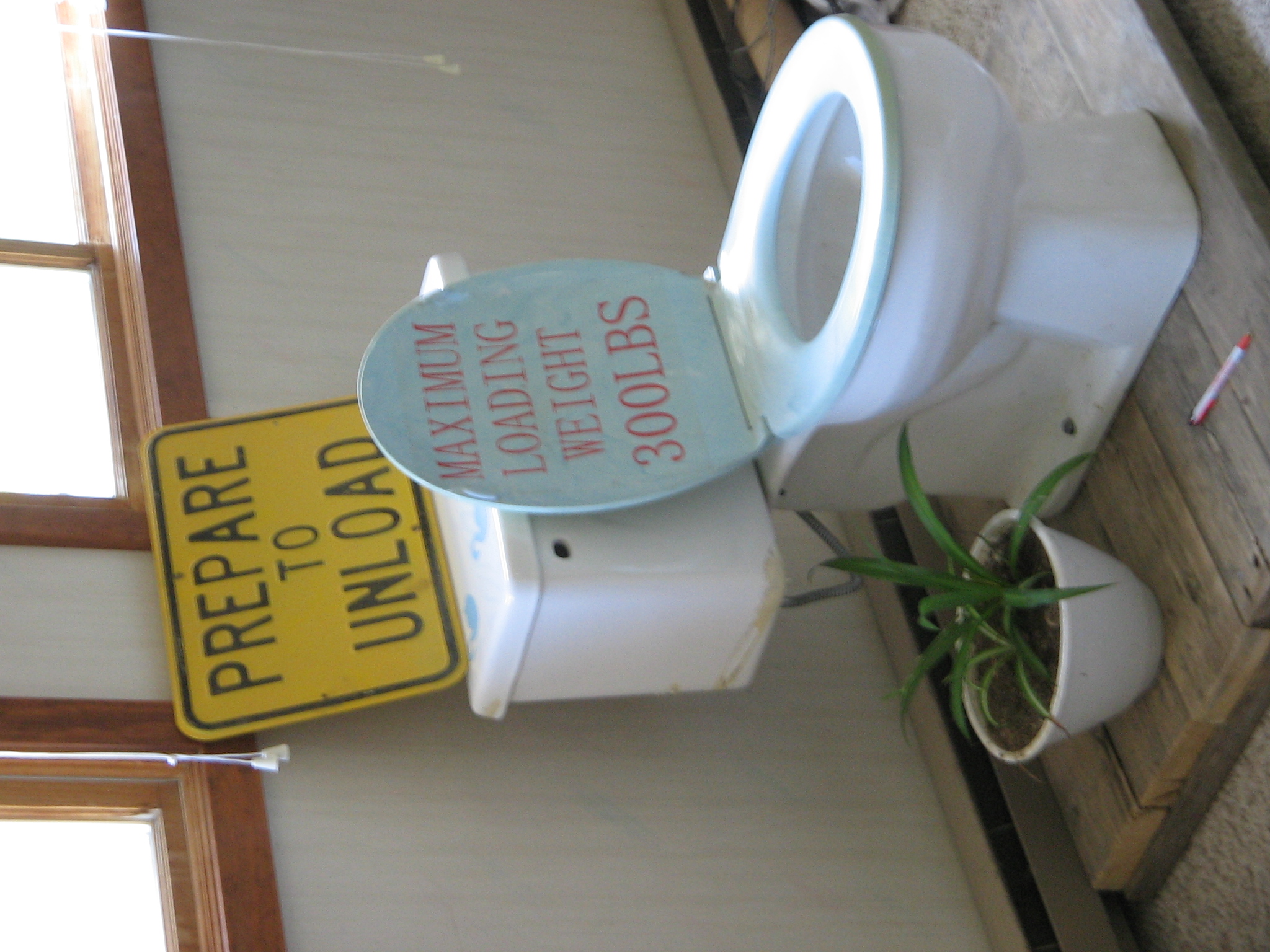
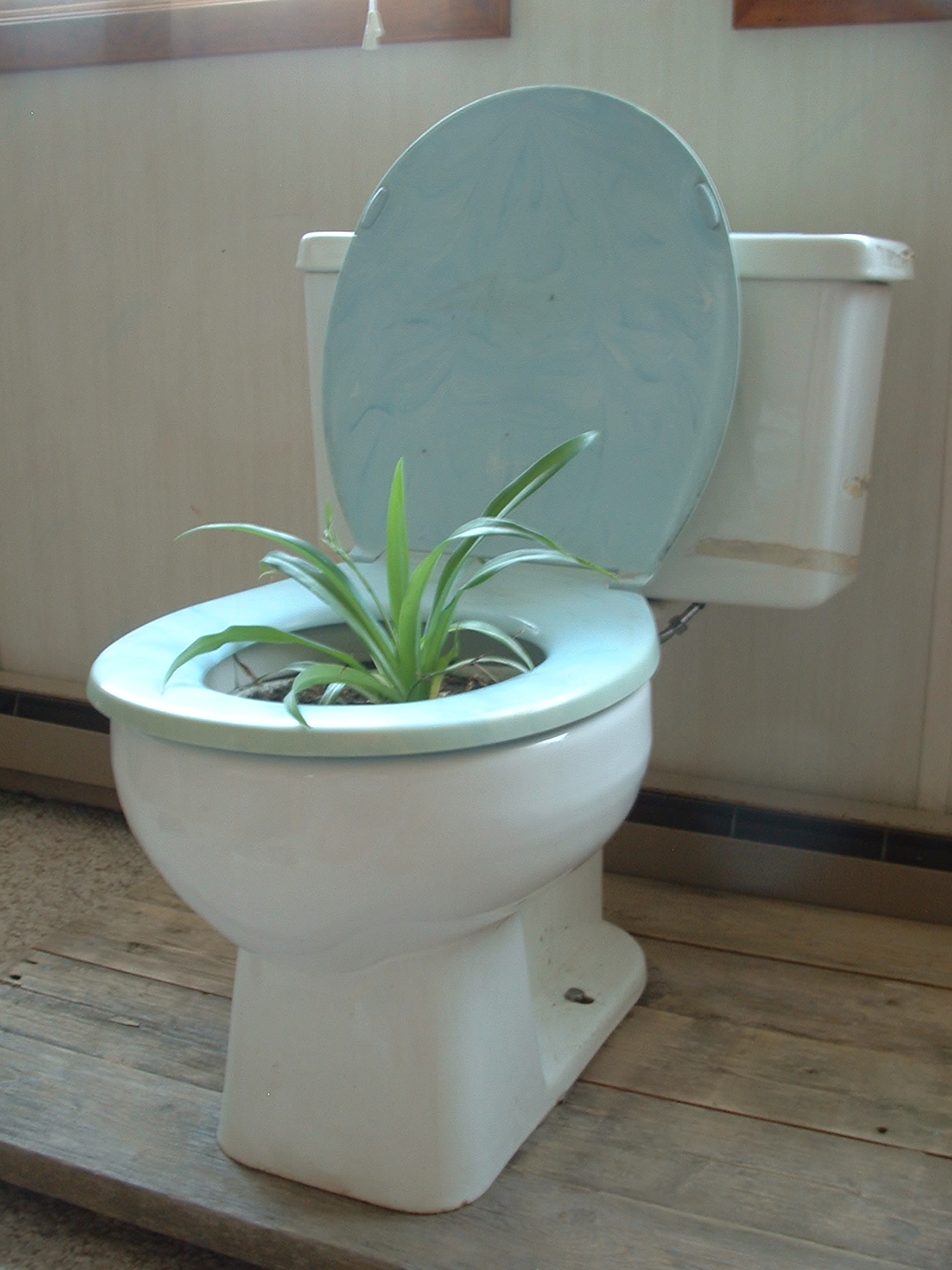
The toilet has again been modified. With the addition of the spider plant, the toilet is no longer a seat. It was uncomfortable anyway. The “maximum loading…” sticker came from the $10 hammock I bought from a garage sale. Not sure where to put it, but the trees near the pond seem to be the best bet. All I need is something to attach to the trees to attach to the hammock’s chains.
Jameson has barricaded his garden in an effort to keep the enemy at bay. The enemy includes the likes of deer, bunnies, and probably ground squirrels.
Colin shot off some “fireworks” last night. A few of the pictures turned out well.
As the crew posts profiles of themselves, certain aspects of people’s personalities are inevitably left out. Our complex identities are unable to be fully described in a few short paragraphs. In an attempt to fill some of these holes, I present Julie Nicol.
Julie displays her talent.
Who would have known there are such wonderful animal impersonation talents in Team Echinacea. It appears that Jameson can do a killer cat impression too; we’ll work on getting it on camera.
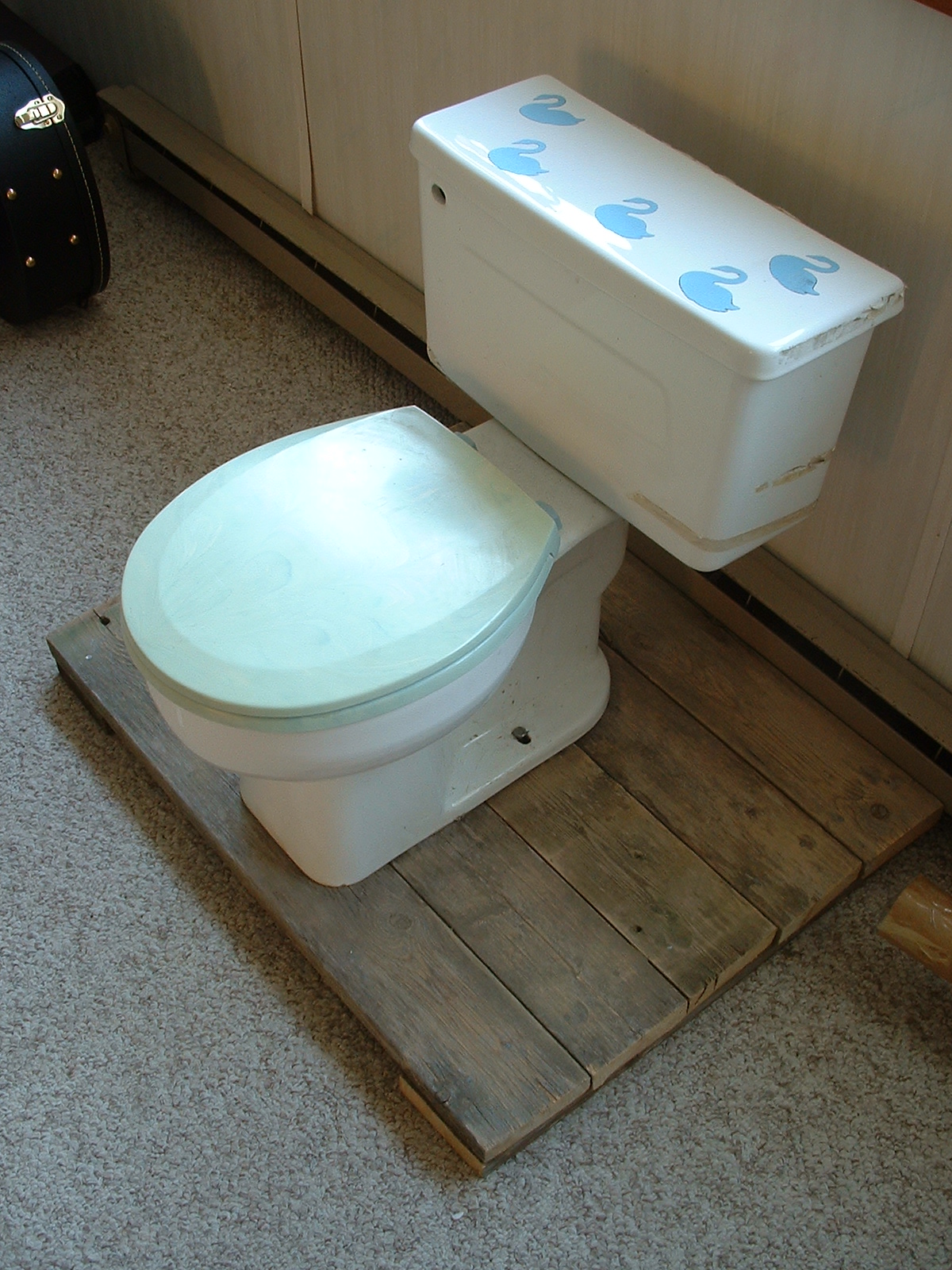
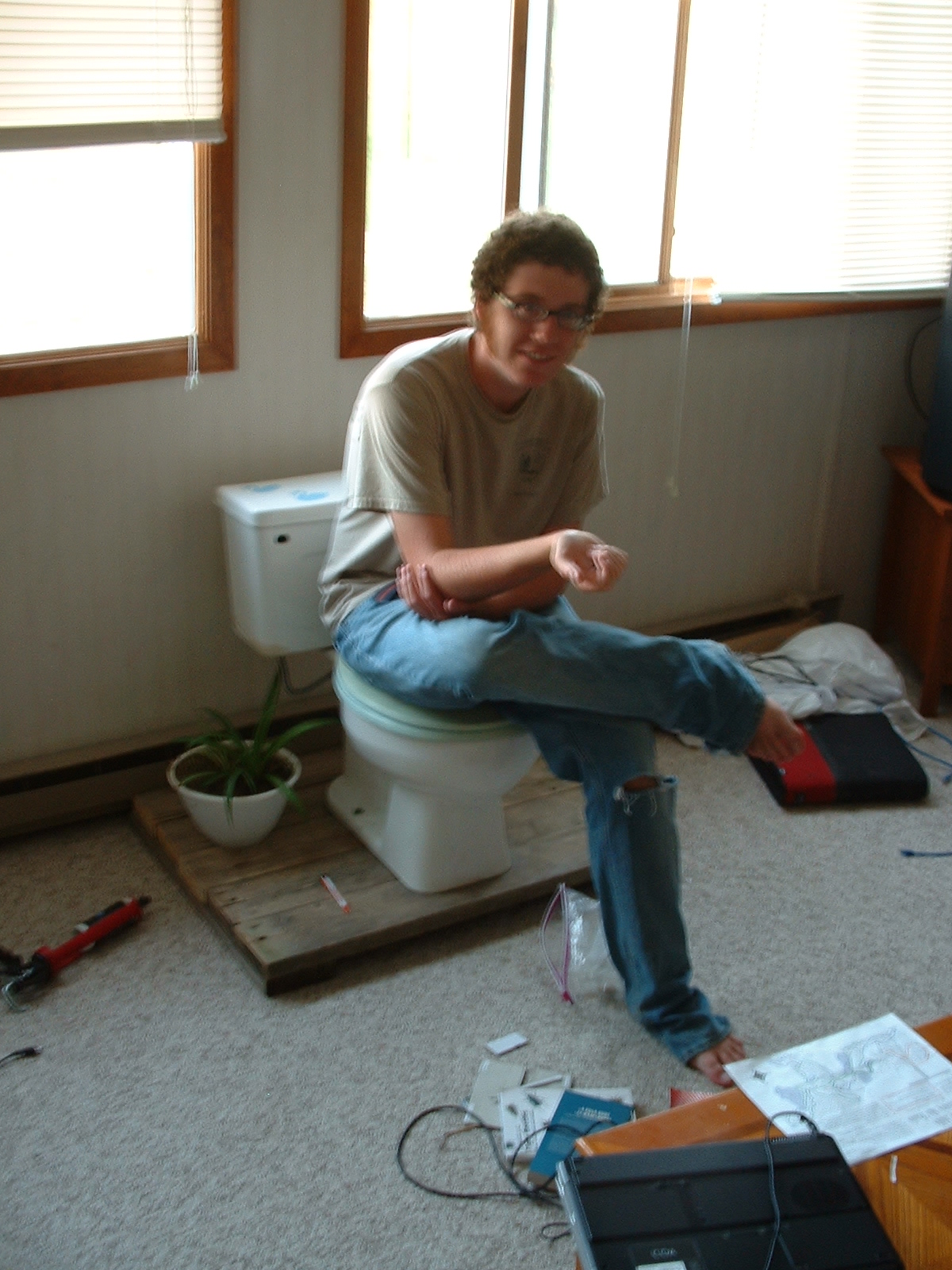
Andy came back to the Mando today and he inspired us to create this
 complete with swans complete with swans
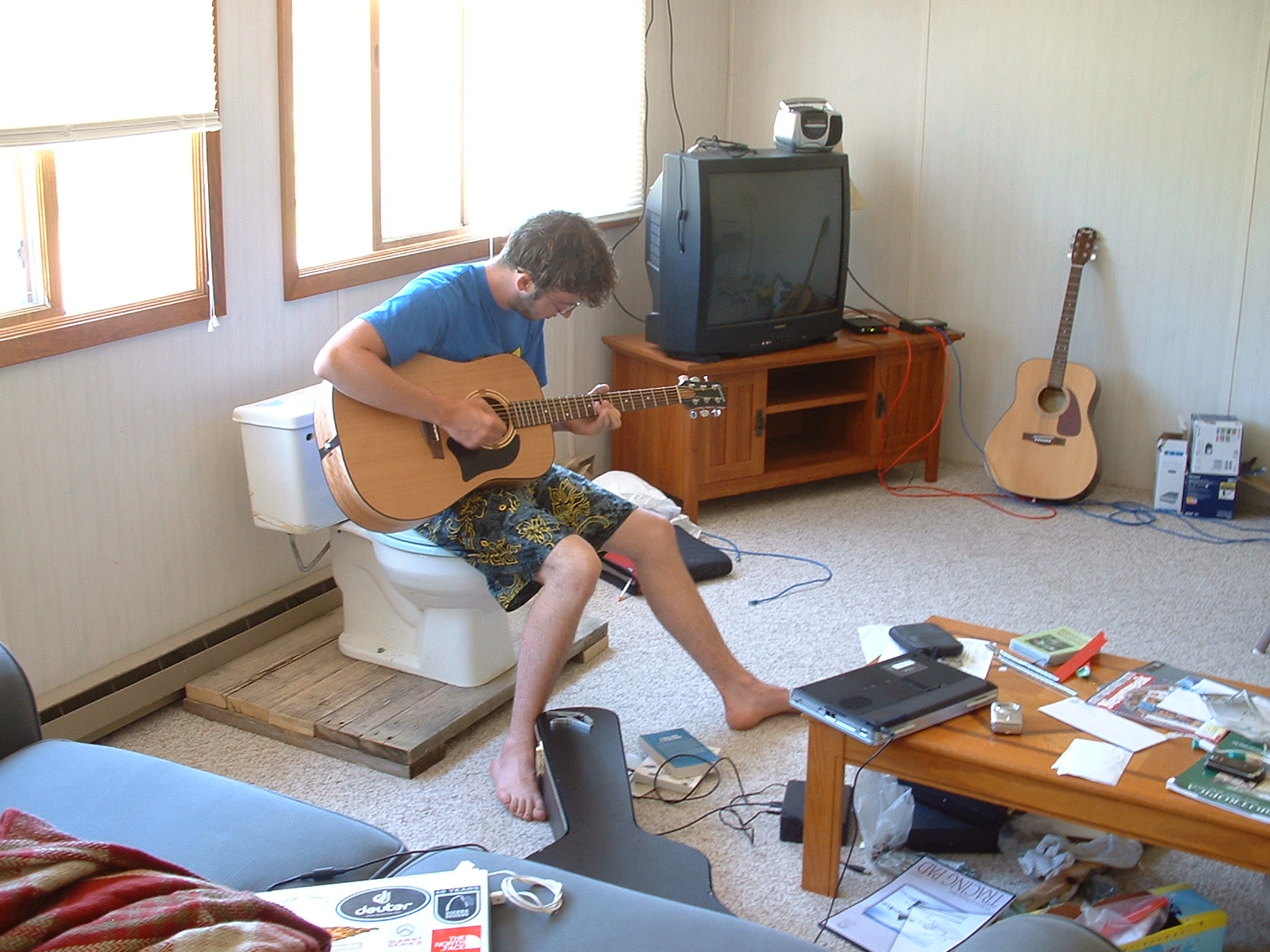
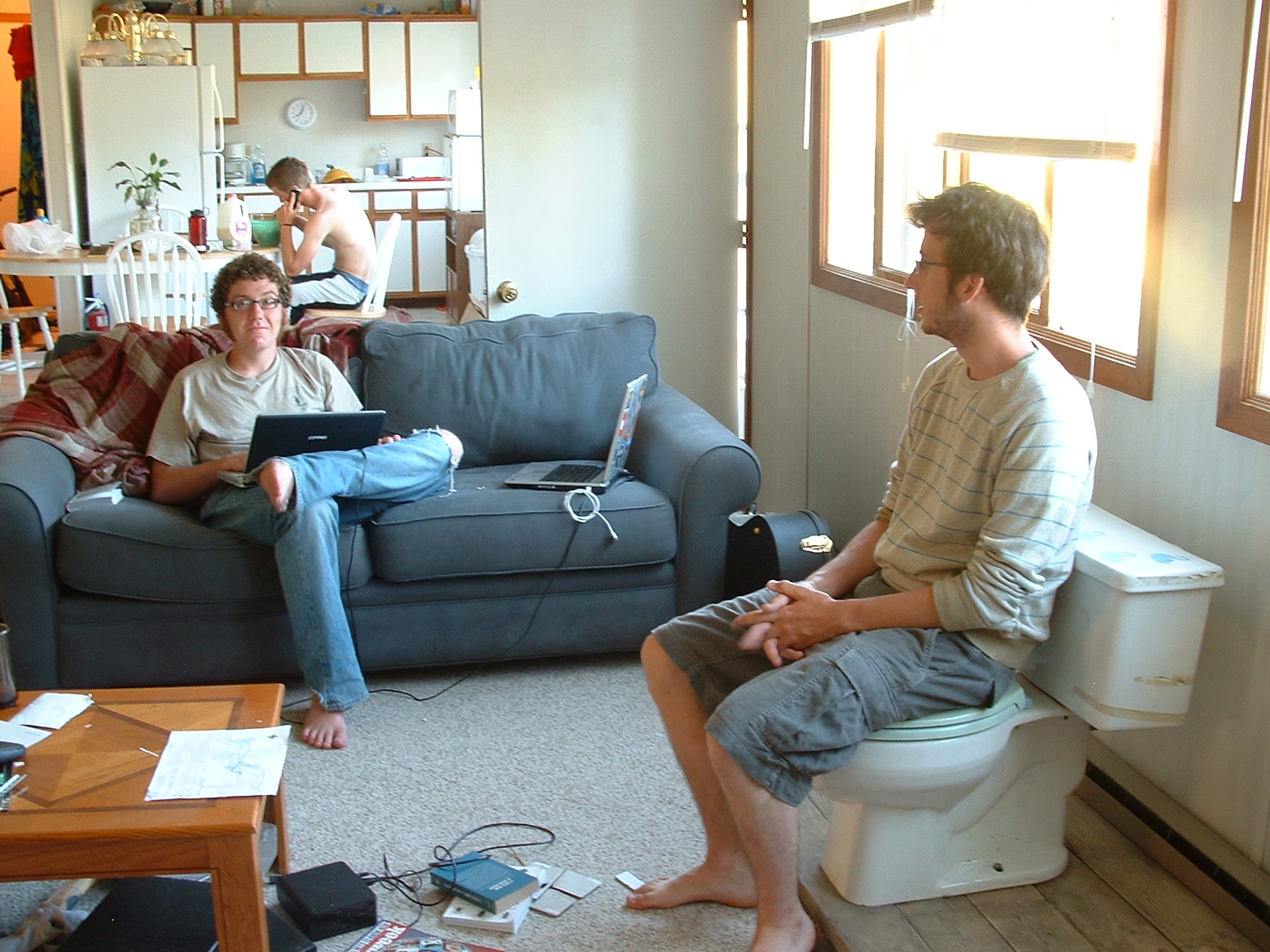
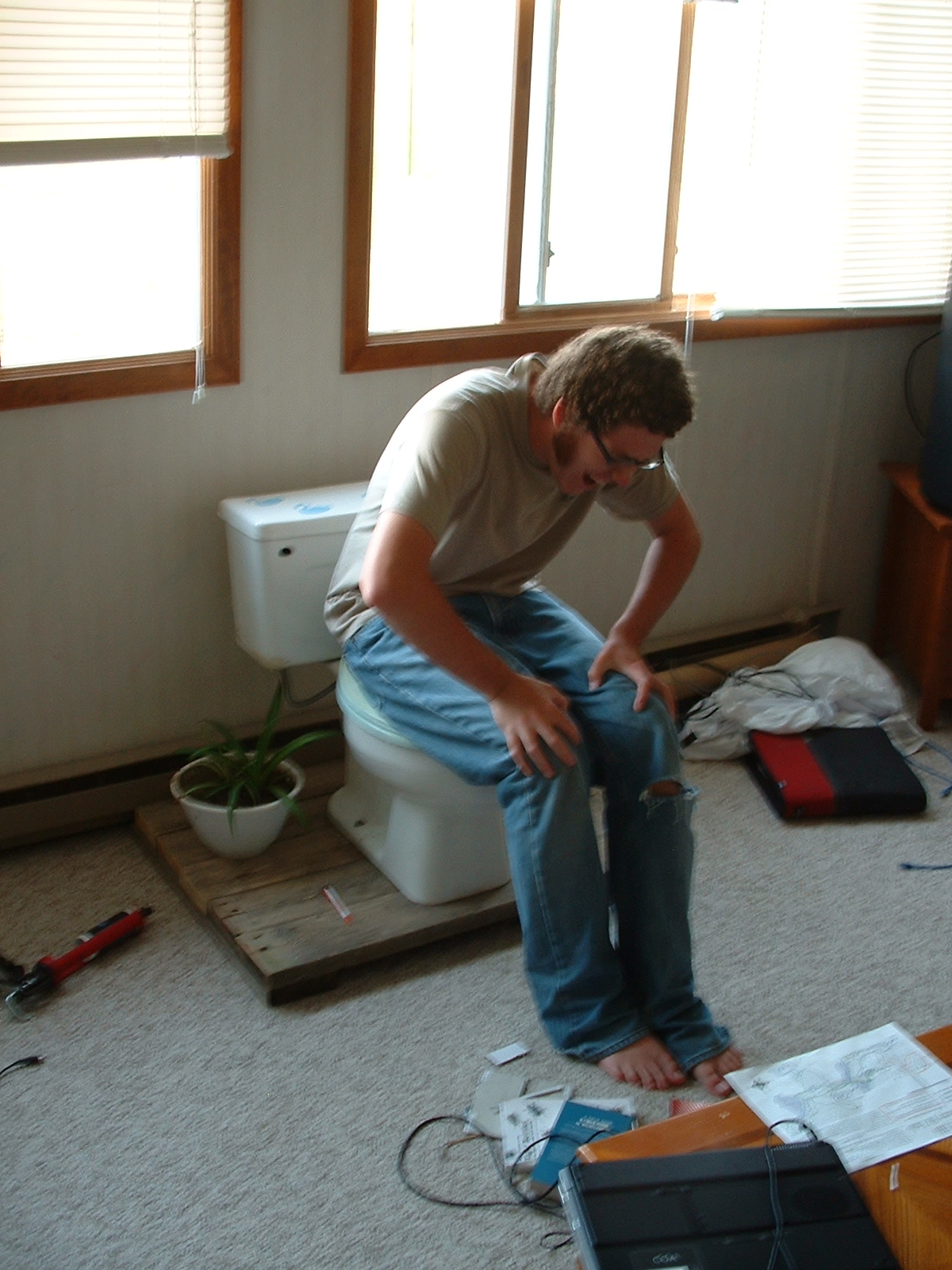
What is it you may ask? It’s a revolutionary multi-functional piece of living room furniture. The full implications of this exciting new gadget are not yet realized. As a chair it has two or possibly three settings. It’s great for playing guitar. It can be used as a planter. It also has ample storage space in the tank and in the bowl if desired.
Although Colin and I worked for hours making the wooden platform and fastening it to the bottom of new creation, I will give credit where credit is due. The truth is that if it weren’t for Dr. Andrew Christoper McCall, our toilet wonder would not be in existence today. Thank you Andy and everything that you have done for us. It’s quite special. I hope you think so as well. From all of us at the Mando, farewell Andy. We hope all is well at your new abode in Hoffman. If not we’ll always have a spot on the floor with your name on it; literally (just kidding). If you want we can write your name on the toilet though

In general, the two main differences between ’99 South and the main common garden (for damage assessment and herbivory) appears to be less damage in ’99 South and more ants (and less ant diversity).
When doing phenology in the ’99 common garden about a week ago I noticed that the plants in the eastern-most row (those along the very edge) appeared to be more likely to have ants and (very anecdotally) seemed to have a different amount of florivery damage and browning than the rest of the garden (it’s been too long owing to my laxness in flogging and I can’t remember if it was less or more, though I am inclined to say less). Whether there actually is a difference in damage and whether this difference results from ants, edge effects, or chance remains to be seen.
A few days ago when I was doing phenology in the ’99 South common garden I noted that the majority of plants in the garden had ants and that there was low variability in ant species composition – virtually all I saw where the large black ones with red heads. These ants were very aggressing and would leap off the flower head onto my stylus as I was pointing at the anthers to count them. I could practically hear them sharpening their mandibles. The northern-most row (those along the very edge) had few ants and the ants were of different species, including small black ones and light-colored ones. Interestingly, there was much more damage in this row.
Are these large ants actively defending their flower heads and increasing plant fitness?
Do other species of ants contribute less to the echinacea in terms of defense? Do they take more away in terms of pollen and nectar? It is not uncommon to see ants covered/dusted in pollen (I never observed this of the large black species) and I have twice seen a small black ant actively carrying pollen in its mandibles.
The Bee team has been busy (I’m avoiding including a bad pun here) lately. We have implemented and perfected our tracking protocol in the past couple of mornings, and have gotten some good data looking at the flights between flowering heads in the Common Garden. Yesterday morning we successfully tracked the flight of one bee to 57 consecutive heads! For the most part, we have been faithful to the original protocol, although we have found that working in groups larger than two is more successful.
We discovered yesterday that the bee we have been identifying as Halictus rubicundus is actually neither that genus nor species. Stuart brought up a reference collection from the U of M, and our best guess is now that our bee is Melissodes cf. subillata.
Rachel is a 3rd year master’s student at the University of Minnesota in Ruth Shaw’s lab. Her research is focused on the rapid evolution of invasive plant species in prairie fragments. She received her bachelors degree at the Central Washington University, and did post-bac work in the Australian rainforest with the School for Field Studies. She is a native of Washington state.
On the side Rachel enjoys breakdancing, hip-hop dancing, and gripping/gaffing on movie/television sets.
Overall, today went pretty well. We managed to get the camera up on the small kite. 
The wind gave us a few problems, though. The camera came down a few times and we had to run to grab it. 
The big kite, however, had issues. After letting it out around 80 meters, the kite took a dive to the right… into a building. WHAM. This isn’t a sound you want to hear. A few tears on the front, but not horrible. The problem came when Stuart was moving the kite. A gust of wind caught the kite around him. SNAP. Another bad sound. The carbon-fiber sticks were fine; an aluminum connector was not.
|
|