|
|

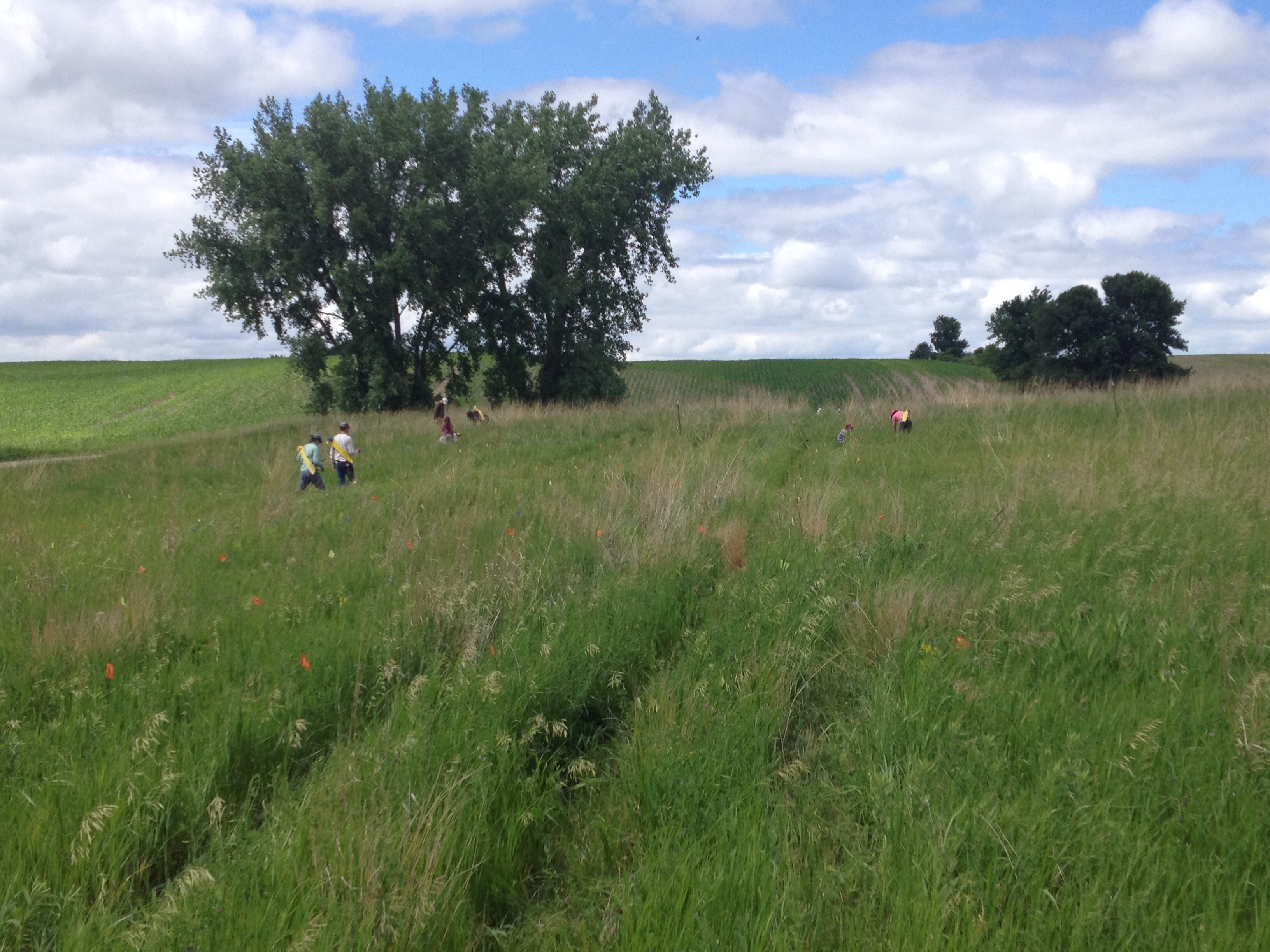
Description: The Echinacea Project’s recruitment experiment examines the germination and survival of Echinacea angustifolia seedlings in oldfields and restored grasslands under different fire regimes. In 2014, Team Echinacea searched for and measured Echinacea plants in 60 study plots spread across 10 experimental blocks. After data collection was complete, we mapped all newly flowering plants. The goal of this study is to identify the environmental factors that influence the recruitment of seedlings and the long-term fitness of Echinacea plants.
Start year: 2001
Location: 10 experimental blocks located in oldfields and restored grasslands
Products: Raw data taken on paper were entered into database and verified. Flowering plants with new tags were mapped and the spatial data is located in the 2014 SURV files. Flowering plants with old tags were not mapped in 2014.
Description: During the summer of 2014, Will Reed designed and executed an experiment to measure the efficacy of various pollen storage methods including storing pollen at room temperature, in refrigeration, and freeze-drying pollen. Between July 14 and August 8, he collected pollen from 15 different plants and performed a total of 186 hand pollinations on 50 plants. These results will improve pollen storage practices and expand the capability to cross plants that flower asynchronously or potentially in different years.
Start year: 2014
Location: P1
Products: A dataset and detailed methods are located in Will Reed’s Dropbox folder. Dataset needs to be made readyR.
We harvested the heads Will used as pollen recipients. He could remove the achenes to see if his crosses produced viable seeds.

Experimental plot 1 (P1) encompasses 11 different experiments originally planted with a total of 10673 Echinacea individuals. These experiments include long-term studies designed to compare the fitness of Echinacea from different remnant populations (“EA from remnants in P1”), examine the effects of inbreeding on plant fitness (“INB” and “INB2”), and explore other genetic properties of Echinacea such as trait heritability (“qGen”). In 2014, Team Echinacea measured plant traits for the 5409 Echinacea plants that remain alive and followed the daily phenology of 567 flowering heads. Echinacea began producing florets on July 1 and continued flowering in P1 until August 24. The data collected in 2014 will allow us to estimate the heritability of various traits and assess the lifetime fitness of plants from the numerous experiments.
|
Experiment |
Year planted |
# alive |
# flowering |
# planted |
| 1 |
1996 |
1996 |
314 |
115 |
650 |
| 2 |
1997 |
1997 |
270 |
57 |
600 |
| 3 |
1998 |
1998 |
32 |
3 |
375 |
| 4 |
1999 |
1999 |
542 |
106 |
888 |
| 5 |
1999S |
1999 |
297 |
37 |
418 |
| 6 |
SPP |
2001 |
318 |
14 |
797 |
| 7 |
Inbreeding |
2001 |
221 |
15 |
557 |
| 8 |
2001 |
2001 |
170 |
11 |
350 |
| 9 |
Monica 2003 |
2003 |
28 |
3 |
100 |
| 10 |
qGen |
2003 |
2501 |
122 |
4468 |
| 11 |
INB2 |
2006 |
716 |
41 |
1470 |
Start year: 1996
Location: experimental plot 1
Products:
Overlaps with: aphid addition exclusion, Pamela’s functional traits, pollen longevity, pollen addition exclusion

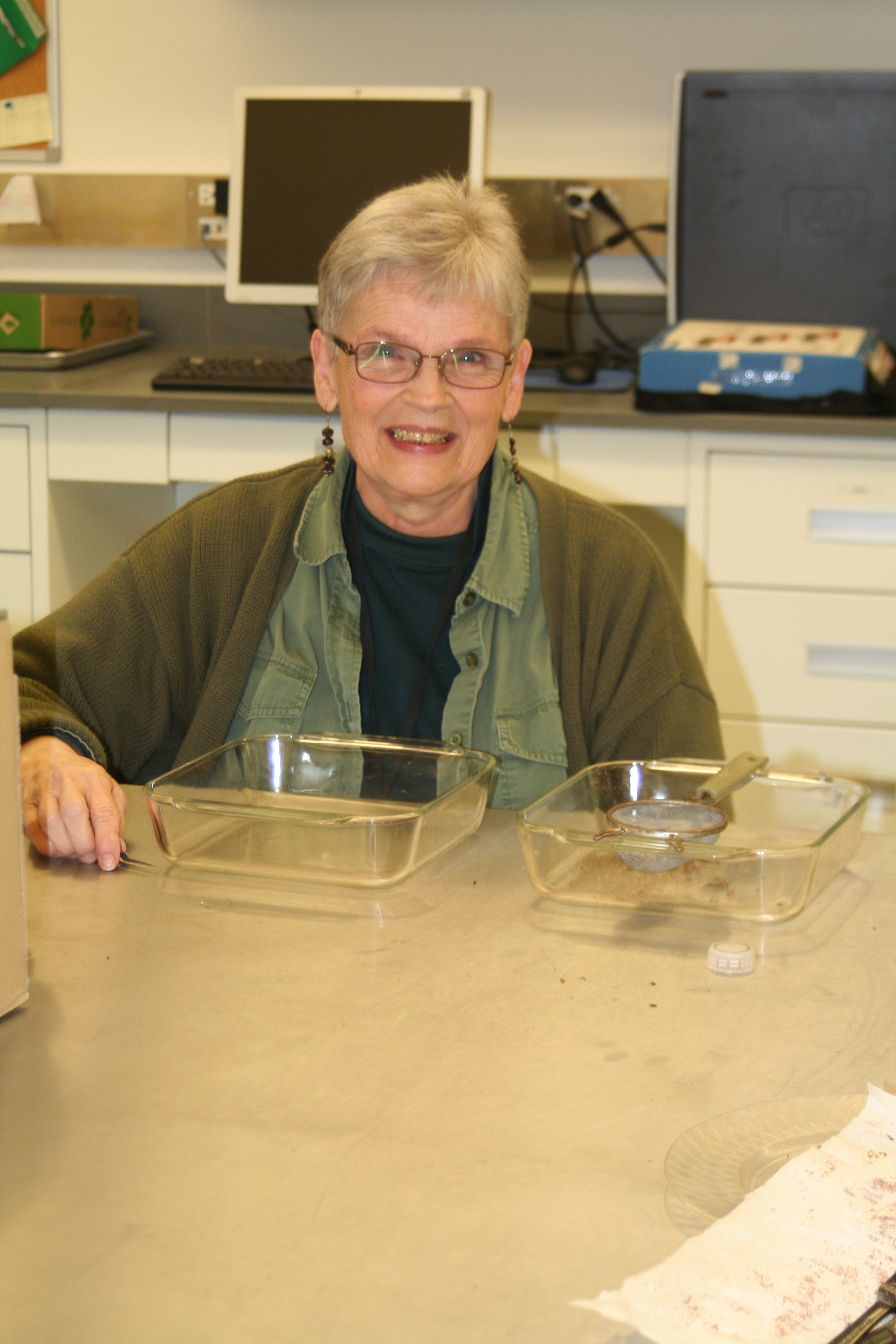
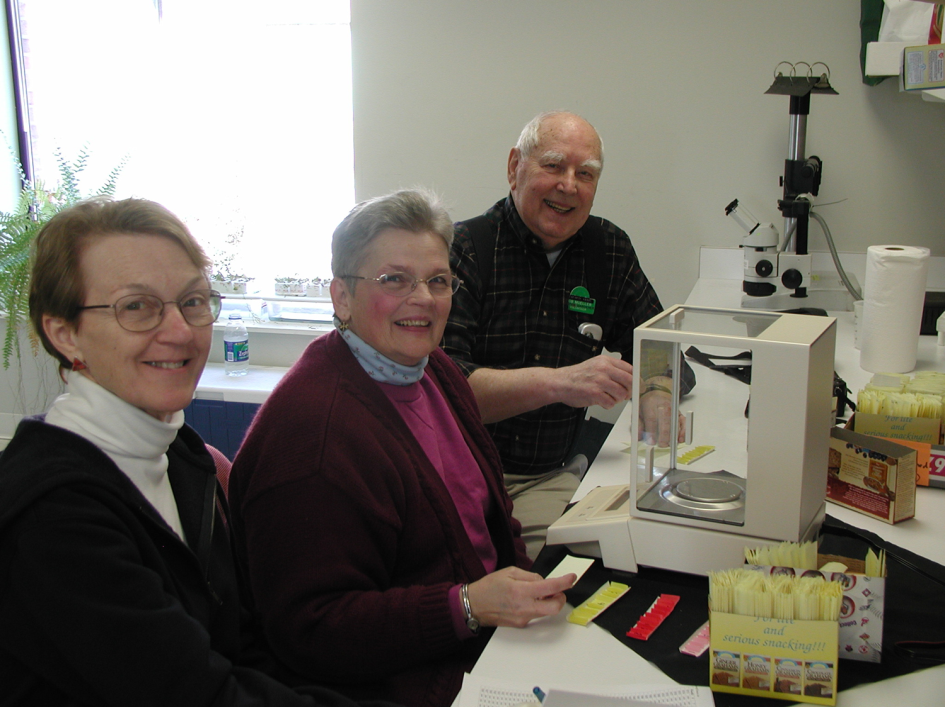
Following her tenure as an elementary school teacher and tutor, Char decided to pursue her lifelong interest in the natural world and began volunteering at the Chicago Botanic Garden in the early 1990s. Before joining the Echinacea Project, she worked to restore the Botanic Garden’s prairies and woodlands. Char specializes in cleaning Echinacea heads and has been a member of our dedicated volunteer team since 2001. Aside from her work with the Echinacea Project, Char has been monitoring butterflies at the Chicago Botanic Garden for the past 20 years in association with the Illinois Butterfly Monitoring Network.
This is one in a series of profiles recognizing the hard work and dedication of citizen scientists volunteering for the Echinacea Project at the Chicago Botanic Garden.
The Echinacea Project relies on a team of volunteers to process the Echinacea heads collected from experimental plots and remnants. Each year, these citizen scientists devote more than 2000 person hours to cleaning, sorting, weighing, and counting Echinacea heads and achenes! We are fortunate to have such dedicated individuals working with us and we would like to recognize their contributions to the Echinacea Project, the Chicago Botanic Garden, and conservation science. Next week we will begin posting citizen scientist profiles on the Echinacea Project blog to give our volunteers some of the recognition they deserve. Stay tuned!
We are in the process of moving our field blog. This site will be its new home, but we are still working on technical challenges.
Our old site is still available here:http://blog.lib.umn.edu/wage0005/echinacea/
Thanks!
Davis Blasini was awarded the best undergraduate student poster in 2014 by the Ecology Section of the Botanical Society of America: “Introduction of Echinacea pallida in the Prairies of Western Minnesota and its Possible Effects on Native Echinacea angustifolia” Co-author: Stuart Wagenius.
Congratulations, Davis!
Steph wrote a field guide years ago to help us identify insects that visit Echinacea heads during the summer in Minnesota. It still serves us remarkably well, but hasn’t been posted until now. Here it is!
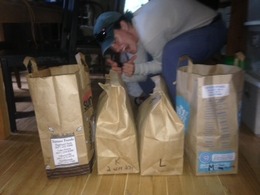
On Tuesday we harvested 3 bags of heads from P1, 1 bag and 2 full egg cartons from P2

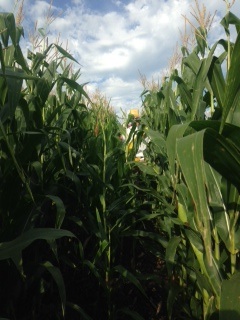
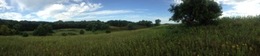
Today we trekked or “stalk whacked” through a corn field behind P1 to visit the site Kruzmarks

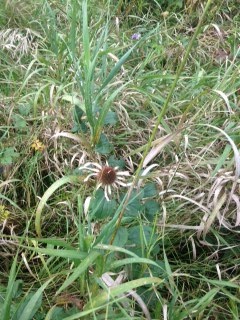
Where we found a sad looking Echinacea just peeking out from between blades of brome grass
where there was an interesting amalgamation of “ecosystems”… native prairie remnants, a pot hole, non-native conifer forest, and a monoculture of corn

Finally, we were able to finish out the day (Stuart’s last this season) at Staffenson. It was beautiful. White aster is blooming along with showy goldenrod and helianthus. Purple asters and gentians have maintained the purple hue as liatris is finishing blossoming.

As summer draws to a close, this past weekend was spent doing what anyone does at the end of growing seasons, canning and harvesting Echinacea heads.
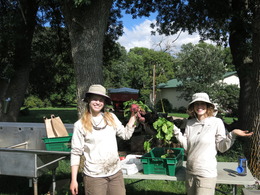
We’ve been a part of a CSA during the end of the summer, and have been delighted by the abundance and deliciousness of the produce we have received so far. The farm, Lakeside Prairie farm (http://www.lakesideprairiefarm.com), believes in sharing the abundance of the harvest. We have been able to come out a couple times over the season and harvest whatever they have extra of as part of our CSA. This is where I got beets and green beans to can, as well as cucumbers to pickle and lots of cabbage for sauerkraut.
Pictured below, Maureen and Elizabeth enjoying the plentiful harvest at the farm.
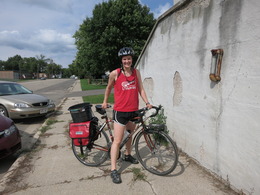
To bring the Wagenius’s canning pot back home I retrieve it via bike, which earned me some puzzled stares from drivers on the road.
Along with canning, we’re also occupied with Echinacea head harvesting. So far we’ve done a first round of harvesting at Staffanson Prairie Preserve and a third round at P1 and P2. We see more canning and head harvesting in our near future.
-Claire
|
|