This summer, we harvested 330 Echinacea angustifolia heads from 23 prairie remnants. Remnant harvest started on August 16th and ended on September 14th, when we finally collected the last 4 heads, 3 at Steven’s Approach and 1 at Landfill West. We harvested the most heads on August 23rd, a total of 109 heads in one day. The heads are located in 15 gbags labeled RA-RP (there is no gbag RJ).
We only visited sites where we recorded phenology this summer, so we harvested from fewer sites than last year. We did not harvest from Aanenson, East Elk Lake Road, Near Town Hall, On 27, Riley, Railroad, or Town Hall.
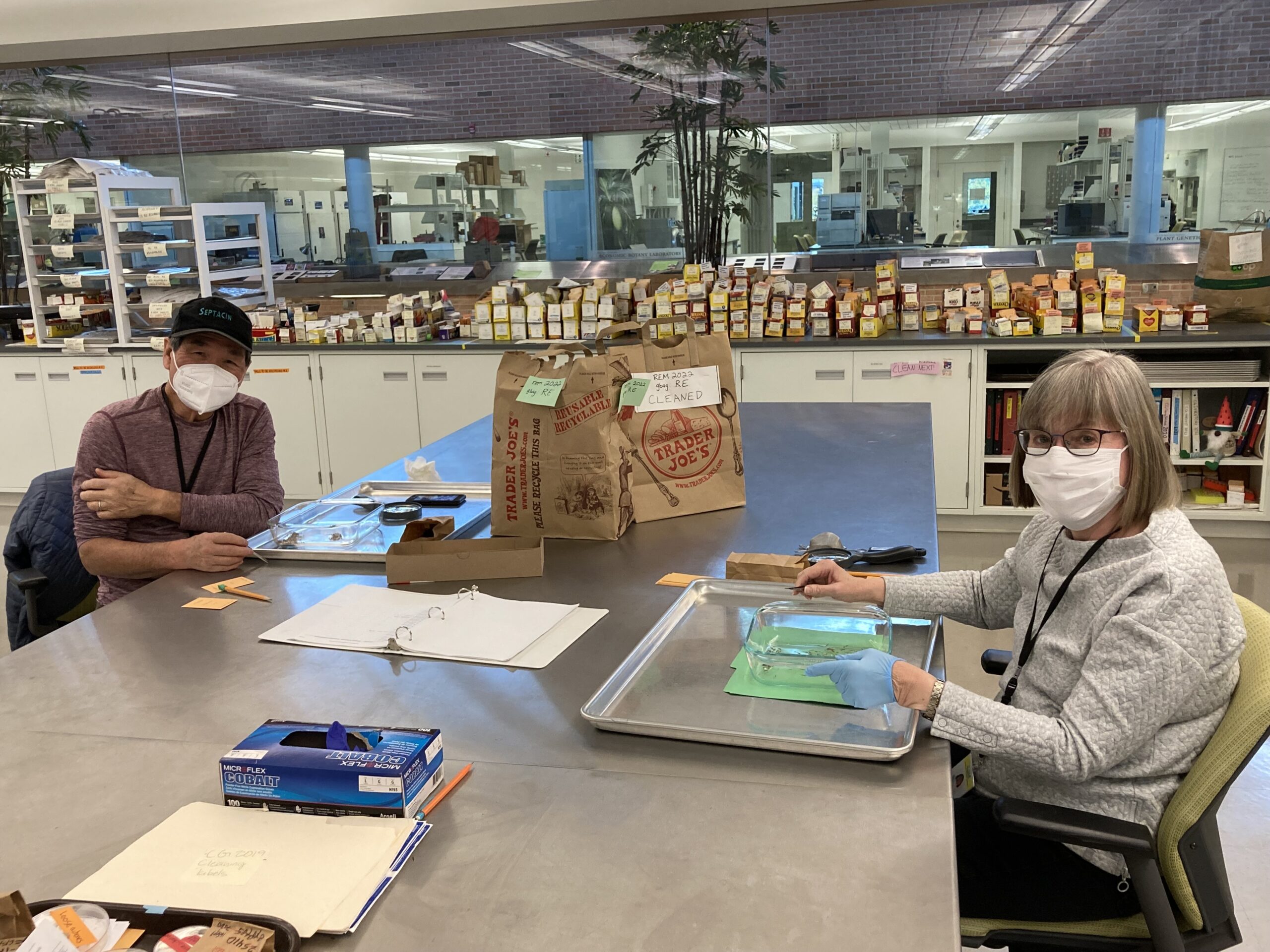
Volunteers Luk and Sue clean rem2022 heads in the lab
After Manogya and I completed data entry on the harvest list, I inventoried all of the bags that we brought back to the lab. There were a few mysteries to solve. We had several extra heads, but they mostly turned out to be heads that were supposed to be harvested, but someone forgot to check them off on the harvest datasheet, so it looked like they were missing. However, there was one perplexing puzzle that took some sleuthing to unravel. Two different people claimed to have harvested a head with a black twist tie from plant 18066 at Landfill West. In the lab, I found two heads with black twist ties labeled 18066, but I knew that they couldn’t both be the same plant. I donned my Sherlock hat and examined all the available evidence: survey, demography, and phenology data. From the survey data, I figured out that plant 18066’s neighbor, plant 27711, also had a head with black twist tie, so one of the duplicate heads was likely from the nearby plant. The phenology data revealed that 27711’s head had white gunk on it during the summer, and it had more rows of achenes than 18066’s head. Sure enough, one of the heads was larger than the other and had a speck of white on it. Mystery solved! I removed the imposter from the bag of heads to clean.
The volunteers started cleaning the 2022 remnant heads on October 11th. They are currently working on gbag RE, bag 5 of 15, so they are making great progress.
After a successful field season, Team Echinacea has moved back to the lab at the Chicago Botanic Garden.
Today, I received a cryptic email from CBG suggesting that there were free items left over from the Roadside Flower Sale, and they were located in Briller Hall, next to the pole barn. Lindsey and I decided to investigate, but we had never heard of Briller Hall or the pole barn. We looked for them on the map of the Garden, but they weren’t listed. We hunted for them on CBG’s website, but there were no search results. Mystified, we asked the volunteers in the lab whether these were real buildings. Neither Allen nor Char had been there, but Allen recognized the names and thought that they were located somewhere nearby. Determined to identify the elusive Roadside Flower Sale, Lindsey and I set off on a quest.
First, we walked south from the lab. We passed the greenhouses and spotted the maintenance sheds, but we didn’t find any pole barns there. How hard could it be to hide a barn? we wondered. When we passed some volunteers who were outside weeding, we asked them if they had heard of Briller Hall. They hadn’t, but they directed us to a CBG worker named Javier who was zipping by on his golf cart. Javier exclaimed that he was on his way to the pole barn just then! He invited us to hop on, so we crammed into the golf cart, and he dropped us off at the secret Briller Hall.
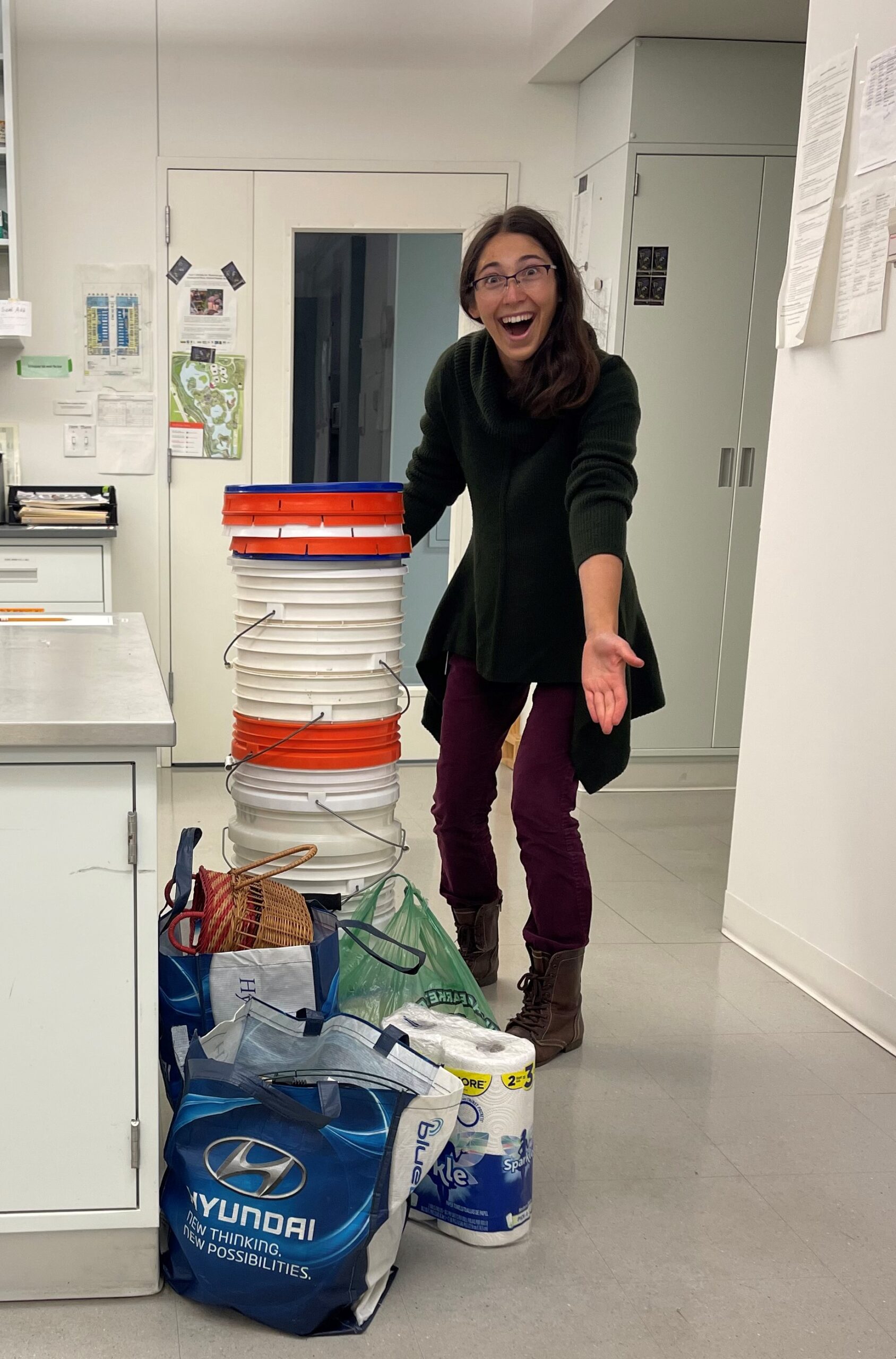
Inside, we found a wide array of marvelous items ranging from bags of acorns to stacks of staplers to a single wooden shoe. We collected many useful items, some for personal craft projects and some for the lab. Our glorious horde included:
5-gallon buckets with lids (they smell rather strongly of lavender potpourri)
duct tape in at least 7 vibrant colors
a sturdy rake for Jared to clear burn breaks
sharp scissors
small notebooks for the summer team’s pouches
a giant hot glue gun for Lindsey’s craft projects
I celebrate the many goodies we found at the top-secret Briller Hall
Overall, we were quite pleased with the success of our reconnaissance mission, and the lab now has a grand supply of staplers, colorful cardstock, and thumb tacks.
While the volunteers and I cleaned heads for the seed addition experiment, we encountered something we don’t see every day: seed predators in Echinacea
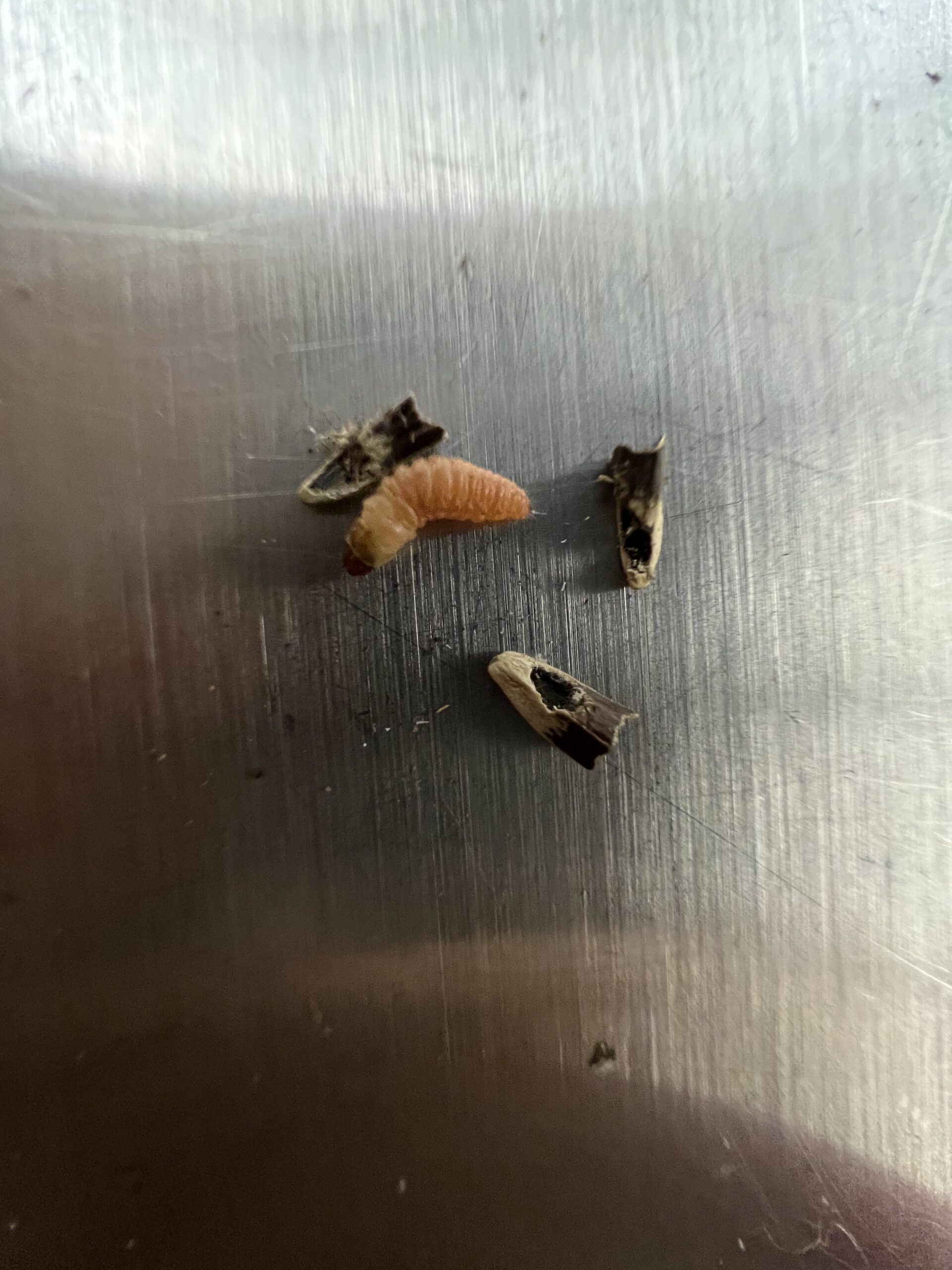
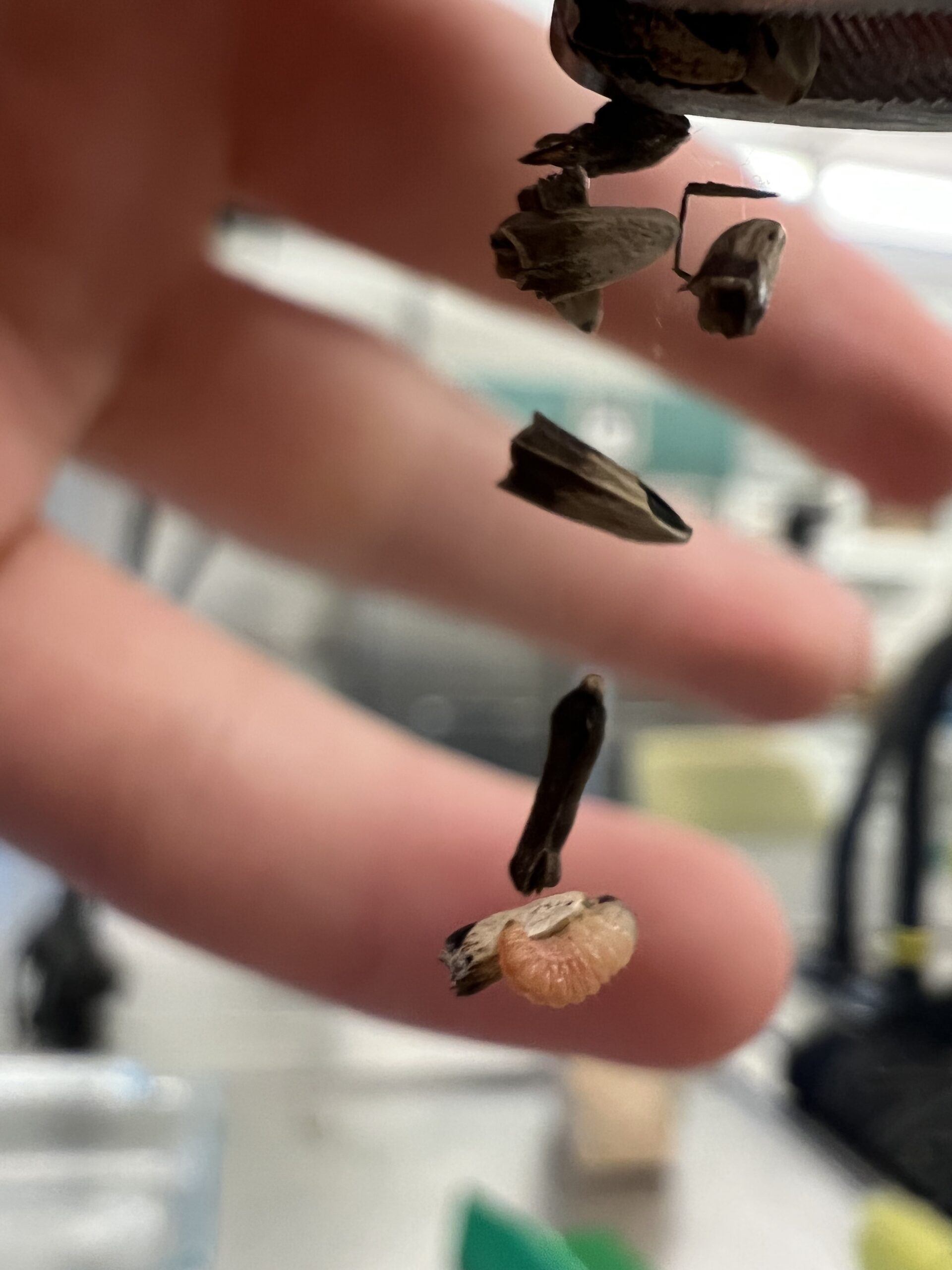
Busted! This seed predator was still alive and chowing down on Echinacea when I found it. Noticed the holes it gouged in the achenes.The seed predators seemed to produce a thin, sticky filament that would cause achenes and chaff to attach to each other.
The heads we were cleaning were from two sites we don’t typically harvest from, Hutchings and Nice Island. We had 155 heads from each site, stored all together in three gBags, 1 for hutchings and 2 for nice island. The heads were not in individual hBags. This storage method may have made it easier for the predators to move from head to head, but it’s unclear if they were able to cross from one gBag to another.
Hutchings was the most impacted; I would estimate nearly 50% of achenes from the site had been predated. Seed predation was less common, but still present, among the achenes from nice island, with roughly 1/10 achenes being affected. I removed at least 20, most alive, a few dead, from the hutchings heads during the cleaning and enrichment processes, and maybe 5 from the nice island batched
The grubs ranged from roughly 2-5mm long, and were a peachy orange color with a dark and hard head. They resembled the seed predators we’ve observed in Liatris aspera. I removed all the seed predators I encountered from the Echinacea and isolated them in a paper bag (the Grub Hub) to prevent further damage to the achenes.
My name is Manogya and I am very excited to be joining the team this month!
Research Interests
I am broadly interested in investigating the mutualistic relationship between plants and pollinators, specifically through plant reproduction and survival. I am excited to apply these interests to the Echinacea project while investigating effects of fire disturbance.
Statement
In my spare time I enjoy being outside whether that means hiking, swimming, or just looking at flowers! I also enjoy cooking and baking.
The team split up for an adventurous and successful Wednesday morning. Some went to go do total demo at landfill (finishing the last big site!), while others did demo at various other sites. I also was working on my dust traps throughout the day, part of my independent project where I am measuring the amount of dust traveling off of unpaved roads. If you are interested in learning more about my dust, go check out my project update! After I finished placing my dust traps, I finished up some demo and phen at a few prairie remnants and headed back for lunch.
The afternoon proved to be an eventful one! The entire team headed out to P2 to get trained in on harvesting. I don’t have photo evidence (sorry guys), but even Jared made it into the experimental plot, an event rarer than a double rainbow! While in the plot, Stuart taught the team the 4 ways to know if an Echinacea head is ready to harvest, then sent us on our way to start harvesting in the experimental plot. The task seemed to be easy enough at first, but proved difficult as we moved along. The culprit of our problems: the 13 lined ground squirrels who call P2 home. Many of the plants had their roots eaten, which we discovered when the peduncle (stem) of the Echinacea was no longer attached to the ground. If the plant was lucky enough to have its roots still intact, it may have had its head eaten off. Daytona and I tried to scare them away when we saw them eating our plants, but the safety of our plants was likely short-lived. The ground squirrels were feeling especially brave, one even jumped on my leg! The excitement of harvesting and the ground squirrels made for a quick afternoon, and soon enough we had to head back and finish up for the day. I collected my dust traps and everyone split up to enjoy their evening!
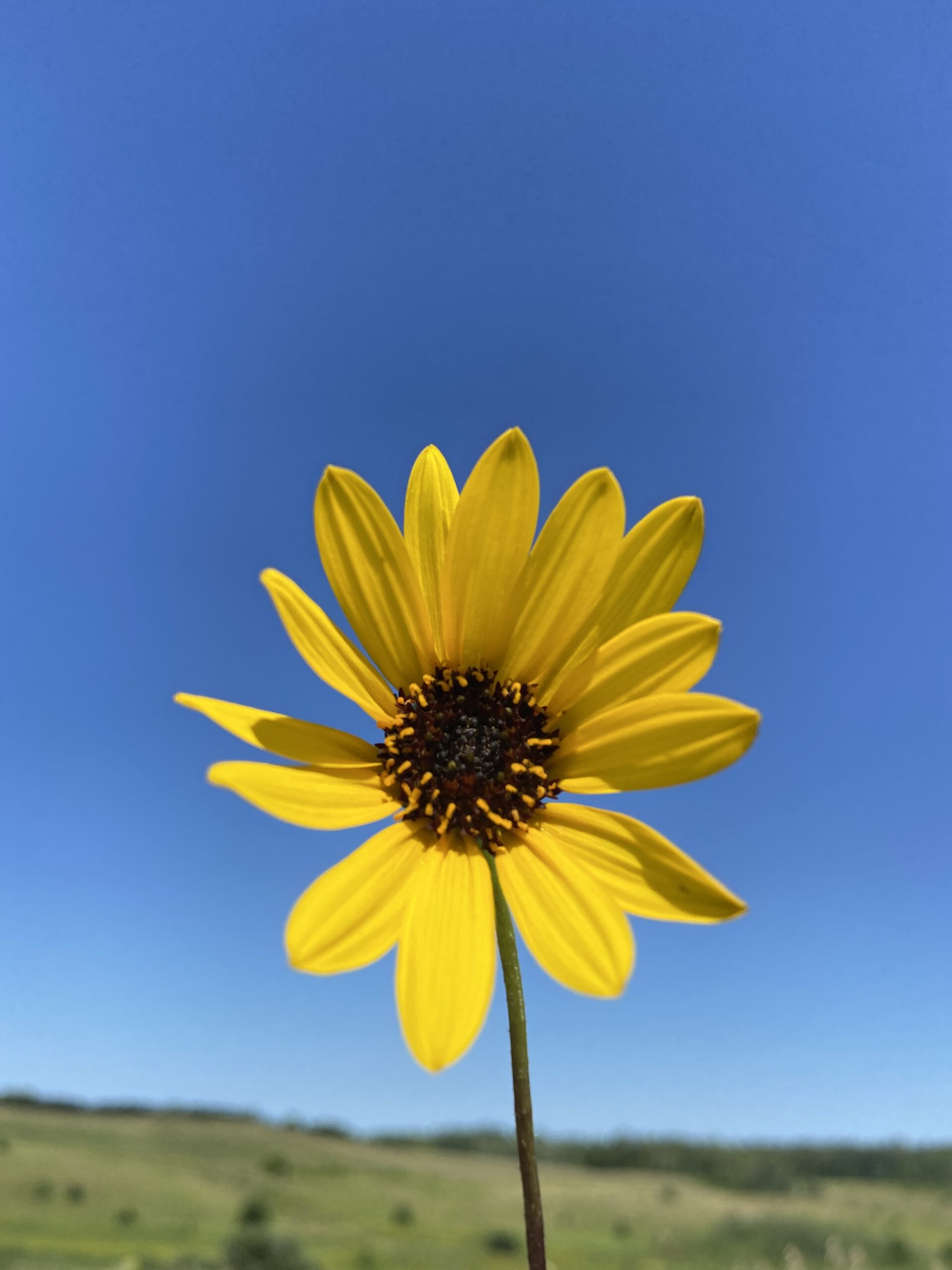
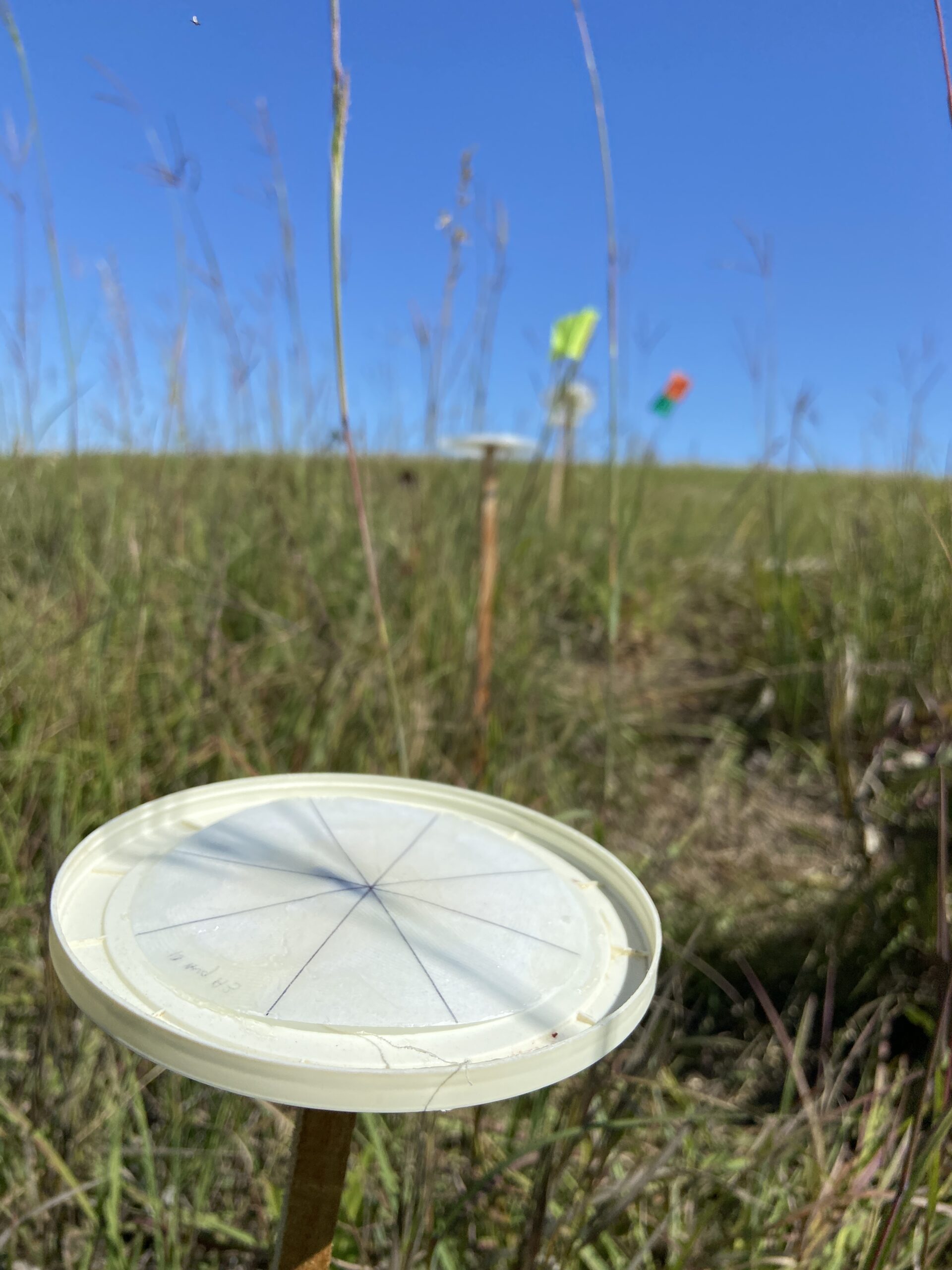
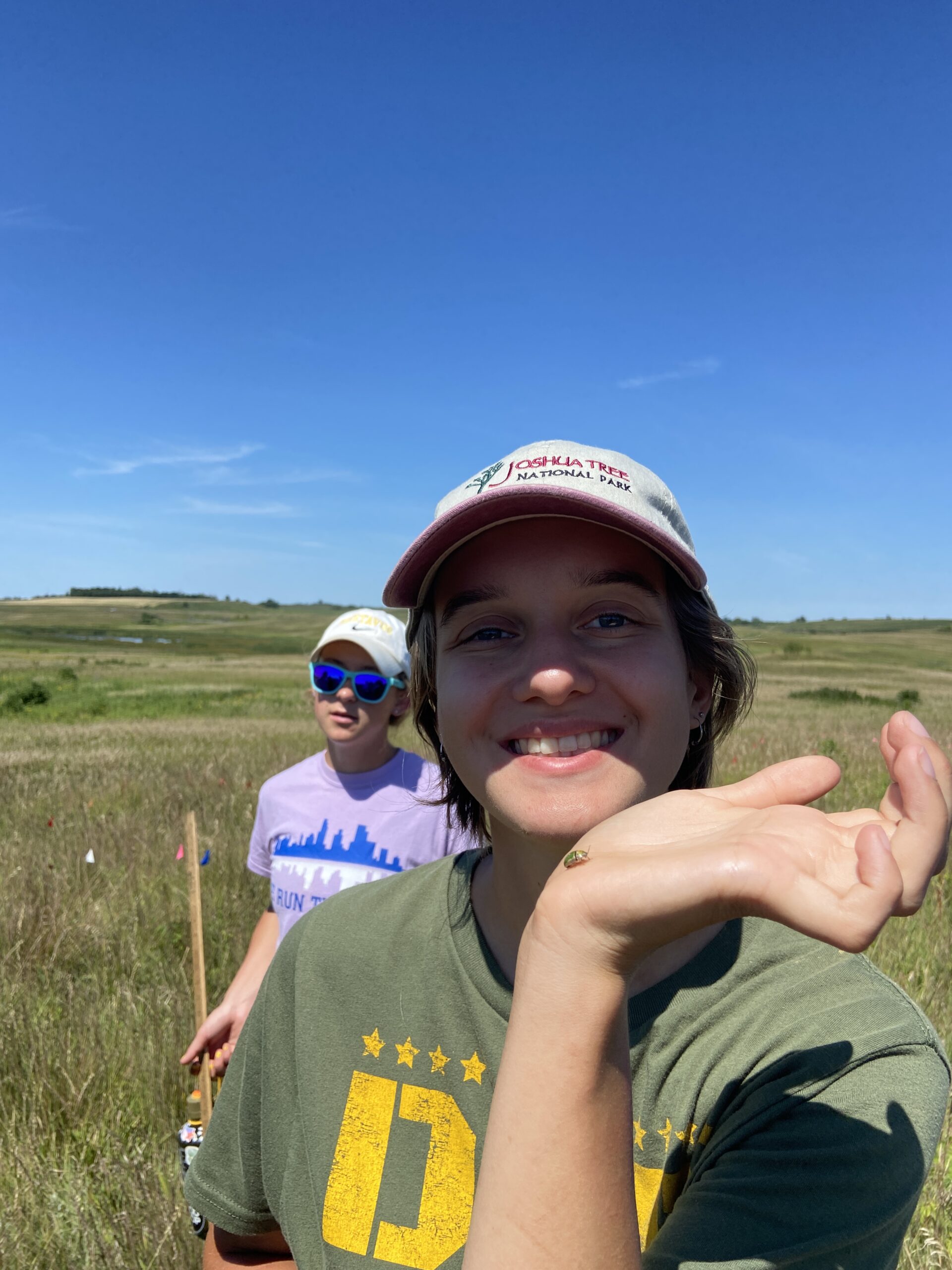
I found a spider eating a syrphid on my dust trapA cute little sunflower I found 🙂My dust trap is ready to go!Jo shows me her newest, shiniest bug (front). I’m not sure what Lindsey is doing (back)Daytona showing off the damage of the ground squirrels
Hey flog-heads! Welcome back to one more week of the Echinacea project; off to an exciting start with milkweed, measuring, birds-of-prey, total demo, wet shoes, visitors, visors, liatris, and as always … phenology.
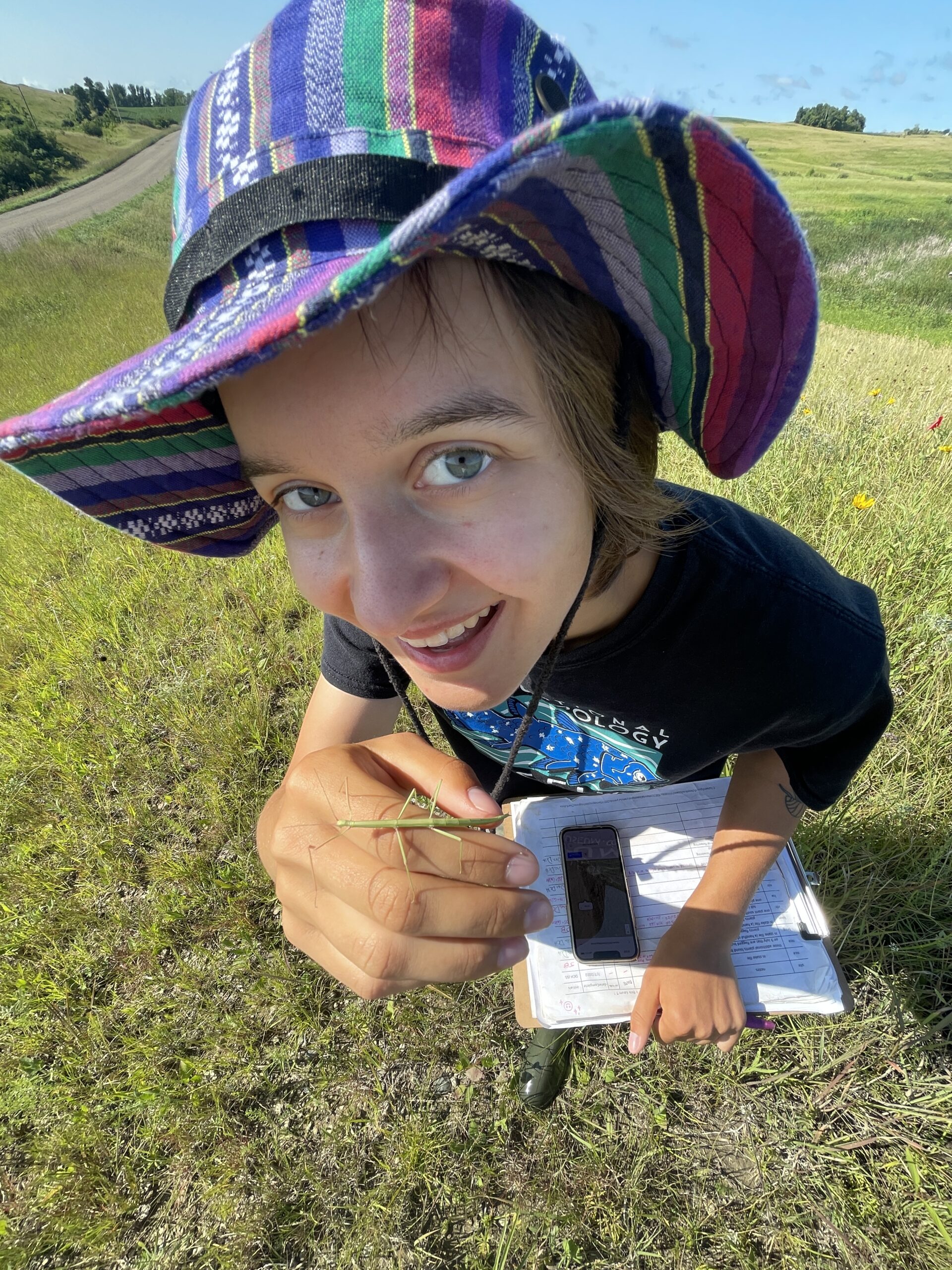
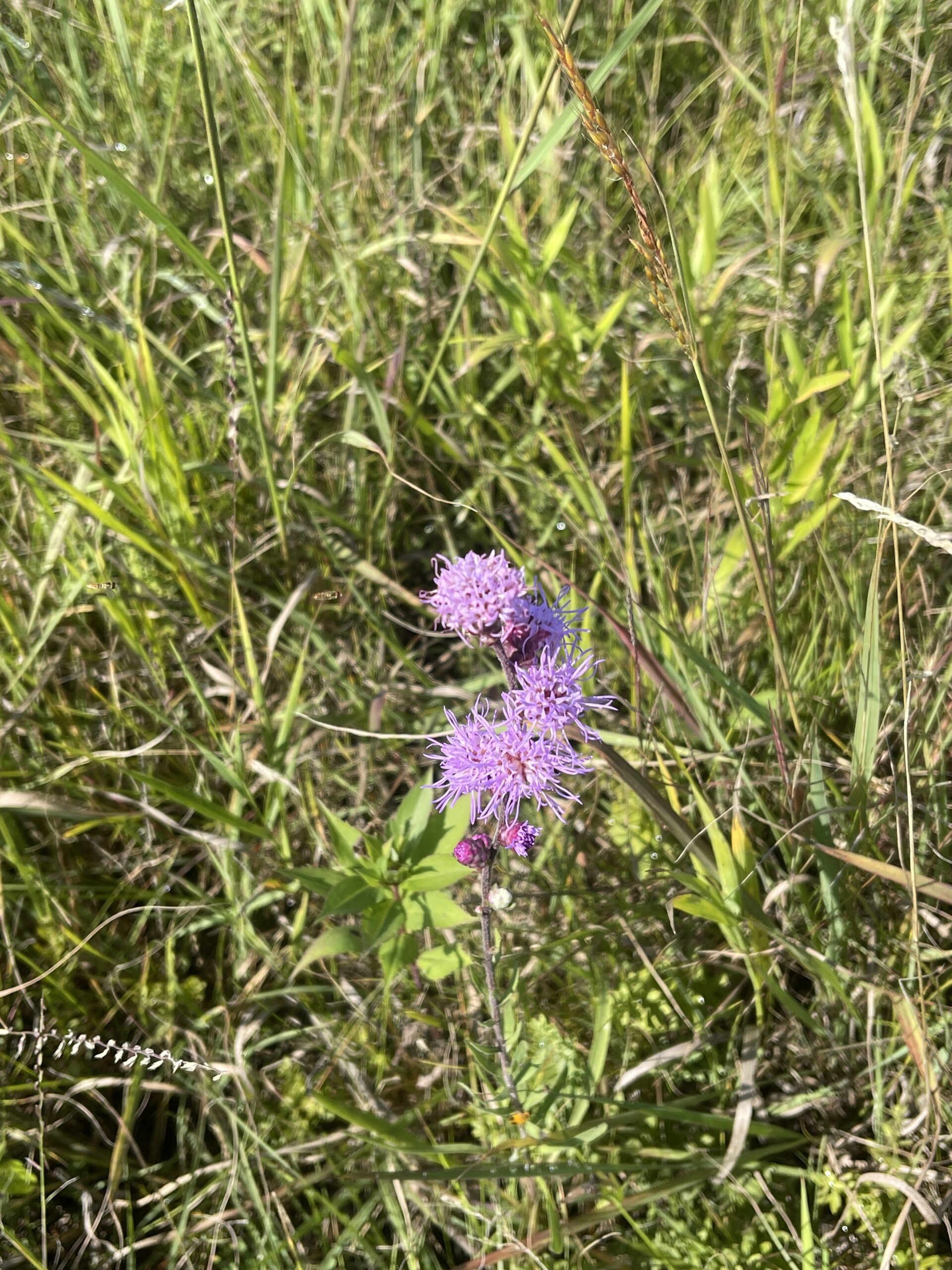
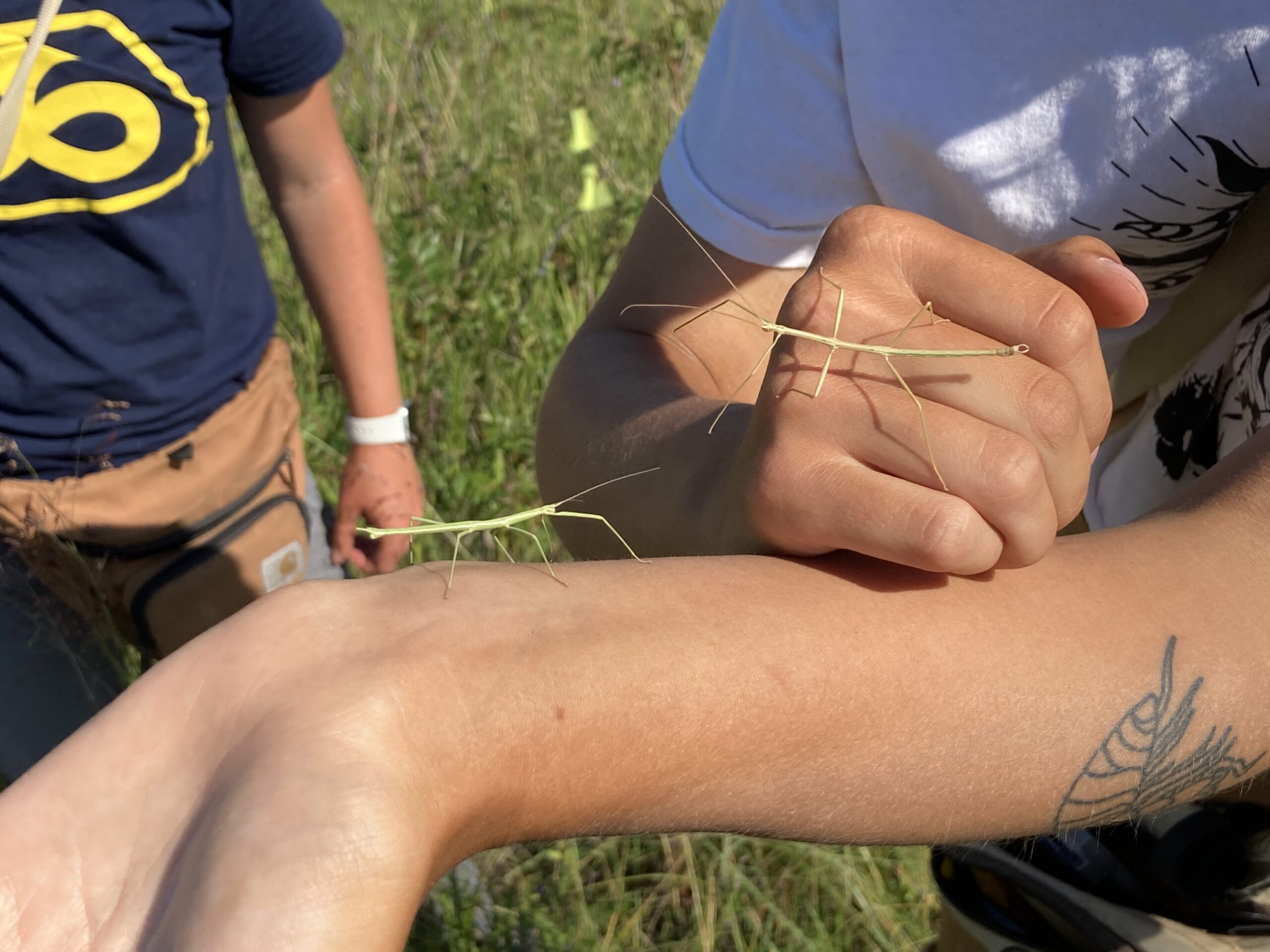
This morning the team divided, some to continue remnant phenology on few remaining flowering echinacea while others went to start total demo on on behemoth of a site, Loeffler’s corner. I am grateful that Jo and I had the task of scoring milkweed at Bang and Hegg lake. We trekked through the dewy grass, Jo’s rubber boots repelling the water that my shoes invited in, leaving me to walk in puddles for the majority of the morning. Jared warns that soon enough that I’ll be dreaming of the abundant purple heads of Liatris aspera as I will see so many, but for now I revel in the excitement of the few flowering plants I was able to find today at Hegg. Along with Green Milkweed, we encountered three osprey, all upset by our presence, as well as a stickbug, pictured below.
Get Stickbugged!My precious Jo fell in a hole lol
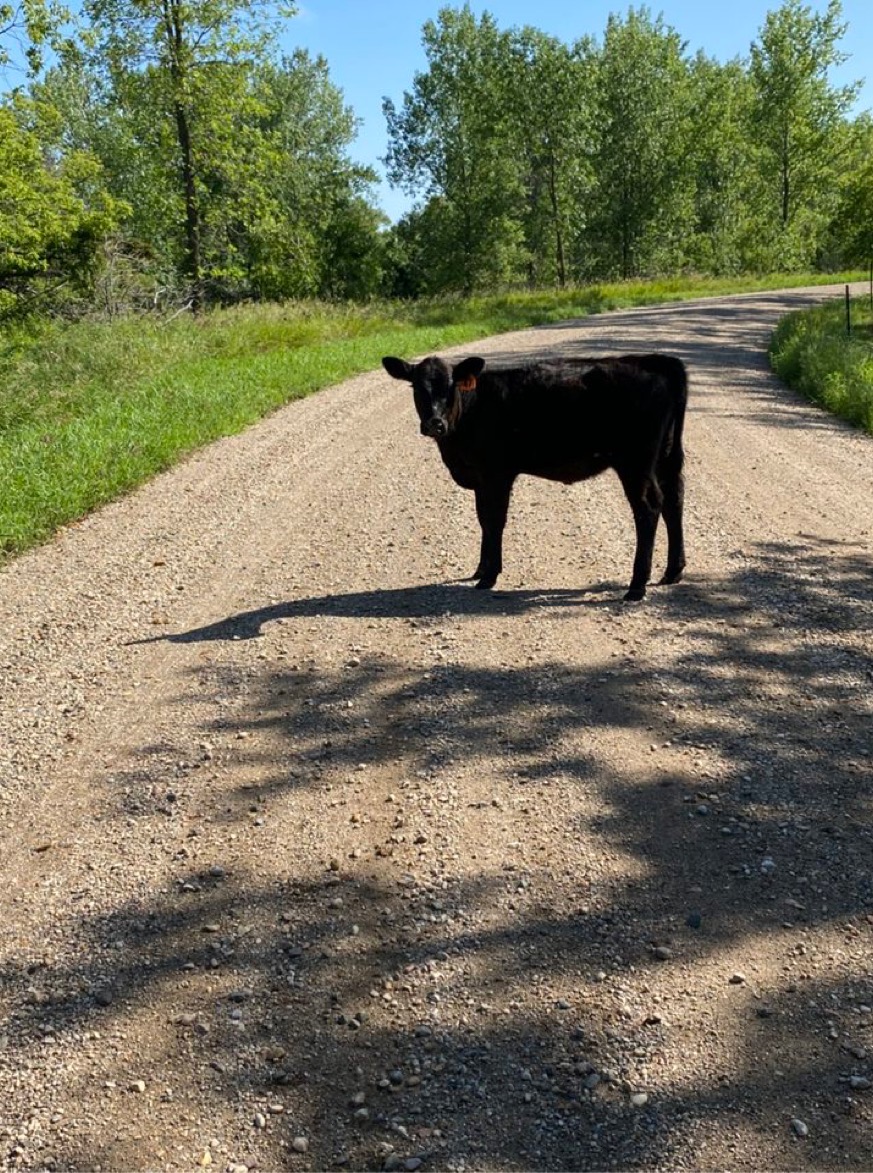
Geena found a calf in the street, which when she asked politely to moooove over, they obliged (sorry Jared, I stole your joke, but its for the fans. You get it.).
“Moooooooo” – probably what the cow said idk I wasn’t there.
At lunch, we welcomed Scott back to the Echinacea Project. An alum from 2016, Scott returned on his way back to Boulder, CO to make sure everything was still in working order. We were excited to hear his stories and gain some wisdom about the adventure into science, post-team Echinacea. Thank you Scott!
Alex! Scott! Lindsey! All smiles!
The afternoon brought with it measuring in P2 and P1 for the majority of the team, while Sophia and I ventured to Yellow Orchid Hill to begin mapping Liatris for my project. We found many more than previously expected, inspiring burgeoning hypotheses as to why. Soon, Yellow Orchid Hill West will be ablaze with purple. Maybe they’ll have to change the name.
Hard at work! Sophia and Liatris. They’re matching!Big blue stem living up to its name.
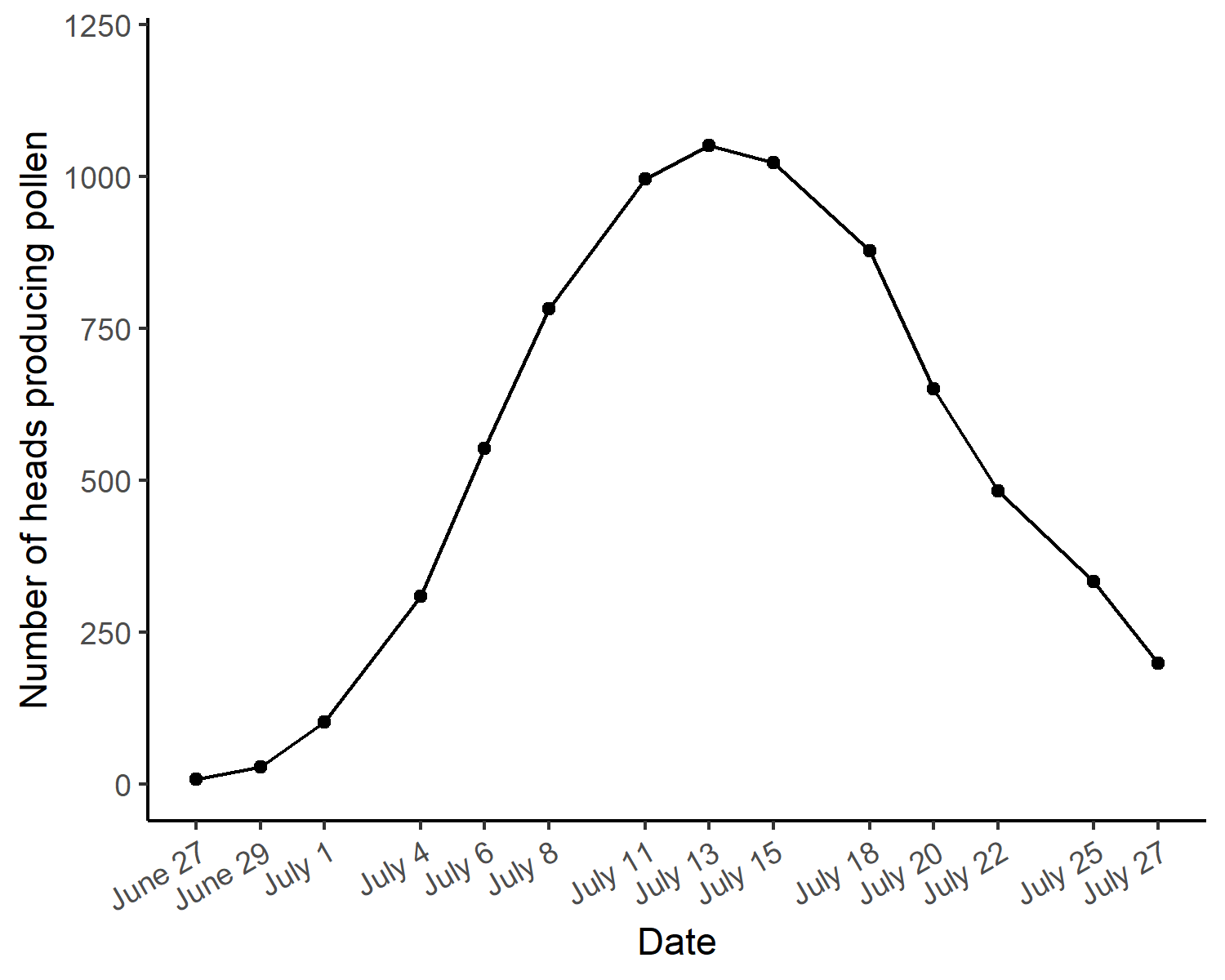
To record the flowering phenology of Echinacea, we visit plants every Monday, Wednesday, and Friday morning so we can estimate the flowering start and end date within 2-3 days. During peak flowering in mid-July, the full team spent the whole morning recording phenology. This year was a good flowering year for Echinacea across sites, but fortunately we reduced the number of sites and visited only a subset of plants at larger remnants and those that burned this year.
Remnant phenology is currently wrapping up for the summer. Most of the plants are done flowering now, and we have stopped visiting several of the smaller sites. Landfill West is the exception; the site burned in late May, so the plants flowered several weeks later than at other sites.
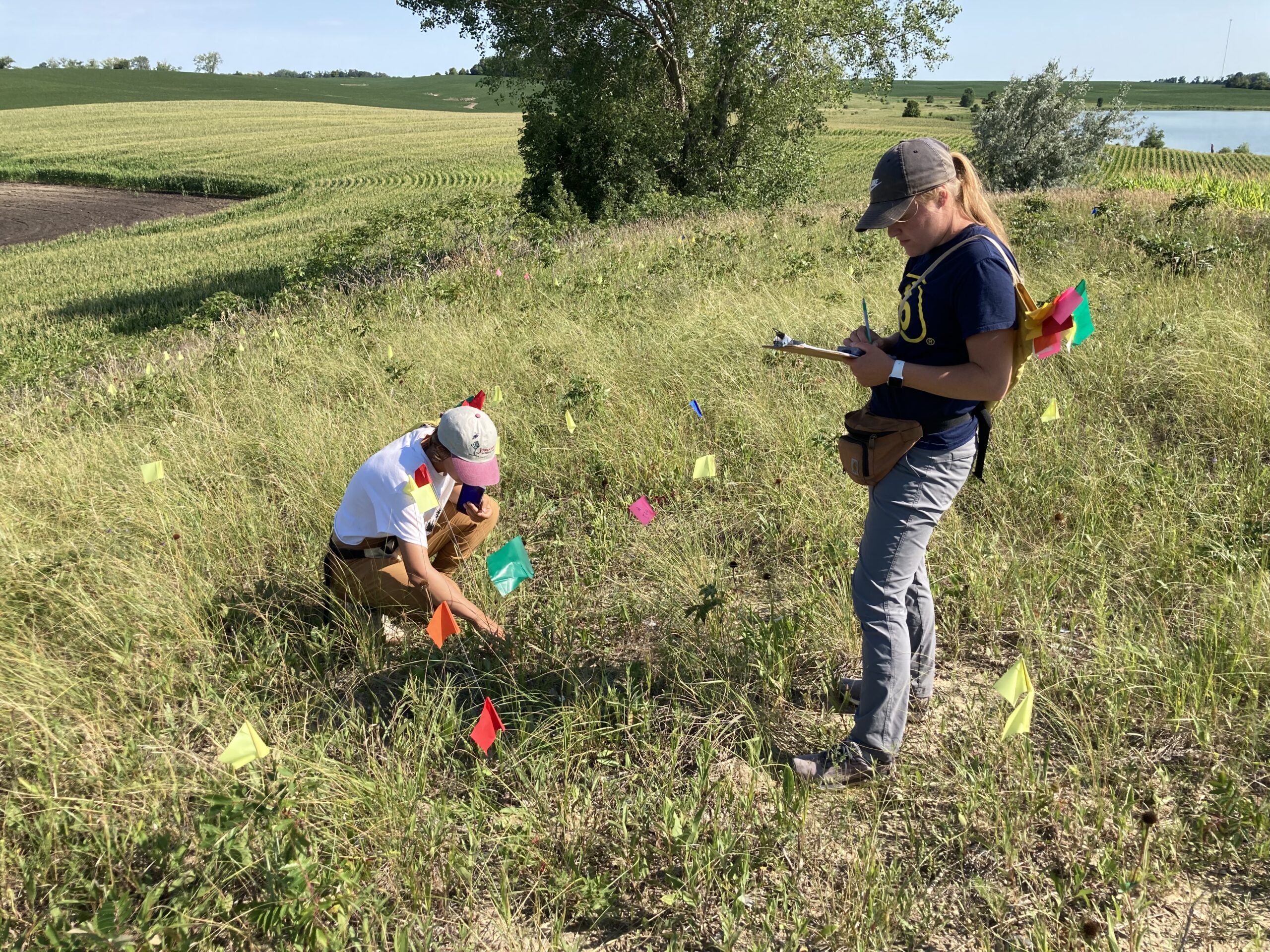
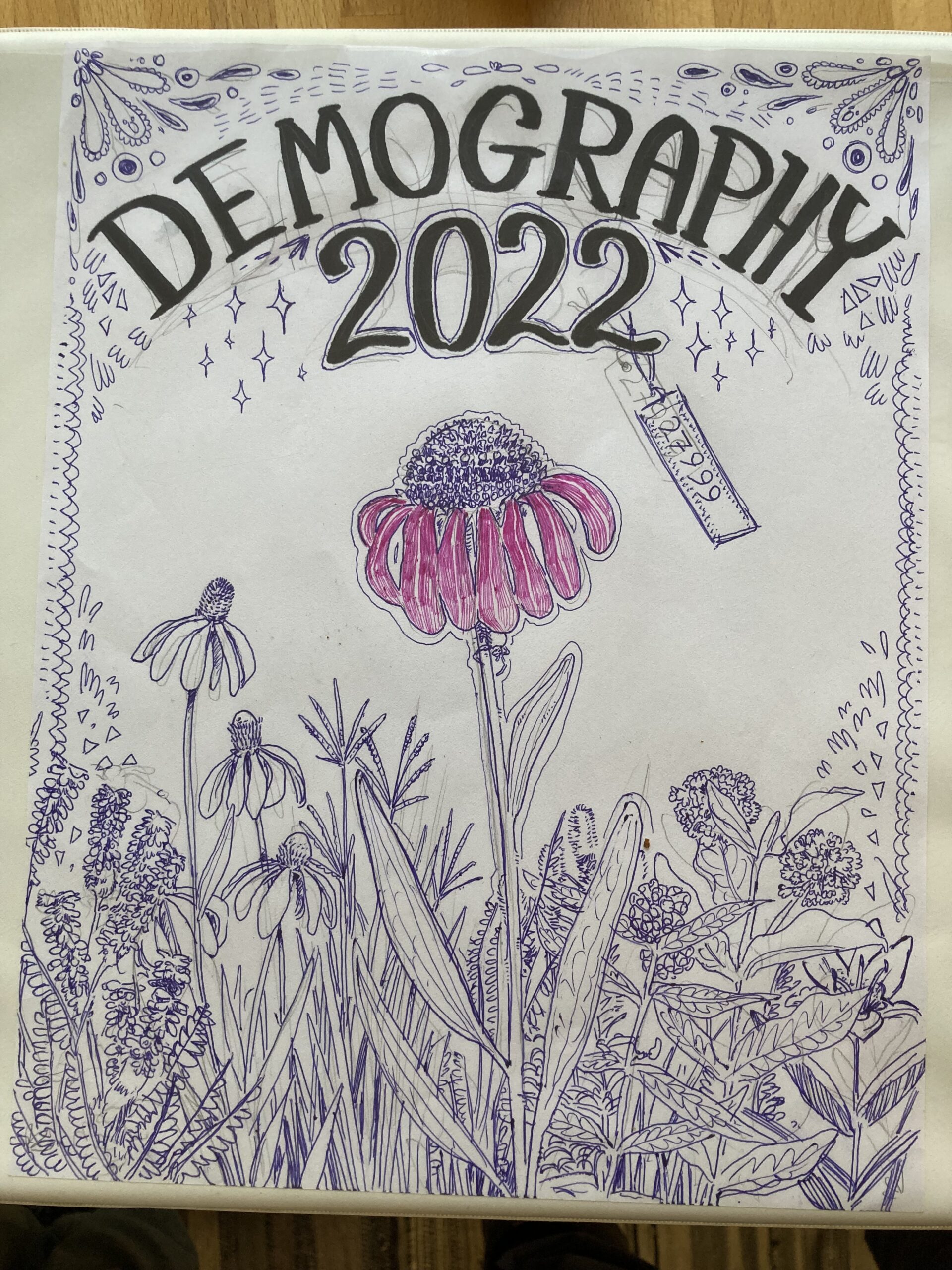
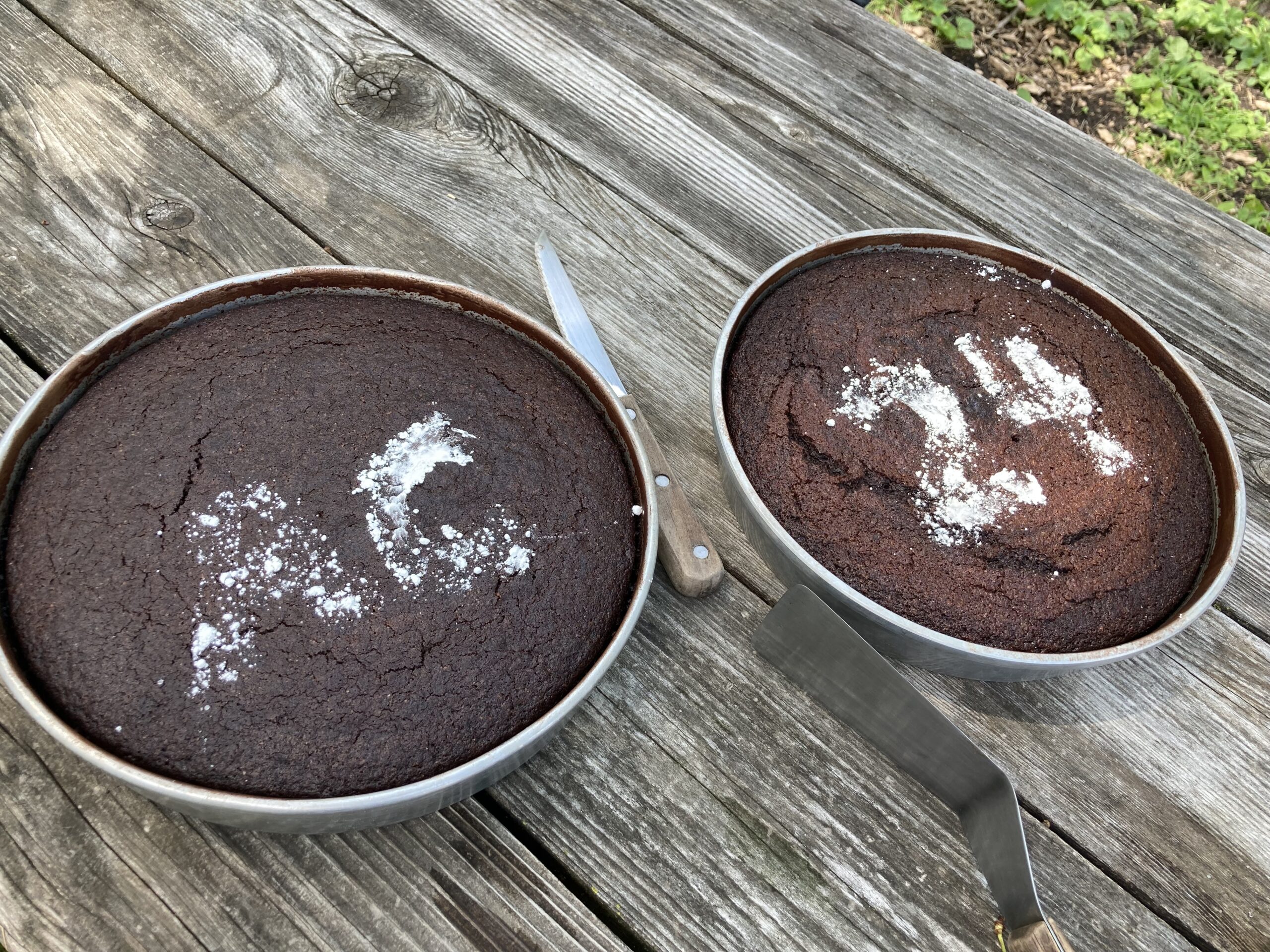
On Monday morning, the crew split into two groups. Half of the team did remnant phenology, which is going much faster now that most Echinacea are done flowering. The other half did total demo at prairie remnants nrrx and rrx, where we revisited a subset of the plants that flowered in previous years. Johanna made a fabulous illustration for the cover of total demo binder. Can you identify all the prairie species? It was also my birthday on Monday, so we celebrated by eating Stuart’s famous vegan chocolate cake at lunch.
The total demo pros hard at workI spy a lead plant…Cake!
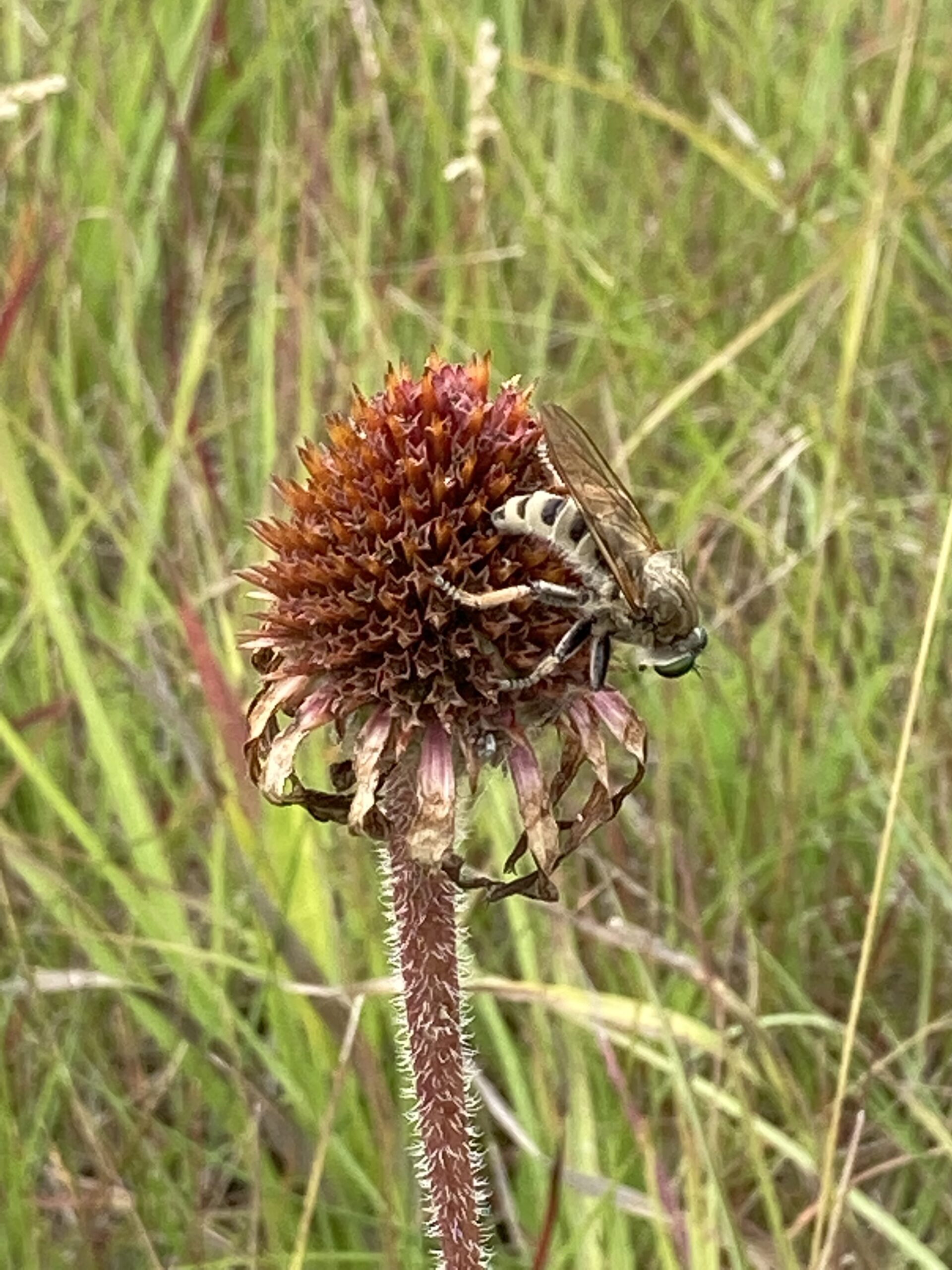
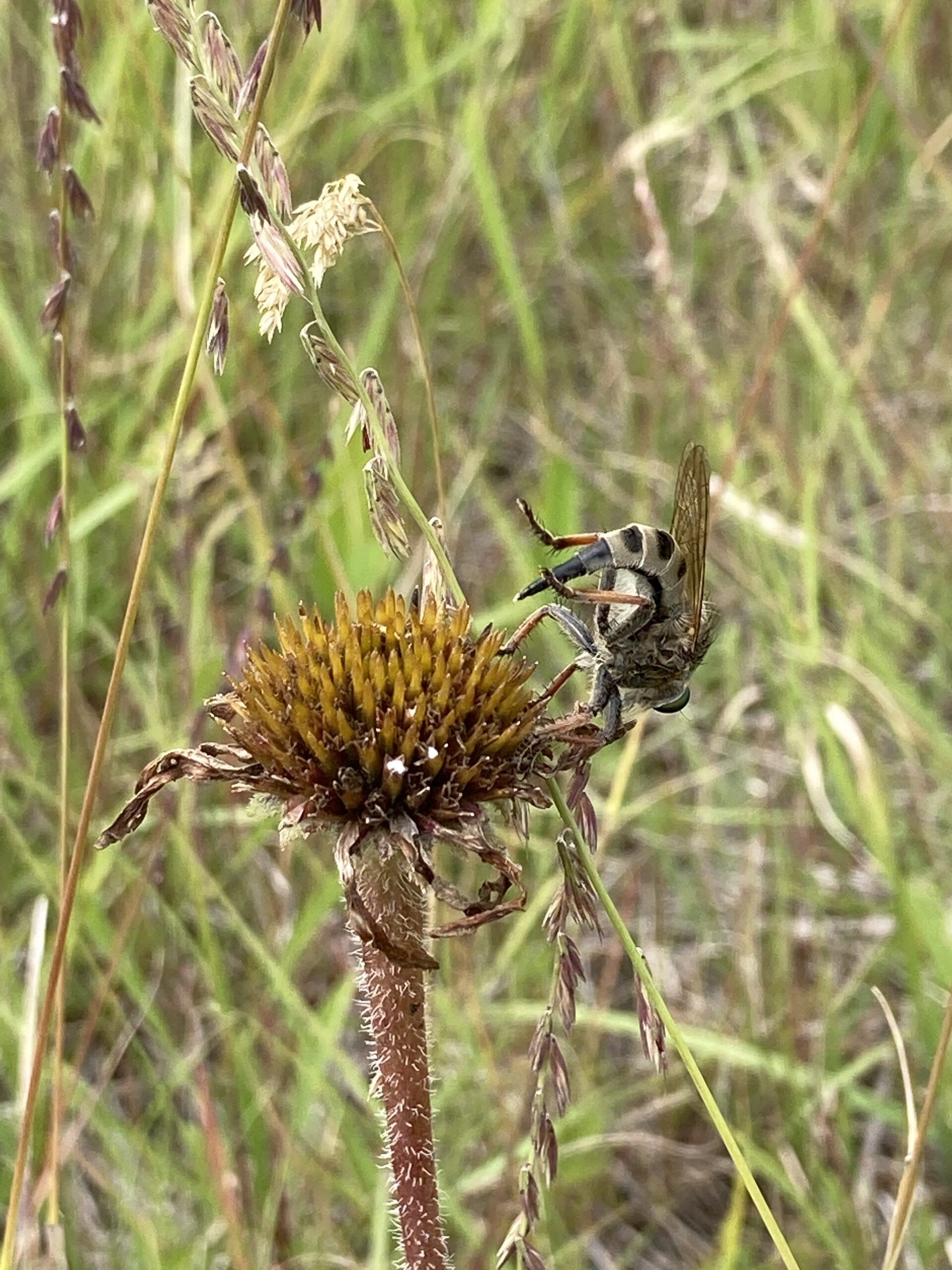
In the afternoon, I joined Kennedy and Johanna to finish total demo at rrx and start on27. At rrx, we spotted several robber flies laying their eggs on Echinacea heads. It was a busy day for insects, and Johanna also spotted two walking sticks climbing through the grass at on27. Overall, it was an excellent birthday!
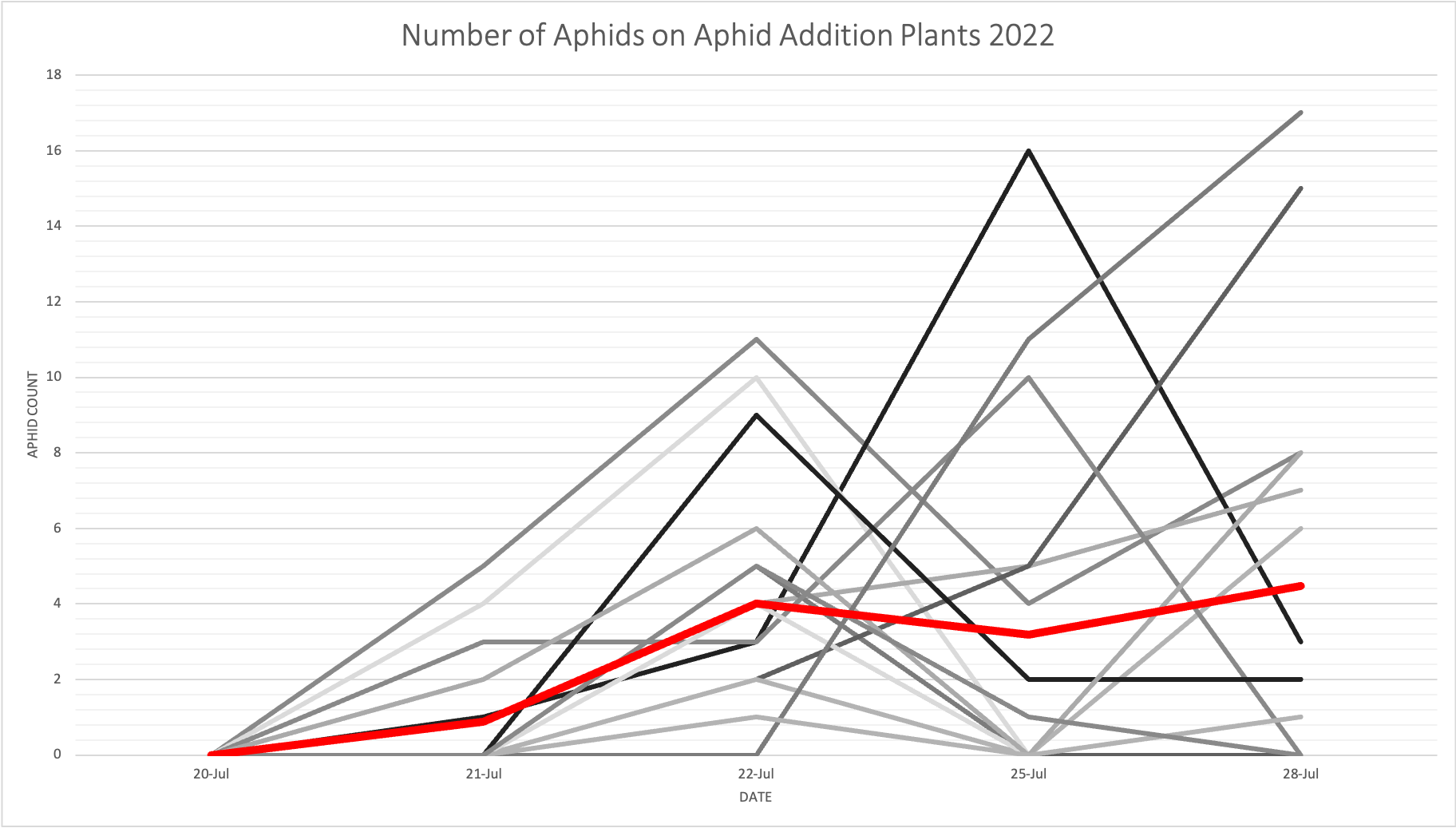
Since 2011, Team Echinacea has been studying how the presence (or absence) of the specialist herbivore Aphis echinaceae has an impact on Echinacea fitness. This summer, Kennedy and I (Emma) have been tasked with running the project. Originally, 100 heads were included in the study. This summer, only 41 plants are still present, with 17 addition plants and 24 exclusion plants. At the beginning of the summer, Kennedy and I searched to see if we could find any aphids, regardless of whether the plants were a part of the addition or exclusion treatment. We found exactly none, the same as last year. After consulting with Stuart about the conundrum, we decided to introduce a new population of Aphid echinaeceae into ExPt1, where the project is located. Multiple times a week, Kennedy and I went into prairie remnants, carefully gathered the aphids, then brought them back and placed them onto the living addition plants. Below is a graph of the aphid population growth on these 17 plants, with the red line being the average.
Most of the plants have now received between 70 and 80 Aphid echinaeceae since the 20th of July, with most plants having at least a few living each time we visit the plant. On one plant we even found an ant! Overall, it will still take some work to establish a new population, but we seem to be off to a good start.
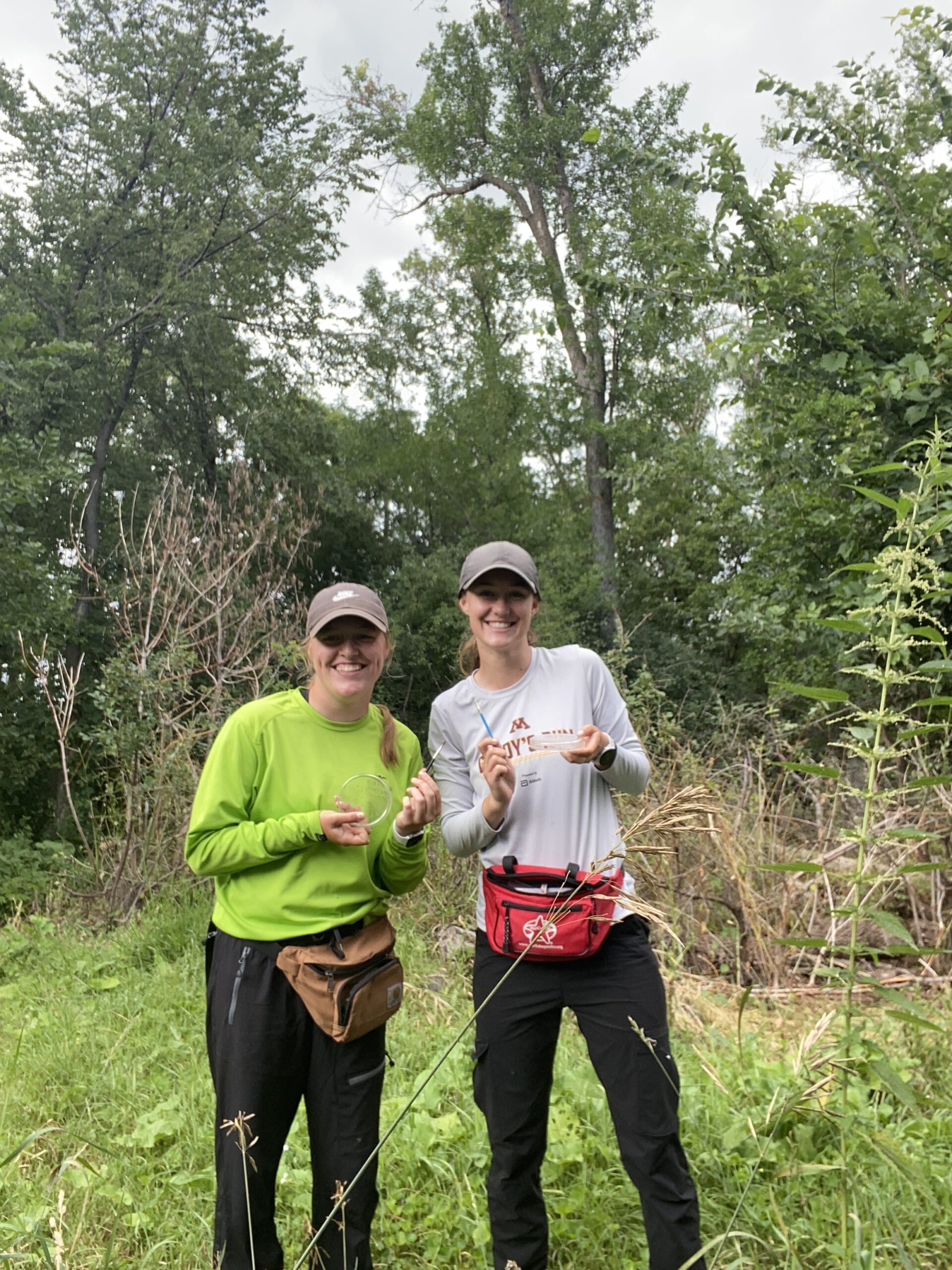
Transporting Aphid echinaeceae in petri dishesKennedy and Emma with their petri dishes and paint brushes
Over the course of this summer, the dust project has continued! Team Dust is now on its second year of studying the effects of dust deposition on Echinacea angustifolia’s seed set, through both an experimental study (to determine if dust deposition affects seed set) and an observational study (to determine the amount of dust traveling off of unpaved roads). Now that we are over half way done with the field season, below is a brief update of what has been done so far this summer, and what is still yet to come.
Experimental Study
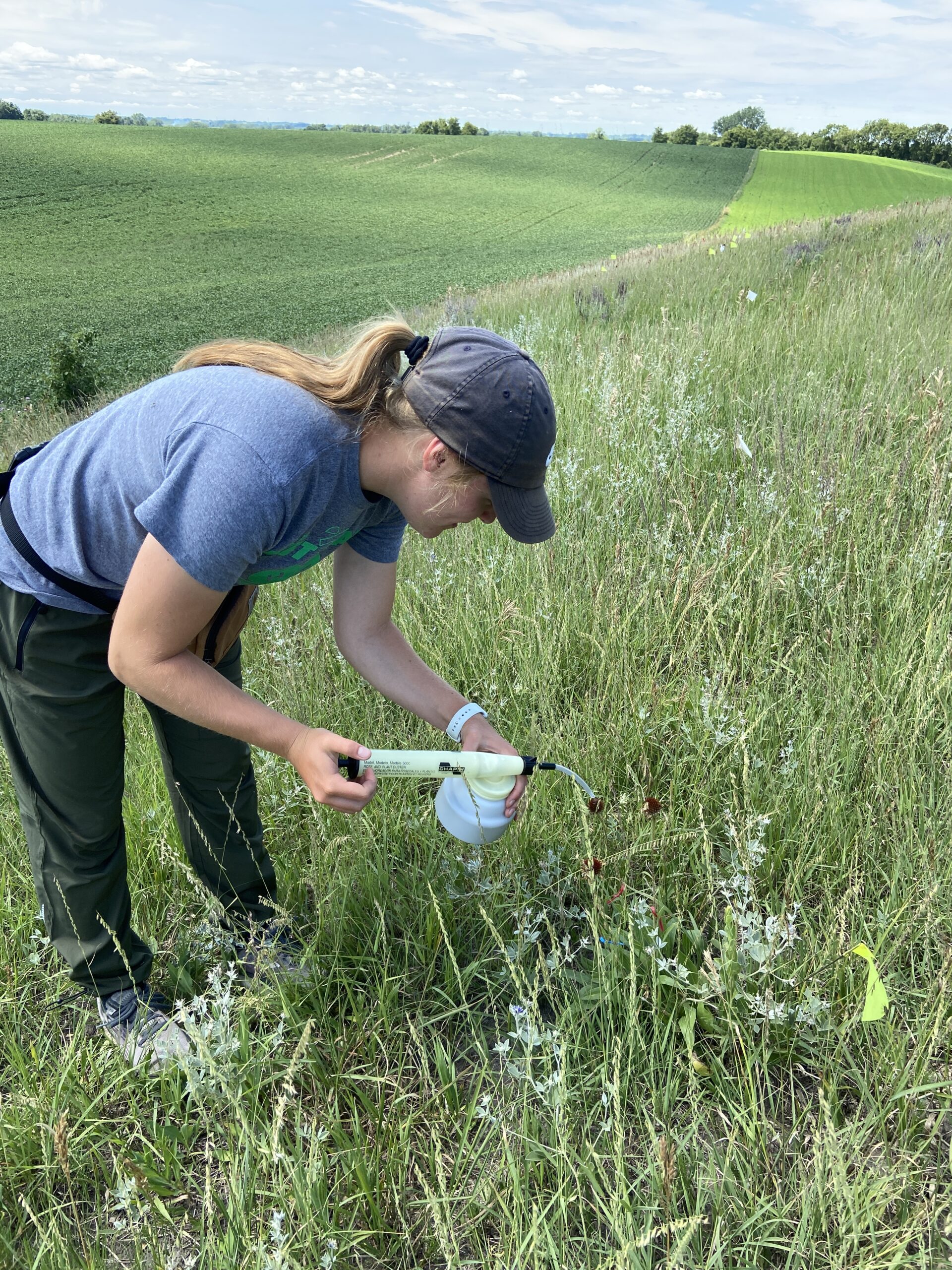
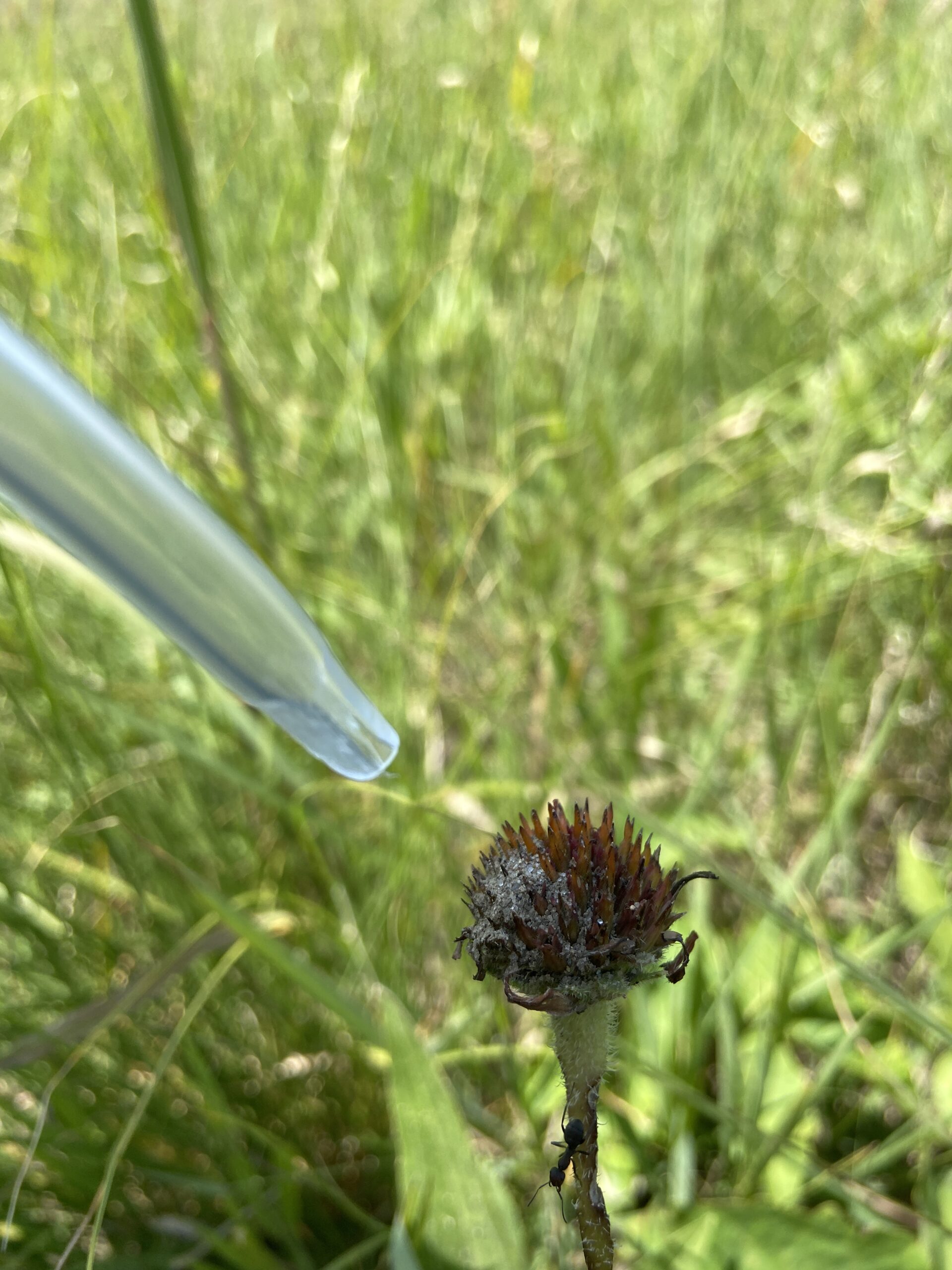
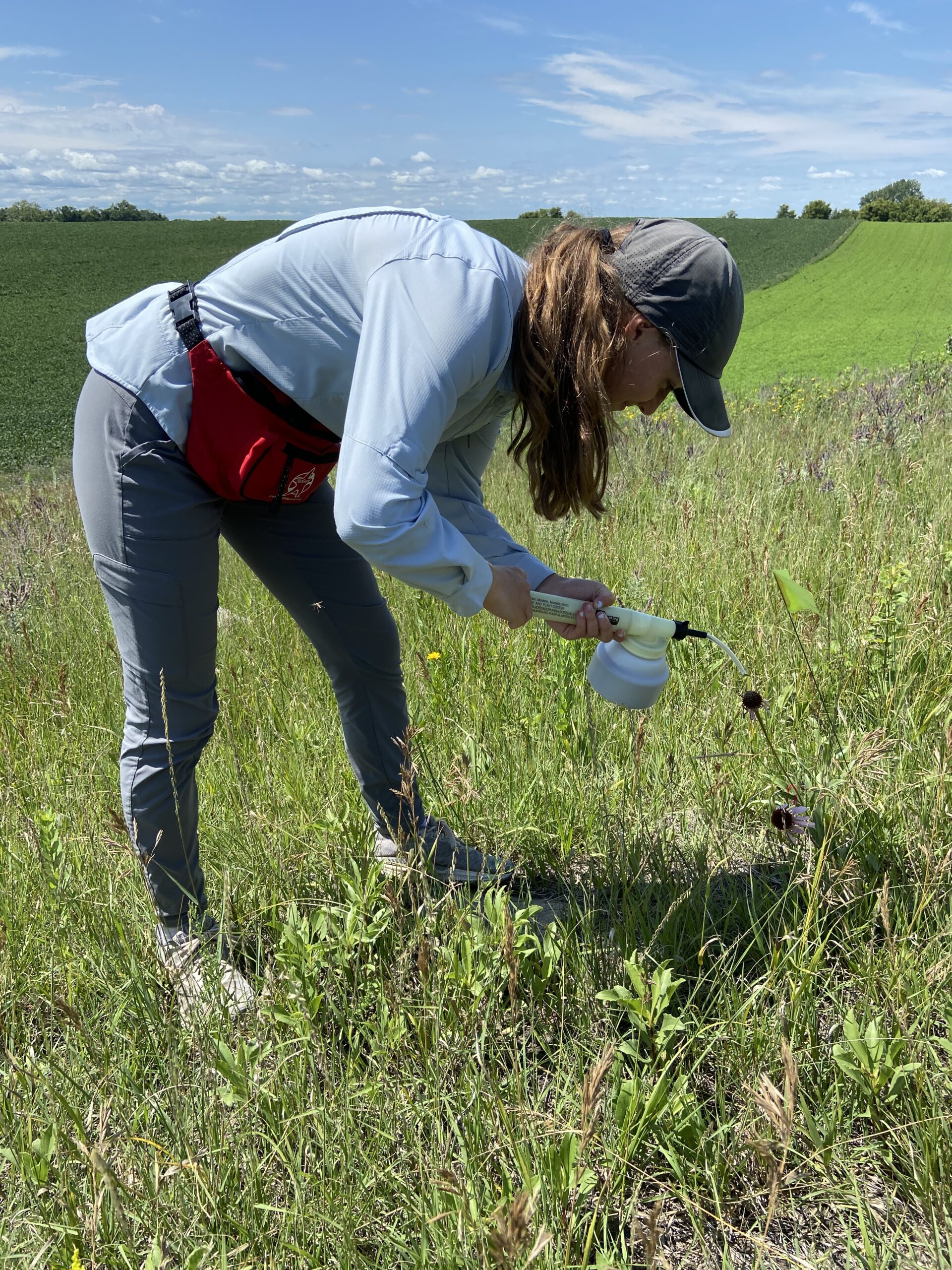
This summer we have 64 Echinacea heads included in the experimental study, located at the prairie remnant Nice Island. Of these 64 heads, half of them were randomly selected to receive dust treatments while the other half receive no dust. Twice a week I venture out to these heads to give the “dusty” heads their dust while the others receive none. All of these heads are located at a site where little to no dust comes in naturally. Once these heads are ready to be harvested, they will be run under an x-ray to determine their seed set. Currently we have the x-rays from last year’s heads, but not all of them have been analyzed so there is no data to report as of now.
Observational Study
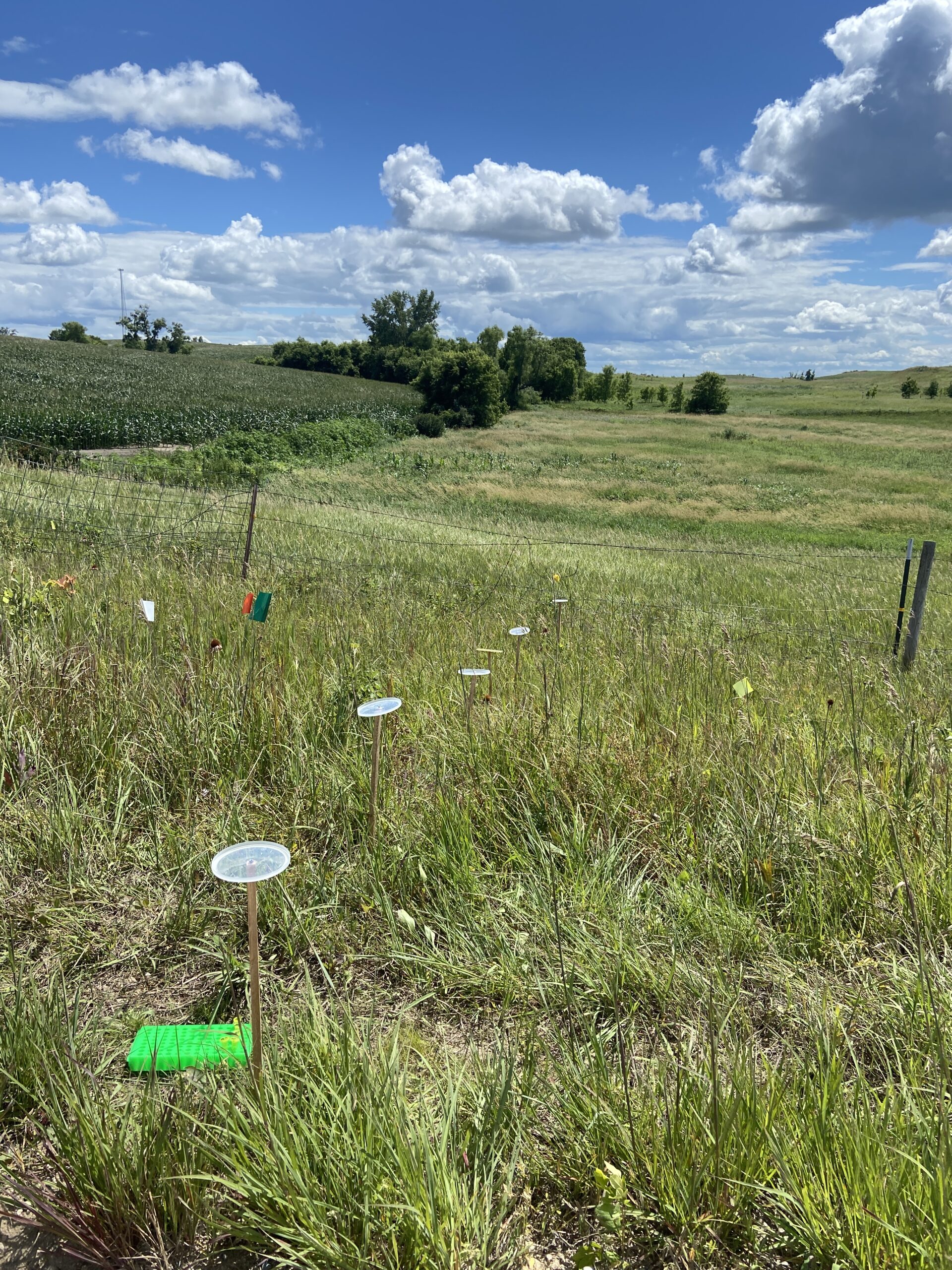
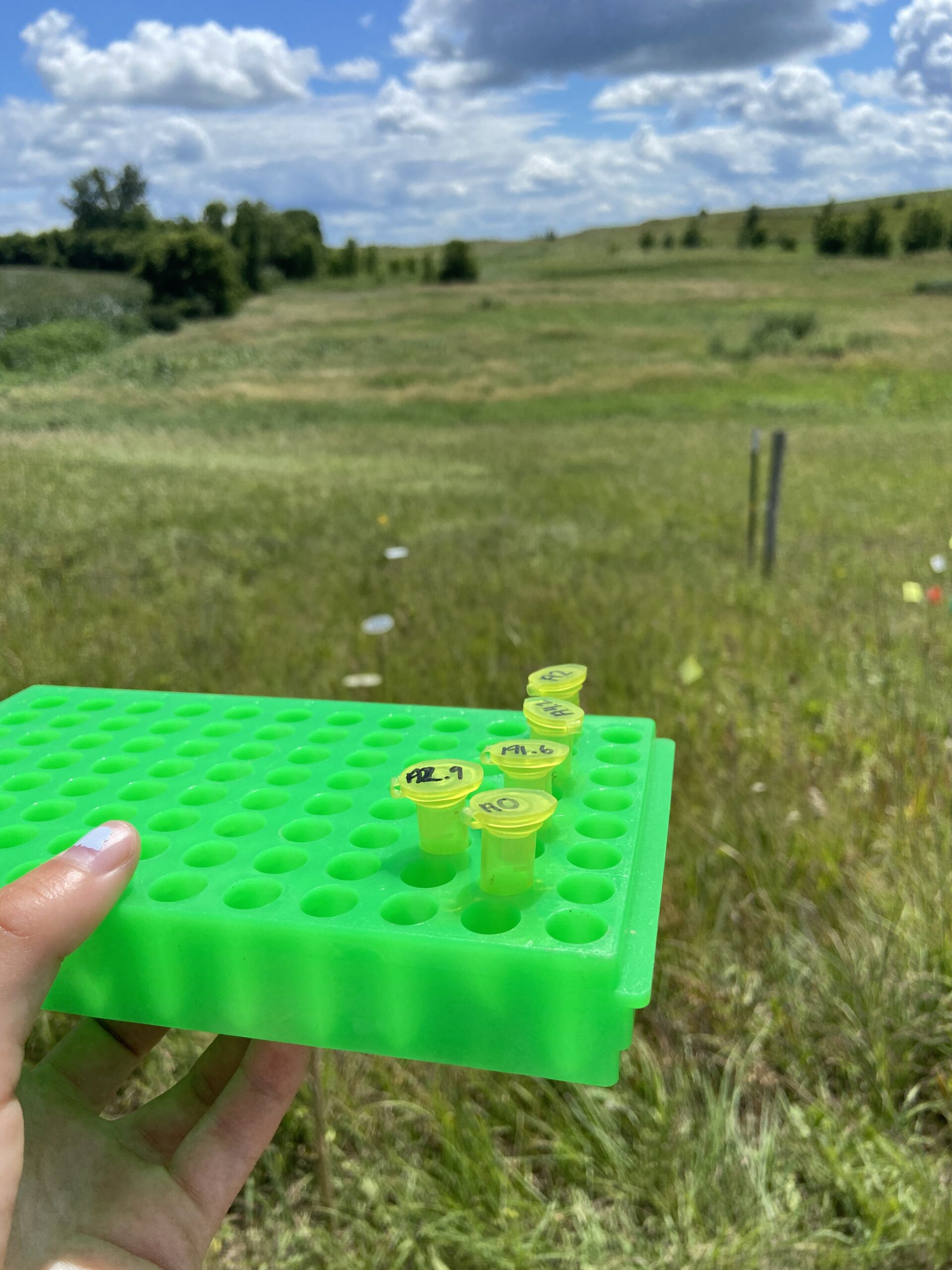
The observational part of this project is about to begin! This past week, Kennedy and I assembled the dust traps (pictured below) that we are going to use to measure dust levels at varying distances from unpaved roads. We then placed these traps at two different remnants (pictured below). Over the course of the next two weeks, these dust traps will be loaded in order to collect data. The second part of the observational study, new to Team Dust as of 2022, is collecting styles from flowering Echinacea heads alongside unpaved roads. Kennedy and I managed to collect some styles on Thursday, which went well! Currently these styles are sitting in the freezer, but they will soon be analyzed under a microscope to look for dust covering them.
Overall, lots has already been done this summer, but there is still plenty left to do!
Kennedy applying a dust treatmentA dusty head!Emma applying a dust treatmentSome dust trapsThe styles sitting in their vialsMore dust trapsDust traps along a dusty road