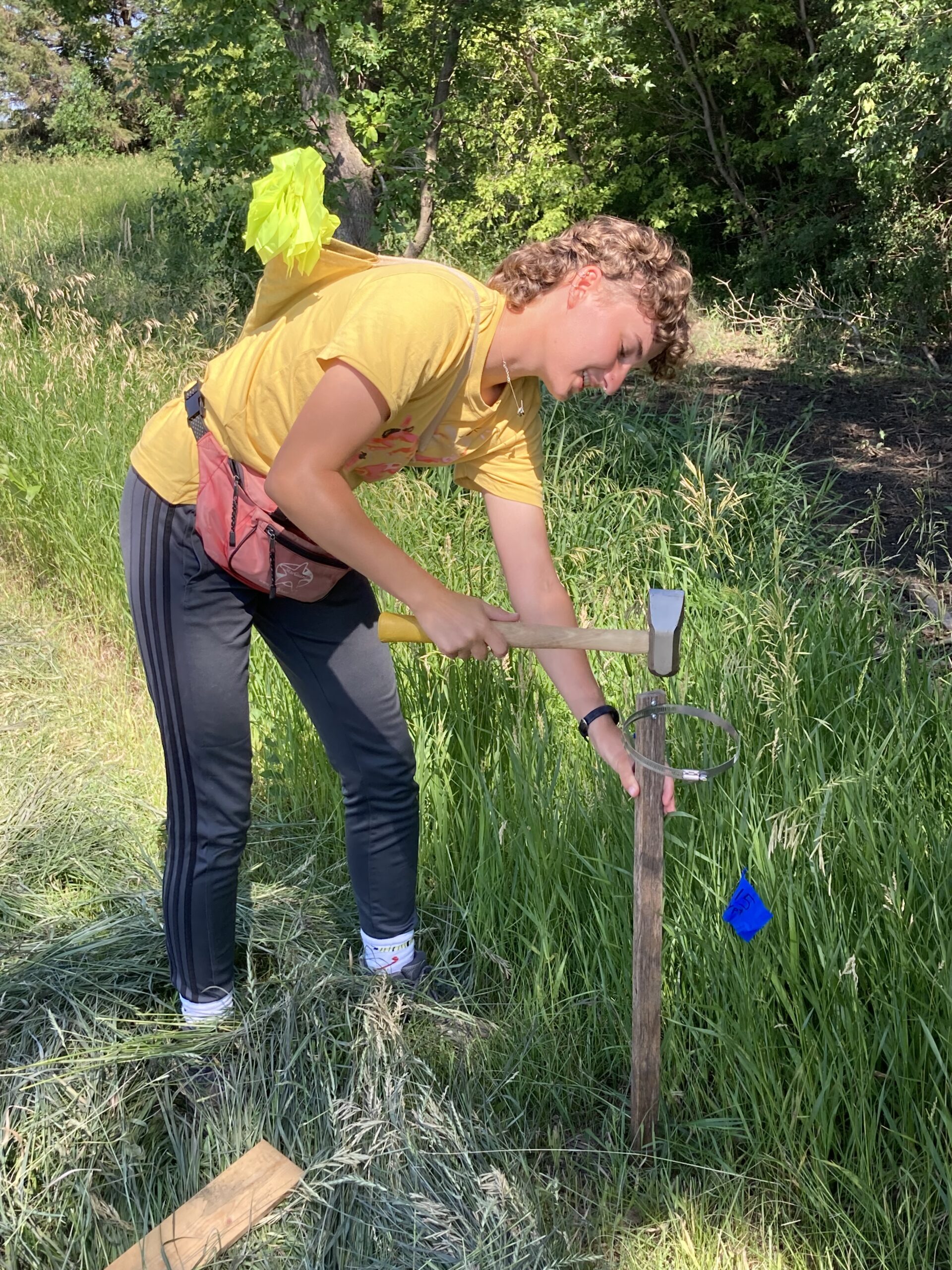
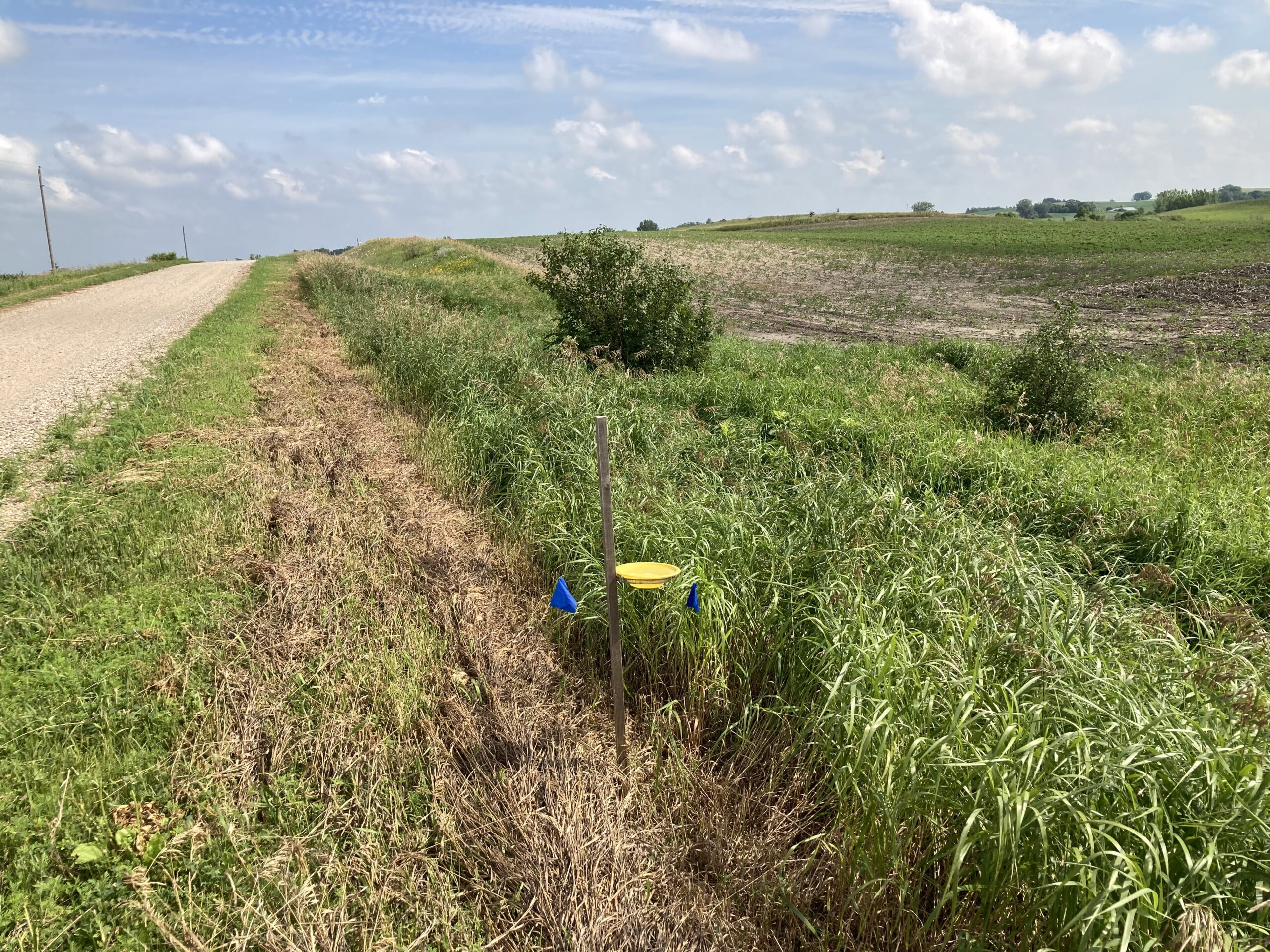
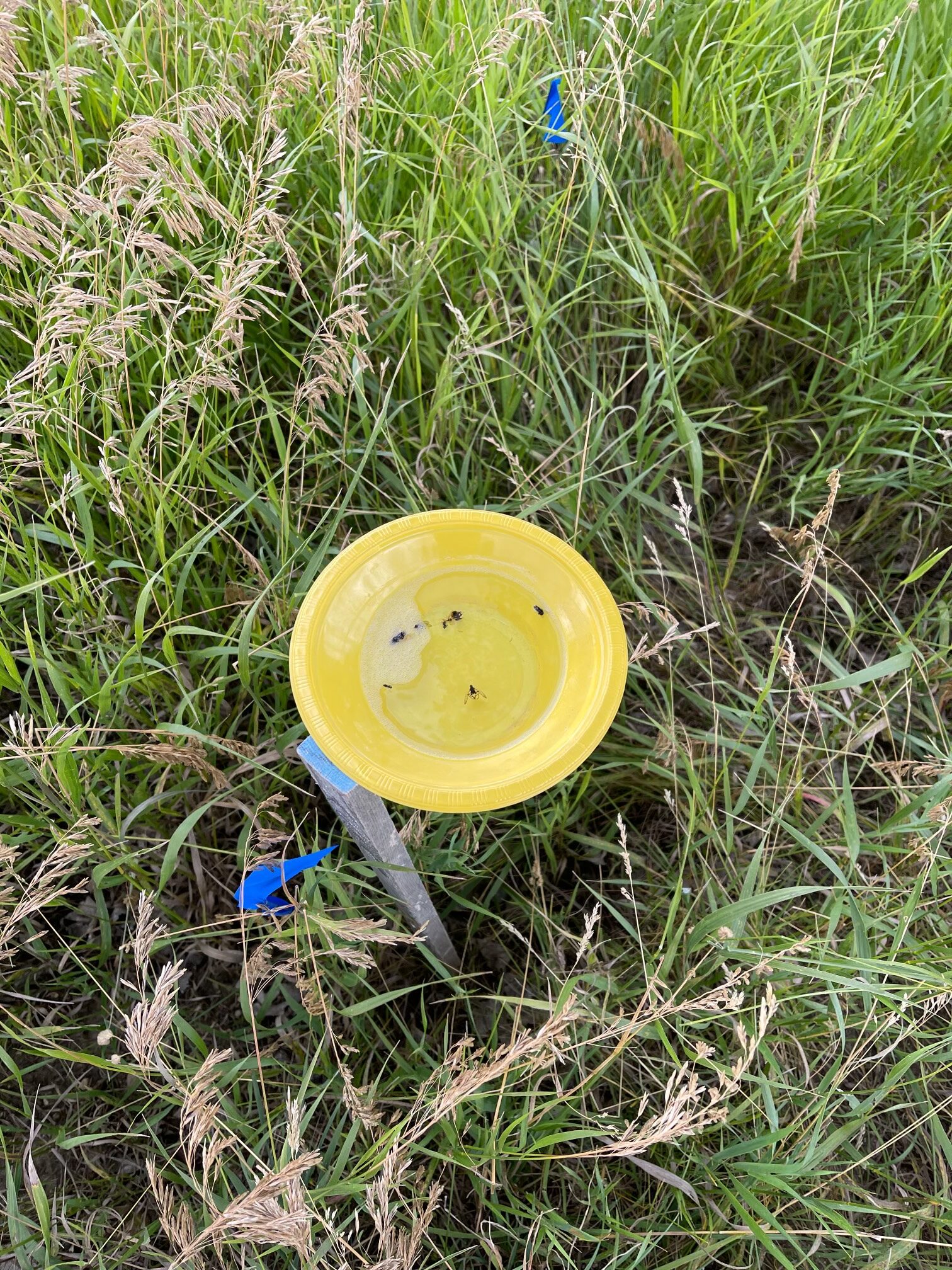
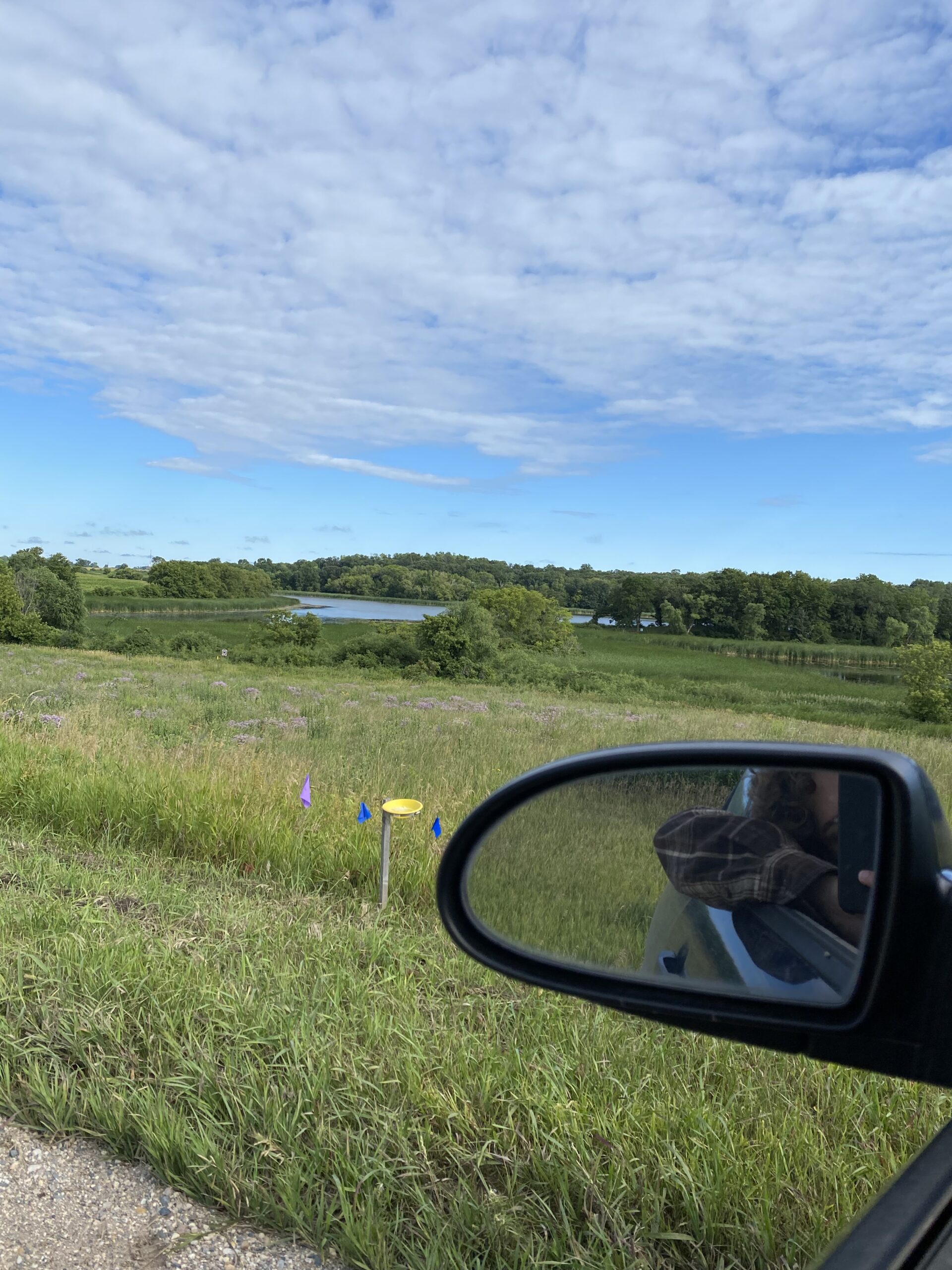
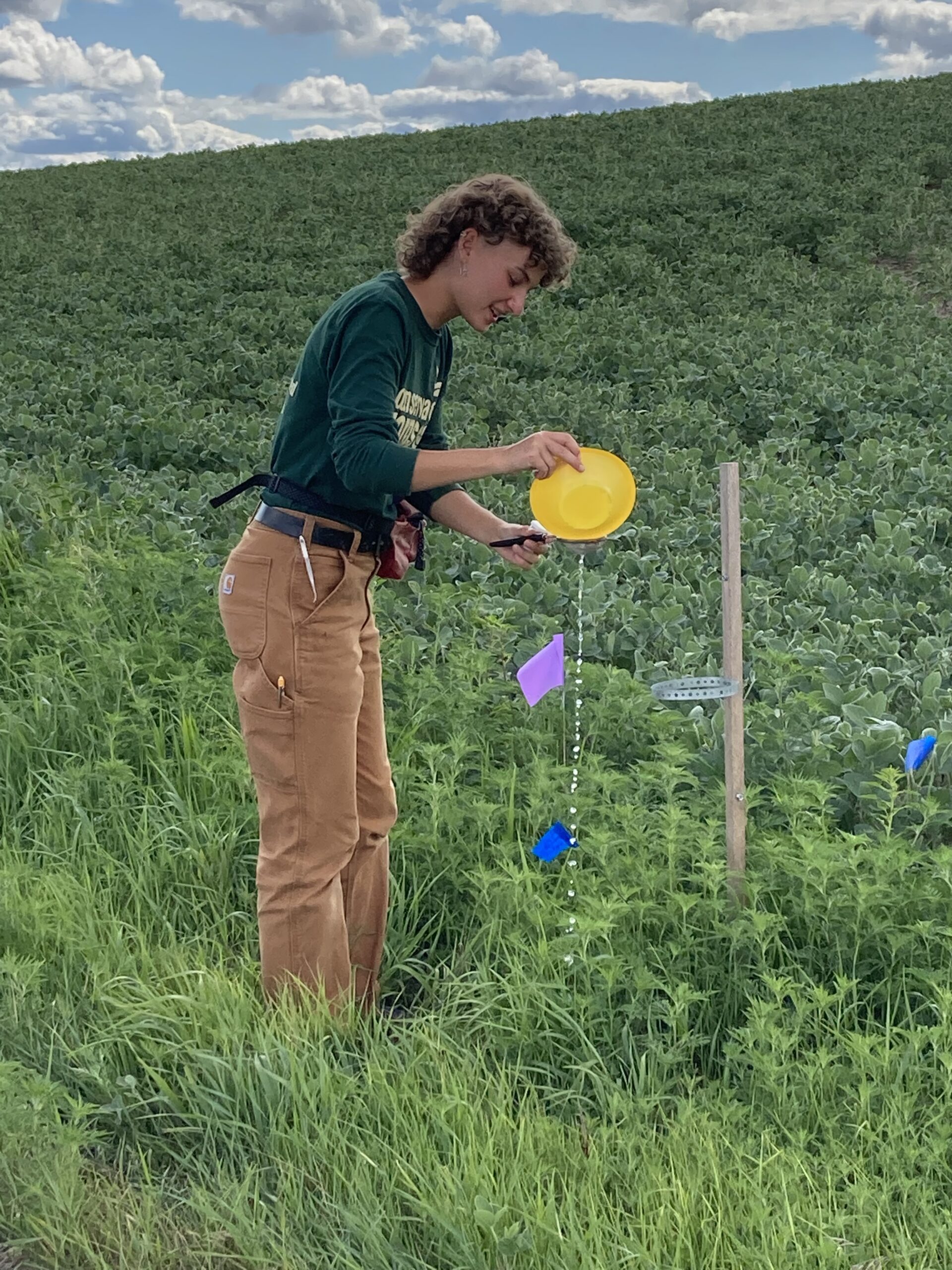
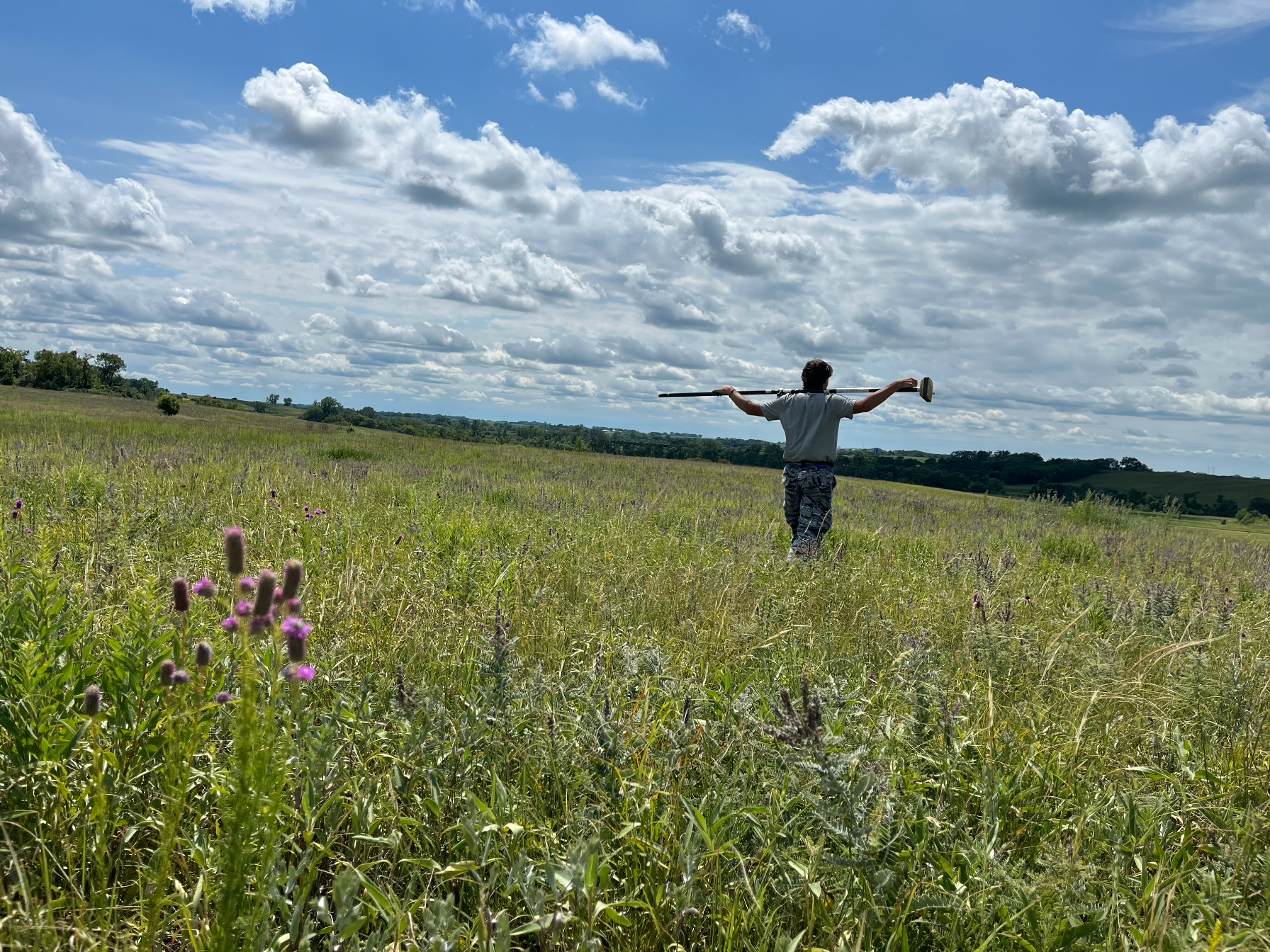
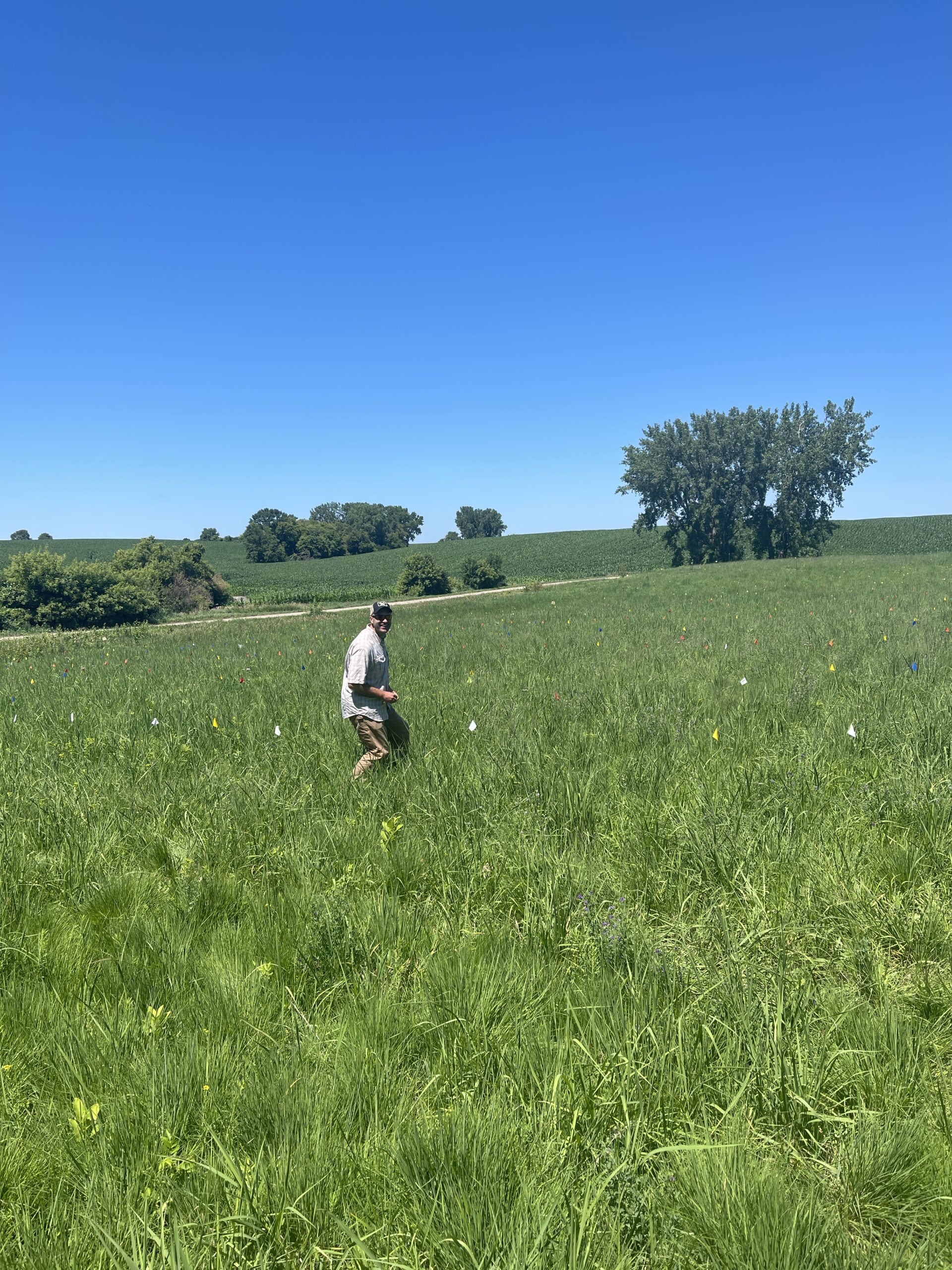
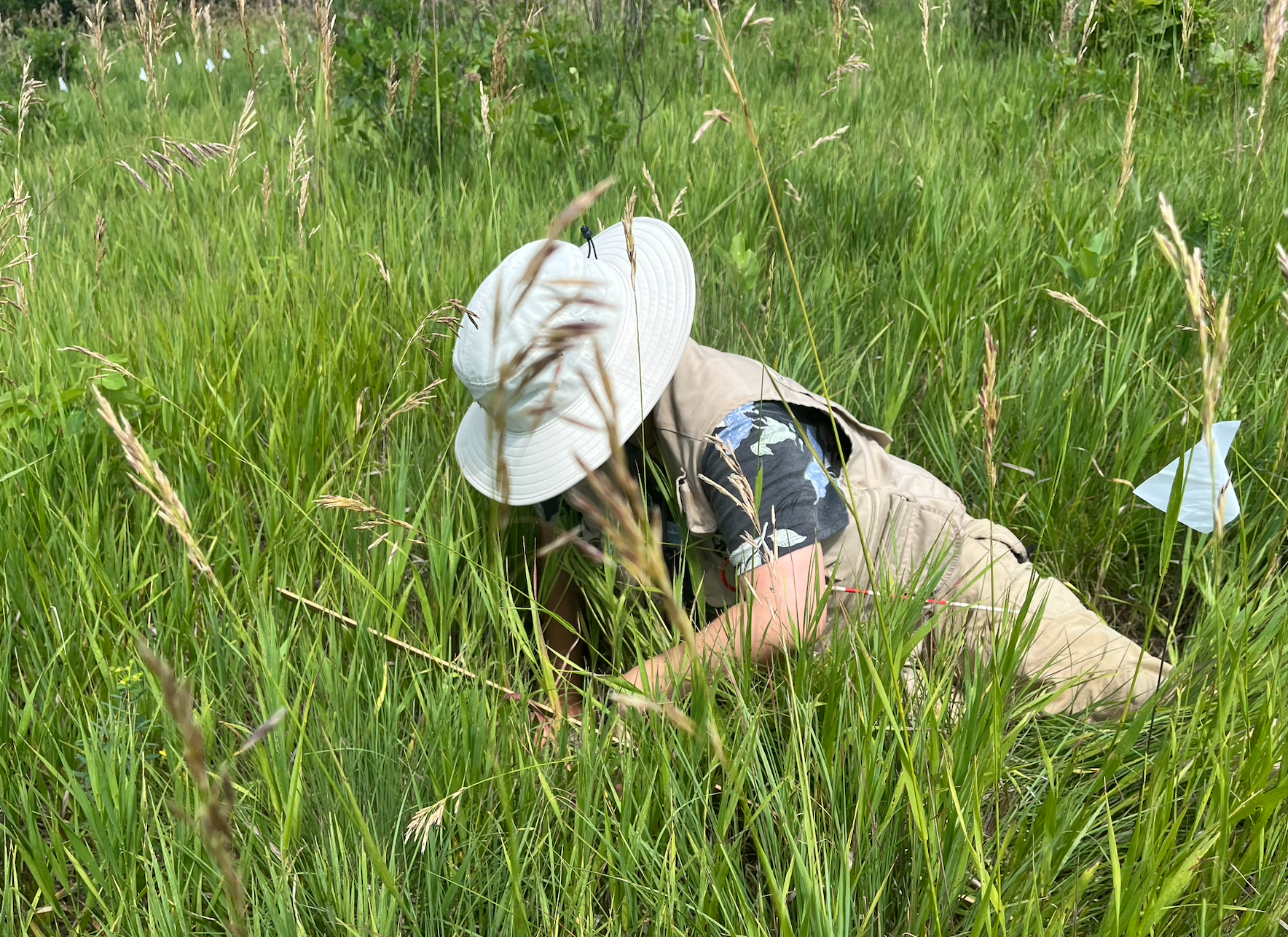
As July comes to an end, today marks the fourth time that Alex and I have put out 39 yellow pan traps, all at randomly selected locations. This project is a continuation of previous years of data collection on pollinator abundance along gravel roadsides, and I’ve had a great time observing both the specimens we collect and the floral resources surrounding the traps. The beginning of this project required some manual labor, as each location needed to have a stake pounded into the ground.
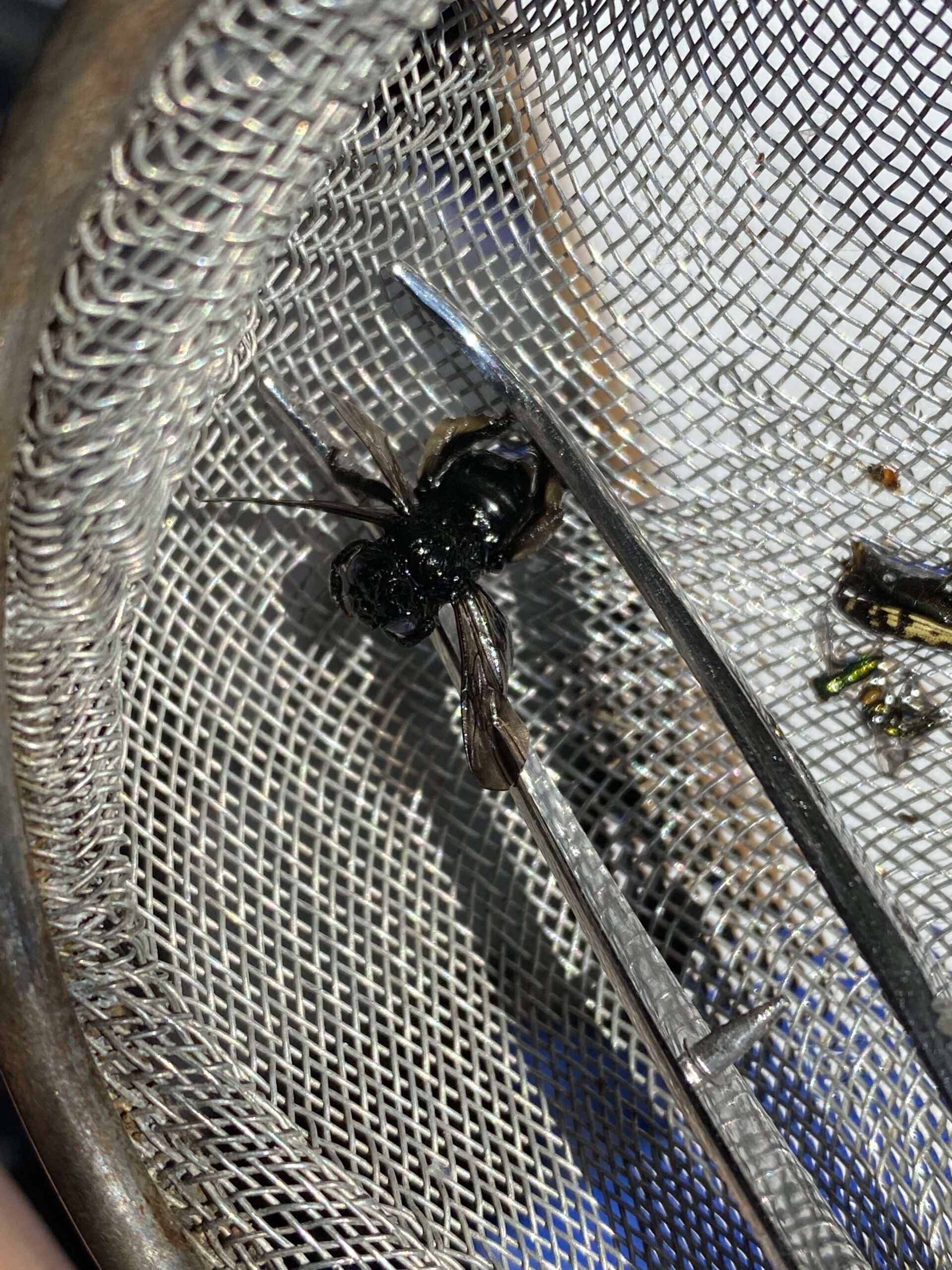
Hard work Beez in the trap, be-beez in the trapPretty trap views (bees like views too!)
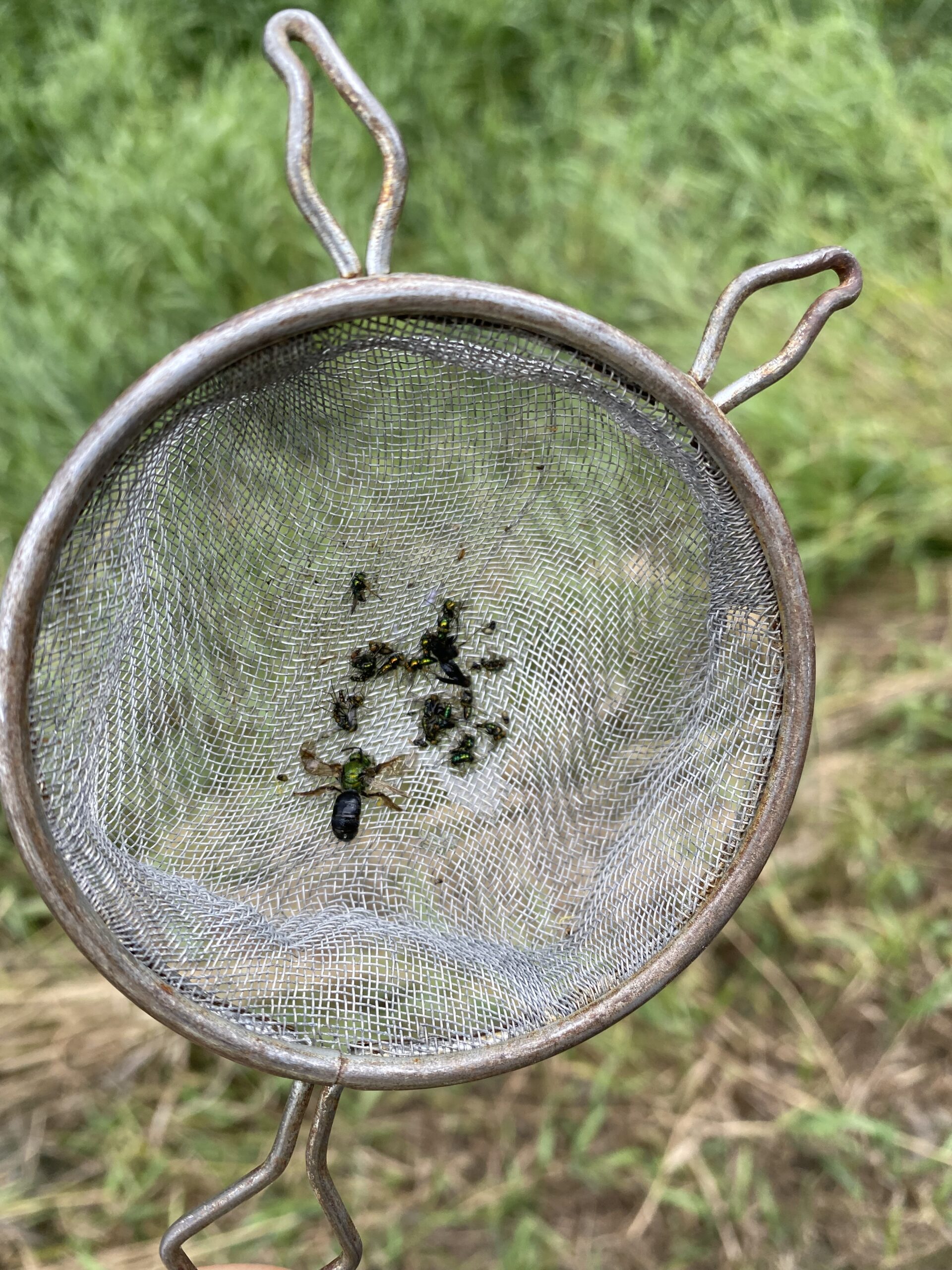
Each week, the traps go out once. I also visit every trap and take note of the floral resources that surround the trap, so that later on we can determine if there’s any correlation between the amount and types of floral resources (if any) and the amount of bees we collect. Many of the traps are adjacent to corn and soybean fields, and besides brome, there is little plant diversity. I see a lot of alfalfa and thistle, and there’s soon to be a lot of goldenrod. However, I’ve seen plenty of cool bee species, from little black bees like Lasioglossum, as well as green bees, like Augochlorella.
Straining out the bees!Beez in the strainer, be-beez in the strainerBee slay
It’s been great so far seeing how each trap differs in the specimens we collect and thinking about how this may be influenced by the surrounding area as well as the gravel road. I’m excited to see where the summer goes and how the floral resources and bees we collect might change!
Fun fact: This project is so intriguing to scientists across America (and the globe), that Nicki Minaj herself wrote her iconic song, Beez in the Trap, about it!
(Well, not really. But I listen to it every time I go out to collect the traps.)
Funding for this project was provided by the Minnesota Environment and Natural Resources Trust Fund as recommended by the Legislative-Citizen Commission on Minnesota Resources (LCCMR).
Here at the Echinacea Project, we have decided that we have more than enough data to answer all of our questions about Echinacea. Echinacea angustifolia is yesterday’s news. We have therefore decided to become the Asclepias project!
Asclepias viridflora (green milkweed) is similar to angustifolia in that both are self-incompatible perennial forbs native to Minnesota’s tall-grass prairie. Not much is known about viridiflora, including how it reacts to fire. Does fire promote survival, population growth, and reproduction in Asclepias viridiflora, as it does in Echinacea? If it does, that would bolster our assumption that Echinacea is a good model organism for prairie research. It would also provide vital data on the effects of prescribed burns.
For these reasons, we are tracking green milkweed vitality in prairie remnants. Some of the sites we are looking at were burned in the fall or spring, while others have never burned. Last year, 71 green milkweeds were found across 8 remnants. This year we revisited the locations of those 71 plants, most of which were still there. The team also found 41 new plants. All together we’ve found over 80 live plants!!
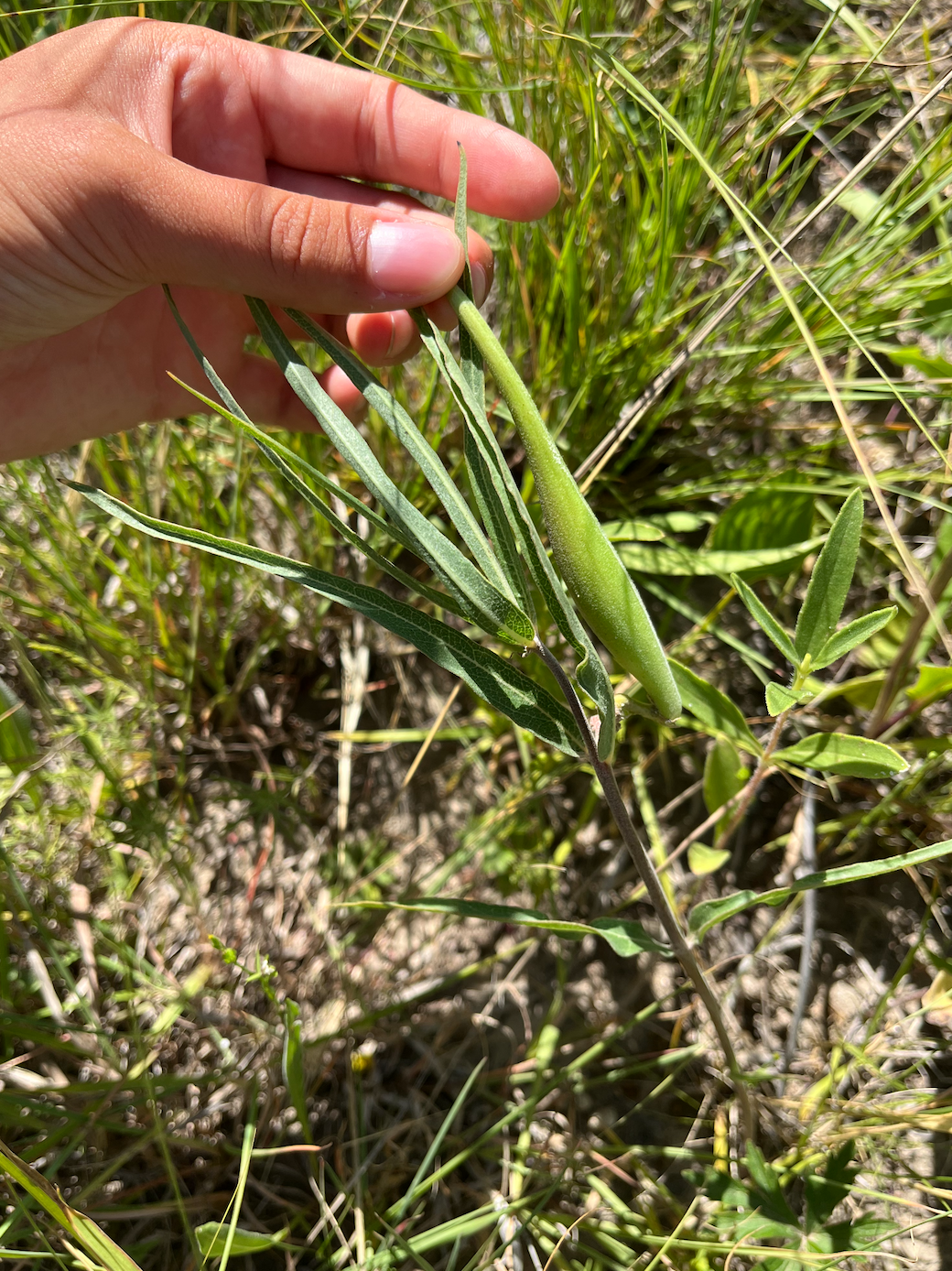
Milkweed has clusters of flowers called umbels. At this point in the summer, most green milkweed umbels have senesced and fallen off, and pods are forming. We will revisit and count these pods later in the season. The data we are collecting includes status (present or not); umbel, pod, and stem count; and leaf width.
Nice big Milkweed pod.
As the only team member without a car, I’ve really appreciated rides from Daytona and Joey out to the remnants. I couldn’t ask for better partners to help me find and stake/survey milkweed.
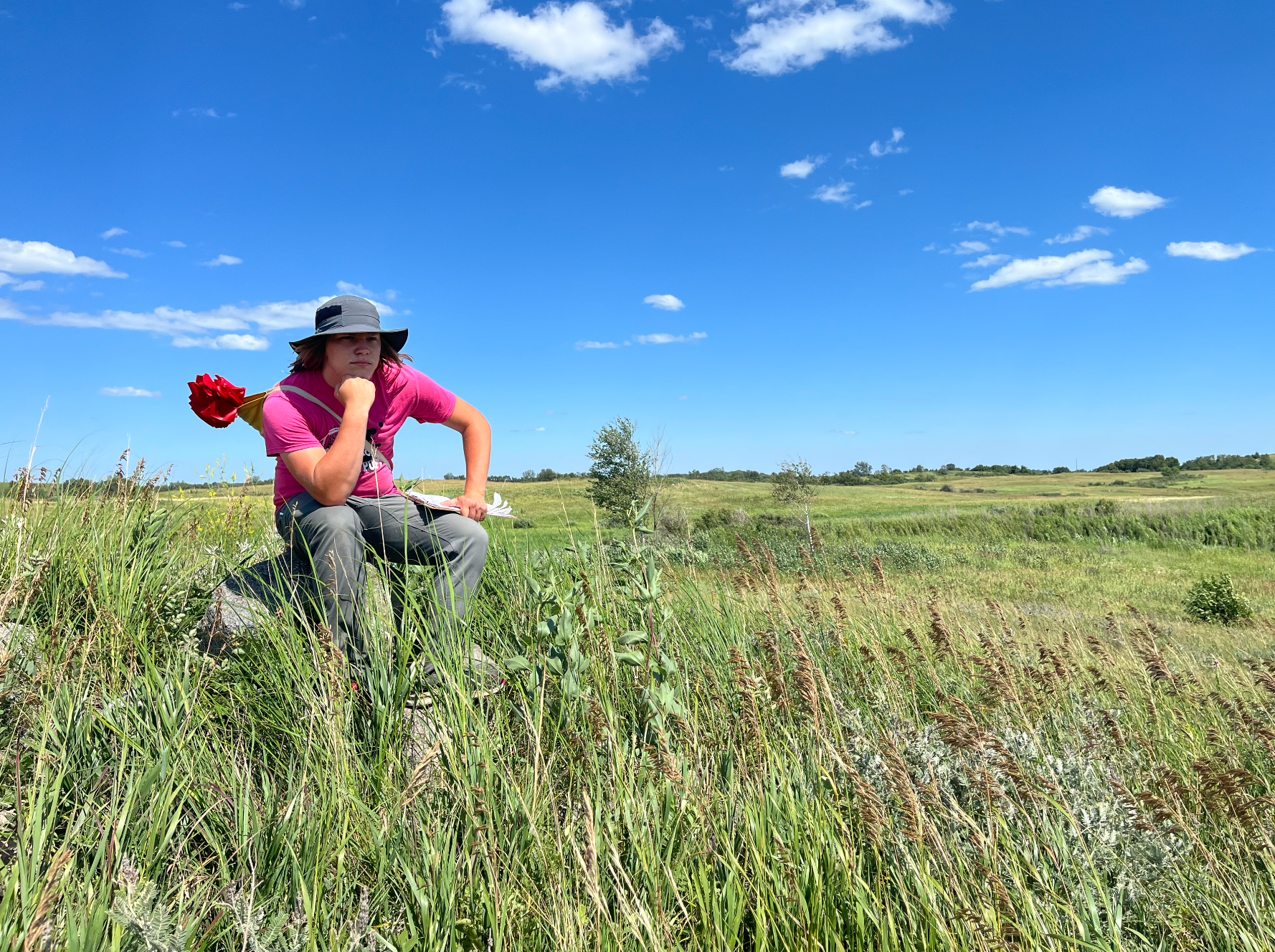
Daytona ponders Asclepias (and life) at Hegg.Joey bears the cross at Staffanson.
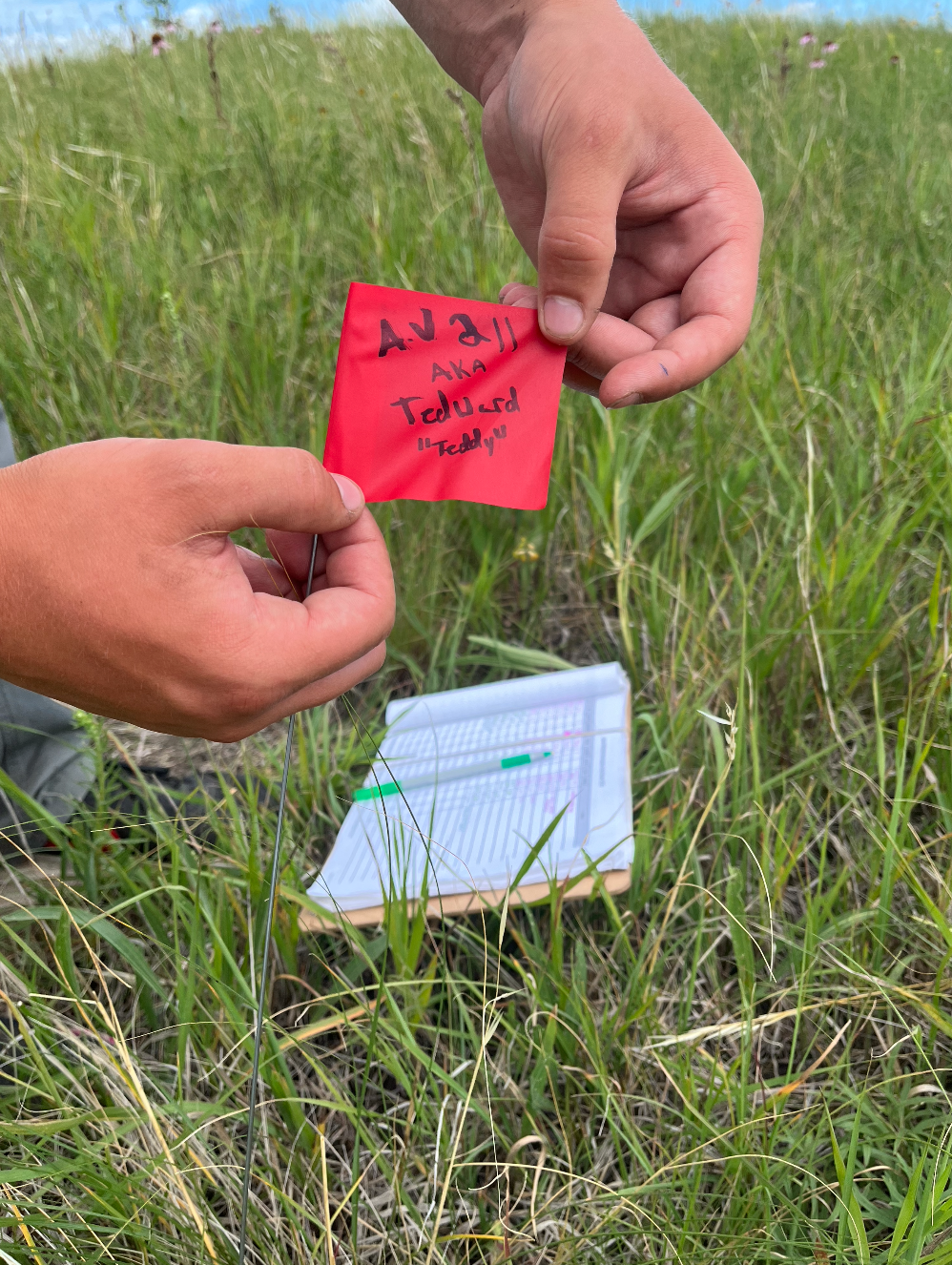
Daytona, Joey, and I (Johanna) have also been taking turns naming all the new milkweed plants we’ve come across. Here is a comprehensive list:
Tedward “Teddy”
Mary Jane
Coyte
Spronkle Axil
Bahrry
Mark Watney
Björn Ironsight
Osprey
Barbra Lou
Turtle “Turty”
Jonny
Sammy Simmons
Ilina Anna
Lightning McQueen from Cars 1, 2, and 3
Masterchief from Fortnite
Markiplier “Marky Moo”
Mathilda Ulrike “Math-u”
Ferdinand
Dr. Bared Jeck
Chairman Mao
Archie from Riverdale
Brigham Young
Italian Car from “Cars”
Sam Winchester
Henry Kissingmen
Ted Krazinsky (Unabomber)
Umbelicious
Tony Hawk, Pro Sk8er
Gustavo
Neutral Radiator Beach House
Dimple-san
Not to play favorites, but…Tedward is my favorite.
Stay tuned for more Asclepias updates later this summer!
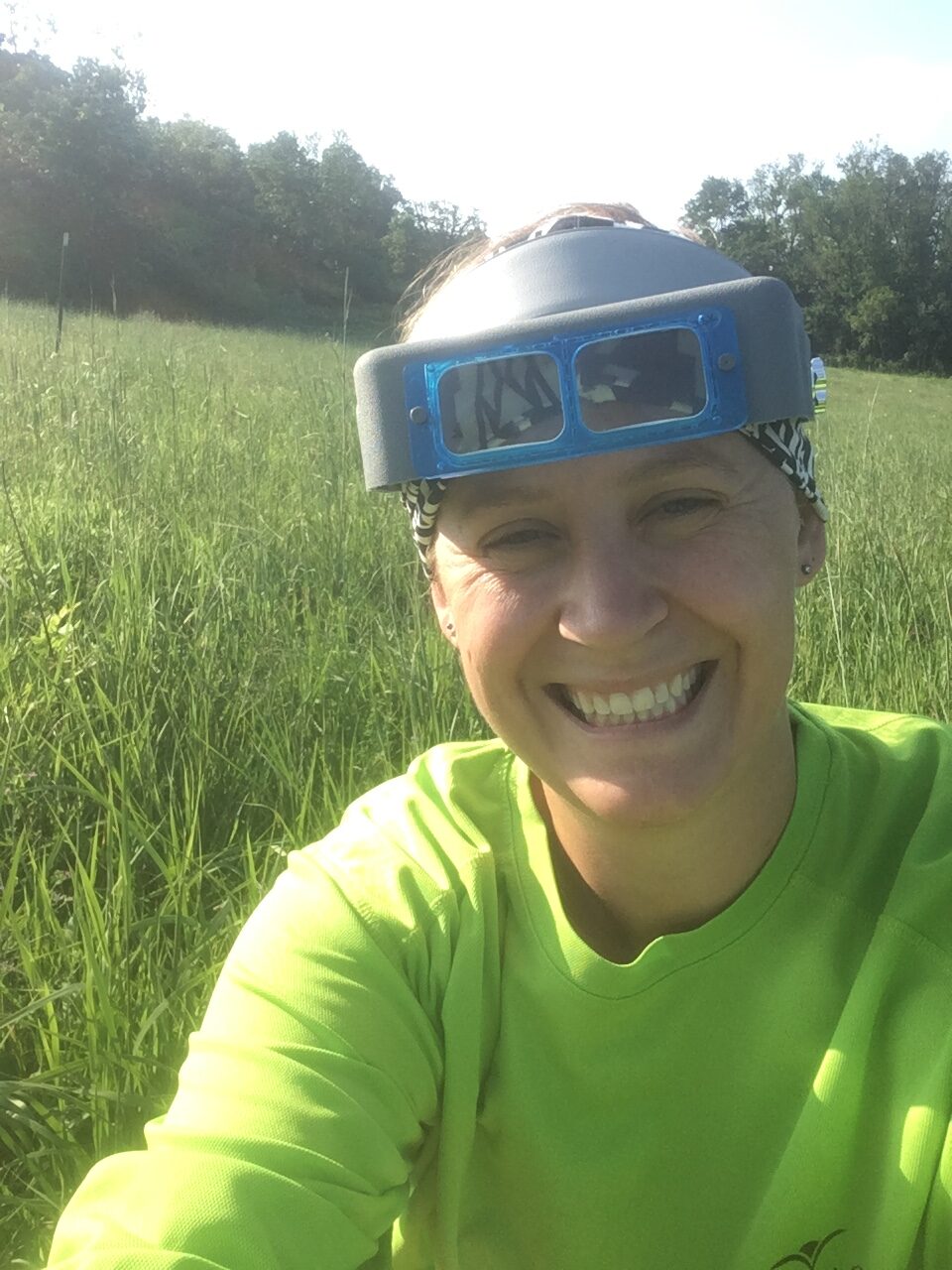
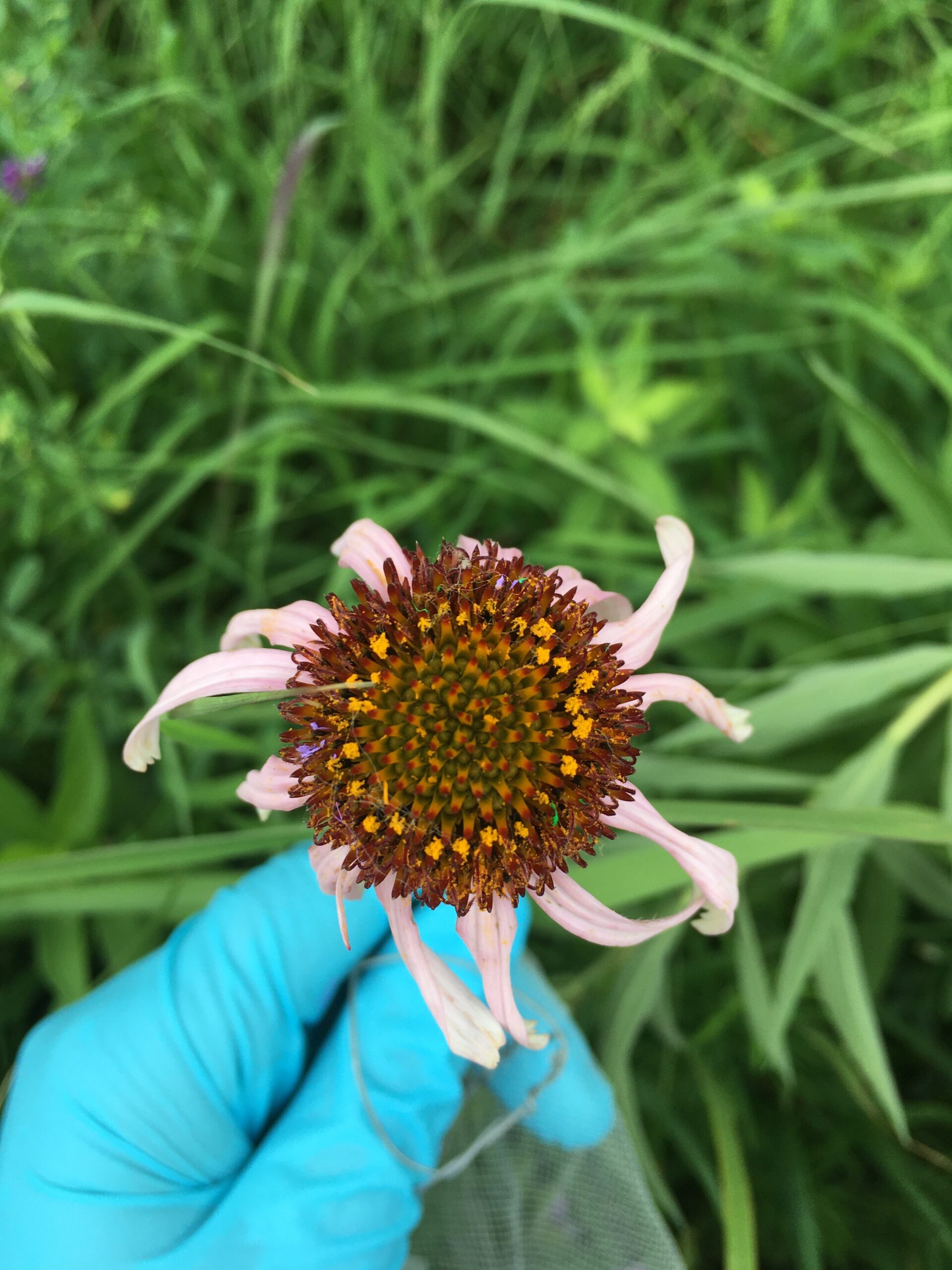
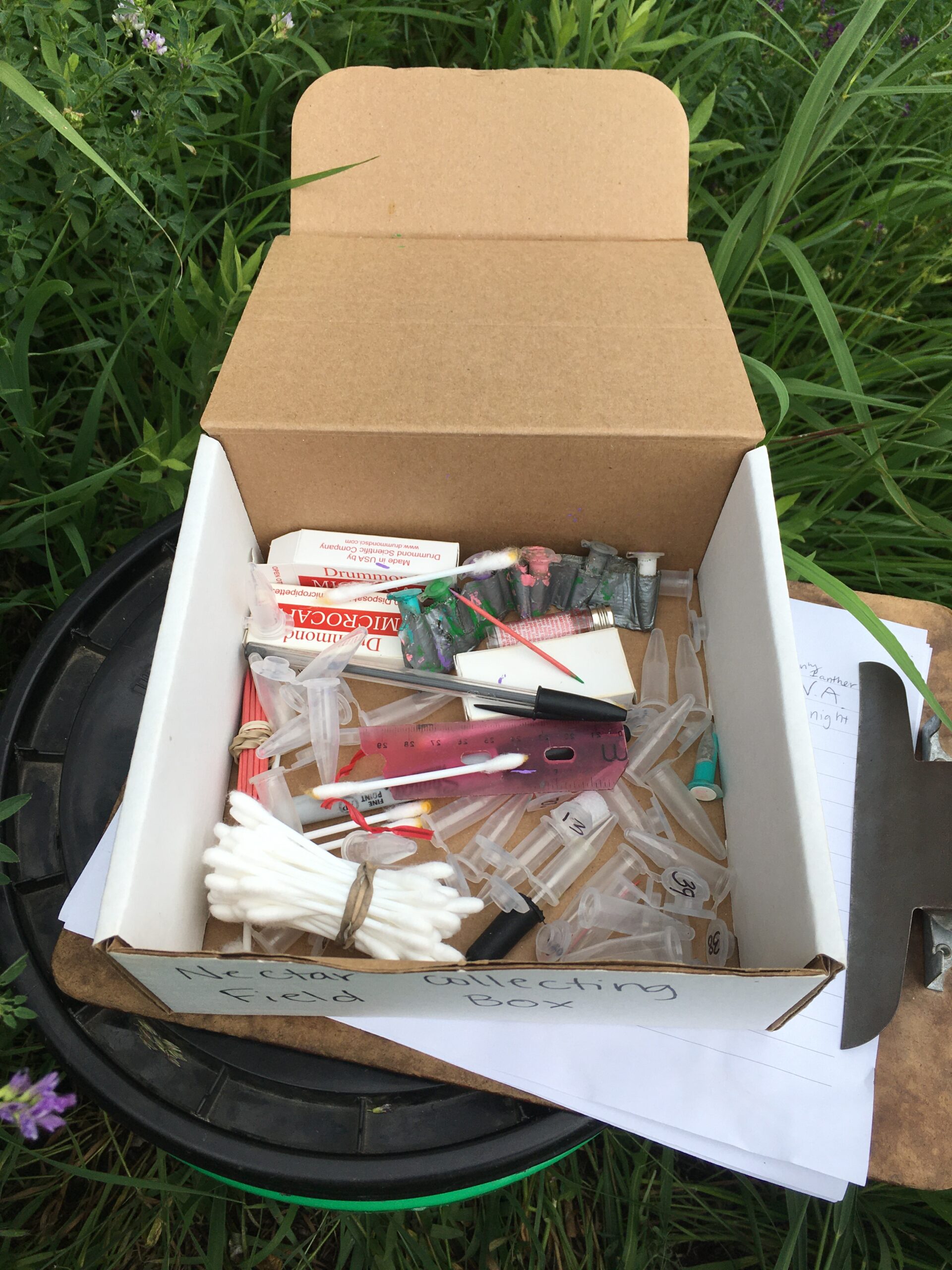
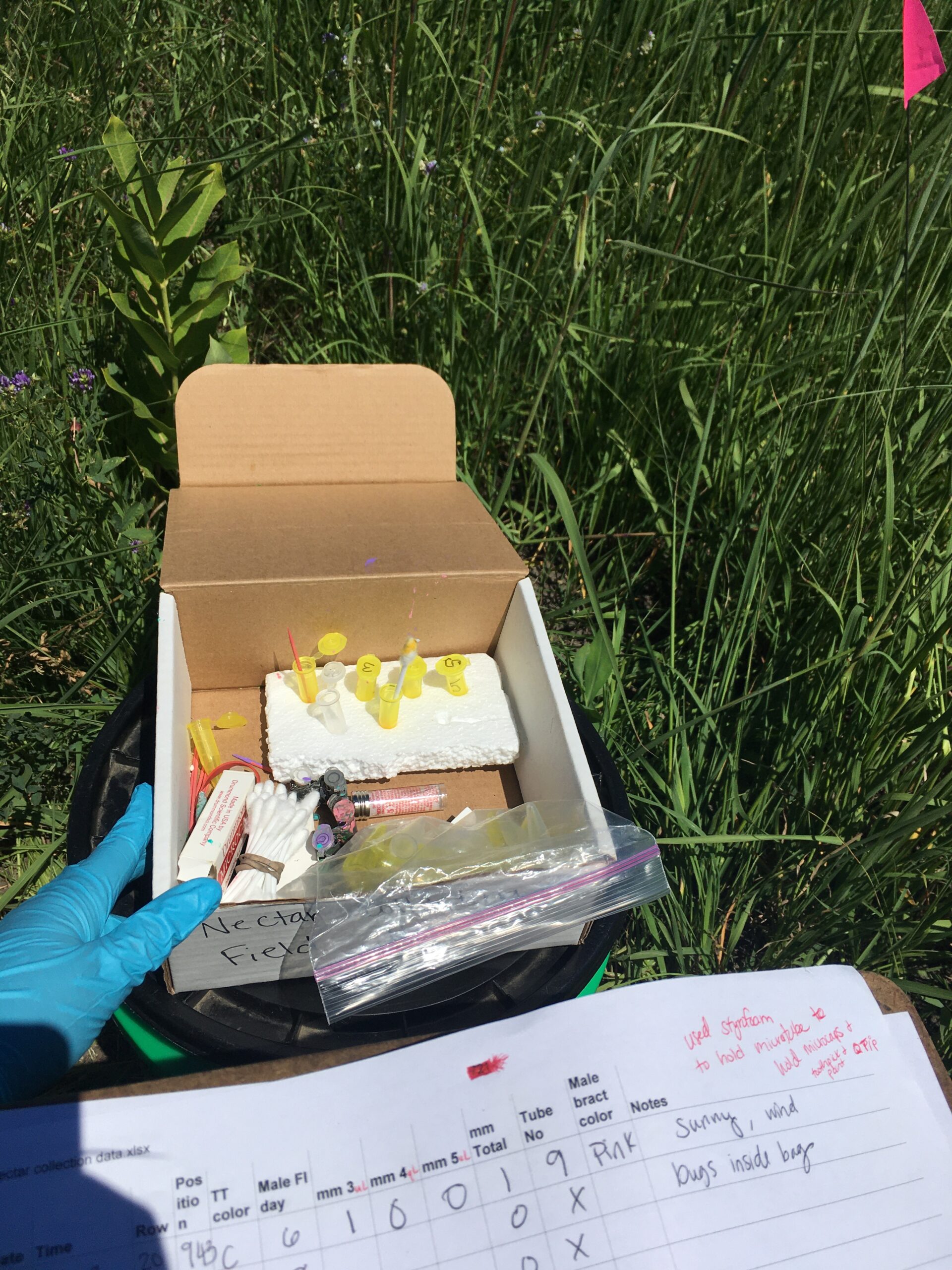
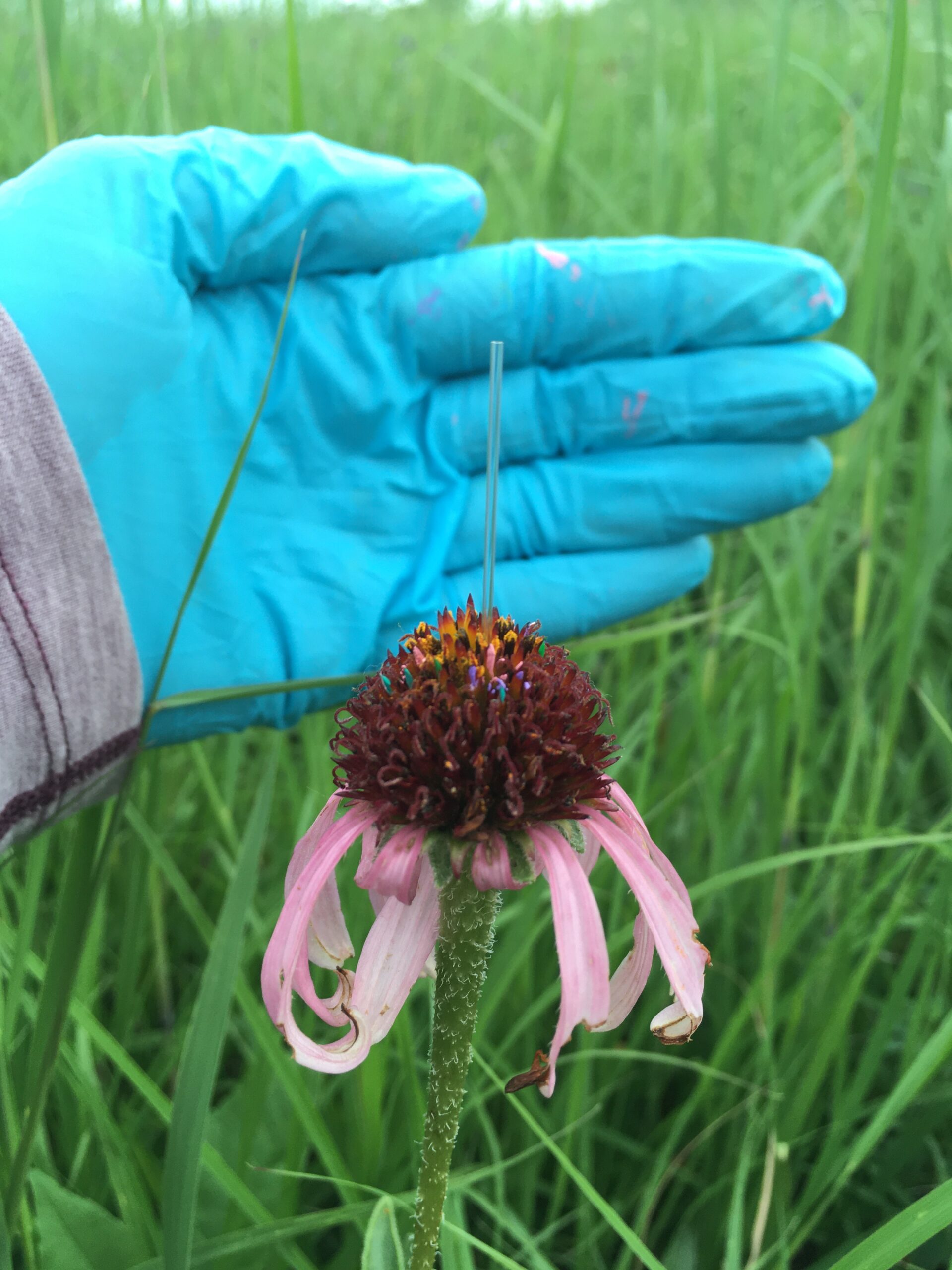
My individual project is working on collecting nectar from Echinacea angustifolia. I was tasked with figuring out what equipment is needed to collect nectar, what time of day is best to collect nectar, and what the procedure is to collect nectar. I have been working in P1 for this nectar collection data. Dr. Roy from St. Catherine University in St. Paul, Minnesota came to help me learn about nectar collection and where exactly to collect the nectar from on the plant head. Next summer, the team hopes to collect pollen and nectar to assess the quantity and quality of food resources pre and post-burn.
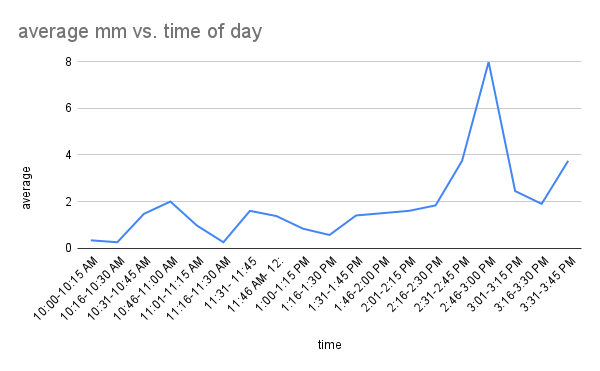
So far, I have learned how to extract the nectar and that around 2:30-3:00 PM has produced the most nectar. Cloudy days are NOT ideal for nectar collection. The one day I collected when it was cloudy I only got 1 mm of nectar the entire morning.
As of today, I have collected 142 mm of nectar. I used different microcaps with different inner and outer diameters, so the volume is not 142 (I need to do some more math to find the volume for each amount depending on their inner diameter, but at least you get an idea of the amount that has been collected).
Me with the sweet magnifying glasses.A visitor in P1The must have equipment. Lots of pollen and painted bracts. I painted the bracts when I would come back to sample the same head so I would know which ones had already been sampled. First day, learning how to get it organized for easier collection. A more organized nectar collection field box.A microcap inserted into an anther.
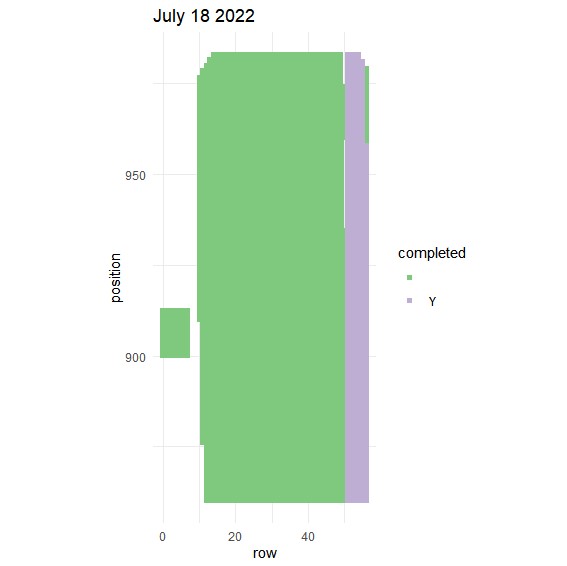
Last Friday (June 15th), the crew began measuring Echinacea in our largest experimental plot, P1! This plot has 10,673 positions that we visit during the summer, so it is no small task. We had 4 teams measuring for about 3.5 hours and visited about 1,471 positions (13.7% of the entire plot!). Above is a map indicating our progress, with purple representing the segments completed.
They let me write for two days! Strap in. Thursday morning we began with a short walk through P8 to collect flowering phenology data. We found a total of 8 plants (and a whole lot of brome). We then continued the morning by re-rechecking P7 and P9. Mia found the first plant of the day and decided on the exclamation we would all have to say upon finding a new plant, “Bababooey!” Nate provided good vibes at lunch with by lighting incense at the picnic table, and the crew got to work shortly after with work on independent projects. Some met with the wise, invaluable members of the team to finalize projects (thank you Jared and Alex!) while others spent time in the field.
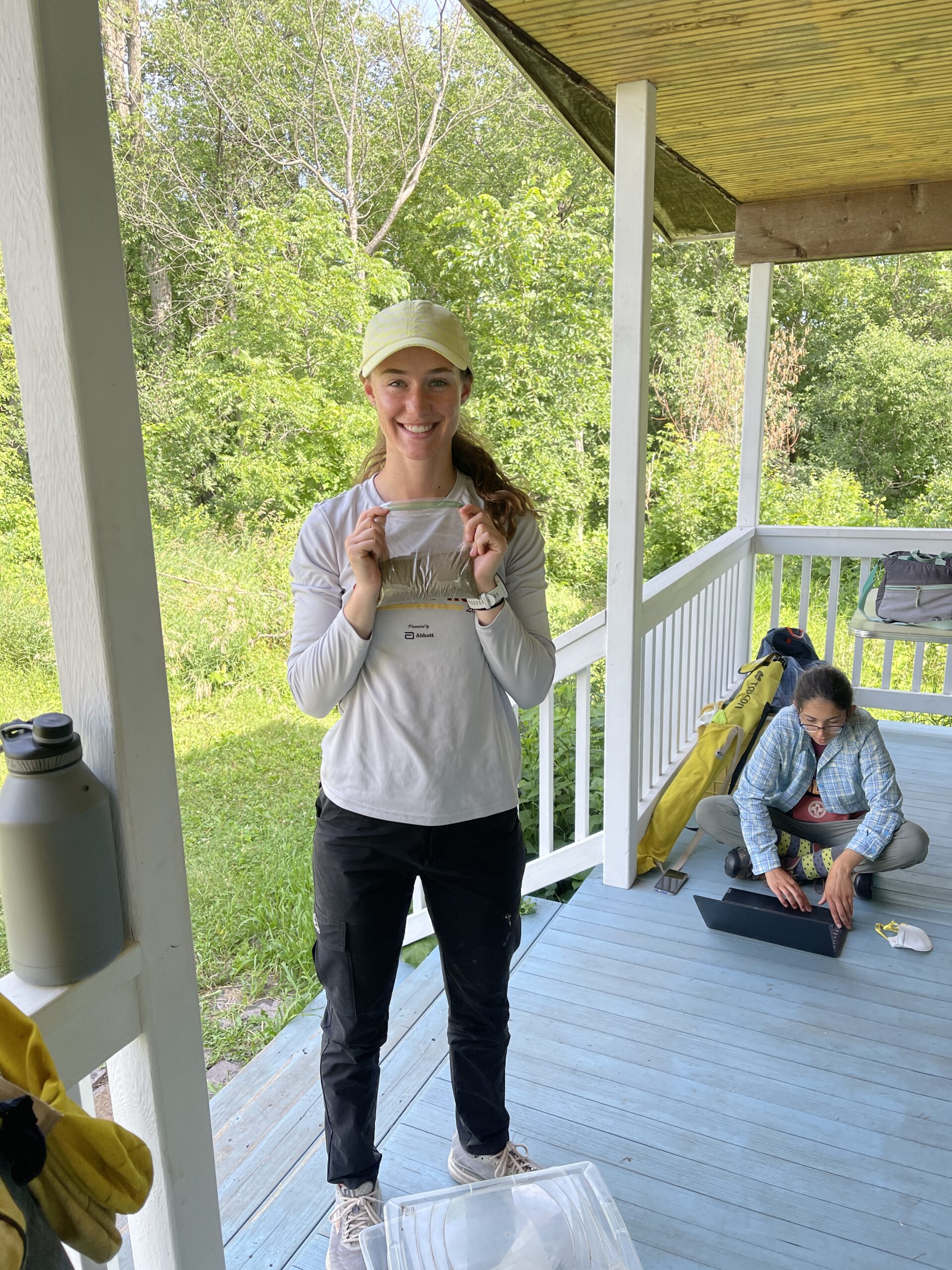
Emma and a bag of dirt!Mia Sophia looking busy
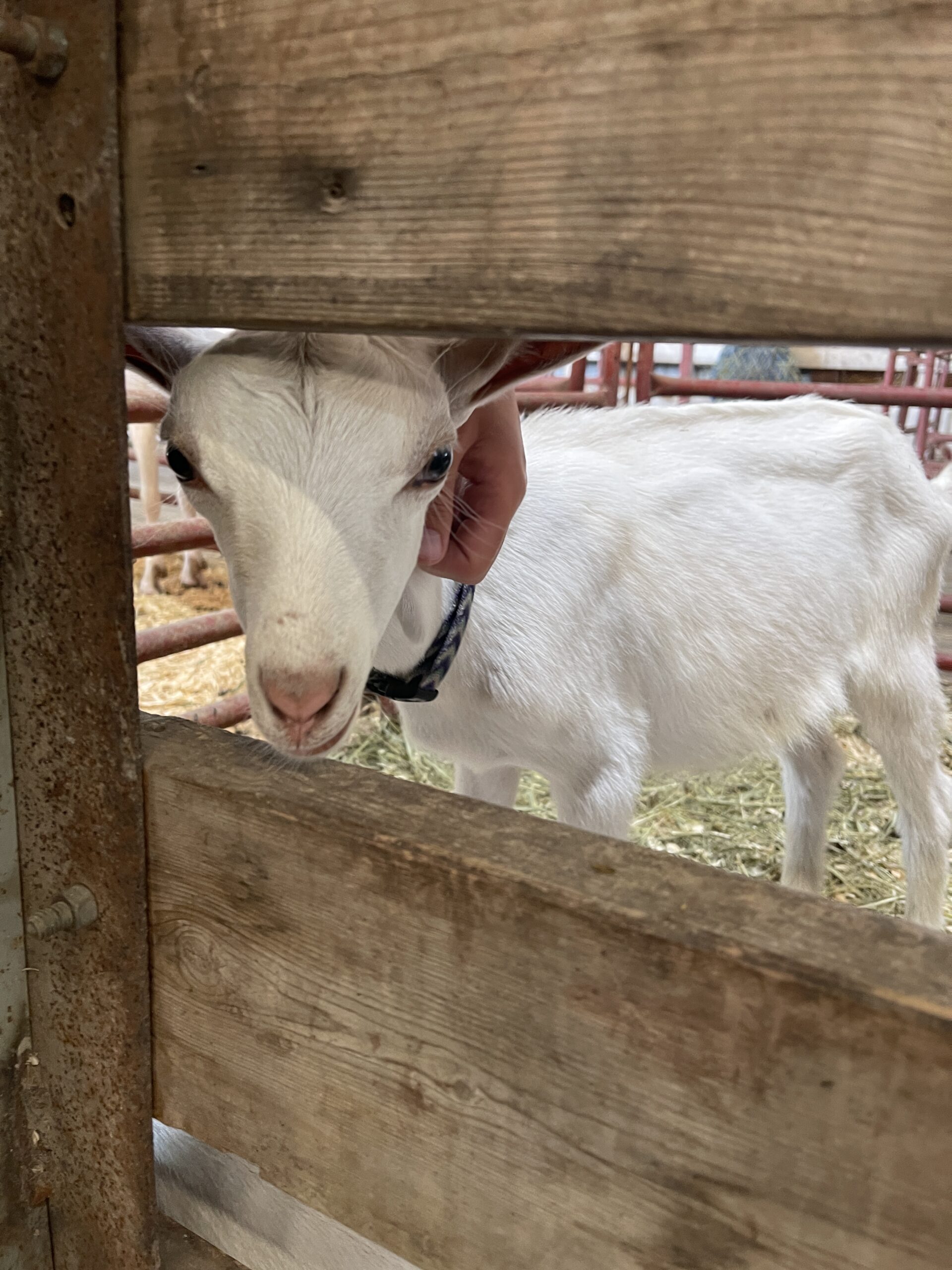
Andes crew spent time after work to visit Kennedy at the Grant County Fair. We had quite the time, getting the chance to see all types of farm animals while enjoying some barbecue and strawberry malts provided by Grant County 4-H. We met with Kennedy’s goats and her cow, Ollie.
Little guyKennedy and Ollie
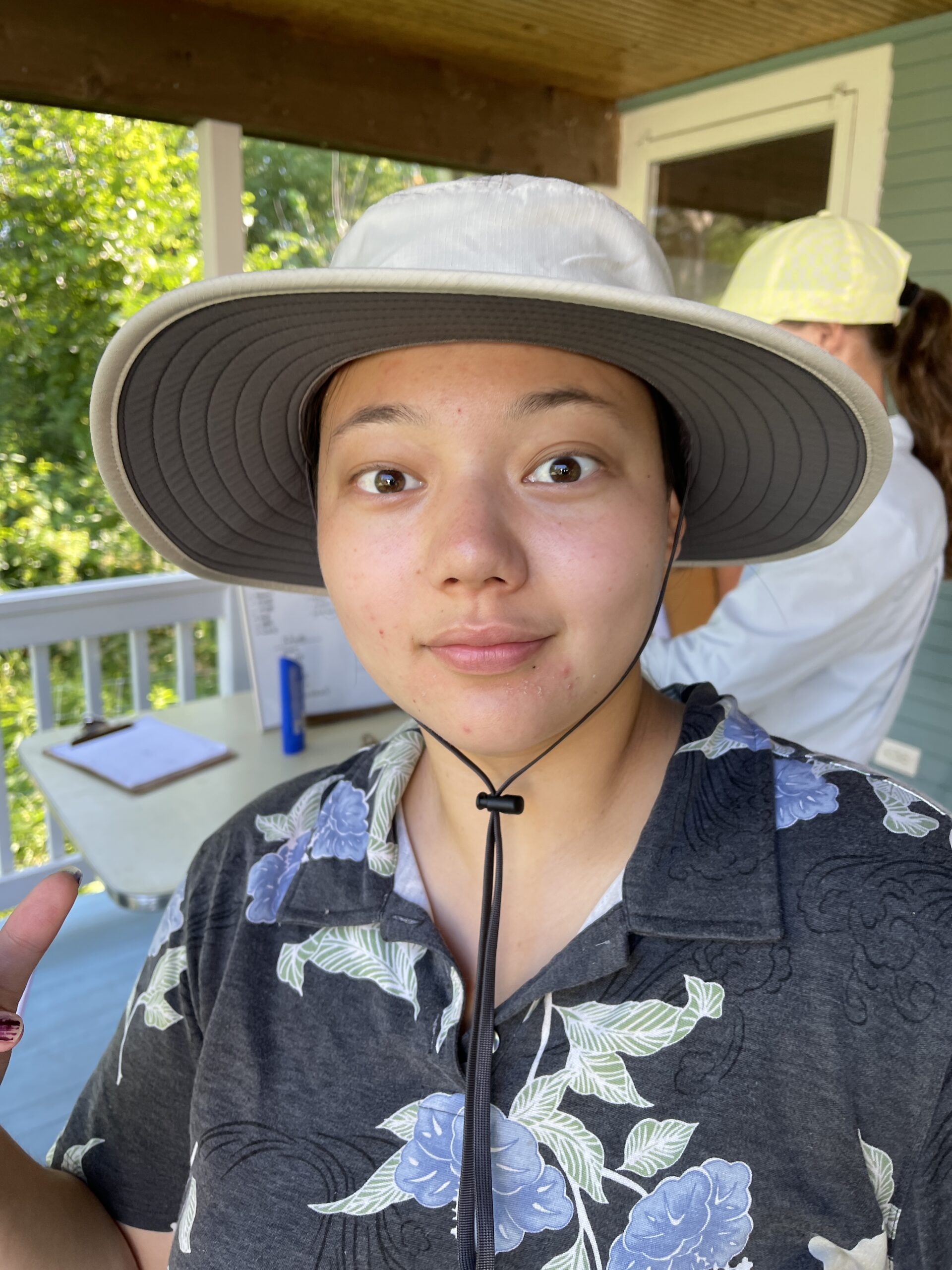
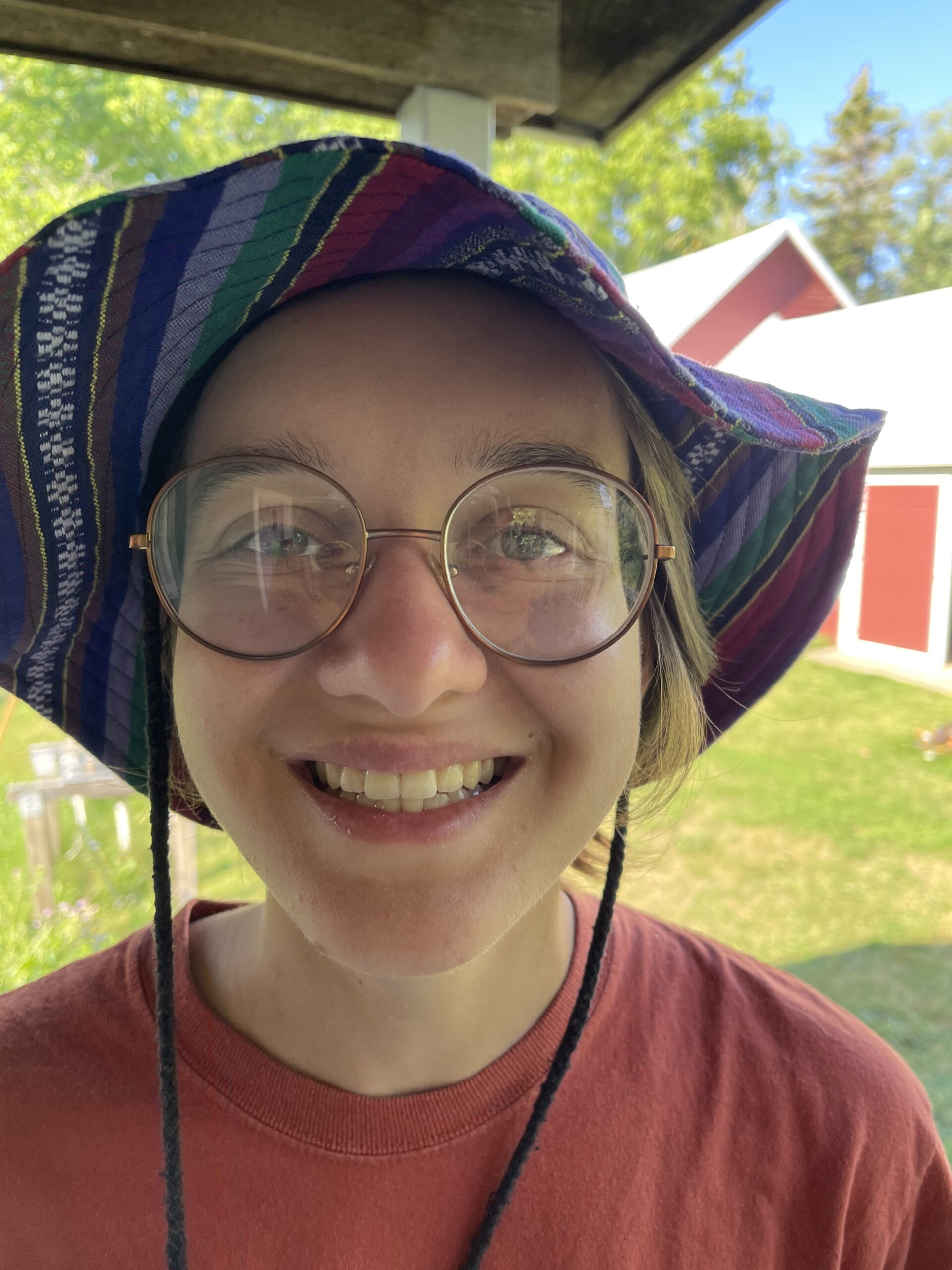
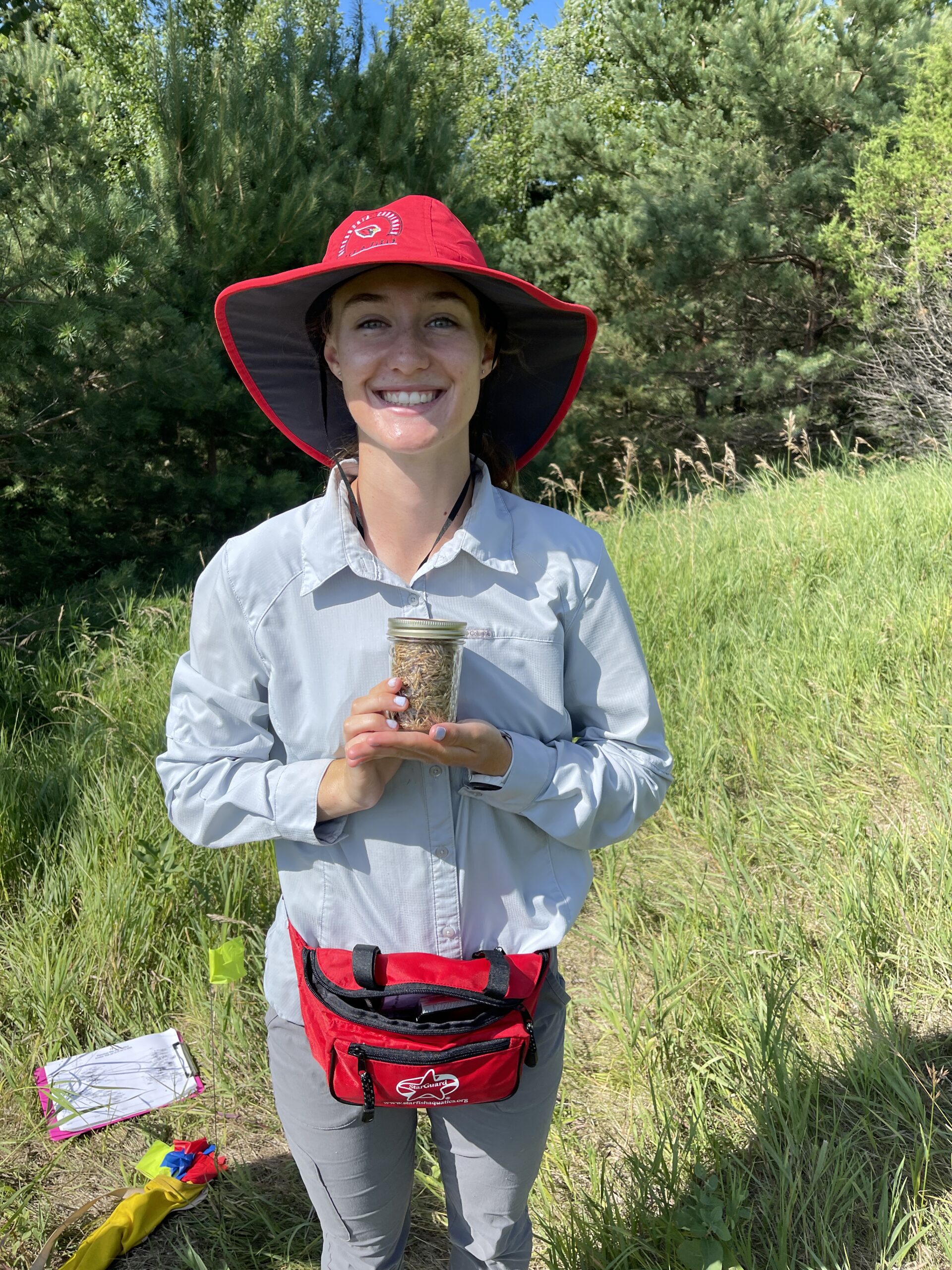
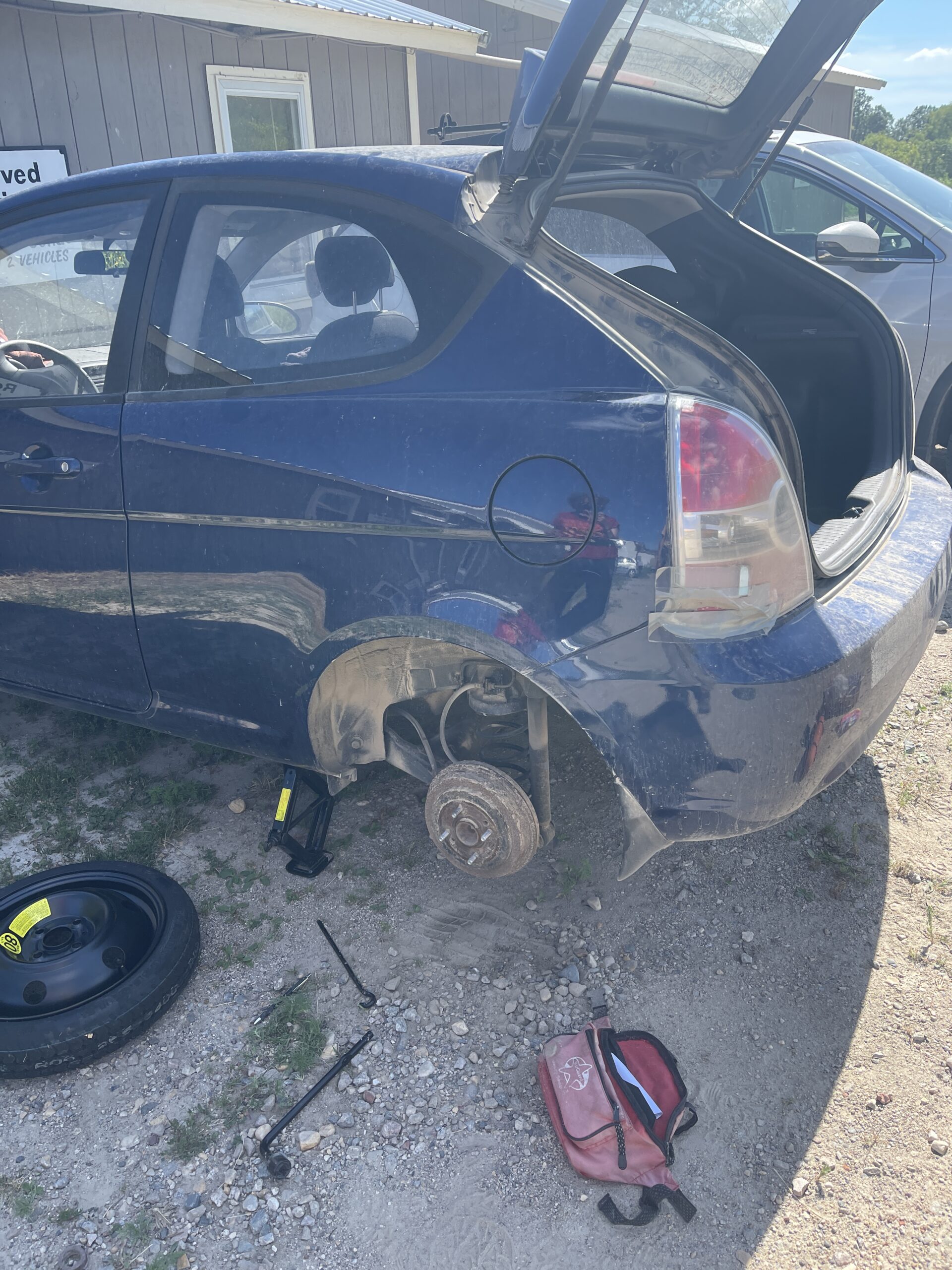
Friday morning feel of bittersweet alacrity flooded Team Echinacea. As we remain excited for fieldwork and the weekend, we also realized that it was our last day working with our favorite in-house Visor guru, Mia. As always, Friday morning consisted of Phenology. Ever quick and efficient during peak phen, everyone finished their sites in time for a lunch with special guests from the University of St. Katherine, Dr. Rahul Roy and Dr. Tami McDonald. Many members of the team participated in big-hat Friday, donning their oversized (or perfectly large) brims. As a gift to Mia, the team then measured P1, her favorite task (I don’t know why don’t ask me). Jared even put a toe in the plot to appease Mia! After work, the team enjoyed root-beer floats and Mia’s stories of her time, here, on the team. However, Geena and I had to change her tire so that’s all I have pictures of. Sorry! In all seriousness, Mia was and continues to be a valuable member of this team, and her brilliance will echo through the annals of team Echinacea history. She will be missed.
Sophia and her big hatJo and her big hatEmma and a jar of brome, as well as her big hat.Dr. Jared Beck, setting foot in P1.The team 🙂Geena’s car
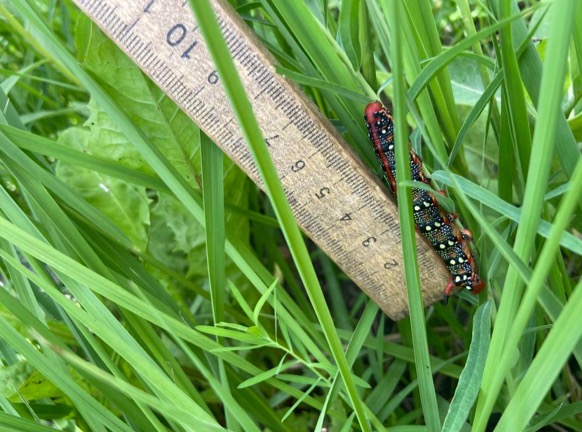
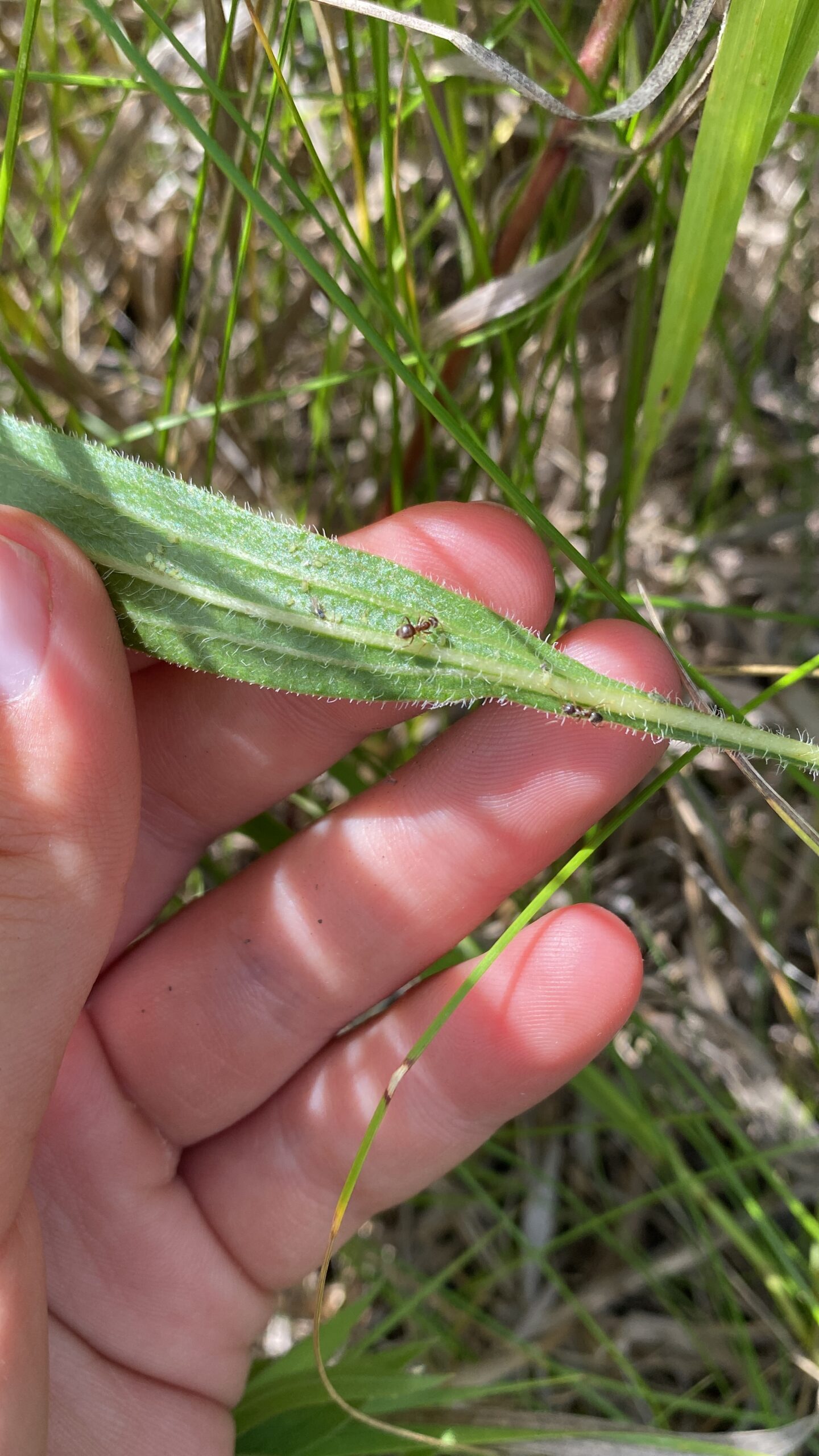
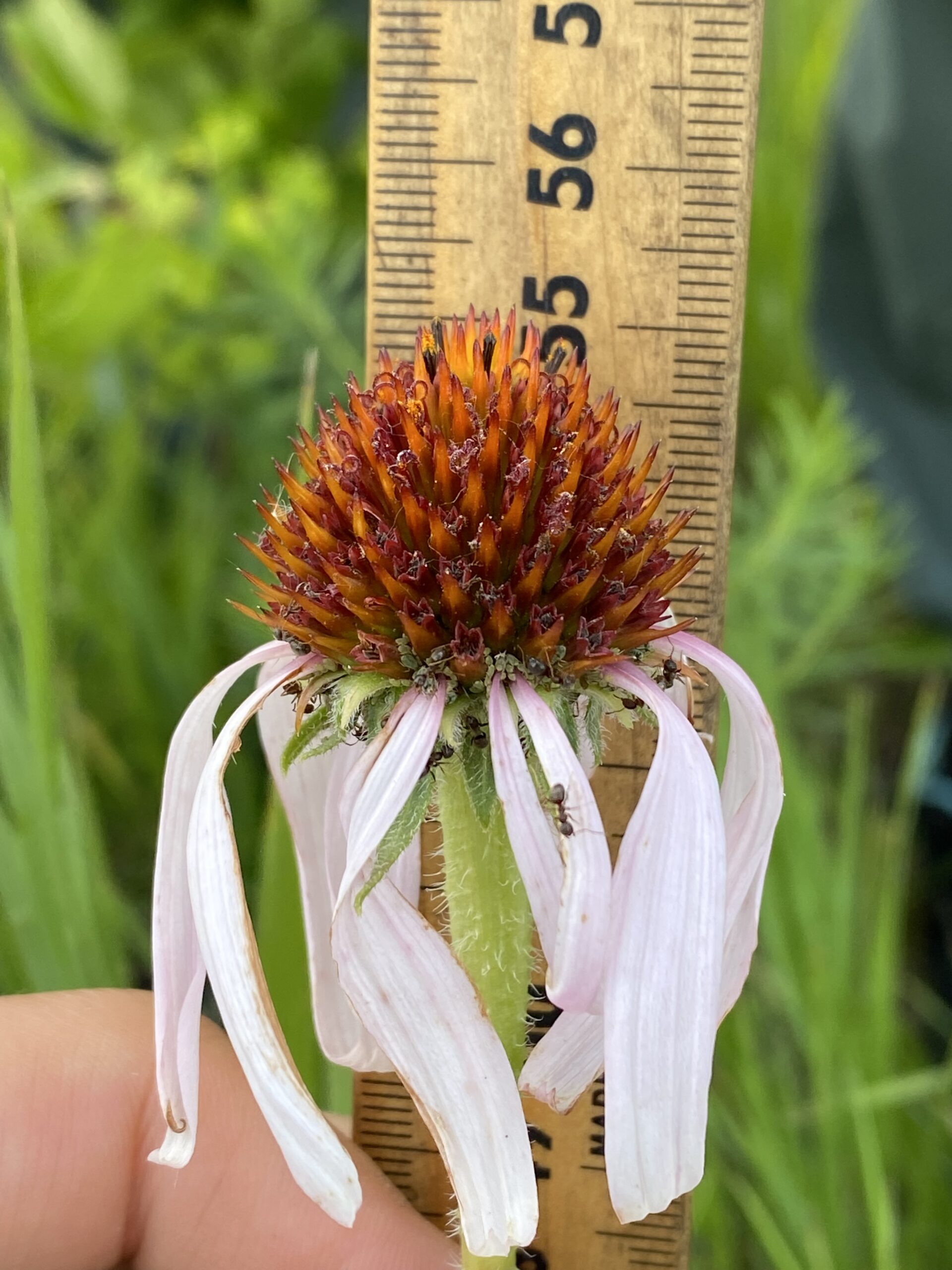
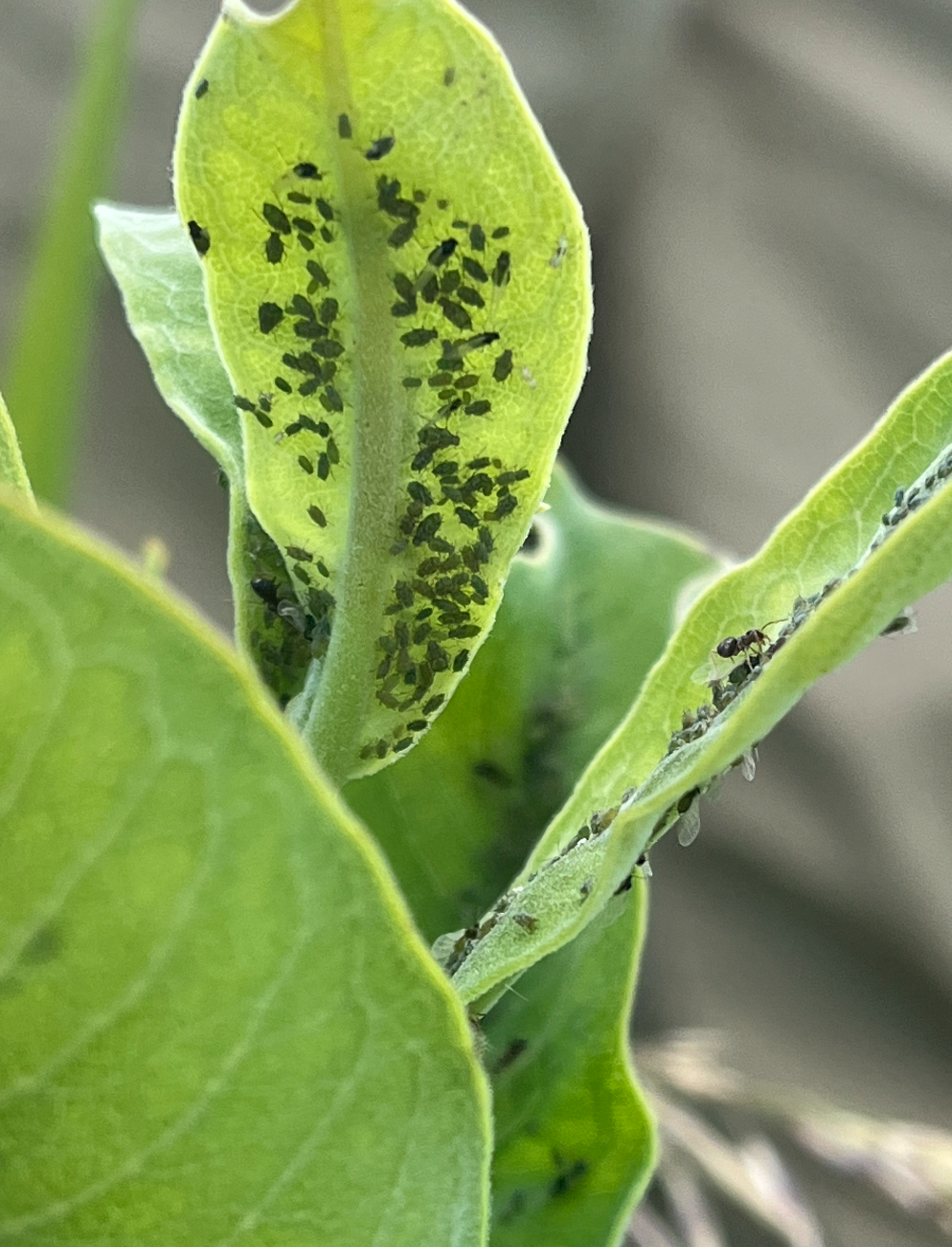
Today, most of Team Echinacea spent their morning and afternoon in the experimental plots P1 and p8, measuring phenology. Alex and I also went and placed the yellow pan traps out for the day – this is now the second day that we’ve put the traps out, and we got a lot of flies again, but some pollinators as well. Phenology in the plots included a lot of echinacea, but also included a lot of other organisms, like the ants and their aphid farms we observed on the echinacea! The brome grass is getting pretty tall in P8, but this didn’t stop us from finding the echinacea plants hidden beneath.
Spurge hawkmoth caterpillar found in P1!Pan trap specimens!An ant carefully tending to her aphid farm on an echinacea leaf in p8More ant farms, but this time on a flowering head!
After work, the crew headed to the Elk Lake House, where Mia, Alex and Lindsey made some great curry for everyone to enjoy. We also played several rounds of the game Empire, where we had to remember nicknames we made up on the spot, and if we could figure out what people’s created nicknames were, we could expand our empire!
Last, but not least, the echinacea project team is pleased to announce we are collaborating with Captain Crunch to bring you a new spin on Captain Crunch: All Brome (Created by our very own Johanna)!
Featuring the brome we see so much of in the plots
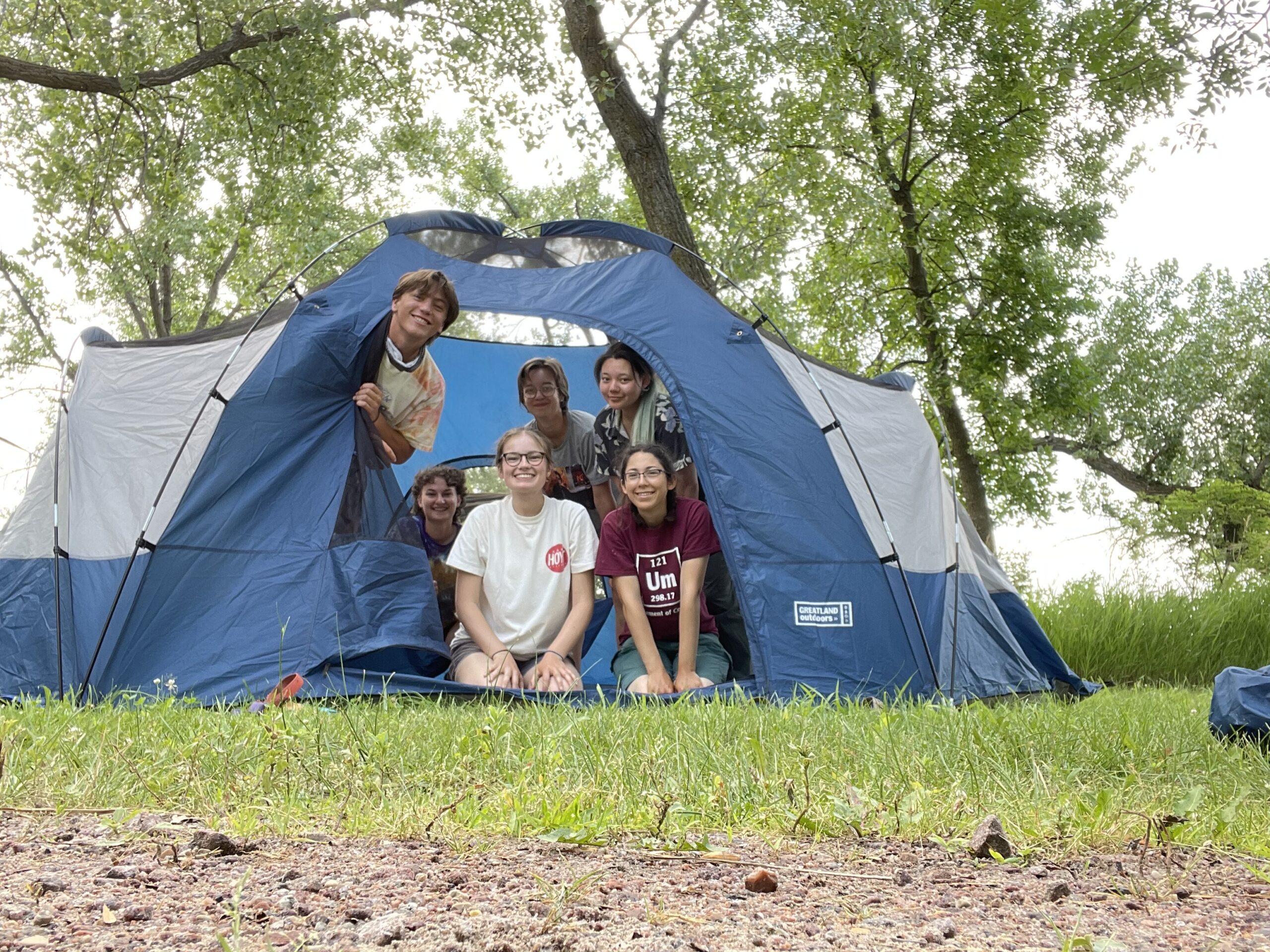
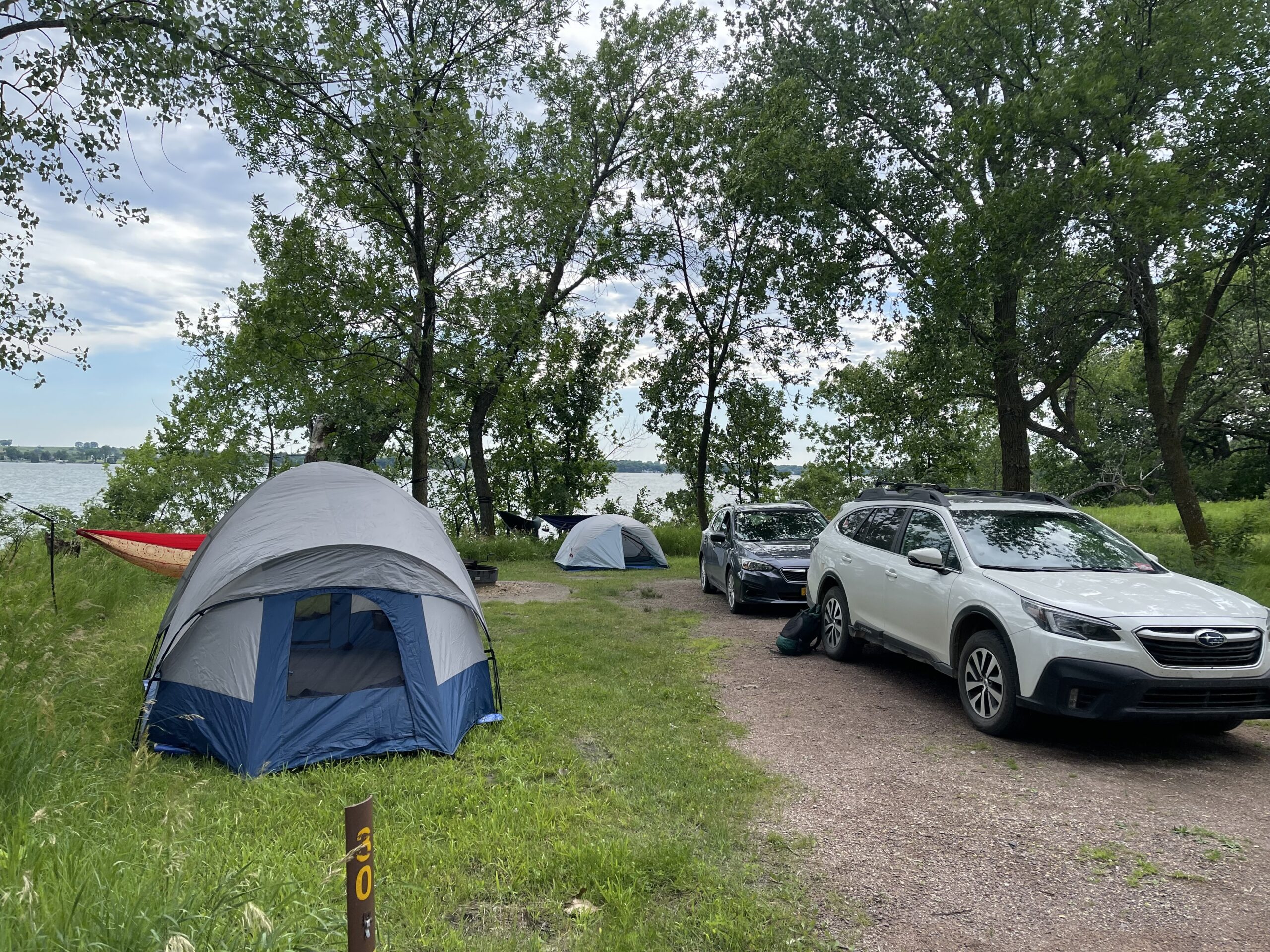
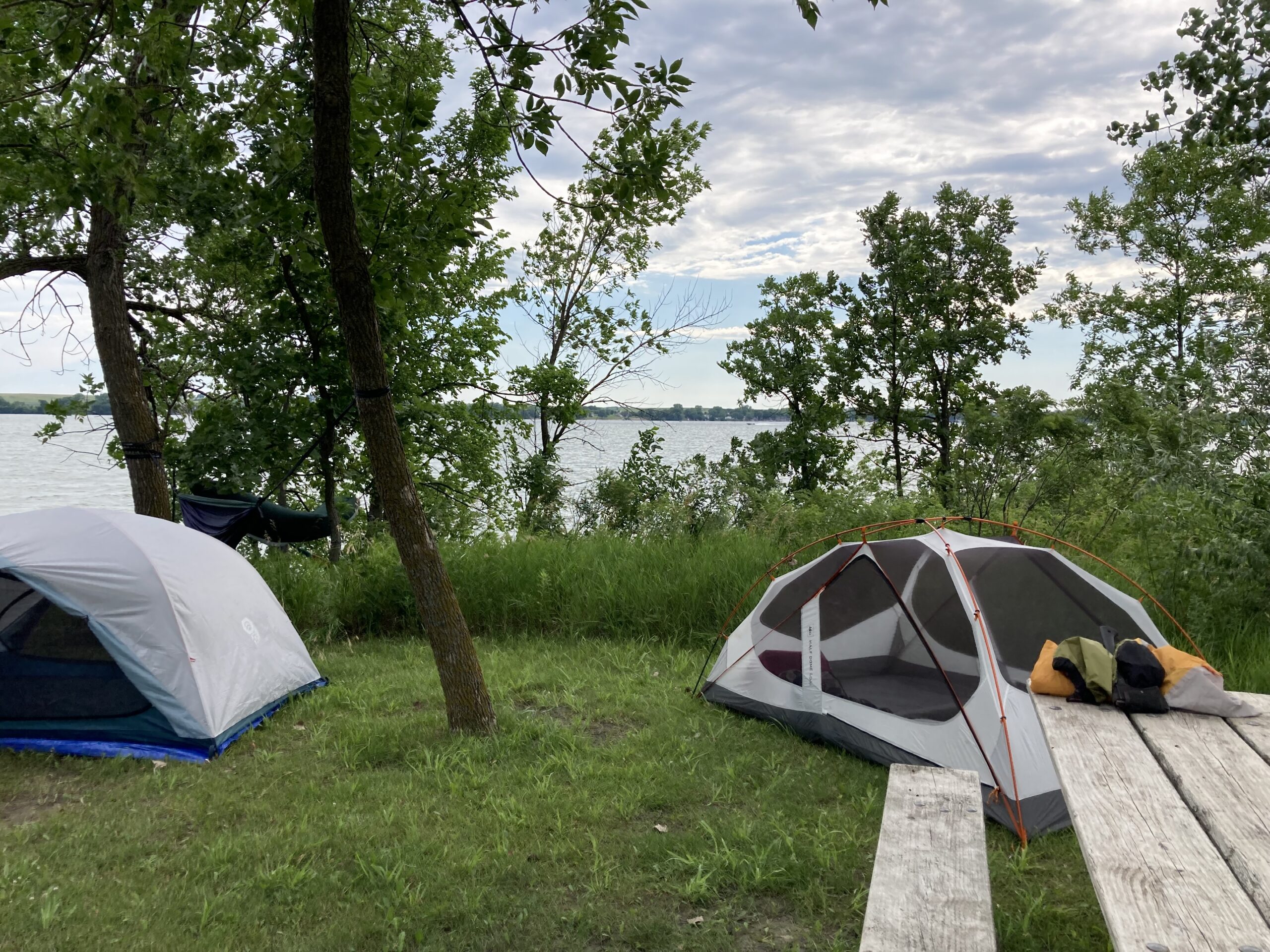
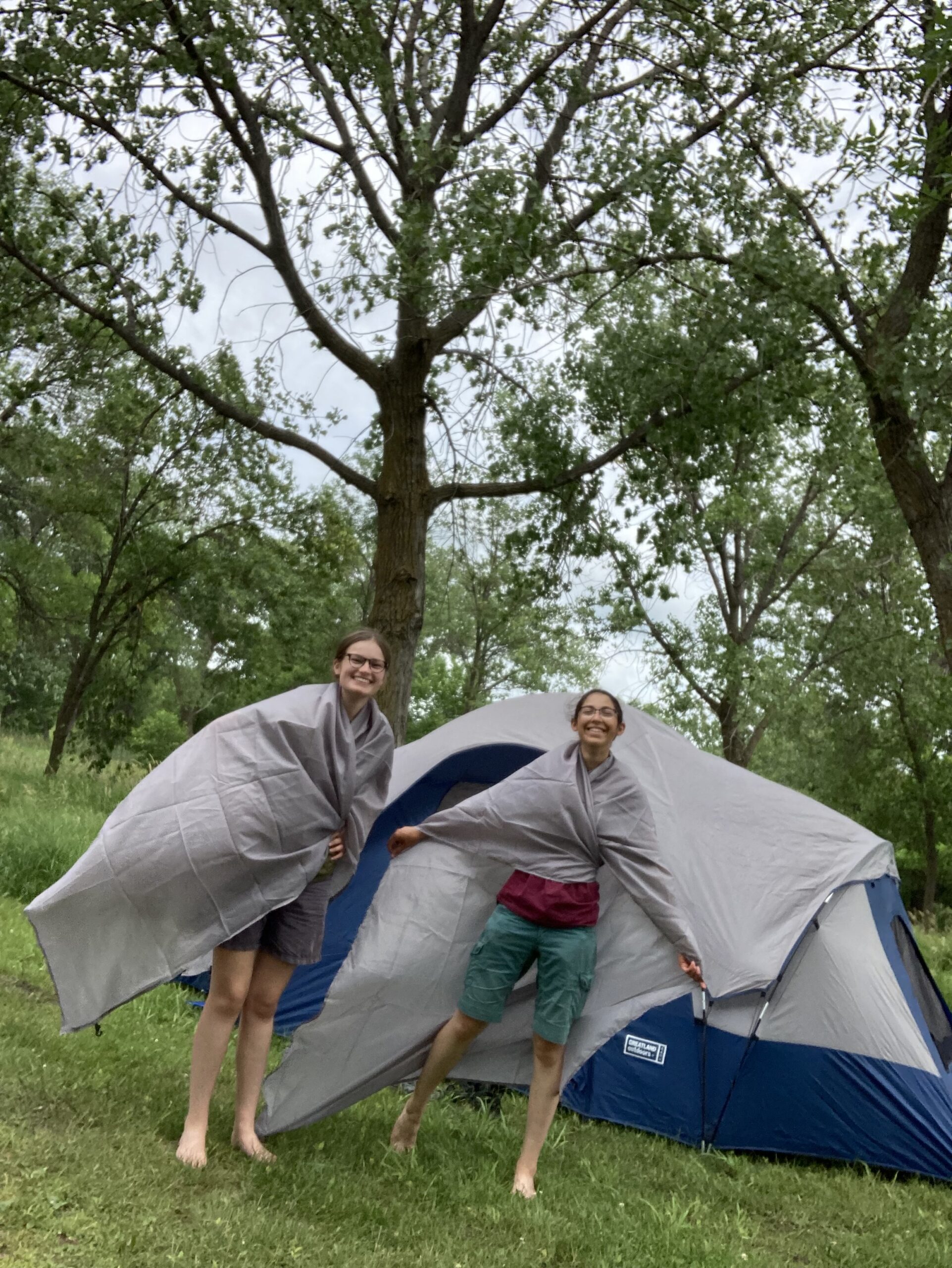
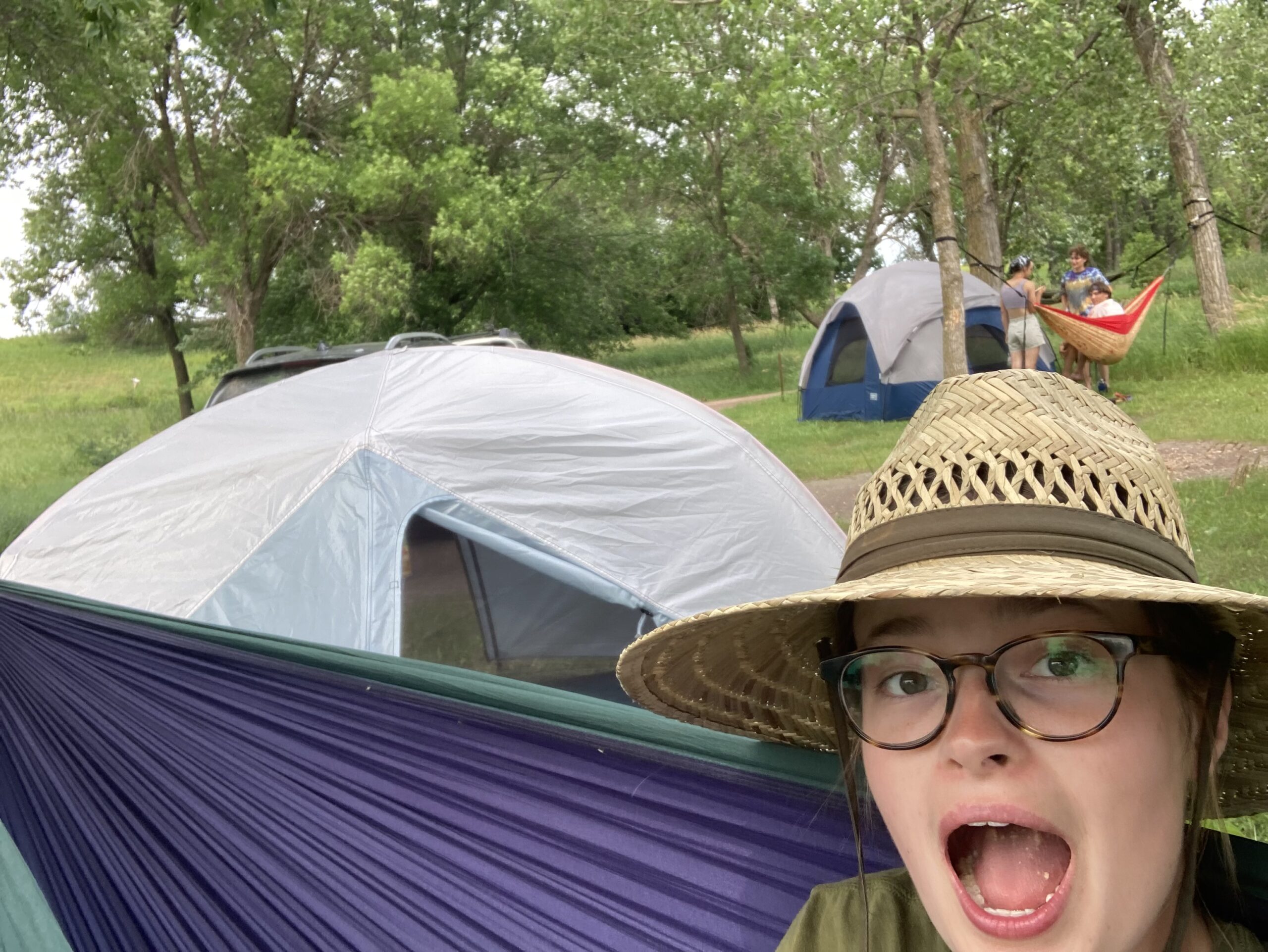
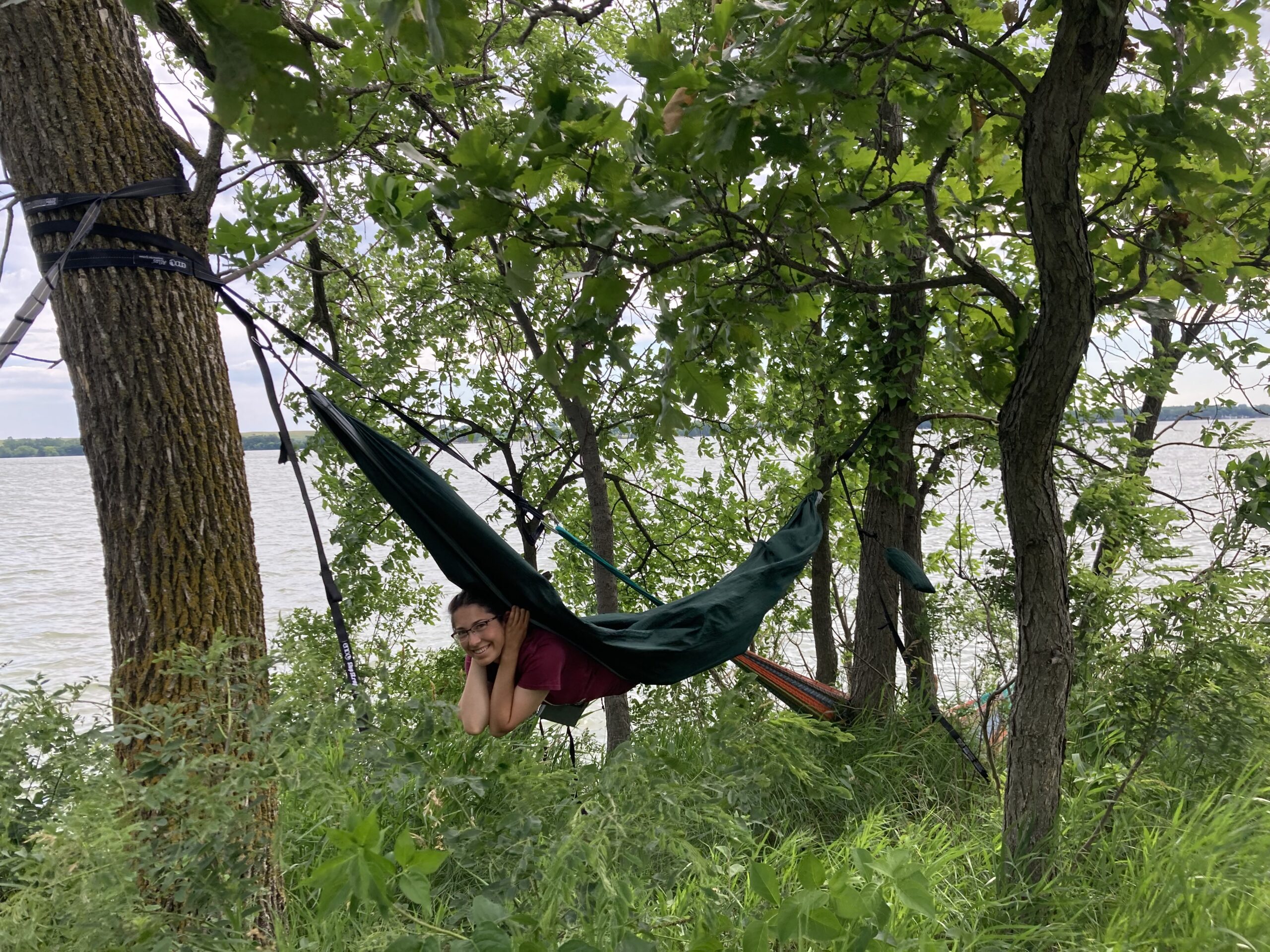
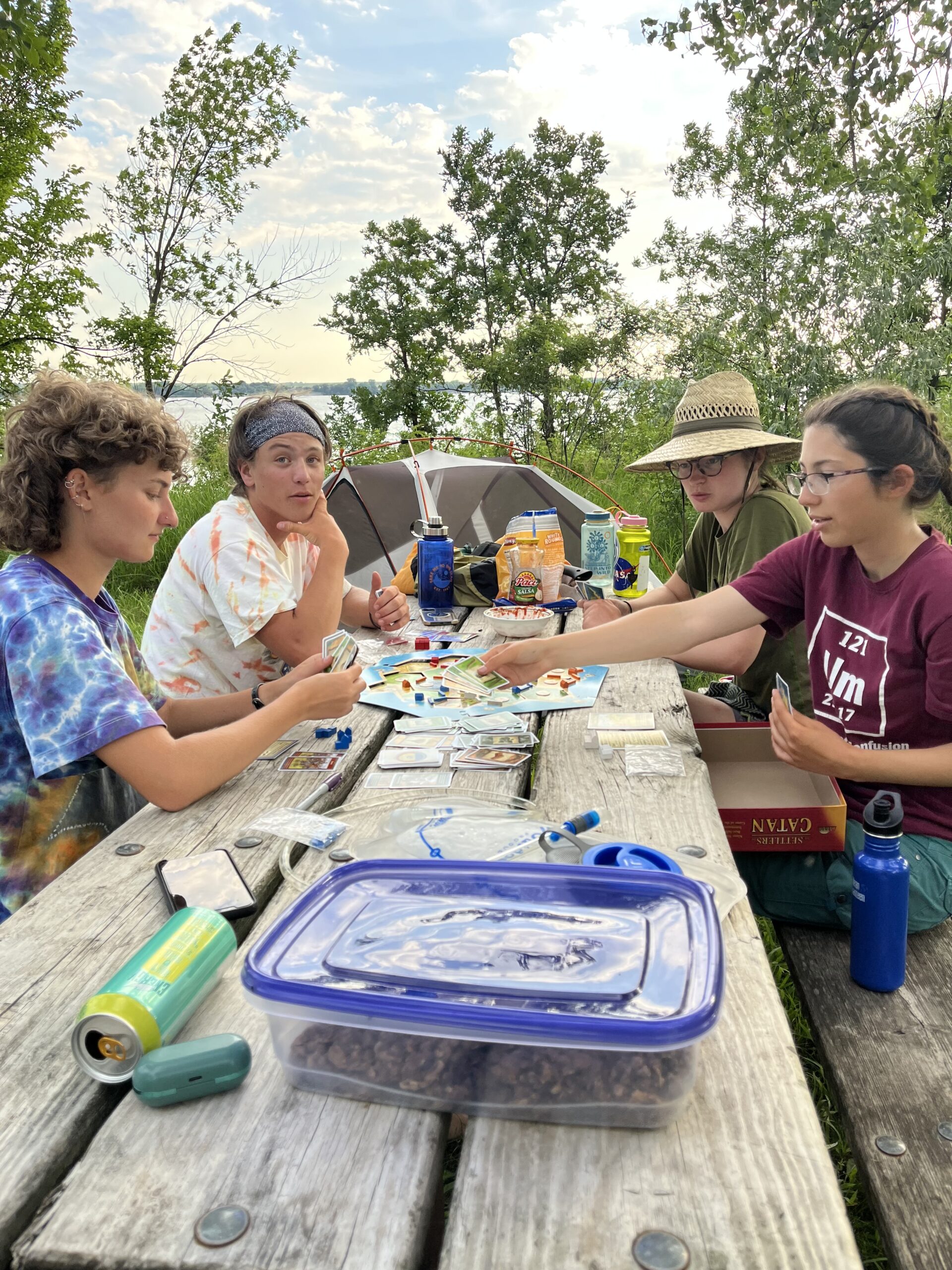
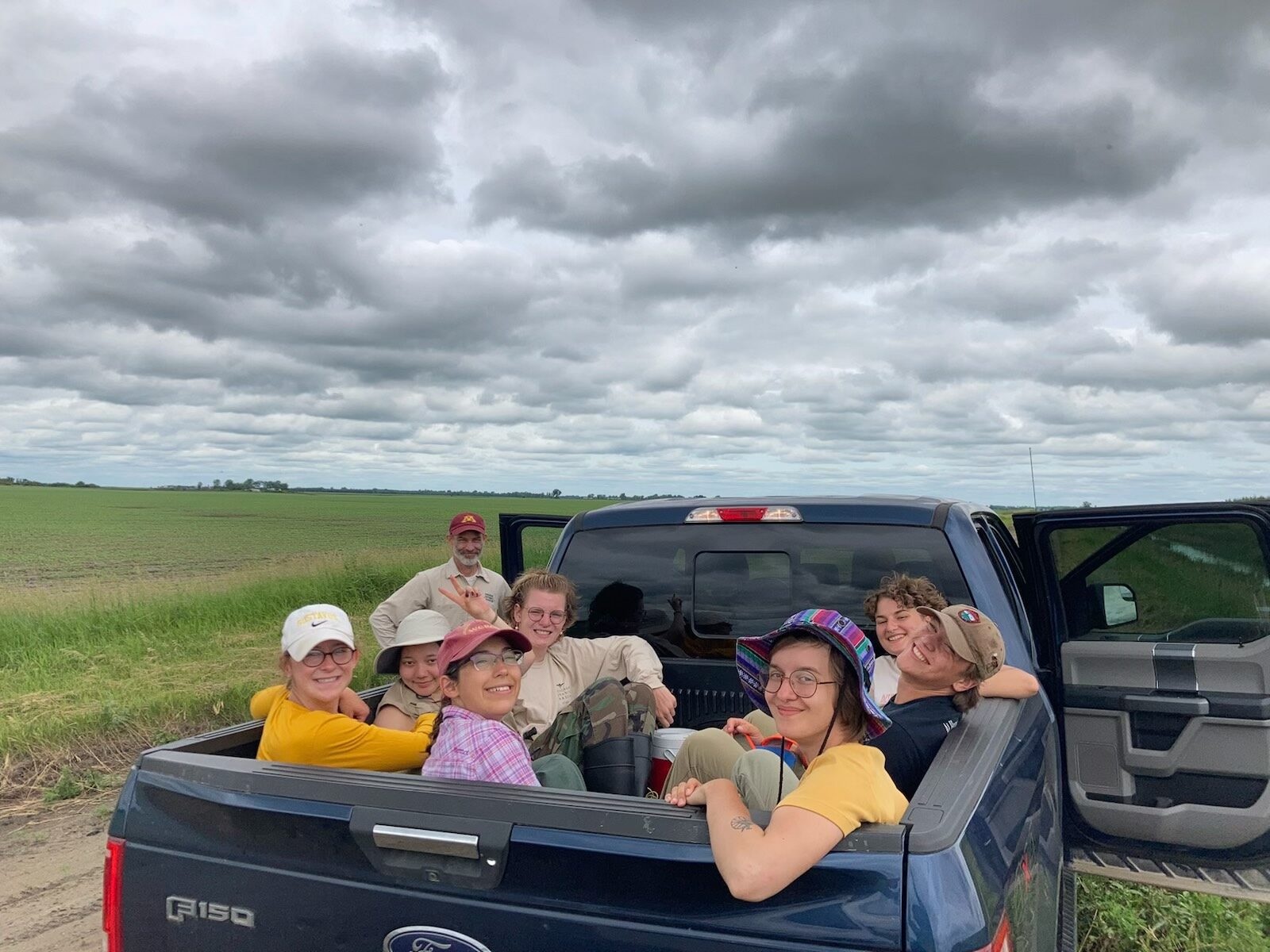
This last Saturday, Alex, Mia, and the Andes Crew packed up for a mini camping trip at Big Stone Lake, a state park right next to the South Dakotan border.
The CampersThe campsite: part 1The campsite: pt 2The campsite: tents come with complimentary capes!The campsite: Hammocking!The campsite: Alternative hammocking
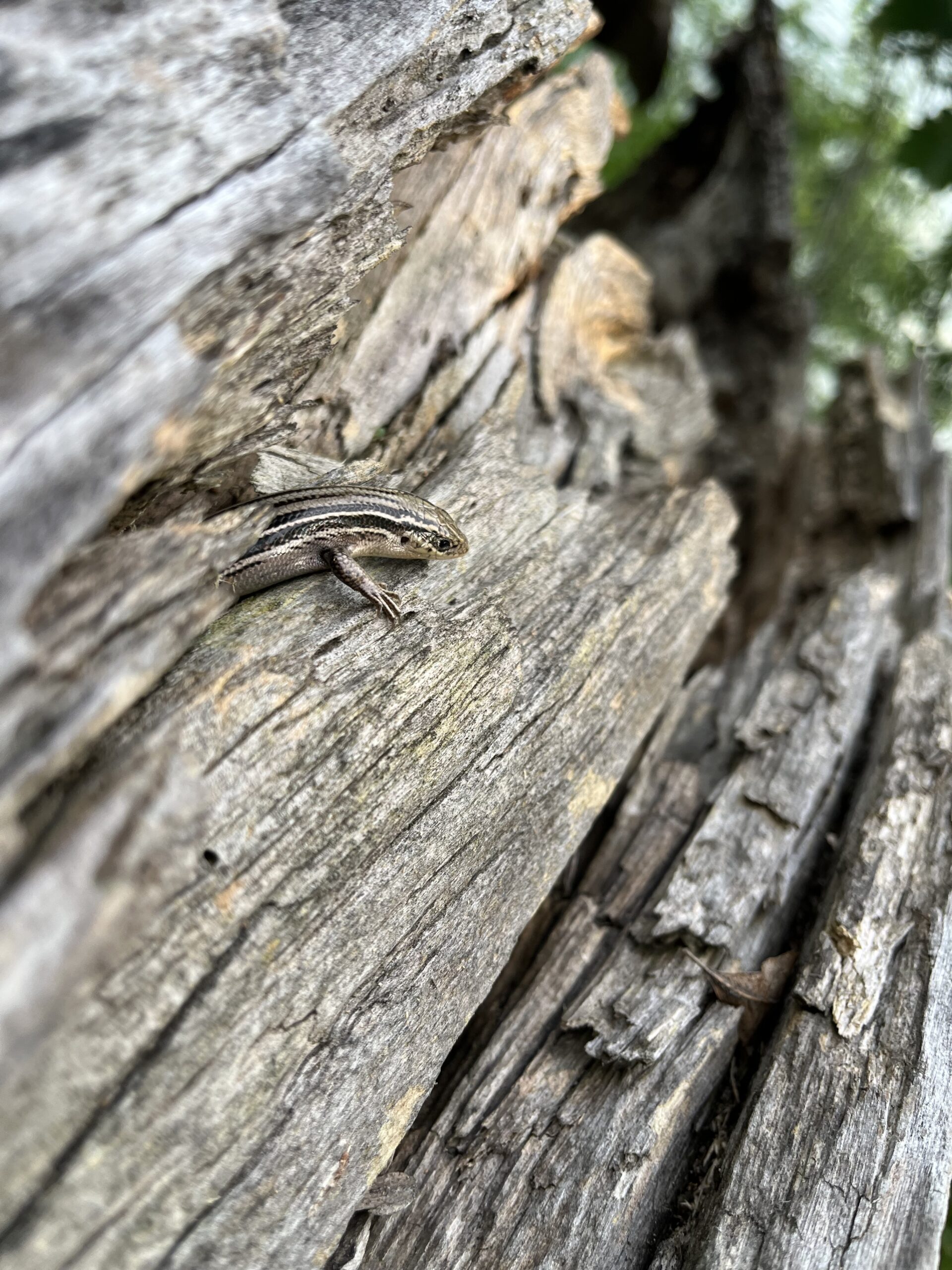
When exploring the park, we found lots of critters, including the resident skink of the fallen tree at our campsite.
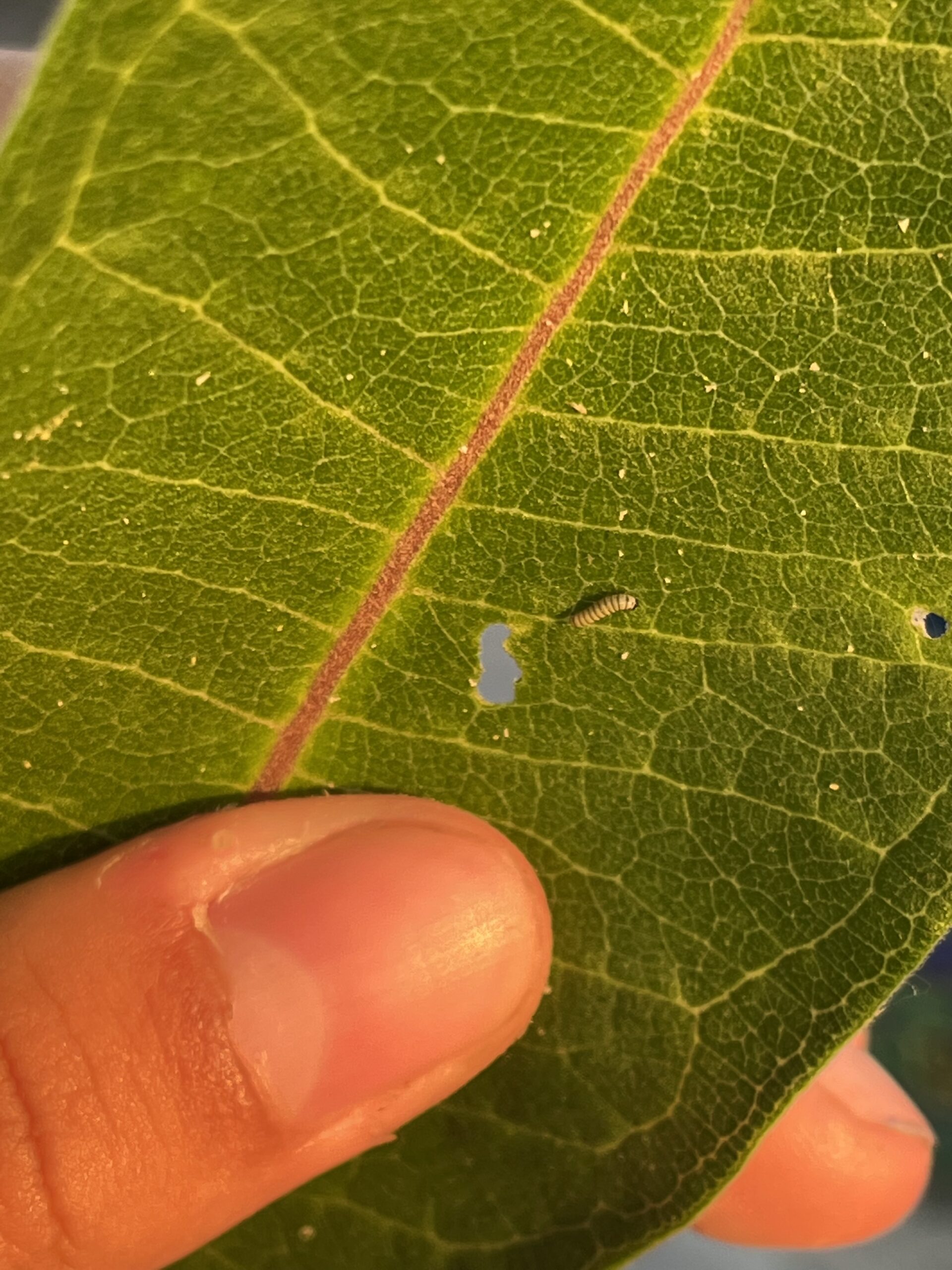
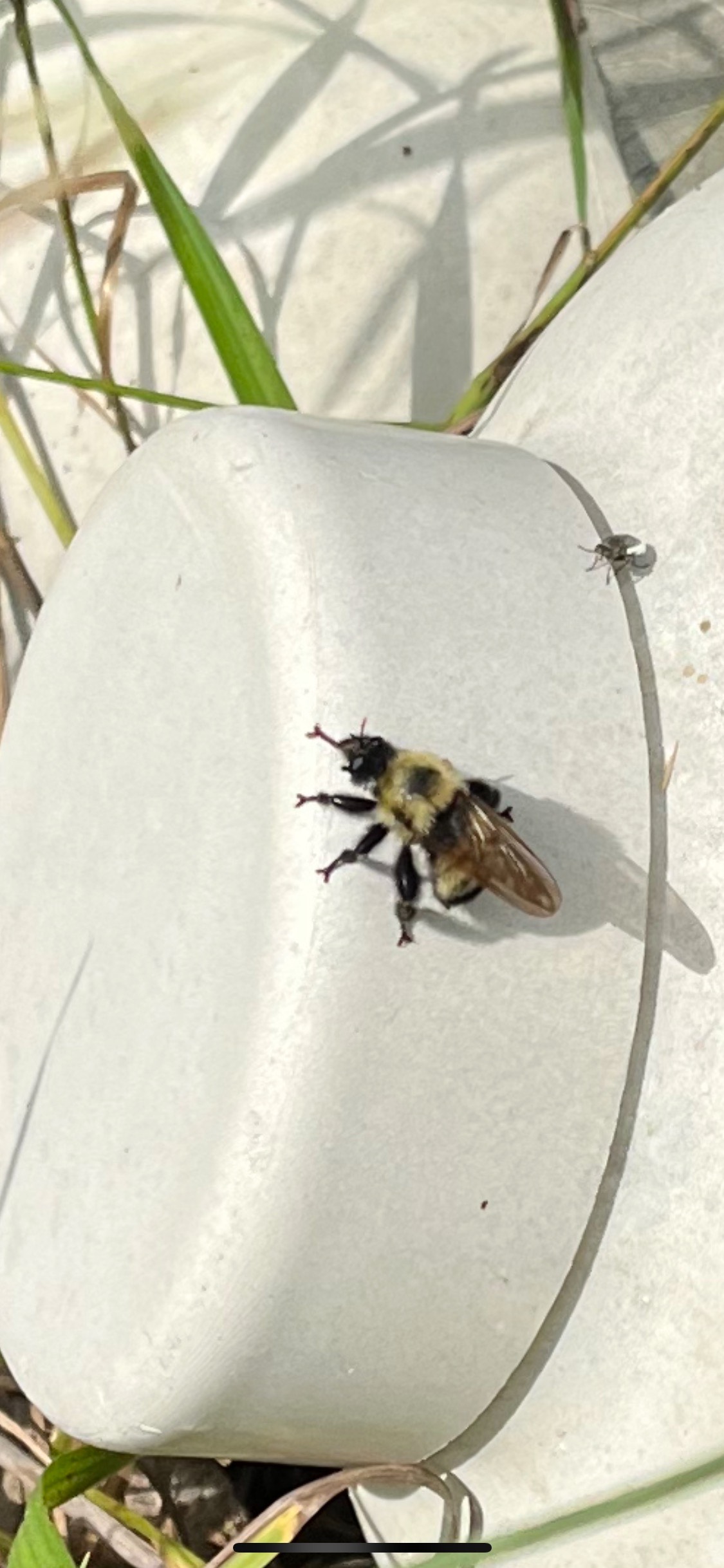
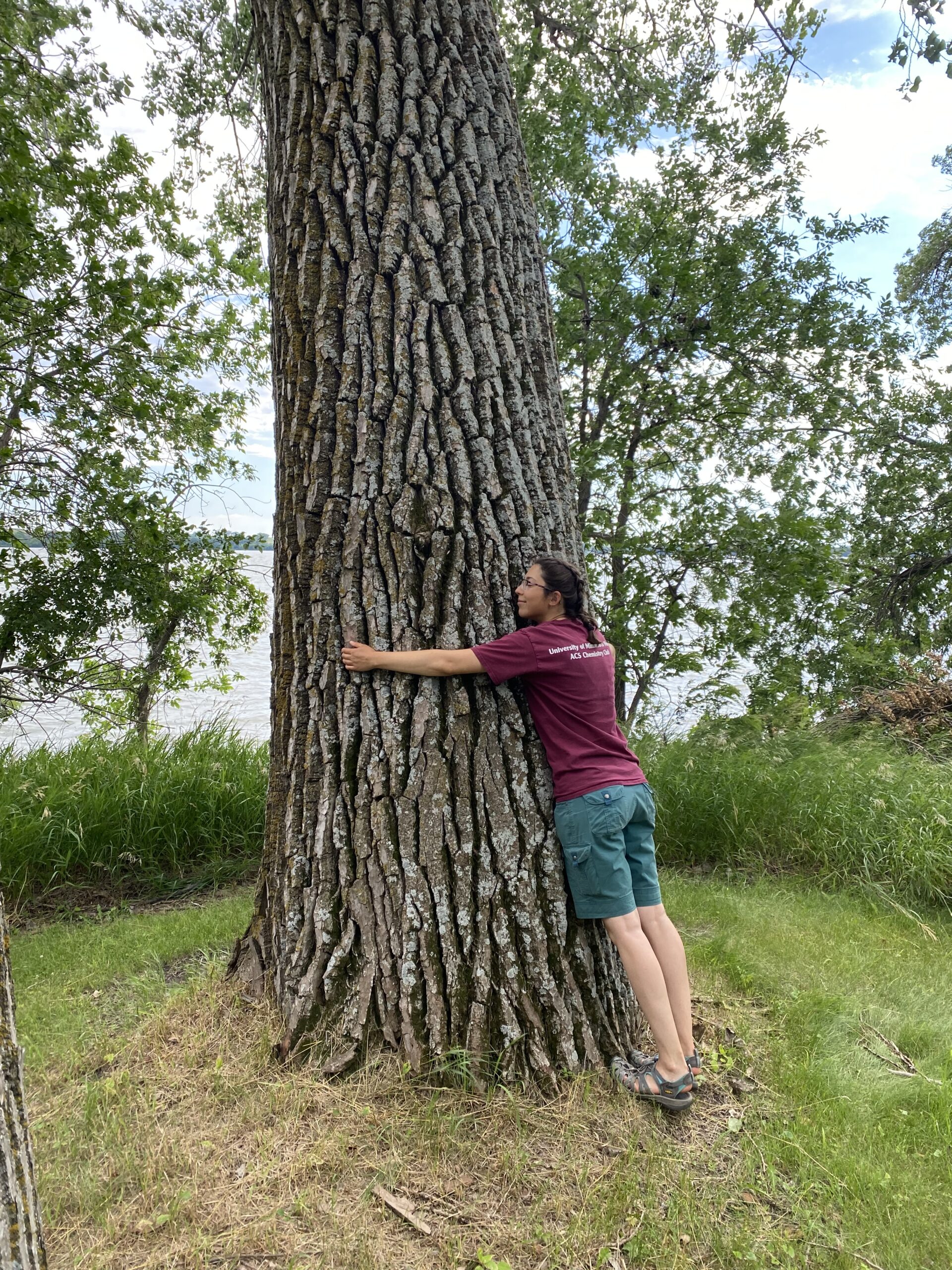
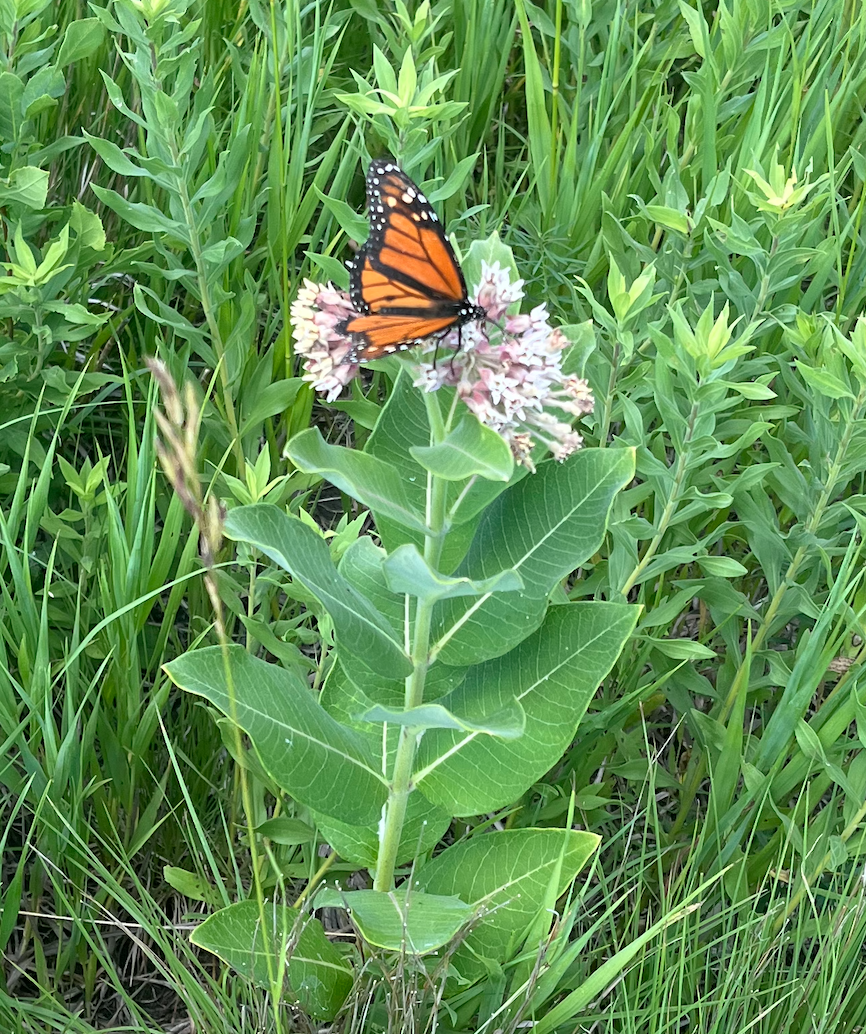
Teeny tiny monarchA bee? No – a robber fly wearing a disguise!Resident skinkCottonwood hugs
Later, we played Catan – and Joey and Alex won, but Mia and Geena are determined to win in a rematch.
For some reason, bricks were always a scarce resource (but the cookies were not)
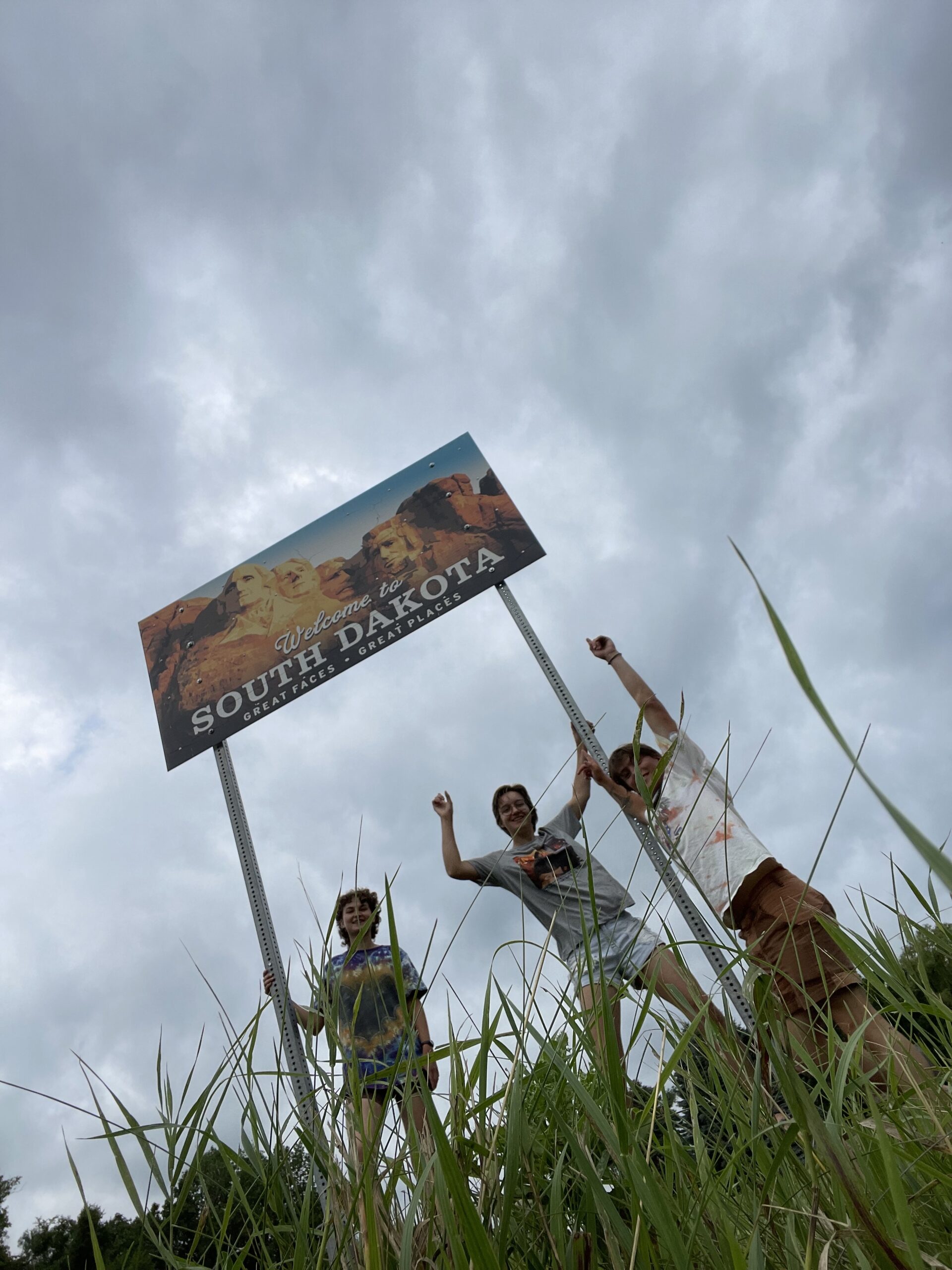
Lastly, before heading back, we were determined to find a South Dakota sign, just to prove we went there (Jo walked there but didn’t find a sign, so we needed some evidence).
TGIF! You all know what Friday means: Phenology! The team headed out this morning to check the progress of our flowering remnant plants. I thoroughly enjoyed my time in East Landfill seeing all the funky diseased heads, although it does make counting rows of anthers and styles difficult when they are all scrambled. After mutant heads, my second favorite thing about Landfill is the robber flies, although I’ve been warned many times not to anger them.
Squiggly-anthered head with no rays.*Robs you*Bee pollinating my clicky phenology pen.
In the second half of the day, most of the team headed to our experimental plot 8 to find and measure plants. This plot is just down the road from our headquarters at Hjelm house. The plants in this plot are starting from seed instead of seedlings, so it was a different process to find them. We had to search in the duff for nails each meter, then measure to find different-colored toothpicks or cocktail swords.
Sophia searching for plants.Aphid farm on a common milkweed.I love you big milkweed
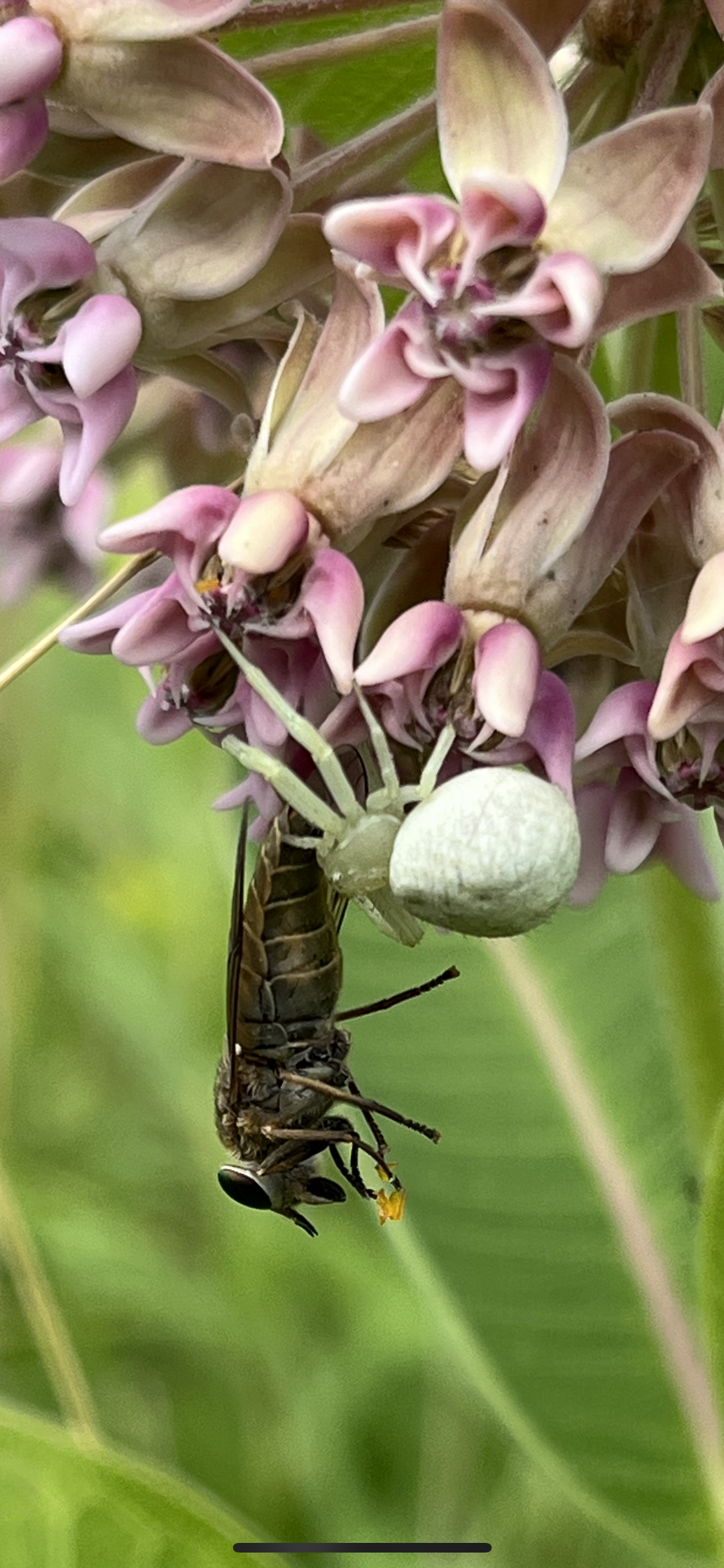
We finished the day with watermelon. What a good end to the week! All of us at Team Echinacea hope you have a better weekend than this horse fly being eaten by a crab spider does:
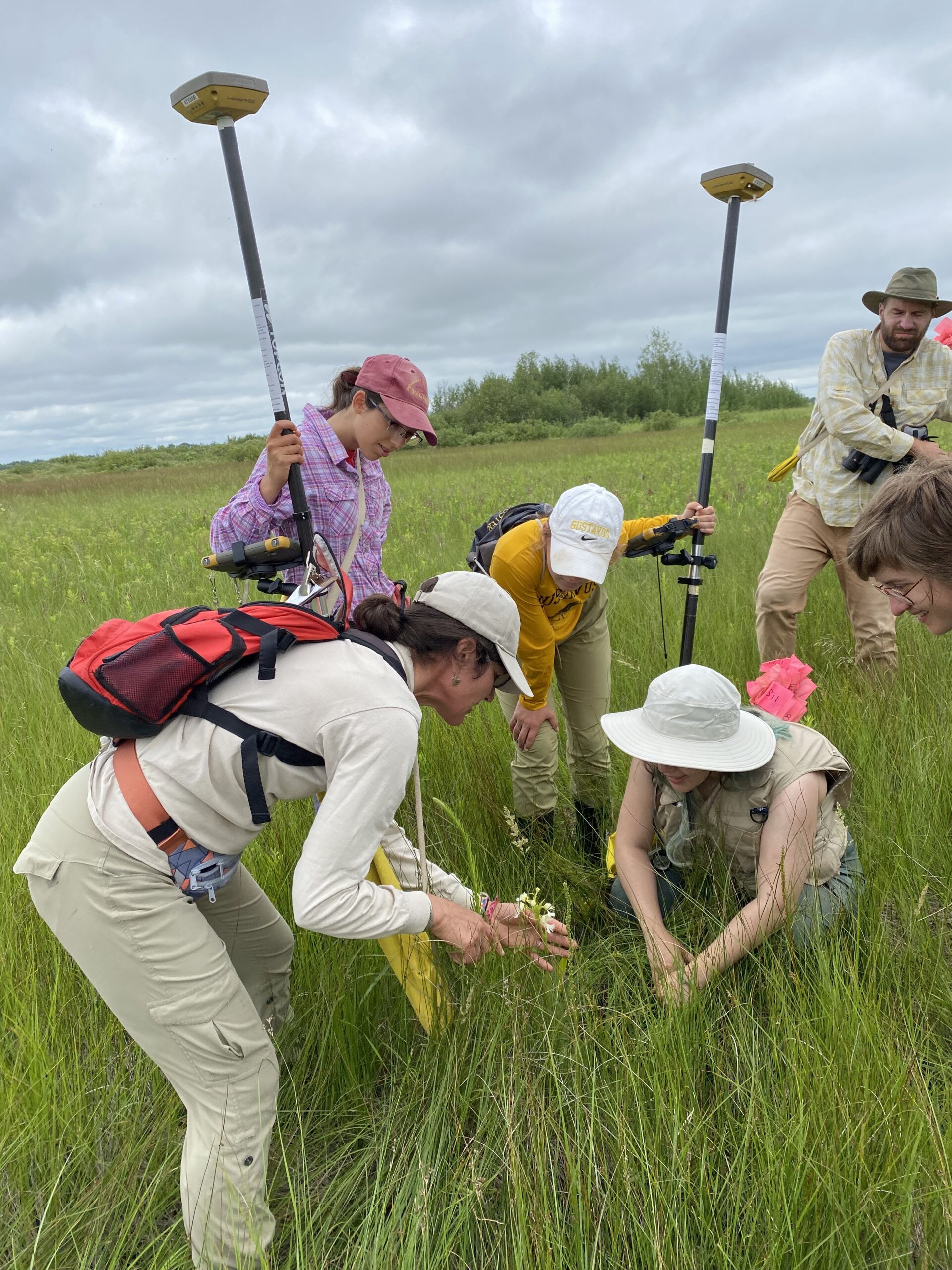
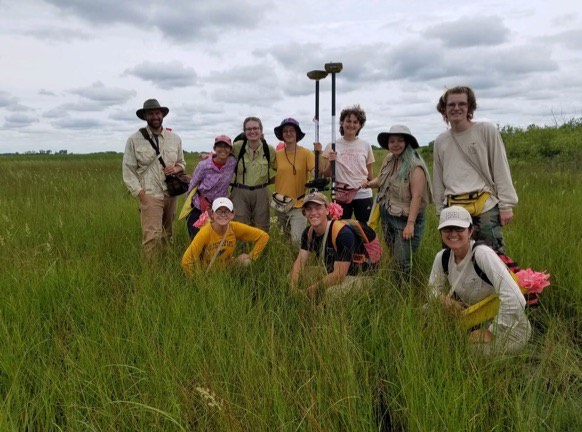
Today, Team Echinacea became Team Platanthera. Heading 2 hours north to Fertile, MN, the team visited Pembina Trail Scientific and Natural Area (we made sure to stop for donuts). This area is part of a bigger project called the Glacial Ridge Project, a prairie and wetland restoration project run by the Nature Conservancy.
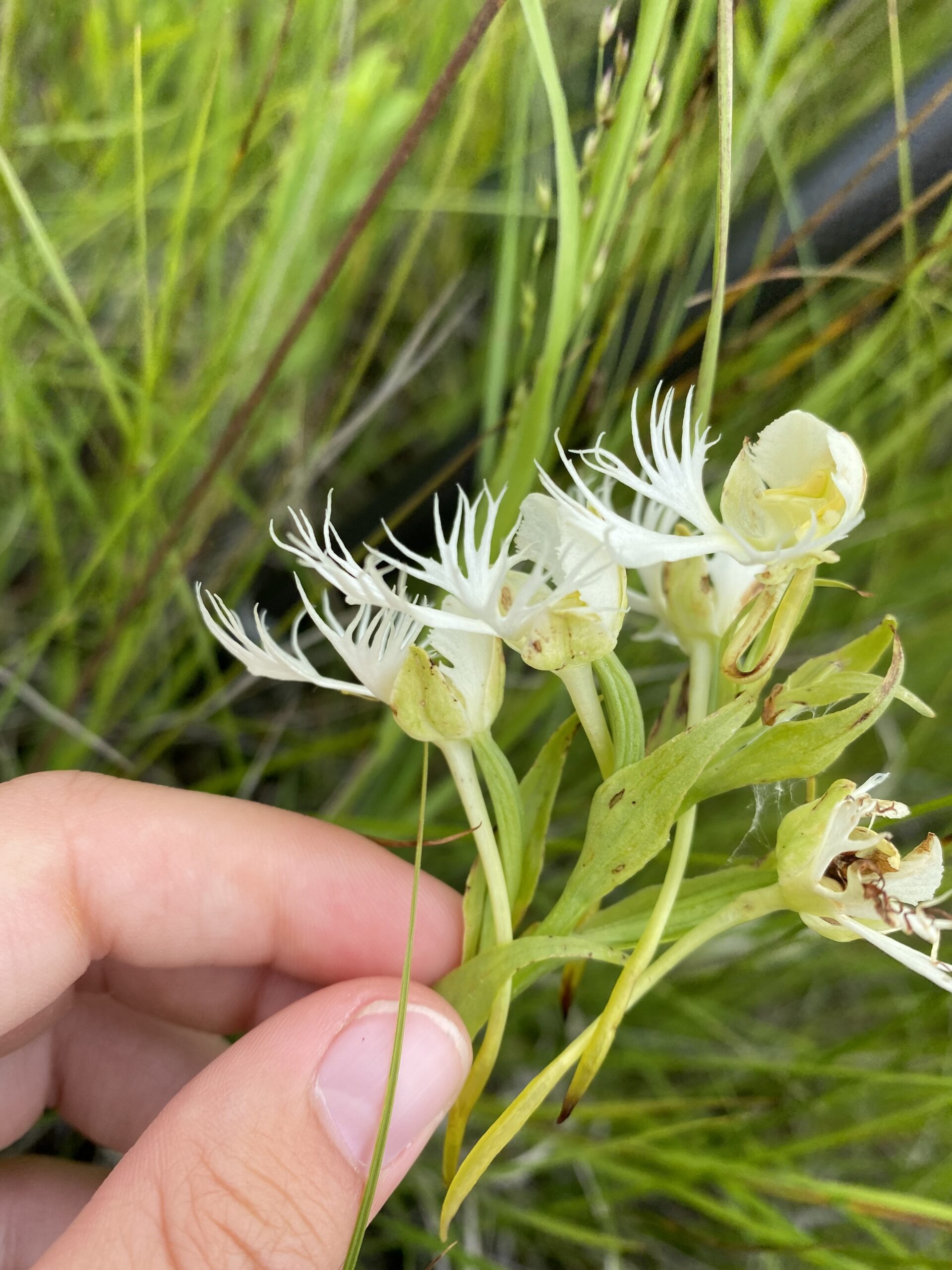
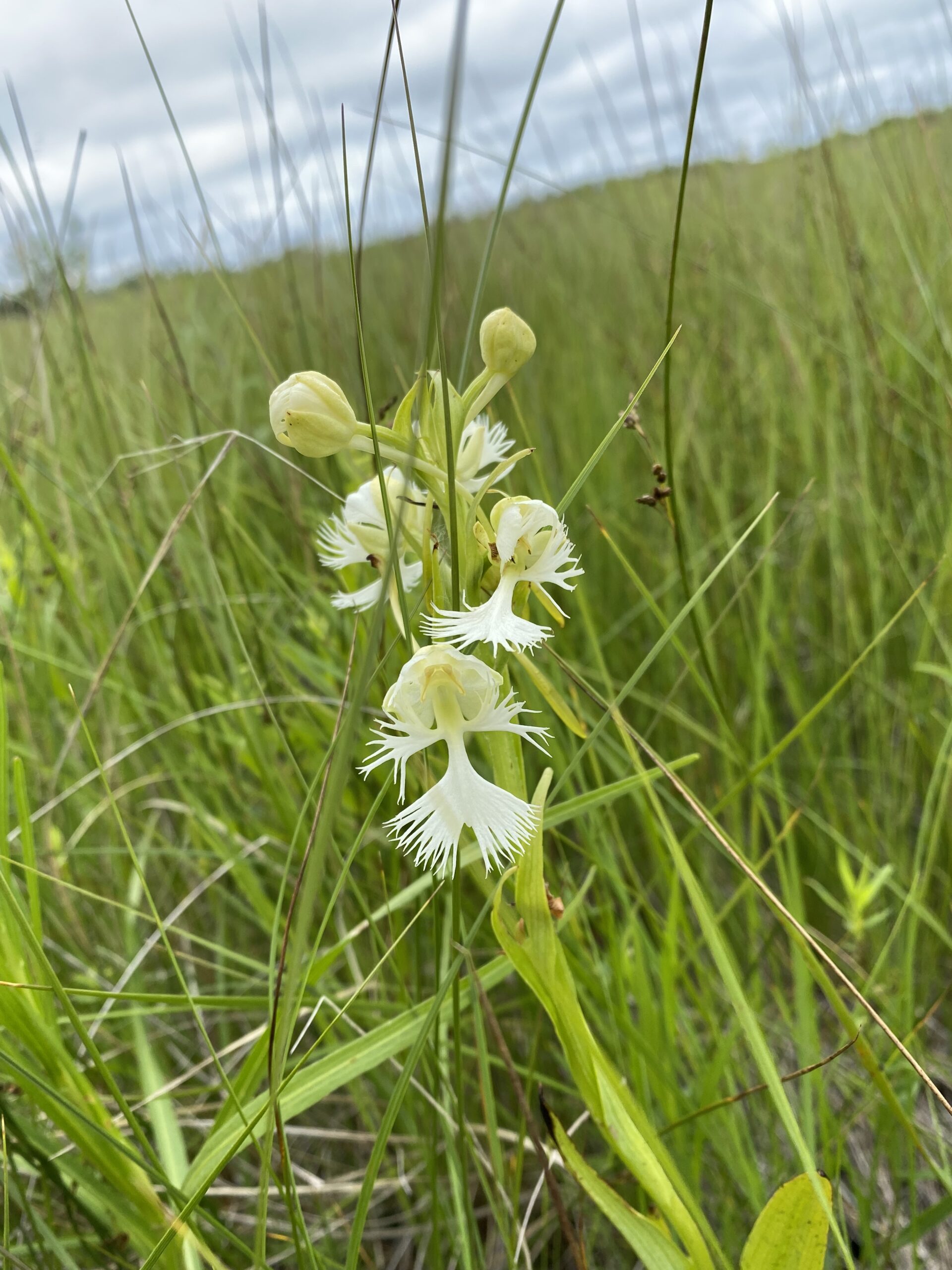
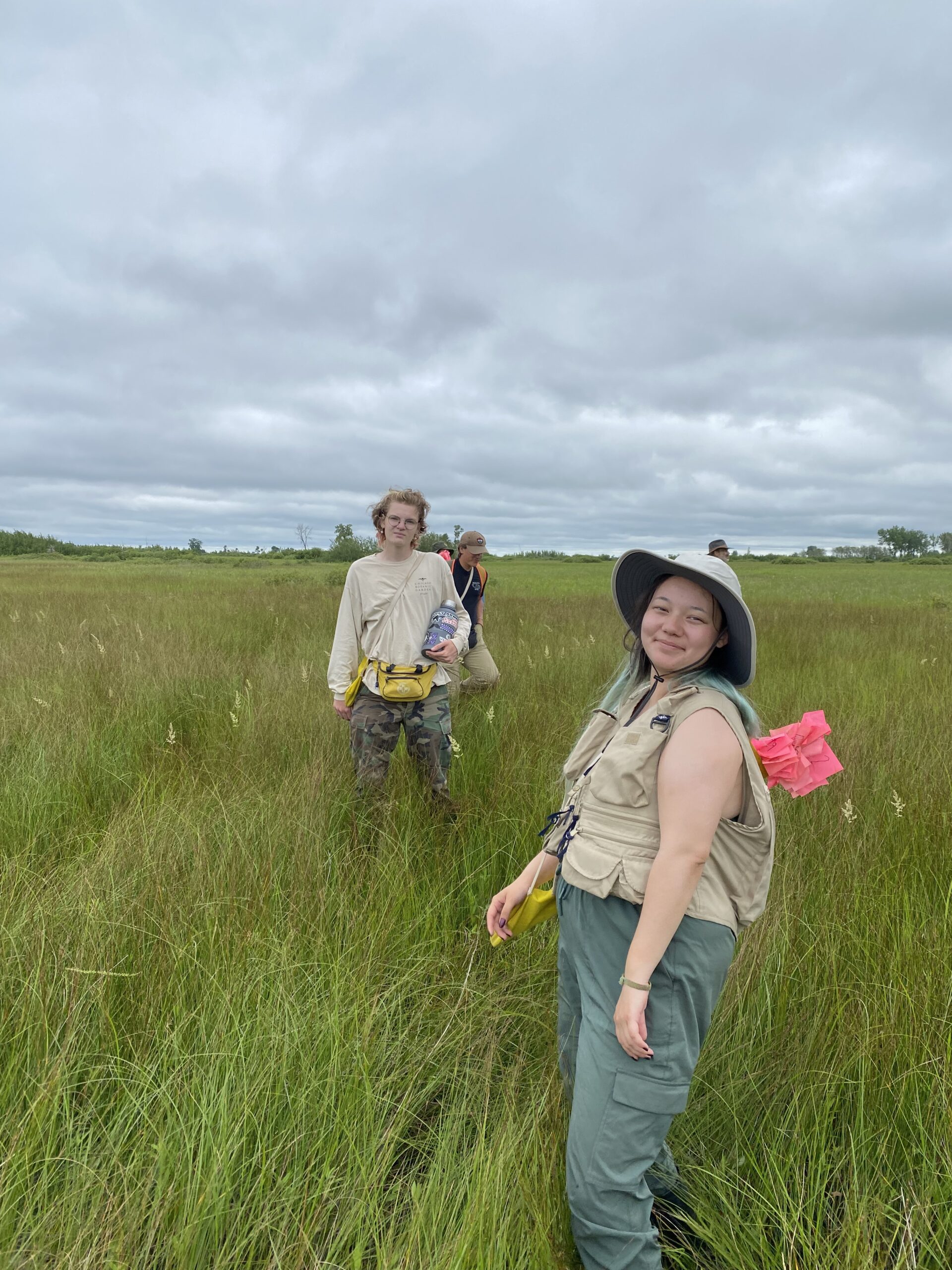
Once the team arrived, rather than the dry tallgrass prairies we’ve become accustomed to, we were met with plants that thrived in the standing 6in of water that covered much of the prairie. Tromping through the water, we also soon met our plant of the day: Platanthera praeclara, the Prairie Fringed Orchid. With their famous fringe and long corollas to match the long proboscis of their Sphingid pollinators, these flowers stand out in the prairie – and we got to spend our day searching and surveying them!
Gretel describing the orchid to us Re: extended corolla for specialized pollinationthe famous fringe!The team for the day!
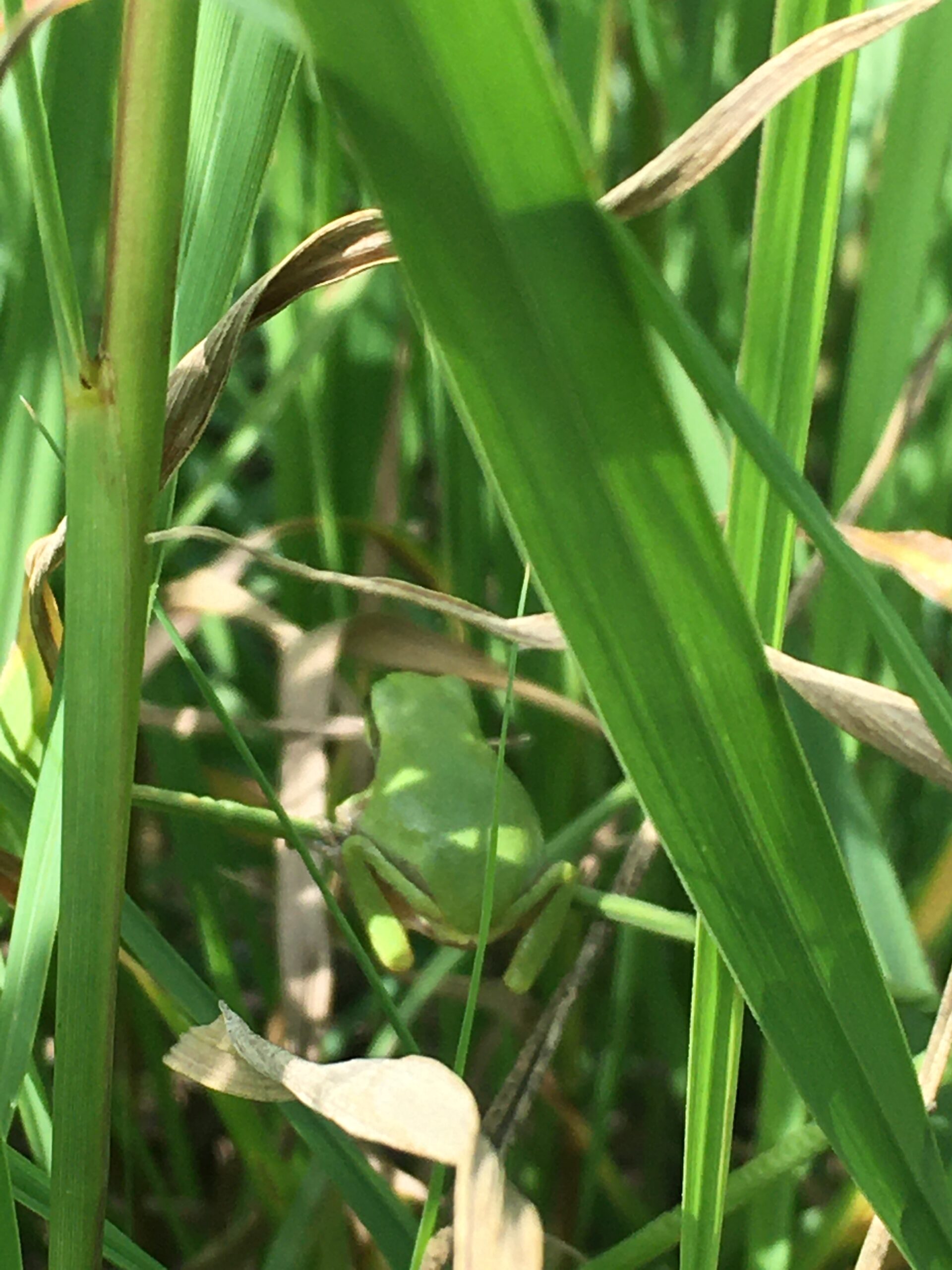
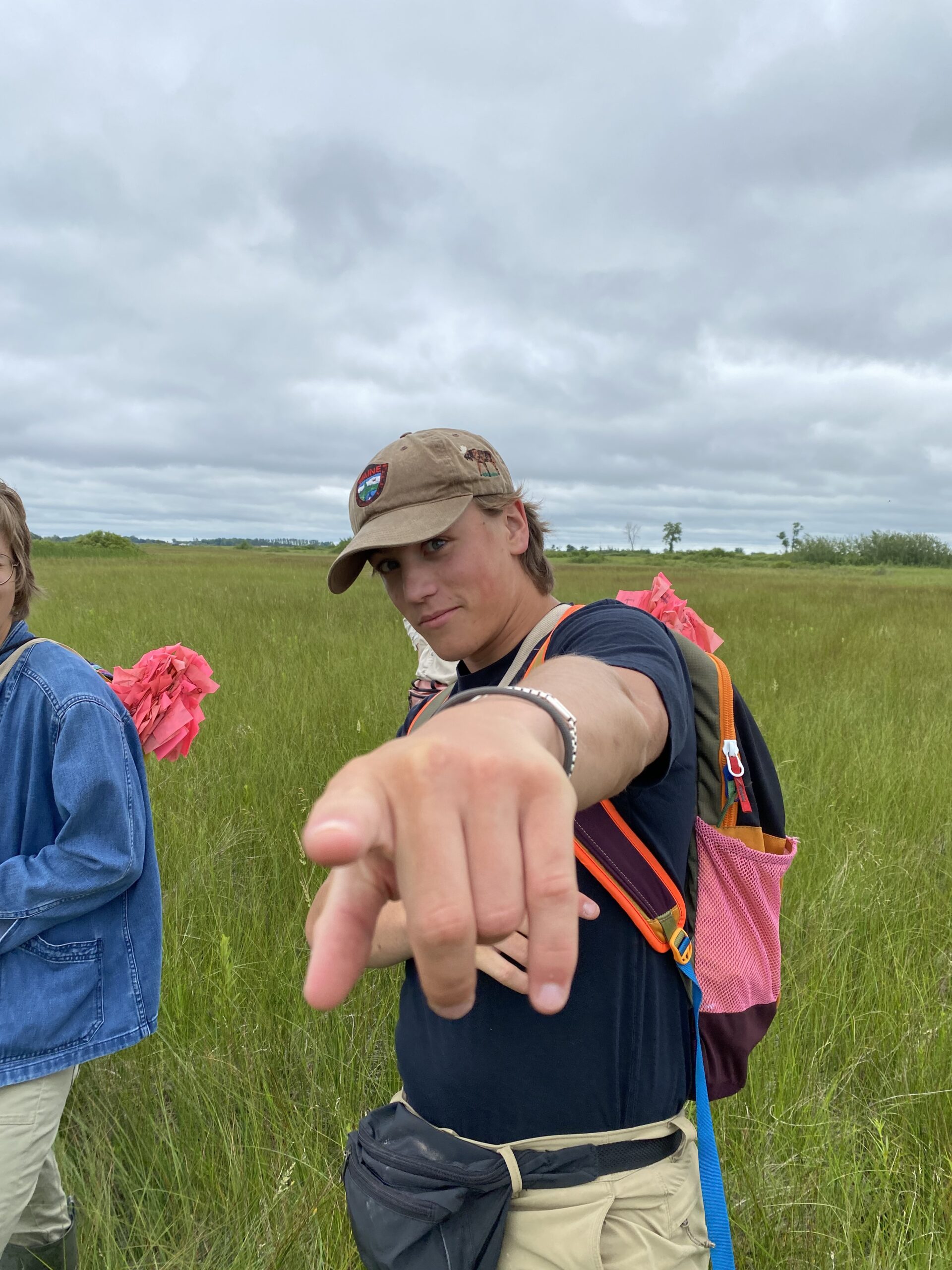
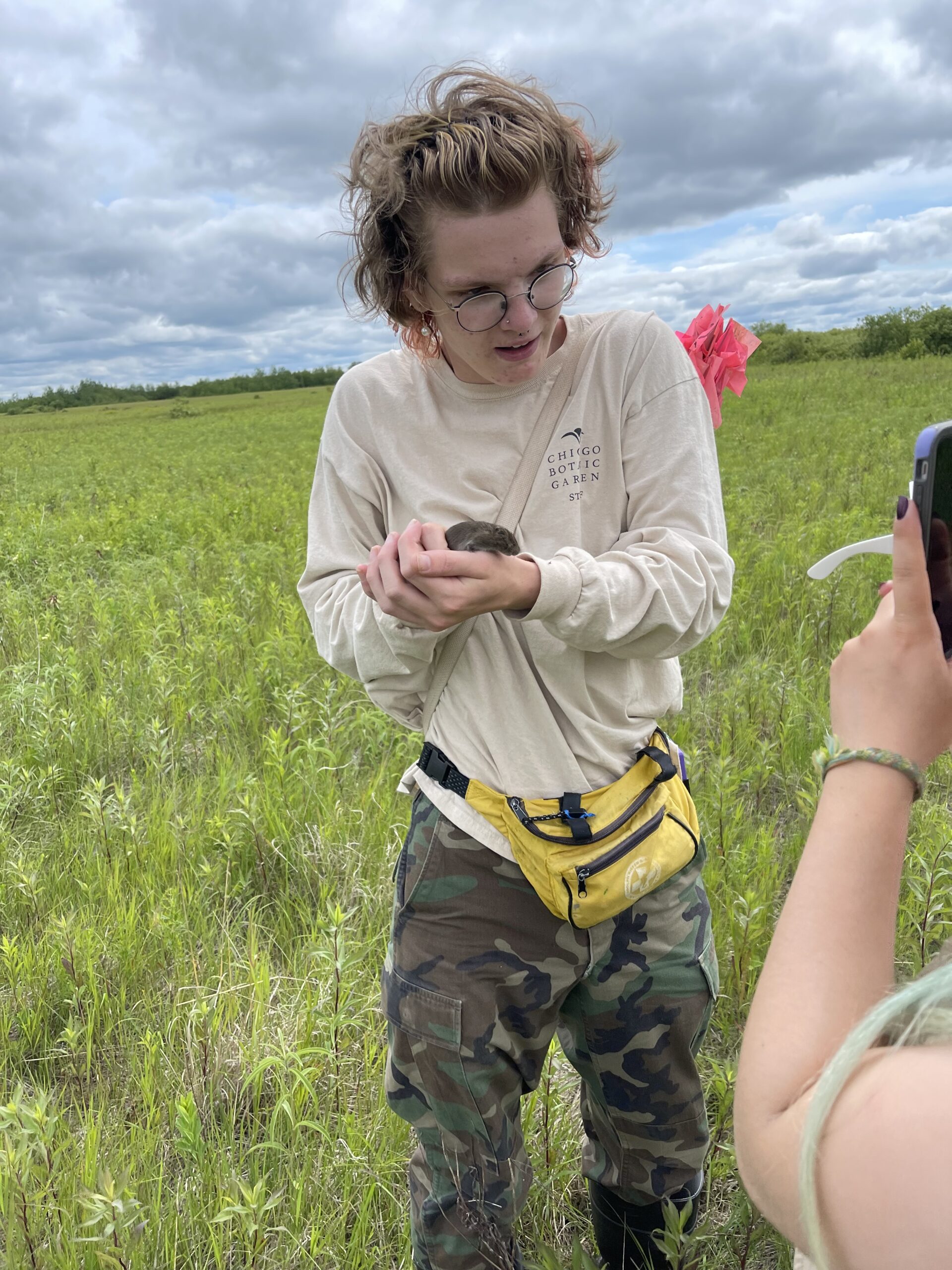
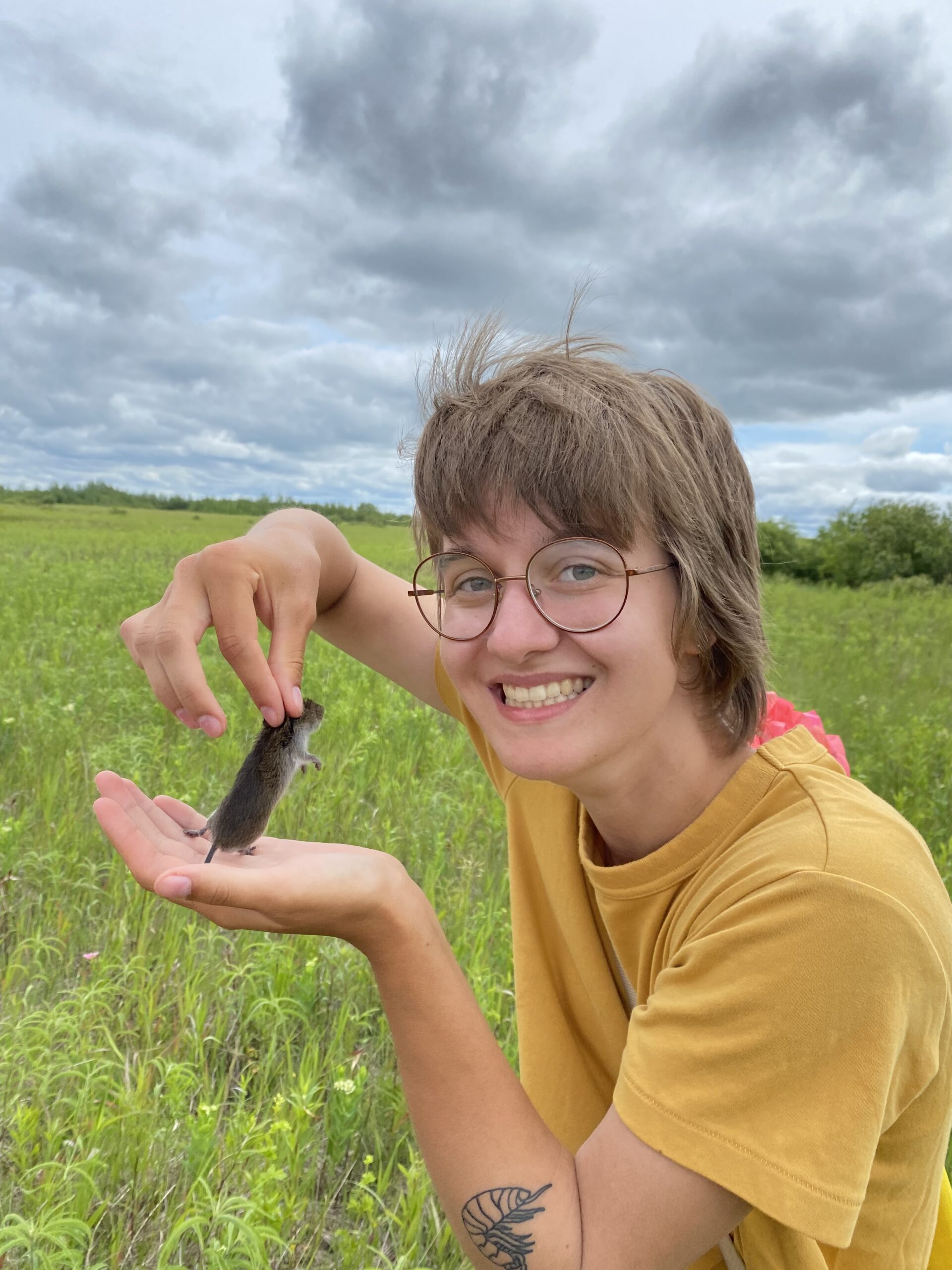
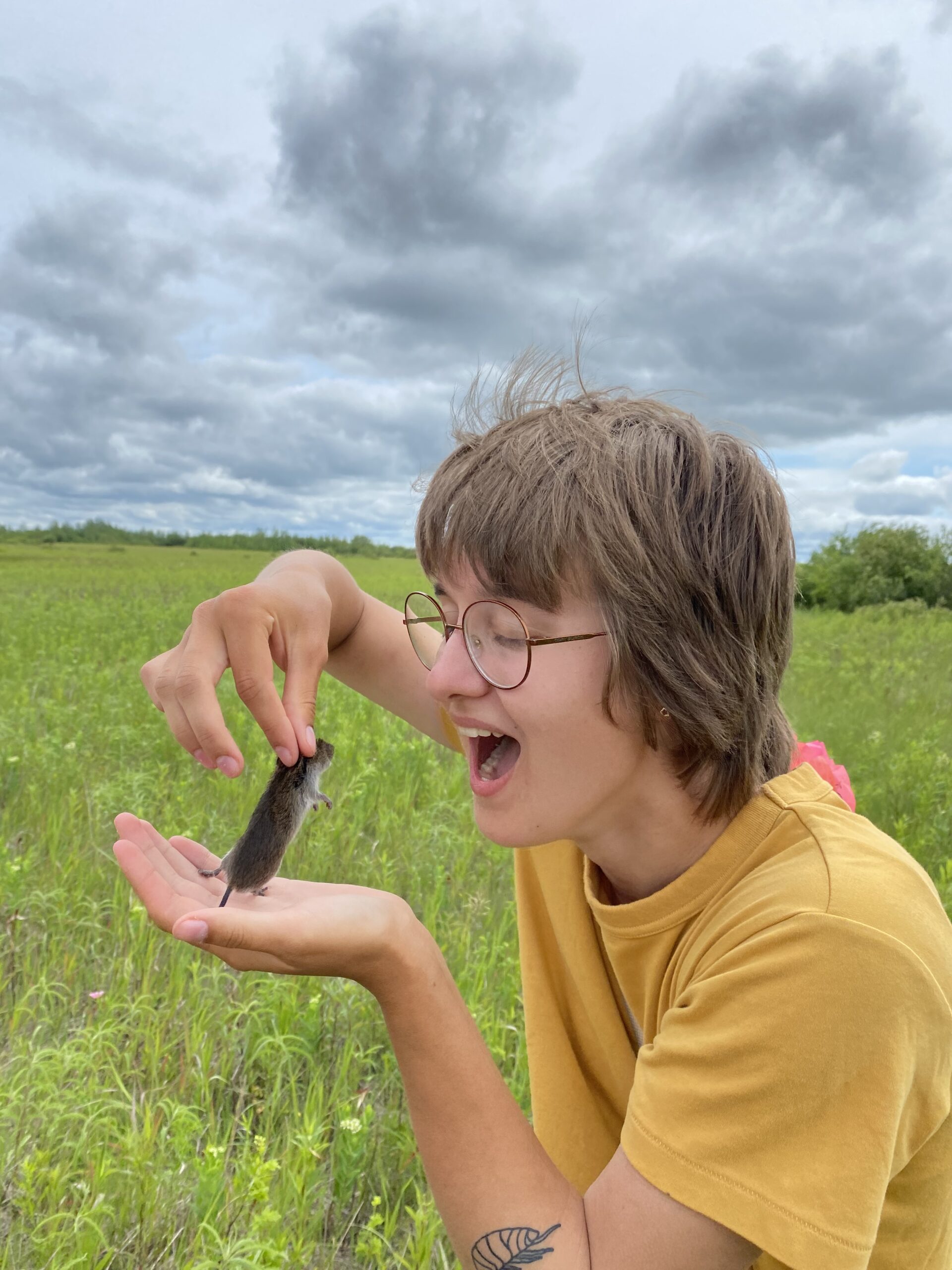
Finding just over 80 orchids, the team had a ton of fun in the field, and it wasn’t just orchids that caught our attention. We also found a vole (see slideshow), plenty of frogs, some other great plants (including lots of Asclepias incarnata), and overall had a great time!
More fun pictures from the day! Featuring Nate, Sophia, Joey, and Mia!Nate catching the voleJohanna posing Johanna eating (but not actually)The Vole Diaries
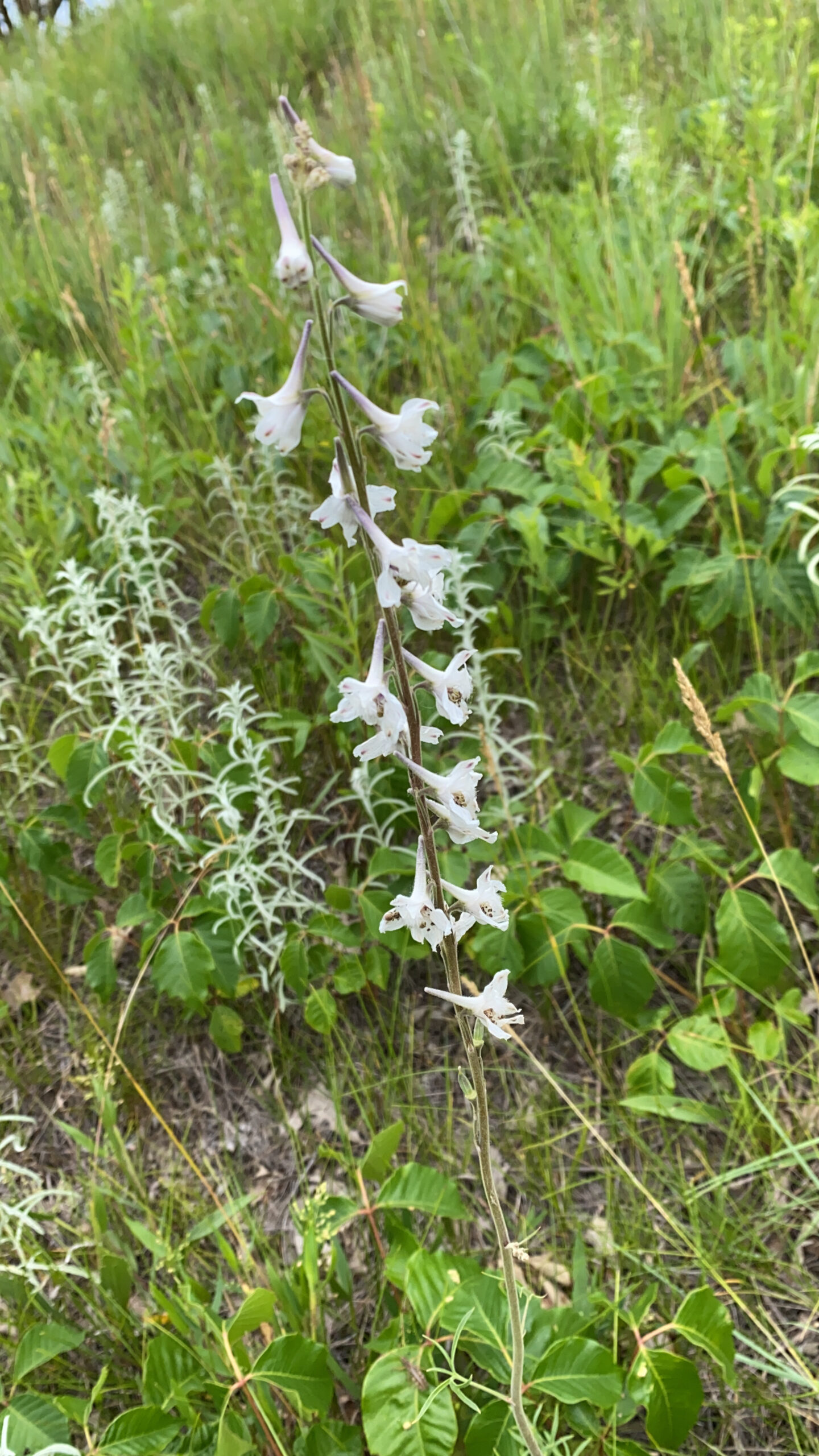
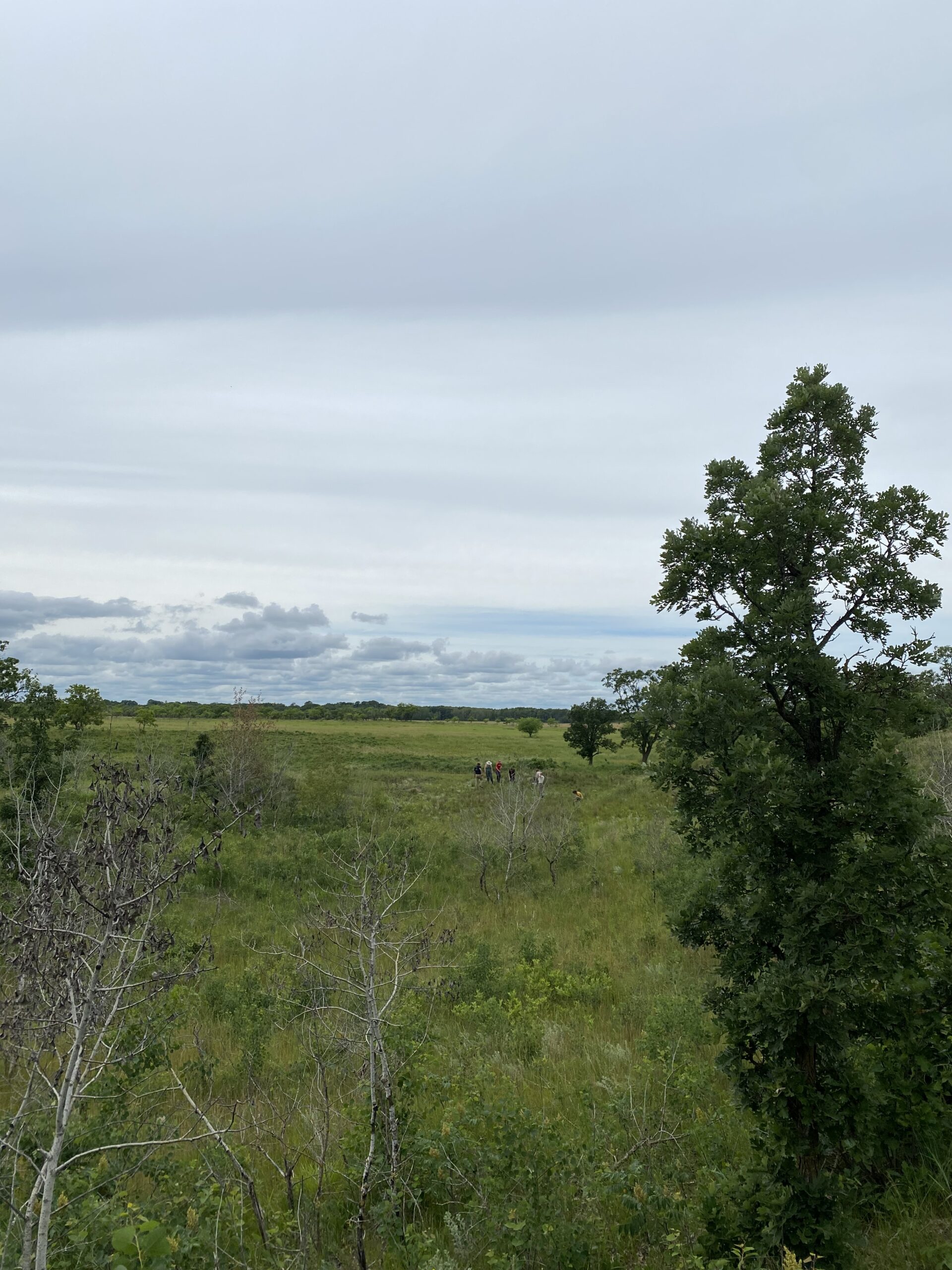
Before heading to get tacos for dinner, the team also got the chance to explore Agassiz Dunes Scientific and Natural Area, where we saw even more cool plants, my favorite being Delphinium. Overall, the team had a great time learning about even more prairie plants and restoration projects, and exploring more of the ecosystems of MN!
DelphiniumThe preserve!Testing out the parking poles
After all this, and after a great team dinner, I don’t think anyone on Team Echinacea (Team Platanthera?) will have trouble sleeping tonight.
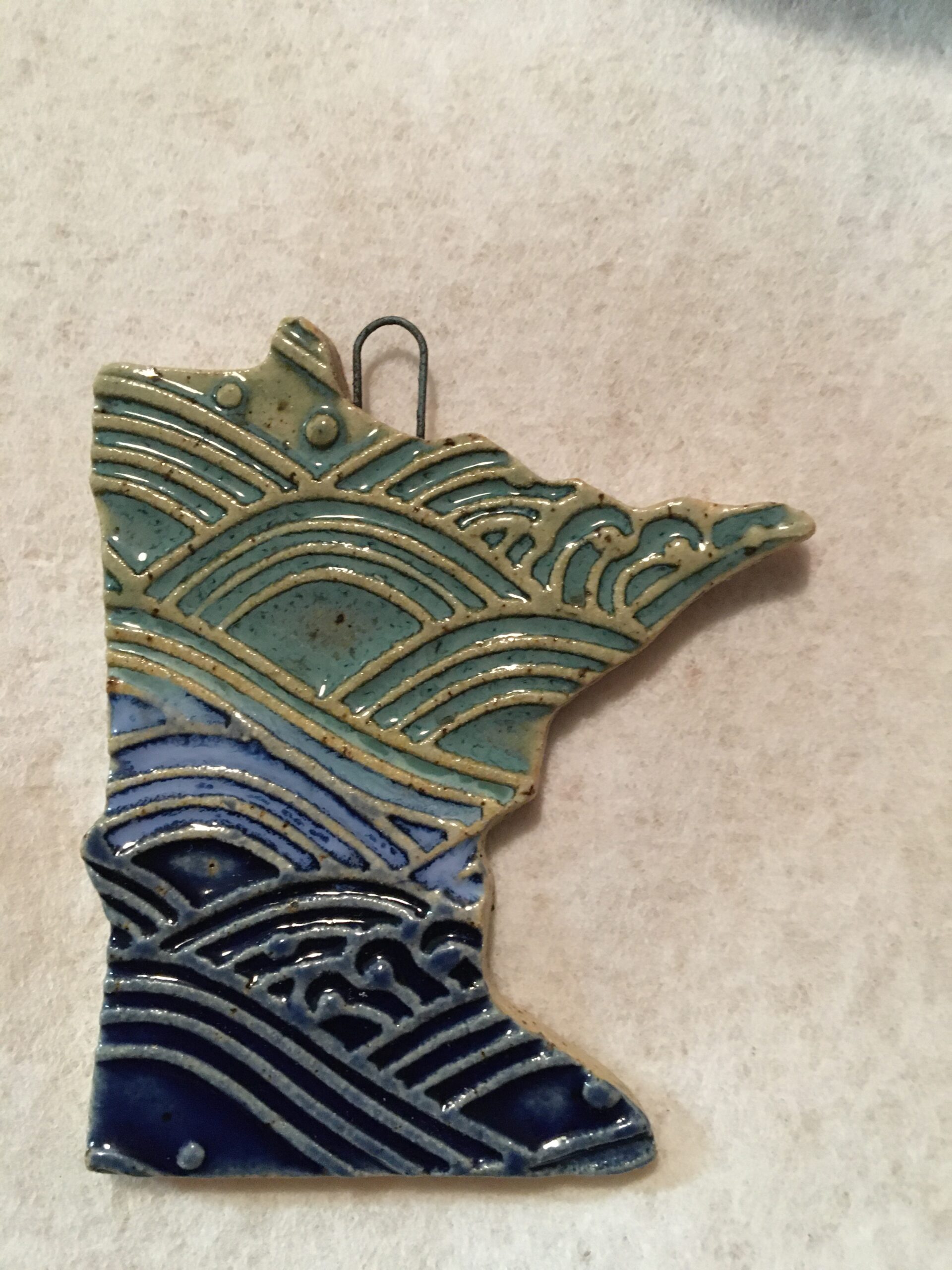
Geena, Mia and I visited the Alexandria farmers market this Saturday. They operate 3 days a week, Saturday & Tuesdays morning, and Thursday evening. There were many produce stands and some arts and crafts stands as well. I walked past a pottery booth and was drawn to this little trinket (photo 1). I have been searching for some minnesotan merch since I’ve arrived, now I found the perfect memento. We got yummy donuts at the farmers market and devoured half a dozen instantly. Our last stop was the food truck with strawberries. Mia bought 3 whole quarts of strawberries! I wonder what she will be making with them 😋
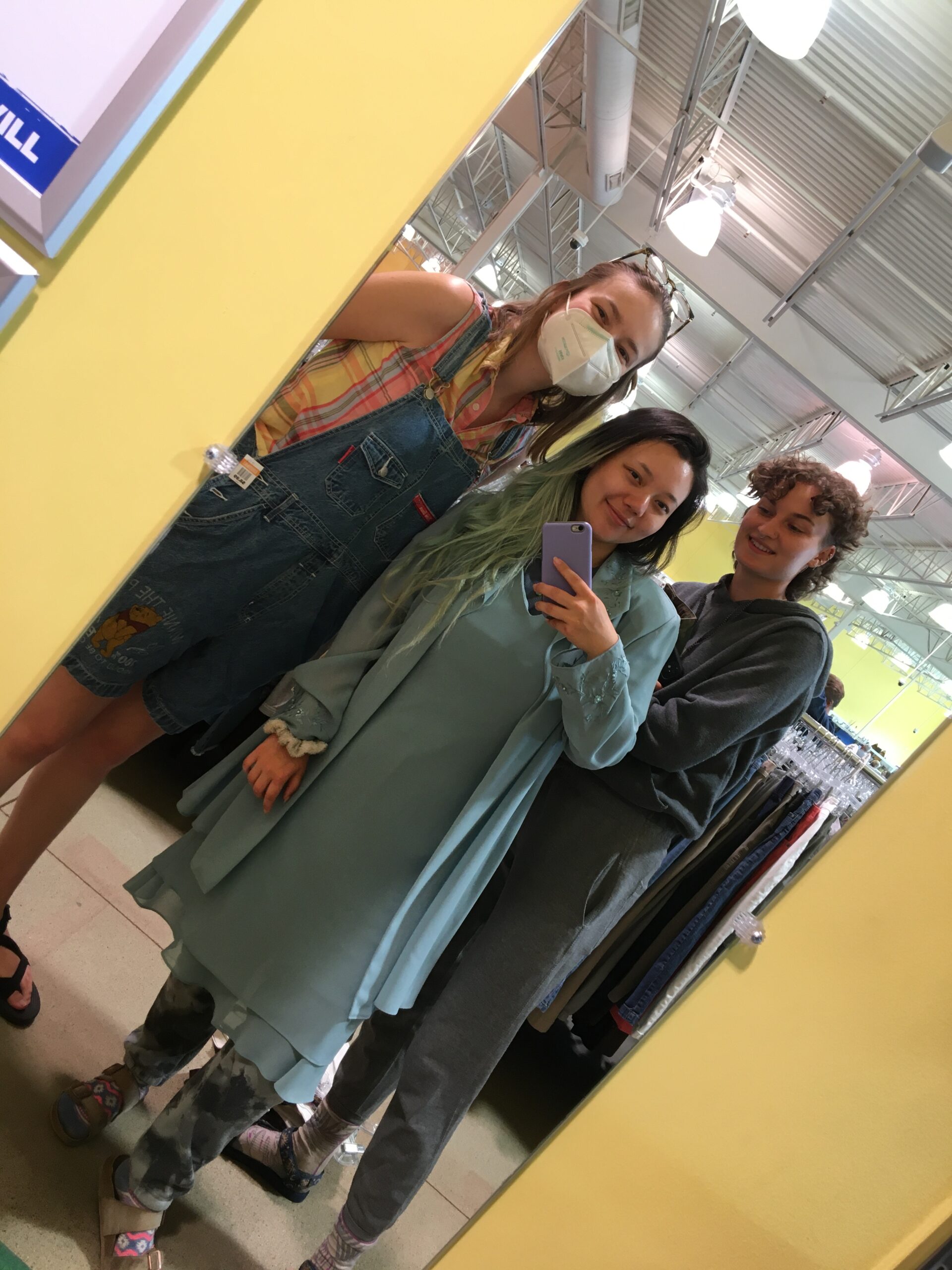
After the farmers market we stopped by goodwill and got some unexpected finds. Here is a pic of our thrift haul, Mia found the one true pair of overalls, Geena found a pair of perfect fitting cameo pants (unfortunately not pictured) and I found a set of old lady formal wear.