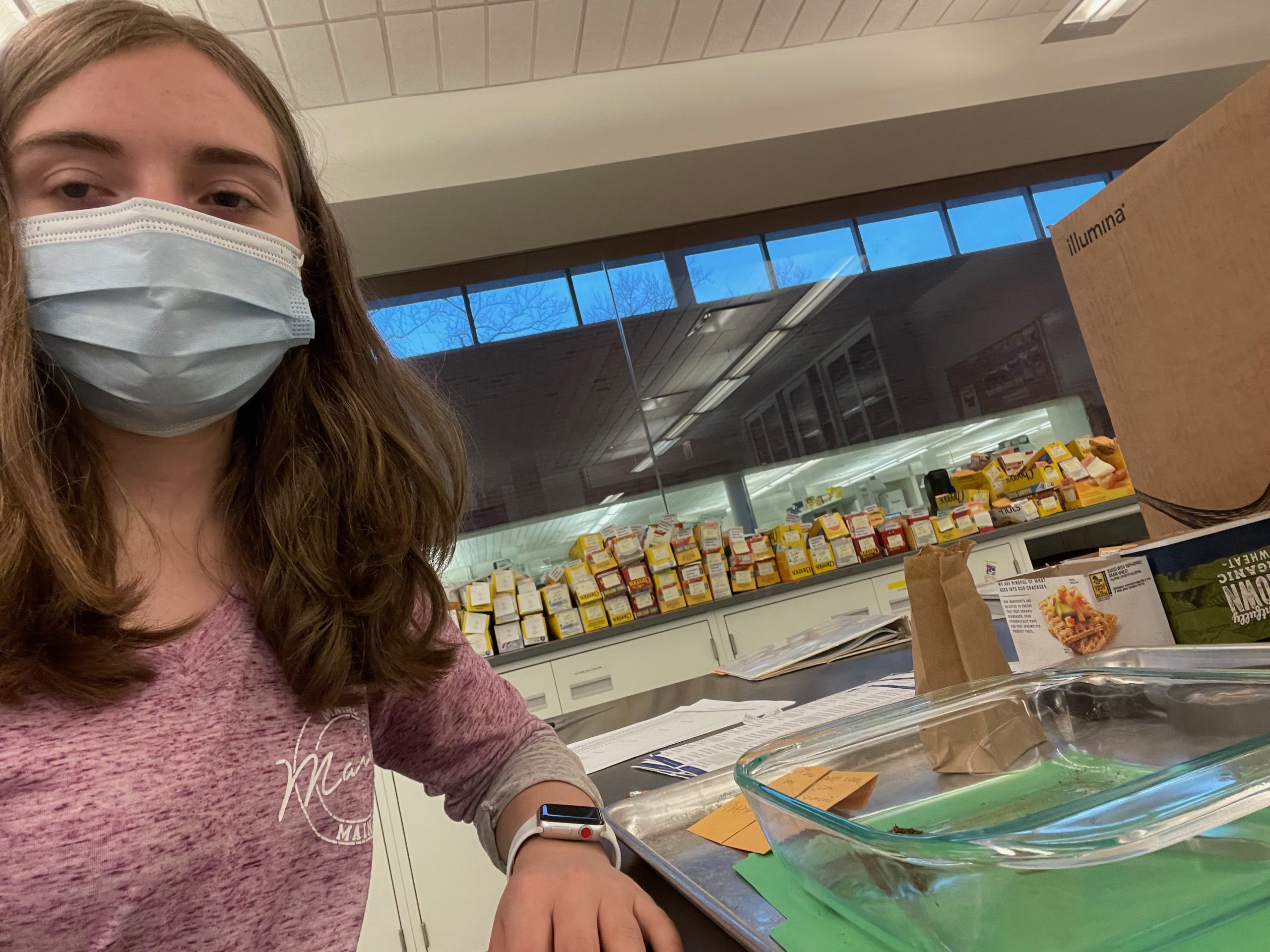
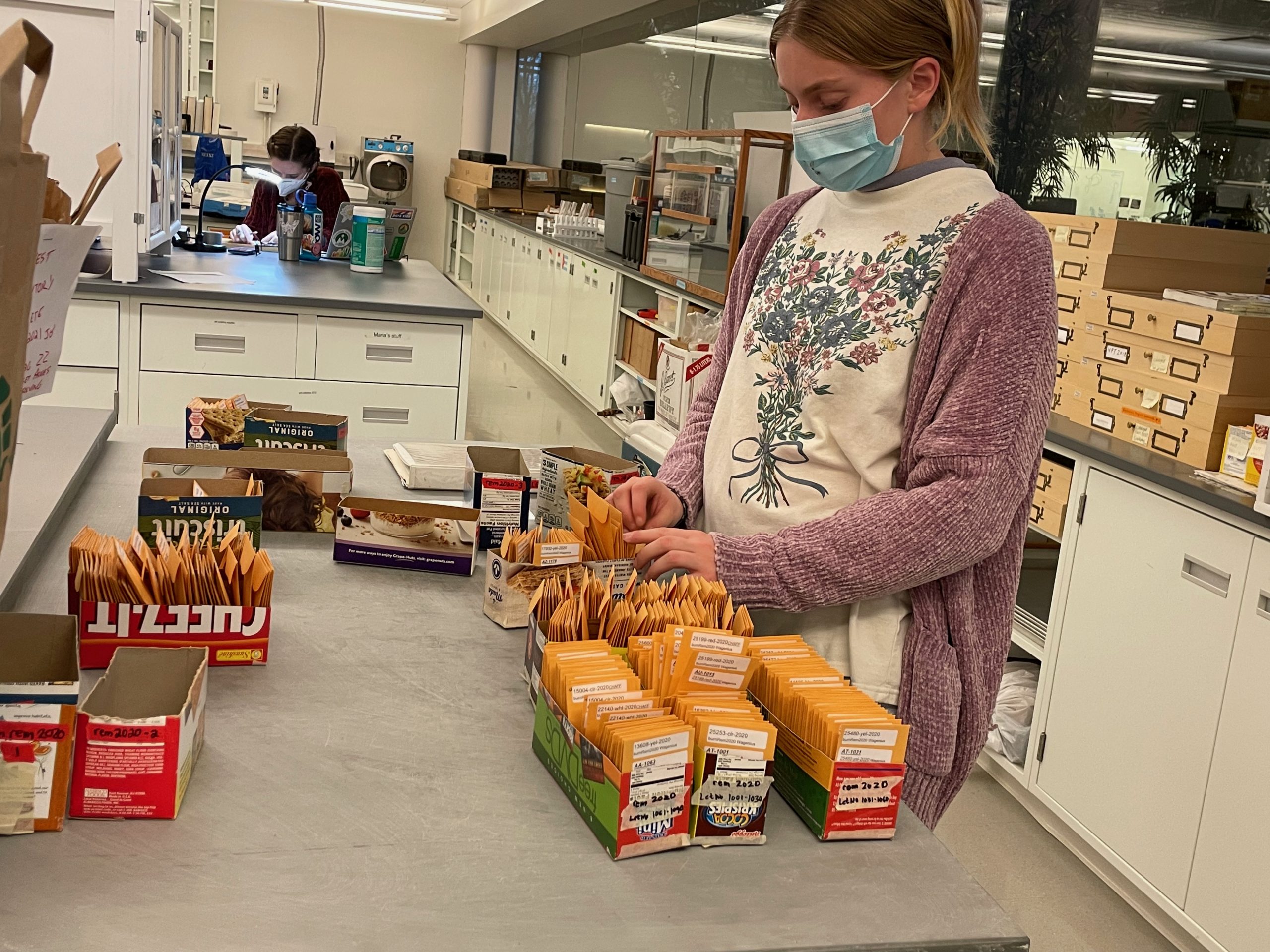
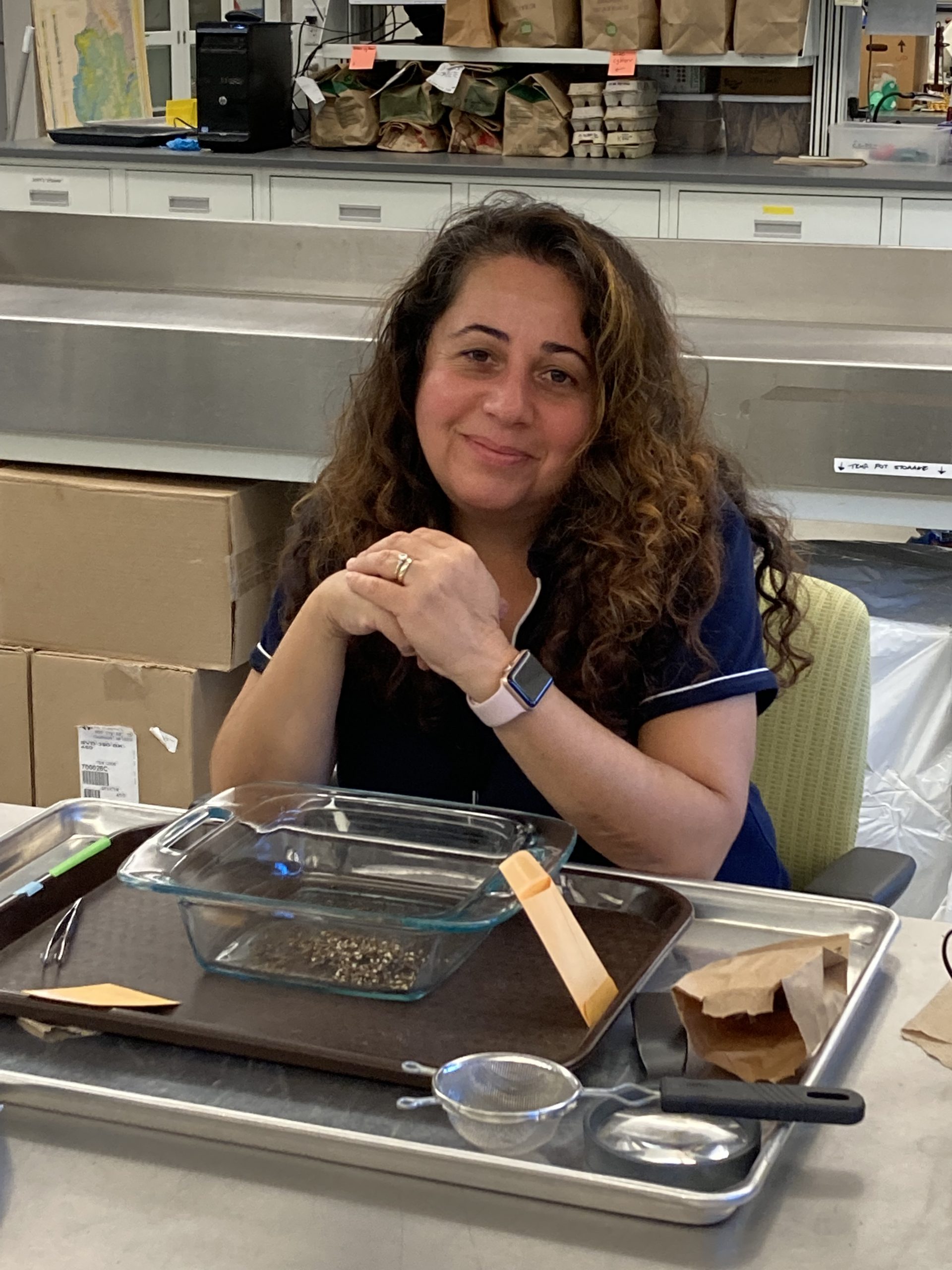
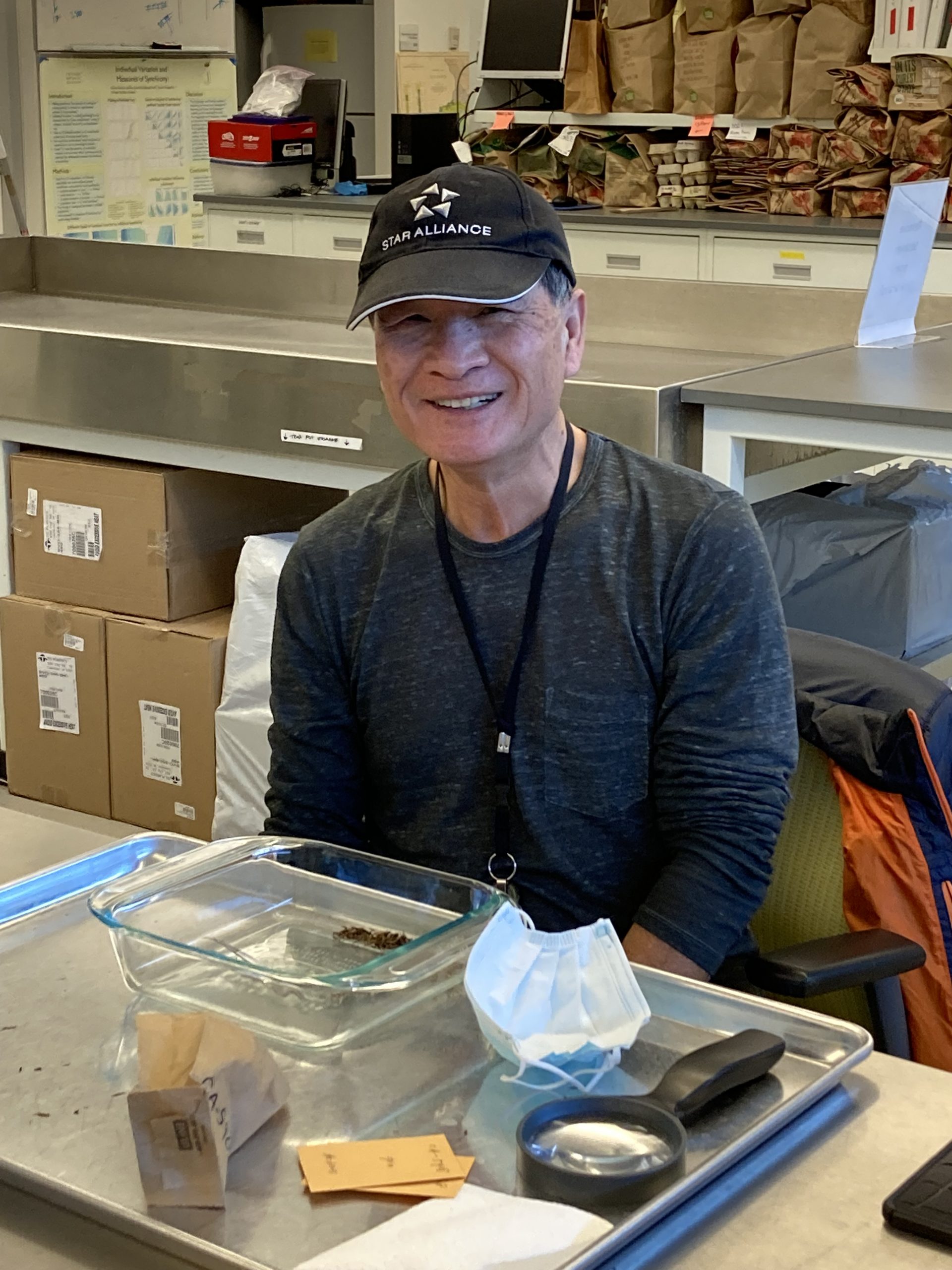
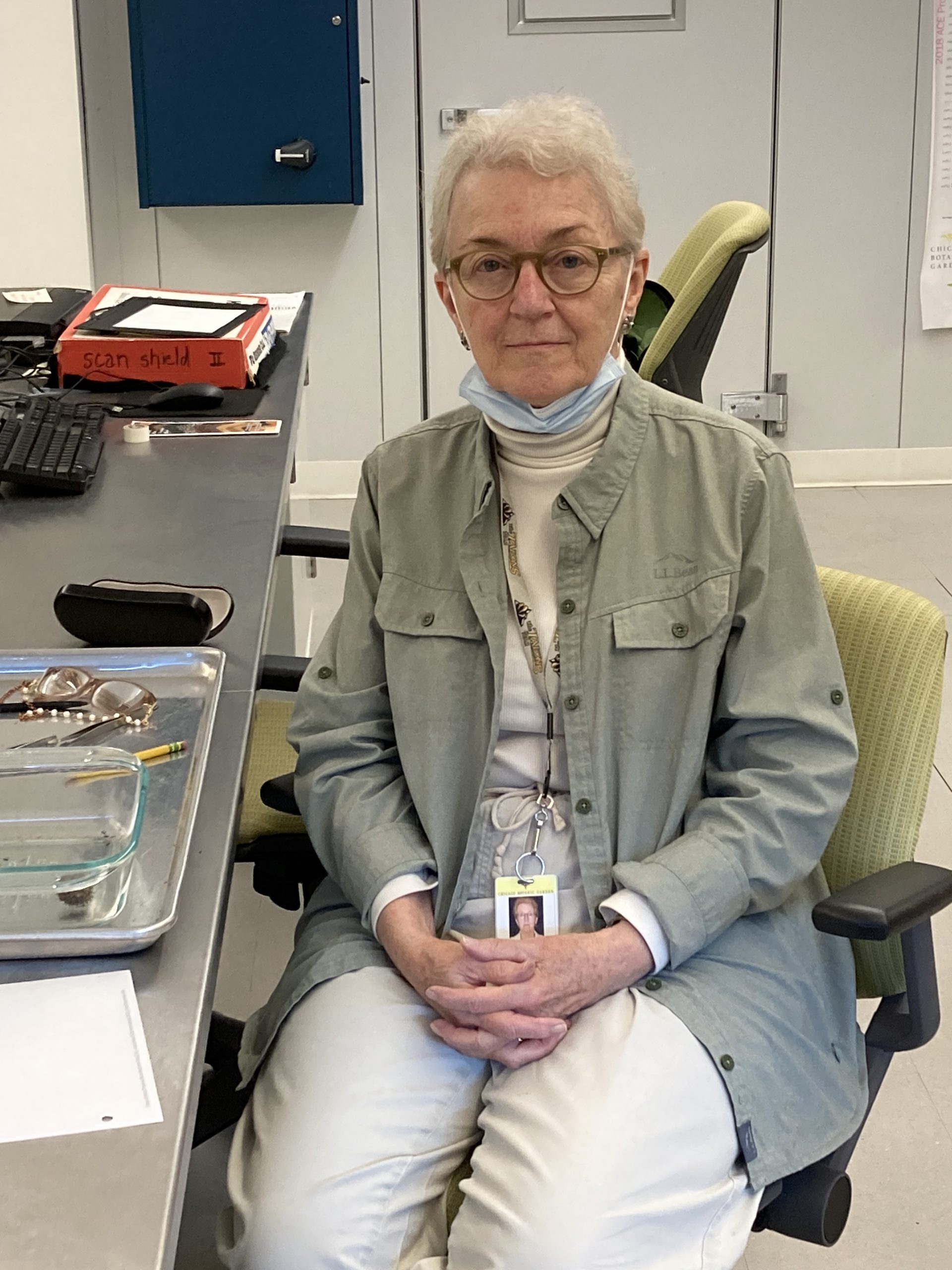
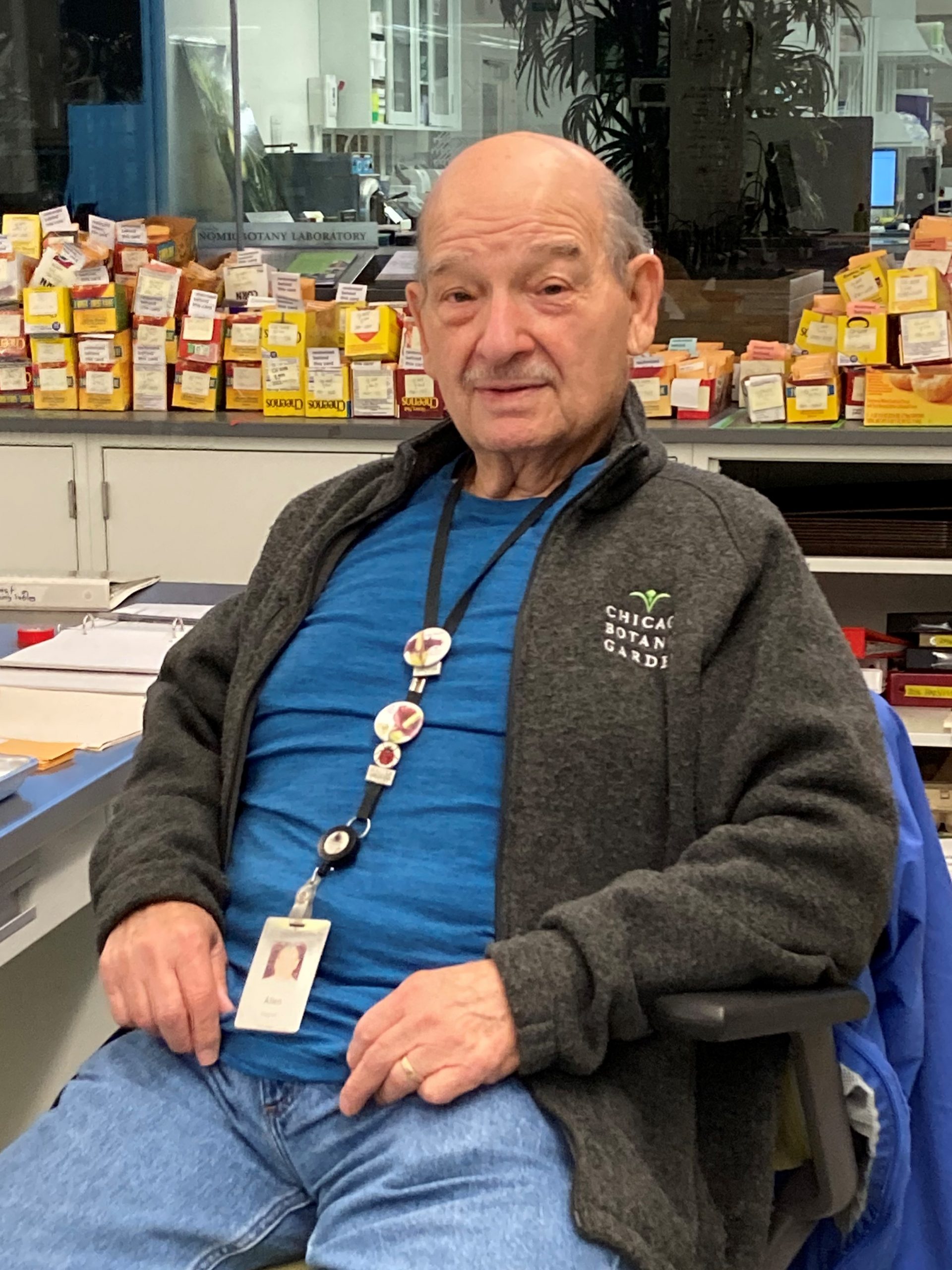
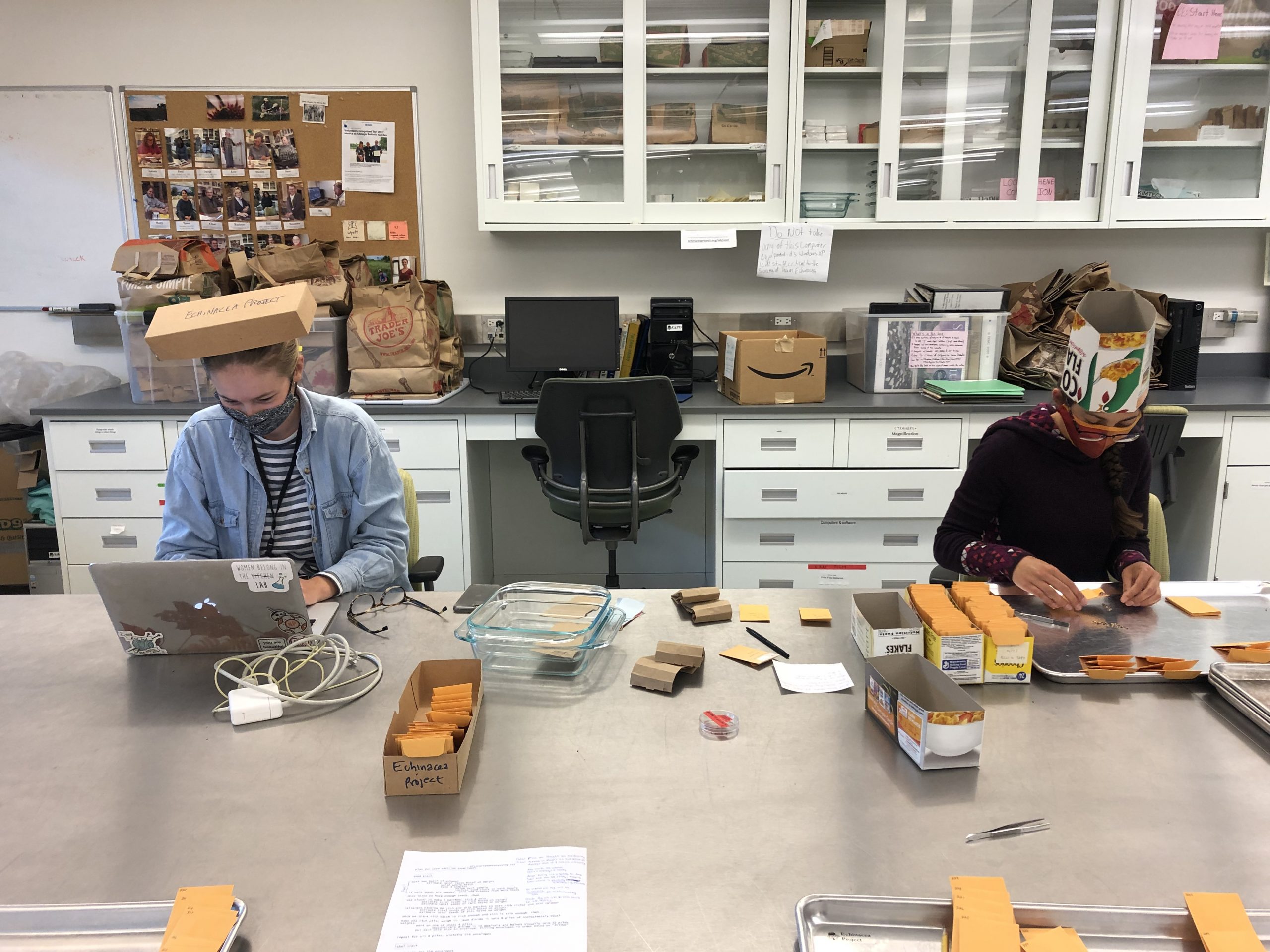
Today marked the third day of our Carleton externship! We started out early in the lab, cleaning echinacea heads with some admirable longstanding volunteers. Then we started rechecking the 2020 cleaned batches instead, and I felt like I had moved up in life.
Funnily enough, a couple of days ago I was timid to touch anything in the lab that I could possibly mess up, but now I just dive in and a few hours pass by like nothing. After we finished the 2020 rechecking (yay!), Wanying and Cassie started reordering the 2020 envelopes, which were assigned random labels in order to remove biases during analysis.
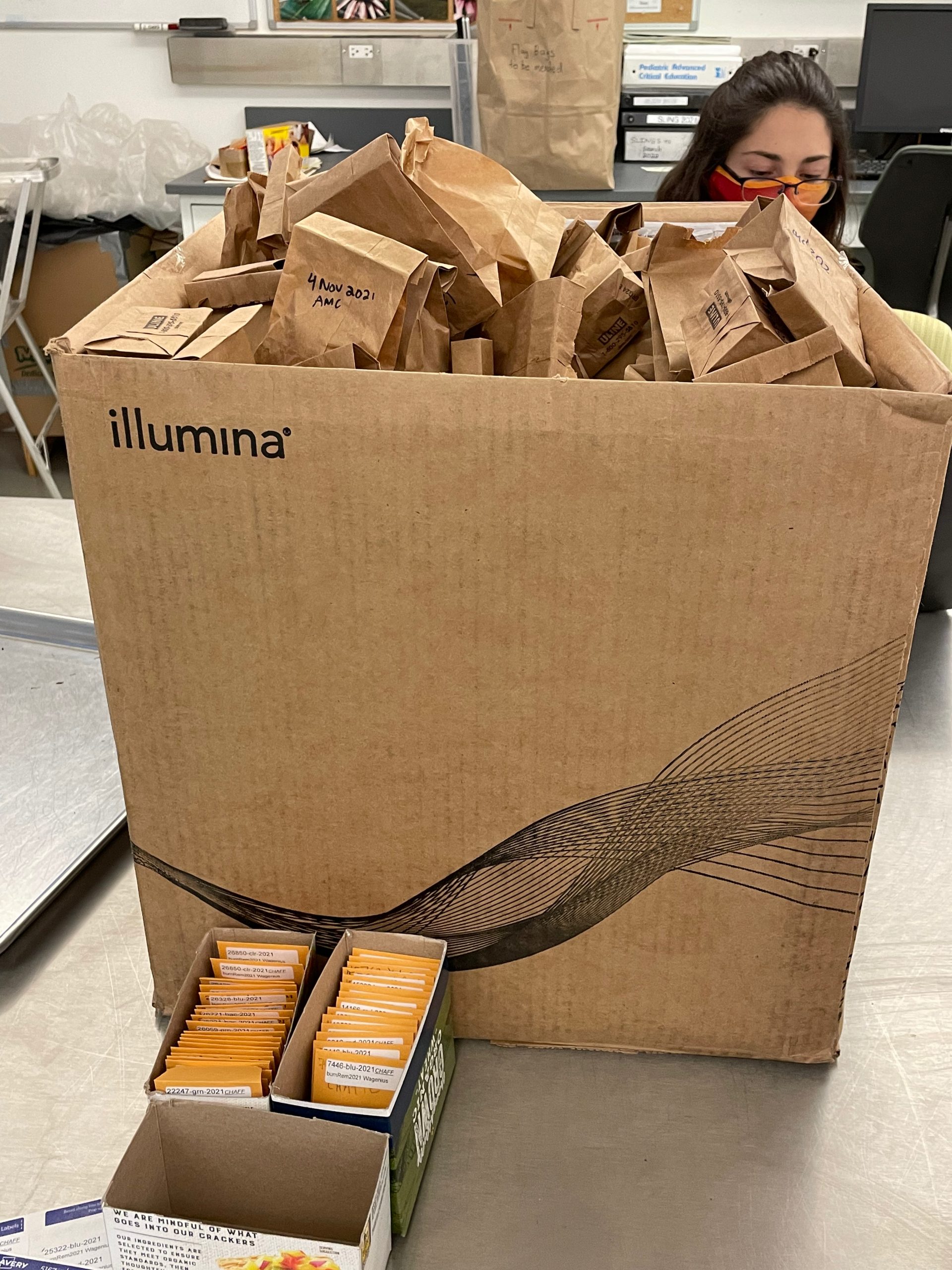
I, on the other hand, started rechecking the 2021 batch. I definitely realized how much I loved having the others’ help, as after today I am still left with this 2021 mountain of a box:
In addition to learning more about the research process, I enjoyed our meeting with Jared today, who prompted us to start thinking about what projects we want to pursue during the externship. Some ideas came up about working with the data at different stages, meeting with other employees at the garden, and proposing hypotheses that can be answered with the team’s available lab data.
The day ended with some great banana bread from Alex and a plan of more project group brainstorming the next day. My goals for tomorrow include both the project focus and the 2021 box. Tomorrow we also move along the process and start scanning the ordered achenes.
Overall, today gave me an appreciation for the people contributing to this project as well as excitement for how I can explore my curiosities using the research and guidance of this incredible team.
I am an Environmental Studies major at Carleton College, class of 2023.
Research Interests
I am interested in studying prairie conservation, as well patch ecology and the effects of fragmentation. I am also very interested in environmental interpretation/education and environmental justice.
Statement
I am from Mount Prospect, IL. In my spare time I like to hike, backpack, go thrifting, and read. I also play softball, and am on the varsity team at Carleton. I also really enjoy visiting National Parks (Glacier is my favorite).
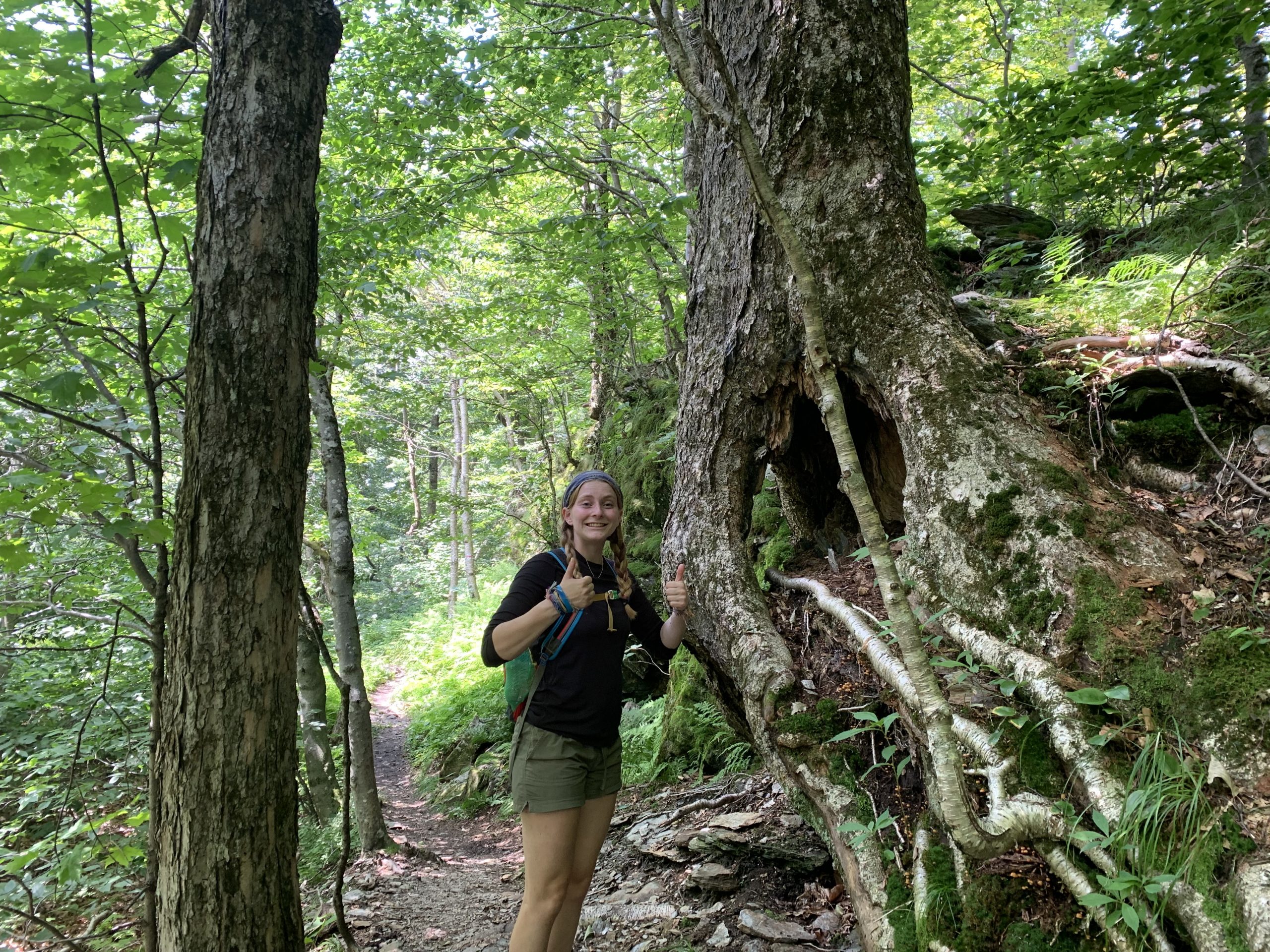
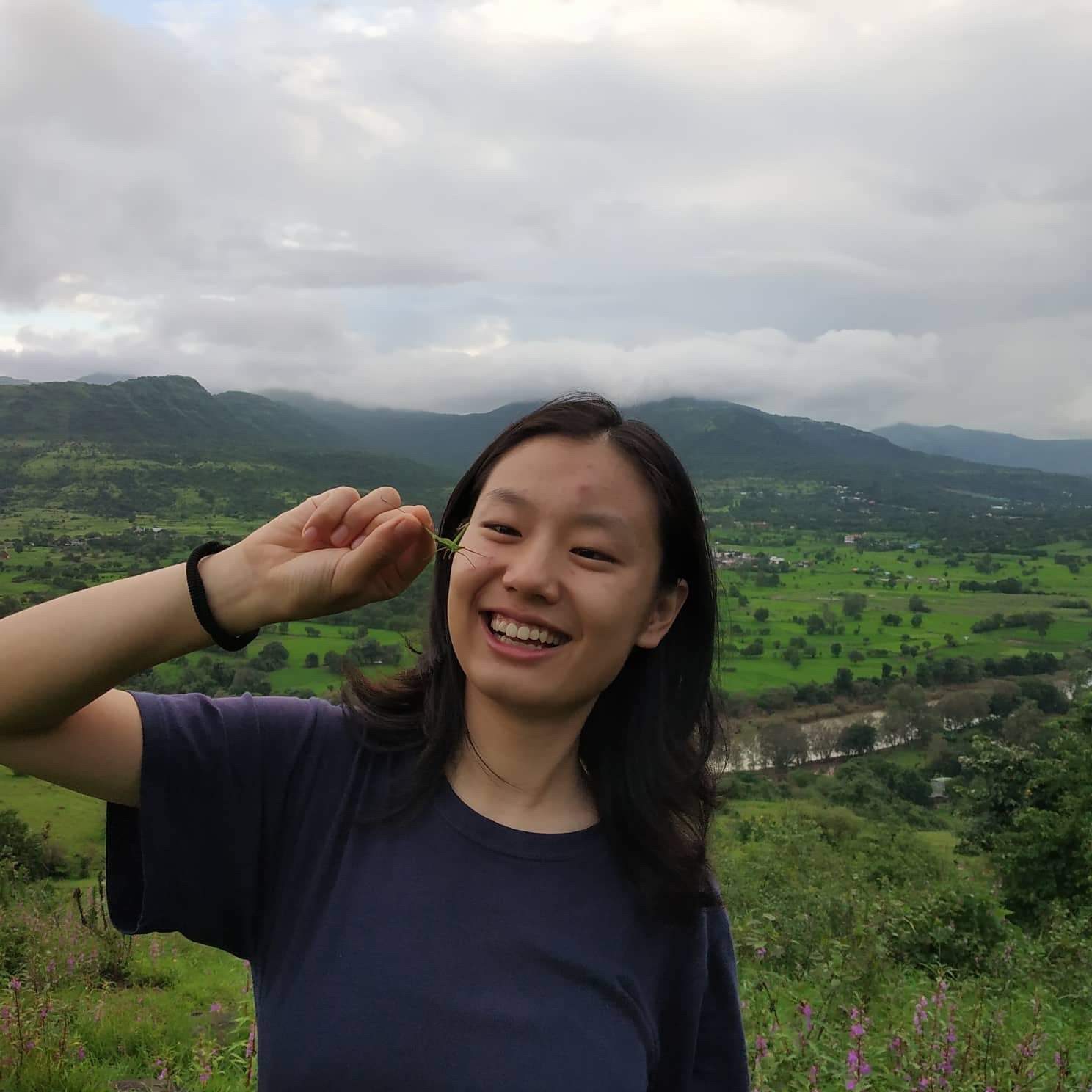
Here’s me with a cool tree in the Berkshires last summer.
Today, the Lake Forest College students returned for their second day at the lab. After cleaning heads last week, they moved on to the next steps of the ACE process today: quality control and scanning. They worked in teams of two, so one group rechecked cleaned heads from rem2020 and rem2021 while the other group scanned the achenes that had passed the quality control step. The students will have a dataset of 40 echinacea heads from 2021, 20 burned and 20 unburned, as well as 40 heads from 2020. They wondered whether the drought this summer affected seed production in echinacea or whether controlled burns influence achene count, and they developed hypotheses to test these questions.
Alondra and Marina do quality control while Maeve and Connor scan achenes
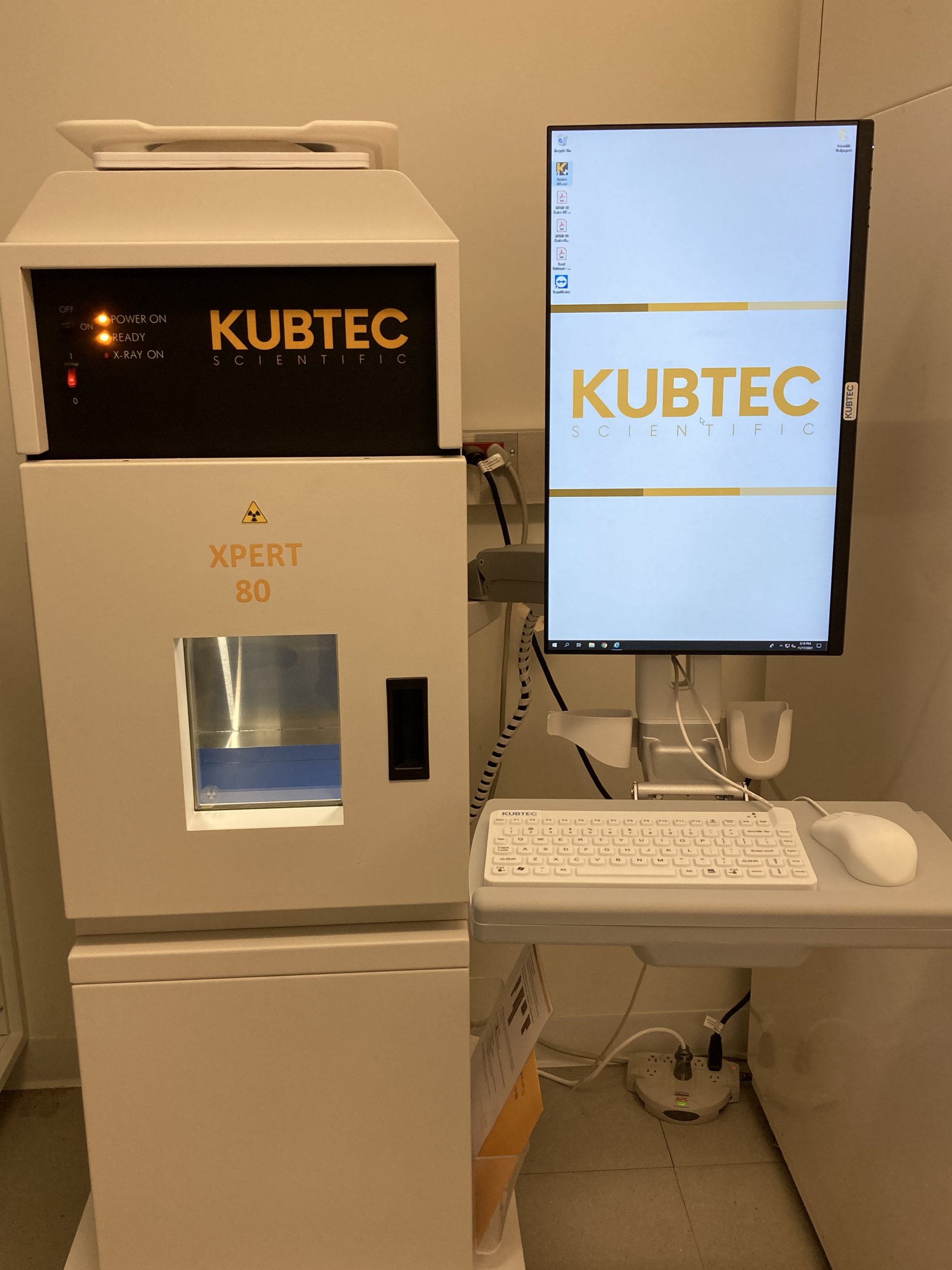
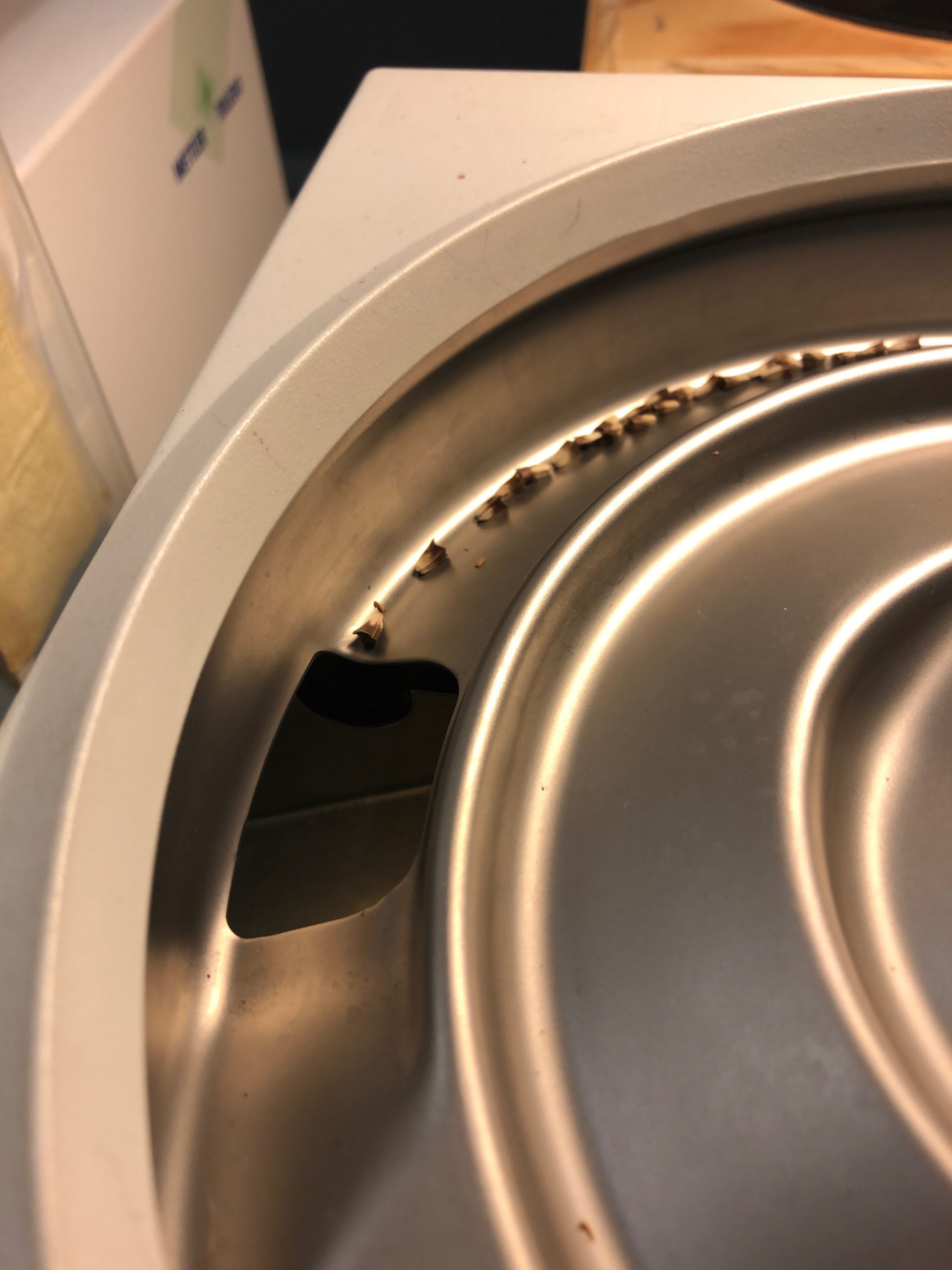
The new x-ray machine also arrived this week! It showed up in an enormous wooden crate, but fortunately the machine itself is not that large. Today, the company representatives gave us a tutorial of how to operate the x-ray. We will need to do some trials to find the best settings and adjust our protocol to the new machine. For example, we will need smaller sheets of paper to fit in the x-ray. Based on today’s test run, it seems that the x-ray can only hold 15 bags of achenes (3 rows of 5) at a time instead of 20 bags (4 rows of 5). However, each image takes only 45 seconds, so hopefully it won’t slow down the process too much. According to the Kubtec website, this model is also good at x-raying explosives, art, and gems, so I guess that might come in handy, too.
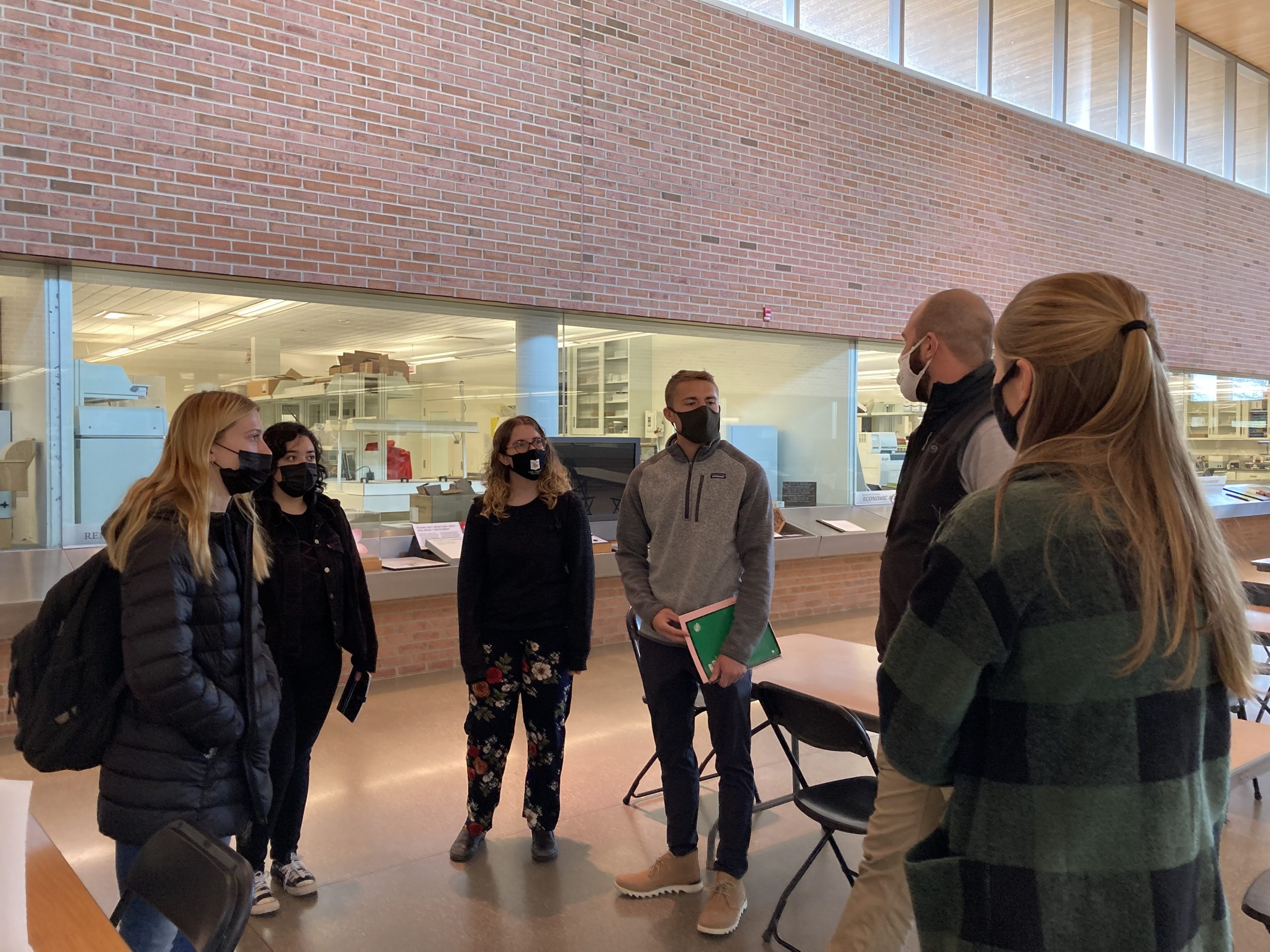
Today, we welcomed four undergraduate students from Lake Forest College: Alondra, Connor, Maeve, and Marina. As part of their plant biology class, they will conduct a project related to fire’s effect on echinacea reproduction. At the lab, they will gain hands-on experience for three Wednesday afternoons, and their project will culminate with a poster presentation. Today, everyone learned how to clean heads from the rem 2021 harvest. Next week, they will develop their hypotheses and hopefully practice scanning and counting achenes from remnant echinacea populations.
Jared gives a crash course in echinacea reproduction
Lake Forest College students clean rem 2021 heads
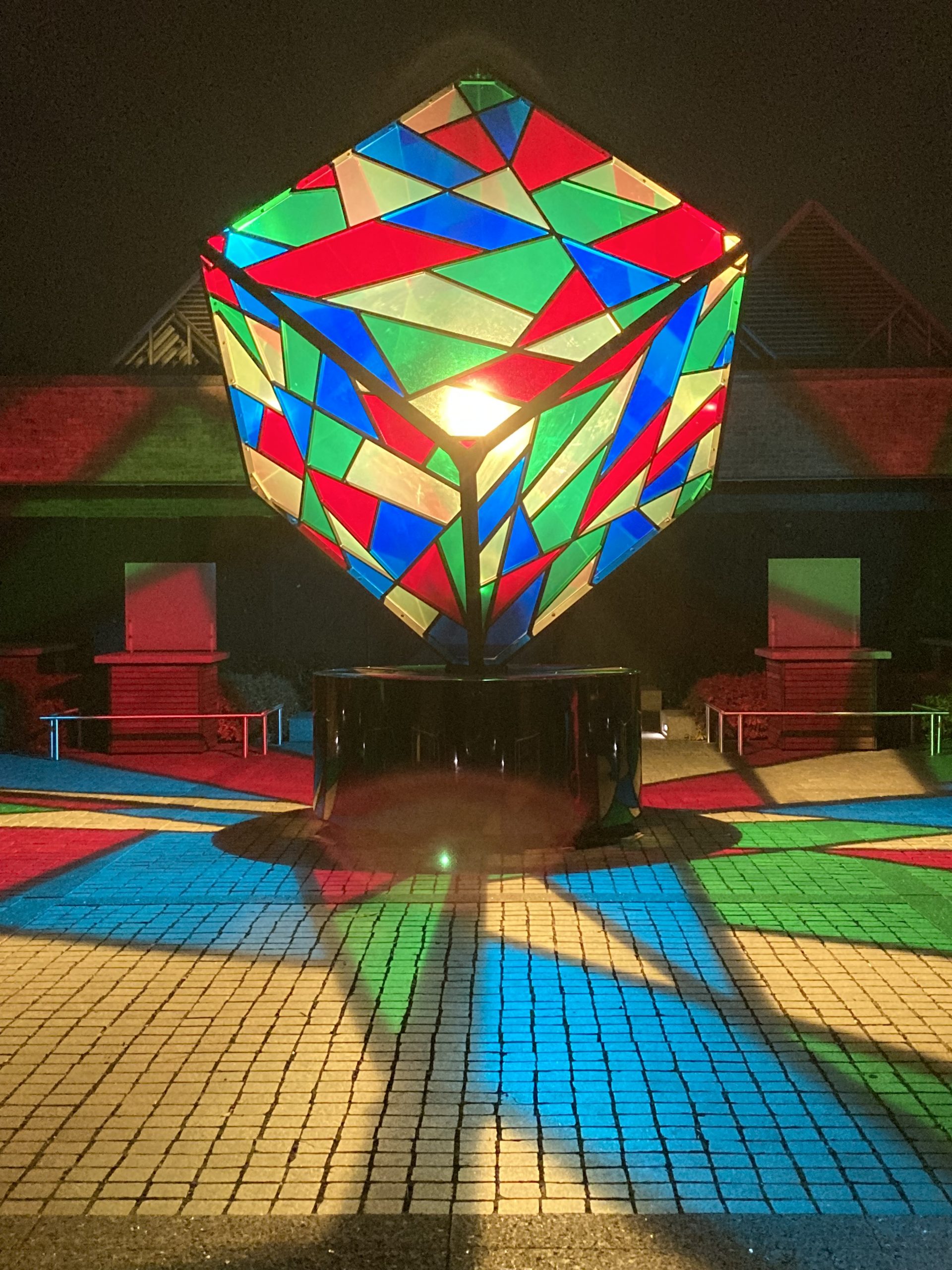
Mosaic cube
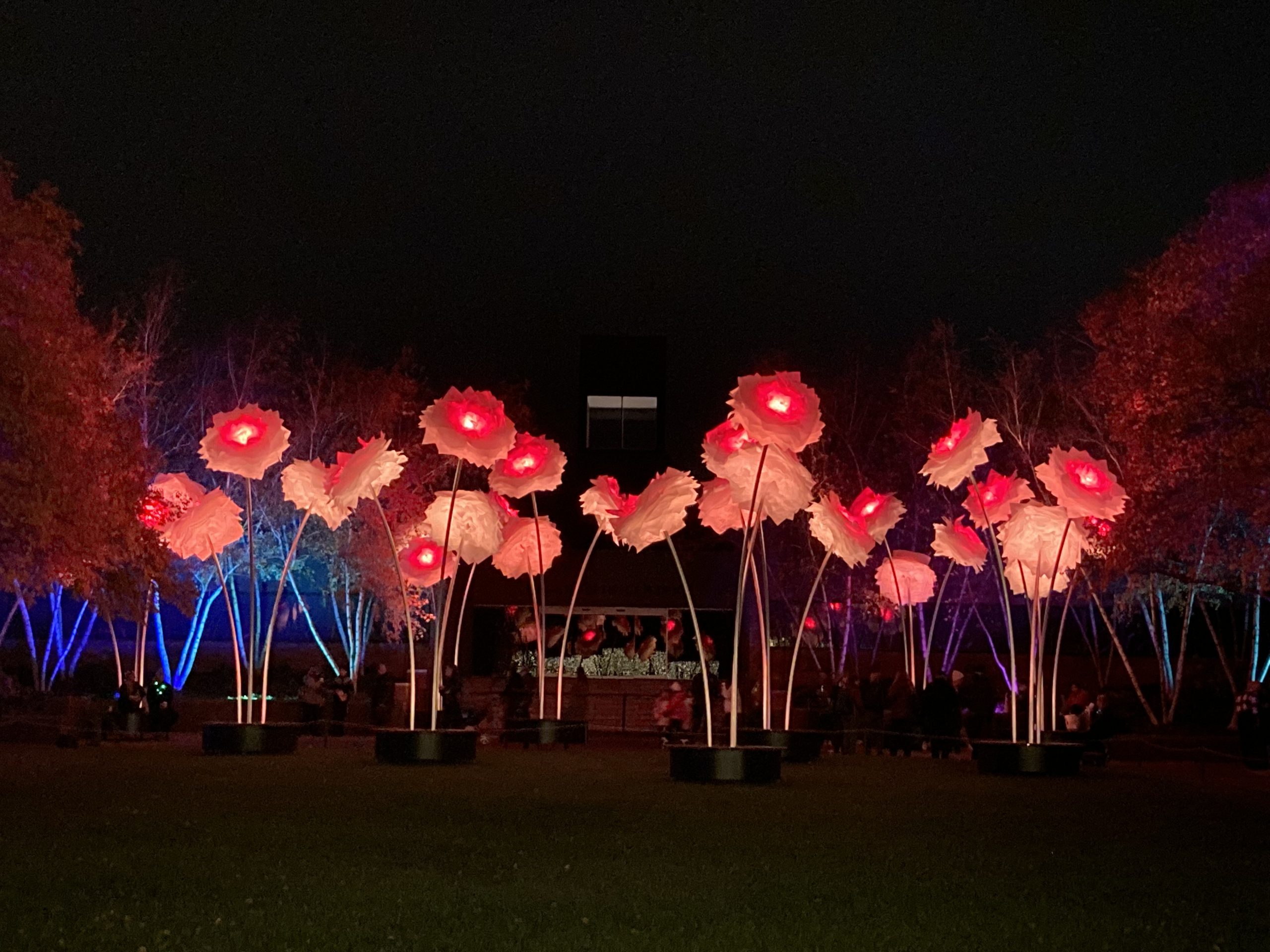
This evening after dark, several of us attended the Chicago Botanic Garden’s annual lightshow, called Lightscape. At night, the garden was completely transformed by holiday music, elaborate sculptures, a laser show, and even a glowing ball of yarn. It was quite impressive!
What sort of radioactive fertilizer have they been using?
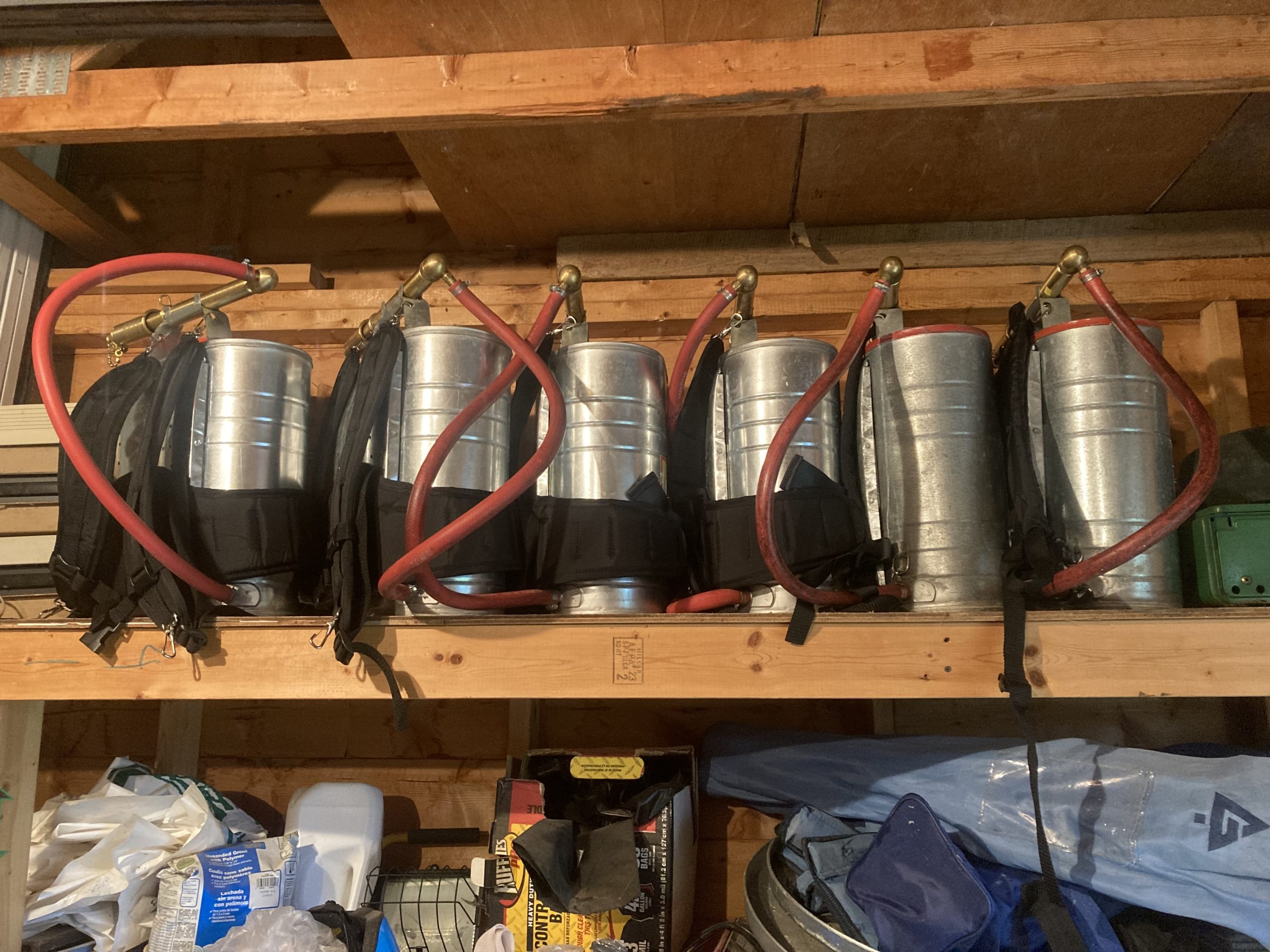
With a busy burn season ahead of us, I took some time in late October to maintain the equipment we use for prescribed burns. During a hectic spring 2021 burn season, we encountered several issues. A handful of 5-gallon backpack pumps were not functioning well and one of our drip torches was constantly acting up (especially while using the leftover “spicy” fuel mix).
Six 5-gallon pumps waiting for good burn weather.
During spring 2021, I noticed two of our 5-gallon backpack pumps had cracked pump cylinders and would need to be replaced. I tried applying plumber’s epoxy to the cracked cylinders last spring but the pressure created by the pump inevitably caused this epoxy to fail. Over the summer, we purchased replacement outer cylinders for the backpack pump assemblies. I rebuilt the pump assemblies and installed these cylinders last week. The pumps seems to be working properly now. We should be very diligent about making sure all water has been expelled from tanks and pump assemblies prior to winter storage to avoid cracked cylinders.
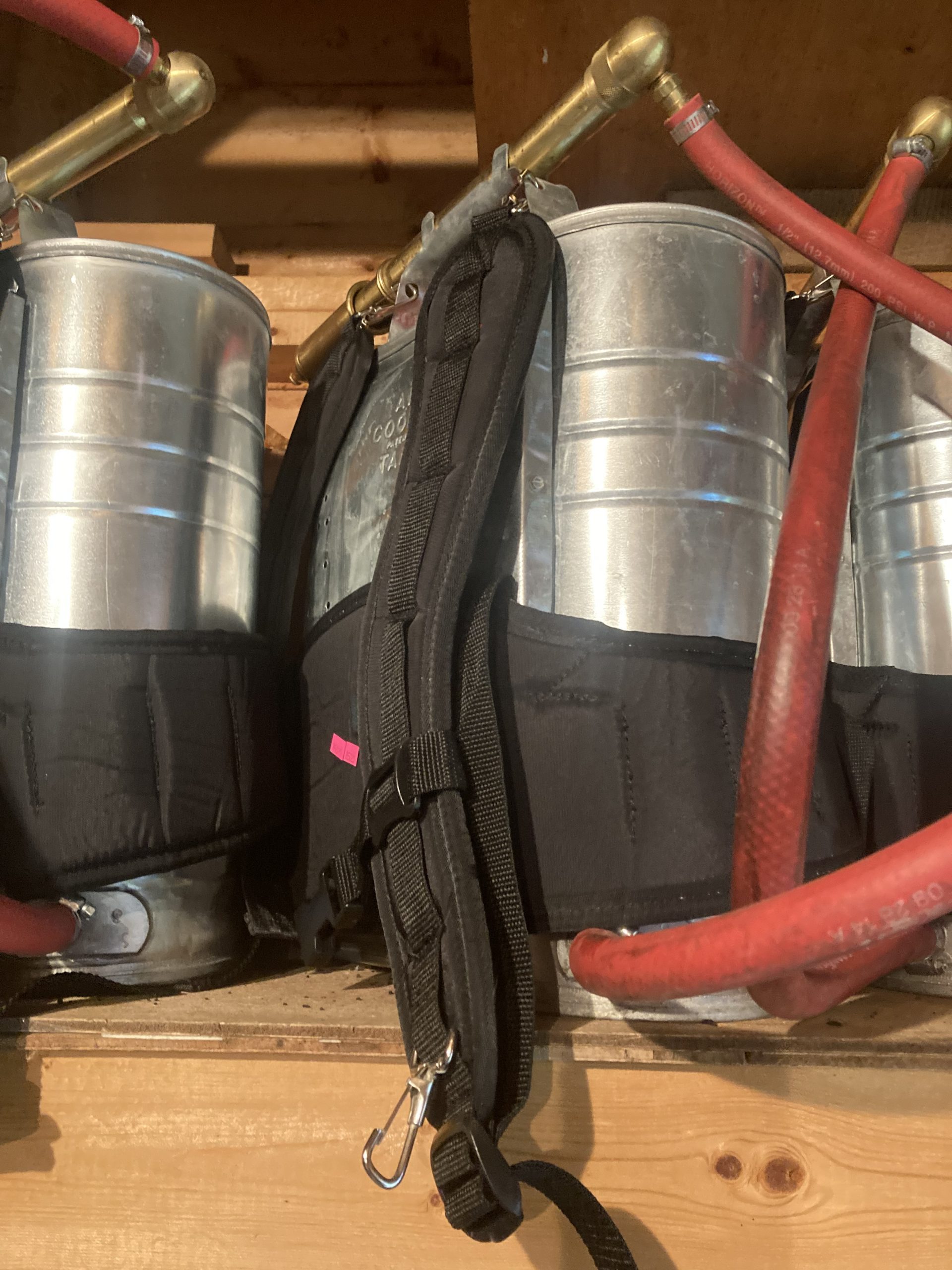
We also purchased four harnesses and two pairs of padded straps for our 5-gallon pumps. These provide a welcome upgrade over the notoriously uncomfortable thin straps that come with the backpack pumps. We now should have 6 fully functional (and comfortable!) backpack pumps for burning.
Behold, new comfy harness…
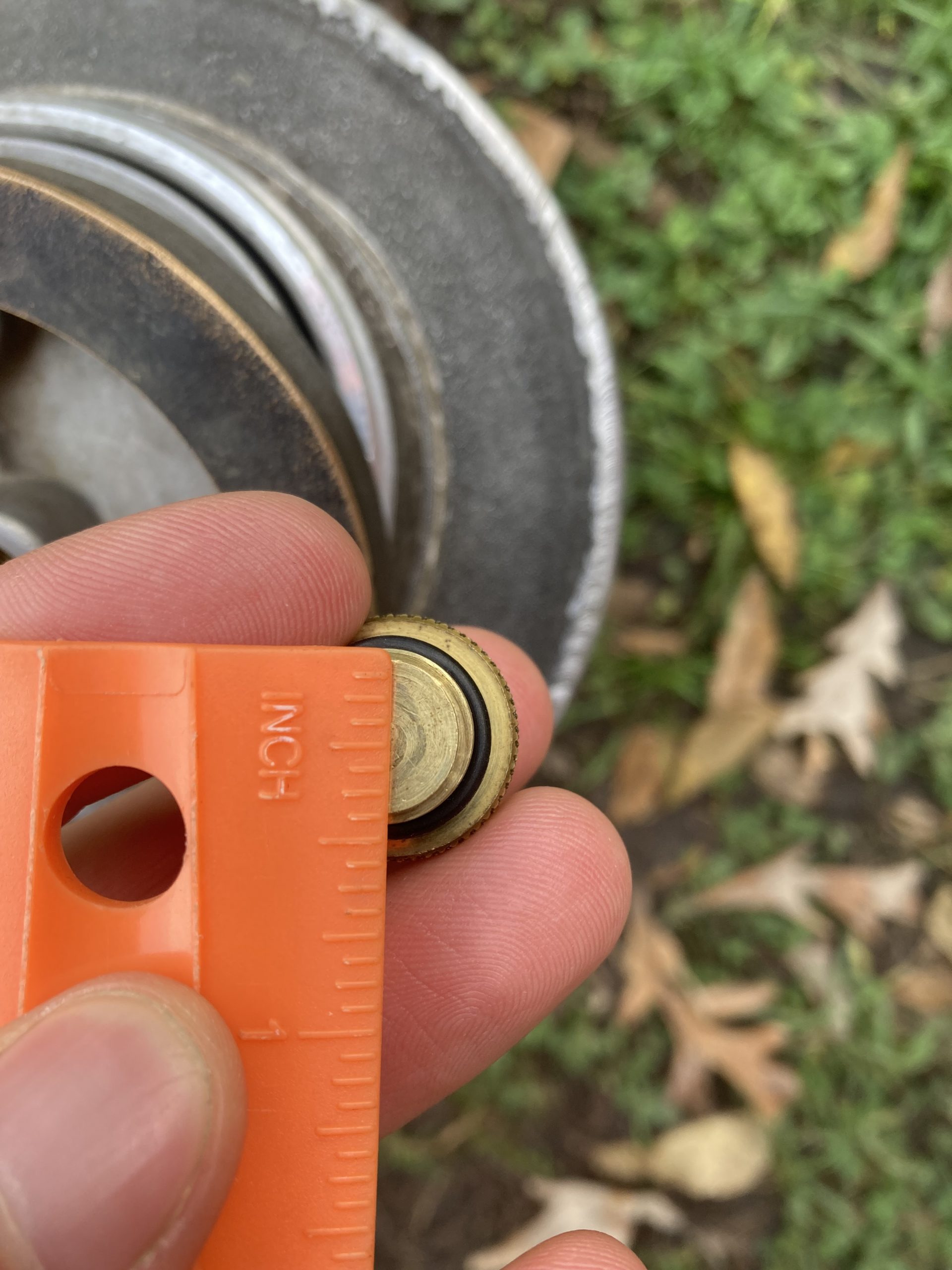
… and poorly fitting o-rings for discharge plug.
Rebuilding the troublesome drip torch was a priority for me. After inspecting the torch, I realized one if not the problem was a badly deteriorating collar gasket (the big O-ring). I replaced this gasket along with the smaller O-ring on the discharge plug. Pro-tip: Forestry Suppliers sells discharge plug O-rings for drip torches but the ones they sell are too large. I found the #9 O-rings (5/8 in. outer diameter x 7/16 in. inner diameter x 3/32 in. wall) that are readily available at just about any hardware store work much better. I also replaced the breather valve assembly on this drip torch.
This brings up a more general point about the importance of maintaining burn equipment. At the beginning of the burn season we should:
Check to make sure all 5-gallon backpack pumps are functioning properly
Check to make sure gasket is intact and installed in top lid
Inspect pump cylinder for cracks
Inspect nozzle and make sure it is clear of debris
Install paper clip used to clear nozzle obstructions
Ensure nozzle is set on adapter with two holes (single hole adapter not very effective or water-efficient for extinguishing grass fires)
Fill each tank with water and test pump
Check drip torches
Inspect integrity of collar gasket, replace immediately if damaged
Inspect integrity of discharge plug O-ring, replace if damaged
Check for obstructions or debris that could impede flow of fuel
Rakes and swatters
Locate metal rakes and swatters
Check integrity of the swatters (these can melt and deteriorate making them ineffective)
Note any tools that need replacing
Kestrel
Locate Kestrel 3500FW and test unit/check battery
Locate or purchase additional (new) battery
At the end of the season:
5-gallon backpack pumps
Ensure all water and excess moisture has been expelled from 5-gallon pumps
Inspect integrity of gasket on tank lid
Drip torch
If empty, use paper towel to clean interior and remove debris
Check integrity of collar gasket and discharge plug O-rings
Return rakes and swatters to G3
Hang Kestrel 3500FW from wooden dowel above shelf between main room and bathroom in Hjelm
Visiting Minnesota to plant seeds last week was a welcome break from sitting at a desk all day. However, we were glad to be back in the lab this week. On Thursday, I finished the inventory of the remnant 2021 heads, so they are now ready to be cleaned by volunteers.
We have a great crew of volunteers this fall. Suzanne wins the award for the longest volunteer record; she has been helping the Echinacea Project since 1999! In contrast, Elif joined the lab in 2019 and is our newest volunteer. So far, all of the volunteers have been cleaning seed heads, an important early step in the ACE workflow. However, many of them specialize in other steps of the process such as quality control, scanning, randomization, weighing, x-raying, counting, or classifying. Once we have made a dent in the backlog of seed heads, the volunteers will be able to diversify and find the steps that they enjoy most.
Marty is an expert at the scanner and x-ray machine
Elif started in 2019 has only cleaned heads so far
Mike has pinned all the bees for the Yellow Pan Trap project
We have yet to discover Luk’s favorite job!
Suzanne specializes at inventory and randomization
Allen is a pro at counting and classifying achenes
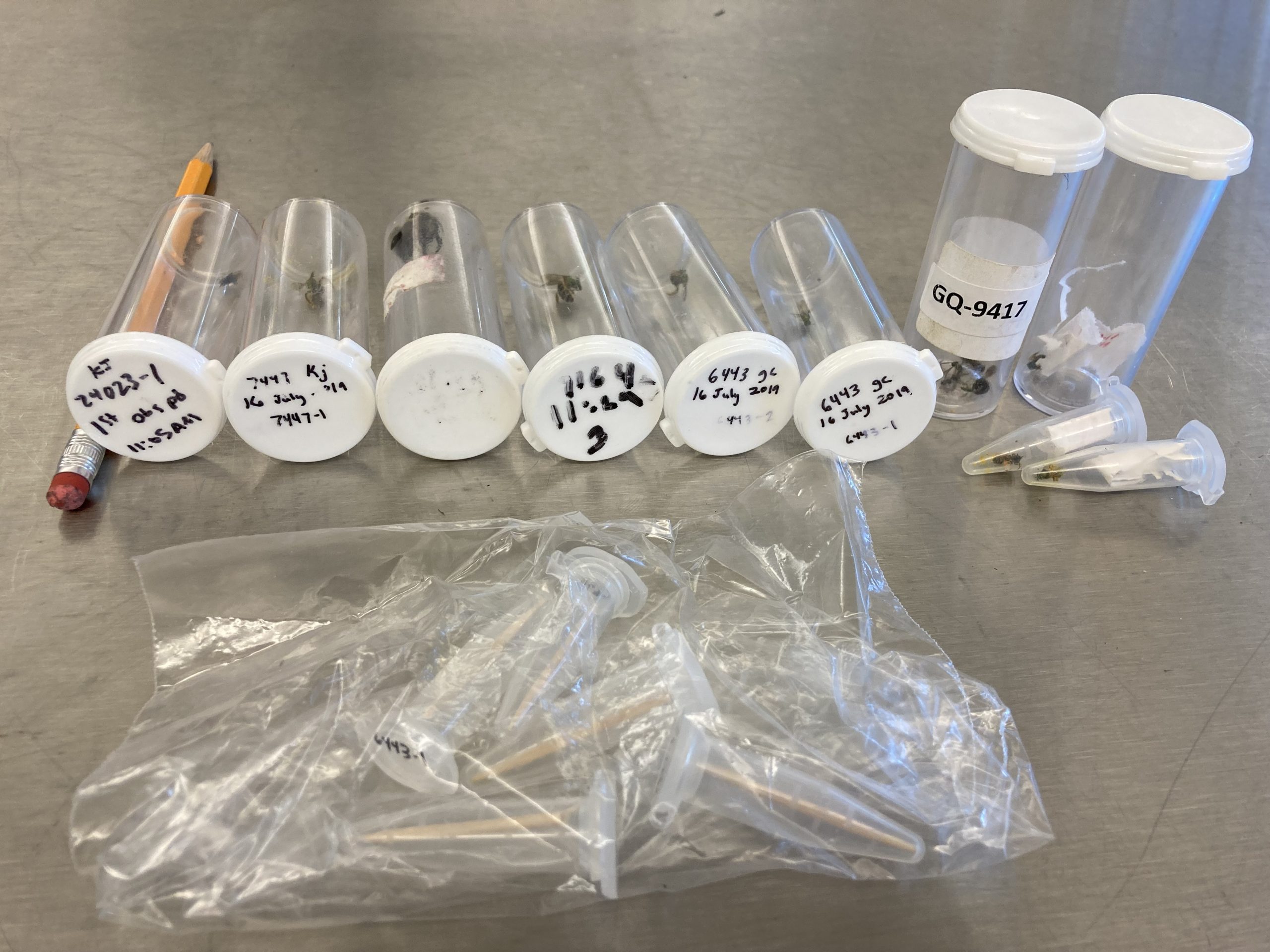
Our other project this week was to clean out the freezer in the lab. The freezer mainly contained coolers of empty vials that were used to collect bees for the Yellow Pan Trap (YPT) project. As Mia and I sorted through the vials, we also discovered one cooler that still contained bees! Why were these bees collected? To what project do they belong? Why haven’t they been pinned like all the other bees? According to Detective Stuart, “We have a mystery to solve. First stage is to gather evidence. (Don’t disturb the scene of the crime.)” I followed Stuart’s instructions and returned the cooler to the freezer. After doing some sleuthing, I now suspect that vial GQ-9417 contains YPT specimens that were collected on 31 July 2019. The other vials, however, remain a mystery. If anyone can identify the suspects or has information about the day of the crime, 16 July 2019, please let me know.
For the seed addition experiment, we used achenes from p2 in 2016, which were selected for the batch’s particularly high seed set. The achenes were originally in 160 envelopes sorted by flowering head so that we knew which maternal plants were contributing to the experiment. The envelopes were selected mostly randomly, though some that appeared upon visual inspection to have non-viable achenes were excluded to ensure maximum viability in the achenes used for the experiment.
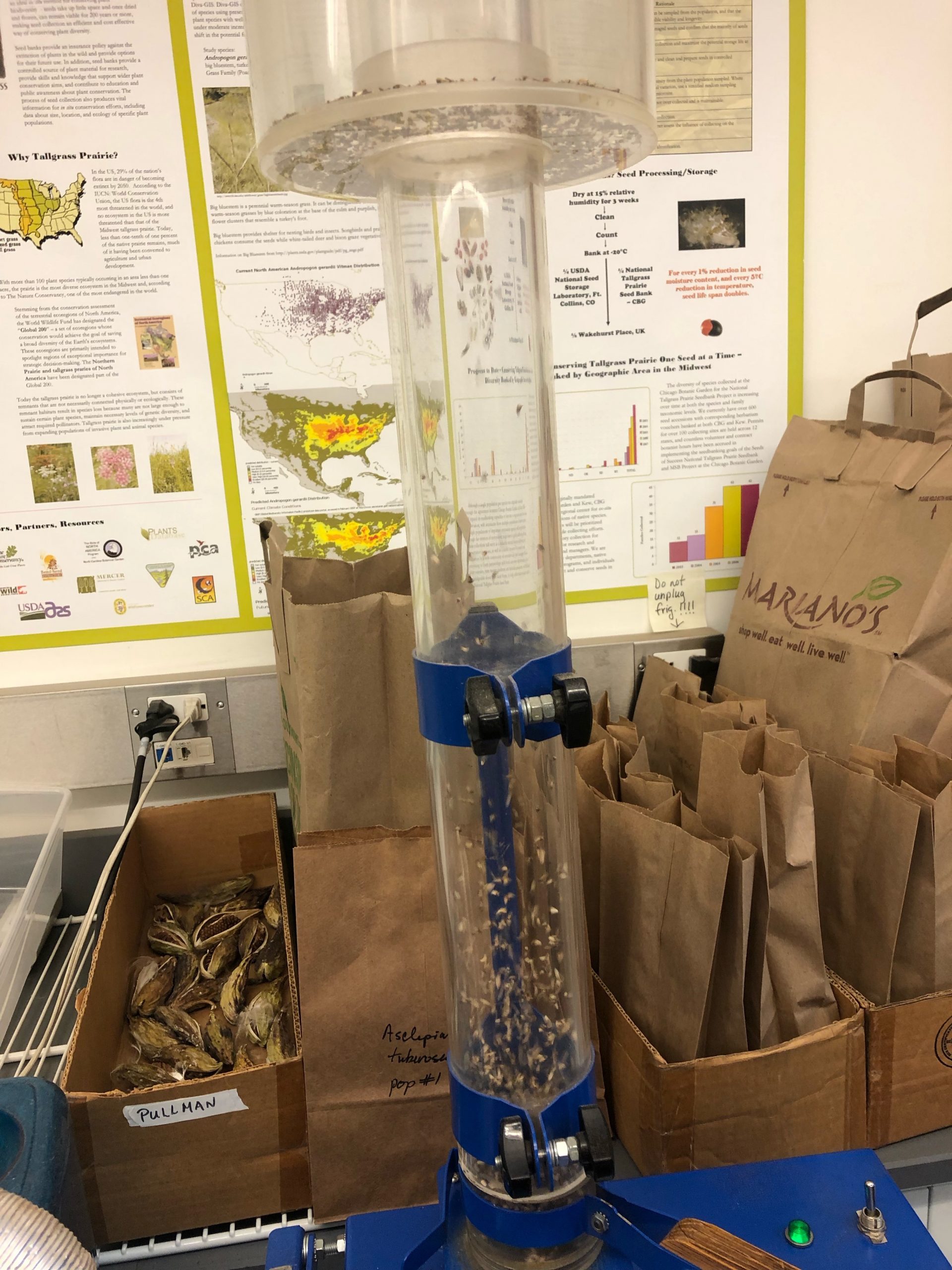
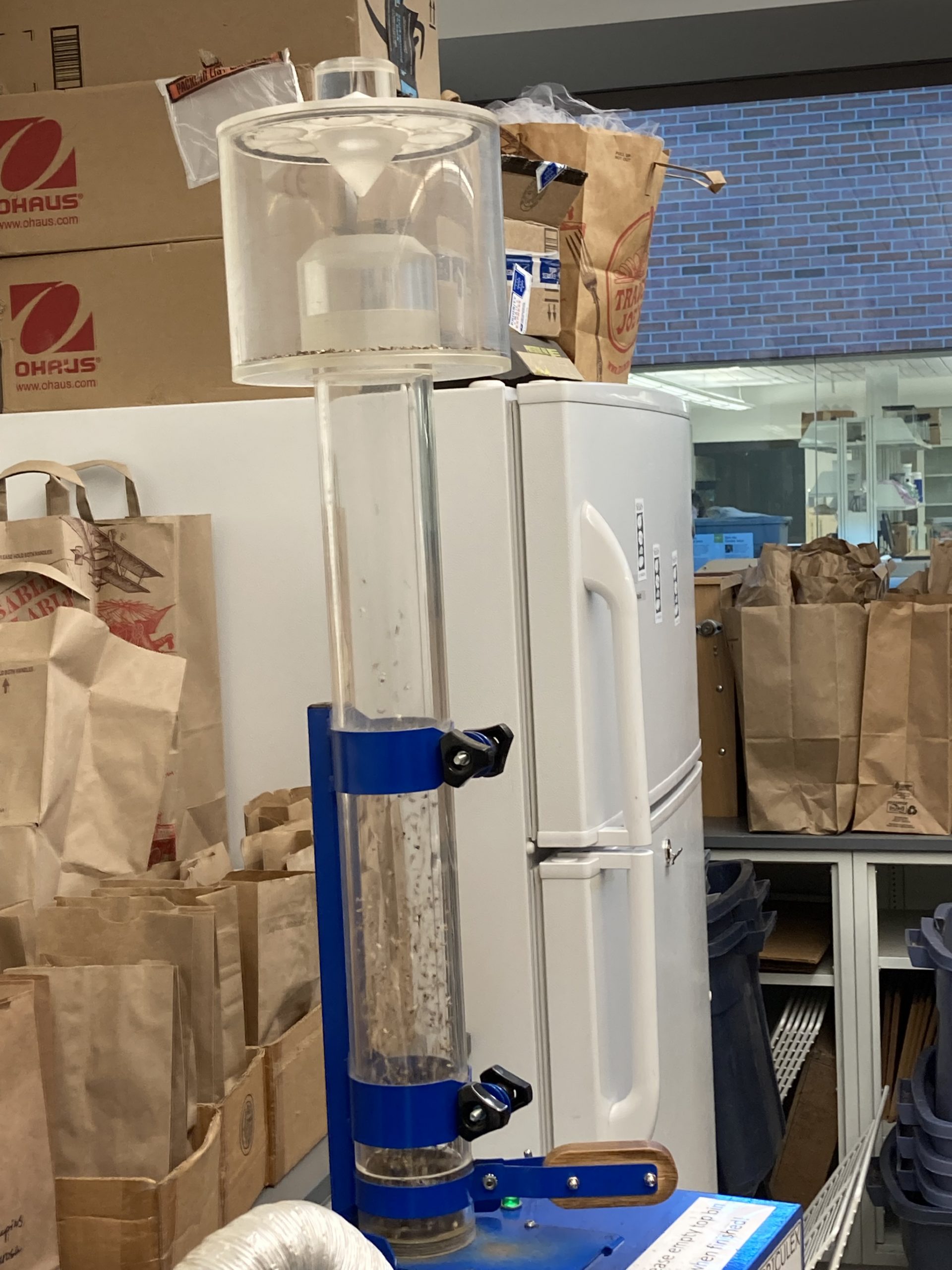
We combined the achenes from all 160 envelopes into one pile in order to make a homogenized mixture. Using a column blower set to 5/8″, we segregated the “rich” achenes (containing a seed) from the “thin” achenes (seedless). Achenes were considered rich if their mass was above 2 mg. We measured a sample of achenes from the final rich batch to ensure exclusion of thin achenes, finding that only about 1/30 achenes was <2 mg, and acceptable margin of error.
This collection of isolated rich achenes would became our source of seeds for the seed addition experiment. In order to divide achenes equally for use along different transects, we counted by hand achenes from the rich pile and placed them into envelopes, with each envelope containing 50 achenes. During this process, we removed achenes that appeared to be visually severely damaged to ensure that only viable achenes will be used for the experiment.
The end result of the achene selection process was 250 envelopes each containing 50 achenes, all of which were taken from a homogenized mixture of achenes whose maternal plants flowered in p2 in 2016.
Mia, Marty, Allen, and Stuart hard at work in the lab
On Monday, we welcomed back our second volunteer of the season, Marty. Marty is an expert on the scanner and x-ray, but since the new x-ray machine hasn’t arrived yet, she and Allen have been our rockstar head cleaners. So far, it has taken 22 person hours to clean 85 echinacea heads. Based on these numbers, it will take an additional 56 hours to finish cleaning the 216 remaining heads in the 2020 burn rem batch that we’re currently working on. If the volunteers continue to work at this rate, cleaning this batch would be completed by next Tuesday, October 26. In preparation for future head cleaning, we emptied out the seed dryer and refilled it with gbags from the 2021 harvest.
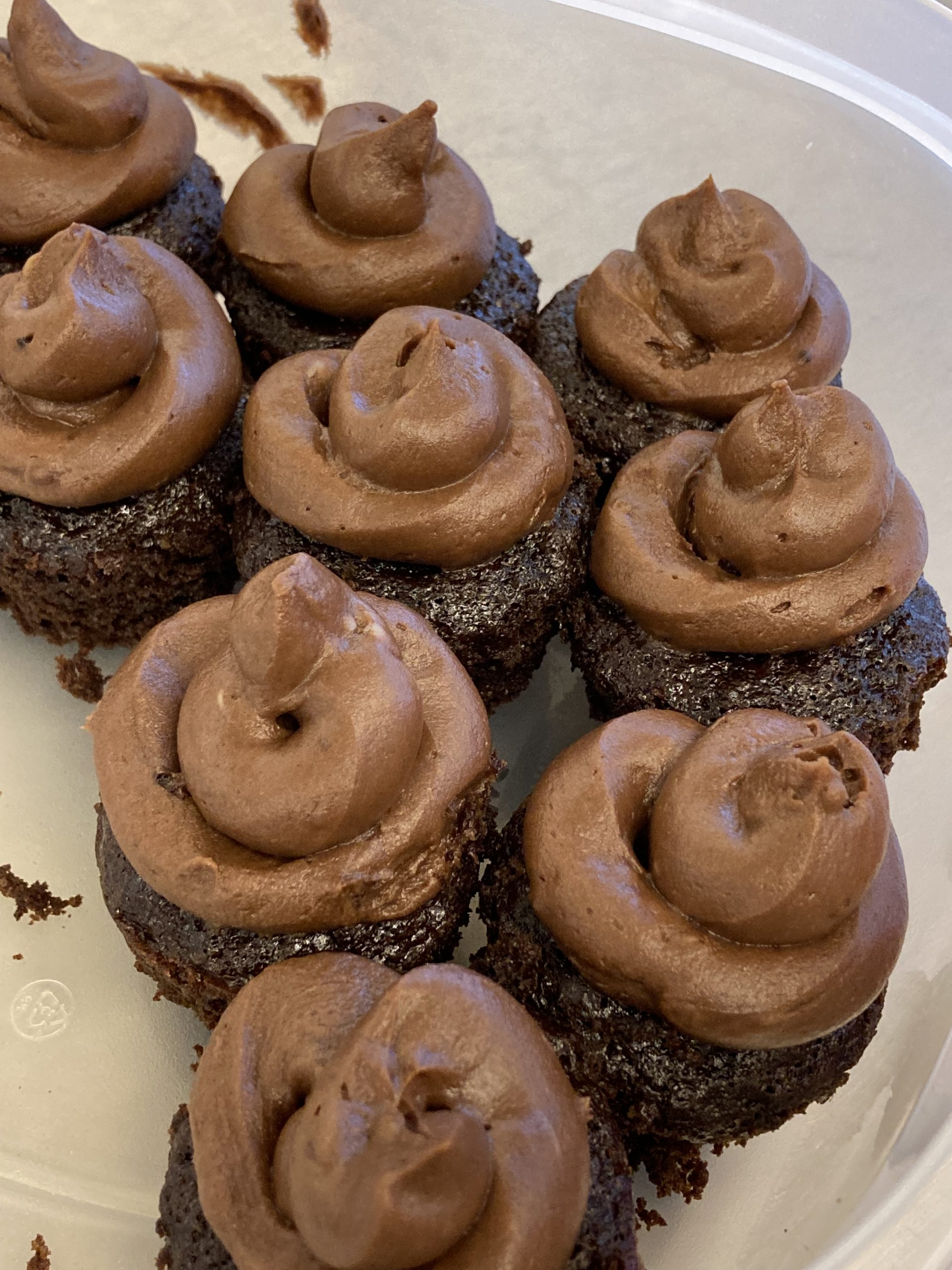
To celebrate several birthdays this month, Mia baked cupcakes for us! They were very chocolatey and delicious. We even made some new friends in the Plant Conservation Science Building by offering them cupcakes.
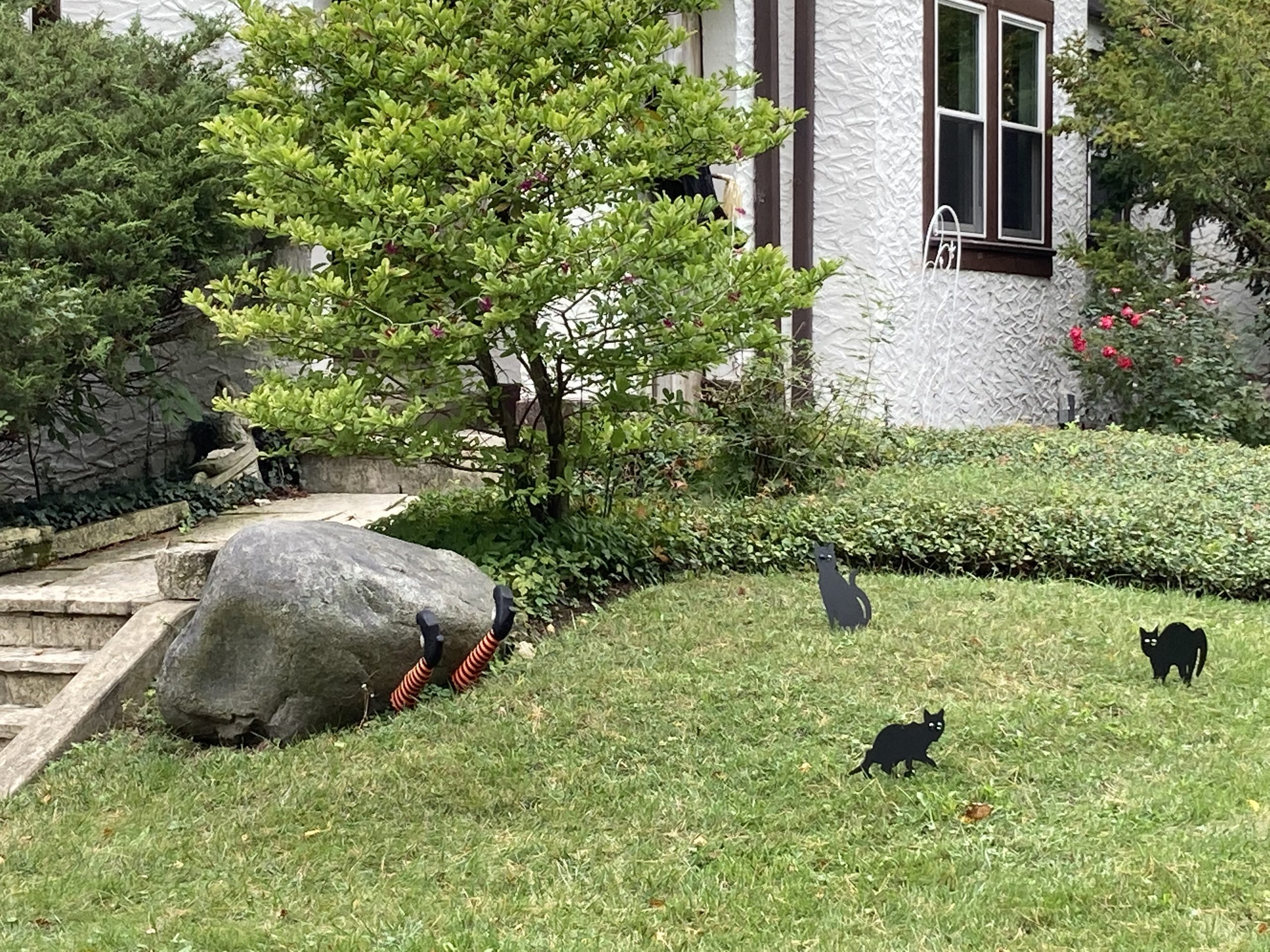
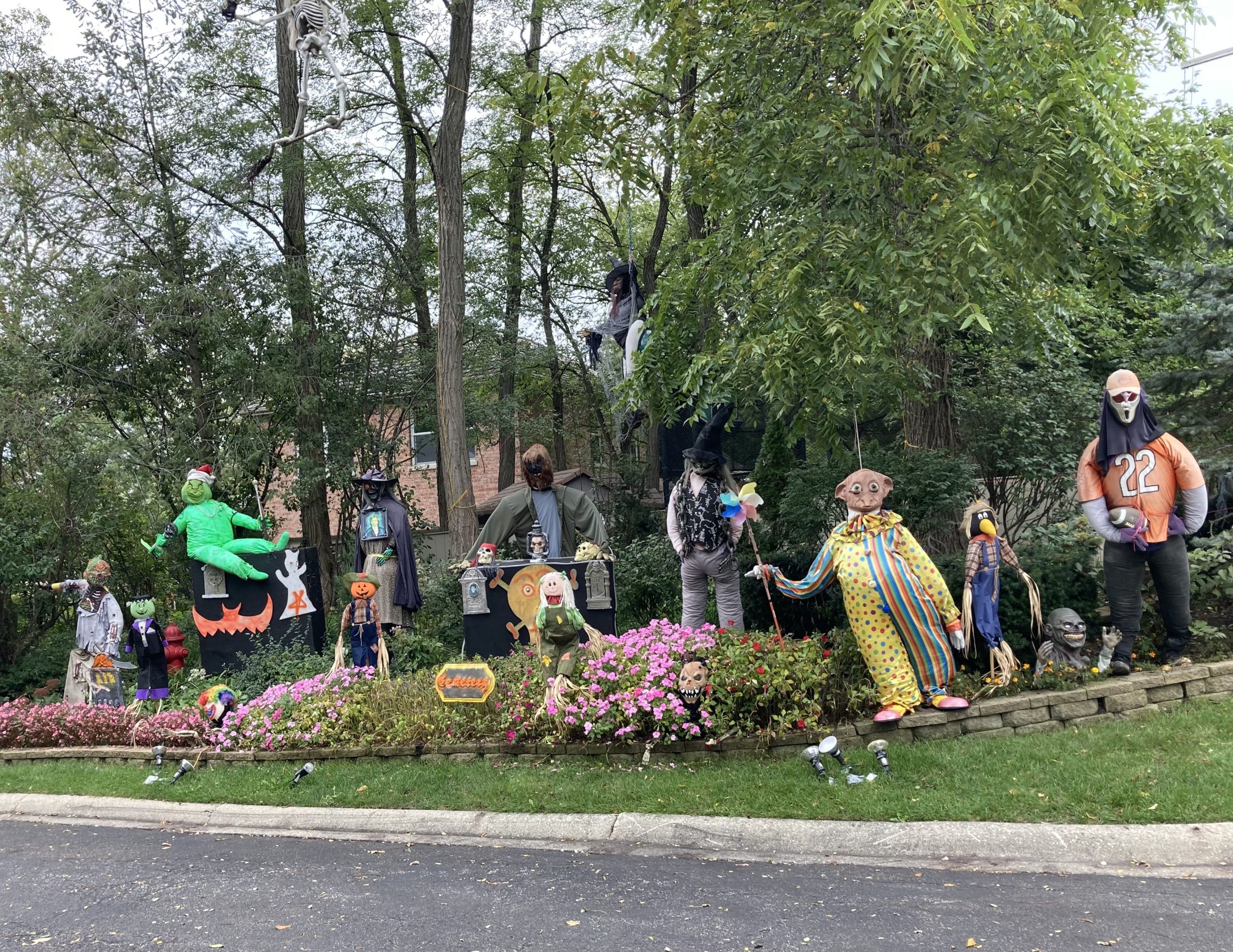
Last week, we wrapped up the last of the fieldwork in Minnesota, although four Liatris plants are taking their sweet time and weren’t ready to harvest on Friday. The remaining members of Team Echinacea packed their bags and headed to the Chicago Botanic Garden, with the exception of Jared, who is staying to monitor the stubborn Liatris. Previously, I had never been to the Garden before, so it’s been a fun place to explore. I’ve also enjoyed the elaborate Halloween decorations in the neighborhood.
A familiar crime?Clowning around with the Grinch
This week at the Botanic Garden, we welcomed back Allen, our first volunteer since the beginning of the pandemic. It will be terrific to have some experienced volunteers to process the backlog of echinacea heads from the past several years.
At the lab, we’re also preparing for the seed addition experiment. Today, Wyatt trained us in on the seed blower, a contraption that separates light achenes from heavy ones. The heavy (rich) achenes should contain seeds, and we will next randomize the rich achenes for planting this fall. We need 12,800 seeds for the experiment, and after several trials with the seed blower, we estimate that we should have enough.