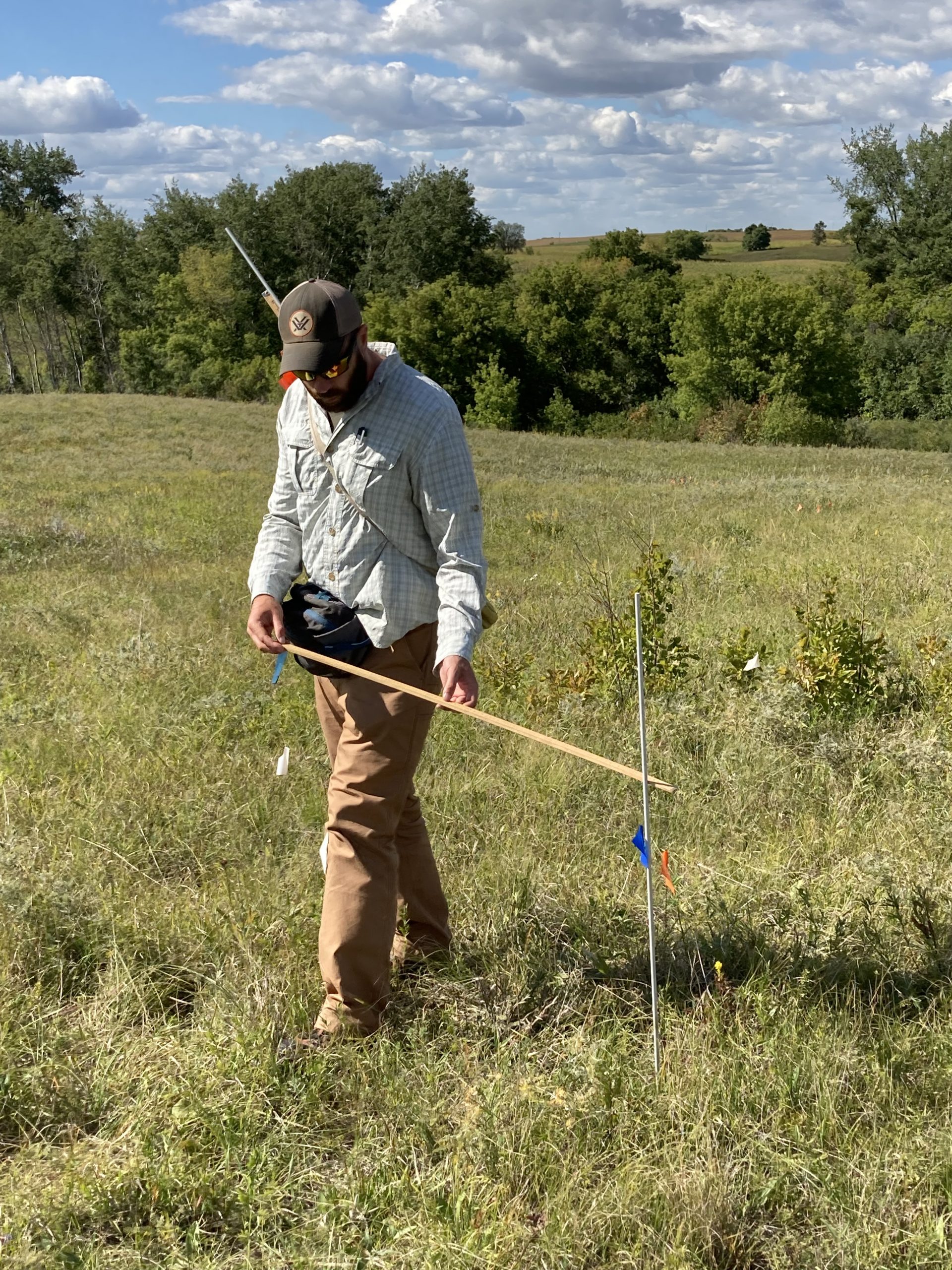
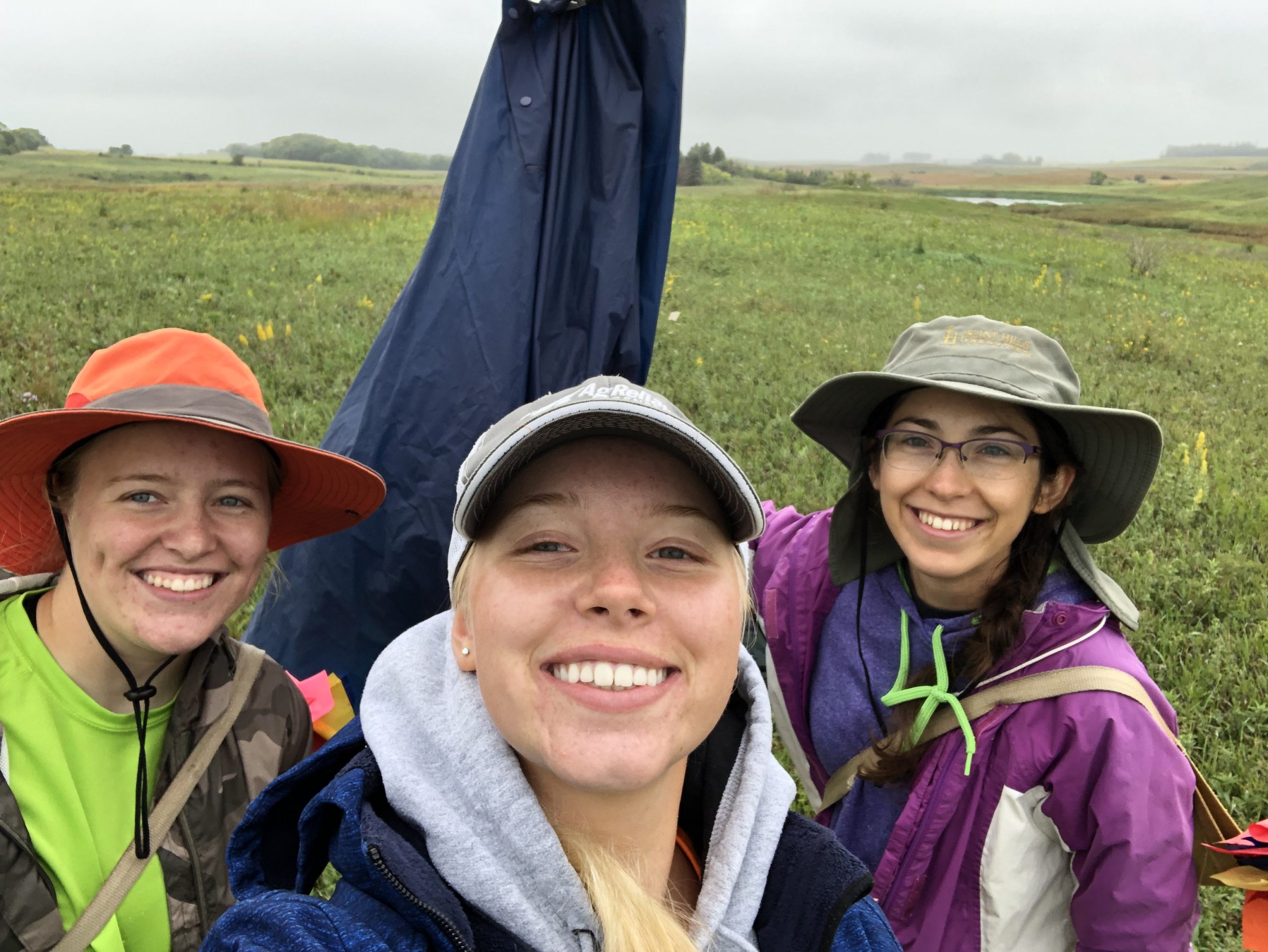
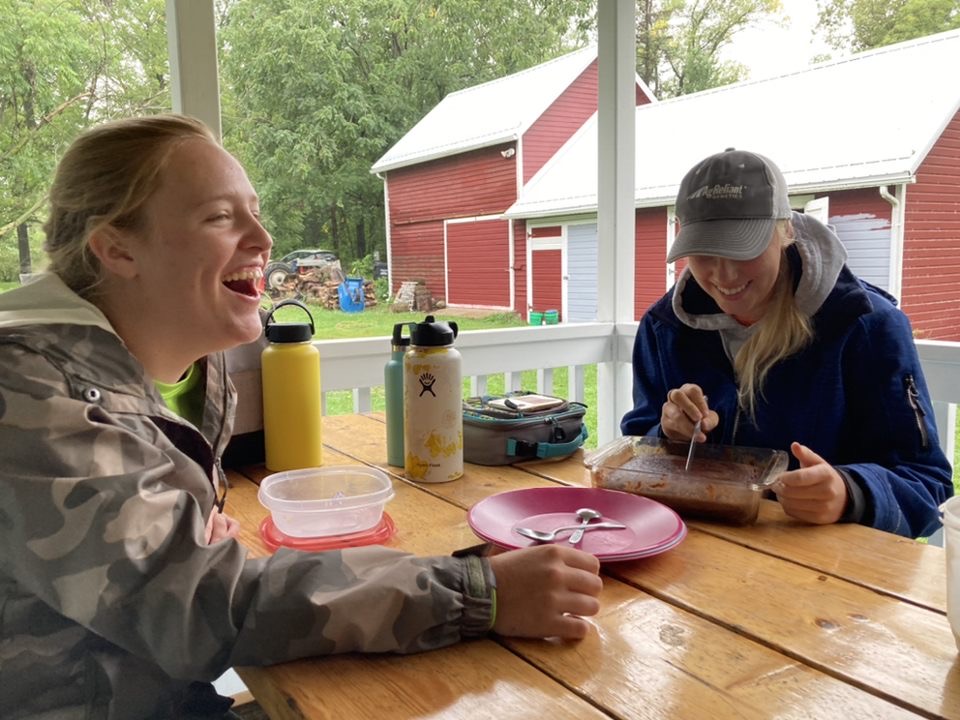
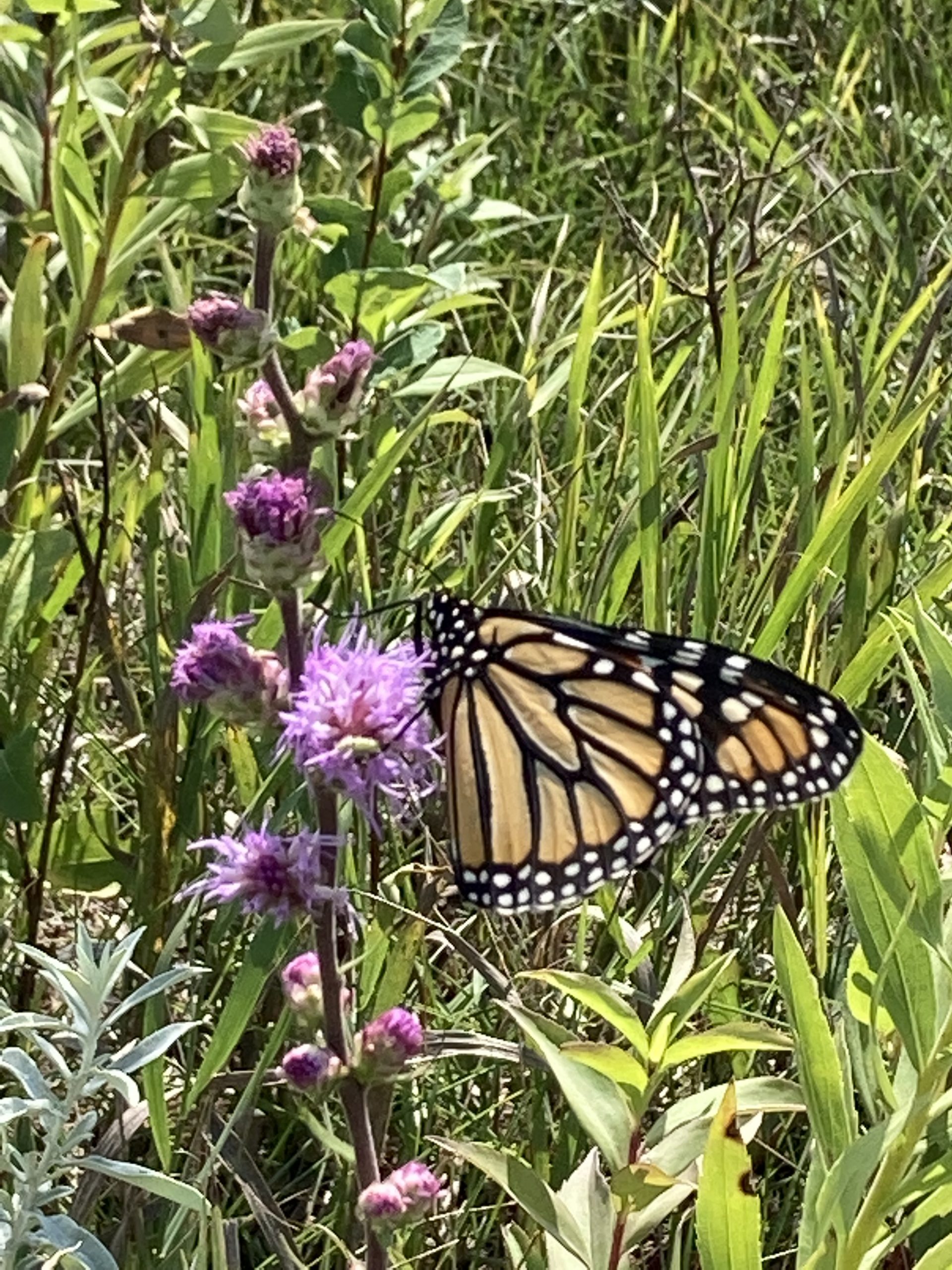
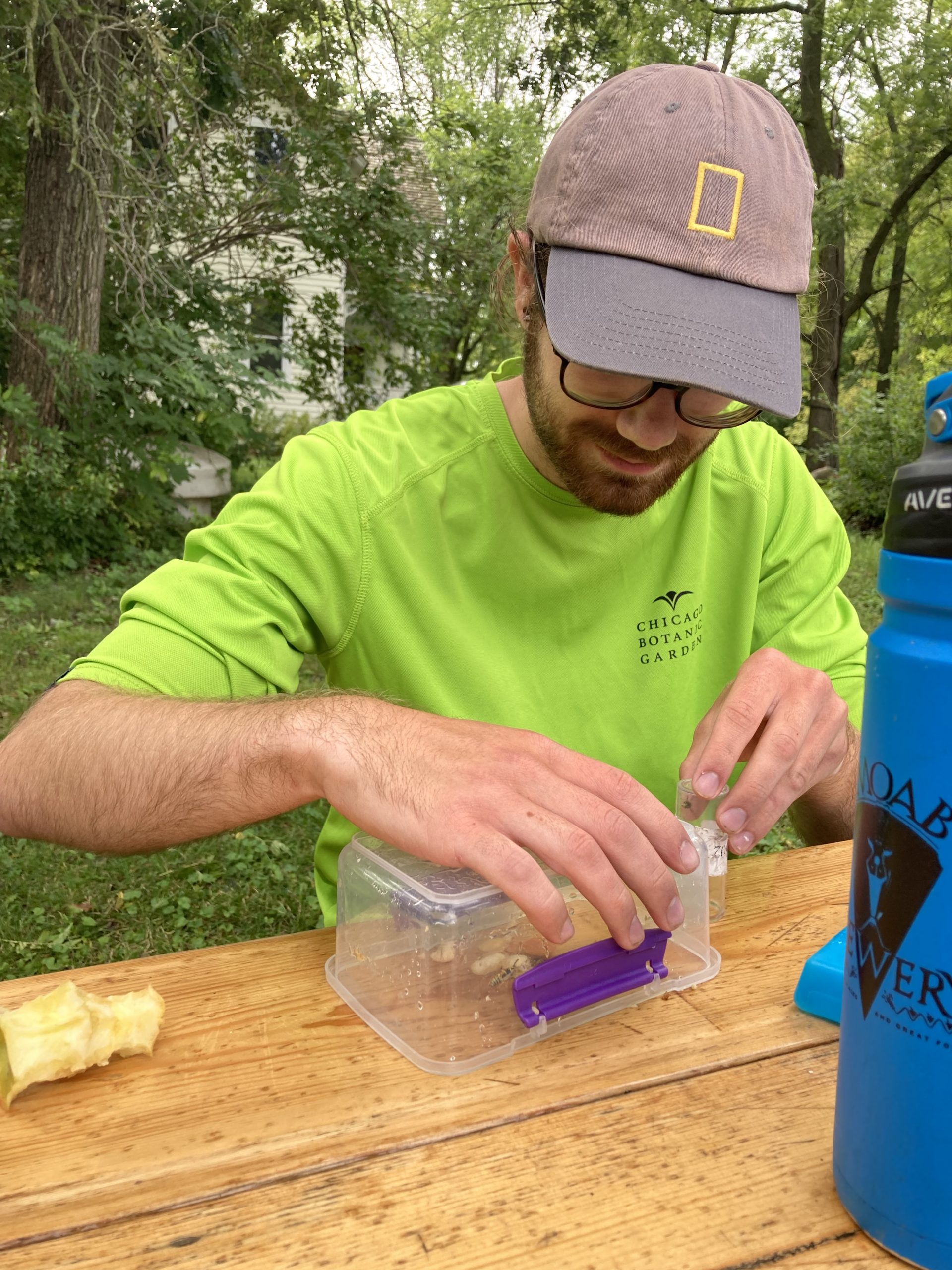
I had a blast being a part of Team Echinacea this summer. In my 14 weeks with the project, I spent my days in beautiful prairies, gained lots of sciency skills, made many friends (both people and plants) and enemies (mainly ground squirrels), and overall had a lovely experience.
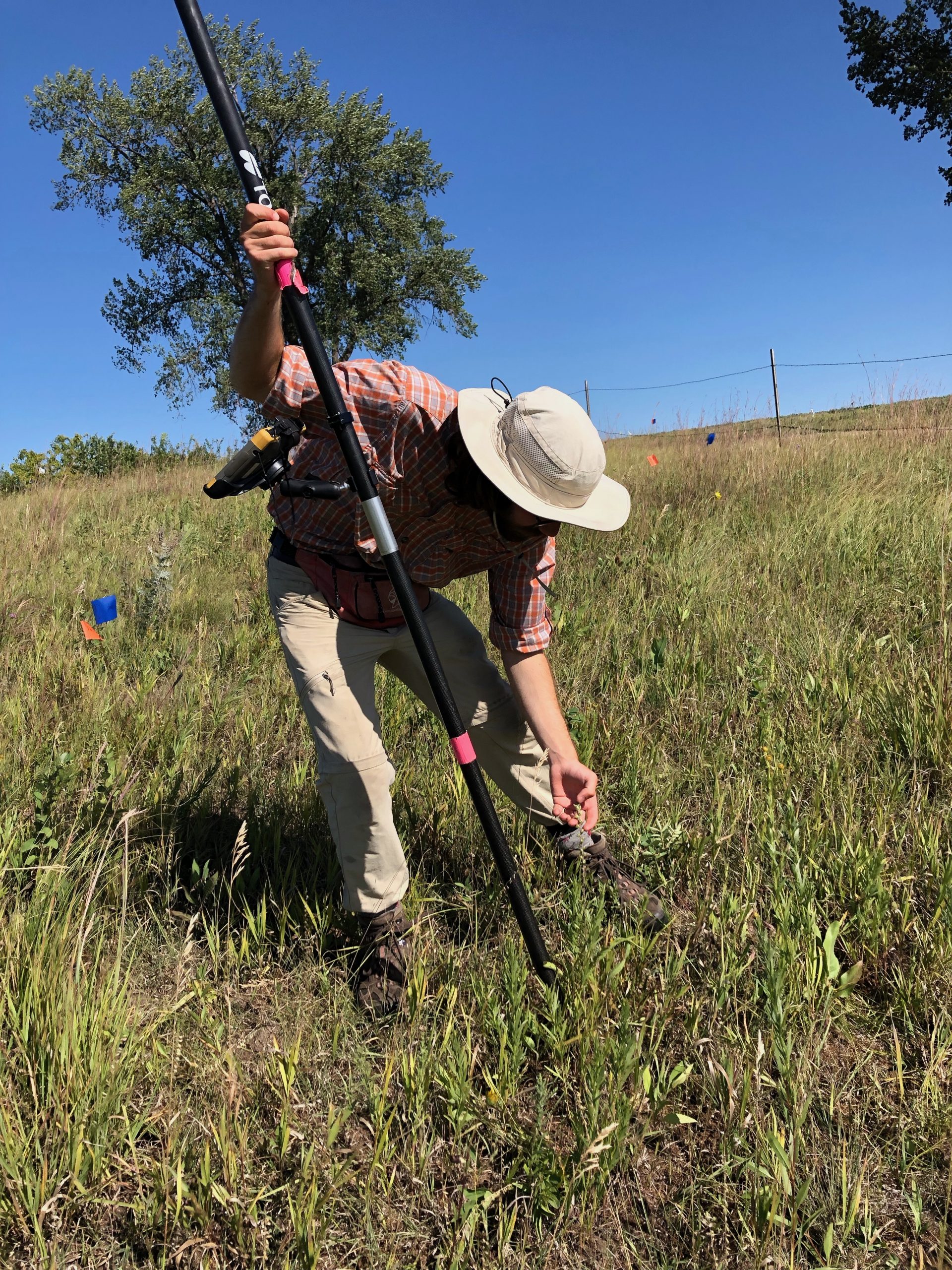
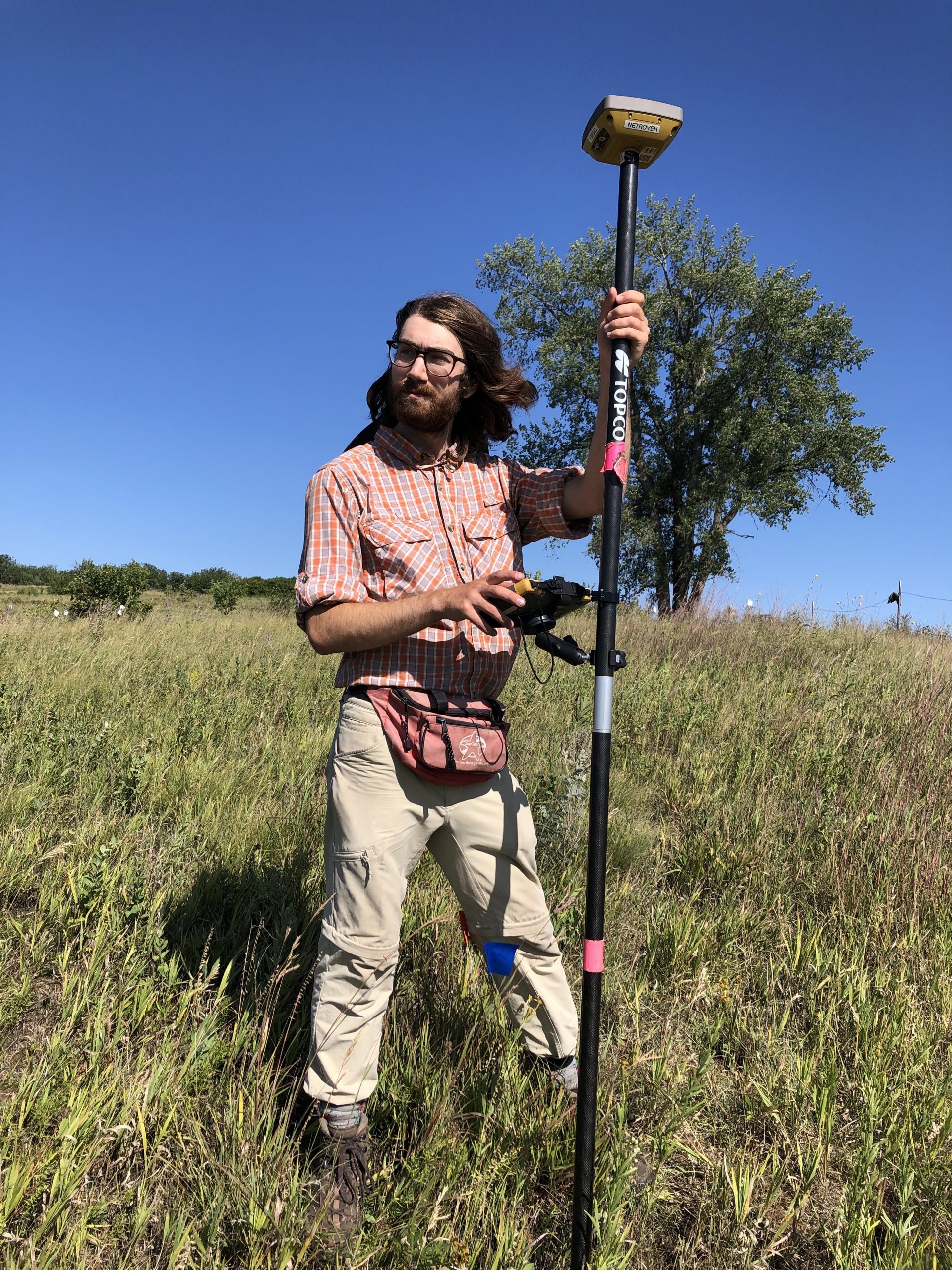
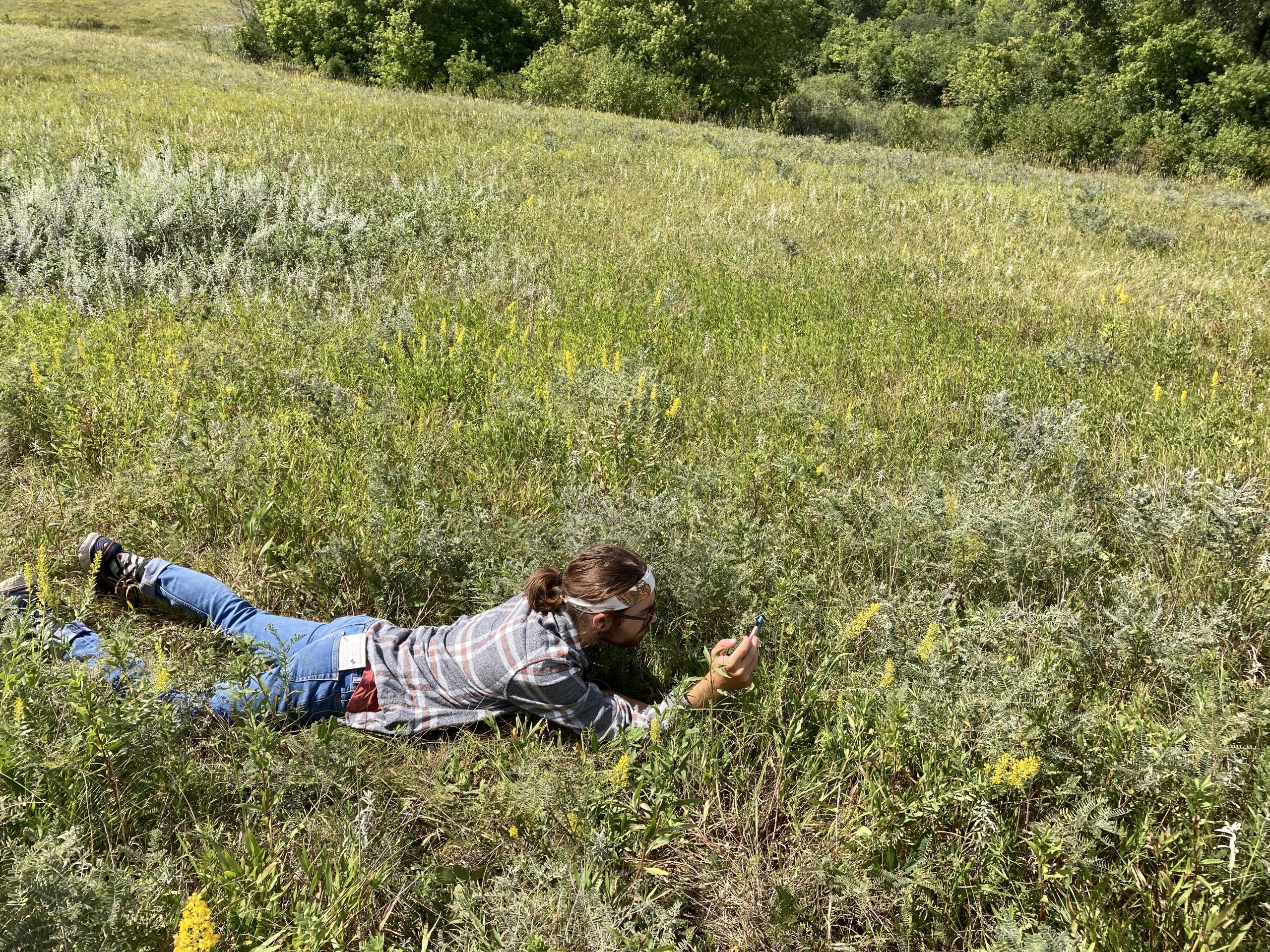
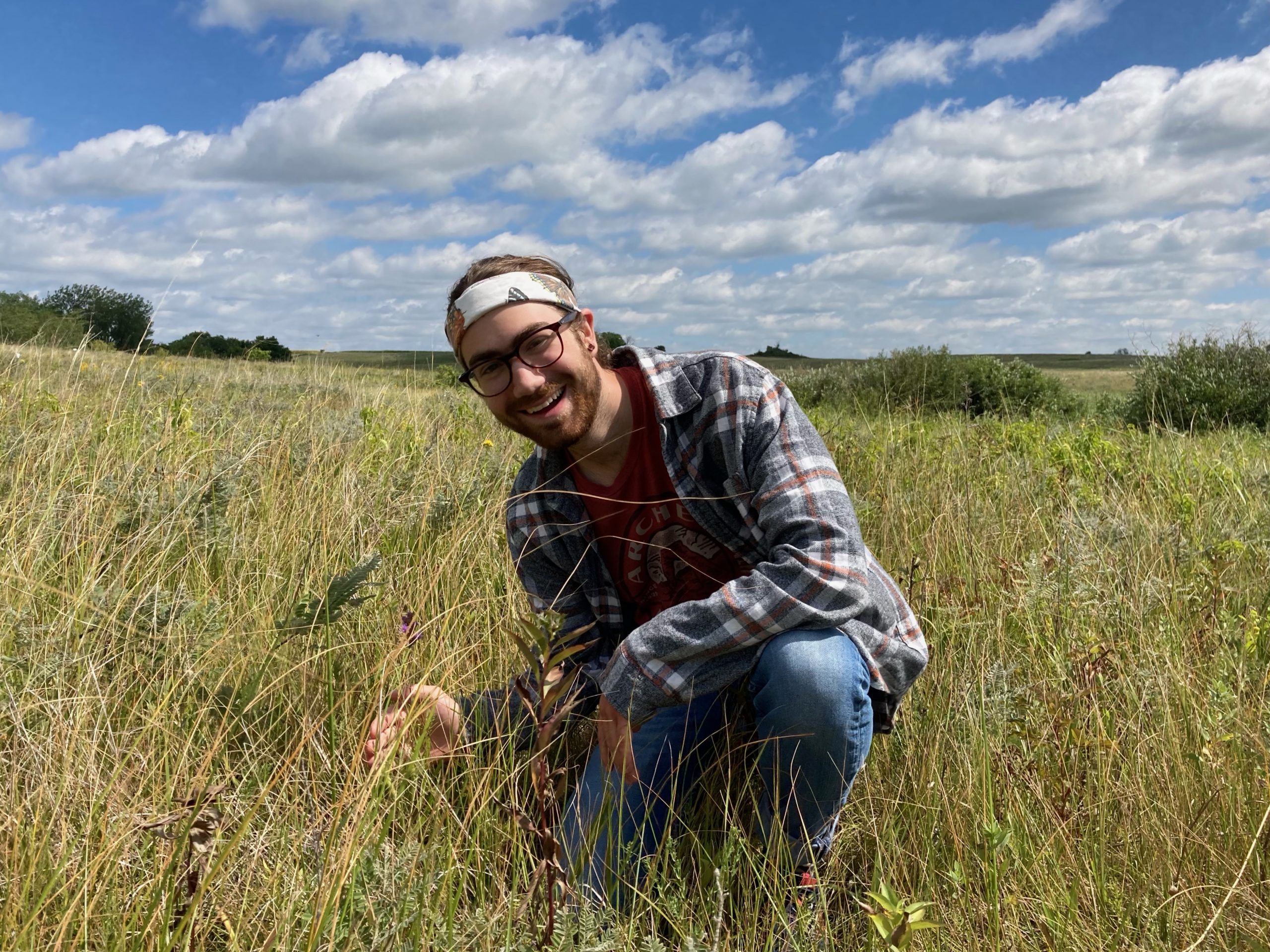
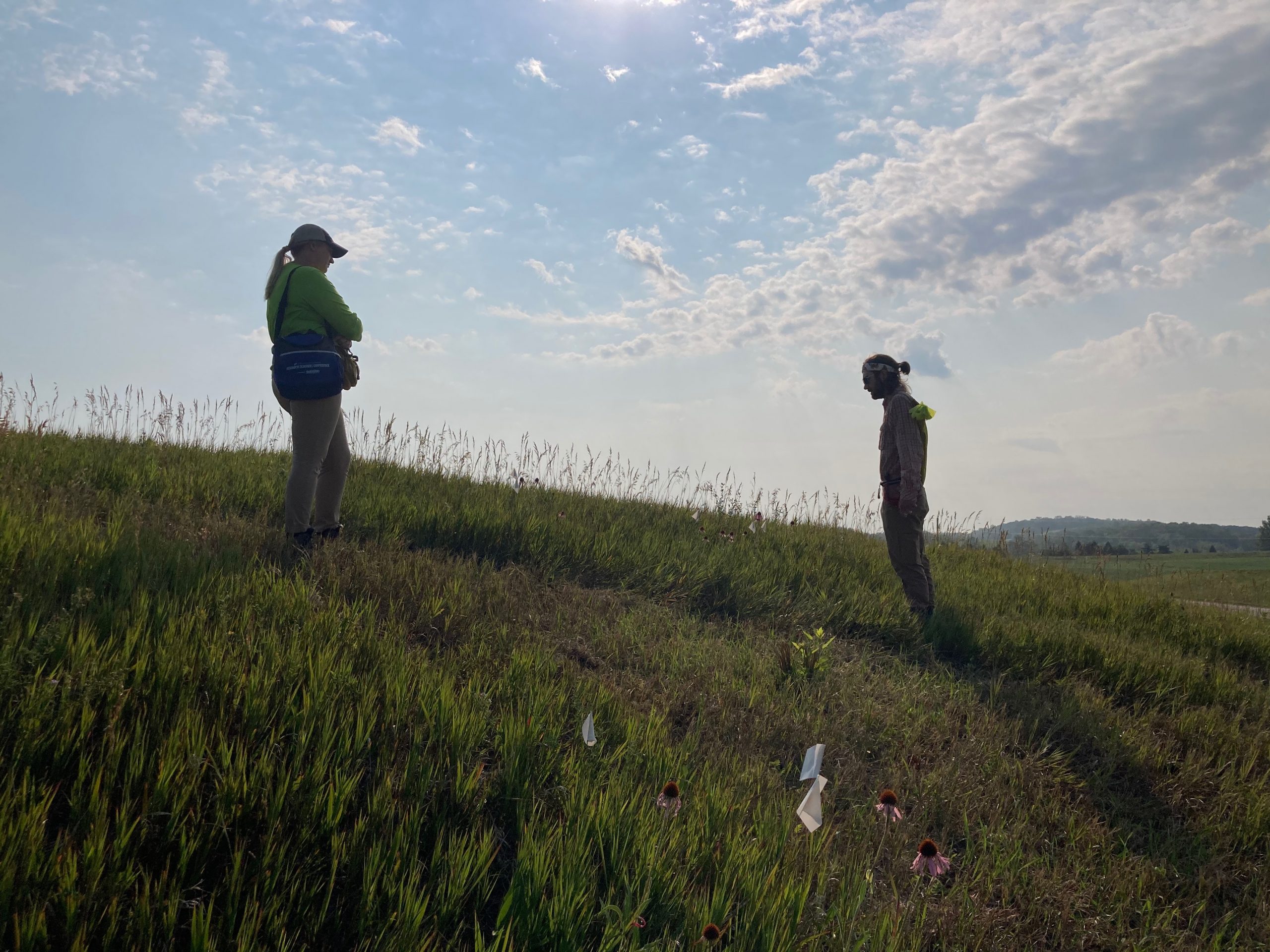
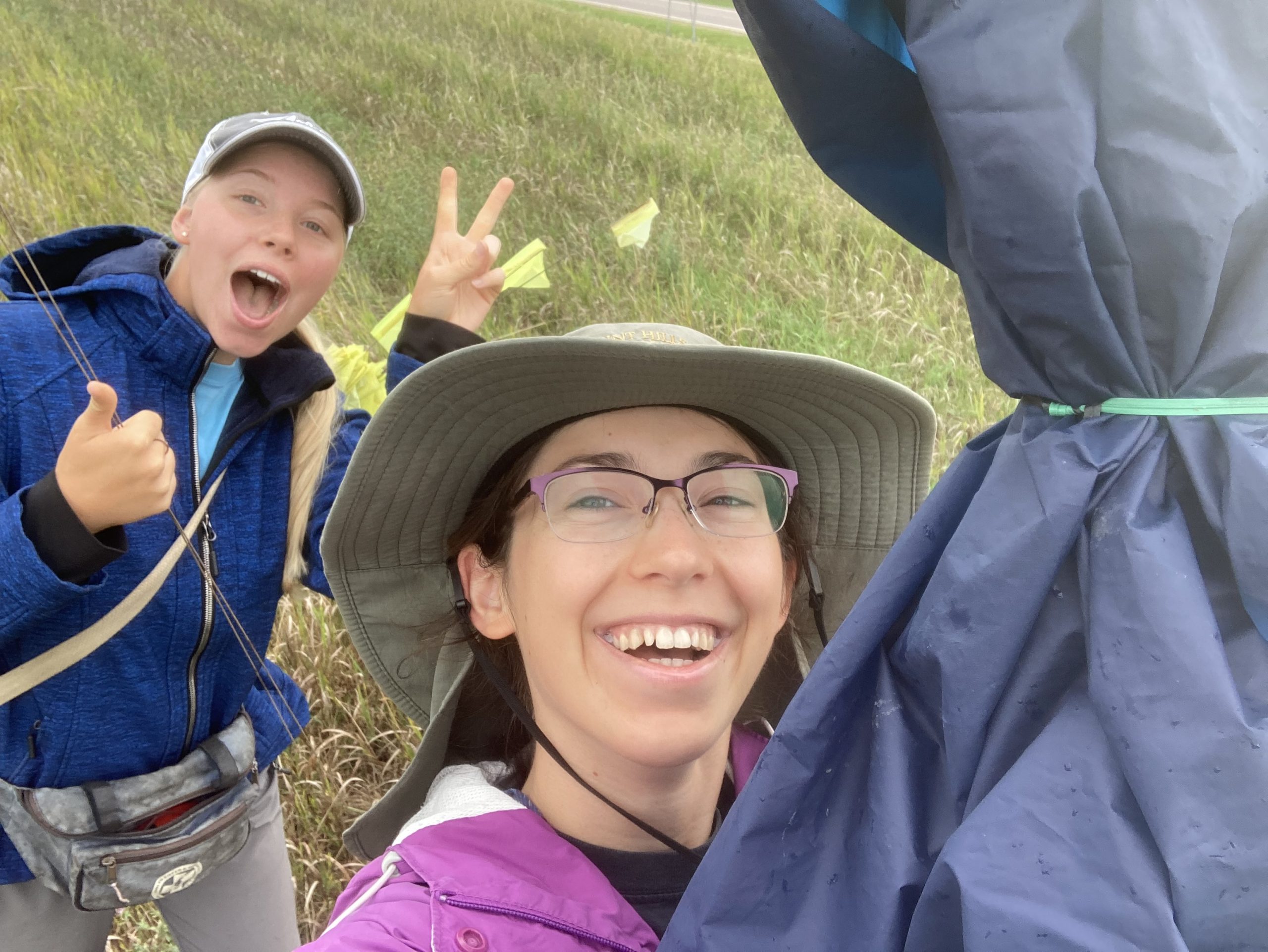
Mapping the Liatris asperaI’m not even going to pretend that I was doing work here and not posing, thanks for the pic, AllieTrying to get all the angles on a butterflyIn action!
This flog post is to reminisce about all the fun I had this summer and to commemorate the fact that I will be staying on the team through the fall and for the foreseeable future! Because the Chicago Botanic Garden is so close to Northwestern, I’m able to travel there by bus to work in the lab. Better yet, Stuart was able to set up the position so that I would be able to receive work study funding from the school.
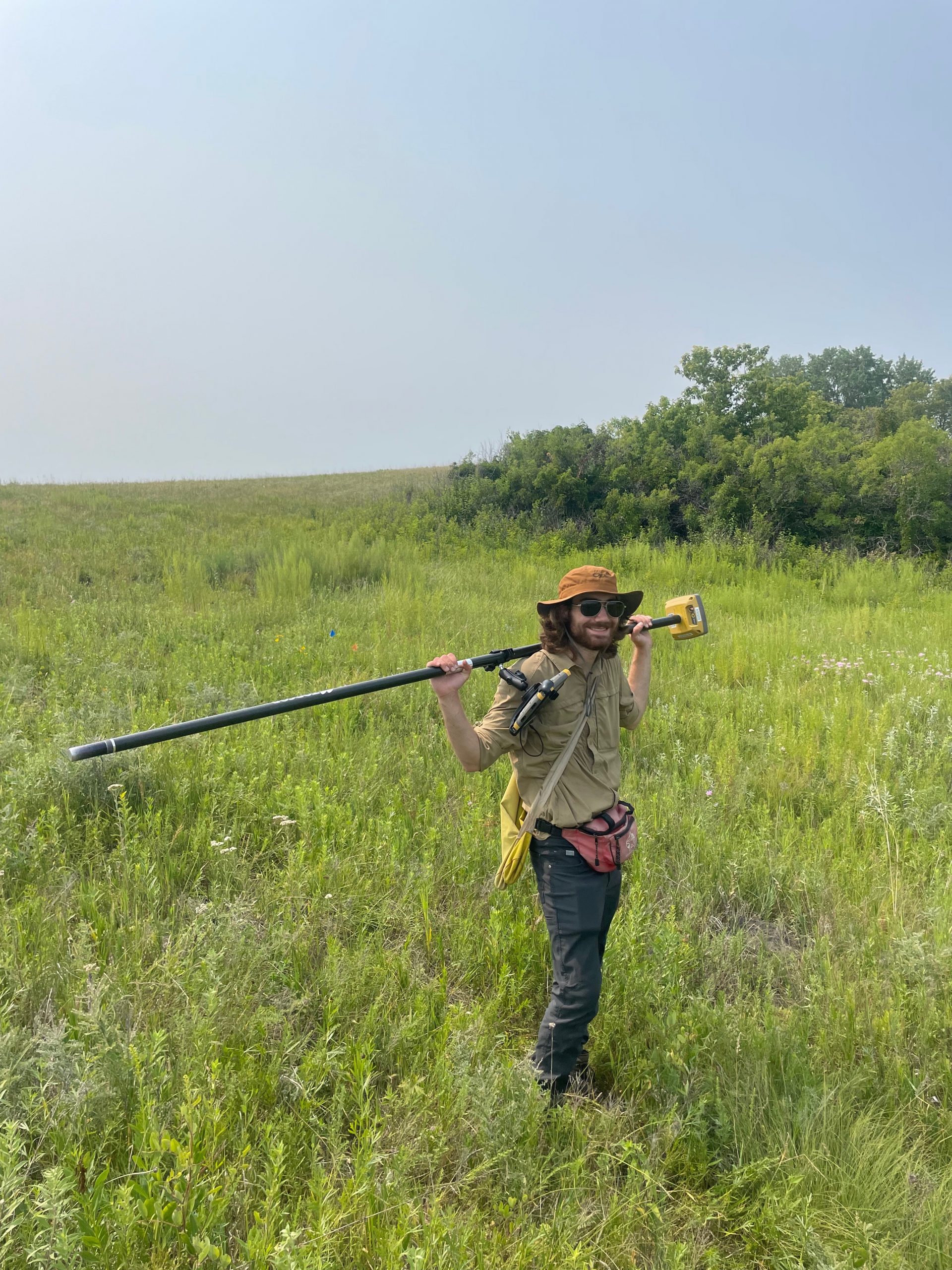
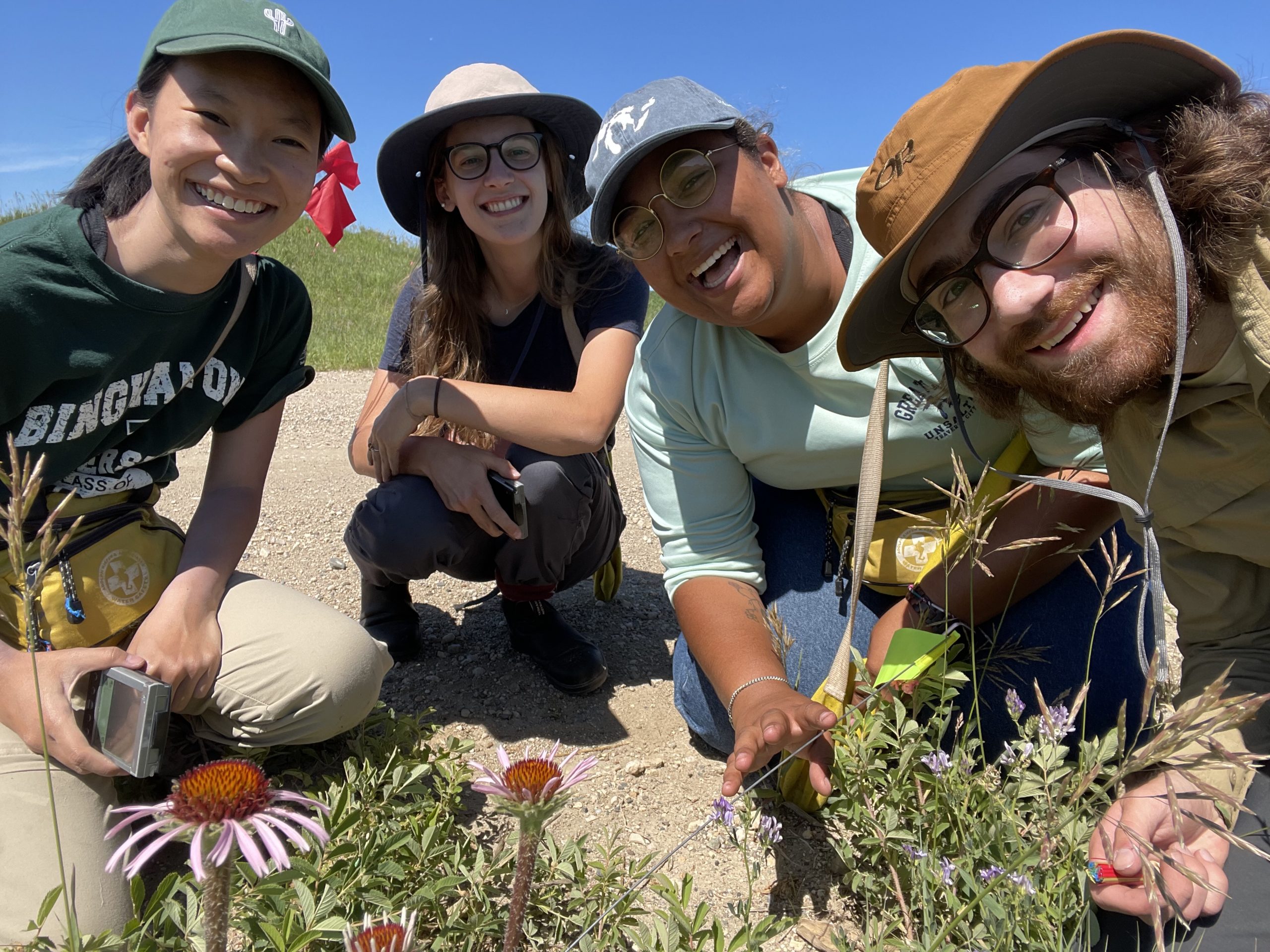
Hanging out with CollinsAnother little Liatris buddyAlex W. and I looking majestic, taken by professional photographer MiaTeam Andes looking flyMaybe the real Echinacea Project was the friends we made along the way… (many not pictured here)
To experimentally test hypotheses about how much Pedicularis canadensis, a native hemiparasite, affects the demographic rates (survival, growth, and reproduction) of other species, we planted plugs of P. canadensis in the center of a circle (with a radius of 20 cm) that contains 8 species. These eight common native prairie plant species are Echinacea angustifolia, Liatris ligulistylis, Solidago speciosa, Dalea purpurea, Pediomelum argophyllum, Sporobolus heterolepis, Koeleria macrantha, and Hesperostipa spartea. For all but Echinacea, seed was collected last year from local sources. Echinacea is the focal species of other experiments and had been planted previously. Echinacea plants served as a reference point when establishing our circles and were always directly west of P.canadensis. Circles are planted in 6 rows that were randomly selected from within the existing experimental plot 10. Rows 315, 436, 443, 643, 656, and 785 were selected. Rows contain 11 circles each, starting at 1m and going to 11m, evenly distributed 1m apart.
All circles were planted on July 29th, 2021.Plants were planted as plugs. Plugs were grown by Chicago Botanic Garden production staff before being transported to Minnesota and transplanted. Pedicularis served as the treatment and had 3 factor levels (0, 1, or 2 Pedicularis plants). Treatments were randomly assigned to circles and Pedicularis were planted in the center of each circle between August 9th and 13th, 2021. Plants in the circles were measured between August 16th and 20th, 2021.Traits measured were size and reproductive status.
Over the last two years I designed and planted an experiment in an already established prairie restoration (exPt01) to test hypotheses about the effects of parasite inclusion in restorations. This experimental planting of hemiparasites has three factors (Comandra umbellata, Pedicularis canadensis, and soil plugs), each with two levels (presence or absence), but three factor-level combinations are impossible because the presence of parasites is confounded with presence of soil. This translates to me having 216 row x position combinations in which I randomly assigned Comandra umbellata, Pedicularis canadensis, and soil plugs. However, roots trap soil and therefore soil is always carried in with parasites, the two treatments are confounded and so we used soil transplants to account for this.
In June, I went out and assessed the realized design of my experimental planting of hemiparasites. I assessed presence or absence of Comandra umbellata and Pedicularis canadensis at each of my 216 row x position combinations. I found only one Comandra but I found 30/72 or 42% of all Pedicularis.
In late August through early September, I planted 1 plug of Liatris ligulistylis and one plug of Solidago speciosa at each of my 216 locations. These plants were then measured. I added these plugs to serve as response variables to my three-factored experiment.
Last year, at all 216 locations I distributed seeds from 32 native plant species. In September, I went out and assessed seedlings present. I recorded the number and photographed the seedling to identify later in the laboratory.
In late October I intend to harvest 216 strips (0.1m x 1.0m) of dried biomass (1/6th of the dried biomass) from my 216 locations as I have also done in the last 2 years.
Start year: 2019
Location: Douglas County, Minnesota; exPt 1
Overlaps with: Experimental plot management, Hesperostipa common garden experiment
Materials collected: 216 .1 x 1m strips of dried biomass are stored at the Chicago Botanic Garden.
As summer’s vibrant greens give way to fall’s golden glow, Team Echinacea remains hard at work in western MN. A skeleton crew is diligently wrapping up the field season. Our most important task is harvesting seed from study species so that we can quantify fire effects on plant reproduction in remnant prairies. Here is a brief update on progress for our focal species:
Asclepias viridiflora: all plants harvested (~30, Jared forgot to check harvest data sheet…)
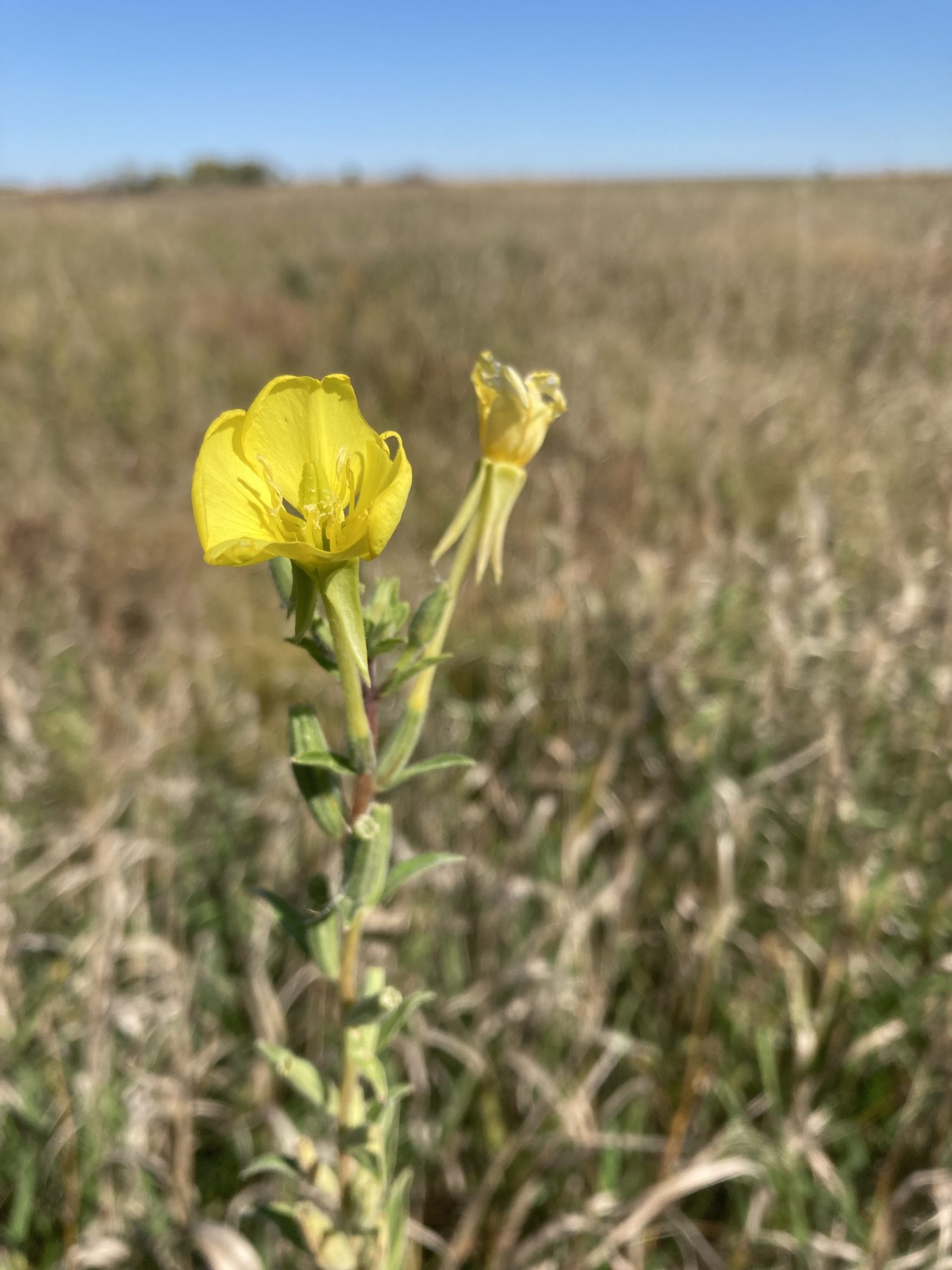
Oenothera biennis
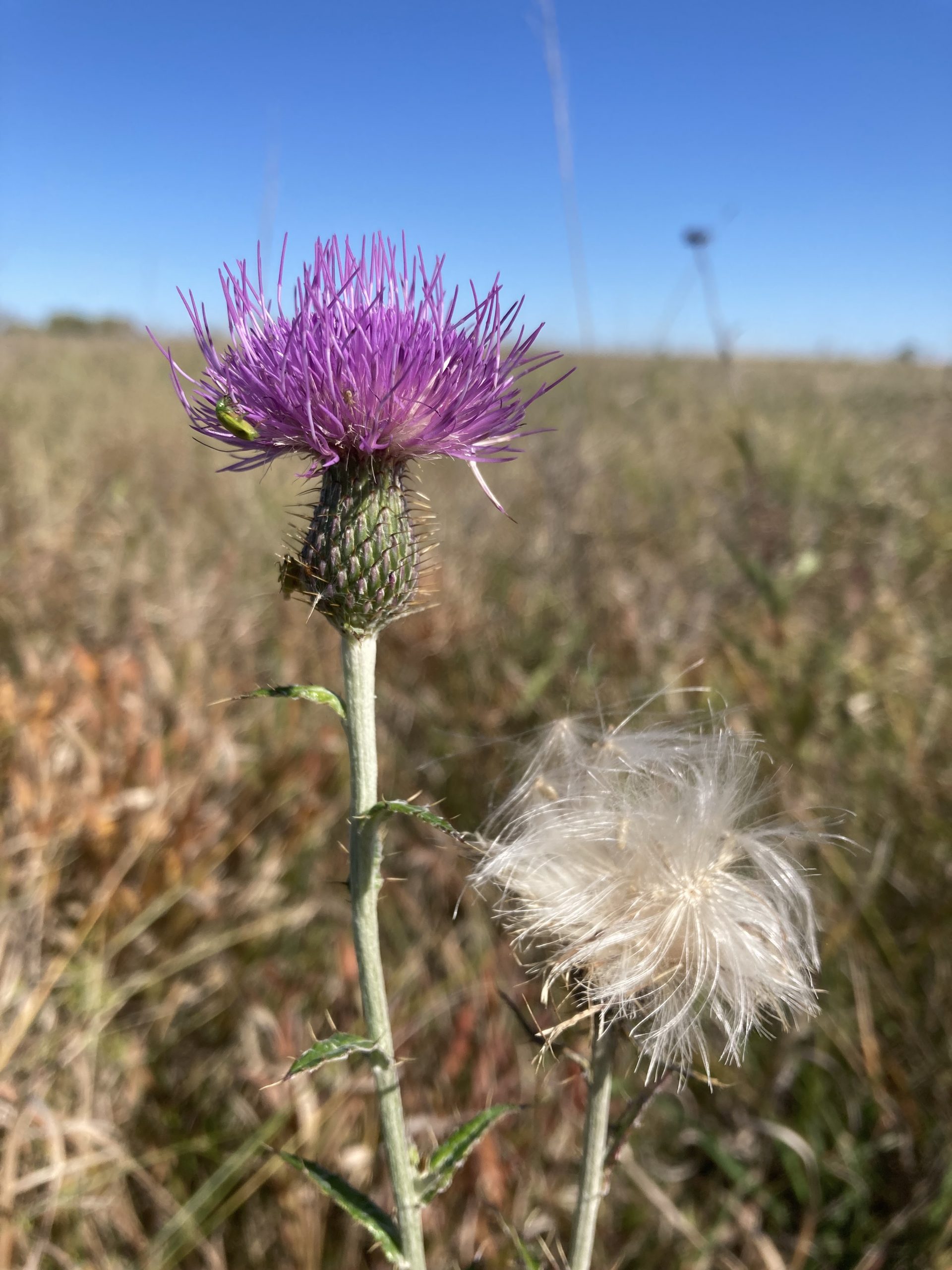
Cirsium flodmanii
Prenanthes racemosa
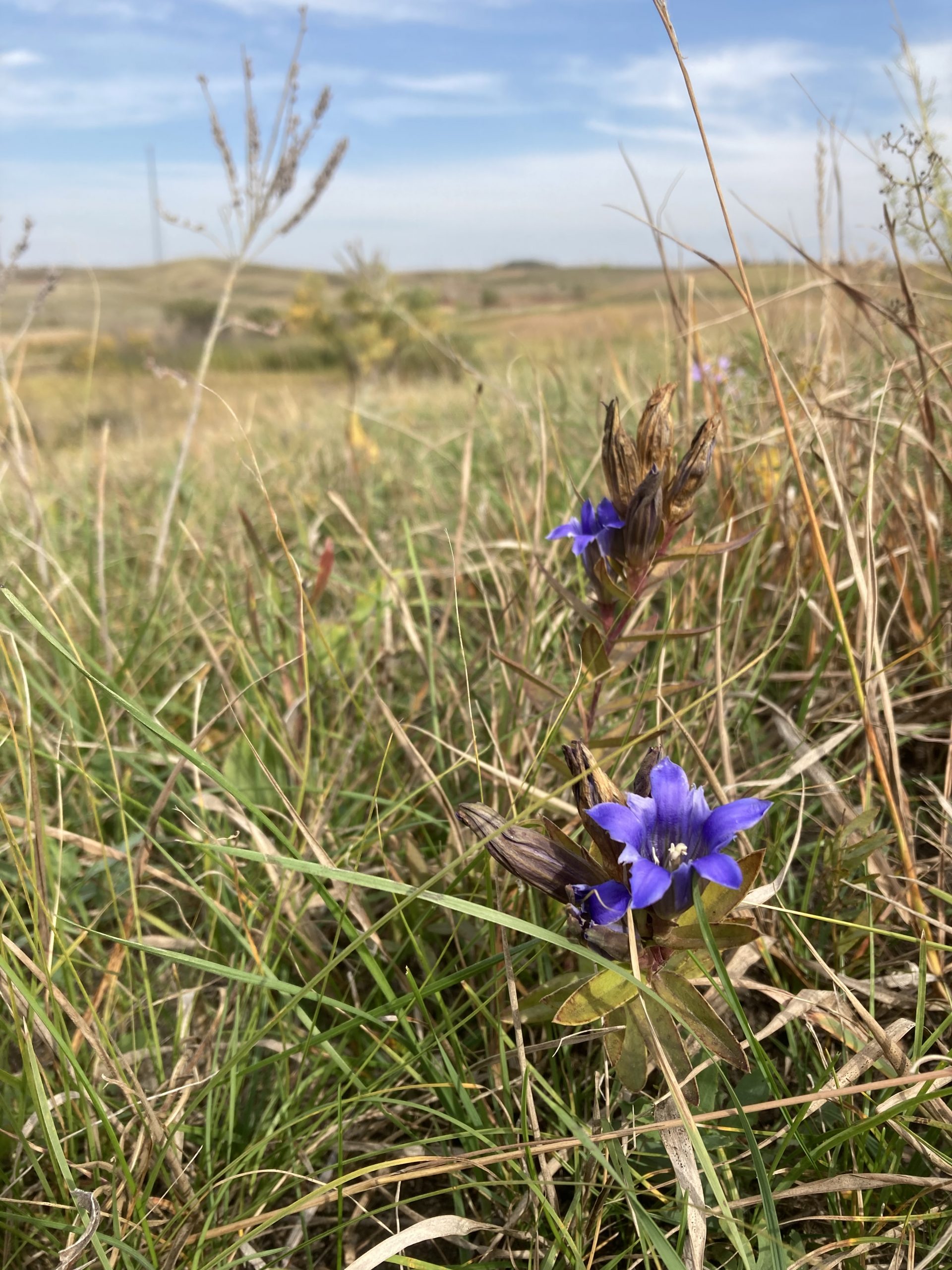
Gentiana puberulenta
Just a few end of season friends enjoying the late summer sun.
In addition to wrapping up the harvest, we are beginning to make preparations for fall burns and getting materials organized to implement a seed addition experiment designed to assess fire effects on seedling emergence and survival.
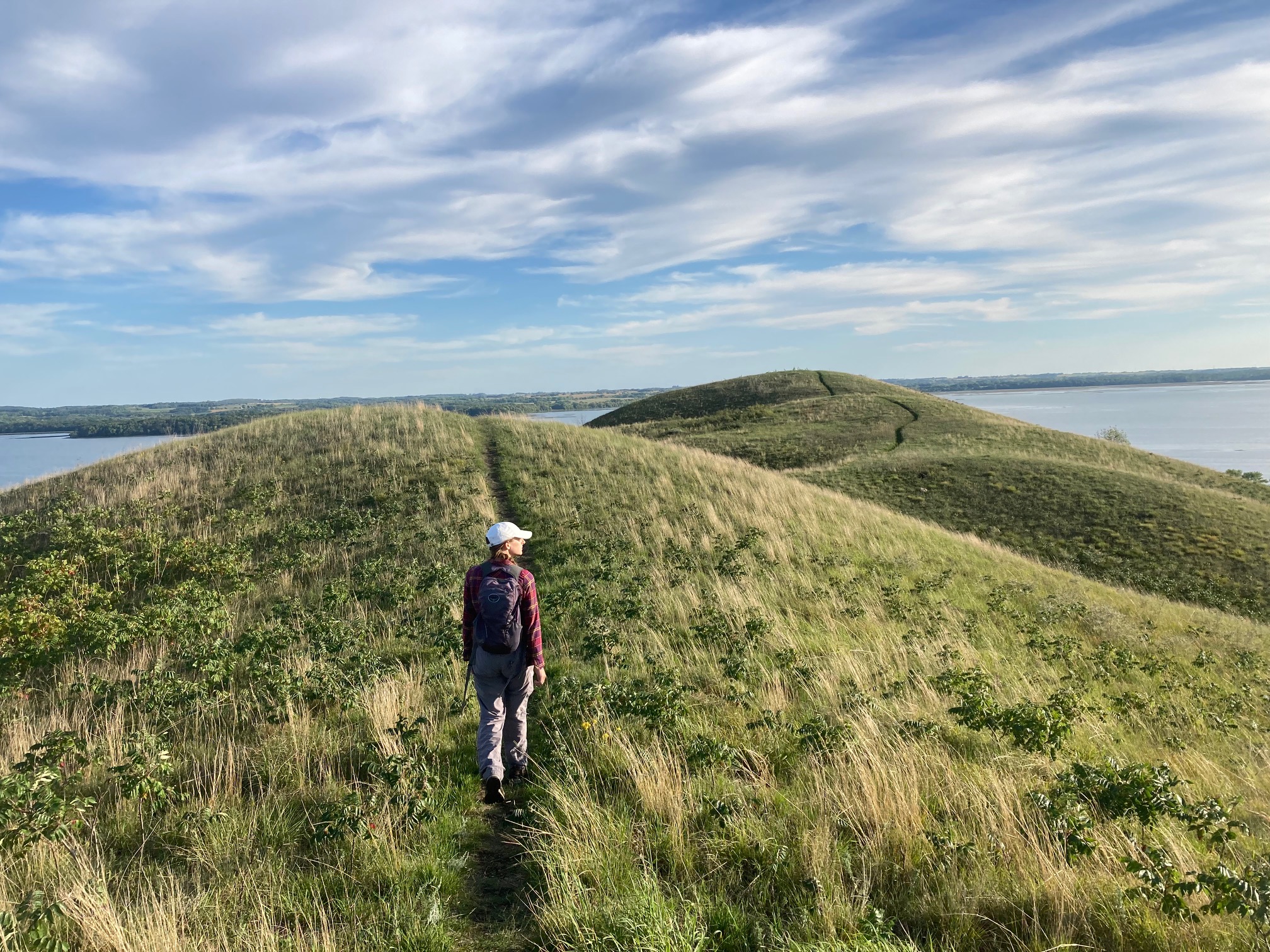
Taking a break from work to enjoy an afternoon at Seven Sisters.
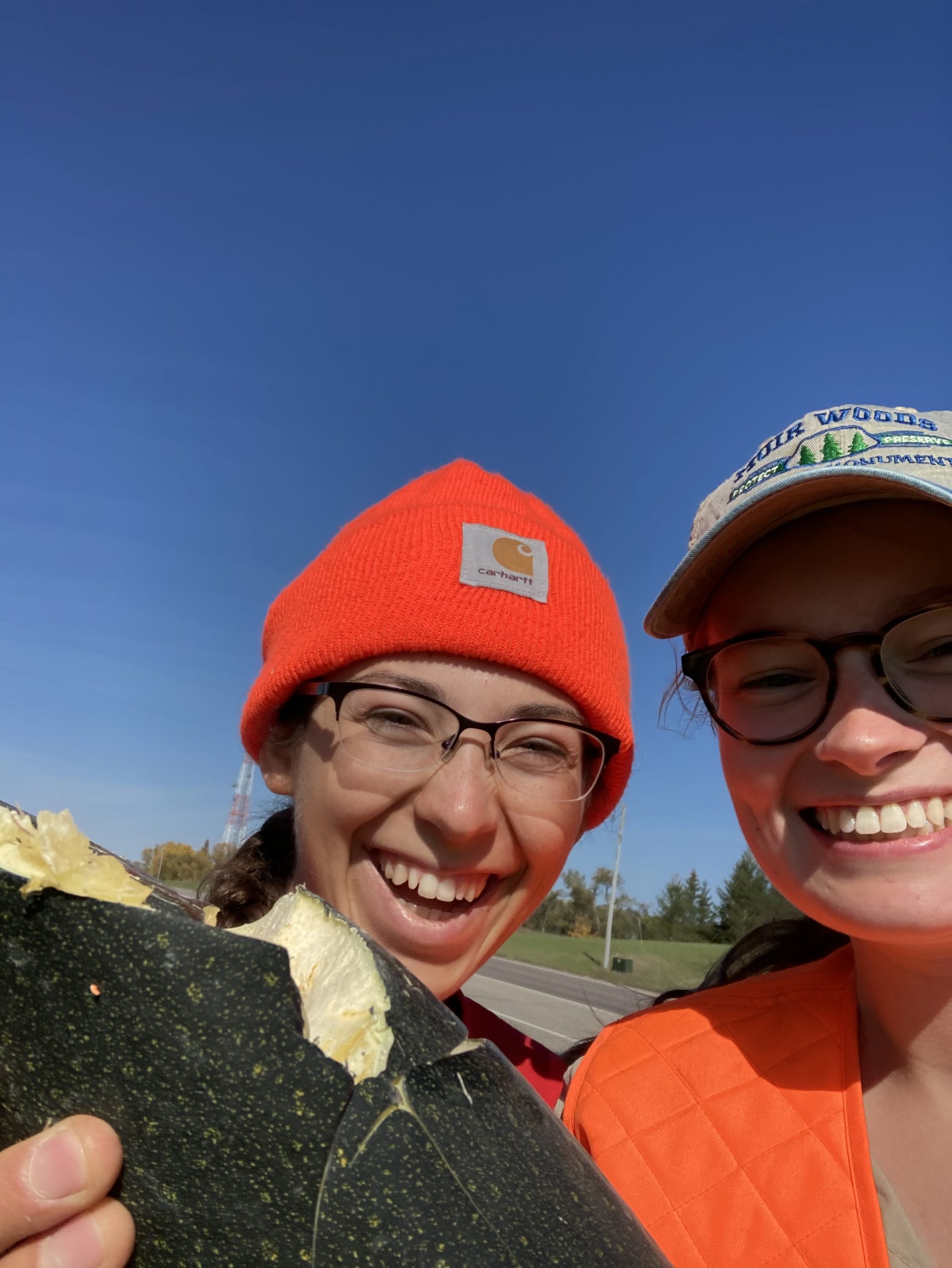
Yesterday was my birthday, this is the second birthday that I have celebrated out here in Western Minnesota. The work day started with some sling (seedling re-finds), Alex and I did sling at Steven’s Approach and then we set off to Nessman. We quickly discovered that part of the site was mowed, and we had to go back to Hjelm to get the GPS to re-find the circles we needed to visit. We were driving away from Nessman at the corner of Dairy drive and 27 I saw something on the road. I asked Alex what it was, and she peeked out the passenger side window and said, “it’s a zucchini!” As we drove back to get the GPS, we contemplated whether we should rescue the zucchini or not. Once we saw the zucchini again, we knew we had to rescue it. After we finished at Nessman, we set of to procure our roadkill! We decided that it was most likely fell of a truck and then was run over. We scooped it up and removed the ant and millipede then buckled it into the back seat.
Finding the roadkill
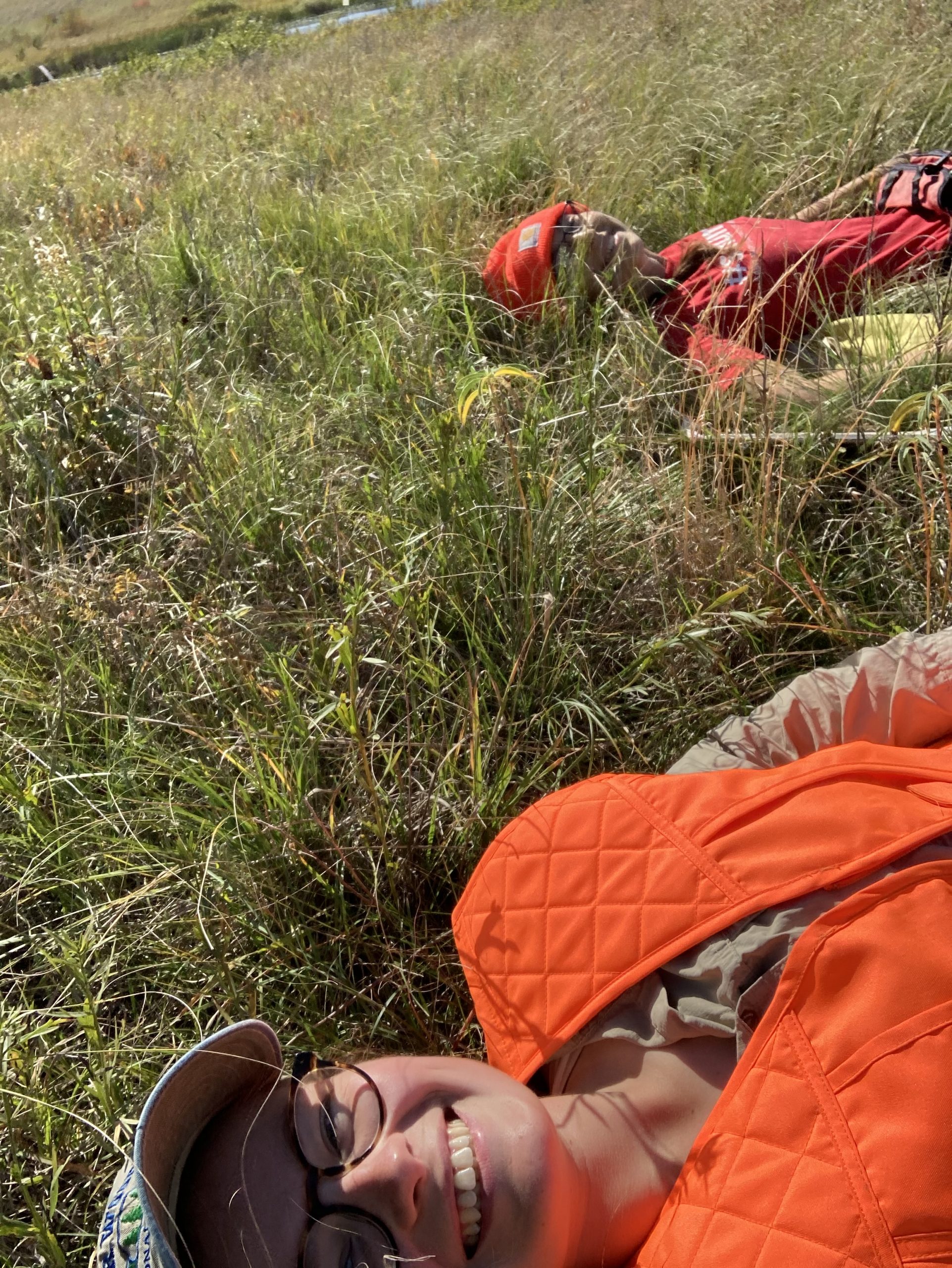
We then set off to Staffanson to visit two more sling circles, the two circles are on complete opposite ends of the prairie preserve. Neither circle was fairly straight forward so after we finished the last circle Alex flopped down onto the ground, I quickly joined her, and we just laid there for 10 minutes staring up at the sky taking it all in. We eventually decided that we should probably head back for lunch, and after a bit of a hike back to the car we were shocked to see the zucchini since we had forgotten all about it.
The prairie nappers
After lunch I set of two experimental plot 1 to try and sort out some issues with the measuring data. Alex and Jared worked on sorting out some demo problems. It got up to 84 degrees Fahrenheit which might be the record high for September 28th (or at least it is based on my working memory).
For dinner Jared made spring rolls, he even had ripe avocados! Spring rolls have been a staple/highlight of the summer meals. After a yummy dinner Alex and I set out to turn our roadkill into cake. We quickly determined that the zucchini was in fact not zucchini but some other sort of squash. We decided out of impatience to not peel the squash. After making the cake and very patiently waiting for it to cool, we tasted it and it was surprisingly slightly crunchy. Overall it was a wonderful day, spent in a great place, with good friends, and good food.
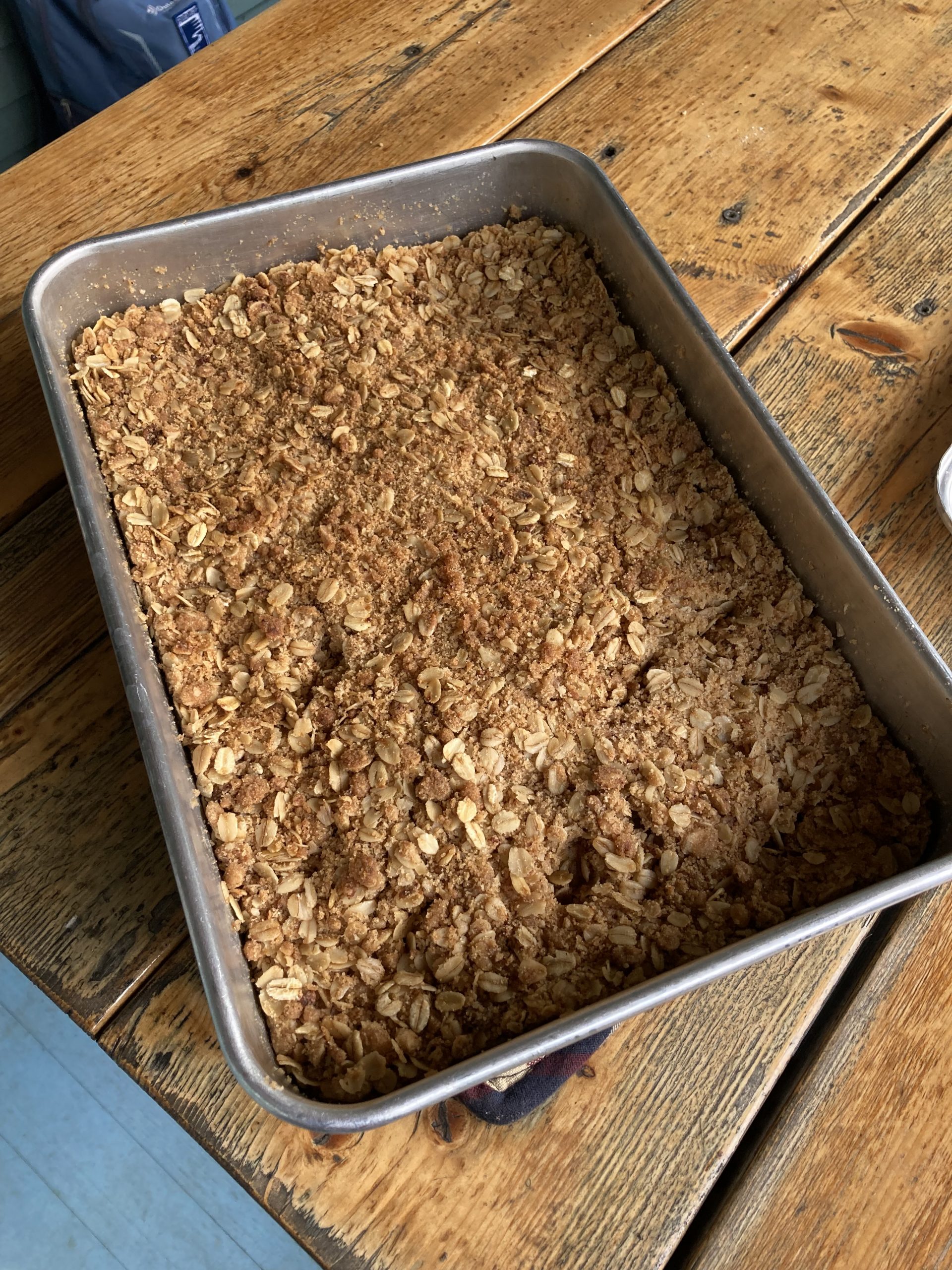
This morning (Wednesday), I got a bit of a late start because I made a double-batch apple crisp this morning, and the apples weren’t quite cooked yet. For the crisp, I used combination of northwest greening and haralred apples from the trees around Hjelm, and Mia and Wesley kindly helped me slice up the mountainous 8 cups of apples. When the crisp had finally cooked, I met up with Mia and Wesley, who had just finished adding stapes in p1. (check!)
Wednesday morning apple crisp
Next, Wesley and I headed out with Collins to finish up total demo at tplot and shoot a few more flowering plants at hegg in an area which is being renamed nrpal, or near pallida. Total demo is now done! (check!)
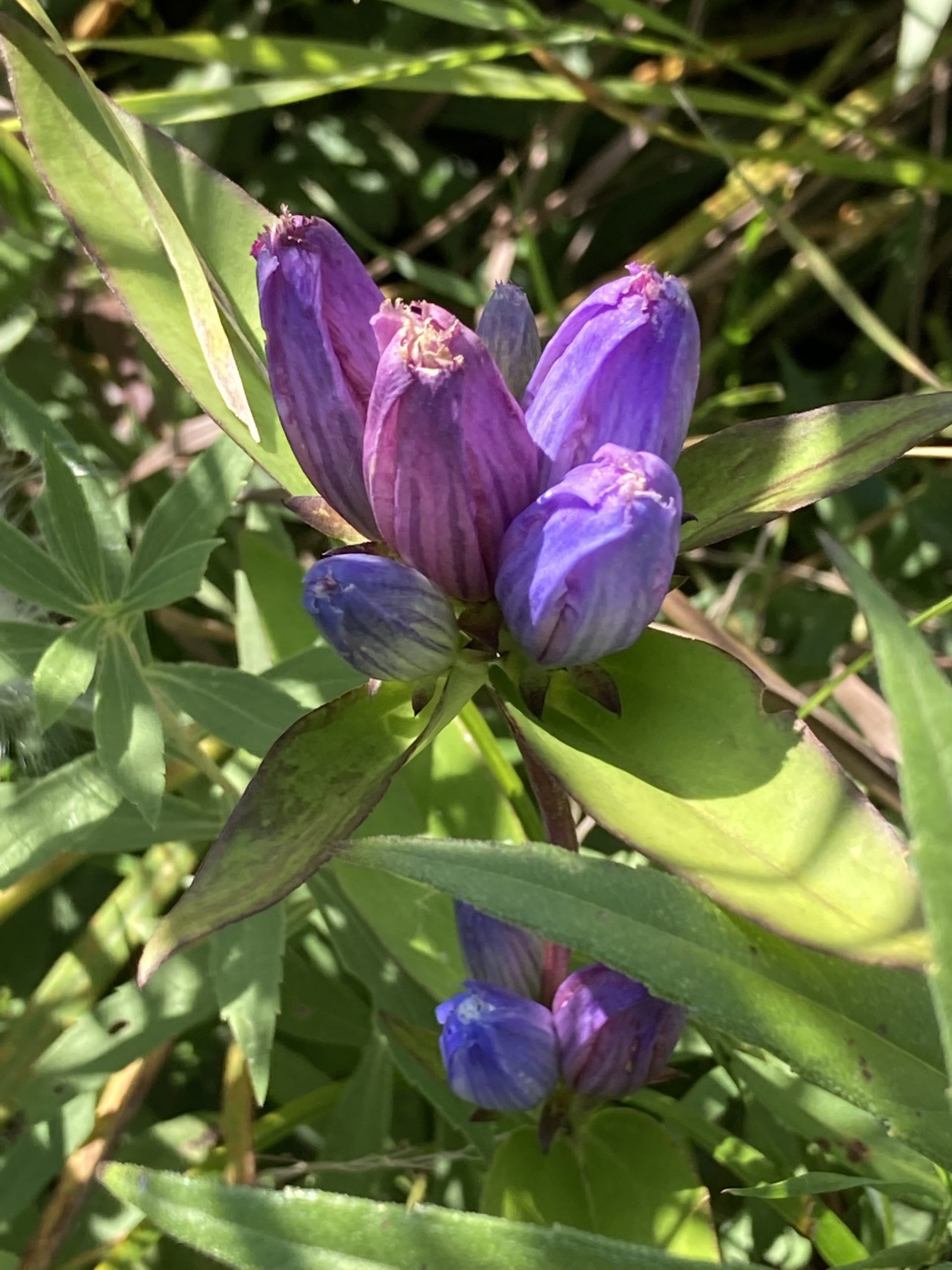
Bottle gentian at hegg
After lunch, Wesley and I tackled the remainder of the Andropogon harvest sites. Our record was a plot at kjs with 163 Andropogon culms! Andropogon harvests are now complete. (check!)
Daily Andropogon haul
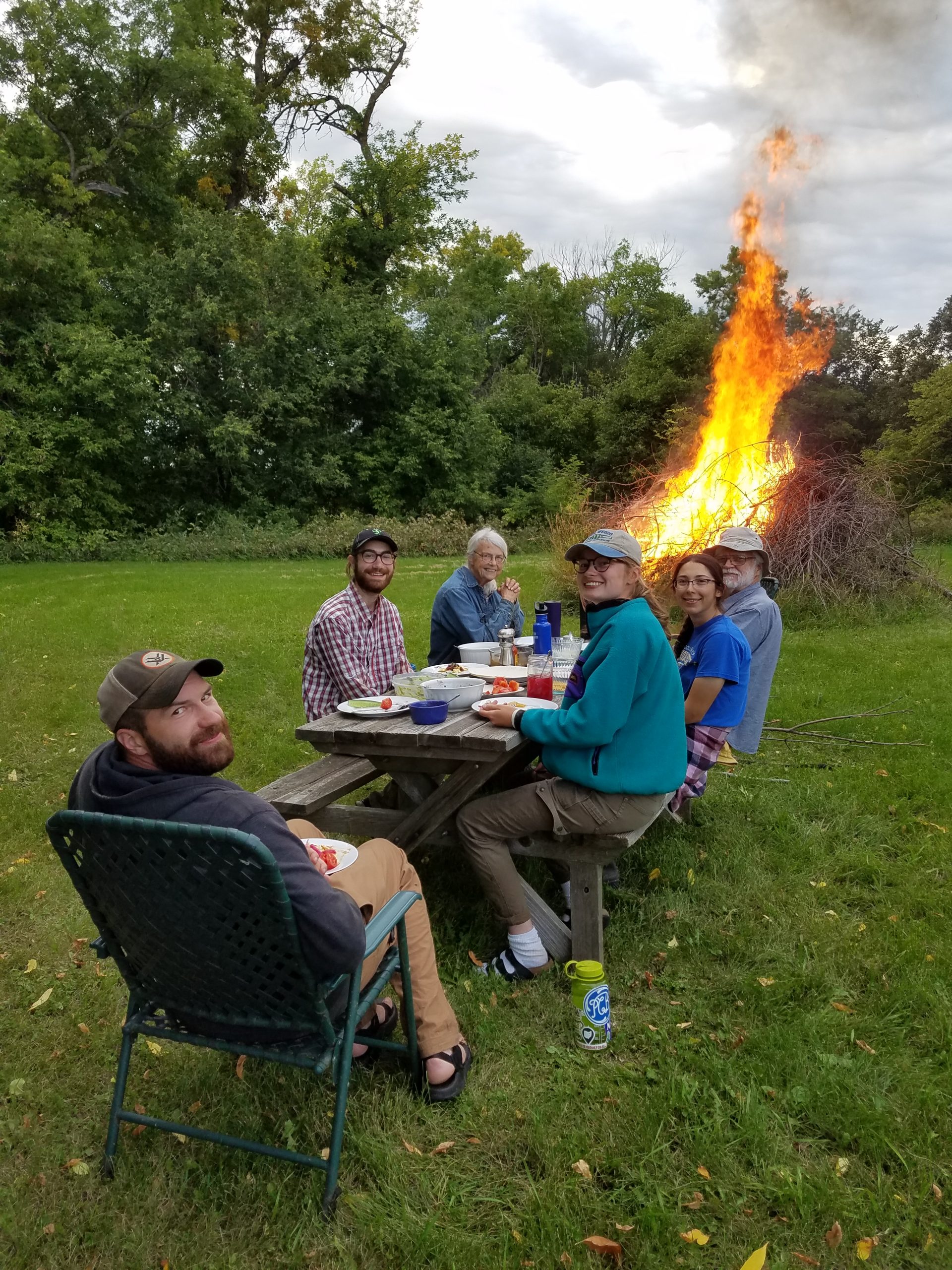
In the evening, we had another bonfire, and we were joined by Stuart’s parents. The rest of the crew cooked up some fabulous breakfast burritos for dinner, crowned with Mia’s famous pickled red onions. The wind had been gusting all afternoon, and now it pitched in to help fan the flames of the bonfire, which caught rapidly. We ended the day with some delicious home-grown apple crisp!
Today was indisputably exciting for all parties at the Echinacea Project and even the DNR.
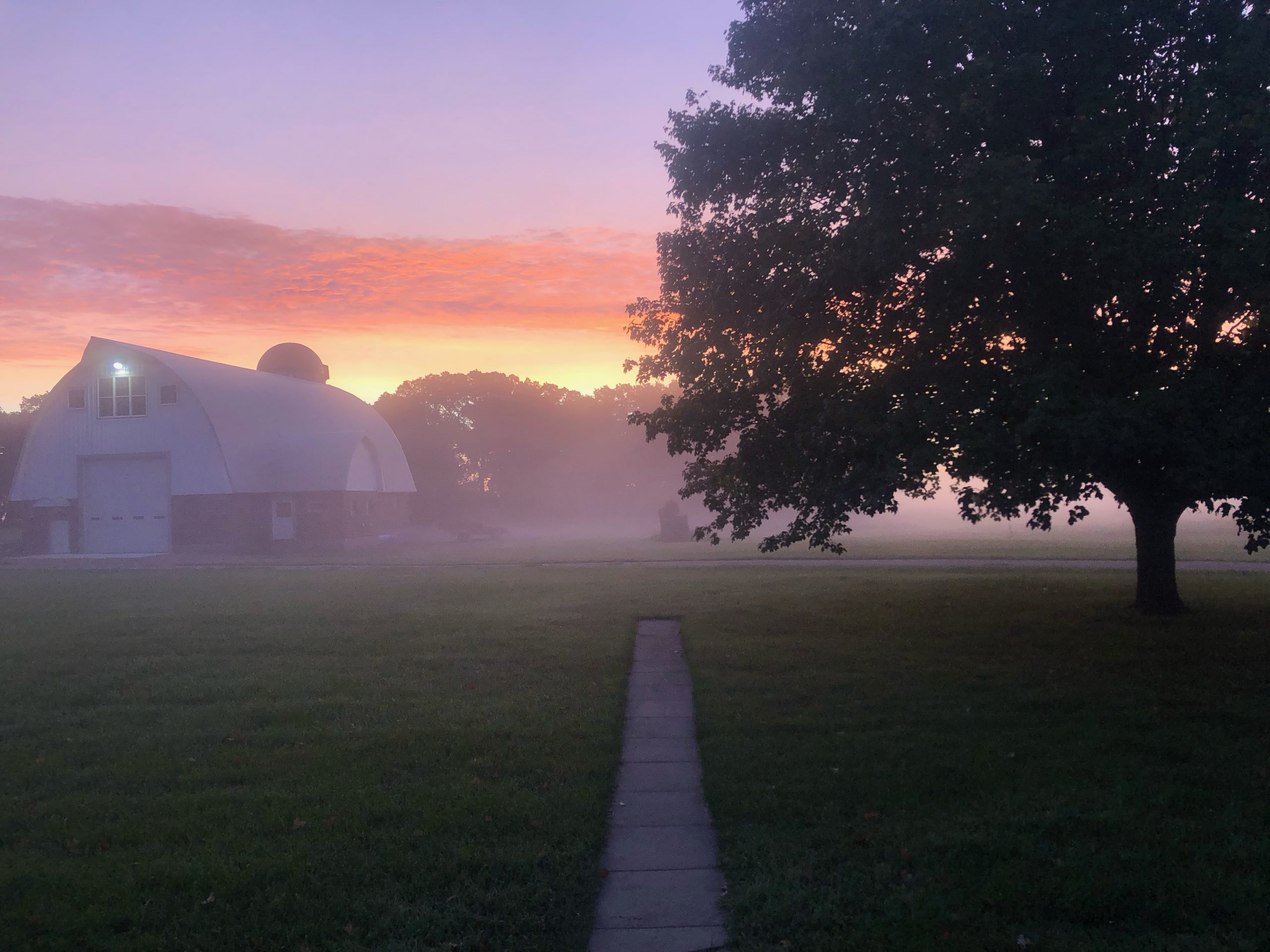
Started the day out with a nice sunrise at the Elk Lake house
First off, check the sunrise. Nice and foggy. Neat.
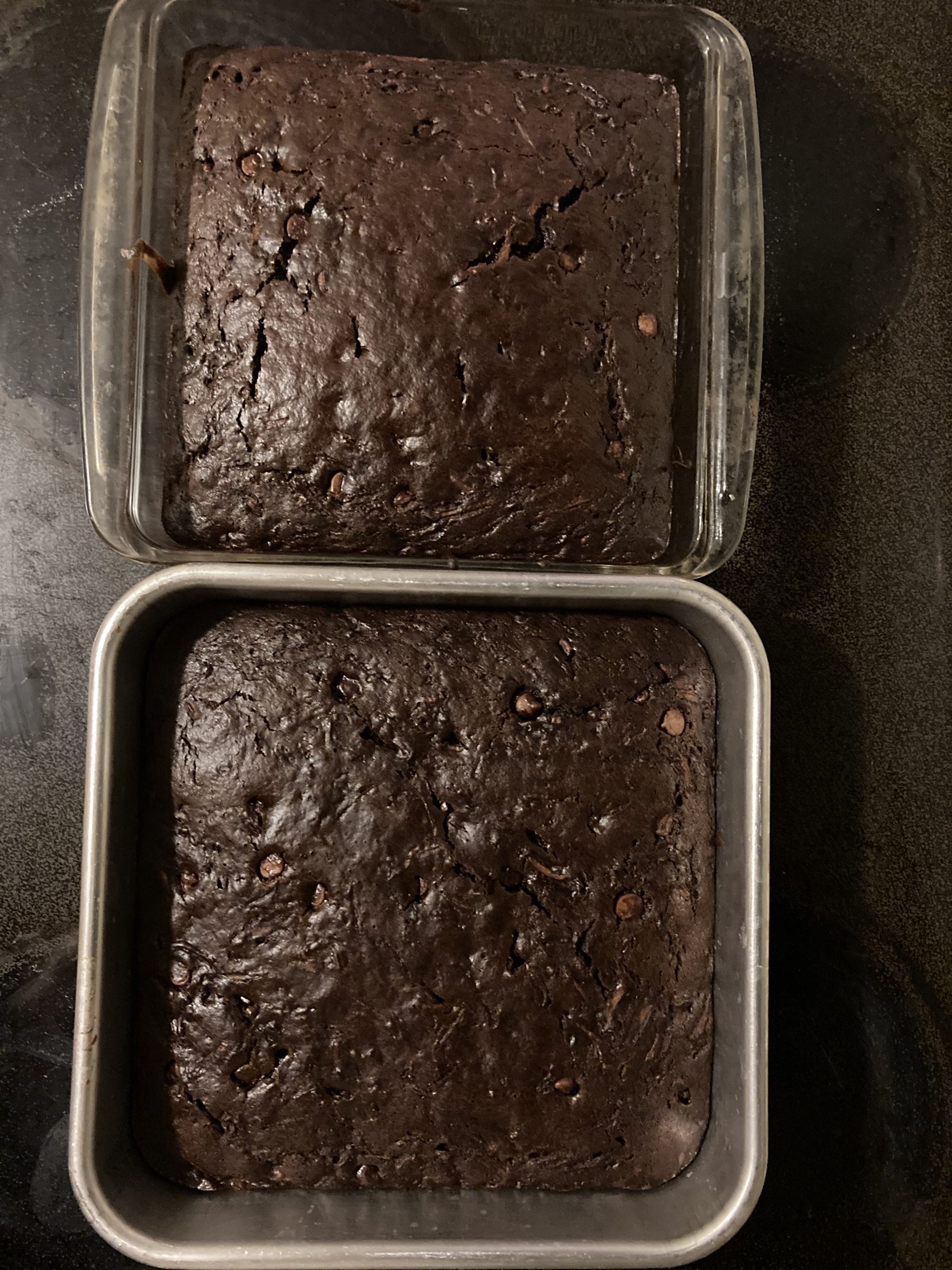
We woke around 6:30 this morning to make a cake to celebrate the 25th birthdays of the echinacea Stuart planted in 1996. We ended up making two cakes because the first one didn’t turn out exactly as anticipated (apparently accidentally substituting ingredients can cause problems) but the second ended up lovely.
We packed the good cake—the other we’ll eat later with copious quantities of ice cream to mask the questionable taste and texture—along with the noodles we made last night and headed to work.
Alex and I spent most of the work day playing with the GPS units, but I think Collins was feeling kind of cranky today because her case shut on both of my pinky fingers on separate occasions.
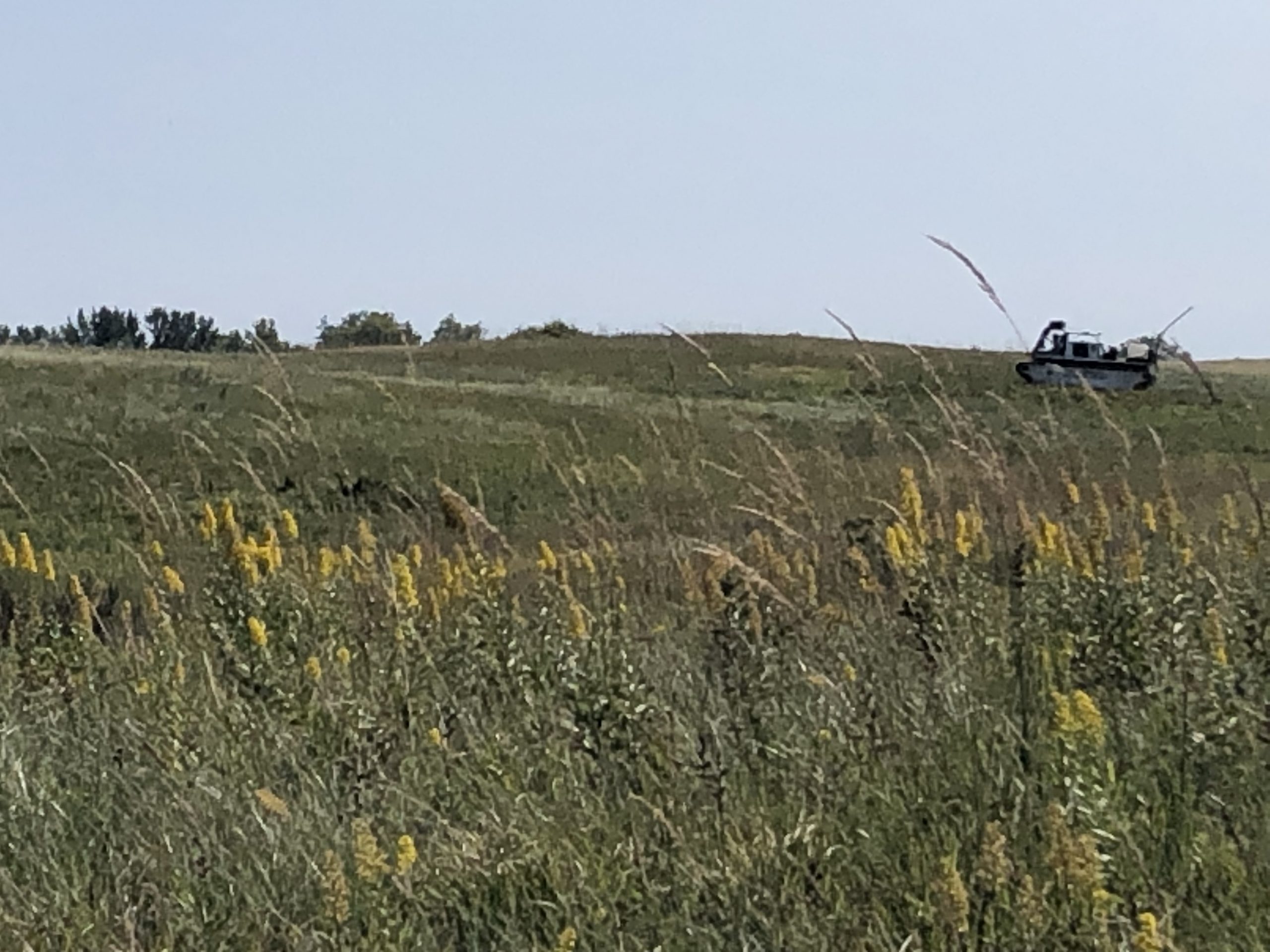
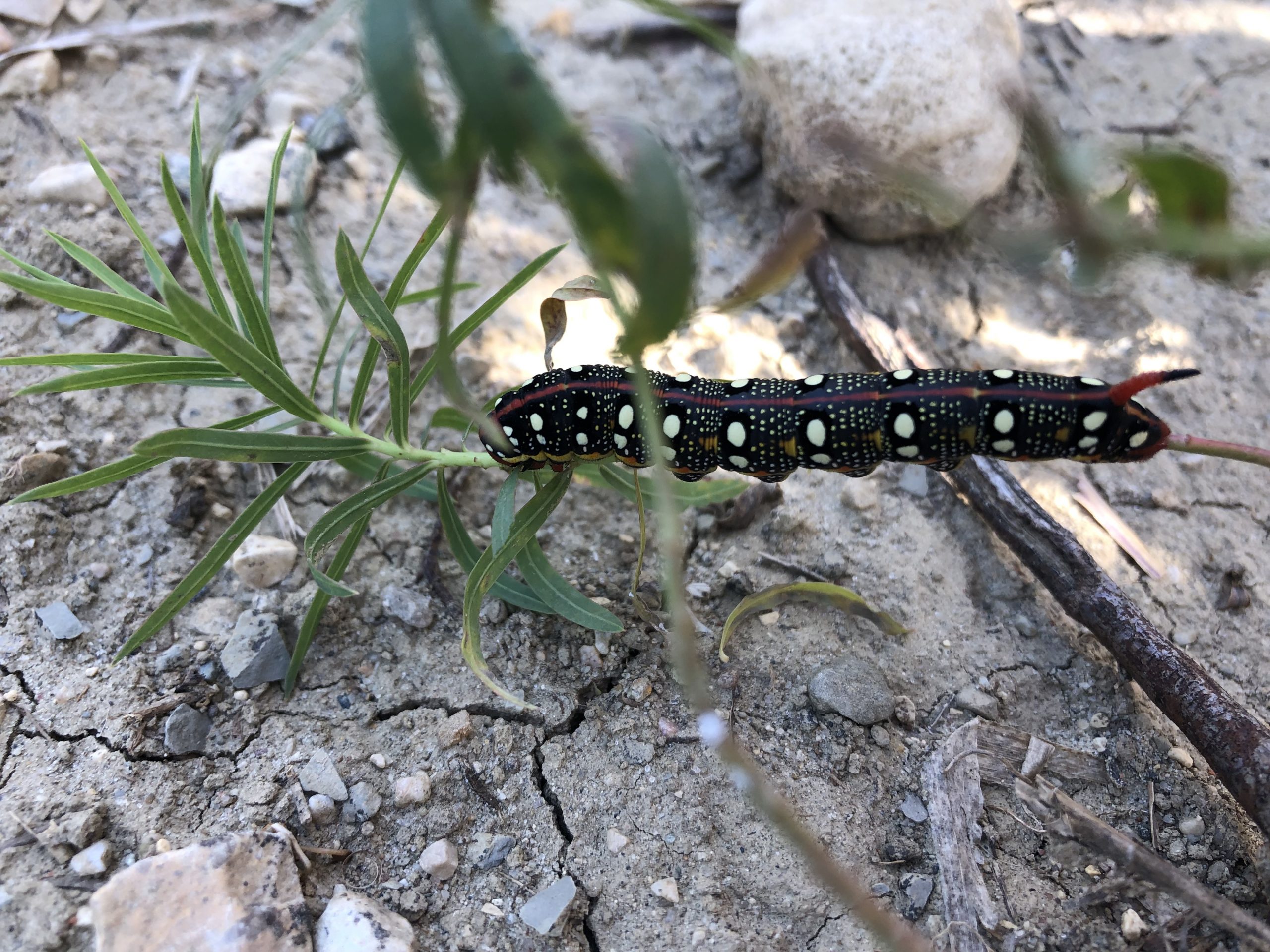
We saw the DNR at Hegg Lake in a Marsh Tracker, an amphibious vehicle that could be mistaken for a Marsh Trampler, as their main functions are the same.Once upon a time there was an echinacea right here. Ashes to ashes.A leafy spurge hawkmoth caterpillarNewly discovered flowering echinacea, 9 rows deep in the cornWe had some exciting finds in a corn field; the field has grown suspiciously larger over the years and is covering area that was once prairie remnant.
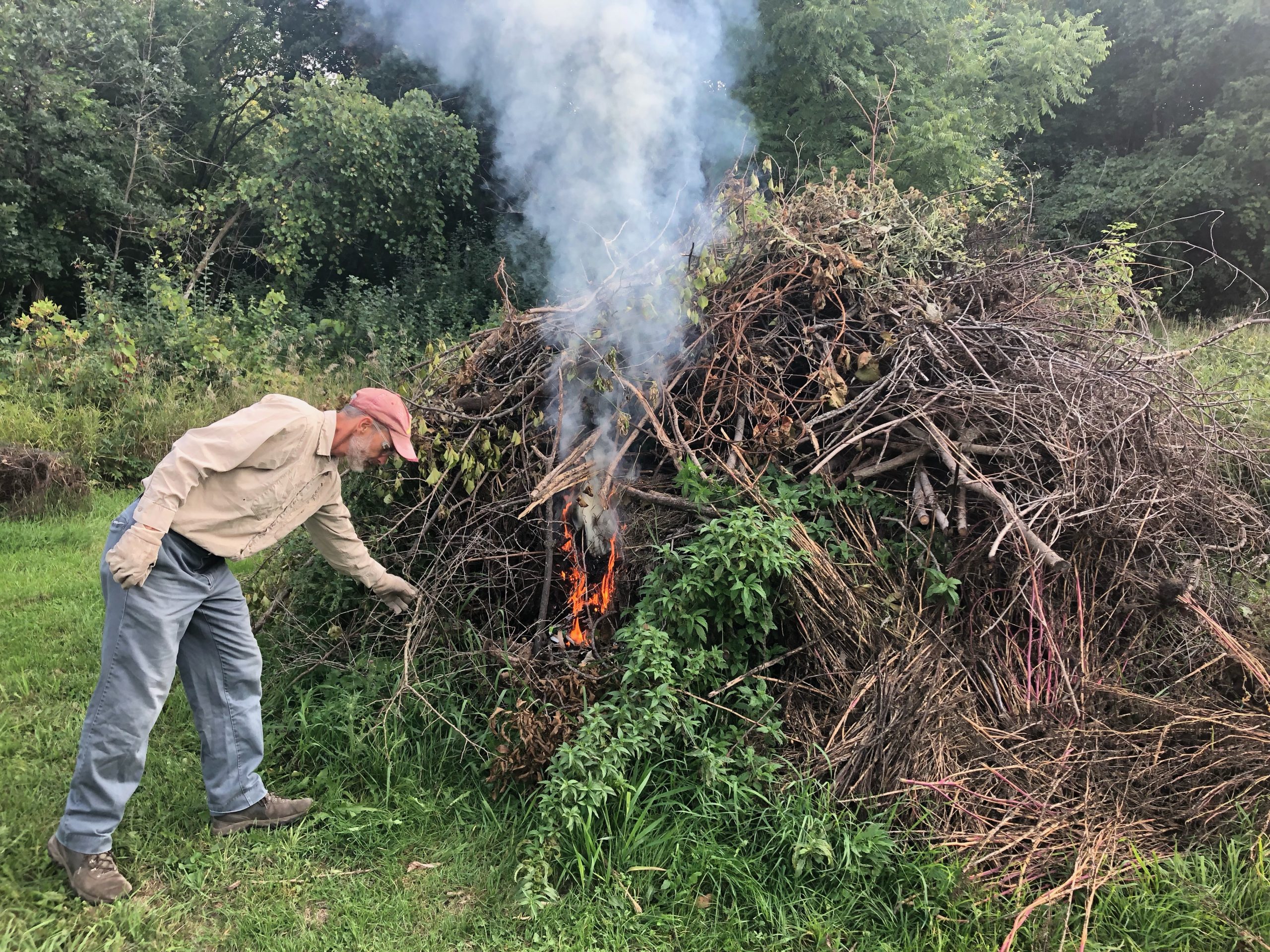
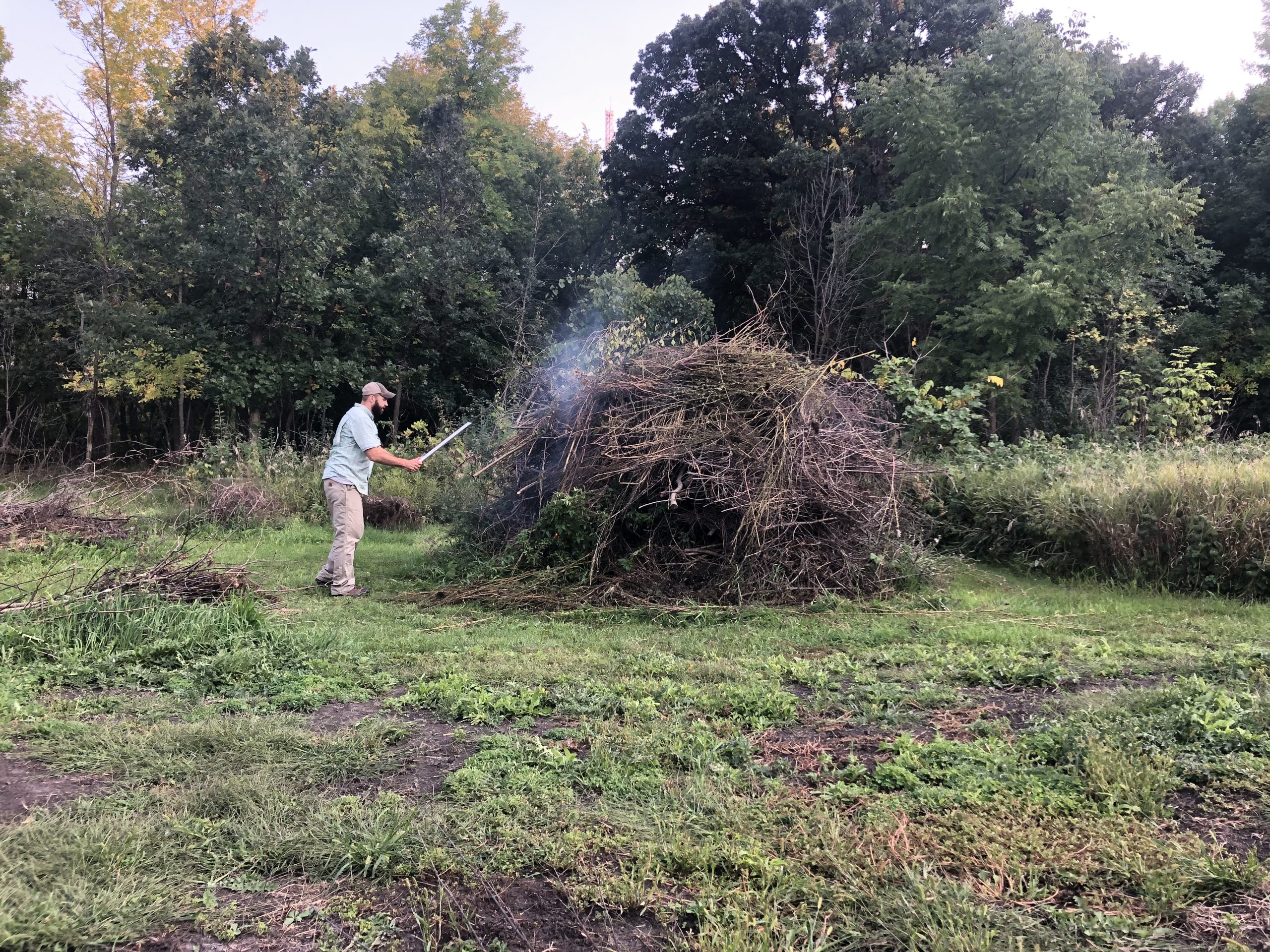
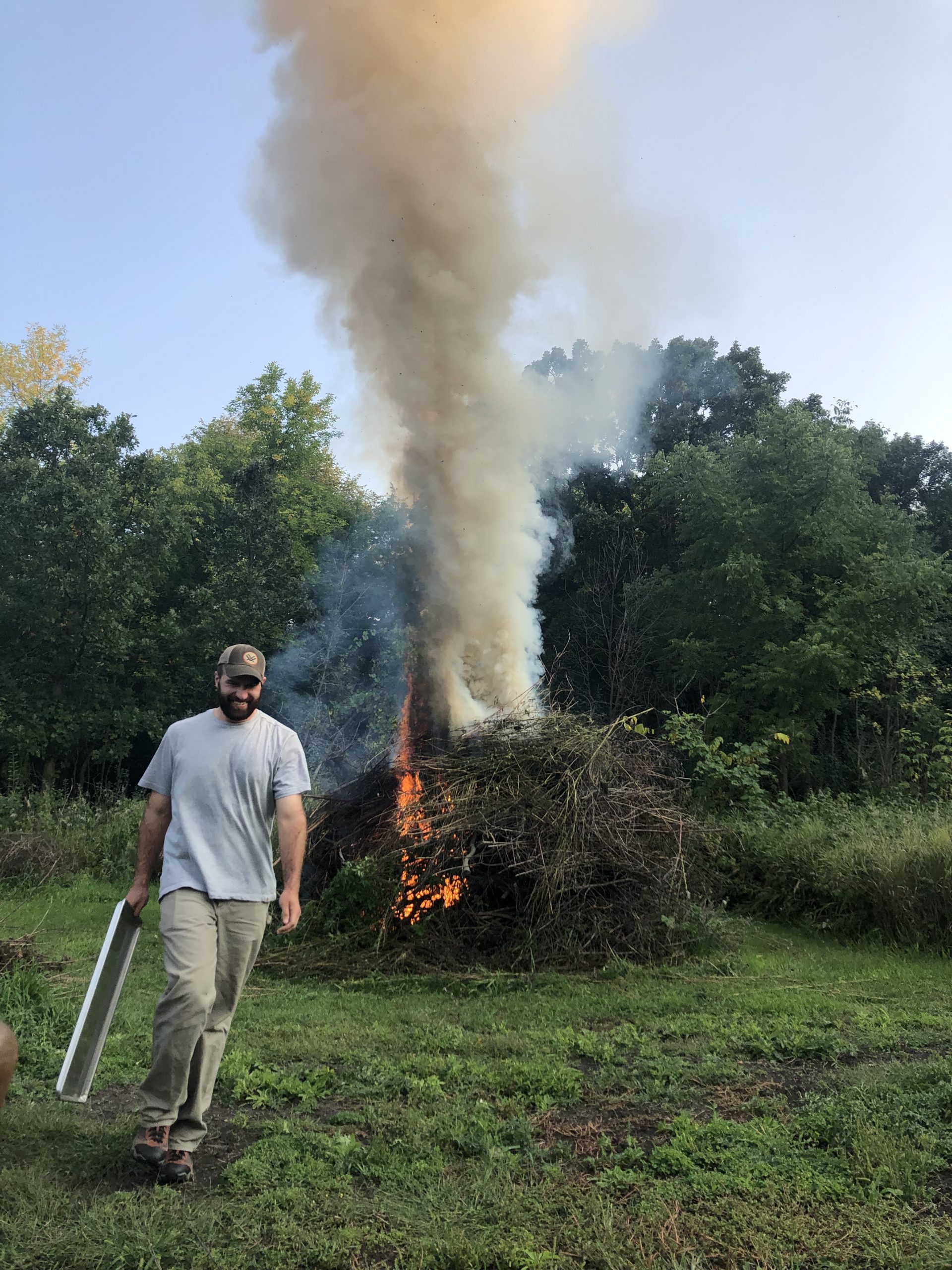
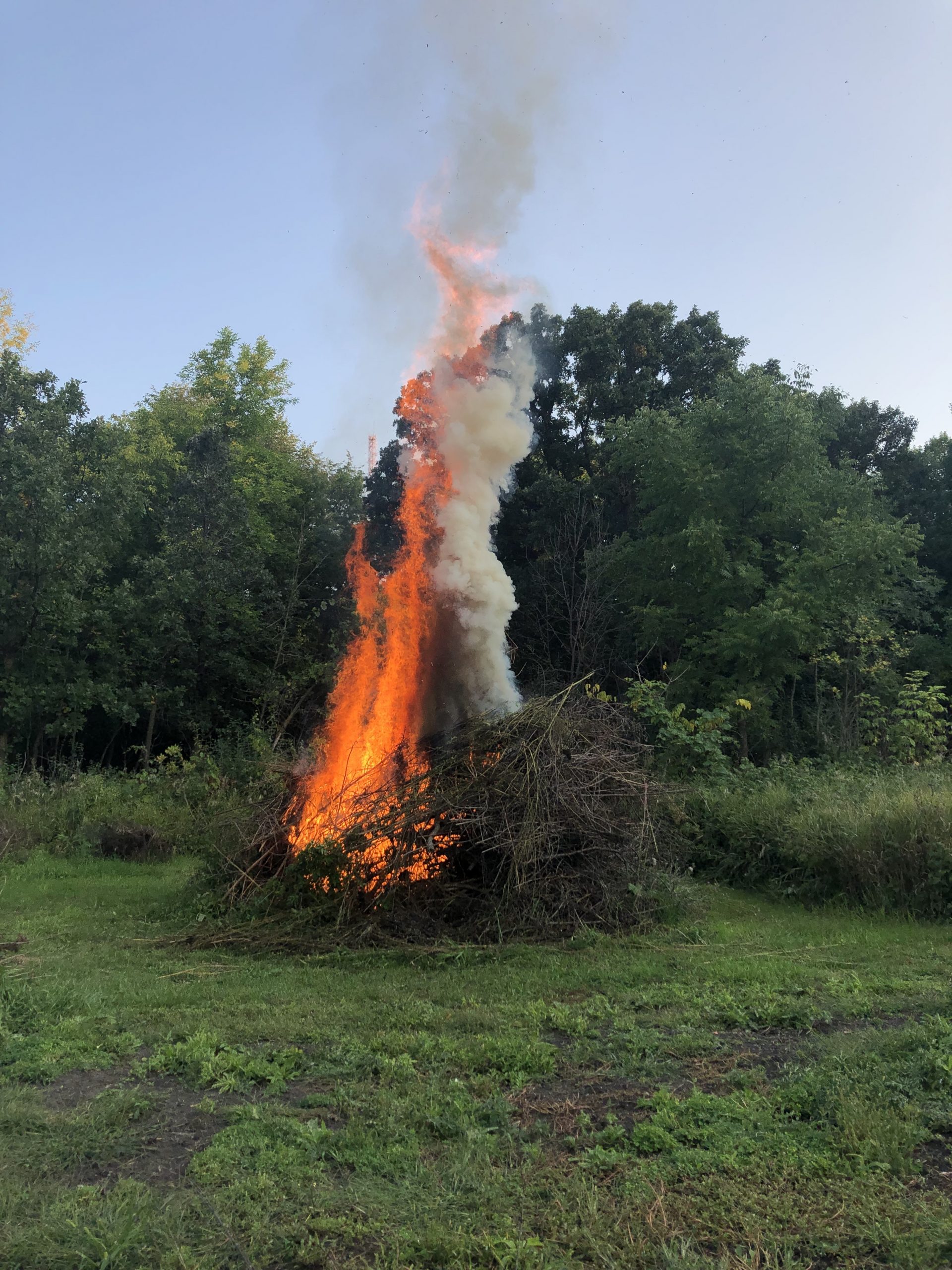
After work, we stayed at Hjelm because conditions were finally right to have a bonfire and get rid of some wood piles that had been accumulating. This bonfire also doubled as the birthday party for the ’96 plants.
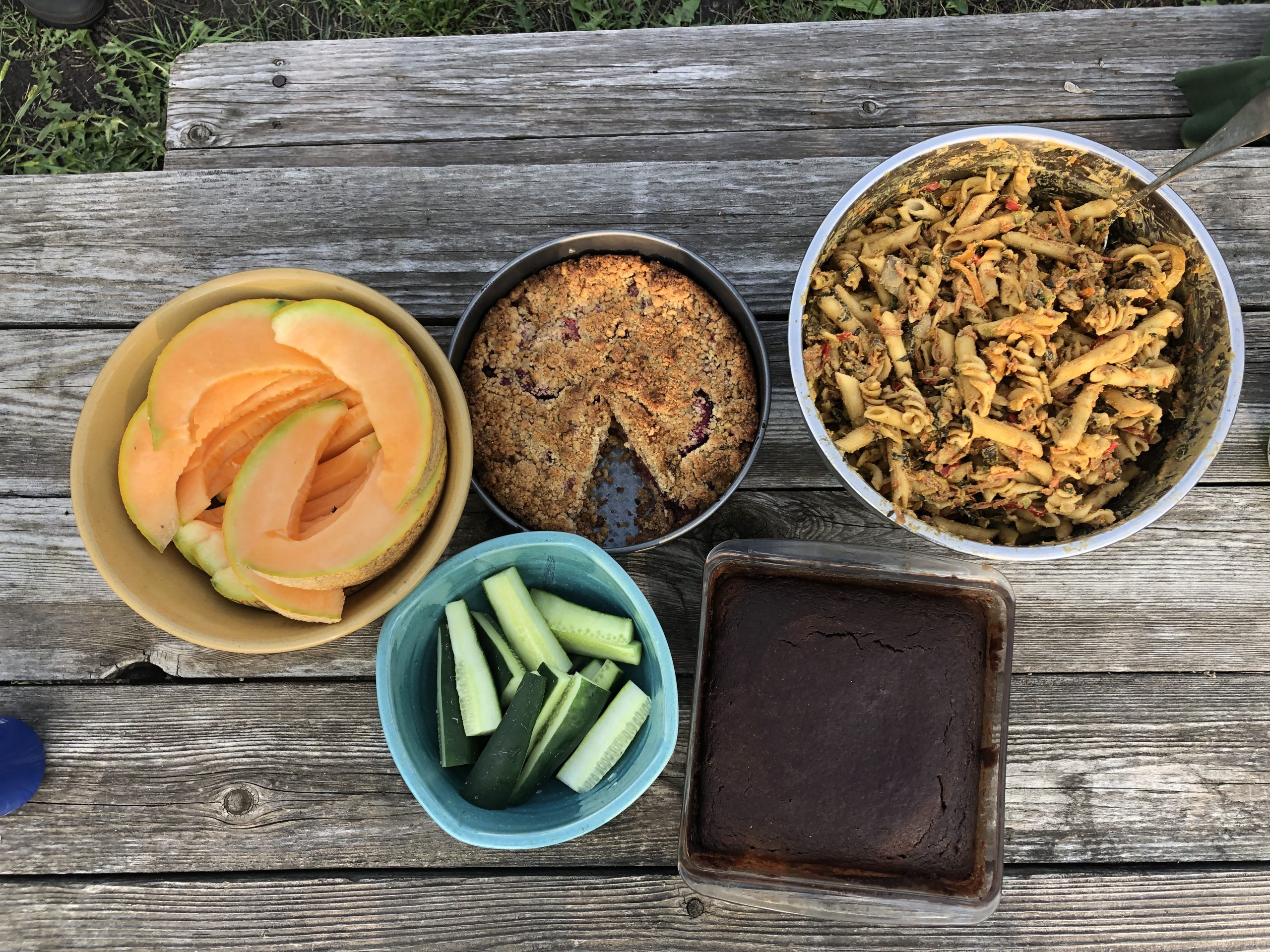
The birthday meal spread: cantaloupe, cucumbers, plum tart, chocolate cake and peanut pastaStuart lights the fireJared fans the flamesCool guys don’t look at explosions.Going on its own!
The bonfire had calmed down by around 8pm, when we packed it up and called it a day. The coals need to be cold to the touch tomorrow at 8am to be in line with regulations, so if the pile is still in any way “on fire,” it’ll be getting a dousing with a hose.
Huzzah, Wesley
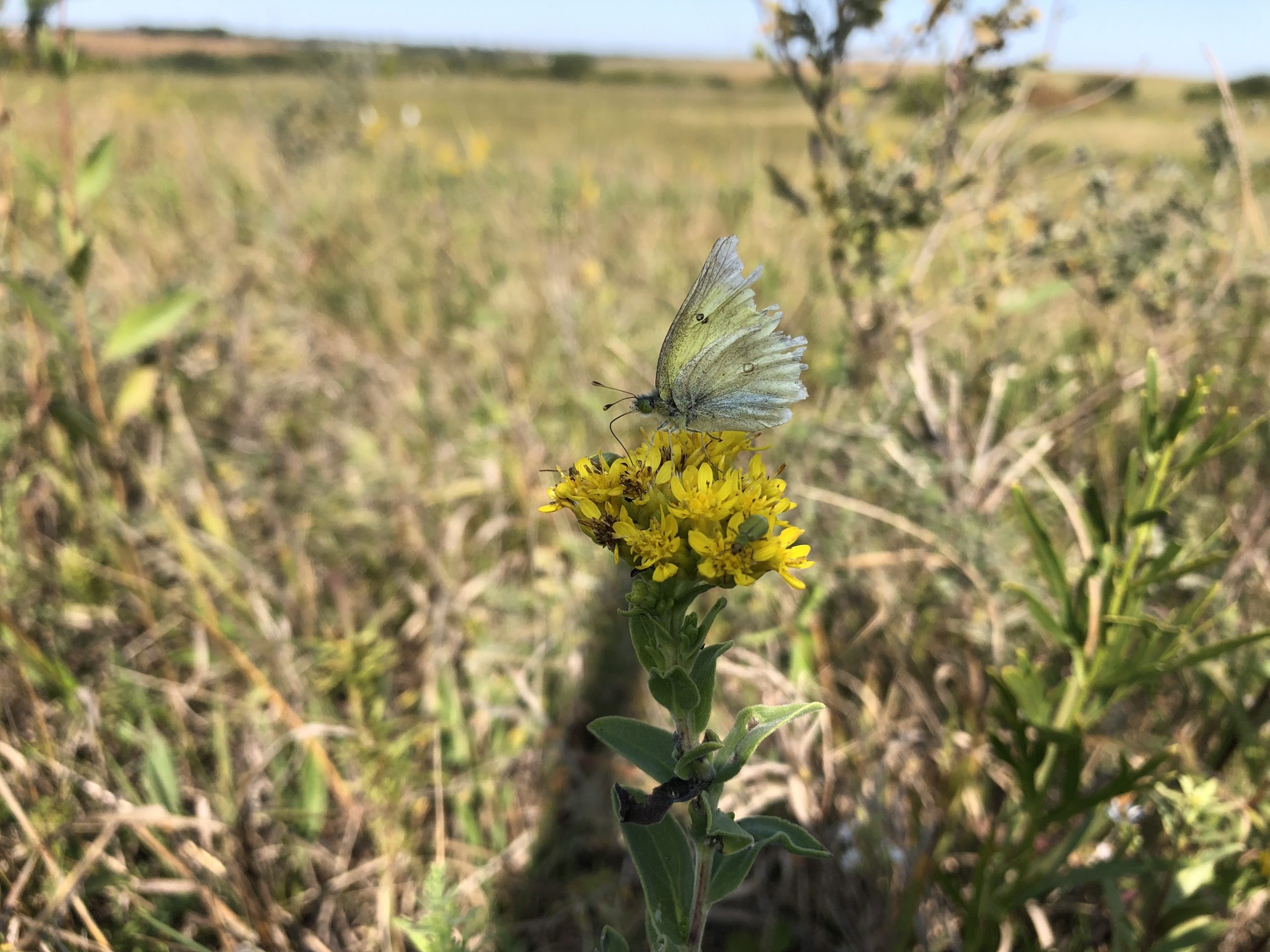
Last but not least, a butterfly. I think it’s probably some sort of sulfur that has seen better days.
We’ve been missing Laura, John, and Kennedy this week, but we’ve had to forge ahead without them. Today, Mia and Wesley finished rechecks while I staked random points at nice, eth, and koons for our Andropogon expedition later in the day. After staking, I met with Stuart to learn some R-Studio data wrangling skills. At lunch, Wesley reported on the Liatris pollinator observations – the team conducted 95 total observations this summer and mapped over 2,500 plants!
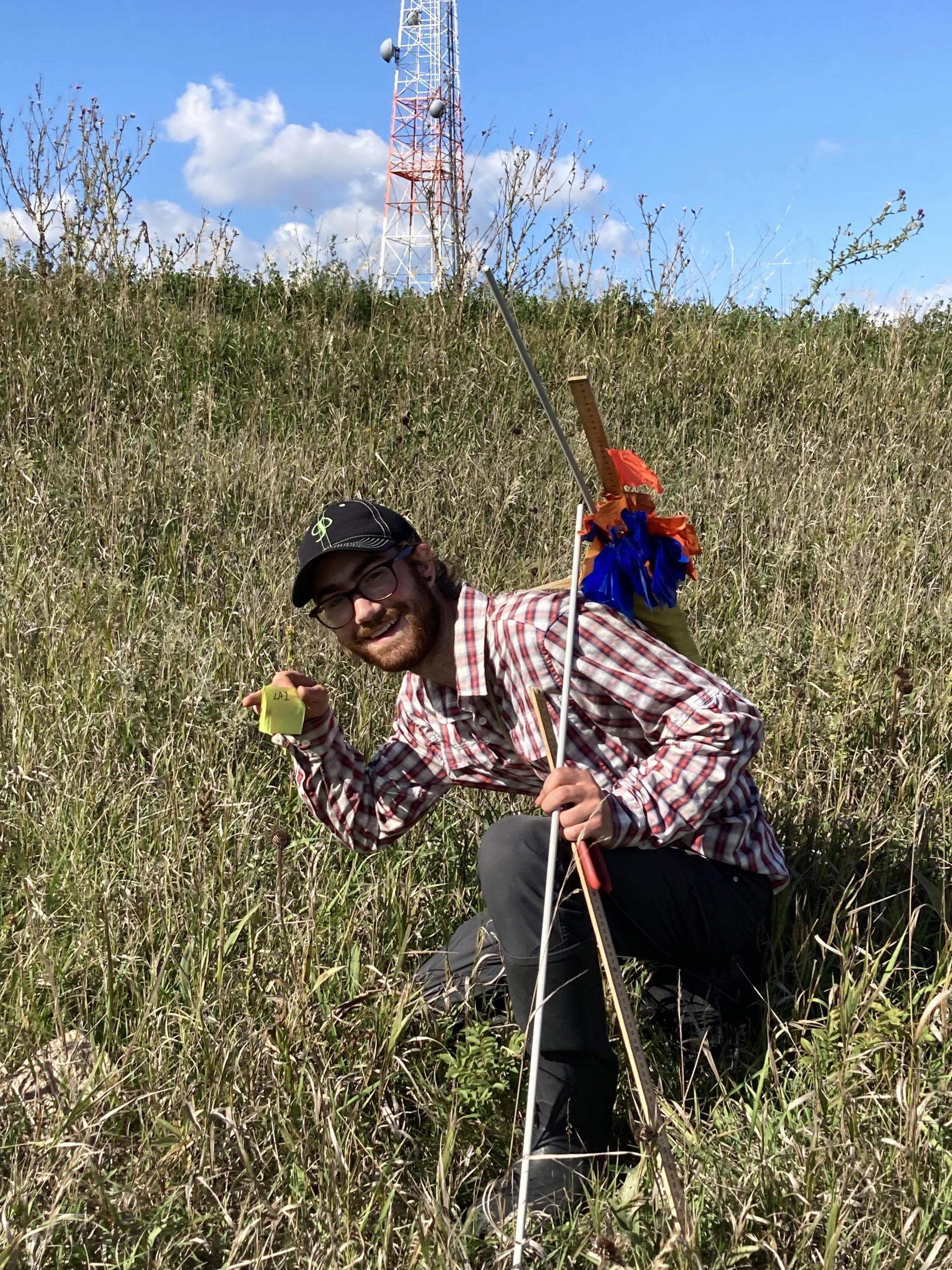
Wesley with the original Liatris plant: LA1
After lunch, we learned a new protocol for harvesting Andropogon gerardii (big bluestem). We visited a third of the random points at each site and counted and harvested all the Andropogon culms within one meter of the point. Jared and I collected three full bags of Andropogon at East Riley, a site which had been burned, but we didn’t find a single culm at the other sites (spp and on27).
Jared searching for Andropogon at Staffanson
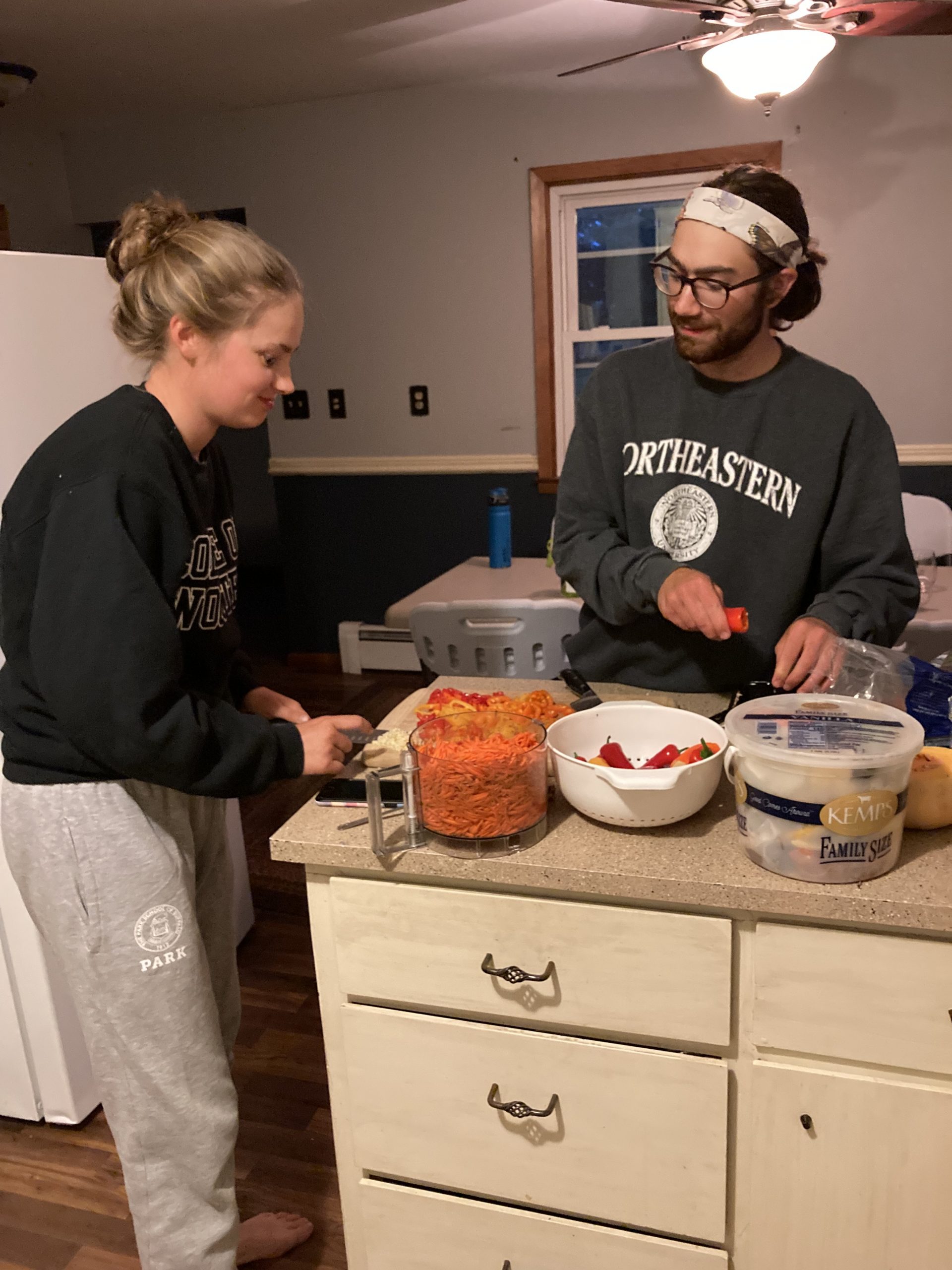
After work, the Elk Lake house spent all evening cooking up a giant batch of Wesley’s peanut noodles in preparation for the bonfire tomorrow night. Mia wisely used the food processor to grate the carrots, so no fingers were lost. We doubled the recipe, so there were an awful lot of carrots!
Alex and I started my last day off with going to Hegg to do some total demo!!! Alex and I headed out and started our journey. We got out there and started to get some points where the echinachea is thanks to Darwin (the gps). We were just about to start when I realized we forgot our visors. So we were like “Oh Kennedy can get them on her way here after practice”. But sadly practice was running late and she wouldn’t get there early enough. So I headed back to Hjelm to retrieve our visors. By the time I got back to Hegg Alex mapped a good majority of the sight. A little while later Kennedy arrived just in time as we started!!! We finished in no time and brought the picnic table up onto the porch for lunch.
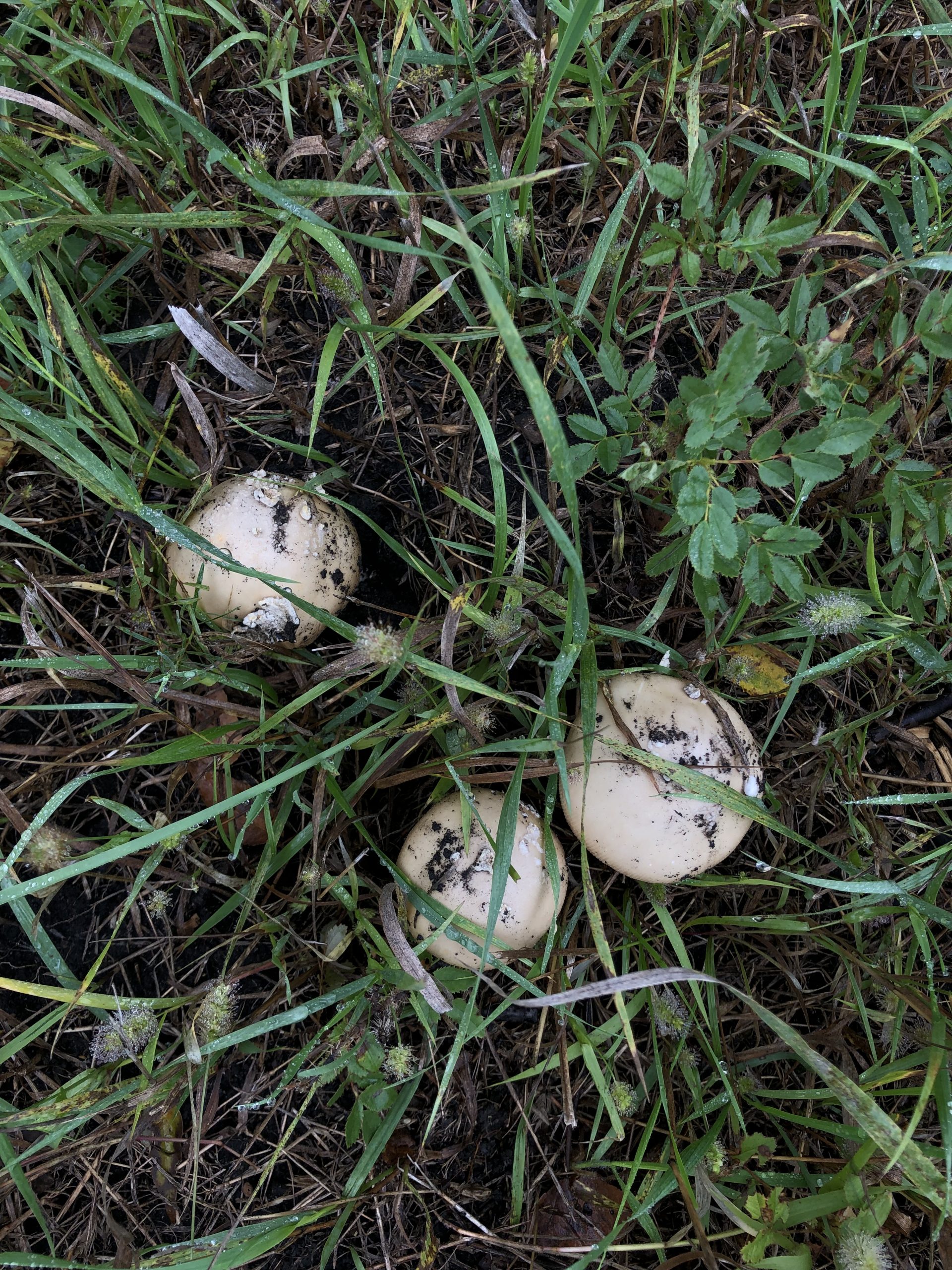
We got cake on our last day! Thanks to Mia! I cut the cake and of course Kennedy had to give me a little trouble on how I was cutting it! Well to be fair it’s hard to cut a cake into five pieces! After lunch we headed out to P1. We were working on rechecks!! It took a good amount of the afternoon and we ended up finding lots of mushrooms out there! AND THE SECOND SMALLEST MUSHROOM IN THE WORLD!!!
After we continued P1 we headed up to clean out our bags and say our goodbyes. Goodbye Team Echinachea!!! I’m going to miss all of you so much!!! Want to know what I learned over the summer, is that you never full appreciate something until you have to say goodbye. The team taught me well, and i’m glad I was there to be a part of it.
This was my first week with the Echinacea Project, and I feel like I have big shoes to fill after all the fantastic team members earlier this summer. It’s been an eventful week, and I think I’ve seen more Liatris plants than Echinacea so far.
Laura, Alex, and Darwin flagging Liatris
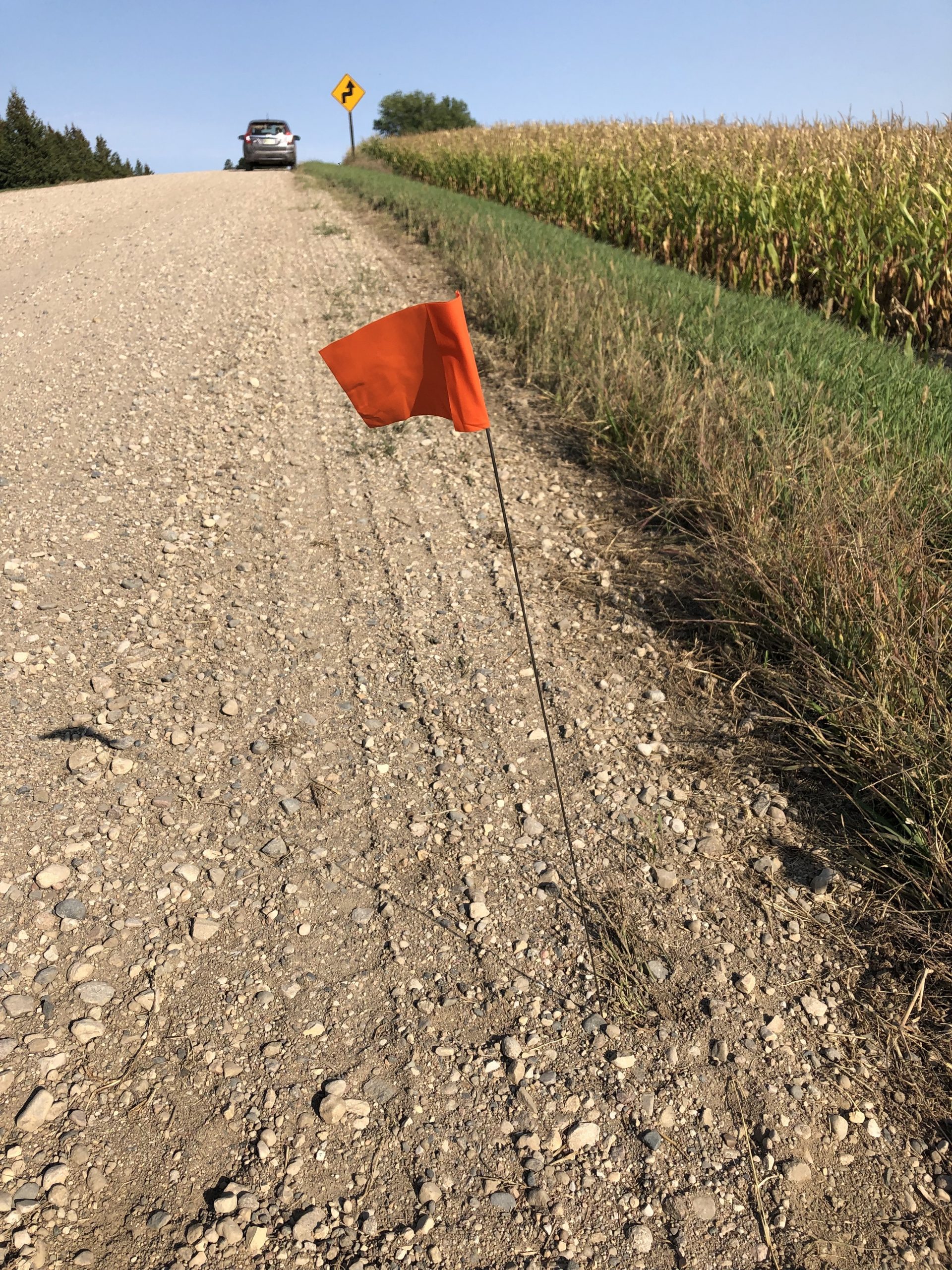
This week, the team focused on completing the project to map the Liatris aspera plants at all the sites. We spent a lot of time at Koons Hill, which supposedly had only 200 plants, but we found over 600! For the first time all summer, the team had to contend with rain, but we finally finished rechecking Koons Hill today, and we revisited all the sites to pull the neon flags, which had formerly marked the Liatris plants.
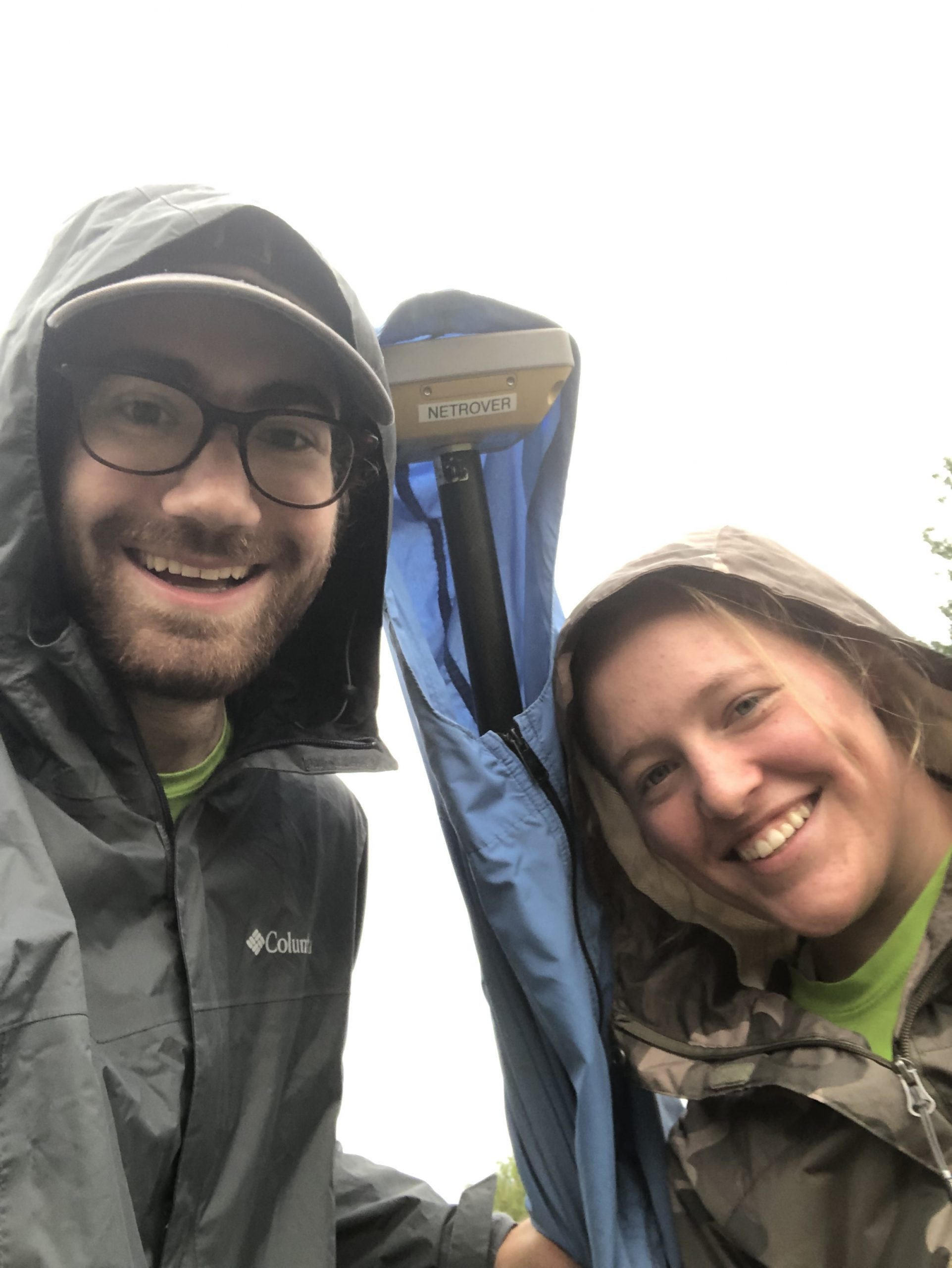
Wesley, Collins, and Kennedy braving the rain
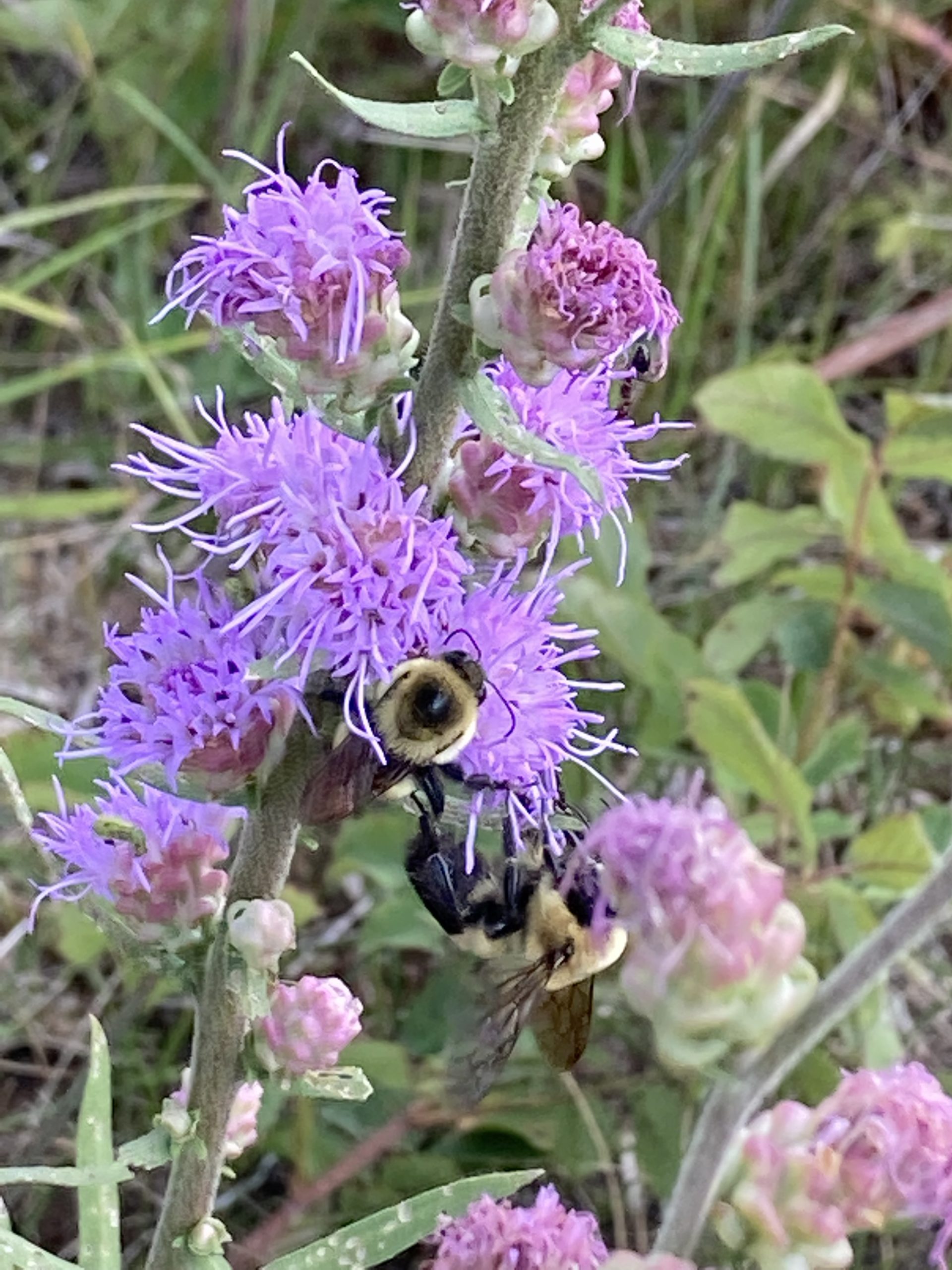
We weren’t the only ones visiting the Liatris plants. This afternoon, we spotted numerous pollinators, including several bumblebees and a monarch, which were enjoying a sweet nectar treat.
Bumblebees on LiatrisMonarch on Liatris
At the end of the day, the wasps wanted to share our sweet cantaloupe as well, but fortunately, Wesley devised a system involving a tupperware and some ice packs, which encouraged them to chill out.