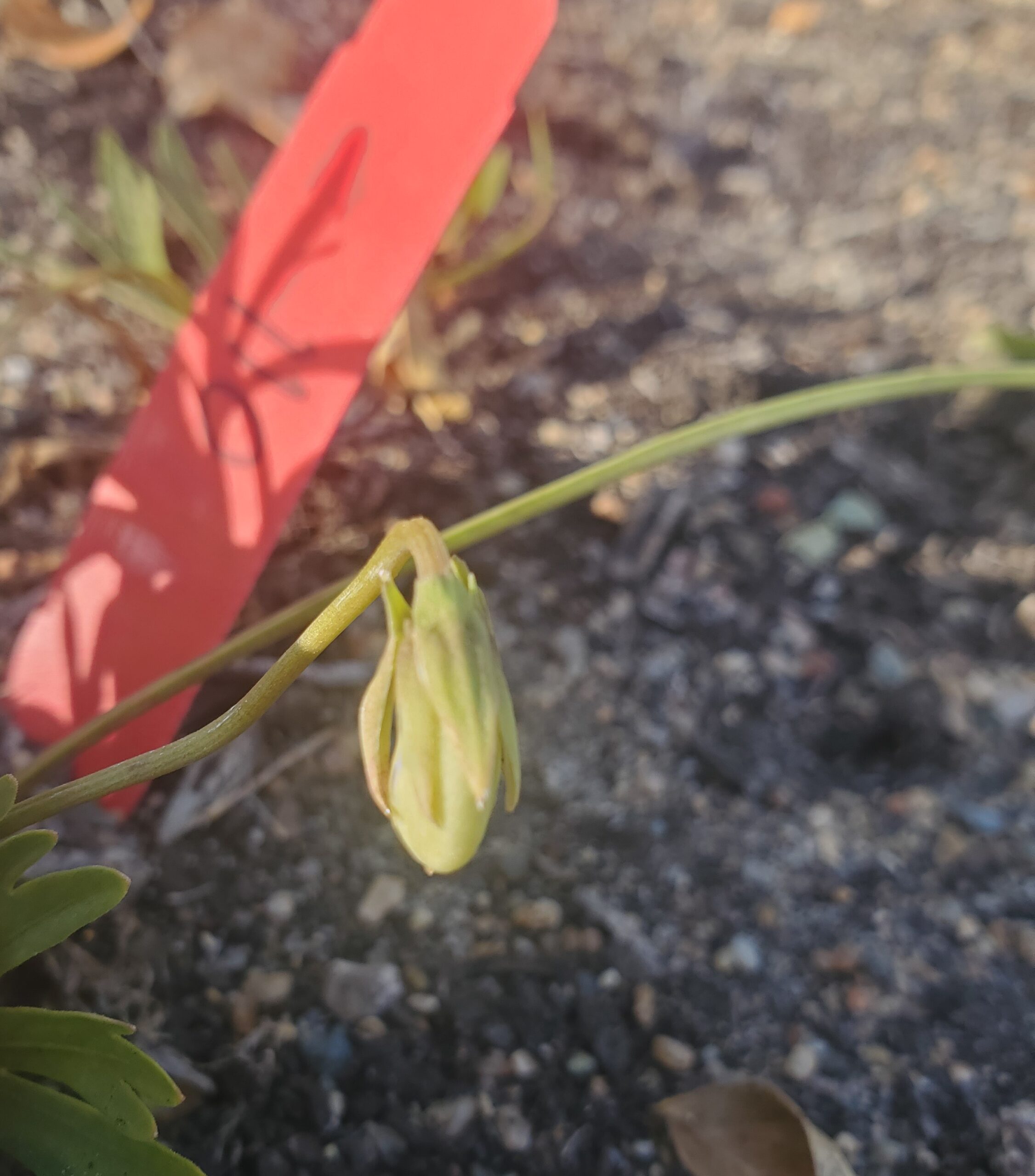
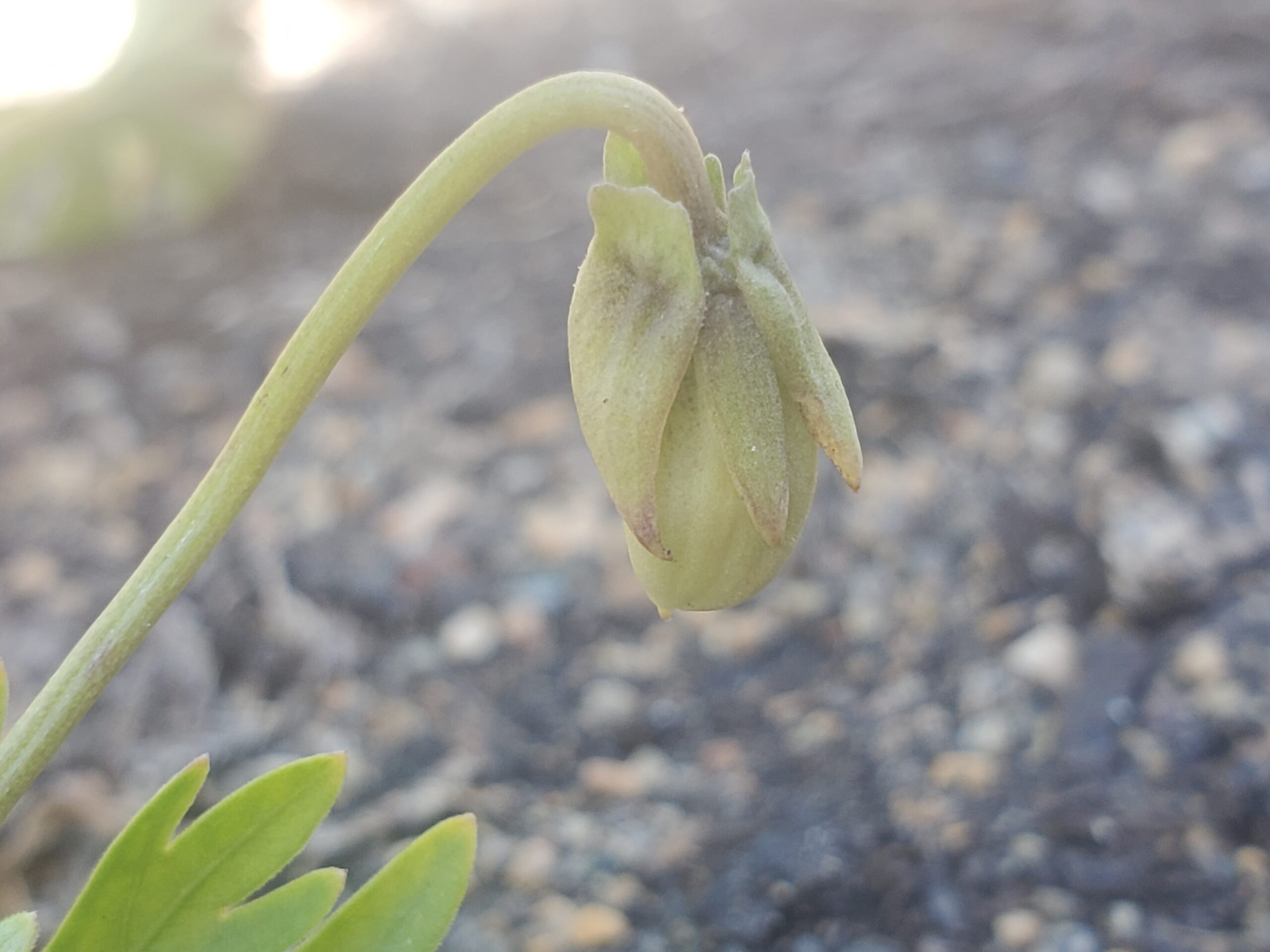
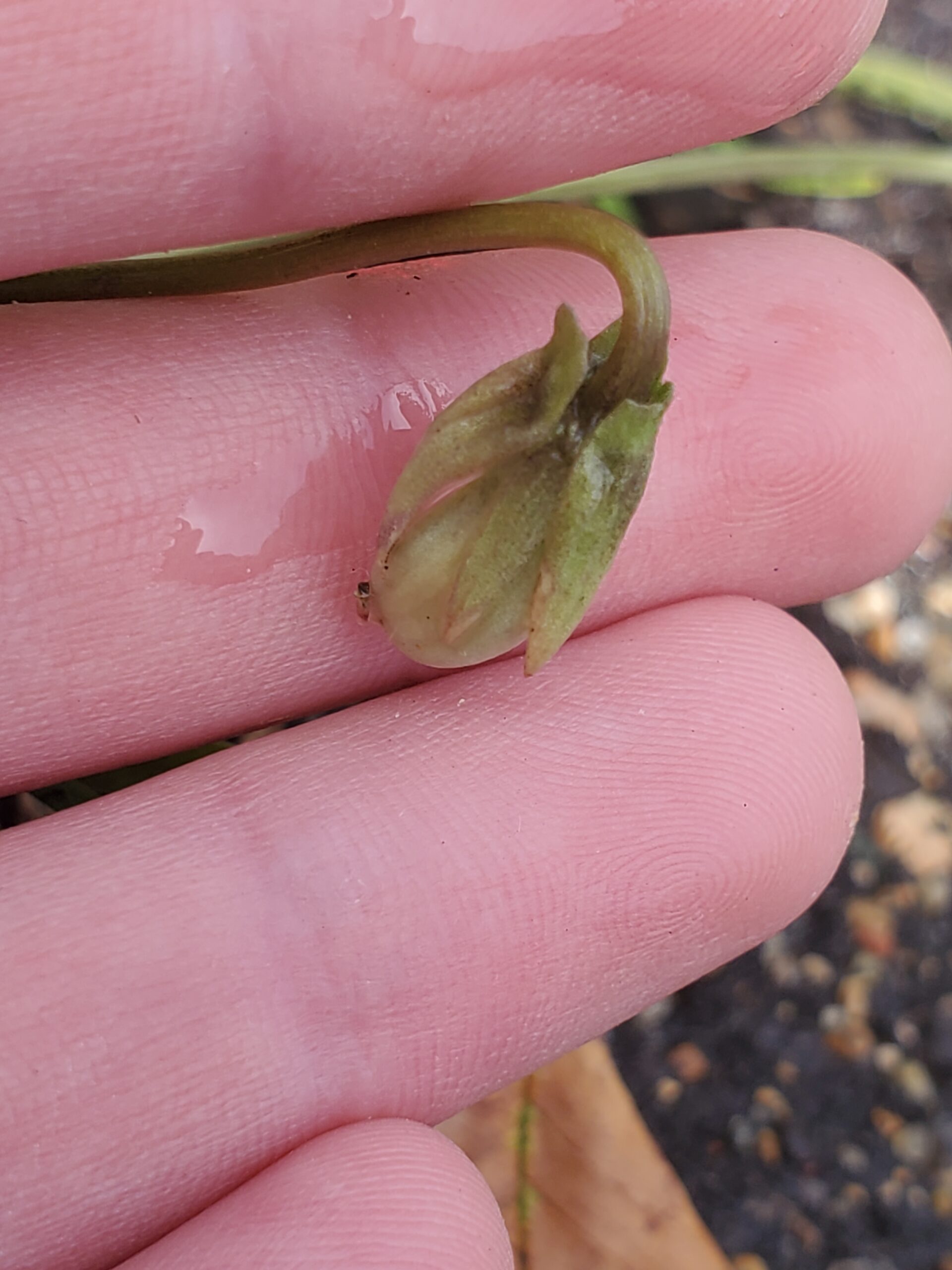
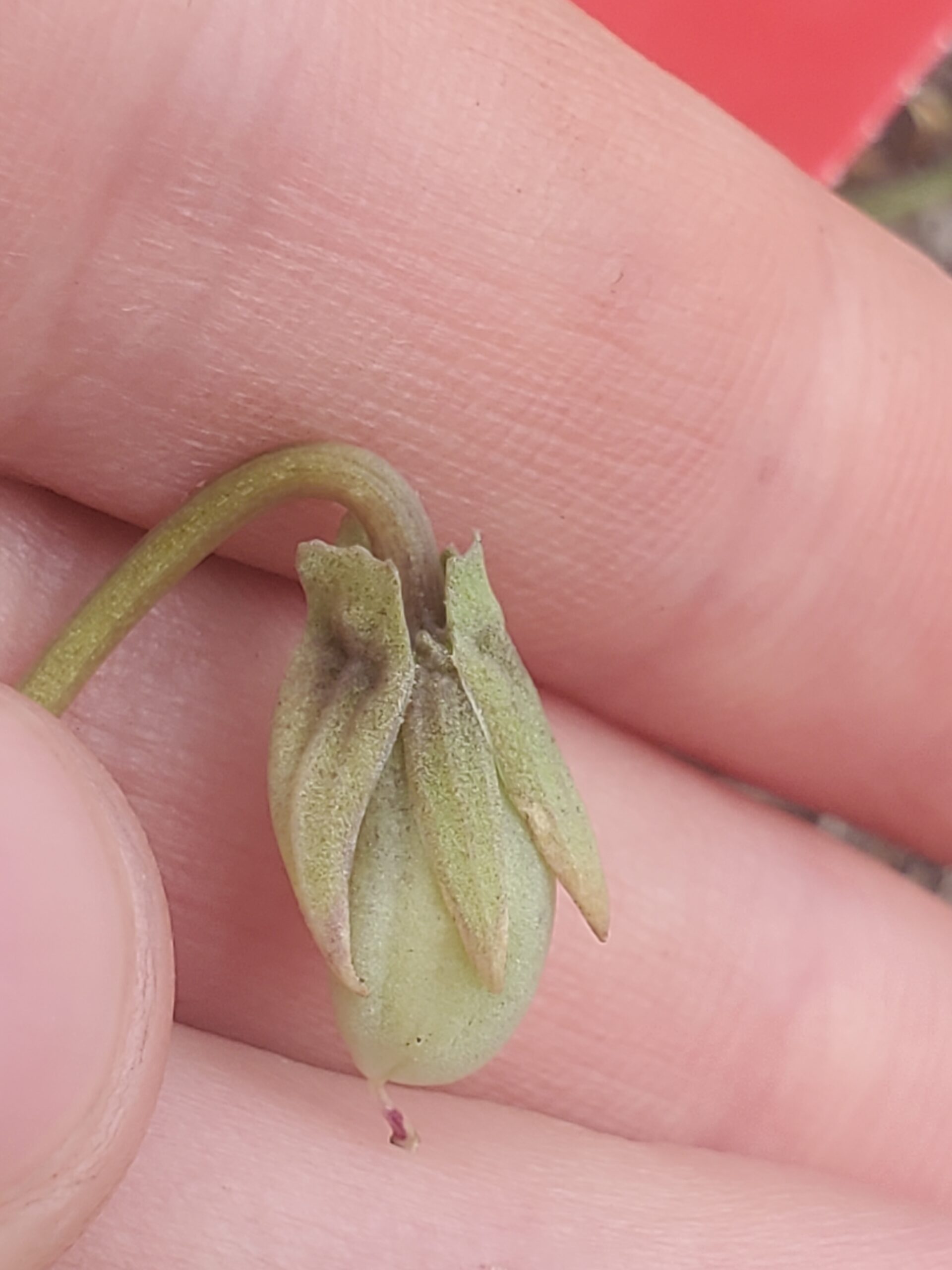
The Viola propagation tub Team Echinacea installed this past summer was designed with a few goals in mind. First of all, we wanted the tub to produce Viola pedatifida seed that could be used to help seed this important spring native throughout our remnants and experimental plots. We have already seen a pretty good return on our investment from the seed production end, just this fall 10 ripe pods have been harvested each containing between 20 and 30 seeds so this season around 250 seeds have been collected. Additionally, 9 Immature pods were collected before winterizing the plot, so hopefully, some good seeds will come from those as well. The second big goal we wanted to explore with this setup is learning more about small-scale production plots. Several other species have been known to grow well in beds like violets and hopefully, through managing this violet plot, we can learn more about what to expect. Other notable species that may go into future production plots are Ranunculus rhomboideus, Fragaria virginiana, Geum triflorum, and many others. Other good data to collect may come from the survivability of plants directly transferred from remnants and data on germination and survivability of seedlings.
Plot Layout and Plant Data
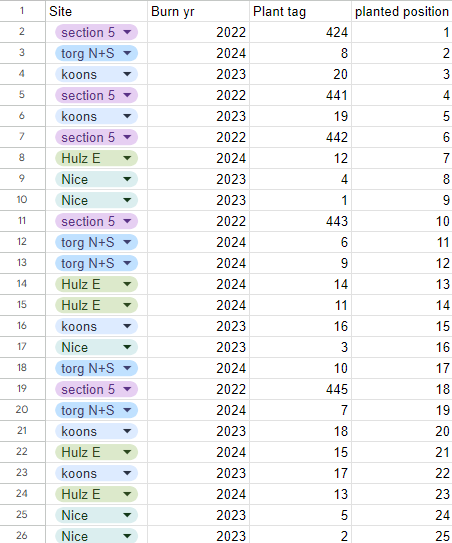
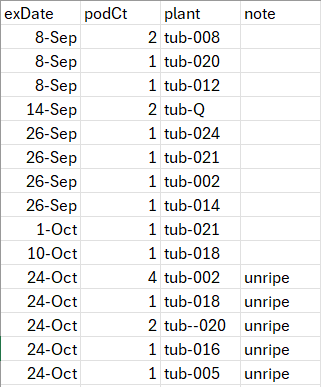
The plot is laid out below with the corresponding position numbers. The left spreadsheet lays out the ID and source for each plant, and the right contains data on pods collected so far.
Collecting Pods
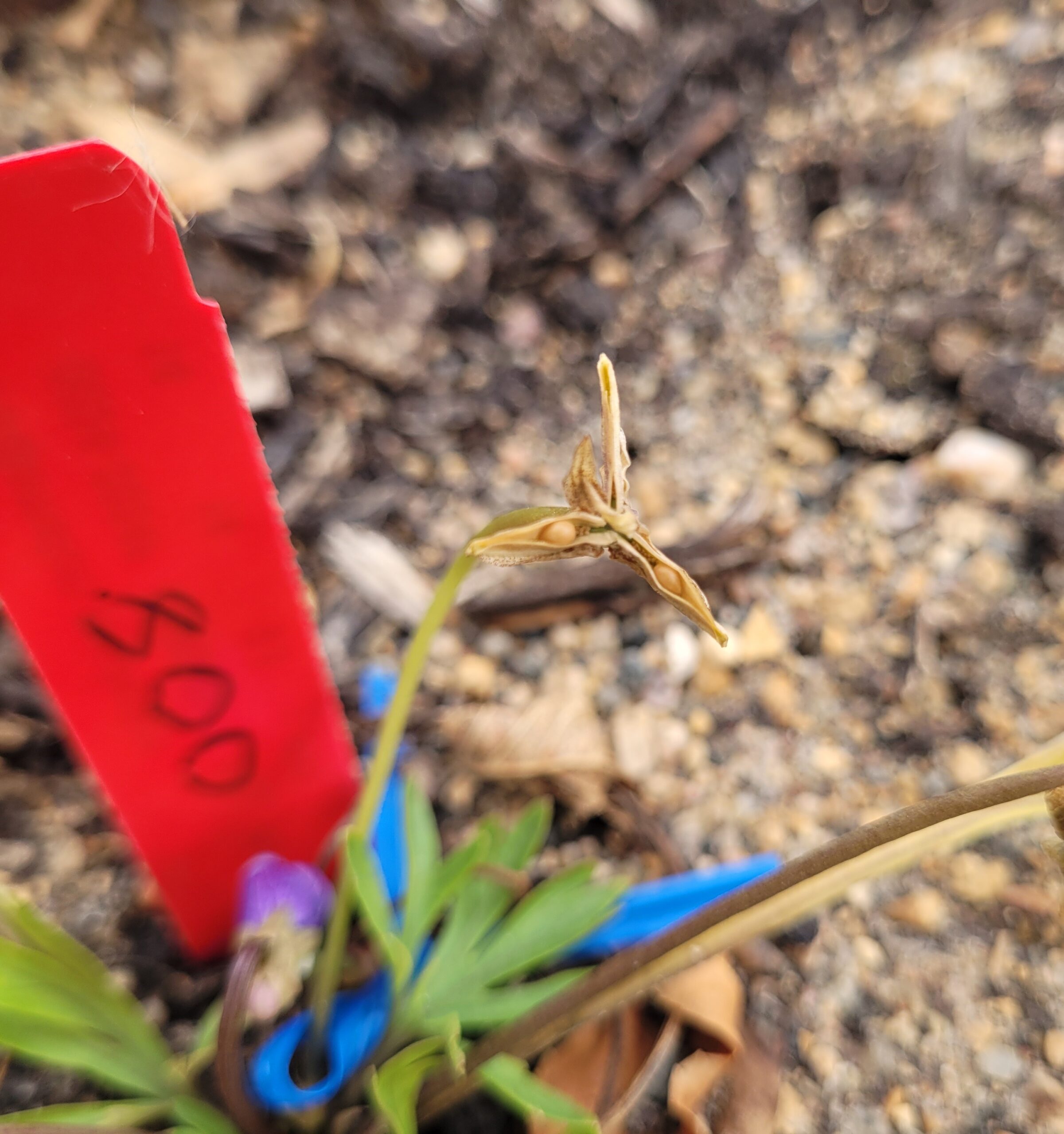
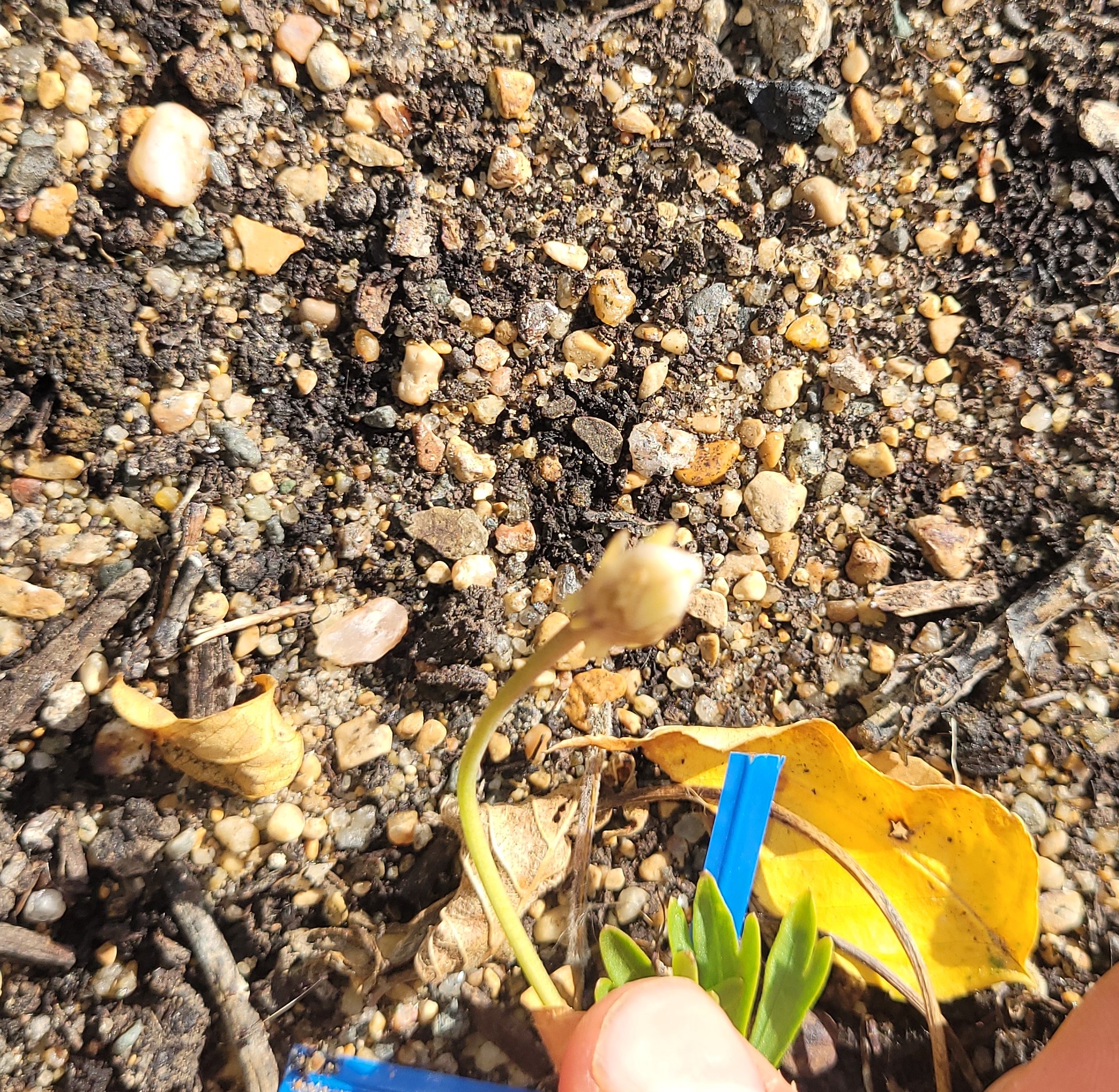
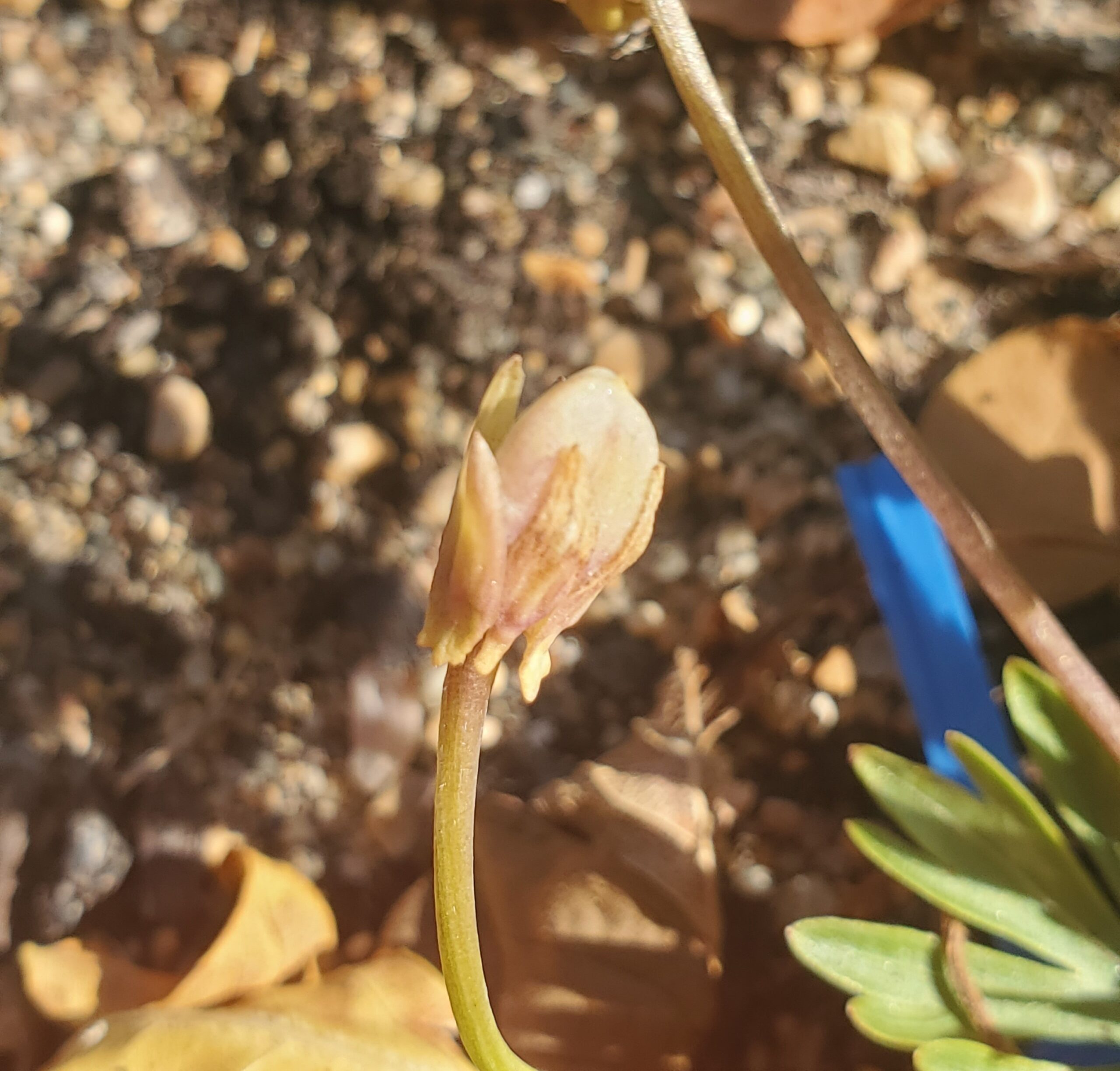
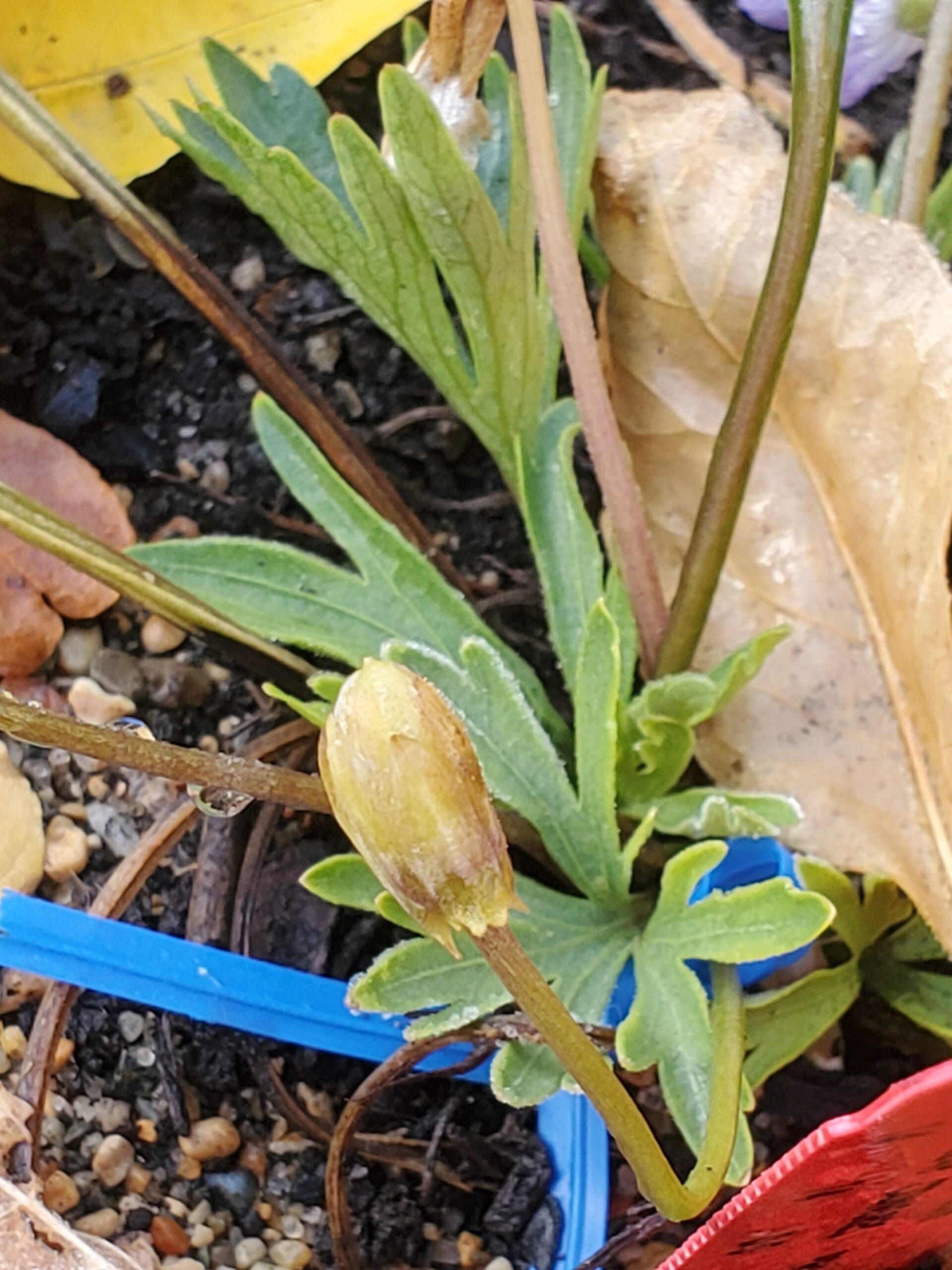
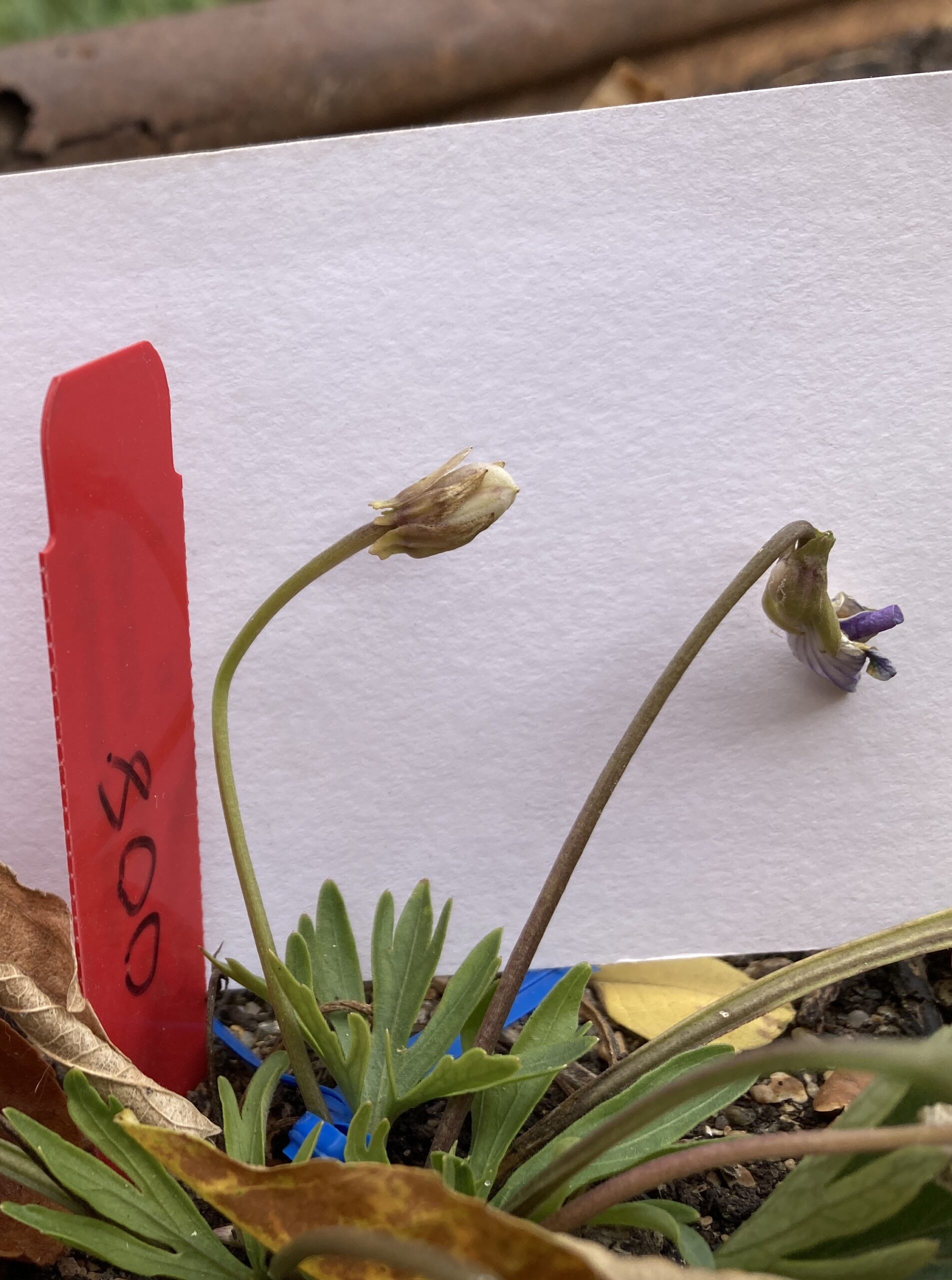
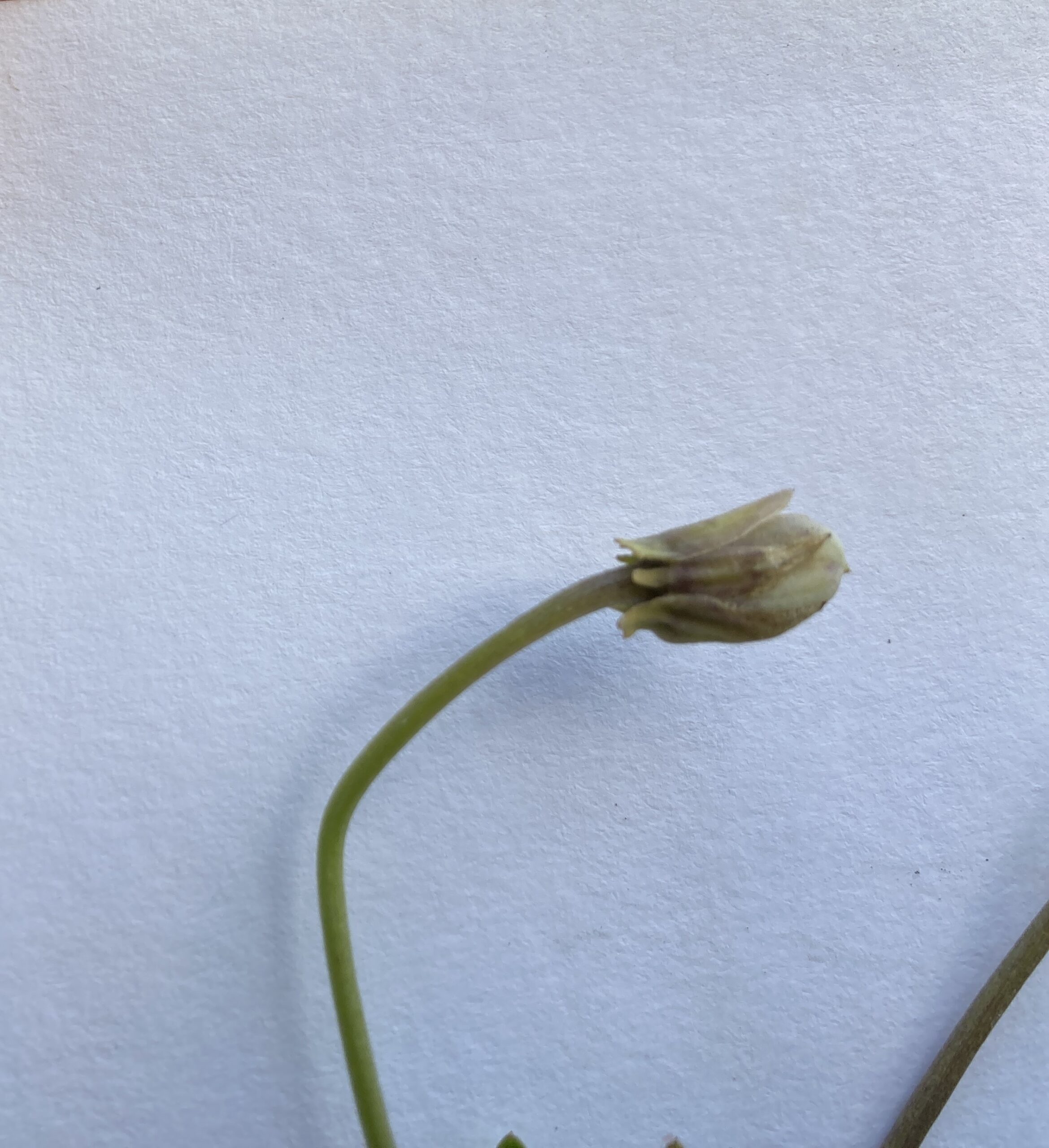
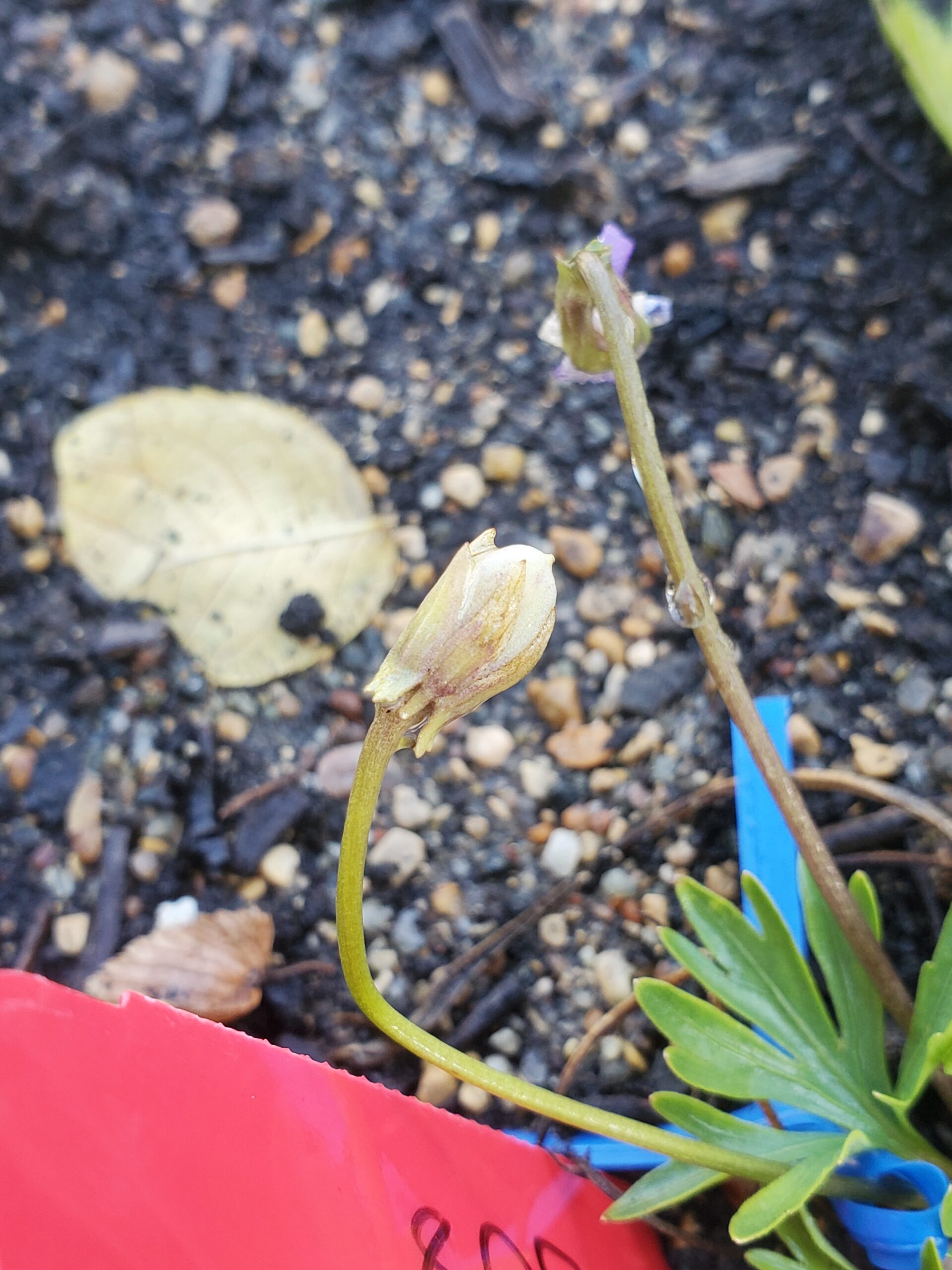
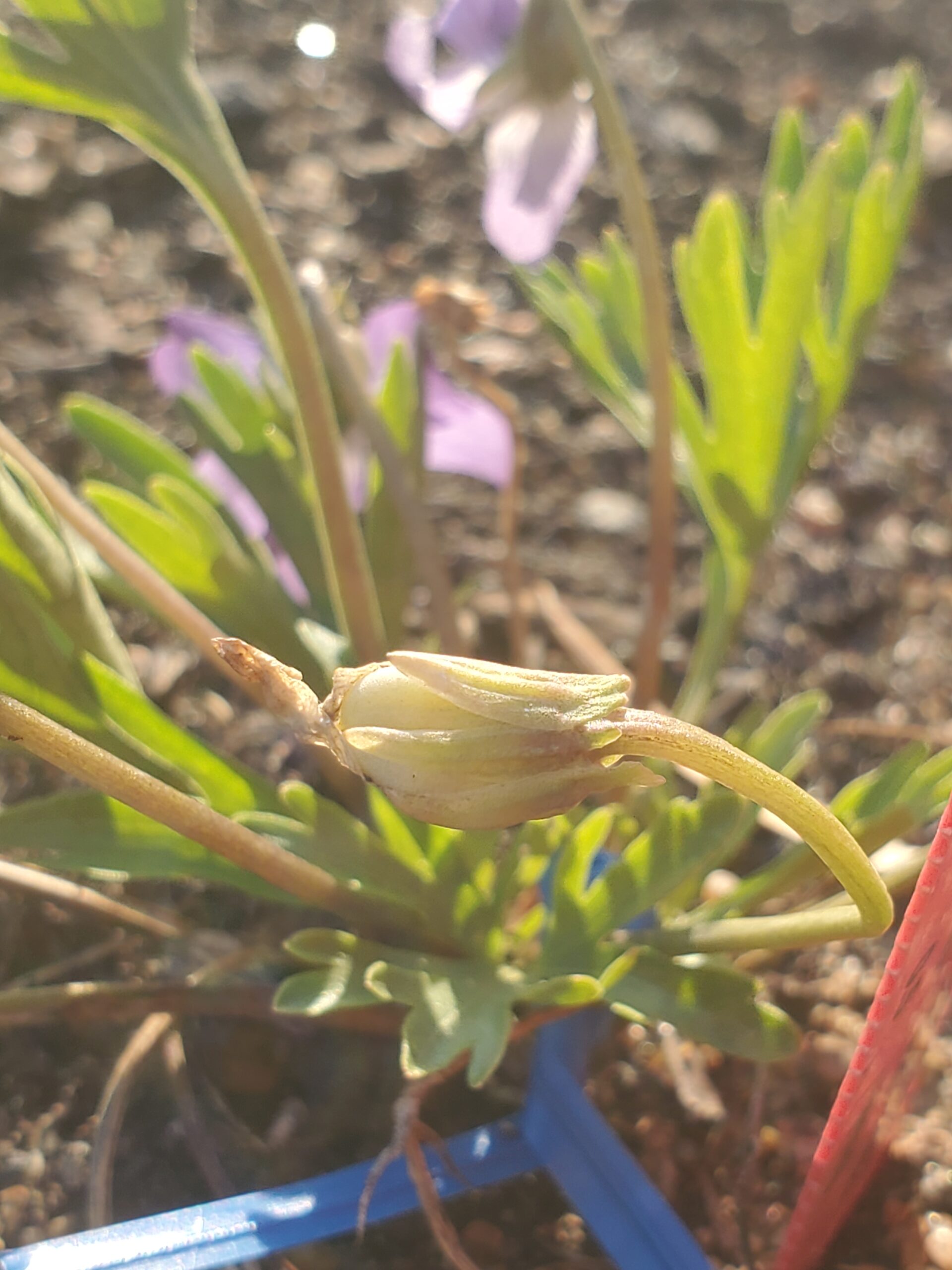
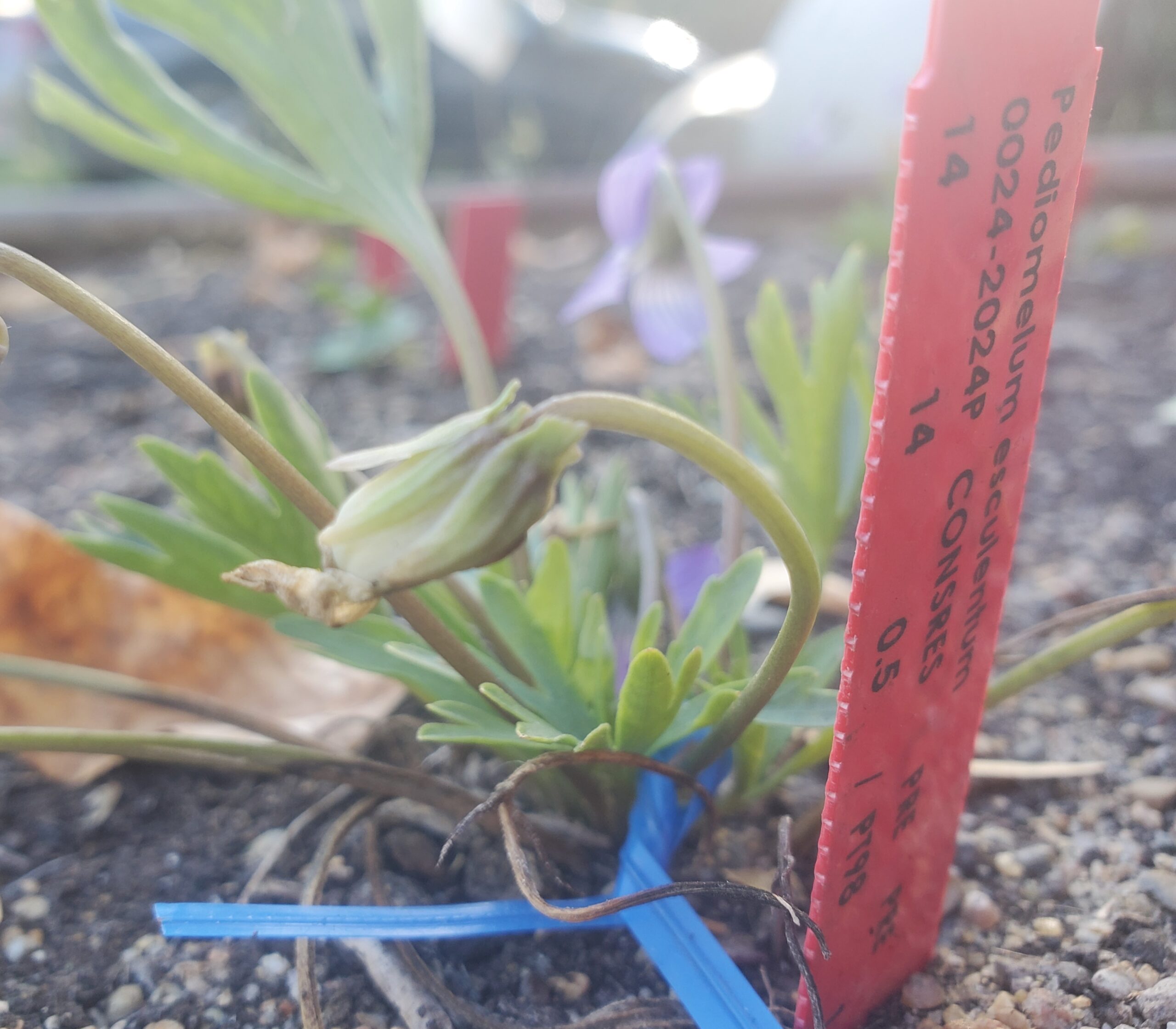
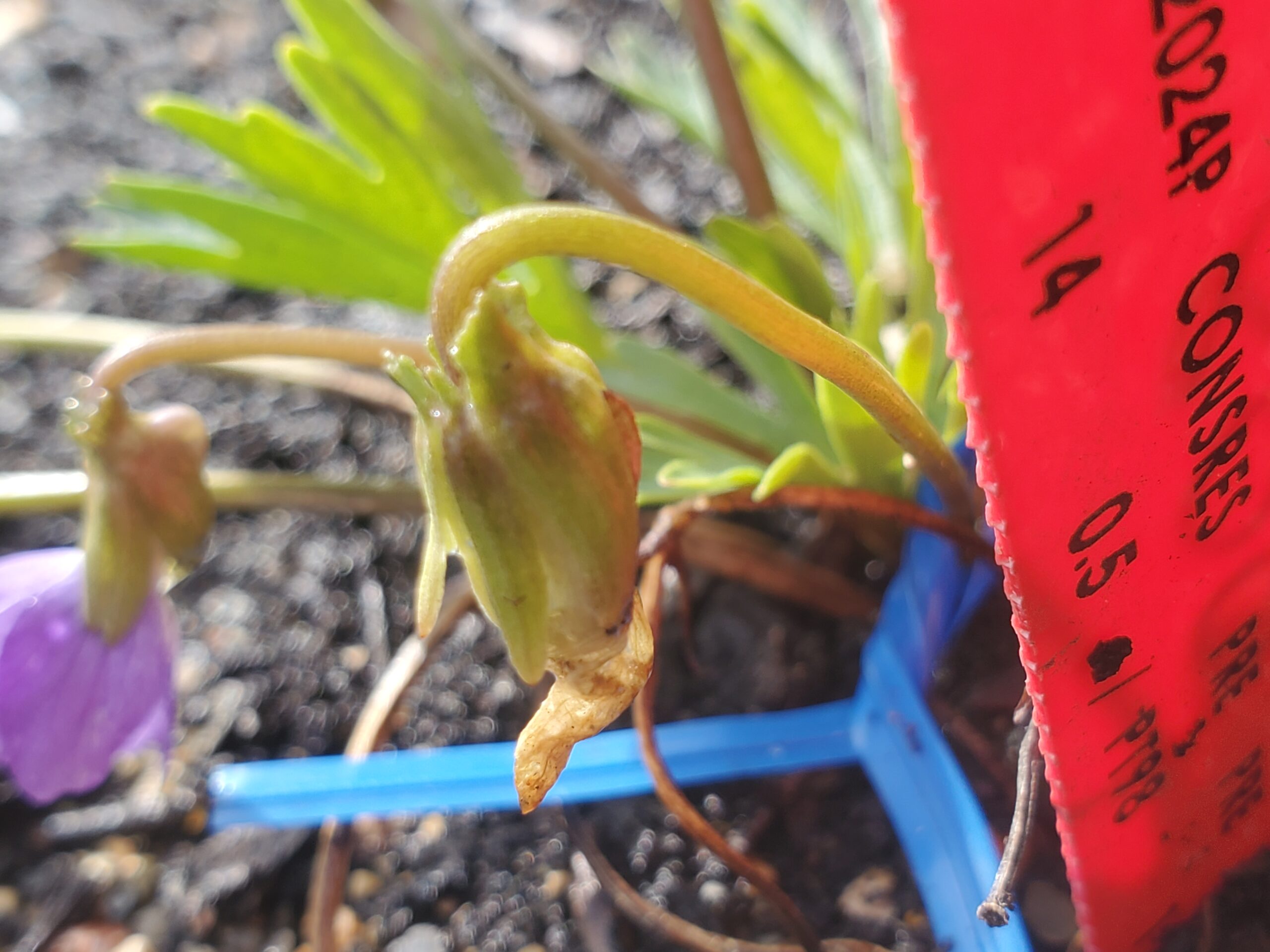
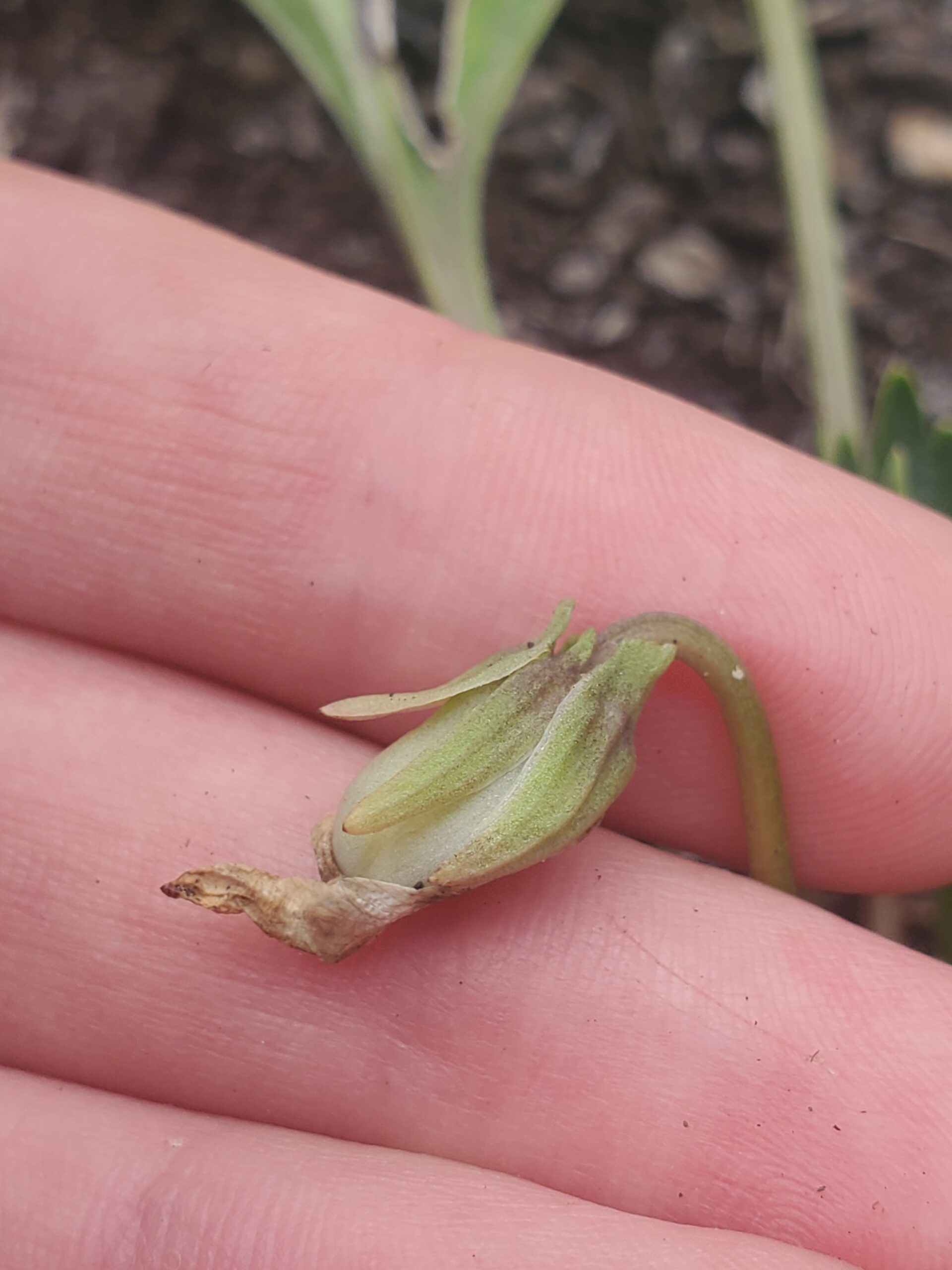
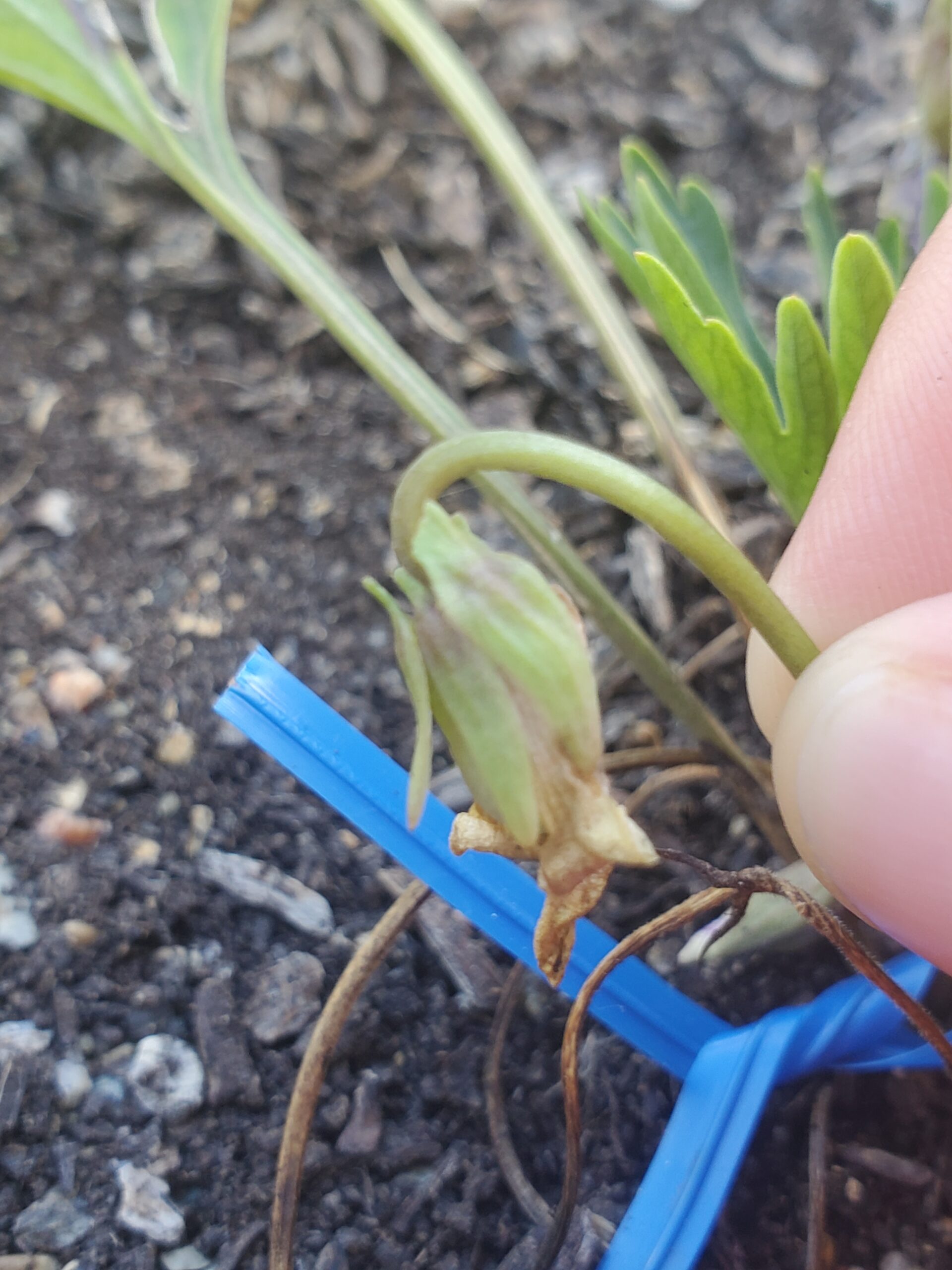
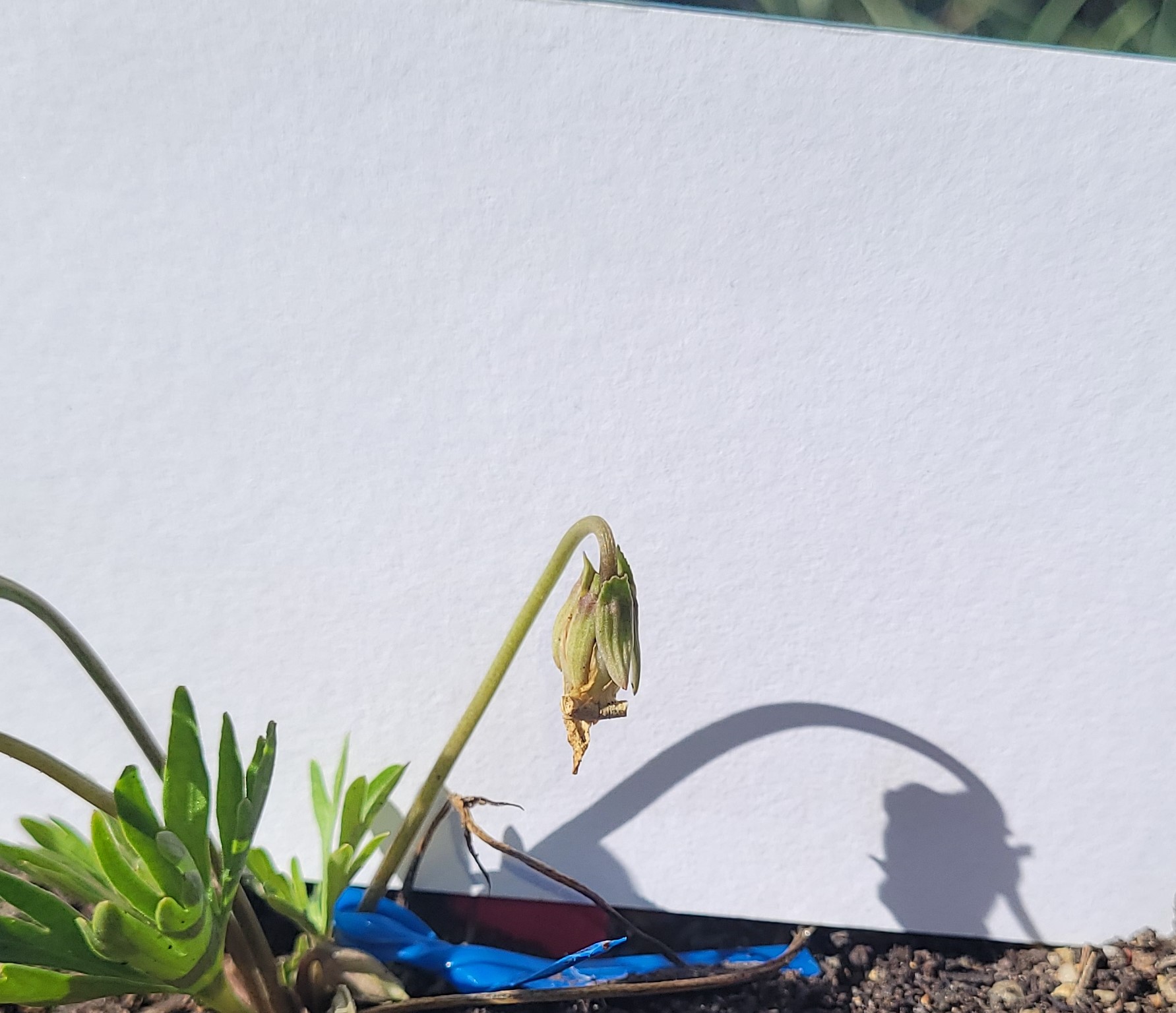
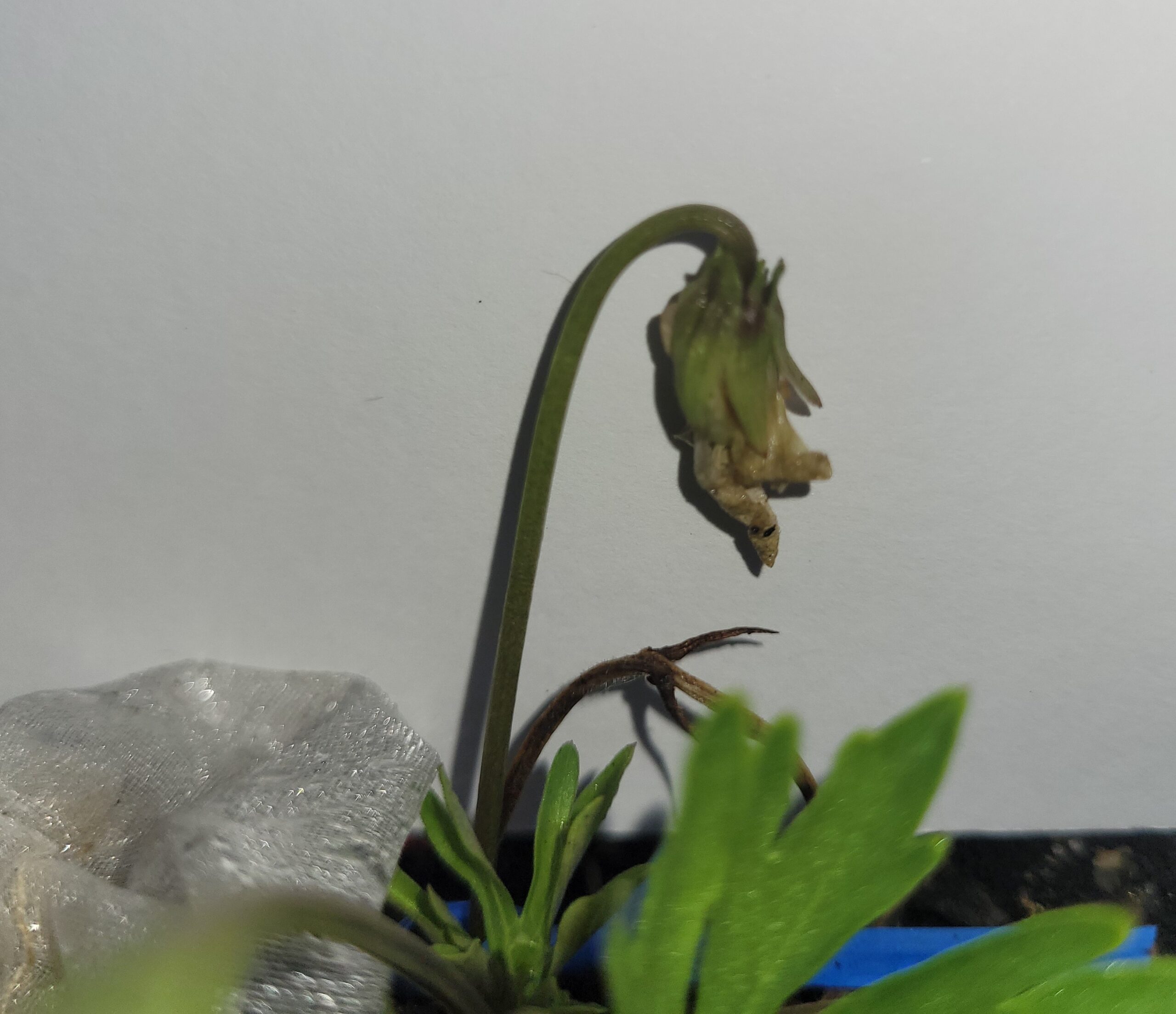
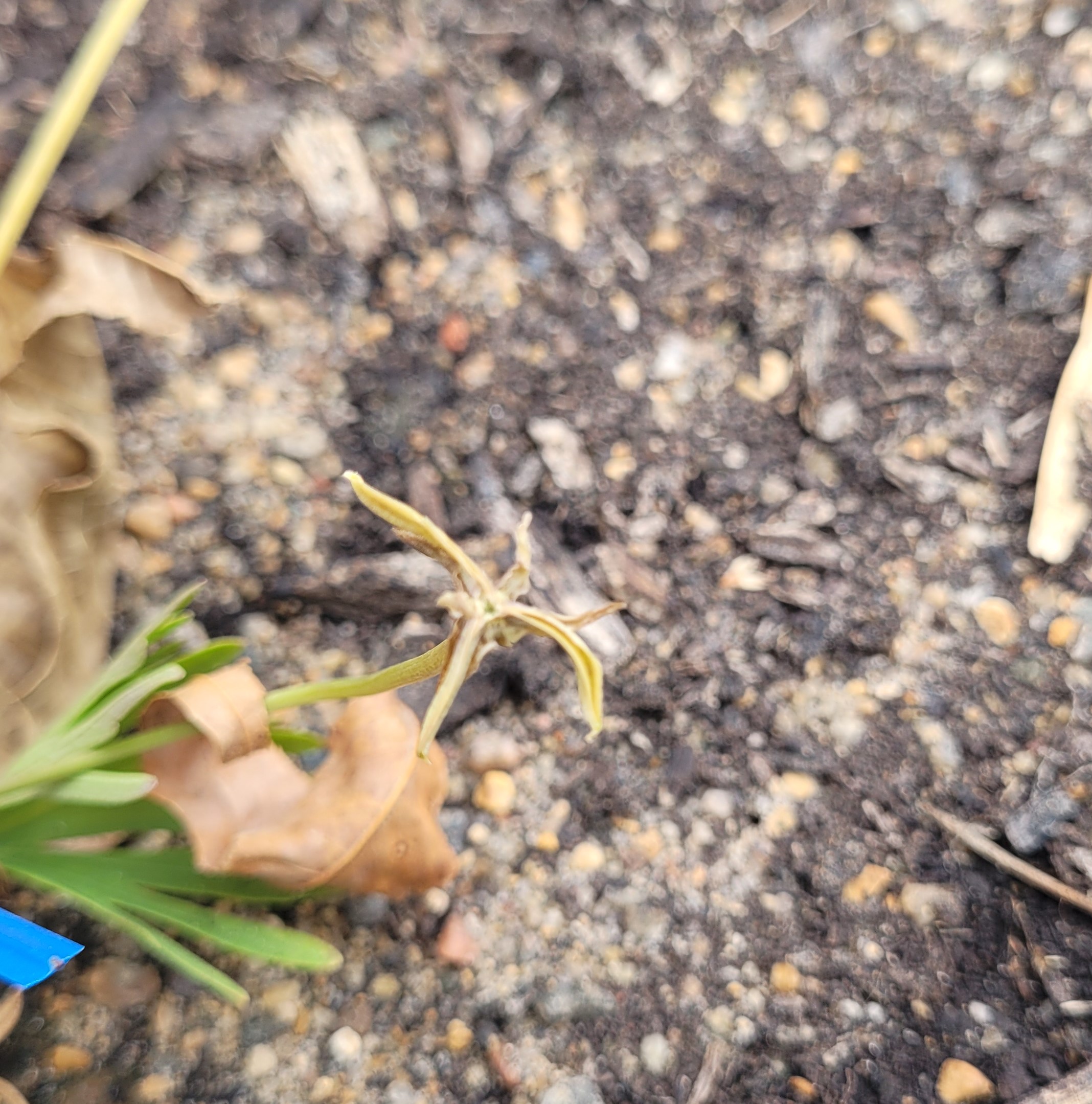
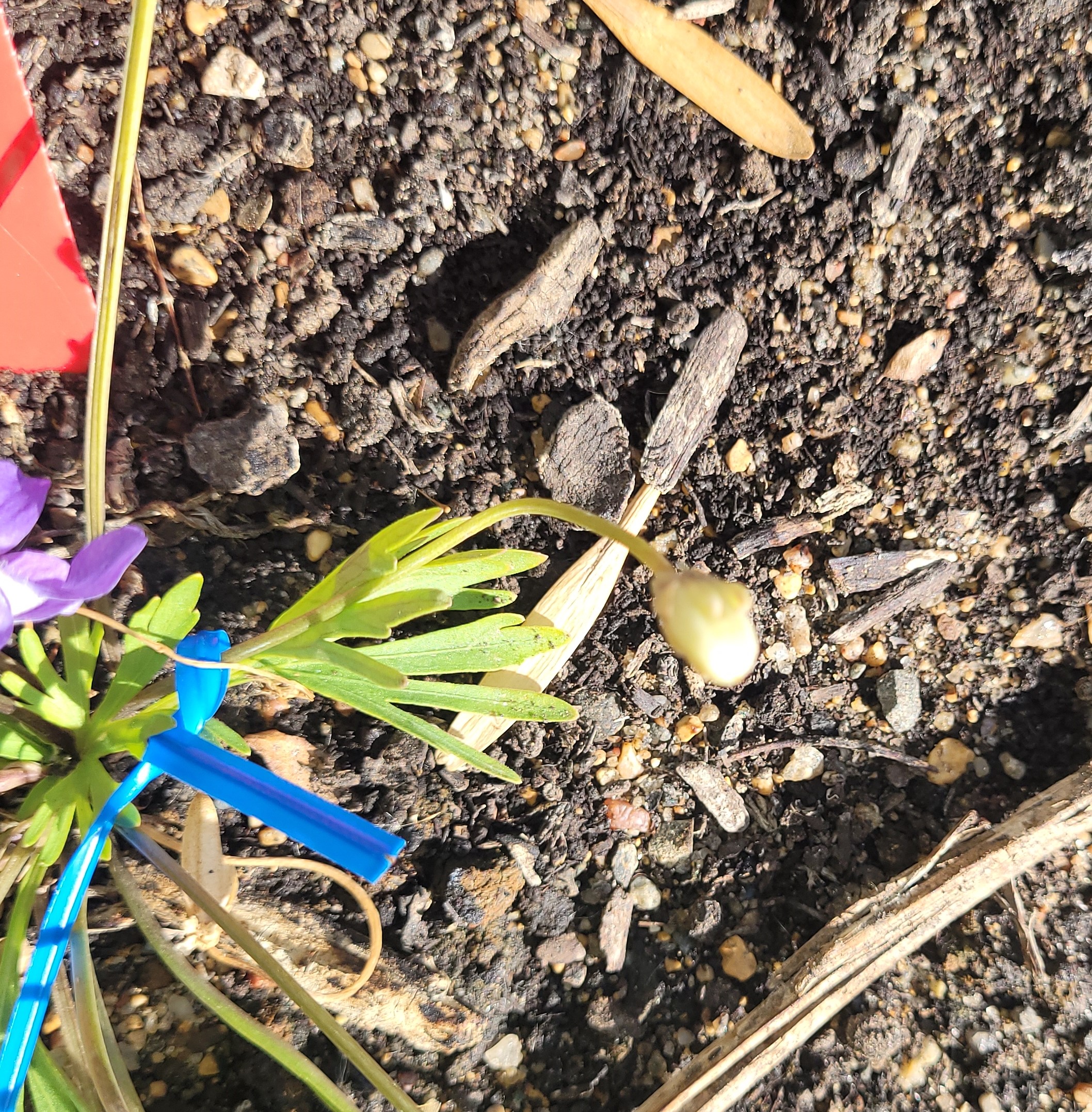
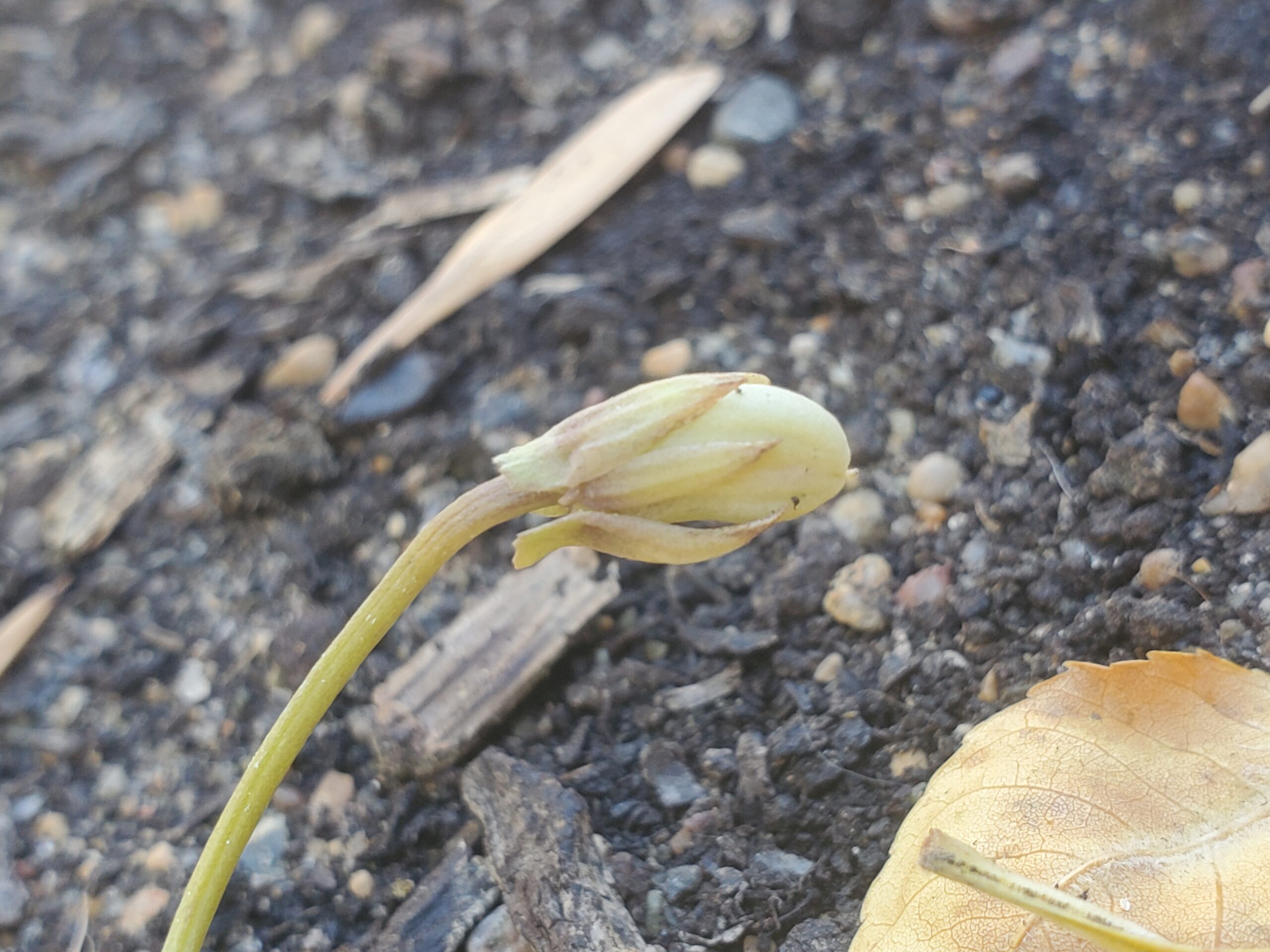
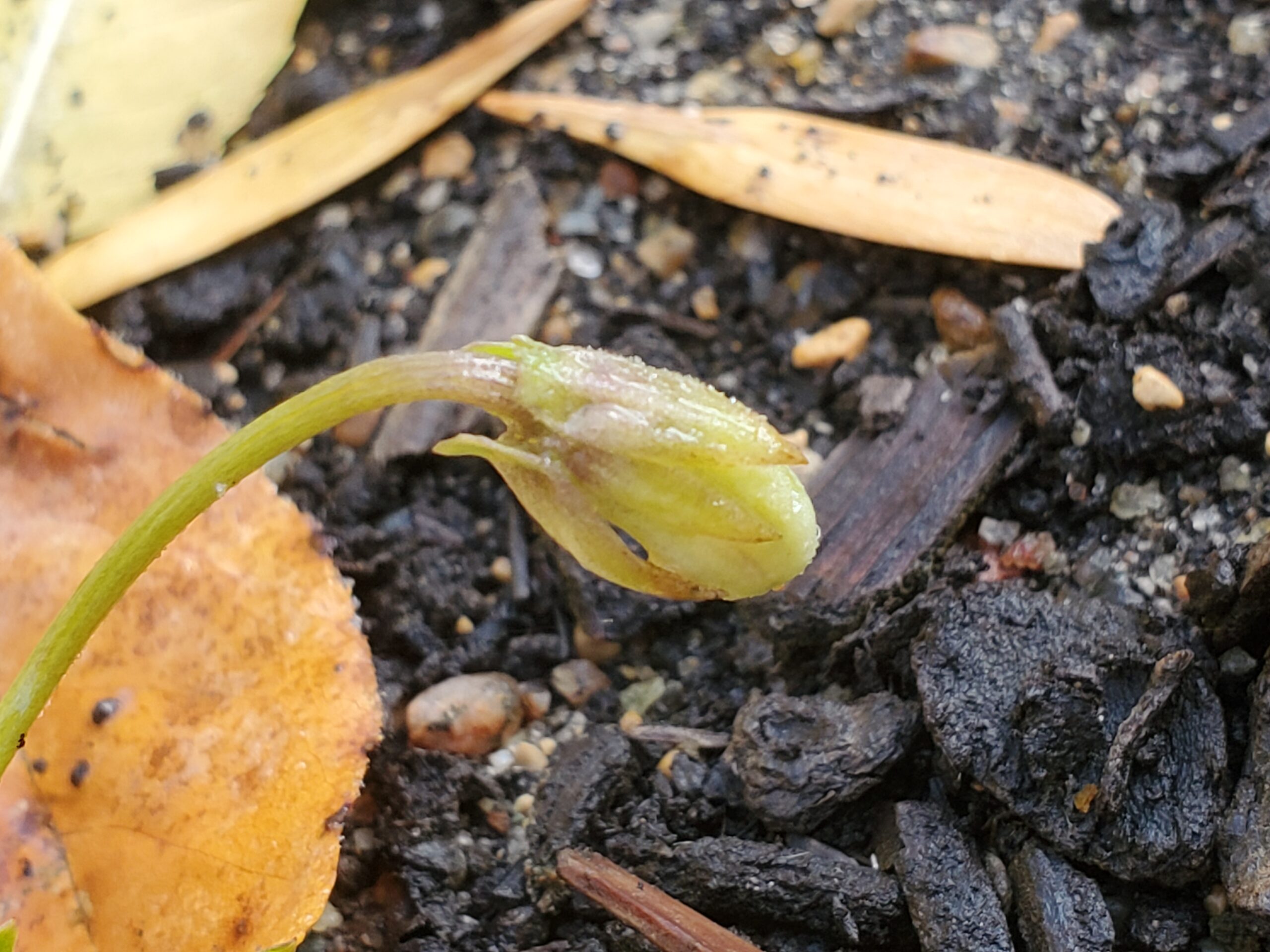
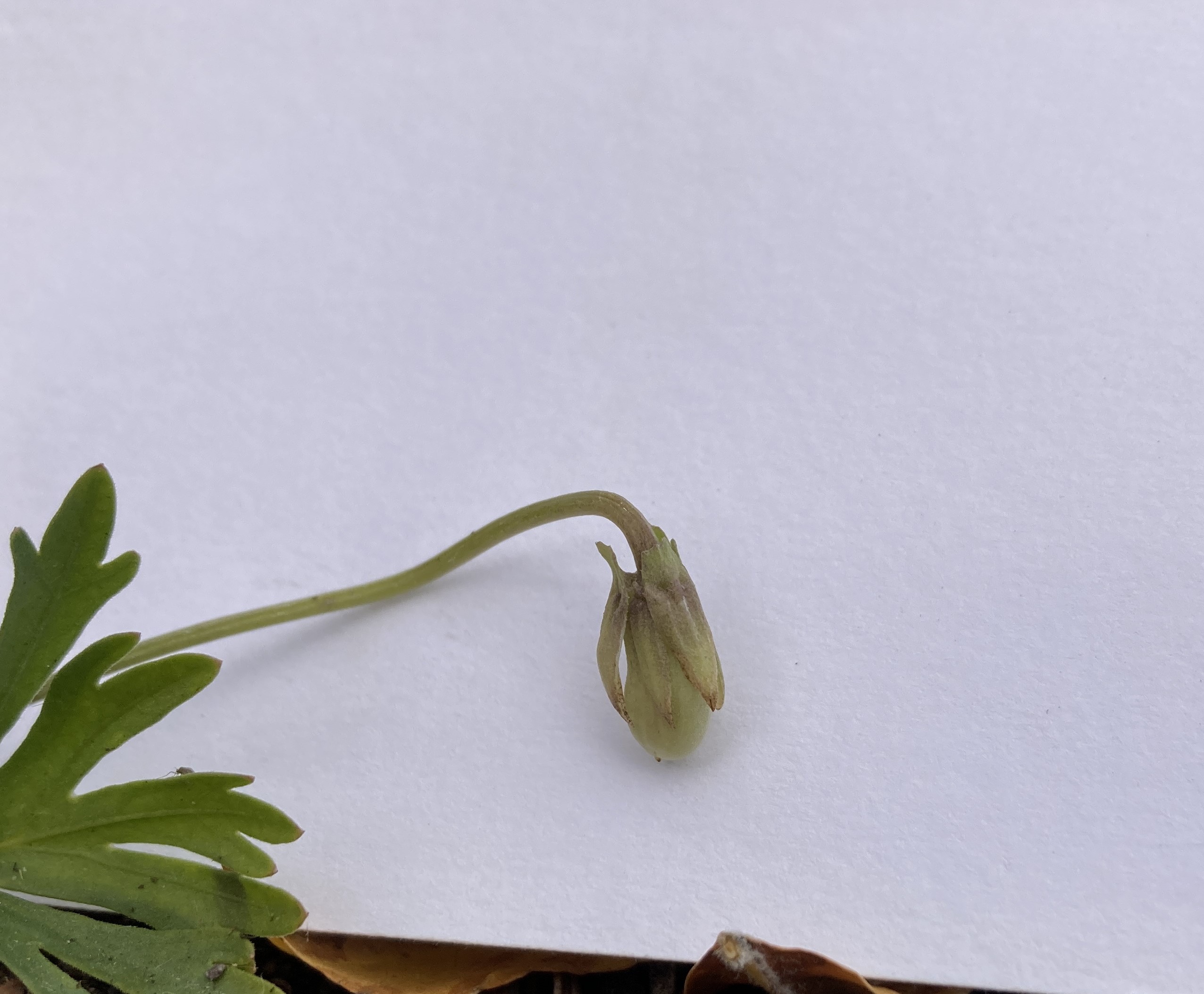
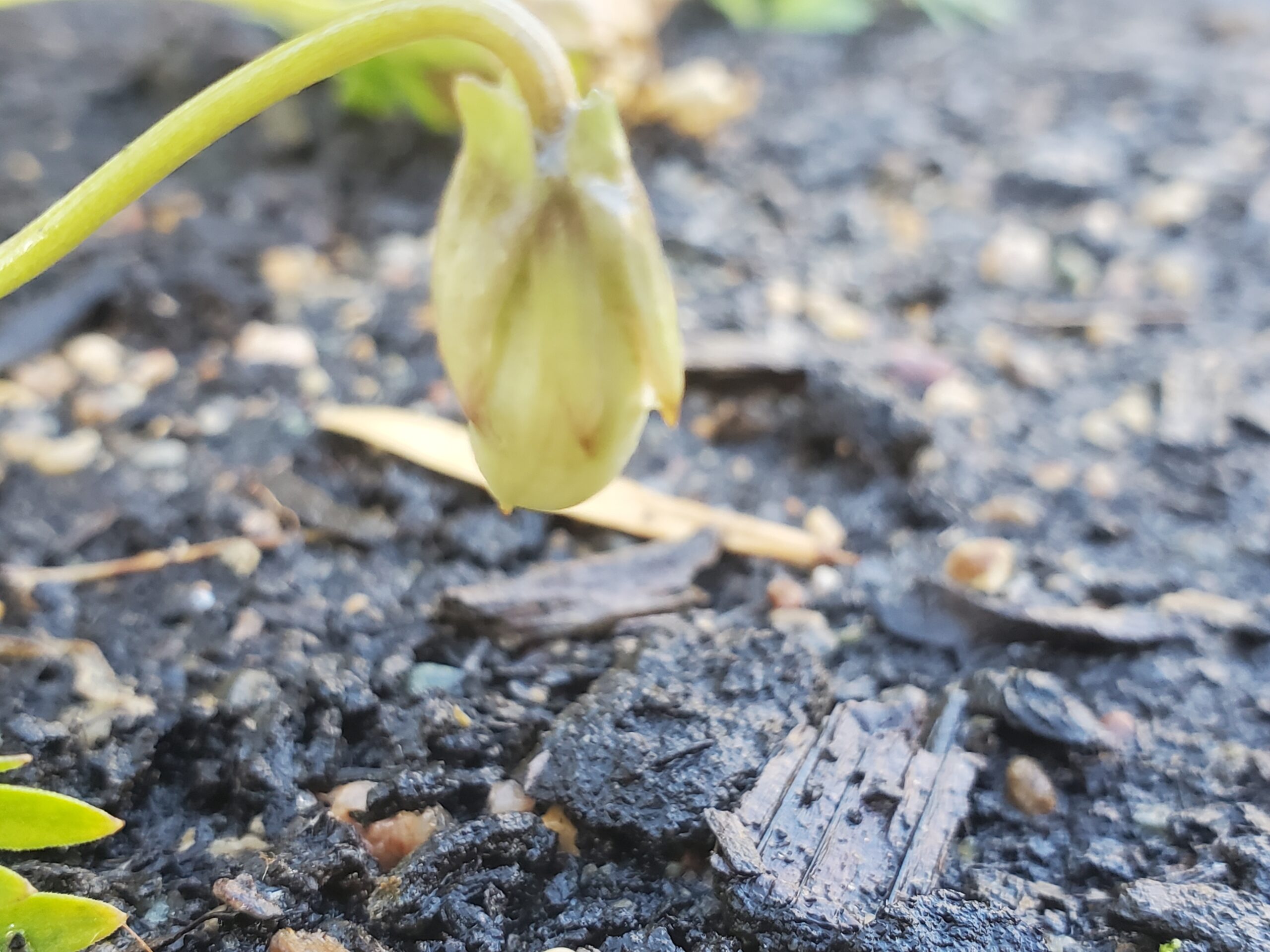
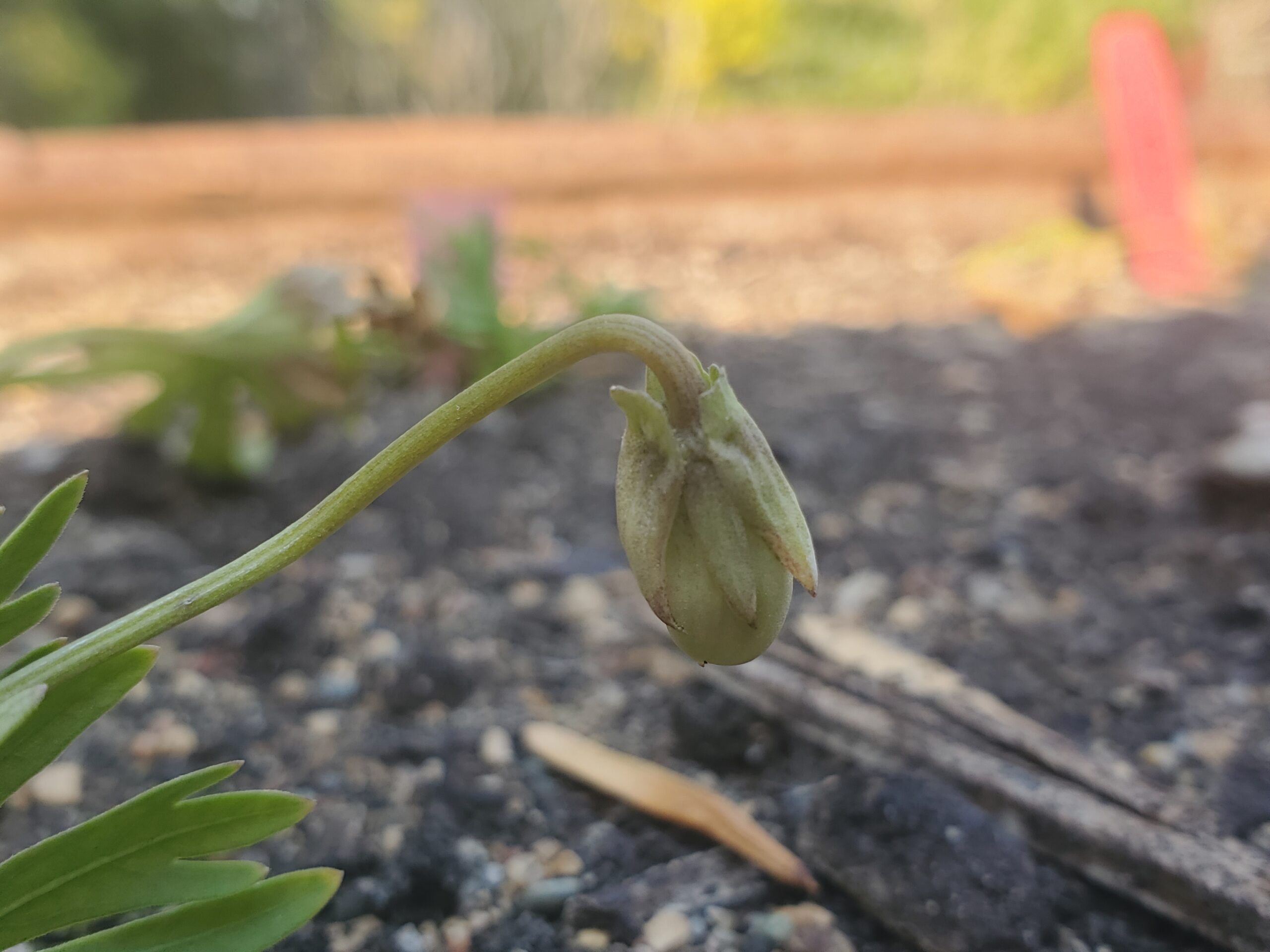
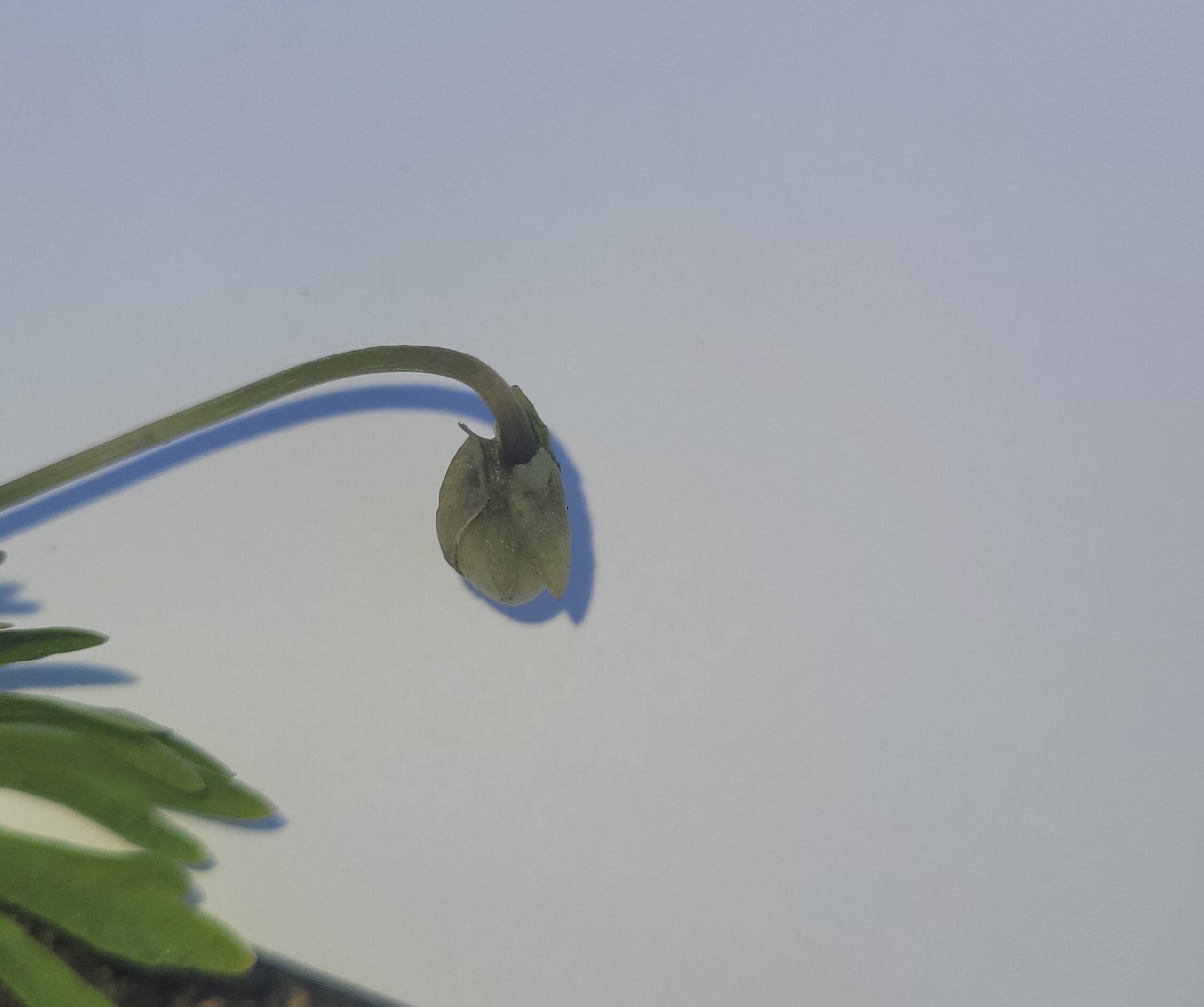
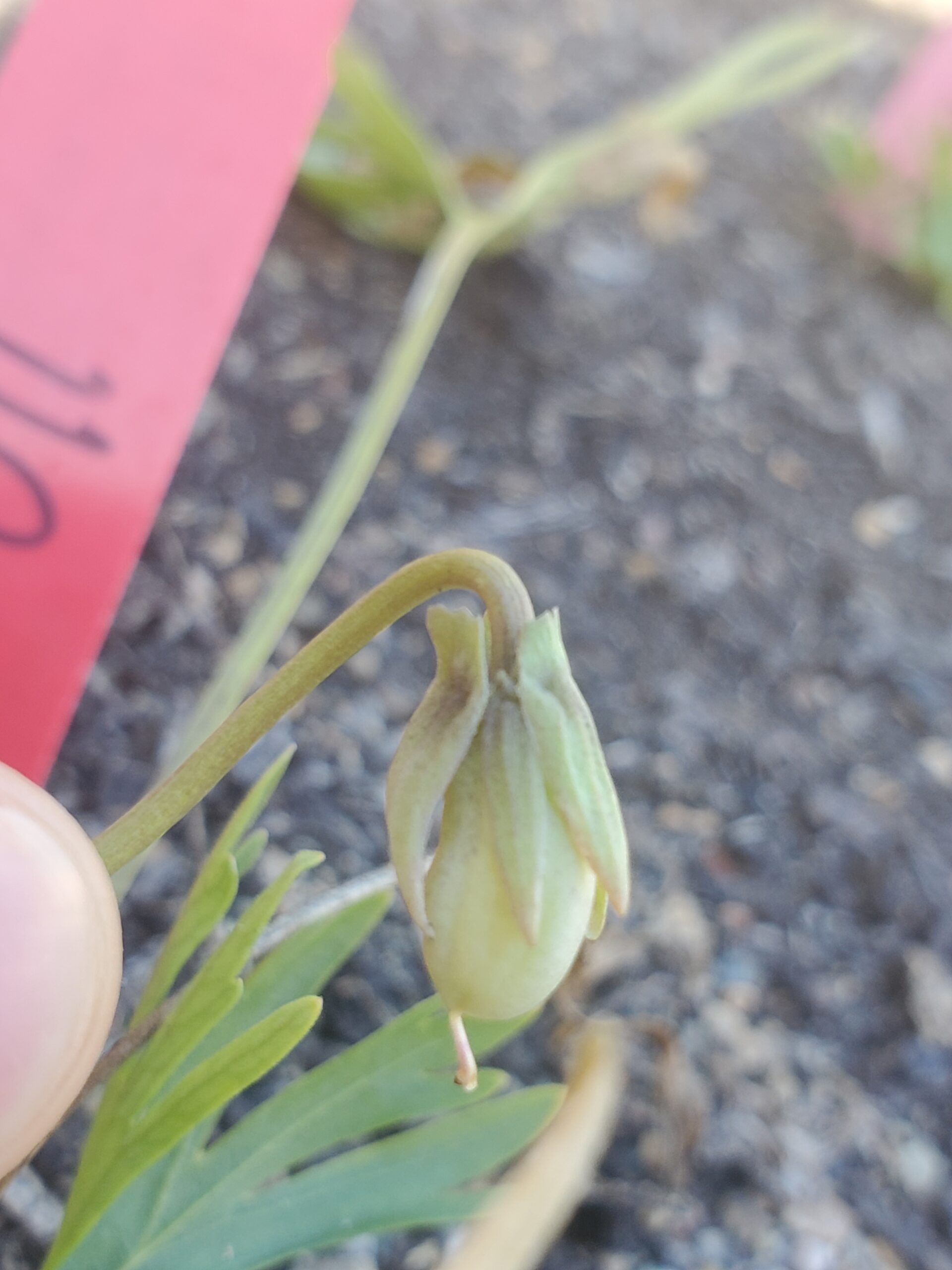
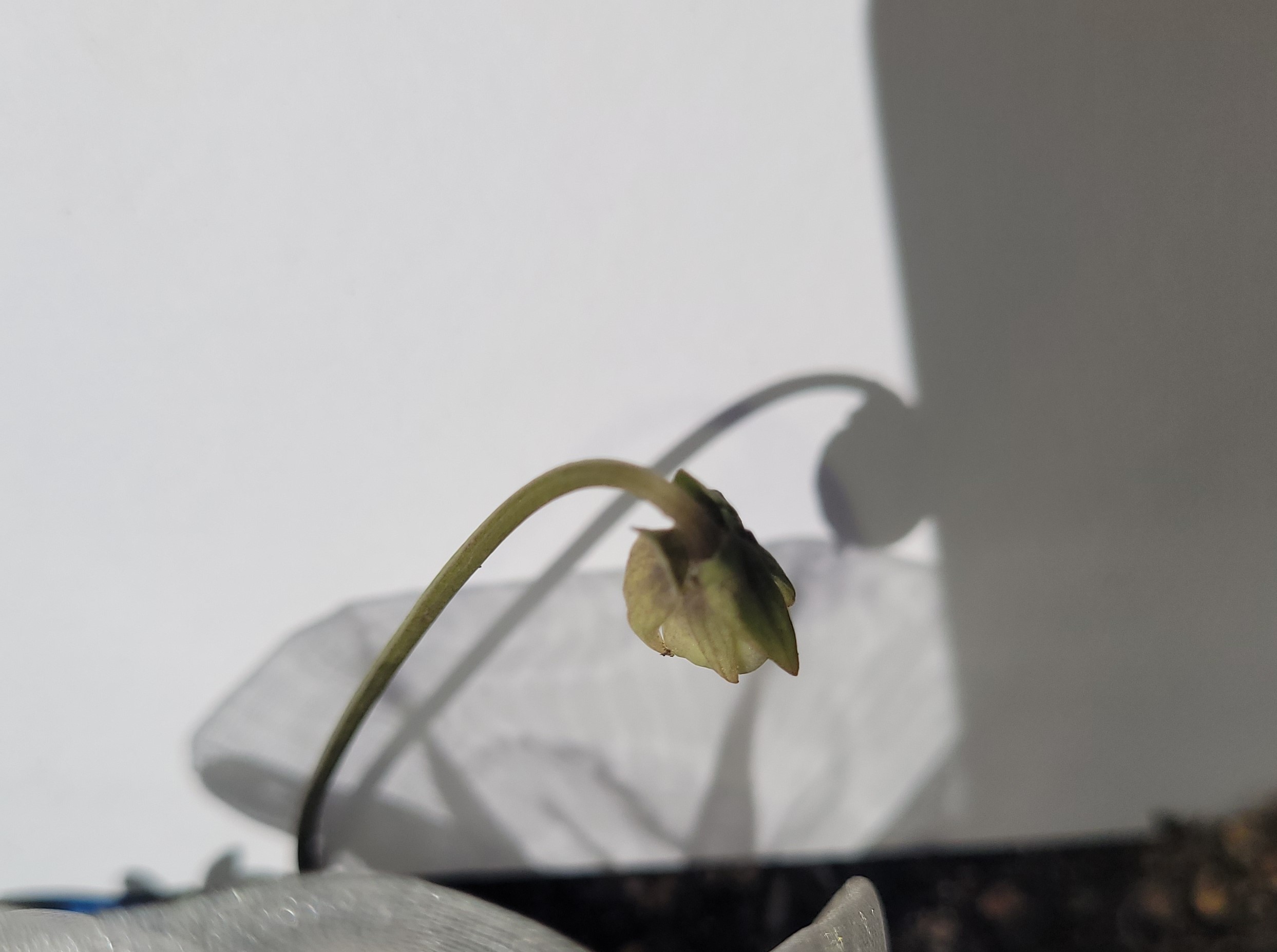
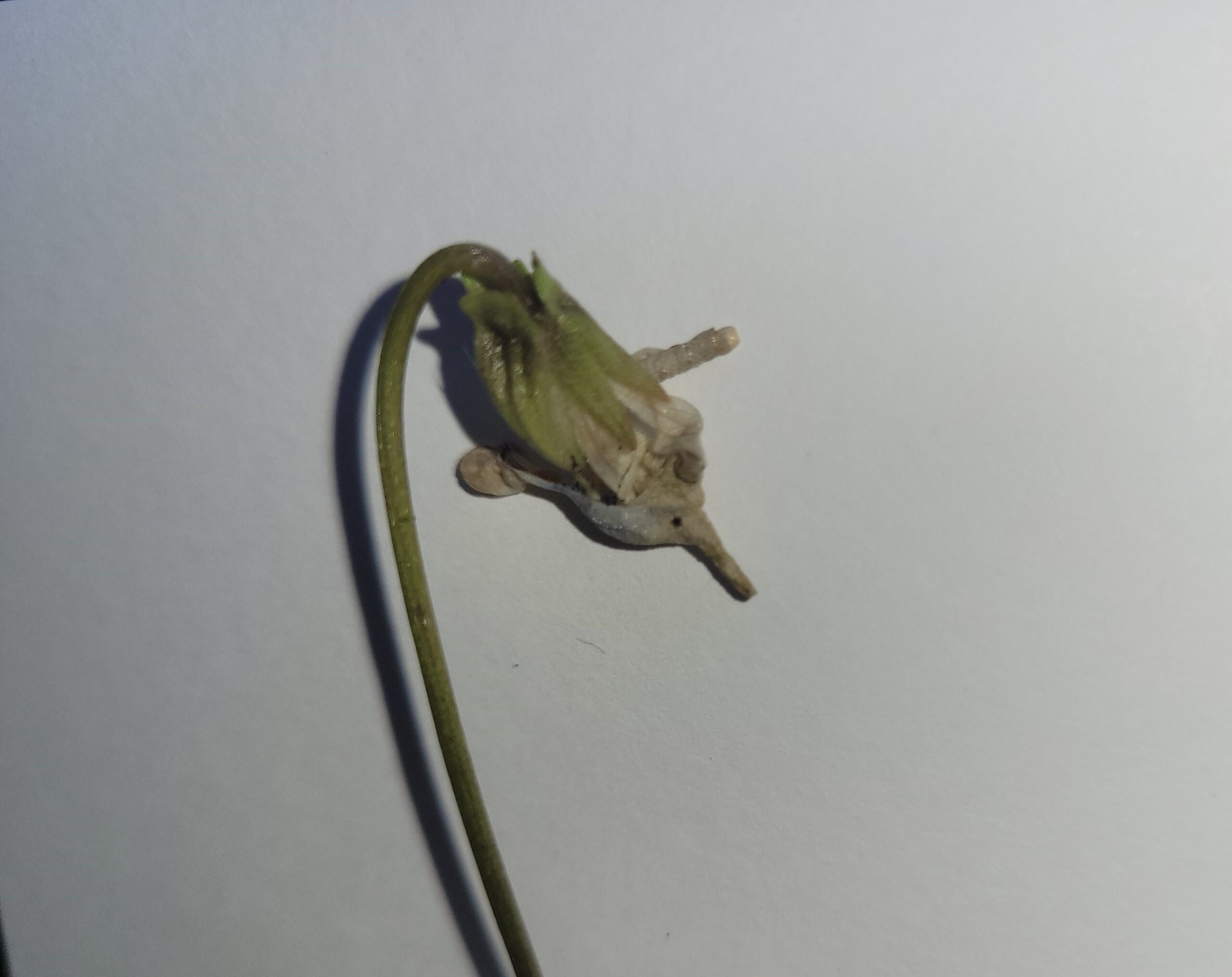
Throughout the fall, 2 pods were followed from flowering to splitting of the pod. Pictures were taken each day along the entire course each morning before lunch. each pod took 17 days from flower to splitting open. Photos here will be arranged in inverse chronological order starting with pod splitting and then counting backwards. Moving forward we would like to learn what the exact features are of a pod that is ready to harvest. So far these photos have shown 2 likely indicators. 1) the pod starts very green and small and slowly turns a pale cream color and fills out as it matures. 2) The pod stem transitions from a bent gooseneck shape into a more upright position while lightening in color. When a pod is ready the stem tends to be fairly straight or has a soft curvature.
Violet 8
Violet 11
Tucking in for Winter
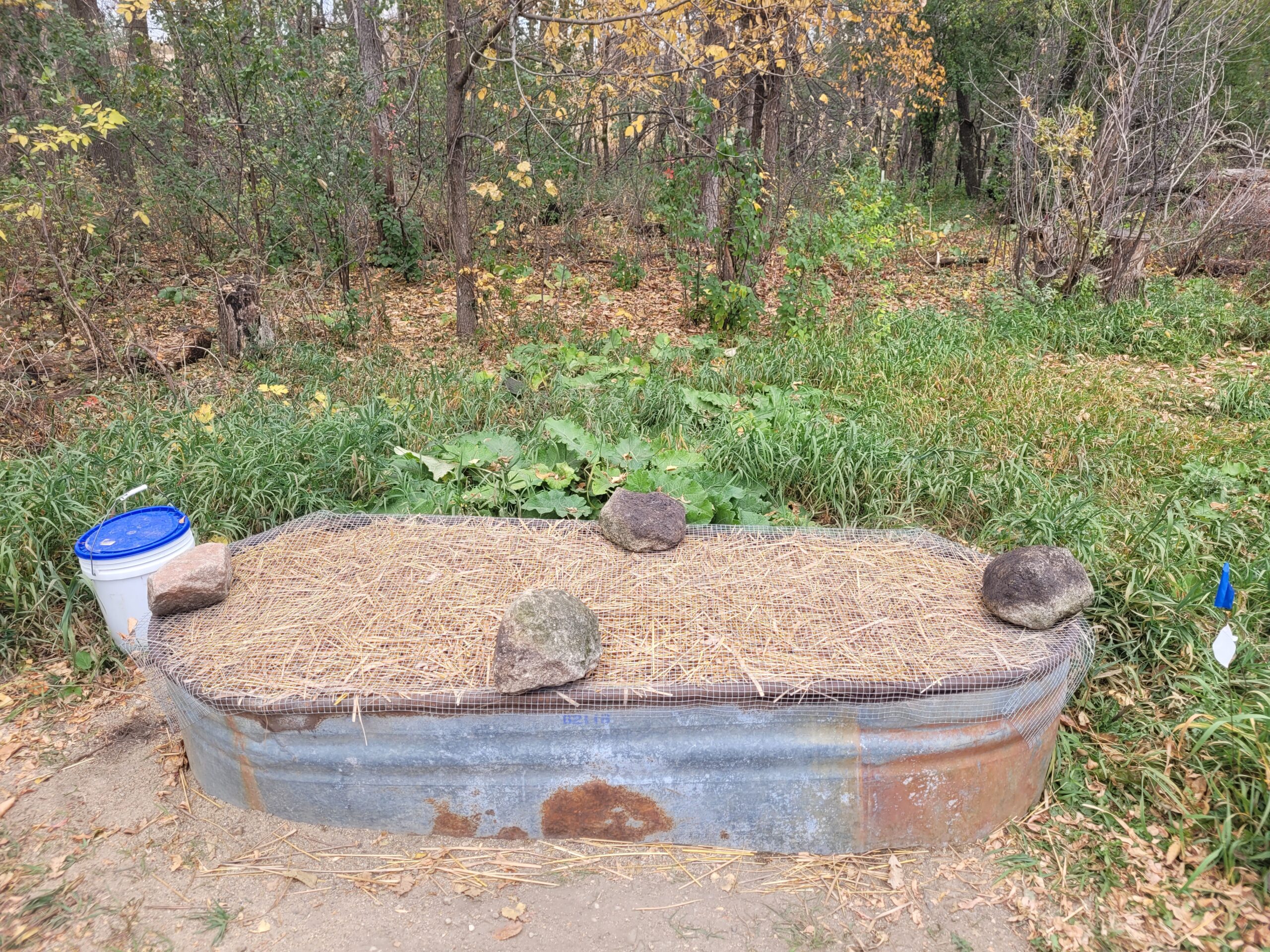
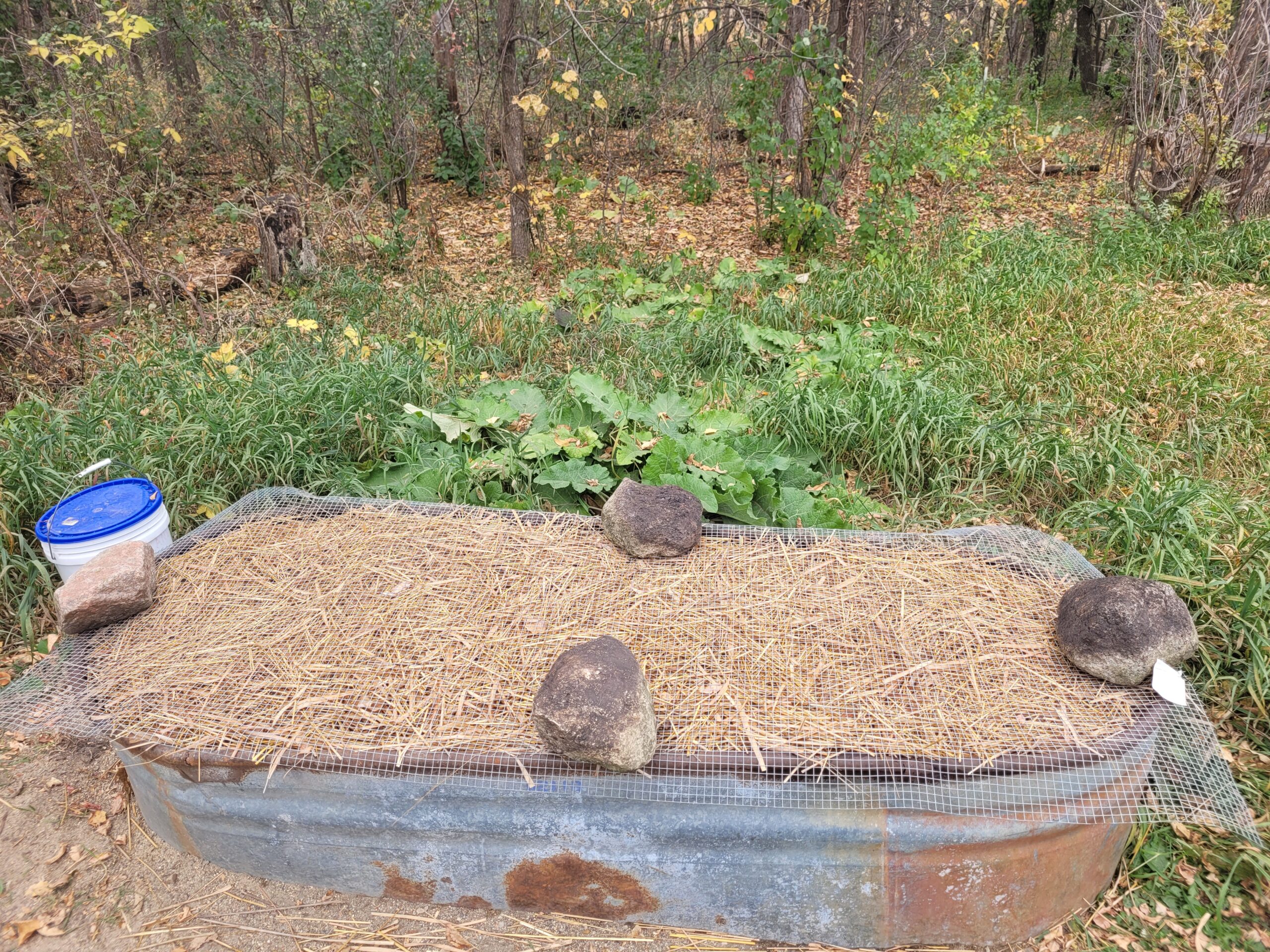
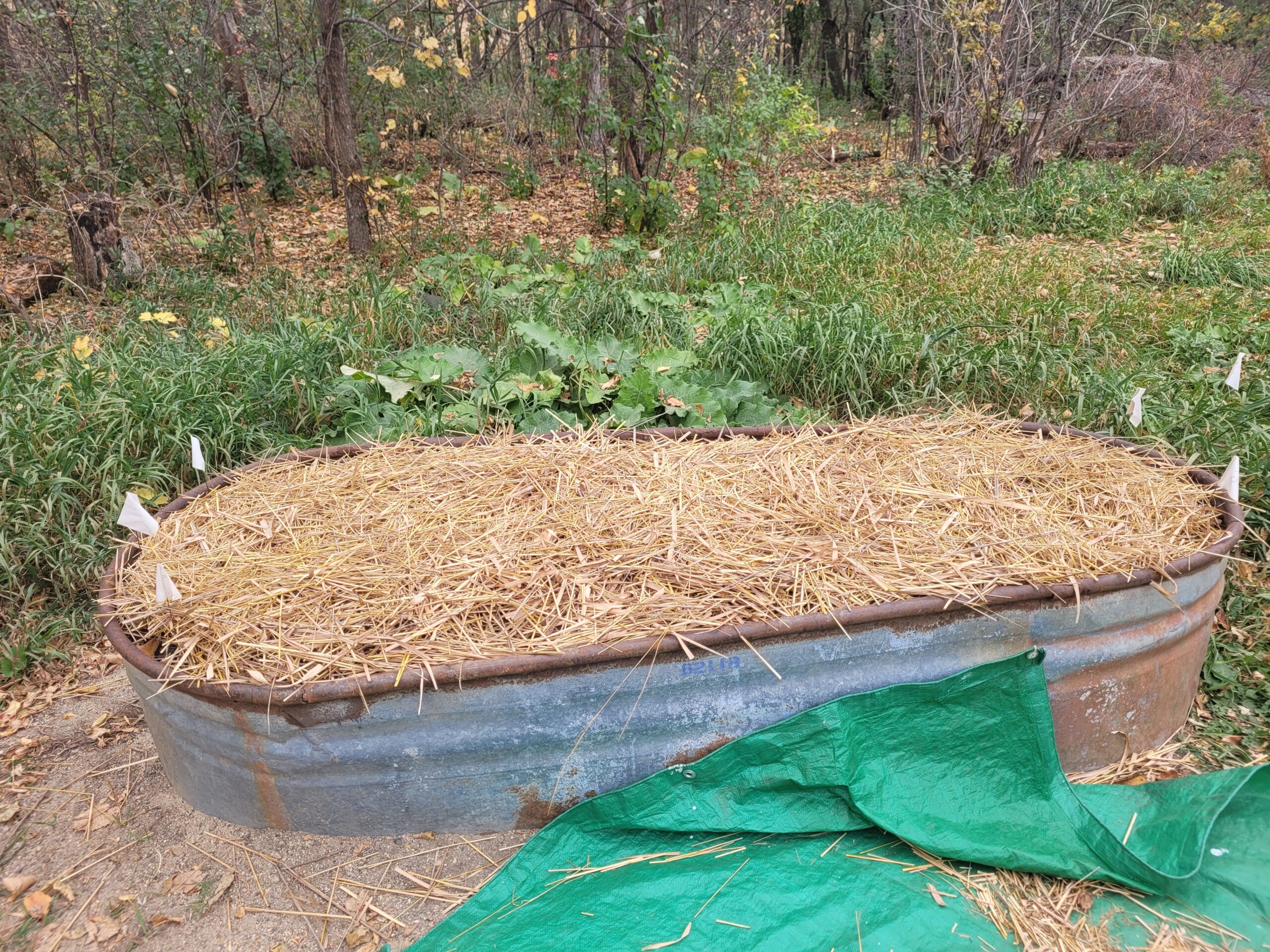
Oct 24 2024 the violets seed production was slowing down and with winter weather on its way it was decided that we should tuck the violets in and cover them. Firstly litter and any seeds visible on the surface of the tub. Next, a 4-inch mulch of Straw cut from P1 was applied across the entire surface of the tub, being sure to cover all green stems from the violas. Lastly, a Sheet of hardware cloth was cut to the length of the tub to prevent the intrusion of digging animals. This sheet was bent around the edges of the tub and then weighed down by several stones. Afterwards, the violas should be safe until next summer.
Spring 2025
A few things will definitely be on the docket for next spring. First off after the snow recedes the wire and mulch should be removed as soon as possible to ensure the soil warms and the volets get enough sunlight. As soon as the soil is removed an inch or so of compost should be applied across the entire bed. Once the violets emerge then the mulch can be reapplied to prevent weed development. Flowers should develop quickly and the job of picking ripe pods will almost certainly last all summer.
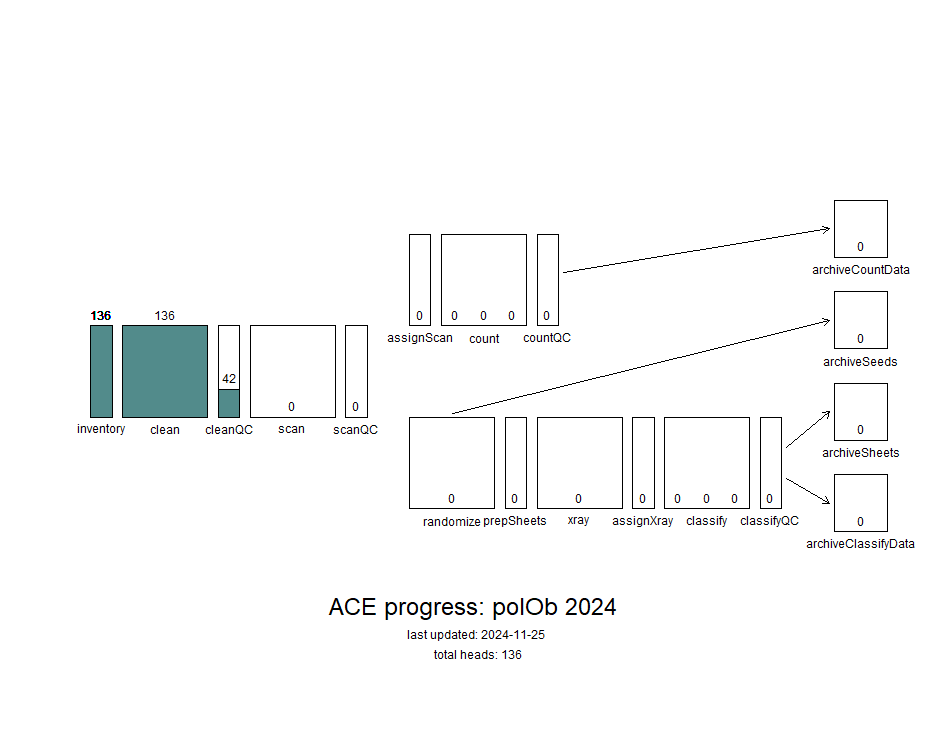
Another batch we’re prioritizing in the lab is the pollinator observation (or polOb) experiment. The goal of this experiment is to learn more about the effects of fire on native bees and their behaviors. We spent time this summer observing Echinacea at 10 paired sites, half of which burned before the 2024 growing season. We then harvested heads from our observation plots for processing in the lab. Because we’re specifically interested in learning about pollination, heads in this group will be streamlined all the way through to the classifying steps to learn about seed set, and we are less concerned about counting. Here’s our progress so far:
We are roughly a third of the way through rechecking. We’ll be pausing work briefly on this batch to get the exPt01 2024 experiment rechecked and uploaded for counting ASAP
NOTE: Funding for this project was provided by the Minnesota Environment and Natural Resources Trust Fund as recommended by the Legislative-Citizen Commission on Minnesota Resources (LCCMR).
We have a few experiments that we’re prioritizing here in the lab. We want to get the heads in these experiments through our ACE process as quickly as possible! One of these experiments is known by many names: q1, qGen, qGen1, big batch, etc. The experiment in question was planted in experimental plot 1 in 2003 and was designed to investigate the heritability of fitness using a quantitative genetics approach. We’re looking to redo the analysis we have on this experiment with several new years of data, including 2024!
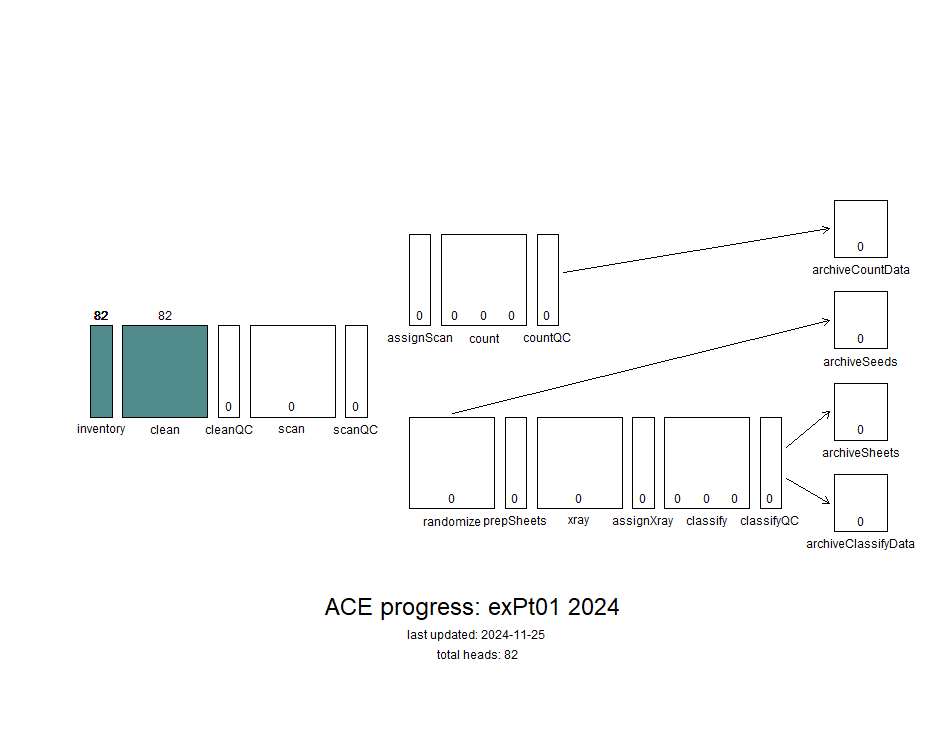
This year, very few plants in exPt01 flowered, so all experiments in that plot were lumped into one for ACE processing. I booted up Alex’s ACE progress visualization machine to see what our progress on this batch looks like so far! We only need to get this batch through counting, so we can skip the randomizing/xray/classifying steps.
Finished with cleaning! Rechecking (here cleanQC) is up next.
The aphid addition and exclusion experiment was started in 2011 by Katherine Muller. The original experiment included 100 plants selected from exPt01 that were each assigned to have aphids either added or excluded across multiple years. The intention is to assess the impact of the specialist herbivore Aphis echinaceae on Echinacea fitness.
In 2024, 41 of the original 100 plants were alive, two of which flowered. However, we did not see any aphids anywhere while measuring exPt01. We have not conducted fieldwork for this experiment since 2022, when team members Emma Reineke and Kennedy Porter were in charge of the experiment and did not find any aphids in exPt01, so they introduced a new population of Aphid echinaeceae into the plot. Learn more in the 2022 summer aphid update.
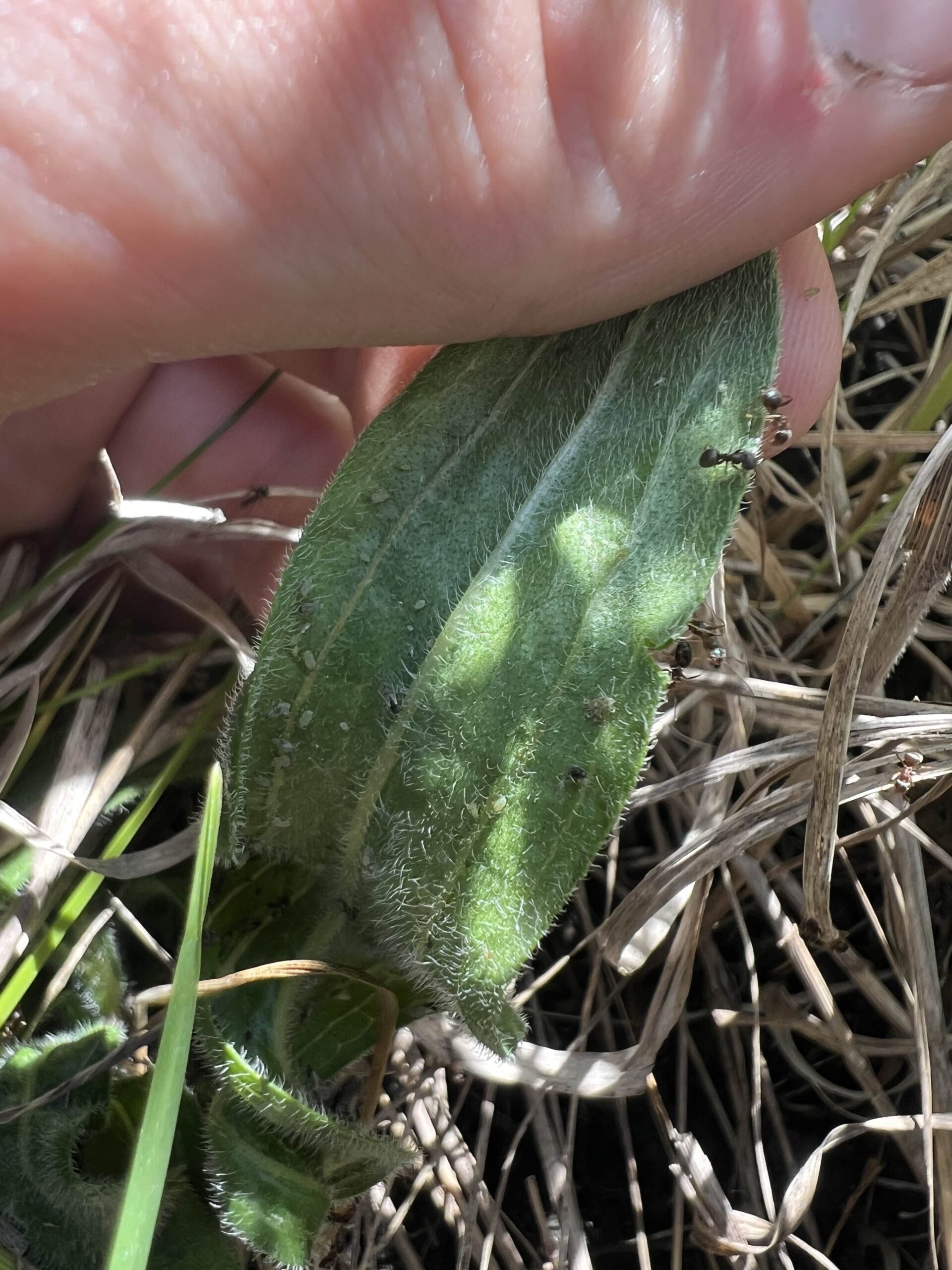
Aphids Wyatt Mosiman saw in exPt02 this summer. Wrong plot, aphids!
Plant survival and measurements were recorded as part of our annual surveys in P1 and eventually will be found in our SQL database.
Samples collected:
2 heads from plants included in this experiment are at the Chicago Botanic Garden awaiting processing: AD-1728 and AZ-1744 in the exPt01 2024 batch
Products:
Andy Hoyt’s poster presented at the Fall 2018 Research Symposium at Carleton College
2016 paper by Katherine Muller and Stuart Wagenius on aphids and foliar herbivory damage on Echinacea
2015 paper by Ruth Shaw and Stuart Wagenius on fitness and demographic consequences of aphid loads
You can read more about the aphid addition and exclusion experiment, as well as links to prior flog entries mentioning the experiment, on the background page for this experiment.
Reproduction in plants can be limited by access to pollen and resources. We previously found that Echinacea plants in the remnants are pollen limited, meaning that if they had access to more pollen, they would produce more seeds. However, the long-term effects of pollen limitation are unknown. Do plants that are super pollen saturated and have high amounts of pollen have a higher lifetime fitness than plants that are pollen limited? Also, we know that the plants in the remnants are pollen limited, but are the plants in the common garden environment also pollen limited? To answer these questions and more, 13 years ago Gretel randomly selected 39 plants from p1; half of these plants were randomly assigned to the pollen addition group, and the others were assigned to pollen exclusion. Every year, plants in the pollen exclusion have their heads bagged and they are not pollinated, while we hand cross every style in the pollen addition group. An additional 53 plants in p1 were selected to be part of a control group where pollen was neither added nor excluded.
In the summer of 2024, NONE of the original 39 addition/exclusion plants were flowering. If any had been flowering, the exclusion treatment plants would be covered with exclusion bags to prevent pollination, and the addition plants would be hand-pollinated multiple times throughout the summer. One plant in the control group produced a single flowering head.
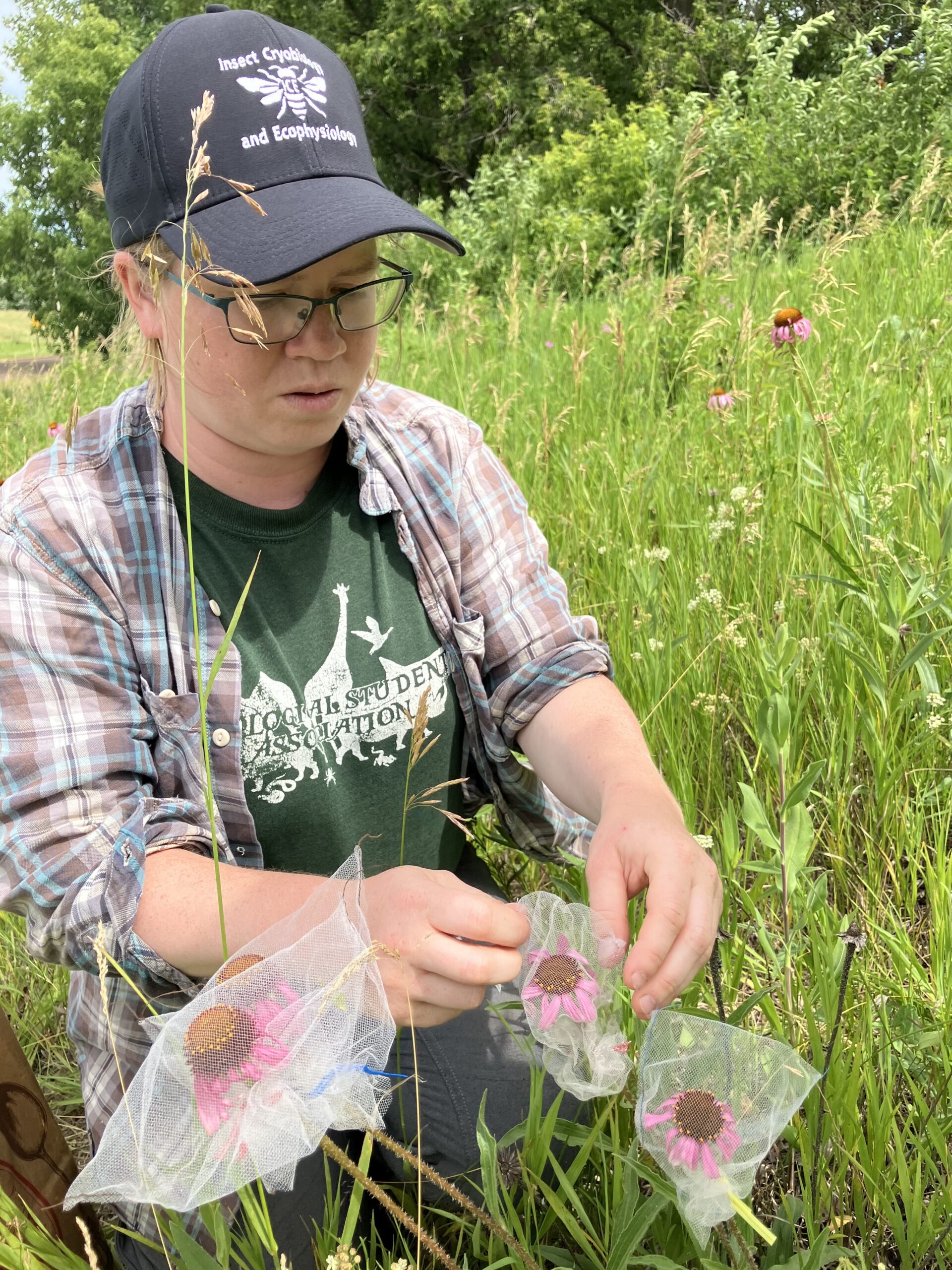
Collaborator and NDSU postdoc Grace Hirzel places pollinator exclusions bags on Echinacea heads in the remnants. If any of the plants in the polLim experiment from the non-control group had flowered this year, it would’ve looked like this!
You can find more information about the pollen addition and exclusion experiment and links to previous flog posts regarding this experiment at the background page for the experiment.
Exciting things are happening with Coreopsis pollen and nectar! Data entry for nectar has been accomplished and a figure has been made! The primary goal of this project is to see if prescribed burns have an affect on pollen and nectar quantity in C. palmata. However first and foremost, I want to go into more detail of how I collected data this summer, and then I’ll talk about my new nectar figure and what our findings are currently looking like.
Field Methods Step by Step: Pre-Collection:
In order to collect pollen and nectar samples we first need to identify the plants we are sampling from.
Random bb-points are pre-selected to designate areas of study interest within each site. Identify the closest “patch”, which is a central location with 5 or more stems of coreopsis, relevant to the bb-point. Record the location of each patch using Avenza. (2024 Avenza layer can be found in “Dropbox / teamEchinacea2024 / maddieSadler / coreopsisPalmata”)
Place a flag in the relative center of the patch and label it with it’s patch ID number.
Select 5 plants that are still completely immature and place a pollen excluder bag over the head of the plant.
Monitor plants for a few days until they reach day two or three of anthesis where anthers are protruding and there are still immature florets in the center of the head. This is important later for pollen collection.
Pollen Collection:
Select the plant to sample from bagged plants located in each patch. We chose 3 of the 5 bagged plants based on day of anthesis and general look of the head.
Record the bb-point of the coreopsis patch, site name, and location on the data sheet.
Remove the pollinator exclusion bag from the selected head.
For pollen collection we will be collecting 3 immature florets from the head of the flower.
Label your microfuge tube with the plant ID number located on the data sheet.
Take the tweezers and carefully extract three immature florets, one by one, from the flower head and place them into the microfuge tube. Make sure to be careful that you do not rip the floret in half or puncture it with the tweezers.
Once all three florets are placed inside the tube, close it. Place the tube into the cooler with ice packs for further sorting upon your return from the field.
Repeat steps 1-8 for next plant.
Upon returning to the Hjelm House, place the collected pollen tubes in the collected samples box, which then is stored in the freezer.
Nectar Collection: This was adapted from the 2022 nectar protocol for Echinacea which can be found here.
After pollen collection you will begin the process of nectar collection.
On the same heads used from pollen collection, select the anthers that are the most recently presented to sample from.
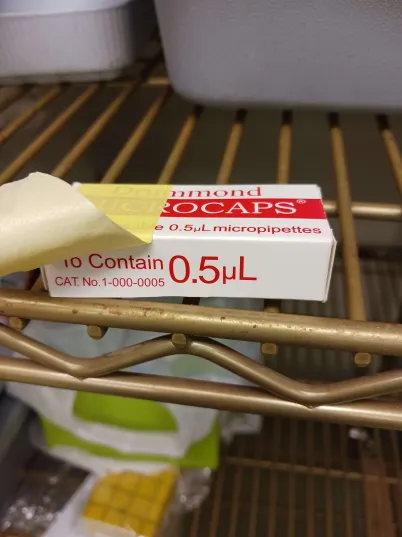
Insert the microcap tube into the anther floret. Insert the microcap down into the floret until there is light resistance when you reach the base of the floret.
Twist or rotate the microcap five times.
Carefully remove the microcap.
Repeat steps 3-4 on all presented anther florets on the selected flower head.
Record the amount of nectar collected in the microcap in millimeters (mm). It is helpful to hold the microcap up to the sun to see the refraction of light from the nectar to see the amount collected. You can use a magnifying glass if needed to read the amount of nectar in mm on the ruler.
Place the entire microcap with the collected nectar sample into a microfuge tube to be disposed of properly outside of the field.
Once this task is completed, it will not need to be done for the same plant in the future.
Repeat steps 2-8 for the next plant in the patch.
After all plants in patch are sampled from remove any extra pollinator bags and remove the flag from the center of the patch. Collection will not be repeated on the patch.
Field Supply Checklist:
Pollen Supplies:
Microfuge tubes (tall enough to put the immature floret inside and close the cap)
Permanent marker
Pen
Extra pollinator exclusion bags
Flag bag with flags of the designated color
Magnifying glass glasses with 3.5 – 5 X magnification
Tweezers
Water and sunscreen
Clipboard with the data sheet
Field collection box to hold small supplies
Small cooler with ice packs
Nectar Supplies:
Microfuge tubes (tall enough to put the microcap inside and close the cap)
Magnifying glass glasses with 3.5 – 5 X magnification
Ruler with mm markings
Water and sunscreen
Clipboard with the data sheet
Field collection box to hold small supplies
Now for the fun stuff!
Over this past week I’ve worked on creating this graph seen down below. This graph looks at the total amount of nectar in millimeters in each tube from each plant in our burned and unburned site combinations. These site combinations were created based on proximity to each other and burn history. For example, TorgN was burned, but TorgS, directly across from it, was not; Tower was burned, but Nice, directly across from it, was not. For YOHW and YOHE, we ran into an issue in that YOHE, the unburned side, had no flowering C. palmata in it; thus, we only have data from YOHW.
As we can see there is large amount of variation in totals across all the sites. When looking at the mean values (the red and blue squares on the graph) we are finding the slightest bit of evidence that burned sites are showing higher levels of nectar. Meaning my original hypothesis, that we’d see strong evidence that there is difference in quantity in burned sites rather than unburned sites is out the window! However, we can’t fully accept the null hypothesis, that there is strong evidence of no difference in nectar quantity, since there is not enough supporting evidence. Having this knowledge now, it will be interesting to see if there is a similar pattern in our pollen counts. Data and analysis on that to come!
Fig: Total (mm) of nectar in tubes for each plant at each site. Red squares (burned) and Blue squares (unburned) show average total with standard error.
**The code for this graph can be found in: “Dropbox / teamEchinacea2024 / maddieSadler / coreopsisPalmata”.**
NOTE: Funding for this project was provided by the Minnesota Environment and Natural Resources Trust Fund as recommended by the Legislative-Citizen Commission on Minnesota Resources (LCCMR).
As I’m preparing to write updates on experiments for 2024, it was brought to my attention that we don’t have one post summarizing all our updates from summer 2023! So, while you eagerly await this year’s news, enjoy a refreshing blast from the past. Here’s what we did last summer!
Members of Team Echinacea 2023 measure plants in our hybrid experimental plots at Hegg Lake WMA
In 2024, we harvested Echinacea in the remnants for Jennifer Ison’s pollinator observation study and at the Hegg Lake pallida restoration.
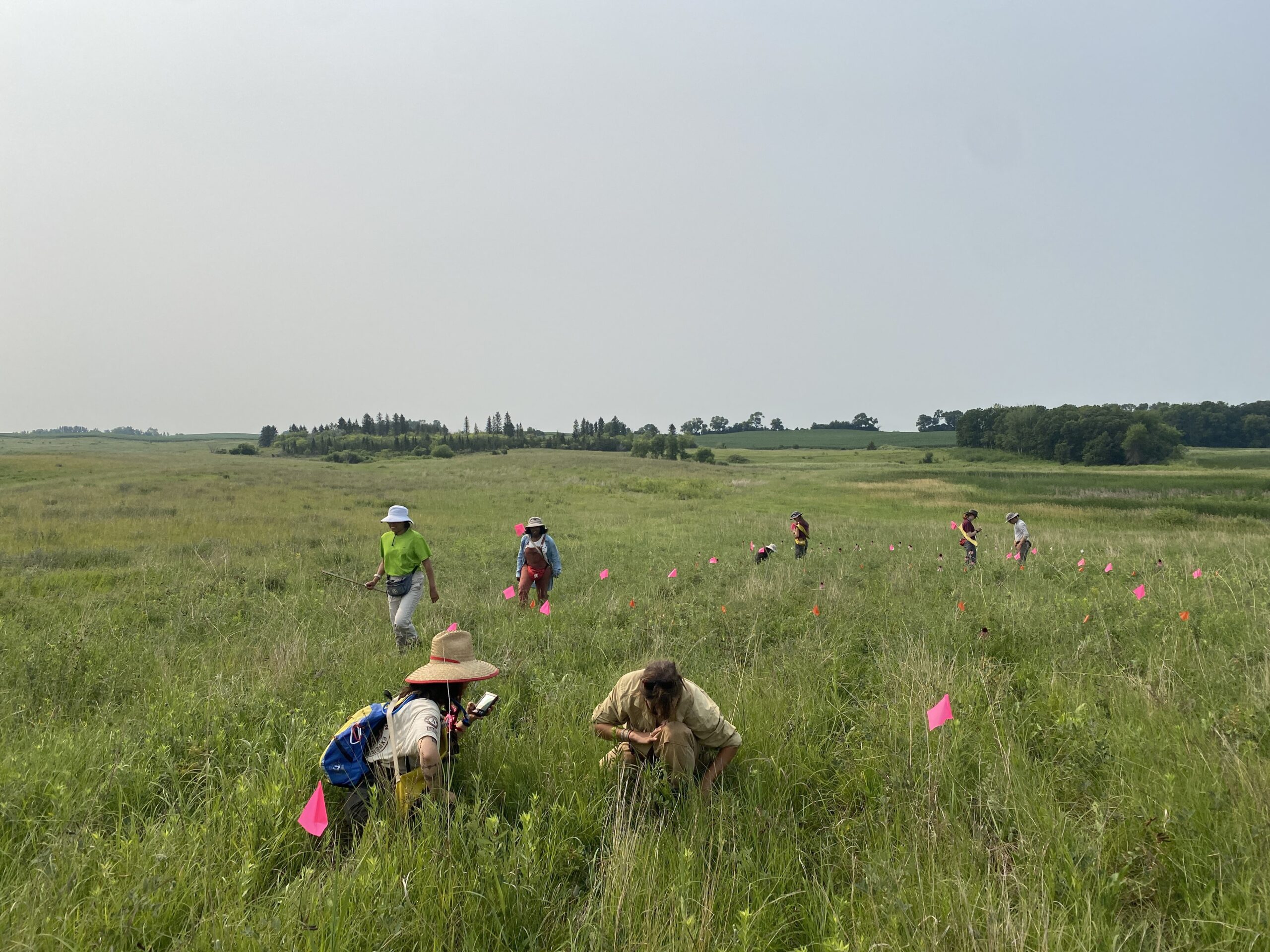
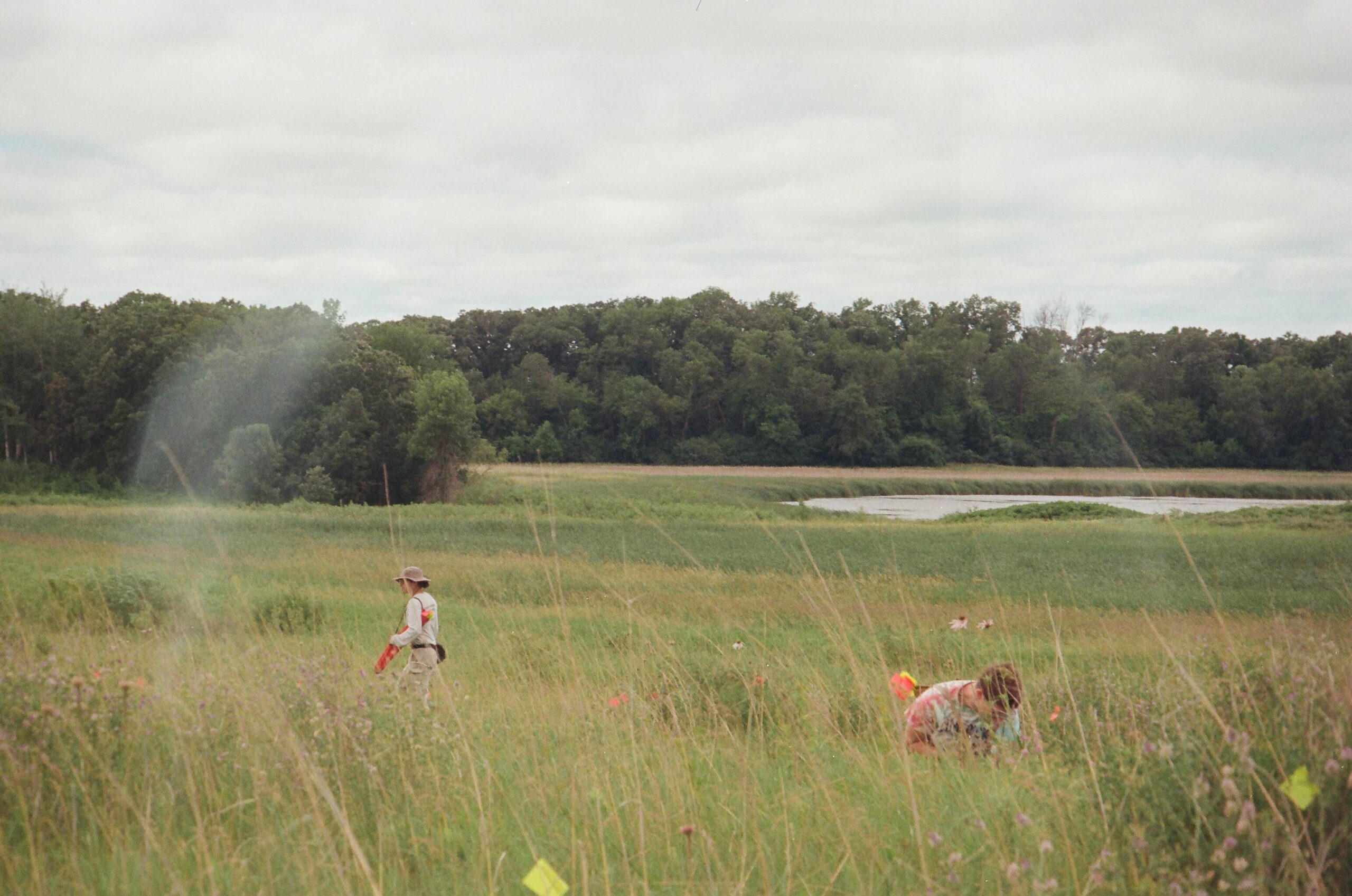
For the pollinator observation study, we quantified reproductive effort on a given day and watched heads at different plants across 10 remnants. When a pollinator visited our focus head, we would take a video so we could later ID the pollinator.
This pollinator observation was done by Ning on a plant at yohw this summer. I asked Ian to give his best ID and he thinks this is a Halictus species! Very cool.
We harvested heads from plants involved in this experiment to get an idea of how observed visitation links up with realized seed set. In total, we harvested 136 heads and brought them back to the botanic garden for processing. Here are the detailed stats:
TOTAL: 136 heads
hulze: 15 heads (11.0%)
hulzw: 14 heads (10.3%)
hutche: 9 heads (6.6%)
hutchw: 13 heads (9.6%)
nice: 15 heads (11.0%)
torgen: 14 heads (10.3%)
torgew: 15 heads (11.0%)
tower: 11 heads (8.1%)
yohe: 15 heads (11.0%)
yohw: 15 heads (11.0%)
Again, please forgive rounding errors. This batch is the highest priority in the lab; volunteers are currently working on cleaning these heads and hopefully the rest of the ace process is soon to follow!
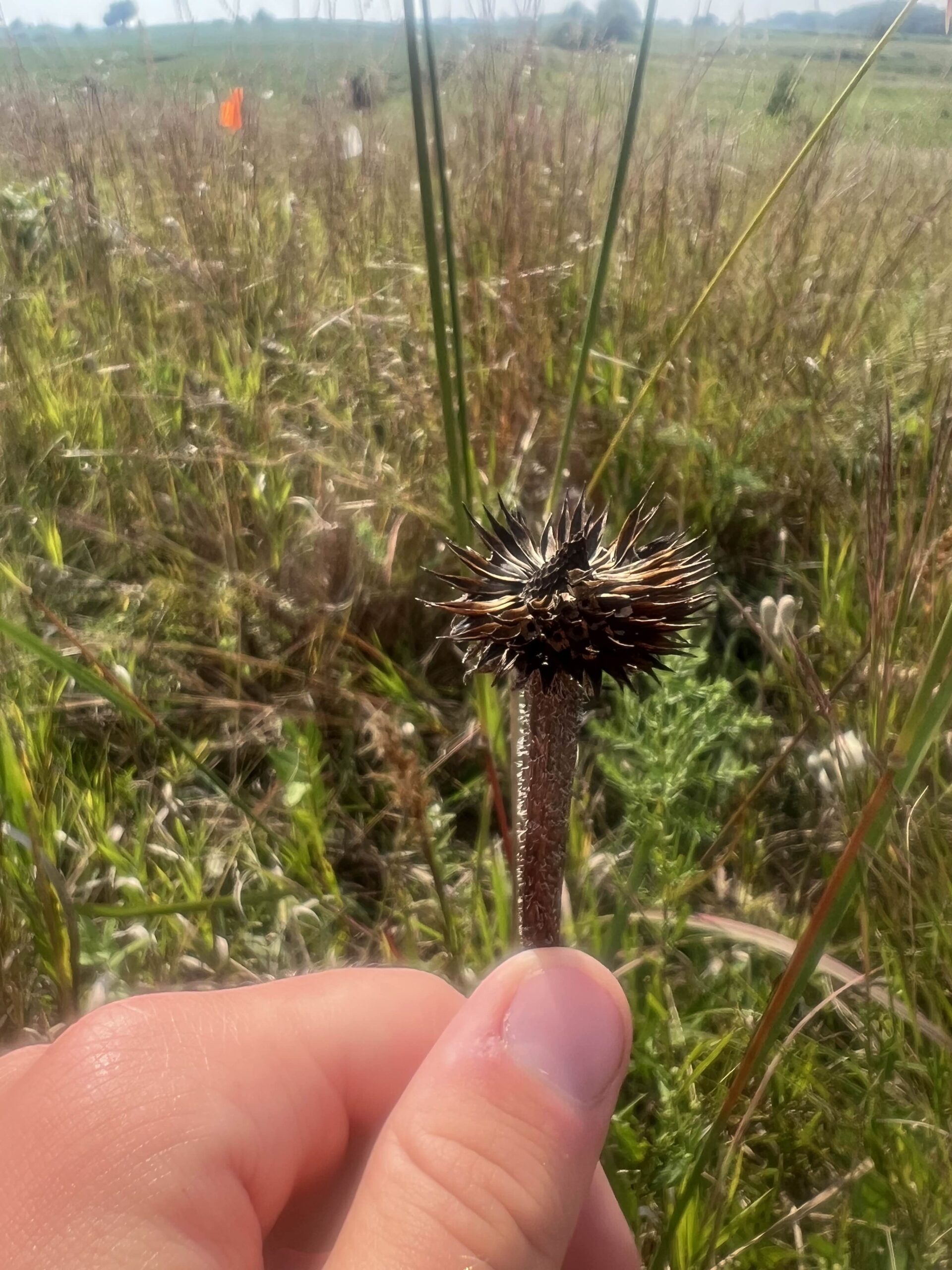
We also harvested, or perhaps I should just say decapitated, Echinacea pallida at Hegg Lake WMA. This species is native to areas primarily south and east of our study site, such as Indiana and Arkansas. SO how did they wind up in Minnesota? Seed for pallida was accidentally included in a restoration effort by the MN DNR years back. This raised concerns for us about potential hybridization with our native Echinacea angustifolia. (If you want to learn more about angustifolia x pallida hybridization like we did, check out our experiments to that end!) In summer 2024, we once again conducted our civic duty and decapitated pallida heads at Hegg in an attempt to prevent reproduction and further spread. We sliced and diced a total of 523 heads this year, with the largest plant having 20 normal flowering heads! Wowza.
Team members Liam and Maddie search for and take demography records of Echinacea pallida at Hegg lake before decapitating any heads that could later produce pollen. Photo credit Zach Zarling
There was also one plant at the location we refer to as “near pal” that we suspected may be an escaped hybrid; that is, a plant that we believe may be a natural hybrid of angustifolia and pallida. This individual only had one head, but was taller and more robust than its angustifolia neighbors. We put a pollinator exclusion bag on the head to prevent pollen spread, and later harvested the head and brought it back to the lab, where it is currently in the seed dryer. Keep an eye on 29239 in the future…
2024 was a relatively low-flowering year in the common gardens, but that doesn’t mean we didn’t bring plenty of Echinacea heads back to the lab for our volunteers! Here are our stats:
TOTAL: 689heads
exPt01: 82 heads (11.9%)
exPt02: 375 heads (54.4%)
exPt07: 87 heads (12.6%)
exPt08: 23 heads (3.3%)
exPt09: 110 heads (16.0%)
tplot: 12 heads (1.7%)
(rounding errors in %s abound)
Our first harvest was at p2, p7, and p9 on August 19th. Our last harvest was all the way on October 3rd at p7 and p9! Those hybrid plants really held on for awhile. Unfortunately, our first harvest was not in time to harvest some heads before they begin dispersing, and there are always a couple that lose achenes throughout the harvest season before we catch them. This year wasn’t toooo egregious, but our worst head lost an estimated 85% of its achenes before we encountered it. Yikes! Keep an eye out for seedlings around (7, 2) in p2…
A few achenes shy of a full head…
One major victory from this year is that, besides a couple holes and piles of dirt, the ground squirrels were relatively well behaved in p2 this year. Typically, they enjoy ripping heads off echinacea plants and leaving stems, heads, and achenes everywhere. Based on harvest notes, in 2024 we only found two heads on the ground and only one was missing entirely. Compare this to 2022, when the team only harvested 41% of the heads they planned on harvesting due to ground squirrel activity. (Though, I suspect this may have been a blessing—they still harvested 480 heads. If they’d harvested all of them, it would have been around 1,170 heads. That’s a lot of harvesting!)
Another fun fact: The 99 south garden in p1 produced 25 heads this year, but its 99 north counterpart didn’t have a single flowering plant.
Additionally, we did visit p5 this year and found several flowering (and some basal) plants, but were instructed not to harvest them, so we didn’t.
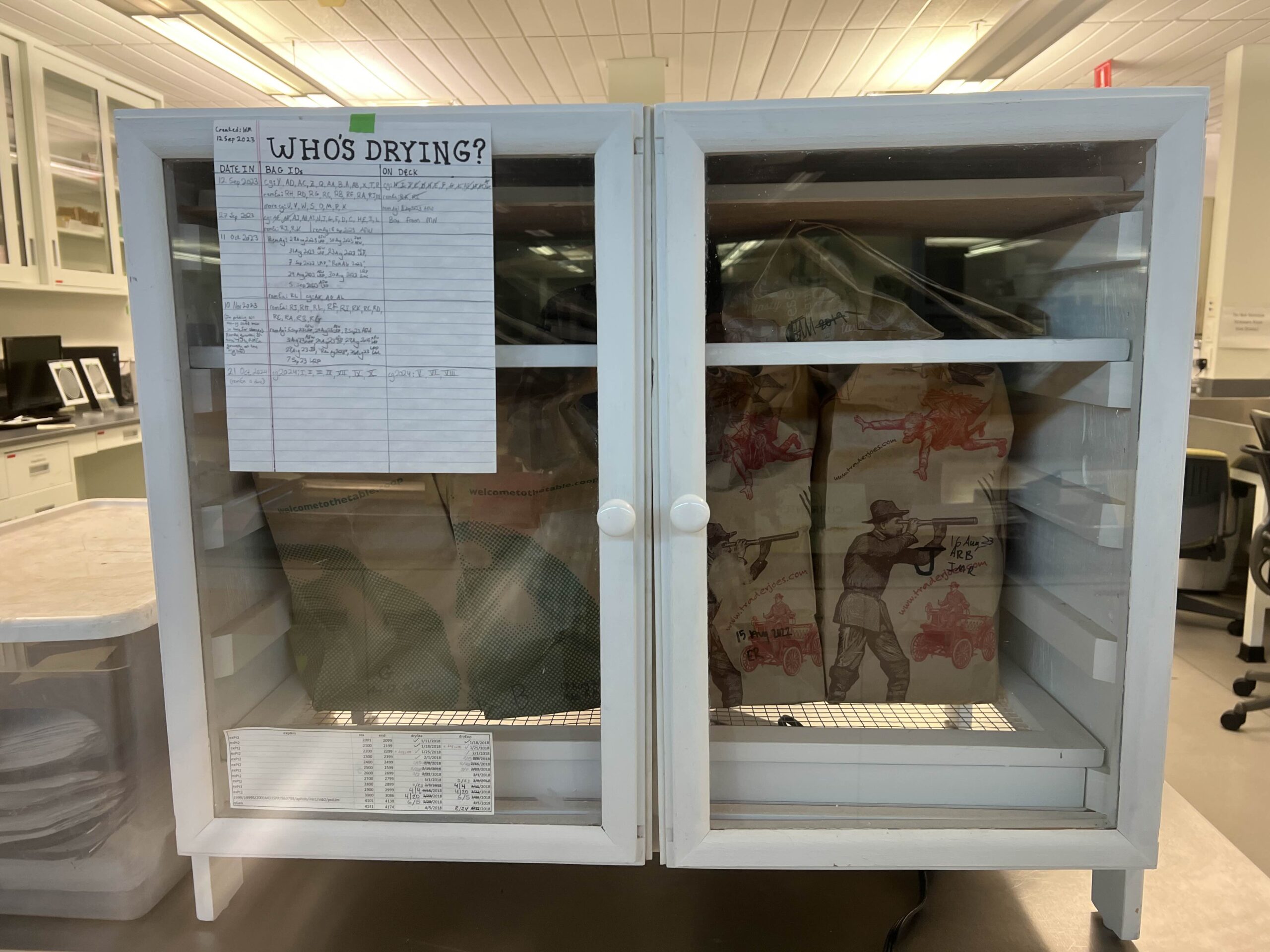
cg heads in the seed dryer prior to going through the ace process in the lab. It isn’t every year when almost all of your gBags fit in the seed dryer at once! I bet I could’ve made em all fit if I really squeezed them, but what’s the rush?
We still have a couple of gBags from 2023 to clean, plus 10 from this year. We like keeping our volunteers stocked! We’ll send exPt01 2024 through first, just after the remnant heads. And so the cycle continues!
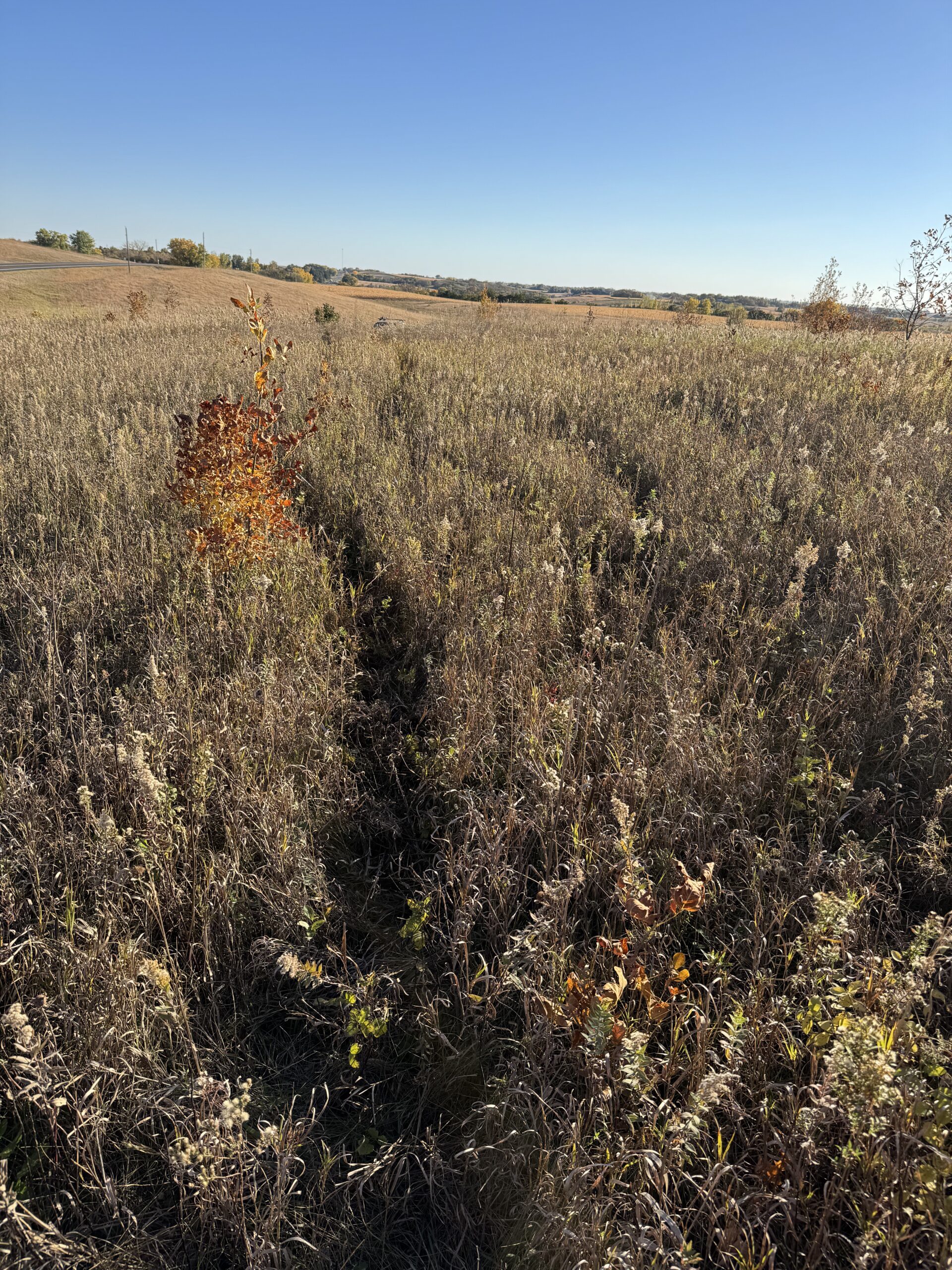
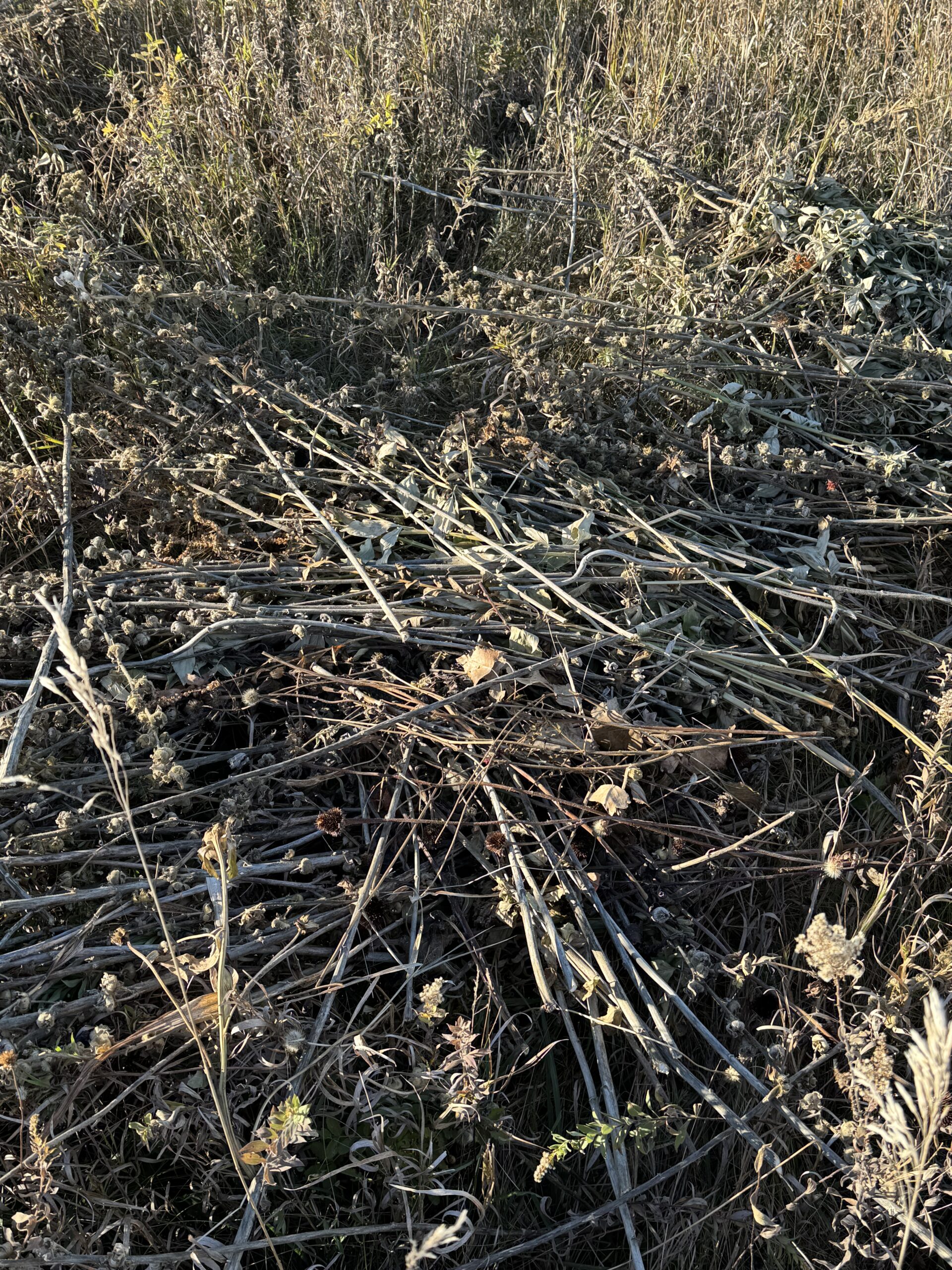
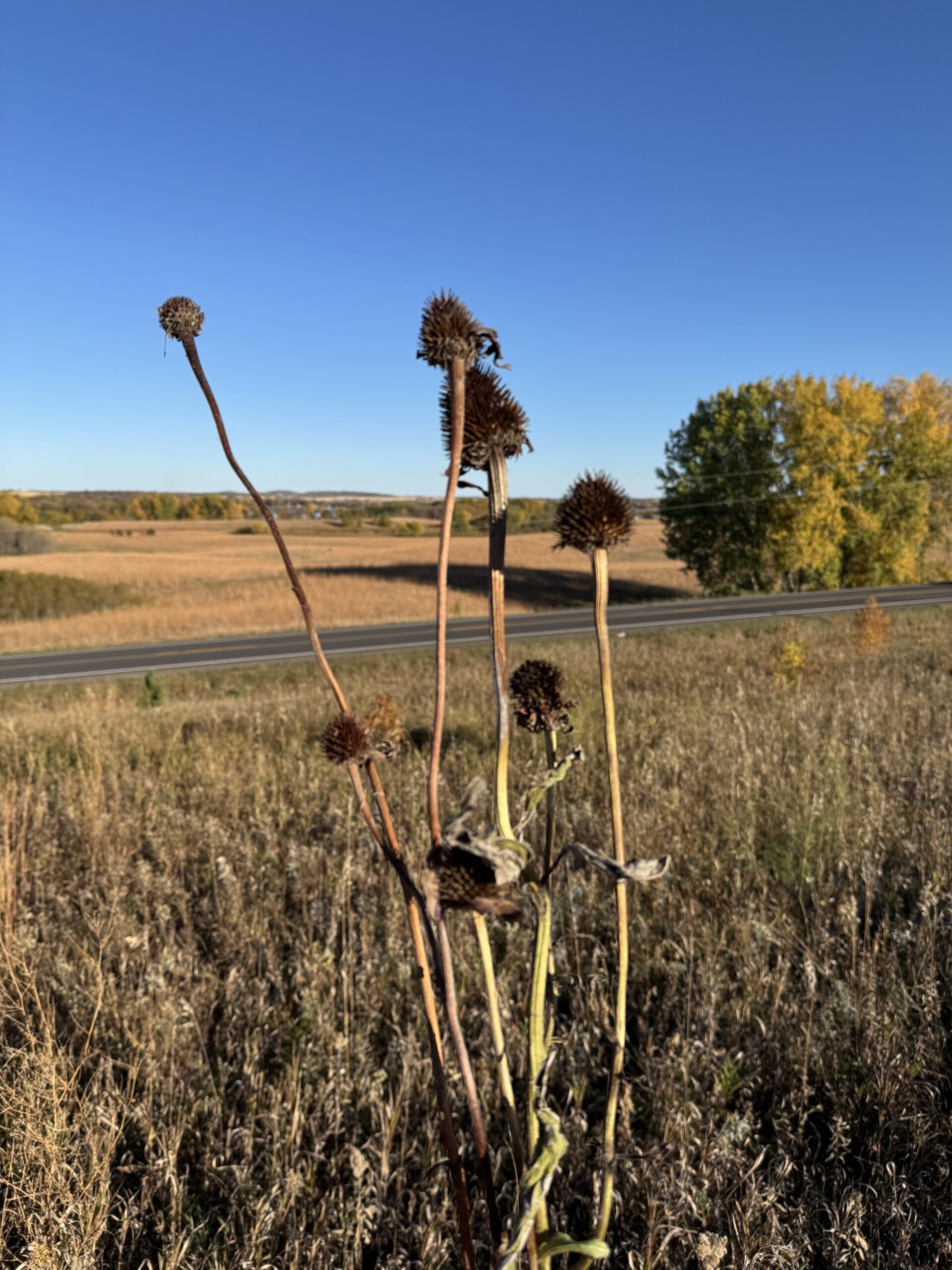
Follow the tire tracks from the parking space at EELR north towards the crest of a hill and you will find several piles of yard waste that appear to have been dumped recently. I came across these piles on October 11th while pulling flags from summer experiments. Among the debris are many flowering stems of Echinacea purpurea.
Standing at the site, facing south. Highway 25 at the top left corner.One of a few yard waste piles!Echinacea purpurea… an unexpected site in a remnant prairie in western MN.