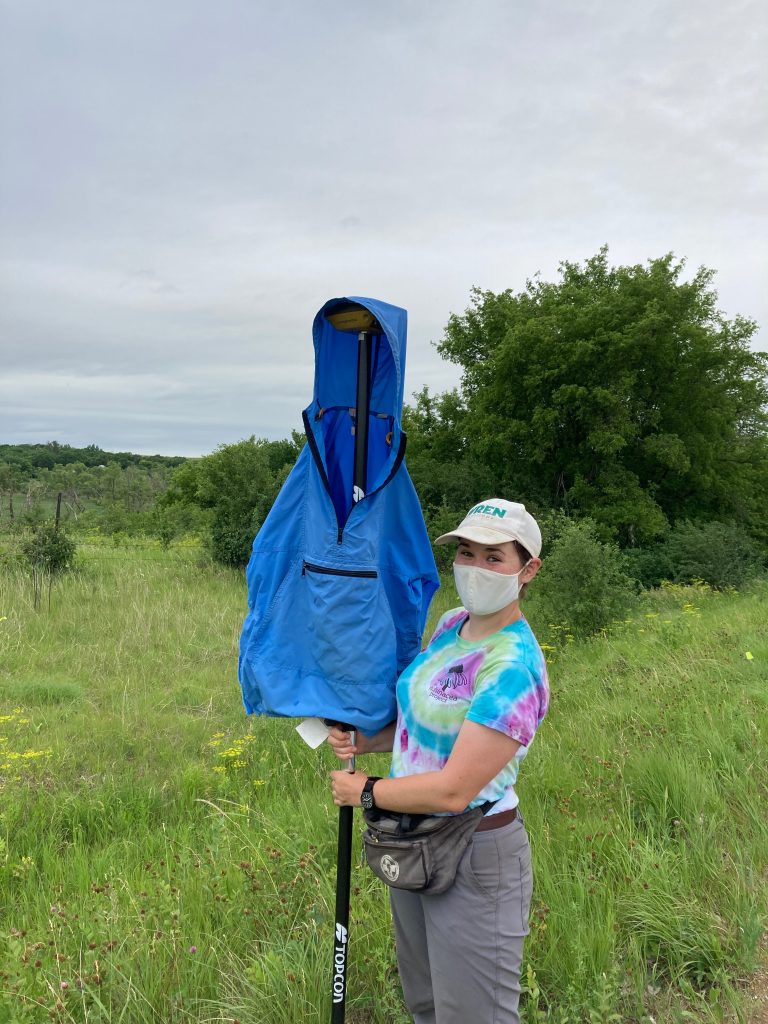
Today I only heard about what the team was up to from Mia after her epic day that started at 7:15 and ended around 6:30. Sounds like a lot happened in the field today! I heard about phenology, and how their were a few critical visor malfunctions, although it seems we were still able to get the data we need!
I also heard that people started adding and excluding aphids from Echinacea plants in p1, and that some hand crosses happened with hybrid Echinacea in p7!
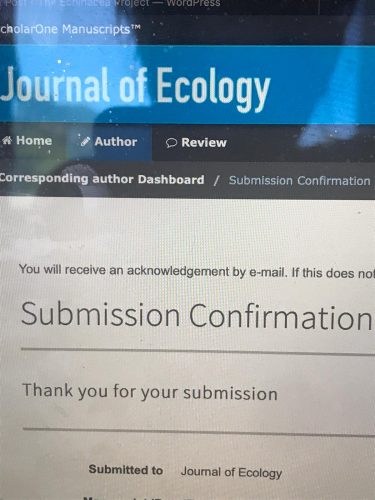
All in all it seemed like a good day for the team. Back home at Alpha Tango Hotel, I worked on getting the FNC manuscript ready to resubmit. Over the weekend many Team Echinacea members current and past read the draft and gave me valuable feedback. Today I polished everything up and clicked “Submit”! The study examines how heterospecific co-flowering plants and isolation from conspecific mates affects pollination. Specifically, we quantify how these aspects of the floral neighborhood influence four stages of the pollination process: 1) probability of pollinator visitation, 2) pollen on pollinators that visit Echinacea, 3) pollen on Echinacea styles, and 4) style persistence (pollination success). We are excited to submit this manuscript and are hoping for favorable reviews this second time around!
On Saturday we celebrated the 4th of July! This weekend was filled with fireworks, food, family and the lake. The team got together on Saturday and had a big slip and slide, bonfire and ate lots of food. My family was in town this weekend so I couldn’t participate in the teams get together. But my weekend was still fun!
For my individual project I chose the aphid exclusion project. I will be studying how aphids effect echinacea plants and I’ll measure that by comparing leaf color and leaf length from non aphid echinacea and echinacea that have aphids.
I think it is pretty safe to say that 2020 has not been the best year. During these relatively unfortunate times, it is important that we go out of our way to create positive experiences for ourselves and those around us. Of course, members of Team Echinacea are lucky to get to do field work every week day, and we also are blessed to be able to work with each other. However, when July 4th presented itself as an opportunity to have some fun with the team, no one was going to pass that up. Thus, we had a “first-time” experience with Team Echinacea yesterday… a July 4th slip ‘n slide!
Generally speaking, the team goes to a lake on the 4th and cooks out with the Wagenius family. Due to the current global situation, we decided to stay away from the general public. Stuart was a great host for the team on his home turf. He supplied us with root beer floats, snack packs, and popsicles while we read the Declaration of Independence. Thereafter, we discussed how the Declaration is holding up in current nationwide affairs. It was a very healthy discussion, and I think we will consider the words in the Declaration when we discuss fostering diversity with Team Echinacea in the future.
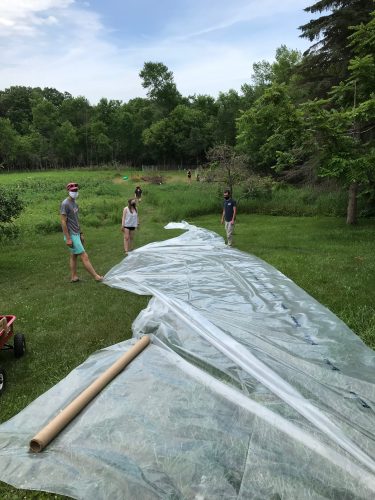
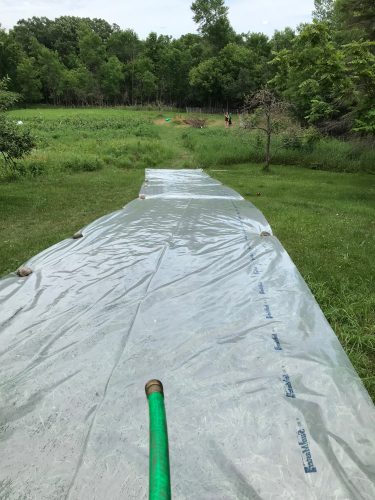
After our discussion, we transitioned to the great slip ‘n slide! It was a ton of fun! Drake donated his hoop-house plastic to slide down, and the Wageniuses supplied us with well water, hoses, sprinklers, and dish soap. It was a ton of fun! There were a variety of methods folks used to get down the slide, and it seemed like a constant struggle to find the optimal method. If anyone is looking for a video of themself going down the slide, please feel free to contact me for it!
Once the slide was over after a couple of hours, folks went home. Late in the night, though, the Andes people came over to the Hoffman House for a quick bonfire. It was a lot of fun, and really capped off the day with some great bonding!
People setting up the slip ‘n slide! It took a while to figure out how best set it up!It eventually looked like this (very good)!
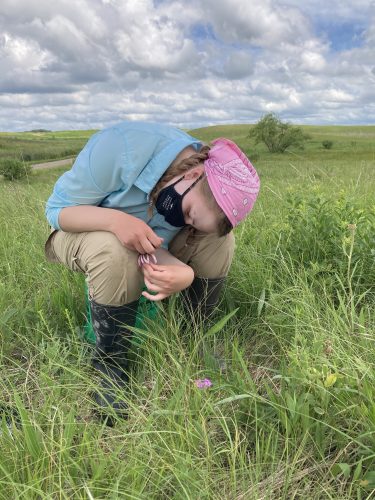
Today we kept up the steam that we’ve had going all week, this time with measuring Echinacea in P7 and P9, two experimental plots out by Hegg Lake. This involved working in teams of two to find all the Echinacea plants present in each of these experiments and measuring aspects of their fitness including number of rosettes, number of leaves, and length of the longest leaf. Lots of working methodically down rows and searching for itty-bitty, seven-centimeter-tall, one-leaved Echinacea plants among the grass and litter! Good thing everyone’s “Ech vision,” and work ethic, is strong at this point.
In the afternoon Mia gave an interesting presentation that she’s preparing to record for the Botany conference this year about pollination and genetic structure in naturally fragmented populations of a desert plant, Erythrina flabelliformis (coral bean). It was really cool to hear what she’s been working on!
In non-Echinacea news, I saw my first flowering Dalea purpurea (purple prairie clover) yesterday, along with my first Bouteloua curtipendula (sideoats grama) of the season, both in P2!
Stay cool,
Emma😎
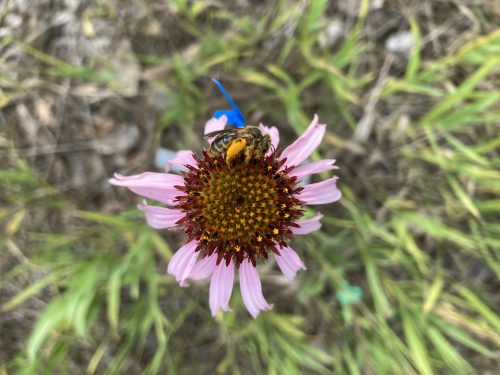
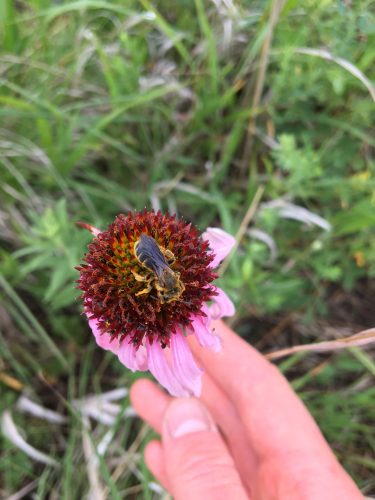
An interesting bee pollinating a flower observed during phenology yesterday. ID, anyone?
What an exciting day. The team spent most of the morning checking on phenology in the remnants. We split up into four teams to cover the whole study area: the Big East Team (Stuart and Anna M), the Andes + Erin crew, the A-team (Allie, Anna A., and me), and Riley and John. It was a lot of fun. More and more plants are presenting pollen, but for now most heads are still buds or are just starting to present ray florets.
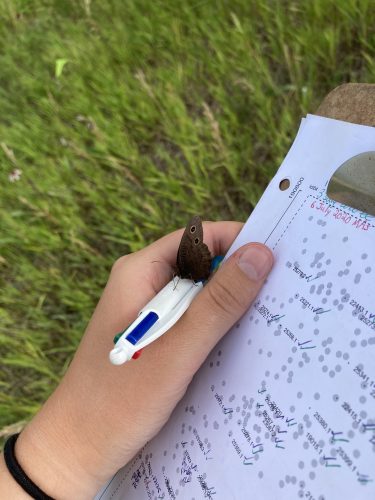
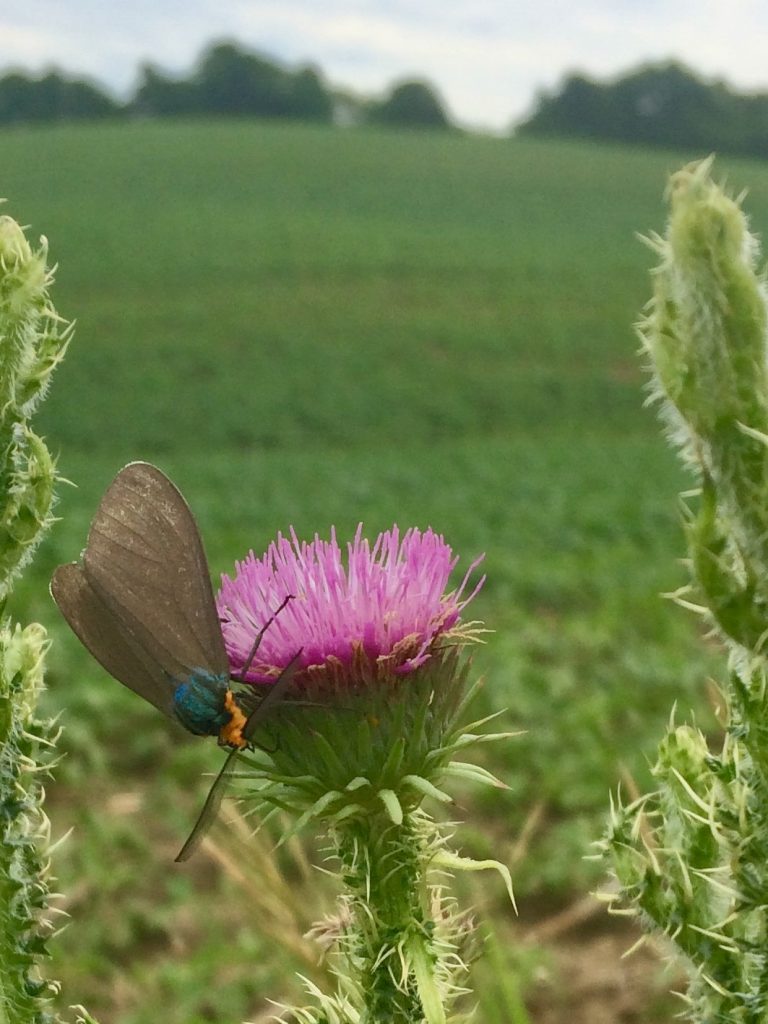
This is the only picture I took today! Check out those antennae.
The most fun thing about today was that we used a walkie talkie app on our phones to stay in touch while doing phenology. We practiced our radio lingo and learned what our initials are in the NATO phoenetic alphabet.
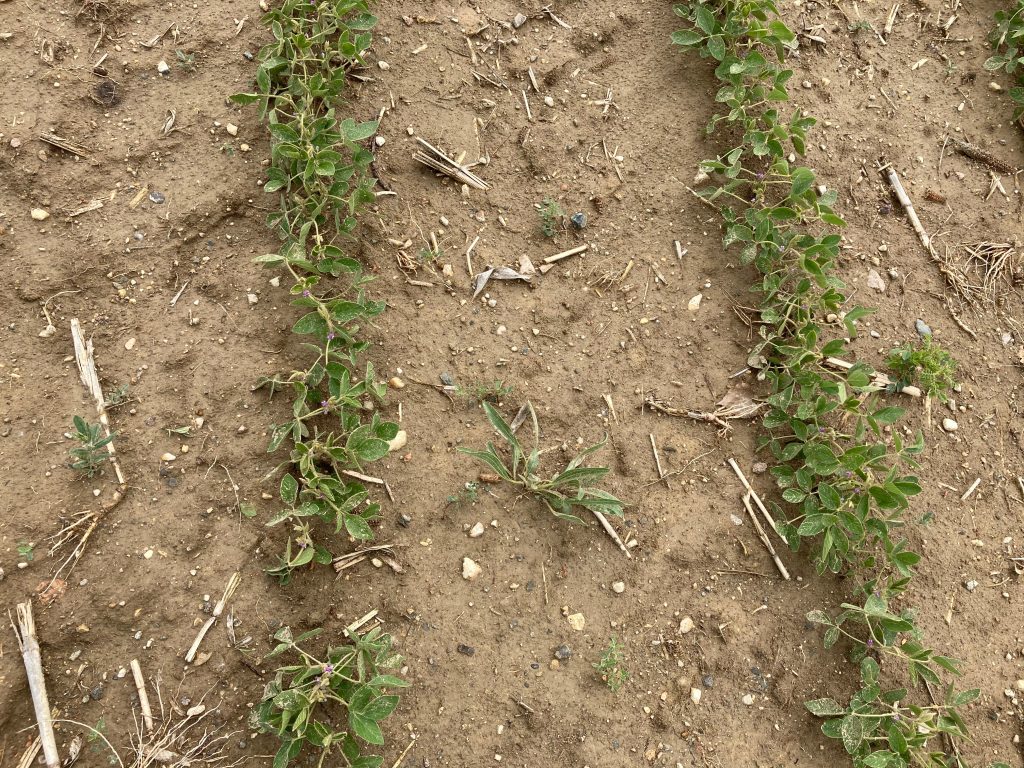
Persistent plant growing three rows into the soybean field at On27 (Photo Credit: Mike Sierra aka Mia Stevens)
In the afternoon, the A-team went back out to do phenology at Landfill and others started searching for Stipa. We finished the day with chores.
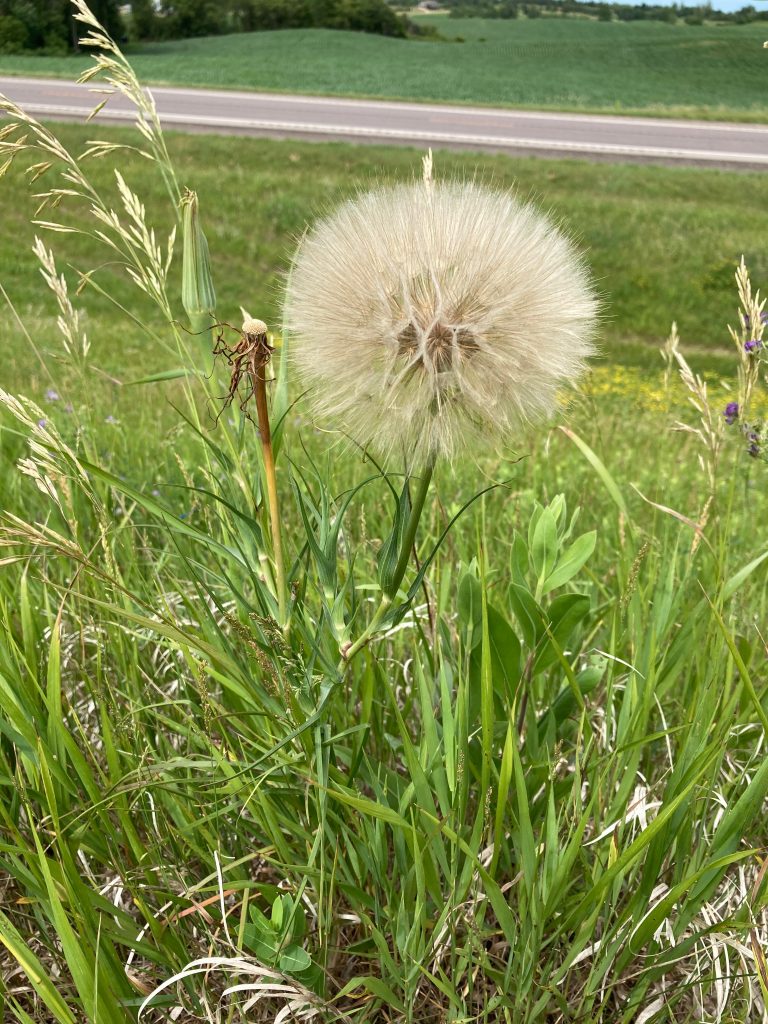
Huge opportunity for wishes! (Photo Credit: Mike Sierra aka Mia Stevens)
I can’t wait to do this all over again on Wednesday!
Erin keeping her boy Darwin dry during some sprinkles at Loeffler’s Corner, a site in the Choo Choo Corner Route (Photo Credit: Mike Sierra aka Mia Stevens)
Hi flog! Today began slowly, with people in the Hoffman House up and about doing some field work and getting some errands/chores done.
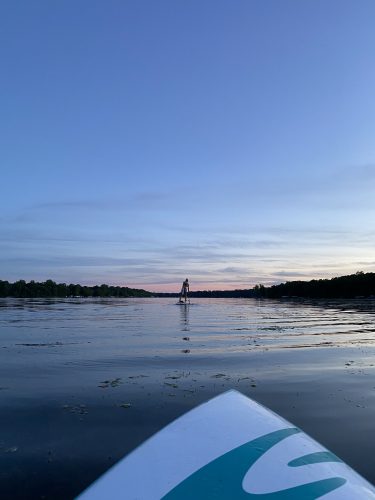
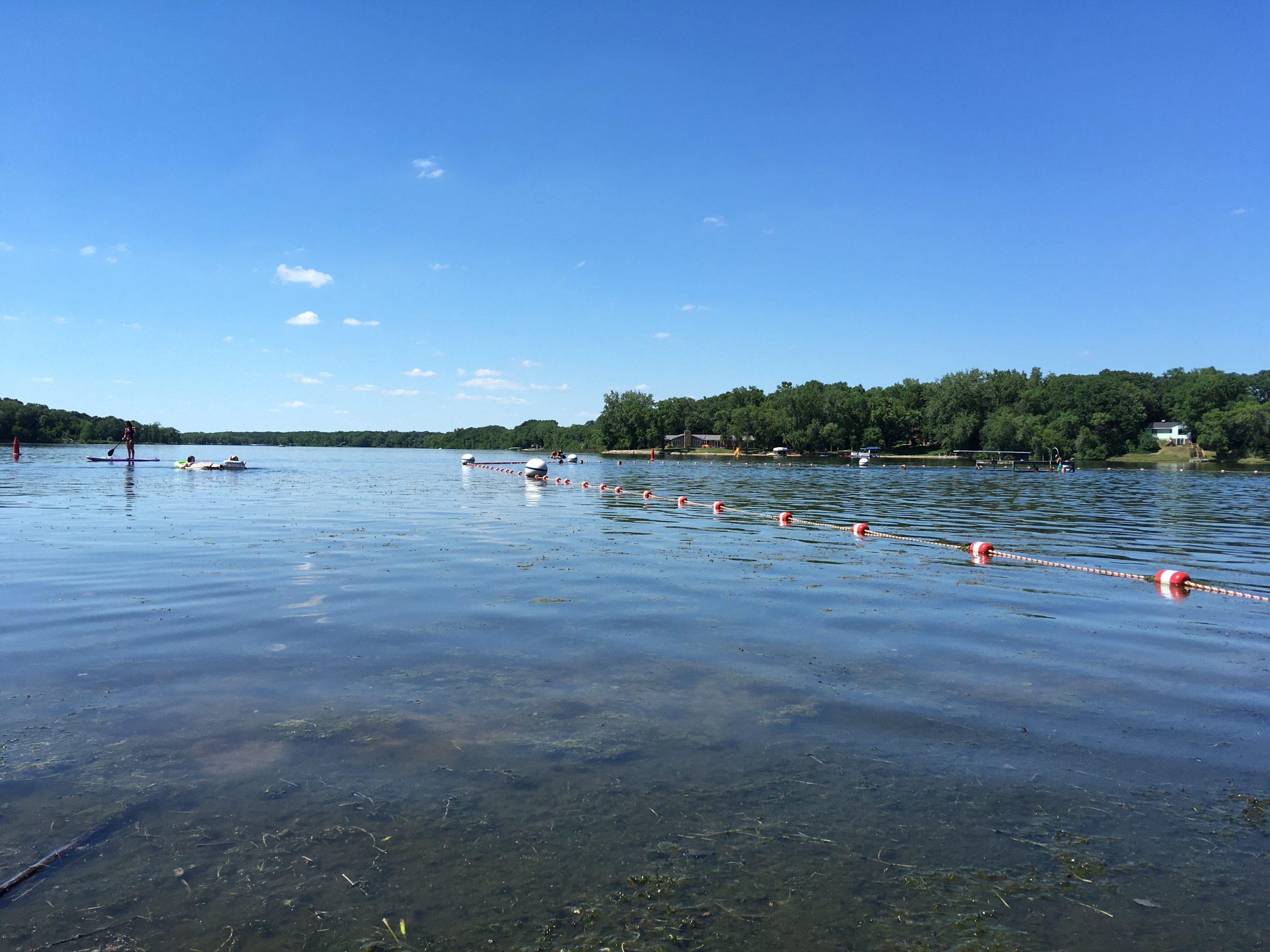
However, this afternoon the Hoffman House crew and some of the Andes Tower Hill folks met up for some relaxation at Elk Lake. Some of us braved the plant-filled, squishy-bottomed lake for a nice, refreshing swim.
A view of Elk Lake
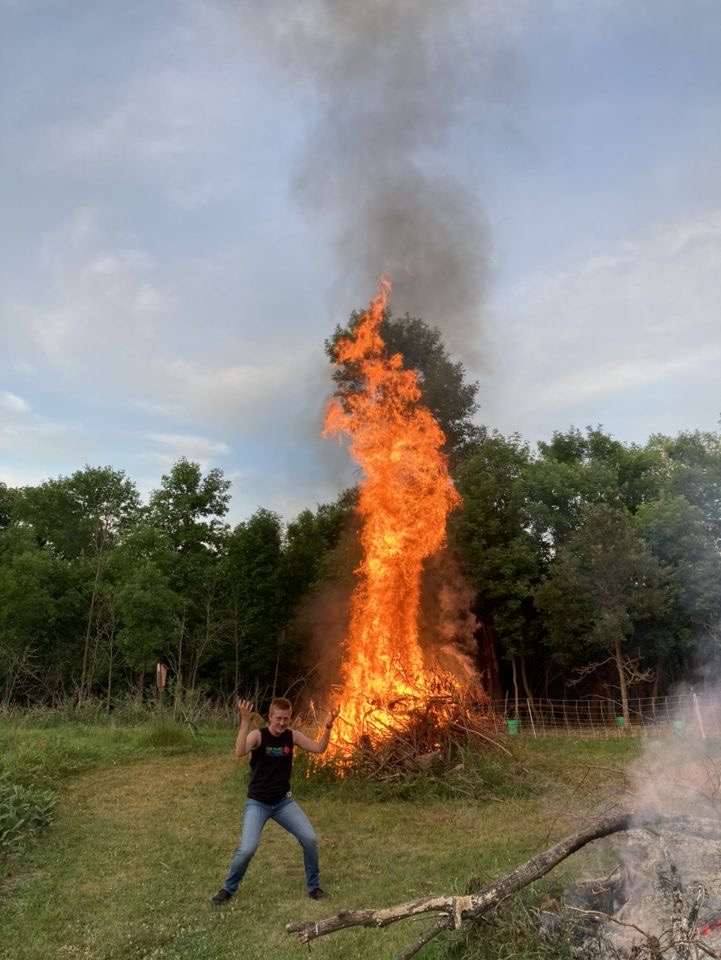
After that, we headed back home for some dinner, and then to Hjelm to meet the goats and have a bonfire, complete with the requisite s’mores. Emma started the second bonfire, which resulted in a gigantic flame. You could have roasted a marshmallow 10 meters away from the fire.
Emma with her fire – you can see what’s left of the first fire in the bottom right.
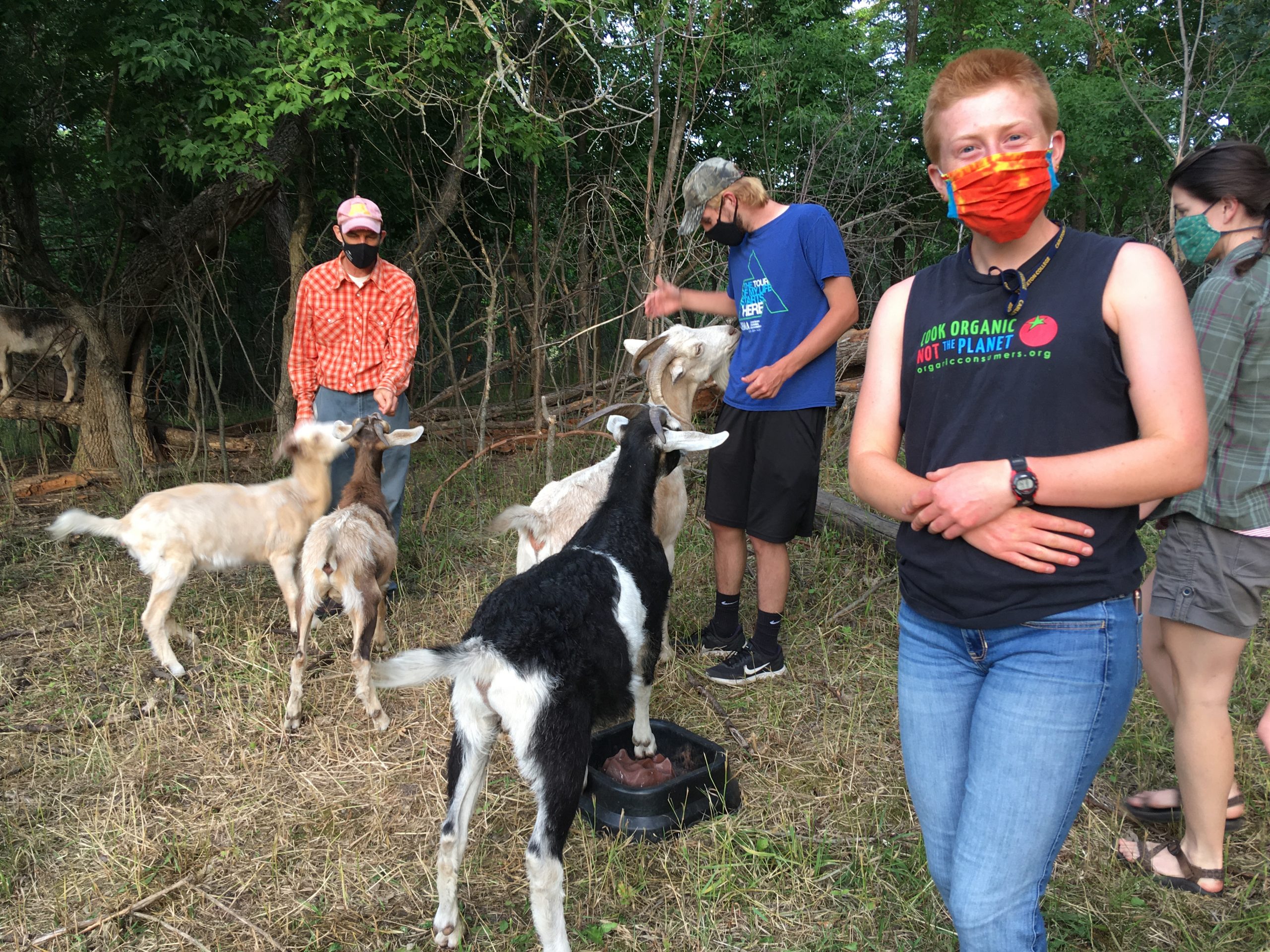
There are 9 goats staying at Hjelm House this summer and they are all adorable. They love eating treats and nibbling on fingers. For the most part, they are all well-behaved goats. But, one goat, Noess, decided that it would be better outside the fence than in, and hopped out to join us at the bonfire. Noess spent part of the night missing and part of the night trying to eat marshmallows with us.
Saying hi to the goats!Noess on the loose
We were also joined by many mosquitoes and some bats. Everyone had a great time and we look forward to more evening bonfires in the future!
A steady trickle of plants on their first day of flowering continues to roll in. Very exciting!
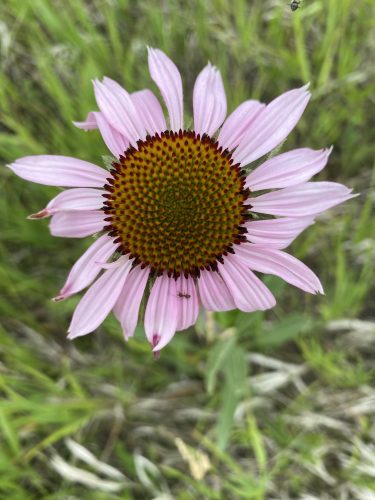
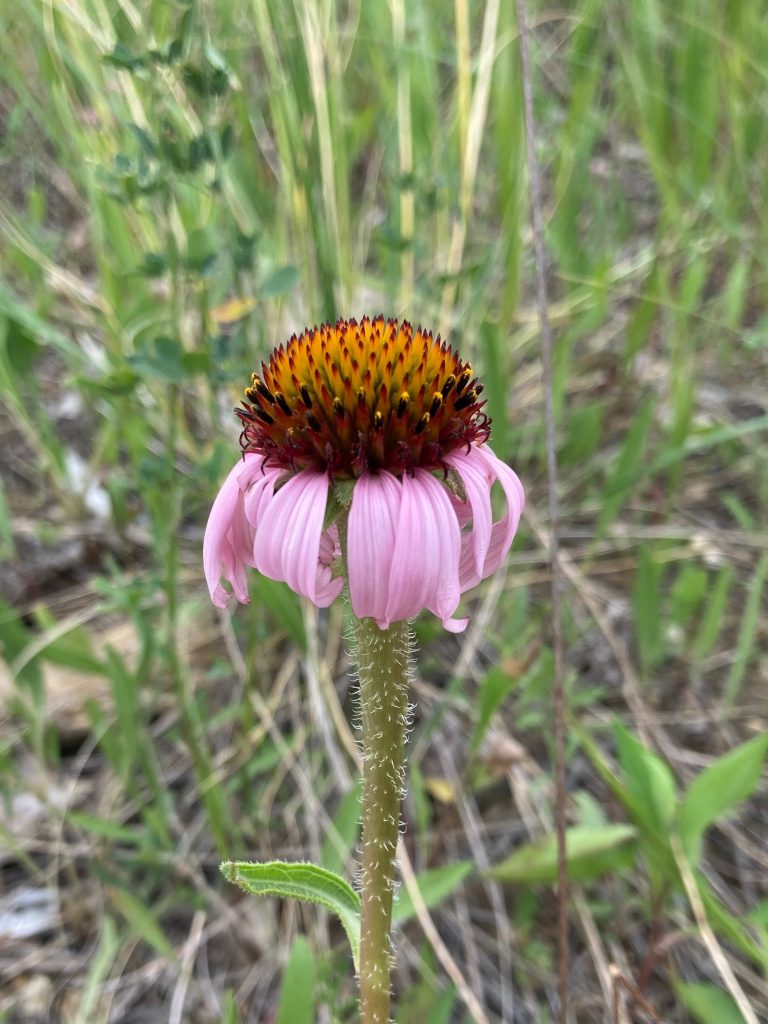
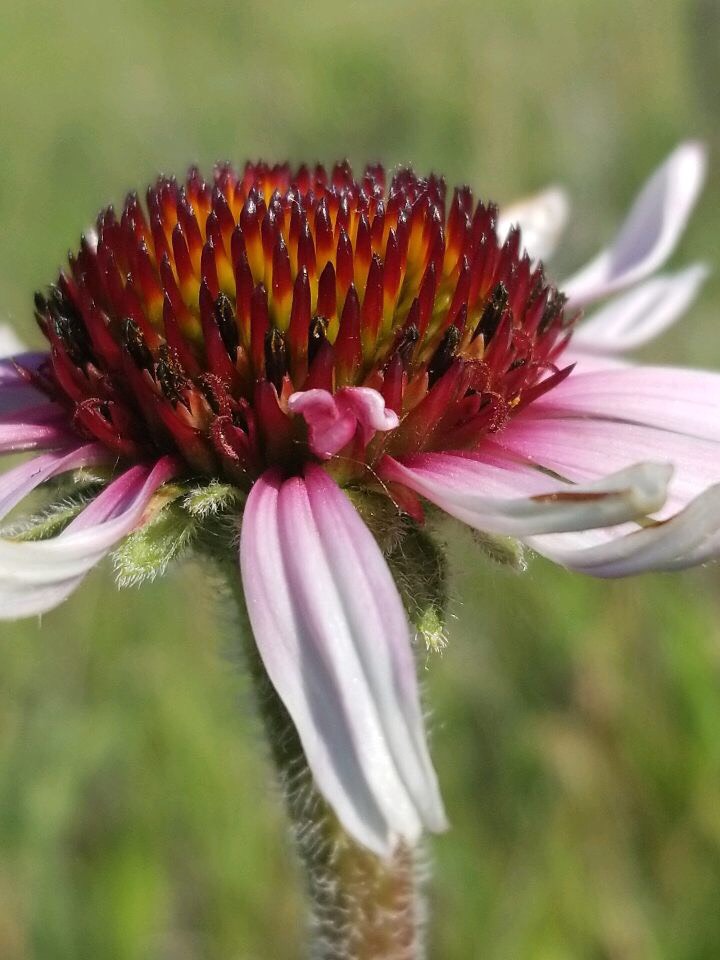
Anna M took this beautiful picture of an Echinacea head on its second day of flowering at Loeffler’s Corner
Erin E finished surveying all of the sites where I will be doing my crossing experiment, which looks at the effects of outcrossing distance and inter-parent asynchrony on offspring fitness!
A team completed a first round of twist-tying flowering plants at p2.
The team got trained in on Stipa searching.
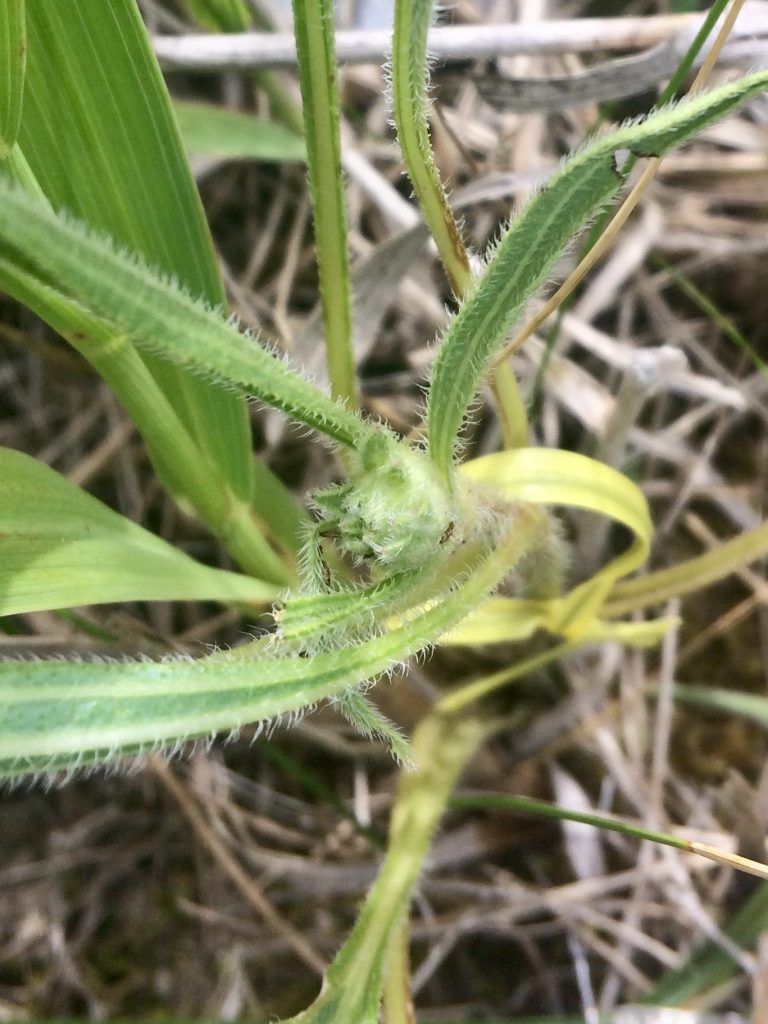
I looked for flowering plants at East Elk Lake Road and encountered the plant tagged 18136, which is precious to us because we have been tracking it since it was a baby seedling. It might flower this year, but the bud is so little it is hard to tell!
Just a little bud!
My department at UMN had a forum about experiences of racism in our community, following several weeks of dialogue. My peers shared powerful statements, and I am hopeful that this will lead to positive change. Black Lives Matter. Read more about the perspectives we expressed in the open letter we wrote to faculty before the meeting.
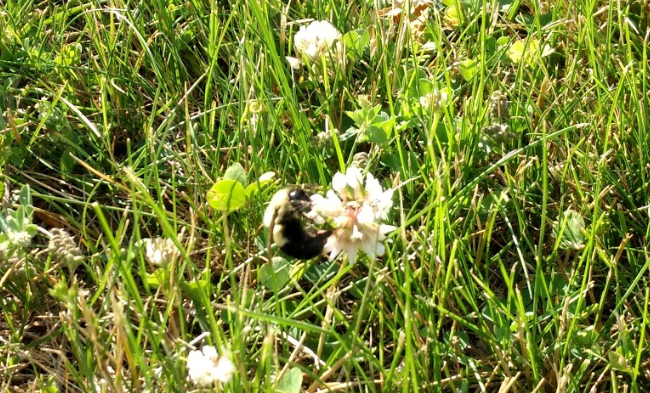
We had a pretty quiet Sunday here at the Hoff House, except for the constant rumbling of the washer and dryer. Stuart, Emma and Mia all paid us visits to do their laundry. The sun finally came out in the afternoon and I joined Mia in the yard, where we watched a bee which she identified as Bombus imaptiens trundling around clover patches.
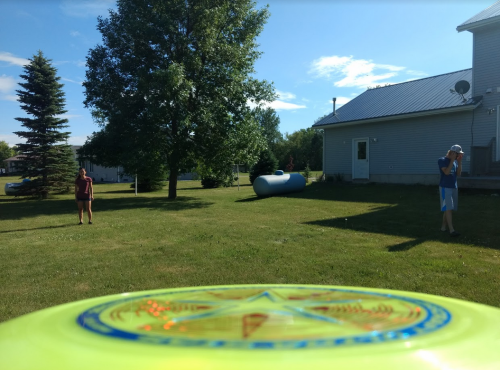
Allie, Riley and I took advantage of the sun to throw a frisbee around the yard. The winds were gusty and occasionally carried the ‘bee way over our heads! Afterwards we deliberated about making crop circles in an un-mowed field of grass adjacent to the lawn, but if you see anything about aliens on the news this week, it wasn’t us!
UFOs have been reported in the area
Our Bombus friend returned and Riley and I chased her around the yard. We’ve named her Biggio for the MLB player and her enormous length. There seems to be several Biggios hanging out in the yard, though, and hopefully there will eventually bee enough for a pickup ball game.
Biggio! This doesn’t seem to be the Biggio who Mia orginially identified, as this one seemed a little smaller.
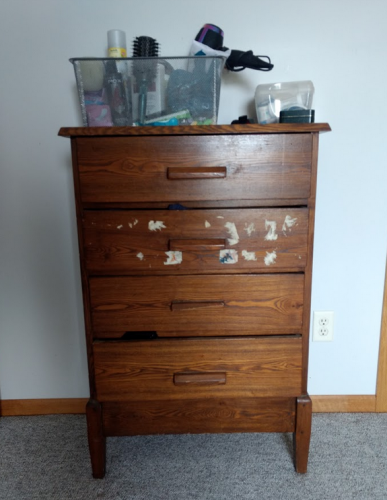
The Hoff House is largely unfurnished, so I was really excited to rescue a dresser from the side of the road yesterday. The former owners of the dresser drove up and said hello as I heaved it into my trunk, which briefly terrified me into thinking I was robbing them. Today Riley helped me haul it upstairs and I have now transitioned from a floor-based organizational system to a drawer-based one.
Not pictured: The antique framed photo of a church that the former owners of this dresser asked me to take as well
Let me know if you see any large bees or spare furniture on the roadsides of West Central Minnesota! The Hoff House has a vested interest in both of them.
We had a good first week at the Echinacea Project! It’s a good group of caring and dedicated people and I’m looking forward to spending the summer with them. On Friday we discussed our ideas for individual summer projects, which demonstrated the collaborative, supportive, and ecological science-fostering environment that this team cultivates. It was fun hearing about everyone’s projects, which ranged in topics from aphid-ant-plant interactions to the role of parasitic plants in prairies, to Echinacea pallida/angustifolia hybrids, to Echinacea seedling persistence in microhabitats, to planning prairie research projects for a high school class. It will be exciting to see how they develop!
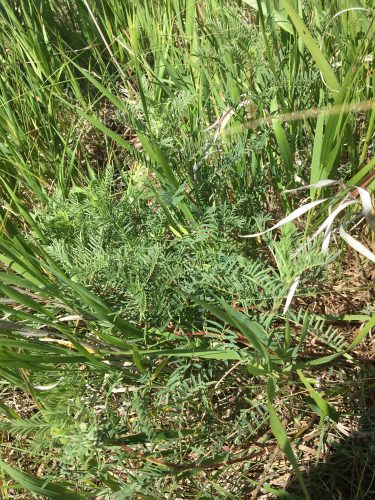
In plant ID this week I’m jazzed to share that I figured out what the plant Amy and I were trying to identify at the Landfill site on Friday was! It was Amorpha nana, aka fragrant false indigo or dwarf false indigo. It’s a relative of Amorpha canescens (leadplant) and looks similar, but has distinctive red stems.
Next week I look forward to more monitoring of Echinacea phenology as its flowers develop, getting more practice with GPS data collection, and working on my project idea. I’m thankful for the patience of more experienced team members showing me how it’s done!
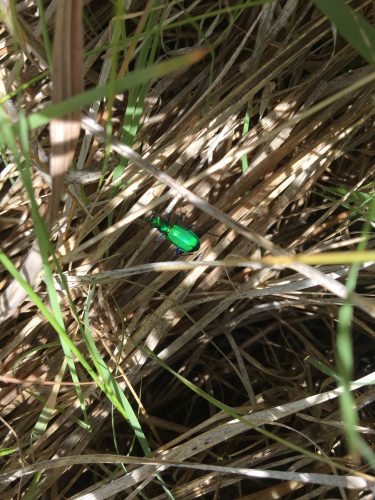
What I believe is Amorpha nana, seen at the Landfill prairie remnant. Surrounded by brome grass and litter–maybe this site would benefit from a burn!A brilliant tiger beetle also seen at Landfill