A note to future Team Echinacea members: Are you still wearing masks all the time? Are you still 3 years behind on cleaning Echinacea heads or have you caught up a little bit?
Anyway, in the summer of 2020 there were 18 heads of Echinacea pallida that were harvested. 11 of these heads were a part of Anna Meehan’s hybrid compatibility experiment. All of the pallida heads are NOT going through the ACE process; they are in the lab all together nice and neat. These 18 pallida heads will not be a part of hh2020. EXCEPT the hybrid plant head (AP-772) who will stay apart of hh.2020 since we need achene count eventually but for now it will stay here until it is dissected.
The heads are in a box labeled “Anna Meehan’s Hybrid Compatibility experiment & E. pallida heads 2020″ in the glass cabinets right as you enter the ecology lab.
The hybrid compatibility experiment would be a perfect project for a student in the lab for a few weeks. They could asses the compatibility of the hybrid with not only the E. angustifolia but also the E. pallida. The experiment is designed with backcrosses (hybrid to parent) and forward crosses (parent to hybrid don’t know if this is the right word I just made it up). The student would be able to access seed set on the hybrid, E. angustifolia, & E. pallida heads. The sample size is fairly small but this would conclude a good pilot study for further studies of the hybrid compatibilities. We also need achene count of the hybrid plant (AP-227)!
On March 5, 2022, Allie and Wyatt presented about aphids and prescribed fire at the Midwest Ecology and Evolution Conference (MEEC). See the poster below!
On March 5, 2022, Mia and Alex presented the Pollinators on Roadsides project at the Midwest Ecology and Evolution Conference (MEEC). They focused on the bee abundance results since the specimens had not been fully identified to species yet.
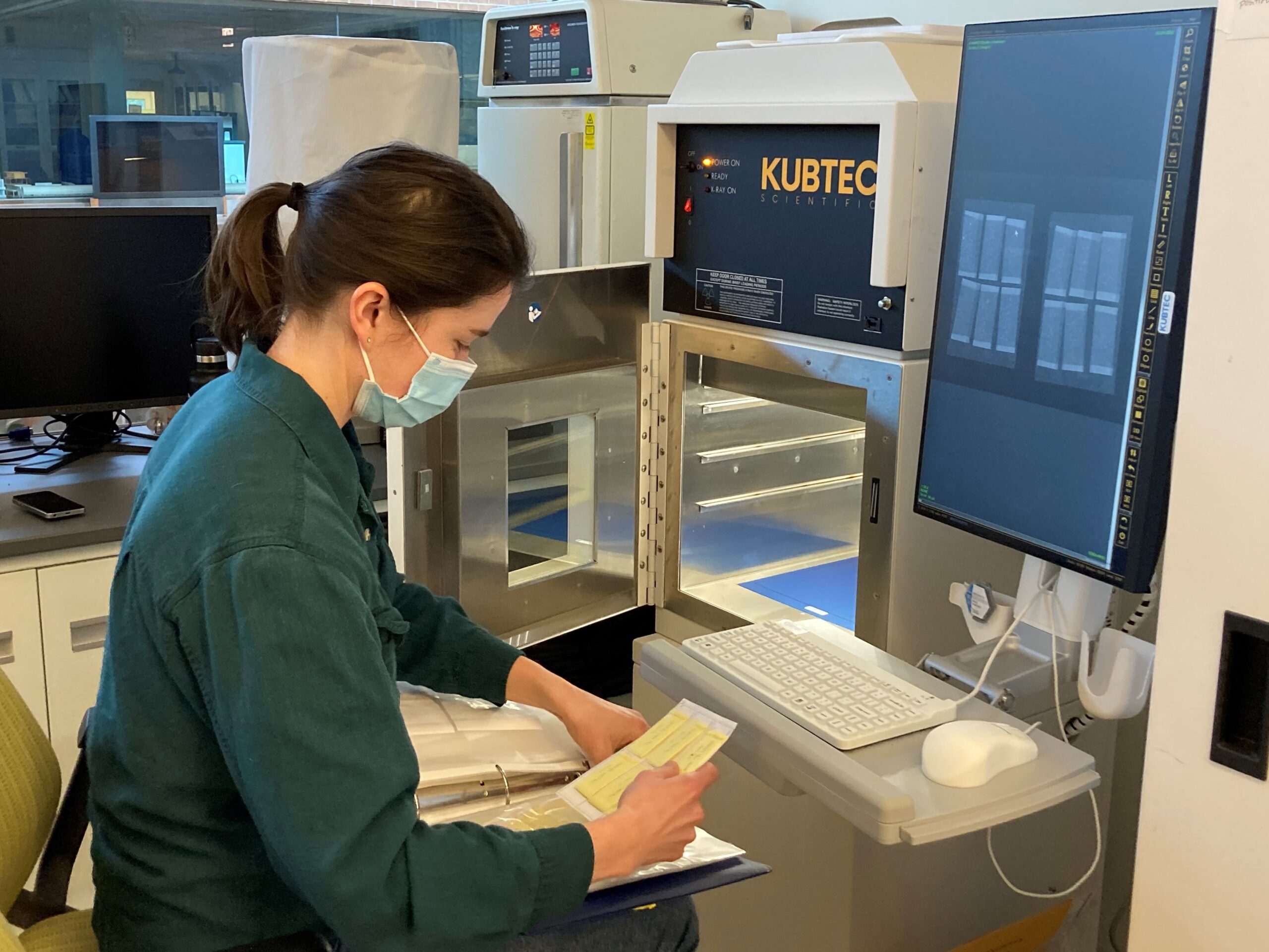
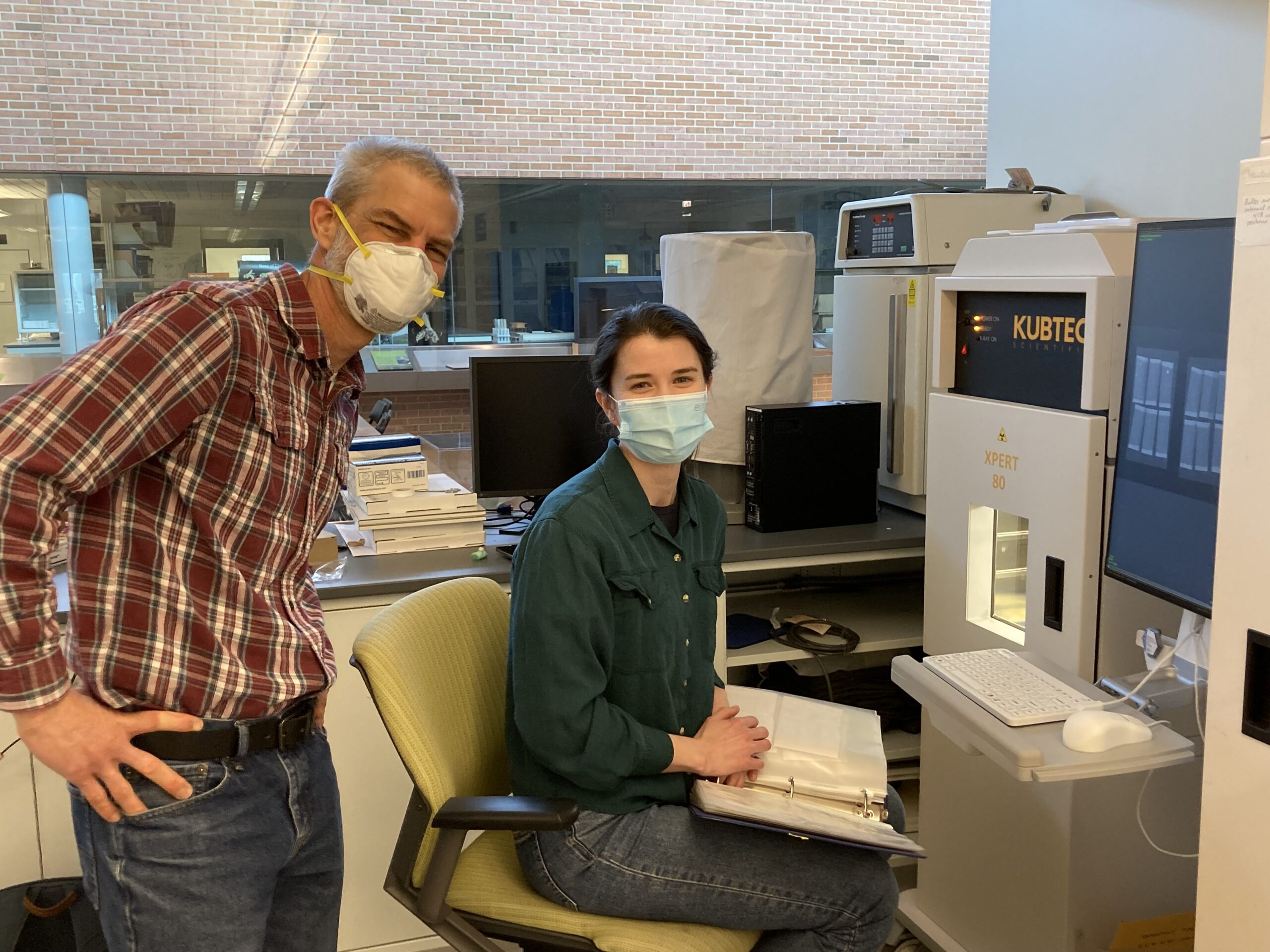
On Friday, grad student Amy W. paid a visit to the lab at the Chicago Botanic Garden to x-ray Echinacea achenes for several of her projects including the Dust Project, interremnant crosses, and gene flow experiments. We’re thrilled to have a functional x-ray machine once again. Amy noticed lots of variation in her samples, so we’re excited to learn about seed set for these experiments!
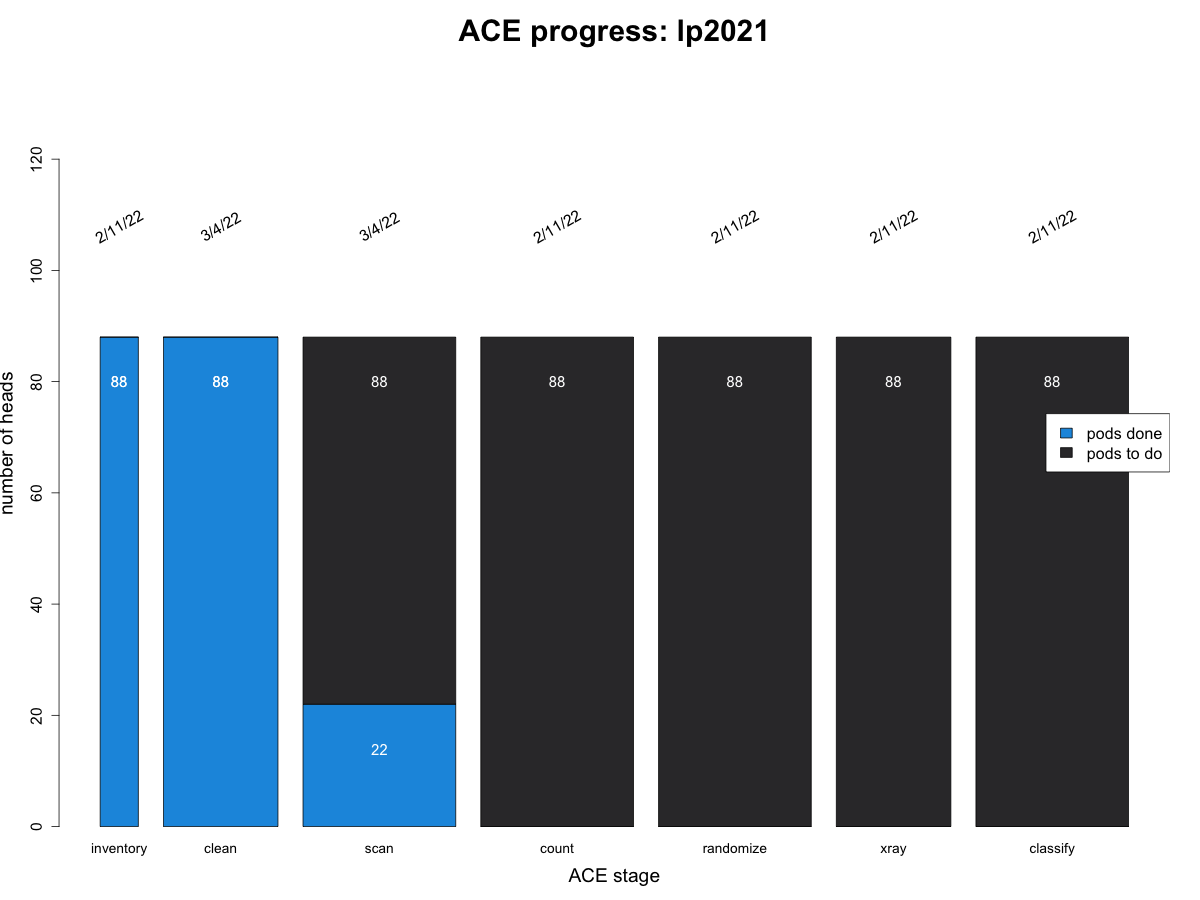
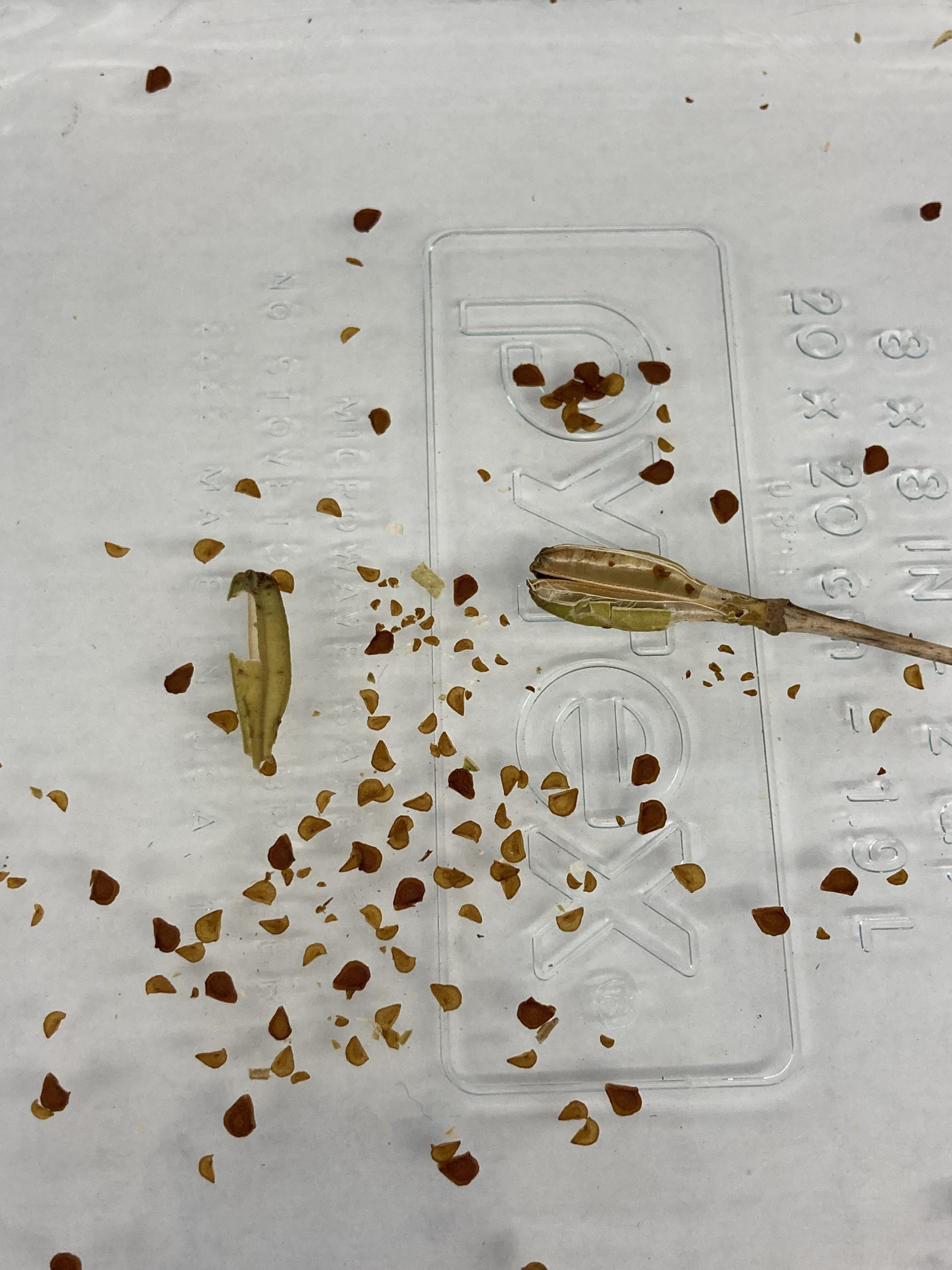
This week I continued to make progress on cleaning and scanning for the lilium project (Figure 2). All the pods have been cleaned and we have established a scanning protocol for lilium pods. These protocols allow for others to replicate our methods in future projects with lilies.
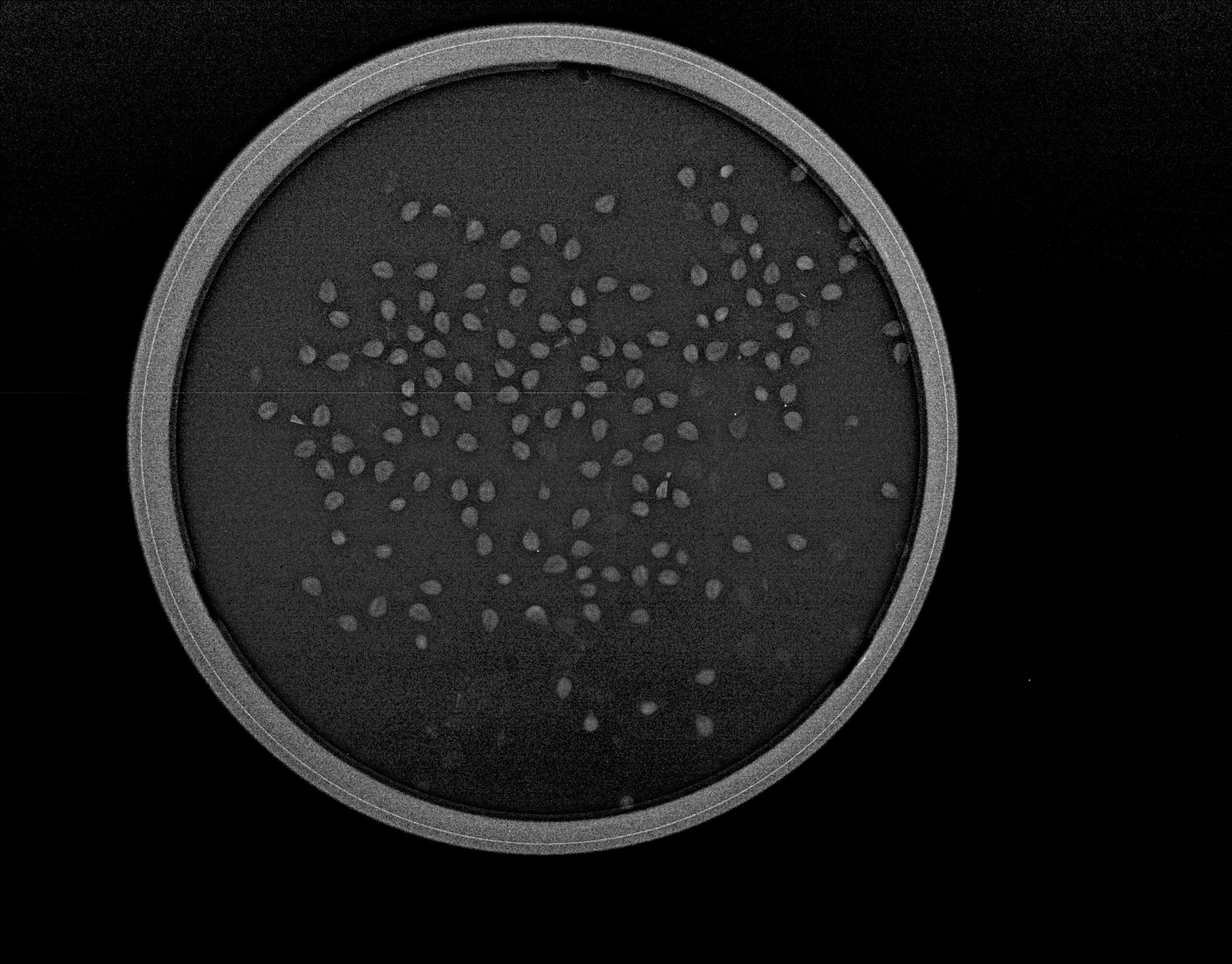
Jared and I conducted a couple trials with x-raying the lilium seeds. We will experiment with adjusting the settings on the x-ray and after effects for the images. Further experimentation is necessary to generate high quality x-ray scans in order to classify the seeds. In the x-ray images, the seeds that contain fertilized embryos will appear bright white (Figure 1). We use this to classify which seeds contain fertilized embryos and which ones are empty. The contrast of appearance in the x-ray is due to the increase in density of the fertilized embryos.
On 18 February 2022, Amy, Jared, Mia, and Alex presented at the online Prairie Enthusiasts (TPE) conference. Posters were available online during the conference (February 15-19, 2022), and conference attendees could ask questions via the chat on the 18th. Check out the posters below!
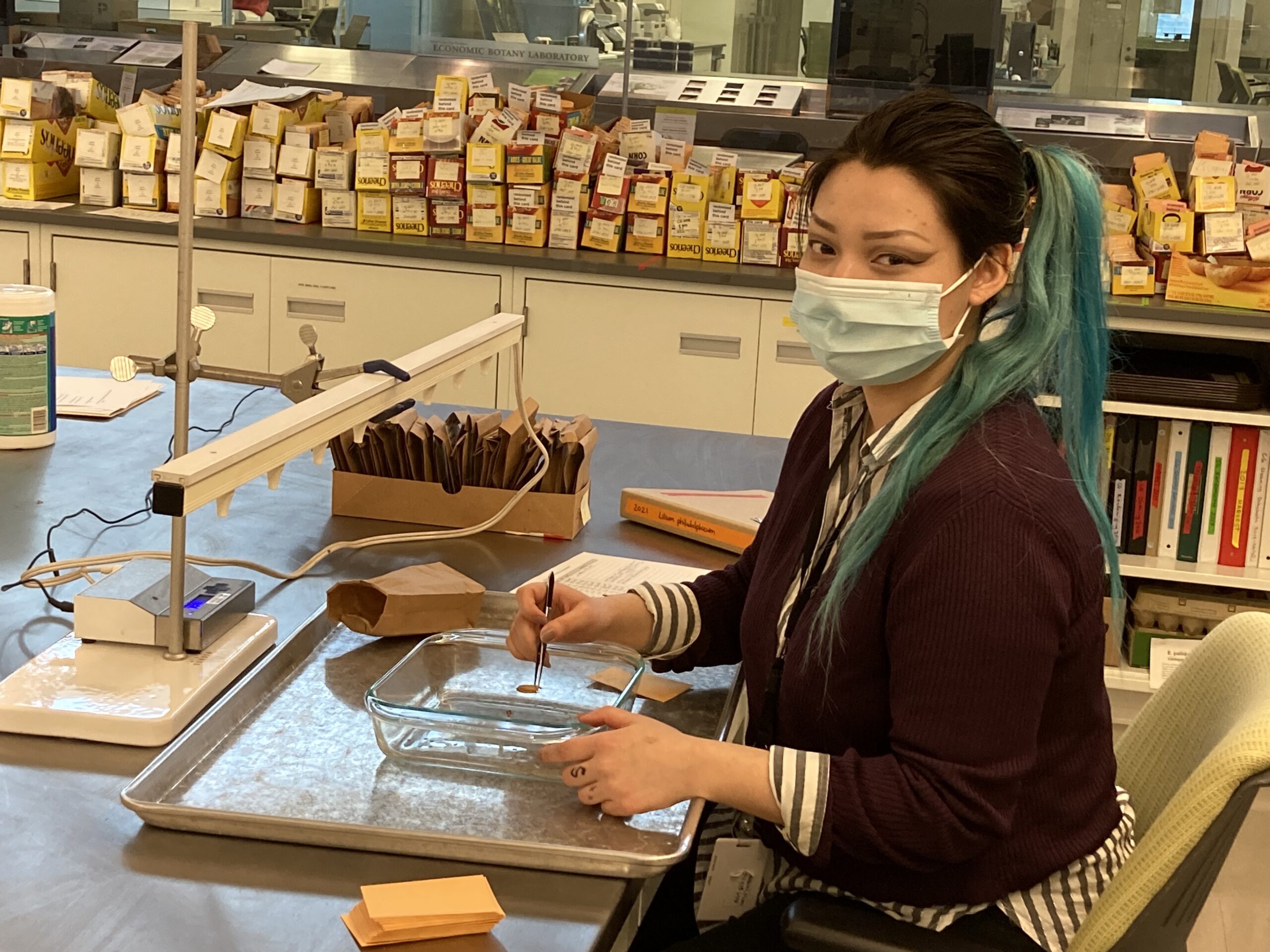
This week I was able to clearly define the research question for the L. philadelphicum project. My research question is focused on investigating pollination and reproduction success in wood lily. Specifically, does seed set increase with the proximity of neighboring flowers. If lilies have closer proximity to neighboring flowers, then the proportion of fertilized seeds will increase as well. We will be able to test our hypothesis with the collected seed data and recorded GPS location of each individual plant. Additionally, I made progress on cleaning lilium seeds and started writing the scanning protocol. We found that using an ionizing bar will help prevent static which causes the seeds to be difficult to handle (See Fig 1).
Furthermore, I was able to create a graph representing the progress of the lilium project with the help of Alex (Fig 3). Similarly, to echinacea, the lilium project will also go through the main steps of cleaning, scanning, counting and x-raying. This graph allows us to visualize the progress being made in the ACE protocol for L. philadelphicum. Stay tuned for next week while we experiment with methods in counting and x-raying lilium seeds!
Figure 1. Sophia cleaning ilium pods with ionizing bar
This week, I have decided on my independent project for the rest of my internship! I will be working with Lilium philadelphicum, wood lily and investigating questions surrounding its pollination and reproduction. I felt more informed on the past research by the Echinacea Project after hearing presentations from Stuart and Jared. Jared further taught me the benefits of fire on prairie ecosystems. Prairie plants are fire dependent and thrive after burns. This is due to the natural landscape and indigenous traditions. It was very interesting to learn about the natural history of our region and how plants grew before impacts of modernization. Results from past research in the lab has shown benefits from prescribed burns on the reproduction of echinacea. This applied conservation method could potentially benefit other fire dependent prairie plants as well! I hope to observe patterns and variation of pollination success in L. philadelphicum. I am currently developing a hypothesis for this project. Later on I will analyze the data set collected by Jared over the summer.
We have already completed inventory of the data set and started on the cleaning process of L. philadelphicum. The fruits of L. philadelphicum can be seen in the picture below. It contains many seeds, some of which are large and dark, others small and lighter in color. We hope to find interesting information through the variation of these seeds. Stay tuned for next week, as I will be working on developing the protocol for cleaning, scanning and counting these seeds.
The fruit/pod of wood lily contains three separate chambers stacked with seeds.
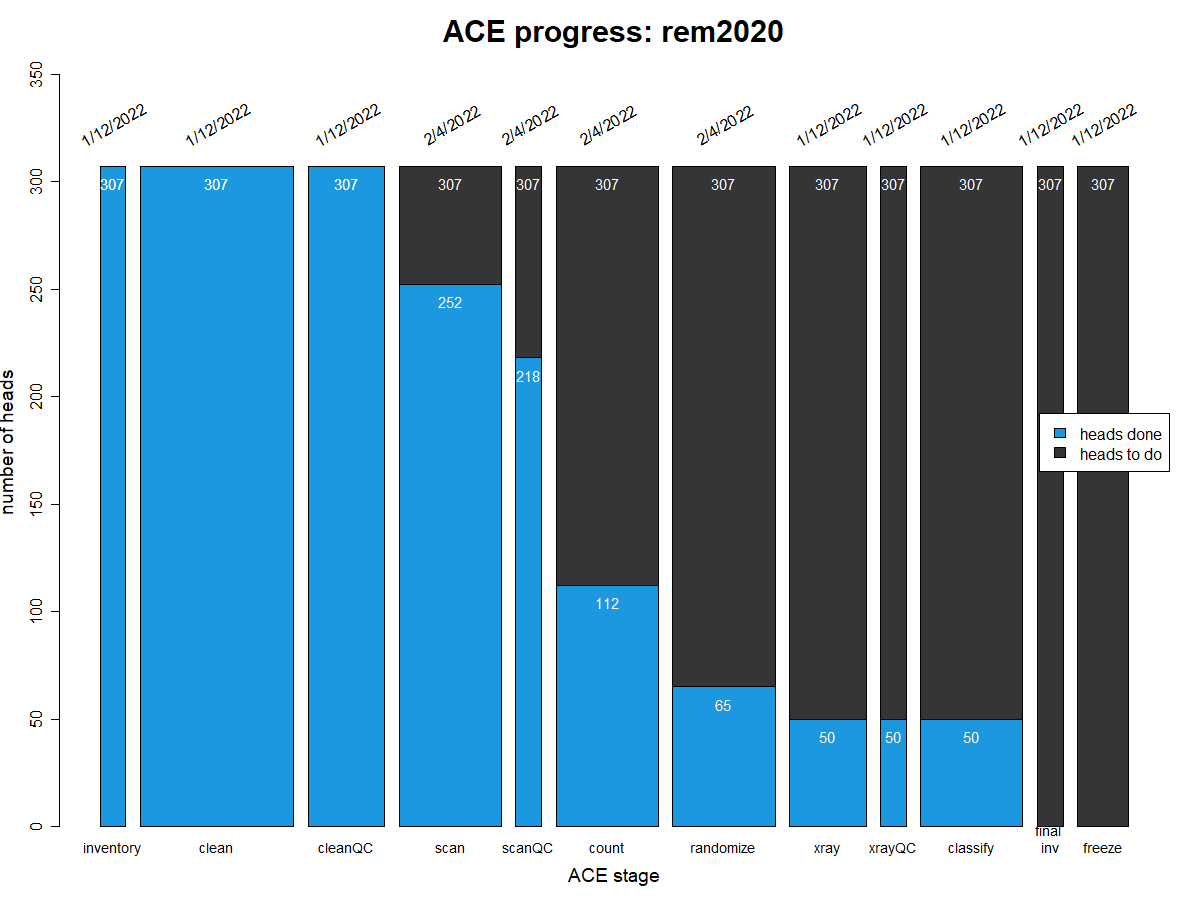
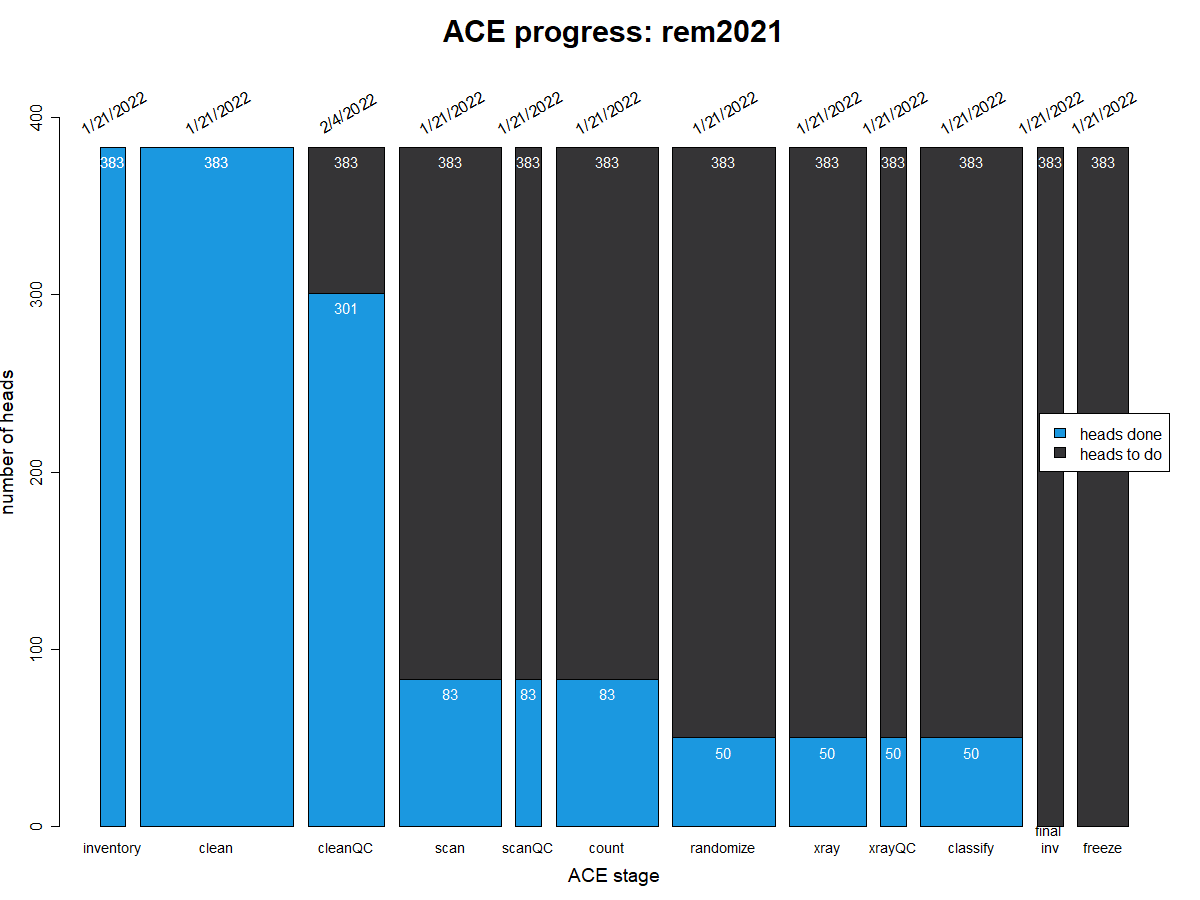
So far this year, we have sadly not been able to have volunteers in the lab due to the continuing threat of COVID-19. However, over the last few months, we made quite a bit of progress on the remnant Echinacea harvests from 2020 and 2021. In the fall, we had help from volunteers, students from Lake Forest College, and externs from Carleton College. Thanks for your help! In January, Sophia finished cleaning the last head from 2021, which was an exciting accomplishment.
To track our progress in the lab, I created an R script to visualize the various steps of the ACE process for each batch of Echinacea. The figures for rem2020 and rem2021 are included here. Hopefully, this method will work for the cg harvests as well.
Click on the figures to enlarge
The ACE stages are listed along the x-axis, and the number of Echinacea heads are on the y-axis. The light blue shows how much we have completed, and the dark blue shows what remains to be done. The small numbers on each bar indicate the corresponding number of heads, and the width of the bars is roughly proportional to the amount of time each step takes. Along the top, the dates indicate the last day that the totals for each stage were updated.
The script to create these graphs can be found here: echinaceasandbox/oop/trackAceProgressTest.R