|
|
Echinacea Project 2018
Biology, College of Wooster 2018
Research Interests
I am interested in studying how different species of bees could have different effects on the fitness of flowering plants in the Prairie. More broadly I am interested in learning more about the pollination biology, and the prairie, and how both relater to conservation efforts and agriculture.
Statement
I am from Bennington, Vermont. I’m looking forward to spending some time in Minnesota. I haven’t had much experience studying plants, but I’m excited to learn. In my free time I like to to: play ultimate Frisbee, run, read, watch TV, hike, cross-country ski, etc.

Echinacea Project 2018
Ecology, Evolution, and Behavior, University of Minnesota, 2017-
Biology, St. Olaf College, 2015
Research Interests
I’m interested in how bees move pollen between isolated plant populations and whether this movement maintains connectivity between populations, potentially mitigating the genetic and demographic decline caused by habitat fragmentation and small population sizes. This summer, I’m hoping to understand this better by starting a project to look at pollen movement within and among the remnant populations of Echinacea, and how these movement patterns relate to individuals’ spatial isolation and phenology.
Statement
Hey flog, I’m back! I used to be an intern with Team Echinacea and now I’m a grad student in Ecology, Evolution, and Behavior at the University of Minnesota. In my free time I like to garden, read, bake, cook, swim, run, ski, and fish! I’m very excited to be back in western Minnesota again this summer. I’m especially looking forward to collecting exciting data, learning about the exciting new projects the team is starting, eating watermelon, and writing flog posts! In the future, I hope to understand how habitat fragmentation affects the way bees move pollen around landscapes and win a trollphy at Flekkefest.
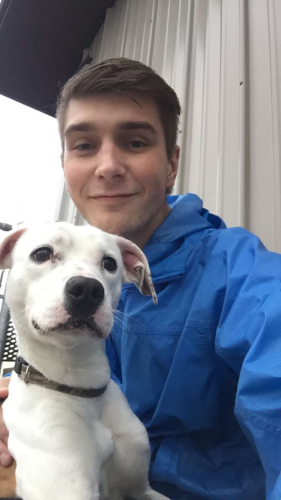
Here’s me with some flowers!
Biology and Environmental Studies, Tufts University 2018
Research Interests
I have been interested in plants since I was old enough to explore the woods in my backyard. Since then, I have done research on plants throughout my college career everywhere from Costa Rica to Iceland and found myself incredibly intrigued by how changing landscapes affect ecosystem dynamics, particularly plant-insect interactions. I have never before been a part of a research project that has been as long-term as the Echinacea Project, nor have I ever been to the long grass prairie, let alone researched it.
Statement
I grew up in Sudbury, Massachusetts about 20 miles west of Boston, and just graduated to Tufts University about a month ago. In my free time, I enjoy running, hiking, reading, or just about any activity that involves being outdoors. I hope in the future to make field biology my career, and am very excited to join Team Echinacea!

Echinacea Project 2018
Environmental Science, Wellesley College 2022
Research Interests
Growing up on a dairy farm, I am passionate about creating a sustainable planet and, of course, my cows! I would like to learn more about Minnesota prairie and plants like Echinacea angustifolia to better understand how to create more sustainable agricultural practices and make agriculture beneficial to all consumers and the environment.
So, this summer I am open to studying anything from pollinators to phenology to help me understand more about conserving the resources and land we have now.
Statement
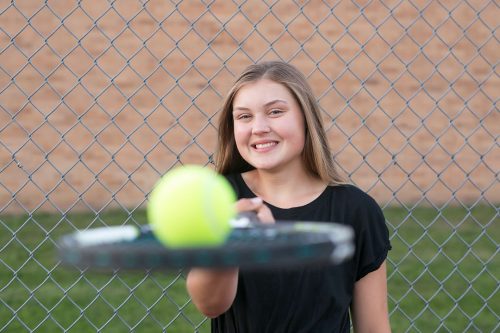
I am from Glenwood, MN about half an hour south-east of the project base. As I mentioned above, my family owns and operates Dorrich Dairy. Even though I do not plan on majoring in agriculture at this point, I hope to maybe work with it in some aspect in the future. In my free time, I enjoy gardening, baking, traveling, eating pie, and playing tennis.
Echinacea Project 2018
Biology, College of Wooster 2020
Research Interests
I spent the last year working in the Ison lab at Wooster exploring pollinator efficiency of the American Bellflower and finishing lab work on interspecific pollen diversity of Echinacea which is carried by different solitary bees. This work and a population & community ecology class I took showed me how delicate mutualisms are. Also how the species involved control said mutualism. Another area of interest of mine is how plants respond to their environment.
Statement
I am a junior biology major and environmental studies minor at the College of Wooster. I grew up in Buffalo, NY, (and no it doesn’t always snow there). I spend the majority of my free time knitting and enjoying the great outdoors. I do this outdoor exploring with my trusty sidekick, my dog Ellie.

Echinacea Project 2018
Biology and Environmental Studies, College of Saint Benedict and Saint John’s University, 2020
Research Interests
Last summer, I participated in a project which monitored flower phenology and I absolutely loved it. This fascination with flowers and the impact of humans on ecosystems drew me to the Echinacea Project. My research interests fall within the realms of environmental science and conservation ecology. I’m interested in the impact of climate change, habitat loss, and invasive species on ecosystems as well as plant-pollinator relationships and any research applicable to conservation and restoration efforts.
Statement
I’m originally from Olathe, Kansas and am currently attending college in Minnesota. Recently, I’ve become interested in climate justice activism because I feel it is unjust that environmental degradation tends to impact the least privileged populations first and worst. In my spare time I like to hike, play violin, try new foods, and play soccer.

Echinacea Project 2018
History, Carleton College 2019
Research Interests
As a history major, I am interested in researching historical relationships with and understandings of the landscape. In addition to history, I am interested in ecology and conservation. I have taken several courses on ecology, evolution, and environmental studies at Carleton College. Last summer, with the Carleton Ecology Lab, I researched plant community composition in the Carleton Arboretum tallgrass prairie restorations in south Minnesota. This experience helped me hone my research interests and sparked my interests in tallgrass prairie ecology, plant population and community ecology, and habitat restoration. At the Echinacea project, I am excited to research continue learning about tallgrass prairie ecology, and I am specifically interested in prairie fragmentation and its effects on prairie plant communities and plant-pollinator interactions.
Statement
I was born and raised in Lexington, Kentucky and I have been attending Carleton College in Northfield, Minnesota for the last three years. Upon graduation from Carleton, I plan on pursuing a graduate degree in a conservation-related field. In my free time, I enjoy playing guitar and tennis, birding, hiking, and baking. I am excited to be a part of Team Echinacea this Summer!

Pre-Medical, Concordia College 2022
Research Interests
I am interested in studying and learning more about plant identification, pollination, and behavior of bees. For my current job as an environmental technician, part of what I do is classify wetland plants. I am definitely an amateur and would like to learn more about scientific names and different plant distinctions that lead you to figuring out what species it is. Pollination is another interest of mine because quite honestly I don’t know much about it. Finally, bees are also an interest. Bees are so important to the ecosystem and learning more about them would be very interesting. I love learning about new things, so I am open to studying anything this summer.
Statement
I grew up out in the country north of Morris, Minnesota and have been here my entire life. Morris is an agricultural community about 30 miles from where the Echinacea Project is. I enjoy various outdoor activities including hunting, fishing, hiking, and spending days at the lake. I also enjoy traveling across the United States and Canada. I currently work as an environmental technician for an environmental consulting company. I am planning on going for Pre-Med at Concordia College (a recent change of my major), but my fall back plan is Biology/Earth Science to eventually become an environmental scientist.

Now that my time at the garden is coming to an end, I wanted to include a summary of the projects that I’ve been working on. These three projects include organizing solitary bees that have been collected from yellow pan traps in Minnesota over the past summer, identifying pollen on Echinacea styles and recording the behavior of solitary bees inside emergence traps.
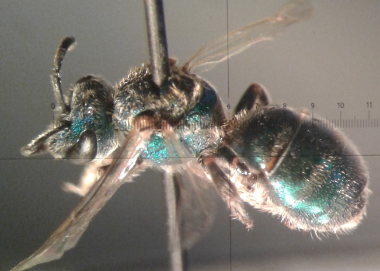
Last summer, several yellow pan traps were placed on the sides of roads in Minnesota in hopes of collecting solitary bees. Once they were collected, each solitary bee was pinned and tagged with a label that included the date, trap number, location, and an ID code. Before logging any of the information into the Roadside Pollinator spreadsheet (this keeps track all of the solitary bees that were collected over the summer in the pan traps) I grouped the specimen together by  taxon. I started grouping more recognizable groups together like Agapostemon virescens before looking at more difficult specimen. Once all grouped together, I would enter the information listed on the label into the spreadsheet. I started with the specimen at the top left corner and worked my way to the bottom right corner of the box. I did it this way to make it easier for anybody to match the information listed in the spreadsheet with that particular specimen in the collection. I was not able to enter every specimen into the spreadsheet, but I did learn key characteristics that will help me distinguish solitary bees when I’m out in the field in Minnesota this summer. taxon. I started grouping more recognizable groups together like Agapostemon virescens before looking at more difficult specimen. Once all grouped together, I would enter the information listed on the label into the spreadsheet. I started with the specimen at the top left corner and worked my way to the bottom right corner of the box. I did it this way to make it easier for anybody to match the information listed in the spreadsheet with that particular specimen in the collection. I was not able to enter every specimen into the spreadsheet, but I did learn key characteristics that will help me distinguish solitary bees when I’m out in the field in Minnesota this summer.
Another project that I worked on while at the garden was looking at images of Echinacea styles to see whether or not foreign pollen grains were present. Every style had three images at varying depths. This was done to get a better look at the pollen present (or absent) on the styles. Over the three weeks that I’ve been at the garden I’ve checked 646 styles for foreign pollen and since each style has three different images, I’ve looked at over 1930 images. You may think I’m an expert by now at recognizing foreign pollen, but I’m still very uncertain about what’s present. However, thanks to Tracie, a system was set up to gauge this uncertainty of whether or not there is foreign pollen present. 
Even though it sounds like I spent most of my time in the lab, I was actually outside collecting solitary bees and testing them in emergence traps majority of the day. Once I come into the lab in the morning, I immediately grab the bee-catching net and plastic vials that are in the lab. I also grab my lucky bucket hat before heading out. I head over to the prairie area in the gardens and try to look for areas that have a dense population of golden-rods. When I first started out this summer I had trouble catching bees, but now with a few weeks of experience underneath my belt I’m able to catch solitary bees with and without the net. I’m able to catch the bees without the net by closing the top of the vial around it while it’s resting atop of flowers. Once I’ve caught a few bees (I catch about four to six solitary bees per day) I head back to the lab and grab the emergence traps. I return back to the prairie area and set up a trap on a south facing slope in order to record the behavior of the bee. I either record footage of the bee or record my observations in a notebook, it all depends on how well I’m able to see through the trap. Once I have my observations/film for the day I return back to the lab and share my findings with Stuart.
On a typical day I would be rotating through these three projects, but I’ve also been able to sit in on a few presentations, including a master thesis defense and a PhD seminar. While at the garden I’ve learned many skills that I hope to continue using this summer in Minnesota!
Biology, Gustavus Adolphus College 2019
Research Interests
I am interested in a wide variety of ecological disciplines, but I have found that population ecology and population genetics have come to the forefront of my interests. Additionally, I am interested in physiological adaptations and how these can vary within populations. I am excited to work with Team Echinacea because it will give me the chance to perform intensive field research with a group of individuals who have similar goals and interests as myself! More specifically, I hope to study within and between remnant mating of Echinacea and how this can affect fitness or physiology of individuals within the populations.
Statement
I grew up and lived my whole life in Bloomington, Minnesota, less than a mile from the Minnesota River. In my free time I enjoy hiking, outdoor leisure activities (softball, hammocking, etc…), and enjoying time with friends and family. I have a special spot in my heart for statistics and last summer applied my training to helping out with medical research at the University of Minnesota’s Schulze Diabetes Institute, where my father was previously cured of his Type I Diabetes.

|
|




 taxon. I started grouping more recognizable groups together like Agapostemon virescens before looking at more difficult specimen. Once all grouped together, I would enter the information listed on the label into the spreadsheet. I started with the specimen at the top left corner and worked my way to the bottom right corner of the box. I did it this way to make it easier for anybody to match the information listed in the spreadsheet with that particular specimen in the collection. I was not able to enter every specimen into the spreadsheet, but I did learn key characteristics that will help me distinguish solitary bees when I’m out in the field in Minnesota this summer.