I realized not everyone can access a .docx file, so here is a PDF file link…
|
||||
|
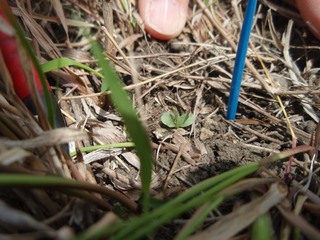
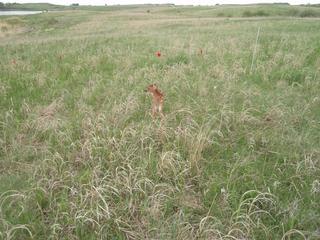
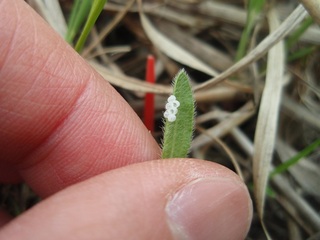
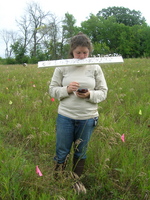
Hello fellow floggers! This is my first flog, so i’ll introduce myself. If you have any questions or suggestions about my proposal please don’t hesitate to ask/tell. Hello everyone! Here is a file link to my outline of the research I will be doing this summer! If you have any questions or possible additions to the experiment, do not hesitate to comment! Hi all, 1) Install the drivers for the LaserJet 2300L. I used the PCL6 driver and it seemed to work fine. The application should now be fairly straightforward. At some point you will be asked it you wish to share the printer, select no. You may also print a test copy to make sure that you are connected to the printer. Let me know if you have questions. Happily I am back in the Kensington Town Hall- all is well. I am amazed at the difference between the stages of growth throughout the several remnants and the SPP (Staffanson Prairie Preserve) this year compared to last. I would venture it is about 2-3 weeks farther along than it was last year at this time. It is different to see SPP without being burned this spring. The Hjelm house is seeing improvements as well. Yesterday, Janelle G. and Shelby F. helped me do the May census on the Hegg Lake plot of my local adaptation experiment. There were some surprises, including 3 or 4 NEW seedlings! Another interesting discovery was a cluster of egg sacs. Anybody know what critter would leave these?
Hey team, Things have settled down a bit and I’ve started work again on the great pollen challenge! I have ten locations for each of ~150 slides, and for each location I have been recording the count of pollen grains, as well as the number of species as best I can tell (I have also taken notes with descriptions of pollen in each location). My goals at this stage are to get better at recognizing pollen grains of the same species in multiple photos and to get a feel for the diversity and amount of pollen on the pollinators we caught. I’d also like to see if there’s any pollen load size/diversity consistency within a pollinator species. I have started looking at the male Melissodes sp. and so far it looks like about half of them carry no pollen at all, but some of them have multiple grains at each location. My question for you is… What makes an insect a ‘pollinator’ in the context of this study? We are focusing on pollinators, and are not including insects that we caught but know are not effective pollinators (ex. syrphid flies), so there needs to be some way to distinguish between other effective and non-effective pollinators. I have thought about making a cutoff like, say, in order for an insect to be a ‘pollinator’ it must have one grain of pollen per location. That way insects that happen to be carrying one grain of pollen (total) but that aren’t really pollinators wouldn’t be counted as pollinators in this study. However, any cutoff seems very arbitrary. It almost seems better to include anything that we know carried pollen, even one grain. But what about those male Melissodes sp.? If some individuals carry no pollen and others carry quite a bit, do they all count as pollinators, or just the ones that carried pollen? If you have any ideas, please put them in the comments! Here’s a poster I presented at the Evolution 2009 symposium at the University of Nebraska-Kearney, September 2-4, 2009. The poster describes my local adaptation experiment, and results of the early summer seedling searches at my three experimental sites. And while I’m back visiting the field blog, here are a handful of photos from the Stipa planting at the end of the summer.
|
||||
|
© 2026 The Echinacea Project - All Rights Reserved - Log in Powered by WordPress & Atahualpa |
||||