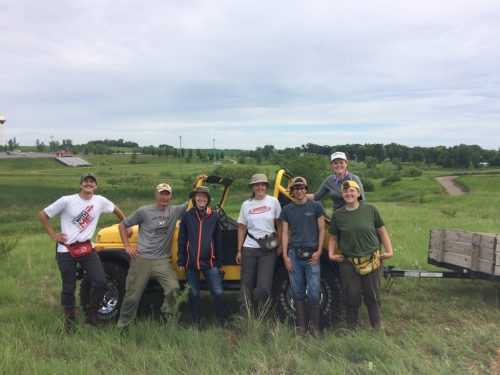
At the Echinacea Project Evanston Outpost Riley and I have been chugging along with our work for the past two and a half months. We’ve had countless remote meetings, surrendered precious square feet of floorspace to binders of datasheets, migrated the infallible sticky-note kanban to our walls (me) and online (Riley,) and begun coordinating with our summer team to prepare for the field season. Expect to see some new faces on the flog in the coming week!
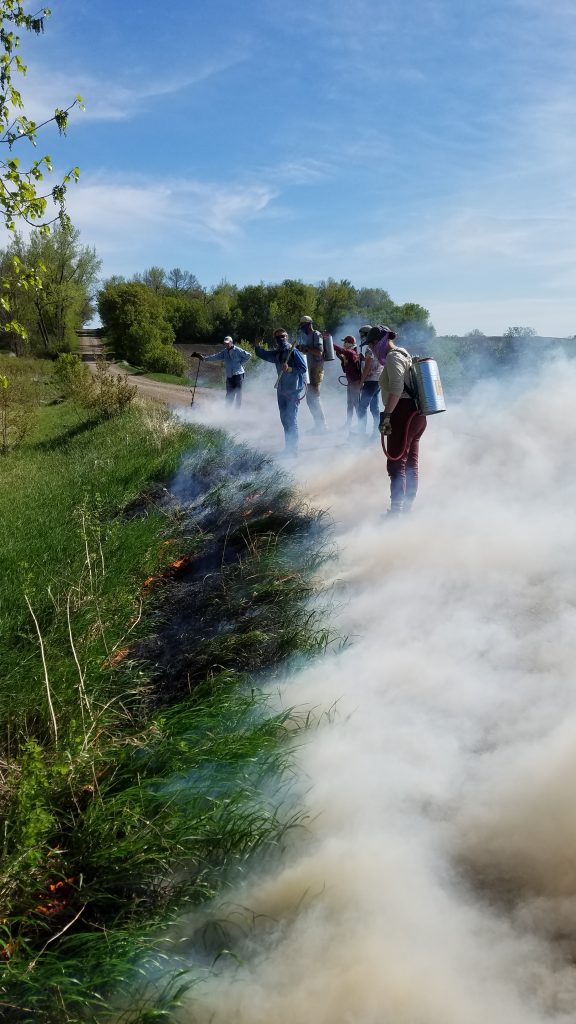
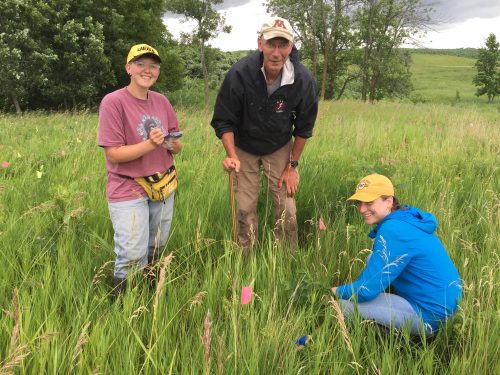
We started on the northwest corner of P1 and split into two groups to work around the plot. The burn was long and slow!
As we approach the field season, we’ve gotten the chance to stretch our legs outside our apartment. In late May a team dashed up to the field site to capitalize on a narrow window of perfect burn conditions. Changeable winds made our burn of the 99-south plot a little more exciting than we had hoped, but we took the burn low and slow and very safely across experimental plot 1.
Drake headed up to our field site several weeks ago, where he’s been germinating seeds for a parasite competition experiment he’ll conduct this summer. When we return to the field in a couple weeks we’re looking forward to seeing the hoop houses he’ll have set up to house his plants!
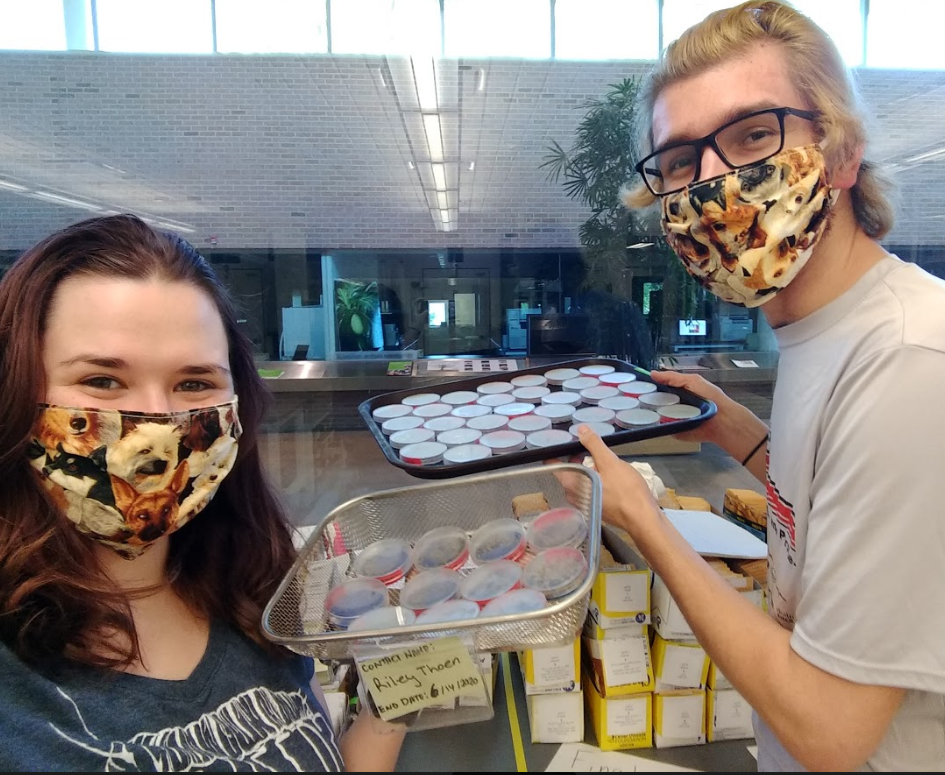
Drake is planning to germinate some 40 plant species this summer, but he forgot our favorite species in Illinois– Echinacea angustifolia! Riley and I have gotten special permission to return to the Chicago Botanic Garden to start a pre-germination treatment of Echinacea achenes in the lab. I’ll bring Drake the achenes when I drive out to the field site in the next couple weeks– what are the odds that radicles start emerging in my car?
It’s been exciting to get back to the garden, though we may look a little different from the last time we were here!
The garden will start a limited reopening next week, when visitors will be allowed to walk the perimeter of the grounds. We took a peek outside when we were preparing the pre-germinants, and it looks like the grounds crew have been doing a beautiful job maintaining the garden. We’re excited to see more before we head back to Minnesota!
Sadly, Riley and I have also made use of our visits to the garden to clean out our desks. Access to the plant science building is limited and we will not be working full-time there again, as we are headed off to graduate school following the field season. This will be the first time Riley and I have lived apart since meeting last June! However, we’ll only be a few states apart– Riley is headed to the University of Georgia in Athens, GA and I’ll be at North Carolina State University in Raleigh, NC.
Once a team member, always a team member
As the field season gears up, we will return to our daily summer flogging schedule. We’re all very excited to get out to the field and to meet the new team members!
Anthropogenic habitat fragmentation has contributed to severe biodiversity loss worldwide and is expected to have lasting negative impacts on remnant communities in the coming years. One great consequence of fragmentation is the loss of genetic diversity and adaptive potential within individual remnant populations. Many studies have demonstrated the loss of neutral genetic diversity within remnant plant populations and linked this phenomenon to reduced population fitness. However, few studies have been designed to understand how remnant plant populations with varying sizes and degrees of isolation are differentially affected by climate change and how neutral and quantitative genetic variation may predict population persistence in a changing environment. Thus, it is my goal to understand the additive effects of habitat fragmentation and climate change for the persistence of remnant plant populations.
Statement
I grew up in Bloomington, MN, and went to college in Saint Peter, MN, where I learned to appreciate the biodiversity of the Midwest. I really enjoy being outdoors with no people around, and I am really looking forward to getting out of the big city (Chicago) and into the field in West Central MN again. Some of my other hobbies include: playing board games, playing video games, engaging in scientific discussions, participating in sports, reading (when I feel like it), and watching shows produced by the Bachelor franchise. My summer with Team Echinacea will be slightly truncated because I am starting a Ph.D. at the University of Georgia in August, but I am really looking forward to participating in field work and meeting folks this summer!
In the past, team members have observed Echinacea heads while sitting on buckets. I hope to revolutionize fieldwork this summer by teaching folks to observe buckets while sitting on Echinacea heads.
Hello
Echination! It sure has been a long time since I last flogged, and I really
have missed giving fun updates to folks both in the lab and online. Over the
past few months, members of Team Echinacea have been stuck at home due to the
ongoing global pandemic. We have spent a lot of time working on existing
projects, preparing for data collection in the field, and meeting with colleagues
over Zoom. However, due to the current situation, there is one project that has
taken precedence over all others: our Covid-19 preparedness plan.
Although
we have been shut out of the Chicago Botanic Garden for some time, we are
fortunate to have been granted permission to conduct field work in Minnesota. Each
field season is incredibly important for Team Echinacea, as this is when we
collect a large amount of data and harvest specimens to be processed in the lab.
Because Echinacea angustifolia is a
long-lived plant, it is imperative we conduct field work in MN as much as possible,
so we can gather accurate estimates of lifetime fitness in our
self-incompatible perennial forb and assess whether remnant populations will
persist in West Central MN. That said, there is something even more important
than conducting long-term ecological research: the health and safety of humans.
Over
the last few weeks, the Echinacea lab core members have assembled a dream team
of past, present, and future team members to construct a plan to prioritize
safety during the field season while still allowing for the efficient collection
of high-quality demographic and fitness data on Echinacea angustifolia. The Covid-preparedness team consists of: Stuart,
Ruth, Erin, Riley, Amy D., Amy W., Drake, Lea, Mia Stevens, Jared Beck, and John
“Texas” VanKempen. What a team! The first thing we did to prepare for a socially-distant
field season was to read interesting articles about Covid transmission, best
business practices for Covid, and government recommendations; we then shared
these articles with the group. Next, we discussed what we learned from these
articles and then broke into small groups to discuss minimizing transmission
probability during every-day tasks. For example, I was on teams that discussed
how to reduce potential Covid transmission while eating lunch, syncing visors, and
engaging in team building activities. From there, we reconvened as a group and
shared our optimal plans for each activity. To solidify our ideas, we put all
of our ideas into a “Covid-19 Preparedness Plan” – a template created by the State
of Minnesota for reopening businesses. We hope to share a draft with all summer
2020 team members soon, and we will certainly document our plan on the flog in
the coming weeks!
We learned a lot during this process, and we are looking forward to getting back out into the field with our ever-friendly study species. Many feelings are invoked by the thought of field season, including excitement, stress, adventure, nostalgia, and most importantly, the feeling of community. Obviously, being a part of a community is personally gratifying, but this summer, it is imperative that we come together as a community to keep each other healthy and safe. I can personally say I am incredibly excited to spend part of my summer with Team Echinacea, but I can also say I am nervous about being on a field team in light of the ongoing global situation. However, I know that if I look out for others and if they look out for me, Team Echinacea will be healthy, efficient, and as fun as ever.
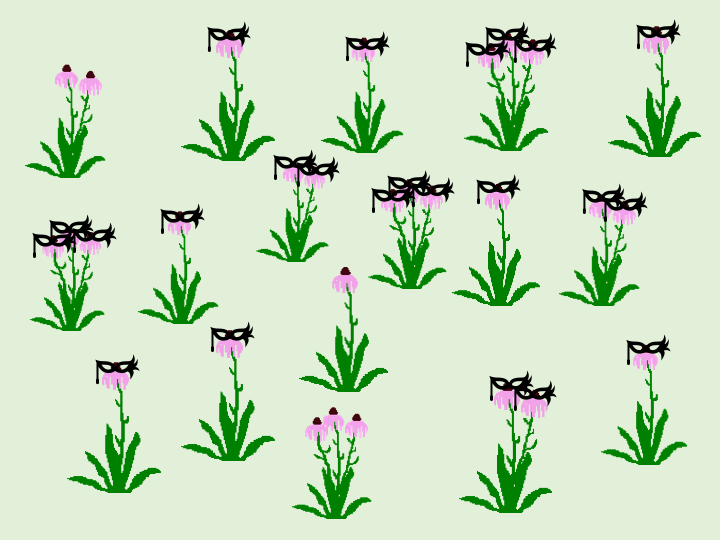
Due to the global pandemic, we warned Echinacea that they may actually benefit from isolation in summer 2020. Many responded by purchasing masks from their local party supply store.
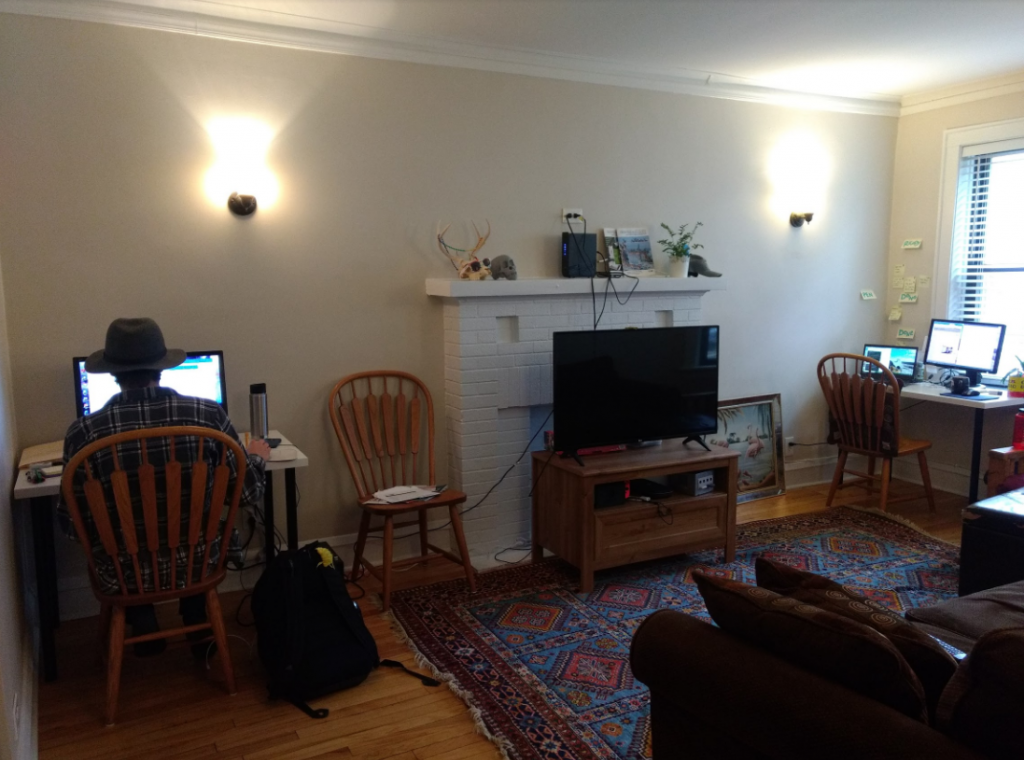
In conjunction with the CBG’s current policy, the Echinacea Project’s base of operations has moved out of the Plant Science building and into our living room! The lab is closed to volunteers and staff through the month of March and potentially longer as the situation develops. Despite this hiccup, we are continuing with our work and we’re looking forward to the productivity the next few weeks will offer!
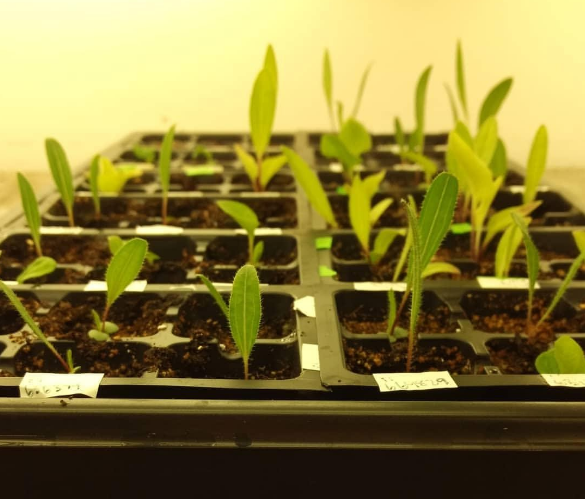
All three species are represented in this tray
Over the last few months we’ve been germinating E. angustifolia, pallida and purpurea for our investigation into Echinacea ploidy. Elif, Riley and myself have been caring for the seedlings and will be working with people at the CBG to determine how we can maintain an appropriate watering schedule and safe social distancing practices.
Fingers crossed the little guys can hang in there til we get a schedule worked out!
Though our ACE head processing protocol is on hold for the foreseeable future, our excellent volunteer force has made great progress in 2020. We’re about 3/4s through cleaning the 2018 heads. Our counters are overflowing with cereal boxes of achene envelopes and with help from the volunteers, Riley cleared up some space by moving our 2015 achenes into the Dixon National Tallgrass Prairie Seed Bank (fancy title for “that big freezer on the other side of the building.”) We’ll be moving 2016 in there too when we return!
There’s plenty of work for us to do outside of the lab, so fear not our idle hands! Riley’s looking ahead to the 2020 field season by preparing for measuring in our common gardens. He’s working on a snappy measuring field checks function to hopefully streamline a process which took us a lot of time in Fall 2019.
Currently I’m working on uniting our 2019 demo and surv records in demap. First I tackled our largest 2019 flowering site (Aanenson,) and now I’m working through sling sites to hopefully have maternal plant data ready for our collaborative sling project.
The superteam of Team Echinacea members and alums working on sling in 2019/20 is hopeful about making some great progress in the coming weeks. Perhaps this cross-country collaboration was the original social distancing initiative? Video calls are the hip new quarantine hangout these days, so we were ahead of the curve on that front!
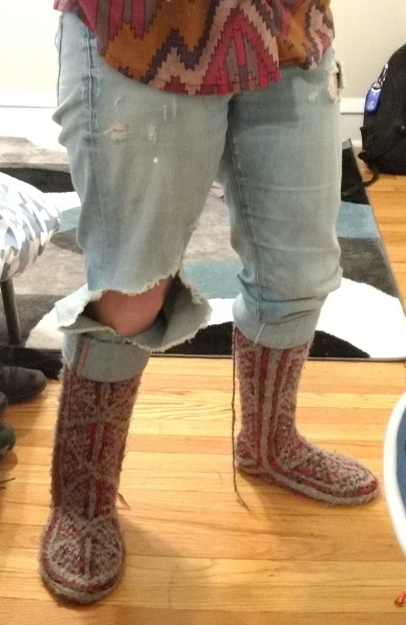
comfy!
classy!
Since we’re now the masters of the office dress code, we’ve been stretching our fashion wings. I’ve busted out my favorite slippers and jeans, and Riley’s switching up his hat game from baseball to brimmed. Check back in with us in a few weeks– we’re working on getting our Spring 2020 collection ready for debut!
Supplemental pollen — pollen that an Echinacea head might not otherwise receive—could increase a plant’s fitness. But does this extra pollination lead to a tradeoff in survival or flowering consistency? Since 2012, we have been manipulating the amount of pollen Echinacea plants receive – either no pollen, or lots of pollen – and recording how this affects their fitness and survival. In 2012 and 2013 we identified flowering E. angustifolia plants in experimental plot 1 and randomly assigned one of two treatments to each: pollen addition or pollen exclusion. The team bagged the heads of all plants and hand-pollinated the addition treatment, and did not manipulate the exclusion plants further. Plants receive the same treatment across years.
In summer 2018, 14 of the 26 plants alive in the pollen addition and exclusion experiment flowered, producing a total of 25 heads. This year none of those plants flowered. Of the original 38 plants in this experiment, 12 of the exclusion plants and 14 of the pollen addition plants are still alive. No plants died between 2018 and 2019. This year’s data were unique among the eight years of data collected, because not a single plant in the experiment produced even a single head. The dramatic decrease in flowering rates this year may help or hinder us in analyzing this data set and providing answers to this eight-year question.
Tris did not find significant demographic differences between plants which received pollen exclusion, addition or open pollination treatments.
Start year: 2012
Location: exPt1
Physical specimens: We harvested no specimens this year
Data collected: Plants survival and measurements were recorded as part of our annual surveys in P1 and can be found with the rest of the P1 data in the R package EchinaceaLab.
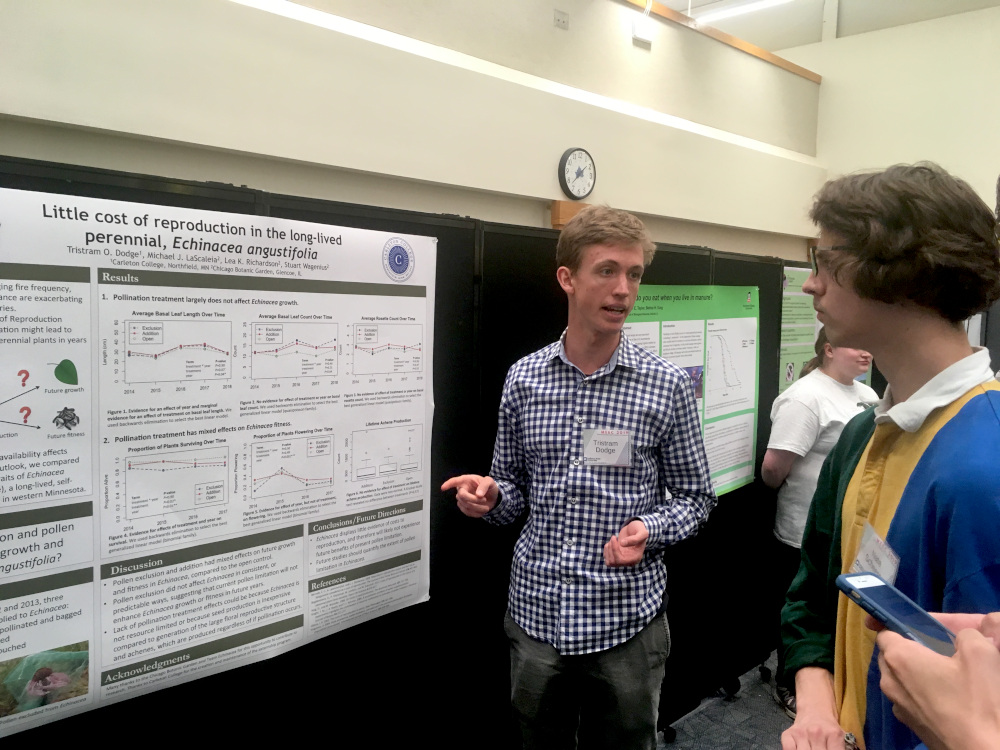
Michael presented a poster on the polLim experiment at MEEC
2019, which you can find here
Tris also presented a poster on polLim at MEEC 2019, which you can find here
You can find more information about the pollen addition and
exclusion experiment and links to previous flog posts regarding this
experiment at the background page for the experiment.
Team Echinacea established quantitative genetics experiments to determine the additive genetic variance of fitness in Echinacea, with the idea that we can estimate evolutionary potential of study populations. Quantitative genetics experiments 2 and 3 (qGen2 and qGen3) represent the third generation of Echinacea in our common garden experiments. The grandparents of qGen2 and qGen3 are the 1996 and 1997 gardens. Plants from these experiments were crossed to generate qGen1 (a.k.a. Big Batch), and plants in qGen1 were crossed to produce seed for qGen2 and qGen3, which now inhabit exPt8.
We visit exPt8 every year to assess fitness of Echinacea in the plot. Originally, 12,813 seeds were sown in the common garden. Seeds from the same maternal and paternal plant were sown in meter-long segments between nails. A total of 3253 seedlings were originally found, but only 669 plants were found alive in 2019.
Jay, John, and Avery assess fitness of young Echinacea in exPt8. They’re so tiny (the Echinacea, that is… Jay, John, and Avery are regular sized).
In an exciting turn of events, we found a flowering plant in qGen2 this year! This was the first flowering plant found in exPt8. Fortunately for our one flowering plant, it had four flowering friends to cross with from the Transplant Plot. We took phenology data on the qGen2 head, measured it, and harvested it.
The presence of a flowering plant influenced Riley Thoen to make a new measuring form for exPt8 in 2020. In the past, the exPt8 measuring form was very different from other measuring forms. Through 2019, we measured all leaves of basal plants in exPt8; we only measure the longest basal leaf in other plots. Riley designed the 2020 exPt8 measuring form to mirror the measuring forms from other common gardens. In the future, the exPt8 measure form will have a head subform and team members will only have to measure the longest basal leaf of each plant found.
Start Year: 1996 and 1997 (Grand-dams), 2003 (qGen1 – dams), 2013 and 2015 (qGen2 and qGen3, respectively)
Data/material collected: phenology data on the flowering plant and transplant plot plants (available in the exPt1 phenology data frames in the cgData repo), measure data (cgData repo), and harvested heads (data available in hh.2019 in the echinaceaLab package; heads in ACE protocol at CBG).
The inbreeding 2 experiment was planted in exPt1 in 2006 to determine how genetic drift is differentially affecting average fitness of remnant populations. In 2005, team members crossed common garden plants from seven remnant populations. There are three cross types: inbred (crossed to a half-sib; I), within population (randomly chosen; W), and between population (B). Each year, team members assess flowering phenology and fitness of Echinacea in the inb2 common garden.
In 2019, the team searched for Echinacea at 508 positions of the original 1443 positions planted in inb2. In total, we found 351 living plants. Four plants flowered in 2019 but only three produced achenes. Since 2006, 163 Echinacea in inb2 have flowered; they have produced a total of 336 flowering heads.
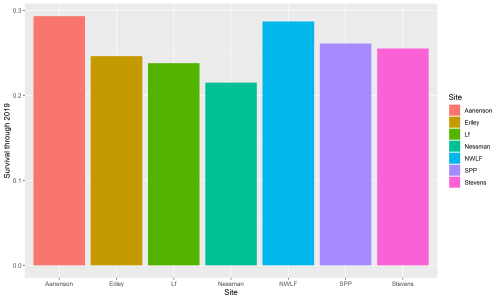
This winter, Riley Thoen is working on analyzing data and drafting a manuscript for inb2. In these endeavors, he found a small discrepancy in inb2 data: not all plants that were planted in the inb2 plot have a complete pedigree. Therefore, only a subset of the total can be used for analysis. A total of 1136 plants with a complete pedigree were planted in inb2, and of those, 277 were found alive in 2019. All four plants that flowered in 2019 have known pedigrees. A total of 138 plants of known pedigree have flowered and they have produced 284 total heads since the plot was planted in 2006. Surprisingly, within-remnant crosses have the lowest survival of all cross types, at 20%. Inbred crosses have 24% survival and between-remnant crosses have 30% survival. Riley is starting to push data analysis forwards and will certainly post updates on the flog when more discoveries are made!
Data/material collected: flowering phenology on the flowering plants (available in the exPt1 phenology data frames in the cgData repo), measure data (cgData repo), and harvested heads (data available in hh.2019 in the echinaceaLab package; heads in ACE protocol at CBG).
Products:
Shaw, R. G., S. Wagenius and C. J. Geyer. 2015. The susceptibility of Echinacea angustifolia to a specialist aphid: eco-evolutionary perspective on genotypic variation and demographic consequences. Journal of Ecology 103: 809-818. PDF
Kittelson, P., S. Wagenius, R. Nielsen, S. Qazi, M. Howe, G. Kiefer, and R. G. Shaw. 2015. Leaf functional traits, herbivory, and genetic diversity in Echinacea: Implications for fragmented populations. Ecology 96: 1877–1886. PDF
Some of our remnant prairie and recruitment plot study sites fall entirely or partially within public lands. The two agencies we intersect with are the Minnesota Department of Natural Resources, which manages wildlife management areas (WMAs) and duck refuges, and the U.S. Fish and Wildlife Service, which manages waterfowl production areas (WPAs.)
For the purpose of writing reports to the DNR, the USFWS, and other bodies which may be more interested in the publicly-accessible names of our study sites instead of the names we use to refer to them by, here is a table associating our site names with their official names as they appear on this MN DNR tool.
echSite
publicLand
type
AA
Runestone WPA
USFWS
EELR
Rolling Acres WPA NE unit
USFWS
ETH
Eng Lake WPA
USFWS
NGC
Blehr WPA
USFWS
NWLF
Rolling Acres WPA SW unit
USFWS
WOOD
Roland Lake WPA
USFWS
HEGG
Hegg Lake WMA
DNR
REL
Eng Lake WMA
DNR
RHE
Hegg Lake WMA
DNR
RHP
Hegg Lake WMA
DNR
RHS
Hegg Lake WMA
DNR
RHX
Hegg Lake WMA
DNR
RKE
Kensington WMA/Duck Refuge
DNR
RKW
Kensington WMA/Duck Refuge
DNR
This table is also available in Dropbox at ~\Dropbox\remData\200_siteInfo\remnantGovernmentNames.xlsx
Monitoring
reproductive fitness in the remnant populations is a staple of Team Echinacea’s
summer activities. Understanding the reproductive success of plants in remnant
populations provides insight to a vital demographic rate contributing to the
persistence (or decline) of remnant populations in fragmented environments.
In summer
2019, we harvested 40 seedheads to study patterns of reproductive fitness in 8
remnant Echinacea populations (ALF, EELR, KJ, NWLF, GC, NGC, SGC, NNWLF) (the
same populations used where I studied phenology and gene flow). I randomly selected 1/3 of
flowering heads at each remnant to harvest. In addition, I collected all seedheads
from especially small or isolated remnants (specifically, GC, KJ, and the
cluster of plants just north of EELR).
In early
January, I dissected the seedheads. I extracted the achenes by row so that I
will be able to observe temporal variation in seed set within heads. Ideally,
next I will x-ray the achenes and assess seed set by observing the proportion
of achenes that contain embryos. However, the x-ray machine at the Chicago
Botanic Garden is currently out of service, so instead I may need to weigh or
germinate the achenes to see if viable embryos are inside.
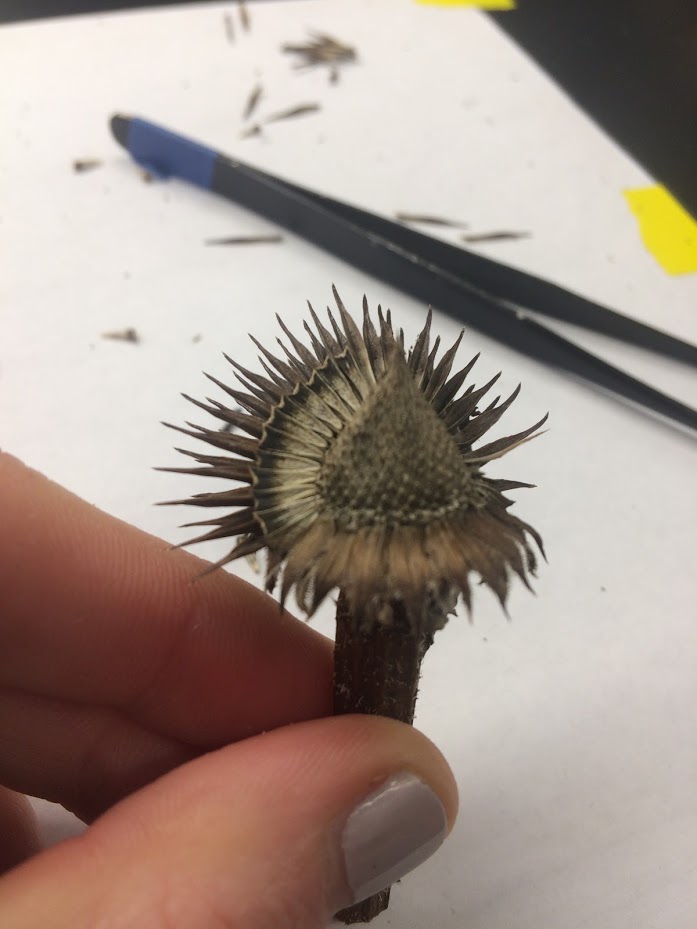
Extracting achenes by row, so that I know which achenes resulted from florets that flowered early (i.e., at the bottom of the seedhead) or late (i.e., at the top of the seedhead). Tedious but possible!
Start
year: 1996
Location: Roadsides,
railroad rights of way, and nature preserves in and around Solem Township, MN
You can
read more about reproductive fitness in remnants, as well as links to prior
flog entries mentioning the experiment, on the background page for this experiment.
In summer
2019, I completed a second season of field work for a study monitoring pollen
movement between remnant populations. In summer 2018, I chose two focal areas,
the NW sites in the study area (populations: ALF, EELR, KJ, NWLF, GC, SGC, NGC,
KJ, NNWLF) and SW sites (populations: LC, NRRX, RRX, YOH, and two large populations
in between these sites). This summer, I limited the study to the NW sites. As
in 2018, I mapped and collected leaf tissue from all individuals in the study
areas and harvested seedheads from a subset of these individuals (see Reproductive Fitness in Remnants). In addition, I monitored the
flowering phenology of all of the flowering plants in these populations (see
Phenology in the Remnants).
Now, I am
working on extracting and genotyping the DNA from the leaf tissue samples and a
subset of the seeds I collected. This takes a long time! I will use the
microsatellite markers that Jennifer Ison developed in her dissertation to
match up the genotypes of the offspring (i.e., the seeds) with their most
likely father (i.e., the pollen source). To analyze patterns of gene flow, I
will assess how individuals’ location and timing of flowering influence their
reproductive success and distance of pollen movement.
In
addition, last summer we planted all of the seedlings from 2018 in the
experimental plot that John Van Kempen set up at West Central Area High School.
We will continue to monitor these seedlings to understand how pollen movement
distance (or the distance between parents) influences offspring fitness.
Here is the team after we planted nearly 298 seedlings in the experimental plot at WCA!
Start
year: 2018
Location: Roadsides, railroad rights of way, and nature preserves in and around
Solem Township, MN
Products: I presented a poster based on
the locations and flowering phenology of individuals from summer 2018 at the
International Pollinator Conference in Davis, CA this summer. The poster is
linked here: https://echinaceaproject.org/international-pollinator-conference/.