|
|
After surviving Friday the thirteenth, Zeke and I decided to go out to P2 to see if we could get more visits for Pollen in the Bank (Pollinators deposit and withdrawal pollen from the head like it’s a bank). We stayed out there for 2 hours and recorded six bee visits. Once we returned to the Roost, we decided to look at our horoscopes. Most of the qualities don’t match up,but as Kristen said, “the chart doesn’t lie”. Along with horoscope readings, we discussed our vocal ranges and figured out what part everybody would sing. (Of course) I’m the bass in the group. For dinner Zeke prepared onions, potatoes, bacon and mushrooms. The onions were so strong that before Zeke cut one open, the members of the Roost had tears in their eyes. After dinner, we decided to go into town and watch The Incredibles II. It turned out to be a great movie with just the right amount of social commentary. I’m looking forward to what tomorrow holds!
Luckily the fear of Friday the 13th did not hinder Team Echinacea’s efficiency in the field. We actually accomplished quite a list of tasks and made for a productive day.
- Today was a designated phenology day, so the team split off and headed to P1, P2, SPP, or remnants to collect data
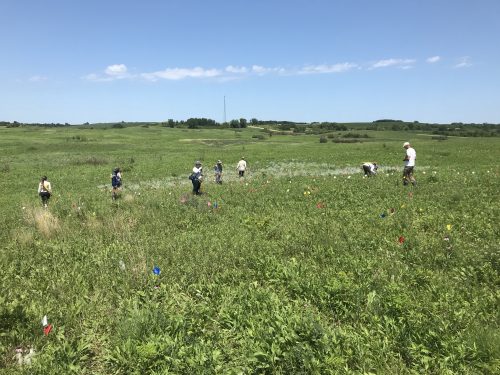
- John and I finished soil samples at East Elk Lake! We recorded data about the slope, aspect, and bare ground percentage, along with a sample, at almost 160 points.
- Lunch did not include quite as many debates about what and what is not a sandwich, but we did watch the almost 5 1/2 hour match between Isner and Anderson at Wimbledon!
- The afternoon included measuring P9 (another hybrid plot at Hegg Lake), work in P2, moving emersion tents, and aphids.
- And now it’s the weekend, so Friday the 13th was not too unlucky after all!
Till next time and happy Friday!
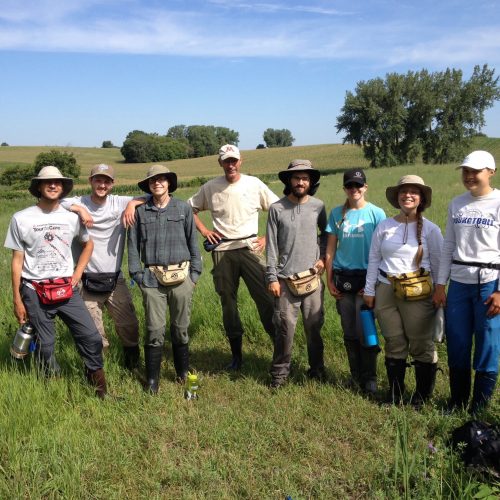
 The team after phenology in P1
Today was a behind the scenes/catch-up day. Team Echinacea stayed indoors most of the morning because the weather was not very very favorable for field work. In the morning, we each spoke to the whole group (with the exception of CoW Bee) to touch base on how our individual projects have been going and when we need to work on them. Shortly after we talked, it started thundering so we all decided it would be best to stay inside for the duration of the storm.
 Pictured: G3 with some scary looking clouds moving in above it After the storm cleared up, some team members drove out to P2 with Jennifer and did plant phenology!
In the afternoon, Team Echinacea broke off into groups and worked on task force projects.
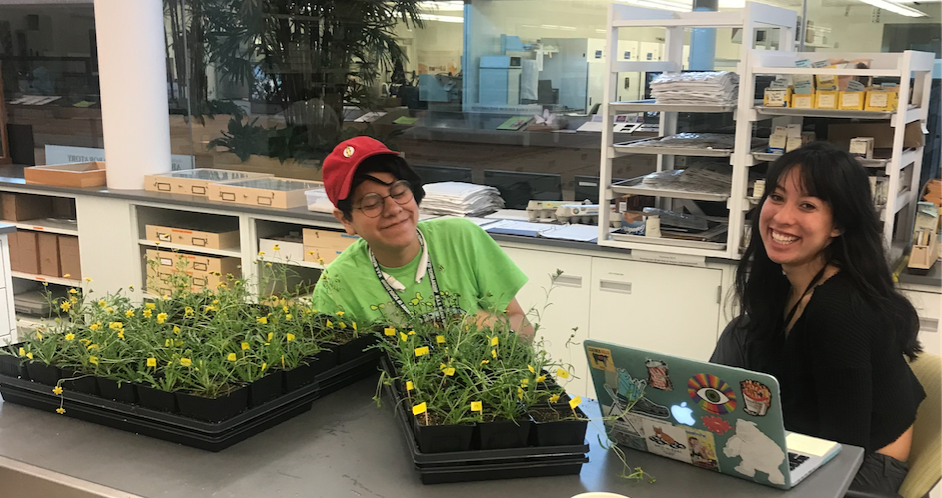
Hi, I am Selena a fourth year undergraduate at the University of California, Santa Cruz! GO BANANA SLUGS!!!! I am here at CBG doing a summer internship in the Echinacea lab! I am looking at intraspecific competition between two California Asteraceae species Layia platyglossa and Lasthenia californica!
I also have a mentee, his name is Steve…
I go to Little Village Lawndale high school in the South Side of Chicago. I am entering my Senior year of high school. I am also studying two California species and testing intraspecific competition with varying water treatments. I am helping Selena collect data, so I am here to help! 
Hello, Flog!
Today Team Echinacea tackled our third Big Event, “Big Event 3: Return of the Bees” (or “Big Event 2: Electric Boogaloo 2: Electric Boogaloo” for those who are more “systematic” as Will puts it). It was a hot and early morning, but the pollinators were out, so we were too! I worked with Riley in this event, and while I can’t speak for everyone, I can say we saw a fairly large number of correct bee visits; when we weren’t jumping to shoo away bees from plant 24-37 (which had over 200 anthers shedding pollen during the event).
Once temperatures hit over 90 degrees around 10:30, the team decided that it would be a good idea to head inside for a break.
Just kidding. Once the temperatures hit 90 degrees around 10:30, the team split up into task forces to accomplish the remaining goals for the morning. I went to move tents for Kristen’s project (no 100% confirmed capture of any bees yesterday, but there might have been one). Other task forces tackled Staffanson and P1 phenology, working through the scorcher like it didn’t even phase them.
During lunch, we had an… enlightening discussion about what constitutes a sandwich, with each team member weighing in on that age-old question: “is a hot dog a sandwich?” A few came down firmly on one side or the other, with Andy saying, “no, a hot dog is not a sandwich because if you asked for a sandwich and someone gave you a hot dog you would be surprised,” and Riley saying that hot dogs, tacos, burritos, and even pie constitute a sandwich.
It was predictably heated.
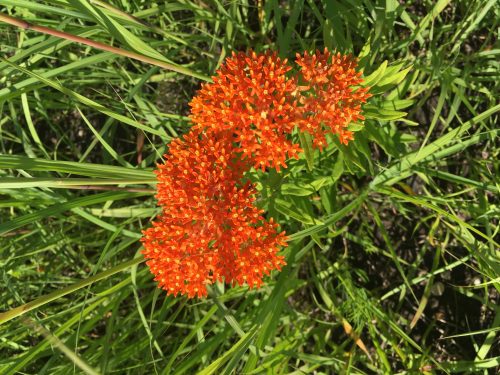
After lunch, the clouds rolled in and the wind picked up, leading to a much cooler afternoon, much to the relief of the whole team. While the measuring of plants in P7 wasn’t quite as successful as we hoped it would be, we did manage to locate a source of aphids near Hegg lake, as well as mark the location of most flowering, non-native E. pallida in the area. Also, my day was brightened by this lovely butterfly milkweed, of which this is the only plant I’ve seen this year.
Butterfly Milkweed (I think) Get ready soon for Big Event 4: Revenge of the bees! (Or Big Event 2: Electric Boogaloo 2: Electric Boogaloo 2: Electric Boogaloo)
Michael
Today was the historic Big Event 2: Electric Boogaloo and while the rain may have tried to thwart our attempts to quantify how different pollinator taxa affect male fitness, Team Echinacea overcame and we had a great time watching pollinators in experimental plot 2 once the rain cleared. We saw lots of bees visiting Echinacea and spent lots of time running between plants to shoo away bees. We also played some fun games during downtime (in between the rushes of bee visits). Andy taught us Contact, which is a fun game where you try and guess the word the other person is thinking of.
The Team watching and shooing bees in P2
After we finished with TBE2EB (The Big Event 2: Electric Boogaloo) We had just a little bit of time to work on miscellaneous tasks. I worked on preparing some information to assist with planning for the big demography project and others visited Hegg Lake to decapitate any traitorous Echinacea pallida that might be lurking around.
We are looking forward to a hot day tomorrow, stay tuned for updates on The Big Event 3: Return of the Bees (Although my vote for naming #3 was The Big Event 2: Electric Boogaloo 2: Electric Boogaloo, much more systematic in my opinion).
Have a great night Flog!
Will
The flogs lately have been talking a lot about the game called Werewolf. Cherished by the Roost, Werewolf is a Who-Done-It game in which a werewolf murders victims; villagers must logically discern the identity of the werewolf. We have played this game so much of late that it has come to affect my everyday life. I have begun to wonder who to trust; those who seem innocent are enemies and the dubious turn out to be telling the truth. Fear and suspicion are my new reality. The werewolf could be anywhere.
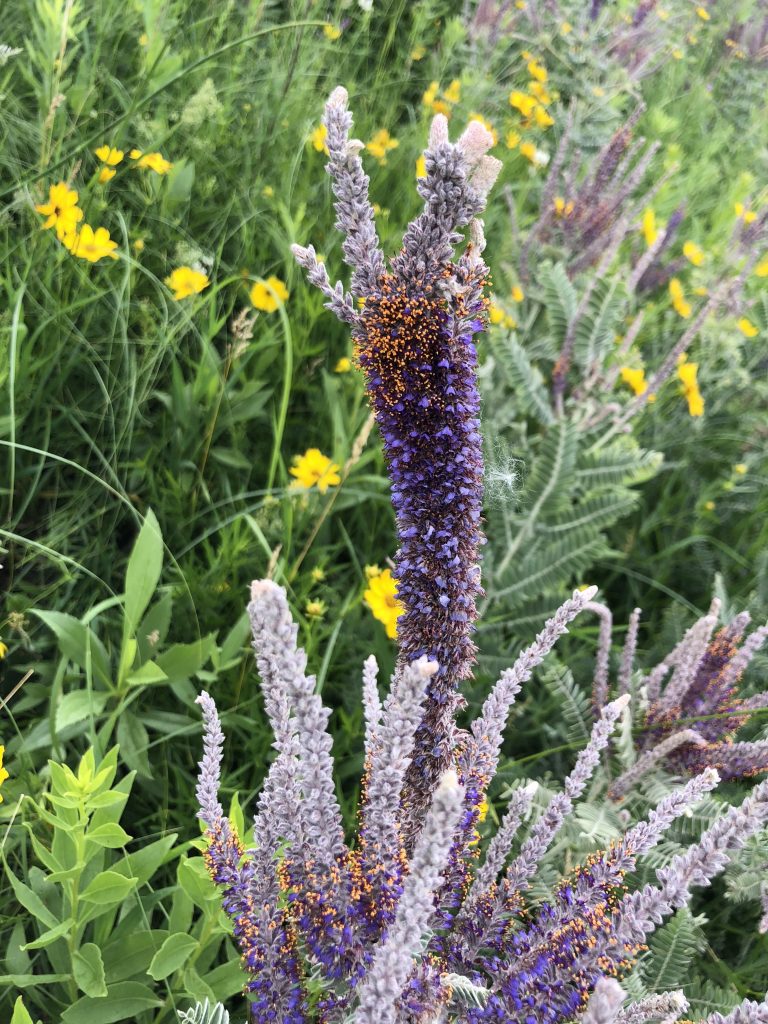
This morning, we split into task forces and I was left at Staffenson prairie completely alone. The sky was ominously cloudless and the sun shone eerily. Coreopsis, leadplant and heliopsis gave the landscape a beauty like that of a siren, luring wanderers to their demise. As I began to go about checking flowering of Echinacea, I couldn’t shake the feeling that I was being watched. All of a sudden, a grotesque monster reared its many heads. At first I thought it was a hydra, but then I realized it was more similar to Frankenstein’s monster. It was as if some doctor had surgically stitched several leadplant flowers together forming a massive mega-flower which loomed forebodingly over the heads of its brethren.
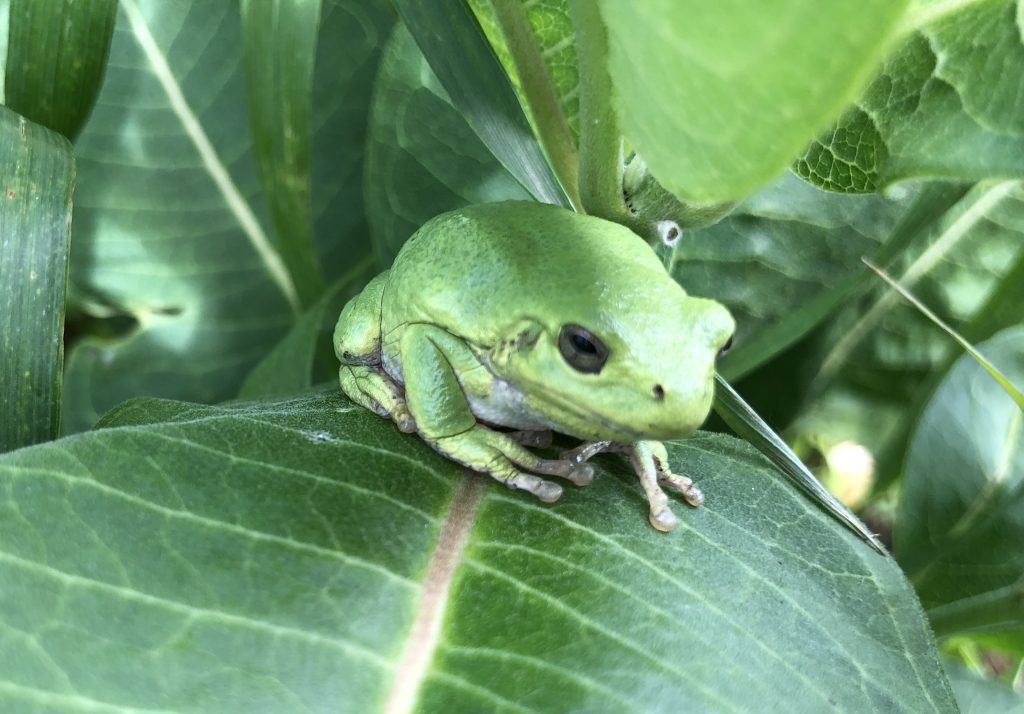
 Absurd Leadplant After my heart slowed back down to a normal pace, I continued onward. My quest included locating flowering Echinacea in order to determine differences between burned and unburned sections of the prairie. I scoured the horizon for the elusive blue flags marking Echinacea which blended bewilderingly well into the sea of purple leadplant. Since I was busy peering everywhere but the direction I was walking, I accidentally ran straight into a gigantic frog. It was 50 meters tall and at least twice as long! This monster, thankfully, was quite friendly. It had no problem with me and, when I ran into it, merely said ‘oosh’ and hopped away.
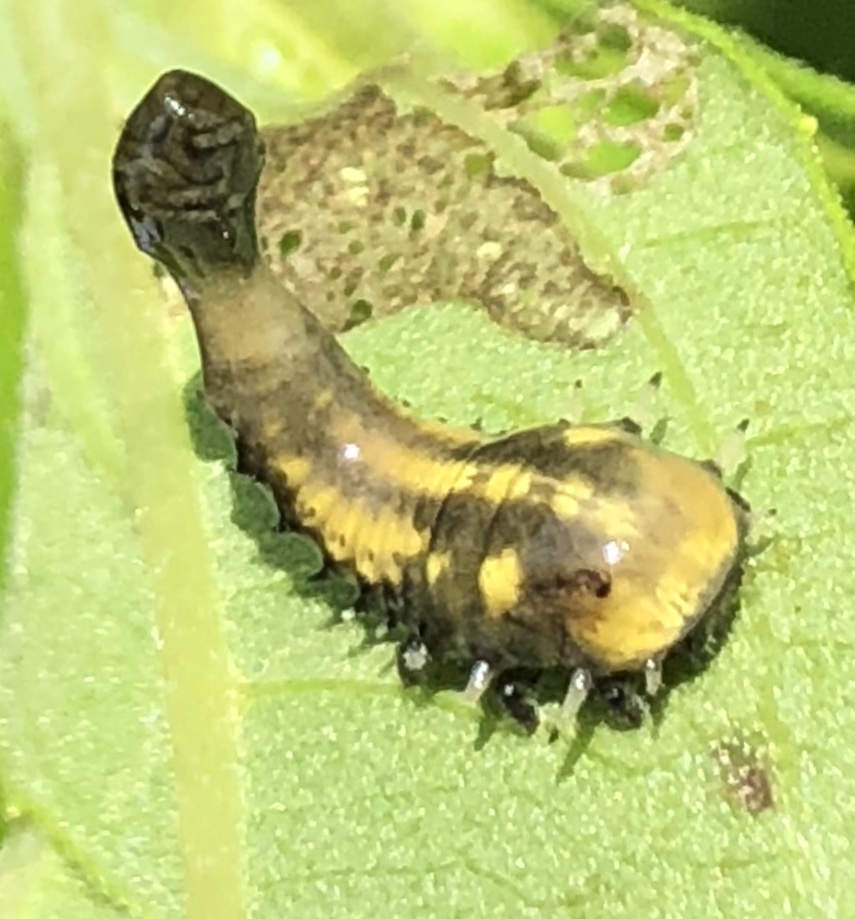
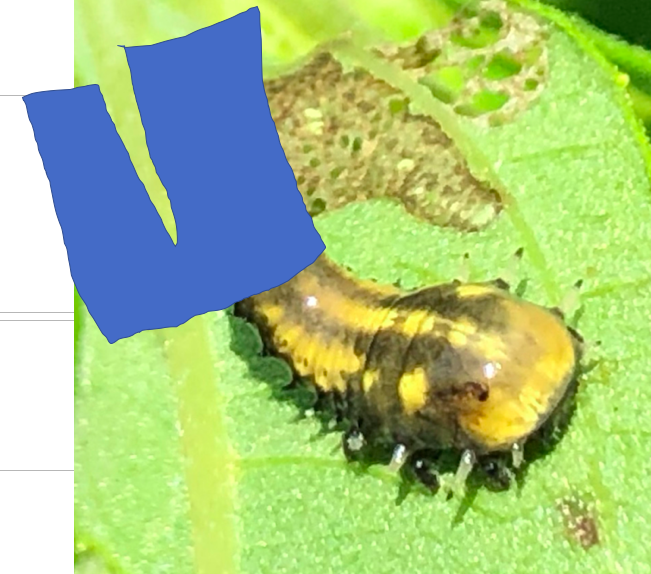
 “Oosh” The next creature I encountered was not quite as amiable. Just as I was about to leave the prairie, a grotesque beast oozing with slime emerged from the depths of its lair. It hissed and placed itself squarely in my way.

I had never seen this creature in real life, but I had heard tales of its terror. The local lore says that if the creature shakes its tail at you, you will be cursed forever. Only one has survived an encounter with this beast: the esteemed adventurer Stuart Wagenius. Some say that Stuart killed the beast with one watermelon seed, spit with the might of Paul Bunyan and the force of Chuck Norris. I have witnessed this ability and think this could be true.
I, unfortunately only can spit a watermelon a measly couple centimeters. Instead, to get past the beast, I accepted the challenge to answer a riddle. It asked me:
If I wore pants, would I wear them like this—

or like this —?’

Fortunately, I guessed correctly (I can’t tell you the right answer otherwise I’ll be cursed) and I was allowed to pass.
After a morning of adventures, I was quite glad to be back in the company of the team for lunch. Several accusations of ‘werewolf’ and ‘minion’ were levied in jest, aligning nicely with the Werewolf theme of the day.
In the afternoon, most of the team journeyed out to plot 1 to check the status of flowering Echinacea. Most of us were convinced that some werewolves had probably moved around the flags and twist ties marking the position of the flowers in order to confuse us.
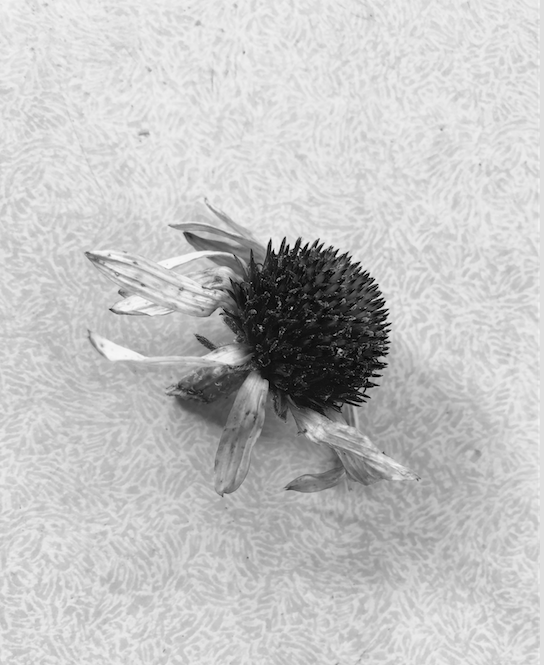
The end of the day was marked by more horror, but not of werewolf making. When we got back to the Hjelm house, I noticed a lone Echinacea head rolling across the table, a reminder of the mass carnage from the previous week. In the name of science, we had guillotined many Echinacea heads and carried the heads home as trophies of our conquest. All of today I looked for monsters… but could it be that I was looking in the wrong place, that we ourselves are the monsters?

After traveling back to the Roost, enjoying a lovely meal from Andy, and having a discussion about Michael’s interesting article for literature club, we ended the night with, of course, a game of Werewolf.
Today was generally a lazy Sunday, as many members of the Roost were seen sitting around and reading or working on various project activities. Additionally, a few members of the team were out and about completing various tasks around the state of Minnesota. Notably, Zeke and Kristen went out early this morning and moved around emergence traps at West Hegg Lake with the help of the new GPS named Darwin. In mid-afternoon, Evan, Mia, and I went to Aldi and Elden’s to get groceries for our weekly meals. Mia made some awesome roasted veggies tonight, I am making tuna pasta pea salad for Tuesday, and Evan is going to make his family special sausage and noodle recipe.
Later in the day, Andy and I played tennis, and then Will and Kristen came over to play the new card game Werewolf. This game has been a staple of the Roost over the week and weekend, and it certainly can make us yell at one another, as we try to figure out who is the Werewolf in a village of good people; plenty of lying occurs. However, I think we can all agree that the end of the day that Werewolf brings us closer, and we wouldn’t give that time up for anything else. I will say that I am very happy with the weekend and I think we are all well and rested for an amazing week ahead!
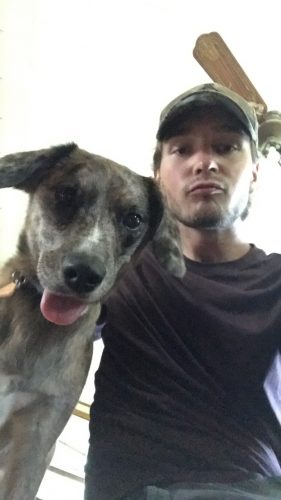
P.S. I’m going to miss having Blue around the Hjelm house.
 Zeke drives his car.  A great selfie with Blue! She will be missed.
Hi flog,
I would like to summarize the day from the perspective of my apartment’s egg consumption (we cooked up about 20 eggs today).
This morning me and Mia went out to Hegg lake to finish collecting data from Friday’s experiment on male fitness, and prepare for next week’s male fitness experiment (named: The big event 2: electric bugaloo). While we were there, Mia found a bird’s nest in the grass full of tiny chicks. They were very cute, so we chose to leave them alone rather than eat them. Once we finished, we went back to the roost, where I ate eggs for lunch (3 eggs down).
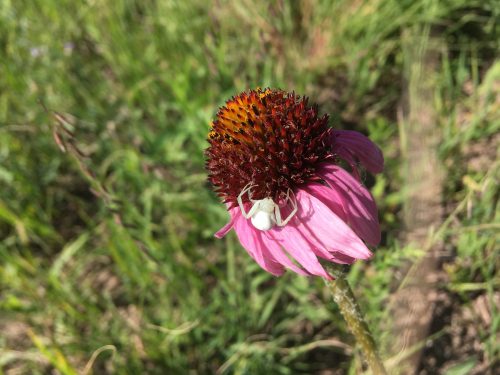
 The bird’s nest at P2. Mia found a spider hanging out on an Echinacea flower. It’s probably not a very good pollinator. After lunch we played card games and Brigid made a beautiful chocolate cake (six more eggs down).
We decided it was too nice of a day to stay inside, so in the afternoon we went to Lake Carlos state park, to swim and play games, such as volleyball, and Kan jam (a Frisbee throwing game). We found out that Kristen played volleyball in high school, and Will’s overhand serve is hard to defend; also I can sometimes throw a Frisbee. We did not eat any eggs, while at the lake.
In the evening we returned to the roost. I made a stir fry with vegetables, chicken and 2 scrambled eggs.
I do not know what happened to the remaining 9 eggs (I’m sure they were put to good use); regardless I enjoyed a relaxing Saturday, with a perfect mix of Echinacea, team bonding, Frisbee, and eggs. Surely a good team eats eggs together (dietary restrictions allowing).
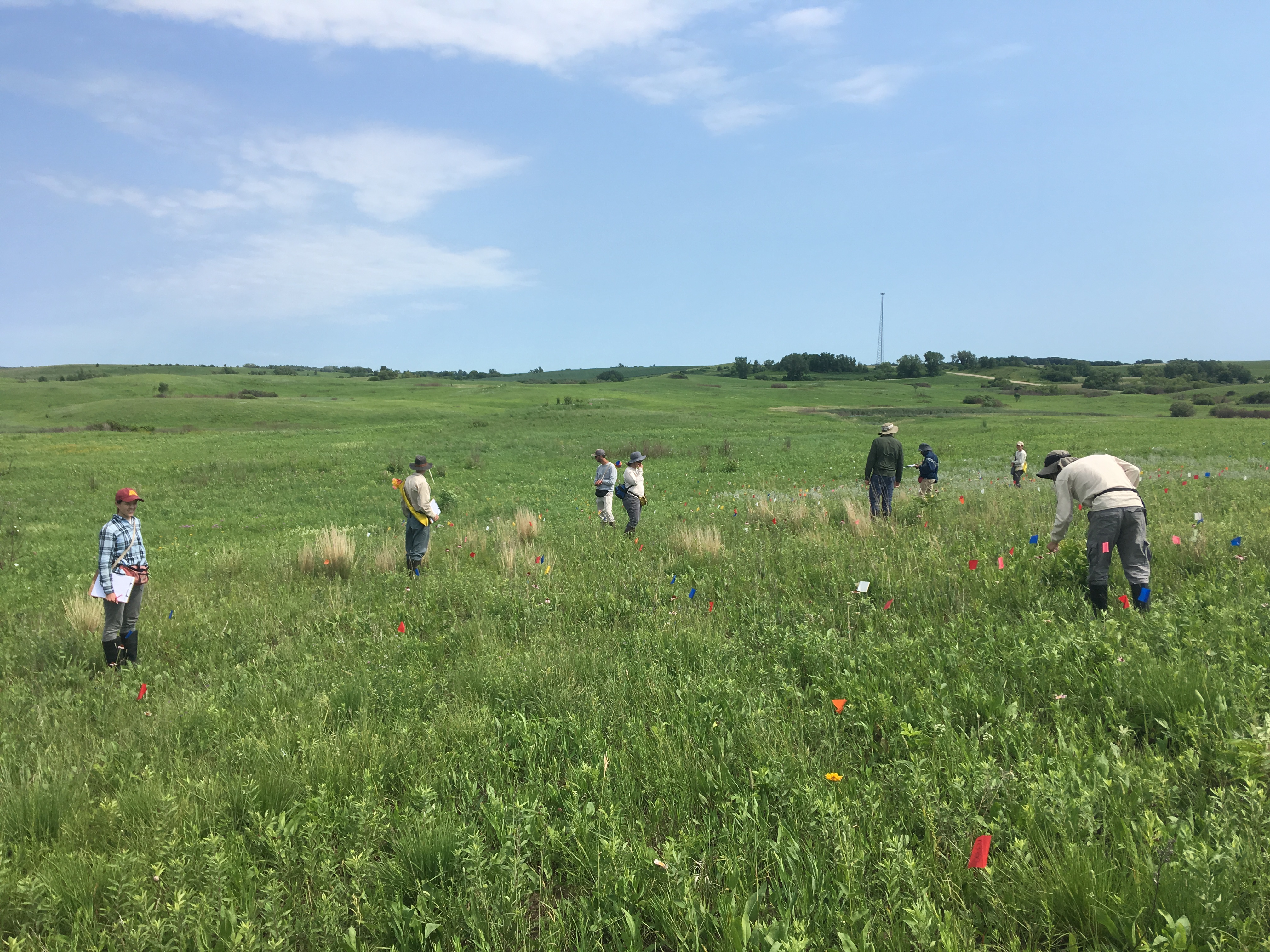
The team hard at work shooing pollinators Yup you read right, today we shooed the bees from the Echinacea. Now you may be asking why would a group of scientists trying to save native bee populations tried to stop bees from pollinating flowers. Well, it’s a reasonable question. Since plants can’t move, it is difficult for them to find a mate, therefore, they have evolved to use bees to do the moving part for them. The different types of bees can have differing effects on the plant’s fitness (not how big its muscles are but how many offspring it has) and those effects are exactly what we are trying to determine with this experiment. Many plants have both male and female parts. Female being how many seeds are being made and male being how many seeds a plant helps make. This raises the question of: how good are different types of bees at distributing pollen from a plant? In order to do this, we need to have plants that are only pollinated by one type of bee. Once we have plants only pollinated by one type of bee we can track where this pollen goes using genetic work. This is where the shooing comes in, to have plants only pollinated by one type of bee we needed to shoo away the other types.
So today the entire team (except Kristen – she was busy working with bees 🙁 ) went out to P2 and worked on the male fitness project. This shooing event has been dubbed the “Big Event.” Today was the first Big Event of five(?) to come, and it was quite successful. We observed around 200 pollinators, the majority of the bees that we saw fit into the category of “small black bee” not to be confused with “medium black bees”, we also saw a fair number of Andrena which are impressive due to the great amount of pollen that each bee carries.
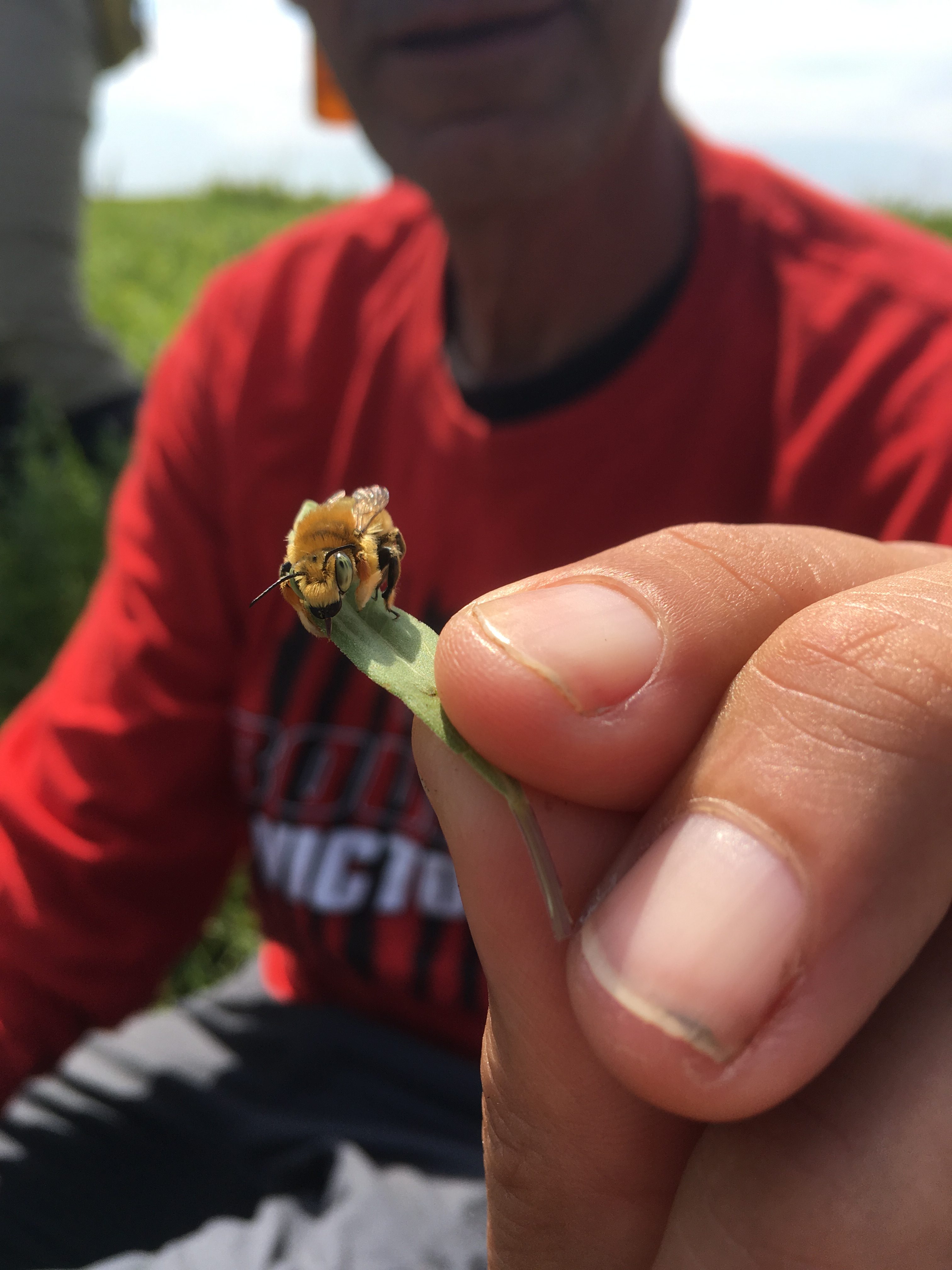
 John holding a male Megachile We saw some Augochlorellas, and Agapostomons – both of which are neat because they are green! My favorite of the day was a male Megachile which I have never seen before. They are very distinct with hairs on their front legs. This mere two and half hours of observations show you the high level of diversity of different bee species at one of our study sites! Can’t wait for the next Big Event titled Big Event 2: Electric Boogaloo and all of the bees that will be found then!
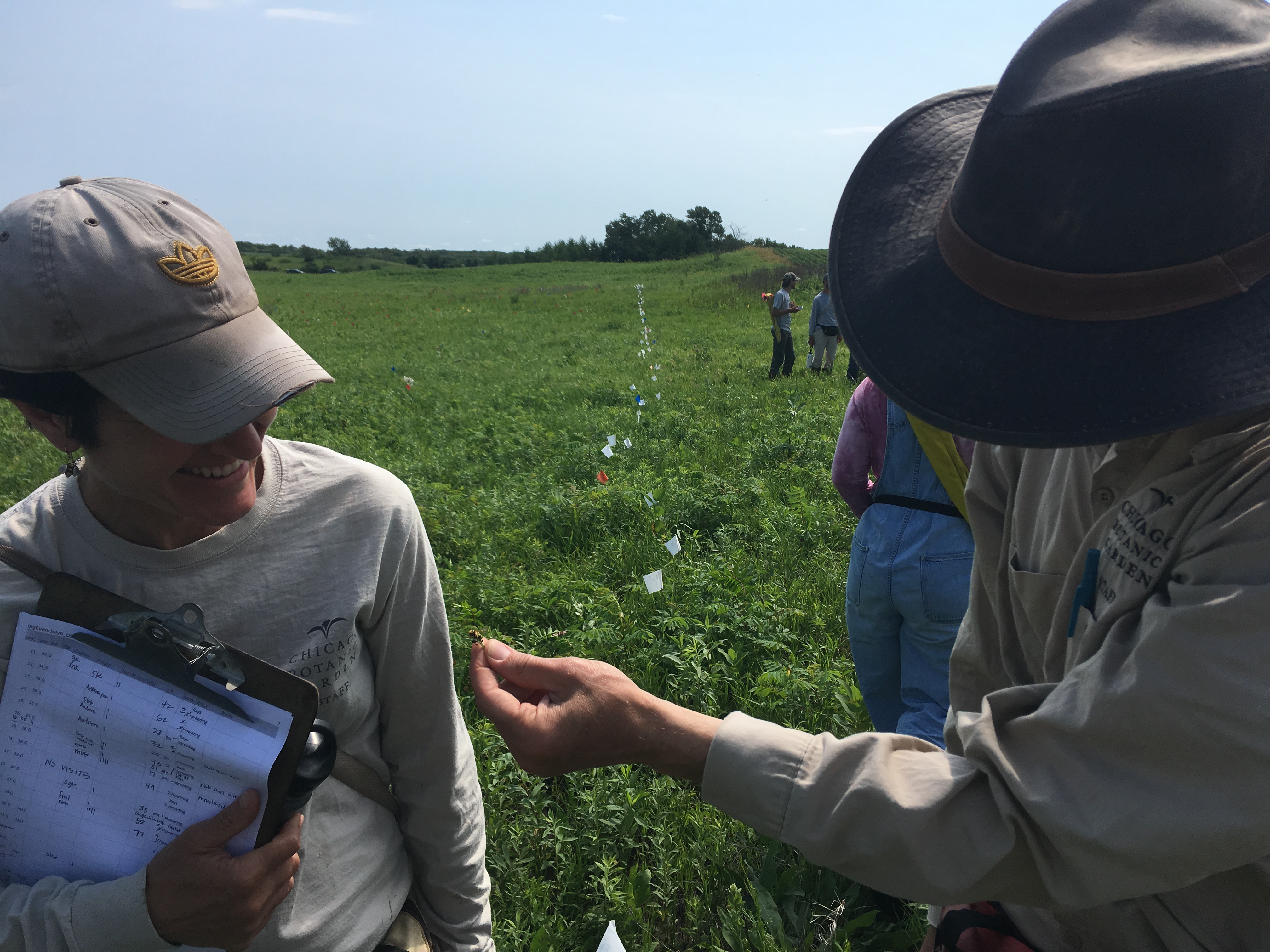
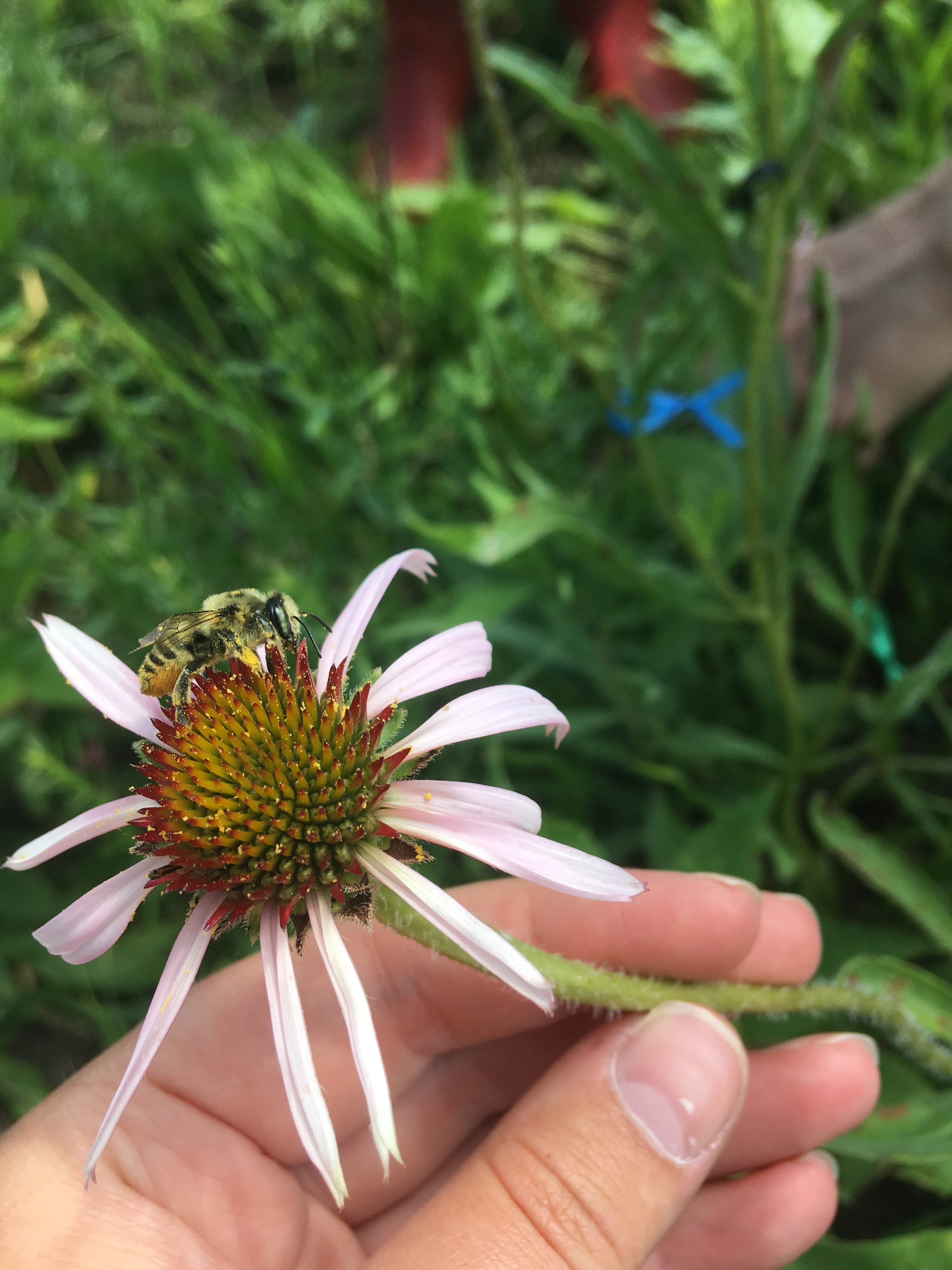
Gretel and Stuart examining a bee A female Megachile on a echinacea(notice how she caries pollen on her abdomen) See ya’ next time flog!
Mia
|
|