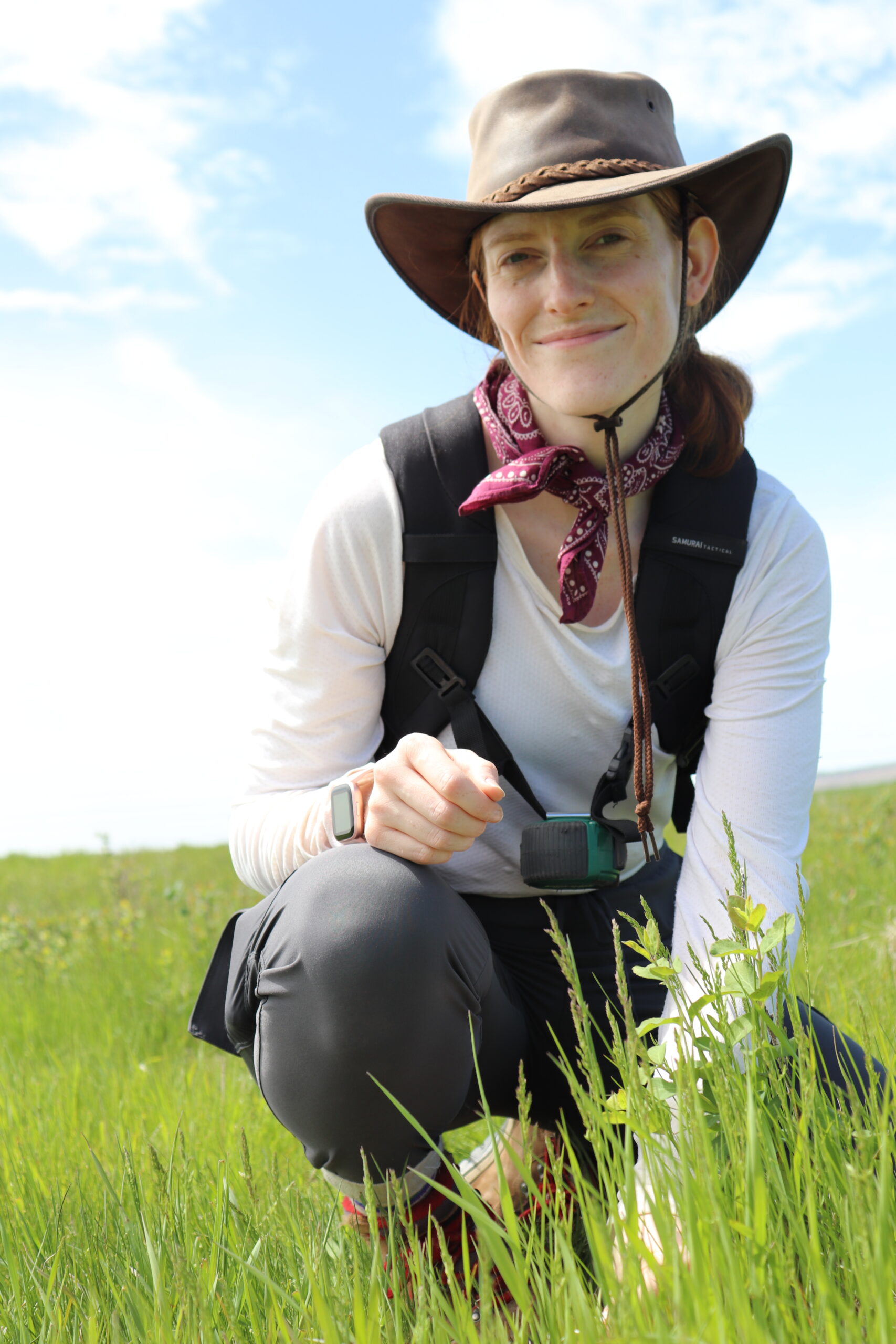
Part of the Pollinator Team with the Echinacea Project 2023
Natural Resource Management major, North Dakota State University, ’23
Pronouns: she/her
Research Interests
I am interested in entomology and botany. Particularly, I studied monarch butterflies, milkweed, and other flowering non-grass plants within mixed-grass prairies managed with various grazing strategies such as patch-burn grazing, and now I am extending my experience towards bees in tall-grass prairie. I am excited to learn new plants, identify bee species, and lead the pollinator team!
Statement
I am originally from Lakeville, MN. I went to the University of St. Thomas in St. Paul, MN for my B.S. degree in environmental science, and then went on to pursue a M.S. in natural resource management through North Dakota State University in Fargo, ND.
In my spare time I like to watch bad dating shows, paint, thrift shop, and spend time with my cat.
Biology and Environmental Science, University of Minnesota-Morris, graduated 2021
Pronouns: she/her
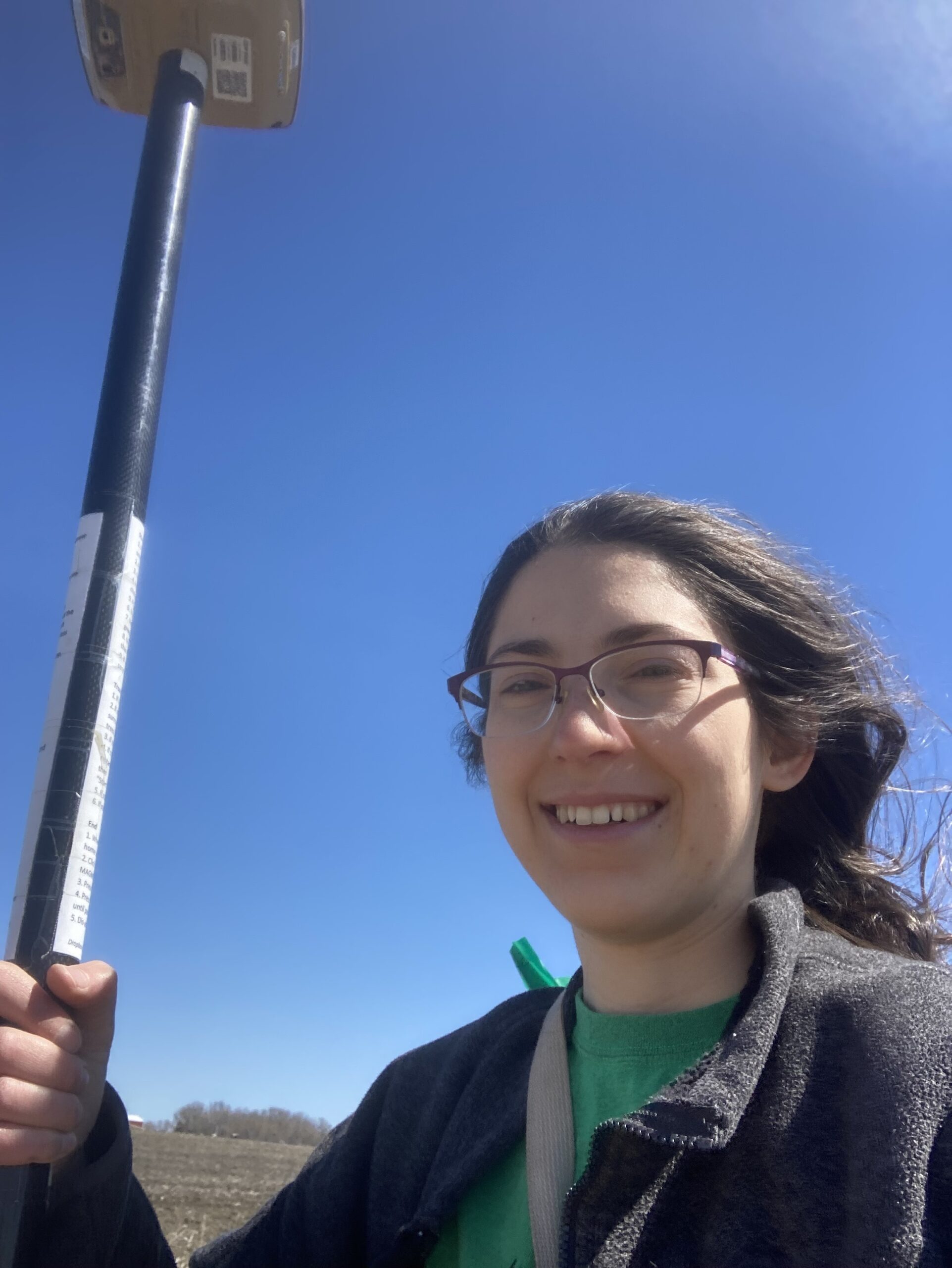
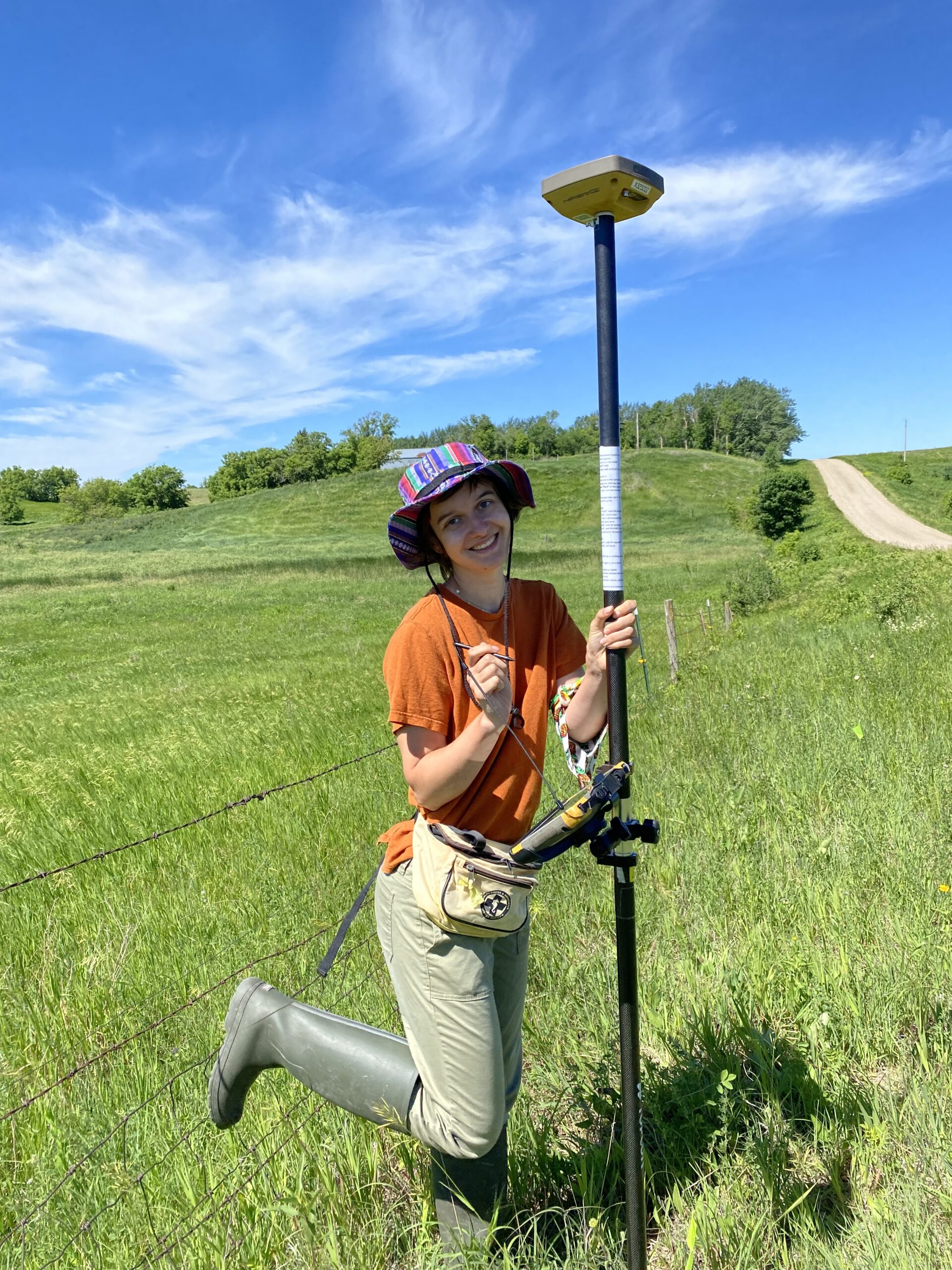
Here’s me with my friend Collins the GPS
Research Interests
I enjoy studying the effects of prescribed fire on plants. I’m currently investigating the influence of smoke on Echinaceaangustifolia.
Statement
I’m from St. Paul, Minnesota, and in my spare time I like to climb trees, play board games about birds, visit new bakeries, and read books about dragons.
Northwestern University, MS in Plant Biology in Conservation, expected spring 2024
Pronouns: she/her
Research Interests
When we talk about plants benefitting from prescribed burns, we often think of increased flowering rates following a fire. Often, this effect is attributed to advantageous post-burn growing conditions, like more light, increased nutrient availability, and reduced competition. However, in our prairies, while many species do exhibit fire-stimulated flowering, some don’t, which doesn’t make sense using this physiological explanation! Why would some species take advantage of these better growing conditions while others decide not to?
My research takes a closer look at the reasons for fire-stimulated flowering and considers whether it could be a heritable trait, a built in behavior passed down through the generations. I’ll be primarily working in the experimental plots where we can compare the flowering rates of different families across years. I’m very excited to get out in the field and work toward learning more about this big question!
Statement
I’m from Chanhassen, Minnesota, and love living and working in this neck o’ the woods (or prairie). In my free time I like to fish (catch and eat, yumm), explore, camp, play board/card games, and cook with friends.
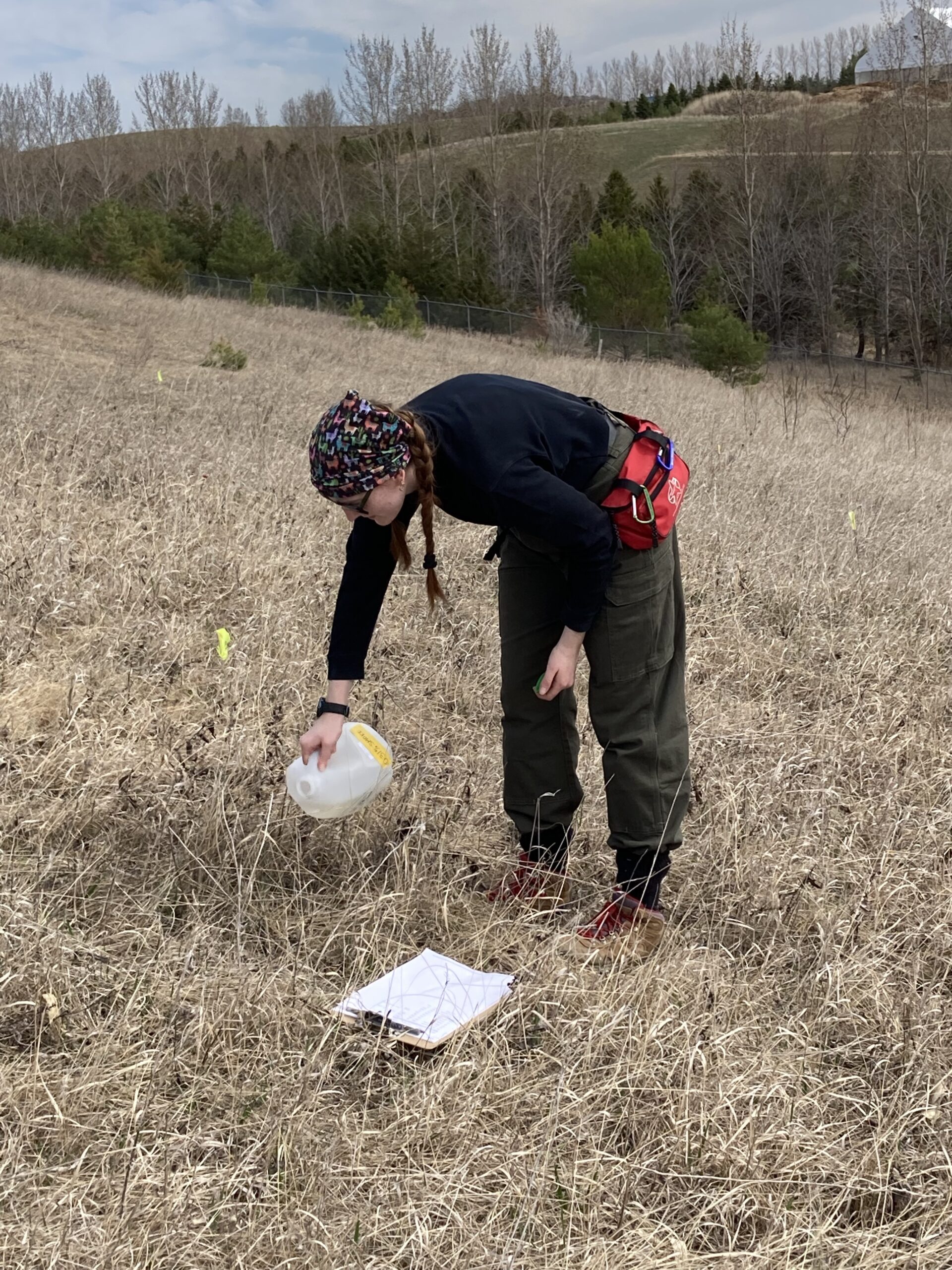
Plants often flower vigorously after a fire, but what aspect of fire causes these increases in flowering? Today, we are one step closer to finding out if smoke is the culprit. In the fall, we applied liquid smoke to 110 plants, and today, we applied the remaining 110 treatments for the smoke experiment!
Last summer, we flagged all of the Echinacea plants for the experiment and assigned a number to each plant. However, we weren’t sure if any of our flags survived after the profusion of snow this winter. With help from El and Jan, we revisited all of the smoke plants using the GPS units. Surprisingly, most of the flags were still present, but we relabeled any illegible, faded, or ripped flags.
Jan and Lindsey reflag a plantLindsey mixes the proper concentrationEl applies a smoke treatment
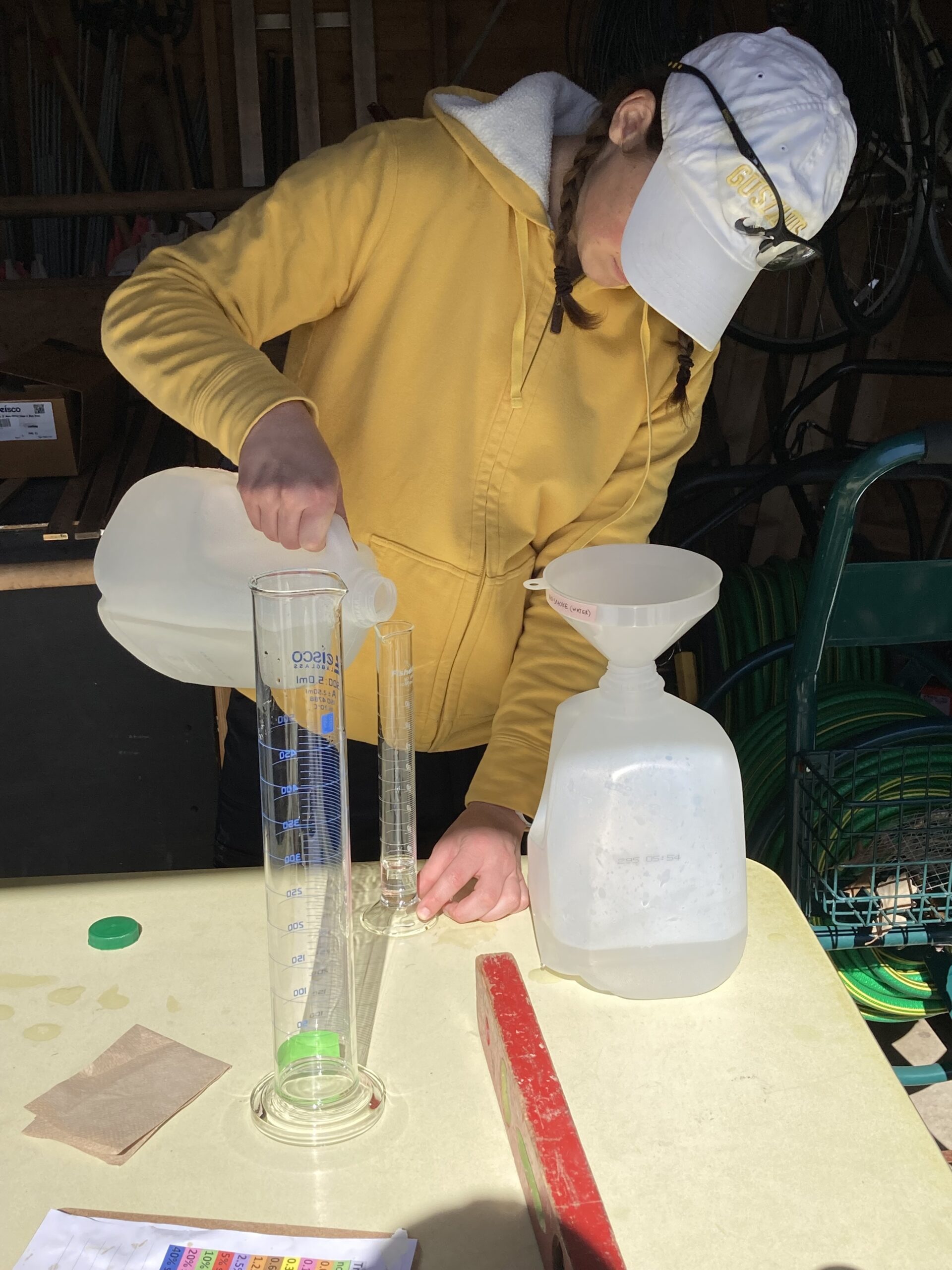
Next, Lindsey and I measured and mixed our 11 concentrations of liquid smoke. Thanks to Allen for supplying us with more empty jugs! Back in the field, we applied half of the smoke treatments in the morning and half in the afternoon, following the same protocol as in the fall. The ground was very dry after recent windy days, so the liquid rapidly soaked into the soil in most places.
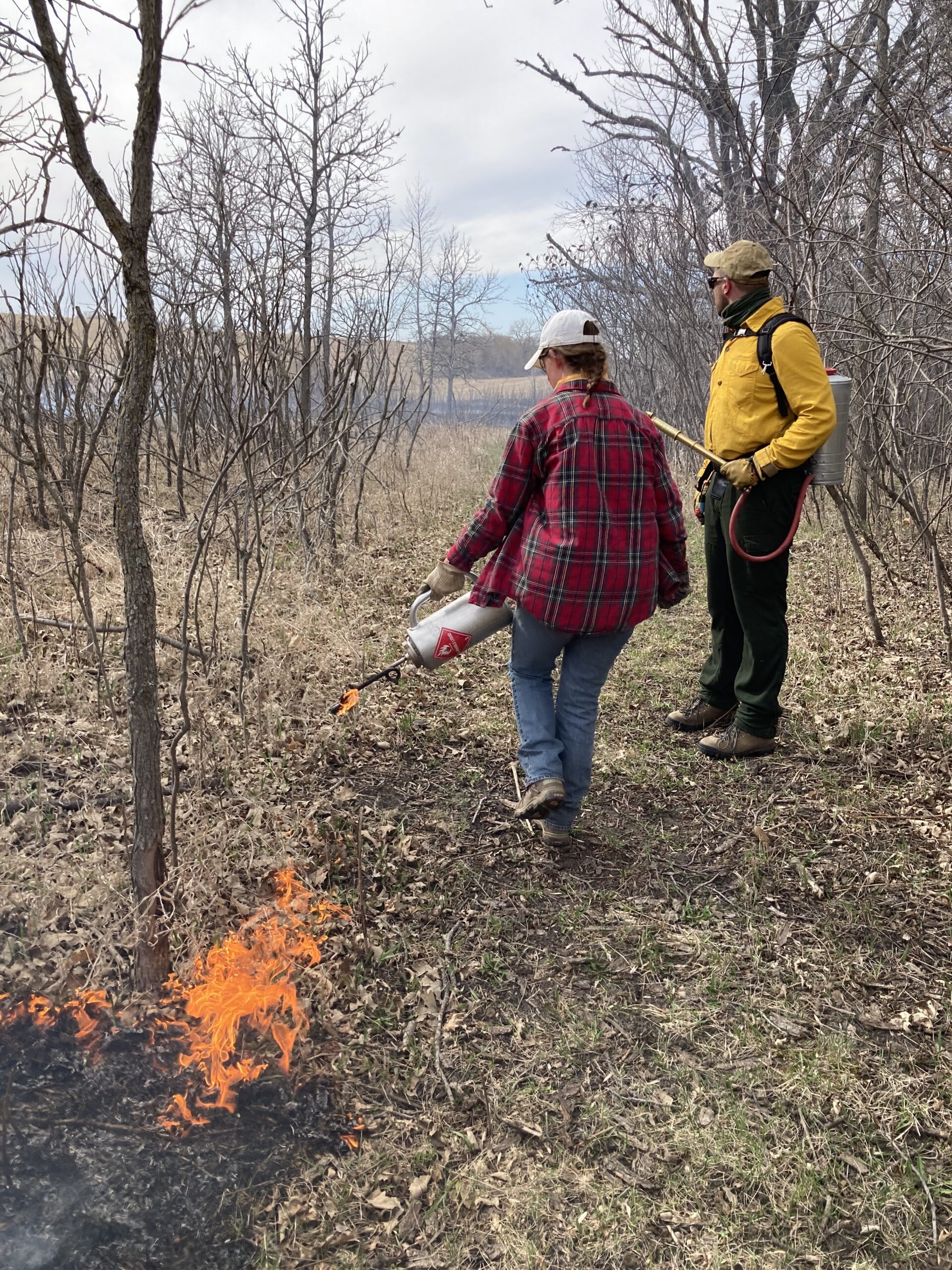
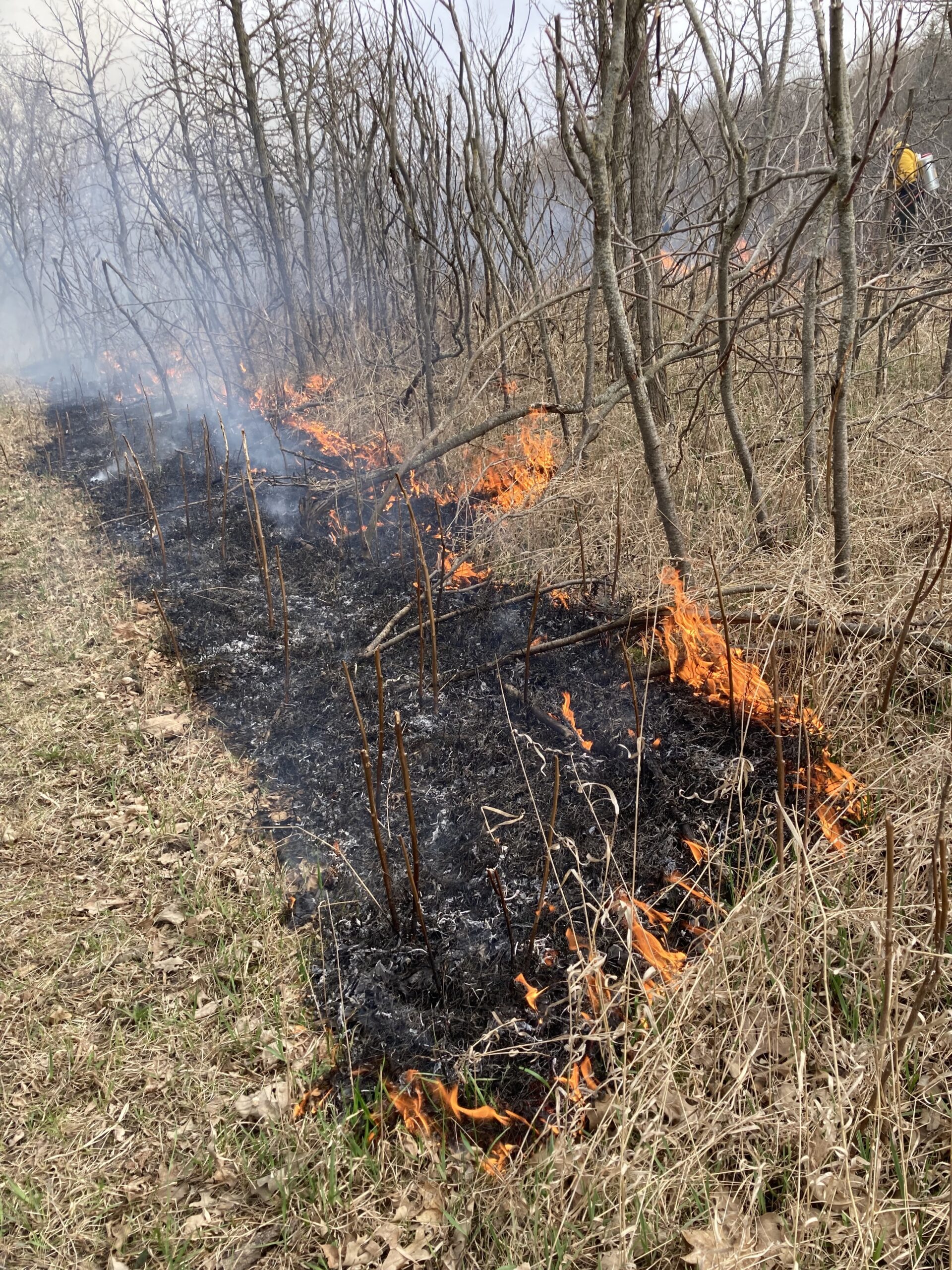
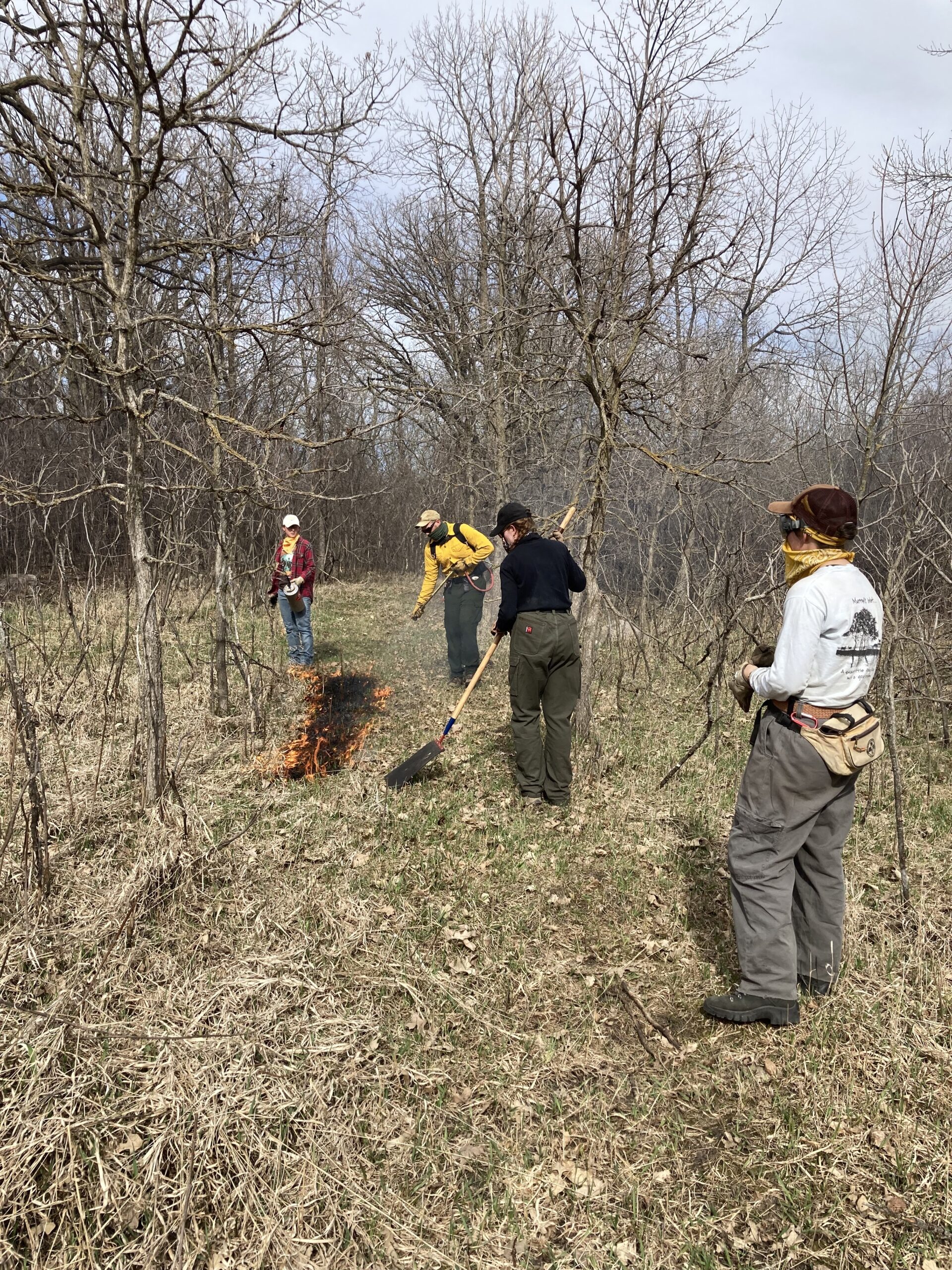
Our experiment was not the only source of smoke today. There wasn’t enough wind to burn at prairie remnants near roads, so instead, we burned an area that Stuart is restoring nearing P1, called Center Field. There wasn’t a lot of fuel, but the grass and oak leaves were very dry and crispy, so the burn went much better than expected. We all got a chance to practice using the drip torch, and the plants will enjoy the fire, too!
This Saturday was a glorious day: Independent Bookstore Day! Every year on the last Saturday in April, the nation celebrates indie bookstores in all sorts of ways. In Chicago (and the Twin Cities and maybe other places), local bookstores participate in a passport event – visit as many bookstores as you can, get a stamp at each one, and win a prize based on how many you visit!
With 40 participating stores this year, visiting 10 would get you 10% off at all the bookstores for a year, and 15 would get you 15% off. Individual stores also often had their own special goodies for the day, including snacks, pencils, tote bags, and other exclusive (and often free!) merchandise. Alex and I were up for the challenge. In fact, we even took on a non-book related side quest, more on that later.
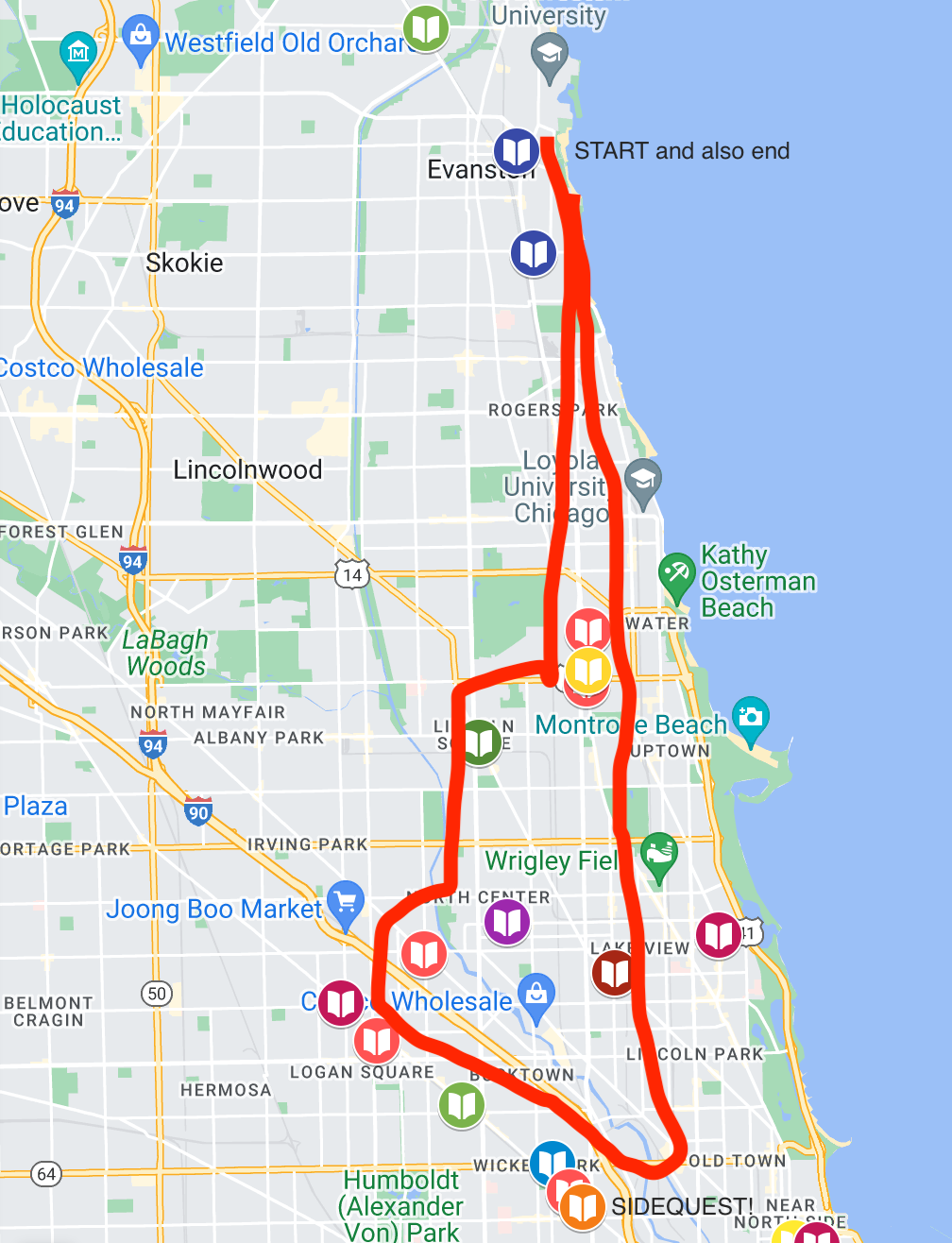
An approximate map of our odyssey
We started out strong with Bookends & Beginnings in Evanston, where we got free totes, some books, and our passports with our first stamp. We made our way south, visiting stores both familiar and novel.
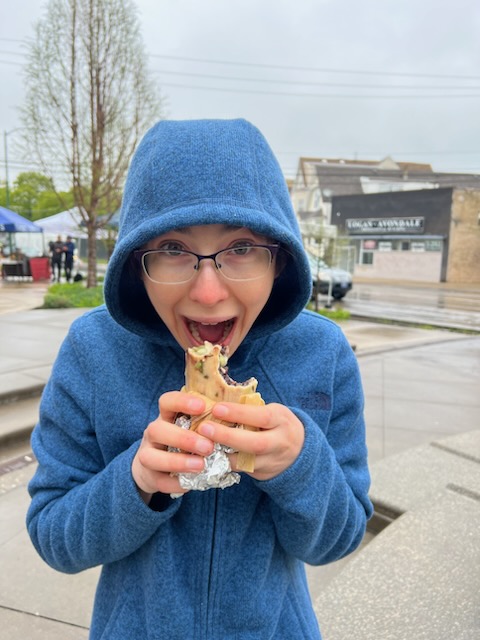
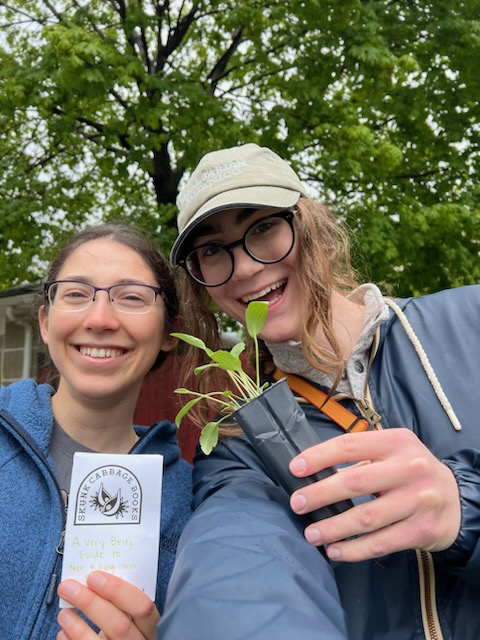
A much needed tamale stopSkunk Cabbage Books gave us a Ratibida seedling with our purchase!
Upon reaching our tenth bookstore, we were both awarded pins that will give us a 10% discount at all 40 stores for the rest of the year. We rejoiced! But at our 11th bookstore, tragedy struck. I couldn’t find my passport anywhere, and I fear it was left at our tenth stop. We mourned! The show didn’t stop though, because Alex still had her passport, we had four more bookstores to go, and one very important side quest.
Stores 12-14 were located within walking distance of each other in Wicker Park, so we visited them all in one stop and got falafel sandwiches and waffle fries to boot. With full stomaches and a clear bath forward, we took of to Goose Island, home of the holy Restaurant Depot.
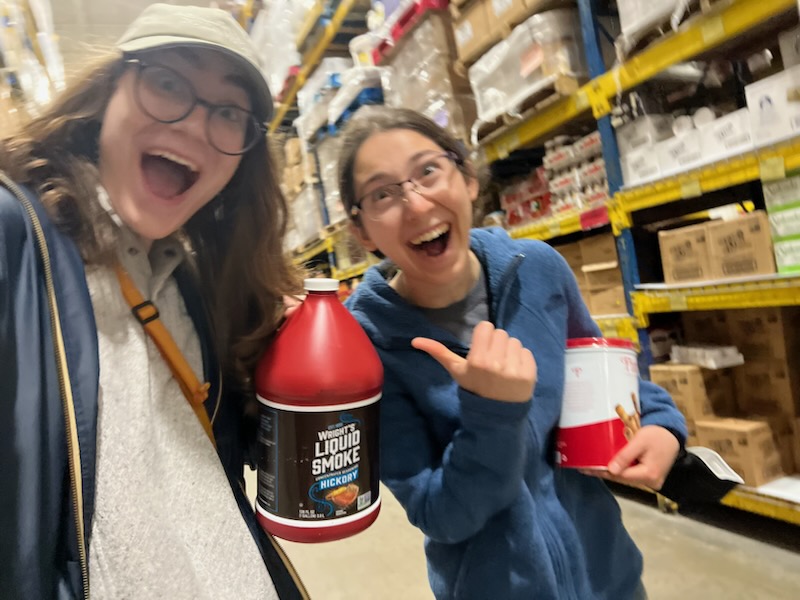
Our secret mission was to locate and extract one gallon of Wright’s Smoked Hickory for Alex and Lindsey’s smoke experiment. The job was difficult; mammoth quantities of random everyday ingredients tantalized us at every turn. However, I am happy to report the mission was a complete success. We escaped with our sanity intact and only one extra item (who can say no to a big ol’ container of chocolate hazelnut wafer rolls?).
Mission success!!!!
We hit our 15th bookstore on our way back north, where Alex was celebrated as a grand winner of the day (though they had run out of 15 store pins). Victorious, we made our way back to Evanston. Until next time, bookstores!
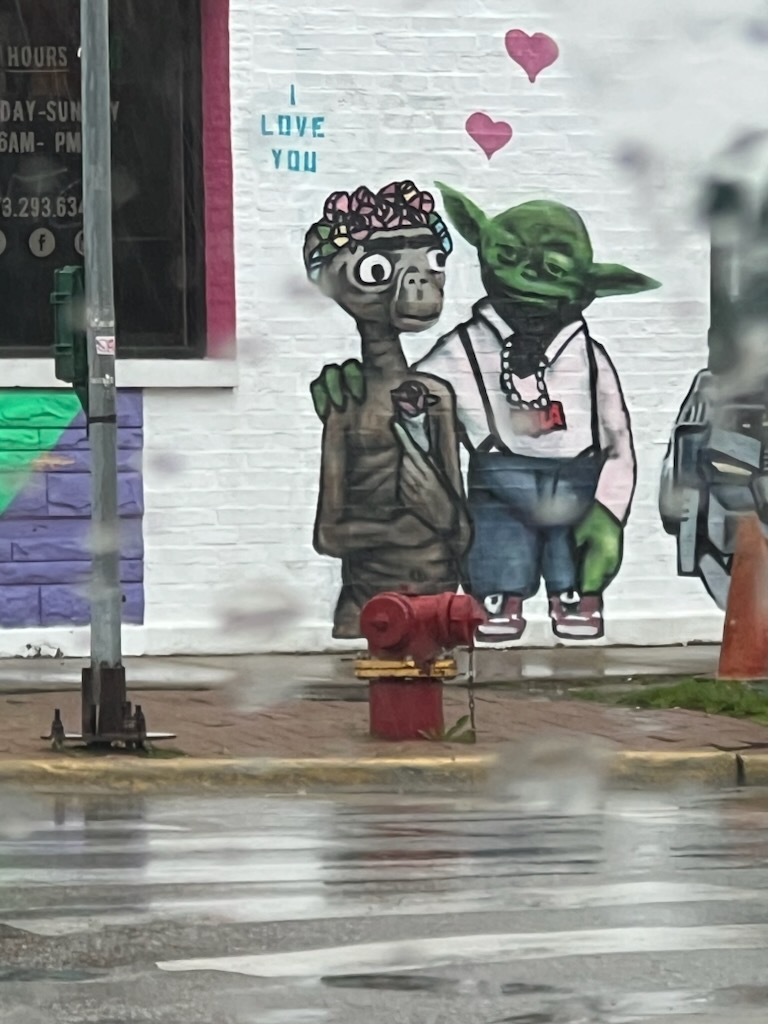
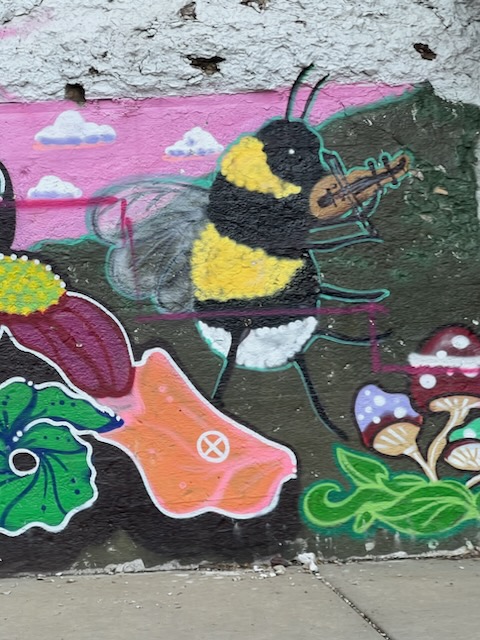
(we also saw some lovely street art)
LoversPlaying some Rimsky-Korsakov on the world’s smallest violin
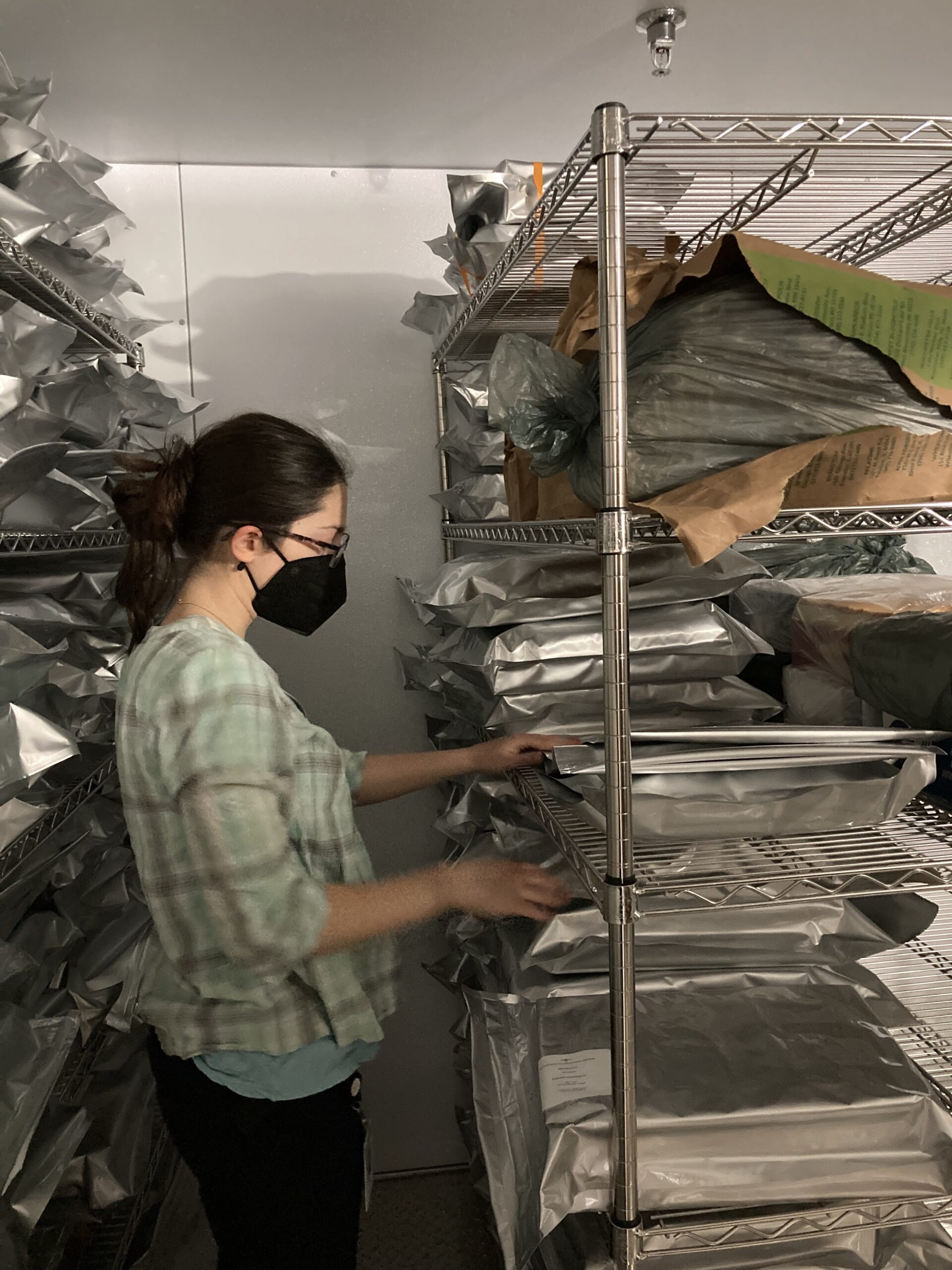
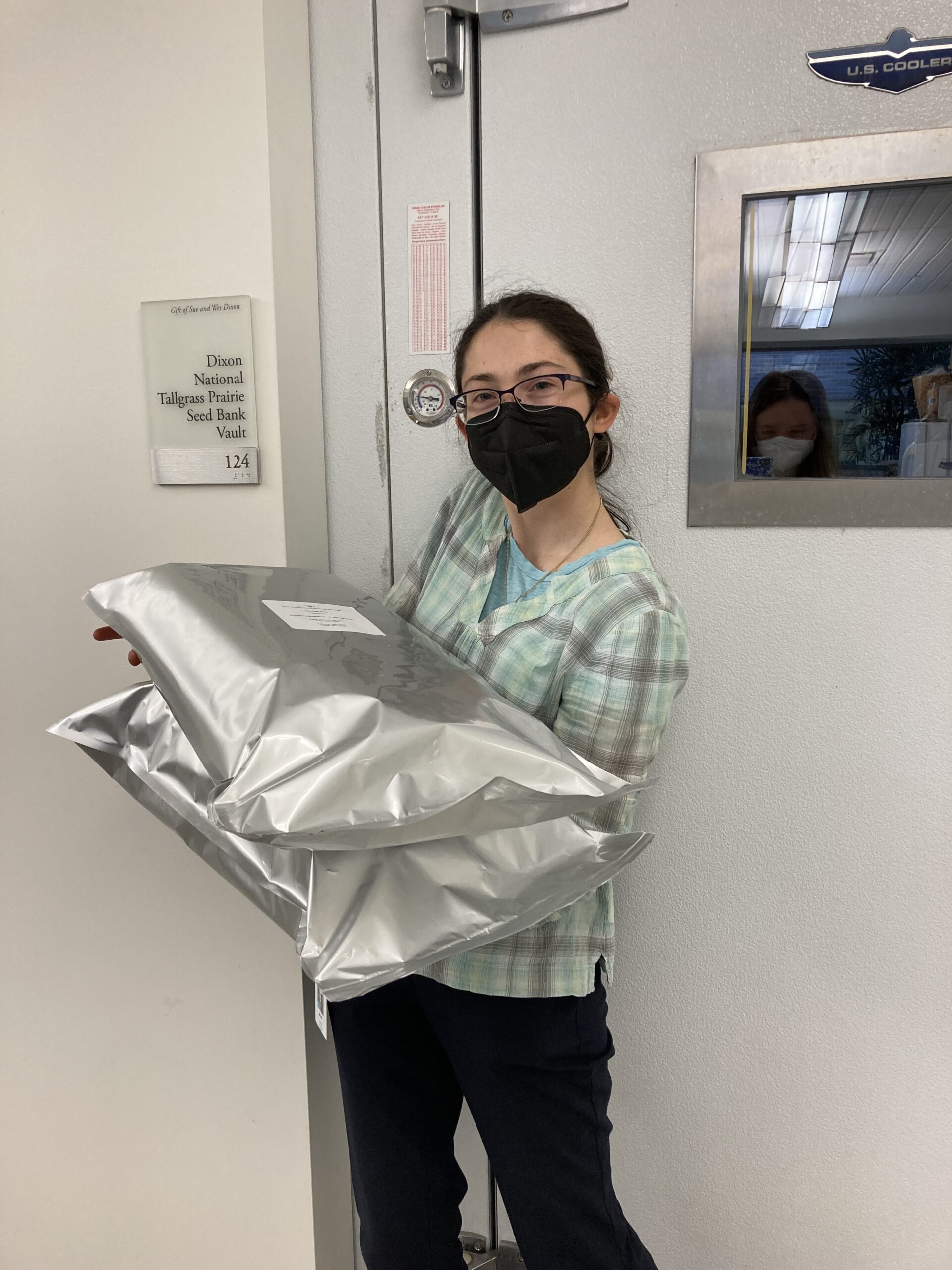
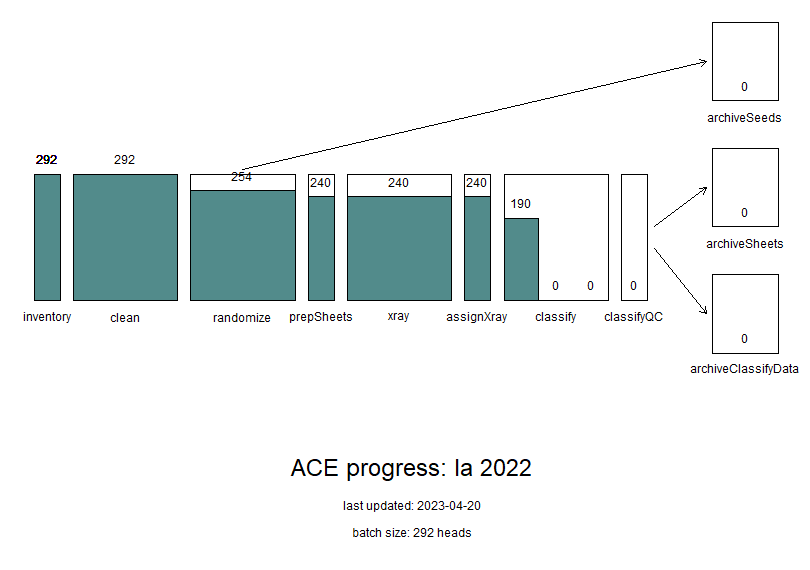
Congratulations, Team Echinacea! We are done processing all of the Echinacea heads that were harvested from prairie remnants in 2020, 2021, and 2022. On Thursday, I completed the final step of the ACE process: freezing. We want to preserve some remnant achenes for future experiments, so we stored them in the seed vault freezer at the Chicago Botanic Garden. They are now documented in the seed bank database. Here’s a summary of the remnant Echinacea stored in the freezer:
2020 and 2021: X-ray sheets (random sample of informative achenes) for all heads harvested in 2020 and 2021. Envelopes (achenes not part of random sample) for paired samples only.
2022: X-ray sheets and envelopes for all heads harvested in 2022.
With efficient packing, I was able to cram all of these achenes into two freezer bags. However, sealing the bags was definitely a two-person job. Echinacea from 2020 and 2021 are in one bag, and 2022 gets a bag all of its own. It feels very satisfying to wrap up these three years of data!
Stashing bags the freezerLook at these shiny bags! Do they contain astronaut food?
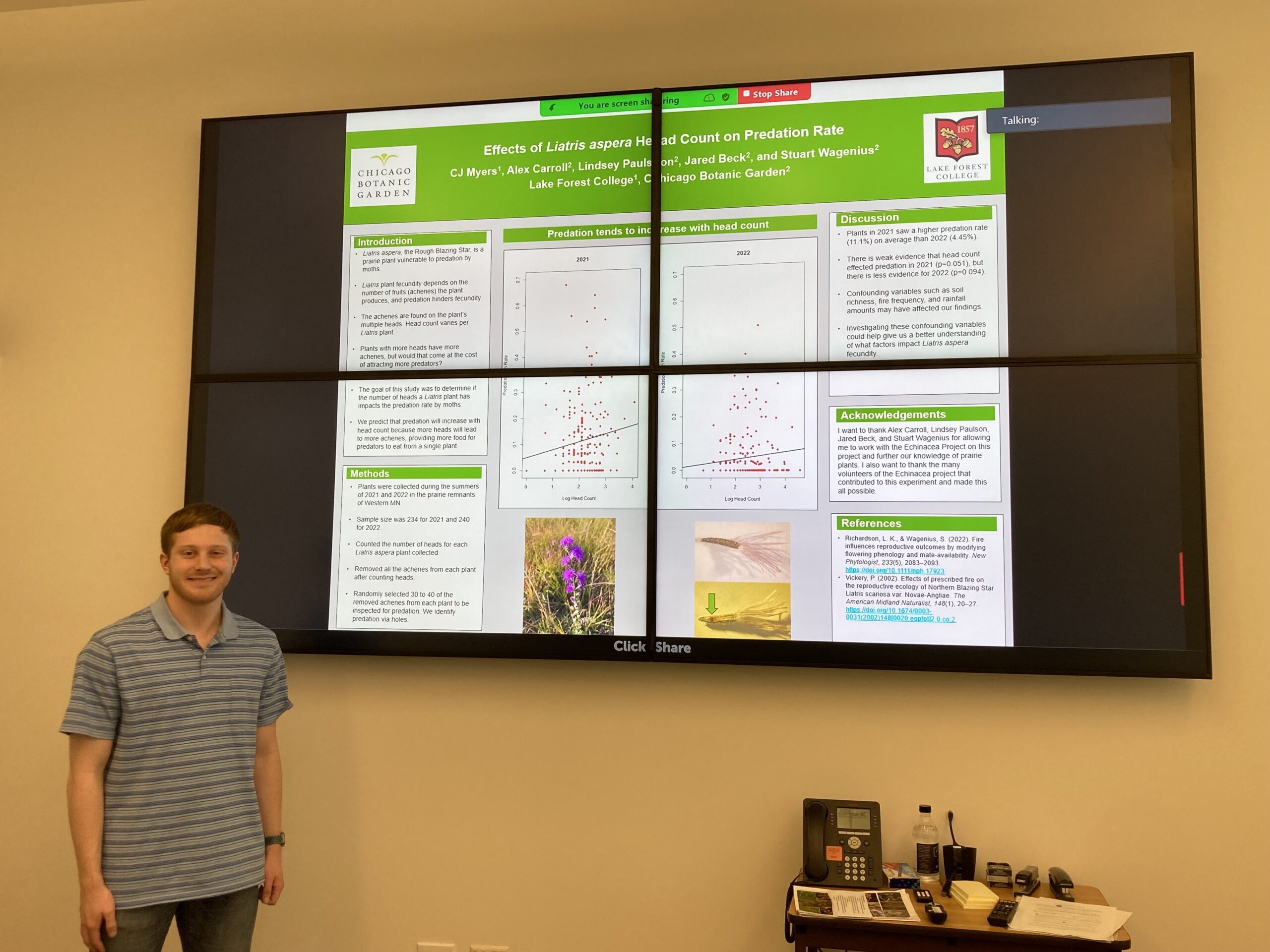
It has been an absolute pleasure getting to work on this project. After many weeks of hard work, I presented the final poster I made, going over the details and findings of everything we did to learn about how Liatris head count affects predation. We did find some evidence that there is an effect on predation rate based on headcount, but the evidence itself was not strong enough. We did fail to reject the null hypothesis, but that did not discourage me from thinking about other things that could have impacted the results we found. I mentioned that confounding variables such as soil richness, fires, and rainfall may have affected our results, especially given the differences found between 2021 and 2022. These confounding variables are worth looking at, making me curious to learn more about how they influence Liatris.
With that, there is so much to learn still, and it does not only apply to Liatris. Other prairie plants, such as the Big Bluestem (Andropogon gerardii) and Milkweed (Asclepias viridiflora), are being looked at by the Echinacea Project, and there is so much to learn about them. Keep up the excellent work with what you do, and most importantly, keep learning how to protect our precious prairie ecosystems and plant species. You are their only hope!
Lastly, I enjoyed getting to know all of you and learned a lot while I was here. Conservation science has been something I have always been interested in, so having the opportunity to research prairie plants was something special. I want to thank Stuart Wagenius, in particular, for letting me intern here and learn the ways of scientific research in a professional setting. I look forward to hearing what comes next from the project, and I sincerely thank you!
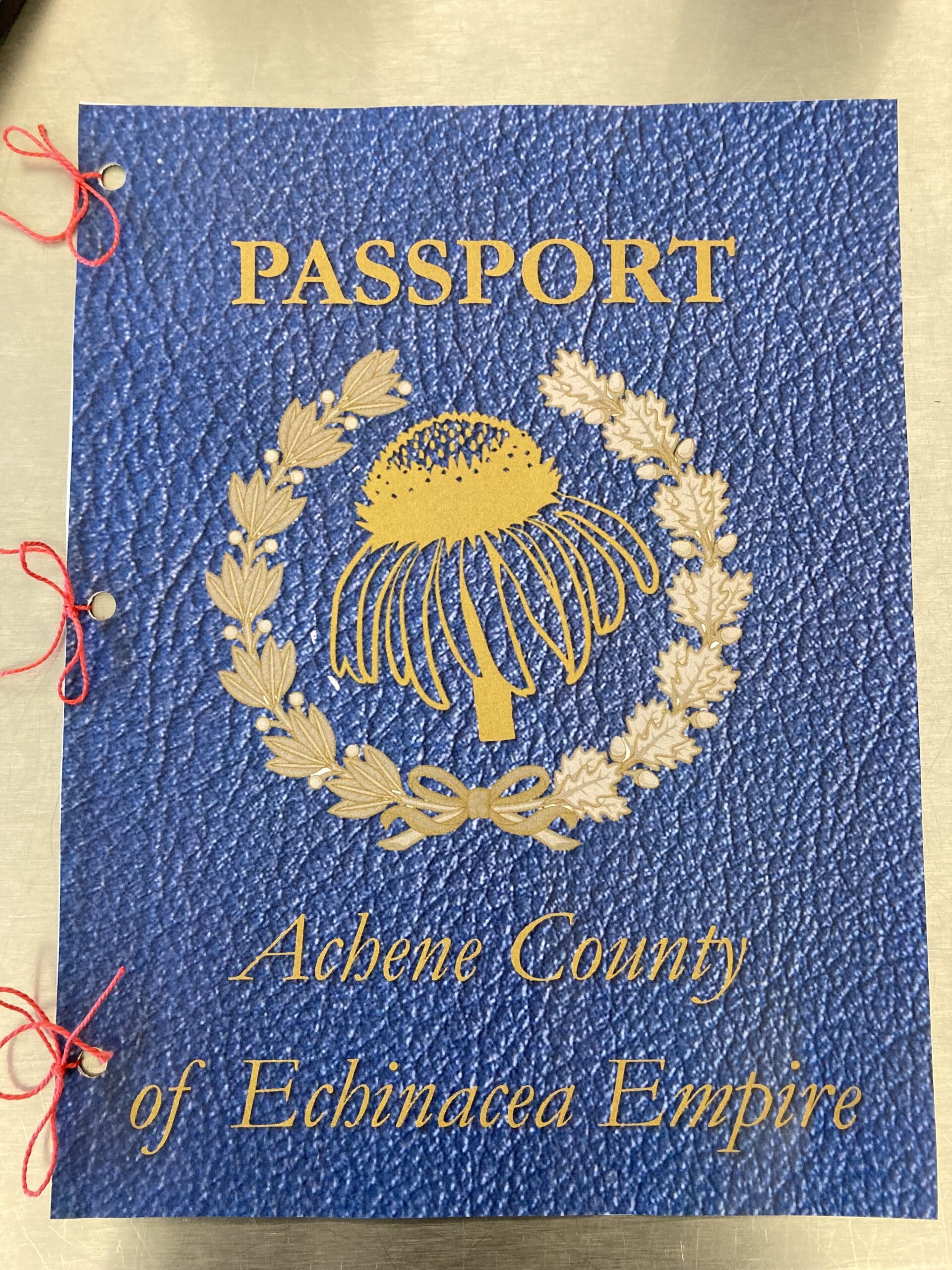
The lab was buzzing today as we bee-stowed Mike, one of our loyal volunteers, with an official Achene County of Echinacea Empire Passport! This celebration marks Mike’s return from Bee Land, where he has been residing since this past September.
The cover of an official Achene County passport. You’re a lucky citizen if you can get your hands on one of these.
For the past many months, Mike has been working tirelessly on pinning our bee specimens for the Yellow Pan Trap project. This project tracks the changes over 20 years in bee abundance and species composition along roadsides in western Minnesota. You can read more updates on the Yellow Pan Trap project here!
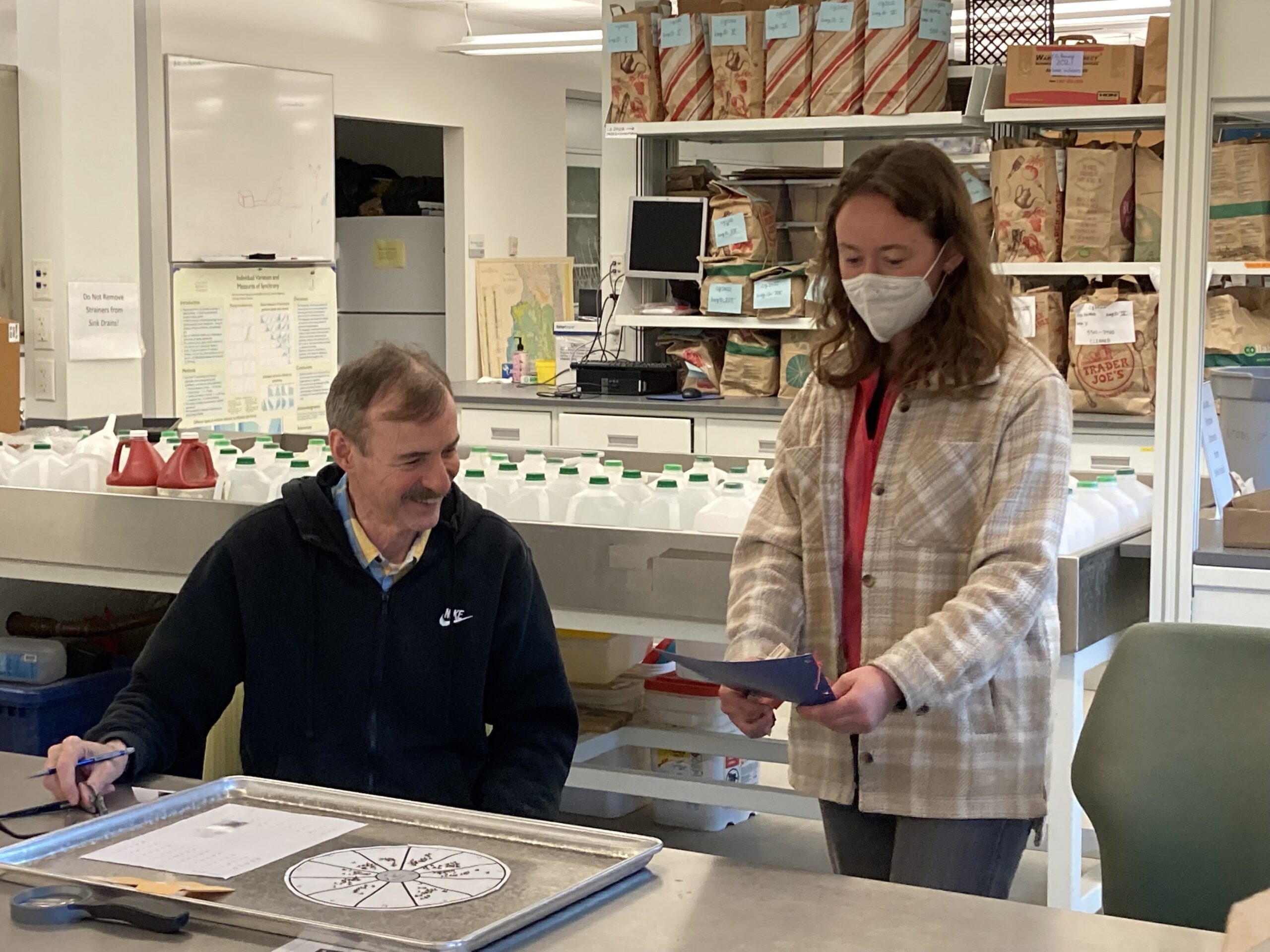
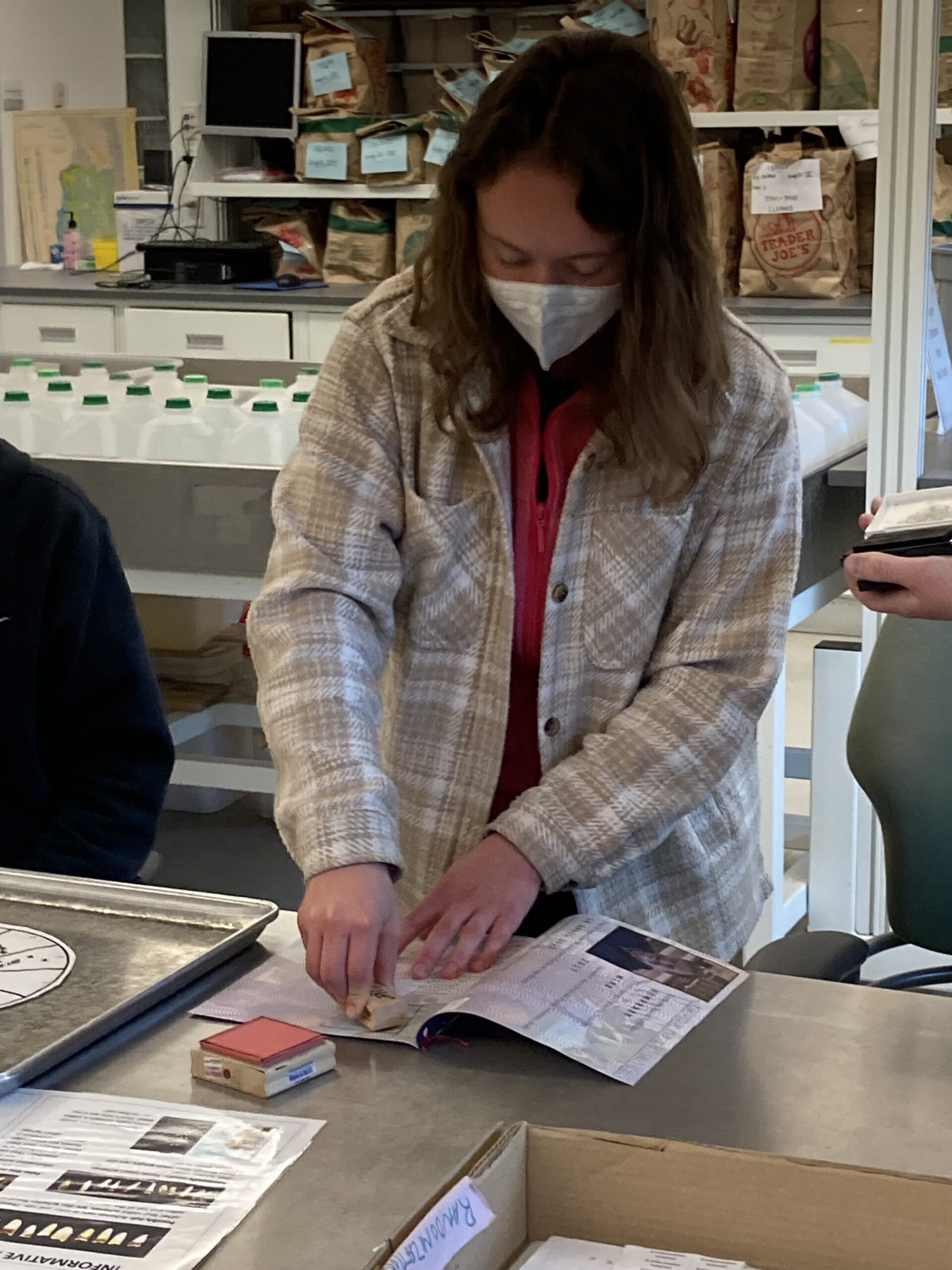
As Achene County’s Passport Specialist, I got to present Mike with his honor.Trying to keep a steady hand as I apply the official visa stamp.
Mike has been working on the samples we collected during the 2022 field season, and just a few weeks ago he finished pinning 789 bees! I can’t bee-lieve how many specimens that is!
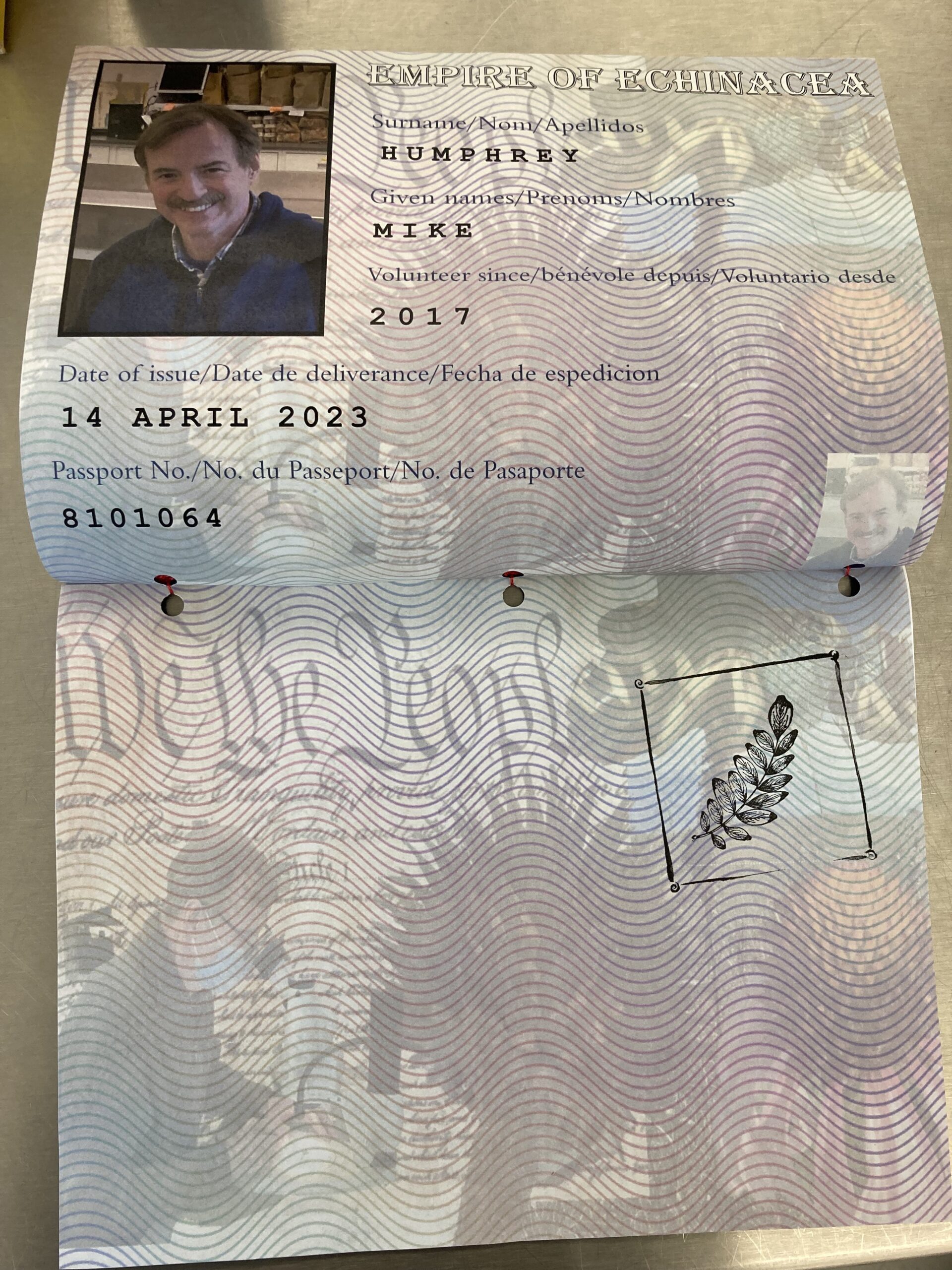
The contents of Mike’s passport after the official visa stamping. Please notice the subtle details of the Achene County watermark.
The pinning project required steady hands, an attention to detail and the extensive knowledge of bee identification; all characteristics that Mike has! He spent many hours with the microscope sifting through vials of insects.
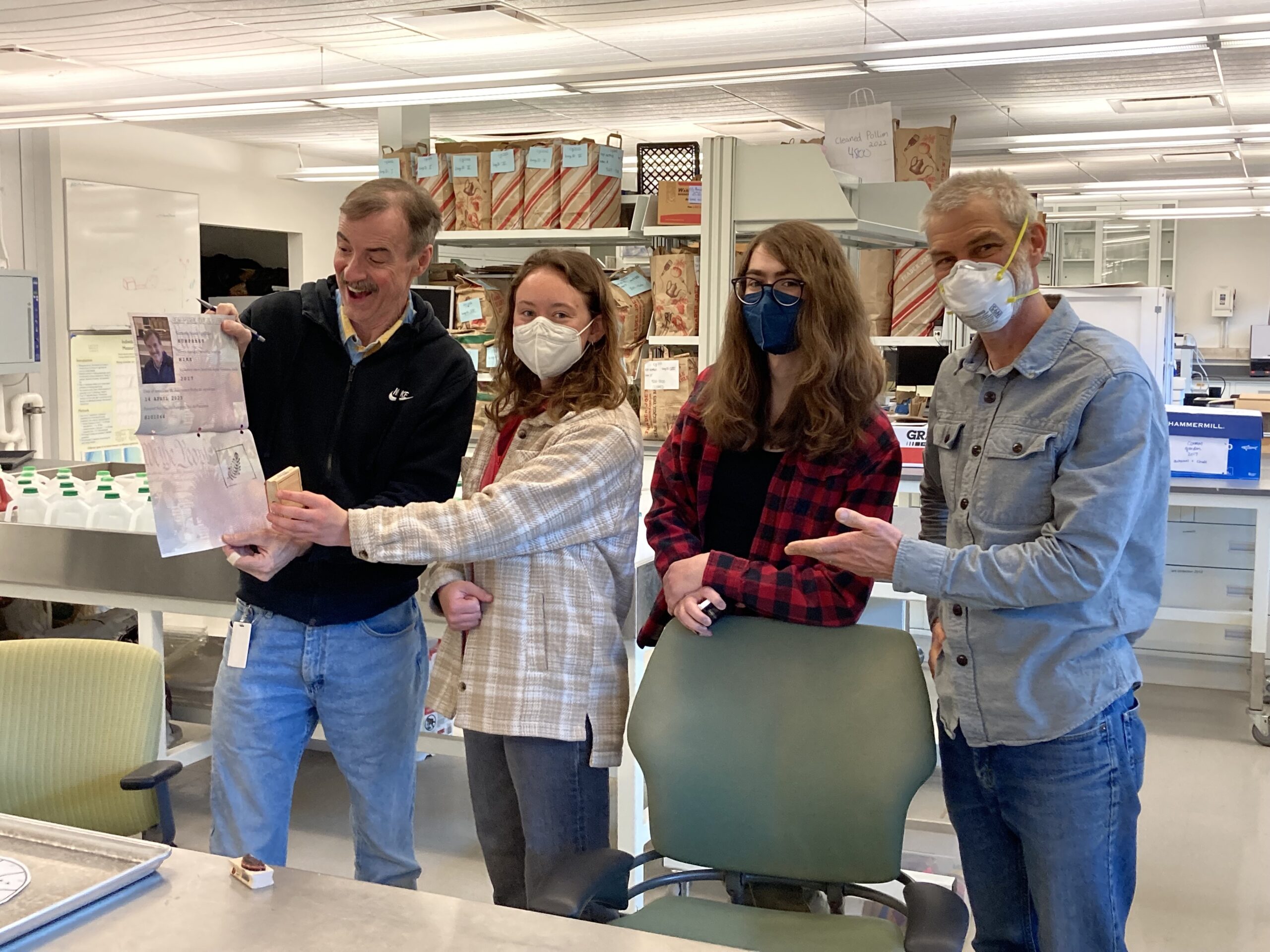
From left to right: Mike (elated recipient), me (Lindsey, honored stamper), Wyatt (talented ink pad bearer), and Stuart (head of Achene County, striking a Vanna White-esque pose).
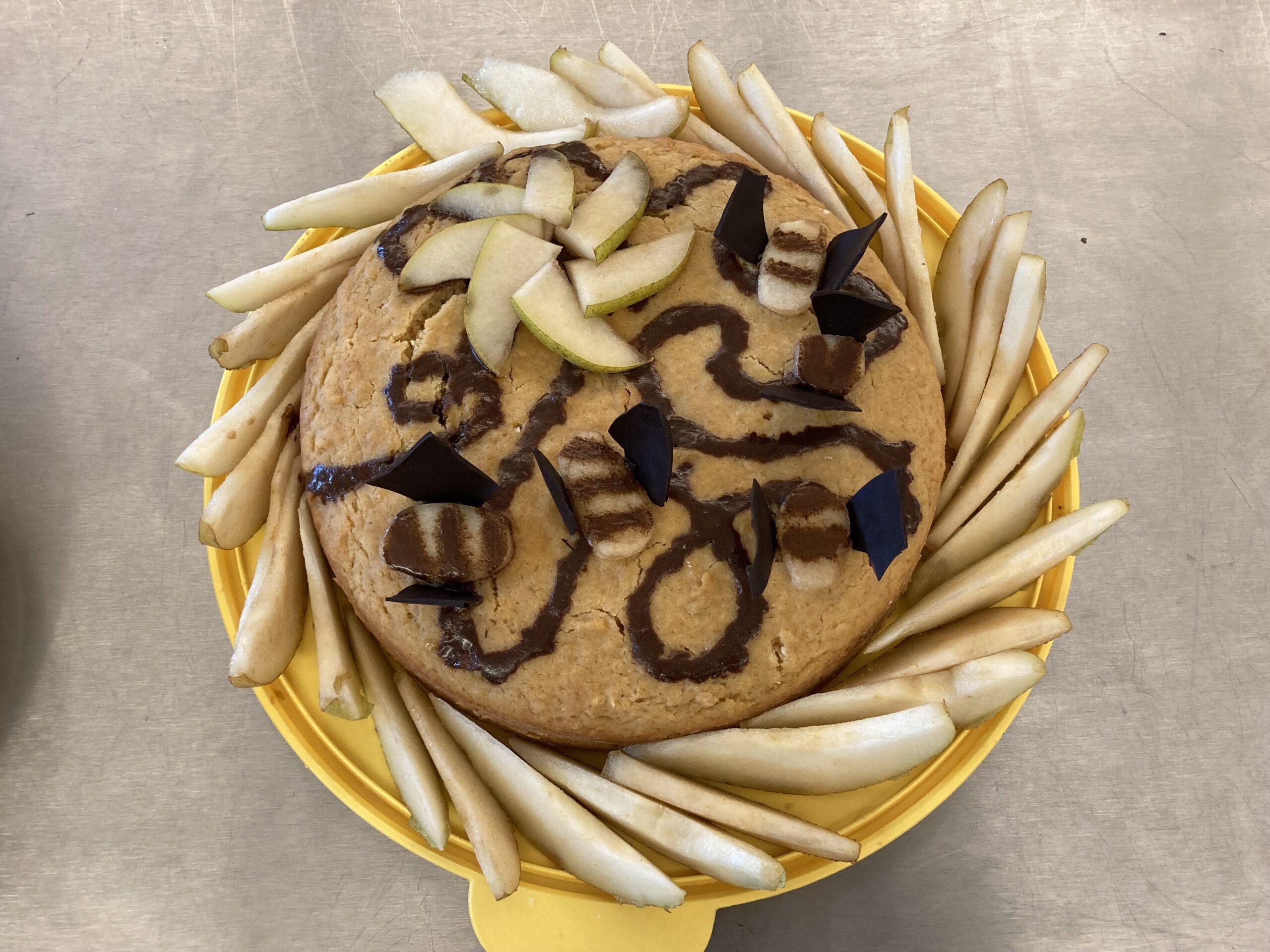
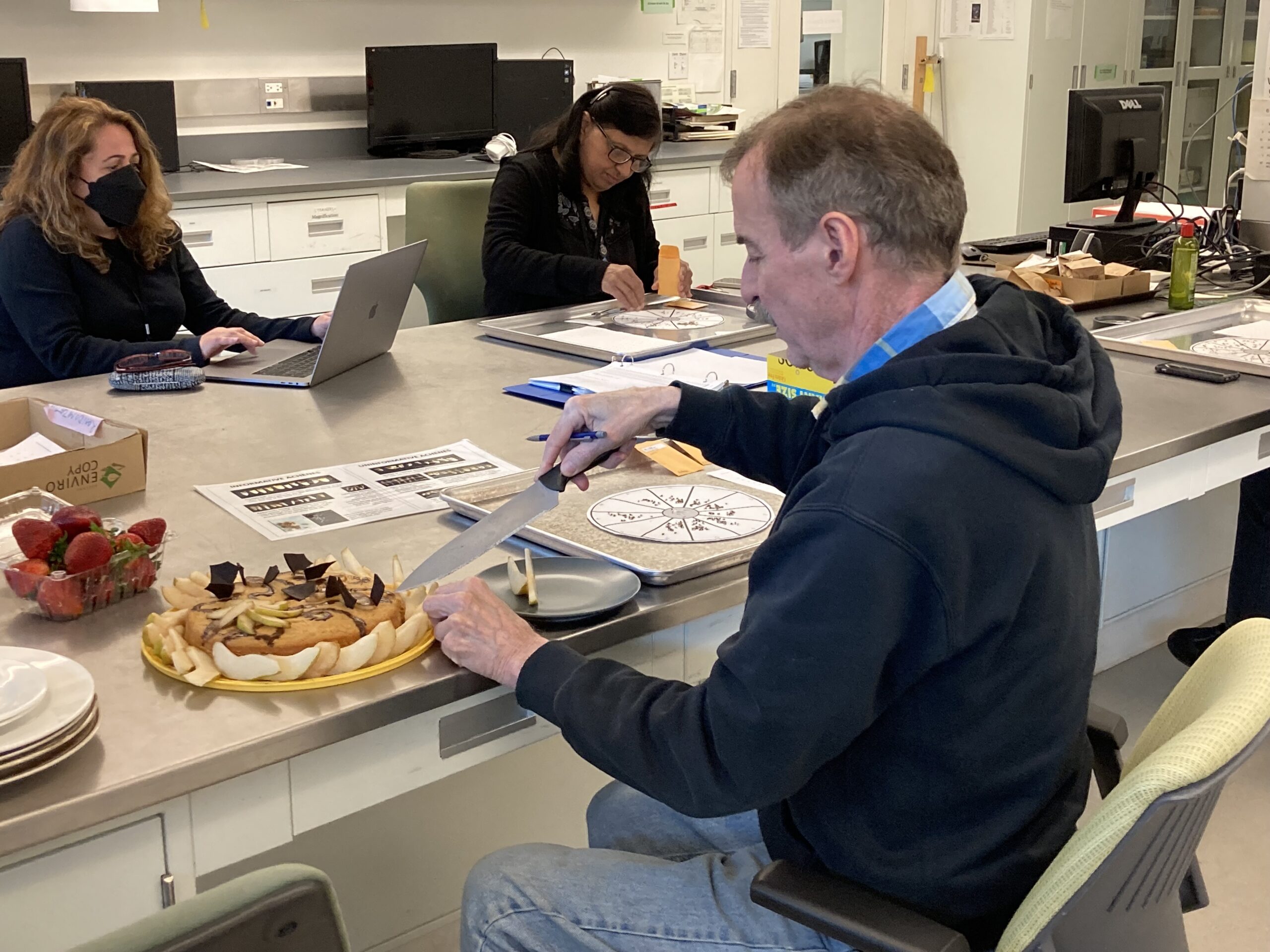
No Achene County celebration is complete without, you guessed it, a sweet treat! The most famous baker in all the land, Alex, crafted a beautiful honey cake drizzled with chocolate and surrounded by pear slices. The ornamental bees on the top of the cake are made up pears (for the body) and dark chocolate shards (for the wings).
I could drone on and on about how good this cake was. It almost made we want to do a waggle dance, but that felt inappropriate given the species of bees we collect.
We are so excited that Mike is no longer a solitary worker bee! We are also excited to send all of Mike’s specimens over to Zach at the University of Minnesota for identification.
The slicing of the cake for all citizens to enjoy. The cake looks particularly similar to our randomizing wheel pictured below Mike’s arm. Coincidence? You tell me.
If you get the chance, please welcome back Mike to the Echinacea hive!
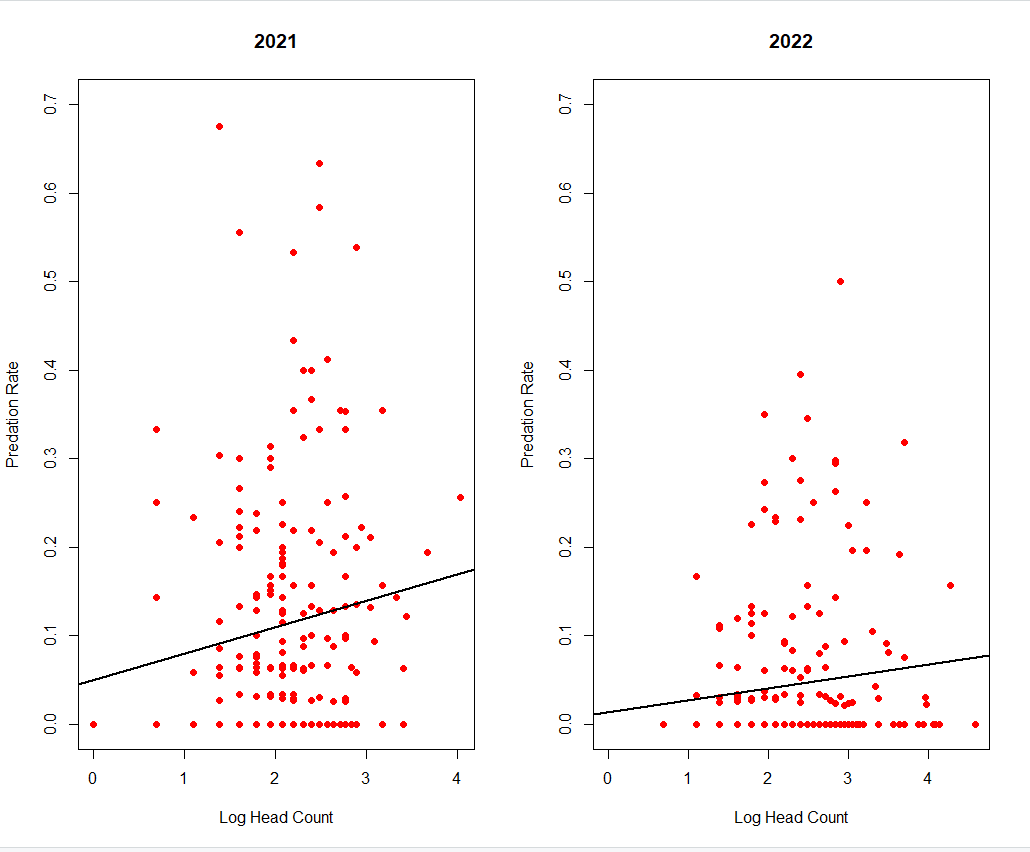
Remember when I talked about only having three batches to work with for the 2022 Liatris data? That is now no longer the case. Thanks to several volunteers continuing to chip away at the remaining Liatris plants in 2022, batch four got officially completed last week. Now with the newly completed batch, I managed to update 2022’s Liatris data in the figure above. It might not be noticeable just by looking at the graph, but the slope and p-values changed quantitatively. The p-value for 2022 now sits at roughly 0.09, which is better than what we had prior (I think it was 0.16 if I remember correctly). However, that is still not as good as 2021’s data, and that data still holds the better slope between the two. Outside of adding the fourth batch, I also tweaked the graphs to be more easily read and understood. I added some color to the data points, reworded the axes, and made the linear regression line bolder for all of you to see better. Overall, these were the updates I have to share with you, but I also wanted to inform you that I have started the process of creating the final poster. Over the course of this week, I will focus primarily on completing the poster, and I hope to have it ready to go by the last week of April. I will be presenting it to you all on April 27th (subject to change), so I hope you look forward to it. It has been quite a journey for this project, but it sure has been an interesting one, to say the least.
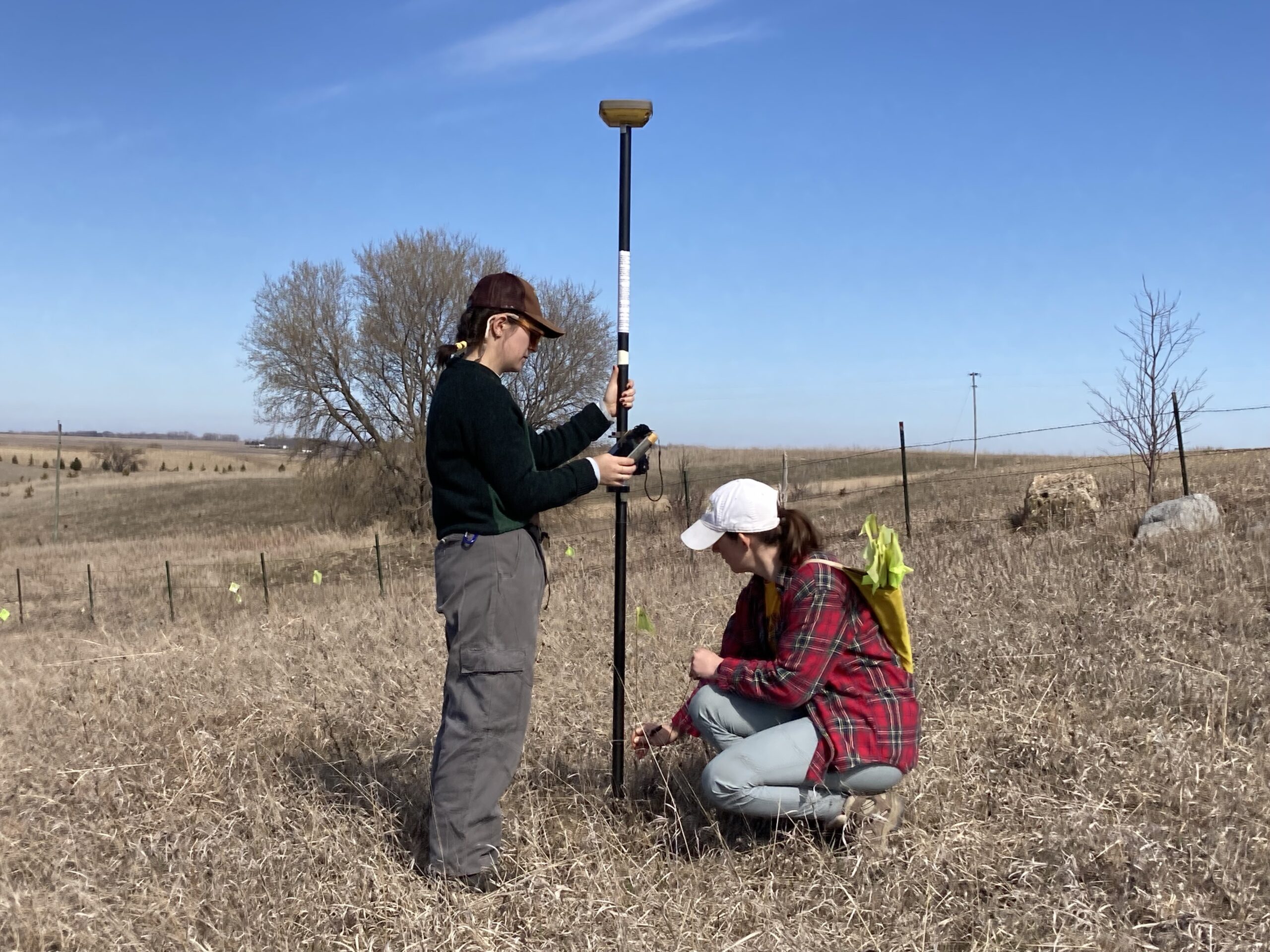
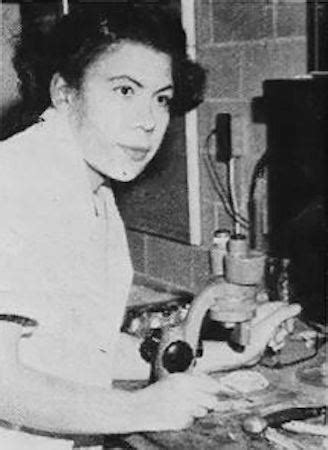
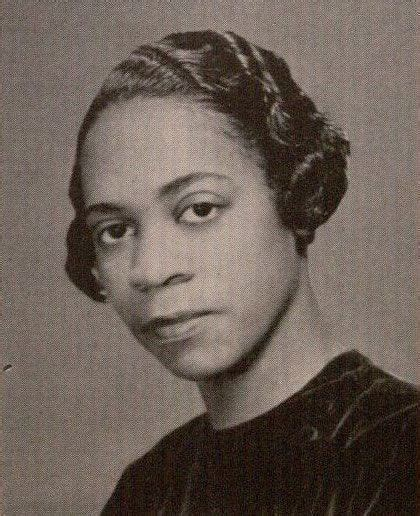
During the summer, we use two high-precision Topcon GPS units to map thousands of flowering Echinacea plants. Our GPS units are named Collins and Taylor, after two inspiring female scientists.
Dr. Margaret S. Collins
first Black woman to hold a PhD in entomology
researched defense mechanisms in termites
nicknamed the “Termite Lady”
civil rights activist
Dr. Marie Clark Taylor
first Black woman to hold a PhD in botany
researched photomorphogenesis, how light affects plant development and flowering phenology
developed high school science curriculum now used across the US
her curriculum promoted the use of real plants and microscopes in the classroom
Dr. Collins and Dr. Taylor were friends in real life, just like our GPS units that are often in the field together!