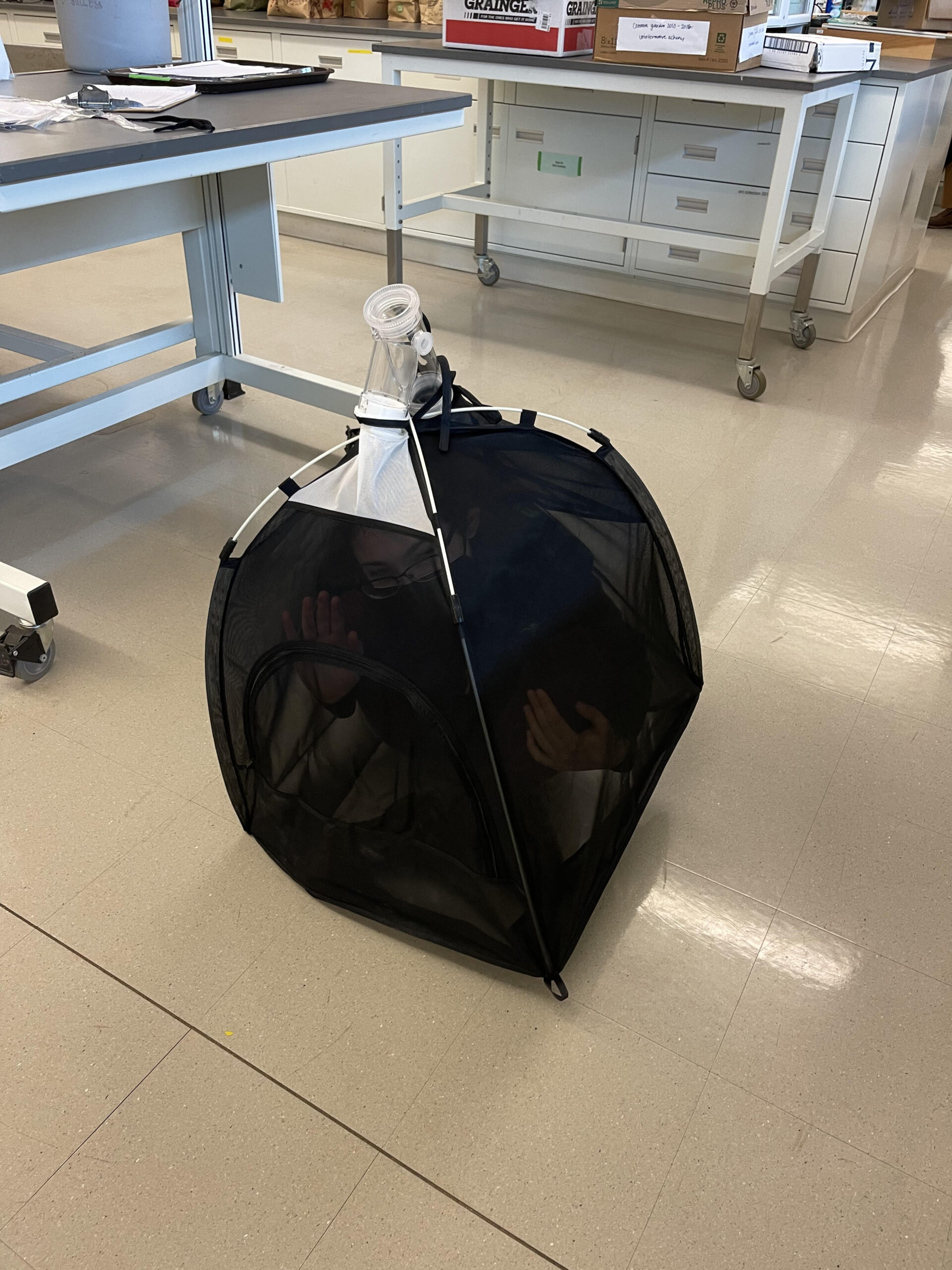
Two large packages arrived on the doorstep of the Chicago Botanic Garden this week containing 40 (yes, 40!) brand new emergence traps! This summer, we are conducting research on the impacts of prescribed fire and fragmented patch size on ground-nesting bees. This new research is funded by ENRTF!
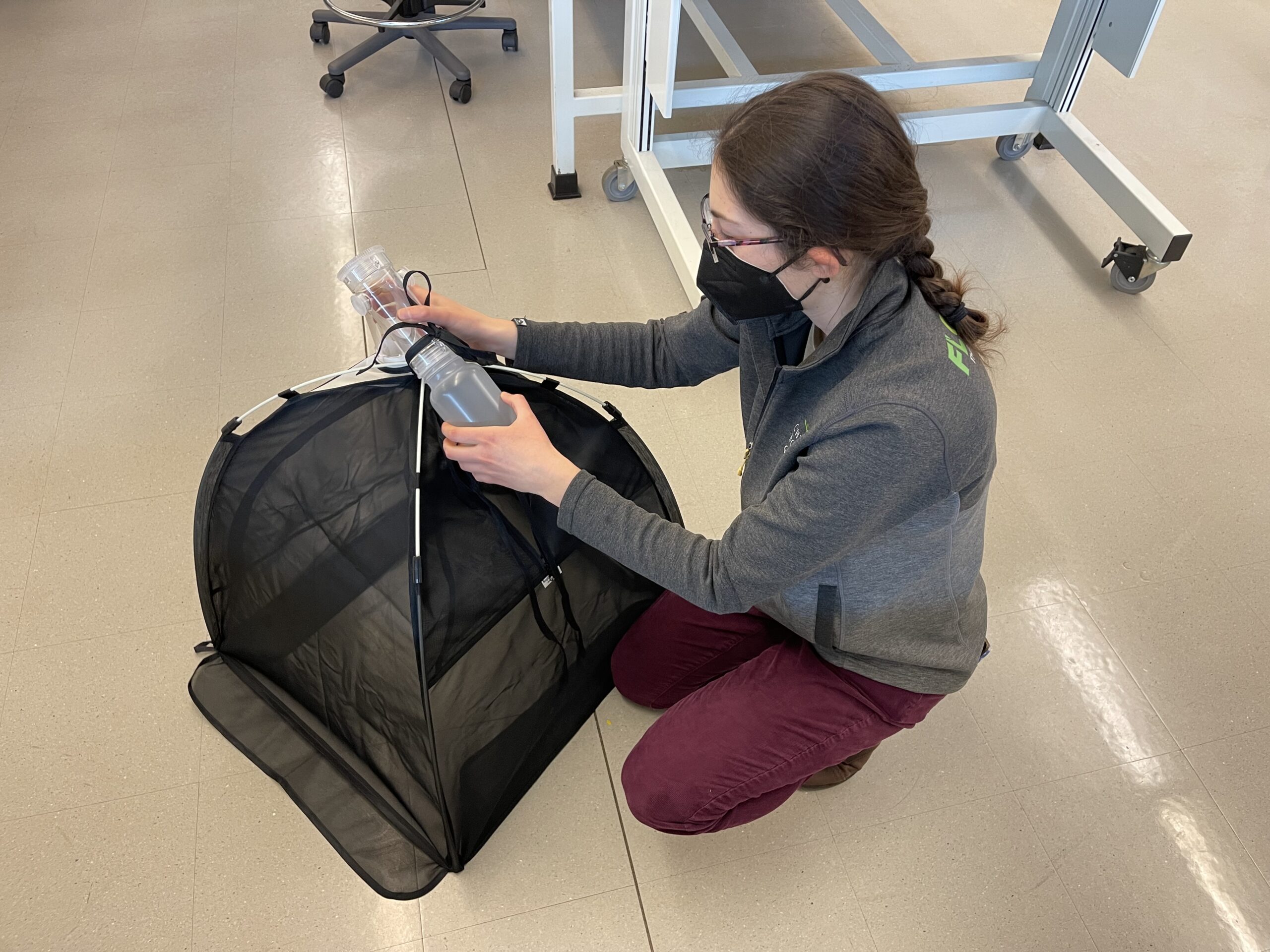
To make sure the emergence traps were functional, Alex and I decided to assemble one in the lab. The assembly was fairly easy, but we noticed that there were some plastic pieces that connected two fiberglass rods that may fall off or get lost easily; sounds like a job for some super glue! We also realized we will need to purchase a heavy object, like a chain, to lay around the base of the emergence trap to prevent it from flying away in the wind!
Looks like we caught someone already!Alex assembling the collection head and bottle, sans killing agent.
Last week, the Chicago Botanic Garden ended their annual orchid show and opened up all their plants for purchase to garden members and employees! Alex and I ventured to the sale at 10 am last Thursday to find a long, looping line that weaved throughout the Regenstein center. We waited about 25 minutes to reach the beginning of the line. We were not prepared for the carnage we were about to witness.
Elbows were flying, emotions were high, plants were abundant. There was a good deal on tiny Phalaenopsis, 2 for $10. At one point, a man tried to purloin Alex’s beautiful orchid while she went to return a shopping basket, and I had to protect the plant from danger. Alex described the ordeal as “a mad house” and “chaos”, and I definitely agree with that assessment.
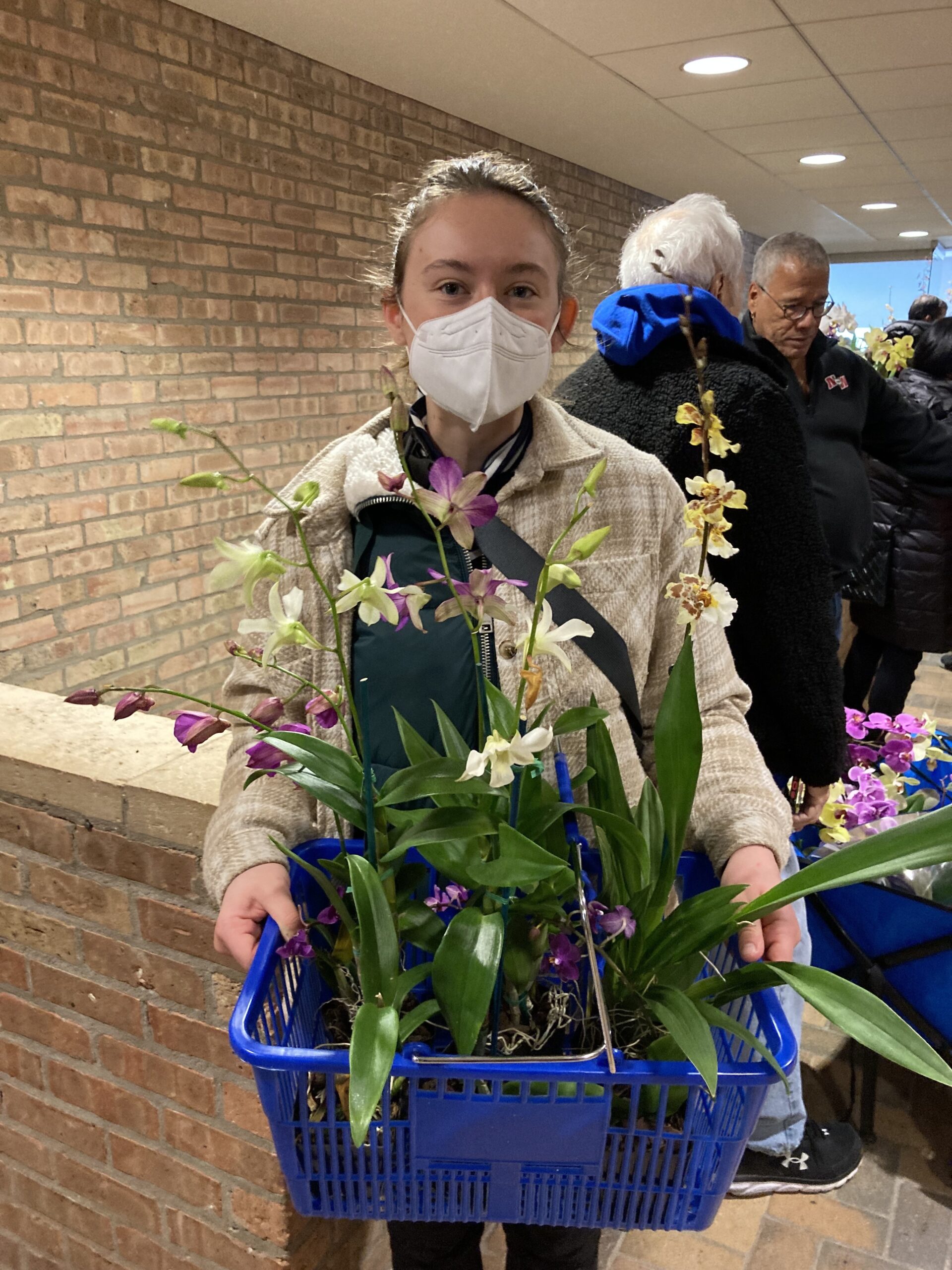
You can’t tell, but I’m smiling REALLY big because of my orchid purchases.
Nobody tell Jared, but I walked (or, more like ran) out of there with 7 orchids (some to give to family and friends, and one or two for myself). Alex ended up with 3 stunning orchids as well!
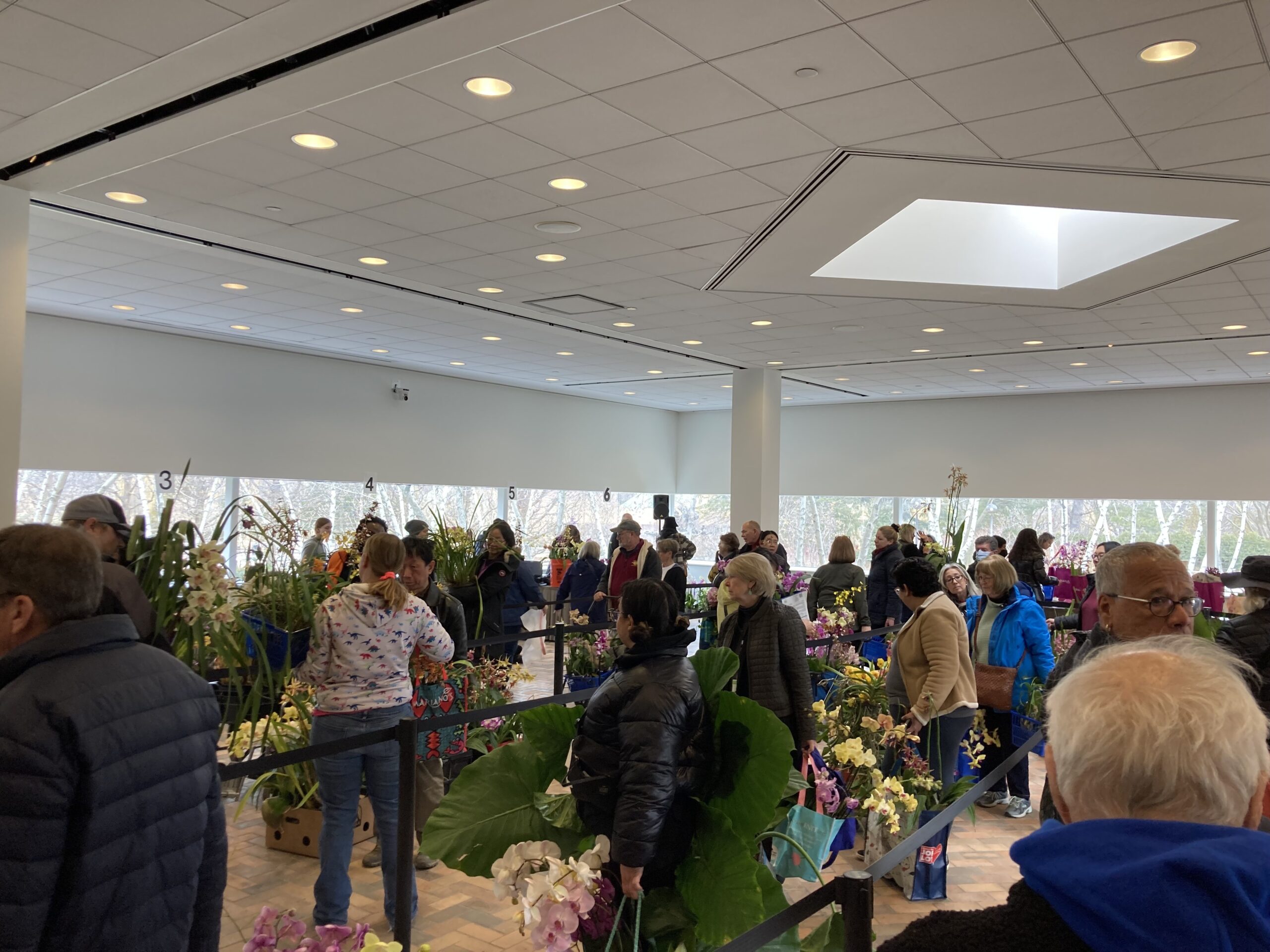
The line to check out was slightly calmer, though equally as long as the line to enter the sale. Many people were becoming agitated, having to wait in line and carry their heavy load of orchids. Alex noticed that each cash register had a number (as you can see in the photo below) and each number was a different font! How silly!
Calm after the storm (sort of) while waiting in line to purchase our orchids.
For anyone wanting to brave the orchid sale in future years, my only advice is to prepare for battle.
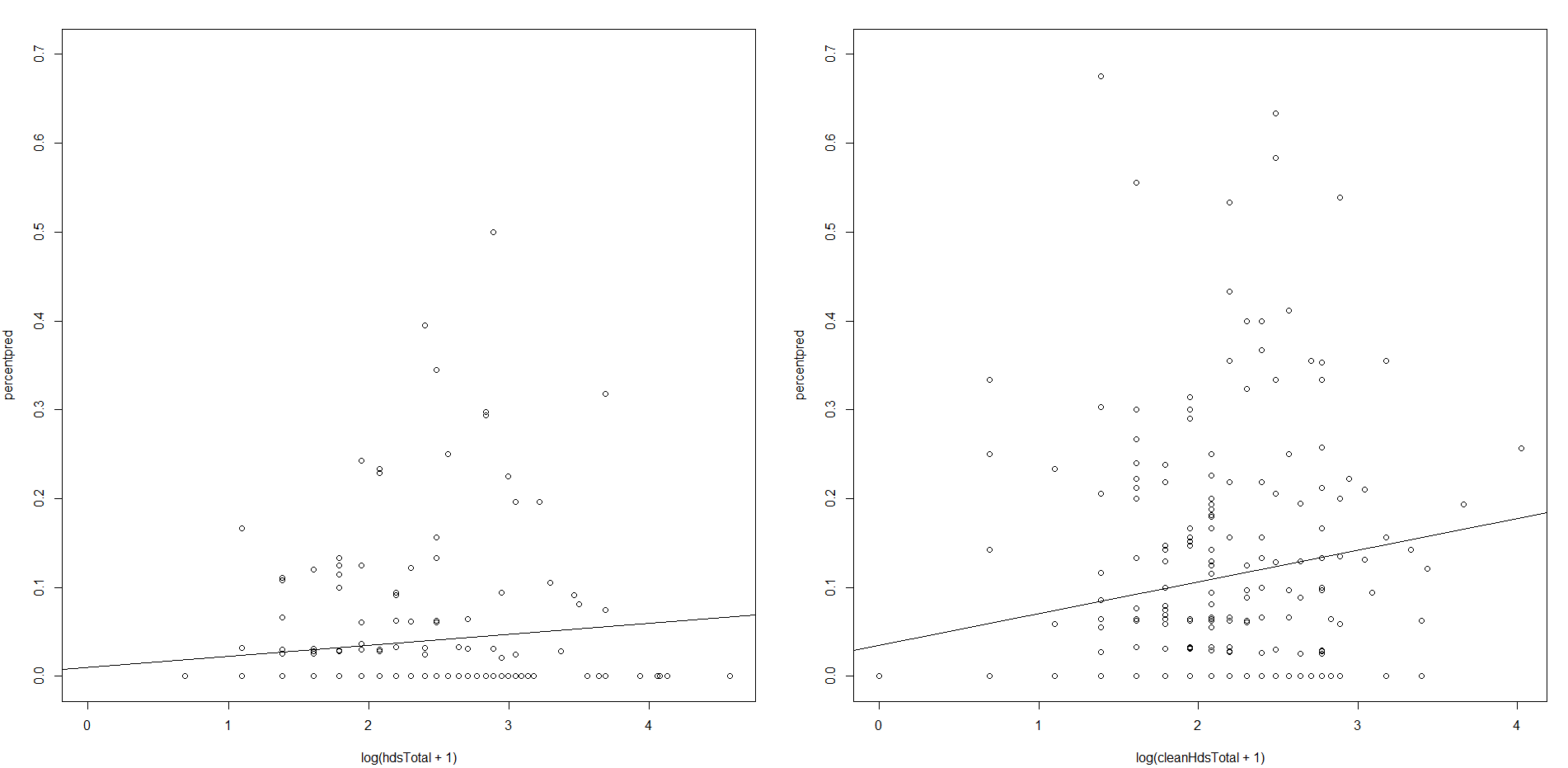
We have data! So far, we have seen some fascinating results from the 2022 data we worked on over the past 6-7 weeks and the 2021 data collected last year. The data shown above is still in its preliminary stages, and there is still some additional work to be done, but we can make out some things with what we got so far. First, 2022’s data is on the left, and 2021’s is on the right. Comparing the two, we did find that the predation rate, on average, was higher for the 2021 plants than those in 2022. We also created a linear regression line for both years to examine the correlation between headcount and predation rates. 2021’s data had a higher slope than 2022’s, meaning the data in 2021 had a more substantial representation of the predation rate increasing with a higher headcount than in 2022. Overall, these findings suggest that the plants in 2021 saw much more predation activity than those in 2022. With that in mind, it makes me wonder why predation rates are higher in 2021 than in 2022 and what the results would look like if we were to combine the data. This is only the beginning of our data collecting and interpretation, so I’m looking forward to learning more about the results we got and if we can reject the null hypothesis in the end. Note that the null hypothesis states no relationship between headcount and predation rate.
And hast thou pinned the pan trap bees? O frabjous day! Callooh! Callay!
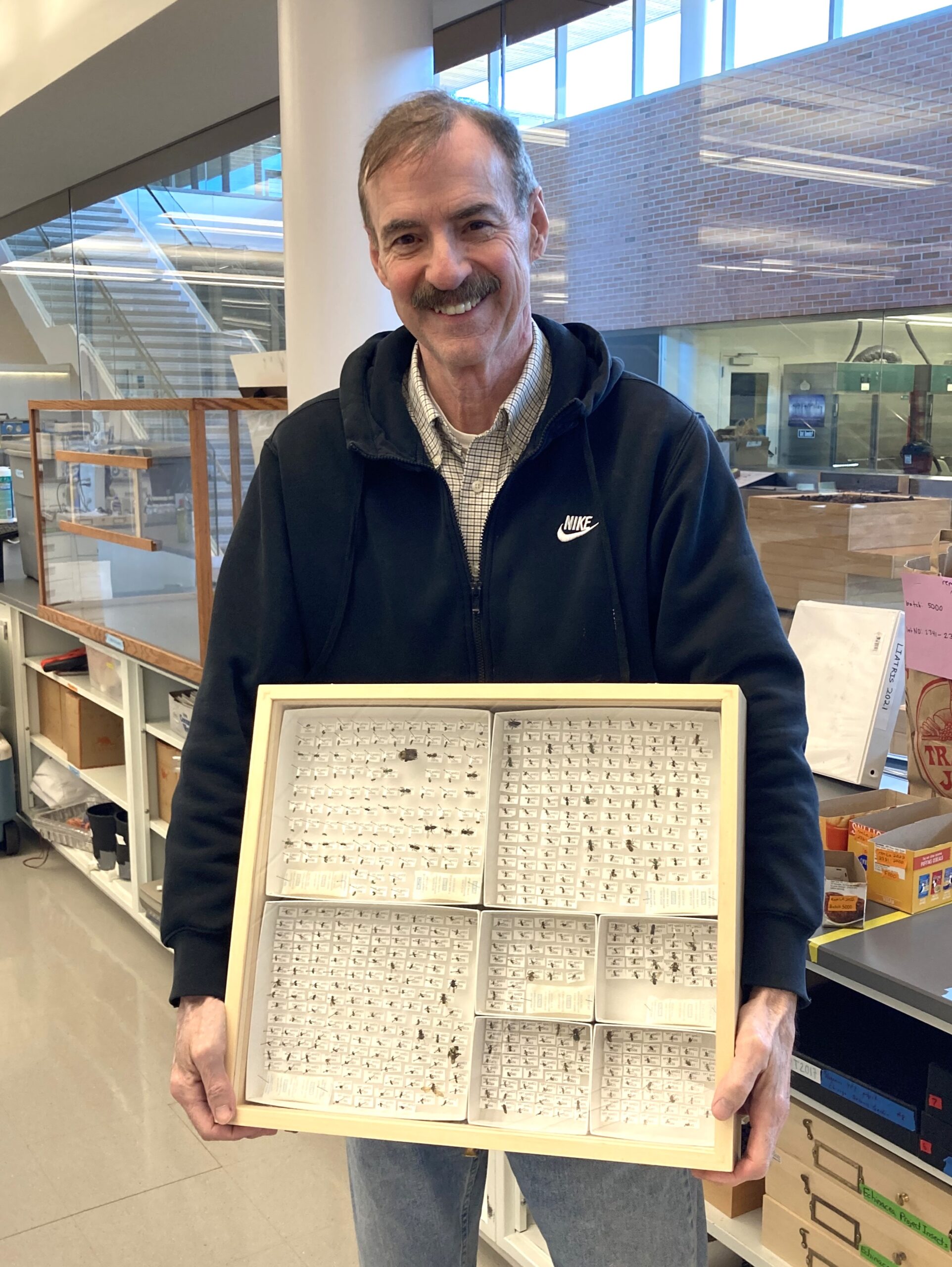
Today, Mike finished pinning all the bees that we collected in summer 2022 for the Pollinators on Roadsides (aka Yellow Pan Trap) project! We started out with seven coolers full of vials, and Mike has been diligently pinning pollinators since late September. In total, he pinned 789 insects! We are very grateful for his help.
The next step is to add informative labels to record collection date and location for each specimen. Then, we’ll send the bees to Zach Portman, the bee taxonomist at the University of Minnesota, for identification. Overall, we collected more bees than I expected based on the last three years. I’m very curious whether there are any differences in species diversity between years. Stay tuned!
year
# bees collected
# traps
# collection days
avg # bees/trap/day
2004
591
20
7
4.2
2017
552
40
7
2.0
2018
430
37
6
1.9
2019
372
38
6
1.6
2022
789
39
7
2.9
Funding for this project was provided by the Minnesota Environment and Natural Resources Trust Fund as recommended by the Legislative-Citizen Commission on Minnesota Resources (LCCMR). The Trust Fund is a permanent fund constitutionally established by the citizens of Minnesota to assist in the protection, conservation, preservation, and enhancement of the state’s air, water, land, fish, wildlife, and other natural resources.
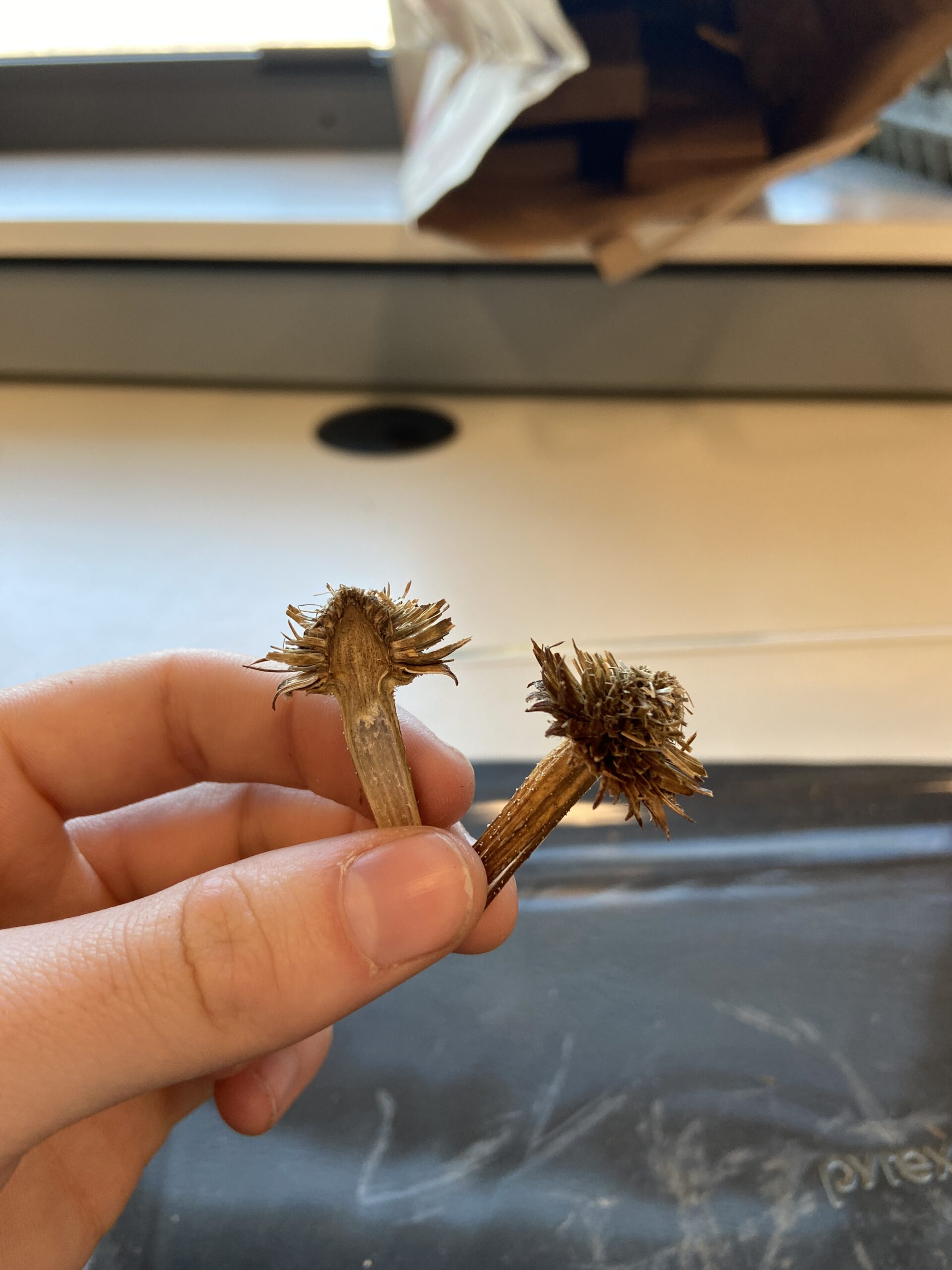
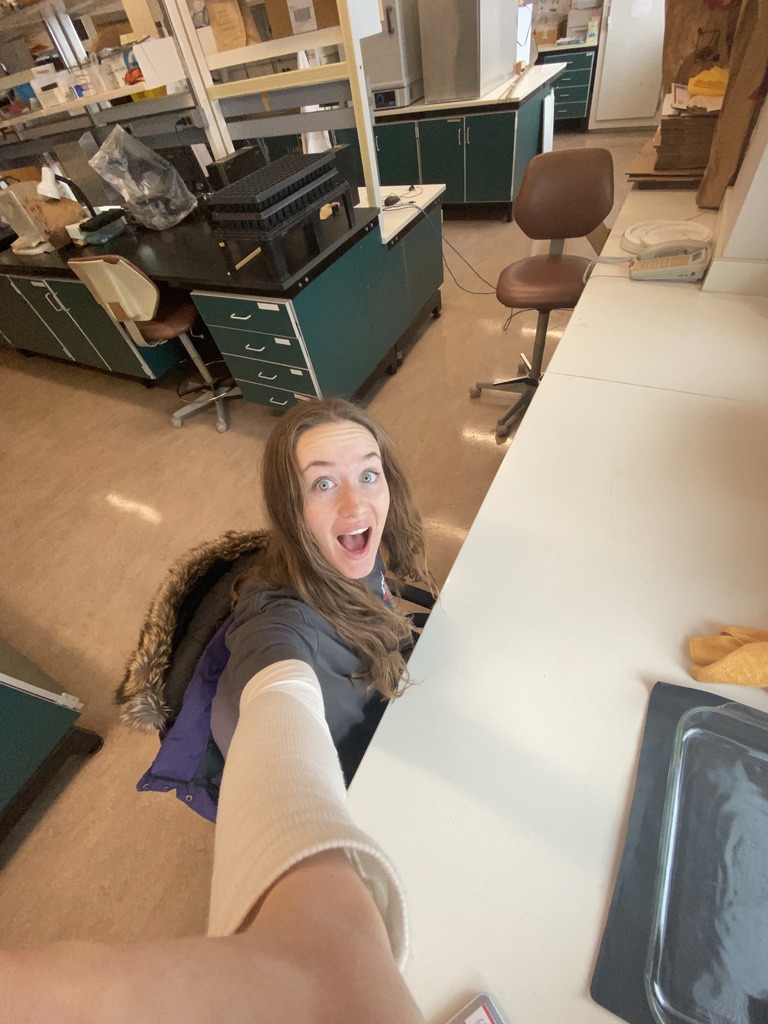
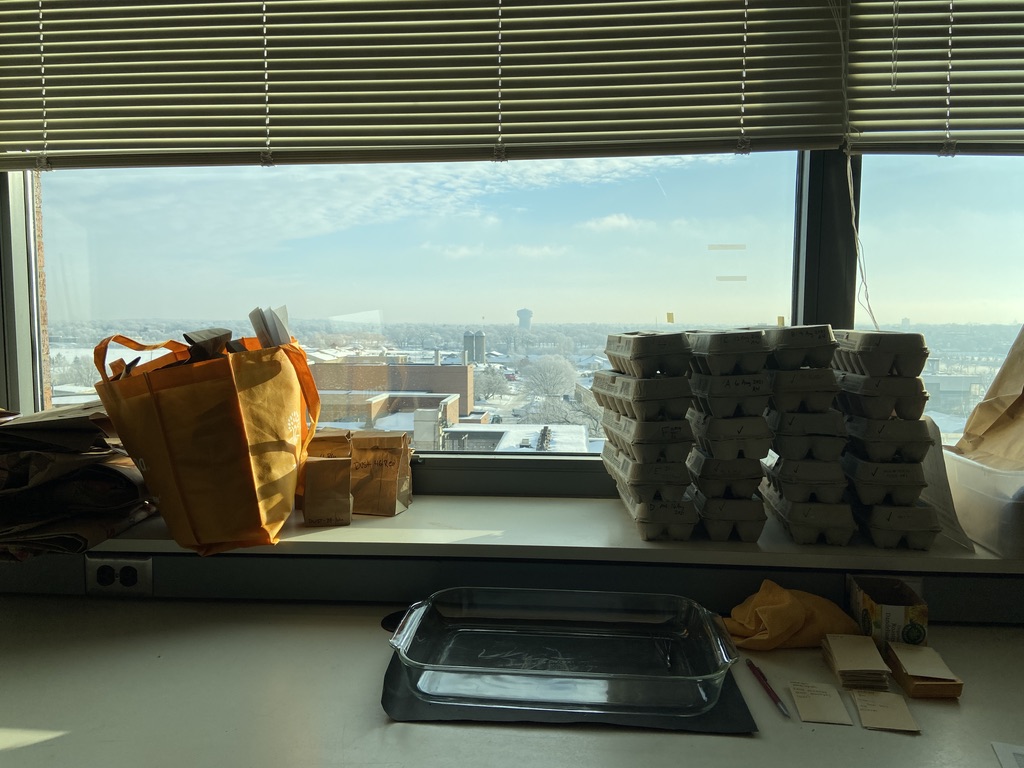
This semester at school (University of Minnesota Twin Cities), I have been continuing the Dust Project I was working on over the summer. From the work this summer, I had collected 64 heads of Echinacea angustifolia that were then brought down to the Twin Cities for me to continue working on. Just recently, I finished cleaning them (many lovely mornings were spent on the St. Paul Campus, I was lucky enough to have a window in front of the counter I was working at). While it felt a little weird to see the flowers after hiking through a blizzard, it was exciting to see a little bit of the results from this summer’s hard work. There was one head that decided to split down the middle, I found that intriguing. It made me wonder whether something was living in it at one point, or if something else caused it to divide! Currently the heads are being mailed down to CBG to get x-rayed, then I will start the process of counting the full achenes to see if the dust made a difference in its reproductive success.
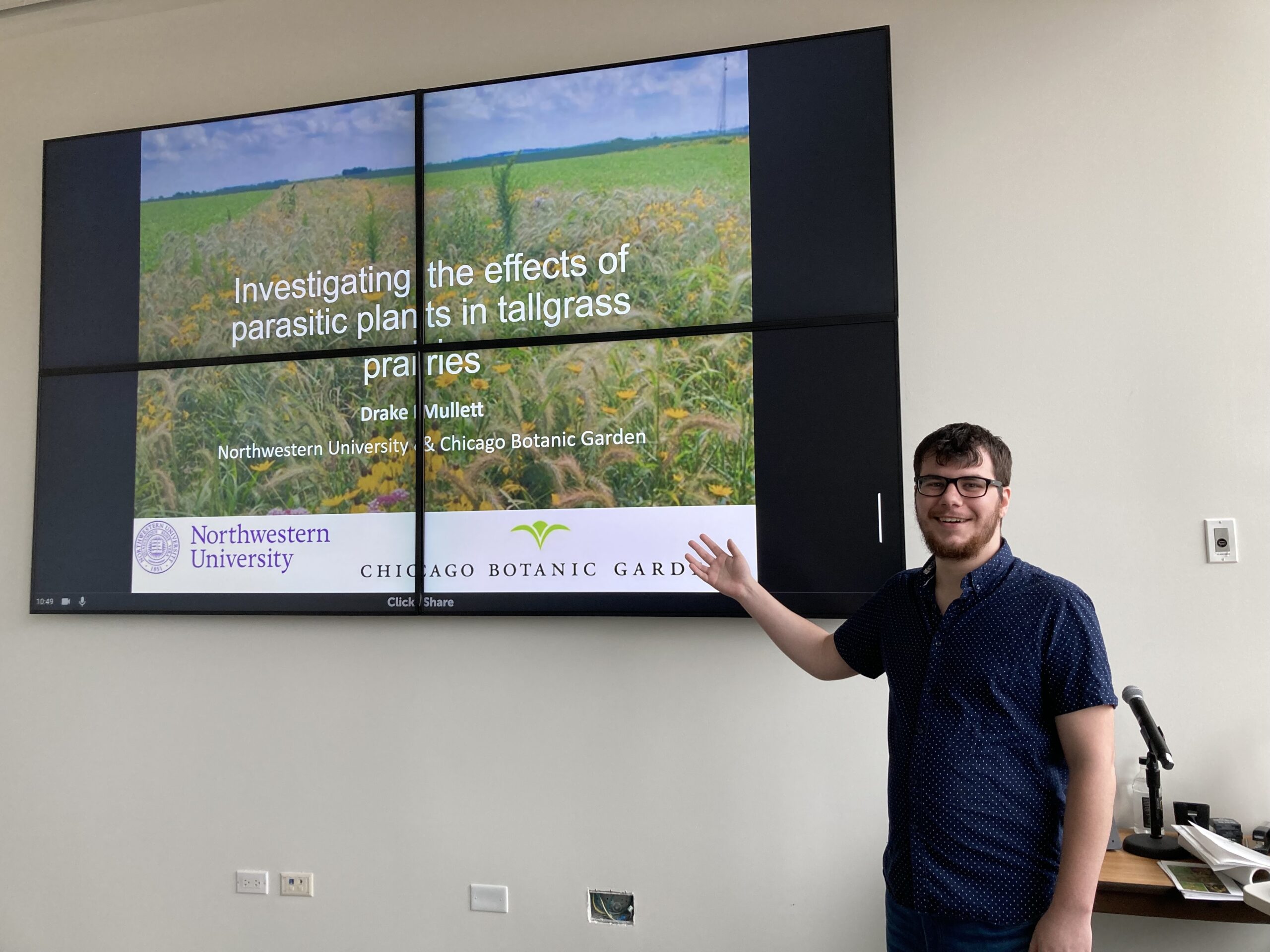
Today, Drake gave a great talk titled “Investigating the effects of parasitic plants in tallgrass prairies” for the Plant Science Department at the Chicago Botanic Garden. We enjoyed hearing an update on his research and peeking at some preliminary results! According to Lindsey, “The talk was pedicularily riveting and he really comandra’d the room. Drake is producing cuscuting-edge science. His research agalinis with broader conservation and restoration goals in the tallgrass prairie.”
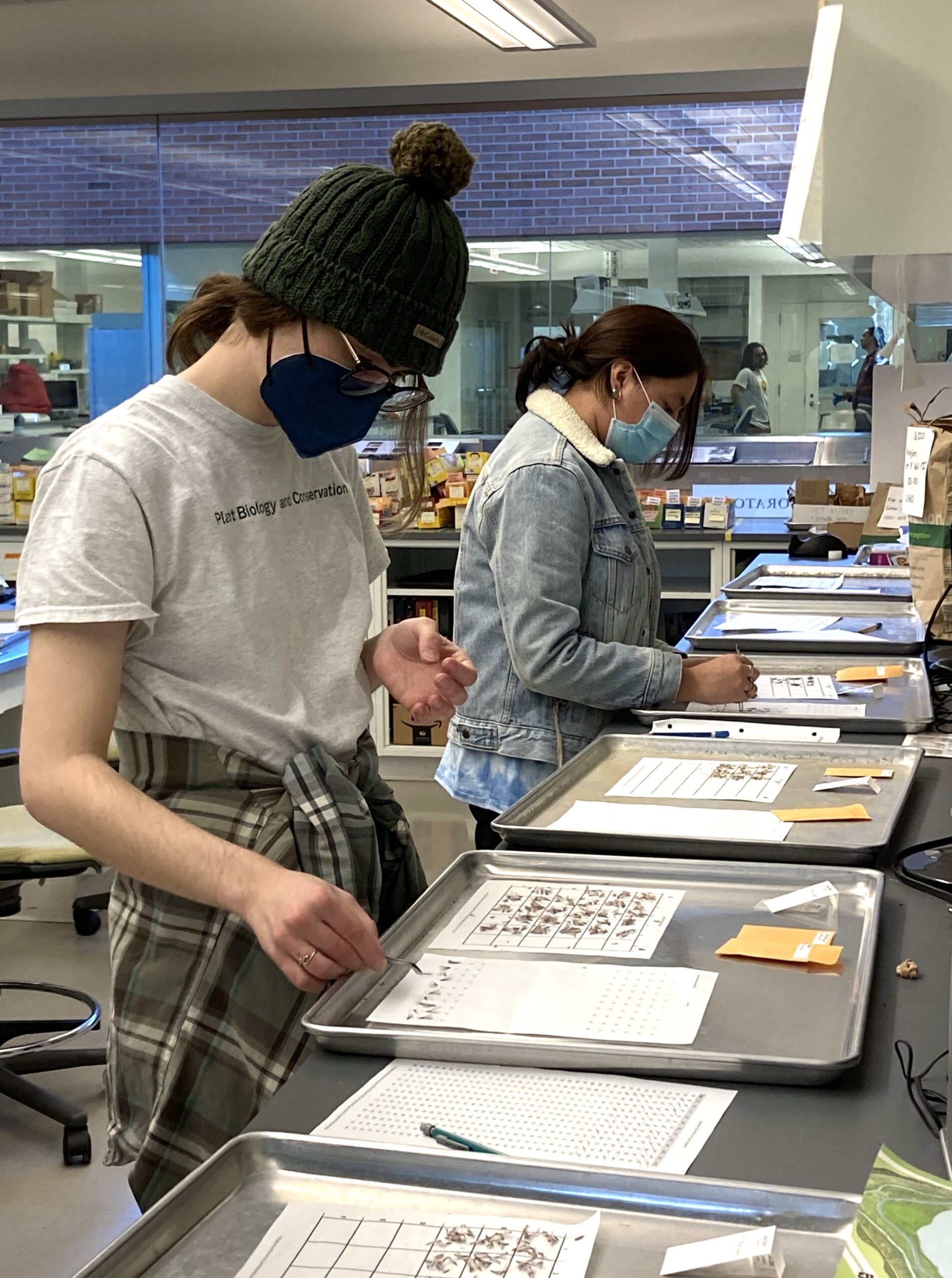
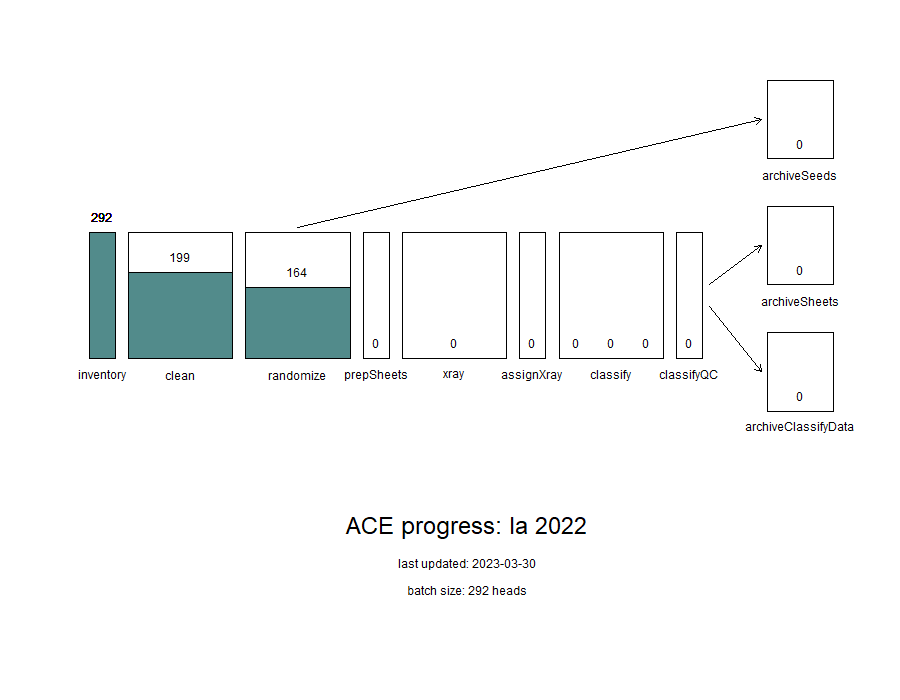
We are so close! We are now a little over two-thirds of the way done with the third batch, and things are starting to get exciting. I want to thank those who helped with randomizing; we would not have gotten this far without your help. With that said, there are now less than 20 plants left to randomize, and we are just about ready to move on to the data entry and interpretation steps. We should have randomization wrapped up by next week, so we should hopefully have our results in by next week. After that, we will then analyze the final results and begin to construct a final poster. More details will be provided for the poster, but in the meantime, we are quite excited about the next steps once randomization is complete.
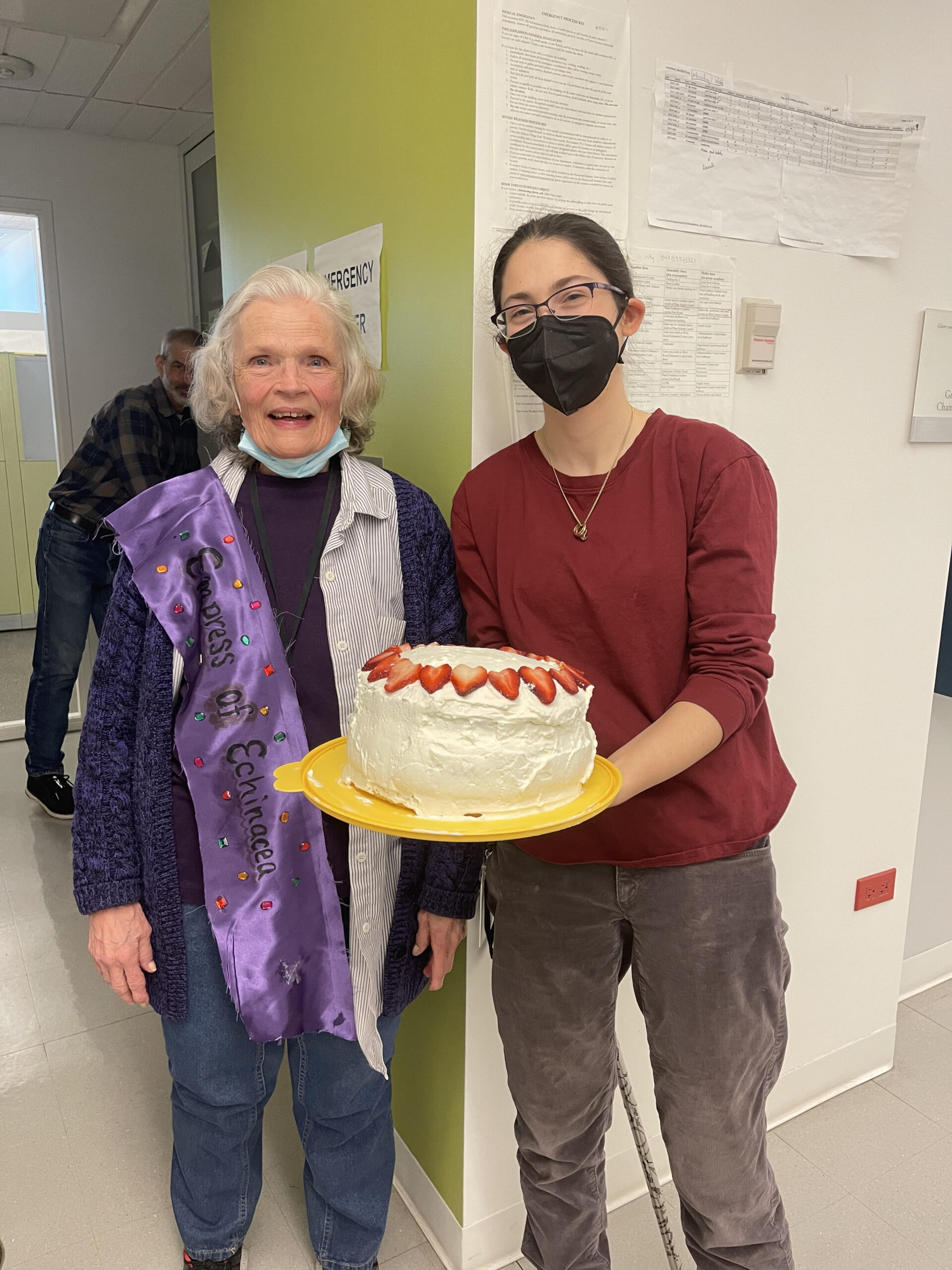
On the final Tuesday of March, the Echinacea Project honored our most recent inductee to the Achene County royal court. One of our loyal volunteers, Char Schweingruber, was crowned the Empress of Echinacea! This is a prestigious title reserved for a citizen who has demonstrated a longtime dedication to the lab, a mastery of cleaning Echinacea heads and a passion for conservation and restoration.
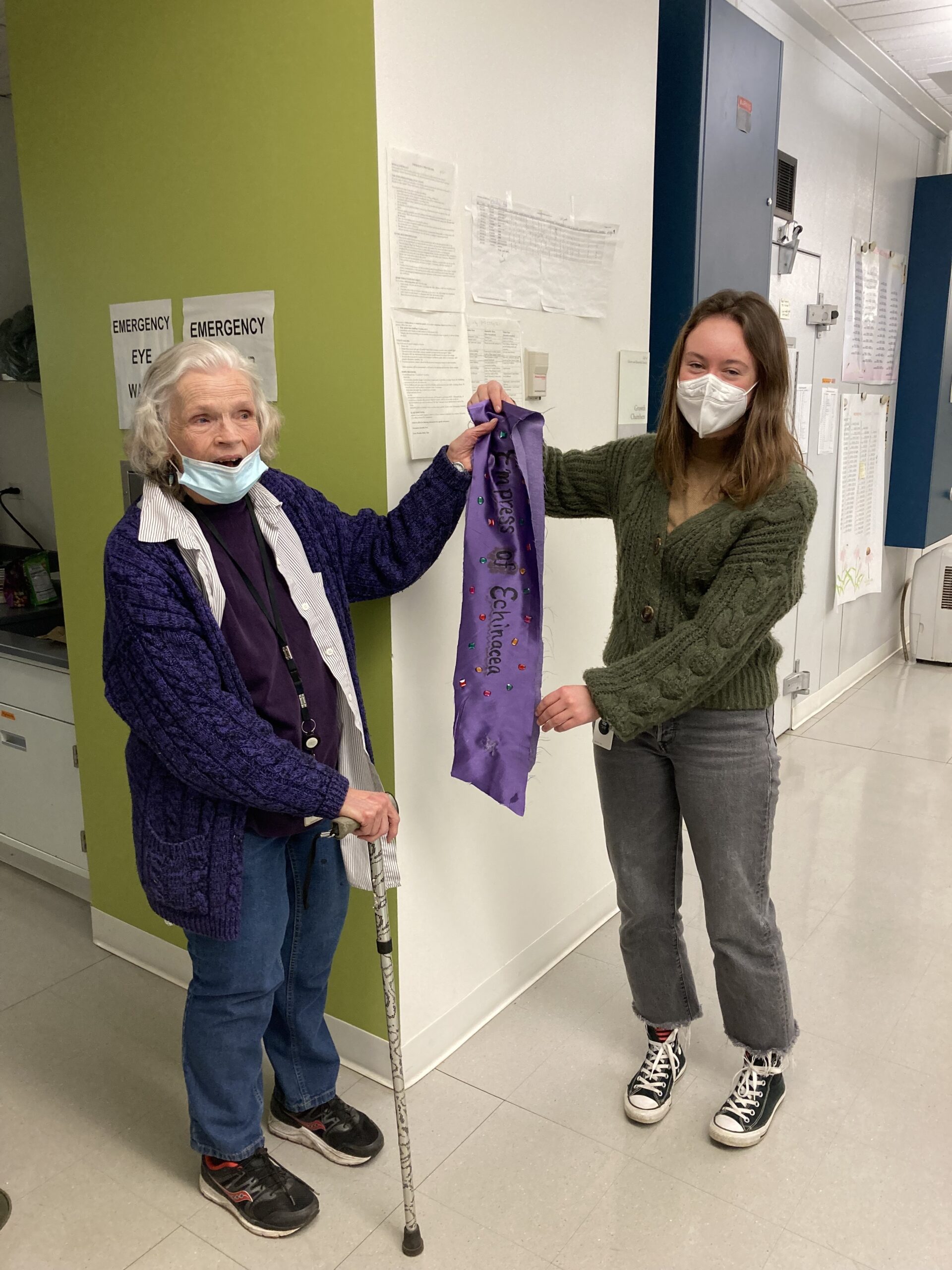
Alex’s homemade cake was a hit amongst Achene County citizens! Char is surprised with the royal regalia, made with jewels from the Achene County mines.
Char has been a volunteer at CBG since 1993. She began much of her volunteer career outdoors doing restoration work in the natural areas of the garden, especially in our beloved prairie ecosystem! She has been involved in the Echinacea Project since its inception when Stuart began at the garden in 2001. She joined a small group of volunteers that spearheaded our ACE protocol where Echinacea seeds are cleaned, counted and assessed for pollination rates. These days, Char is an expert at cleaning Echinacea heads and is essential in keeping our lab process moving. We appreciate our volunteers, like Char, who dedicate their time to the Echinacea Project!
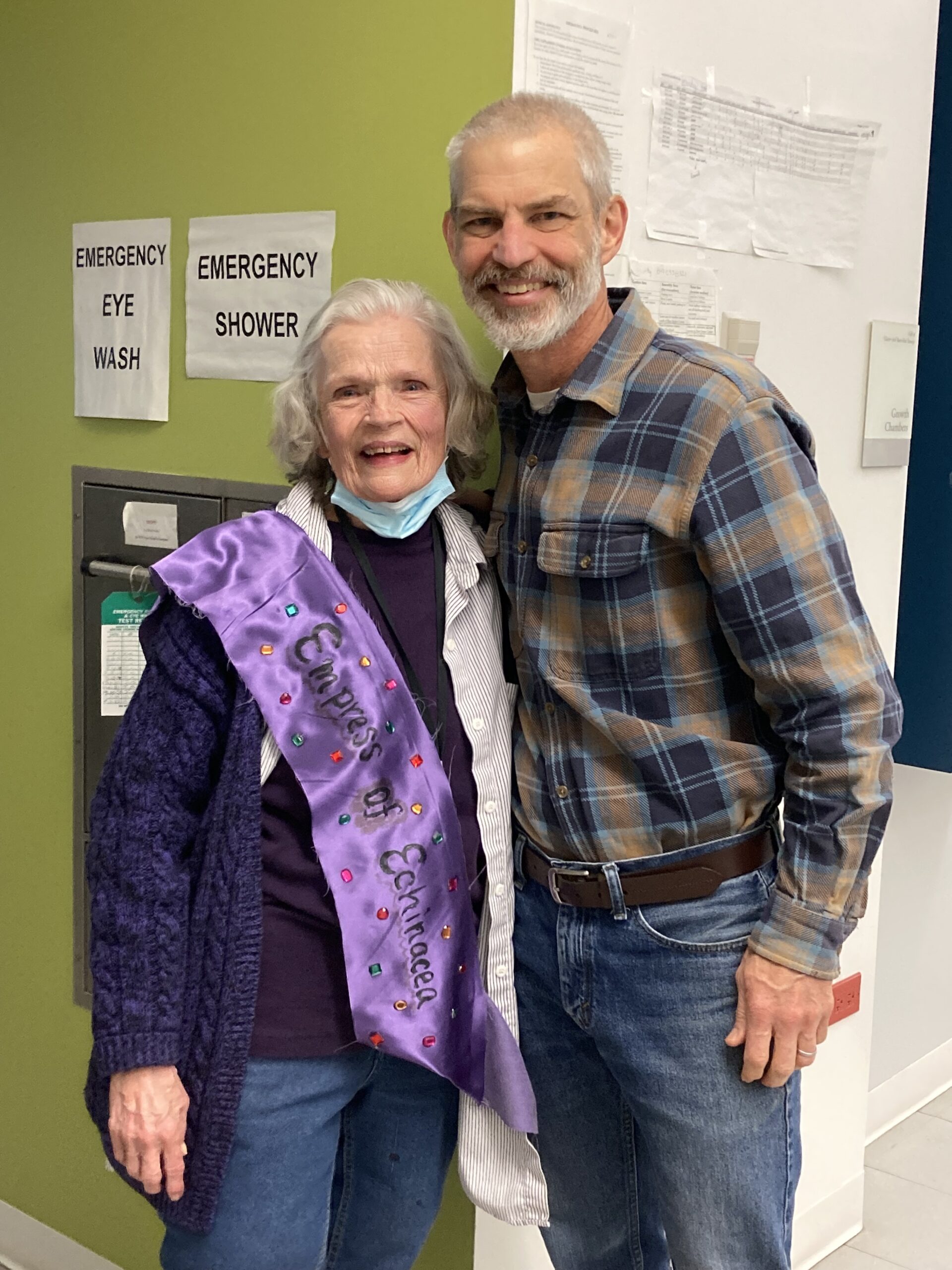
The newly inducted empress with Stuart, the steward of Achene County.
The ceremony involved a speech from Stuart, the conferring of the royal sash, and a delicious strawberry layer cake baked fresh by Alex! As Tuesdays are the day where we have the most volunteers in the lab, it was great to celebrate all of Char’s hard work with a large group of volunteers and CBG staff members.
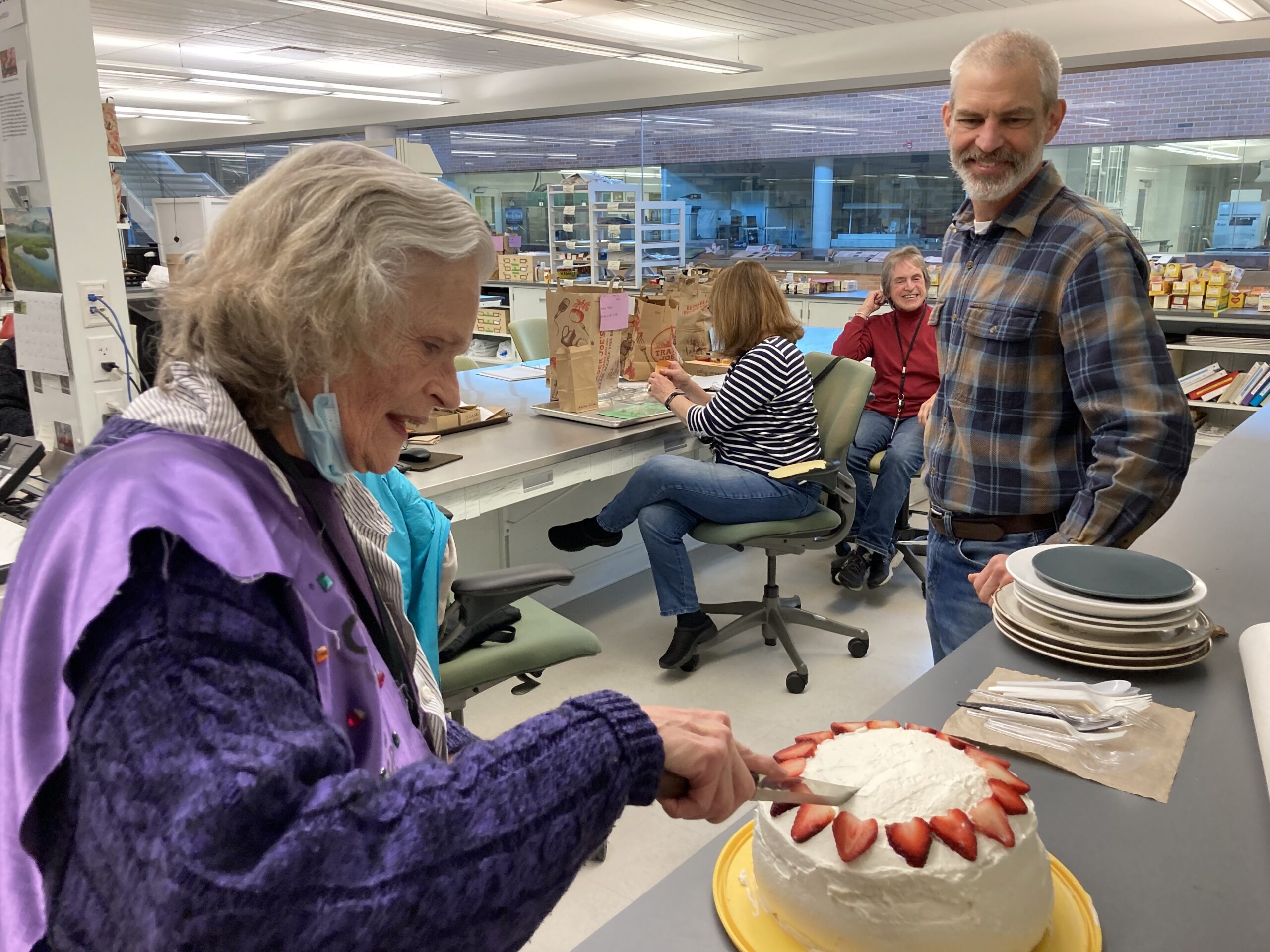
The cutting of the first slice! An Achene County tradition.
If you see Char walking in the halls of the Plant Science building, don’t forget to congratulate her on her new title (and maybe give a proper bow or curtsy, if you feel inclined)!
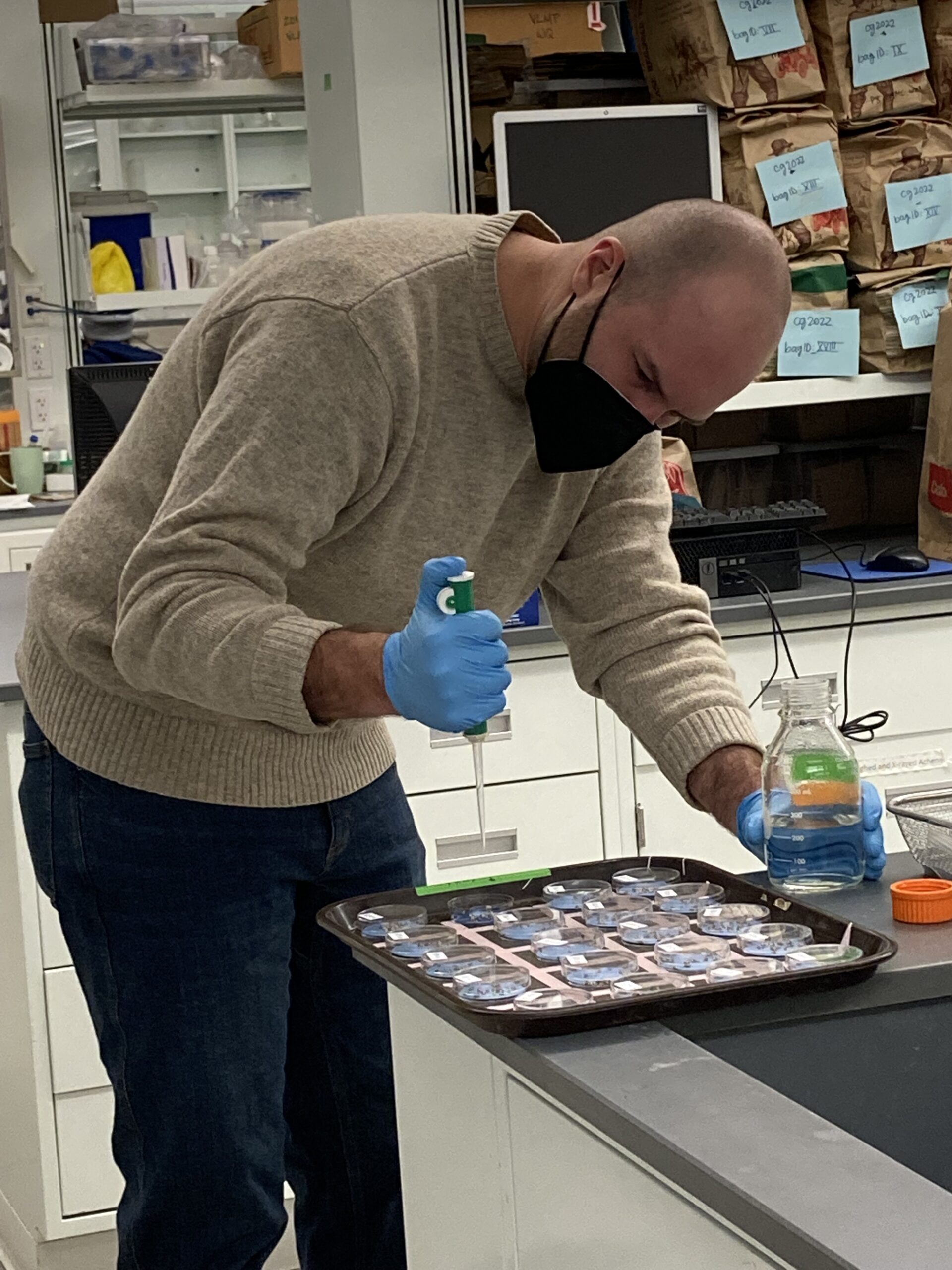
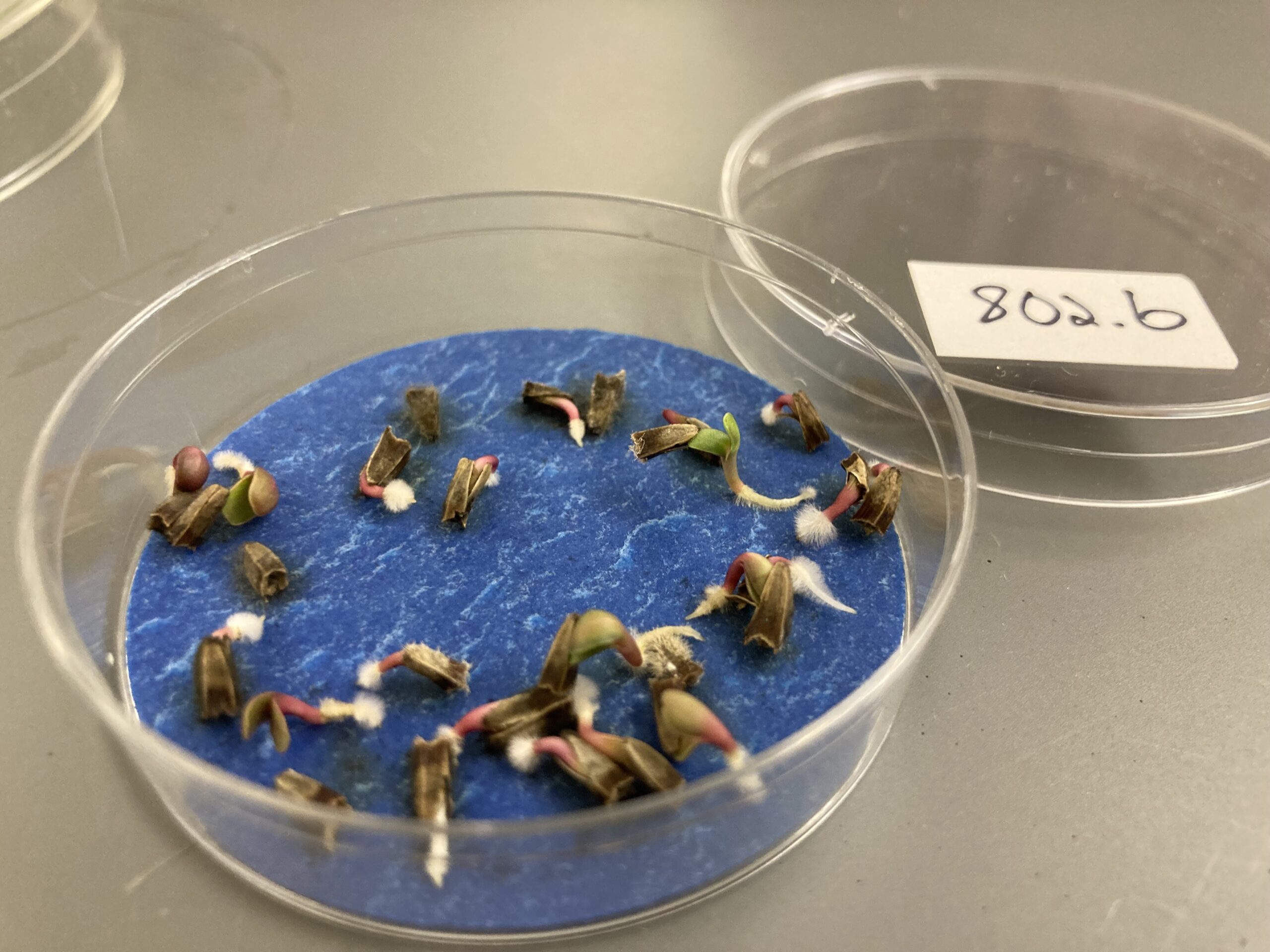
In fall 2022, we planted Echinacea within our study site for the seed addition experiment. In the lab, we are currently doing a germination experiment with the same batch of seeds to calculate the expected seed germination rates under ideal conditions. Following our standard germination protocol, we first treat the achenes with Florel solution and put them in a cold fridge with low light levels to mimic winter conditions. After 14 days, we transfer them to a warm, bright environment to germinate.
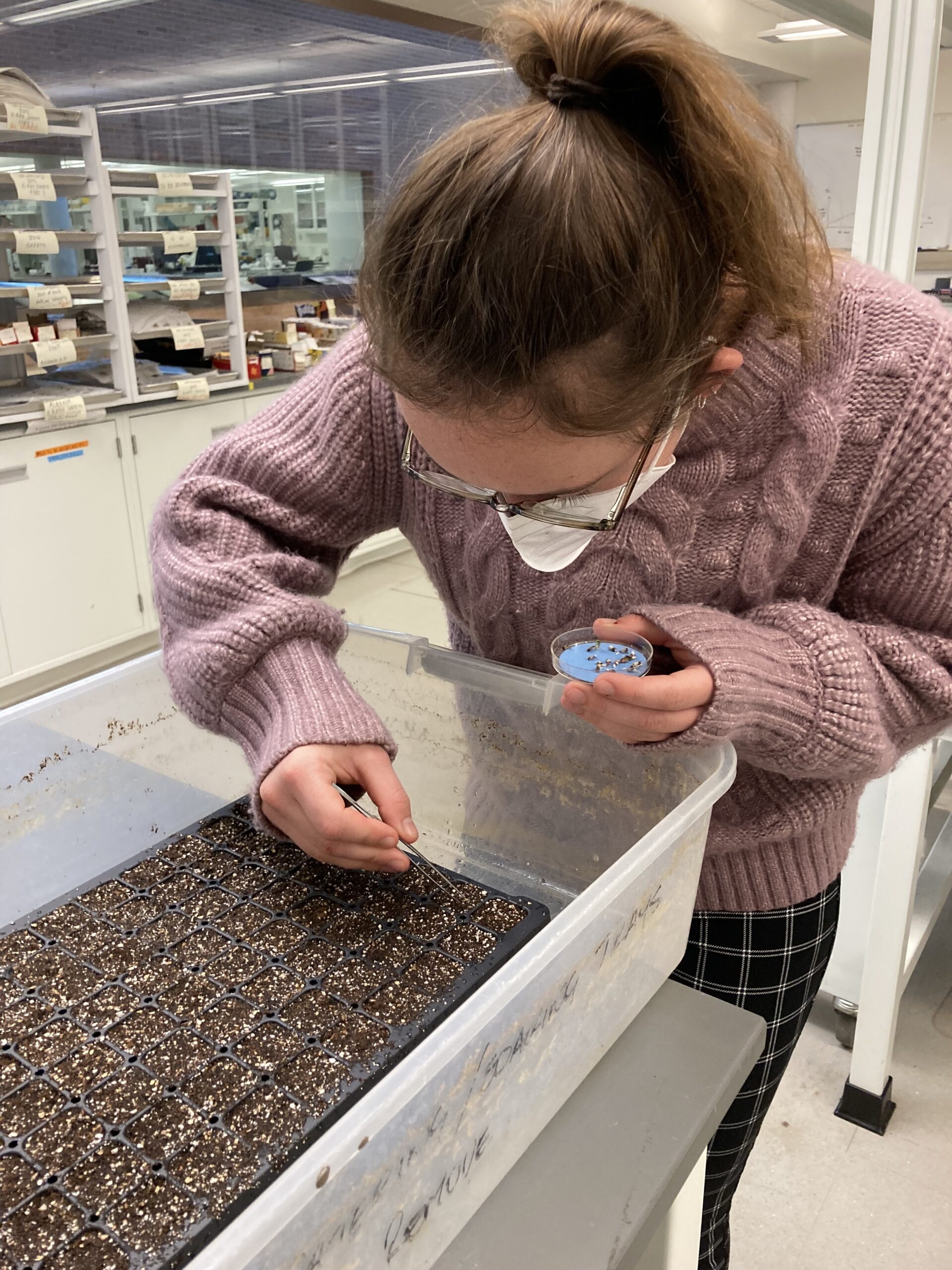
Jared applies FlorelGerminating EchinaceaLindsey plants Echinacea
The seeds generally don’t start to germinate until they are in the warm environment. This year, however, I checked on the seeds a few days after they went into the fridge and discovered that they were already starting to sprout! The condenser on the fridge had broken, so it was no colder than room temperature. In spite of the unusual conditions, ~80% of the seeds germinated. This is very encouraging since it means that the seeds that we planted in the fall were viable.
After fixing the fridge, we are germinating a second batch of seeds following the standard protocol so we can replicate the experiment next spring. Lindsey planted the seeds that germinated, and we plan to grow them into plugs and transplant them this summer.
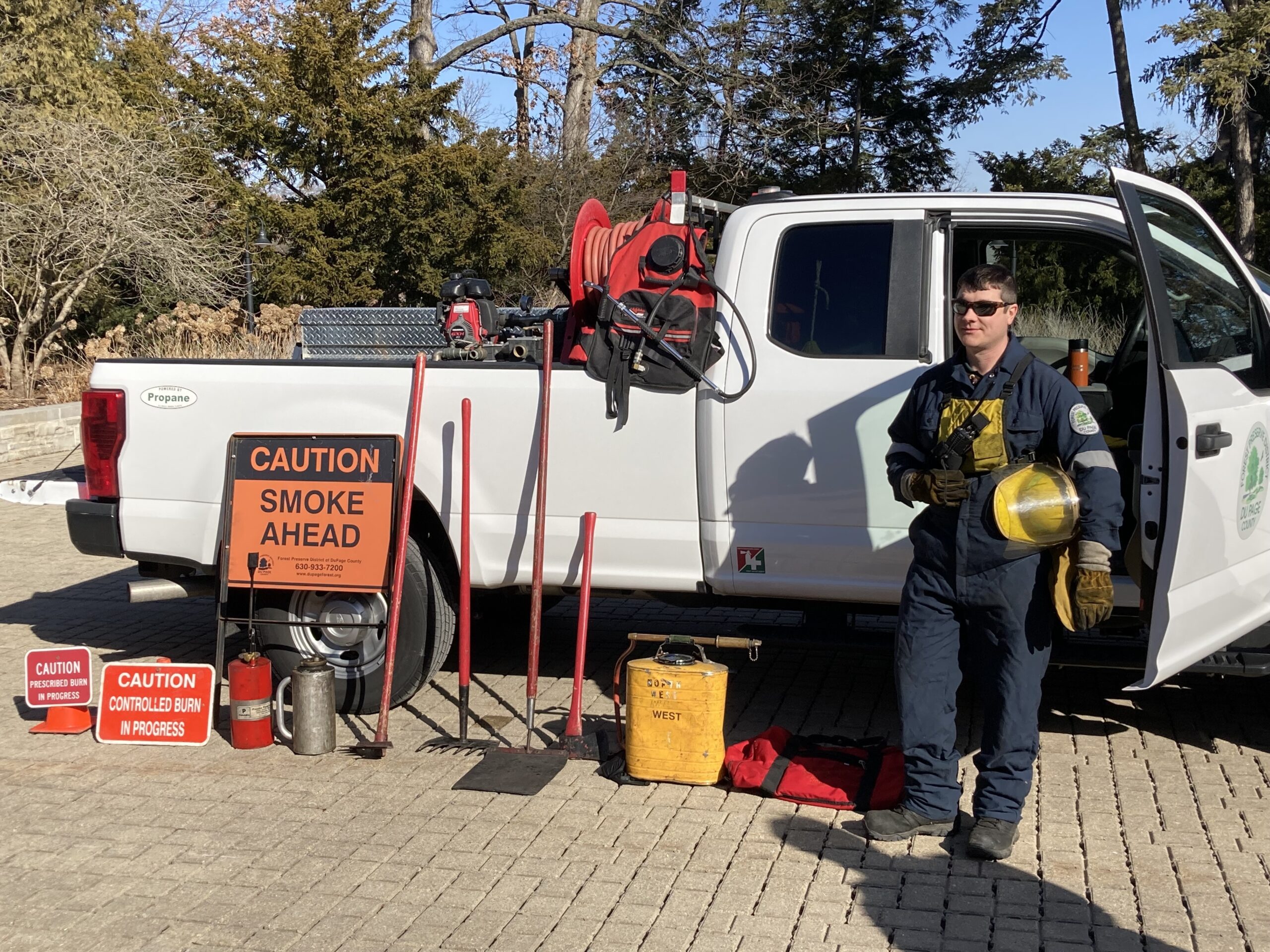
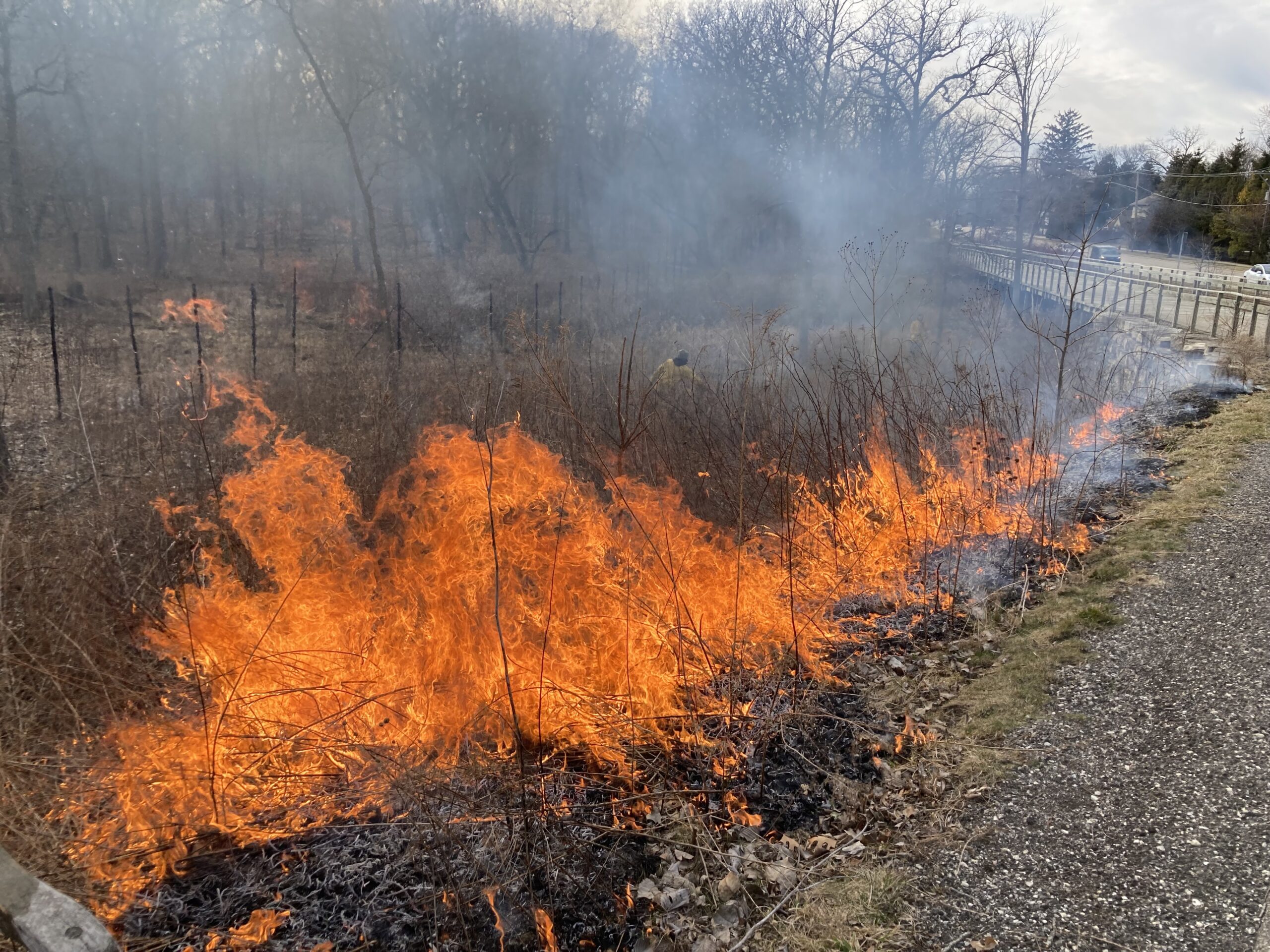
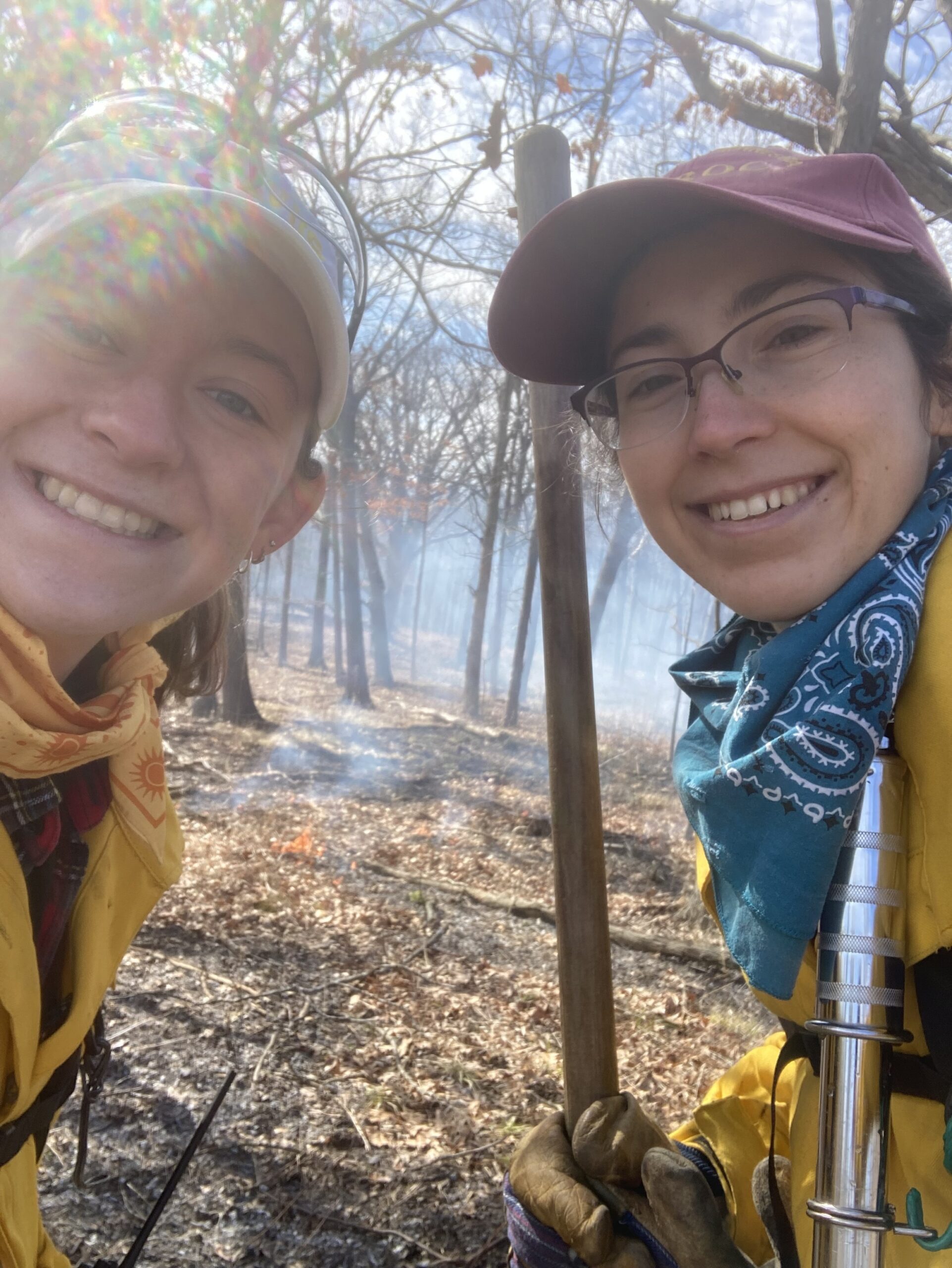
This February, Lindsey and I attended the Chicago Wilderness prescription burn training at the Morton Arboretum. This month, we put our burn training to good use and joined Jared and the burn crew at the Chicago Botanic Garden for a woodland burn. I participated in prairie burns in Minnesota last spring, but this was my first woodland burn, so I was glad to gain more diverse fire experience.
A member of the DuPage burn crew shows off prescribed burn equipment
We burned part of McDonald woods on the east side of the garden, and we needed an east wind to keep the smoke off of Green Bay Road. The wind was ~11 mph, but we were burning down in a gully which blocked the wind, so the fire crept very slowly. Overall, the woodland burn was much slower and patchier than the past prairie burns, but that was what I expected from the woods. I also got to use a drip torch for the first time, which was very fun!
Burning along the bike pathLindsey and Alex in PPE