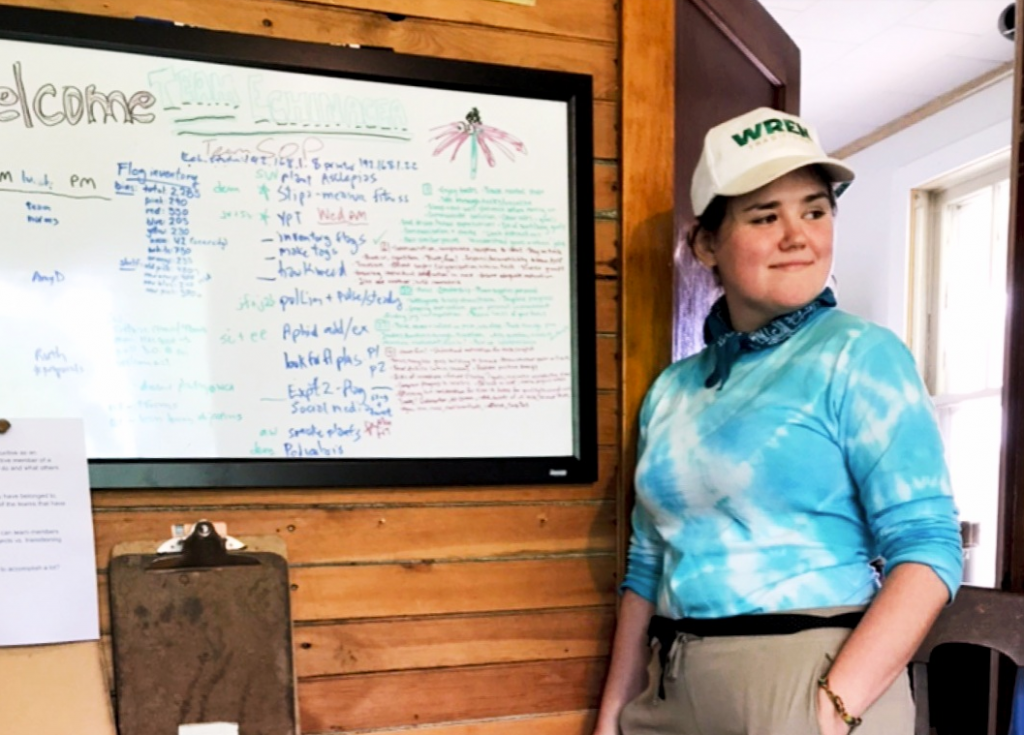
Independent project proposal drafts were supposed to be due to Stuart by Saturday at 6AM. Unfortunately, I changed my mind what I wanted my project to be the Thursday night before the due date, so I had limited time to actually do the proposal. On Friday afternoon, I asked Stuart if he would like me turn in any other writing to him. Stuart asked for a Haiku, so here we are:
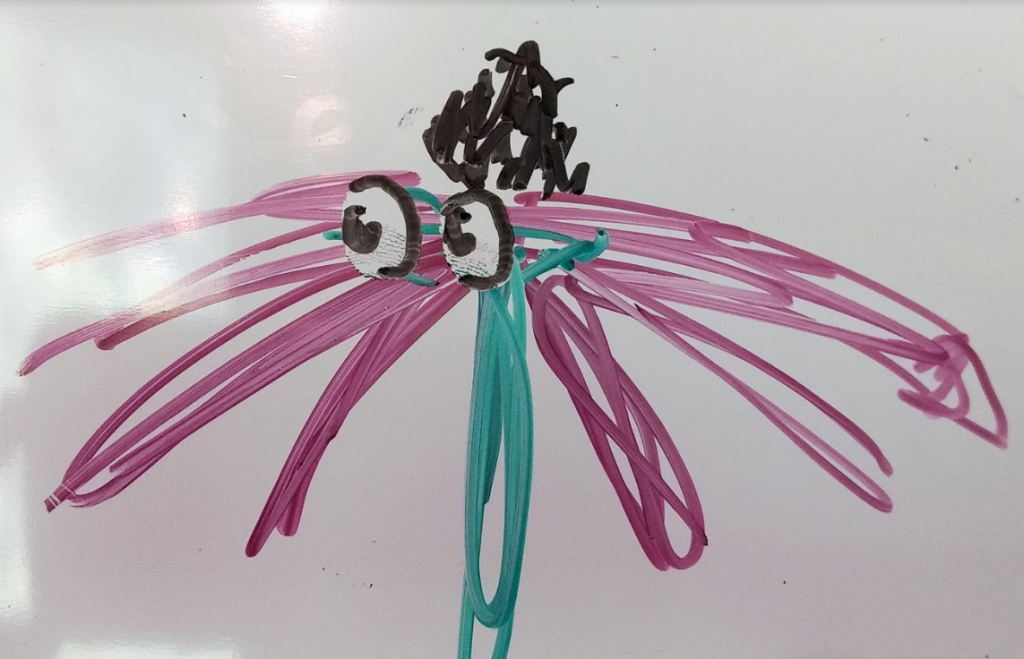
Echinacea plant
A juxtaposition of
science and beauty
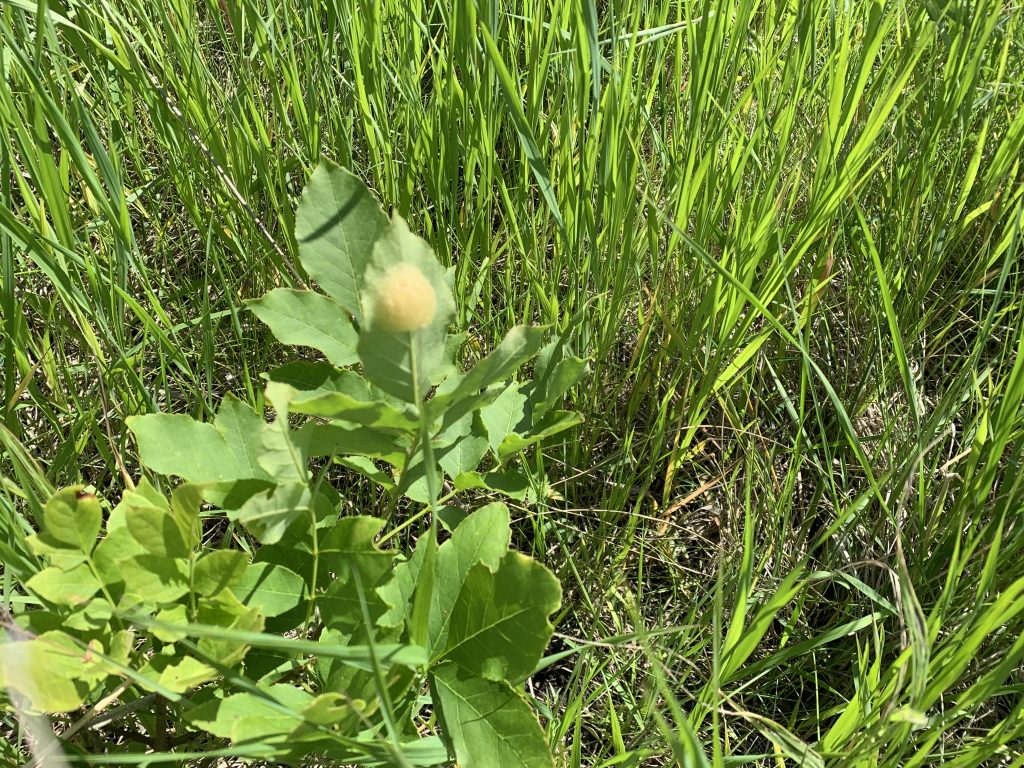
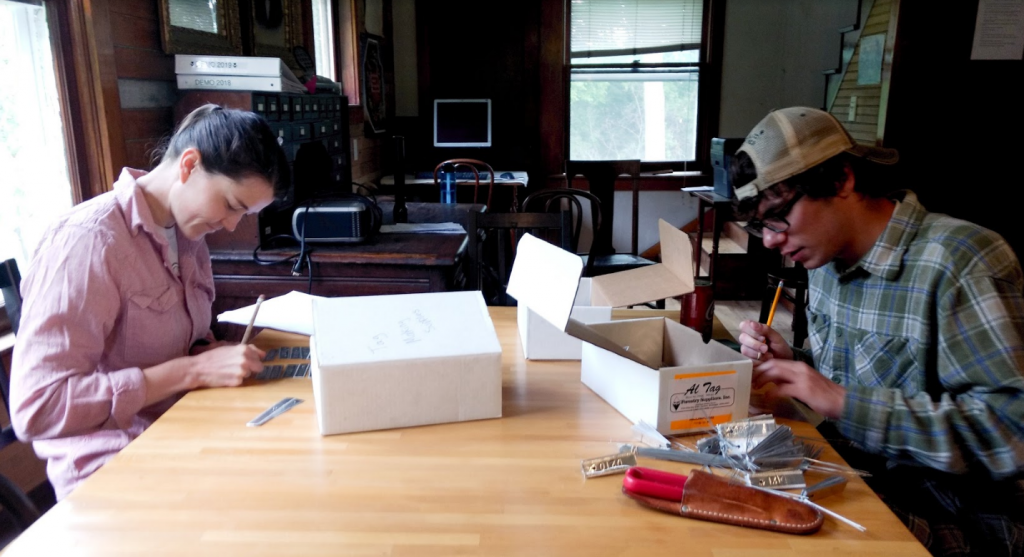
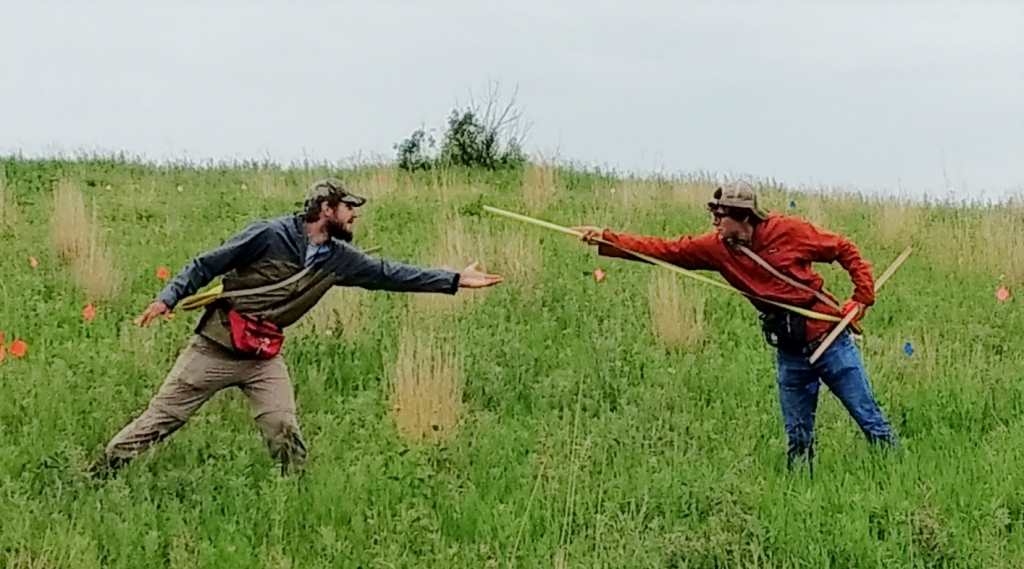
It was a fun and relaxing day at town hall this Saturday. It was full of finding fun plants and fungi out at Kensington Runestone Park, working on a prairie ecosystem themed puzzle, and staying as close to our box fans as possible. And to top it all off we had a wonderful view of the sunset! Happy Saturday from the Town Hall Squad : )
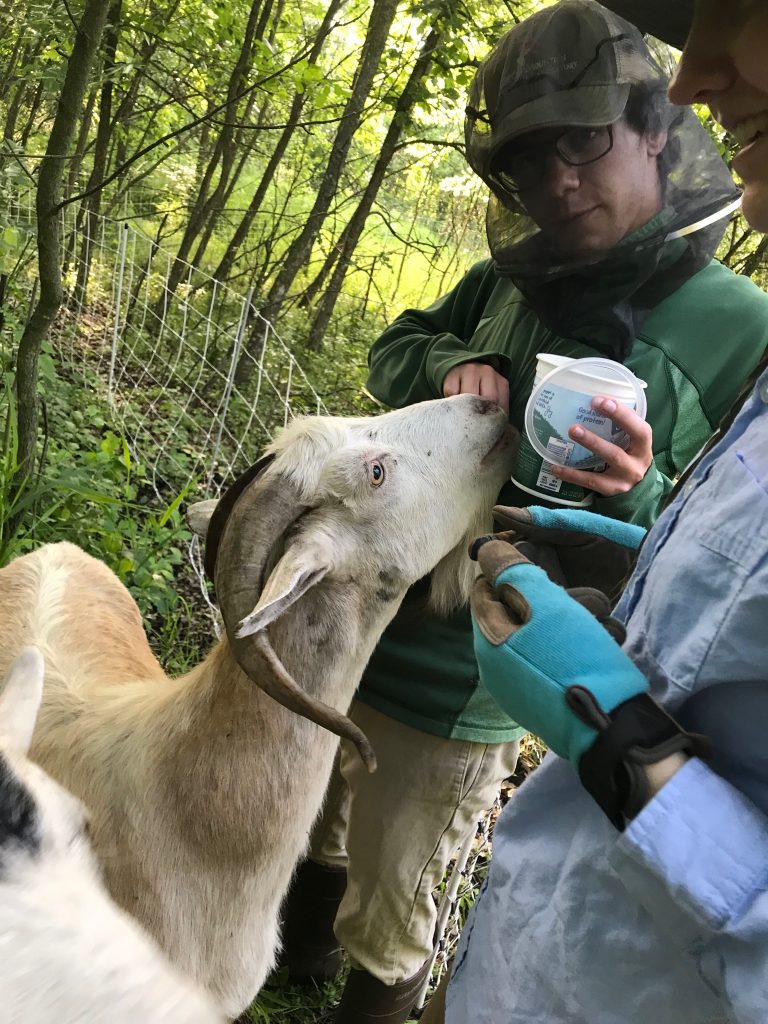
It’s me, Amy! It’s been a while but I’m glad to be back here in Kensington. Today, the team’s activities started out with some goat wrangling. I wasn’t there because I was bringing up some seedlings from the cities, but I heard it was pretty cool!
Later, the team split up to look for Stipa and flowering Echinacea plants in P1 and to check on ash plants in P8. My high point for the day was that I figured out how to connect my computer to the printer, but my low point was that I accidentally made it so that no one else could use the printer. Ruth graced us with her presence and at lunch we shared our project ideas.
Lastly, it was Michael’s last day on the job as a Team Echinacea intern! We concluded the bittersweet end of the era with Stuart’s chocolate cake™.
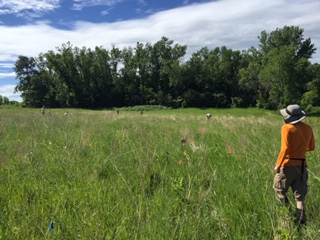
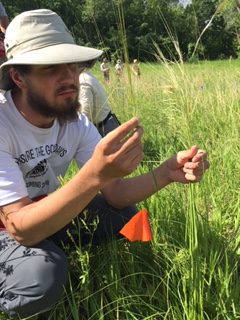
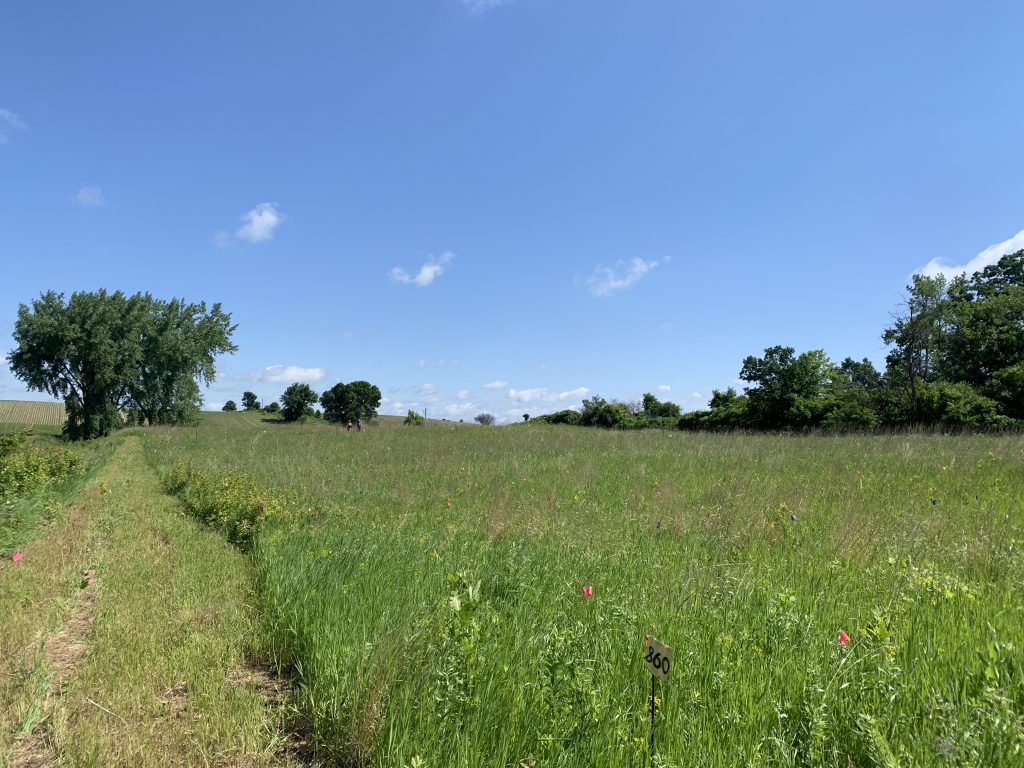
We dove right into work this Wednesday morning. The first task of the day required our whole team to gear up with flag bags, meter sticks, and visors and trek down to experimental plot 1, where a few of us were taught, and others were reminded, how to actively search for and measure Hesperostipa spartea, or Stipa as we referred to it. We paired up and as small teams did our best to locate either the very small and narrow blades of basal Stipa plants or the more obvious awns of the flowering Stipa. Micheal and I tackled rows 39 and 19, and while hoping to identify more plants, with the help of our active search skills, we were able to spot and measure 1 basal and 4 flowering plants. I learned a lot from Micheal as we “searched for grass in the sea of grass” and I appreciate his willingness to teach. I’m referring to a couple locations when he would abruptly stop his stroll, give me a look out of the corner of his eye, and wait for me to spot the plant that he had just found. Micheal, thank you for your patience! We used our visor to record the location of each plant and the measurements that pertained to it such as culm and fruit count, along with aborted and missing fruit counts. We aim to continue this search in the next day or two in hopes that cloudier conditions and more experienced searchers will result in more Stipa measurements for our 2019 data.
“Searching for grass in a sea of grass” – Micheal LaScaleia
Riley is examining the Stipa plant that him and Erin found with 15 culms.
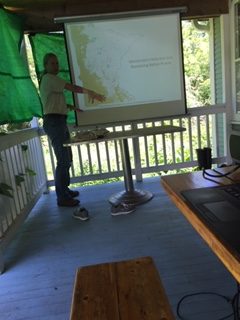
Amy Dykstra graced us with her presence in the field as well today and gave a post-lunch presentation on her dissertation work and some ongoing studies. Amy asked a lot of great questions in her research and was able to connect them to her findings regarding the future success of Echinacea Angustifolia in fragmented prairie. Her research gave me a lot to think about regarding the Echinacea project’s history as a whole and more specifically, the impact that prairie fragmentation makes on the genetic diversity of our prairie remnants. It’s presentations like Amy’s that are helping me continue to learn and develop my own proposal for this summer.
John rigged up an IMAX quality theater for us out on the porch today. Amy thanks for embracing the ambiance!
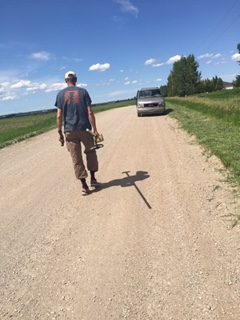
Last but not least, John and I were eager to get out and stake this afternoon for our yellow pan trap experiment. We have 38 sites within a 5 mile radius of the Hjelm house, and at each site we will have one flagged stake for catching bees. John and I were excited to take out the infamous Darwin (the Echinacea project’s GPS device) to stake our sites. We got about halfway done and will have to finish up tomorrow, but we’re excited to start catching and eventually pinning and identifying our local pollinators. We’ll keep you updated on what we find, but in the meantime we’ll be cruising the countryside in a van, with Darwin.
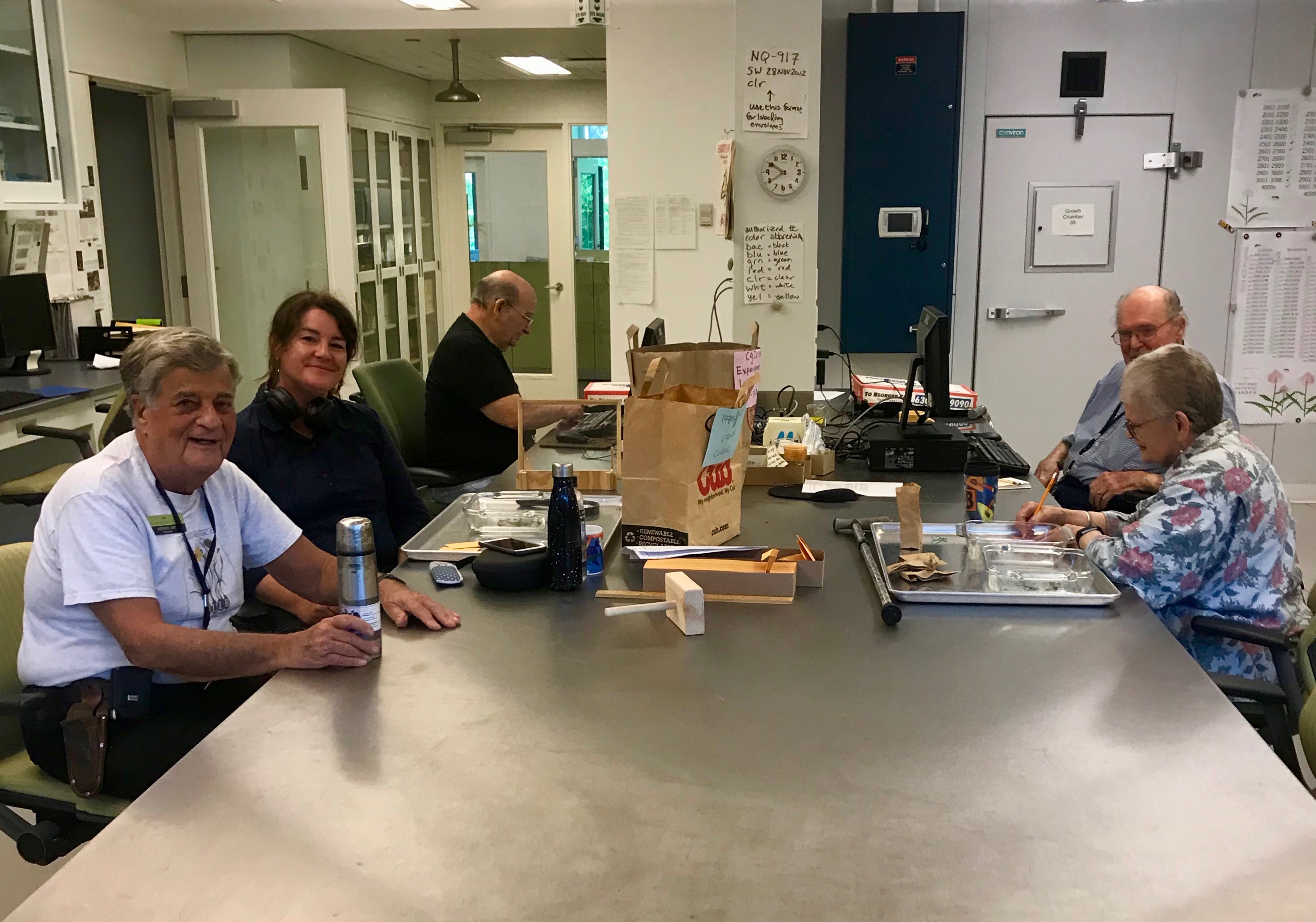
Since Stuart and Team Echinacea have started summer field work in Minnesota, you might guess the lab at CBG slowed down- but you would be wrong! Last week we finished cleaning another bag of Echinacea heads, and this week we’ve gone through over half of the next bag! People counting achenes and classifying x-rays have also been super productive, and some of the newer volunteers finally got their official CBG badges. So even though there’s a lot going on in Minnesota, we’re still busy back in Chicago. Stay tuned for more lab updates throughout the summer.
From right to left, Char is cleaning, Aldo and Alan are counting, Tessa is cleaning, and Art is chatting because he was actually working outside this morning!
We started off our sunny day in the field by breaking off into two groups: the demo team (starring Michael and Erin) and the planting team (comprising Jay, Shea, Riley, Drake, and myself). Today, we were peppering P1 with Asclepias viridiflora that were grown from seed at the Chicago Botanic Garden. Here’s Shea and Jay returning after putting our last few seedlings in the ground:
After lunch, Jay and I went back into the plot to check on the plants for the Pollen Limitation Experiment. We were hoping to count how many had developed flowering stalks… but strangely enough, none of the plants in the Pollen Limitation Experiment were flowering! No florets left to limit pollen access to, but even no data is still data. And while we were checking the plants in P1, Jay and I had lots of opportunities to make some field friends! From damselflies and monarchs to spittlebugs and cocoons, we had plenty of company as we counted our Echinacea.
We began our drizzly morning by outlining tasks for the week
and breaking into three main groups: tag-makers, flag-sorters and
hawkweed-exterminators. I volunteered to
write out tags with Drake and Amy, the latter of whom showed me the ins and
outs of writing standard tags that we’ll place during surv. We bopped to some
2000s pop standards and got a good chunk done, though I’m a little dismayed by
how much my fingers hurt from making just a handful. The fact that thousands of
these tags are bumping around in the wild is really an astonishing amount of
labor!
Tagmaking with the best
We came together after about an hour to begin flagging in
experimental plot 2 (P2.) We only had 4 corner flags and whatever plants we
could find to stake out one-meter intervals in a 80 x 50 meter plot, so it was
a pretty nerve-wracking undertaking. Julie and I got a little tied up flagging
the north edge where only a few plants have survived, but luckily Michael came
to our rescue and put us back on track.
The Flagging of P2. Michelangelo, 1512.
We squished our way out of the field and back to the Hjelm house, where after lunch we worked on our team norm. It was around then that the team realized that the epidemic of googly eyes overtaking Hjelm House has extended to our whiteboard! Stuart and Amy were overheard pondering how to perform fingerprint analysis on the culprit’s work, but since they’re the two main suspects in this open case, was it all a ruse to throw us off?
Hit us up if you have any experience in forensic analysisI’m on the case!
I spent the rest of the afternoon with Michael as he attempts to impart a year’s worth of knowledge unto me in a scant two weeks. Occasionally it feels as though my cup overfloweth with knowledge, but mostly I’m just looking forward to being as competent as him someday!
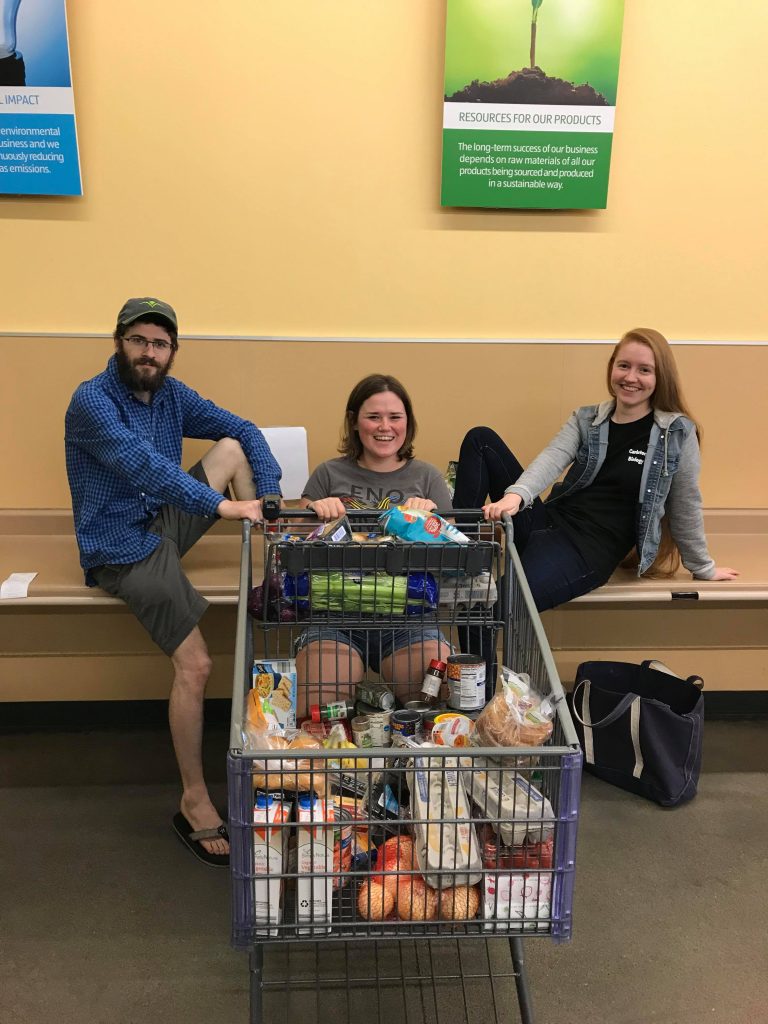
On this fine first Sunday of Summer some of the gang got grocery at Aldi. We purchased produce for salads, salsa for quesadillas, beans, beans, beans, and more beans for four bean variety vegetarian chili. Chef cooking the chili will be me tomorrow. Tonight we had the quesadillas ’cause they are quicker to make. Earlier Erin and Michael marched off on an exciting excursion having hopes of observing life birds. Both Amy and I did fieldwork forgetting Sunday is supposed to stay slothful. However, I had Pedicularis plants that needed tagging today and sundried seeds needed harvesting. Here hoping for many more fun-filled Summer Sundays.
Signing out,
Drake
P.S. The forced alliterations in this post were inspired by Mochi Julie bought at Aldi.
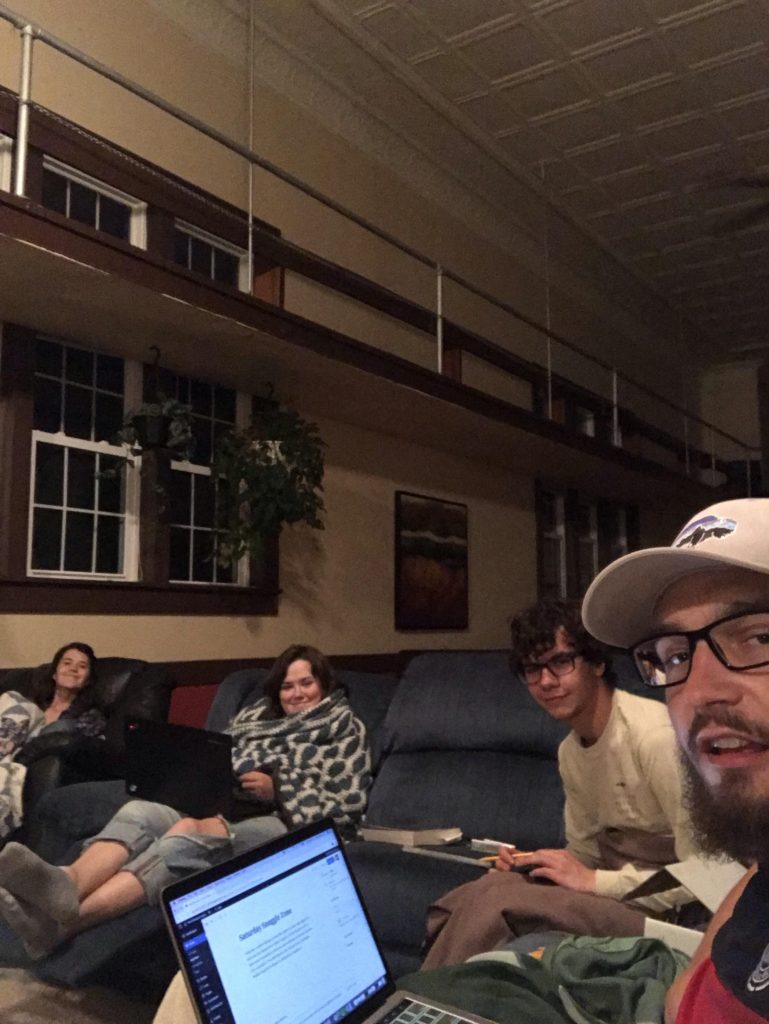
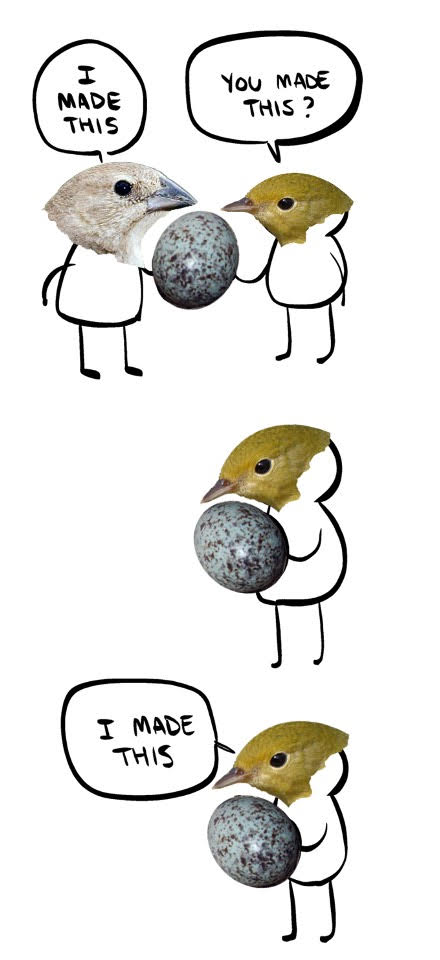
Today was a rather chill day at Town Hall relative to other week nights. It is safe to say that everyone was rather tuckered out from the first week of field work. Fortunately, we did have some excitement in our day! The five of us currently at Town Hall (Myself, Amy, Michael, Erin, and Drake) decided to go out for dinner at Angelina’s in Alexandria. After that, we came back to the Hall and played with a local outdoor cat! It was super nice to us, but I didn’t touch it because I am allergic to cats. Coming inside, we all decided to get comfortable together. We all grabbed blankets (Michael grabbed his sleeping bag Snuggie) and sat around the living room reading books, reading papers, making tags, and making memes. As it turns out, Erin is a meme lord and is a skilled meme creator and photoshop artist. She once made a bird meme that was reposted by some famous ecology meme pages! I didn’t know that we had famous people on Team Echinacea this year! Nonetheless, today was a lazy, but slightly productive Saturday. I hope to have many more weekend days like this with the team!
Snuggle time! Michael had already gone to bed.Erin’s famous meme about cowbirds. They lay eggs in the nests of other birds. The cowbird is the one on the left.