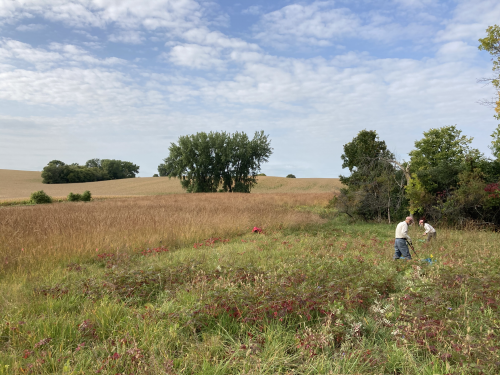
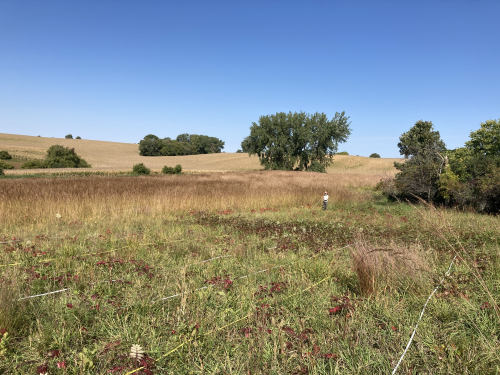
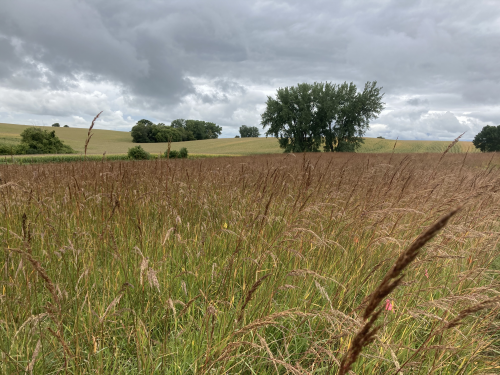
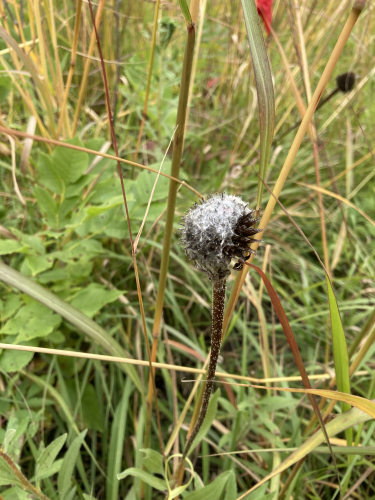
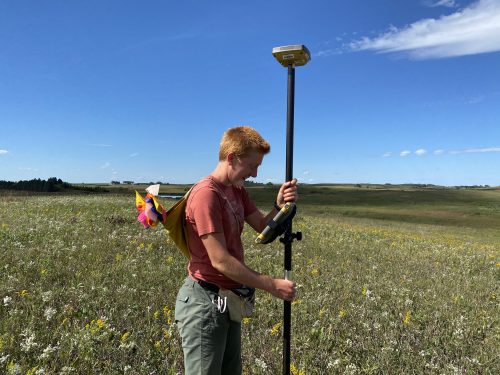
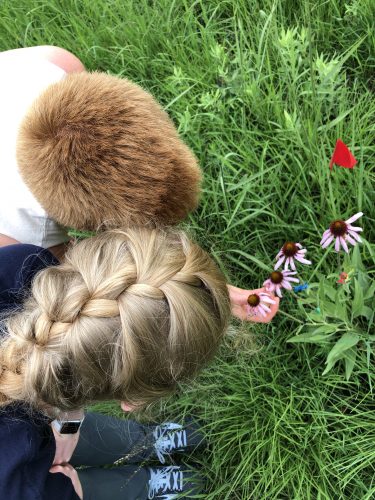
During the summer of 2020, I designed an observational study to assess the extent to which reproduction in self-incompatible species is limited by spatial proximity to mates. While many researchers assume mate-limited reproduction is common in prairie species, few studies demonstrate this relationship in species other than Echinacea. I hypothesize that many self-incompatible prairie species produce few viable seeds because of small population size and spatial isolation from mates. To test this hypothesis, I selected 8 common self-incompatible native prairie species and 25 remnant sites within which to work. I quantified isolation in meters from the two nearest flowering conspecifics and collected seeds for more than 1,100 individual plants at 25 prairie remnant sites. I hope to complete lab work over the next 6 months where I will be cleaning and counting viable seeds for each individual plant. Results from this study will provide evidence about how widespread mate-limited reproduction is in self-incompatible prairie species.
Start year: 2020
Location: Douglas County, Minnesota; 25 roadside remnant sites Information about how many species of each species were sampled from each site, check out this file ~Dropbox/teamEchinacea2020/leaRichardson/siteCheckList8.29.20.xlsx
Materials collected: Seed heads collected from over 1,100 plants will be stored at the Chicago Botanic Garden but are currently in my Evanston apartment.
Data collected: Find data related to this project in the aiisummer2020 repository in ~aiisummer2020/plasInRems/leaStuff/
Throughout the summer, I designed and collected materials to establish an experiment in experimental plot 1 to study parasites and their impact on the community of host plants they live in. Parasitic plants are plants which absorb nutrients from neighboring plants. Parasitism is an important part of nutrient cycling in many ecosystems and parasite scientists hypothesize it to be an important part of prairie ecosystem maintenance.
This experiment has three factors, each with two levels (presence or absence), but three factor-level combinations are impossible, because the presence of parasites is confounded with presence of soil. Which translates to me having 216 row x position combinations in which I randomly assigned Comandra umbellata, Pedicularis canadensis, and soil plugs. However, because roots trap soil and therefore soil is always carried in with parasites, the two are confounded and so we used soil transplants to account for this.
I developed this experiment to address questions about the impact native parasitic plants have on plant community members. In late October I harvested biomass from my pipp places to understand how species diversity and abundance change after planting parasites.
Start year: 2019
Location: Douglas County, Minnesota; exPt 1
Overlaps with: Experimental plot management, Hesperostipa common garden experiment
Materials collected: 216 .1 x 1m strips of dried biomass are stored at the Chicago Botanic Garden.
Data collected: Find data related to this project including the planting scheme in the cgdata repository in ~cgdata\summer2019\Hemiparasites (note/the key for HemiparaMap: C. umbellata = Blue, P. canadensis = Red, C + P = Purple, Soil plugs = Brown, Just seeds = Green).
This past Friday I planted the seeds from the inter-remnant crossing experiment I completed over the summer. The goal of this experiment is to understand how the distance between plants that live in little fragmented remnants and the difference in their timing of flowering influences the fitness of their offspring. The expectation is that if plants that are close together and/or flowering at the same time are closely related, their offspring might be more closely related (i.e., inbred) and have lower fitness than plants that are far apart and/or flowering more asynchronously. If this is true, then it would suggest that individuals in small, fragmented habitats would benefit from reaching more distant or dissimilar mates, such as by introducing seeds from faraway populations to remnants, creating corridors that promote pollinator movement, or managing habitat to increase heterogeneity in flowering time.
Plot location & layout:
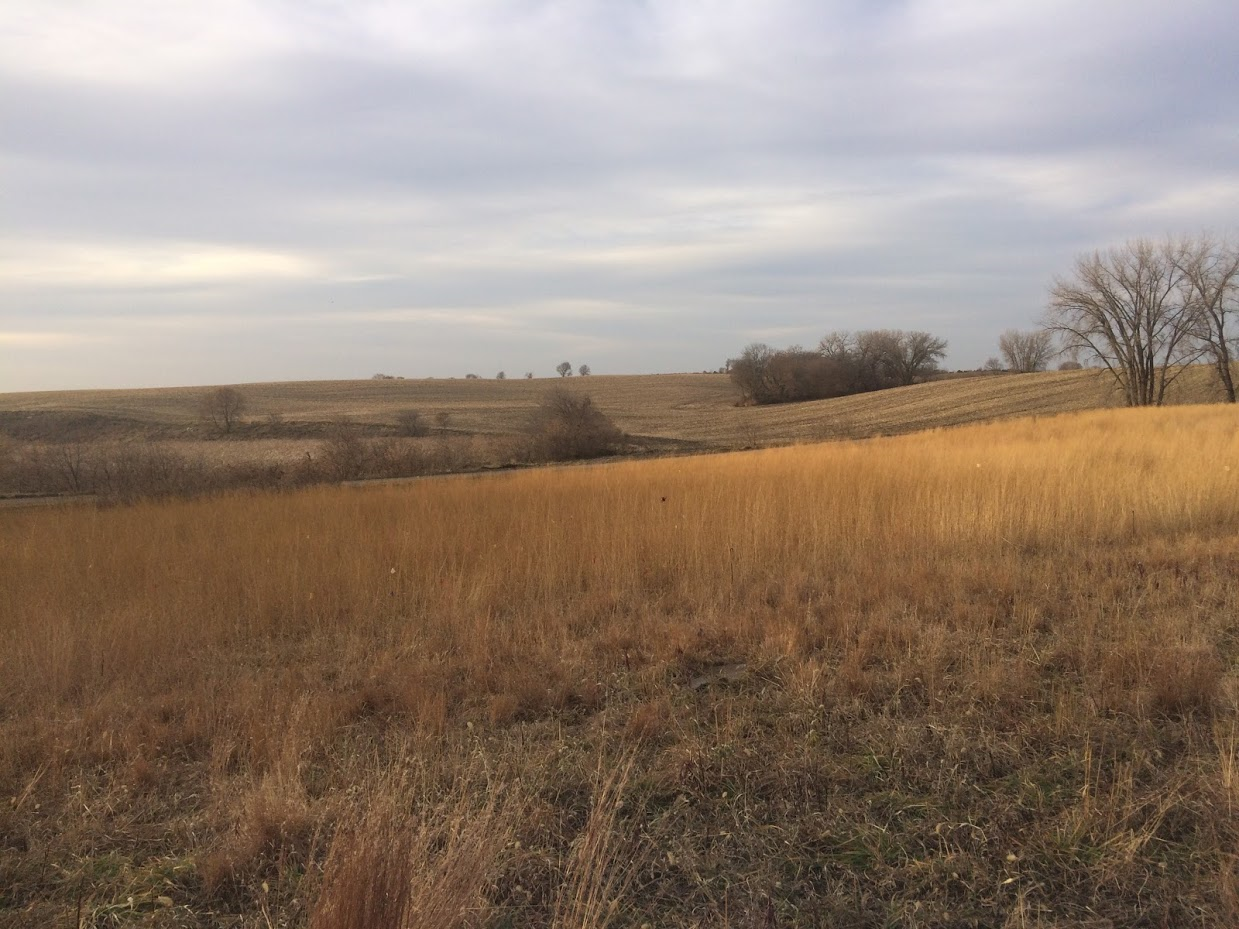
The plot is located directly to the east of P1, spanning 12 m east to west and 30 m north to south, between positions 860 and 890. See Mia’s flog post from September for more information about how we prepared the plot by clipping the grass and treating the sumac with Garlon. Mia also used Darwin to shoot points within and along the edges of P1 so that I could generate coordinates for each position in my planting that aligned with P1’s crooked grid. This was a good exercise in geometry. I figured it out, but not before googling how to find the intersection of two lines. Oh well!
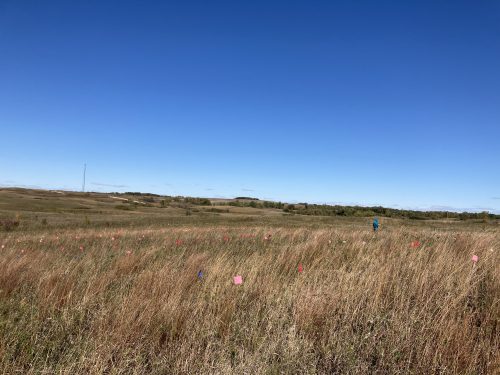
When I laid down the meter tapes based on the end points of the rows in this grid, it matched pretty well (the rows were supposed to be exactly 30 m long), but they were off a bit due to topography and the vegetation keeping the tape from laying perfectly flat. It was right on for row 58 and off by ~5cm in rows 62 and 65. We lined up meter sticks with the flags placed ever two meters and positioned achenes relative to according to the flag positions, rather than the tape. We placed 4 achenes per meter in positions 860-889.75.
Randomization:
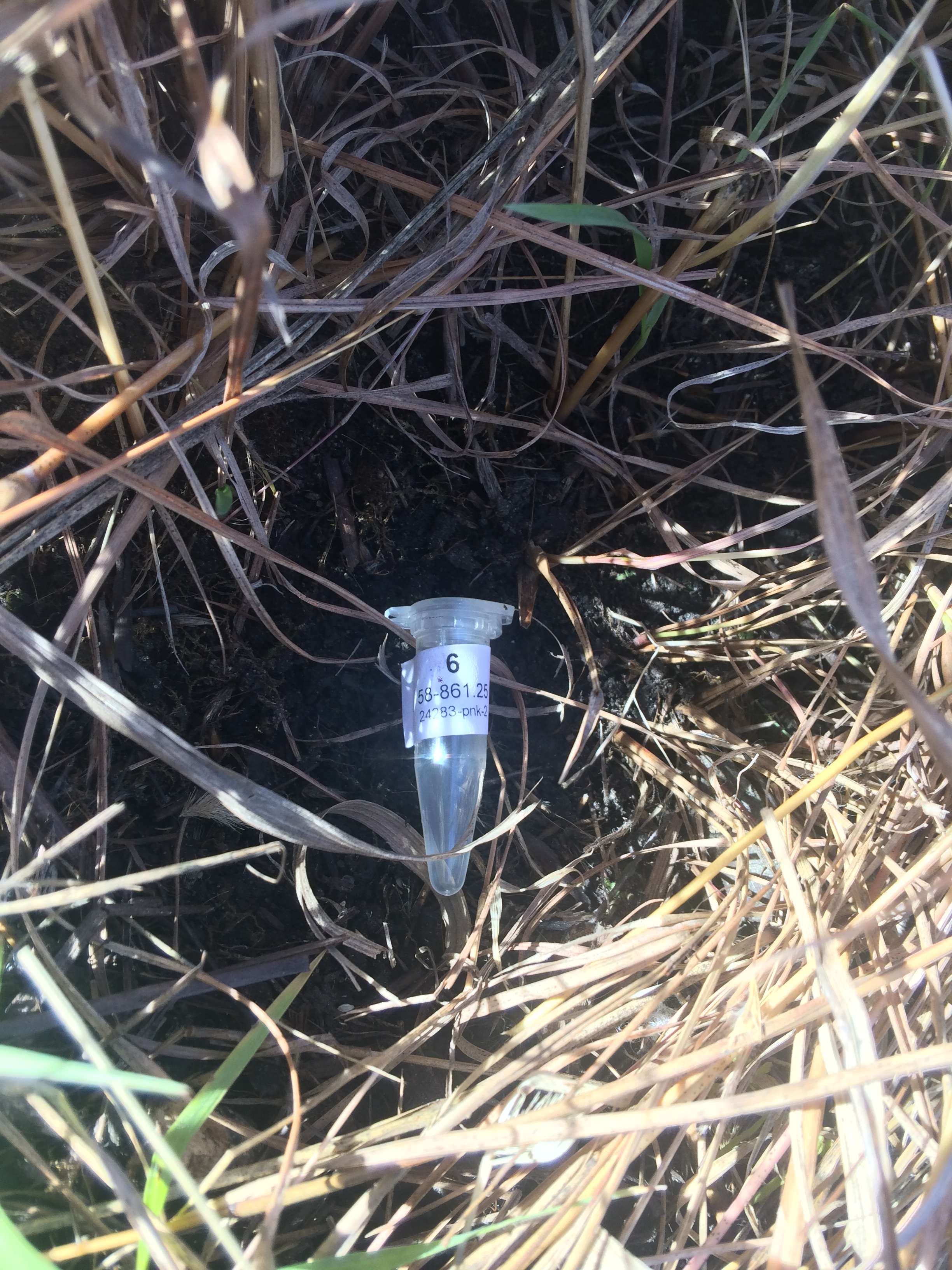
Based on the number of seeds I had, and the expectation that I might want to plant more for this experiment in the future, I randomly chose three rows (58, 62, and 65) to plant out of the twelve total rows that fit in the area that we prepared. I randomly assigned positions to all of the full achenes, based on their weight. Prior to planting, I placed each of these achenes into a 1.5mL microcentrifuge vial and labeled it with its planting position (1-360). I sorted the vials in order of planting position and placed them in vial trays that we brought into the field.
Planting:
It was a dry and unseasonably warm day. This is lucky because there was 10 inches of snow where the plot is located a week and a half earlier. I was able to convince Matthew and Gooseberry to come along to help. Matthew was extremely helpful, but Goose mostly ate deer poop all day and threw up on the way home. Very yucky! To set up for planting, I staked to the end points for the rows we were planting, set up a meter tape, and then staked to and placed pin flags at positions every two meters along the rows. I started by placing pin flags every meter, but this was time consuming and a pin flag every two meters gave us a sufficient reference point for each meter.
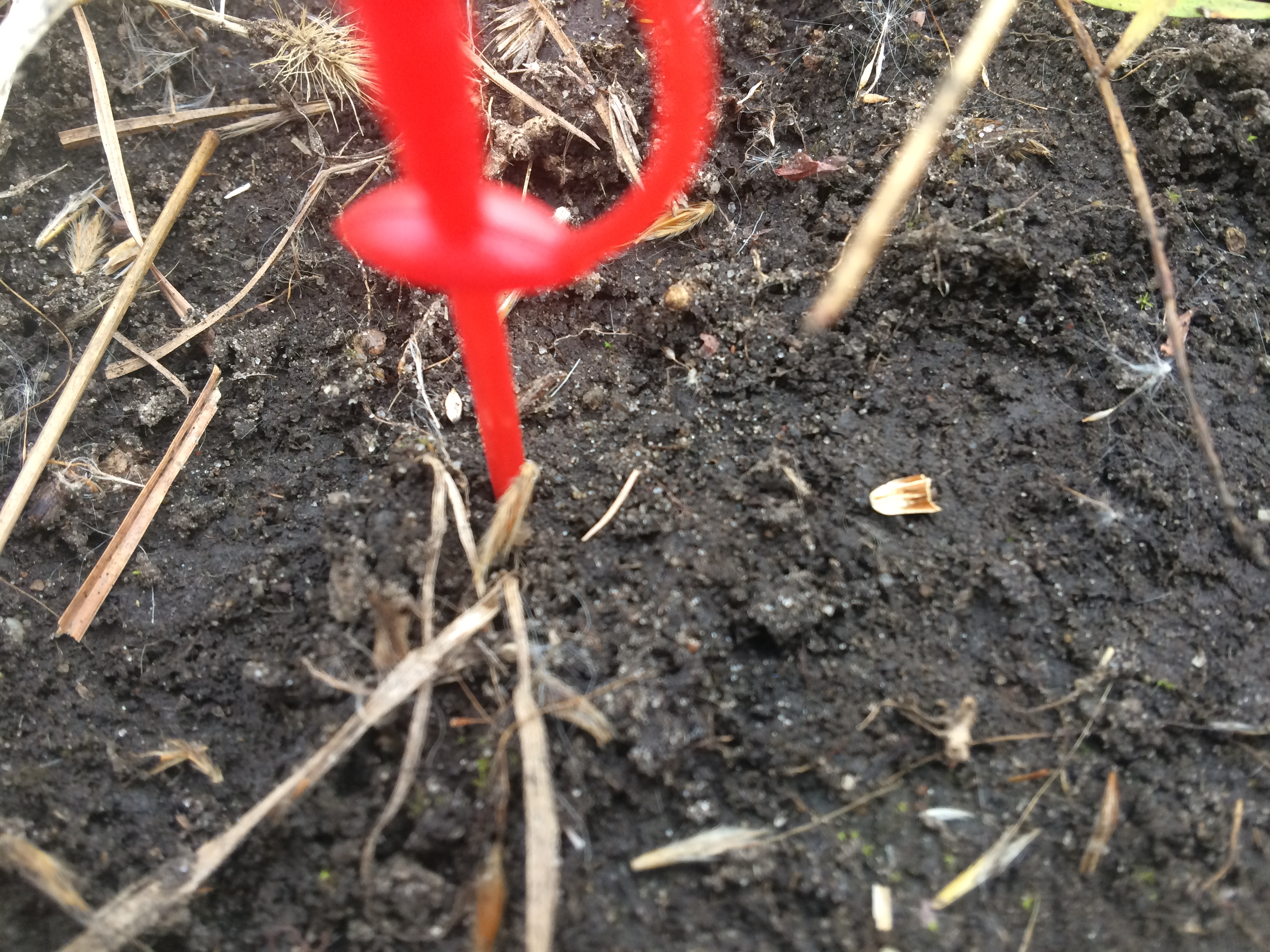
We liked breaking the actual planting into two steps, and working in a pair, because it meant that we had fewer items to fumble around with and it was easy to catch and fix each other’s mistakes, such as accidentally skipping positions. I do not believe we made any actual goofs, which is a first for me with planting! For the first step, one person cleared the duff, and the other placed the corresponding vial. For the second, one person placed the achene and collected the vial, while the other placed the toothpick and carried the clipboard, making any notes, e.g., if the achene was planted a few cm off the row to avoid placing it on a rock or in bunchgrass. The first step took about 10-12 minutes per 50 positions. The second took about 8-10 minutes per 50 positions. We set the achenes on top of the soil so that they had good contact with the soil, but weren’t buried. We finished around 4 PM and were grateful that we did not have to plant in the dark.
I hope the seeds have a good winter and I look forward to seeing them in the spring!
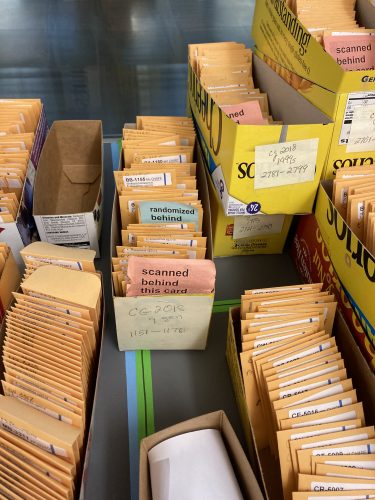
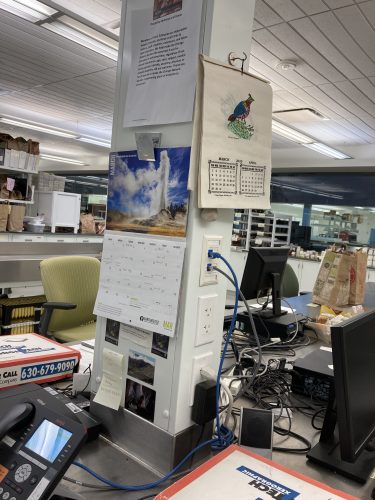
Yesterday Stuart and I took a trip into the Garden! This was the first trip into the Garden for me which I was very excited about. Stuart showed me around the lab and I have a much better sense of the ACE process now.
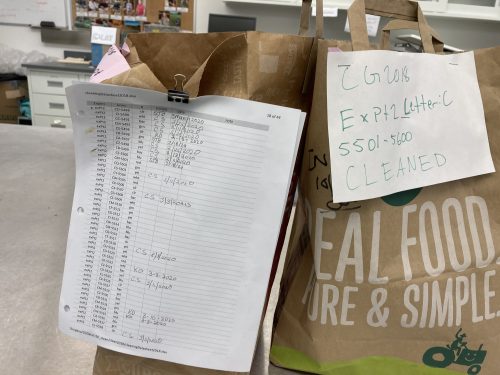
As we walked around the lab there was this almost eerie feeling. Almost like someone had stepped out mid-day for lunch, and Stuart and I being there is disrupting their work.
Char’s cleaning was interrupted, this didn’t stop the spiders from building a web…This patch was half way through being randomized, and just stoppedTime has actually frozen in March… but no more
Hopefully I can start the inventory process on all of heads collected in 2020 soon! It’s all just so exciting!
I’ve relocated! Stuart and I finished up the last of field work on Friday and have moved back to Chicago. I moved into my new apartment on Saturday!
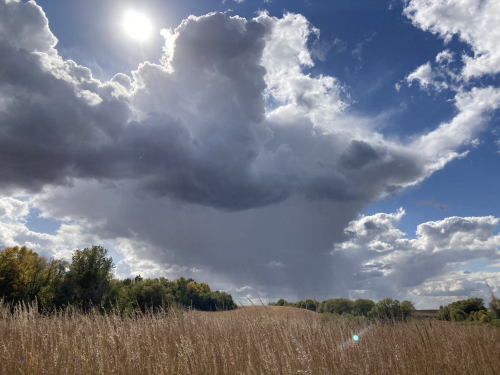
Rain passing by p1
Last week we finished up many tasks including, p1 harvest, demo, remeasuring any problem records in p1, pulled all flags in p2, p7 and p9. Overall it was a great week we got a lot done!
P2 before it was de-flaggedP2 after it was de-flagged
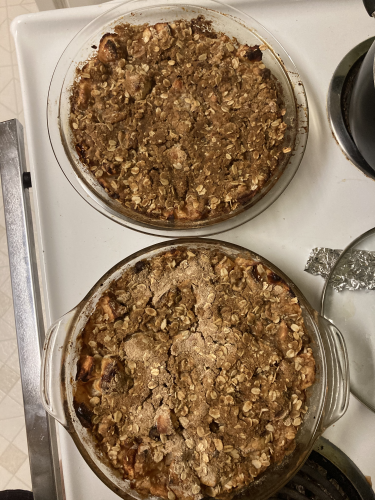
I celebrated my birthday last Monday by making myself some apple crisp. It was very yummy!
The birthday crisps!
I am definitely going to miss Minnesota but am very excited about my new adventure in Evanston!
As we have mentioned previously on the flog in all of the experimental plots we measure every plant every year. We mainly need to know if the plants are alive each year. We also measure various other traits, for example leaf length and number.
As you might suspect we don’t find every plant every year we call these plants “can’t finds.” To ensure that these plants really not there and we didn’t just miss them we search these positions again.
I have been working on going through the recheck data, cleaning things up a bit and fixing any problems. I have also calculated the re-find rate for three of the plots that we have measured. For p8 the re-find rate was 2.0%, in p679 which has hybrids of E. angustifolia and E. pallida planted in it, the re-find rate was a whopping 14.0%. Lastly in p1 which is our largest experimental plot had a re-find rate of 10.1%.
I find the range in re-find rates among the plots interesting, the low re-find rate in p8 would correspond with the higher mortality rate in this plot. P679 had the highest re-find rate at 14.0%, this plot was the first plot that we measured. I would suspect that over time we have gotten better at measuring and finding plants. If we measured these plots later in the season some of the positions that we recorded as can’t finds we would have found with more experience. This would lower the re-find rate.
Overall, I think that the team did a really great job at measuring and rechecking, it was a lot of work, but I think we worked hard and got things done very efficiently. I know the re-find rates aren’t actually that high, but I was somewhat shocked how high the rates were.
In other news I finished harvesting all of the heads from the remnants, and finished Demo at all of the sites other than near town hall.
I am heading down to Illinois at the end of the week, Stuart and I will be wrapping up field work this week. I am excited about the move and to start work at the Garden, but I am also sad to leave Minnesota. I have enjoyed being in the wide opened skies and the fresh air.
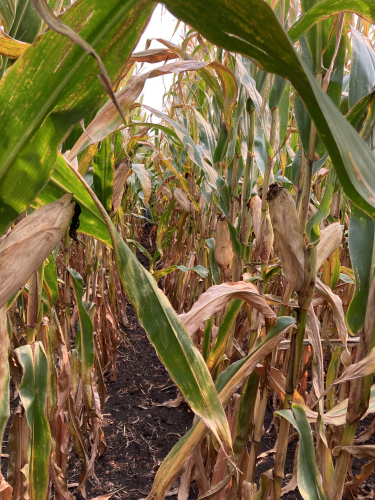
Stuart and I took a wander out though the corn to do demo at Krusmarks. It was a very erry walk through the corn.
Later in the week Amy came up from the cities to work on her addition to p1. Amy is planning on planting the seeds created during her inter-remnant crosses this year. She is adding to p1 in the south east corner, now this portion of the plot is being encroached by sumac. Now little baby Echinacea and sumac do not mix therefore, we are trying to decrease the amount of sumac in the area. In order to do this first we cut all of the tall grass to expose the sumac. Then we applied herbicide to the sumac in order to apply the herbicide in a systematic way we set up “swimming lanes.” We will see how effective our efforts are in the spring, but I sure think that it worked well.
Amy and Stuart cutting the grass of the tallgrass prairie Anyone feel like going for a dip?
This week Stuart is back in IL, I have been continuing to work on harvest and wrapping up demo and p1 rechecks.
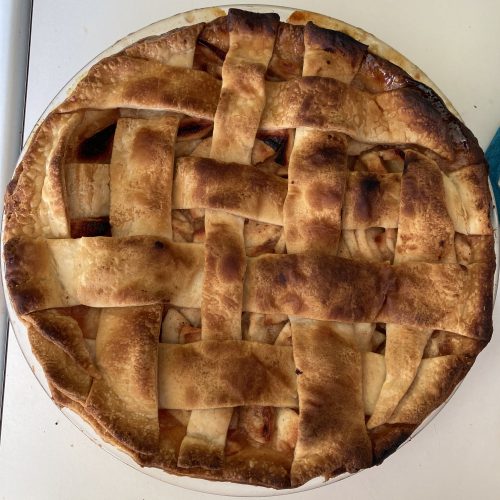
Last night I made apple pie from apples at the farm! I had never done a basket weave crust before, but it was fun to figure out as I go!
Team Echinacea continued the aphid addition and exclusion experiment started in 2011 by Katherine Muller. The original experiment included 100 plants selected from exPt01 which were each assigned to have aphids either added or excluded through multiple years. The intention is to assess the impact of the specialist herbivore Aphis echinaceae on Echinacea fitness.
The 2020 aphid team was Anna Allen and Allie Radin. They located 25 living exclusion plants and 16 living addition plants. The experiment was conducted from July 6th to August 19th, with the final visit consisting only of observation. Aphids were moved only during four visits from late July to mid-August due to late arrival and low numbers of aphids. Only one or two aphids were applied to each plant during each visit. They recorded the number of aphids present in classes of 0, 1, 2-10, 11-80, and >80. They also recorded the number of aphids added.
Aphids on an Echinacea leaf
Start year: 2011 Location: Experimental Plot 1 Overlaps with: Phenology and fitness in P1 Data collected: Scanned datasheets are located at ~Dropbox\teamEchinacea2020\allisonRadin\aphidAddEx2020.
Products:
Andy Hoyt’s poster presented at the Fall 2018 Research Symposium at Carleton College
2016 paper by Katherine Muller and Stuart on aphids and foliar herbivory damage on Echinacea
2015 paper by Ruth Shaw and Stuart on fitness and demographic consequences of aphid loads
You can read more about the aphid addition and exclusion experiment, as well as links to prior flog entries mentioning the experiment, on the background page for this experiment.
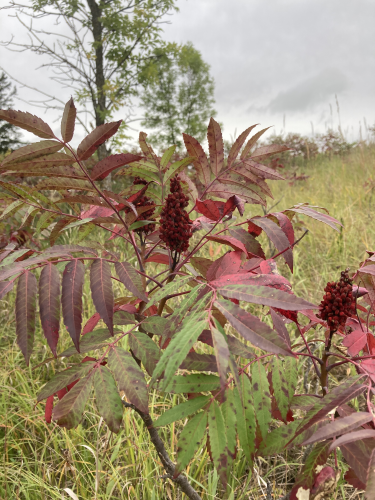
As you know the majority of the team has now gone back to school, so now it is just me and Drake. The last week has taken a turn towards fall, the average temperature has been around 55F. There has also been an ever so slight change in coloration vegetation, the soybean and corn plants have turned more yellow than green, the sumacs have gone from green to a nice dark red. The Indian grass in p1 has been turning yellow and has been falling over. Even some of the Echinacea are getting ready for Halloween!
Some colorful sumacsSilly Echinacea Halloween is next month!
This week I have been working on p1 harvest, harvest from the remnants, and some maintenance in p8. Part of the p8 maintenance is trimming out all of the big blue stem and Indian grass. As I worked on that task I couldn’t help thinking of the line from Alice in Wonderland, “painting the roses red”. I couldn’t help but see the irony in trimming grasses out of the prairie, however we do have a rational in trimming the grasses other than just to avoid trouble with the Red Queen. By removing the flowering stems of big blue stem and Indian grass before they set seed, we can decrease their spread through the plot.
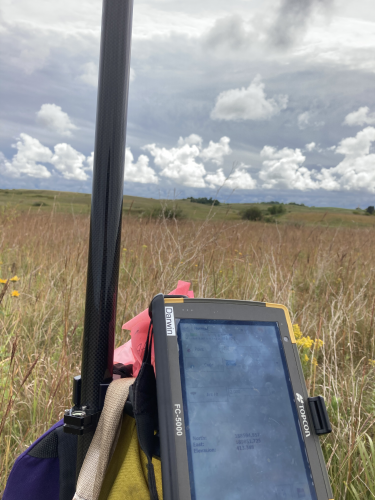
This week I also spent some quality time with Darwin shooting all of the flowering E. pallida.
Darwin enjoying the view of the fall prairie clouds
In the upcoming week I will continue to work on the various harvests, and p1 rechecks.
Hey Flog, just one more person saying bye! What an awesome experience I had on Team Echinacea this summer. I appreciated the community and learned a lot from the age and experience range of the team. I learned a lot of new skills, from assessing flowering phenology to using a survey-grade GPS to conducting an independent project to becoming familiar with new plant species! The age stratification of the team also got me thinking about both learning from people and being someone others could learn from. With such a variety of work this summer I was never bored, often felt challenged by the responsibilities I was trusted with, and got to enjoy the company of an awesome group of people.
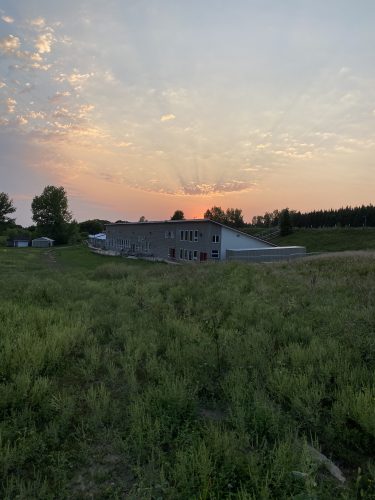
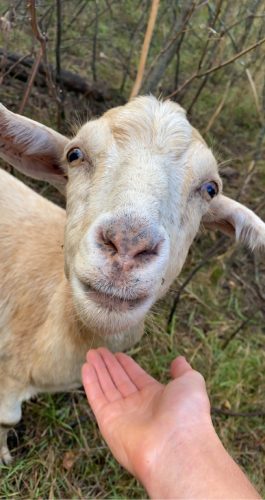
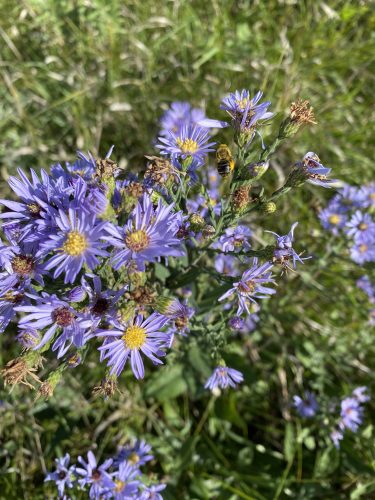
I enjoyed one last day of demo with Mia and Anna 🙂Living at Andes was great, especially because Lea and Mia were two awesome housemates. Hoping the ATH team compensates me for use of this publicity photo.I got shocked by electric fences twice this summer. Glad this goat (or a similar-looking friend) got to share one of those moments with meNot grass corner this week but the last species I made a visor record for on my project (Symphyotrichum laeve), plus a flying BombusAww! Sharing a special moment with my sister when she visited. It’s fun when you have people to share it with!
The next few weeks I’ll be thinking of Mia and Drake as they wrap up harvest and the field season! See you next time!