|
|
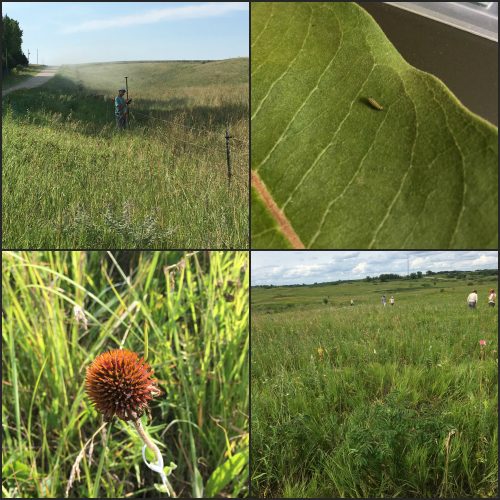
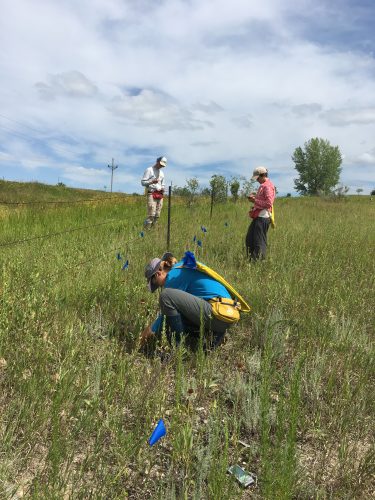
After a crazy and super fun Waterama weekend in Glenwood, it was fun to get back to work with the rest of Team Echinacea. Today was phenology Wednesday and with many of the plants done flowering it took barely an hour to complete everything! I will admit I am a little sad that summer is almost over… However, since phenology is nearing the end, we also used this morning to work on demo at north railroad crossing and around landfill. I worked with Gretel and Alex after finishing phenology at around landfill and found a tiny (hopefully monarch) caterpillar! His name is Angustus and I am hoping he will grow into a fantastic butterfly we can release soon!
After lunch, we headed out to P2 to measure. Today we got to row 37 out of 80. Even though this is less than half, the coming rows have fewer plants. When we had measured for about 3 hours, Stuart cut up a watermelon and the team enjoyed that as an end to a great day.
The plan for the rest of the week includes more demo, phenology, and other projects! Also, everyone is looking forward to the promise of a cool, 60 degree day tomorrow!
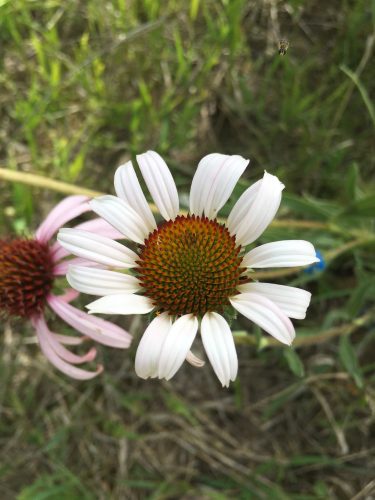
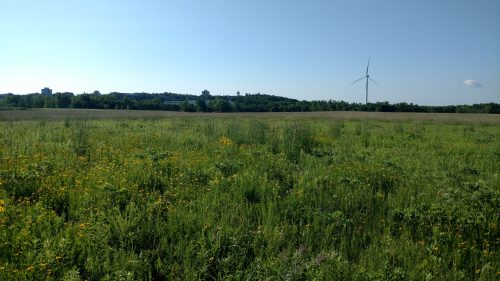
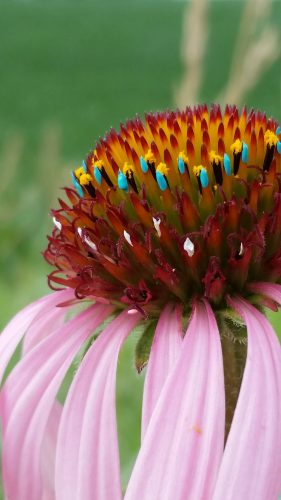
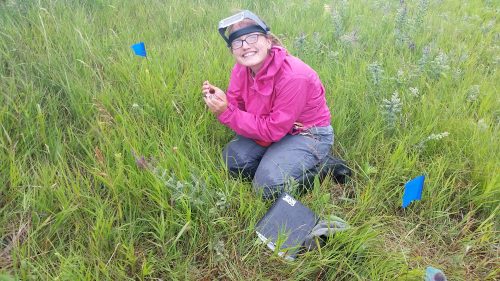
 Top left- Alex staking at alf, Angustus the caterpillar, measuring, and an Echinacea done flowering
One of the reasons I enjoy field work is its unpredictability: it could rain or it could be a cloudless day, it could be 80˚F or it could be 60˚F, you could make a pretty significant dent measuring P2, finish measuring in P1, or you could get stung by a couple wasps for like no reason. Any combination of 4 of those things could make for an interesting and complex day.
Yesterday we did finish measuring in P1 (though we still need to do re-checks), and we got through 14 rows of measuring in P2, all during the morning. So far, no one seems to have gotten lost in P2, but we will see what happens as measuring progresses.
During the afternoon, most of the team worked on demo at the railroad crossing sites, while Lea visited her sites, and I set out yellow pan traps. Doing the yellow pan trap study is one of my favorite activities as a member of Team Echinacea. Every time I bring one in, its like a new and different present. There are some sites where I’ve come to expect certain insects. For example, I have come to almost always expect to see a cockroach in the site 3 yellow pan trap. It’s exciting, it’s fun, and it’s producing really interesting data. More is sure to come.
Oh, also happy August.
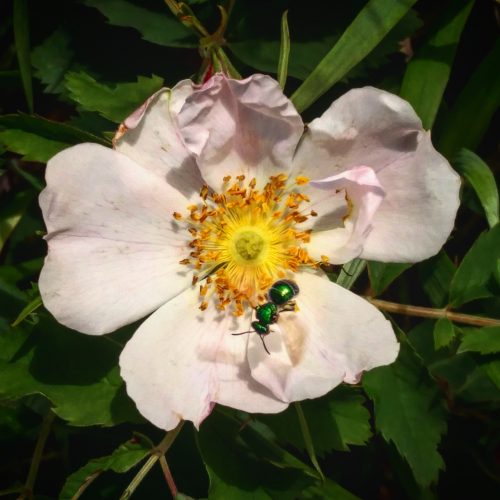
An old picture of Augochlorella spp. on a prairie rose. July 2017.
Sometimes, team Echinacea weekends can be very low key: we read or study, do laundry, or cook lunches for next week. This past Saturday was different. Lea, Tracie, Ashley, Wes, and I went to yoga on the beach in Glenwood. It was nice, the water was very peaceful, the class was rigorous but not overly difficult, and it was a warm morning.
After yoga, we got breakfast at the Gingerbread Cafe nearby. Now, I love breakfast. It’s hands down the best meal of the day. As far as the taste, the Gingerbread Cafe delivered a solid egg-hashbrown-toast plate. It was basic, but well done for a small town greasy spoon. The wait for said food was a bit long; I believe we waited a little over an hour. However, the restaurant was busy when we walked in, so I expected a little bit of a wait. The service was very good, and I (who was at that point in desperate need of a coffee) was not found with an empty cup. For my overall experience, I would give it a 9/10: a good breakfast.
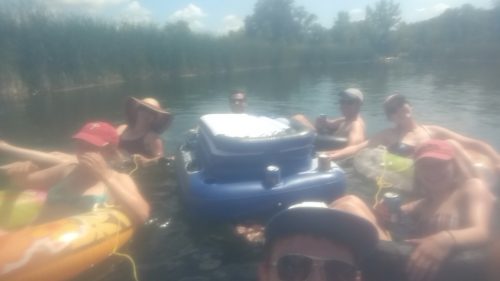
After breakfast, Lea and Ashley went and had their own experiences. But Wes, Tracie, and I, along with a few of Amy Waananen’s team, went floating on the Long Prairie River. Butt reeds aside, it was perfect. Stuart and Gretel had graciously supplied us with tubes, and not wishing to use Wes’s bike pump, we filled the tubes at one of Alexandria’s finest gas stations. I am now absolutely convinced that Rosie, Kristina, Matthew, and Amy are all genii. They had found a floating cooler, which we tied ourselves to (with varying levels of permanency). The float took a few hours. To make a very long story short, we encountered tunnels and bridges, visited with turtles, got poked by Wes with reeds, and enjoyed a few libations. It was overall an excellent afternoon, captured by the blurry but nonetheless perfect figure below.
Oh yeah, and Wes, Ashley, and I went to fireworks in Glenwood that evening too. Good Saturday, 12.5/10.
 The least blurry photo of the floaters feat. Amy, Rosie, Kristina, Matthew, and Wes’s forehead. 29 July 2017. Photo Courtesy of Wes Braker.
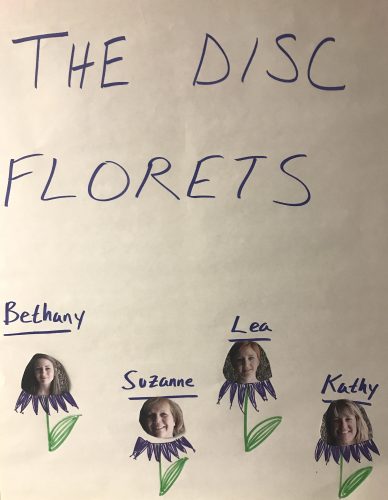
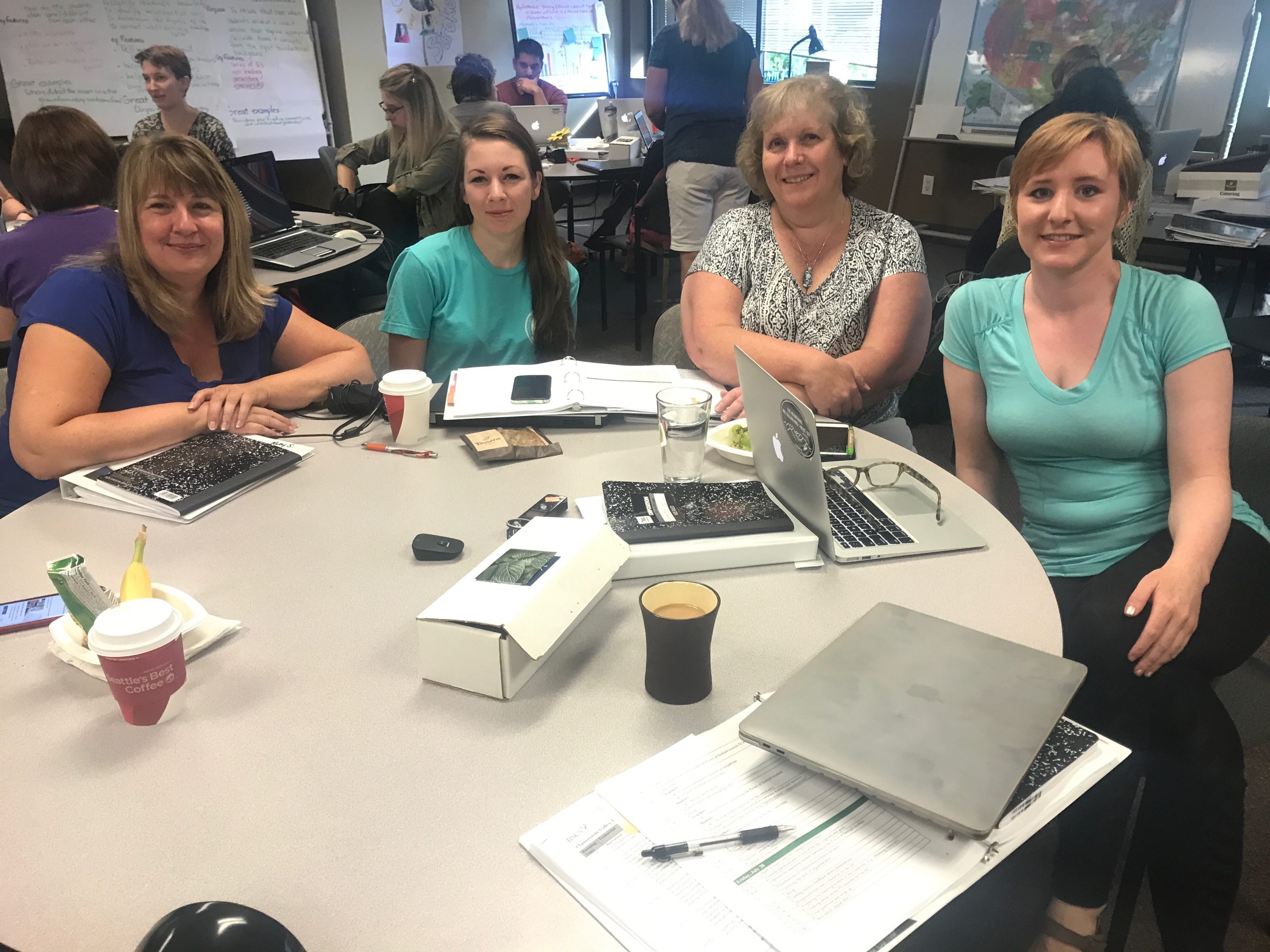
Hi all! This week I’ve had the opportunity to participate in the Planting Science Digging Deeper workshop in Colorado Springs. Planting Science is a really cool program that pairs teachers with scientist mentors (like me!) so that students can get feedback from “real” scientists while developing and conducting experiments in class. This particular workshop is important because it’s part of a larger research project. Though Planting Science has existed for over a decade, BSCS (the organization that developed Planting Science) wants to demonstrate more quantitatively how participation in this program impacts student understanding. I am training to be a “mentor liaison” that will smooth communication between teachers and other scientist mentors. The workshop has included discussions about science content, pedagogy, and mentorship! When the workshop started we were separated into teams and developed team names. My team represents Echinacea since we are “The Disc Florets”.
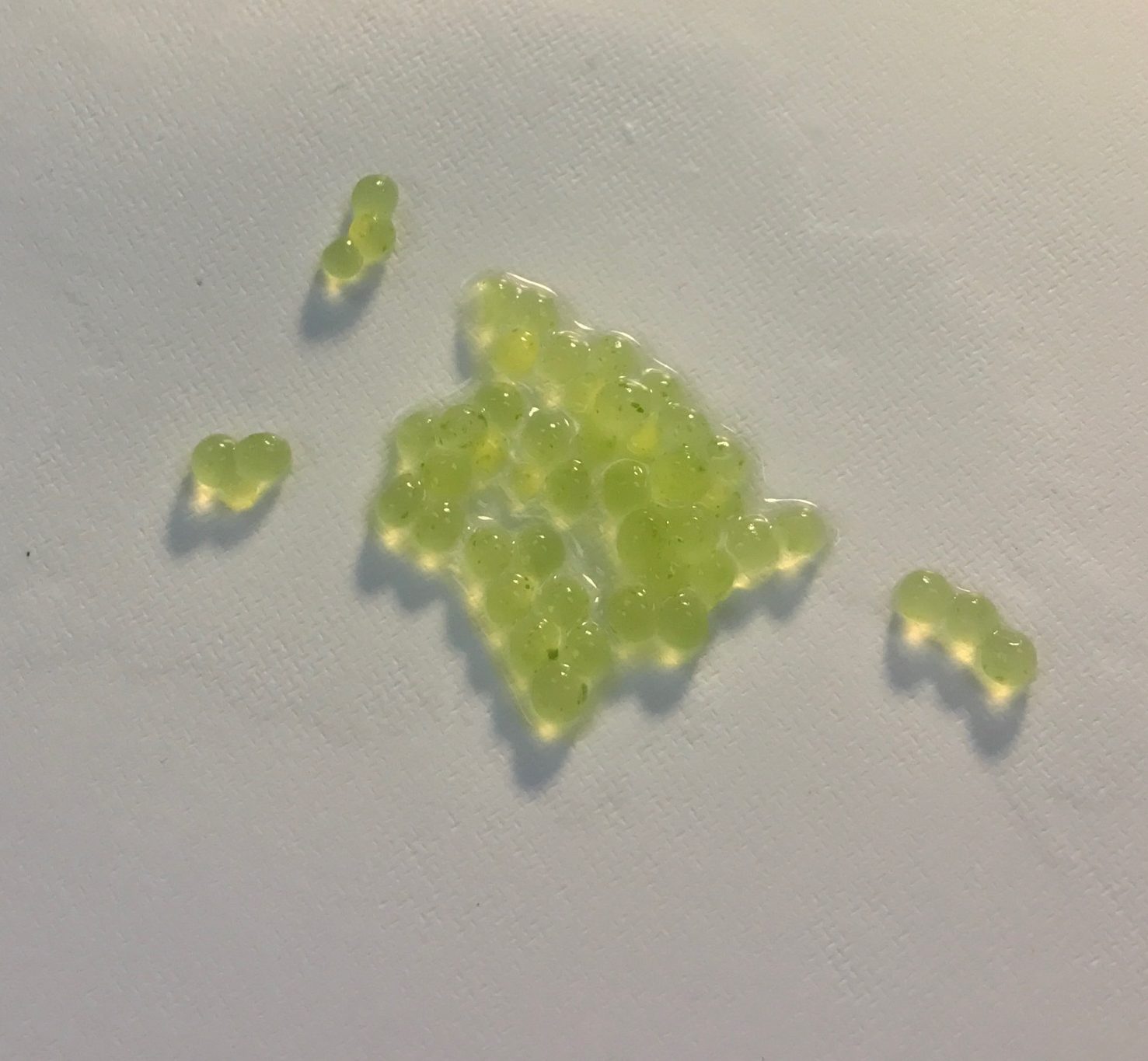
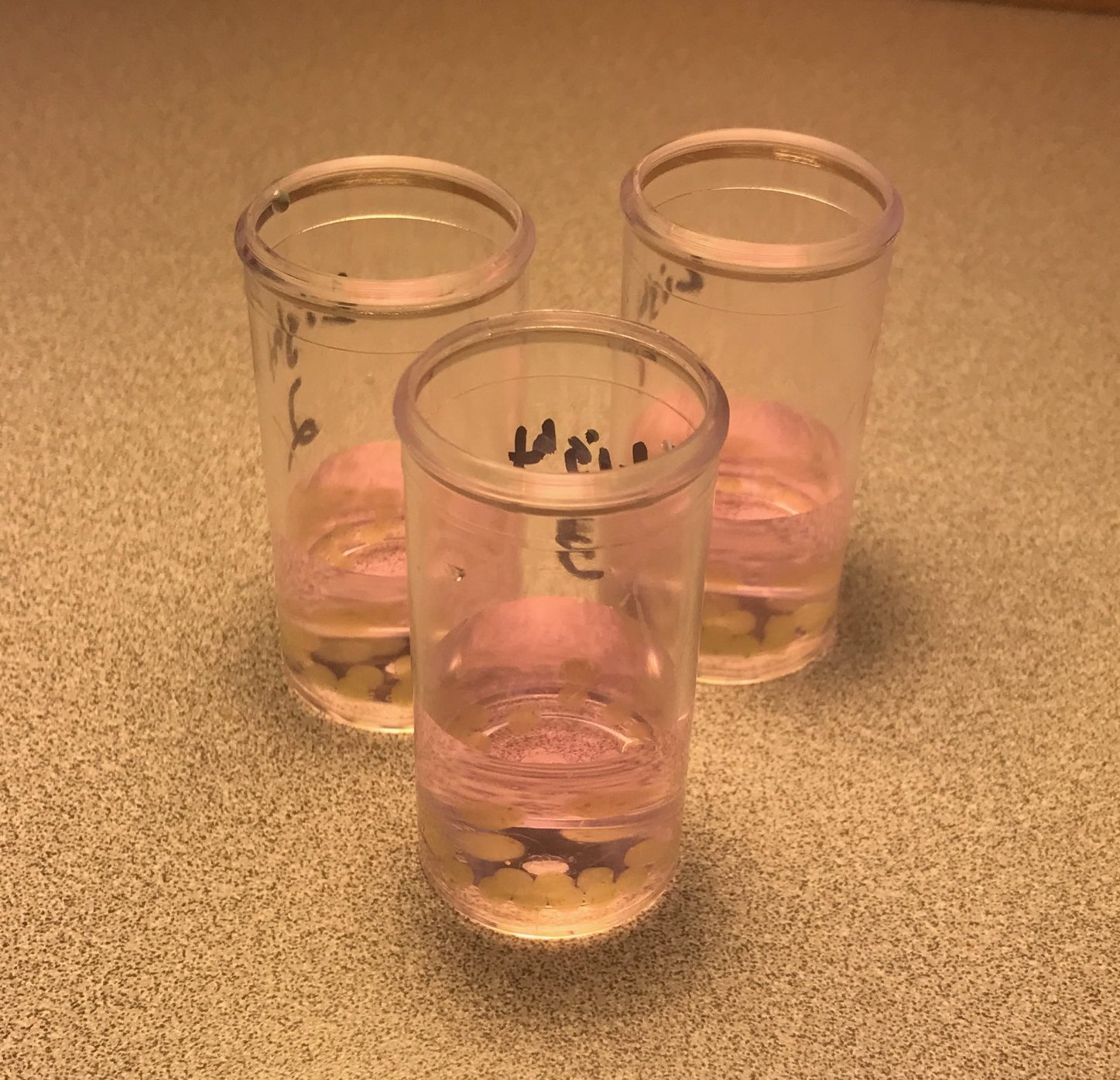
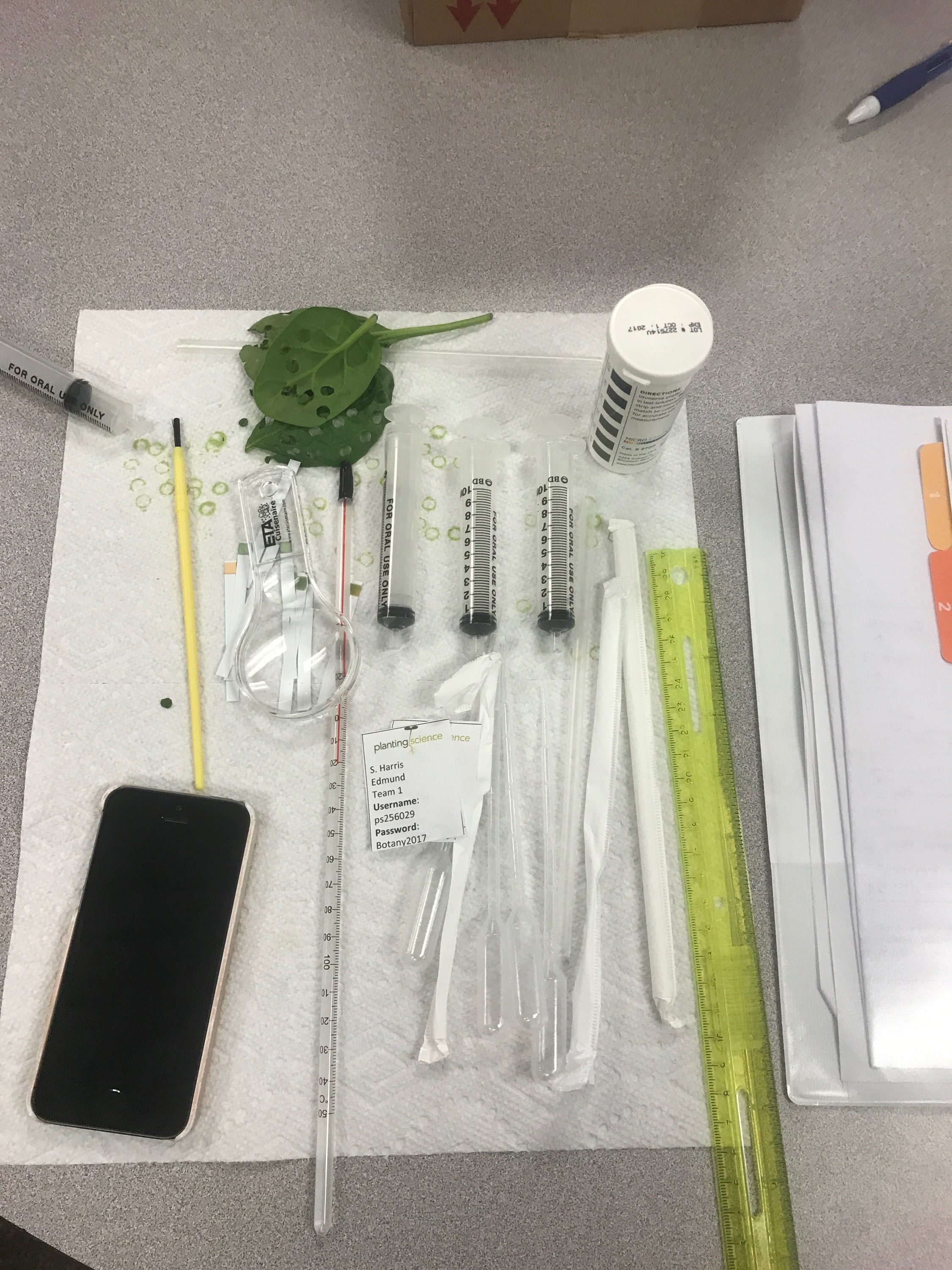
 The team poster! The workshop was focused on the module called “Power of Sunlight” which focuses on teaching photosynthesis. As part of the workshop we were able to conduct our own investigations about photosynthesis with spinach leaf discs, algal balls (very fun to make), and other aquatic plants.
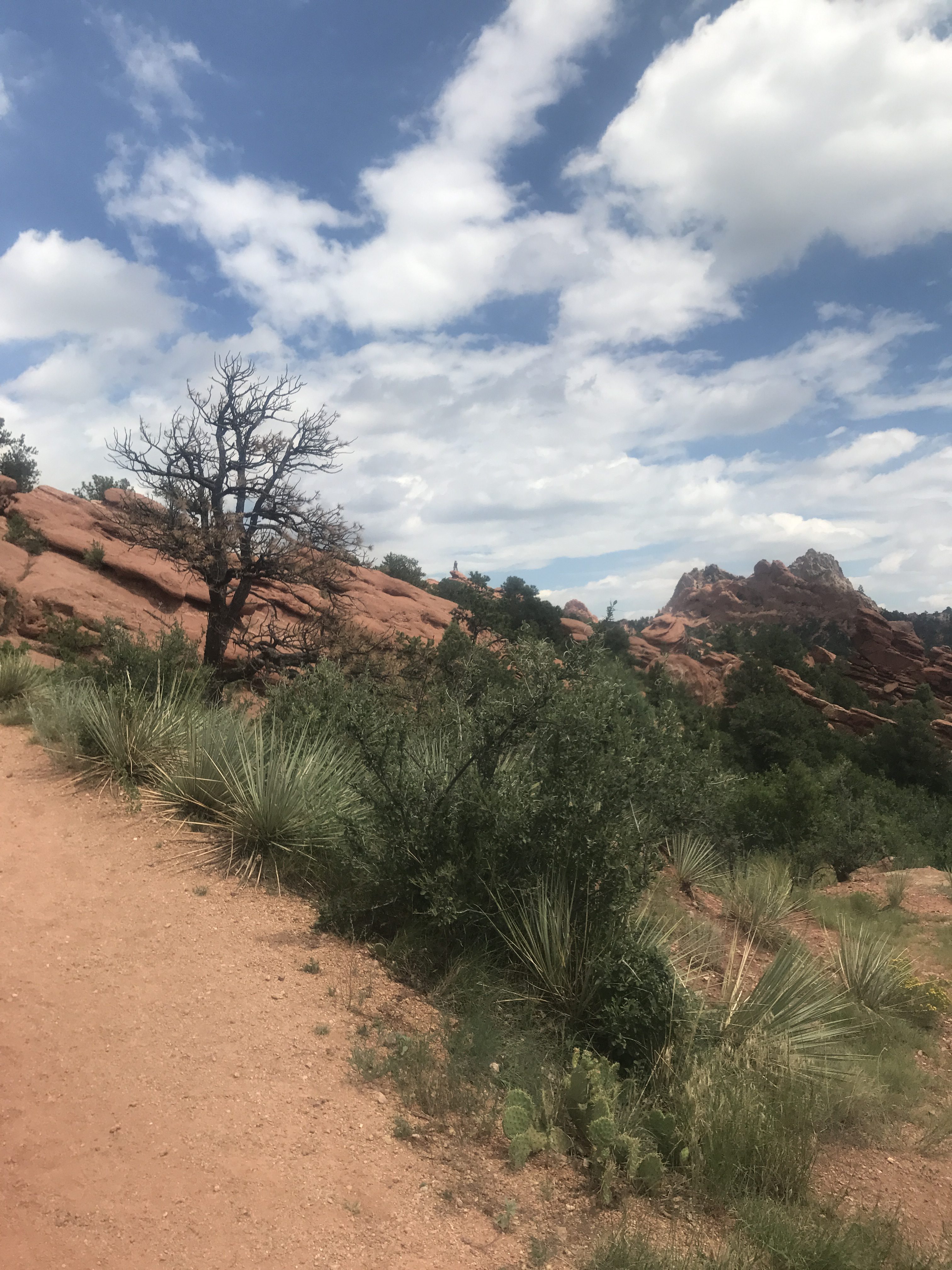
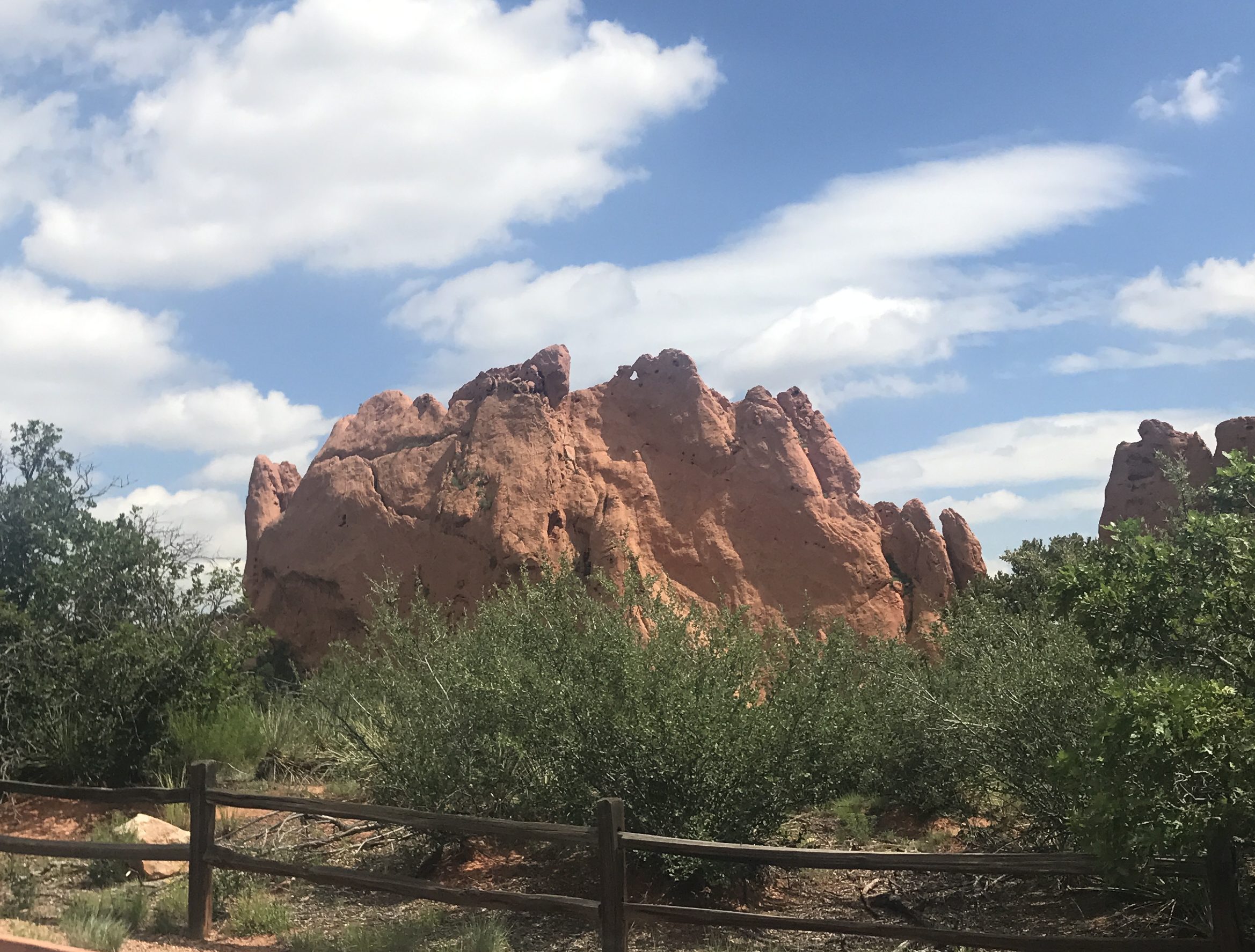
 Algae balls  Algae balls in phenol red solution  Materials for making spinach leaf disks We also were lucky enough to go on a field trip to Garden of the Gods, a beautiful city park in Colorado Springs. Here are some of the things we saw.
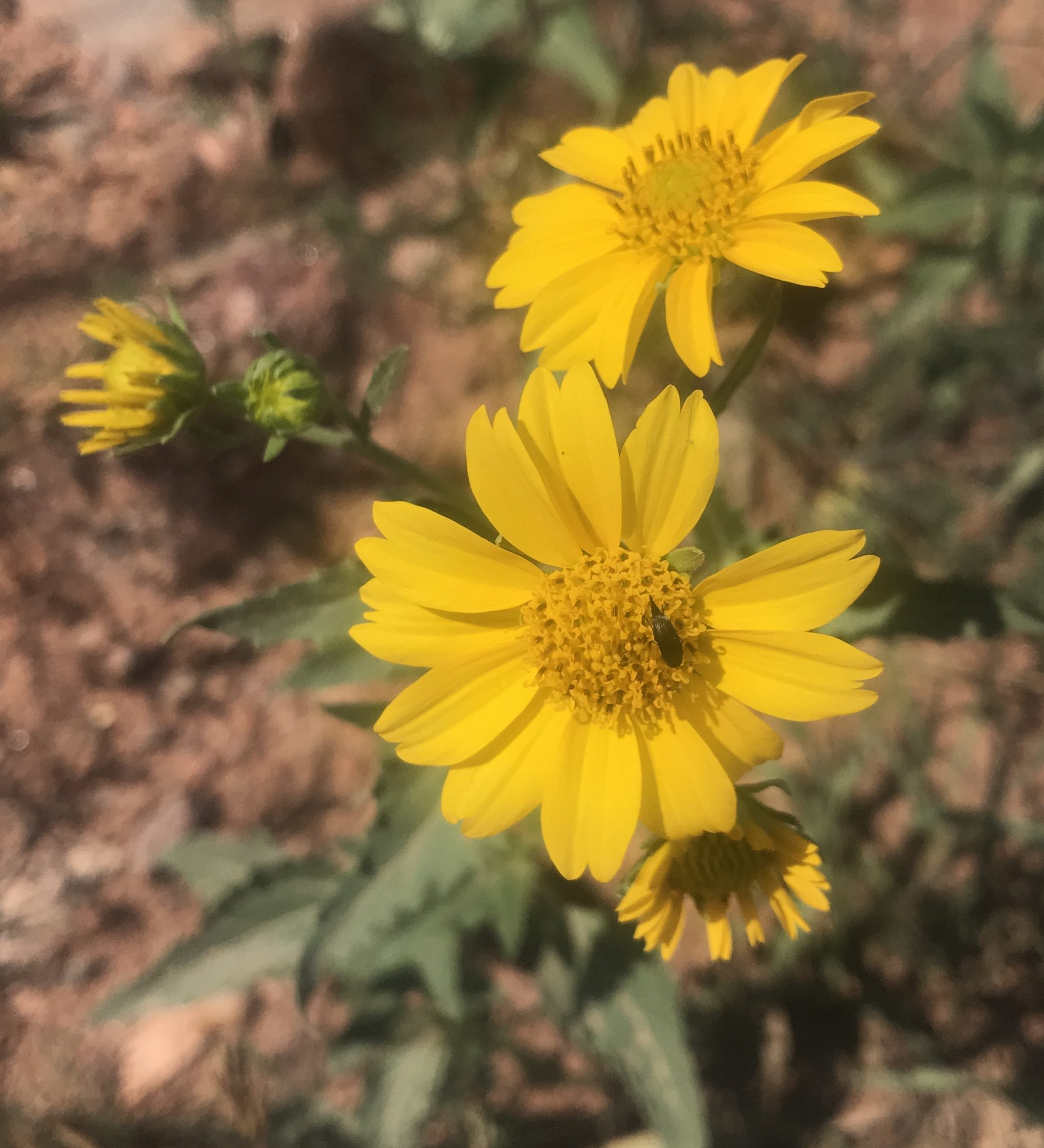
 Walking along the path  Red rocks!  Style persistence?
Overall it’s been a great week. I’m excited to participate in the Planting Science program this fall, and I’ve had a great time in Colorado Springs!
 The Disc Florets!
Once the initial cleaning of Echinacea heads has been completed the next step in the ACE workflow is (re)checking.
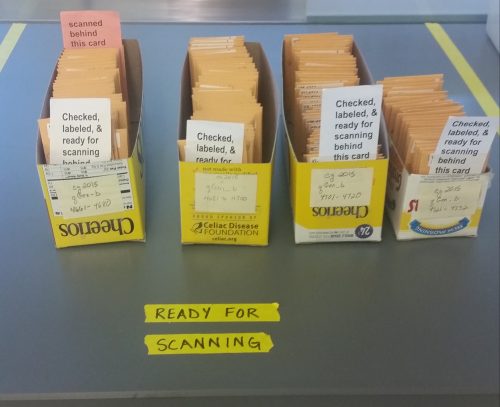
Checking is an important step to get a precise count of achenes per head to accurately measure plant fitness. The bags with the cleaned head, achenes, and chaff are checked to ensure that there are no achenes in the chaff or left on the head. Once the envelopes have been thoroughly checked they are labelled according to experiment. Both envelopes are then organized numerically in a box where the next step is to be scanned.
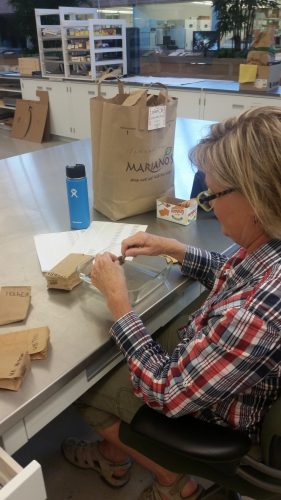
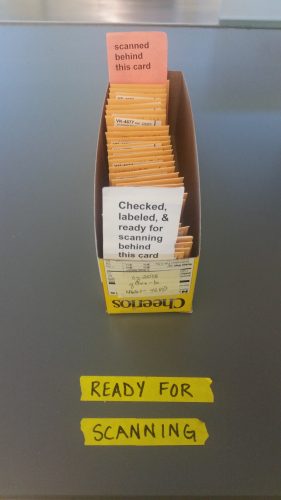
 Kathryn checking Echinacea heads and chaff for stray achenes After this point paper markers are used to identify where in the ACE process the envelopes are. Once checking is complete a paper marker that reads “Checked, labeled, & ready for scanning behind this card” is placed in the box. As volunteers work through the process the paper markers are moved to the appropriate positions (see images below).The next stop on the achenes’ trip is to the scanner to accurately count everything (all the achenes) from the image.
 Boxes of achenes and corresponding chaff envelopes in sequential order in the “Ready to be Scanned” area. Box with markers indicating it has been not only checked but also some achenes have been scanned.
Another fun phenology Monday! We got a lot done this morning. The time it takes to get phenology finished has decreased as we have all gotten more efficient and many of the Echinacea are done flowering. Ashley and Gretel did p2, Wes did the Nessman/Aanenson route, Anna and Alex took Staffanson, and Will and I took the Around Landfill route. I was excited because my route today includes my favorite plant. It’s in the northwest corner of East Elk Lake Road.
 One of the heads on my favorite plant. First day flowering at East Elk Lake Road.
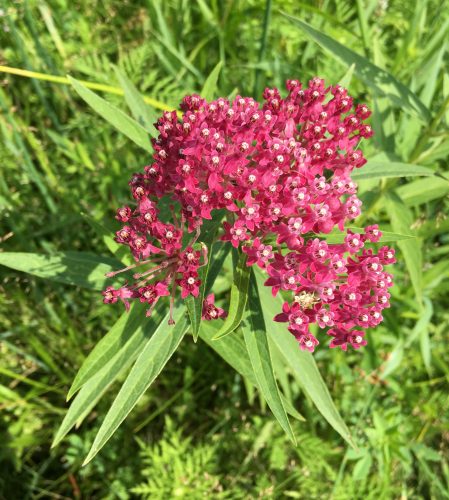
After finishing up phenology Will and I GPSed plants at the rest of the phenology remnant sites. As of now, all plants in the phenology dataset should have a matching location! We had a couple extra minutes before lunch, so we ventured into an island within a corn field near Stevens Approach. We found a lot of cool plants there, including some swamp milkweed.
 Swamp milkweed, a very beautiful milkweed.
After lunch we headed out to do flowering demography at Loefflers Corner West. I liked being at a new site and seeing some new plants there.
Anna, Will, and Gretel flagging and entering data on flowering plants at Loefflers Corner West.
See you tomorrow, flog!
I went home to see my parents this weekend in Northfield, MN, and had a wonderful time! This morning my mom and I biked around the St. Olaf College Natural Lands to see prairie flowers in bloom. When we got home we had a big breakfast of blueberry pancakes with some family friends. Then we spent the day working in the garden weeding and picking ripe veggies. Yum!
The St. Olaf College Natural Lands in full bloom.
Good afternoon, Flog readers!
As an REU intern and member of Team Echinacea, I get to do an independent research project of my choice. I’m excited to be studying the effect of style age, resource allocation, and pulse pollination on Echinacea angustifolia. I’ve attached my research proposal for your enjoyment and others’ future reference.
I’m excited to conduct this study!
My proposal: BARTO_Proposal_2017
 Bracts of rows 1, 3, and 5 painted.  Pollinating Echinacea
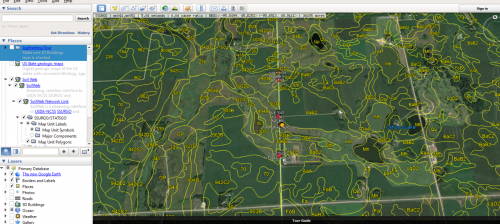
This summer I am going to be using Google Earth Pro and Rstudio to plot the GPS points of Echinacea plants. From there I will use an application called Soilweb to determine the type of soil where these points/plants are. I will then look into the different characteristics for that soil such as water holding capacity, nutrients, texture, or cation exchange capacity.
project prop. Anna V. Soil

It’s phenology Wednesday, and you know what that means! Team Echinacea headed out to our experimental and remnant sites to assess Echinacea phenology. Will and I took the Around Land Fill Loop, while the other teams tackled p2, Staffanson, and our other remnants.
On phenology days, I collect pollen as I collect data because my personal project requires ample pollen. That doesn’t mean the pollen is abundant, however. Today, while I found anthers with copious pollen at Around Land Fill, I had to battle ants off of the Echinacea heads, and to collect data, I often had to wait for ants and other critters to walk to the ray florets, away from the immature florets I needed to count. Collecting what I believed to be enough pollen wasn’t an issue once I had shooed the critters, and Will and I headed back to the Hjelm house to check p1 by 11:00.
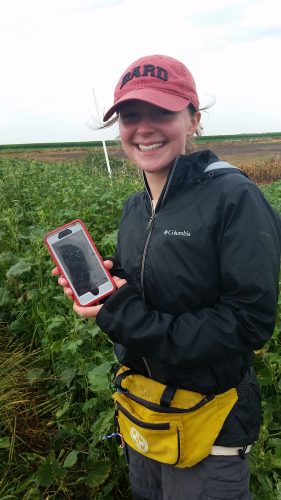
About two-thirds of the way through collecting data in p1, I saw raindrops smearing my check marks on the clipboard. Will suggested we get our rain jackets from inside, and we started to head back, but we stopped to look at a few more heads. Then, Stuart advised us to go in, and thunder clapped. About 15 minutes later than everyone else, Tracie and Anna came in from Staffanson. To our dismay, Tracie had lost her phone at Staffanson, and the rain was incessant, meaning immediate recovery was delayed. While rain poured over the research base, lightening flashed, and thunder shook our chairs, Tracie and other team members strategist a way to recover her phone. The solution: a systematic search of the area where she last saw her phone. We ate lunch, visited with Amy and her student, and headed out to Staffanson to find Tracie’s phone. We searched for about 10 minutes; then, Tracie found her phone! Woohoo!
Tracie moments after recovering her phone at Staffanson Because the search took a lot less time than we anticipated, Tracie helped me with my afternoon task of counting, pollinating, and painting my experimental plants. Pollination was going steady for the first 40 minutes, but then the rain set in, and my pollen started to clump, and I used a lot of the remaining pollen on a few styles. Half way through one of my pulse treatments, I ran out! Without much trouble however, Tracie and I drove to a nearby remnant to collect the rest of the pollen I needed, the rain let up, and I was able to finish my daily pollination.
After our field day, we came home and got ready for dinner: wing night at Angelina’s! We shared lively conversation, and met up with another research team in the area for cookies and socialization.
In the style of our new Twitter page @echinacea_rates, I give today a 12/10 for turning itself in a great direction.
|
|